Sharon Michael was around 30 when the decision crystallised in her mind, quietly. There was no dramatic moment, no single life event that changed everything. Instead, it emerged through years of work, reflection and a growing sense that motherhood was not a future she wanted.
For generations, having children in India was less a choice than an expected chapter of adult life. Marriage was followed by parenthood, often with little discussion of alternatives. Today, that certainty is fading among married couples and single professionals alike; conversations around children are becoming more deliberate, more cautious and, in some cases, more sceptical.
“Having kids was never a priority,” says Michael, 36. “I have PCOD and I didn’t want to go through the whole process because of how much effort it takes and all of that,” she says, referring to polycystic ovarian disease, a hormonal condition that affects how the ovaries work and can cause irregular periods.
Michael, who works in the corporate sector, says parenthood would require sacrifices she is unwilling to make. “I do not see that lifestyle fitting in with a child specifically,” she says. “I would not be doing justice to either.” After taking a career break to pursue an MBA, she says she remains uncertain about stepping away from work again. “I still don’t feel ready myself to take up responsibility of that scale.”
Advertisement
She is an example of a highly-educated woman weighing up the balance of her options, rather than following what for previous generations was an assumed path through life. Such personal choices are now reflected in national statistics.
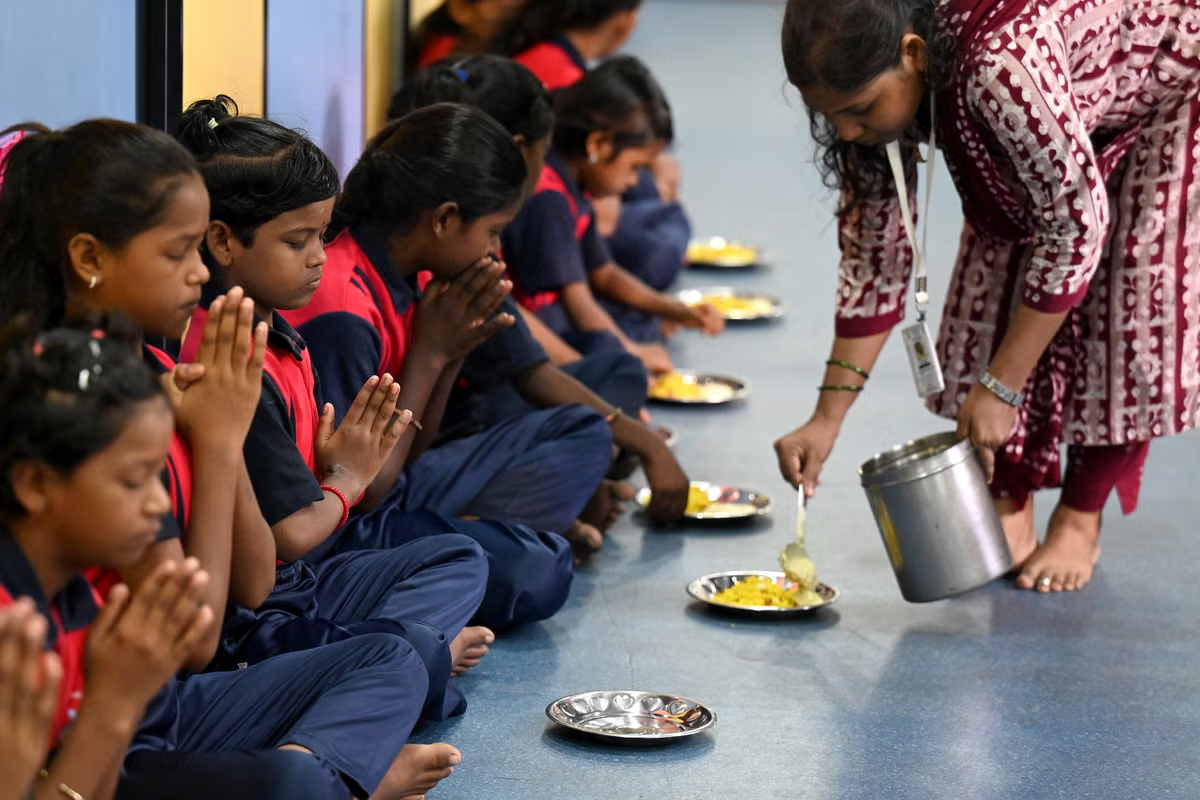
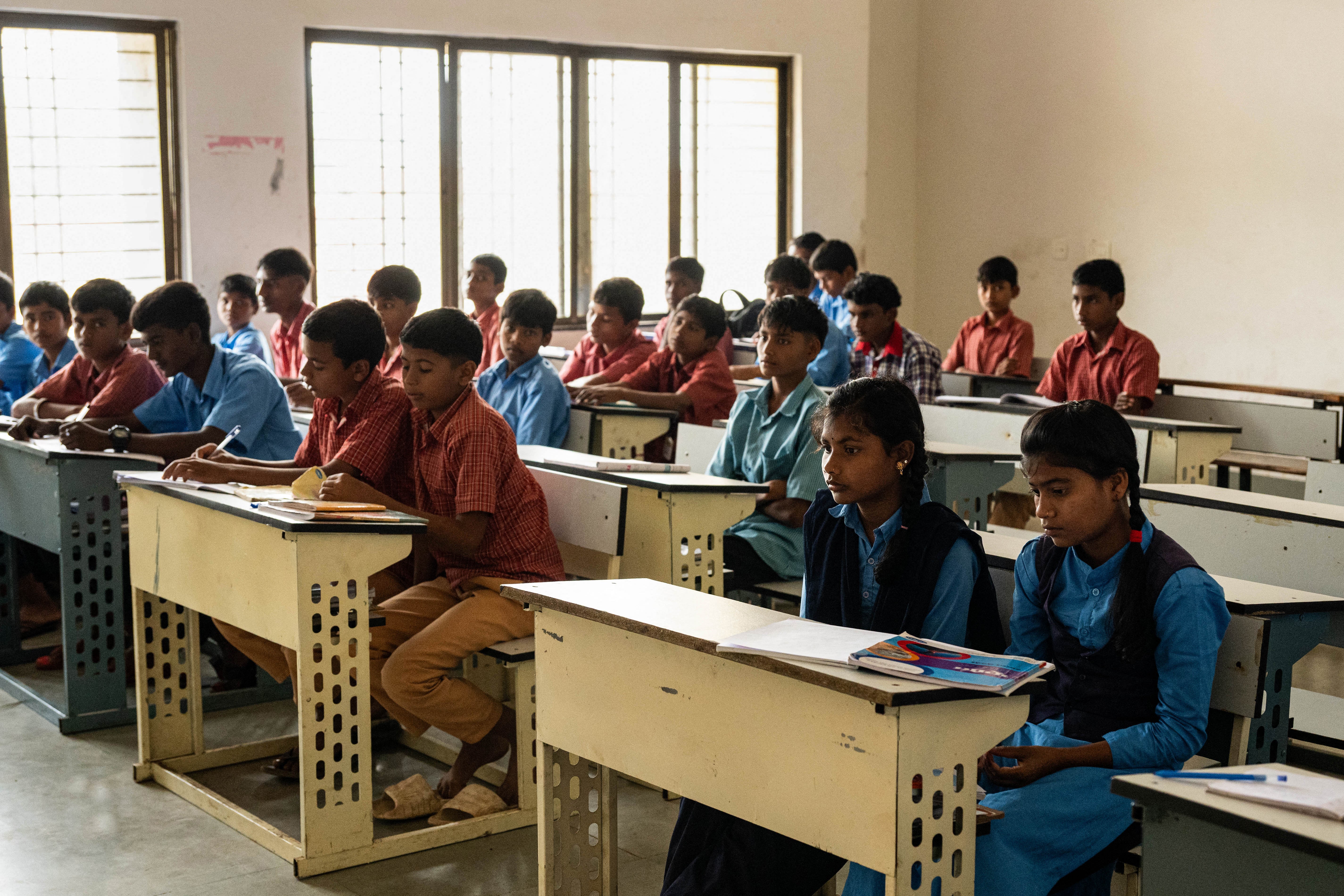
Children attend a class at the government-run Netaji Subhas Chandra Bose residential school that houses tribal students from drought-ridden villages (AFP/Getty)
India’s total fertility rate – the average number of children a woman is expected to have during her lifetime – has for the first time fallen to 1.9, below the replacement level of 2.1 required to maintain a stable population, according to the latest Sample Registration System report.
The shift marks a remarkable demographic transformation for a country that spent decades worrying about rapid population growth. In the early 1990s, when women had an average of 3.4 children, family planning campaigns became part of public life and, at times, took controversial forms, including the forced sterilisation programme during the Emergency in 1970s.
Later campaigns encouraged couples to have no more than two children, and were popularised through slogans such as “Hum do, humare do”, loosely translating from Hindi as “We two, ours two”.
For decades, Indian governments worried about overpopulation.
Advertisement
Economists say that India should avoid viewing fertility decline as a crisis. Alicia García-Herrero, the chief economist for Asia Pacific at Natixis, explains the decline should not be viewed as a demographic failure.
“India’s fertility decline is not a failure – it’s a sign of progress,” she tells The Independent. “As women gain education, economic options and decision-making power, they are choosing smaller families.”
“The immediate impact is still positive,” says Garcia-Herrero. “India continues to benefit from a large working-age population.”
Behind the statistics lie millions of unique and intimate stories, a generation rethinking what family, success and fulfilment should look like.
Advertisement
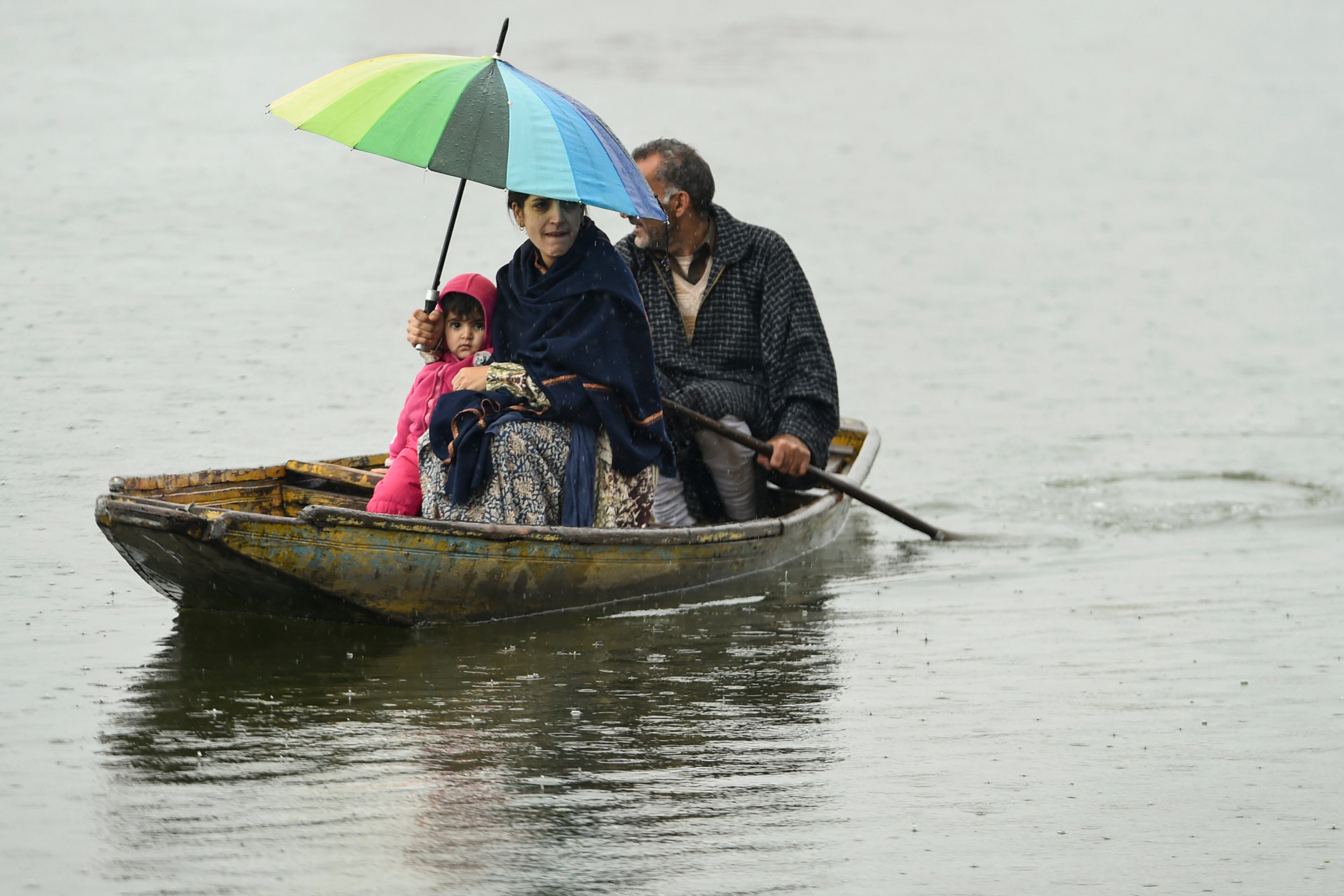
A Kashmiri woman shelters from the rain under an umbrella with a child while a man paddles a boat along Dal Lake in Srinagar (AFP/Getty)
The forces reshaping Indian families, she says, are the same ones that transformed societies across Europe and East Asia: rising female education, urbanisation, changing aspirations and the growing cost of raising children.
Sociological patterns visible across India’s geography support that argument. New Delhi records one of the country’s lowest fertility rates at 1.2 births per woman, while Kerala and Tamil Nadu stand at 1.3. Bihar, among India’s poorest states, records the highest rate at 2.9. In other words, birth rates closely mirror differences in education, healthcare, infant mortality and women’s economic participation.
For Akshita Gupta, a 35-year-old Mumbai resident and mother of a 21-month-old son and now pregnant with their second child, becoming a parent was always something she imagined for herself. “I’ve always felt maternal,” she says. “I have always felt I wanted a child.”
But before she and her husband started a family, they spent years discussing not just whether to have children, but how they would raise them. Financial security mattered alongside emotional stability and familial support.
“I feel our base was secure financially, emotionally,” she says. “And we both had our families. So I feel one is of course the inherent desire, but I also feel the fact that, you know, we had the support system.”
Advertisement
Even then, timing weighed heavily on her mind. Having watched friends undergo IVF treatment, Gupta was determined to try to conceive naturally. After consulting her gynaecologist, she set herself a goal of having children before the age of 35. “I wanted to have both my children before 35,” she says. “I had a few friends who were going through IVF and I saw their struggles.”
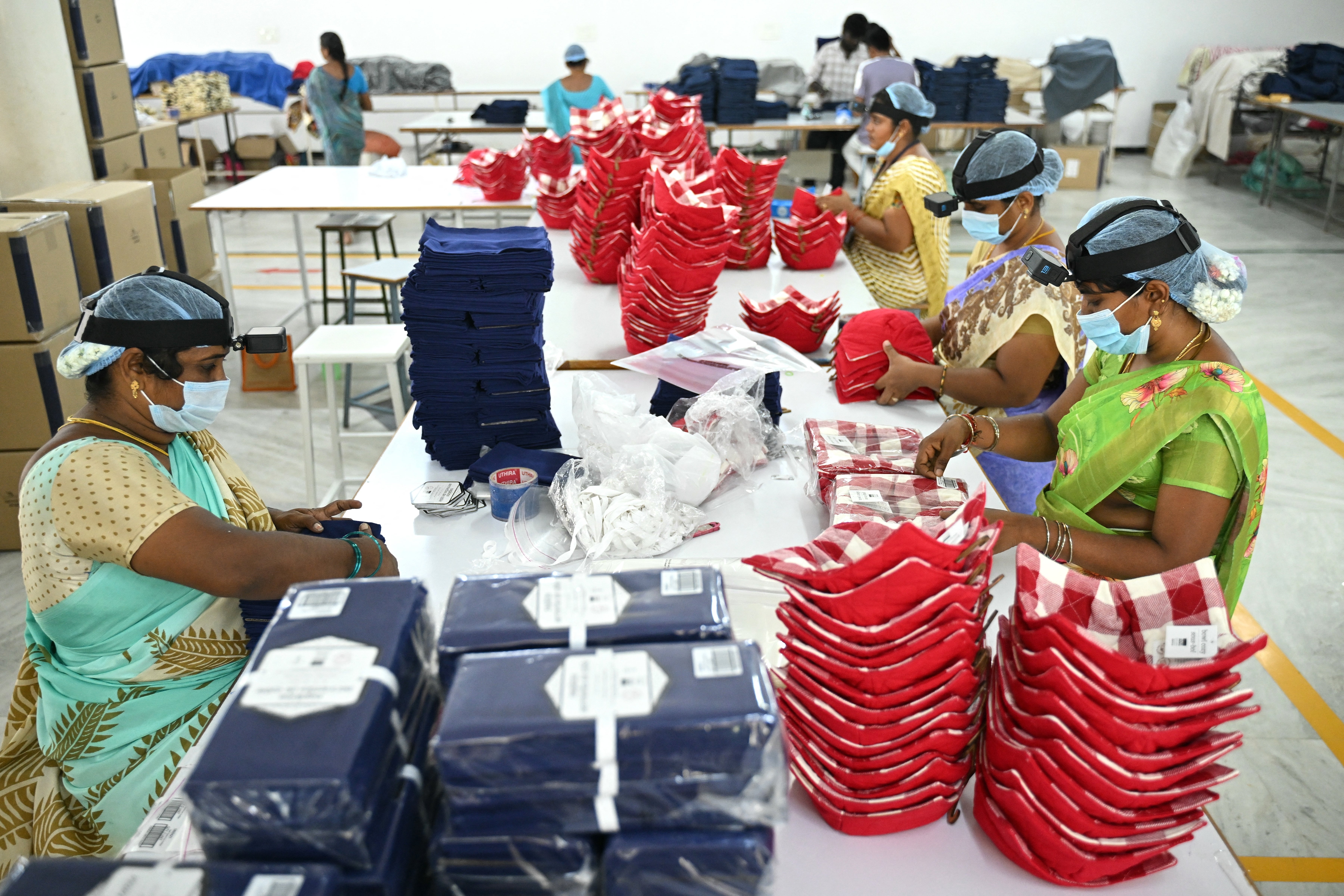
This photograph taken on 12 May 2026 shows women working inside a factory in Tamil Nadu’s Karur district (AFP/Getty)
Demographers describe India’s falling fertility rate as part of a broader demographic transition seen across much of the world. As child mortality falls, healthcare improves, women gain greater access to education and people marry later, family sizes typically shrink.
Government data suggests several long-term changes have converged at once. Infant mortality has fallen sharply, dropping from 30 deaths per 1,000 live births in 2019 to 24 in 2024. At the same time, women are marrying later than previous generations. Nationally, 73.5 per cent of women now marry after the age of 21, while the figure rises to 82.2 per cent in urban India. In 2018, 64.5 per cent of women married in their 20s across the country.
A newlywed couple looks on during the marriage of 20 Hindu couples in Ahmedabad on 11 February 2023 (AFP/Getty)
“Higher levels of education, particularly among women, have played a key role, along with urbanisation, later marriages and delayed childbirth,” says development economist Dipa Sinha. “Improved access to health care and a sharp fall in infant mortality have also contributed.”
“More recently, you also see that the opportunity cost of having children is high.”
García-Herrero agrees that education sits at the centre of the transformation.
Advertisement
“The biggest drivers are female education and economic pressures,” she says. “Educated women marry later, use contraception more effectively and prioritise investing in fewer children.”
She argues that the decline reflects a broader expansion of female agency rather than a rejection of family life.
“This is the same story seen across developed and rapidly developing societies,” she says. “Female education is one of the strongest forces lowering fertility because it changes aspirations and gives women real choices.”
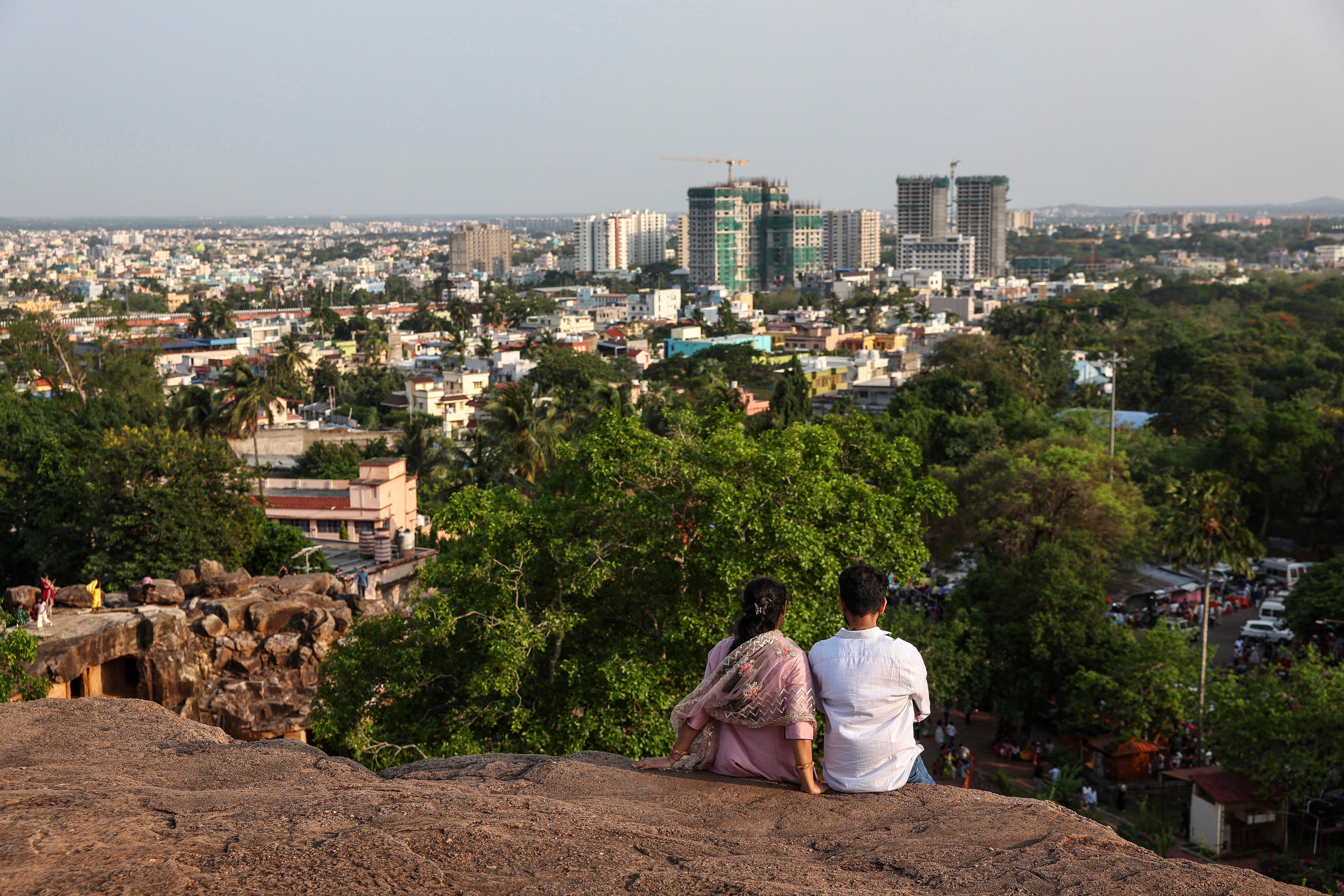
A couple looks at the city view while visiting the Udayagiri and Khandagiri Caves in Bhubaneswar on 3 May 2026 (AFP/Getty)
For some, the choice is about autonomy. Abhimanyu Sinha says he has never wanted children.
“That was a fairly unpopular opinion when I first used to say this when I was like 16-17,” he says. “I’ve noticed it’s sort of becoming essentially the norm now among people I speak to.”
Advertisement
The 28-year-old dismisses affordability as the primary explanation. “I think a lot of people hide behind claims like affordability, the rising cost of private school or housing,” he says. “In my social position, those aren’t as much of a concern. I just don’t want to tie myself down to that kind of thing.”
Looking ahead, he expects a longer and healthier life than previous generations experienced. “I don’t think that I wanna spend like… 70-80 years focused on one or two relationships, of children.”
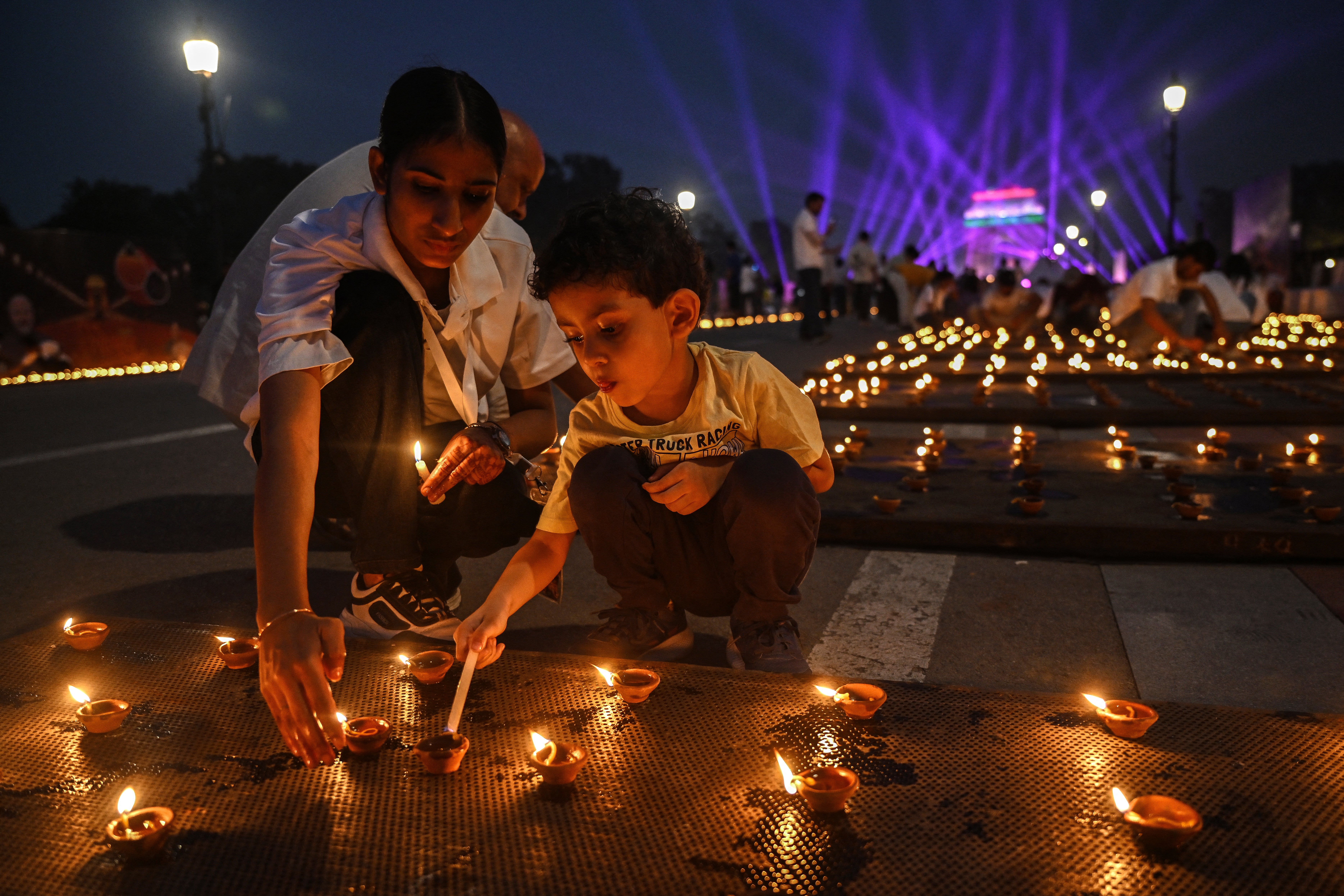
People light diyas, or traditional earthen oil lamps, as a drone laser show is organised at the India Gate memorial as part of the Diwali celebrations, the Hindu festival of lights, at Kartavya Path in New Delhi on 18 October 2025 (AFP/Getty)
His view reflects a broader cultural shift that researchers are observing globally. Parenthood is increasingly being weighed against other aspirations including travel, education, careers, relationships and personal freedom rather than treated as an inevitable destination.
García-Herrero says cultural changes are reinforcing the demographic transition. “This is not just economics,” she says. “It reflects women gaining agency and societies becoming more modern.”
The contrast with previous generations is striking. “When I think of myself having a kid,” Michael says, “I want that kid to have the best life possible.”
Advertisement
Her parents saw children as part of a social script, she says. “Their idea was that, OK, this is a rite of passage.” Today’s prospective parents often approach the decision differently. They want more involvement, more emotional awareness and more resources dedicated to each child.
Gupta sees that change in her own parenting. “Parents now are a lot more conscious,” she says. “About parenting styles, about what they are talking in front of their kids, what they’re exposing their children to.”
The result is that many families are choosing quality over quantity.
“Children have become more expensive,” says Sinha, the economist. Not only because costs have risen, she argues, but because parents increasingly want to invest more heavily in each child’s wellbeing and future.
Advertisement
India entered its demographic-dividend phase in 2005, when the share of working-age adults exceeded the combined number of children and elderly people. According to UN estimates, that demographic window is expected to last until around 2055.
The country’s median age remains just 29.8 years, younger than the global average of 31 and far below countries such as Britain, where the median age is more than 40. Economists argue that this gives India a rare opportunity to generate growth, create jobs and increase productivity before ageing becomes a more serious challenge.
“The real challenge will come in 15 to 20 years with a shrinking workforce and rising elderly dependency,” García-Herrero says.
“If there are fewer children born, then in about 30 to 40 years, India will have more older people who cannot participate in the labour force as much,” Sinha adds.
Advertisement
That raises questions about pensions, healthcare, elderly care and the future workforce.
It may also reshape politics. Southern states, which already have lower fertility rates and slower population growth, have expressed concerns that future redistribution of parliamentary seats based on population could reduce their political influence relative to faster-growing northern states.
Economists say the priority now should be making the most of India’s demographic dividend while it lasts.
Around the world, governments from South Korea to Singapore and China have spent billions trying to encourage people to have more children through subsidies, cash incentives, housing support and fertility programmes. But the outcomes have been mixed.
Advertisement
“No Asian country has successfully reversed a low fertility rate despite massive spending,” García-Herrero says. “South Korea poured hundreds of billions into incentives with almost no lasting effect.”
The reason, she argues, is that policymakers often misunderstand why people are having fewer children. “These programmes have largely failed because they treated low fertility as a financial problem rather than a structural and cultural one.”
In countries such as Japan and South Korea, marriage remains closely linked to traditional gender roles. Women continue to carry most childcare and domestic responsibilities, even when both partners work.
“Many young women and increasingly men, no longer see marriage as an attractive proposition,” García-Herrero says. “Women often face intense pressure to either give up or severely compromise their careers once they marry and have children.”
Advertisement
Sinha similarly argues that meaningful support requires more than one-off payments. “Free childcare. Free schooling. They have free healthcare,” she says of some European systems. “All these services, I think should anyway be there.”
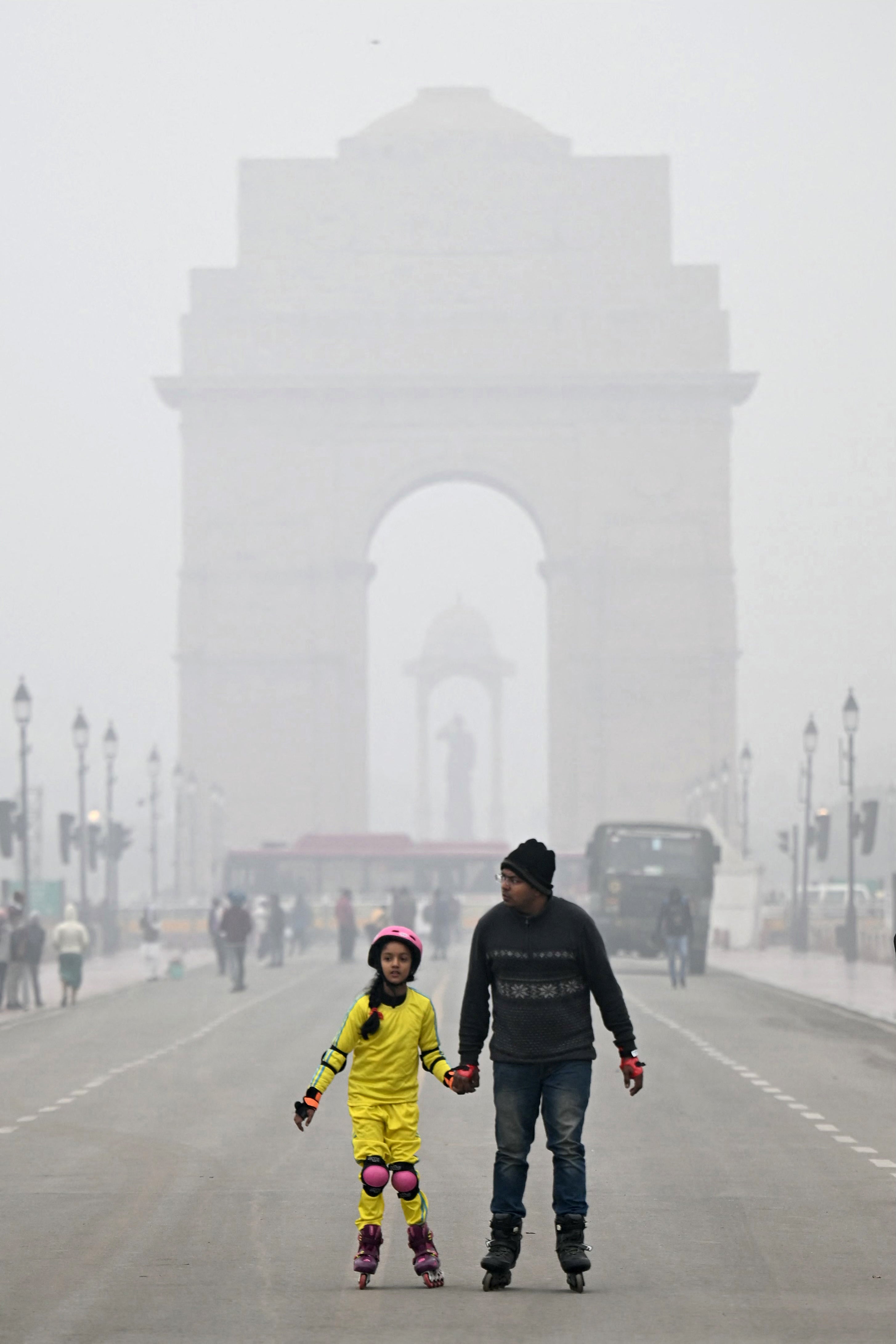
People skate in front of India Gate on a cold foggy winter morning in New Delhi on 3 January 2024 (AFP/Getty)
The challenge, Sinha suggests, is not persuading people to have children through incentives but creating conditions that make parenthood compatible with modern life.
Sinha says, that means affordable childcare, better parental leave, flexible work arrangements and reducing the costs of housing and education.
For Gupta, it means rethinking expectations around work and caregiving. Even in households committed to equal parenting, she says, mothers still shoulder a disproportionate burden. “When you give birth, you are the one who’s basically going through pregnancy,” she says. “You are the one delivering the child. You are the one who has to breastfeed the child.”
After becoming a mother, she stepped away from her family’s business and began considering a new career path. “There’s definitely a sacrifice,” she says.
WNBA star Brittney Griner has filed for divorce from her wife, Cherelle, after claiming that their marriage is ‘irretrievably broken.’
The Connecticut Sun star officially submitted the court documents in Fulton County on Thursday, according to records obtained by The Atlanta Journal-Constitution.
The filing revealed that the couple, who had been married since 2019, officially separated on July 24 following a breakdown in their relationship.
Griner, 35, is seeking ‘joint legal and physical custody’ of the couple’s two-year-old son, while also requesting an equitable division of all marital assets.
Advertisement
The filing also says she ‘should be awarded her separate, nonmarital property, including but not limited to inherited property as well as premarital property.’
The split comes after the couple tied the knot back eight years ago. Cherelle stood by Griner’s side during her harrowing 2022 ordeal in Russia, where the basketball star was detained for nearly 10 months before being released in a prisoner swap.
WNBA star Brittney Griner filed for divorce from wife, Cherelle, after eight years of marriage
Advertisement
Griner, 35, is seeking ‘joint legal and physical custody’ of the couple’s two-year-old son
Customs discovered a small container of cannabis oil, which Griner later attributed to a ‘mental lapse’ on her part while she was packing to leave the US.
At the time, Griner revealed she gave her wife Cherelle an ‘out’ in their relationship after she was handed a nine-year sentence.
‘When I got sentenced to nine years, I wrote her a letter,’ Griner told Megan Rapinoe in a conversation for The Cut.
Advertisement
‘I’m a realist. I was just like, ‘Nine years is a long time, babe. I get it,’ basically giving her an out. I asked, ‘Can you still be my friend? Write me.’
‘She was like, ‘Don’t ever write anything like that again.’ She never wavered. When I finally got back she was so patient with me. There were so many times when I just wanted to be alone, and there were days when she couldn’t get me away from her.’
The incident happened at the onset of Russian President Vladimir Putin’s invasion of Ukraine and Griner quickly became a significant trade chip in the geopolitical conflict.
Griner was sentenced to nine years in prison in a Russian penal colony, but was freed when the Biden Administration swapped arms dealer Viktor Bout for the WNBA star.
Advertisement
Since her return, she has advocated for other Americans detained in Russia like former US Marine Paul Whelan and Wall Street Journal reporter Evan Gershkovich.
The update comes three years on from Griner’s harrowing experience in a Russian jail
Griner previously revealed she gave Cherelle an ‘out’ from their relationship when she was in a Russian prison – but her partner had stood by her side throughout the ordeal in 2022
The Biden Administration was able to negotiate their releases from Russia in 2024.
Advertisement
Griner spent the first 12 seasons of her career with the Phoenix Mercury, winning a WNBA championship in 2014, before playing the 2025 season with the Atlanta Dream.
She joined the Connecticut Sun in free agency earlier this year.
ESPN reported that the deal is worth over $1 million – something made possible by the collective-bargaining agreement that provides higher salaries for WNBA players.
Advertisement
Share or comment on this article:
WNBA star Brittney Griner files for divorce from wife Cherelle… three years after she fought to free her from Russian prison camp
The scheme will not allow mayors to give their residents tax rebates, despite calls to do so by some politicians
David Lynch, Eleanor Barlow, and Abbie Llewelyn, Press Association and Cait Findlay Content Editor
17:00, 31 Jul 2026
Andy Burnham has announced plans for England’s mayors to keep a share of taxes collected in their area. Cambridgeshire and Peterborough is among the mayoral areas affected by the announcement on Friday (July 31).
The Prime Minister announced that regional mayors will be allowed to keep a slice of income tax and business rates to spend on their priorities, as part of his drive to push power out of Westminster. Mr Burnham described the proposals as “the biggest shift of power out of Whitehall and Westminster” to regions across the UK.
Speaking at a community centre in Sheffield, he said: “What brought me into politics was a determination to make sure, wherever you live in this country, the postcode where you live, or where you were born, doesn’t actually determine what your life should be like. That’s what I’m on a mission to change.
Advertisement
“No kid here, born in any of these streets around here, should have a harder life or fewer life chances than anyone born anywhere else, and that’s what this is all about.”
The government has confirmed that the Cambridgeshire and Peterborough Combined Authority has been designated an Established Mayoral Strategic Authority. This means the Combined Authority is now better placed to work on future devolution arrangements, including a ‘right to request’ greater devolution, a spokesperson said.
Mr Burnham directly rejected the idea of mayors giving their local taxpayers rebates, telling broadcasters in Sheffield: “Well, I don’t go down that path, as some people are saying today, because this is about growth and investment.
“Britain is lagging on this front in the G7 because we are not investing as much as other countries in industry, in infrastructure, in housing. This is a growth agenda and an investment agenda, not a cuts agenda, because the cuts agenda has left us in a difficult position.”
Advertisement
He added: “We’re not going to repeat some of the mistakes of the past, the austerity of the past that then has left us with a low-investment, low-growth economy. This policy is designed to break that cycle.”#
Paul Bristow, Mayor of Cambridgeshire and Peterborough, said: “For years, Cambridgeshire and Peterborough has helped drive growth for the whole country while seeing too little of that returned to our local communities. Today’s decision is the first step towards changing that.
“Being recognised as an Established Mayoral Strategic Authority puts us in a stronger position to secure new powers, greater funding flexibility and more control over the decisions that affect our region. The detail will matter, but if areas that create growth can keep more of the rewards, we can invest more in the transport, infrastructure, homes and skills our communities need.”
He continued: “Most importantly, residents should feel the benefits of growth. By keeping more of the wealth generated here, we can create more opportunity and help people live happier, healthier and wealthier lives.”
Advertisement
Details of the reforms – including what proportion of taxes the local leaders will keep – are expected to be announced in a white paper, published when Chancellor John Healey presents his first budget in the autumn. The rate of income tax that billpayers face will not change as a direct result of the reforms, according to the Government.
Ministers will retain an equalisation system, so areas where less tax is collected continue to receive financial support.
The paper also said the Government will give regional mayors and authorities across England the power to introduce a tourist tax, which it suggested could be collected and spent from March 2028.
Differing boundaries between local government, health authorities, and police forces could meanwhile be streamlined to avoid confusion about which authority provides services to which area, the Cabinet statement said.
Martin Tod, Liberal Democrat candidate for Mayor of Hampshire and the Solent and Leader of Winchester City Council, has welcomed the Government’s plans to give elected mayors greater powers but warned that Hampshire and the Isle of Wight are being held back by the delay to the region’s mayoral election.
Eddie Howe sends emotional message to Newcastle fans as club confirms bombshell exit – and labels his five-year spell at St James’ Park a ‘privilege of my lifetime’
Eddie Howe has delivered an emotional farewell to Newcastle United supporters as the club confirmed his departure in a statement on Friday.
Howe, who established Newcastle as European regulars and won the 2025 Carabao Cup during his near five-year spell in charge at St James’ Park, came to an agreement to leave his role with immediate effect this week after contemplating his future over the summer.
The Englishman informed Newcastle of his wish to leave earlier this month but agreed to stay on until a replacement was found, with German coach Matthias Jaissle now stepping in to succeed him ahead of the new 2026-27 season.
As part of a statement shared by the club to their website on Friday, Howe described the opportunity as a ‘privilege of a lifetime’.
Advertisement
‘After a period of personal reflection, I have decided that now is the right time for me to step away from my role as head coach of Newcastle United,’ he confirmed.
‘After nearly five years of giving my life, heart and soul into the club with unrelenting energy, I feel that it is in the best interests of both myself and the club to step away, recharge and take a break.
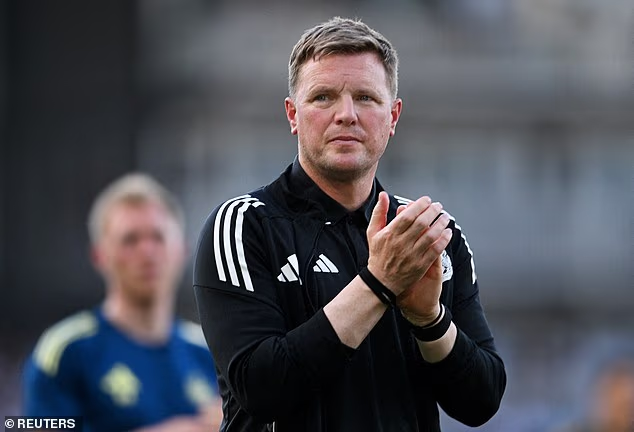
Eddie Howe delivered an emotional farewell statement to Newcastle United fans on Friday
Advertisement
‘Although it’s been incredibly difficult to make this decision, I know in my heart that it’s the right one. I have always put the best interests of Newcastle before my own in every single decision I have made whilst I’ve been here and this one is no different.
‘It has been the privilege of my lifetime to have been the manager of Newcastle United.
‘It is difficult to put into words what this club, the city and its supporters mean, and will always mean, to me and my family. From the moment myself, Jason and all of the staff arrived nearly half a decade ago, Newcastle instantly felt like home and the people here welcomed us with open arms. We took huge pride in representing the club from day one and this city will always hold a very special place in our hearts.
‘There have been so many incredible moments in our time here. From fighting relegation in our first season to the numerous unforgettable nights at St. James’ Park in the Champions League soon after. The progression was fast.
Advertisement
‘Everyone came together, united and what a force we became, culminating in bringing home our first domestic trophy in 70 years. These are all memories that I will cherish for the rest of my life.
‘I would like to put on record my sincere thanks and appreciation to Yasir Al-Rumayyan, Jamie Reuben, Jacobo Solís and everyone at PIF, David Hopkinson, Ross Wilson and the entire ownership and leadership group for placing their trust in me and for giving me the opportunity to lead this special football club.
‘I remain incredibly positive and enthusiastic about the future of Newcastle. The club is in fantastic hands with a great leadership team and I have no doubt together, alongside whoever comes in to replace me, they will continue to deliver success on the pitch.
‘Thank you to Jason Tindall, Graeme Jones, Stephen Purches, Simon Weatherstone, Dan Hodges, Andy Howe and Jordan Tribe for their incredible loyalty, support and dedication and to all of the amazing staff behind the scenes whose hard work and loyalty makes this club what it is.
Advertisement
‘A special thank you to all of the players who have represented the club during my time here. Without you, nothing would have been possible and it’s been an honour to have coached you all.
‘Finally, and most importantly, thank you to our incredible supporters. Your passion and loyalty have inspired me every single day. To stand on the touchline at St. James’ Park as your manager with the honour of representing your club has meant more to me than you will ever know.
‘While my journey as manager has now come to an end, the affinity and love I will always hold for Newcastle United never will.
‘Thank you for everything. I wish the club every success for the future.’
Advertisement
The timing of Howe’s departure has rocked Tyneside, even though it has not come as a surprise on the back of a turbulent 12 months.
After losing star striker Alexander Isak last September, England winger Anthony Gordon and Italy midfielder Sandro Tonali have been sold to Barcelona and Tottenham respectively this summer.
Arsenal have also today reached an agreement in principle to sign midfield leader Bruno Guimaraes for a fee that is understood to be worth £77million plus add-ons.
As revealed by Daily Mail Sport, Guimaraes dropped a bombshell on the Newcastle hierarchy several weeks ago by informing them of his desire to leave. And he did not fly with the rest of the Toon squad to their pre-season training camp in La Manga on Friday.
Once part of a chart-topping pop band, he became a heartthrob who travelled the world and graced magazine covers.
Now, Prime Minister Andy Burnham has appointed former Clean Bandit musician Neil Amin-Smith to be his top economic adviser.
Before his successful political career began in 2019, Amin-Smith, 36, was a violinist in the Grammy Award-winning band.
The British electronic music group was formed in Cambridge in 2008 and also consisted of members Grace Chatto and brothers Jack and Luke Patterson.
Advertisement
The band is best known for its hits Rather Be, which spent four weeks at number one in the UK and sold over 1.1million copies, Rockabye and Symphony.
Over the years they collaborated with huge artists including Demi Lovato, Zara Larsson and Jess Glynne.
Andy Burnham has appointed a former Clean Bandit star to be his top economic adviser
Advertisement
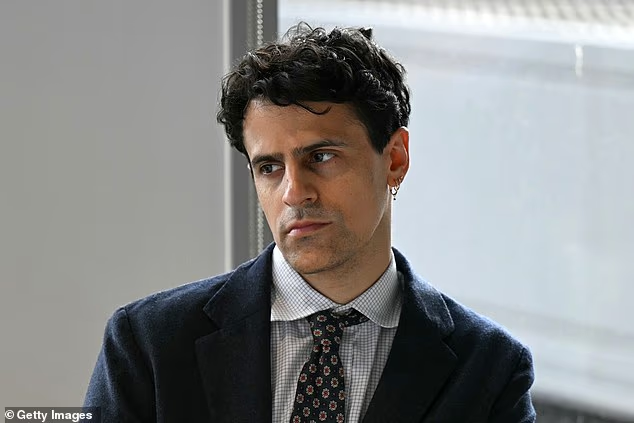
Before his successful political career began in 2019, Amin-Smith, 36, was a violinist in the Grammy Award-winning band
During his music career, Amin-Smith appeared on the cover of Gay Times, after announcing he had started a relationship with Years & Years singer, Olly Alexander.
‘It’s important for people to see you can be happy as a gay couple, and as a young gay couple,’ he told Capital FM in 2015.
The pair dated for a year around ten years ago, before breaking up. However, in February 2025, Alexander revealed that he has reignited a love affair with an old flame.
Advertisement
In 2016, Amin-Smith ditched the glamour of the music industry when he quit the band.
Amin-Smith, who grew up in North London, then joined the Institute for Fiscal Studies (IFS), an economic think-tank, as a research economist, before moving to the Treasury in 2019 as a senior policy adviser.
He took on a powerful role as the Labour Party’s main political adviser for policy affecting the City of London, working closely with Rachel Reeves for four years.
And this week, according to The Times, Amin-Smith has been spotted in 10 Downing Street after being appointed by the Prime Minister, who has officially been in office for just under two weeks, having succeeded Keir Starmer on July 20.
Advertisement
Amin-Smith graduated from Cambridge with a BA in History, and later an MPhil in Economics in 2013, at which point he says he turned down job offers from the Foreign Office and MI6 to pursue a musical career with the group.
‘Both very tempting, but no real regrets,’ he told the Daily Telegraph in 2015. ‘I don’t think I would have wanted to be working in the national interest as such.’
Elsewhere in 2025, the heartthrob has topped the Standard’s list of 100 sexiest people in London, after ‘turning Treasury heads like hungry owls’, according to the publication.
Rachel Reeves (middle) laughs next to Neil Amin-Smith(left) and Ed Miliband (right) made a joke at 11 Downing Street in London on July 9, 2024
Advertisement
During his music career, Amin-Smith appeared on the cover of Gay Times, after announcing he had started a relationship with Years & Years singer, Olly Alexander
‘He’s unusually gorgeous, and quite stylish,’ one Treasury official told Politico.
‘He’s a bit of a popstar, but he doesn’t rub it in your face. It’s a kind of quiet, confident coolness.’
The new move from Burnham comes after he made a number of changes in his cabinet.
Advertisement
Burnham’s new cabinet includes several senior Labour figures, with several notable changes from the previous government.
Rachel Reeves was axed as Chancellor, Sir Keir’s Deputy Prime Minister David Lammy was sacked, and Peter Kyle lost his job as Business Secretary as Mr Burnham cleared the way for his own allies to take key roles.
However, both Angela Rayner, who was forced to resign over a tax scandal, and Louise Haigh, who quit as Transport Secretary when a previous fraud conviction came to light, are back in the Cabinet.
The ex-Manchester mayor has promised to deliver the biggest change to British politics in 40 years.
Advertisement
He promised to provide early ‘breathing space’ for households struggling with the cost of living, vowed to end rough sleeping and set out a goal of ‘reindustrialising Britain’.
Revealed: Prince Harry and Meghan Markle cost Canadian taxpayers $539k for private protection including $365k in one year alone while they were dating and $10,586 to guard Duchess during a girls’ weekend
Prince Harry racked up the highest taxpayer-funded security bill of any VIP visiting Canada over a five-year period – including $365,000 (£195,000) in 12 months while he was courting Meghan Markle, newly released figures revealed today.
Royal Canadian Mounted Police (RCMP) records show public spending on protection for the Duke and Duchess of Sussex was $539,000 (£286,686) between April 2015 and March 2020.
Canadian taxpayers may even have picked up a $10,586 (£5,642) bill for Mountie bodyguards during the Duchess of Sussex’s private three-day girls’ trip to Toronto with her former best friend Jessica Mulroney in 2018, it has emerged.
State broadcaster CBC has won a six-year freedom of information battle to uncover the true cost of protecting dignitaries visiting the country.
Advertisement
The $539,000 (£286,686) spent protecting Harry was the highest security bill for any VIP over the same five-year period – more than the Obamas, the Clintons and the Trumps.
Harry accounted for more than 10 per cent of the $5million (£2.66million) spent safeguarding around 100 royals, politicians, diplomats and their families while visiting Canada.
His annual security bill peaked at $364,859 in 2017-18, the year he proposed to Meghan, who was filming the final series of Suits in Toronto.
In the 2016-17, the year they first met and began secretly dating, the cost to Canadian taxpayers was $106,000.
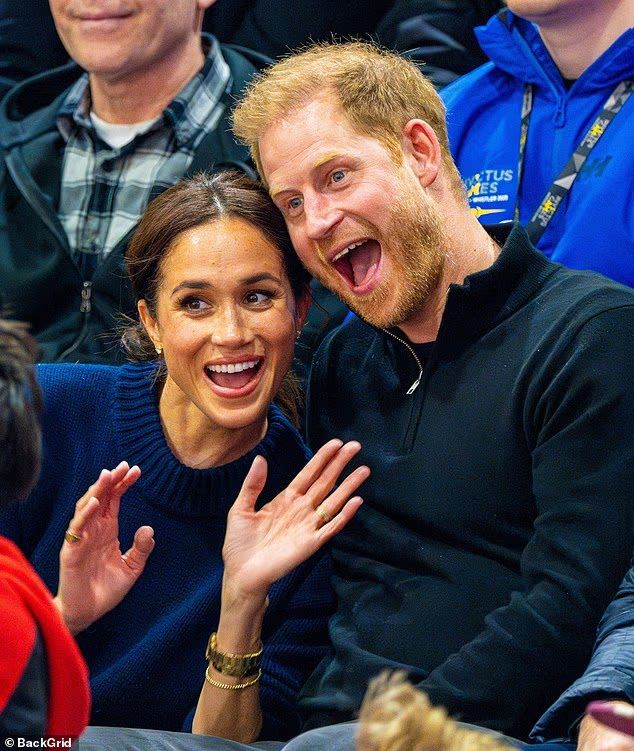
Meghan Markle, Duchess of Sussex at Wheelchair Basketball in Vancouver Convention Centre during Invictus Games Vancouver Whistler 2025. Meghan considers Canada her ‘second home’ after the US while Harry has strong links via the Royal Family and Invictus
Canadian taxpayers may even have picked up a $10,586 (£5,642) bill for Mountie bodyguards during the Duchess of Sussex’s private three-day girls’ trip to Toronto with her former best friend Jessica Mulroney in 2018
Advertisement
Harry stayed with Meghan at her home in Toronto (pictured) when she was filming Suits. Their relationship was a secret for around six months
Harry, who adores Canada and has attended numerous Invictus and military events there, made a number of undercover trips to Toronto, starting in 2016 when he fell in love with the actress following a blind date.
He stayed in Meghan’s home in the city on a number of occasions.
Prince Harry described their flight from Canada to Los Angeles after Megxit as their ‘freedom flight’ – and shared footage of them on board with Netflix
Advertisement
‘We had a good five, six months almost with just privacy, which was amazing’, Meghan said at that time.
The cost of protecting the Sussexes in Canada dropped sharply to $866 in 2018-19 and $904 in 2019-20 – when they spent most of their time in the UK after marrying – before rising again to $56,405 in 2019-20.
But their friendship is said to have later crumbled when Jessica was cancelled in June 2020 after a Black influencer accused her of exhibiting ‘textbook white privilege’ during a dispute linked to the Black Lives Matter movement.
Meghan reportedly cut off contact.
Join the discussion
Advertisement
Should celebrities and royals pay for their own security when visiting other countries?
Prince Harry and Meghan Markle’s first public engagements together was at 2017 Invictus Games in Toronto
Jessica had been inseparable from Meghan for years, helped keep her relationship with Harry secret and was among the first people Meghan called from Kensington Palace after Harry proposed.
Jessica’s twin sons, John and Brian, then seven, had the honour of carrying Meghan’s train down the aisle at St George’s Chapel, Windsor, while her daughter Ivy, then two, served as a bridesmaid alongside Princess Charlotte at the royal wedding.
Advertisement
But Jessica was later cut adrift by her former best friend, and effectively cancelled, after expressing her views on Black Lives Matter.
‘She was upset their friendship ended,’ an insider told the Daily Mail last year.
While Prince Harry topped the list for VIP security costs, the bill for Canadian Mounties protecting former US presidents and their families was at $497,544.
A number of these visits were related speeches, book tours and even ski holidays.
Advertisement
Canadian security expert Phil Gurski told CBC that VIPs visiting the country for commercial engagements should help cover the costs.
He said: ‘Why are we paying for the privilege of them coming here to make money from Canadians?’
Security for Barack and Michelle Obama cost $295,411, followed by Bill and Hillary Clinton on $143,927.
‘President Trump & Family’ is also listed in the accounts, with $51,558 incurred in 2016-17, $13,078 in 2017-18 and $1,769 in 2018-19.
Advertisement
Protecting US ambassadors to Canada, Bruce Heyman and Kelly Craft, cost $487,654 over five years, followed by the $446,333 spent on security for US vice-presidents such as Joe Biden and Mike Pence.
The financial records were first requested in January 2020 but only were released this week after Canada’s Information Commissioner Caroline Maynard intervened.
Conor Meechan, who has been attending a wedding at the luxury Crossbasket Castle Hotel, told the court he was at a loss to explain his actions.
A wedding guest who told two terrified women he had a ‘sexual attraction to gingers’ has been spared jail.
Advertisement
Conor Meechan, 34, was at the luxury Crossbasket Castle Hotel in Blantyre, Lanarkshire, when he entered a neighbouring bedroom.
Meechan kissed one woman on the cheek which left her scared he would carry out more sexual acts.
The second woman said she was engaged, to which he replied, ‘Oh s*** are you?’ and then stated he would return and winked towards the women.
During the altercation, both women texted each other with one stating, ‘What the f*** is going on, I wish he would leave’. He was reported to hotel staff who ordered him to leave the five-star venue.
Advertisement
When challenged over his actions, he replied: “I’ve not done anything wrong, I have only had three beers.” He was reported to police and an investigation led to him being arrested.
Meechan, of Pollock, Glasgow, appeared at Hamilton Sheriff Court and admitted two charges of sexual assault.
Sheriff Maria Kicinski ordered him to carry out 135 hours of unpaid work and put him under supervision for a year.
Depute fiscal Cameron Murdoch told the court: “The accused entered the bedroom and made comments on their appearance and called them pretty and gorgeous.
“He stated to them that he had a thing for gingers, and one of the witnesses began laughing out of nerves.
Advertisement
“He then sat down next to the witness and asked her her name and immediately thereafter kissed her, but she turned her head, and he kissed her on the cheek, which caused her to feel frightened that he would carry out other sexual acts.
“The accused remained in the room and began speaking to the other woman, who politely engaged the accused, but he made sexual comments to both women, similar to those he had a sexual attraction to gingers and redheads.”
Laura Kiernan, defending, said: “He is at a loss to explain his actions and he cannot explain why he did this.
Advertisement
“He is a hard-working man who has his own business and is somebody who is not deemed to pose a serious risk to the public and can be managed in the community.”
Sheriff Kicinski said: “I have taken into account of all of the facts of this case which are obviously a concern but it is reassuring to read that they are a concern to you as well.
“This is not the way you normally behave which is also reassuring and there is an alternative to a period of imprisonment.”
Meechan, a roofer, was placed on the sex offenders’ register for a year.
Advertisement
Get more Daily Record exclusives by signing up for free to Google’s preferred sources. Click HERE
From knife-crime prevention to mental health support, grassroots football is being taken seriously as a tool for social change, and local clubs say the results are already visible
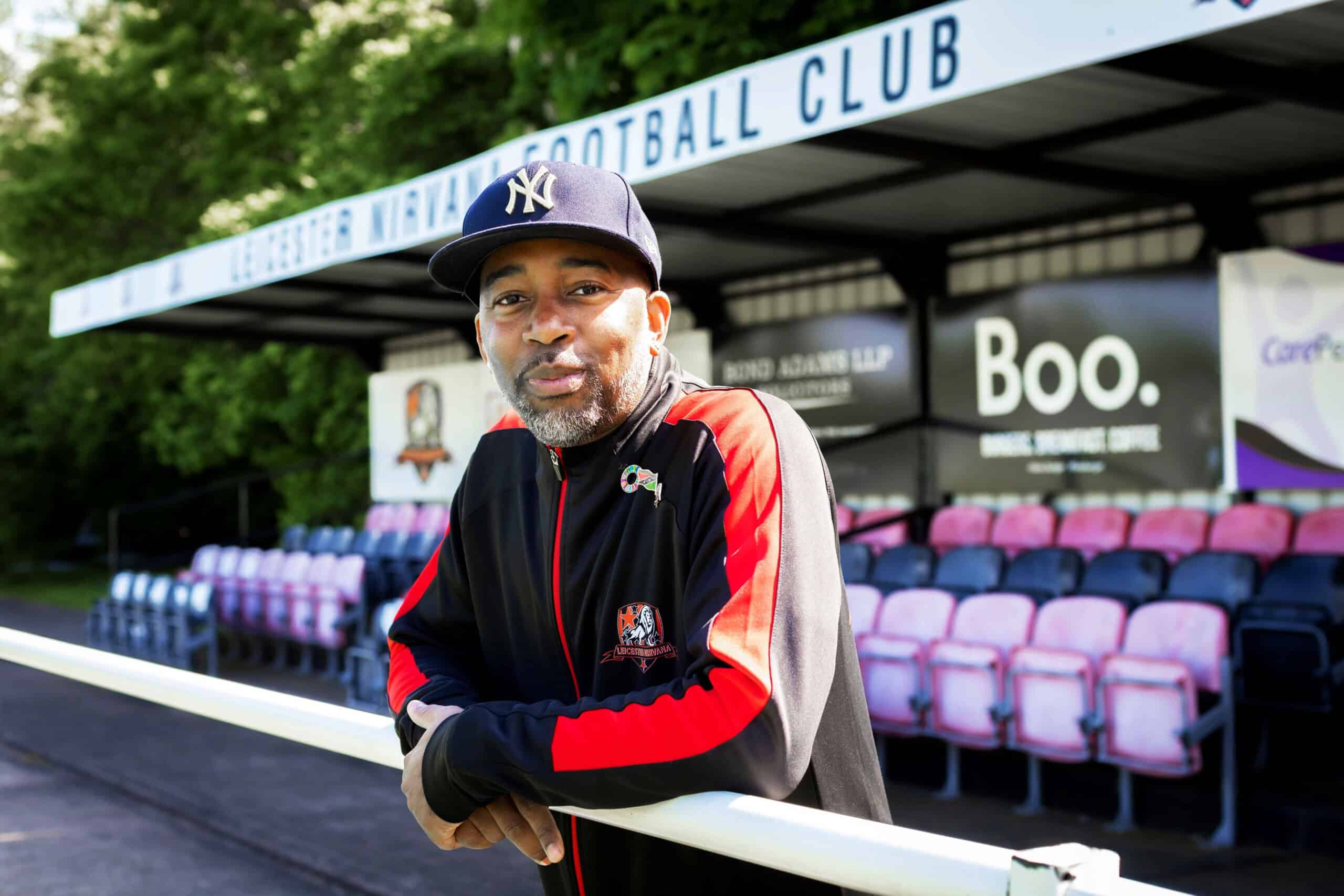
Leicester Nirvana FC’s Ivan Liburd has seen first-hand what grassroots football can do for young people at risk of being drawn into serious crime.
When local authorities asked if he would take on a young person with a history of carrying knives as part of a pilot scheme, Liburd agreed to let him help with Saturday morning training sessions. “He was a habitual knife carrier who had been caught with a knife multiple times,” says Liburd. “But he came to me, worked with me, helped out with the young players. By the end he was walking there in the rain, running around with the kids, laughing – totally dedicated.”
Advertisement
The change was so marked that police could hardly believe it was the same person. “They said: ‘What? He came to training voluntarily?’” Liburd recalled. “I said: ‘Yes.’ Because these young people just react differently when they’re in the community, with someone who’s not perceived as a threat to them.”
Advertisement
For Liburd, that response is rooted in the kind of club Leicester Nirvana has become. Before moving to its current location, the club was based at Highfields in the inner city, where row upon row of Victorian red brick terraced housing left little room for greenery, let alone a grass pitch.
“We grew up in these areas,” he says. “There was no proper organised sport, it was all concrete, 40% of young people were in poverty.”
After scouting a patch of public land four miles away in Hamilton, the club’s management persuaded the local council to let them section off and maintain a full-sized pitch, and build a clubhouse. Now, weekend mornings at this quiet spot on the edge of the city come alive with the sound of kids from as many as 70 countries shouting words of encouragement to each other. Black banners with “NO Racism” are visible to everyone who passes through the entrance, and a spectator stand filled with weather-faded black and red seats is studded with supportive parents.
Advertisement
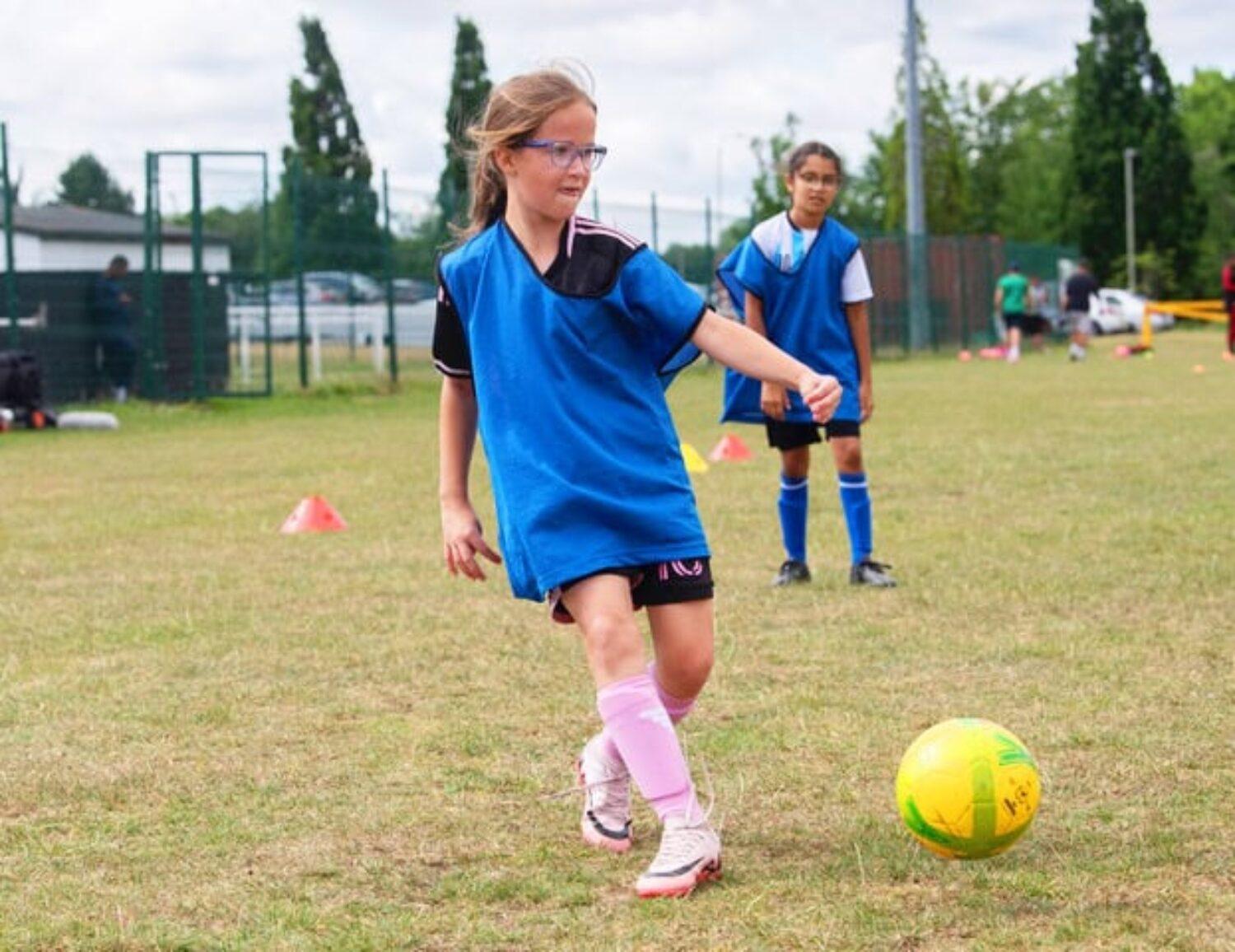
Research into the Kicks programme found that 93% of participants believed it helped them get into less trouble. Image: Leicester Nirvana
For Liburd, the point is that a club can become more than a place to play. It can become a trusted space, especially for young people who may not respond to more formal authority. “Some of those same kids that misbehave at school will come to football and they’ll be good as gold with their coach,” he says. “Communities like ours can access these young people at their best, we can connect with them and hopefully make them better people.”
Football is increasingly being used by police and club charities as a way to prevent antisocial behaviour, youth violence and crime. Through the Premier League Kicks Police Partnerships Fund, nearly £1m of Premier League funding is being matched by £1.2m from police forces, Police and Crime Commissioners and Violence Reduction Units, creating a pot of more than £2m over two years for 43 football club charities across England and Wales.
Advertisement
Merseyside Police and Crime Commissioner Emily Spurrell says football occupies a rare position in young people’s lives. Partnering with Premier League Kicks and Everton in the Community, Spurrell made the grassroots game a formal part of her crime reduction strategy between 2024 and 2025, in a bid to improve outcomes for hard-to-reach youngsters in the region.
A club can become a trusted space, especially for young people who may not respond to more formal authority
“[These programmes] work because they do far more than just put a football on a pitch,” she says. “Grassroots football has a real ability to connect with young people who might not respond to more traditional approaches.”I
In Merseyside, more than 30 free sessions now run each week for young people aged eight to 19. Everton in the Community says antisocial behaviour and crime fall by 75% to 82% during Premier League Kicks session times around the region.
“When young people are given something positive to be part of, supported by consistent role models and clear expectations, we see real and measurable drops in antisocial behaviour and crime, that benefit whole neighbourhoods,” Spurrell says.
Advertisement
In Merseyside, more than 30 free sessions now run each week for young people aged eight to 19. Image: Leicester Nirvana
The young people involved report similar benefits. Independent research by the Carnegie School of Sport at Leeds Beckett University into the Kicks programme found that 93% of participants believed it helped them get into less trouble. It also found that 86% believed the programme had improved their career opportunities and made them more confident speaking in front of a group, while more than 300 Kicks alumni are now employed in roles across the club charity network as a result of their involvement.
Advertisement
The benefits of the grassroots game also go well beyond crime prevention. Anxiety, depression and loneliness have risen among children and adults since the Covid-19 pandemic, while obesity remains a major public health challenge. According to research cited by the Football Foundation, more than 15 million people in England play football regularly, generating £15.9bn in social value each year, including £3.2bn in healthcare savings.
For Liburd, the health benefits are visible every week at training. “Some of our groups, when you walk past, they’re just laughing, just playing about,” he says. “They’re here for the social aspect.”
His message to anyone hesitant to get involved is simple. “Football is the most accessible sport in the country right now, so just come. Enjoy being around other people, enjoy being part of something. It gets you out and touching grass – literally. It doesn’t need to be about excellence.”
Main image: Jason Senior
Advertisement
Be part of the solution
At Positive News, we’re not chasing clicks or profits for media moguls – we’re here to serve you and have a positive social impact. We can’t do this unless enough people like you choose to support our journalism.
Give once from just £1, or join 1,800+ others who contribute an average of £3 or more per month. Together, we can build a healthier form of media – one that focuses on solutions, progress and possibilities, and empowers people to create positive change.
In the aftermath of the World Cup, despite the many issues that had plagued the tournament in the United States, Mexico and Canada, Gianni Infantino spoke in tones that suggested he felt invincible. By delivering record revenues and the “most outstanding” World Cup ever, the Fifa president felt emboldened enough to embark on a victory lap, admonishing his critics from within the stronghold of his Fifa palace, while safe in the knowledge that the structures and mechanisms designed to keep him in power were secure.
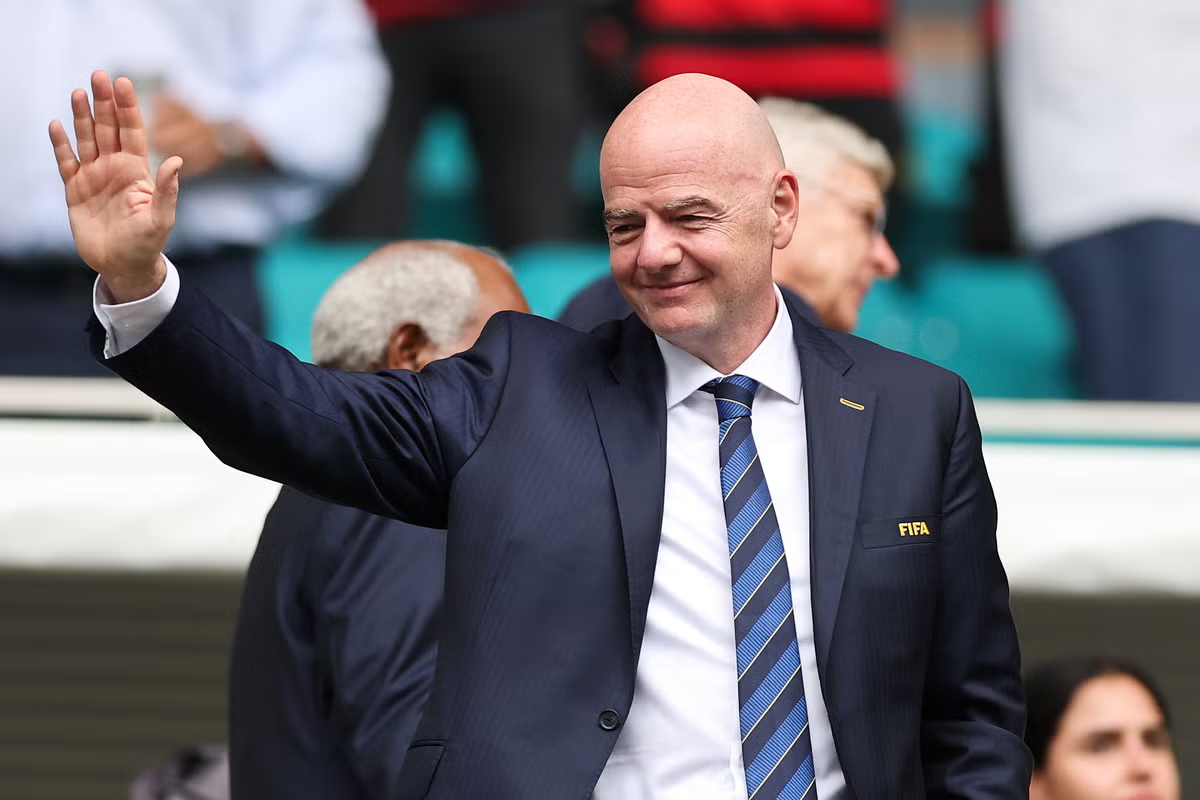
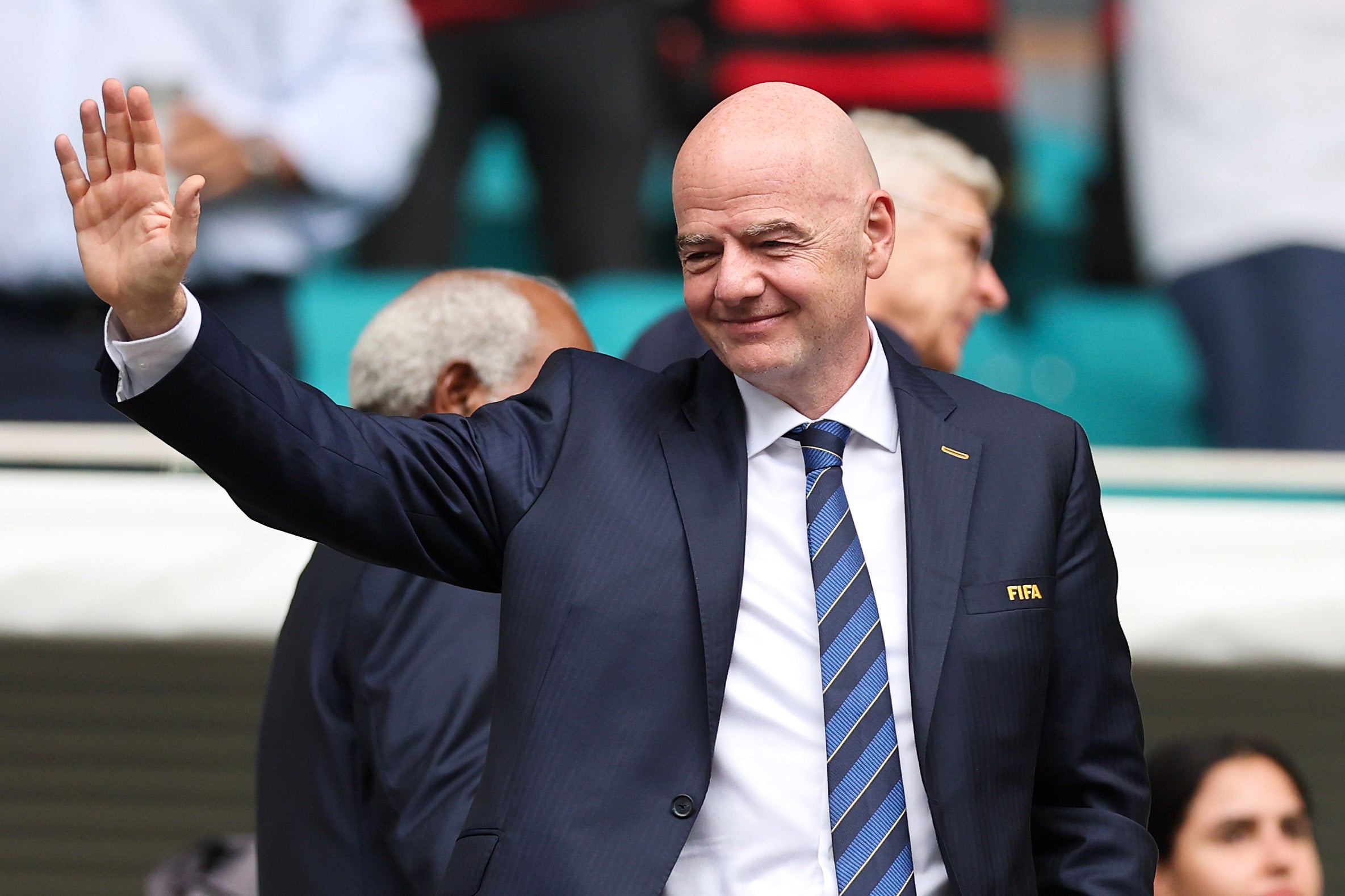
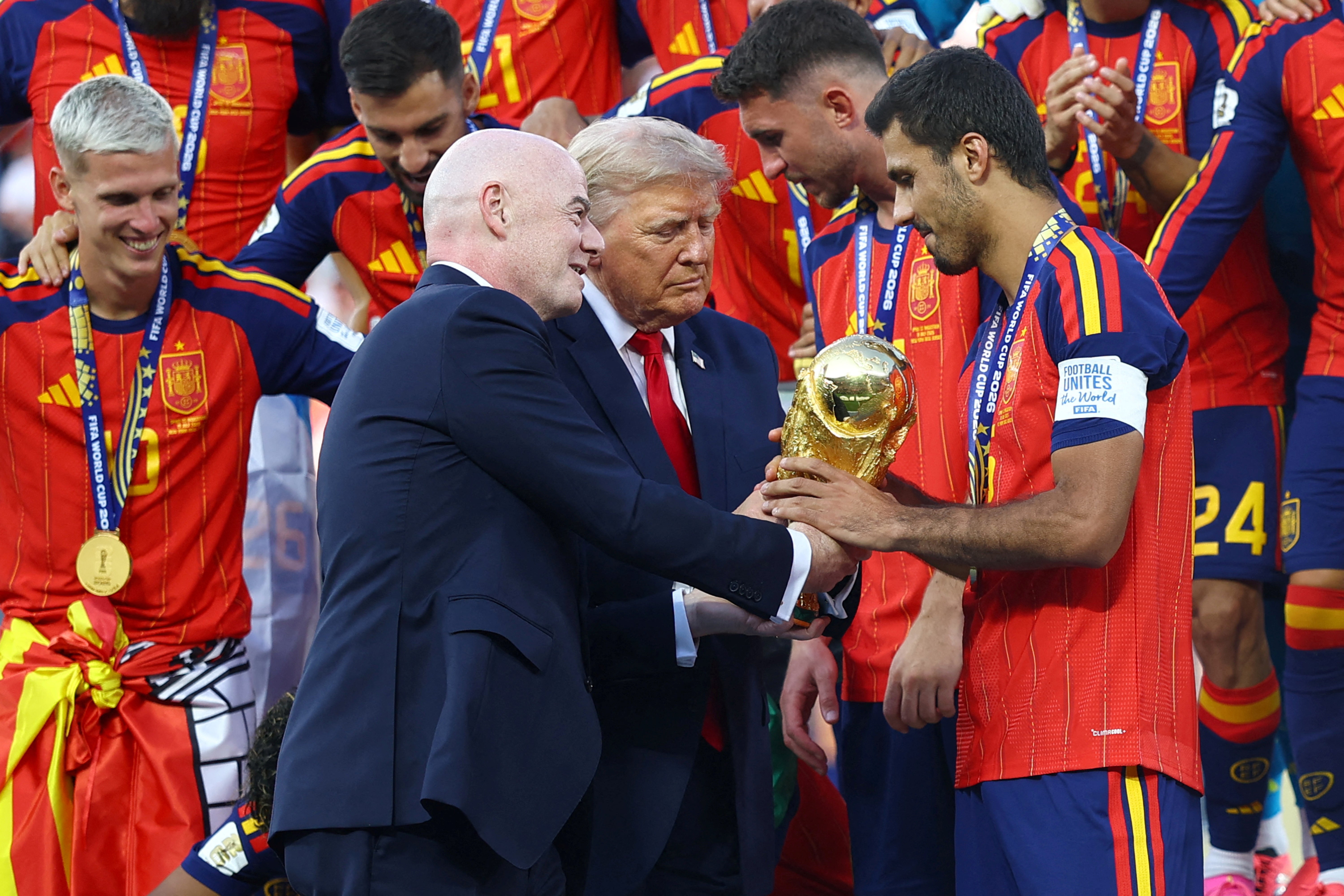
The walls around Gianni Infantino are crumbling (Getty)
Whether Infantino’s plans, understood by The Independent to have been in the works for over a year, even survive for that long is another matter. Infantino is also under mounting pressure from within Fifa itself. The president’s long-time adviser, Carlos Cordeiro, described as a heavyweight figure within the organisation, resigned in protest on Friday. “Football has been central to my life, and after more than 35 years in banking, I understand both the value of this asset and the consequences of giving part of it away,” he said in a statement. “That is why this proposal should be rejected.” If even the Fifa suits have seen enough, it tells you that Infantino has gone too far.
In its own statement in the early hours of Friday morning, Fifa provided some “clarifications” around the private investment proposals, insisting that its “planned consultation process was disrupted by incorrect media reports”. But it may not stop some of Infantino’s steadfast allies from switching sides. Asia will host the 2034 World Cup in Saudi Arabia and parts of the region have benefited greatly from Infantino’s support since the 2022 World Cup in Qatar, but the AFC’s president, Shaikh Salman bin Ebrahim al-Khalifa of Bahrain, has been Infantino’s most vocal critic outside of Europe. A withering statement on Friday accused Fifa of “undermining” the World Cup and called for an “urgent review” into its governance.
The AFC said it stands in “solidarity” with Uefa, while Concacaf (the Confederation of North, Central America and Caribbean Association Football) also confirmed that it had “rejected the proposals” following its own emergency meeting. The Independent also understands that the vast majority of Concacaf’s 41 members have lost confidence in Infantino’s presidency. That is to be admired, as Infantino’s ploy of offering countries $40m for backing his proposals, or risk receiving only $10m for rejecting them, was aimed primarily at smaller nations who would have benefited greatly from the windfall, an additional pot of gold to clear debts and fund overdue infrastructure projects. Infantino attempted to target those vulnerabilities, but he has come up against organised, united opposition.
Advertisement
With Uefa, the AFC and Concacaf aligned, a voting bloc of around 150 member associations would comfortably defeat Infantino’s proposals, even if a few countries from those federations went against the whip. For Infantino, an embarrassing defeat appears inevitable. Further opposition from the confederations of South America and Africa, who have yet to publicly take a stance either way, would surely make his position untenable and spell the end of his presidency. Even so, it is already beyond clear that Infantino must go: a president who places his political interests and the financial incentives of private investors – from within Donald Trump’s own family – above the sport is no leader. As Uefa said: “This is not merely a profound failure of leadership but an abdication of Fifa’s duty as the custodian of world football.”
Spain are among the Uefa nations to have threatened to boycott the World Cup (Reuters)
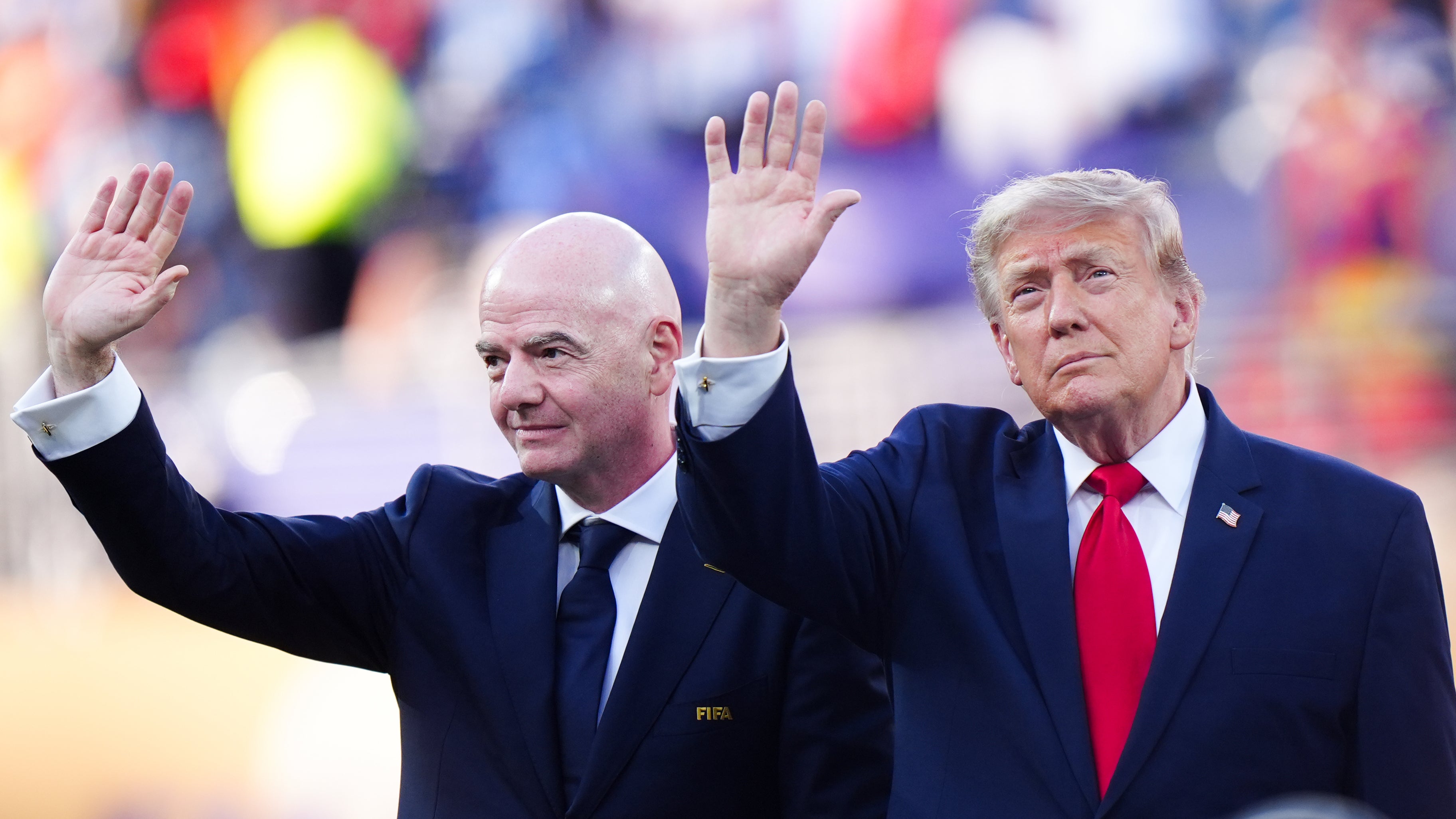
Infantino has close ties with Trump (PA Wire)
Even if his proposals are defeated, Infantino will surely take another page from the Trump playbook in another respect: could you ever imagine Trump resigning over anything, no matter how egregious, let alone admitting to a miscalculation of such epic proportions? It says a lot that, in the midst of an apparent crisis, Infantino was accelerating his plans for an expansion to 64 teams for the next World Cup while his fiercest opponents, Uefa, was holding its emergency meeting on Thursday.
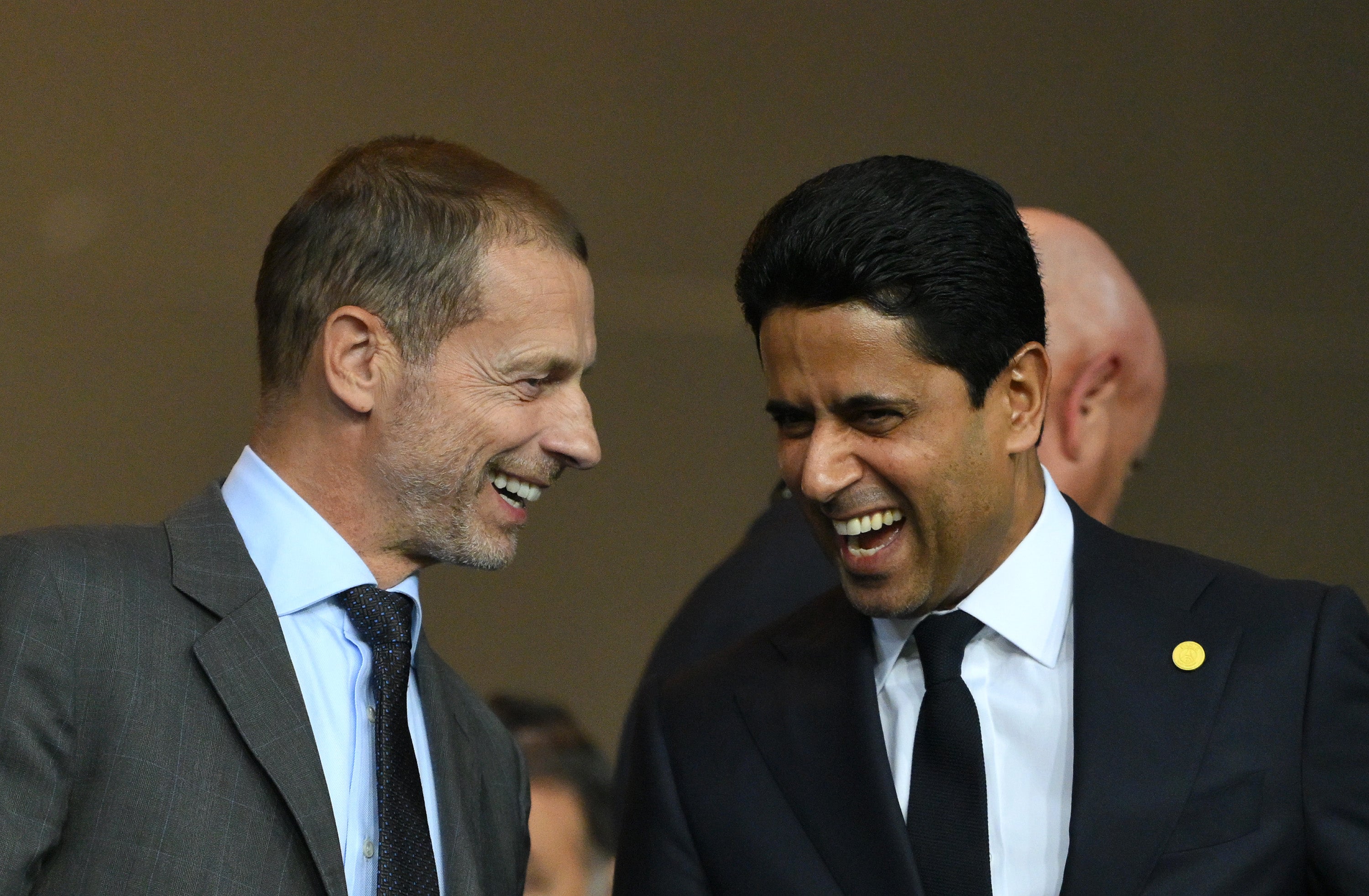
Infantino is acting like a tyrant, and he must be stopped. Uefa and its allies will be rewarded for the strength of its opposition in recent days, but they must now strike and put forward a candidate to challenge Infantino’s presidency when he stands for re-election in March next year. Uefa’s Alexander Ceferin, who has positioned himself as the anti-Infantino despite making anti-competitive changes to the Champions League under his leadership, would be an obvious candidate.
Aleksander Ceferin (left) and Nasser al-Khelaifi are possible challengers to Infantino (Getty)
The Independent, meanwhile, has reported that Paris Saint-Germain president Nasser al-Khelaifi, the chairman of Qatar Sports Investment, would also carry support. He could stand to gain from a further elevation of his status within the game. Other figures such as Lise Klaveness, the president of the Football Association of Norway, have been standing up to Infantino for some time. Klaveness in particular should be recognised for putting her head above the parapet long before the tide on Infantino turned within political circles.
Infantino’s plans for the “Fifa Forward Enterprise” may appear to be on life support, but it will also take more to topple his empire. That said, football has spoken and faces a window of opportunity that must now be seized if it wants to build a fairer game: the rejection of Infantino’s proposals must stand for the rejection of the man himself, and the organisation he has helped shape.
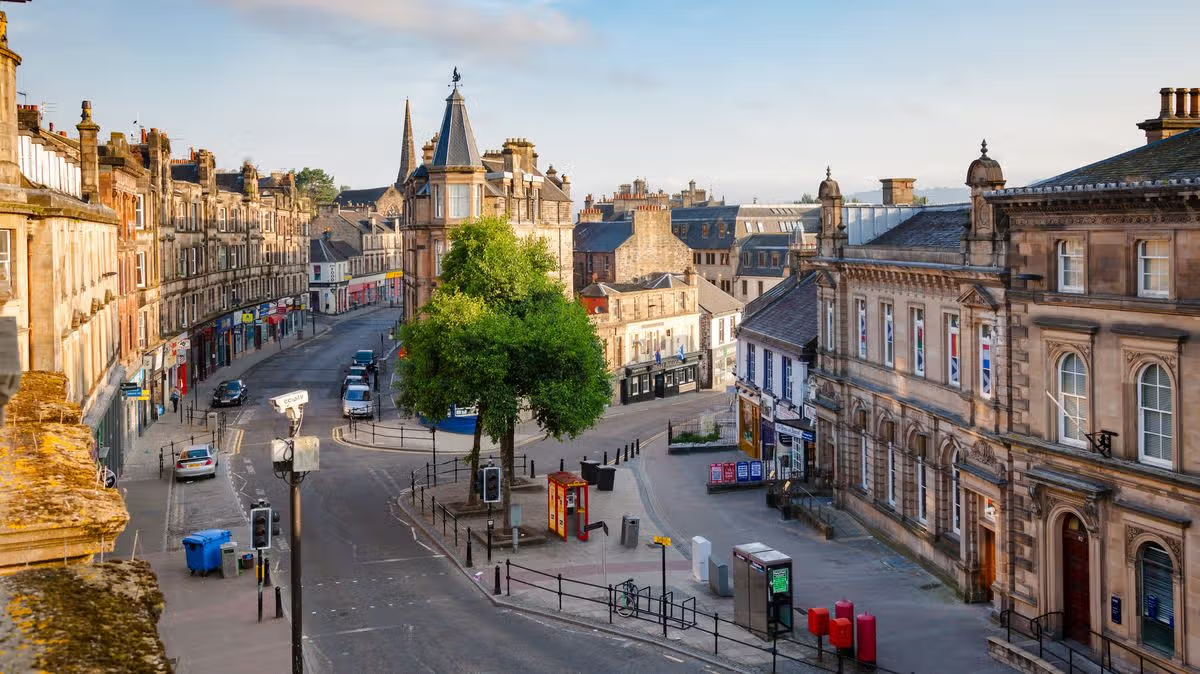
A visit to one of Scotland’s cities has been crowned the “best thing to do in the UK” by Time Out, and it is neither Edinburgh or Glasgow. The experts described it as “a fantastic history-focused trip”, and also praised the city’s various upcoming festivals and other events.
Advertisement
As reported by the Daily Record, Time Out has put together a roundup of 25 of the “best things to do in the UK right now”. There are five Scottish experiences in total on the list, one of which is visiting the city of Stirling. The magazine previously declared Stirling the best place to visit in the UK at the start of 2026.
Time Out singled out the wide variety of events and festivals that are taking place in Stirling in the coming weeks and months. Among these are the Stirling Highland Games on August 15, the multi-genre Interesting Things Music and Arts Festival on the same day, BBC Radio 2 in the Park in September, and Stirling Cocktail Week later in the year.
The experts also praised the city’s historical significance, noting its connections to figures such as William Wallace and Mary, Queen of Scots. Stirling is home to many historic attractions, including Stirling Castle, the National Wallace Monument, and the Stirling Old Town Jail.
Time Out wrote: “Stirling has witnessed many of the nation’s most significant events—from William Wallace’s defeat over the English to the crowning of Mary Queen of Scots at just nine months old—making for a fantastic history-focused trip.
“In 2026, Stirling Distillery will release its first batch of Stirling whisky and independent venues will celebrate Stirling Cocktail Week with serious food and drinks deals all over the city (dates still to be announced). And every August there are the rollicking Highland Games featuring Highland dancing, the Stirling Stones competition and battle reenactments.”
Advertisement
According to Stirling Council, the number of people visiting Stirling has soared past pre-Covid levels. The Scottish Tourism Economic Activity Monitor states that 4.6 million tourists visited the city in 2024, which was an increase of more than 10 per cent compared to the previous year and higher than the previous peak in 2017.
The city has also received a number of other accolades in recent years, in addition to being named the best place to visit in the UK by Time Out. Stirling was previously crowned Scotland’s top visitor destination by Lonely Planet and Scotland’s cultural capital by LNER in 2025.
Stirling Council Leader Susan McGill commented: “This latest recognition from Time Out is another fantastic achievement for Stirling and reaffirms the area’s reputation as a must-visit destination. We have world-class attractions, rich history and heritage, a packed programme of exciting events, a thriving cultural scene and stunning scenery. From our vibrant city centre to our beautiful rural communities, there is so much to explore, enjoy and experience across Stirling.
Advertisement
“Our excellent transport links have been improved with the new Lumo train service from London—so there has never been a better time to visit Stirling and enjoy everything we’ve got to offer. We look forward to welcoming more visitors from across the world to Stirling during the rest of the summer and this year.
“We are also committed to working with our tourism businesses and other partners to support further growth in this key part of the economy.”





















































You must be logged in to post a comment Login