The ban will see children no longer able to access apps like Instagram, X, Snapchat, TikTok, and Facebook.
Reaction to the ban has been mixed, as some fear it will make children feel lonely, while others think it’s the necessary thing to do.
But it does make you think that we’ve all become too reliant on social media.
If you were to tell someone in the 1970s that 50 years later, the world would revolve around social media, they would ask you what it was and to not be ridiculous.
![]() The ban is likely to come into force by spring 2027. (Image: Getty Images)
The ban is likely to come into force by spring 2027. (Image: Getty Images)
But here in the 21st century, we have all become addicted to the endless offerings of the great media world.
It’s fair to assume that, as a society, we’ve become more reliant on social media than we could have ever imagined.
15 years ago, we were limited to chat rooms and Facebook pokes.
Now, with Instagram, X, TikTok, Snapchat and endless other platforms, the world has shifted.
In one click, we can find out where someone went for dinner yesterday, what they did at work a month ago, and who they were dating five years ago.
But the best part of all is that you can share your opinions, no matter how unwanted they are.
The hidden downsides of social media use
You might think that the first social media platforms were Six Degrees or Friendster, but it’s been suggested that it all began with Morse code.
Although social media began as a way for us to connect, the modern-day version is a much bigger and scarier place.
Now, we’re able to waste the day spending 18 hours watching TikTok and doomscrolling on X and Instagram (and I’m talking from personal experience).
Leading mental health charity Mind explains that the online world can be a double-edged sword.
Social media offers us the chance to express ourselves and connect with others, but it can also lead to comparing ourselves or feeling anxious and even lonely.
Recently, Sir Keir announced that all under-16s would be banned from social media, following in the steps of Australia’s world-first ruling.
The ban, likely to come in from Spring 2027, will mean children will no longer be able to access Instagram, X, Facebook, Snapchat and TikTok.
While media apps can be harmful, some suggest that they have a wider benefit in helping people not feel alone.
Riky Hanaumi, Clinical Director at Quadrant Health Group, who has more than 10 years of leadership experience in clinical behavioural health, shares that she has found that many people she’s worked with have found support through social media.
“Many clients I’ve worked with have reported experiencing significant relief once they realised they were not alone in struggling with feelings related to grief, chronic illness, neurodiversity, trauma or parenting stress.
“The realisation that they weren’t the only person feeling this way was enough to eliminate a great deal of shame they had experienced previously.”
How much time are we really spending on social media?
I grew up at the weird crossover between never having social media as a child, to getting an Instagram and Snapchat account at the ripe age of 14.
From the moment I signed up for those apps, I would never have imagined the grip the online world has on me today.
Now I find myself opening TikTok, X, and Instagram when I’m bored, want a distraction or simply because it’s become a habit.
It makes me ask the question of whether I’m wasting my time on social media when I could be out doing other things, in the real world, not just through my phone.
So then why can’t I just delete all the apps and never look at the online world again?
Well, as it turns out, breaking the habit of social media is a lot harder than we are led to believe.
Leading professionals suggest that the constant use of online platforms leads to addiction and has an impact on mental health.
Professor Marcantonio Spada, Chief Clinical Officer at Onebright, one of the world’s leading psychologists on technology addiction, suggests regular use of social media can heavily impact a person’s mental health.
![]() I spent most of my teenage years obsessed with Snapchat. (Image: Newsquest/ Emilia Kettle)
I spent most of my teenage years obsessed with Snapchat. (Image: Newsquest/ Emilia Kettle)
“There are multiple psychological risks associated with regular social media use,” Professor Spada explains
“A prominent risk is mental ill health, for example, anxiety and depression.”
He adds that social media use can create “addiction-like symptoms” with frequent use linking to changes in parts of the brain responsible for emotional learning and behaviour.”
My 18-hour screen time wake-up call
Although I don’t see any of those behavioural changes in myself, I will admit that I have a slight fear that my constant habit of opening apps is less a habit and more an addiction.
The potential idea that I’ve pavloved myself to the point where my social media use could be affecting me in ways I might not know is a very scary thought.
In fear that I might be using the apps a bit too much, I looked at my weekly usage of all the social media apps I regularly use.
In one singular week, I used Facebook for 24 minutes, Instagram for one hour and two minutes, X for five hours and 33 minutes and TikTok for 12 hours and 10 minutes.
To say I’m ashamed is an understatement, knowing that I’ve wasted more than 18 hours in one week on social media, it made me feel sick.
I knew something had to change; I couldn’t let apps have such a big grip on my life anymore.
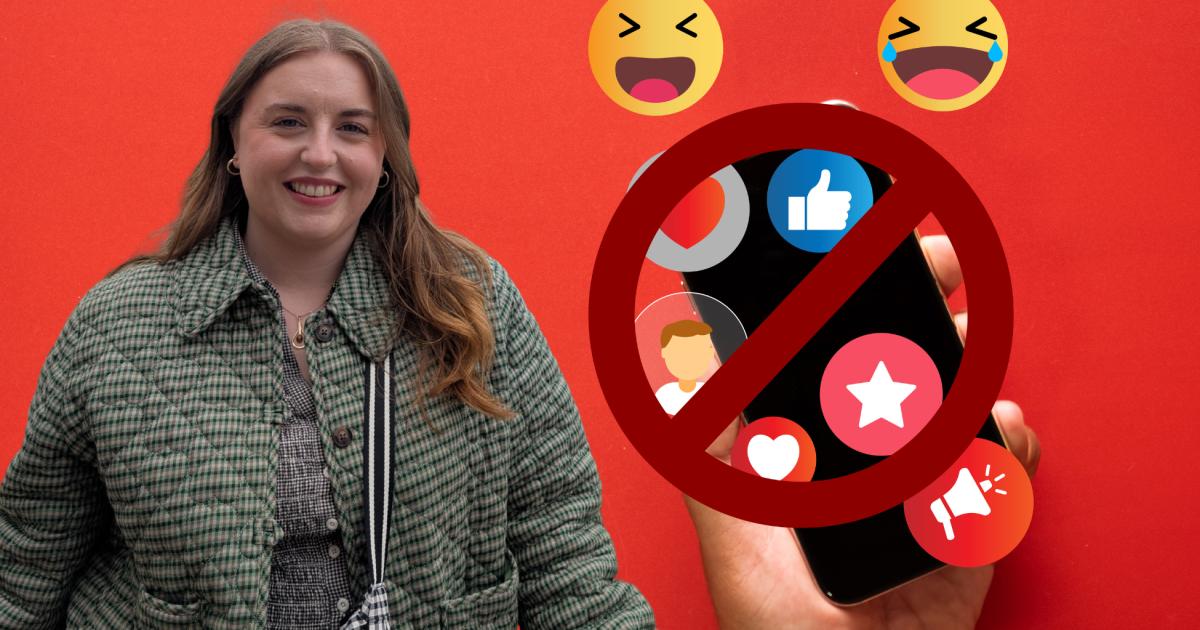
So, like any sane person, I decided that the only way I could find out if my fears were valid was to quit social media.
For one week, I would avoid TikTok, Instagram, X, and Facebook, all in the name of my sanity.
But the question is, can I survive a week without using social media?
I quit social media for a week – but could I actually do it?
Day One
On May 18th, at the bright and early time of 5am, the sweet tunes of Michael Giacchino’s Life’s Incredible Again woke me from my slumber, and for the first time in a long time, my immediate action was not to open X.
No, instead, I got out of bed with very sleepy eyes and began my morning routine with the one difference of not looking down at my phone.
The night before, I thought there was no way I was going to wake up and not go for my apps, but in a big shock to myself, I didn’t.
I hadn’t even deleted the apps from my phone, no, I just turned my alarm off and started my day.
I had no worries I would be missing out on overnight events, what my mates had been posting on Instagram or edits I wasn’t seeing on TikTok.
I just felt relaxed and ready to start my social media-free week with no concerns that it would be a problem.
Day Two
Day two was a similar mood, I felt more focused, productive and motivated to see if I could complete the week.
Instead of constantly opening apps, I was reading more, I was going out for walks and watching programmes I’d had on my watchlist for ages and never got round to.
Although a creeping feeling of missing out slowly began to crawl its way into my brain, becoming an itch I would later find would be too easy a temptation to scratch.
Day Three
By Wednesday, the itch grew, and I began to miss social media and the fear that I was missing out on what was happening in my bubble in the online world grew.
I even started to miss doomscrolling on TikTok.
But the important thing is I still hadn’t used social media.
Instead, I just dived into my books, walks, and a new TV show that had taken over the world (and my life).
Day Four
However, on day four, things took a turn.
![]() Experts suggest that constant use of social media could affect your personality. (Image: Getty Images)
Experts suggest that constant use of social media could affect your personality. (Image: Getty Images)
It had reached the point when friends had begun screen-recording TikTok edits they thought I would enjoy and texted them to me.
It was at this point that I realised that I was going to really struggle over the next few days, and my optimistic Monday self might be in over her head.
Nevertheless, I continued, and I did not open social media.
I kept it hidden and locked away as friends continued to tempt me with their screen-recorded edits and chatted about viral trends I was clueless about.
Day Five
But then day five arrived, I didn’t have work to distract me, and I may have given in for five minutes.
One quick, accidental opening of X left me scrolling for five minutes when I realised my mistake, and the moment I did, I was mortified.
I couldn’t believe that I’d broken the ban that quickly and easily.
I’d done so well until I hadn’t.
I immediately threw my phone across the room and looked at it in horror, as the realisation hit that I can’t live without social media.
Sure, I can go a few days without it, and I can use it less, but I still want it, and I enjoy it.
What quitting social media taught me
Social media allows me to switch off in a way that books and walks do; it lets me see others’ reactions to movies and TV shows I’ve watched, and I like that.
I love that I get to see what my friends and family are up to despite living hundreds of miles away from them.
To know that my friends enjoyed a night at the pub on Instagram or that my Mum liked a cute picture of an AI cat on Facebook.
It’s the little things away from the celebrity edits and stupid tweets that make me enjoy social media.
So, the short answer to whether we can live without social media, in my case, is a big fat no.
However, if there’s one thing this week has taught me, it’s that I should, and I need to, take regular breaks.
Recommended Reading
Almost like a holiday where for a few days I just ignore the online world, focus on what’s in front of me and enjoy it.
While the PM’s recent social media ban might sound scary, I think it will have positive effects.
Over time, as children and parents get used to the change, we might see a world where we’re all less reliant on social media and create a better relationship with it.
As for myself, I’m going to practice a social media-free lifestyle a bit more, and maybe one day, I’ll realise that it’s not impossible to live without.
Right now, I’m still going to enjoy late-night doomscrolling and sending memes to my friends.
But maybe I’ll fit in more time for walks and reading, maybe.
Could you live without social media? Let us know your thoughts in the comments.











































You must be logged in to post a comment Login