January 2026: The Beckhams, Britain’s most famous family bar the royals, began the year more fragmented and divided than ever before. A feud between the newly knighted Sir David Beckham, his wife Victoria and their firstborn son, Brooklyn, had been gradually escalating. Trouble was in the air.
Brooklyn’s cousins, Libby and Tallulah, were the first to realise something big was coming. The two girls, both in their twenties and the daughters of Victoria’s sister Louise, are finely attuned to the intricacies of social media.
On January 18, they noted that Brooklyn’s American wife, Nicola Peltz, was going ‘scorched earth’ with the Beckham family on her Instagram.
Dozens of posts featuring members of the family – at birthdays, on holiday, or at Christmas – were scrubbed. Post after post, many of them praising the Beckhams for their kindness and saying she loved them, were deleted.
Brooklyn himself had already blocked his parents and brothers online shortly before Christmas.
This, then, was the canary in the coal mine, warning the Beckhams to brace themselves for something worse.
David and Victoria were alarmed, but it wasn’t as if they hadn’t weathered storms before.
Over the years, they’d found themselves embroiled in scandals, and yet had always emerged victorious, building a multi-million-pound empire based on a meticulously constructed family brand.
Brooklyn Beckham and his American wife Nicola Peltz became embroiled in a feud with his parents David and Victoria following their wedding
David and Victoria attend their son’s 2022 wedding in Palm Beach. Posh wore a metallic silver slip dress with lace and a 21-carat diamond pendant, while the former England captain opted for a classic tuxedo
The Beckhams arrive wearing sunglasses at the Peltz family estate ahead of Brooklyn’s big day
They’d written the playbook on image control and manipulation. Their daughter-in-law’s purge of her Instagram account was unpleasant, but did it really herald catastrophe?
They didn’t have to wait long to find out.
The next day, Brooklyn posted an extraordinary six-page statement, blowing apart the Beckham myth of family unity his parents had spent decades perfecting.
It began: ‘I have been silent for years and made every effort to keep these matters private. Unfortunately, my parents and their team have continued to go to the press, leaving me with no choice but to speak for myself and tell the truth about only some of the lies that have been printed. I do not want to reconcile with my family.
‘Recently, I have seen with my own eyes the lengths that they’ll go through to place countless lies in the media, mostly at the expense of innocent people, to preserve their own facade. But I believe the truth always comes out.’
The reaction was instantaneous. Within minutes, the statement was being run on news websites around the world. It rapidly became the most-read story even for ‘serious’ outlets, like The Guardian and the BBC.
There was astonishment – and, frankly, ravenous excitement – about how messy and public the Beckham/Peltz feud had become.
After months of rumour and speculation, here was Brooklyn confirming the rift in excruciating detail, exposing a side to the Beckhams that the world may have suspected but had never seen before.
David and Victoria at the former footballer’s 50th birthday party last year, which Brooklyn and Nicola did not attend
Although they had been blocked by Brooklyn, so couldn’t directly see his Instagram post, David and Victoria found out about it almost immediately
‘For my entire life,’ Brooklyn, then aged 26, continued, ‘my parents have controlled narratives in the press about our family. The performative social media posts, family events and inauthentic relationships have been a fixture of the life I was born into.’
As the internet went into meltdown, so did the Beckhams themselves.
Although they had been blocked by Brooklyn, so couldn’t directly see the Instagram post, David and Victoria found out about it almost immediately. Brooklyn had not blocked his wider family, including cousins and grandparents, the Spice Girls, members of the Beckham team, or mutual friends, like chef Gordon Ramsay and his wife, Tana. David and Victoria’s phones started pinging with screen shots.
David had to keep his distress in check: he was in Davos, talking sport and business at the World Economic Forum. But Victoria, at home in Holland Park, west London, with her three other children, Romeo, 23, Cruz, about to turn 21, and Harper, just 14, was inconsolable.
In fact, she was in such a bad way that her mother Jackie was alarmed.
Brooklyn, with his wife in Los Angeles, presumably felt relief at having got years of resentment off his chest.
For it had been no secret that there was bad blood between his parents and his wife, which had all played out via increasingly nasty anonymous briefings to the press.
But the House of Beckham was a fortress. They had never expected such a personal and public attack – least of all from one of their own.
David and Victoria at Highgrove last year after he was named in the King’s Birthday Honours list
The Beckham family all together including, from left, Cruz, Romeo, Victoria, Harper, Brooklyn and David
One friend told me: ‘Victoria was [already] on a war footing. This, though, was a major bomb.’
But a friend of the Peltz Beckhams claims the Beckham parents only had themselves to blame from the dramatic escalation. ‘David and Victoria knew that the statement was coming, because they had pulled the pin out of the grenade.’
He adds: ‘They just didn’t stop. They just kept pushing and pushing it. Brooklyn didn’t want to do this, but in the end he though f*** it, f*** this. The Beckhams kept on gambling that Brooklyn would never dare to speak. They just misplayed it, because, one day, it was going to be time.’
What’s worse, as I’m told the Beckhams now fear, is that this may not be Brooklyn’s final act of clan warfare – but rather his opening shot.
The source adds: ‘The biggest problem for the other side is that there is so much more that Brooklyn can say if he wants to.’
Initially David and Victoria could scarcely believe those painful words had been written by their gentle son.
As the full horror of it began to sink in, they started to wonder whether the angry, long statement was really his work at all. They weren’t entirely wrong.
A friend of Brooklyn’s says: ‘He definitely wrote the first draft, but there was interest and input from other people. It’s silly to think your wife isn’t going to weigh in on this one – he was representing the sentiment of his wife as well. Little bits she wrote. But he was the one to deliver it.’
The Beckhams on a family holiday in Miami in 2019, the same year that Brooklyn met Nicola at a Halloween party in Hollywood
It was his view that nothing short of a complete rupture would get through to his parents.
A friend says of the expectations of his family: ‘It was intolerable for Brooklyn. He tried, but nothing was enough. You have to be an indentured servant. You can’t do 75 per cent of what is asked, you have to be all in.
‘He wanted to speak because it had become completely inauthentic and all for social media. The posts for birthdays when you haven’t spoken in months which say: “mum and dad love you” he found weird and they gave him anxiety.’
Indeed, relations had become so fraught between Brooklyn and his parents – because of tensions with his fiancee Nicola – that I can reveal that they weren’t actually on speaking terms for some three months before the young couple married in Palm Beach, in April 2022.
And yet still the Beckhams smiled for the cameras there, and posted adoring posts on social media after the event.
It has since become common knowledge that it was the myriad problems around Brooklyn and Nicola’s wedding – the row over the bridal gown, the five sets of wedding planners, the apparently ‘inappropriate dancing’ from Victoria – which set what was an already tense relationship on a collision course.
What is not commonly known, however, is the sheer scale of the chaos and in-fighting which characterised the day itself.
Such was her distress that at one point, Nicola, the bride, ran from the marquee in tears, followed by, it seemed, her entire family.
At brunch the day after the ceremony Brooklyn and Nicola were given a baby blue convertible Jaguar XK140 that had been modified by Lunaz, which David is an investor in, to run on electricity
And as one guest remarked of the atmosphere at the ‘day-after’ brunch at the super-opulent Peltz house in Palm Beach: ‘Honestly? It was like someone had died.’
It all makes one unusual pre-wedding request made by the bride’s mother, Claudia, seem highly prescient.
She asked the seamstresses at the Valentino atelier in Rome who were making her daughter’s bridal gown to secretly sew an ‘evil eye’ talisman, in blue thread, to the inside of the dress, ‘for protection’.
Certainly, given the stream of crises that had preceded her big day, Nicola was going to need all the luck she could get.
Brooklyn had met Nicola, an actress, at a Halloween party in Hollywood in 2019. As was his habit, he fell in love, fast. After five months he was ready to propose – but managed to contain himself until July 2020.
Nicola accepted his proposal, and both families – particularly Claudia Peltz – embarked on wedding planning with vigour.
Relations between the Peltzes and Beckhams were then still cordial – and a very different celebration was originally envisaged: one held in the UK, arranged by the unflappable and unimpeachable Peregrine Armstrong-Jones, half-brother of Antony Armstrong-Jones, former husband of Princess Margaret. He had taken care of the Beckhams’ own iconic 1999 nuptials in Ireland.
A source confirms: ‘Initially, the Brooklyn and Nicola wedding was going to be in the UK, in the Cotswolds, and Peregrine was hired.’
David with singer Marc Anthony, who ‘magically appeared’ for a live set at the ceremony as a wedding present from the Beckhams
The young couple looked around all the venues you might expect, like the magnificent Blenheim Palace, which was near to the Beckhams’ country home in Great Tew, Oxfordshire.
The issue, naturally, then, was Covid, and the Covid restrictions. Brooklyn was keen to get on with it and be married, but had to be told, repeatedly: ‘It can’t be done so fast’ and ‘it can’t be done now’.
From July 2020 until around February 2021, Armstrong-Jones was in charge, and trying to make the wedding work.
A well-known dog-lover, one of Nicola’s big ideas for the wedding at this stage was apparently that she wanted to give away dogs as parting gifts to all the guests.
But as the euphoria of the summer engagement was succeeded by a long dreary winter, with the brutal second Christmas lockdown, the bride’s mind about what shape her dream day would take changed.
A source says: ‘Nicola is not an English bride, and ultimately an English wedding did not suit her. English life would not have suited her either; she is an American through and through. She is culturally American, which is why she and Brooklyn will always stay in America.
‘Look, the Americans love Daylesford and Harrods, but Nicola realised that the reality of the UK was too much for her. Basically, the weather was just too cold for her. When Nicola was in the UK, she was always on FaceTime to her mum in Palm Beach, saying: “Oh my God, it’s raining again!” Her mum would have blue sky and beaches behind her.’
Finally, when Covid restrictions lifted and people could travel, it became a family decision, made by the Peltzes, to move the nuptials to Palm Beach. Armstrong-Jones was let go.
Brooklyn and Nicola with his godfather Elton John, who is a close friend of the Beckhams
This was all done, apparently, in an ‘extremely respectful’ way, and there was, as yet, no overt conflict between the Peltzes and the Beckhams.
A source suggests that an inexperienced American team was hired in February 2021, before being fired in April 2021 and replaced by renowned American celebrity wedding planner Preston Bailey, who had previously organised the wedding of Nelson Peltz’s long-time friend Donald Trump to Melania.
His appointment seemed to indicate that Nicola’s father was taking control – but he left after 11 months – only around six weeks before the big day. Bailey himself claims there was a ‘scheduling clash’.
Nelson then hired party planners Nicole Braghin and Arianna Grijalba, only to fire them by phone after nine days, when Nicola grew ‘tired’ of their mistakes, which included flubs over the RSVP list and flowers that were ‘not white enough’. Peltz later sued them to recover his $159,000 deposit.
For their part, Grijalba and Braghin say they inherited a crime scene rather than a wedding plan.
With just six weeks to go, the guest list was incomplete and out of date. Some guests still hadn’t been invited, and, extraordinarily, some vendors still hadn’t been booked.
The bride and her mother had the additional concern that word of the chaos would leak to the in-laws.
The planners said that Claudia and Nicola ‘insisted that Victoria Beckham could not know about any internal mistakes regarding the ongoing planning of her son’s wedding, including any errors with the guest list’.
David celebrates with a young Brooklyn in 2000 after his club Manchester United won the Premier League
During the legal action in 2023, hundreds of text messages between the couple and the planners were uncovered, showing how tempers had frayed under pressure. In one message, Nicola instructed the planners: ‘Fire Preston’s assistants. Cut them off… I hate them.’
In another, Claudia Peltz asked, somewhat extraordinarily, if Prince Harry and Meghan Markle, the Duke and Duchess of Sussex, had been invited. ‘Did Megan get an invite… And Harry,’ she wrote.
Meanwhile, F1 driver Lewis Hamilton was mistakenly invited – leading Nicola to write to the planners: ‘He can’t come so explain why you said he RSVPd yes. I’m tired of catching mistakes on this RSVP list honestly.’
Brooklyn’s input is perhaps best characterised as good-hearted but not helpful. He asked if the Wendy’s burger truck, which he had requested as a nod to his father-in-law’s stake in the fast food outlet, should have a ‘Nicola’ burger with lettuce and no bun.
He also asked if they should get a gun that would shoot a net, to bring down any paparazzo drones.
After Grijalba and Braghin were fired, celebrity planner Michelle Rago stepped in, becoming the fifth wedding planner, with a hair-raisingly narrow time frame of just over four weeks to the wedding itself.
According to Vogue Magazine, who were invited to attend, the wedding was picture-perfect nonetheless.
Around 500 guests came, including tennis stars Venus and Serena Williams, actress Eva Longoria, chef Gordon Ramsay and family, and two Spice Girls, Mel B and Emma.
At the wedding, David made a heartfelt speech about Brooklyn which touched on their relationship and his fond memories of his son growing up
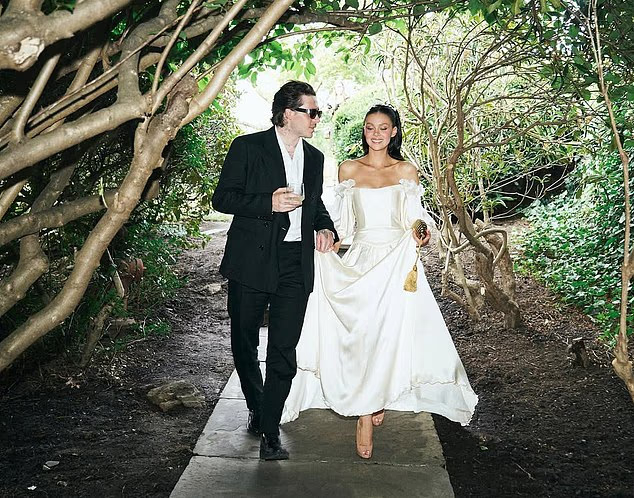
The wedding was set up across three huge air-conditioned marquees with ocean views. A floating aisle had been constructed, and the most-anticipated moment was the appearance on it of the bride in her Valentino dress – not made, of course, as is now showbiz folklore, by her fashion designer mother-in-law.
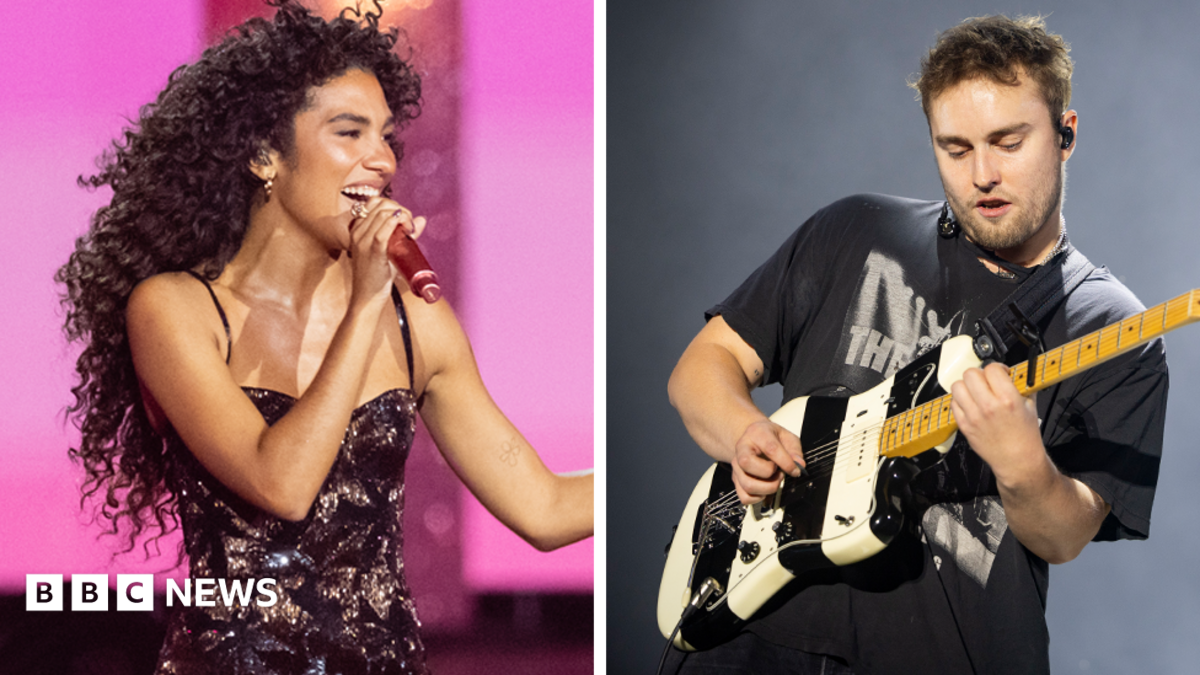
Nicola came down the aisle on her father’s arm, with UK artist Sekou, accompanied by a string orchestra, singing the mournful Fleetwood Mac ballad ‘Songbird’. An odd choice, since it is more commonly heard at funerals.
Brooklyn was so overcome with emotion when he saw Nicola that she needed to use her dainty handmade gloves to dab away his copious tears.
After the fall-out over Victoria not making the bridal gown, there was an assumption by many of the Beckhams’ friends that at least one of the bride’s other outfits would be by Victoria, who is known for her tailored trouser suits. This didn’t happen, and it’s hard to see those decisions as other than a pointed snub to Victoria.
‘Nicola is a big f***ing pain in the ass and she comes across as spoiled and annoying. However, Brooklyn chose to marry her,’ notes a family friend.
In the event, only Victoria and a tiny handful of loyal friends wore Victoria Beckham designs at her son’s wedding. Mrs Beckham wore a metallic silver slip dress with lace and a 21-carat diamond pendant.
You might have called the necklace spectacular, except for the fact that the bride’s mother, Claudia, was wearing the fabled 95-carat Star of the East diamond, a museum quality gem. Posh was entirely outgunned. A brave smile was worn despite everything, however.
As the bride and groom joined hands, the sparkling blue ocean behind them, it seemed like, despite the disastrous run-up, the wedding might actually go to plan.
Brooklyn and Nicola with her father Nelson Peltz, who gave a short, serious speech at the wedding that was mostly about the suffering of Ukraine, which had been invaded by Russia two months previously
That was, until, the rabbi started speaking. The elderly gentleman, not the Peltz’s regular rabbi, twice called Brooklyn ‘David’ during the ceremony.
This awkward error was explained away by the celebrant, saying that he was a ‘soccer fan’. It felt highly embarrassing, though, as it rammed home Brooklyn’s son-of status as the overshadowed child of a globally famous father, and at the very point where he was fully stepping into his adult identity.
After the ceremony, the guests were offered cocktails decorated with white cherry blossoms as a jazz quartet played, and then moved into the wedding tent for a black-tie dinner. Halibut, filet mignon and a vegan osso buco were served.
After dinner came the speeches. Romeo and Cruz, Brooklyn’s best men, gave a joint speech in which they teased their brother about his soppy declarations of love for the bride.
David – who had then not actually been speaking to his eldest child for three months – also spoke, making a long, heartfelt speech all about the groom.
On a day when it is customary to sing the praises of the bride, David did not do so. Instead, he talked for longer than anyone else who spoke, and all about the joys of their father-son relationship growing up, and his fond memories of Brooklyn as a child and teen.
Was he trying to remind his son of the ties between them – almost trying to make up with him at this crucial moment?
One guest said: ‘The speech went on, and on. It was one of the oddest bits of the day. It was as if David was getting married to Brooklyn.’
Brooklyn’s best men were Romeo, left, and Cruz, centre. The pair gave a joint speech at the wedding in which they teased their brother about his soppy declarations of love for Nicola
Some of the speech was about David’s haircuts down the years. He also jokingly ‘asked for forgiveness’ for dressing Brooklyn in a miniature cowboy hat at his and Victoria’s wedding.
And then David – who, of course, attracted endless headlines for his alleged affair with his then PA Rebecca Loos when Brooklyn was five years old – had the nerve to deliver some advice on how to be a good husband. He said: ‘The most important thing is to make each other happy. And treat your Mrs like gold.’
Nicola’s brother, Brad Peltz, was his sister’s man of honour and, in his speech, gave two pieces of advice: ‘Rule number one: Happy wife, happy life. Rule number two: Don’t f**k up rule number one.’
Everyone laughed approvingly.
The bride’s father, Nelson, then spoke, a short, serious speech, mostly about the suffering of Ukraine, which had been invaded by Russia two months previously.
He spoke about the couple’s donation page to the humanitarian organisation Care, which was funding work in the region. The contrast between the bride’s stoic, moneybags father and the groom’s tearful and emotive dad could scarcely have been better underlined.
The first dance followed. South African singer Lloyiso performed a cover of the Elvis Presley standard ‘Can’t Help Falling In Love’ as the bride and groom took a turn.
Next it was the turn of Nelson Peltz to dance with his girl, to Bette Midler’s ‘Wind Beneath My Wings’. The dancing continued.
At 11pm, the circular stage revolved 180 degrees and singer Marc Anthony – one of David’s best friends, who has known Brooklyn since he was small – ‘magically appeared’ for a live set. This performance was the Beckhams’ wedding gift to the couple.
Anthony had agreed to perform ‘for free’; however, speaking to sources familiar with the wedding planning, constructing the requisite stage had cost $200,000 – which was added to Nelson’s bill.
The bride’s cost-conscious father was also forking out for Anthony’s experienced, professional live musicians, and the costs of bringing them and their equipment to the venue.
In all, that ‘gift’ made a $250,000 dent in Nelson’s wallet.
According to friends of Nicola, the plan was always that the first dance to Marc Anthony would be her and Brooklyn. She even left the wedding to get changed out of her Valentino wedding dress and into a new Versace ‘party outfit’ specifically for the second first dance, as performed by Anthony.
In the event, of course, as is now legend, Brooklyn danced with his mother, after she was invited on stage by the singer.
Who asked him to call Victoria to the stage? The Peltz camp believe this was down to the Beckhams, and specifically blame Victoria for the hurtful turn of events.
One source says: ‘Victoria thought it was her event. Victoria is so attention starved or attention needy that this was viewed as an opportunity for her to shine and to find herself at the centre. My view is that she is very needy of attention and this was a way to satiate that need.’
He adds: ‘At some level, it was just alpha females fighting it out – but Nicola is the bride and it’s her wedding.’
This other ‘first dance’ – seen only by the 500 guests, who had all surrendered their phones ahead of the party – was, of course, later derided by Brooklyn, who described his mother’s dance moves as ‘inappropriate’.
First things first – Victoria had not been drinking. Because of the very real tensions with Brooklyn and the Peltzes, she hadn’t had even one glass of wine by that point.
One of the few who have seen the footage that was captured on the night by a cameraman describes the ‘close’ dance as ‘honestly, very weird’, and adds: ‘It is uncomfortable to watch.’
Victoria was seen putting her arms around her son’s neck and around his waist, which is what Brooklyn found ‘very inappropriate’. However, two other wedding guests, both friends of the Beckhams, insist they saw nothing untoward.
The dancing went on until the early hours, before the bride and groom and their guests retired to their respective accommodation. The next day, everyone was assembled again for a post-wedding brunch, held in a marquee in the tropical gardens.
Ahead of the bride and groom’s entrance, it resembled a post-mortem as guests gossiped and dissected what had occurred the night before.
The chatter died away with the entrance of Nicola, in a metallic-trimmed ivory minidress, and Brooklyn, casually dressed in khaki trousers and cream sweater. David, in a cream linen suit, and Victoria, in funereal black, arrived in a baby blue vintage convertible Jaguar, modified to run on electric.
It was a gift for the newlyweds from David, who was an investor in Lunaz, the British firm who had made it. The Founder and CEO, David Lorenz, said in a press release about the $500,000 car: ‘In creating this beautiful, electrified Jaguar XK140, we are honoured to bridge the gap between David Beckham’s professional life, where he is an investor in Lunaz, and his family life. This remarkable car is the perfect gift to his son Brooklyn and daughter-in-law, Nicola, on their wedding day. In every respect, this extraordinary electric classic car by Lunaz symbolises a bright, positive future.’
Nicola and Brooklyn duly posed in the car for pictures for Vogue Magazine, although some at the wedding detected a reluctance to be used for commercial gain on this occasion. A source says that, by this point, they were pretty much ‘over’ the whole business with the Beckhams, who seem to have lost their boundaries somewhere along the way.
Later that weekend, Vogue interviewed Nicola as part of their coverage of the wedding. Asked if she and Brooklyn had been inspired by David and Victoria’s own ceremony at Luttrellstown Castle in Ireland – with the now notorious thrones and bride and groom’s matching purple satin outfits – she and her new husband laughed.
‘Their wedding was incredible and those pictures are iconic, but the wedding we were most inspired by was Iman and David Bowie’s,’ said Nicola.
It was a most delicate swipe with the finest of knives. And there were plenty more cuts to come.
Part two of Alison Boshoff’s jaw-dropping new book on Sunday





















































You must be logged in to post a comment Login