


Connect with us
DAPA Banner
DAPA Coin
DAPA
COIN PAYMENT ASSET
PRIVACY · BLOCKDAG · HOMOMORPHIC ENCRYPTION · RUST
ElGamal Encrypted MINE DAPA
🚫 GENESIS SOLD OUT
DAPAPAY COMING

Tech

BMPS 2026 Grand Finals Day 2 Recap: Gods Reign’s Comeback Shakes Up the Leaderboard

Published

on

If Day 1 of the BMPS 2026 Grand Finals belonged to Divine Gaming, Day 2 was all about Victoris Sumus and GodsReign. Both teams consistently found themselves in the late game across multiple matches and looked like one of the most complete squads on the battlefield. At the same time, teams like GodLike Esports mounted impressive comebacks, while iQOO SouL finally showed signs of life after a disastrous opening day. Here’s everything that happened on Day 2 of the BMPS 2026 Grand Finals.

Victoris Sumus Emerges as a Serious Title Contender

The biggest story of the day was undoubtedly Victoris Sumus. The squad started strong in the opening Rondo match and eventually secured a crucial chicken dinner after outlasting GodLike Esports in the final fight. That momentum continued throughout the day as they repeatedly put themselves in winning positions.

Match 2 saw Victoris Sumus pull off one of the most surprising endgames of the tournament. Despite being forced to rotate into the zone under pressure from GodLike, the team somehow survived without losing a player. Moments later, they eliminated GodLike and secured another chicken dinner. Even when they weren’t winning matches, Victoris Sumus remained a constant threat. Their positioning, rotations, and ability to capitalize on mistakes made them one of the most dangerous teams on the server.

BMPS Miramar match

After spending most of Day 1 near the bottom of the standings, iQOO SouL desperately needed a response. Unfortunately, the day didn’t start well. Genesis Esports eliminated SouL in the opening match, exposing the same coordination issues that had haunted the team throughout Day 1. Match 2 wasn’t much better, as TAG stunned the crowd by wiping SouL near Pochinki.

However, things finally clicked during the Miramar games. SouL looked far more coordinated, won several crucial engagements, and secured their first chicken dinner of the tournament in Match 5. The team followed that up with another solid performance in the final game, highlighted by a clutch play from Legit that helped eliminate GodLike during the closing stages. It wasn’t a perfect day, but it was exactly the kind of comeback SouL fans had been hoping for.

Advertisement

GodLike Esports entered Day 2 with plenty of ground to make up and looked significantly sharper throughout the day. The team consistently found itself in favorable late-game positions and finally converted one of those opportunities into a chicken dinner during Match 3. Their aggressive pushes and grenade usage were among the best we’ve seen so far in Jaipur. While they narrowly missed out on a few additional wins, GodLike’s Day 2 performance firmly placed them back into contention heading into the final day.

TAG Continues to Entertain, But Results Remain Elusive

No team generated more crowd reactions than Team Aryan x TMG. Whether it was aggressive early-game pushes, risky compound crashes, or unconventional strategies, TAG constantly found themselves in the middle of the action.

The team showed flashes of brilliance, including a memorable win over SouL and an impressive shotgun push against Genesis. Unfortunately, their aggressive playstyle often backfired, preventing them from converting strong starts into meaningful points. TAG remains one of the most entertaining teams to watch, but they’ll need a much cleaner Day 3 to climb the leaderboard.

God’s Reign Pulls Off the Biggest Comeback of the Day

While much of the attention was on Victoris Sumus, SouL, and GodLike, Gods Reign quietly put together one of the most impressive comeback stories of the tournament. After spending much of the event in the lower half of the standings, GDR consistently picked up crucial finish points throughout Day 2. Their biggest moment came in the final Miramar match, where they secured 19 points and a chicken dinner to cap off the day in style.

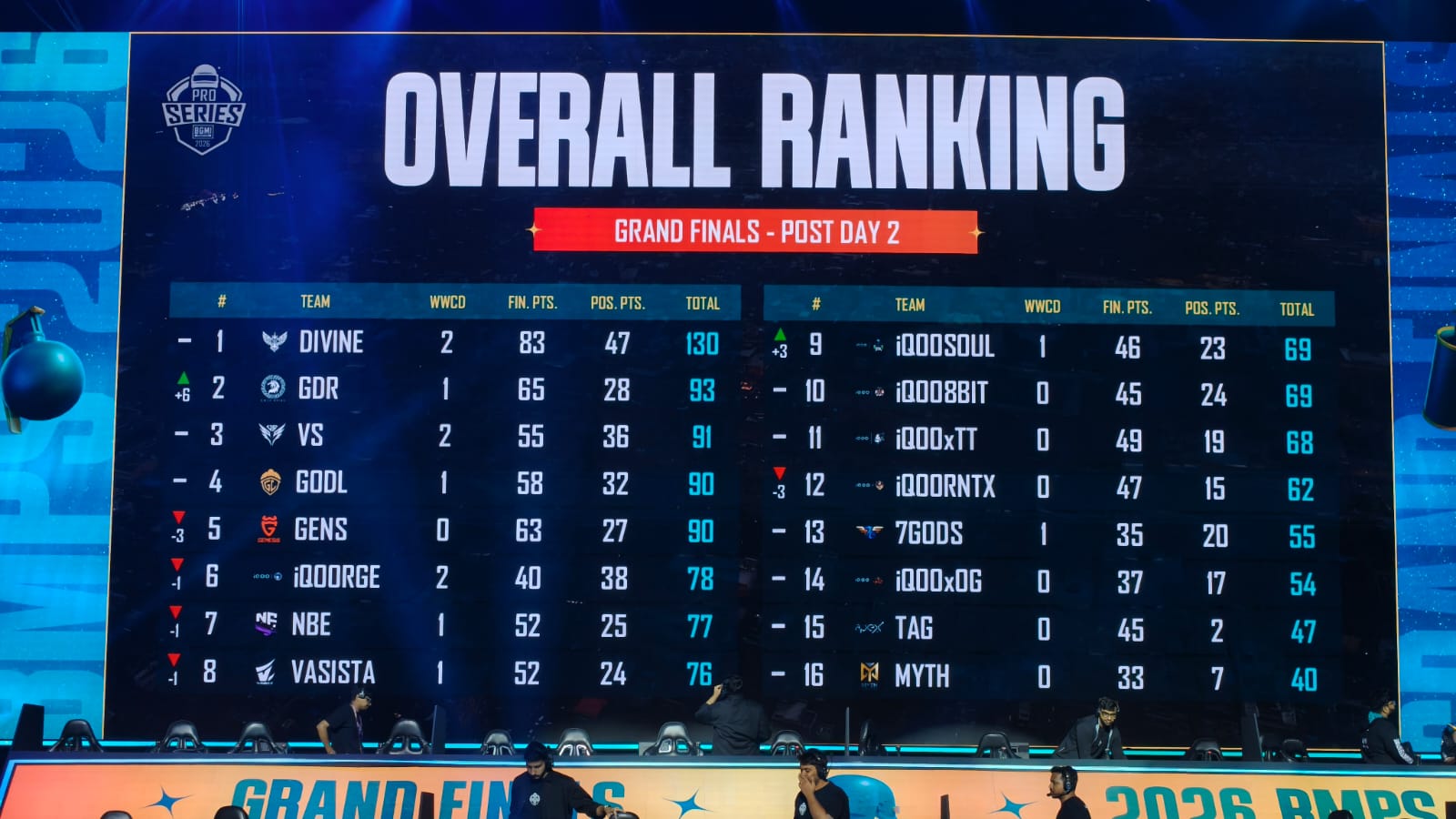
That massive haul propelled them all the way to second place in the overall standings, turning them from an outside contender into a genuine title threat heading into the final day. Check out the full standings after day 2 of the BMPS Grand Finals here.

Advertisement

Source link

Continue Reading
Click to comment

You must be logged in to post a comment Login

Leave a Reply

Tech

AI inference startup Baseten reportedly raising $1.5B months after its last mega-round

Published

on

AI inference company Baseten is close to finalizing a stunning $1.5 billion funding round at a $13 billion valuation, the Wall Street Journal reports. Just five months ago, the startup announced that it had raised a $300 million Series E at a $5 billion valuation. And that round was just nine months after raising a $150 million Series D.

If finalized, this latest round would represent a 160% increase in valuation in less than half a year. However, the WSJ reports that this is a split-priced round, a tactic startups are using to boost their headline valuation and make lead investors look good on paper. Some investors in this latest funding round are reportedly coming in at a $13 billion valuation, while others at $11 billion, sources told the Journal. This deal is said to be co-led by Spark Capital, Sands Capital, Altimeter Capital, and Wellington Management. 

Launched in 2019, Baseten is a startup benefiting from what The Next Wave hailed the “inference gold rush,” in which VCs are pouring enormous amounts of money into companies building the inference layer. Inference is what the model does after a user submits a prompt. Baseten promises to handle inference quickly while controlling costs by routing requests to the best-for-task model, especially to competent, less-expensive open source alternatives.

Source link

Advertisement
Continue Reading

Tech

How to watch Spain vs Saudi Arabia: Free Streams & TV Channels World Cup 2026

Published

on

Tournament favorites Spain will look to put things right against Saudi Arabia, after both sides opened their respective FIFA World Cup 2026 campaigns with a point. Lamine Yamal hopes to start for La Roja.

Spain play in Atlanta for the second game in a row but the 75,000-capacity stadium will already hold bad memories after La Roja’s goalless draw with World Cup debutants Cape Verde on Monday. Head coach Luis de la Fuente even chucked on star wingers Yamal and Nico Williams in a desperate bid to find a goal, as both players continue their convalescence from recent injuries. The main talking point is now whether the duo will start what feels a must-win game for European champions.

Source link

Advertisement
Continue Reading

Tech

I Saw the Ultimate Rocket Bike in Action and It Blew Me Away

Published

on

As I watched Graham Sykes climb onto his rocket bike, I was worried for a moment that I was about to film a man as he died. But as he hurtled past me at hundreds of miles per hour and engulfed me in a cloud of steam, I realised I needn’t have worried — this is just a normal day for Sykes. 

I was at the Santa Pod raceway in Bedfordshire, England, meeting Sykes and his team as they prepped his entirely steam-powered bike — dubbed Force of Nature — for a potentially record-breaking speed attempt during a drag-racing festival. After battling through the crowds flooding into the venue, I eventually found Sykes and his team among cars and bikes of all shapes and sizes, diligently preparing Force of Nature for its one scheduled run that day. 

Advertisement

Watch this: World’s Fastest Steam-Powered Rocketbike

Sykes, who seemed far calmer than I expected, offered me a marshmallow as I got my first glimpse of the bike, “I tend to not eat a great deal before a run, except for sugary sweets — we’ve all got our vices!” he said. 

Image of people fixing a motorcycle

Sykes (in his racing leathers) and the team make some adjustments to the bike.

Andrew Lanxon/CNET

The bike looked like nothing I’d ever seen before. Long and sleek with enormous funnel-shaped exhausts on the back, the only thing that marked it out as a motorcycle was the fact it was a vehicle on two wheels. A mechanical engineer by trade, Sykes has made almost every component himself from his workshop in his back garden. 

Advertisement

Not that you’d guess. Peering close up at various components, I felt I was looking at something crafted in a NASA lab rather than in someone’s garden shed. At the heart of the bike’s steam propulsion system is a 120-liter boiler, heated by a burner to around 260 degrees Celsius (around 500 Fahrenheit). That boiling process creates an immense amount of pressure inside the tank, which is released when the starting lights go green in about 3 seconds, propelling the bike to speeds of over 200 miles per hour.

The boiler is the only component not built by Sykes He instead sourced it from a company that manufactures pressurized vessels for the nuclear and oil and gas industries. The reason simply comes down to safety. “If it exploded, it wouldn’t just be myself that would be injured or killed,” said Sykes. “It would be everyone else around me too.” 

Image of a car speeding past

The Santa Pod Raceway plays host to all kinds of drag races, including this one involving what I’m pretty sure is a Mustang. It wasn’t easy to capture, especially when shooting on Kodak Gold film.

Advertisement

Andrew Lanxon/CNET

Despite the very real risks involved, Sykes struck me as very calm and relaxed on the day. He was clearly enjoying himself as he helped the team do the pre-run checks and chatted with excited fans who came to the team’s base to meet Sykes and get his autograph. He was clearly in his element. 

“I always wanted to ride a rocket bike,” he said “But no one was going to ask me ‘Hey Graham, do you fancy riding my rocket bike?’ so the only way to do it was to build one. In the 1970s Evel Knievel tried to jump over Snake River Canyon and that was a super-heated water rocket, so that’s what inspired me.” 

image of topless men watching a race

The race day drew tens of thousands of fans, all eager to see cars and bikes move faster than they really have any right to. 

Advertisement

Andrew Lanxon/CNET

But nerves do still set in, even for Sykes. “Every time you get on the bike, you have trepidation,” he said “You have that adrenaline and you’ve got that little bit of reservation in your head that says ‘when I press this button, my life is gonna change. Hopefully for the better.” 

I positioned myself next to the track, with a clear view of the starting line. I could see Sykes and the team preparing, and had a nice bit of space that would allow me to see him zoom past. I was there to film the spectacle too, but when each run lasts a matter of seconds, it’s not an easy task to capture. Aside from the camera in my hand and the three cameras I had on tripods, I’d also attached a number of GoPro cameras to his bike (using industrial clamps to ensure they didn’t fly off with the force of the acceleration). 

Even so, I was nervous about missing the one opportunity I had to capture Sykes in action. And I was right to be: Before his run, I practiced on other drag races, from tuned-up road cars to hot-rods powered by literal rockets pulled out of fighter jets. The speeds these vehicles achieved were astonishing to me, and the noise was like nothing I’d ever heard. 

Advertisement
Image of rocket-powered cars racing

The rocket-powered drag cars were fast and probably the loudest things I’ve ever heard.

Andrew Lanxon/CNET

But the practice helped me prepare to get the shot, and as I got the thumbs up that the run was soon to begin, I braced myself. As, I imagine, did Sykes. “When we get the bike to the starting line, Diane, my wife, takes the safety pin out, shows me the pin to say that it’s out and the bike is live, taps me on the head which is as good as a kiss, and… off we go,” he told me.

“Nothing can prepare you for what you’re going to experience. It’s like being kicked from behind — the G-Force pulls your body backwards.” 

The lights counted down, turned green and Sykes went off like a bullet. A huge plume of steam erupted from the bike’s exhaust, knocking back one of my cameras, positioned nearby, and sending it hurtling 30 feet into a barrier. I panned my camera quickly as he shot past me, before the wall of steam swept over me. 

Advertisement
Image of people watching a drag race

When most races last only a few seconds, it’s really a case of “blink and you miss it.”

Andrew Lanxon/CNET

It was astonishing to watch and I can’t begin to imagine what it must feel like for Sykes on the bike. I’ve driven some speedy cars in my time at CNET but the fastest acceleration I’ve experienced is 0 to 60 miles per hour in about 2.8 seconds. That felt insanely fast to me — fast enough that I didn’t like it. I felt the edges of my vision blurring and I didn’t want to do it again. 

Sykes does 0 to 60 mph in under half a second. 

Advertisement

The Force of Nature bike didn’t break its own records that day. But the run, at least, was a safe one. “Once I see that parachute come out at the end, I know everything’s all right,” said Diane.

Every run is also a great performance that shows the amassed crowds the true power of what steam can do. “People think that steam is an old-fashioned, out-of-date power source, said Sykes. “But every power station that generates power from fuel is really powered by steam.” 

image of a man in a racing suit

Sykes shares a kiss with his wife Diane following the speed attempt.

Advertisement

Andrew Lanxon/CNET

“When we first started building [the bike] we wanted to run a 5-second quarter mile, with a 200 mph pass — neither had been done before using steam,” he added “We’ve since achieved both of those goals.” 

Sykes and the team hope to achieve a 4-second run in the future. From what I saw of their precision, dedication and passion, I don’t think it’ll be long before they get there. 

Source link

Advertisement
Continue Reading

Tech

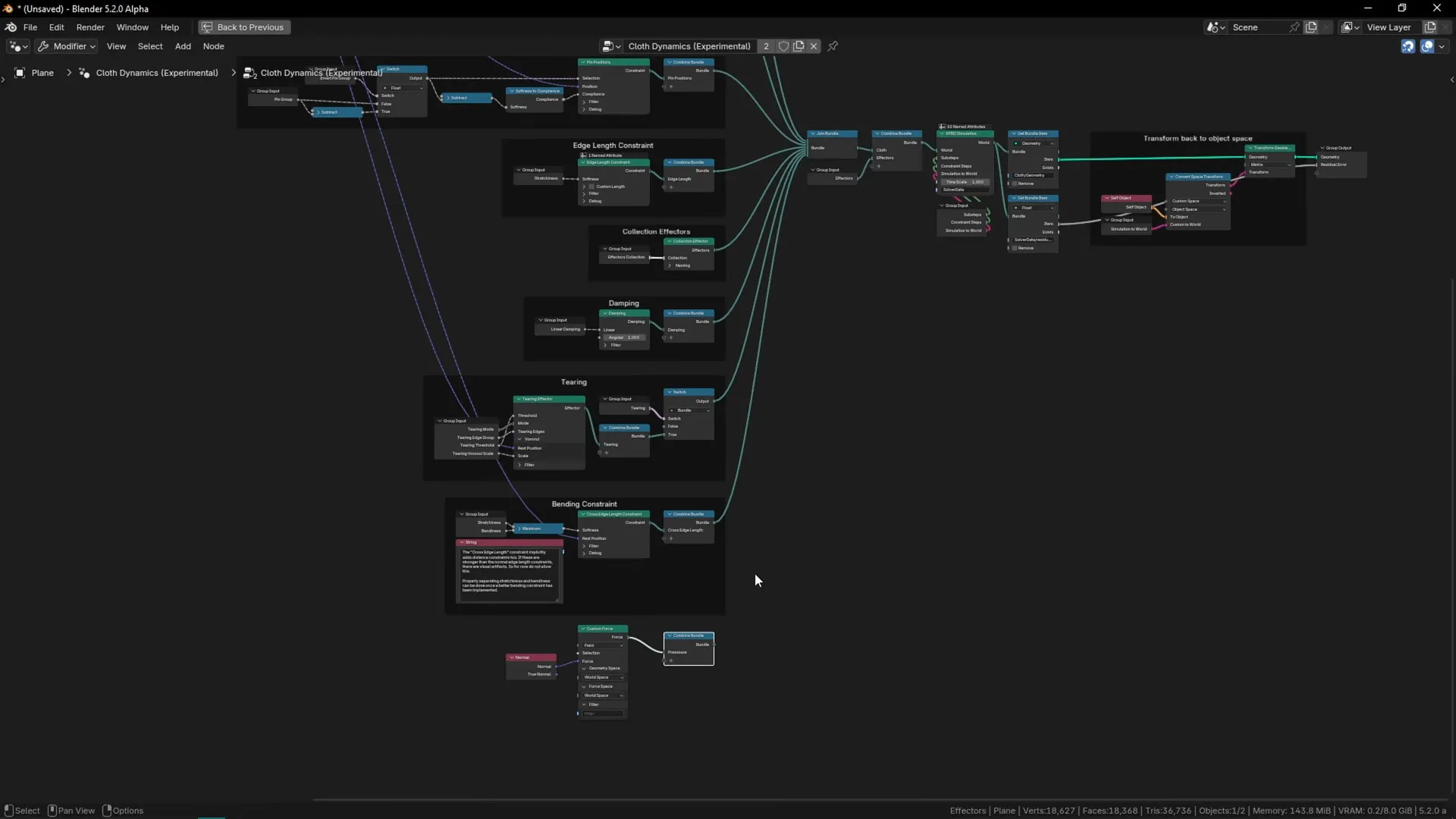
Blender 5.2: Coming Soon With Improved Simulations

Published

on

Blender is one of the poster children for Open Source Software– proof that something hacked together by enthusiasts could grow to rival the big boys in 3D modeling, animation and rendering after it was abandoned by its original corporate owners. Once you climb that initial learning curve, which can indeed feel cliff-like, you can do almost anything in Blender you can in paid competitors– almost.

Traditionally, one of the weak points has been simulations, with even those working in Blender professionally offloading simulation to programs like Houdini. According to [3Dan], once version 5.2 is out of beta in July, that may become a thing of the past. 

Simulations aren’t a necessary part of a 3D animation software, but they are very, very nice to have. If you want realistic-looking fluids, hair, or cloth, it’s incredibly difficult to animate it by hand. One, because there are so many degrees of freedom in, say, flapping cloth, keyframing is a major pain, but also figuring out how to make the model move and deform realistically is by no means trivial. It’s easier to offload all that on a physics simulation; then, as long as the physics is realistic, the animations will be as well.

That’s not easy, computationally speaking, and one thing that’s clear is there’s been work behind the scenes to optimize the simulation algorithms, not just improve the workflow, as the basic “drop cloth on a monkey head” demo now runs twice as fast. The new workflow itself bring simulations more into line with how Blender has been going– it’s part of geometry nodes now. So there’s simulation nodes you bring in, but that means things like tearing cloth become quite straightforward compared to the occasionally byzantine workarounds required before. This node-based workflow also brings Blender more into line with how paid software works these days.

Advertisement

[Dan] demonstrates the power of it by adding air pressure to a cloth simulation with some custom nodes, inflating and popping a fabric sphere. He also demonstrates how cloth simulation can be applied to animate realistic foliage. This update probably doesn’t have Houdini developer SideFX shaking in their boots, but it might allow some animators to stop paying that license and go fully-open source, which is great to hear.

While the work on the simulations engine is raising the bar on what was, traditionally, one of the weak points of the software, v5.2 brings oodles of improvements across the whole gamut of what blender can do– which is a lot. See them all on the official release notes. Even if you’re not into digital sculpting or animating, you may find yourself downloading a copy of Blender at some point to add texture to 3D prints, or make fancy resin-print miniature models FEM-friendly. The right addon can even let Blender do parametric CAD, if you want open-sorce and can’t stand FreeCAD. Though FreeCAD is getting better all the time, too.

Advertisement

Source link

Continue Reading

Tech

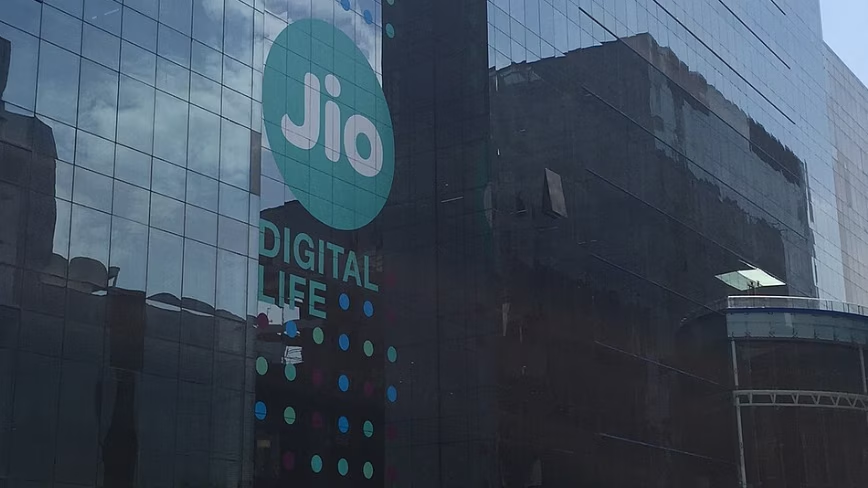
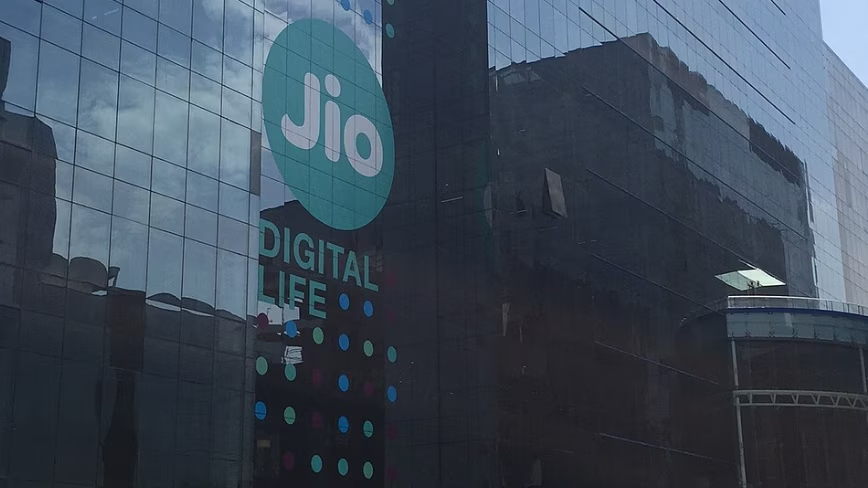
Jio Platforms files for India’s largest-ever IPO, with nearly $3 billion earmarked for debt repayment

Published

on

TL;DR

Jio Platforms filed for a $3.8B IPO that would be India’s largest ever, with $2.9B earmarked to repay its telecom unit’s foreign currency debt.

Jio Platforms, the digital and telecom arm of Mukesh Ambani’s Reliance Industries, filed its draft red herring prospectus with India’s securities regulator on Friday for what would be the country’s largest initial public offering. The filing covers a fresh issue of up to 270 million shares, with no offer-for-sale component, meaning every rupee raised flows directly into the company’s balance sheet.

The IPO is expected to raise approximately $3.8 billion, according to people familiar with the matter. That would surpass Hyundai Motor India’s $3.3 billion listing in October 2024, currently the record for an Indian maiden offering.

The DRHP specifies that 275 billion rupees ($2.9 billion) of the net proceeds will go toward prepaying external commercial borrowings held by Reliance Jio Infocomm, its telecom subsidiary. The remaining funds are earmarked for general corporate purposes.

Advertisement

The borrowings in question consist of three loan facilities denominated in dollars and yen, totaling 300.6 billion rupees. Lenders include Australia & New Zealand Banking Group, Bank of America, Barclays, BNP Paribas, and Citibank. All three facilities are scheduled for repayment between March and June 2028, but Jio Platforms intends to prepay them in full or in part from the IPO proceeds.

Ambani announced the filing at Reliance Industries’ 49th annual general meeting on June 19, describing the listing as a step toward unlocking value for shareholders. The IPO will be led by Akash, Isha, and Anant Ambani, the next generation of the family.

Nineteen banks have been appointed as book-running lead managers, including Morgan Stanley, Goldman Sachs, J.P. Morgan, and Kotak Mahindra Capital.

The deleveraging strategy is significant. Jio Platforms’ net debt stood at 275.8 billion rupees as of March 2026, down from 452.7 billion rupees a year earlier and 484.4 billion rupees in March 2024. A successful IPO would eliminate the bulk of the remaining foreign currency exposure and reduce the company’s annual servicing costs.

Advertisement

The company said in the prospectus that repaying the debt would improve its ability to raise future resources for business development and position it for continued investment in 5G network densification, fixed broadband expansion, and AI and cloud services.

Jio Platforms operates through its telecom subsidiary Reliance Jio Infocomm, which is the world’s second-largest mobile operator by single-country subscribers after China Mobile. As of March 2026, it had 524.4 million subscribers, with 268.5 million already on its 5G network, making it the largest single-country 5G operator outside China in a market racing to scale its digital infrastructure.

In the financial year ending March 2026, Jio reported operating revenue of approximately 1.47 trillion rupees ($15.6 billion) and a net profit of roughly 300 billion rupees ($3.2 billion). EBITDA rose 18.8% to 762.6 billion rupees, with margins improving to 51.9%.

At a valuation above $130 billion, which analyst estimates place between $131 billion and $180 billion, the IPO would make Jio Platforms one of the most valuable companies to list in Asia. The offering represents roughly 2.9% of post-issue equity, enabled by a March 2026 regulatory change that allows companies valued above 5 trillion rupees to list with just 2.5% public float.

Advertisement

Meta holds a 9.99% stake and Google holds 7.73%, both acquired during a 2020 fundraising round that brought in more than a dozen global investors including KKR, Vista Equity Partners, Silver Lake, and sovereign wealth funds from Abu Dhabi and Saudi Arabia. The fresh-issue structure means none of these investors are selling in the IPO itself, though the DRHP does not restrict future secondary sales once lock-up periods expire.

The timing places Jio’s filing alongside a broader wave of major Asian tech listings. At the same AGM, Ambani outlined a $110 billion AI infrastructure investment over seven years and announced a partnership with Meta to build an AI data centre in Jamnagar, Gujarat. The IPO proceeds, by clearing the balance sheet of foreign currency debt, would free up capacity for those commitments.

India’s broader push toward technological self-reliance and sovereign AI infrastructure adds a geopolitical dimension to the listing. Jio has positioned itself as the backbone of India’s digital economy, and its 5G and AI ambitions align with the government’s stated goal of reducing dependence on foreign technology platforms.

Existing Reliance Industries retail shareholders will receive a dedicated quota in the offering, with up to 35% of the issue reserved for retail investors. Price band, lot size, and bidding dates have not yet been disclosed, which is standard at the DRHP stage. These will follow once SEBI issues its observations and Jio files its final prospectus.

Advertisement

The draft document did not specify the IPO’s total size in rupee terms, as the issue price will be determined through book building. However, based on the 270 million share figure and prevailing valuation estimates, the offering is expected to land in the range of 360 billion rupees.

Source link

Advertisement
Continue Reading

Tech

There will come soft pings, and every one of them will have notes

Published

on

The house is quiet, but you’ve already started receiving notes. In the near future, you wake up at 6:43 am.

The sleep tracker reports poor recovery. The watch recommends a lighter day, which is considerate, if not especially informed. Somewhere in the stack of sensors, last night has been converted into a verdict. There isn’t enough sleep or rest, and the day hasn’t even started asking for things yet.

The device isn’t being especially cruel. In 2024, CDC/NCHS found that 30.5% of U.S. adults had short sleep duration, and only 54.8% woke up well-rested.

The morning, apparently, now begins with a software intervention.

Advertisement

When the routine gets a management layer

By the time the front door opens, your routine has acquired a small staff.

The smart glasses skim messages and calendar items into the corner of your eye.

The AirPods press the commute into something survivable.

The watch catches your heart rate, the ring follows your recovery, the glucose patch waits for lunch like a tiny food critic, and the posture tracker buzzes when your spine gives up pretending.

Somewhere below, the smart insoles notice your walk has changed.

Advertisement

The market is already moving in that direction, which is unfortunate for anyone hoping this stays a joke. Circana reported that US fitness tracker revenue grew 88% year over year in the first seven months of 2025, while smart ring unit volume jumped 195%. Smart rings also accounted for 75% of total fitness tracker revenue so far that year.

When lunch can file a report

Wearables aren’t satisfied with counting your steps and congratulating you for standing up anymore.

The category is drifting toward interpretation: recovery, glucose response, posture, strain, readiness, and the suspicious moral weather of your body.

The question was never whether these gadgets are useful. Many of them are.

Glucose monitoring shows the direction of travel. Ultrahuman recently announced M2 Live, a US continuous glucose monitoring service built around Abbott’s Lingo biosensor, with no prescription required. It costs $99 per month, with sensors sold separately for $129 and worn for up to 14 days.

Advertisement

The appeal is obvious. The joke is worse: lunch can now file a report.

When every fix becomes another nudge

One gadget disappears into a routine. Seven of them turn your routine into a meeting.

A watch can catch something real. A glucose patch can reveal a pattern. Smart glasses can make the day less messy. AirPods can make the commute less hostile.

The unease comes from the accumulation. The day keeps asking for more: more messages, more sitting, more rushed meals, more sleep debt, more cheerful little boxes to tap before work has even started. Then tech arrives with small corrections for every injury the day has already made. Breathe here for a minute. Stand up before the next call. Eat differently at lunch. Walk cleaner on the way home. Please consider becoming a slightly improved mammal.

The question was never whether these gadgets are useful. Many of them are. The better question is what gets lost in the rounding.

The afternoon you wasted and didn’t regret. The version of yourself that exists outside the dashboard. The grief that didn’t resolve into a trend line. None of that generates clean data, and clean data is, increasingly, the most expensive thing you have to offer.

Advertisement

Your routine continues whether or not you’re really home.

The future cyborg won’t need a weapon. You’ll need a nap, and at least three devices will take credit for suggesting it.

And somewhere in a data center the size of a small city, a server notes that the nap was 23 minutes too short, flags the cortisol trend, updates your profile, and quietly adjusts tomorrow’s recommendations.

The house is quiet. Somewhere on your wrist, your finger, your spine, your foot, the notes keep coming.

Advertisement

Source link

Continue Reading

Tech

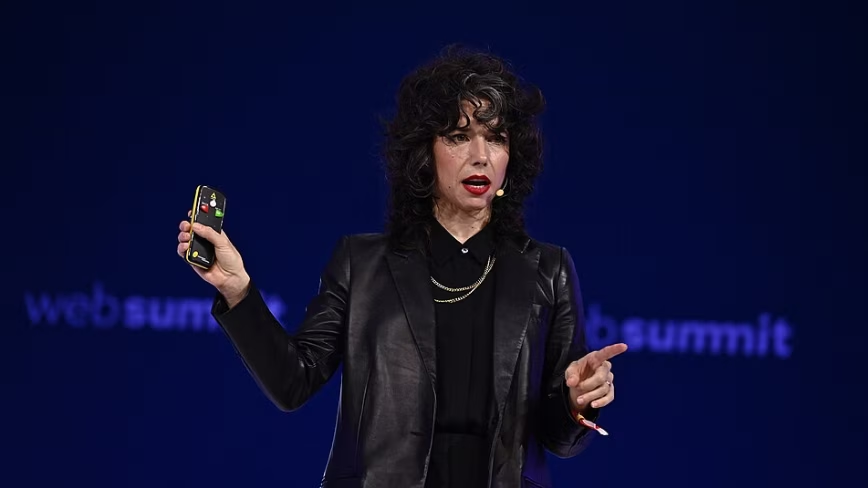
Signal’s Meredith Whittaker says AI chatbots ‘are not your friends’ and calls Copilot agents a backdoor

Published

on

TL;DR

Signal’s Whittaker warns AI chatbots are not sentient and that agentic systems like Copilot needing access to messages and credit cards are a backdoor.

Signal president Meredith Whittaker has warned that AI chatbots “are not your friends,” “are not conscious beings,” and “are not sentient interlocutors,” pushing back against the growing tendency of users to treat AI systems as trusted companions. The comments came in a Bloomberg interview published this week in which Whittaker laid out her case that the agentic AI vision promoted by companies like Microsoft amounts to a new form of surveillance infrastructure.

Whittaker, who has led the encrypted messaging nonprofit since September 2022, acknowledged that she uses AI tools “to format a document here and there” but drew a hard line at anything more substantive. “I don’t ask them questions,” she said.

I’m very serious about my thinking and writing, and I don’t want the process of working through an idea to be foreclosed or eclipsed by the response of a system that’s averaging what’s already out there,” she added.

Advertisement

Her sharpest criticism was directed at Microsoft AI CEO Mustafa Suleyman’s prediction that users would be able to let Microsoft Copilot handle all their Christmas shopping by eavesdropping on family group chats to determine who wants what. Whittaker methodically listed the access such a system would require: “my credit card, my browser, my Signal, the ability to message my siblings on my behalf, my home address, my calendar.

Advertisement

What you’ve just described is a system with very pervasive access across multiple applications and services,” Whittaker said. “In the context of Signal, it would constitute a kind of a backdoor.

The backdoor framing is deliberate and carries weight coming from the head of Signal, which operates the most widely used end-to-end encrypted messaging protocol in the world. Signal’s encryption is also used by WhatsApp, which has more than two billion users. Whittaker has previously said the organisation would leave the EU rather than comply with any law requiring it to compromise its encryption, a position she reiterated when the European Parliament voted in April to let its ePrivacy derogation expire rather than extend voluntary scanning of private messages for child sexual abuse material.

The core of Whittaker’s argument is that agentic AI systems, which need near-total access to a user’s digital life to function, are structurally incompatible with end-to-end encryption. An AI agent that can read your messages before they are encrypted, or after they are decrypted, renders the encryption irrelevant from a privacy standpoint. It does not matter that the messages are encrypted in transit if a system with root-level access is processing them in plaintext on the device.

Whittaker has been making this case with increasing urgency. In January 2026, she warned at Davos that agentic AI was “perilous” for secure applications. In an essay for The Economist, she accused operating system vendors of “hollowing out” Signal’s ability to guarantee privacy by embedding agents into their platforms.

Advertisement

She has described prompt injection, where an attacker manipulates an AI agent into executing unintended commands, as the likeliest first exploit path against encrypted messaging platforms.

Microsoft is building an entire operating system around agent-first computing with Project Solara, unveiled at Build 2026, which replaces traditional apps with AI agents as the primary interface. Google, Apple, and OpenAI are pursuing similar strategies.

Whittaker’s position is that this architectural shift, where agents mediate every interaction between users and their devices, creates databases of entire digital lives that become prime targets for both hackers and governments.

The interview also touched on the broader AI anthropomorphism problem. Suleyman himself has warned about “seemingly conscious AI” and “AI psychosis,” where users believe chatbots are sentient. Whittaker’s framing was more direct: the systems are designed to mimic empathy and understanding, but the underlying mechanism is pattern-matching across training data, not comprehension.

Advertisement

Treating them as confidants means volunteering sensitive information to systems whose data handling practices are opaque and whose operators have commercial incentives to retain and analyse that data.

Whittaker’s position places her at odds with the dominant narrative in Silicon Valley, where the agentic future is presented as an inevitability that will make users more productive. Her counter-argument is that productivity gains achieved by surrendering control of your messages, calendar, contacts, and financial information to a corporate AI system are not gains at all, but a transaction in which users trade privacy for convenience without understanding the terms.

Source link

Advertisement
Continue Reading

Tech

New York City has defeated Waymo, and the taxi lobby is the reason

Published

on

TL;DR

Waymo is blocked from NYC by Mayor Mamdani, the taxi lobby, and labor unions. Governor Hochul withdrew her statewide robotaxi proposal after outcry.

Waymo delivers more than 500,000 paid rides per week across 10 US cities, raised $16 billion in February, and is expanding internationally to Tokyo and London. It cannot operate in New York City.

The reason is not technical, it is political.

As the New York Times reported this week, opposition from local politicians, labor unions, and an influential taxi lobby has stopped the Google-owned robotaxi company from entering the country’s largest and most lucrative ride-hailing market. The roadblocks are structural, not temporary.

Advertisement

The 💜 of EU tech

The latest rumblings from the EU tech scene, a story from our wise ol’ founder Boris, and some questionable AI art. It’s free, every week, in your inbox. Sign up now!

New York Governor Kathy Hochul introduced a budget proposal in January that would have legalized commercial robotaxi pilots across New York state, excluding New York City. A month later, she withdrew it. The pushback from driver groups, transit workers, and state legislators was immediate and overwhelming.

Based on conversations with stakeholders, including the legislature, it was clear that the support was not there to advance this proposal,” a spokesperson for the governor told CNBC. The reversal killed Waymo’s most promising regulatory pathway into the New York market.

Advertisement

Newly elected NYC Mayor Zohran Mamdani has made his position clear. Mamdani, who went on a hunger strike alongside taxi workers during his earlier political career, has declined to renew Waymo’s testing permit, which expired on March 31. The permit, approved by former Mayor Eric Adams in August 2025, had allowed Waymo to test eight Jaguar I-PACE vehicles with safety drivers in Manhattan and downtown Brooklyn.

No collisions were reported during the entire testing period, according to NYC’s Department of Transportation. That fact has not changed the political calculus.

Our strategy remains the same,” Waymo’s global head of public policy Justin Kintz told the New York Times. “We want to meet people and governments where they are.

We know that some of them will take more time than others,” Kintz added. “But we’re committed to earning trust.

Advertisement

The company has spent at least $1.8 million lobbying New York state officials since 2019, according to state records, and recently retained The Parkside Group at $15,000 per month to lobby on autonomous vehicle legislation. The money has not moved the needle.

The standoff reflects a broader tension in the robotaxi industry. Waymo must approach each state and city individually for permission to operate, a patchwork regulatory environment that gives local politicians effective veto power. Legislation has stalled in at least eight states, including New York, Virginia, Oregon, and Minnesota, even as 18 states now allow fully driverless commercial operations.

Waymo’s technical record in New York was clean, but its broader safety record is more complicated. The company issued its sixth recall this week after robotaxis drove into highway construction zones 13 times across Phoenix and the San Francisco Bay Area.

A rider told CBS News they thought they were going to die. Waymo offered three free rides worth up to $40 each.

Advertisement

The recall pattern gives ammunition to Waymo’s opponents in New York. New York Magazine argued that what could reverse the Mamdani administration’s resistance would be proof that the vehicles are safe, beyond the company’s own statistics. That is difficult to demonstrate when the company is simultaneously pulling its fleet off highways because the software cannot reliably detect cones and closure signs.

The economic stakes are enormous. Waymo is deploying its new, cheaper Ojai robotaxi and targeting one million weekly rides by the end of 2026, with plans for more than 20 additional cities including international markets. New York City, where over 100,000 for-hire vehicle drivers operate and the taxi industry generates billions annually, would be its single most valuable market.

But the city’s taxi medallion system has already been through one near-collapse, when Uber and Lyft decimated medallion values from over $1 million to under $200,000 a decade ago. Taxi drivers who fought back from that crisis are not interested in another disruption. The New York Taxi Workers Alliance, which represents roughly 28,000 drivers, has framed the fight against robotaxis as a labor rights issue.

The competitive landscape is shifting around Waymo while it waits. GM is rebuilding its autonomous vehicle program after shutting down the $10 billion Cruise division. Tesla has launched a limited robotaxi service in Austin, and Amazon’s Zoox operates in San Francisco and Las Vegas.

Advertisement

None of them are in New York either, which suggests the city’s resistance is not Waymo-specific but industry-wide.

For now, Waymo’s $16 billion war chest and 500,000 weekly rides have not purchased entry to the one market that matters most. The company’s strategy of patience and lobbying may eventually work, but in a city where taxi drivers have political allies in the mayor’s office, the state legislature, and the labor movement, “eventually” could mean years.

Source link

Advertisement
Continue Reading

Tech

BMPS 2026 Grand Finals Standings After Day 2

Published

on

The second day of the BMPS Grand Finals has just curtailed, and as expected, it was the day of comebacks from the likes of GDR, who finished second in the overall standings just after table toppers Divine. Another big comeback came from Vacista Esports, who finished third in overall standings, thanks to the multiple chicken dinners. Sadly, it wasn’t all sunshine for teams like TAG, who failed to mount a challenge for the top once again, succumbing to blind pushes and unnecessary moves. Here’s what the standings look like after day 2 of the BMPS Grand Finals.

BMPS Grand Finals Standings After Day 2

Rank Team WWCD Finish Points Position Points Total Points
1 DIVINE 2 83 47 130
2 GDR 1 65 28 93
3 VS 2 55 36 91
4 GODL 1 58 32 90
5 GENS 0 63 27 90
6 iQOOORGE 2 40 38 78
7 NBE 1 52 25 77
8 VASISTA 1 52 24 76
9 iQOOSOUL 1 46 23 69
10 iQOO8BIT 0 45 24 69
11 iQOOxTT 0 49 19 68
12 iQOORNTX 0 47 15 62
13 7GODS 1 35 20 55
14 iQOOxOG 0 37 17 54
15 TAG 0 45 2 47
16 MYTH 0 33 7 40

Day 3 is up ahead tomorrow, and Divine still has a comfortable lead ahead of all the pack. It’ll be interesting to see if they can continue this timid momentum, or if someone from the likes of GDR, VS, or even GodLike makes a dent in anyone’s plans to catch the flight to Paris.

Source link

Continue Reading

Tech

How To Personalize The Screensaver On Your Kindle

Published

on

We may receive a commission on purchases made from links.

So, you’re tired of seeing rotating ads or Amazon’s preloaded graphics on your Kindle every time you put it to sleep. That’s understandable, especially if you’re voracious reader who’s been spending a lot of time on your ereader. In this piece, we’re going to walk you through how to change your Kindle sleep screen and even how to personalize it if you want. 

How to remove Kindle Special Offers

Kindles with Special Offers or lockscreen ads typically cost $20 less than the versions without them. These devices will show you a rotation of advertisements for books, for more Kindle devices or for Kindle Unlimited whenever you put your Kindle to sleep. As long as your device is ad-supported, you cannot customize your screensaver, so your first step is removing Special Offers from your ereader, which will understandably cost you some money. If your Kindle doesn’t have lockscreen ads, you can skip this step. But if it does, you can follow these instructions:

1. On desktop, go to the Amazon website, log in and click the hamburger menu on the left side of the screen. 

Advertisement
  • Under Digital Content & Devices, go to Kindle E-readers & Books. 
  • On the next screen, click on Manage Content and Devices under Apps & Resources. 
  • On the new page that loads, click on Devices near the top of screen. If you have more than one Kindle attached to your account, click the box marked Kindle under Amazon Devices and then choose the ereader you want. 
  • In the Special Offers box at the bottom, you’ll find a button to remove offers for $20. Again, you’ll have to pay for it, because Amazon says the original $20 discount you got was in exchange for getting ads.

2. On mobile, fire up the Amazon app. 

  • Go to the “Alexa for Shopping” tab on the bottom right corner of your screen. 
  • Type in “I want to end Special Offers on my Kindle.” Alexa will link you to the Manage Devices page. 
  • From there, choose a Kindle and scroll down to end Special Offers for $20.

NOTE: If you’re not in the US but somehow have a US-version Kindle, you might have issues removing lockscreen ads. Amazon will ask you to add a US address and a card with US billing to be able to pay $20 for their removal. Without both, it won’t be possible to proceed to the next step. You can try talking to customer service and asking kindly if they can disable special offers for you at no cost, but there’s no guarantee that that will work. 

How to display book covers as your Kindle screensaver

Once you’re done getting lockscreen ads removed, or if you never had them in the first place, you’ll get a rotation of Amazon-provided illustrations as your screensaver. Those who own newer Kindles have the option of using the cover of the book you’re currently reading instead (see below for a full list of supported models). To make sure this feature is turned on, follow these steps: 

  • Tap the three-dot menu on the upper right-hand corner of your Kindle. 
  • Go to Device Options. Find Display Cover and toggle it to On. 
  • On newer or updated devices, you’ll find the “Show covers on lock screen” option in the “Screen and brightness” section. Simply toggle it on. 

NOTE: The option to use book covers as screensavers is only available on the following models: 

How to use custom images as your Kindle screensaver

Unfortunately, there’s no way to use custom images as your permanent Kindle screensaver without jailbreaking your device. There is, however, a trick you can consider: Replacing the cover of a book  with the illustration you want to see, then opening it before locking your device. Before you proceed with the instructions below, make sure you’ve already completed the steps above to toggle on the option to display book covers as your lockscreen. 

  • The first step is to create custom wallpapers on programs like Canva or to look for an illustration you want to use. Just make sure it fits the device you have by searching for the dimensions of your ereader’s screen. The latest Kindle Paperwhite, for instance, has a 7-by-5-inch display. Some people recommend creating a wallpaper measuring 2,560 x 1,600 pixels, which will work for most Kindle models. 
  • After you’re done designing your custom illustration, download it as a PNG image.
  • Use a program like Calibre to convert any file it supports (like PDF) into an EPUB file. You’ll find the option to set a cover for your ebook on the conversation screen, so choose the PNG image you made. 
  • You can also look for an “epub cover change” website online. Upload the book you’re reading or any EPUB you have and then choose the PNG image you saved earlier for your new cover.
  • Use the “Send-to-Kindle” feature to upload the finished file to your ereader.

NOTE: You will have to switch to the book that uses your custom cover before you put your device to sleep every time you want to see it on your lockscreen. Alternatively, you can change the cover of every book you read, though that sounds pretty time-consuming, especially if you blaze through books quickly. While this solution isn’t very straightforward, it’s an effective way to personalize your device. 

Source link

Advertisement
Continue Reading

Trending

Copyright © 2025