

Crypto World
Alphabet (GOOGL) Stock Plunges 6% as AI Talent Exodus Continues to OpenAI and Anthropic


Key Takeaways
- Alphabet shares declined approximately 6% Monday, reaching $343.30 during morning hours
- Noam Shazeer, Google VP and Gemini AI co-lead, is departing for OpenAI
- John Jumper, Nobel laureate and AlphaFold creator, is leaving Google DeepMind for Anthropic
- California court rejected Google’s motion for a new trial in youth addiction lawsuit
- Analysts maintain Strong Buy rating with average target price of $427.38
Alphabet shares tumbled approximately 6% during Monday’s trading session, settling at $343.30 in morning activity, as the tech giant confronted multiple adverse developments simultaneously. The decline deepened to 7% at certain points throughout the day, erasing roughly $250 billion from the company’s market valuation.
The most significant impact stemmed from consecutive announcements of prominent AI researchers joining competing organizations.
Noam Shazeer, holding the position of VP of Engineering at Google and serving as co-lead for the Gemini AI platform, revealed his decision to transition to OpenAI. The company had invested approximately $2.7 billion to recruit Shazeer back from Character.AI barely two years prior.
Shortly afterward, John Jumper, a Nobel Prize recipient and senior research scientist at Google DeepMind who co-developed AlphaFold, announced his move to Anthropic following nearly a decade at Google.
AlphaFold successfully predicted structural configurations for more than 200 million proteins, representing a transformative achievement with significant ramifications for medical research and biological sciences. The departure of the scientist responsible for this innovation — to a competing firm — carries substantial weight.
These consecutive departures sparked renewed debate about whether Google is falling behind in the artificial intelligence competition. Several market observers cautioned that the performance differential between Gemini and cutting-edge models from OpenAI and Anthropic might be widening.
Mounting Legal Challenges Compound Investor Concerns
In legal developments, a California court rejected Google and YouTube’s request for a retrial following a jury verdict determining their platforms were intentionally designed to create addictive behavior in minor users. This decision exposes Alphabet to financial liabilities and potential similar legal actions.
The United Kingdom’s proposed prohibition on social media access for individuals under 16, combined with enhanced chatbot regulations, introduces additional uncertainty for YouTube’s younger demographic and associated advertising income.
Market participants are also scrutinizing Alphabet’s financial position. The corporation recently executed an $84.75 billion equity offering, prompting speculation about potential suspension of share repurchase programs. Its projected capital expenditures for 2026 range between $180–$190 billion, a threshold anticipated to squeeze free cash flow profitability.
Market Conditions Offered Little Relief
The Nasdaq Composite declined 1.1% while the S&P 500 decreased 0.4% Monday, yet Alphabet’s losses significantly exceeded these benchmark indices. This disparity indicates company-specific challenges rather than general technology sector weakness.
GOOGL currently trades substantially beneath its 52-week peak of $408.61. The stock has surrendered considerable appreciation accumulated from its 52-week bottom of $162.
Important perspective: Alphabet’s Google Cloud division maintains expansion momentum, with its committed contract backlog exceeding annual revenue figures. Core business fundamentals remain intact.
Social media discussion contributed to selling pressure. Citrini Research published analysis on X suggesting hyperscale cloud providers might issue more than twice current projected debt levels during 2027–2028 to finance AI infrastructure — including processors, computing facilities and related equipment. This assessment unsettled investors already concerned about AI capital deployment exceeding financial returns.
Notwithstanding Monday’s selloff, Wall Street analysts haven’t abandoned their bullish stance. The consensus rating on GOOGL stands at Strong Buy, supported by 28 Buy recommendations and five Hold ratings issued during the previous three months. The mean price objective reaches $427.38, suggesting approximately 23% appreciation potential from present trading levels.


Latest developments: Digital credit products tied to Strategy’s bitcoin-backed ecosystem suffered steep declines last week before partially recovering.
- Strategy’s preferred stock funding vehicle STRC fell as low as $82.53 on Thursday before rebounding to roughly $90.50, according to Strive Chief Risk Officer Jeff Walton.
- Strive’s SATA dropped into the low $90 range before recovering to about $98.59.
- Walton attributed the move to leverage liquidations and heavy selling pressure rather than deterioration in the underlying credit quality.
- CEO Matt Cole previously described the episode as a “leverage liquidation event, not a credit failure.”
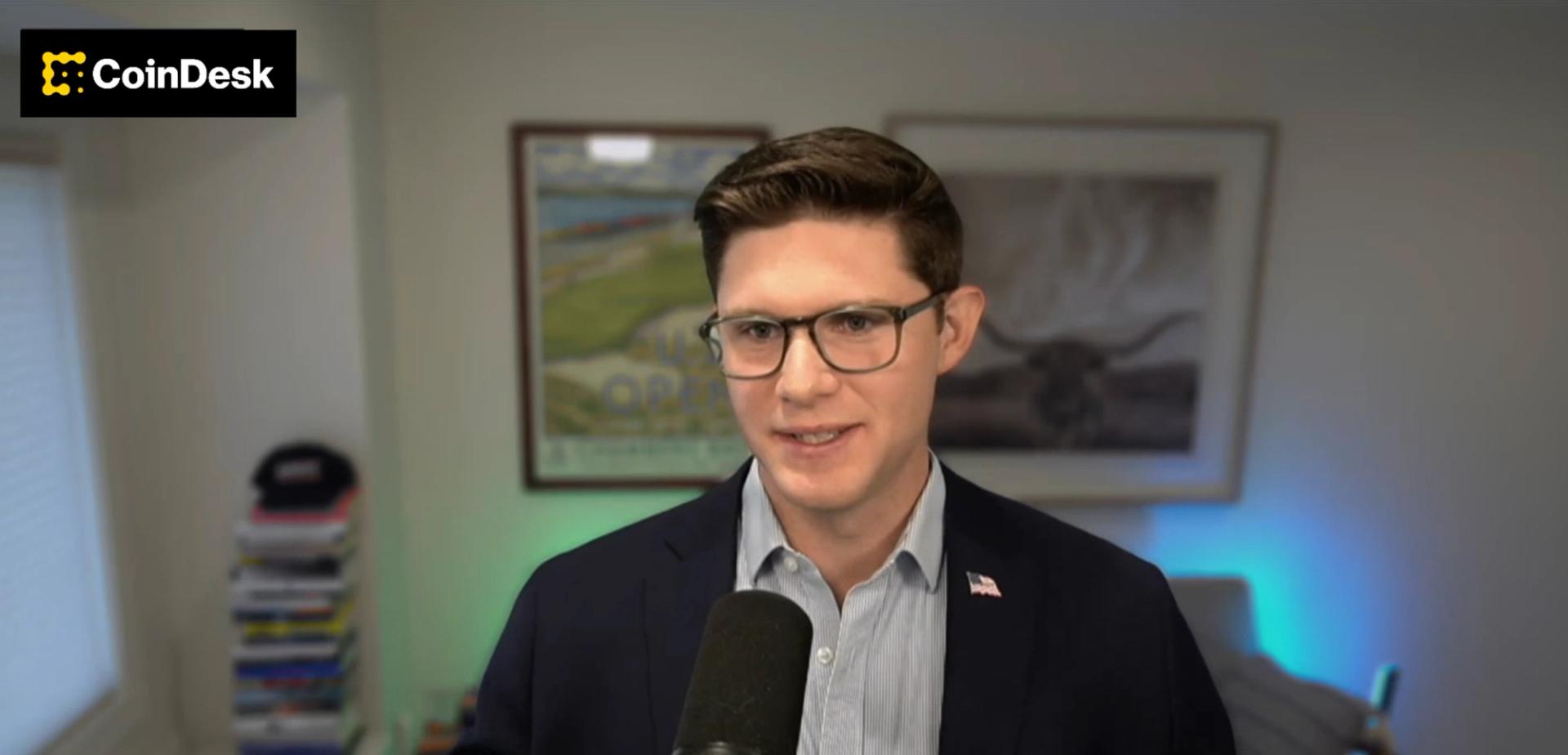
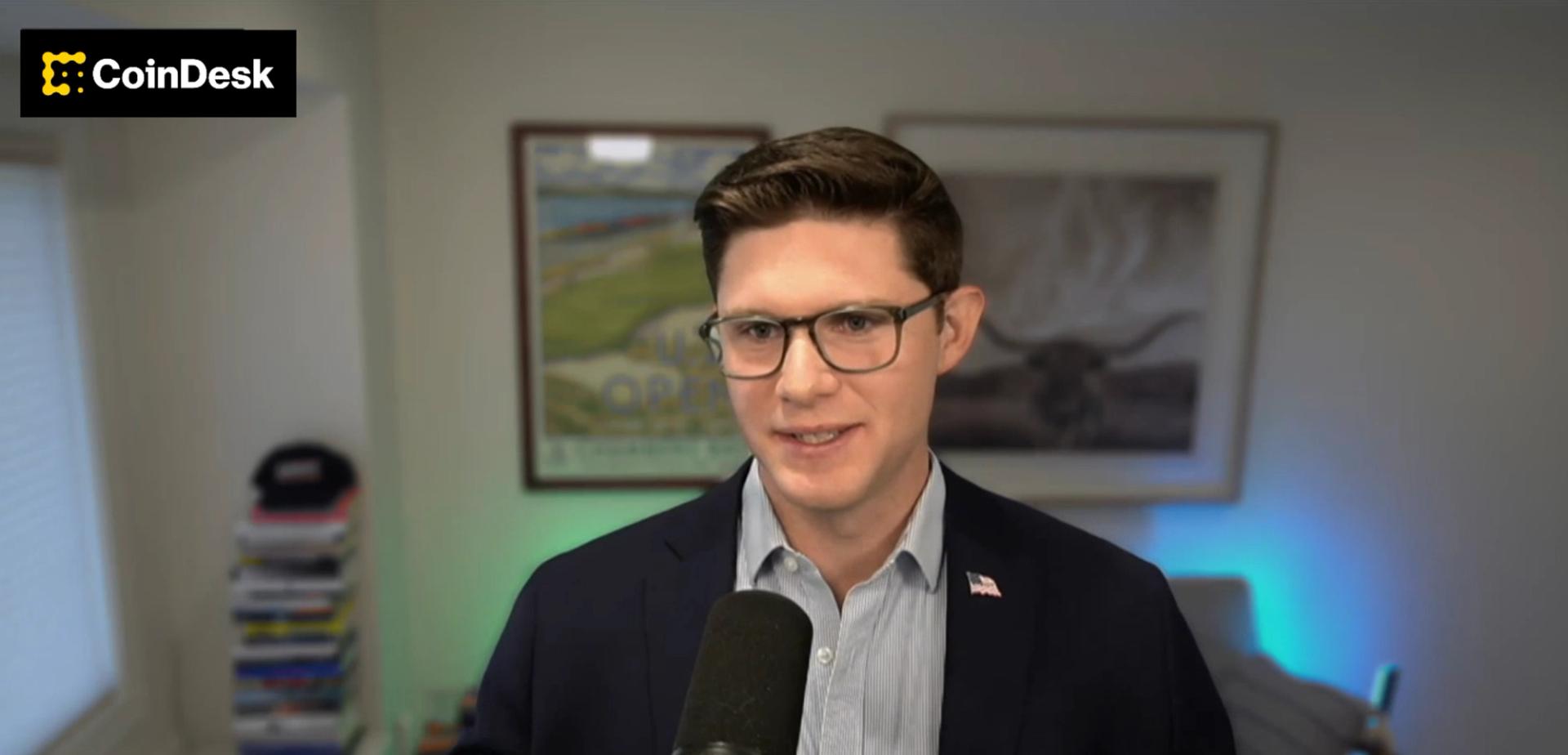
- CoinDesk’s Jennifer Sanasie interviewed Strive Chief Risk Officer, Jeff Walton on Public Keys.
What happened: Strive’s analysis points to forced selling rather than a breakdown in decentralized finance markets.
- Walton said trading data suggests holders sold the instruments, triggering liquidations elsewhere in traditional financial markets.
- He said the event did not appear to originate from DeFi protocols.
- The selloff occurred amid unusually large trading volumes across both securities.
- Walton characterized the volatility as part of the maturation process for a new asset class.
The liquidity story: Strive argues the market’s ability to absorb large trading volumes is a positive signal.
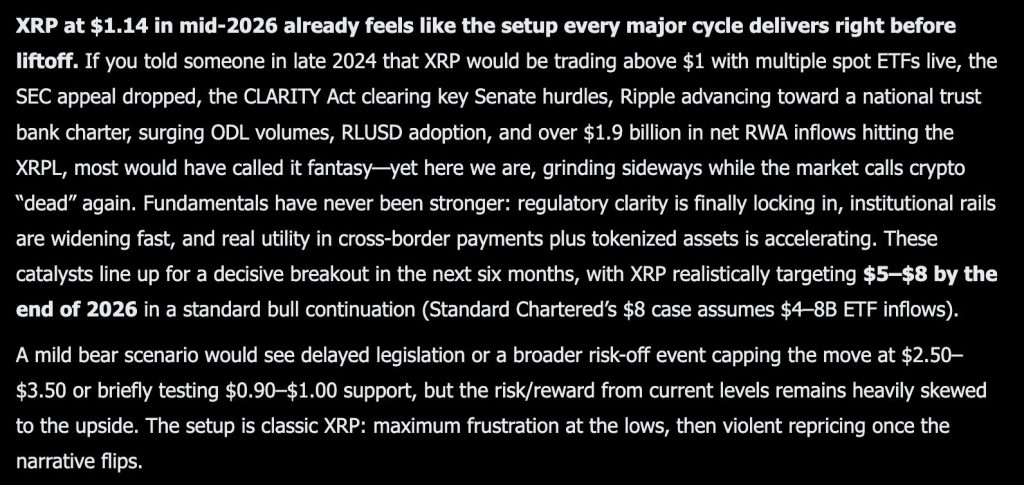
Elon Musk Grok AI just dropped a prediction on XRP price prediction that sounds almost absurd until you read the fine print. The model is pointing to $5 to $8 by the end of 2026, a multiple of where the coin sits today.
The bull case here is stacked with more catalysts than most coins see in a full cycle. XRP is trading near $1.14 with multiple spot ETFs already live in the market.
The SEC appeal is dropped and gone for good. The CLARITY Act is clearing key Senate hurdles, which removes a huge chunk of regulatory fog that has held XRP back for years.
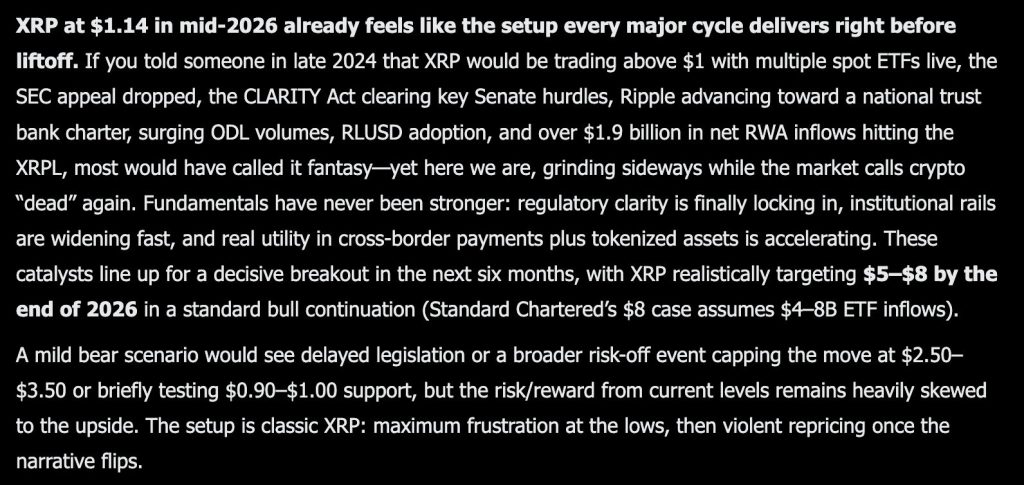
Ripple is also pushing toward a national trust bank charter, which would put it on a stronger institutional footing than almost any other crypto issuer.
ODL volumes are surging as cross-border payment rails lean harder on XRP, and RLUSD adoption is picking up speed, with more than $1.9 billion in net real-world asset inflows hitting the XRP Ledger.
Put it together, and you get a coin with real utility that finally lines up with real regulatory cover. Standard Chartered even built an $8 billion case assuming $4 to $8 billion in ETF inflows, which is not a small assumption but not far-fetched either, given how fast the ETF landscape has grown this year.

The bear case keeps things grounded. Delayed legislation or a broader risk-off shock could cap the move somewhere between $2.50 and $3.50 instead.
There is also a real chance price briefly slips back to test $0.90 to $1.00 support before any real breakout shows up. Even with that downside on the table, the risk-reward from current levels still leans heavily toward the bulls.
XRP Price Prediction: XRP Sits At The Edge Of Its Most Violent Repricing Yet
The daily chart shows XRP grinding near $1.1468 after a long, grinding slide from highs above $3.60 set back in mid 2025.
That entire move down looks like a textbook descending channel, with lower highs and lower lows stacking up for almost a year straight.
Price recently tagged the bottom of that channel near $1.00 and is now testing resistance just above $1.20. A clean break above $1.20 would open the door toward $1.40 and then the $1.60 zone, where multiple rejections already happened earlier this year.
Support sits first at $1.00, then deeper at $0.90 if sellers regain control. RSI is sitting at 42.53 against a signal line of 39.95, so momentum just turned slightly positive after months of sitting below the midline.
That small gap above the signal line suggests early buying pressure is creeping back in, though it is far from a confirmed reversal yet.
Overall momentum appears to be stabilizing rather than accelerating right now. If XRP can hold this base and reclaim the channel resistance, the violent repricing the prediction calls for becomes much easier to picture.
Grok AI Predicts that Liquidchain Could Be The Next Big Thing in Crypto
There is a moment in every cycle where the money stops chasing what everyone already owns.
Large caps do not stop working all at once. They slow down gradually. Returns compress. The same resistance levels hold for weeks. The narrative stays intact, but the price stops responding to it. Bitcoin is there right now. So is Ethereum. So is XRP, which has been perpetually one catalyst away from its next move for longer than most traders want to admit.
When that happens, capital does not sit still. It finds the next thing. It always does.
The next thing never looks ready when the rotation starts. Early presale. Small raise. Unproven team. A problem the entire industry acknowledges and complains about, and has never actually fixed. That combination is exactly what gets ignored until it can no longer be ignored.
Cross-chain liquidity is that problem. Bitcoin, Ethereum, and Solana are three dominant ecosystems with three completely isolated liquidity systems.
There is no native way to connect them. Every user and developer who needs to operate across all three pays for that limitation directly, in fees, in slippage, in failed transactions, and in time. The fragmentation cannot be patched. It is hardwired into how these networks were originally built.
LiquidChain is building the layer that makes the entire problem irrelevant. One execution environment connecting all 3 ecosystems simultaneously. Deploy once, reach everywhere, with no cross-chain tax extracted from every interaction.
The presale is at $0.01454. Just over $800,000 raised.
The market has not looked at this yet. That changes eventually.
The risk profile is what you would expect at this stage. Nothing is proven. Adoption, liquidity, and execution are all still unknowns. That is not a disclaimer. That is the nature of the bet.
The projects that return 10x or 100x are not the ones that looked safe at entry. They are the ones who solved a real problem before the rest of the market understood it.
LiquidChain is still in that window.
The post Elon Musk Grok AI Predicts Shocking XRP Price by End of 2026 appeared first on Cryptonews.


Key takeaways
- Bitcoin (BTC), Ethereum (ETH), and XRP are starting the week on a more stable footing after last week’s declines.
- BTC is trading above $64,000 but remains below major moving averages, keeping the broader trend bearish.
Crypto market opens new weekly candle with signs of stability
Bitcoin, Ethereum, and XRP are showing resilience at the start of the week after experiencing notable declines during the previous trading period.
Bitcoin fell nearly 4% last week, while Ethereum and XRP dropped approximately 2% and 6%, respectively.
Despite the weakness, all three assets have stabilized, with Bitcoin trading above $64,000, Ethereum holding the critical $1,700 support level, and XRP consolidating near $1.13.
For Bitcoin, traders are closely watching technical indicators for clues about whether the recent recovery can develop into a broader rebound.
Bitcoin remains below major resistance levels
Bitcoin is currently trading around $64,000, but the broader technical outlook remains cautious. BTC continues to trade below its key moving averages, 50-day EMA: approximately $69,106, 100-day EMA: approximately $72,123, and 200-day EMA: approximately $77,748.
The fact that Bitcoin remains below all three indicators suggests that sellers still maintain control of the broader trend.
Adding to the bearish outlook, BTC recently broke below a rising trendline that had previously supported the market. That trendline, now acting as resistance near $74,238, reinforces the view that Bitcoin remains in a corrective phase.
Although the overall trend remains weak, some technical indicators suggest that downside momentum may be slowing.
The Relative Strength Index (RSI) has rebounded from deeply oversold levels and is currently hovering in the high-40 range.
This improvement indicates that selling pressure has eased, but the indicator remains around the neutral 50 mark, meaning a clear bullish reversal has not yet been confirmed.
The Moving Average Convergence Divergence (MACD) indicator remains in positive territory, which is generally supportive for prices.
For Bitcoin to regain bullish momentum, buyers must overcome several resistance zones, including $69,106 (50-day EMA), $72,123 (100-day EMA), and $77,748 (200-day EMA).

A move above these levels would significantly improve the technical outlook and potentially signal the end of the current correction.
On the downside, the first major support level remains at $64,005.A decisive break below this area could expose Bitcoin to further losses and extend the existing downtrend.


**Deck:** Chainlink launched APAC Equities Streams on Monday, putting live pricing for large-cap Asian companies on-chain to power equity perps, prediction markets and structured products in Asian time zones. Chainlink launched APAC Equities Streams on Monday, an oracle feed that brings pricing for… Read the full story at The Defiant
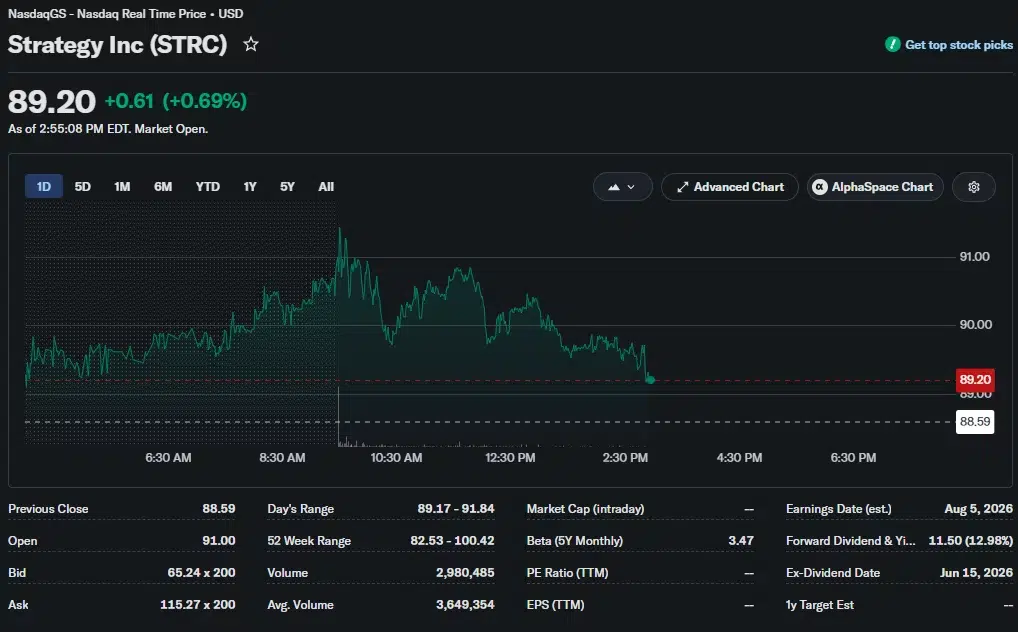
Strategy President and CEO Phong Le has invested $1 million in the company’s STRC preferred stock as shares continue trading below their intended $100 par value.
Summary
- Strategy CEO Phong Le bought $1 million of STRC as the preferred stock remains below its $100 par value.
- Strategy increased its U.S. dollar reserve to $1.4 billion while raising $335.5 million through MSTR share sales.
- Critics, including Peter Schiff, Jeff Dorman, and Ali Martinez, continue questioning the sustainability of Strategy’s financing model.
In a June 22 X post, Le said he purchased $1 million worth of STRC and plans to hold the position until the stock returns to par value, adding that he may continue holding it beyond that point.
The purchase arrived as STRC remains under pressure following a sharp decline that recently pushed the preferred stock below $83. After Le disclosed the investment, STRC recovered from session lows and rose 1.46% to $89.88 before settling at $89.20 at press time.
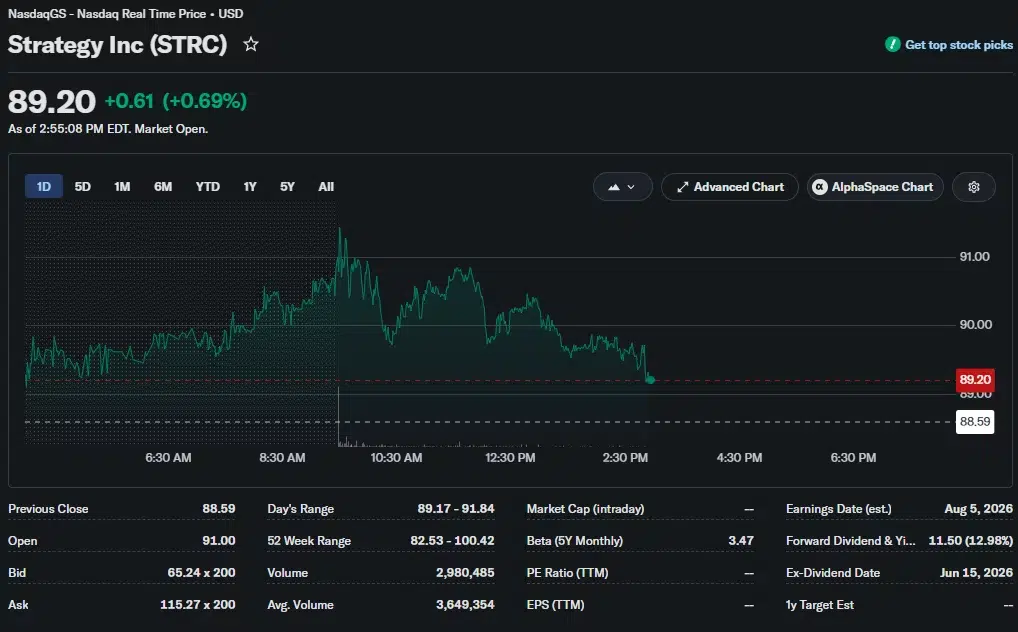
His investment comes at a sensitive time for Strategy, as STRC plays a central role in the company’s Bitcoin acquisition model. When the preferred stock trades above its $100 par value, Strategy can issue additional shares through its at-the-market program and direct the proceeds toward Bitcoin purchases. With the stock trading below par, that funding channel has become less effective.
Strategy points to reserves as concerns grow
Recent debate around STRC intensified after investors questioned whether Strategy’s financing structure could continue operating smoothly if pressure on the preferred stock persists.
Earlier on June 20, Strategy Executive Chairman Michael Saylor defended the company’s Bitcoin-backed capital model after criticism emerged following STRC’s decline. According to Saylor, Strategy’s Bitcoin and cash holdings exceed its outstanding debt by roughly $48 billion.
Saylor also stated that the company has raised more than $60 billion in capital since 2022 and used those funds to acquire Bitcoin.
More recently, Strategy disclosed steps intended to strengthen confidence in its balance sheet. In a regulatory filing released Monday, the company reported that its U.S. dollar reserve had increased to $1.4 billion, roughly $300 million higher than previous levels. Strategy said the reserve is intended to support the credit quality of its Digital Credit securities while helping meet future dividend and debt obligations.
The same filing showed that Strategy sold 2.71 million MSTR shares during the previous week, generating nearly $335.5 million in proceeds.
Critics continue questioning the capital structure
While company executives have defended the model, several market participants have raised concerns about STRC and the sustainability of the broader financing strategy.
Long-time Bitcoin critic Peter Schiff argued that investors could potentially pursue legal action against Strategy and Saylor. Schiff also claimed that Saylor may have violated SEC marketing rules through the way the preferred stock offering was promoted.
Separate concerns have focused on Strategy’s ability to maintain dividend payments tied to its preferred securities. Market maker QCP previously estimated that the company’s available liquidity could cover preferred dividend obligations for approximately seven and a half months.
Additional criticism came from Arca Chief Investment Officer Jeff Dorman, who suggested Strategy may eventually need to sell between $3 billion and $4 billion worth of Bitcoin to reduce pressure on its capital structure and support STRC holders. Analyst Ali Martinez also drew comparisons between aspects of STRC’s structure and Terra’s former LUNA ecosystem.
Meanwhile, Strategy has continued adding to its Bitcoin position. Saylor recently disclosed the purchase of 520 BTC for approximately $35 million at an average price of $67,068 per coin. Following the acquisition, the company reported total holdings of 847,363 Bitcoin.
Pressure on STRC also follows Strategy’s only disclosed Bitcoin sale this year. As crypto.news reported, the company sold 32 BTC for roughly $2.5 million at the end of May to help fund obligations associated with STRC dividends.
Fomo has raised $75 million in a Series B funding round that values the crypto trading platform at $550 million after attracting more than 625,000 users and generating $4 billion in trading volume within its first year.
Summary
- Fomo raised $75 million in a Series B round led by Index Ventures, reaching a $550 million valuation.
- The social trading platform has attracted 625,000 users, processed $4 billion in volume, and generated 110 million interactions.
- The funding comes amid continued venture activity, with major raises also announced by Digital Asset Holdings and Neura Robotics.
According to a June 22 announcement by Fomo, the round was led by Index Ventures with participation from Union Square Ventures and existing investor Benchmark.
The company also received backing from several angel investors, including Zynga co-founder Mark Pincus, Eventbrite co-founder Kevin Hartz, Discord chief executive Humam Sakhnini, and Nexos AI co-founder Tomas Okmanas.
Built around social trading, Fomo allows users to see transactions made by other traders in real time and execute similar trades across multiple blockchains without manually moving assets between networks. The platform said users can access crypto markets using an Apple ID or email account while avoiding the complexity of bridges, gas fees, and wallet management.
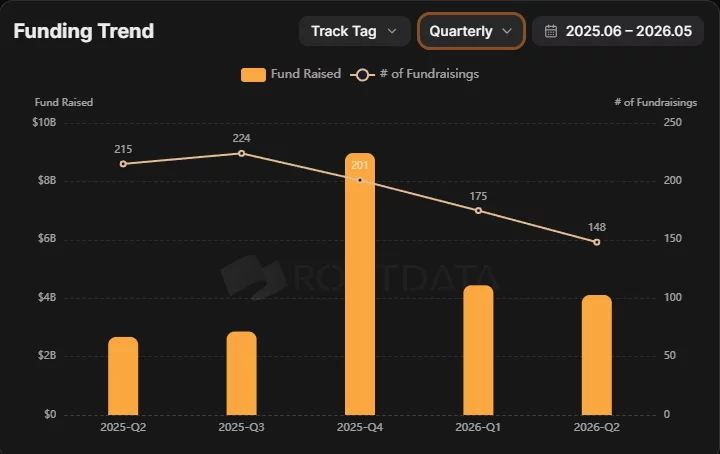
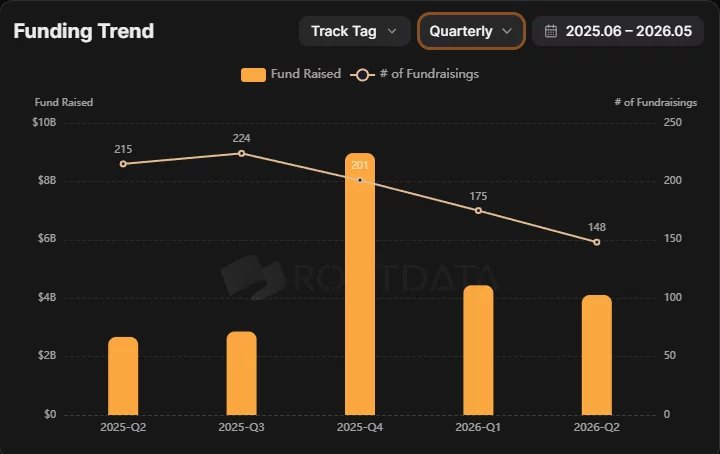
The funding arrives as investors continue to back consumer-focused crypto products despite digital asset prices remaining below recent highs. Data from RootData shows crypto startups raised $4.11 billion across 148 funding rounds during the second quarter.
Social trading drives user growth
Alongside details of the funding round, Fomo disclosed that its platform has recorded more than 110 million social interactions since launching a year ago. The company said over 68,000 users purchased cryptocurrency for the first time through Apple Pay, generating roughly $25 million in transaction volume.
Describing the opportunity, Fomo argued that blockchain-based financial products are becoming increasingly accessible as more assets move on-chain. The company compared the current transition to the digitization of stock trading that began in the 1970s, while stating that many consumers still lack simple access to emerging financial products.
Interest in the platform’s social features has also drawn attention from industry researchers. In a December post on X, Delphi Digital said Fomo’s design may be helping attract users by making trading feel “more like scrolling a feed than sitting at a terminal.”
Delphi Digital also noted that Fomo generated more monthly fees than Moonshot during November, despite being a newer product and charging lower fees.
Competition in the social and copy-trading segment remains intense. Exchanges including Binance, Bybit, OKX, Bitget and KuCoin, among others, already offer copy-trading tools that allow users to mirror strategies used by other traders.
Venture funding remains active across crypto and tech
Recent product launches suggest Fomo is expanding beyond spot trading. On June 11, the company introduced perpetual futures powered by Hyperliquid for users outside the U.S.
The latest raise adds to a string of large private-market financings announced in June. Earlier this month, Digital Asset Holdings secured $355 million in a funding round led by Andreessen Horowitz’s flagship crypto fund to support the growth of the Canton Network ecosystem.
Outside the crypto sector, Neura Robotics announced up to $1.4 billion in Series C financing backed by investors that included Tether, Qualcomm, Amazon, Nvidia, Bosch, Schaeffler, and the European Investment Bank. According to the company, the capital will be used to expand the development of humanoid robots and real-world automation systems.
For Fomo, the new funding provides support from firms that previously invested in consumer platforms such as Robinhood, Coinbase, Instagram, Snapchat, and Twitter, according to the company’s announcement.
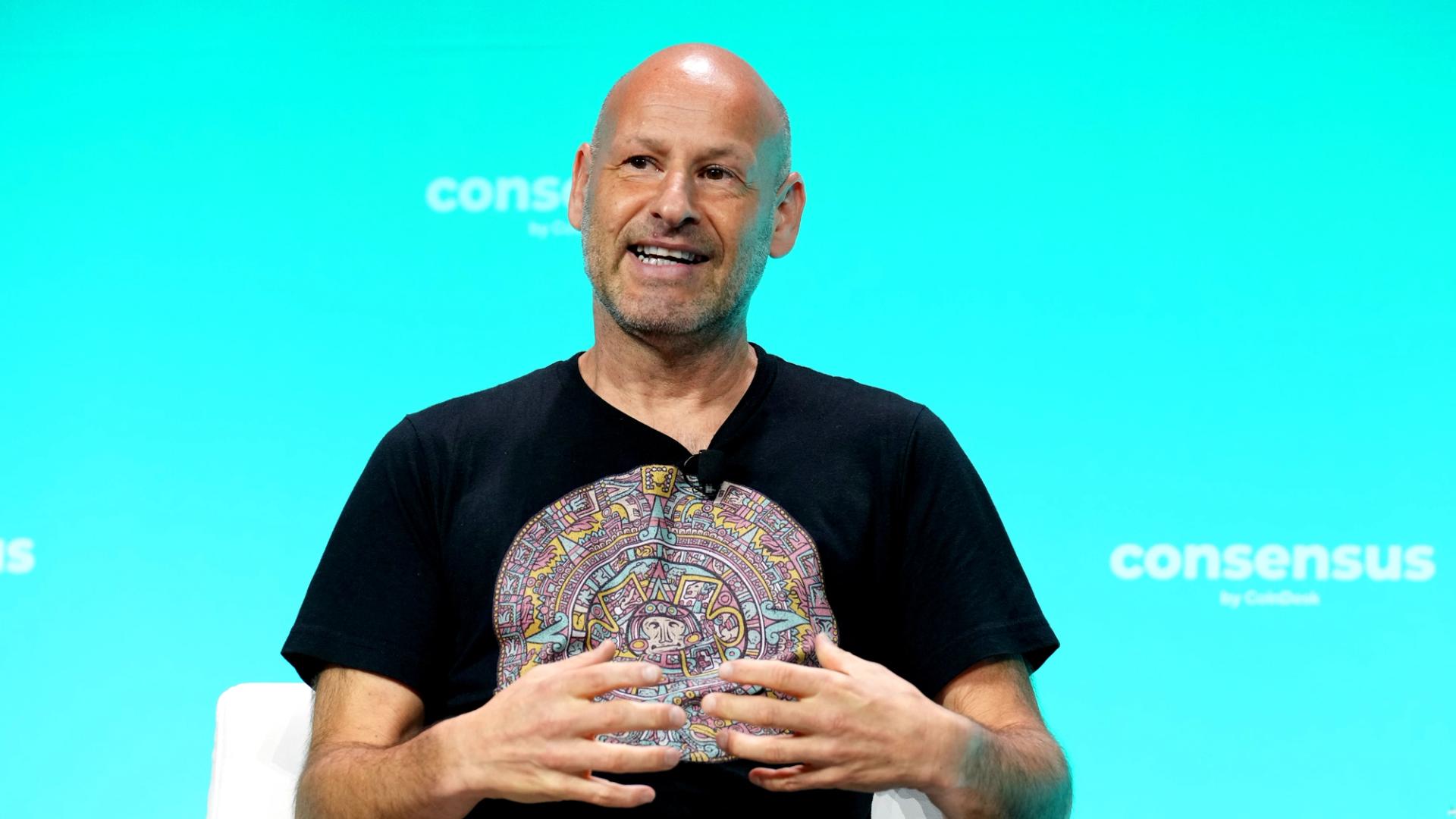
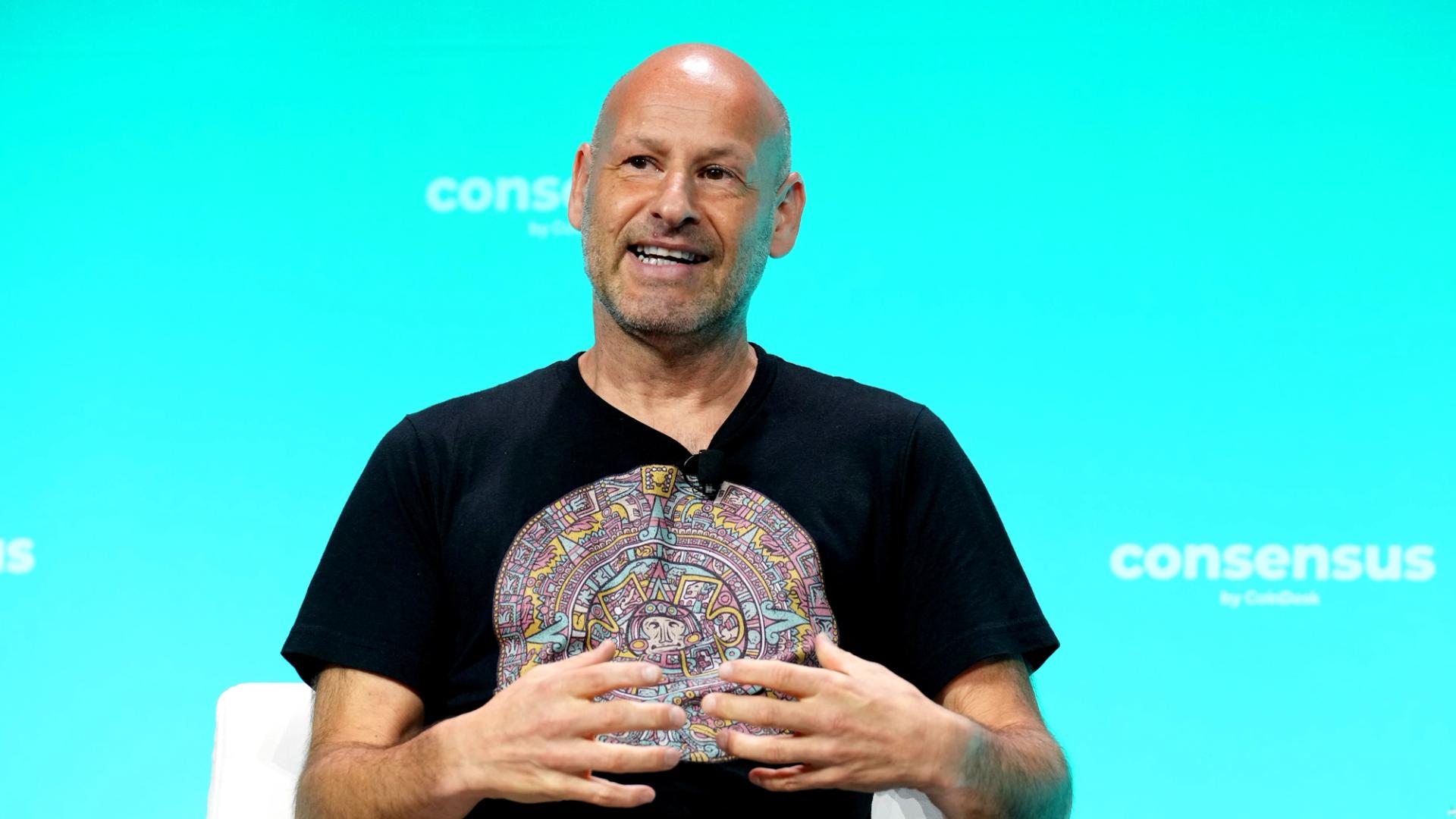
Against that backdrop, Ethlabs represents what supporters describe as a broader transition toward a “multi-node” development model, where independent organizations share responsibility for advancing the network rather than relying heavily on the Foundation.
“We are now poised to recognize and implement the idea that there should be a number of steward nodes of Ethereum,” Joe Lubin said, “each configured in their unique way to evolve and protect what is sacred about the network and massively grow the world’s appreciation and utilization of it.”
Ethlabs’ initial work will focus on faster transaction settlement, expanding Ethereum’s capacity and improving infrastructure for institutions issuing tokenized assets and stablecoins onchain. Ethereum dominates the $300 billion stablecoin market with a 53% market share and hosts roughly half of the $32 billion tokenized asset market, RWA.xyz data shows.
The initiative also reflects the growing institutional investment in Ethereum. SharpLink and Bitmine have both built sizable ETH treasury strategies, while Ethereum continues to host the majority of stablecoins and tokenized real-world asset issuance.
“Ethereum is at a pivotal moment,” Ansgar Dietrichs, Ethlabs’ executive director, said in a statement. “As blockchain systems move rapidly into mainstream use, the coming years will define the shape of the onchain economy for decades.”
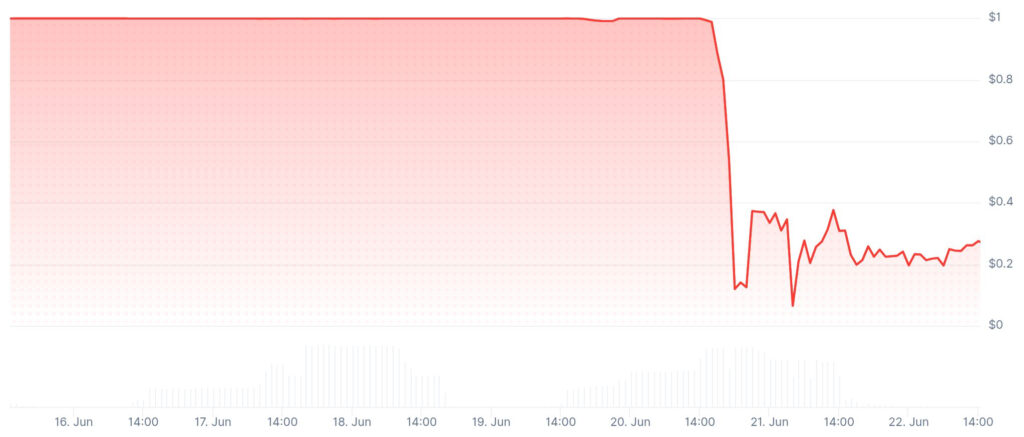
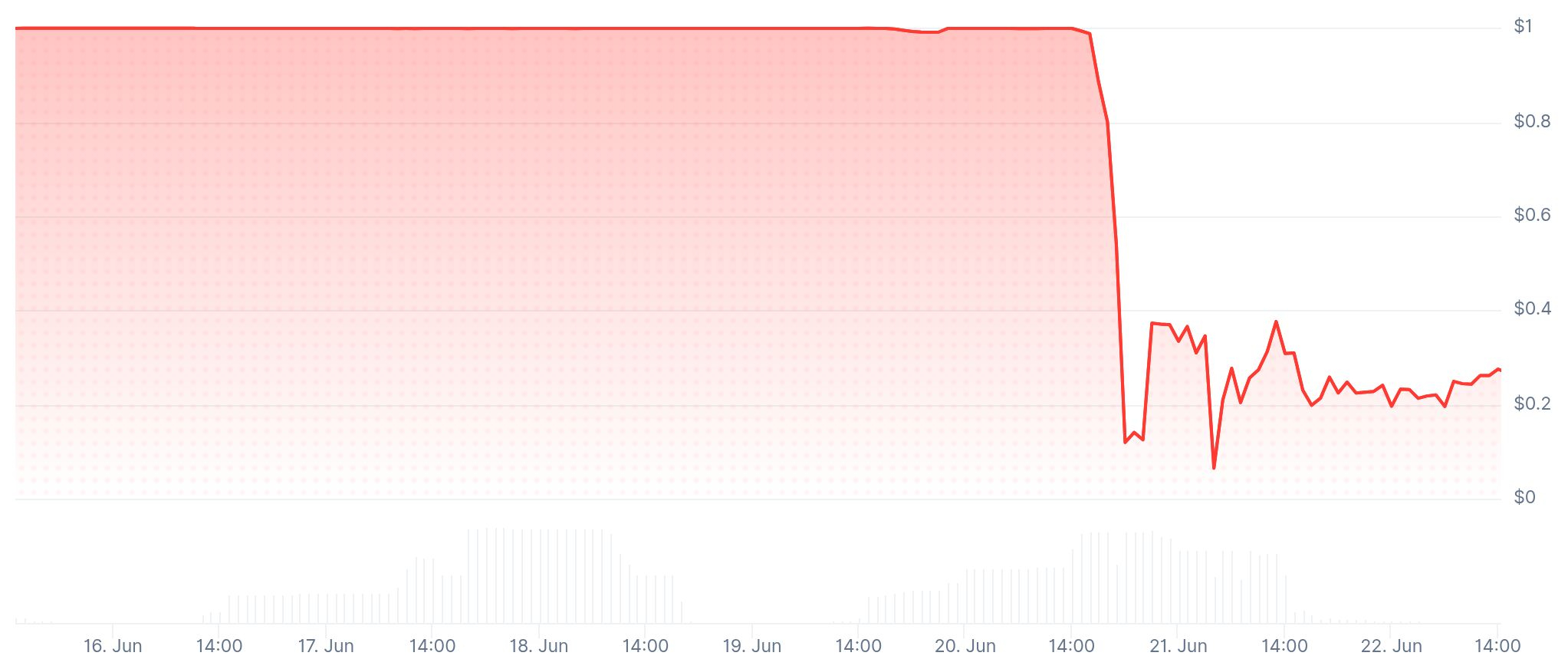
Main Street Finance’s stablecoin msUSD has depegged to $0.27, sparked by a post addressing the “shutdown of [its] third-party proof-of-reserves dashboard.”
The following day, the firm behind the dashboard in question, Accountable, announced it was terminating its asset verification services with msUSD’s issuer.
In classic DeFi fashion, the fallout appears to have led to a bank run on Altura’s USDT vault, leading to the firm deciding to close down the vault.
At least $8.5 million was withdrawn ahead of the announcement and before a sell-off of the AVLT vault token led to an 11% depeg.
The weekend’s depegs come on the back of ongoing troubles for DeFi stablecoins apxUSD and sUSDat, which are backed by Strategy’s struggling STRC.
Read more: Saylor distances himself from STRC-backed DeFi after stablecoin wobble
Main Street Finance: ‘Institutional-grade yield’
Late on Saturday, Main Street Finance published a long post to X reassuring users that it “remains fully backed,” calling the loss of its dashboard a “reporting issue, not a solvency issue.”
By the time of the post, the price of msUSD had already collapsed. It sat at around $0.12 after losing its $1 peg around six hours previously but has since rebounded to around $0.27 from a low of $0.06 in the early hours of Sunday morning (UTC).
The advance reaction led some to believe that “insiders… got the memo that they should take the available liquidity to get out.”
Then, on Sunday, RWA accounting firm Accountable announced that, following Main Street Finance’s failure to provide adequate proof of reserves, it was terminating its contract with the firm.
Others questioned Accountable’s lack of prior action, given that doubts over Main Street’s transparency were publicly raised back in April.
Accountable’s post positions it as “neutral verification infrastructure,” however it also claims it “did not retain an ongoing, source-level view of [Main Street’s] reserves,” raising concerns over the reliability of its data on other clients.
Read more: DeFi projects under fire for inflated TVL and murky lending loops
Given Accountable’s entire business case, the post also drew ridicule, with one user comparing it to May 2022’s infamous Three Arrows Capital AUM statement.
In addition to the depeg of msUSD, Main Street’s yield token, msY, which it promises “turns box spreads into market-neutral” 12% yield also collapsed in price.
Blockchain auditor Peckshield highlighted the Morpho msY/USDC market hitting 100% utilization, trapping $18 million of AlphaPing assets.
Read more: Resolv hack shows DeFi learned nothing from last contagion
Altura: “the yield engine”
Altura runs a HyperEVM-based USDT yield vault, currently offering almost 30% yield.
In a post on Sunday, Altura distanced itself from the msUSD depeg, stressing it “never had any exposure to Mainstreet or any of its underlying investment strategies.”
It also assured users that it had successfully redeemed over $5 million during the previous 24 hours.
Rather than reassuring depositors, however, it appears the post had the opposite effect.
Twelve hours later, Altura co-founder and CEO Ranveer Arora revealed that, due to “sustained withdrawal demand and current market sentiment” the firm would proceed with “an orderly wind-down of the Altura vault.”
Redemptions had now climbed to $8.5 million.
The rush for the exits was reflected in the price of the vault’s yield-bearing AVLT token. Over the past 24 hours it has dropped 14%, from $1.09 to $0.93 at the time of writing.
Between redemptions and price action, AVLT’s market cap dropped from $39 million to a low of $26 million over the weekend.
In a later update, Altura stated that “a maturity mismatch between our onchain and off-chain positions” forced it to pause withdrawals. It promised market making strategies would be closed within 72 hours but “RWA positions will take more time due to their inherent nature.”
On top of the $18 million exposed to the msY/USDC market, AlphaPing also has over $10 million of exposure to AVLT, according to its Morpho curator dashboard.
Read more: High yields to haircuts: Has DeFi learned anything from yield vault collapse?
DeFi’s risk curator “daisy chain”
Despite its premise as transparent, open finance, the DeFi sector has faced a number of shocks in recent months due to murky “daisy chains” and recursive lending.
In late October, concerns began to circulate over the stability of a number of high yield vaults. These tokens often used looped leverage against one another, inflating TVL far above the legitimate stablecoin backing.
The space exploded days later when one of the main offenders, Stream Finance, revealed it had lost $93 million. Its stablecoin, xUSD, immediately collapsed 75%.
Read more: Four months on, MEV Capital falls victim to $4B DeFi daisy chain implosion
Later, in March, a $23 million hack of Resolv’s USR due to a private key compromise wrought havoc across multiple yield vaults as opportunistic traders bought depegged USR and used it to drain liquidity in markets with hardcoded oracles.
So-called risk curators even continued to provide liquidity to the vulnerable markets via Morpho’s Public Allocator automation feature.
Such episodes go to show that rather than a novel financial system which operates autonomously and permissionlessly, DeFi is all too often forced to recur to the blame game when things go away.
Got a tip? Send us an email securely via Protos Leaks. For more informed news, follow us on X, Bluesky, and Google News, or subscribe to our YouTube channel.

Crypto markets and policy did not move in a vacuum this week. On one side, the security environment in decentralized finance continued to produce major incidents tied to bridges, rollup infrastructure, and MEV-related trading. On the other, regulators in the United States and the European Union advanced proposals and rules that could reshape how transactions are processed, especially for centralized exchanges and custodial services.
Separately, a wallet application update brought a set of product changes, including expanded token and transaction display features and additional third-party trading providers. While these updates do not directly address protocol-level vulnerabilities, they influence user workflows around custody, routing, and compliance controls.
DeFi exploits: multiple incidents across bridges, rollups, and MEV
Aztec Connect and other deprecated bridge components targeted
The week’s most notable theme was how attackers continued to find value in systems that were already in decline. According to the roundup, Aztec Connect was drained twice via distinct exploits. The first incident involved an alleged $2.1 million outflow, described as linked to a privacy-focused rollup bridge that had been deprecated in 2023. A separate incident was then described as pulling an additional $2.15 million from another private rollup bridge, reportedly deprecated in 2022.
From an industry perspective, these cases underline a recurring challenge in DeFi security: “deprecated” does not always mean “fully unreachable” for every integration, contract dependency, or edge-case flow. Even when a product is scheduled for retirement, interfaces that remain technically exploitable can continue to create attack surfaces.
Taiko exploit described as forged proof verification
The roundup also described an incident on Taiko tied to chain-state verification. It characterizes the issue as attackers submitting forged message proofs that were accepted as valid by Ethereum mainnet.
The described impact included roughly $1.7 million drained in USDC and ETH, alongside nearly 2 million TAIKO tokens. If accurate, the incident highlights a critical class of risk for layer-2 and bridging systems, where correctness depends on verification logic. Even when verification is meant to protect downstream execution, weaknesses in proof-handling can create outsized consequences.
MEV bot manipulation: “fake wrapped assets” and simulated profitability
Beyond bridges and rollups, the roundup points to a case involving an MEV bot on Ethereum, identified as Jaredfromsubway.eth. The description focuses on attackers tricking automated trading logic by creating fake wrapped assets and liquidity pools that simulated a profitable sandwich trade.
The roundup states that approximately $7.5 million was siphoned through permissions already granted to the bot. In practice, MEV strategies often rely on pre-approved token allowances and on fast transaction execution. This incident, as summarized, fits a broader pattern where adversaries attempt to make an automated system believe in a profit opportunity that exists only in a simulated environment.
Illinois adopts a digital asset transaction tax plan
Regulation in the United States also featured in this week’s roundup. It describes Illinois’ passage of a $55.9 billion state budget that includes the Digital Asset Privilege Tax Act. The plan, as outlined, would impose a 0.2% transaction-level levy on crypto activity starting January 1, 2027.
The described scope focuses on digital asset brokers, including exchanges and custodians that exchange, transfer, or store crypto for Illinois customers. The summary also notes registration requirements and felony charges for noncompliance. Additionally, the roundup references concerns raised by the Crypto Council for Innovation, describing the tax as among the most punitive in the country and warning about precedent effects.
For businesses, a transaction tax at the protocol or transaction level can change unit economics. For users, it may ultimately influence which services offer custody and routing into and out of regulated intermediaries.
EU rules target cash, identity checks, and privacy-asset access via on/off-ramps
On the European side, the roundup summarizes a set of incoming rules affecting cash payments, identity verification, and the ability of regulated providers to handle certain transactions.
It describes a proposed cash cap in the EU: cash payments above €10,000 would be prohibited for goods and services. It also states that cash transactions over €3,000 would trigger mandatory identity verification. For regulated crypto service providers, the roundup notes identity checks on transactions of €1,000 or more and indicates that anonymous accounts are banned.
Crucially, the roundup frames privacy assets as not being outright criminalized for self-custody ownership, but it says the rules would restrict regulated intermediaries from touching privacy coins in certain contexts. It also emphasizes that peer-to-peer onchain transfers between self-custody wallets would remain outside the regulation’s reach, while on-ramps and off-ramps would face tighter constraints.
If these provisions are enacted as described, the immediate operational impact likely falls on exchanges, custodians, and payment providers, which may have to implement stricter routing, monitoring, and customer identification workflows. Over time, this could affect liquidity, pricing, and availability of certain assets through centralized channels.
Wallet and app update: UTXO address generation and expanded trading options
Alongside security and policy, the roundup includes a wallet product update labeled v5.39. While it is not a security incident response, it signals how mainstream crypto apps are adapting their user experience around transaction visibility and third-party trading providers.
MoonPay Trade, Apple Pay via Mercuryo, and provider controls
The roundup states that MoonPay Trade was added to the provider lineup, with features such as filtering between centralized exchanges and decentralized exchanges and the ability to rate providers after a swap. It also notes iOS support for purchasing crypto using Apple Pay through Mercuryo.
UTXO dynamic address generation and Solana history visibility
The update also reportedly includes dynamic address generation for selected UTXO networks, producing a new address for each incoming transaction. It further describes Solana transaction history appearing in the app.
Tangem Pay improvements and card management changes
Separately, the roundup mentions improvements to Tangem Pay, including the ability to reissue and rename a Tangem Pay card and adjust daily spending limits. It frames these changes as making real-world spending more flexible for users operating a self-custody setup.
What this week signals for security and compliance risk
Across the items summarized, a few themes stand out for industry watchers.
- Security risk persists after deprecation. Protocol retirement does not automatically close all pathways, especially where contracts remain technically accessible.
- Verification systems remain high-value targets. The Taiko incident description points to the importance of proof correctness and end-to-end validation across chains.
- Automation increases the stakes of trust assumptions. MEV bots can be exploited by adversaries who design fake liquidity and permissions-aware execution paths.
- Regulation is converging on intermediaries. U.S. and EU measures described in the roundup emphasize identity checks and transaction handling controls by exchanges, custodians, and regulated providers.
For users, the practical takeaway is not only to monitor security headlines, but also to understand how evolving compliance rules can change access paths and the reliability of on/off-ramps. For builders, the incidents reinforce the need for rigorous decommissioning plans, continuous audit coverage for legacy components, and stronger guardrails around automated trading logic.

- Hedera (HBAR) price is currently consolidating in a tight range.
- A falling wedge pattern is forming on the 15-minute chart.
- A confirmed move above the wedge resistance zone near $0.0815 would signal a rebound.
Hedera (HBAR) has been trading in a narrow range, with price action showing repeated compression around key short-term levels.
At the time of writing, HBAR was trading at $0.0801, moving within a 24-hour range of $0.07801 to $0.0803.
The market has shown minimal directional strength today, with a 24-hour change of +0.1%, reflecting near-flat momentum.
While the token has seen a mild gain today, it continues to show weakness across longer timeframes.
HBAR is down 2.4% over the past 7 days, 6.7% over the past 30 days, and approximately 39.9% over the past year.
This extended decline places current price action in a longer consolidation phase rather than a sustained recovery trend.
Tight consolidation dominates short-term structure
Looking at the charts, the lower boundary around $0.0780 has acted as consistent support, while upside movement has been capped near $0.0803–$0.0810.
This compressed structure has resulted in a tightly controlled trading environment where volatility is declining.
Each minor rebound has been followed by rejection at nearby resistance, while dips continue to attract buyers at similar levels.
The result is a market that is neither trending upward nor breaking down decisively, but instead moving sideways in a constrained channel.
Falling wedge formation
On lower timeframes, particularly the 15-minute chart, HBAR is forming a clearly defined falling wedge pattern.

The pattern is characterised by two downward-sloping trendlines that converge as price action tightens.
The lower boundary of this wedge sits near $0.0780, a level that has been tested multiple times without a breakdown.
Each retest has produced short rebounds, indicating that selling pressure is gradually weakening at this zone.
The upper boundary of the wedge is positioned around $0.0805 to $0.0815, where repeated rejection has occurred.
The price is gradually compressing toward the apex of this structure, a phase often associated with directional expansion once a breakout occurs.
Hedera price forecast
The current technical framework places clear importance on two primary levels.
On the upside, a confirmed move above the wedge resistance zone near $0.0815 would represent the first sign of a bullish rebound.
If followed by sustained momentum, short-term projections indicate a move toward $0.0830, with extended targets around $0.0840 to $0.0850.
On the downside, a breakdown below $0.0780 would invalidate the current wedge structure.
Such a move would expose lower liquidity zones and extend the existing bearish consolidation phase.
However, at present, price remains positioned almost exactly between these two thresholds, reinforcing the compression narrative.

MOVIE REVIEW: We see if reboot ‘Masters of the Universe’ has the power

Lower Salt, Rich Flavors: Health Meets Taste

Strive says digital credit selloff was a liquidation event, not a credit crisis

No Jackpot Winner as $257 Million Prize Rolls Over to $269 Million Monday Draw

Blockchain.com files with SEC for U.S. IPO

Israel says it has killed new Hamas military leader in Gaza City airstrikes

Humanity still exists.. @johnmalek3 #humanity #dream #success #giveaway #lifestyle #money #shorts

Manishi & Nilu | Five Million Money Drop S4 | Episode 42 | Sirasa TV

Shani Pashupata Homam | Divine Solution for Financial, Family, and Life Problems | #Vedamandir #H…
-

 Fashion3 days ago
Weekend Open Thread: Miami – Corporette.com
-
 Tech6 days ago
The Adder At The Heart Of Intel’s 8087 FPU
-

 Entertainment2 days ago
Renter of Home in Anne Heche Crash Denies Settlement With Son
-

 Tech8 hours ago
Microsoft accidentally kills epic Outlook email threads
-

 Business2 days ago
Soccer-U.S. defends Iran World Cup travel restrictions, says discussions ongoing
-
 Business3 days ago
Wall Street Week Ahead: Investors see Micron earnings as pulse check of AI rally momentum
-

 Politics4 days ago
BBC Reporter Discusses Cross Party Criticism Of Trumps Iran Deal
-

 Tech4 days ago
AWS enters the context layer race with a graph that learns from agents, not manual curation
-

 Crypto World3 days ago
HIVE shares jump as $220M AI deal speeds Bitcoin mining pivot
-
 Crypto World2 days ago
Can Charles Hoskinson Really Rescue Cardano?
-

 Crypto World2 days ago
Jake Chervinsky accuses CME of protecting derivatives monopoly
-

 Sports4 days ago
FIFA World Cup 2026: Canada beat 9-men Qatar 6-0 to register first ever win | FIFA World Cup 2026
-

 Business2 days ago
MHP SE 2026 Q1 – Results – Earnings Call Presentation (OTCMKTS:MHPSY) 2026-06-20
-

 Business4 days ago
Brexit cost 6% of UK economy, Bank of England company data suggests
-

 Politics2 days ago
Andy Burnham and the meaning of Makerfield
-

 Crypto World5 days ago
Anthropic’s Dario Amodei Urged AI Unity at G7, Even as US Banned His Models
-

 Crypto World7 days ago
Robinhood opens AI-powered trading to all users, sending HOOD stock past $100
-
 Tech1 day ago
Signal’s Meredith Whittaker says AI chatbots ‘are not your friends’ and calls Copilot agents a backdoor
-

 Tech5 days ago
Weeks Of In-The-Field Testing And A Verdict
-

 Tech4 days ago
Adobe adds its AI assistant to Premiere, Illustrator and InDesign
You must be logged in to post a comment Login