










Security teams log 54% of successful attacks and alert on just 14%. The rest move through your environment unseen.
The Picus whitepaper shows how breach and attack simulation tests your SIEM and EDR rules so threats stop slipping by detection.
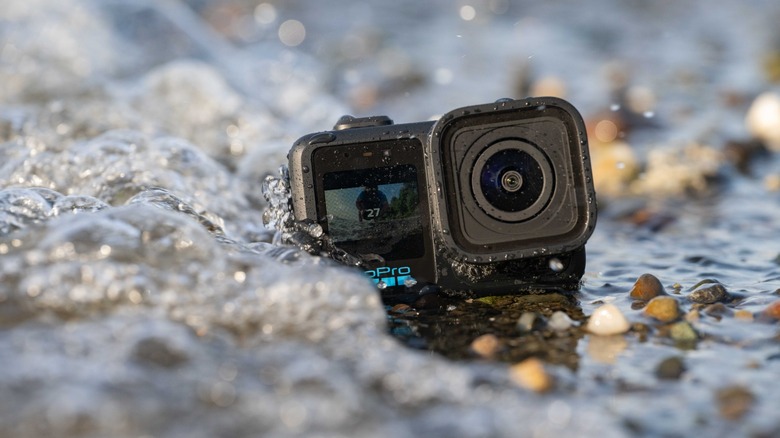
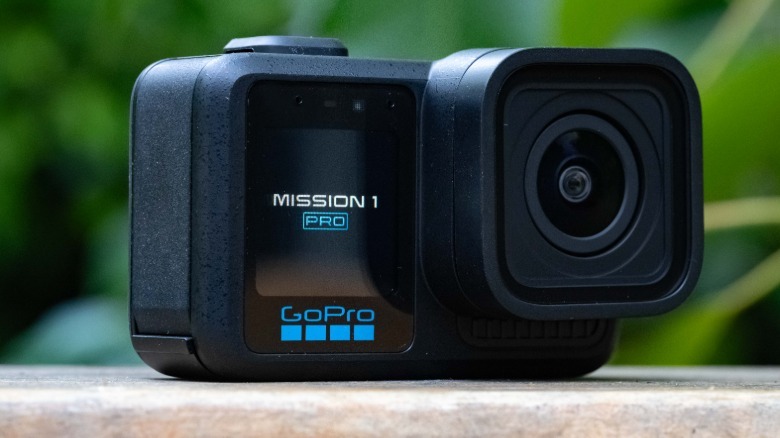
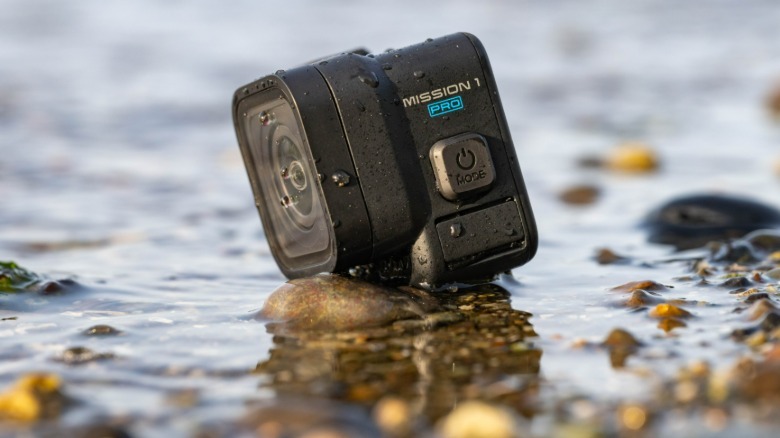
When GoPro didn’t launch their annual Hero camera last year, it was clear they were cooking up something special — now we finally get to see what they’ve been working on all this time, and whether or not all that R&D has paid off. On paper, everything about the GoPro Mission 1 Pro represents a massive leap over every GoPro that’s come before it, and that’s exactly what GoPro needed to do right now.


The 1-inch size sensor alone is enough to get me excited, but it’s important to note that it’s paired with a new processor that greatly expands what the camera is capable of. While the Mission 1 Pro is superficially very similar in appearance and form factor to the Hero line of cameras, they have supercharged everything under the hood. This is actually pretty important, as it means the Mission 1 Pro can potentially fill the same role as a standard action camera while delivering what should be a much higher level of quality. However, it was necessary to thoroughly test the Mission 1 Pro (provided by GoPro for this review) to see if it lives up to all the hype.
With a new 1-inch sensor and an upgraded processor, the Mission 1 Pro is absolutely the generational leap that GoPro needed in terms of imaging capability. Put simply, the video that comes out of this thing looks great, and so do the photos. It can shoot at up to 8K at 60fps, as well as 50MP still images. You can definitely still tell that this is action camera footage, but that GoPro look is still part of the appeal of a GoPro camera.
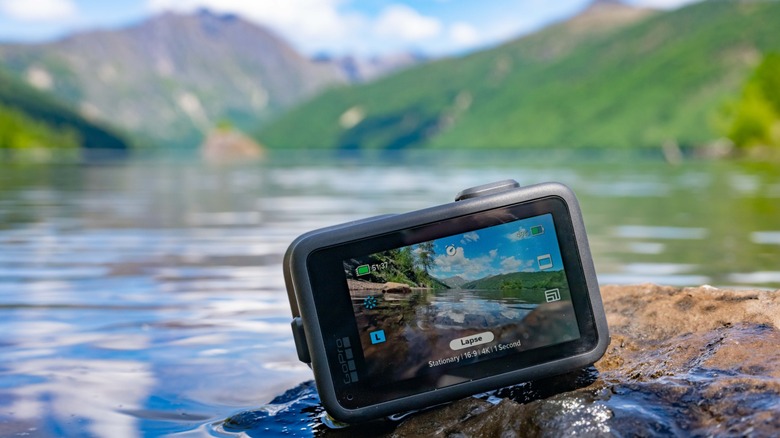
The camera has enough dynamic range that I never encountered a scenario where it suffered from serious overexposure, and this is the first GoPro camera I’ve used that delivers decent results after sunset. It is particularly well suited to capturing starlapses, being able to last on a single battery throughout most of the night, though at the time I was testing it the short nights and bright moon were not conducive to impressive imaging of the stars.
The downside here is that the fixed focal length of the Mission 1 Pro is not as close as the Hero 13, which took some adjustment to get used to. Also, the f2.8 aperture of the lens is a bit on the dark side, and I wish it featured a variable aperture as well. These caveats are likely a result of design restrictions, and while I think GoPro should implement closer focus, a variable aperture, and brighter aperture in the next generation of the Mission 1 series, it is worth noting that the optical design of the lens is of comparatively superior quality.
After weeks of in-depth testing, extensive comparison to other cameras, and a lot of pixel-peeping, I believe the GoPro Mission 1 Pro features the best image quality of any camera in this genre.
One of the real highlights of my time with the Mission 1 Pro was filming using the extreme slow motion features of the camera. Going into testing the camera, I was excited for the 4K 240fps capability, but was skeptical of the 1080p 960fps recording. Often, lower resolution ultra-high framerate recording is too low quality to be much more than a novelty. However, with the Mission 1 Pro, I was surprised to find that the 960fps looks amazing, even on my large desktop monitor. It’s obviously still kind of mushy, compared to the 4K output, but it is by far the best ultra-high framerate recording I’ve personally used in a camera. You can only record 10 second clips at 960fps, but when you slow them down to 30fps, those 10 second clips extend to over 5 minutes long!
The 4K 240fps is great if you want to prioritize image quality, but still get really impressive slow motion, while recording without a time limit. The camera even does 2X slow motion in 8K at 60fps, though if I’m recording 8K at 60fps, it is for the high level of realism that such high framerate, high resolution footage yields.
It would be nice if GoPro could add some extra features here, perhaps through GoPro Labs, such as the ability to do pre-capture in ultra slow motion, and capture higher bitrate 960fps footage, even if that means only being able to shoot a couple seconds at a time. Being able to shoot high bitrate 960fps video with pre-recording could potentially deliver incredible results.
Normally, I rarely use an action camera to capture still images. It’s typically a nice capability to have, but between the ultra wide angle and what is usually less than amazing image quality, it’s not a function I often take advantage of. However, as I’m wrapping up this review, I’m surprised by how much I’ve enjoyed taking photos with the Mission 1 Pro due to how great those photos look.
With the ability to capture 50MP RAW images, the Mission 1 Pro is able to deliver the sort of detail I expect from cameras these days, and I appreciate that it doesn’t aggressively sharpen or saturate the images, even in the case of JPEGs. Of course, it’s still an ultra-wide angle view, but often that’s exactly what you want. There’s a reason most phones these days feature an ultra-wide angle lens in their camera array. In my case, I am often shooting with longer lenses; super telephoto wildlife lenses, macro lenses, fast primes lenses, or even just standard range zooms. Having the Mission 1 Pro in my pocket gives me an ultra wide option that doesn’t mean swapping lenses and carrying heavy/bulky extra gear.
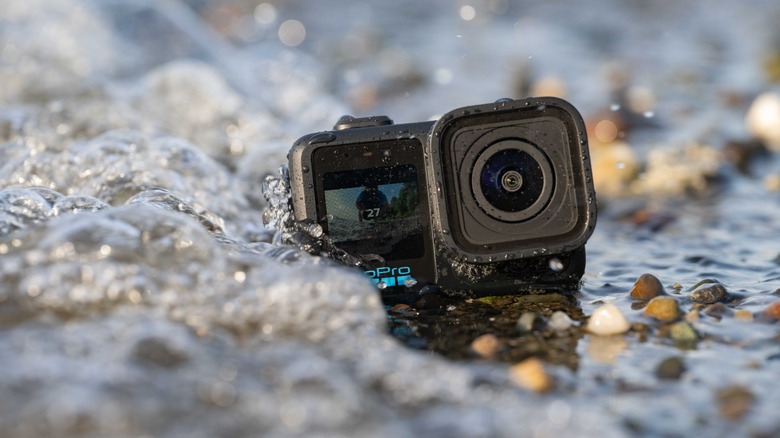
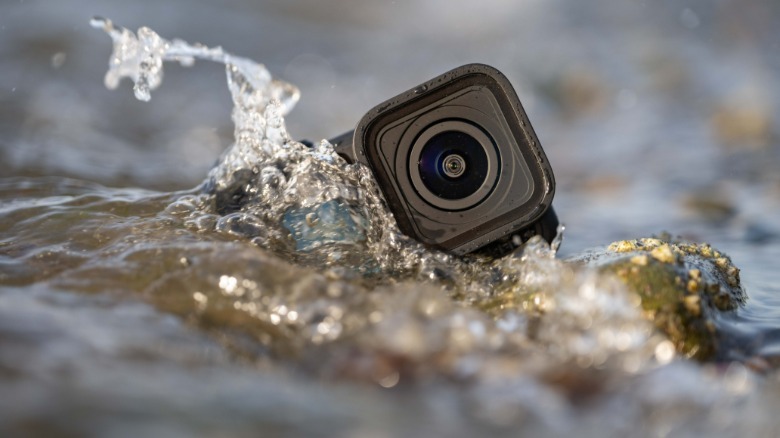
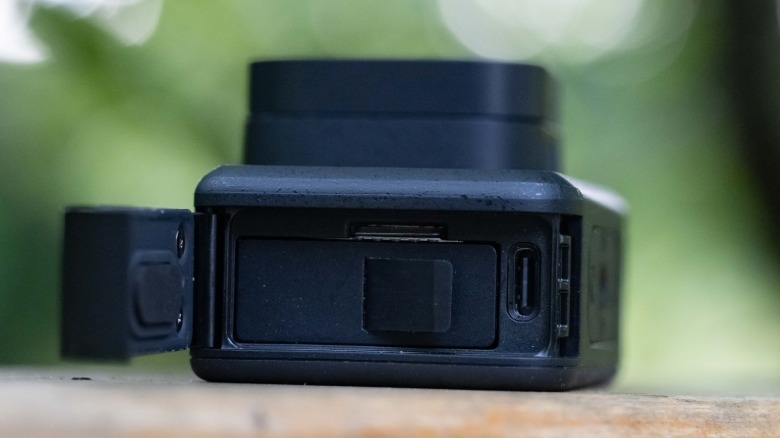
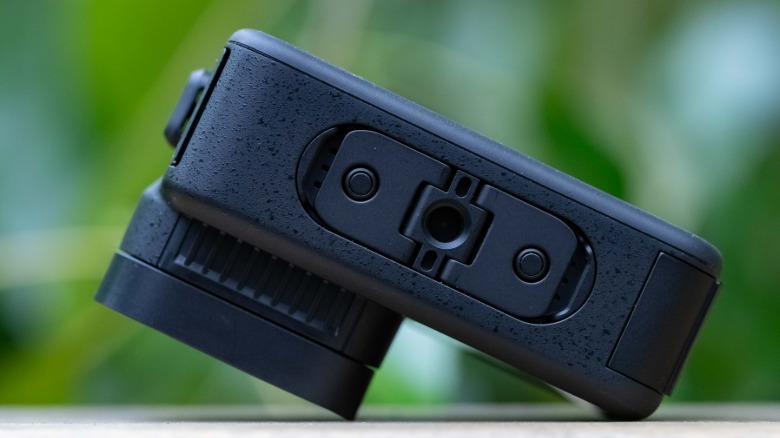
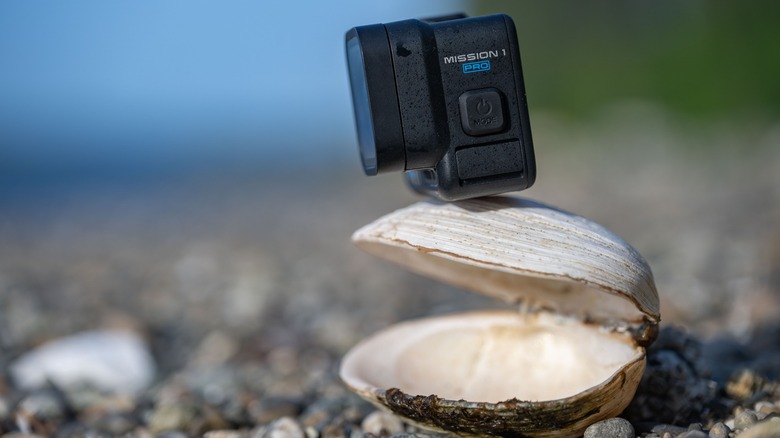
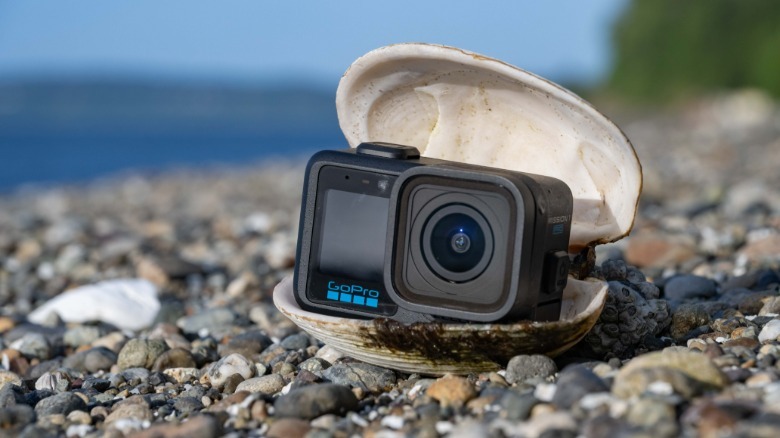
I had expected the Mission 1 Pro to be much larger than it is. The lens protrudes more than the Hero 13, but other than that it is about the same size. This is excellent, as it meant I was able to use the Mission 1 Pro as I would any other GoPro. One key upgrade is the buttons, which have been redesigned to be easier to press when wearing gloves, and to enable the camera to dive farther underwater (up to 20 meters). I love the tactility of these new buttons, and they are very clearly superior to anything that’s come before.
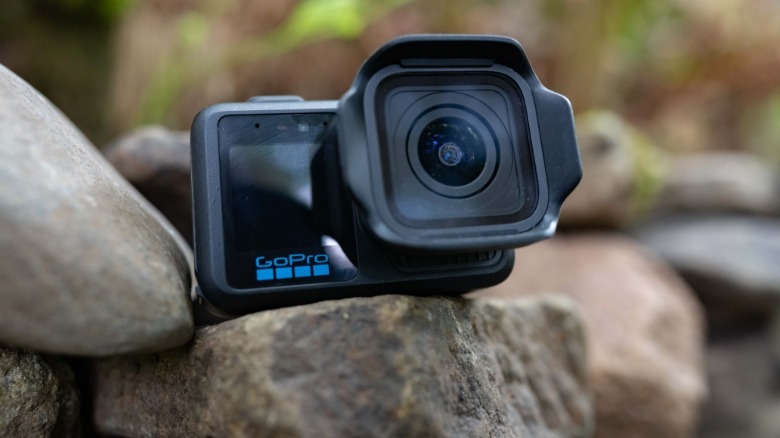
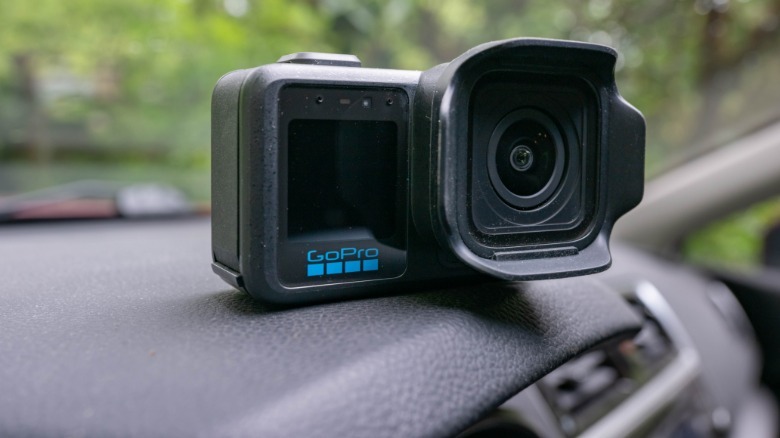
The Mission 1 Pro also comes with a rubber lens hood, which I recommend using whenever possible. Without it, the lens is prone to flaring in the presence of bright night sources, but with the lens hood this is solved entirely, and as a result, if you’re using a lens hood, the Mission 1 Pro exhibits less flaring than any other action camera. It fits on securely too, and won’t fall off easily.
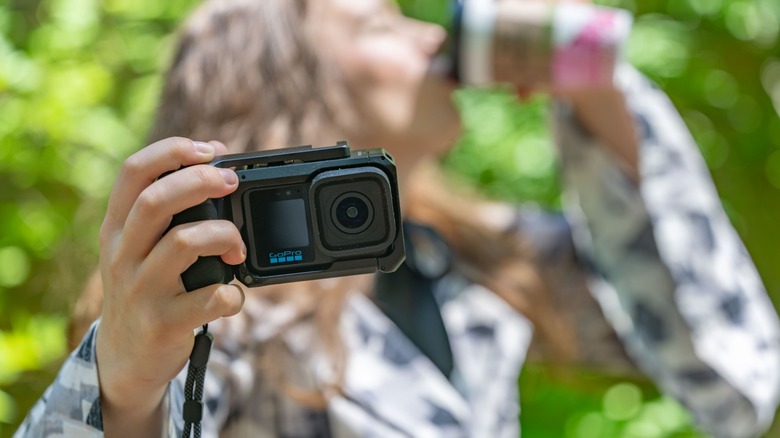
I also had the opportunity to try out GoPro’s new grip cage for the Mission 1 Pro, which essentially transforms it into a point-and-shoot, making it much easier to shoot handheld. I very much enjoyed using this while hiking or out walking, grabbing B-roll or taking photos.
The new menu system of the Mission 1 Pro is really user friendly, yet it still retains all the customization options which I’ve always appreciated in GoPro cameras. You also have the ability to expand the camera’s capabilities through GoPro Labs, including crazy high bitrate options.
The GoPro companion app, Quik, is excellent, though a bunch of key features are locked behind a subscription paywall. At $59.99 per year, it gains you access to such features as unlimited and automatic cloud backups of your GoPro footage, so it’s actually a good value, but the integration of the subscription into aspects of the app is frustrating if you decide not to purchase that subscription.
My biggest gripe here is that a firmware update is required before first using the camera. Fortunately, there isn’t any requirement to register the camera or bind it to an account, but it is disappointing to not be able to use the camera straight out of the box without first going through the firmware update. This was an aspect of GoPro cameras for which I have frequently praised them in the past. I hope that they will ship the camera with more current updates later on in its production, and allow users to bypass the firmware update requirement.
Over the years, one frequent complaint leveled against GoPro cameras was a tendency to overheat in warm conditions without airflow. I personally never really experience overheating with GoPros, but then I live in a region that’s generally pretty cool, and I mostly test GoPros outdoors in fast moving environments, or doing timelapse photography. However, with the Mission 1 Pro I decided to really put its battery life and heat management capabilities to the test.
I took the camera along to multiple live music recording sessions, where I set it down to record the whole show. For one of these shows, I recorded over an hour of 4K 30fps 10-bit footage shot at a high bitrate, yet the camera was only mildly warm afterwards. What’s more, it still had 22% of its battery left. That is very impressive indeed, and I am fairly confident that GoPro has finally escaped such criticisms.
Regarding those recordings, I was blown away by the audio quality of the microphone array in the Mission 1 Pro. Since I reviewed the Nikon Zr, its internal microphones have been my primary tool for recording live music. I was shocked to find that the Mission 1 Pro is very nearly as good in this regard as the Nikon Zr, and even has some characteristics to its microphones that I prefer. GoPro has finally integrated 32-bit float recording here too, so you can easily adjust volume in post and not worry about the volume of what you’re recording.
The Mission 1 Pro is going up against some formidable cameras. The DJI Osmo Action 6 and Insta360 Ace Pro 2 are both very good, and have their own unique features which make them appealing options.
The Osmo Action 6 has a brighter aperture at F2, so does deliver a small improvement in low light conditions. It also features a variable aperture, which helps with controlling light transmission, as well as delivering cool sunstars.
The Insta360 Ace Pro 2 benefits from a particularly well developed modular accessory system. It’s also the only action camera with a flip-up rear display, which is great for filming at an angle or for vlogging.
However, the GoPro Mission 1 Pro is miles better for slow motion video capture. Another big advantage is the mounting system, which is superior to the others due to its integrated ¼-20 screw mount and action camera fingers. The DJI and Insta360 cameras are both fully reliant upon magnetic quick release systems, which just aren’t as convenient and dependable.
Additionally, after closely analyzing a mountain of comparison footage I filmed between these cameras, I came to the conclusion that GoPro wins overall in terms of image quality. The Mission 1 Pro delivers more natural looking and detailed imagery than the Ace Pro 2 and Osmo Action 6. While DJI and Insta360 may look superficially more appealing in some scenarios, this appears to be largely a result of more aggressive processing algorithms.
The Mission 1 Pro starts at $699, and there’s no getting around the fact that this is a very high price point. While I believe it is in fact worth the money, it’s still a lot of money for many people to spend. However, there are some factors which may help alleviate that cost. For a start, existing GoPro subscribers get $100 off the price of the camera, which brings it down to a significantly less painful $599.
It’s also worth noting now that there is a less expensive model of the camera called the GoPro Mission 1 (no “pro” on the end), which starts at $599, and with a GoPro subscription discount is just $499. This non-pro camera scales back on the slow motion capabilities (8K 30fps, 4K 120fps, 1080p 240fps), but is very nearly as good as the “pro” model, and at a price that’s much closer to other action cameras on the market.
It’s worth noting that it is likely these cameras are more expensive now than they might have been due to the shortage of components, which is a consequence of the generative AI data center boom. Existing products which were launched before component prices shot up still have large stockpiles available, which helps to account for the price disparity between a new camera like the Mission 1 Pro and older action cameras. If shortages continue and component prices remain high, then we can unfortunately expect camera prices to go up across the industry. This is all to say that while the Mission 1 Pro may seem expensive now, in another 6 months to a year it may be closer to the “new normal”.
It is really good to see GoPro make such a triumphant comeback with the GoPro Mission 1 Pro. It’s clear that the company listened to its customers, and acted decisively to respond to what GoPro users need. I can now say without hesitation that the Mission 1 Pro is the best action camera currently available. This is not to say it’s perfect, because there are clearly some areas where it could be improved, and other brands do still offer some things GoPro doesn’t. It is also very expensive, which erodes its advantage over less expensive cameras. However, when considered as a whole, the Mission 1 Pro is the overall best in its genre, and if price isn’t an object, this is the action to choose.
It also has to be said that GoPro still retains the color science for which they are known. The way these cameras render things is special, and that’s still baked into the DNA of the Mission 1 Pro. It’s a massive upgrade over everything GoPro has ever made, and at the same time it retains what people love about these cameras. Perhaps most importantly, the Mission 1 Pro delivers the best quality imaging capability of any action camera on the market today.
The GoPro Mission 1 Pro is available starting at $699 from GoPro’s online store.
A newly discovered data leak dubbed “FortiBleed” has exposed what appears to be a collection of Fortinet and FortiGate VPN credentials for 73,932 firewall URLs at organizations worldwide.
The exposed data was first discovered by security researcher Bob Diachenko, who says he found a server containing what appeared to be valid Fortinet VPN credentials, including usernames, email addresses, and plaintext passwords.
According to screenshots and information shared by Diachenko, the database contains entries for Chevron, Samsung, Foxconn, Comcast, AT&T, Mercedes-Benz, Toyota, Sinopec, State Grid, and many others.
“Massive Fortinet/FortiGate bruteforce/active exploitation campaign uncovered in action,” Diachenko posted on LinkedIn.
“Thousands of top vendors instances are listed in the files like this (see screenshot). This one alone has 21,634 domain names – from Chevron to Fortinet itself. All – with potentially working passwords to the FortiGate appliances obtained through various menas.”
The exposed data also included comments listing each organization’s industry, revenue, and number of employees, likely for planning attacks.

Diachenko later shared additional information that claimed the operation was conducted by a Russian-speaking multi-operator threat group that harvested credentials for FortiGate SSL VPN devices.
According to Diachenko’s investigation, the attackers allegedly conducted approximately 1.16 billion credential attempts against 320,777 FortiGate targets and an additional 2.1 billion attempts against 163,650 Microsoft SQL Server systems.
He further claimed the threat actors intercepted SSL VPN authentication hashes, cracked them using a 45-GPU cluster managed through Hashtopolis, and used the recovered credentials to move laterally into internal Active Directory environments.
Diachenko told BleepingComputer he obtained these details after analyzing additional files inadvertently exposed on the same server.
“They accidentally left an open directory with artefacts, connection strings, tooling, scripts and data online. Analytics obtained via their cron jobs, bash histories, logs etc,” Diachenko explained.
The researcher also stated that multiple organizations across Japan, Taiwan, Vietnam, Iraq, and Turkey were fully compromised, including a Turkish NATO defense contractor from which classified documents were allegedly stolen.
Threat intelligence company Hudson Rock has since published its own analysis of the exposed data after receiving the dataset from Diachenko. The company described the collection as one of the largest known troves of compromised Fortinet-related credentials.
According to Hudson Rock, the dataset contains 73,932 unique firewall URLs across 194 countries and impacts 21,632 unique domains.
The company says the attackers maintained detailed logs of successful compromises and assembled a database containing verified credentials for organizations across nearly every major industry sector.
Among the organizations Hudson Rock says appear in the dataset are Foxconn, Samsung, Comcast, Siemens, Lenovo, PwC, Accenture, Oracle, and numerous government agencies and critical infrastructure operators.
The company also released statistics showing that the highest number of affected devices was in India, the United States, Taiwan, Mexico, Turkey, Thailand, Colombia, Malaysia, Chile, and the United Arab Emirates.
The most common sectors for the listed companies are telecommunications, IT services, financial services, government organizations, healthcare providers, educational institutions, and manufacturing.
One strange aspect of the leak is that many of the exposed credentials were long, complex passwords that would ordinarily be considered difficult to crack.
Cybersecurity researcher Kevin Beaumont independently reviewed portions of the exposed data and told BleepingComputer that some of the credentials are authentic.
“I have been able to confirm the authenticity of some of the admin logins and passwords – this looks like a real dump,” Beaumont said.
After further review of the data shared by Hudson Rock, Beaumont published additional findings indicating that the dataset contains credentials for roughly 75,000 Fortinet devices, most of which remain online.
According to Beaumont, the data appears to have originated from exported Fortinet configurations because it contains information, including email addresses, that is typically only accessible through configs.
He also said the affected IP addresses are different from those in the 2025 Belsen Group Fortinet leak, further indicating that this is a more recent and larger collection of compromised devices.
Beaumont said he verified that multiple organizations listed in the dataset were using valid credentials and observed that many affected devices were running relatively recent FortiOS versions.
“The data is legit. It is around 75k devices. Almost all are still online, and Fortinet devices. It appears to be recent data,” Beaumont wrote.
Based on network data from Shodan, Beaumont says the leak contains approximately half of all internet-accessible Fortinet firewalls and said that a majority of the affected devices expose their FortiGate management interfaces directly to the internet.
The source of the configuration data remains unknown, with it unclear whether it was stolen through previously disclosed Fortinet vulnerabilities, a newly discovered flaw, or another method. Neither Diachenko, Hudson Rock, nor Beaumont have identified how the configuration data was originally obtained.
Hudson Rock has created a free FortiBleed lookup tool to check if your organization is impacted.
Organizations in the dataset should immediately rotate passwords associated with Fortinet VPN and administrative interfaces, enforce MFA, examine gateway logs for suspicious activity, and monitor for exposed employee credentials.
BleepingComputer contacted Fortinet regarding the exposed dataset and will update this article if we receive a response.
Security teams log 54% of successful attacks and alert on just 14%. The rest move through your environment unseen.
The Picus whitepaper shows how breach and attack simulation tests your SIEM and EDR rules so threats stop slipping by detection.
During The State of Unreal keynote at Unreal Fest on Wednesday, Epic Games revealed just how it’s embracing generative AI in Unreal Engine (UE). Along with offering the first details on Unreal Engine 6 (UE6), the company discussed new features for Unreal Engine 5.8, which it also released on Wednesday. As part of the latest update, Epic is offering an experimental Model Context Protocol (MCP) plugin that will allow developers to hook gen AI models such as Claude and Gemini into Unreal Engine. It’s looking to make the MCP an integral part of UE6.
Marcus Wassmer, the head of Epic’s development team, wrote in a blog post that the gen AI models can act as “creativity and productivity multipliers so that teams can focus their efforts on the essential creative and technical tasks of development rather than time on time-consuming manual tasks.”
The blog post went on to state that, “our goal for UE6 is to greatly reduce the tedious work in authoring content to leave more time for creative exploration, and increase the amount of iterations a team can make to polish their content. UE6 will ship with tools and workflows where you can choose to bring your own favorite models, battletested against internal development and in UEFN [Unreal Engine for Fortnite].”
Unreal Engine 5.8 ships today with experimental MCP server support:
Your sources, your pipeline and your workflow—simply configure the MCP plugin and connect to any agent. Get familiar with the MCP server and the PCG Primitive Plugin today and see what teams can build together:… pic.twitter.com/Ca5yZIH443
— Unreal Engine (@UnrealEngine) June 17, 2026
Epic gave a demonstration of Claude Code connecting to UE, then pulling objects from an asset library and placing them in a virtual living room. Developers can still move the objects around manually in the UE editor.
The company also showed how a developer might use Claude Code in UE to build a city that can be automatically adjusted as assets like parks are added. Along with modifying assets, gen AI models can adjust factors like lighting and match atmospheric conditions to real-world examples.
In a video showing off Unreal Engine 5.8, Epic suggested that developers could use the likes of Claude to “automate asset creation, testing and optimization. The plugin can access core UE systems such as blueprints, assets, levels, materials, meshes and many more.”
It shouldn’t be too much of a surprise that Epic is going all in on gen AI in UE6. Back in November, CEO Tim Sweeney suggested that a “made with AI” tag may be “relevant to art exhibits for authorship disclosure, and to digital content licensing marketplaces where buyers need to understand the rights situation. It makes no sense for game stores, where AI will be involved in nearly all future production.”
In January, the Game Developers Conference published its 2026 State of the Game Industry report, which was based on a survey of more than 2,300 game industry workers. Of those, 36 percent said they were using gen AI tools as part of their job. Most of those using such tools were doing so for research and brainstorming (81 percent) but also for tasks like prototyping (35 percent). However, 52 percent of respondents said they thought gen AI was bad for the industry. That figure was up from 30 percent in the 2025 edition of the survey and 18 percent in 2024. Only seven percent said it was having a positive impact.
Elsewhere at Unreal Fest, it emerged that Epic is merging Unreal Engine 5 and UEFN into a single platform in UE6. One other thing that the company is testing is the ability to pull Fortnite skins into other UE6 games, and to let developers move their skins in the other direction. The company aims to release UE6 in early access in late 2027, with a full release lined up for around 12-18 months later.
Epic had some news to share about collaborations as well. Those creating Fortnite experiences using UEFN will soon be able to make games based on The Simpsons, just as they can currently do with Star Wars IP. The company also revealed that more than 30 gaming collaborations are lined up for Fortnite this year, including Sonic Racing: CrossWorlds, Vampire Survivors, Control Resonant and Phantom Blade Zero.
However, Vampire Survivors developer Poncle appears to have concerns about Epic’s embrace of gen AI. “Following today’s news about gen AI usage by Epic to create all sort [sic] of game assets, including Fortnite characters, we’re currently ‘reviewing’ our collaboration with Fortnite,” Poncle stated on Reddit. “We’ll let you know if anything moves forward.”
Ghana will take on Panama in a must-win contest for both teams as they begin their respective FIFA World Cup 2026 Group L campaigns in Toronto. A defeat would leave either side facing a daunting path, with upcoming matches against European heavyweights England and Croatia.
Quarter-finalists in 2010, the Black Stars enter the match as favorites, particularly with Panama’s star midfielder Adalberto Carrasquilla reportedly nursing an injury and unlikely to be risked. Yet Ghana have had a difficult spell recently, highlighted by their failure to qualify for the most recent 24-team Africa Cup of Nations, for the first time in two decades.
They then let go of coach Otto Addo and in April welcomed Carlos Queiroz, who returns to a World Cup dugout for the fifth successive tournament after coaching Portugal in 2010, and Iran in 2014, 2018 and 2022. Can he end Ghana’s six-match winless run? Queiroz will look to revive the form Ghana displayed during qualification, where they recorded eight wins, one draw, and only one loss. Much will depend on captain Jordan Ayew, who will break brother Andre’s all-time caps record today, alongside attacking talents Ernest Nuamah and stellar Man City winger Antoine Semenyo.
Panama, meanwhile, are appearing at only their second World Cup after making their debut in 2018, when they lost all three group-stage matches, conceding 11 goals. However, Los Canaleros arrive with renewed confidence following an impressive runners-up finish in the 2025 CONCACAF Nations League, beating World Cup co-hosts the USA en route. Physically dominant, they’ll look to put pressure on from the off.
So, read on as we show you exactly how to watch Ghana vs Panama for free from anywhere in the FIFA World Cup 2026.
Ghana vs Panama is available to watch for free in multiple countries, including the UK, Australia, Brazil, Belgium, Ireland, Netherlands, Switzerland and Turkey.
Abroad? Can’t access your free stream? Unblock your free World Cup stream with Norton VPN — more on that below.
It’s the World Cup, and if you’re traveling, you might discover your usual Ghana vs Panama stream is suddenly unavailable due to geo-restrictions.
Don’t worry, that’s exactly where a VPN can help. A virtual private network lets you connect to servers around the world so you can securely access your usual World Cup coverage as if you were back home.
We recommend Norton VPN. Here’s why:
US viewers can watch Ghana vs Panama on FS1.
Cord-cutters can access FS1 through live TV services like YouTube TV (free trial), Hulu+Live TV, Sling (select markets), Fubo or DirecTV.
Those looking for a streaming service instead can watch Ghana vs Panama on Fox One (3-day free trial).
If you are looking for a stream in Spanish you can watch on Telemundo which is available via Peacock or one of the cord-cutters above.
Visiting the US from the UK? You can still watch your World Cup stream for free thanks to Norton VPN (try for 60 days).
UK customers are in luck as they can stream Ghana vs Panama for free on ITV. Live coverage is available on ITV1 and ITVX.
You require a TV license and a valid UK postcode for an account (e.g. SE1 7PB).
Norton VPN can unlock your stream if you’re abroad today.
Ghana vs Panama will be shown for free in Australia on SBS On Demand.
The streaming platform has every game of the tournament for free, making it the perfect place for your World Cup viewing.
Traveling for work or on holiday? A VPN like Norton VPN can help unlock your free stream.
In Canada, TSN and free-to-air channel CTV will be broadcasting Ghana vs Panama.
You can live stream via the TSN+ streaming platform, which costs CA$8 per month or CA$80 per year.
CTV will require TV provider login details for you to watch for free online.
Outside of Canada? Use Norton VPN whilst you’re traveling away from home to unlock your stream.
Ghana vs Panama kicks-off at 7pm ET on Wednesday, June 17. That’s 12am BST / 9am AEST on Thursday, June 18.
Ghana
Goalkeepers: Lawrence Ati-Zigi (St. Gallen), Joseph Anang (St Patrick’s Athletic), Benjamin Asare (Hearts of Oak)
Defenders: Alidu Seidu (Rennes), Jonas Adjetey (VfL Wolfsburg), Abdul Mumin (Rayo Vallecano), Gideon Mensah (Auxerre), Abdul Rahman Baba (PAOK), Jerome Opoku (Istanbul Basaksehir), Kojo Peprah Oppong (Nice), Derrick Luckassen (Pafos), Marvin Senaya (Auxerre)
Midfielders: Caleb Yirenkyi (Nordsjaelland), Thomas Partey (Villarreal), Abdul Fatawu (Leicester City), Kwasi Sibo (Oviedo), Antoine Semenyo (Manchester City), Elisha Owusu (Auxerre), Augustine Boakye (Saint-Etienne), Kamaldeen Sulemana (Atalanta)
Forwards: Jordan Ayew (Leicester City), Brandon Thomas-Asante (Coventry City), Christopher Bonsu Baah (Al-Qadsiah), Inaki Williams (Athletic Bilbao), Ernest Nuamah (Lyon), Prince Kwabena Adu (Viktoria Plzen)
Panama
Goalkeepers: Luis Mejía (Nacional), César Samudio (Marathón), Orlando Mosquera (Al-Fayha)
Defenders: César Blackman (Slovan Bratislava), José Córdoba (Norwich City), Edgardo Fariña (FC Pari Nizhniy Novgorod), Roderick Miller (Turan Tovuz), Fidel Escobar (Saprissa), Jiovany Ramos (Puerto Cabello), Eric Davis (Plaza Amador), Andrés Andrade (LASK), Jorge Gutiérrez (Deportivo La Guaira), Amir Murillo (Beşiktaş)
Midfielders: Cristian Martínez (Ironi Kiryat Shmona), José Luis Rodríguez (Juárez), Adalberto Carrasquilla (UNAM), Yoel Bárcenas (Mazatlán), Carlos Harvey (Minnesota United), Aníbal Godoy (San Diego), César Yanis (Cobresal), Azarías Londoño (Universidad Católica de Chile), Alberto Quintero (CD Plaza Amador)
Forwards: Tomás Rodríguez (Deportivo Saprissa), Ismael Díaz (León), José Fajardo (Universidad Católica), Cecilio Waterman (Universidad de Concepción)
|
Position |
Team |
GD |
Points |
|---|---|---|---|
|
1 |
England |
0 |
0 |
|
2 |
Croatia |
0 |
0 |
|
3 |
Ghana |
0 |
0 |
|
4 |
Panama |
0 |
0 |
Of course, most broadcasters have streaming services that you can access through mobile apps or via your phone’s browser.
You can also stay up-to-date with all of the key World Cup moments on the official social media channels on X/Twitter (@FIFAWorldCup), Instagram (@FIFAWorldCup), TikTok (@FIFAWorldCup) and YouTube (@FIFA).
We test and review VPN services in the context of legal recreational uses. For example: 1. Accessing a service from another country (subject to the terms and conditions of that service). 2. Protecting your online security and strengthening your online privacy when abroad. We do not support or condone the illegal or malicious use of VPN services. Consuming pirated content that is paid-for is neither endorsed nor approved by Future Publishing.
The streaming industry has gotten a lot of flak over the past few years, but there is one thing that Hollywood studios are undeniably good at: recycling the same idea, over and over and over again until the world ends (or until everyone finally decides they’re sick of Harry Potter, whichever comes first).
This tried-and-true formula is now playing out in real time with Prime Video’s Off Campus and Netflix’s upcoming series Icebreaker, shows that, like Heated Rivalry, are hockey-themed romances about polar opposites who just can’t seem to keep their hands off each other.
But there’s one key difference: Icebreaker and Off Campus are about heterosexual romances, while Heated Rivalry is about a secret gay relationship. And considering how much queerness played a role in Heated Rivalry’s explosive popularity, it seems like the clamor for straight horny hockey content is another example of Hollywood just not getting the message.
Off Campus, which debuted last month, is about Hannah Wells, a reserved musician who agrees to enter a fake relationship (?) with college hockey captain Garrett Graham in exchange for philosophy class (??) tutoring. The forthcoming Icebreaker, which Netflix announced this week, is about a figure skater who falls in love with a hockey player after they’re forced to practice on the same rink.
Hockey aside, Icebreaker and Off Campus have a lot in common with Heated Rivalry. They’re all adaptations of popular novels: Off Campus is based on a series of steamy books by Canadian author Elle Kennedy, while Icebreaker is inspired by a YA novel by British author Hannah Grace. They’re also all variations on the “enemies to lovers” trope, popularized by fanfic sites like Wattpad and ao3.
When it debuted on Crave and HBO Max last winter, Heated Rivalry primarily received attention for its steamy sex scenes, as well as the chemistry between its two leads, Connor Storrie (who plays the mercurial Ilya Rozanov) and Hudson Williams (the straight-laced Shane Hollander). But as the show gained traction, it also was acclaimed for its depiction of the surprisingly tender relationship between the two, as well as its portrayal of LGBTQ-specific spaces and themes. It also gained a huge following among straight women, drawing attention to the Japanese fandom fujoshi, which centers around heterosexual women consuming gay male stories.
It’s hard to overemphasize just how much of Heated Rivalry’s success is owed to its queerness—not just because it was hot, but because there is genuine audience demand for it. According to UCLA’s 2024 “Hollywood Diversity Report,” shows featuring “underrepresented stories,” including LGBTQ-themed narratives, have higher median ratings and more social media discourse than shows that don’t. “The evidence is clear that audiences today are hungry for both diverse stories and diverse storytellers,” the report’s coauthors Ana-Christina Ramón and Michael Tran tell WIRED via email.
There is certainly evidence to suggest that general interest in hockey has increased as a result of Heated Rivalry’s popularity, with NHL ticket sales reportedly surging in the weeks after the show’s launch. But it’s hard to understand how studio executives can look at the success of that show and attribute it to a sudden, newfound interest in a sport that, historically, has been less popular in the United States than baseball, basketball, or football.
The actual explanation for Heated Rivalry’s popularity appears fairly obvious: the girls, gays, and theys like watching hot guys make out in hotel rooms and exchange yearning looks over a dance floor. The taboo nature of Shane and Ilya’s relationship in a traditionally hetero-masculine space also likely played a huge role, says Matt Puretz, senior researcher for UCLA’s Center for Storytellers and Scholars.

Vedana Therapeutics, a Seattle-based startup aiming to prevent migraine attacks, emerged from stealth Wednesday with $46 million and a leadership team of heavy-hitters in cutting-edge migraine treatment.
The new funding will allow the company to advance antibody therapies targeting migraine-related signaling pathways — candidates patients could eventually self-administer by injection at home.
Vedana’s goal is to become the definitive migraine therapy company — and its roster of leaders, board members and advisors have played essential roles in the sector already, helping develop antibody therapies against two types of proteins: calcitonin gene-related peptides (CGRP) and a newer target called pituitary adenylate cyclase-activating polypeptides (PACAP).
“We need to make medicines that will enable patients not to have a single migraine day,” said Anurag Agarwal, Vedana’s co-founder and CEO. “And that means targeting not one, but multiple biological pathways and layering them together to completely address this very complex and diverse disease.”
While CGRP medicines represented the first specialized therapies for migraine, roughly two-thirds of patients still suffer from the condition. A migraine attack can trigger a cascade of symptoms unfolding over days, potentially including nausea, light sensitivity and disrupted sleep; flashing lights or partial vision loss; moderate to severe headaches; and fatigue and brain fog.
Vedana’s lead drug candidate program is a next-generation PACAP antibody, and its second targets both PACAP and CGRP.
The multipronged approach is essential, said Dr. Ernesto Aycardi, chief medical officer, because it’s “not just one neurotransmitter, it’s not just one protein that is causing the problem. In addition, there’s a significant complexity from the patient perspective.” Patients respond to different treatments, he added, and even within an individual, a migraine can be triggered by different causes between episodes.
The startup has 14 employees. Its leadership includes:
While multiple Seattle-area biotech companies in general are pursuing medical therapies created using AI tools, Vedana touts the decades of its team’s experience as a huge advantage.
The antibodies from living organisms “are more robust than any LLMs that we have built. These have been built over billions of years of information, so I would say that we are leveraging that neural network,” Agarwal said. The company will use AI for later steps in the drug development process, he added.
Major biotech companies marketing approved CGRP antibody therapies include Amgen, Eli Lilly, Teva and Lundbeck. In the PACAP space, Vedana faces competition from Lundbeck, Mentari Therapeutics and Slate Medicines.
Vedana’s Series A round was co-led by Westlake BioPartners and Canaan Partners, with participation from Dawn Biopharma and Alexandria Venture Investments.
Editor’s note: Story updated at 10:35 a.m. to add additional comments from Anurag Agarwal and Dr. Ernesto Aycardi.
If a blackout has ever cost you a fridge full of groceries, Jackery has a fix for that now. The company is introducing FridgeGuard alongside three new HomePower Series batteries, giving you power backup options for different appliances.

Jackery says FridgeGuard is the world’s slimmest refrigerator backup battery. It measures just 2.6 inches thick and weighs 23 pounds, allowing it to sit beside a refrigerator, lie flat, or be mounted on a wall. Inside, a 1024Wh battery delivers up to 15 hours of runtime, stretching to 30 hours with an optional expansion battery.
With a 10ms switchover, your fridge barely notices when the power actually cuts out. Jackery also built in a 1600W peak output to handle compressor startups, along with surge protection and a bypass mode that preserves battery health once it is fully charged. FridgeGuard can also support home offices, aquariums, and CPAP devices. It launches as a Costco exclusive at $559.99 for members.

For broader backup needs, Jackery is introducing three HomePower models:
All three rely on LiFePO4 batteries rated for 6000 cycles, translating to roughly 16 years of use. The HomePower Series launches June 23 through Jackery’s website and Amazon.
Jackery is entering a growing category of home backup batteries designed specifically for refrigerators. Earlier this month, Anker introduced the Solix S2000, a compact power station that claims up to 35 hours of fridge runtime during a blackout.
Computex is the largest tech expo in Asia, and it held annually during the first week of June. I got the chance to go to Taipei this year and cover the show, which features several mainstream tech brands and many more smaller and upcoming companies.
Taiwan is home to many tech firms, including popular ones like Asus and Acer. It’s also the home of TSMC, which makes 90% of the world’s most advanced chips — including the ones that you find inside many Apple devices and Snapdragon-powered Android phones. TSMC also manufactures chips for Nvidia, which makes the GPUs that you can find in many data centers and is arguably the foundation of the current AI boom. This is why Computex is such an important expo, and many companies take advantage of this gathering to launch their upcoming tech and show off their latest products.
So, we spent several days in Taiwan and trolled the massive show floors for the most interesting gadgets that we could find. We picked seven out of the hundreds (maybe even thousands) of items that we saw to give you a slightly closer look. Take a look and keep in mind: most of these picks will either be available to consumers soon or, (depending on when you read this article,) might be available in a store near you already.
Retro tech is becoming trendier these days, and Acemagic joined the bandwagon with the Retro X5 mini PC. This tiny desktop features the aesthetics of the original Nintendo Entertainment System, making it perfect for millennials and Gen X-ers who grew up with this console in the ’80s and want a hit of nostalgia every time they sit at their desk.
Even though this Retro X5 mini PC (which is different from a tower PC but is still designed for desktop use) looks like it was from 40 years ago, it’s equipped with the latest components. It has an AMD Ryzen AI 9 HX 370 CPU paired with 32 GB of RAM and a 1 TB SSD. If you need even more capacity, it’s upgradeable up to 128 GB of RAM and 4 TB of storage.
Despite its small size, it comes with a lot of ports. You get one HDMI, DisplayPort, and USB4 Type-C port each, allowing you to directly attach three monitors. There are also two LAN ports for high-speed internet, as well as four USB3.2 Type-A ports and an additional USB Type-C port at the front of the PC. Finally, a single 3.5mm combo audio jack lets you use wired headphones or speakers. If you prefer wireless connectivity, it’s equipped with Wi-Fi 7 and Bluetooth 5.4.
The main downside is that it doesn’t have a discrete GPU, but the Ryzen AI 9 HX 370 should be powerful enough to run some of the most popular games at 1080p and low to medium quality. But if that’s not enough for you, you can get an external GPU and attach it to the USB4 port for more graphics power.
Most handheld gaming consoles are powered by an AMD processor, like the ROG Ally, which some suggest is the best Steam Deck alternative for PC gaming. But Acer is challenging the norm when it launched the Predator Atlas 8 handheld console here in Taipei.
This 8-inch handheld uses an Arc G3 processor, which Intel also unveiled at Computex 2026 to challenge AMD’s dominance in the gaming space. Unlike previous Intel-powered consoles which used repurposed laptop chips, the Arc G3 is specifically designed for handhelds, balancing power and performance with efficiency and battery life. While we don’t have in-depth comparisons between the AMD and Intel gaming processors yet, the Arc G3 seems like a promising challenger to AMD’s entrenched offerings.
Aside from the new Intel chip, the Predator Atlas 8 comes with a few interesting features of its own. This includes a 120 Hz 8-inch 16:10 display that can hit up to 500 nits of peak brightness, giving you a larger screen that delivers smoother framerates without making the console uncomfortably large. It also comes with a rather large 80 Wh battery; this might sound promising, but we’ll have to run the console and its Intel Arc G3 processor through its paces for us to know how much gaming time it will give you. (Note that results may also vary depending on your settings and the game that you’re playing).
I got to try the Atlas 8 handheld on the show floor and played Forza Horizon 6 on it for a few minutes. Despite its big screen and larger battery, it wasn’t tiring to hold, and I could imagine myself playing on it for hours at a time, whether in bed for a late-night gaming session or while passing the time on the plane.
Even though gamers are now spoiled for choice when it comes to handheld consoles, you still cannot replace the glory of playing on a large, ultra-wide monitor. And among the many displays that were shown off at Computex 2026, the Alienware AW3926QW stood out from the crowd.
It might look like just another curved ultrawide display when turned off, but you’ll see the magic once your turn on your PC. This display has a 5K (5120 x 2160) resolution, giving you sharper images than a comparable 4K monitor. It also has a 165 Hz refresh rate to give you smooth gameplay at maximum resolution; but if you need an even higher refresh rate for competitive matches, you can boost it to 330 Hz by dropping the resolution to 2560 x 1080.
The AW3926QW also used featured a QD-OLED panel, ensuring that you get vivid, accurate colors with its wide color gamut covering 99.5% of DCI-P3. It can also hit a peak brightness of 1300 nits, allowing you to see your content even in a bright area. Another interesting feature is its glossy screen, which helps deliver a clearer, sharper image. Alienware addressed the reflectivity issue that plagues this finish, though, and even though I was playing “Cyberpunk 2077” in a brightly lit area with a lot of light sources, there were zero distractions on the surface of the glass.
Apple launched the affordable MacBook Neo, which only cost $599 ($499 if you get the student discount) earlier this year, and it caught some industry executives by surprise. However, that didn’t mean that Apple’s competitors won’t do anything about it, and Dell was the first one to come out with what might be the Neo’s first true alternative.
The Dell XPS 13 budget laptop followed in the Neo’s footsteps of premium looks at budget pricing, with the new device coming in at a base price of $699, although students aged 16 and up can get it for just $599 (for a limited time). This Dell laptop also has a few features that you won’t find on the MacBook Neo: a larger, 13.4-inch touchscreen monitor with variable refresh rate from 30 Hz to 120 Hz. This might not be a “make-or-break” option for most laptop buyers, but it will give users a smoother experience and potentially allow for longer battery life.
The MacBook Neo has also a few must-know limitations which Dell has addressed with the new XPS 13. This includes that availability of higher configuration options, which allows the laptop to have as much as 32 GB of memory and up to 1 TB of storage (versus the Neo’s 8 GB of unified memory and up to 512 GB of storage), processors specifically designed for laptops, and a backlit keyboard.
I tried out this exact laptop on the show floor and, honestly, I couldn’t feel or see any significant differences between this and other more premium laptops on display. It was only after the Dell representative pointed out that it was new budget model that I realized I’m looking at something that will change the entry-level PC laptop market.
Many enthusiasts focus on PC specs when it comes to building their gaming station and up choosing a generic gaming chair as their seating solution. But if you intend to spend hours seated in front of your computer, it’s best to invest in a chair you can adjust as necessary to keep you comfortable. FormulaV Line, a Taiwanese startup that’s coming to the U.S. soon, wants to level up comfort with its Solen gaming chair.
What makes this stand out is that you can change its recline and footrest angle using the switches on the right side of the chair, allowing you to set it at just the right position. This makes it easy to get into a leaning position with your feet off the ground if you want to kick back and relax with a casual game using your controller. But if you plan to engage in a serious match while playing your favorite e-sports title, you can easily move move the chair’s support back up into action.
It also comes with a USB-C and USB-A port to let you charge your devices — like your gaming controller — without leaving the chair. It’s powered by a removable rechargeable battery, allowing you to keep it topped up via USB-C. For those who need a little more distraction, the seat also has a vibrate function that’s meant to help you relax after a long day at work. I tried the Solen gaming chair for myself, and while I cannot compare the vibrating function to a real massage chair, the fact that I can easily set the recline and footrest to whatever angle I need is more than enough to convince me to consider getting one when they’re released.
Many gamers would be happy playing on one excellent monitor and a good keyboard and mouse combo or one of the many excellent handheld gaming controllers you can use on a PC. But for the sim racing enthusiasts, a complete sim racing cockpit is a must-have to complete the experience.
The Thermaltake GR900 racing sim cockpit starts as a base that lets you mount your desired racing chair, driving wheel, pedal, and shifter set up. It also accepts up to three monitors to give you the wide field-of-view that you’d expect in real life. But what made this stand out is the GM5 3DOF motion system that you can attach it, allowing you to feel the acceleration, braking, and every bump you hit as you race around the track.
I tested this out myself, and the combination of the curved triple-monitor setup, driving wheel and pedals, plus the motion system made it feel like I was actually trying to set the best American lap time at Nürburgring (not that I’d actually get anywhere near the real record). The Thermaltake representative told me that this system starts at around $800 and you can actually build it yourself at home in about three to four hours. However, if you add the desktop PC, the triple monitors all the other accessories to turn into a fully-fledged motion simulator, expect the cost to go beyond $4,000.
When people talk about gaming laptops, they usually think of devices that cost thousands of dollars, keeping it out of reach for many gamers. But Gigabyte showcased the Eagle entry-level gaming laptop at Computex 2026, aiming to (hopefully) make gaming more affordable. We don’t have exact pricing yet, but a company representative told me that it will cost less than $1,000 and could even go as low as $800 for base configurations.
While the upcoming Dell XPS 13 and the MacBook Neo are still cheaper, they’re not specifically designed for gaming, and you might run into trouble if you want to play the latest top-tier games.
The Gigabyte Eagle comes with an AMD Ryzen 5 processor and a discrete GPU. Even though you won’t find the latest, most powerful RTX 50-series GPUs on this line of laptops, it still comes with either an RTX 4050 or RTX 3050, which should be good enough to let you play games at the lowest quality settings. And if you pair that with NVIDIA’s DLSS technology, you should get a reasonable frame rate without breaking the bank or your computer.
You also get a large 16-inch display with a 165 Hz refresh rate, making it easier to see your games without relying on an external monitor. More importantly, this gaming laptop is upgradeable, unlike other models, allowing you to increase its RAM and storage capacity in the future if you need to.
“It’s myopic in the extreme to think that no other competitors to Anthropic will develop similar capabilities to Mythos or even that they have not already done so,” says Tarah Wheeler, chief security officer of the specialized cybersecurity consulting firm TPO Group. “There are other companies hot on Anthropic’s heels who probably have the capabilities, too, and are holding them in reserve as they see how Anthropic is being treated in the current regulatory environment.”
Anthropic itself has emphasized this point since the launch of Mythos Preview. “The real message is that this is not about the model or Anthropic,” Logan Graham, the company’s frontier red team lead, told WIRED when Mythos Preview launched in April. “We need to prepare now for a world where these capabilities are broadly available in 6, 12, 24 months.”
OpenAI, for example, also did a private release of a cybersecurity-focused model in mid-April and announced an expanded cybersecurity strategy.
Researchers note that even before this next generation of models, existing AI offerings could be used for advanced vulnerability-hunting and exploit development with a refined harness. A large group of cybersecurity leaders emphasized this to the administration in an open letter on Sunday, arguing that the White House’s export-control directive was misguided.
“It’s not one model; it’s the general trend of technology,” says Bruce Schneier, a researcher at Harvard University and the University of Toronto who has been analyzing the situation. “Smaller, cheaper, open-source models, sometimes by themselves and sometimes in concert with each other, can match Mythos/Fable’s performance with more sophisticated prompting. And we should expect other models to match Mythos/Fable’s creativity and tenaciousness within months—slightly longer for open-source models.”
What the White House and governments around the world need to focus on, experts say, is democratically developing much broader and more transparent plans for how they will contend with advances in AI capabilities on cybersecurity and in other sensitive areas as they inevitably occur.
“The policy question is not whether a technology has risk,” says Chris Wysopal, cofounder of the cloud security firm Veracode. “The question is whether a specific restriction meaningfully reduces that risk or whether it mainly slows down the people trying to make systems safer.”
This story originally appeared at wired.com.
A Pew survey of 5,119 US adults finds 49% use AI chatbots but 40% say AI will hurt society, 67% distrust government regulation, and 59% distrust companies.
Half of American adults now use AI chatbots, but a plurality believe the technology will ultimately damage society, and overwhelming majorities have lost confidence that either the government or the companies building it will manage it responsibly. A new Pew Research Center report released Wednesday, based on a survey of 5,119 US adults conducted in February, found that 49% of respondents use AI chatbots, up from roughly a third in 2024. At the same time, 40% said AI will be worse for society, roughly two-thirds said it is advancing too quickly, and 71% agreed the technology will make their personal data less secure.
ChatGPT remains the dominant chatbot among US adults, with 44% of respondents reporting they have used the OpenAI application. Google’s Gemini ranked second at 24%, followed by Microsoft Copilot at 17%, MetaAI at 14%, Grok at 8%, Claude at 6%, and Character.ai at 3%. The most common use case was information searching, cited by 42% of chatbot users, followed by entertainment at 25%, creating or editing images and videos at 24%, and medical advice at 20%.
The trust deficit is the report’s most striking finding. Two-thirds of Americans, 67%, said they have little or no confidence that the US government could effectively regulate AI. A separate 59% said they have little or no confidence that US companies could develop the technology responsibly.
The federal government’s failure to produce a coherent AI regulatory framework, despite months of internal deliberation and a scrapped executive order, appears to have registered with the public. The partisan divide on regulation is notable, with a separate Pew survey from March 2025 finding that 54% of Republicans had at least some trust in the US to regulate AI, compared with only 36% of Democrats.
“AI is no longer the future; for many, it’s here and now,” Pew Research Center associate director of research Jeffrey Gottfried said in a statement accompanying the report. “Americans are increasingly using chatbots and bringing AI into their homes, but they have a complex relationship with AI. They may use it, but they’re still highly skeptical of it and how it will impact our society.”
The skepticism extends across demographics. In an earlier Pew survey from 2024, only 17% of the general public said AI would have a positive impact on the United States over the next 20 years, compared with 56% of AI experts who thought the same. Americans were more optimistic about AI in medical care, where 44% expected positive effects, but far less so about education, where only 24% were positive, and jobs, where the figure dropped to 23%.
The jobs concern is not abstract. Meta and Microsoft eliminated a combined 23,000 positions in a single day in April, with both companies explicitly citing AI investment as the reason. The tech sector has recorded more than 96,000 job cuts in 2026 so far, and companies making the cuts are among the most profitable on earth.
Pew found that 21% of US workers now use AI in their jobs, up from 16% in 2024, but far more workers report being worried than hopeful about where the trend leads. Only 23% of the general public said AI would have a positive impact on how people do their jobs over the next 20 years, compared with 73% of AI experts.
The report also captured the scale of non-adoption. Of the 51% of US adults who do not use AI chatbots, 60% attributed it to disinterest rather than lack of access or technical ability. Many respondents also acknowledged using products with AI features without identifying them as AI tools, including smartwatches at 37% and smart speakers such as Amazon Echo or Apple HomePod at 35%.
Fewer Americans use chatbots for the kinds of high-stakes applications that have attracted the most regulatory scrutiny. Only 13% reported using chatbots for news, 10% for emotional support, and 4% for companionship. The data privacy concern was more pervasive, with 71% of respondents agreeing that AI will make personal data less secure.
The new Pew data draws from multiple surveys conducted at different points between 2024 and February 2026. The chatbot usage figures reflect the February 2026 survey, while some attitudinal measures draw from earlier polling periods. The methodology uses Pew’s American Trends Panel, a nationally representative sample recruited through random sampling of residential addresses, with interviews conducted online or by phone.
What the data describes is a country that is adopting AI tools faster than it is developing confidence in the institutions meant to govern them. The gap between usage and trust is widening, not closing, and neither regulators nor the industry has offered a credible plan to address it.
At IO-AI Tech, a startup about 45 minutes north of downtown Shenzhen, China, I glimpsed a wacky new frontier of blue-collar work. Workers wearing the company’s VR headsets, handheld controllers, and motion-tracking gear remotely control humanoid robots for workplaces like factory floors and convenience stores. The company wants the robots to do useful work, like stocking shelves and picking items out of bins, but it also wants to gather training data that could one day let the bots operate autonomously.
To show off the tech, the company invited me to its offices, where I was allowed to control 10 humanoid robotic hands, each from a different company, using a custom motion-tracking glove. The device instantly transferred my finger movements to all 50 robotic digits.
I’m a little embarrassed to say that the first thing I tried with this futuristic gear was getting all 10 hands to flip the bird. After getting this out of my system, I was impressed by how quickly my movements transferred to the robot hands, and how easily the tech went both ways—I was able to feel a ball placed in one of the electronic hands.
Courtesy of Will Knight
The company also let me try a system that’s being tested by a Chinese convenience store chain. Using a VR headset and a pair of grippers, I tried picking up boxes of medication from a shelf. It was disorienting at first: I had to adjust to a slight difference between my movements and those of the robot I could see through the headset. After a little practice, however, I was stacking shelves like a robot-boss.
Elsewhere, I watched people wearing virtual reality headsets and body-tracking sensors reminiscent of Ready Player One. In one large room, I saw workers using a range of different systems to control diminutive Unitree humanoids. One person marched around with a Unitree robot next to them, and the machine mirrored their movements within a mocked-up apartment. The human operator, wearing a headset and viewing the scene through the robot’s eye-level cameras, went through the motions needed to remove a shirt from a hanger and fold it.
IO-AI develops technology that transfers a person’s movements to different robot forms—a useful offering because there are dozens of different humanoids and robot hands on the market in China today. The startup’s algorithms also need to combine human control with some level of autonomy because a person and a robot aren’t always going to be the same shape, size, and weight. Without some ability to move independently, the robot may lose its balance.
No Jackpot Winner as $257 Million Prize Rolls Over to $269 Million Monday Draw
Weekend Open Thread: Tuckernuck – Corporette.com
Oppenheimer backs SpaceX as $70 billion retail frenzy builds
Markets Rally as SpaceX IPO Looms Amid Iran Tensions and Inflation Surge
Zimbabwe Requires Crypto Businesses to Register Annually Under New FIU Regulations
NanoClaw integrates JFrog registries to secure AI agent downloads
Bitget enters Argentina’s regulated crypto market through PSAV registration
This Week In Security: Microsoft On Microsoft, Register Your Domains, Linux On ARM, And FreeBSD Joins The File Cache Club
Dutton Ranch star claims they ‘didn’t see any disruption’ on set following Chad Feehan’s exit from Yellowstone spinoff fueled by Taylor Sheridan clash rumors
El Nino has formed in the Pacific and could set records, forecasters say
Politics Home | Healey Resignation Is “Colossal Failure Of Government”, Says Former Labour Defence Secretary
Donnie Wahlberg & More Heat Up Las Vegas at Circa’s Barry’s Downtown Prime
Opendoor Ends India Operations, Fueling a Bigger Conversation About AI and Outsourcing
Belfast burns, while Met chief points finger at Iran and Russia
First Time Since 1971: Australia Register Historic Low In ODI Cricket
AT&T: Verizon's 27% Outperformance Sets Up A Solid Entry Point
FBI searches office of Ohio voter registration group
Anthropic is spending $150M to embed 1,000 AI fellows inside nonprofits. No degree required.
Modi thanks Trump for wishes as US attacks Indian seafarers
‘The Pitt’s Fan-Favorite Doctor Confirms Noah Wyle Gave His Blessing to Return [Exclusive]
You must be logged in to post a comment Login