

Business
Exxaro Resources Limited (EXXAF) Analyst/Investor Day Transcript


Anda Mwanda
Manager of Investor Relations
Good morning, ladies and gentlemen. If we can start settling down, and thank you. Good morning, again, ladies and gentlemen, and welcome to Exxaro’s 2026 Capital Markets Day. And thank you for joining us today, both in person and online. To all our shareholders, the investment community, business partners, our colleagues, we welcome you.
My name is Anda Mwanda, the Manager of Investor Relations at Exxaro, and I have the privilege of facilitating this session today. But before we begin, there’s just a brief safety announcement that we would like to make.
Please note that we have not planned any emergency drill for today. If the alarm is activated, please remain calm and wait for the Exxaro floor marshals wearing red reflective vests to lead you to the assembly point. It’s in front of the building at the parking area where the roll call will be conducted.
We will all remain at the assembly point until instructions are issued to reenter the building by an Exxaro safety official. If you feel unwell at any time, please inform your host, who will escort you to the on-site clinic for medical assistance. In the event of this situation, please note


The BSE SME issue will close on June 25, while the shares are scheduled to list on July 1. The IPO is priced at Rs 196 per share and comprises a combination of a fresh issue worth Rs 26.65 crore and an offer for sale (OFS) of Rs 5.34 crore, taking the total issue size to Rs 31.99 crore.
Retail investors can bid for a minimum of 1,200 shares, requiring an investment of Rs 2.35 lakh.
Aluminium railing manufacturer
Incorporated in 2021, Jivial Industries manufactures aluminium railing systems and architectural fixtures used in residential and commercial buildings. Its product portfolio includes handrails, spigots, brackets, locks, endcaps, bends, jointers and other aluminium fittings used for balconies, glass partitions, façades and viewing windows.
The company caters to construction firms, architects, interior designers, fabricators and glass solution providers across India, with a strong presence in Gujarat, Maharashtra and Chhattisgarh. It also exports a small portion of its products to Oman.
Jivial operates a manufacturing facility in Rajkot and plans to establish a second unit to expand production capacity and strengthen backward integration through aluminium extrusion.
Use of IPO proceeds
The company plans to utilise the fresh issue proceeds to purchase new machinery, renovate its manufacturing facility, meet issue-related expenses and for general corporate purposes.
Financial performance
For the nine months ended December 2025, Jivial Industries reported revenue of Rs 12.2 crore and profit after tax of Rs 2.95 crore. For FY25, the company posted revenue of Rs 12.07 crore and net profit of Rs 2.97 crore, while maintaining a relatively low debt level of Rs 1.23 crore.

With the GMP at zero, the grey market is not pricing in listing gains at present. Investors may therefore focus on the company’s long-term growth prospects and execution of its expansion plans rather than short-term listing expectations.
(Disclaimer: Recommendations, suggestions, views and opinions given by the experts are their own. These do not represent the views of Economic Times)

DFEN: Aerospace And Defense Market Poised For A Step-Up In Growth

United States gives Philippines four underwater vehicles worth $13 million
The cuts are part of a wider trend among tech firms as they spend hundreds of billions of dollars on AI.
Lightwave Logic: A Complete Gamble
Business
Oil Price Today (June 23): Crude oil near $78 per barrel as investors track flows through Hormuz. What’s next?
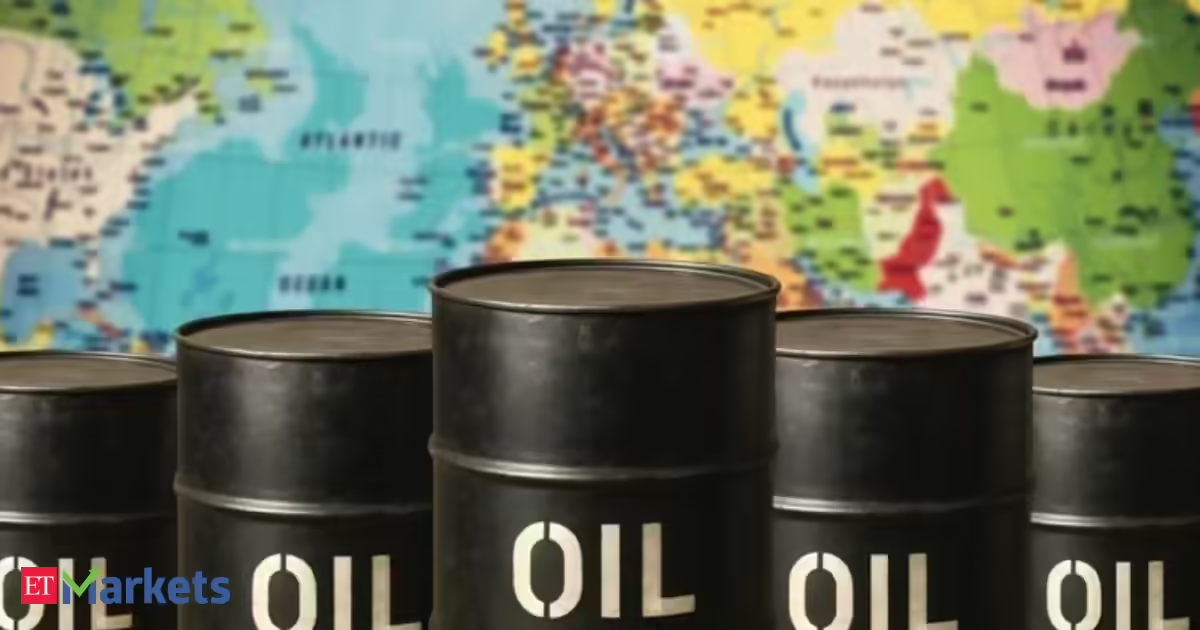
Crude oil price on June 23
Brent crude futures rose 24 cents, or 0.38%, to $78.15 a barrel, while U.S. West Texas Intermediate gained 33 cents, or 0.46%, to $74.19 a barrel as of 0026 GMT.
On Monday, oil prices had dropped more than 3% after the United States granted Iran a 60-day sanctions waiver following initial peace negotiations. Market sentiment was also influenced by reports of reduced hostilities in Lebanon under the broader agreement.
The latest developments came after a tense weekend that had raised concerns about the stability of the week-old accord. U.S. President Donald Trump had warned that military action could resume if Iran interfered with shipping through the Strait of Hormuz after Tehran announced the closure of the key waterway.
In a post on Truth Social on Monday, Trump said Iran would agree to weapons inspections to ensure “nuclear honesty.” “If Iran doesn’t live up to their agreement, or if they’re not behaving, I will do what I have to do,” Trump later told reporters.
Also read: These large-caps have ‘strong buy’ & ‘buy’ recos and an upside potential of up to 24%
Where are prices headed?
Despite the recent slide in oil prices, a complete reopening of Hormuz is expected to be a complex process. It will require careful coordination of vessel movements, restarting oil wells, repairing infrastructure, and agreeing on de-mining operations. Some shipowners also remain wary of operating conditions in the strait and the wider Persian Gulf.
Analysts note that global oil inventories were depleted during the extended disruption of shipping through the Strait of Hormuz and will take time to rebuild. Stockpiles could continue falling before fresh Gulf supplies begin reaching international markets.
Last month, Saudi Aramco Chief Executive Officer Amin Nasser cautioned that disruptions in the Strait of Hormuz could delay a return to stability in global oil markets until 2027. According to Nasser, prolonged interruptions could affect nearly 100 million barrels of oil supply each week. Saudi Aramco remains the world’s largest oil producer.Read more: NSE and Ambani are about to see if India’s retail crowd still has ‘buy the dip’ energy left
Morgan Stanley described the oil market as being in “a race against time,” warning that some factors limiting the rise in prices could weaken if the Strait of Hormuz remains closed through June.
The brokerage noted that higher U.S. crude exports and softer Chinese demand have so far helped absorb part of the supply shock. However, it cautioned that global supplies could tighten again if disruptions in the strategic shipping route continue, particularly beyond the period during which the U.S. and China can cushion the impact.
(Disclaimer: Recommendations, suggestions, views and opinions given by the experts are their own. These do not represent the views of The Economic Times)
Contentious tax reforms are set to become law after the Greens agreed to support Labor’s legislation through the Senate in return for extending an inquiry into separate NDIS changes.

BGH: This Global Bond CEF Is Now A Decent Buy
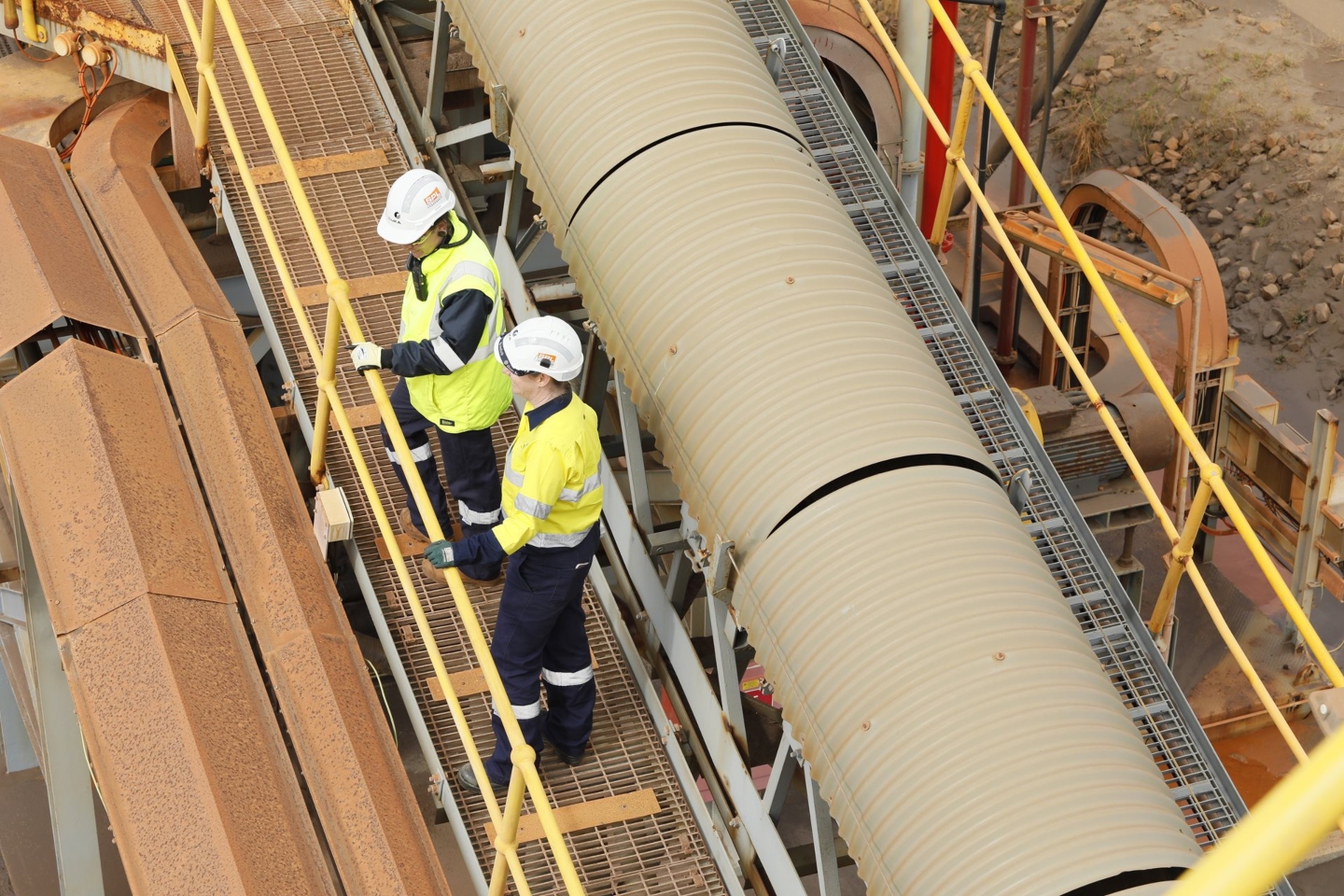
Iluka has locked in its first rare earths offtake deal with an undisclosed global car manufacturer, worth $220 million, as it unlocks its $1.65 billion loan from the federal government.
If gray-market prices are to be believed, both the National Stock Exchange of India Ltd.’s $3 billion IPO and a $4 billion debut of billionaire Mukesh Ambani’s telecom and digital media empire are likely to find keen interest among local investors desperate for some excitement, the kind that secondary markets have been failing to provide lately.
While global capital chased the AI semiconductor booms in Taipei and Seoul — tripling Korean stocks and doubling Taiwanese equities — the benchmark Indian index hasn’t gone anywhere in the past two years. Worse, the war in Iran has torn a hole in the energy-importing nation’s fragile balance of payments. A plunge in the rupee has scared away foreign capital.
But now that the US and Iran have at least started peace talks, all eyes are on India’s individual stock buyers. They have only recently started to return after beating a retreat from markets. The common investing public needs to get its mojo back, and that’s where both the similarities and the differences between the two IPOs become important.
Both the NSE, India’s largest exchange, and Ambani’s Jio Platforms Ltd. have attractive moats: They are dominant players in what are effectively duopolistic industries, too heavily regulated for new competition to break in. The NSE’s rival is the 151-year-old BSE Ltd., or the erstwhile Bombay Stock Exchange, which has just a 7% share of the overall cash-equity turnover. Jio’s 500 million-plus subscribers — and a media empire buttressed by a lock on cricket, a national craze — put it considerably ahead of Bharti Airtel Ltd., the nearest challenger.
 Bloomberg
Indian investors are intimately familiar with both franchises. As long as India has capital controls, local market participants are beholden to the NSE for wealth creation. In mobile wireless, it’s hard to imagine anyone other than Jio deciding the price of data. Even in newer technologies like satellite broadband, national-security concerns may give Ambani an advantage over Elon Musk’s Starlink or Jeff Bezos’ Amazon.
But the differences in the two IPOs are crucial, too. The NSE listing, long delayed by governance scandals at the bourse, is entirely a sale of stock by existing shareholders. Jio, however, will be raising new money, partly to retire nearly $3 billion in debt.In mature markets, the distinction between an offer-for-sale and a fresh capital raise is mere plumbing. In India’s current fragile environment, it’s anything but. Because the NSE listing is structured strictly as an offer-for-sale, no fresh cash will enter the bourse’s treasury. Worse, among those trimming their stakes are foreign giants like Morgan Stanley and Temasek Holdings Pte. At a time when New Delhi is aggressively wooing diaspora dollars to shore up a fraying rupee, the NSE IPO risks becoming an exit ramp for foreign capital.
Ambani’s Jio, conversely, is a magnet for fresh funds. For Jio to succeed, however, the NSE sellers — Indian banks and insurers, foreign institutions, ultra-rich private investors — must leave some money on the table. (Given that the NSE rushed its draft papers to the regulator a day ahead of Jio, the general expectation is that it may be first out the door.) If they overprice the offer and burn retail investors, the flames won’t just singe Ambani; they will also reach Silicon Valley, upsetting everyone from Sundar Pichai to Mark Zuckerberg.
Alphabet Inc. and Meta Platforms Inc. are big backers of Jio, as are Saudi Arabia’s Public Investment Fund, KKR & Co. and a number of other sovereign wealth funds and private-equity firms. Although none of them are selling in the IPO, they will get to record the gains in their books. For Google alone, that turns a $4.5 billion stake bought six years ago into a $10 billion asset — more if the shares keep rising after listing.
Jio’s success will also help Ambani’s flagship Reliance Industries Ltd. clear the deck for its next big public float: consumer commerce. Carving out India’s largest retailer will still take some work because the competitive intensity in grocery, fashion and electronics sales is much higher than in telecom. All the more reason to keep retail shareholders happy.
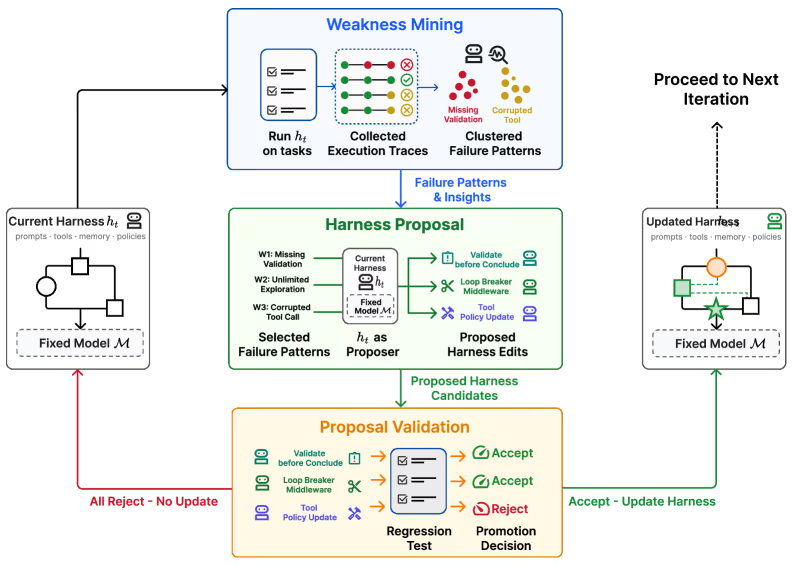
Researchers introduce Self-Harness, a framework that lets AI agents rewrite their own rules, boosting performance up to 60%

Can you sunbathe naked in your own garden? UK law explained
Jivial Industries IPO opens today. Check GMP, price band, subscription and other details


-

 Fashion3 days ago
Weekend Open Thread: Miami – Corporette.com
-
 Tech6 days ago
The Adder At The Heart Of Intel’s 8087 FPU
-

 Entertainment2 days ago
Renter of Home in Anne Heche Crash Denies Settlement With Son
-

 Tech15 hours ago
Microsoft accidentally kills epic Outlook email threads
-

 Business2 days ago
Soccer-U.S. defends Iran World Cup travel restrictions, says discussions ongoing
-

 Politics4 days ago
BBC Reporter Discusses Cross Party Criticism Of Trumps Iran Deal
-
 Business3 days ago
Wall Street Week Ahead: Investors see Micron earnings as pulse check of AI rally momentum
-

 Tech5 days ago
AWS enters the context layer race with a graph that learns from agents, not manual curation
-

 Crypto World3 days ago
HIVE shares jump as $220M AI deal speeds Bitcoin mining pivot
-
 Crypto World3 days ago
Can Charles Hoskinson Really Rescue Cardano?
-

 Crypto World3 days ago
Jake Chervinsky accuses CME of protecting derivatives monopoly
-

 Tech8 hours ago
Nearly 7,000 fake Amazon domains registered ahead of Prime Day 2026, researchers warn
-

 Business2 days ago
MHP SE 2026 Q1 – Results – Earnings Call Presentation (OTCMKTS:MHPSY) 2026-06-20
-

 Sports4 days ago
FIFA World Cup 2026: Canada beat 9-men Qatar 6-0 to register first ever win | FIFA World Cup 2026
-

 Politics3 days ago
Andy Burnham and the meaning of Makerfield
-
 Tech2 days ago
Signal’s Meredith Whittaker says AI chatbots ‘are not your friends’ and calls Copilot agents a backdoor
-
 Crypto World5 days ago
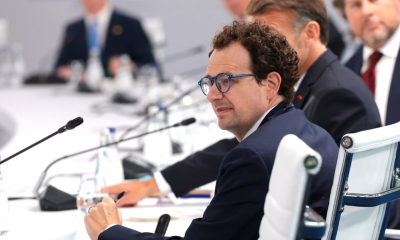
Anthropic’s Dario Amodei Urged AI Unity at G7, Even as US Banned His Models
-

 Business4 days ago
Brexit cost 6% of UK economy, Bank of England company data suggests
-

 Tech5 days ago
Weeks Of In-The-Field Testing And A Verdict
-

 Tech5 days ago
Adobe adds its AI assistant to Premiere, Illustrator and InDesign
You must be logged in to post a comment Login