

Business
SpaceX falls for third day, erases $600 billion in market value


The stock fell 16% Monday to close at $154.60, the lowest level since the company’s first day of trading, pushing its three-day loss to 23% and erasing over $600 billion in value over that period. The company’s market capitalization now sits just above $2 trillion.
“Sellers are back in control. Anyone in the world who wanted to buy this has bought it already,” said Michael O’Rourke, chief market strategist at JonesTrading.
SpaceX’s first days of trading following its record $75 billion initial public offering were met with the type of volatility generally associated with new IPOs that have a low float — 4.2% of total shares outstanding were available to trade on day one — and high interest from retail investors. Still, even with Monday’s losses, SpaceX is the sixth-largest company in the world with shares about 15% higher than their $135 IPO price.
 Bloomberg
The rocket, satellite and AI conglomerate is seeking to raise at least $20 billion from the first bond offering, Bloomberg reported last week. SpaceX also inked a multibillion-dollar agreement to provide computing resources to Reflection AI, an AI startup, the company said Monday.

SpaceX’s embrace of artificial intelligence with the acquisition of Musk’s xAI in February meant investors closely watched the listing ahead of IPO prospects of competitors Anthropic PBC and OpenAI, both of which plan to go public as soon as this year with valuations expected to be around $1 trillion.
Retail trading in SpaceX, officially named Space Exploration Technologies Corp., was the strongest of any IPO in recent history, with the cohort buying net $405 million in the first five sessions according to Vanda Research. Retail investors bought more SpaceX last week than buying across all Magnificent Seven stocks combined, the data showed. On Monday, retail traders were still net buyers of SpaceX, but inflows were below last week’s levels, Vanda data showed. The stock was initiated with a recommendation of sector weight at KeyBanc Capital Markets, the first hold-equivalent rating according to data tracked by Bloomberg. Analysts led by Michael Leshock wrote that SpaceX is set to remain the leader in space-launch and adjacent verticals, but much of the long-term value is already captured in the stock price.
SpaceX “possesses significant disruptive growth avenues, though we believe this is reflected in current valuation and risk/reward appears balanced, in our view,” he wrote.


He believes the recent weakness in AI-related stocks is more of a valuation correction than the end of the structural AI investment cycle.
“Look, it is just the beginning of maybe a bit of a correction in the AI trade because the AI investments and all of that happening globally are not going to reverse themselves immediately. They have known for a while that the path to profitability is still some time away. So, these are just certain news flows that come in and correct valuations that have probably gone more than they should have,” he said.
Dalal said it would be premature to conclude that investors will immediately shift away from AI-focused businesses toward traditional sectors or that India will instantly regain foreign inflows.
“Does that mean that the AI trade is over and that people are going to look at more traditional businesses? Is India going to get its flows back right away? I do not think those are the kind of situations that are there,” he said.
Instead, he believes India’s own economic story is strong enough to attract capital.
“Independently, India should get its flows given the fact that crude prices have come off, which is a big benefit for the Indian consumer eventually and for India’s financials. The monsoons, albeit late, have started to some extent. We will need to keep monitoring the progress. If the progress continues to remain good, India will do quite well,” he said.He added that investors could increasingly focus on India’s earnings recovery over the coming financial year.
“Irrespective of whether the AI trade and South Korea struggle, or whether the US markets are going through a bit of turmoil, India should hopefully get some flows if people believe that FY28 will be a year that sees strong growth after a couple of years of pain. So, for me, it is not the AI trade reversal; it is purely the fact that India should start doing well that flows should resume,” he said.
Bullish on pharma, cautious on nutraceuticals
Commenting on the recent buzz around nutraceutical companies following Honasa’s acquisition announcement, Dalal said he does not have a specific view on the segment.
“I do not have a view on that particular space, but if you ask me about the pharma space, we remain very constructive and bullish. We think the opportunity that still exists for Indian pharma to capture market share in the US is very strong,” he said.
He added that he was not familiar enough with the Honasa transaction to comment on it.
Tata Motors‘ targets look achievable
Dalal believes Tata Motors is well placed to meet its guidance despite concerns around margins.
He pointed out that last year was impacted by Jaguar Land Rover‘s cybersecurity issue and weaker Middle East demand, both of which hurt volumes.
“I believe it would be possible for them to achieve that guidance. It may not be easy to get the margins, but you have got to realise that this is an operating leverage business as well,” he added.
According to him, the worst of those disruptions appears to be over.
“The current year they are saying for JLR they are going to be able to breakeven on cash flows, and they will be EBITDA positive. Once these issues resolve and they are able to get back that growth momentum, achieving a 10% to 15% margin with the India unit plus Jaguar Land Rover together will not be a very difficult task,” he said.
Dalal also highlighted India’s growing automobile demand and Tata Motors’ leadership in electric vehicles.
“Demand for automobiles continues to remain strong. India is going to be one of the bigger drivers for automobiles. The electric vehicle segment in India will get a push, and Tata has the largest range at this point in time, with continuously improving products,” he said.
He also believes the recent correction has made valuations attractive.
“The stock took a massive knock after the JLR meet because people wanted more. But at this point in time, valuations are quite attractive, and one should definitely go ahead and make an investment in Tata Motors. I think there is upside,” he added.
IT worst may be over, but patience is needed
Dalal has become less negative on the IT sector but believes investors should wait before making aggressive bets.
“I am not as positive on the IT space, but I am not negative anymore. The worst for the IT sector is pretty much done,” he said.
He argued that AI will complement rather than completely replace traditional IT services.
“As much as people say AI is going to disrupt the way traditional business is done, I do not think that can totally happen. You are still going to need people servicing it because if AI goes wrong somewhere, you need someone to fix it,” he added.
However, he prefers waiting until industry leaders emerge.
“I would not go out and buy IT stocks right away because it is going to be another six months to a year before we know who the winners are, who has got what tie-ups, and then we can probably take a more calculated and better bet,” he said.
Power, banking, consumption and cement remain top sector picks
Dalal continues to favour sectors closely linked to India’s domestic growth story.
“We have always been positive on the power sector in India. We think the opportunity is very large. Then we think banking and financial services. If India has to grow, the BFSI space is something that is going to be driving growth,” he said.
He also remains optimistic on discretionary consumption.
“Consumer discretionary is something we have been positive on. We think that is something that will do well,” he said.
Among his newer investment ideas, Dalal highlighted cement as an emerging opportunity.
He believes years of capacity additions kept utilisation levels low, preventing companies from benefiting from operating leverage. As infrastructure spending and real estate activity improve, utilisation rates could rise and profitability could strengthen.
“We feel that, given the fact that we are are expecting real estate to bounce back, and infrastructure and the power sector will see huge capex, there will be demand for cement. Once utilisation rates start going up, operating leverage will play out,” he said.
Dalal’s preferred picks in the sector are Ambuja Cement and Shree Cement.
“We like Ambuja Cement at this point in time, where we think the merger with ACC will allow it to get more benefits and cost reductions, which will allow profits to go up,” he said.
“The other one that has corrected quite a bit is Shree Cement. Given the capacity additions and the utilisation that will happen, we think that throws up an opportunity. UltraTech has also corrected but is still a little on the expensive side. I would wait for another 5-7% correction before looking at it from a buying perspective,” he added.
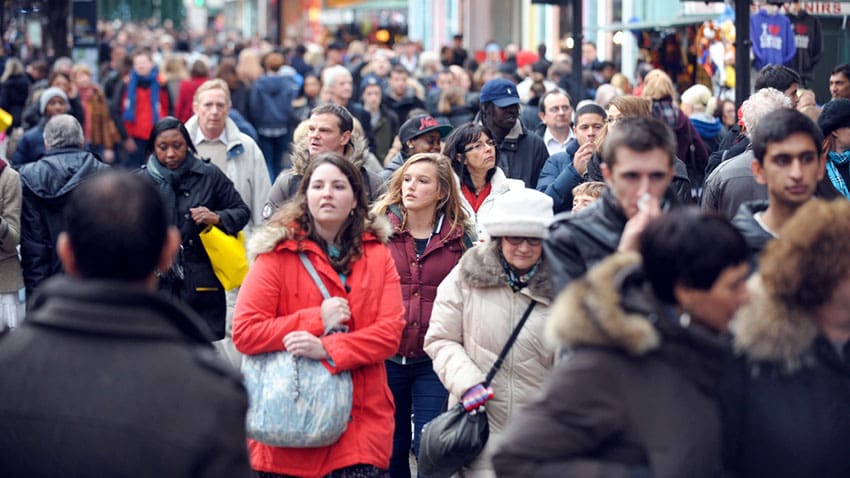
Far from luring shoppers away from the high street, social media is sending them through the door in their millions.
New research from American Express estimates that content scrolled on phones is now behind some 1.7 billion visits to UK high streets every year, an average of more than 30 million a week.
The Hype to High Street study, carried out with analysts Retail Economics, found that nearly two-thirds (63%) of UK adults have walked into a shop or hospitality venue, a café or restaurant among them, in the past year after being swayed by something they saw on social media. Among Gen Z consumers, those aged 18 to 28, the figure climbs to 88%.
It is a striking corrective to the familiar story of the doomed bricks-and-mortar store. For all the talk of declining footfall and shuttered shopfronts, the channel often blamed for emptying the high street is increasingly the reason people turn up at all.
The research suggests social media has become a powerful engine of both footfall and loyalty, particularly among younger shoppers. More than four in five (82%) consumers return to a business after a socially influenced first visit, rising to 96% among Gen Z. They make persuasive advocates, too: nearly eight in ten (79%) say they shared their most recent visit in some way, whether by recommending the business, posting about it or leaving a review online. Among Gen Z, that rises to 89%.
Short-form video is proving especially good at turning online buzz into offline queues. The viral spread of products such as Dubai chocolate and matcha drinks, along with trending venues and experiences, is pushing consumers to seek them out in person.
That points to the emergence of what the study calls a ‘viral pilgrimage’ economy, in which shoppers travel real distances, to other towns and other parts of the country, to get their hands on products, venues and trends first discovered on a screen. More than a third (35%) of Gen Z consumers say they have travelled to another city or region to buy something they first saw trending online. Once there, nearly nine in ten (87%) say they would happily queue for a sought-after product or experience.
It is a behaviour that would have baffled retailers a decade ago, when the rise of live commerce and shoppable video was still a novelty borrowed from Chinese platforms. Today, the journey from a 30-second clip to a physical till is becoming routine.
The findings draw on a survey of 2,000 UK adults, combined with economic modelling used to size the total value and volume of social media-influenced spending on the high street.
Nearly nine in ten (87%) respondents said they spent money during a socially influenced visit, rising to 94% among Gen Z shoppers. More broadly, Retail Economics’ modelling suggests social media now shapes one in every 20 in-person high street purchases across the UK, a measure of how quickly online engagement is translating into real-world spending.
At a time when many high streets are still under pressure, with the British Retail Consortium reporting six consecutive months of falling footfall towards the end of last year, the research suggests the benefits of a socially influenced visit spill well beyond the business that prompted it.
Almost a third (32%) of consumers visited additional nearby shops, restaurants or venues on the same socially influenced trip, while more than one in five Gen Z shoppers (22%) admitted to spending more than they had planned once they arrived. For neighbouring independents, a rival’s viral moment can lift the whole street.
Dan Edelman, UK General Manager, Merchant Services at American Express, said: “Social media has become the new shop window for Britain’s high streets. What starts as a scroll on social is increasingly translating into real-world visits, increased spending and growth opportunity for businesses across the UK.
“What’s striking is that the impact doesn’t stop at the venue that first caught a consumer’s attention, social media is creating a domino effect that benefits neighbouring businesses and helps entire high streets thrive. For merchants, particularly those looking to attract younger consumers, the ability to turn online hype into memorable in-person experiences has never been more important. At American Express, we’re committed to championing the UK’s high streets and the businesses that power them, helping merchants make the most of these changing consumer behaviours.”
Few businesses illustrate the phenomenon better than Randalls, a family-run sweet shop in the East Midlands. After posting a 60-second video of staff packing a customer’s £270 pick and mix order, it watched shoppers arrive from across the country. The clip racked up more than 12 million views, lifting takings and, crucially, the fortunes of the streets around it.
“We’ve always known we had something special, but it was always a local secret. One video changed that overnight,” said Jarrod Burke, founder of Randalls UK. “People started travelling from across the country to visit the shop, including one customer who made a special trip while visiting the UK from Australia. Since the video went viral, our daily takings in-store have tripled, and we’ve regularly had queues outside the shop. What’s been amazing is seeing the impact spread beyond our business too, people are making a day of it in Market Harborough, visiting other independent shops, cafés and businesses nearby.”
For independents wondering how to engineer their own moment, the lesson is less about chasing virality than being ready to convert it, with the basics of how to increase footfall in store mattering just as much as the content that draws people in.
Richard Lim, chief executive of Retail Economics, said the channel’s influence now reaches well beyond e-commerce. “Social media is not just driving online sales, it is now also influencing in-person spend on the UK high street,” he said. “The channel’s growth underlines just how quickly shopping via social has become mainstream, as well as the extent of its positive contribution to the long-term health of UK high streets. Social media is becoming an increasingly important driver of footfall in its own right, helping turn shops, restaurants and venues into destinations consumers actively seek out, visit and share with others.”
The timing matters. With online sales accounting for more than a fifth of total UK retail spending and the high street long braced for the worst, the idea that the feed can fill the street rather than empty it is a welcome shift, and one that hands smaller, nimbler merchants a rare advantage over their larger rivals.
American Express, for its part, has been expanding its own high street presence. Since 2021, the number of UK locations accepting its cards has tripled, taking in more small businesses than ever before, while Amex cards are now accepted at over 170 million merchant locations worldwide as of the end of 2025.

Jamie Young
Jamie is Senior Reporter at Business Matters, bringing over a decade of experience in UK SME business reporting.
Jamie holds a degree in Business Administration and regularly participates in industry conferences and workshops.
When not reporting on the latest business developments, Jamie is passionate about mentoring up-and-coming journalists and entrepreneurs to inspire the next generation of business leaders.

Delta Air Lines CEO Ed Bastian joins ‘Mornings with Maria’ to discuss the impact of rising fuel costs, resilient travel demand and the airline’s international expansion plans.
As American travelers feel the pinch of inflation and elevated airline costs, Delta Air Lines CEO Ed Bastian revealed exactly what it will take for ticket prices to decline, pointing directly to a lack of market supply rather than solely fluctuating fuel costs.
“People ask me all the time – what’s happening with prices?” Bastian told FOX Business’ Maria Bartiromo in an exclusive interview on Tuesday. “Prices will come down when we can fly more, when there’s more supply, it’s a supply and demand. Right now we’re kind of logjammed.”
“There’s not a lot of supply we can bring in because the air traffic control system is congested. As you open up the skies, and you bring more flow, that’s going to help bring pricing down and enable us to bring more people to more places,” he said.
After months of elevated prices due to conflict in Iran and the closing of the Strait of Hormuz, commercial traffic is ramping up in the key waterway after Trump and Iranian President Masoud Pezeshkian last Wednesday signed a 14-point memorandum aimed at ending the war. On Tuesday, President Donald Trump said that 19 million barrels of oil flowed out of the Strait of Hormuz the day prior.
JETBLUE CUTS BACK AT NEWARK, LAGUARDIA AIRPORTS AS AIRLINE SHIFTS FOCUS TO FLORIDA
“I think the initial shock, you know, prices went up about 10 to 15%, not just [at] Delta, across the airline industry. And I think that was probably the right level,” Bastian said. “Oil prices have come down now, so I think we’re in a pretty good spot.”

Delta CEO Ed Bastian visits “Mornings With Maria” at Fox Business Network Studios on June 23, 2026. (Getty Images)
However, Bastian revealed that rising energy costs directly hit Delta’s bottom line by nearly $2 billion, forcing the airline’s hand in raising ticket prices.
“We had no choice,” he said, while also spotlighting how government spending accountability and deregulation could also bring ticket prices down.
Transportation Secretary Duffy pins blame on Biden DOJ for Spirit Airlines collapse
“We have seen more progress being made to eliminate those bottlenecks and continue to allow aviation to flow smoothly in the last year and a half than we’ve had probably in the last number of decades. It’s that significant,” Bastian noted.
“I hope, as an American people, we continue to invest in that future. It’s probably the smartest investment that we can make, because what we’re doing is, we’re making the air flow more smoothly. We’re enabling people not just for safety – safety is always our top priority – but [allowing] for more flights,” which the CEO says ultimately mitigates customer costs.
GET FOX BUSINESS ON THE GO BY CLICKING HERE
Maria Bartiromo asks Delta Air Lines CEO Ed Bastian to assess the current K-shaped economy, noting strong spending among high-end consumers.
Bastian also discussed how Delta has recaptured investment-grade ratings from all three major credit agencies, won back Berkshire Hathaway as a top shareholder and is expanding localized operations such as “Delta TechOps” into a multibillion-dollar third-party maintenance powerhouse.
“We’re going to get to a point here in the next couple of years where our balance sheet will be a fortress balance sheet, something that’s never really happened in our industry to that point,” he said. “This is the industry that the U.S. holds as the gold standard… So whether it’s Boeing, whether it’s our airlines, our aviation space, our technical prowess and know-how, we’re the gold standard.”
Fox News’ Greg Norman-Diamond and Emma Bussey contributed to this report.

OPINION: A UK student loan scheme may work here if the right conditions are met.

Engineering And Construction Costs In June Continue To Rise But Momentum Slows

OPINION: Major internal economic changes are colliding with external forces in testing times for business and politics.

Flouris is a little sceptical of sweat-sensing.
Referring to various unnamed devices that analyse sweat, which he has evaluated in the lab, he says, “Most of these products that we’ve tested do not show the level of accuracy that you would expect.” The results of his experiments are as-yet unpublished.
Sweat sensors, Flouris suggests, work best when worn during long bouts of physical activity – such as a marathon. But they struggle when the exertion is more varied and intermittent. Think a footballer switching from walking to suddenly running very quickly.
In response, Ghaffari says he and his colleagues have published peer-reviewed papers, external on the accuracy of Epicore Biosystems’ gadgets.
He acknowledges that analysing sweat loss over short intervals up to 20 minutes long “can be challenging” but says his company’s products appear effective for 30-minute, or longer, workouts.
Perhaps the most common hydration-focused products available are the smart water bottles that remind you to take a sip throughout the day.
“We try to make it fun,” says Cem Bakiş, head of business development at WaterH, which has a glowing ring that blinks in order to prompt its owner to take a drink. “You can add friends, you can earn points.”
Some smart water bottles work by estimating the weight of liquid in them, and how that changes over time as the drink inside is consumed. But WaterH takes a different approach.
Sensors detect when the water bottle is tipped at an angle, and also the flow rate of fluid as it leaves the vessel. The water bottle will immediately recognise when you’ve had a sufficient quantity of liquid, stresses Bakiş.
I point out that, while some reviews online are positive, other comments criticise the accuracy of these measurements. This is often an issue with how the device is calibrated, and easily rectified, responds Bakiş.
If you don’t want to take instructions in hydration from a water bottle, though, you always have the option of asking your toilet how things are going.
Vivoo makes a urine-analysing gizmo that sits on the rim of a toilet bowl, promising to help you understand your hydration “like never before”.
The device uses optical sensors to work out your “urine specific gravity” – a measure of urine’s density compared to clean water. The denser it is, the more dehydrated you are, generally. Small print on Vivoo’s website emphasises that its products are not intended to provide medical diagnoses.
Urine-based measurements are used to evaluate hydration in scientific studies, says Flouris. Though he notes that there can be some delay between a person entering a dehydrated state, and this becoming detectable in their urine.
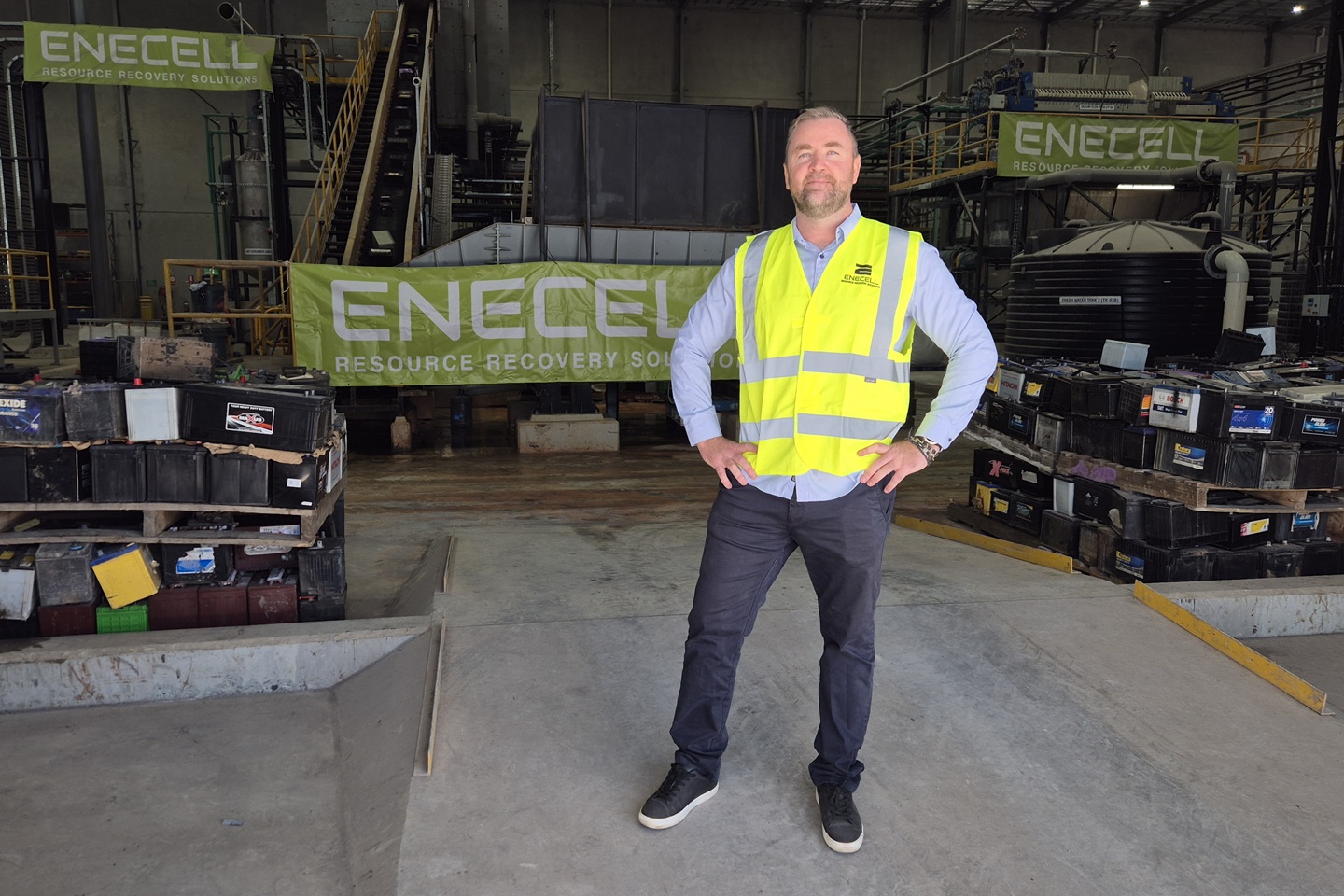
Scrap metal dealer Paul Owens has opened a new $12 million recycling plant focused on traditional lead-acid batteries in Perth’s southern suburbs.


Dollar hits 13-month high as rate-hike bets, stock rout boost demand

In the pre-SpaceX days, it didn’t really matter which major index benchmark an investor chose, whether it was constructed by Standard & Poor’s, the Center for Research in Security Prices (CRSP), or FTSE Russell. They all returned essentially the same amount.

The danger of confusing AI mental health support with therapy
India’s growth story, not AI trade reversal, will drive foreign flows: Sameer Dalal

Crypto PAC-backed Adrian Boafo wins Maryland Democratic primary


-

 Fashion5 days ago
Weekend Open Thread: Miami – Corporette.com
-

 Entertainment3 days ago
Renter of Home in Anne Heche Crash Denies Settlement With Son
-

 Tech2 days ago
Microsoft accidentally kills epic Outlook email threads
-

 Business3 days ago
Soccer-U.S. defends Iran World Cup travel restrictions, says discussions ongoing
-
 Sports12 hours ago
Two goals and an assist by sheer aura: Cristiano Ronaldo just entered the World Cup chat
-
Crypto World3 hours ago
Bitcoin (BTC) Dips Below $62K, Ethereum (ETH) Plunges 6% Daily: Market Watch
-

 Politics5 days ago
BBC Reporter Discusses Cross Party Criticism Of Trumps Iran Deal
-
 Business4 days ago
Wall Street Week Ahead: Investors see Micron earnings as pulse check of AI rally momentum
-
Business6 hours ago
Entergy settles forward sale agreements, raises $672 million in cash proceeds
-

 Politics4 days ago
Andy Burnham and the meaning of Makerfield
-

 Tech6 days ago
AWS enters the context layer race with a graph that learns from agents, not manual curation
-
 Crypto World4 days ago
Can Charles Hoskinson Really Rescue Cardano?
-

 Crypto World4 days ago
HIVE shares jump as $220M AI deal speeds Bitcoin mining pivot
-

 Crypto World4 days ago
Jake Chervinsky accuses CME of protecting derivatives monopoly
-

 NewsBeat5 days ago
Keir Starmer Allies Question His Chances For No 10
-

 Tech1 day ago
Nearly 7,000 fake Amazon domains registered ahead of Prime Day 2026, researchers warn
-

 Business5 days ago
Brexit cost 6% of UK economy, Bank of England company data suggests
-

 Sports5 days ago
FIFA World Cup 2026: Canada beat 9-men Qatar 6-0 to register first ever win | FIFA World Cup 2026
-
 Tech3 days ago
Signal’s Meredith Whittaker says AI chatbots ‘are not your friends’ and calls Copilot agents a backdoor
-

 Entertainment4 days ago
Jose Alvarado Wants Taylor Swift at More Knicks Games
You must be logged in to post a comment Login