Security teams log 54% of successful attacks and alert on just 14%. The rest move through your environment unseen.
The Picus whitepaper shows how breach and attack simulation tests your SIEM and EDR rules so threats stop slipping by detection.





The JaredFromSubway Ethereum MEV (Maximal Extractable Value) bot suffered a $15 million loss after an attacker manipulated the opportunity-detection logic by creating fake cryptocurrency trading opportunities.
The drain was detected on Saturday by blockchain security firm Blockaid, and today, JaredFromSubway confirmed that the attacker used fake pools and tokens to trick the bot into approving helper contracts.
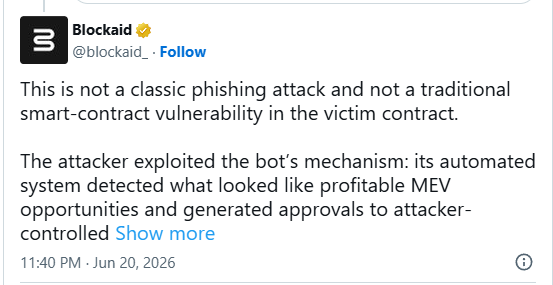
According to Blockaid, the attacker deployed contracts designed to appear as profitable MEV opportunities to JaredFromSubway’s automated execution system.
The bot automatically analyzed routes and trade opportunities that seemed financially rewarding. It then generated the transactions needed to execute them, granting ERC-20 token approvals to contracts controlled by the attacker.
It appears that the attacker planned the heist carefully, as early transactions served as harmless tests to help confirm the bot’s action routines. Later, the threat actor changed the route so that the allowance was not consumed or revoked after the bot granted approvals.
The attacker accumulated valid spending permissions without immediately using them, reaching up to 92.1614 WETH approved to an attacker-controlled helper contract.
Finally, the attacker used the open approvals to withdraw WETH, USDC, and USDT from the JaredFromSubway MEV bot contract via the transferFrom function.
MEV bots are ultra-fast automated trading systems that scan Ethereum and other blockchains for opportunities to make money by exploiting the order and timing of transactions before they are included in a block.
JaredFromSubway is a private MEV operation with no publicly available code, known as one of Ethereum’s most aggressive and visible “sandwich”-bot operations.
In a sandwich attack, the bot detects a user’s pending trade, places a buy order immediately before it, and then sells immediately afterward, profiting from the price movement caused by the victim’s transaction.
The practice is controversial because it often results in worse prices for regular traders while generating profits for the bot operator.
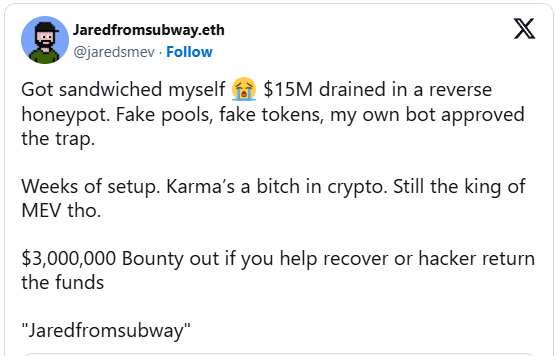
Initially, JaredFromSubway offered a $3 million bounty to the attacker for the full return of the stolen funds, promising no further action would be taken.
After receiving no response, JaredFromSubway increased the bounty to $7.5 million for the return of just 50% of the stolen amount, with $1 million to be given to the community.
JaredFromSubway is also negotiating with “a white-hat hacking group” on the stolen $15 million but there is no confirmation of a deal yet.

Security teams log 54% of successful attacks and alert on just 14%. The rest move through your environment unseen.
The Picus whitepaper shows how breach and attack simulation tests your SIEM and EDR rules so threats stop slipping by detection.


The class action claims the defendants, which include BP, Circle K, Marathon Petroleum, 7-Eleven, Walmart, and Albertsons, violated California’s main antitrust law, the Cartwright Act, writes Reuters.
Read Entire Article
Source link


Robin Shute already owns four Pikes Peak International Hill Climb wins. His latest machine, the SendyCar, started life as a ground-up project meant to push even harder. A central tub from a Formula 4 car forms the safety cell. A motorcycle-derived V8 with turbos sits behind the driver and should deliver around 850 horsepower while the whole car stays near 1,300 pounds. The layout mixes exposed front wheels with more enclosed rear sections, a deliberate choice for the unique demands of the mountain course.
Professional shops had offered the crew a rough estimate of roughly $200,000 for a standard composite body…and, honestly, they didn’t have quite that much time to devote to it. So, when two large-format Bambu printers arrived, the solution was already in place: break the entire upper body into 34 individual pieces. They chose high-temperature nylon because it contains carbon fiber, making it heat resistant, which is exactly what we needed near the turbo piping and exhaust, without sacrificing toughness, as it can withstand the rare rock strike. What he really needed was a design that could be broken down into manageable bits and fit into a 12 inch build area. That is why the side pods, engine cover sections, and nose were separated into tiny enough pieces to print without the need for large support systems.
Sale

The printers were put through their paces, with two machines working nonstop for two weeks. Print time per panel was roughly 12 hours, and they used 10 full rolls of filament, totaling nearly 2 miles of material. The prints were going well, with one or two outliers. The trouble was that the tall, slender portions warped as they cooled, a classic problem. To address this, they went to a true engineering build plate, slapped on some glue for a good first layer grip, and inserted some tiny blocks at the base of those vulnerable sections. The success rate was relatively high, with most parts completed on the first or second try. They had plenty of spares on standby in case anything went wrong.
Once the plastic had cooled, they could try to put the pieces onto the real chassis, which isn’t as simple as slapping them together like a giant 3D jigsaw puzzle. First, they had to align all of the dowel pins correctly. Once they were satisfied with the fit, the team used structural adhesive to secure them all together. Now, nylon is infamous for being difficult to glue, so they had to make sure we sanded the parts down perfectly and used the proper adhesive. That wasn’t the only problem; printing always causes some shrinkage, which created a few headaches, as some of the pins needed some tweaking to get them to sit straight, and one of the portions was left out entirely, necessitating a hasty reprint on the spot. Then there were some holes that required a little glue to cover.


The printed plastic would never leave the garage on its own, that was for sure. So the group went ahead and improved the design with some good old-fashioned carbon fiber wrapping. Before immersing the item in epoxy, they applied a layer of dry fabric to both the inside and the outside. There is no need for pricey vacuforming or tooling; all you need is some elbow grease and common sense.A layer of peel-ply fabric helped to remove the extra resin, leaving them with a lovely usable surface; but, the end result was a reinforced 3D print rather than a properly moulded composite. After applying fairing compound and sanding, she looked fairly decent. The team was under pressure to finish her before the first public presentation, so they applied a final vinyl wrap to add color and graphics.
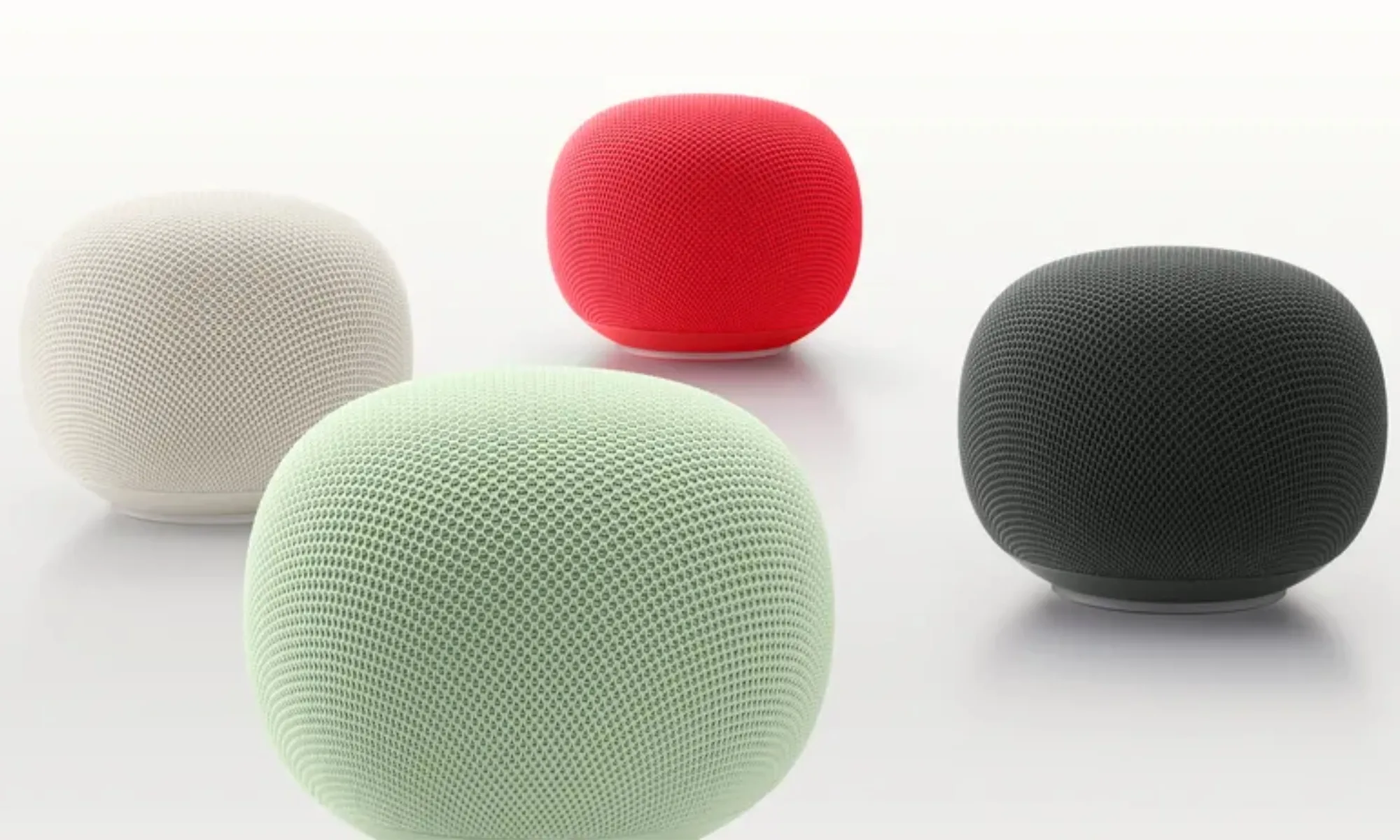
The Google Home Speaker hasn’t even started shipping yet, but one lucky buyer managed to grab one early and share their first impressions. While most of the news is positive, there’s one detail that won’t sit well with anyone who cares about repairability.
For the unaware, Google announced the speaker back in October 2025, and pre-orders went live last week. Priced at $99, it’s the company’s first new speaker in six years, so people have plenty of questions.
A Reddit user spotted one sitting on the shelves at Walmart and bought it before the official release.
The power cable is permanently attached to the speaker, and it’s pretty short at just under 5 feet. This is a big departure from Google’s older speakers, which let you remove and swap the cable. The buyer called this the biggest downside, and I have to agree. A fixed cable is a nightmare if you ever need to replace it down the line.
To be fair, Google didn’t hide this. As reported by 9to5Google, the Google Store lists a 30W USB-C adapter in the box and even mentions the “captive cable” in the specs. It just slipped under the radar for most of us.
The Reddit user said the sound quality is good, with decent volume and handling of mid and low frequencies well for a speaker of this size. They even admitted they were judging it fresh off an expensive sound system, so it had a tough act to follow, yet it still came out swinging.

The interface sounds neat, too. It uses hidden lights on the top mesh to display volume controls, and you tap the speaker to control it, much like other Home speakers. Setup was a breeze and took under 10 minutes on a hotspot with an existing Home account.
For $99, this speaker is shaping up to be a solid little package, captive cable aside, and is a welcome HomePod mini alternative for non-Apple users.
If you’ve ever submitted a support ticket to LastPass, that exchange may now be in the hands of hackers. According to TechCrunch, the password manager has confirmed that customer names, contact details, and support case records were exposed in a recent breach at one of its third-party vendors.
LastPass said its own systems were not compromised and that users’ password vaults remain secure. The exposed data was instead accessed through Klue, a market research company LastPass works with.
While no passwords were stolen, the hackers used their access to Klue’s network to pull customer records, including phone numbers, email addresses, physical addresses, and contents of support tickets.
In a blog post about the incident, the company stressed that the breach did not affect encrypted password vaults, master passwords, or any credentials stored within LastPass itself. Even so, the exposed information could still prove useful to attackers, who could leverage it for phishing or social engineering campaigns.
The LastPass exposure stems from a wider security breach at Klue, which revealed that attackers gained access using a credential linked to a pilot project dating back to 2022. TechCrunch reports that the credential remained active and provided a way into the company’s systems.
Klue said the attackers were able to access customer data connected to its services, affecting multiple organizations that relied on the platform. Along with LastPass, Gong, Jamf, HackerOne, Insurity, OneTrust, Recorded Future, Snyk, Huntress, Sprout Social, and Tanium were affected.
For LastPass, this marks the second time its users have had data caught up in a breach. A 2022 breach exposed encrypted password vaults that were later linked to cryptocurrency theft. This latest exposure did not involve vault data or passwords, but it highlights how a security lapse at a third-party vendor can still affect customers who never interacted with the vendor directly.
OFFBEAT
A time when Windows 7 was Microsoft’s latest and greatest
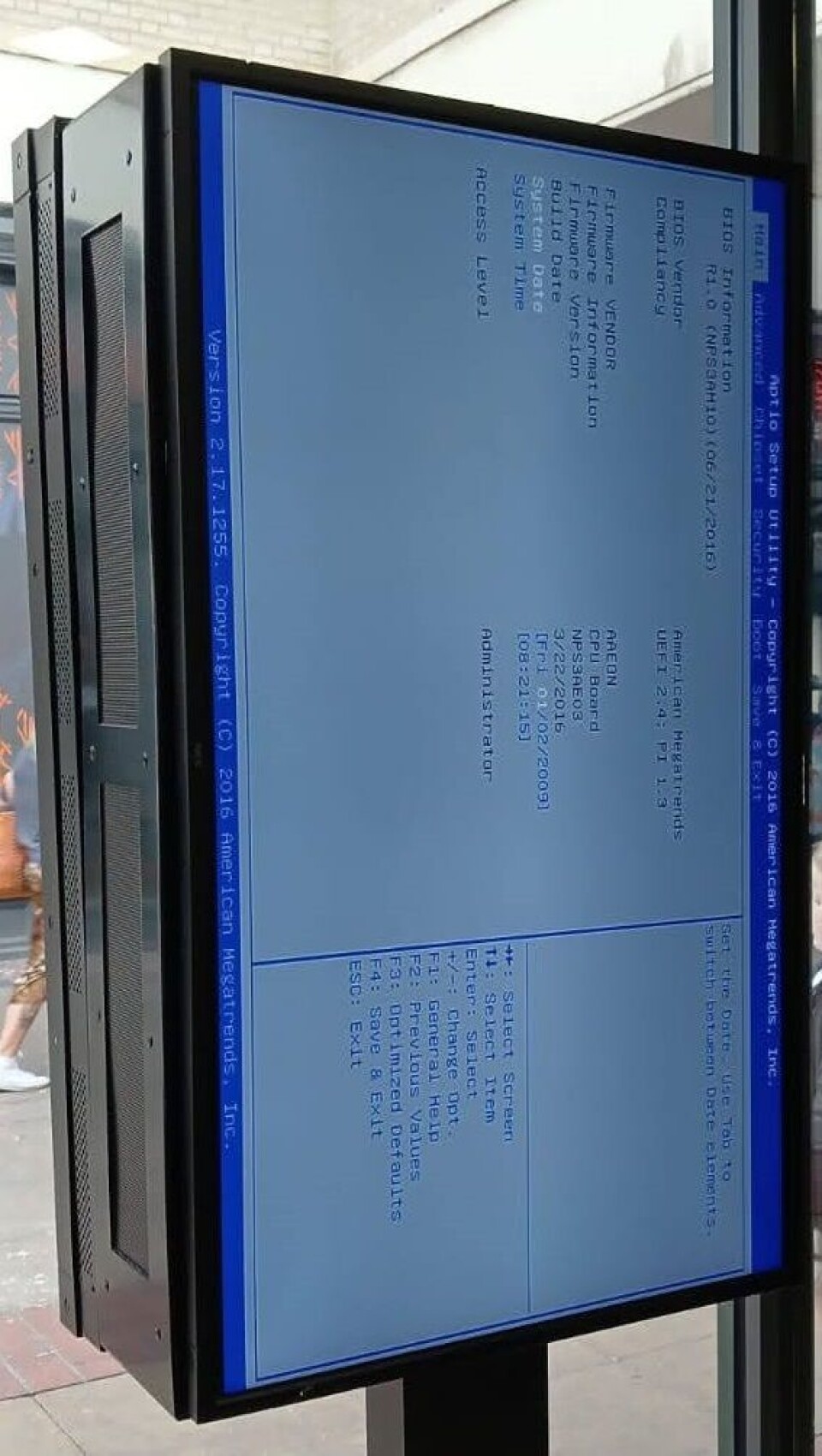
BORK!BORK!BORK! A blast from the past greets customers at a coastal McDonald’s, or is it just that the kiosk is seeking a return to the happier and simpler times of 2009?
An eagle-eyed Register reader spotted a very unhappy terminal at a branch of the McDonald’s fast-food chain in Worthing, England. Where a customer might normally smear a finger over suggestions for ways to sate their desire for grease, the display instead reveals the kiosk’s clearly PC origins: a BIOS utility.

It’s not clear what has befallen the kiosk, though something has happened to the hardware that has sent it to the utility screen, which is normally accessible by holding down a key or combination of keys during the boot process. Although the BIOS is dated 2016, the system date is currently set to 2009.
Worthing is a town on the south coast of England, occasionally unfairly and unkindly referred to as “God’s waiting room” due to the large retiree population it once had. While the town has long since shed that sobriquet (although it still lacks the hip and trendy traits of neighboring Brighton), it seems that there is one place that would very much like to turn back the clock.
McDonald’s.
Cast your mind back to 2009. Bitcoin was launched, an Airbus A320 ditched onto the Hudson River with no fatalities, and US President Barack Obama was sworn in.
Best not to think about how much a Bitcoin acquired then might be worth now.
2009 was also the year Microsoft released Windows 7, the successor to Windows Vista and the precursor to the widely derided Windows 8. Microsoft might not have realized it at the time, but this was arguably peak Windows. Sure, Windows 95 was arguably more of a cultural “moment,” and XP was an undeniable milestone, but 7 reached heights Microsoft has not matched since.
2009 was also a few years before McDonald’s began rolling out touchscreen kiosks to replace the experience of peering over the shoulder of the person behind the counter to see which foodstuffs were ready to go.
Today, the person behind the counter is far less visible, obscured by a line of delivery riders collecting app orders. The BIOS utility screen, however, looks back to an earlier time.
Or, possibly, Worthing is simply 17 years behind the rest of the world. ®

Displays for the iPhone Fold and touchscreen MacBook Pro will come from Samsung, while LG will make screens for the Apple Watch Series 12, says a repeat rumor.
Apple’s first foldable iPhone is slated to debut in 2026. While it will mark Apple’s entry into new smartphone territory, its displays will seemingly be produced by a tried-and-true Apple supply chain partner.
On Tuesday, mere days after the claim of Samsung OLED panels on the iPhone Fold was repeated, yet another report said the same thing. As 9to5mac points out, ET News says OLED screens for the iPhone Fold, iPad mini, and touchscreen MacBook Pro will be provided exclusively by Samsung Display.
Supposedly, Samsung Display is set to produce 10 million OLED panels for the iPhone Fold and 2 million for a future iPad mini. The publication claims the production of iPhone 18 Pro, iPhone 18 Pro Max, and iPad mini displays has already begun, with the production of iPhone Fold display hardware expected to follow.
As for the long-rumored OLED MacBook Pro, Tuesday’s report says that panel production will begin in July 2026, once Samsung Display’s 8.6th-generation OLED line becomes operational.
As far back as April 2025, it was reported that the iPhone Fold would feature a Samsung-made OLED panel. In September 2025, the president of Samsung Display said that the company would provide foldable OLED displays to a North American client, presumably Apple.
As with the iPhone Fold, rumors of Samsung-made OLED panels for the MacBook Pro go back to at least September 2025. Claims of Samsung making an OLED iPad mini display for 2026 go back even further, to May 2024.
In that regard, Tuesday’s display-related report is arguably nothing more than a “me too” rumor, with no significant new information.
Even when discussing LG Display’s role in the Apple supply chain, the report only backs up earlier rumors. On June 2, 2026, it was said that LG Display would produce screens for the Apple Watch Series 12. Tuesday’s rumor reiterates that claim, adding that 34 million panels will be made for the device.
Chinese supplier BOE, meanwhile, won’t produce any displays for the iPhone Fold, OLED MacBook Pro, iPhone 18 Pro, or iPhone 18 Pro Max. Again, this is something that was already said in May 2026.
Overall, the display-focused report published on Tuesday doesn’t reveal much of anything. It reiterates claims others have already made and states the obvious.
It’s an odd-seeming move for a company selling an AI writing assistant.
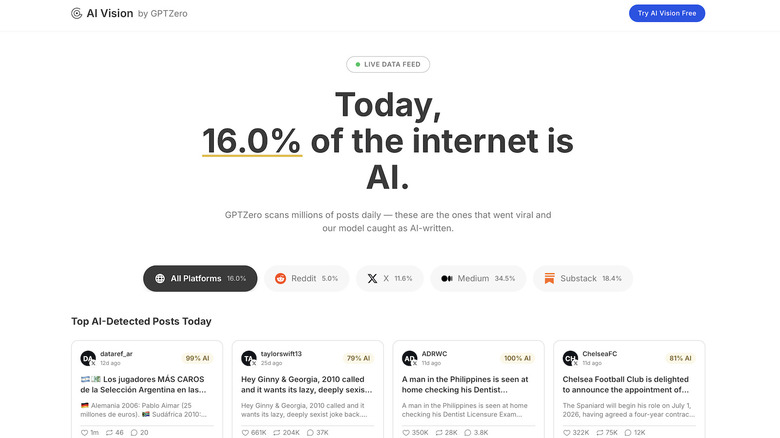
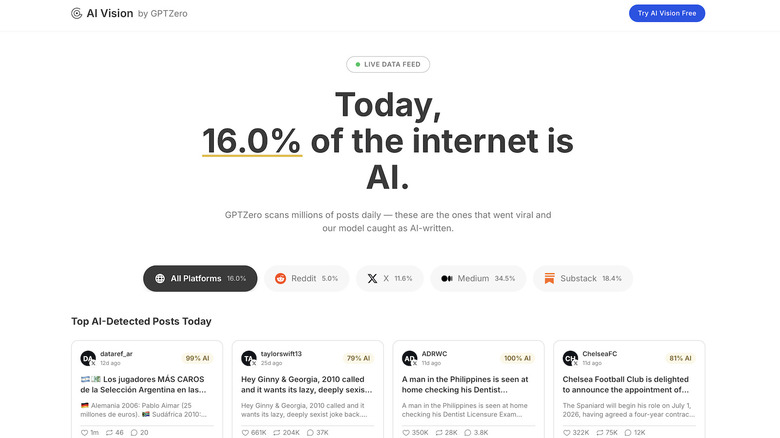
Superhuman announced that it has acquired GPTZero. This AI identification business offers services such as hallucination and plagiarism detection as well as a nifty little tool that displays how much of the internet is artificial intelligence. Superhuman said it plans to integrate GPTZero into its Superhuman Go AI assistant to improve the reach of its existing efforts around AI and authenticity. Teachers and students will still be the priority audience for Superhuman following the acquisition. For its part, GPTZero emphasized that Superhuman would also help put its tools in places where people were already reading and writing. Financial terms of the deal weren’t disclosed.
On the surface, this seems like an odd pairing. The press release announcing the acquisition focuses on concerns about the public being able to identify AI-generated content, but Superhuman is quite literally encouraging people to use AI to generate content. The company’s most popular product is the AI writing assistant Grammarly, which does have its own tools for AI detection. However the push to put AI resources everywhere in Grammarly has also landed Superhuman in some hot water. Notably, the company tried to give its users AI generated feedback that aped the voice and style of other writers; said other writers were none too pleased.

Looking for the most recent Mini Crossword answer? Click here for today’s Mini Crossword hints, as well as our daily answers and hints for The New York Times Wordle, Strands, Connections and Connections: Sports Edition puzzles.
World Cup watchers, you’ll find a few tourney-themed clues in today’s Mini Crossword. Read on for all the answers. And if you could use some hints and guidance for daily solving, check out our Mini Crossword tips.
If you’re looking for today’s Wordle, Connections, Connections: Sports Edition and Strands answers, you can visit CNET’s NYT puzzle hints page.
Read more: Tips and Tricks for Solving The New York Times Mini Crossword
Let’s get to those Mini Crossword clues and answers.
The completed NYT Mini Crossword puzzle for June 24, 2026.
1A clue: Race starter’s equipment
Answer: GUN
4A clue: 1-1, for one
Answer: SCORE
6A clue: Wedding speech made with a drink in hand
Answer: TOAST
7A clue: Book of maps
Answer: ATLAS
8A clue: Trivia question: Has Brazil appeared at every World Cup? Answer: ___!
Answer: YES
1D clue: World Cup highlights
Answer: GOALS
2D clue: ___ Major
Answer: URSA
3D clue: Things found at either end of a soccer pitch
Answer: NETS
4D clue: Time at a hotel
Answer: STAY
5D clue: ___ d’Ivoire (African nation in the World Cup)
Answer: COTE
networks
Unexplained GSM-R failure at Deutsche Bahn caused confusion and delay
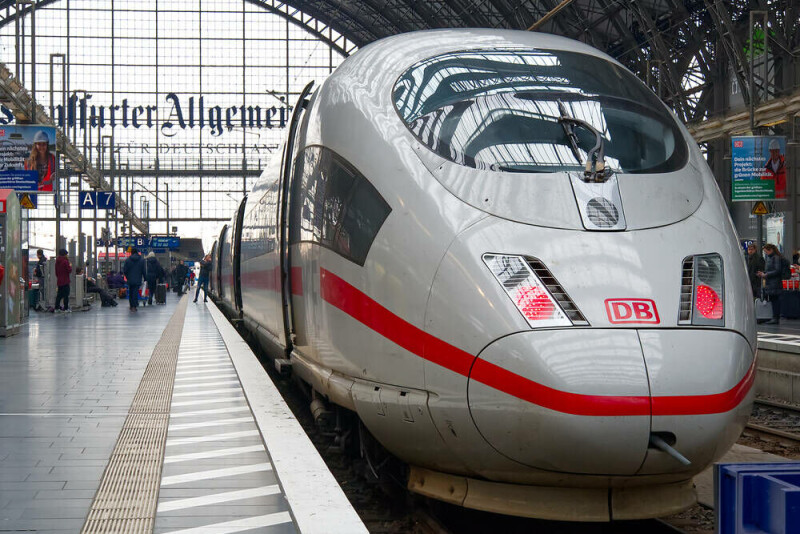
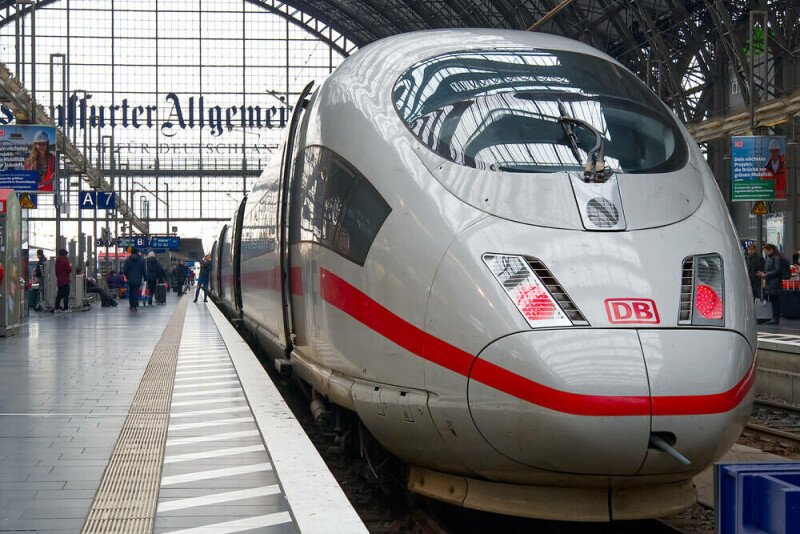
Train services are resuming across Germany this morning, after rail operator Deutsche Bahn (DB) last night shut down operations after its wireless network failed.
At 10:30 PM local time on Tuesday night, DB advised that its GSM-R network was down, meaning all trains had to be held at stations. We understand that even suburban trains ground to a halt.
GSM-R is a version of the 2G GSM standard tuned to the needs of rail operators, who use it to power private networks that carry information necessary to keep their services rolling. The tech is considered obsolete and DB knows it because the company has already signed with Nokia for a 5G replacement that will use the Future Railway Mobile Communication System (FRMCS) – a move also under consideration in the UK.
For now, however, DB needs its GSM-R to connect drivers with signalling services – so three minutes after midnight on Wednesday morning the carrier promised to issue taxi and hotel vouchers to passengers.
At that time, DB also said it had found the cause of the outage and was working to fix it. The company’s techies moved quickly as the network came back online at 00:50.
As of 6:30 AM, however, DB warned “some isolated disruptions may still occur” and advised passengers they’ll need to check that their connections will run on time.
There’s no indication the incident was the result of a cyberattack and The Register can find no reference to cut cables or other physical layer incidents that could have caused a nationwide outage.
Whatever went wrong isn’t a good look as any network powering critical infrastructure is supposed to have layers of redundancy to ensure resilience.
At least the org made heroes of its tech team.
“Our IT experts worked tirelessly to resolve the issue – successfully,” reads a company statement. ®
Microsoft has released the KB5095093 preview cumulative update for Windows 11 24H2 and 25H2, which fixes numerous bugs and begins rolling out new features, including the new Point-in-Time restore feature.
The KB5095093 update is part of the company’s optional non-security preview update schedule, which releases updates at the end of each month to test new fixes and features coming in next month’s Patch Tuesday.
Unlike regular Patch Tuesday cumulative updates, monthly non-security preview updates do not include security updates and are optional.
You can install the KB5095093 update by opening Settings, clicking on Windows Update, and then “Check for Updates.”
Because this is an optional update, you will be asked if you want to install it by clicking the “Download and install” link unless you have the “Get the latest updates as soon as they’re they’re available” option enabled, which will cause the update to automatically install.
You can also manually download and install the KB5095093 preview update from the Microsoft Update Catalog.
Once installed, this optional cumulative release will update Windows 11 24H2 systems to build 26100.8737 and Windows 11 25H2 to 26100.8737.
This update introduces numerous new features, including a standout Point-in-Time Restore feature that allows Windows users to easily roll back their operating system, applications, and files to a previous point in time.
“Point-in-time restore enables users to restore a Windows PC to the exact state in which it was at an earlier point in time. It happens in minutes using restore points.” explains Microsoft.
“Restore points are stored locally on the device and are captured using Volume Shadow Copy Service (VSS). Point-in-time restore helps recover faster from issues by restoring the full system state captured within the last 72 hours. This feature is designed to help minimize downtime and simplify remediation, without the need for technical ability or lengthy troubleshooting.”
For consumers, new restore points are created every 24 hours and are deleted after 72 hours or when your system runs out of allocated storage space. Those on enterprise licenses can configure Point-in-time restore snapshots to occur at 4, 6, 12, 16, and 24 hours and to be retained with the same intervals.
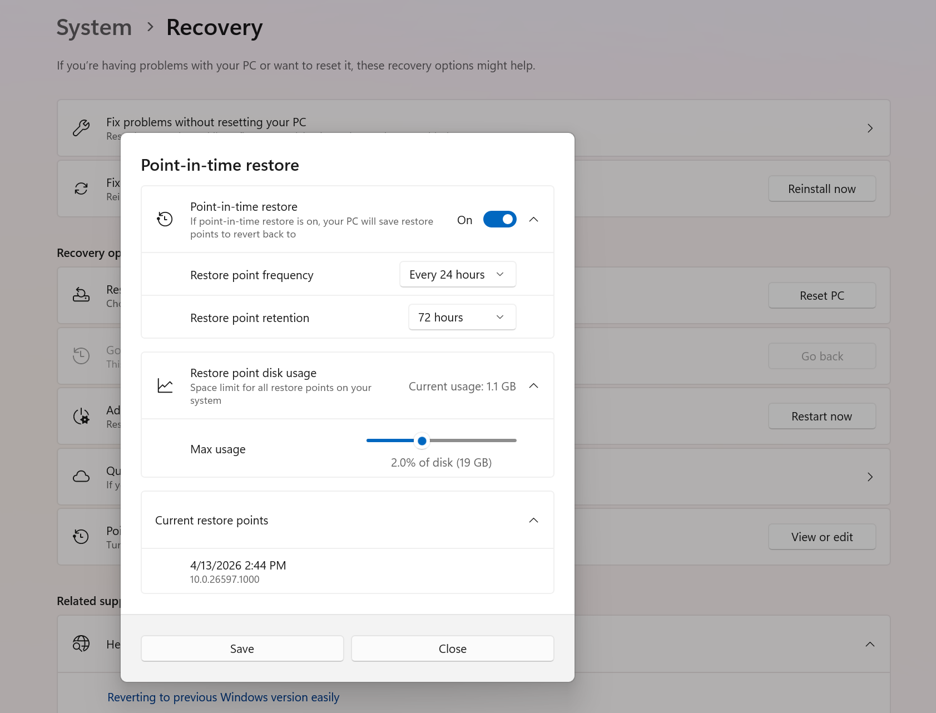
The settings also allow you to increase the storage space allocated to this system, allowing you to create more frequent snapshots without risk of them being deleted due to a lack of storage.
While you may think this feature is the same as System Restore, Microsoft says point-in-time restore focuses on “reliability and a broad range of issues,” sharing the following table to illustrate the differences between the two features.
| Capability | Point-in-time restore | System Restore |
|---|---|---|
| Configuration method | System Settings | Control Panel |
| Restore point trigger | Scheduled frequency (automatic only) | Event-triggered or manual |
| Retention | Maximum 72 hours per restore point | Indefinite (subject to disk space usage and cleanup) |
| Target scope | Full system state | System files and settings (app and user data coverage varies) |
| System storage impact | Mitigated storage impact due to reserved storage (lower) | Unmitigated storage impact (higher) |
| Management | Robust remote management | Limited remote management |
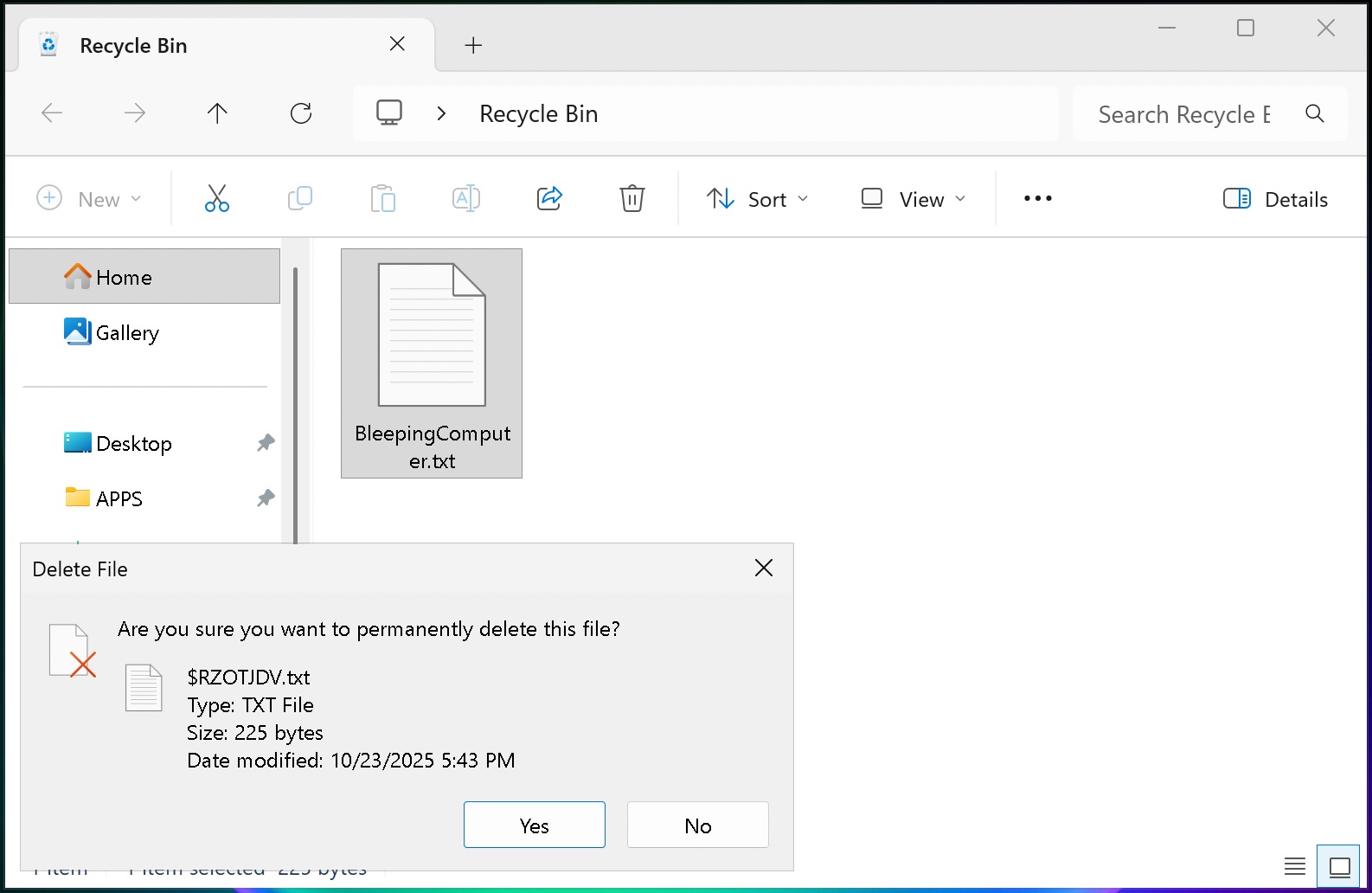
This update also fixes a known bug that displayed internal file names instead of the normal filename in confirmation dialogs when deleting a file from the Recycle Bin.
“This update addresses an issue where the confirmation dialog might display an internal Recycle Bin file name instead of the original file name when permanently deleting a file. This issue might occur after installing the June 2026 security update,” explains Microsoft.
In addition to the Recycle bin fix, the following features are rolling out immediately to all Windows 11 users:
[Secure Boot] With this update, Windows quality updates include additional high confidence device targeting data, increasing coverage of devices eligible to automatically receive new Secure Boot certificates. Devices receive the new certificates only after demonstrating sufficient successful update signals, maintaining a controlled and phased rollout.
[Authentication] This update improves Netlogon secure channel connections between domain controllers, enabling successful connections from member servers to domain controllers set up before 2025.
[Emoji Panel Update] The emoji panel (Windows key + period (.)) now uses GIPHY for GIF content following the deprecation of Google’s Tenor API. Starting June 30, 2026, install the latest Windows update to continue using GIFs in the Emoji panel. If you don’t update, you will see a “GIF service is not available” error in the panel. Installing the latest Windows update will restore access to GIFs.
[Networking] This update improves how your device connects to shared network resources. Connections used by apps and system features, such as the NetUseAdd function, now work more reliably, including unauthenticated (null session) connections.
[Recycle Bin (known issue)] Fixed: This update addresses an issue where the confirmation dialog might display an internal Recycle Bin file name instead of the original file name when permanently deleting a file. This issue might occur after installing the June 2026 security update (KB5094126).
[Taskbar] This update improves notification badge display across your apps. Notification counts and badge visuals now update correctly, helping you stay up to date with new activity.
Microsoft is also gradually rolling out the following features to users after installing the update:
[Point-in-time restore for Windows] New! This flexible recovery feature helps you quickly roll back your PC, including apps, settings, and personal files, to a recent automatic restore point. It helps reduce downtime and simplifies troubleshooting when issues occur. To learn more, see Point-in-time restore for Windows.
[Windows Update] New! A calendar experience in Windows Update Settings (Settings > Windows Update) lets you pause updates by choosing an end date, for up to 35 days. You can extend the pause by selecting a different end date and re‑pause updates as needed. For more information, see Pause updates in Windows.
[Widgets] New! A quieter, more focused Widgets experience helps reduce interruptions and improves default settings and notification controls:
Reduce distractions: Widgets no longer open on hover. Notifications and taskbar badges are minimized by default.
Simpler: Open to the Widgets dashboard by default on first use.
Customize: Configure Widgets how you want by selecting Settings in the navigation bar, then changing any of the default settings.
Stay informed: Dashboard icons show the number of alerts, and badges clear automatically when you leave a dashboard.
Adjusted defaults: Some default settings are preserved based on usage, while others adjust to reduce interruptions.
Performance improvements: This update provides improved reliability, responsiveness, and visual quality across the Widget experience.
[Accessibility] New! This update makes your screen easier to see and customizes your zoom experience:
Screen tint: Apply a full-screen color overlay to help reduce eye strain and improve readability. Choose from preset tint options, adjust the intensity, or turn it on automatically. Find this feature in Settings > Accessibility.
Magnifier: Enter a zoom percentage directly and change it in increments in the Magnifier window for more precise, flexible control.
Magnifier settings menu: You can now also modify zoom increments directly from the magnifier bar instead of navigating to Windows Settings each time.
[File Explorer]
New! When you hover over a file in File Explorer Home, commands such as Open file location and Ask Copilot appear as quick actions. This experience is now supported for work and school accounts (Entra ID).1
Improves the speed and performance of File Explorer launch.2
Fixes an issue where the OneDrive shortcut in File Explorer stops working when File Explorer is run with administrative mode.
The address bar now supports paths containing double backslashes and quotation marks (for example, C:\\Users\\user or “C:\Users\user”), improving compatibility with a wider range of inputs.
The address bar suggestion dropdown is more reliable and now consistently closes after an item is selected.
This update addresses an issue on File Explorer Home where OneDrive files could appear duplicated in the Favorites section.
This update includes several refinements to the Rename experience:
Addresses an issue where text was repeatedly selected when renaming items in folder views.
Addresses an issue where case-only name changes were not immediately reflected in folder views for items stored locally or in the cloud.
[Bluetooth] This update improves reliability and performance when connecting to and using Bluetooth devices:
New! Windows now keeps the microphone mute state in sync between the audio mixer and the Hands-Free Profile (HFP) for a more consistent experience with Bluetooth headphones with mute buttons or indicators.
Accessory compatibility workarounds: Improves compatibility with specific Bluetooth audio devices, helping AirPods appear faster in pairing mode and improving microphone reliability on Beats Studio Pro headphones.
Bluetooth audio stability:
Improves overall Windows stability with certain PC manufacturer drivers (error code 0x9F).
Improves Bluetooth reliability for voice calls when using Classic Audio devices with the Hands-Free Profile (HFP).
Reduces time for LE Audio accessories to start playing audio while using the microphone.
Device management: Windows will no longer show a “Remove failed” message when attempting to remove Bluetooth devices if the Bluetooth radio is unavailable or has changed since pairing.
Settings experience: Improves stability when using the Bluetooth & devices settings page for a smoother, more consistent experience.
Connection reliability and responsiveness:
Reduces the time it takes for classic Bluetooth audio devices to reconnect after Windows resumes from hibernation.
Improves reliability when LE Audio accessories disconnect, such as when another device (for example, a phone) connects.
Improves reliability of LE Audio streaming after a connection is lost and restored.
[Bluetooth and Phone Link] This update improves audio routing for calls made through a connected phone:
When an outgoing call is dialed from a paired phone, audio remains on the phone while ringing and transfers to the PC only when the call is answered from the PC.
When Do Not Disturb is enabled on Windows, incoming call audio from a paired phone no longer rings on the PC.
[Voice access and voice typing] New! You can now use voice access and voice typing in French, German, and Spanish. As you speak, your PC improves your text in real time. It corrects grammar, punctuation, and recognition errors, and helps improve clarity—even in the presence of background noise. This makes dictation smoother and reduces the need for manual edits.3
[Audio] This update improves the reliability of the inbox HD Audio driver.
[Taskbar] This update improves the reliability of opening the Start menu when selecting the left edge of the taskbar when the icons in the taskbar are left-aligned.
[Networking]
This update includes networking improvements for virtualized environments. Confidential Virtual Machines (CVMs) now use SR-IOV hardware acceleration by default for improved network throughput, and a configuration issue in nested Hyper-V virtualization network setup has been corrected to ensure reliable VM network provisioning.
This update improves the reliability of the Windows networking stack. It reduces bug checks (blue screen errors) related to Wi-Fi power and improves cellular (WWAN) connectivity, including support for IPv6 VPNs. Compatibility with third-party VPN software and SR-IOV configurations on server hardware is also improved. Network adapter settings and bindings are now preserved across OS upgrades.
[Printing] New! New printer installations use Internet Printing Protocol (IPP) by default when supported, simplifying setup and improving reliability. For details about third-party driver deprecation, see End of Servicing Plan for Third-Party Printer Drivers on Windows. To control this behavior, use the toggle in Settings > Bluetooth & devices > Printers & scanners > Default install printers using Windows Ready Print. For more information, see Introducing Windows Ready Print and modernized driver selection. For more information, see Introducing Windows Ready Print and Modernized Driver Selection.
[Windows Subsystem for Linux (WSL)] The update improves usage of WSL in mirrored networking mode with VPNs.
[Display and graphics]
Improves the reliability of rendering content while scrolling for certain apps spanning across multiple monitors.
Improves the reliability and persistence of applying color profiles.
[Location services] This update changes how some location settings are displayed in Settings > Privacy & Security > Location to help with clarity. When location services are turned off, settings like Default location and Allow location override don’t immediately apply, since location information is not given to apps or services. These settings will now be greyed out when location services are off to reduce confusion over when they take effect.
[Search] This update improves the reliability of setting Search related group policies.
[Input]
New! You can now customize the size of the right-click zone in Settings > Bluetooth & devices > Touchpad. Choose from default, small, medium, or large to control how much of the bottom-right corner responds to a single-finger right-click. This setting is only available on touchpads with a pressable surface. If your device manufacturer provides customization through their own app, a Custom option will appear to reflect those settings.
This update improves recognition of English characters when using Japanese handwriting.
[General performance] Improves the time to shut down Background Intelligent Transfer Service (BITS) when you turn off your PC.
[General Reliability] This update improves the reliability of explorer.exe. It addresses issues on the login and lock screens related to third-party credential providers, reduces the probability of taskbar icons appearing as blank gray placeholders, and improves navigation to Home in File Explorer during OneDrive sync. It also improves explorer.exe reliability when switching between desktops, enhances app launch with shell extensions, and using acrylic blur effects in the Start menu, Settings, and the lock screen.
[Apps] Resolves an issue where some installers and applications could show unexpected elevation (UAC) prompts after installing KB5089549.
[Remote Desktop] This update refreshes the dialog design when you enable Remote Desktop in Settings > System > Remote Desktop.
[Graphics Kernel] Improves memory-management policy that allows PCs with more than 32GB of installed memory to run larger local AI models.
Microsoft says there is still a known issue affecting users who install this update, preventing third-party applications from launching Microsoft Office applications or opening documents.
The company says they are working on a fix that will be included in a future update, and that those affected should open the application or document directly instead of launching it from the affected third-party software.
The full release notes for KB5095093 can be found in this support bulletin.
Security teams log 54% of successful attacks and alert on just 14%. The rest move through your environment unseen.
The Picus whitepaper shows how breach and attack simulation tests your SIEM and EDR rules so threats stop slipping by detection.





Weekend Open Thread: Miami – Corporette.com


Renter of Home in Anne Heche Crash Denies Settlement With Son


Microsoft accidentally kills epic Outlook email threads


Soccer-U.S. defends Iran World Cup travel restrictions, says discussions ongoing

Two goals and an assist by sheer aura: Cristiano Ronaldo just entered the World Cup chat
Bitcoin (BTC) Dips Below $62K, Ethereum (ETH) Plunges 6% Daily: Market Watch


BBC Reporter Discusses Cross Party Criticism Of Trumps Iran Deal


Securitize Wraps Roubini's SEC-Registered ETF as Dubai VARA Digital Security
Entergy settles forward sale agreements, raises $672 million in cash proceeds

Wall Street Week Ahead: Investors see Micron earnings as pulse check of AI rally momentum


Andy Burnham and the meaning of Makerfield

AWS enters the context layer race with a graph that learns from agents, not manual curation

Can Charles Hoskinson Really Rescue Cardano?


HIVE shares jump as $220M AI deal speeds Bitcoin mining pivot


Jake Chervinsky accuses CME of protecting derivatives monopoly


Keir Starmer Allies Question His Chances For No 10


Nearly 7,000 fake Amazon domains registered ahead of Prime Day 2026, researchers warn

Signal’s Meredith Whittaker says AI chatbots ‘are not your friends’ and calls Copilot agents a backdoor


Brexit cost 6% of UK economy, Bank of England company data suggests


FIFA World Cup 2026: Canada beat 9-men Qatar 6-0 to register first ever win | FIFA World Cup 2026



You must be logged in to post a comment Login