

Business
Iluka Resources Shares Sink 11% as Mineral Sands Miner’s Volatile Year Continues


Shares of Iluka Resources fell sharply on Tuesday, dropping 11.44% to close at $7.20, extending a pattern of significant volatility that has characterized the Perth-based mineral sands and rare earths miner throughout 2026, as the company continues navigating weak commodity pricing alongside an ambitious and capital-intensive push into rare earths processing.
A Company in Transition
To own Iluka Resources today, investors need to be comfortable with a miner in transition: using a mature mineral sands base to fund a push into rare earths processing. That dual identity has defined much of the company’s recent volatility, as markets weigh the near-term pressures facing its core business against the longer-term promise of its emerging rare earths operations.
Iluka Resources Limited engages in the exploration, project development, mining, processing, marketing, and rehabilitation of mineral sands in Australia, China, the rest of Asia, Europe, the Americas, and internationally. The company operates through Mineral Sands, Rare Earths, and Idle segments, producing zircon, titanium dioxide products including rutile and synthetic rutile, and ilmenite, alongside activated carbon, gypsum, and iron concentrate products.
A Difficult Start to the Year
The company’s stock has weathered significant turbulence already in 2026, with one of the steepest single-day moves tied to a major impairment announcement earlier in the year. Iluka Resources recently disclosed that it would book about $565 million in impairment and inventory charges tied to weak mineral sands markets, alongside suspending production at its Cataby mine and synthetic rutile kiln 2 and cutting roles.
That news triggered one of the stock’s sharpest declines in recent memory at the time. Shares of Iluka Resources fell as much as 17.03% on the news, their lowest level since December 19, 2025, marking the stock’s worst session since March 12, 2020.
Weighing Near-Term Pain Against Long-Term Investment
Analysts assessing the company’s position have continued to frame the central tension facing Iluka as a balance between current operational headwinds and the longer-term strategic bet embedded in its rare earths ambitions. The sharp share price fall suggests the market is now treating execution and balance sheet risk around these projects as more central to the story than before. At the same time, Iluka’s relatively low earnings multiple and cost reductions highlight why some investors still focus on the potential payout if the core business stabilizes and the company’s flagship rare earths refinery beds down.
The impairment and Cataby shutdown crystallize what was already a key short-term risk: weaker mineral sands pricing feeding into lower earnings and more volatile dividends, just as capital spending on its rare earths projects lifts net debt.
The Eneabba Rare Earths Bet
Central to Iluka’s long-term strategy is its investment in a major rare earths processing facility in Western Australia. Iluka is building a rare earths refinery at Eneabba to process Iluka’s existing monazite stockpile as well as feed from third parties and future Iluka projects. The company is also progressing its Balranald project, supported by a larger WIM100 resource estimate and lower unit cash production costs.
Cost reduction and project ramp-ups have positioned the business for lower 2026 capital outflows and improved cash generation, with key milestones at Balranald and Eneabba on track, while rare earths offtake discussions are progressing, supported by government policy tailwinds.
A Leading Position in Core Markets
Despite the recent volatility, Iluka maintains significant scale and market position within its traditional mineral sands business. The company is the largest global producer of zircon and among the top producers of high-quality titanium dioxide feedstocks, including rutile and synthetic rutile. Iluka operates the world’s largest zircon mine, the low-cost, high-grade Jacinth-Ambrosia mine in South Australia, with Western Australia serving as the processing hub for its Australian operations.
A Valuable Stake in a Royalty Company
Beyond its direct mining and processing operations, Iluka also holds a significant financial interest in a separate, complementary business. Iluka holds a 20% stake in Deterra Royalties Limited, the largest ASX-listed resources-focused royalty company — a holding that provides some additional diversification to the company’s broader balance sheet beyond its core mineral sands and rare earths operations.
Recent Financial Performance
The company’s most recent quarterly disclosures showed a mixed picture, with lower revenue and production figures even as major growth projects continued advancing. Iluka Resources’ first-quarter 2026 results saw lower revenue and production, but major minerals and rare earths projects continued to progress, according to commentary from financial analysts tracking the stock.
Valuation Metrics Point to Relative Attractiveness
Despite the stock’s volatility, several valuation metrics suggest Iluka trades at a discount relative to comparable mining and materials companies on the ASX. Iluka Resources exhibits a price-to-sales ratio which is less than the industry average for other industrial metals and mining stocks listed on the ASX, while also showing an attractive price-to-book ratio relative to sector peers. The company’s dividend yield similarly exceeds the industry average for comparable industrial metals and mining stocks.
A History of Paying Dividends
Iluka has historically maintained a consistent approach to returning capital to shareholders, even amid periods of operational volatility. Iluka Resources historically pays two fully franked shareholder dividends a year, generally distributed in March or April and September or October, with an established dividend reinvestment plan available to eligible shareholders who wish to reinvest their entitlements into additional shares.
With Iluka’s next earnings report scheduled for August 25, investors will be watching closely for updated guidance on both the near-term trajectory of mineral sands pricing and the progress of the company’s capital-intensive rare earths projects at Eneabba and Balranald. Given the stock’s demonstrated pattern of sharp single-day moves tied to project updates, impairment charges, and broader commodity price swings throughout 2026, Iluka’s share price is likely to remain highly sensitive to any further news regarding its core mineral sands operations or the execution timeline of its longer-term rare earths ambitions.

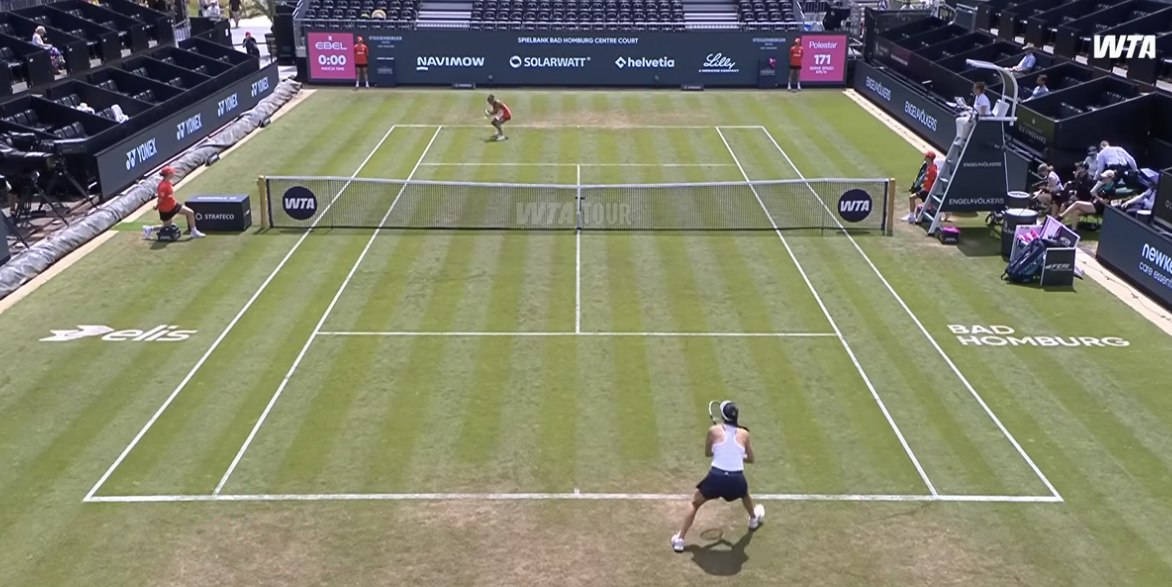
The Bad Homburg Open is back for its sixth edition this week, serving as the final major grass-court tune-up before Wimbledon. Here are 10 things to know about this year’s tournament.
1. It’s the Final Wimbledon Warm-Up Event
The Bad Homburg Open is due to take place between June 21-27 in Germany and is the final grass court warm-up before Wimbledon. The tournament has positioned itself as a key stop for top players looking to sharpen their grass-court form before the year’s third major championship.
2. It Carries WTA 500 Status
The 2026 Bad Homburg Open powered by Solarwatt is a women’s professional tennis tournament to be played on outdoor grass courts at the TC Bad Homburg in Bad Homburg, Germany, from 22 to 28 June 2026. It will be the sixth edition of the Bad Homburg Open and is classified as a WTA 500 event on the 2026 WTA Tour. The Bad Homburg Open has been a WTA 500 event since 2024, having launched as a smaller WTA 250-level tournament in 2021.
3. It Features an Elite Field
This year’s tournament has drawn several of the sport’s biggest names. It sees an elite field with Elena Rybakina, Iga Swiatek, Mirra Andreeva, Elina Svitolina, and Karolina Muchova involved. Rybakina is set for her debut alongside Muchova.
4. The Defending Champion Is Skipping It
Jessica Pegula was the reigning champion, but did not participate this year. Her absence opens the door for a new champion to emerge from this year’s deep field.
5. Several Top-20 Players Are Also Competing
Beyond the headline names, the draw includes a broad swath of the WTA’s upper rankings. Linda Noskova, Naomi Osaka, 2024 champion Diana Shnaider, Iva Jovic, and Ekaterina Alexandrova are among the top 20 players in the fold.
6. The Tournament Has a History of Dramatic Finals
Bad Homburg has built a reputation for producing closely contested championship matches since its inception. The town known for champagne air and tradition is adding exciting women’s tennis to its list of attractions, with three of the first four finals all ending in a tiebreak or a deciding third set.
7. The Draw Features 32 Singles Players and 16 Doubles Teams
The tournament’s full competitive field spans both singles and doubles competition. 32 singles players and 16 doubles teams show up to TC Bad Homburg ready to rally on outdoor grass courts.
8. The Top Four Seeds Received First-Round Byes
As is standard for WTA 500 events of this size, the tournament’s highest-ranked competitors were given an advantage entering the main draw. The top four seeds received a bye into the second round, allowing the tournament’s biggest stars to bypass the opening round entirely before the bracket narrows.
9. The Opening Round Produced a Tournament-Record Match
This year’s edition has already delivered a notable piece of tournament history in its earliest stage. At three hours and 12 minutes, the first round match between Leylah Fernandez and Katie Boulter was the longest match in tournament history.
10. The Event Coincides With a Wider Controversy in Women’s Tennis
The tournament’s broader backdrop has been shaped by significant news affecting the sport this week. Marketa Vondrousova was suspended from tennis for four years for refusing an anti-doping test, a development that has generated substantial discussion within tennis circles and added an unusual layer of controversy to a week otherwise focused on Wimbledon preparation.
Where the Tournament Goes From Here
With the tournament currently in its round-of-32 and round-of-16 stages as of this week, the field continues narrowing toward the final, which will close out the event on June 27 or 28. Several seeded players, including top seed Iga Swiatek, No. 2 seed Mirra Andreeva, No. 3 seed Elina Svitolina, and No. 4 seed Karolina Muchova, remained active in the draw as of the tournament’s most recent updates, while seventh seed Diana Shnaider, the 2024 champion, had already been eliminated.
With the Bad Homburg Open running through June 27-28 and Wimbledon set to follow shortly after, this week’s results will offer one of the clearest indicators of grass-court form heading into the year’s third Grand Slam. Given the strength of this year’s field — featuring Swiatek, Rybakina, Andreeva, Svitolina, and Muchova all competing in the same draw — the eventual Bad Homburg champion will enter Wimbledon with valuable momentum on a surface that continues to favor a select group of the sport’s most adaptable players.
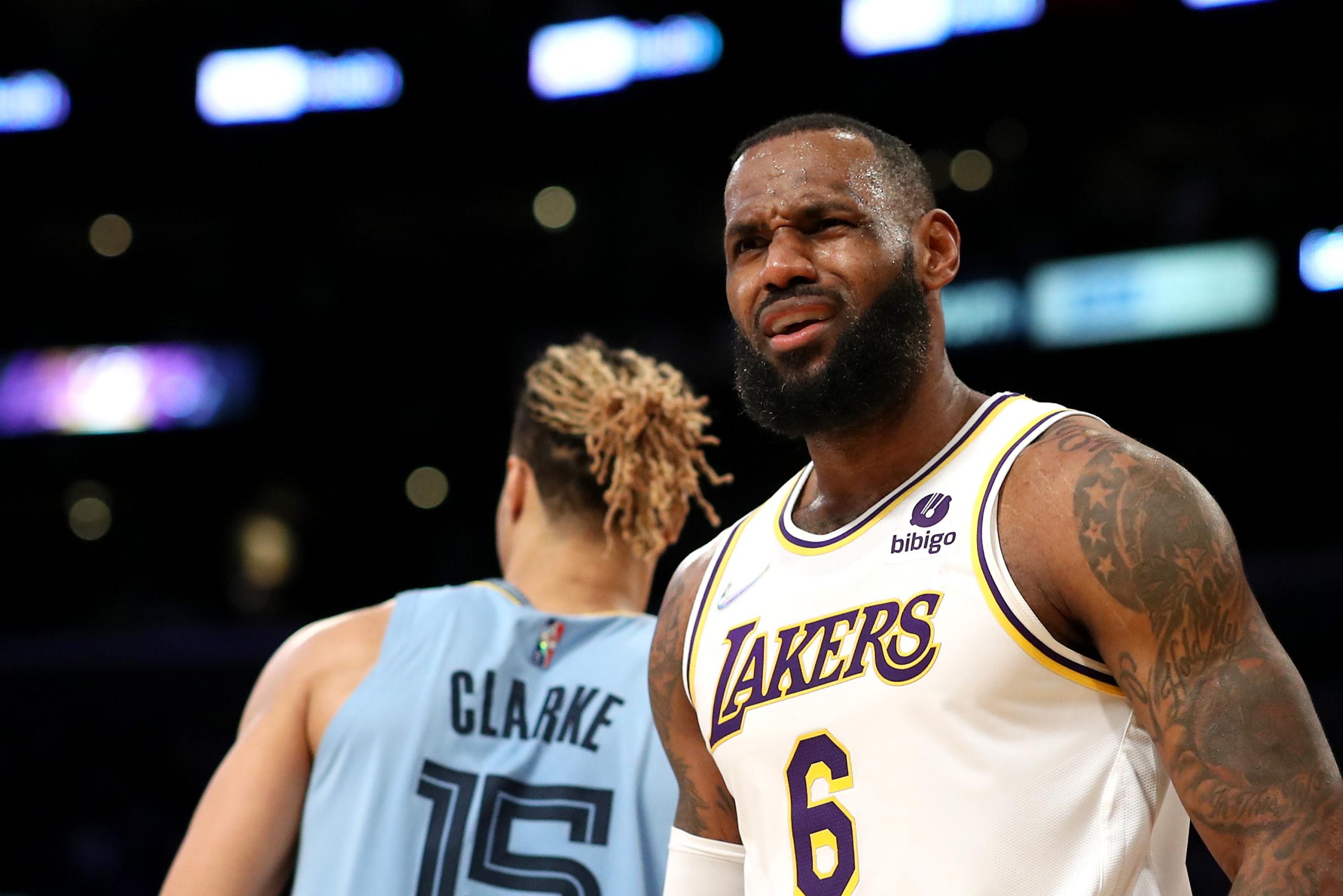
MIAMI — The Miami Heat completed a blockbuster trade for Giannis Antetokounmpo on Monday, but adding another superstar in LeBron James appears unlikely despite renewed speculation about a potential reunion in South Beach.
Heat president Pat Riley orchestrated the deal that sent Tyler Herro, Kel’el Ware, Jaime Jaquez Jr., Kasparas Jakucionis, the No. 13 pick in this week’s NBA Draft and future assets to the Milwaukee Bucks for the two-time MVP and Bobby Portis. The move signals Miami’s all-in approach for the upcoming season.
Now, with Antetokounmpo joining Bam Adebayo in the frontcourt, attention has turned to whether the Heat could pursue James, who becomes an unrestricted free agent this summer. Miami Herald reporter Barry Jackson reported that while the Heat could offer James their full mid-level exception, a return to South Beach is considered a long shot.
James spent four seasons with the Heat from 2010 to 2014, leading them to two NBA championships and four straight Finals appearances. His departure to return to the Cleveland Cavaliers in 2014 came after a somewhat contentious exit, though he has spoken fondly of his time in Miami in recent years.
The 41-year-old James just completed his 23rd NBA season with the Los Angeles Lakers, averaging over 20 points per game. With the Lakers reportedly focusing their future on Luka Doncic, James could be seeking a new challenge or a chance to chase another title in familiar surroundings. Teaming with Antetokounmpo and Adebayo under coach Erik Spoelstra could prove tempting.
However, financial constraints and roster fit present significant hurdles. The Heat are hard-capped at the first apron after using more than 100 percent of the traded player exception in the Antetokounmpo deal. Offering James a mid-level exception around $15 million would require creative maneuvering.
James has not publicly commented on the rumors, and his representatives have not responded to requests for comment. Sources close to the situation indicate James is weighing multiple options, including staying with the Lakers or exploring other contenders.
Riley’s History of Big Moves
Pat Riley has built a reputation for bold roster constructions throughout his career. The executive helped assemble superteams featuring James, Dwyane Wade and Chris Bosh, as well as more recent groups with Jimmy Butler. His ability to attract talent has been a hallmark of Heat culture.
Chad Johnson, a former Heat player, recently suggested Riley has “one more thing up his sleeve” regarding roster moves. While not explicitly mentioning James, the comment fueled speculation about potential additions to complement Antetokounmpo.
Beyond James, Miami could target veterans like Nikola Vucevic, Tobias Harris, Khris Middleton, Kelly Oubre Jr., Tim Hardaway Jr. and Anfernee Simons in free agency to add depth and shooting around their new star duo.
Impact of Antetokounmpo Trade
The acquisition of Antetokounmpo transforms the Heat’s outlook for the 2026-27 season. The Greek Freak, a two-time MVP and Defensive Player of the Year, brings elite scoring, rebounding and playmaking to Miami. Pairing him with Adebayo creates one of the most formidable frontcourts in the Eastern Conference.
Milwaukee received a significant haul in return, but the Bucks will enter a rebuilding phase. The trade ends Antetokounmpo’s tenure in Milwaukee after 13 seasons, during which he led the franchise to its first championship in 50 years in 2021.
For the Heat, the move represents a clear win-now strategy. Miami has been competitive in recent years but has fallen short of championship aspirations. Adding Antetokounmpo elevates their ceiling significantly.
Analysts project the Heat could contend for 48 or more wins in the upcoming season, potentially making a deep playoff run. The addition of James would further boost those expectations, though the financial and roster realities make it challenging.
James’ Career Crossroads
James enters free agency at a pivotal point. After averaging more than 20 points per game in his latest season, he remains one of the league’s most productive players. His basketball IQ and leadership would be assets to any contending team.
A return to Miami would reunite him with Spoelstra, under whom he won two titles. The familiarity could ease transition, and the opportunity to play alongside Antetokounmpo offers a chance at another championship run.
However, James has strong ties to Los Angeles, where his family has settled. The Lakers’ direction with Doncic may influence his decision. Retirement remains an option, though James has shown no indication of slowing down.
Free agency officially begins June 30. Teams will have until then to prepare offers, with James expected to carefully evaluate his options for the final chapters of his Hall of Fame career.
Heat’s Free Agency Plans
Even without James, Miami has options to bolster the roster. Veterans like Vucevic could provide frontcourt depth, while shooting specialists such as Hardaway Jr. would complement Antetokounmpo and Adebayo’s interior presence.
Riley’s track record suggests the Heat will remain active. Whether pursuing James or other targets, the franchise aims to maximize the window opened by the Antetokounmpo acquisition.
The NBA world will closely monitor developments in South Beach. A James reunion would generate massive excitement, though current indications point to it remaining a long shot. Regardless, the Heat enter the offseason with renewed championship aspirations.
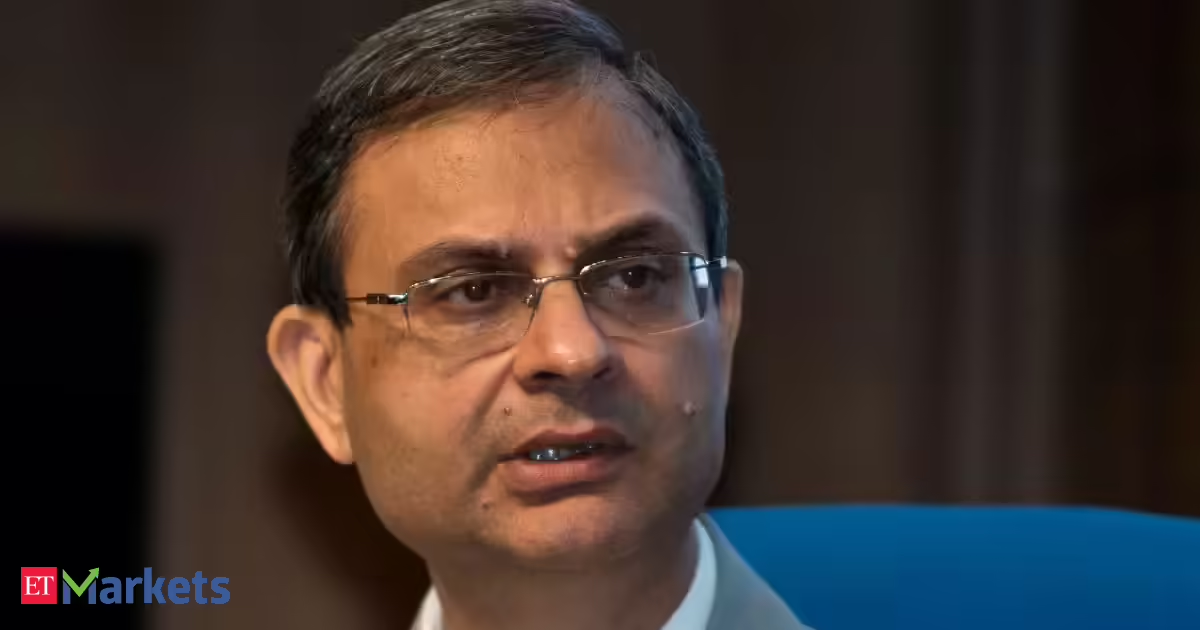
Speaking to ET Now, Malhotra said the central bank remains firmly data-dependent and has no pre-set path on interest rates despite market speculation about a possible tightening cycle.
West Asia Truce Brings Relief, but Risks Persist
The RBI Governor described the de-escalation in West Asia as a positive development for both the global and Indian economies, especially given India’s close economic ties with the region.”To some extent the de-escalation in the West Asian conflict is a big positive for the whole world and also for our Indian economy, especially because we are so deeply interconnected with West Asia. It is positive news both for growth and for inflation, as crude prices have moderated. In fact, urea prices have plummeted. The Indian economy is resilient. The government and the OMCs together cushioned the impact of the energy shock to a great extent, and all high-frequency indicators show that India has weathered the shock quite well. Still, these are very uncertain times, and as we said in our monetary policy, we are in wait-and-watch mode. We hope that this truce continues and better times lie ahead for all of us,” he said.

External Uncertainty Remains the Biggest Challenge
While domestic indicators have remained stable, Malhotra said external developments continue to pose the biggest challenge for monetary policy.
“The currency and the external uncertainty are what we are all concerned about. Last year it was more about trade and tariff-related uncertainties, and this calendar year, from March onwards, it has been more about the West Asian conflict. Most of it is external uncertainty that is weighing on us. Although I must mention that monetary policy, by definition, has to cater to uncertainty. We are well prepared for whatever kind of uncertainty we may have,” he said.RBI Watching for Inflation Spillover
The Governor said the Monetary Policy Committee (MPC) is closely monitoring whether higher wholesale prices eventually spill over into broader consumer inflation.
“We are not sure, frankly, whether we will have second-round effects or not. If we were sure, the Monetary Policy Committee would have acted. Inflation is still below 4%, at 3.9%, mostly due to food. Core inflation is about 2.4%. But WPI did go up, largely because of fuel. Whether it generalises or not is something we have to wait and watch. Accordingly, we will make the next policy move.”
Crude Risks Have Reduced, But Outlook Remains Uncertain
Although oil prices have softened, Malhotra cautioned against assuming that risks have disappeared.
“Upside risks have certainly reduced, but we will still have to wait and watch as to where crude prices ultimately end up. The truce itself is fragile. It will take time for supplies to be fully restored, infrastructure has been damaged, inventories have declined, and countries will look to rebuild their reserves.”
No Immediate Signal of Rate Hike
Responding to speculation that the RBI is preparing markets for higher interest rates, Malhotra dismissed the interpretation, saying the central bank intentionally retained its neutral stance.
“If it was so certain that we were going to hike rates in the coming months, then we would have changed our stance from neutral to restrictive. We did not do that precisely because there is elevated uncertainty. It will be premature to talk about a rate hike. We will continue to remain data-dependent and take it policy by policy.”
Monsoon and Crude Both Matter
Asked whether crude oil or the monsoon poses a greater inflation risk, the Governor declined to rank the two, saying both remain equally important.
“We are watchful of both. I will not like to pick either one of them. Both are uncertain. Both have consequences for inflation, and we will be looking at the overall picture.”
India-US Trade Deal Could Boost Growth
Malhotra expressed optimism about the progress in trade negotiations between India and the United States, saying a successful agreement could benefit exports, investments and the broader economy.
“There has been good progress made. I am not aware of the exact specifics, but obviously, as we read through the media, India will sign a deal which is positive for India. Trade and investments go together, and so it should be good for investments as well.”
India’s Resilience Backed by Multiple Factors
The Governor attributed India’s resilience during the energy shock to strategic reserves, demand moderation, and increased global production.
“Demand curtailment, release of reserves, and increased production from other sources are the three reasons which led to this resilience. Going forward, these reserves will have to be rebuilt, some demand will return, and it will take time for supplies through Hormuz to normalise. We will have to wait and watch where prices finally settle.”
Outlook: Cautious Optimism
While easing geopolitical tensions have reduced immediate inflation risks, the RBI believes uncertainty remains elevated. The central bank will continue to assess incoming data on inflation, crude oil prices, the monsoon, and global developments before taking any policy action. For now, the message from Mint Street is clear: caution outweighs conviction.
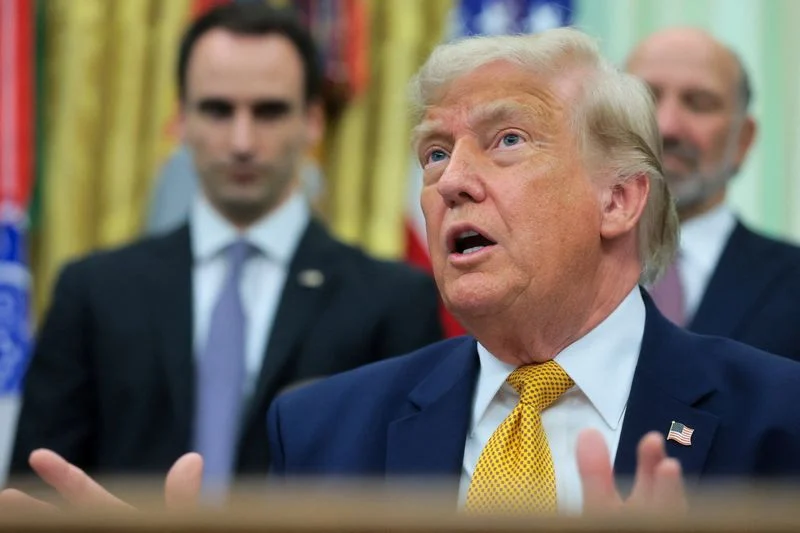

In Senate visit, Trump to push for voter ID bill that Republicans say can’t pass
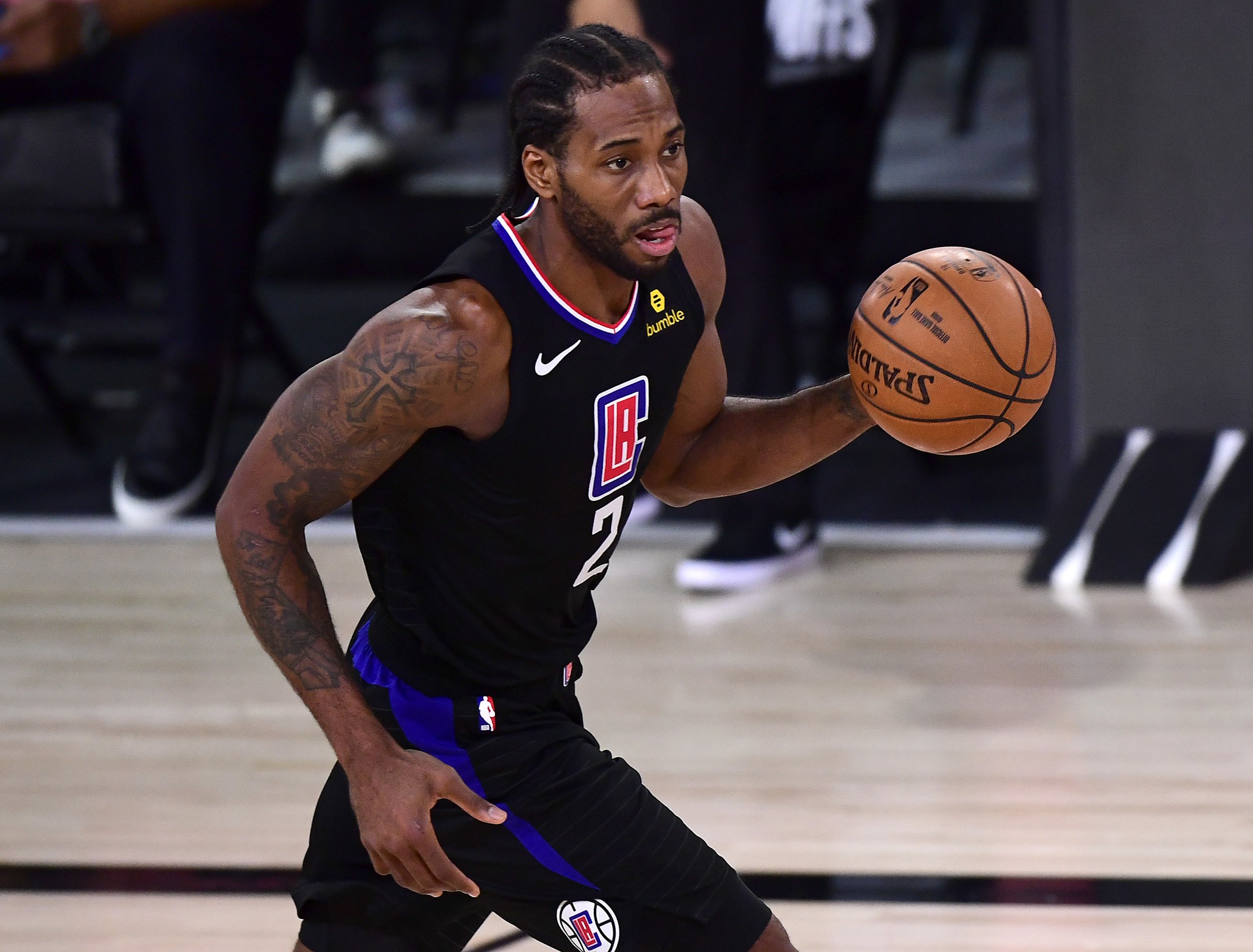
The Golden State Warriors are exploring significant roster changes to support Stephen Curry‘s championship ambitions, with potential targets including LeBron James, Kawhi Leonard, and Trey Murphy III. While a genuine “grand plan” to land both James and Leonard has circulated this offseason, the realistic path to pulling off both moves remains narrow, according to multiple league sources.
The Reported “Grand Plan”
A widely shared report laid out a specific two-step framework for how Golden State could theoretically land both stars. “The Warriors reportedly have a ‘grand plan’ to potentially acquire Kawhi Leonard AND LeBron James,” according to a report on X. “Step 1: Sign LeBron James using the $15M NTMLE. Step 2: Trade Jimmy Butler, Brandin Podziemski, and two first-round picks for Kawhi Leonard.”
That outline reflects a strategy built around using two entirely separate transaction types — a free-agent signing for James and a trade for Leonard — rather than treating the two acquisitions as a single package deal.
Why James Is the More Realistic of the Two
Of the two stars, James represents the more financially attainable target for Golden State, primarily because his market value has shifted given his age. James would be easier for the Warriors to acquire than Leonard. The 41-year-old will be a free agent after the season. With that said, the Warriors could have access to the non-taxpayer mid-level exception of up to $15 million, which could be of interest to James, even though the four-time MVP is worth much more than that — it’s possible no contender will offer him more than that figure given the league’s tightened cap rules.
If James took the mid-level exception, it would be his lowest salary since the 2010-11 season with the Miami Heat. ESPN’s Anthony Slater has reported that the Warriors are currently planning their offseason around the premise that James will indeed return to the Lakers instead — meaning Golden State’s pursuit, while real, is currently considered a backup scenario rather than the favorite outcome.
Leonard Represents Golden State’s True Preferred Target
According to The Athletic, citing reporting from NBA insider Jake Fischer, the LA Clippers’ Kawhi Leonard is on the Heat’s Plan B list, or the Golden State Warriors’ Plan A list. That designation is telling. It signals that Leonard is the player the Warriors want most this summer, unless something drastic changes elsewhere.
The Warriors checked in on Leonard in the days leading up to the February trade deadline. The Los Angeles Clippers engaged to a greater degree than in the past, but they ultimately returned to the Warriors with the same answer: team owner Steve Ballmer said no. League sources said Ballmer has maintained a firm stance against a Leonard trade, preferring to continue building around his star forward.
Why Pulling Off Both Is So Difficult
The fundamental obstacle to landing both stars simultaneously comes down to roster construction and salary mechanics rather than simple desire. In a literal sense, the Warriors will have no salary-cap space this offseason. With their six players under standard contracts making $144.4 million and Draymond Green expected to make close to $20 million, they are already at the salary cap of $165 million.
Once the Warriors use their mid-level exception on James, their best remaining offer to any other free agent would be a veteran minimum contract — meaning any path to adding Leonard would have to come through a trade rather than free agency, using existing roster pieces and draft capital as the currency.
The Trade Mechanics Behind a Potential Leonard Deal
Any realistic trade for Leonard would likely need to be built around Golden State’s highest-salaried trade chip. Jimmy Butler is the 10th-highest-paid player in the NBA, so if he is used as the matching salary in a blockbuster, that obviously helps. The Warriors have been linked quite a bit to Kawhi Leonard, and Butler makes $6.5 million more than Leonard does, giving Golden State a workable salary match if the Clippers were ever willing to engage.
What a Combined Roster Could Look Like
Analysts have sketched out what Golden State’s starting lineup might resemble if both moves came together. A healthy starting five could be Curry, Podziemski or De’Anthony Melton, Leonard, Draymond Green, and Porzingis — assuming the Warriors also re-sign Kristaps Porzingis, who has emerged as a separate offseason priority and would give Golden State a floor-spacing center to pair with its perimeter stars.
Defensive Concerns With an Aging Core
Even if Golden State successfully assembled that roster, analysts have raised real questions about whether an older core could hold up defensively across a full season. The real questions here are defensive. Green is 36. Curry, 38, and James, 41, are even older. Smarts can only get you so far. Athleticism and endurance are critical components of defense as well, and the Warriors would have to get the rest of the roster right. A decade ago, putting James and Curry on the same team would have led to near-automatic championships. That’s no longer the case.
The Leonard Investigation Adds Another Layer of Uncertainty
Beyond the financial and roster fit questions, an unresolved league matter continues to cloud any potential Leonard trade. No one around the league seems sure whether Leonard is truly on the market, or whether the NBA’s ongoing investigation into the Clippers’ alleged salary cap circumvention involving Leonard could become a problem for any team that takes him on.
The Bleacher Report Case for Leonard Specifically
Some analysts have specifically argued that Leonard, rather than James, represents the more logically complementary fit alongside Curry given their similar career stages. “Leonard feels almost a little too perfect for this team,” analyst Zach Buckley wrote. “The 34-year-old, 35 in June, is in the same fight with Father Time as Curry and carries as many availability concerns as anyone.” Leonard has one season remaining on a three-year, $149 million contract with the Clippers and is slated to have more than a $50 million cap hit in 2026-27, while Curry’s own contract extension runs through the same 2026-27 season before he becomes a free agent in 2027.
A More Realistic Backup: Trey Murphy III
Given the difficulty of landing either Leonard or James outright, some reporting suggests Golden State’s most attainable star addition may ultimately be a different player entirely. Murphy continues to be the most ideal trade target connected to the Warriors. He’s just 26 years old and under contract for three more seasons at a bargain rate of $27 million in 2026-27, rising to $31 million by 2028-29 — a far more financially manageable target than either Leonard or James, even if his star power doesn’t match theirs.
With the NBA Draft now complete and free agency negotiations opening June 30, the coming days will reveal how seriously Golden State pursues its most ambitious offseason scenario. Given Ballmer’s continued public resistance to trading Leonard and the Lakers’ presumed advantage in re-signing James, the realistic odds of both stars landing in Golden State simultaneously by 2027 remain genuinely long — though the persistent and credibly sourced interest from the Warriors in both players suggests the front office has not abandoned the idea, even if a more measured outcome involving just one star, or a more attainable piece like Murphy or a re-signed Porzingis, currently appears the more probable path forward for Curry’s supporting cast.

Helus Pharma prices $50 million stock offering at $4.85/share
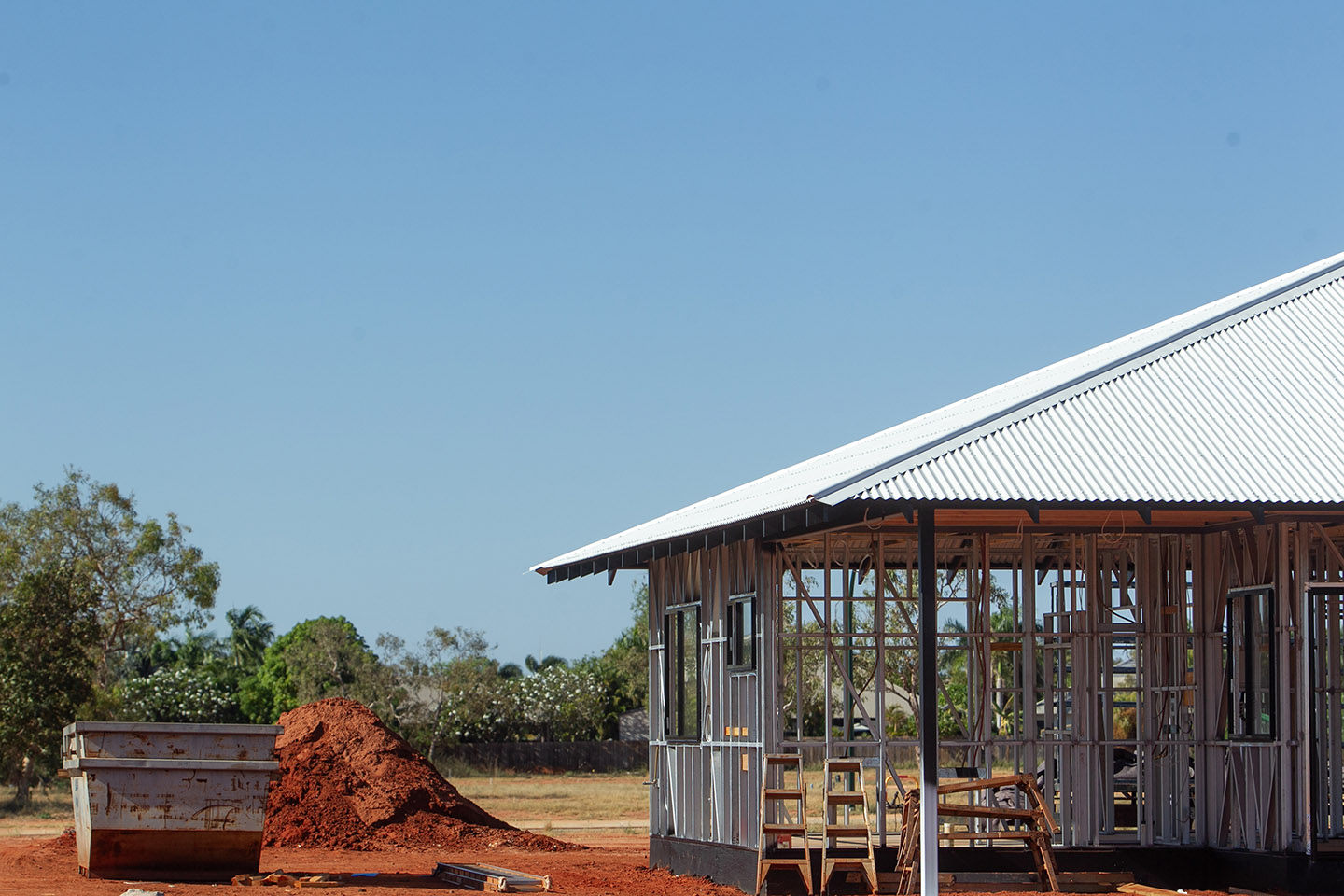
A federal homebuilding program has come under fire at a major Pilbara conference for failing to invest outside of Perth.
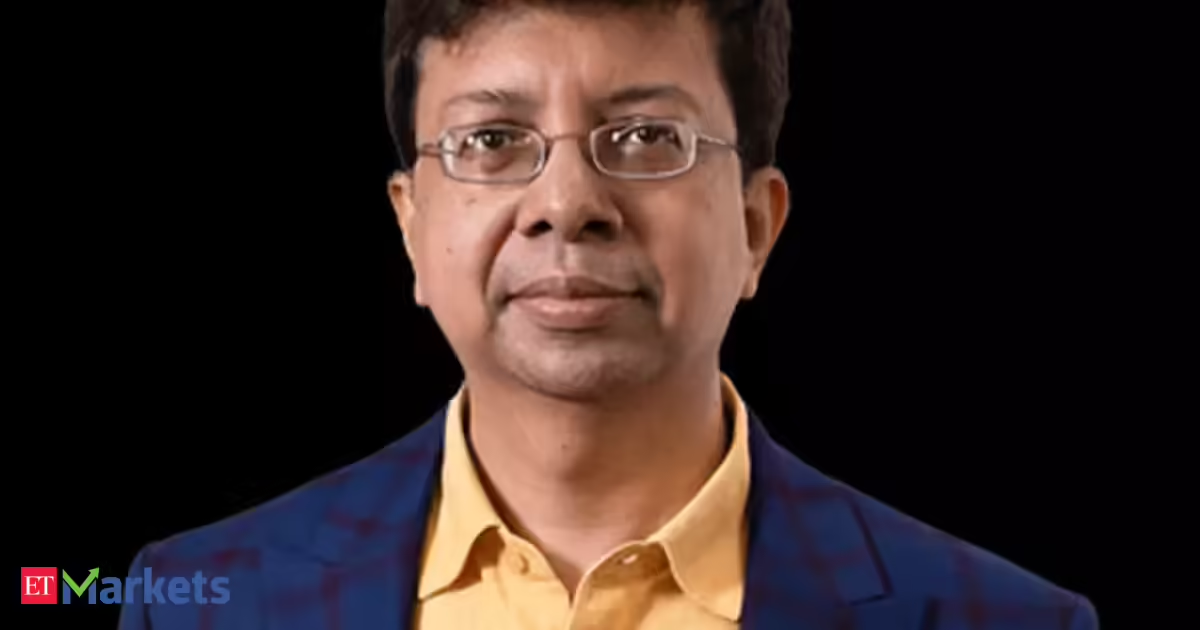
According to Rohit Srivastava, Founder, Strike Money Analytics & Indiacharts, the technical setup continues to favour the bulls as long as key support levels remain intact, with banking and defence emerging as two sectors likely to outperform in the coming months.
23,800 Remains the Key Support for Nifty
Srivastava believes the market’s immediate direction will depend on whether Nifty can defend the 23,800 level, which has repeatedly acted as a strong support.”So, I have put 23,800 as the critical support that the market is trying to test again and again. That is where we left behind a gap on the 15th of June and, interestingly, we have not filled it, which makes it a good support. Now, as long as this support holds and we close positive today, the next target for the market is to cross the 25,000 mark in the coming weeks, and that is what we would be looking for. Similarly, in Bank Nifty, if I put the support range at around 59,956, we would be looking at it going towards 61,000 in the coming days,” he said.
According to him, maintaining these support levels could pave the way for another leg of the market’s uptrend.
Defence Weakness Is Only a Pause
While the Nifty Defence Index witnessed sharp selling pressure during the session, Srivastava does not see it as a reversal of the broader trend. Instead, he believes the decline is simply a temporary correction following a strong rally.
“So, it is just a pullback. The Defence Index was actually holding out against the market. It went up for almost seven-eight consecutive days, and we have seen a two-day pullback. So, it is probably just a pause in what is going to be a continuation of an uptrend. The Nifty Defence Index should be headed towards 10,700-10,800 in the coming weeks, so it would be a buy on dips as of now. We do have open recommendations on GRSE, that is Garden Reach, for our clients, so that is a particular stock that we like,” he said.
His view suggests that investors should use short-term corrections as buying opportunities rather than interpreting them as a sign of weakness.
Banking Could Be One of the Best-Performing Sectors
The strong performance in both private and public sector banks has reinforced Srivastava’s bullish outlook on financials. He believes the sector is entering a phase of catch-up after lagging the broader market for the past couple of years.
“Let me just highlight that we are SEBI-registered since I discussed the stock. Now, coming to banking, I do think that the banking sector as a whole is going to be one of the top-performing sectors of the coming year after having underperformed for a year or two before. In the previous cycle, it was lagging, especially private banks. There is a complete turnaround and catch-up in performance that is happening right now. In the next leg of growth, financials are going to play a very, very important part. I already mentioned the Bank Nifty levels that we are looking at, going towards 61,000 in the next move in the coming days, so I do not think you are going to see any weakness in the financial space,” he said.
His outlook indicates that financial stocks could become a key driver of the next phase of the market rally, supported by improving sectoral momentum and strengthening technical indicators.


I am an investor specializing in the consumer products sector with a focus on identifying companies that offer a unique combination of strong brand recognition, solid financials, and growth potential. I have a keen eye for consumer trends and an in-depth understanding of the industry, which has helped me to identify profitable investment opportunities in the sector.
Analyst’s Disclosure: I/we have no stock, option or similar derivative position in any of the companies mentioned, and no plans to initiate any such positions within the next 72 hours. I wrote this article myself, and it expresses my own opinions. I am not receiving compensation for it (other than from Seeking Alpha). I have no business relationship with any company whose stock is mentioned in this article.
Seeking Alpha’s Disclosure: Past performance is no guarantee of future results. No recommendation or advice is being given as to whether any investment is suitable for a particular investor. Any views or opinions expressed above may not reflect those of Seeking Alpha as a whole. Seeking Alpha is not a licensed securities dealer, broker or US investment adviser or investment bank. Our analysts are third party authors that include both professional investors and individual investors who may not be licensed or certified by any institute or regulatory body.

President Donald Trump highlights a record 19 million barrels of oil flowing through the Strait of Hormuz, causing oil prices to tumble.
Traffic by tankers transiting the Strait of Hormuz has picked up amid the negotiations between the U.S. and Iran aimed at ending the war, which has caused oil prices to decline with more supply hitting the market.
The two sides have agreed to open the key shipping route for oil during the negotiations after the U.S. instituted a naval blockade and Iran laid sea mines that deterred shipping from moving through the narrow chokepoint.
The Strait of Hormuz’s central channel is yet to be cleared of Iranian mines, which has caused ships making the transit to either pass through a northern channel in Iran’s territorial waters or a southern channel in Oman’s waters. The U.S. Navy is overseeing transits along the southern route, while Iran issued a demand last week that vessels use the northern route through its waters.
Shipping traffic rose over the weekend to the highest level since the conflict began at the end of February, with 109 vessels transiting the Strait of Hormuz from Saturday through Monday, according to Kpler, a firm which tracks global shipping traffic.
OIL PRICES FLUCTUATE AS TRUMP’S IRAN DEAL COULD FULLY REOPEN STRAIT OF HORMUZ
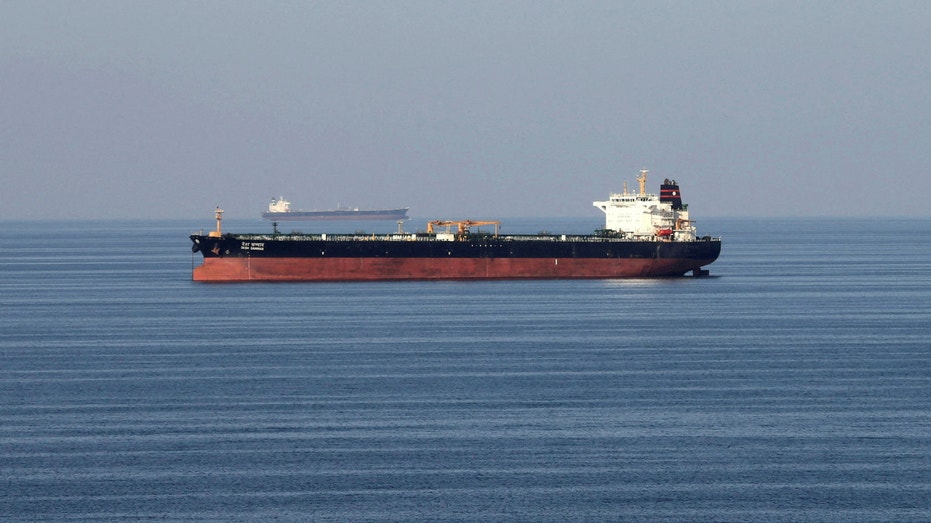
Shipping traffic through the Strait of Hormuz is rising amid U.S.-Iran negotiations, though it remains below pre-war levels amid the threat of mines. (Reuters/Hamad I Mohammed)
President Donald Trump said Tuesday in a post on his Truth social media platform that, “19 Million Barrels of Oil flowed out of the Hormuz Strait yesterday, an all time RECORD. Oil prices are tumbling down, and the World is a much safer place!!!”
Despite the rise in shipping traffic, it remains lower than the more than 130 ships per day that transited the strait on a typical day before the conflict began, the New York Times reported.
There also remains a backlog of hundreds of ships waiting to pass through the strait, according to the International Maritime Organization.
OIL PRICES PLUNGE TO LOWEST LEVELS SINCE EARLY MARCH AFTER TRUMP SIGNS IRAN DEAL
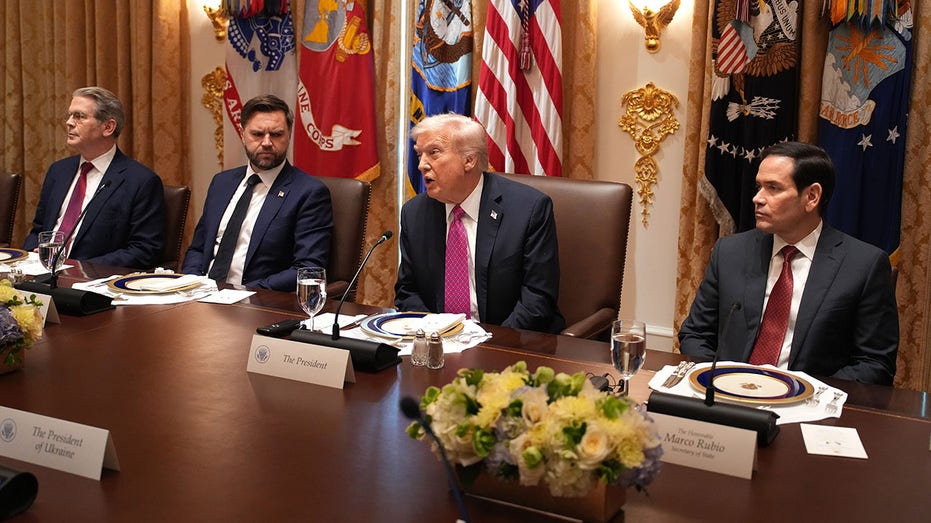
President Donald Trump touted the rise in oil traffic amid the negotiations with Iran. (Getty Images)
The Joint Maritime Information Center (JMIC), a U.S.-led international maritime security organization based in Bahrain, lowered the regional threat level to moderate on June 18 after the U.S. and Iran agreed to open the waterway during the 60-day negotiating window.
However, it noted there have been confirmed mines in the waterway and recommended vessels use the southern route near Oman as it has been cleared of mines.
“Mariners should be advised of the existence of mines and expect naval presence as clearance operations continue,” JMIC said in its announcement. “Mariners should also expect congestion through transit routes and potential VHF hailing from naval forces to support free flow.”
ZELDIN TOUTS US ENERGY FUTURE, SAYS INDO-PACIFIC NATIONS INCREASINGLY INTERESTED IN AMERICAN SUPPLY
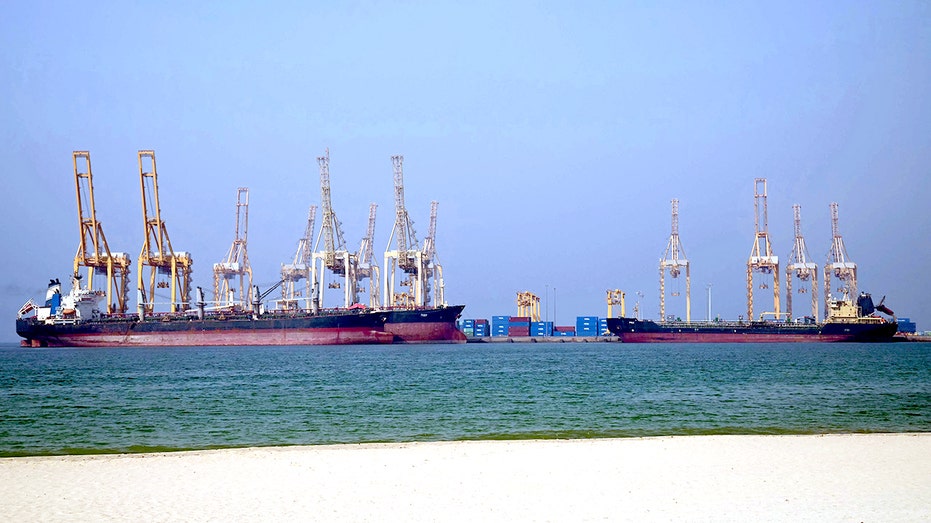
Tanker traffic in the Strait of Hormuz declined precipitously amid the Iran war. (Giuseppe Cacace/AFP via Getty Images)
The uptick in oil moving through the Strait of Hormuz has eased global oil prices, which surged to trade above $100 a barrel at times during the first two months of the conflict.
Prices for Brent crude, the global oil benchmark, were around $75 a barrel on Tuesday after declining about 0.3% on the day and over 4.5% in the past five days.
They also declined for the U.S. crude benchmark, West Texas Intermediate, which was about $73 a barrel on Tuesday after declining roughly 0.8% on the day and around 7.7% over the last five trading days.
GET FOX BUSINESS ON THE GO BY CLICKING HERE
Rising oil supplies from the Middle East with the return of tanker traffic through the Strait of Hormuz has also caused a shift in prices for North Sea crude, with prices for Forties crude from the North Sea trading at its lowest level in two years on Monday, Bloomberg reported.

England v Ghana LIVE: VAR ‘on holiday’ as ‘lucky’ England react to World Cup setback

YouTube Settles Early Test Case Over Social Media Harm To Children

Asmr unboxing million dollars money cash dinero millionaire #wealth #motivation #asmr #money


-

 Fashion5 days ago
Weekend Open Thread: Miami – Corporette.com
-

 Entertainment4 days ago
Renter of Home in Anne Heche Crash Denies Settlement With Son
-

 Tech2 days ago
Microsoft accidentally kills epic Outlook email threads
-
 Sports16 hours ago
Two goals and an assist by sheer aura: Cristiano Ronaldo just entered the World Cup chat
-

 Business4 days ago
Soccer-U.S. defends Iran World Cup travel restrictions, says discussions ongoing
-
Crypto World7 hours ago
Bitcoin (BTC) Dips Below $62K, Ethereum (ETH) Plunges 6% Daily: Market Watch
-

 Politics6 days ago
BBC Reporter Discusses Cross Party Criticism Of Trumps Iran Deal
-

 Crypto World4 hours ago
Securitize Wraps Roubini's SEC-Registered ETF as Dubai VARA Digital Security
-
Business10 hours ago
Entergy settles forward sale agreements, raises $672 million in cash proceeds
-
 Business4 days ago
Wall Street Week Ahead: Investors see Micron earnings as pulse check of AI rally momentum
-

 Politics4 days ago
Andy Burnham and the meaning of Makerfield
-

 Tech6 days ago
AWS enters the context layer race with a graph that learns from agents, not manual curation
-
 Crypto World4 days ago
Can Charles Hoskinson Really Rescue Cardano?
-

 Crypto World4 days ago
HIVE shares jump as $220M AI deal speeds Bitcoin mining pivot
-

 NewsBeat5 days ago
Keir Starmer Allies Question His Chances For No 10
-

 Crypto World4 days ago
Jake Chervinsky accuses CME of protecting derivatives monopoly
-

 Tech2 days ago
Nearly 7,000 fake Amazon domains registered ahead of Prime Day 2026, researchers warn
-
 Tech3 days ago
Signal’s Meredith Whittaker says AI chatbots ‘are not your friends’ and calls Copilot agents a backdoor
-

 Business5 days ago
Brexit cost 6% of UK economy, Bank of England company data suggests
-

 Sports5 days ago
FIFA World Cup 2026: Canada beat 9-men Qatar 6-0 to register first ever win | FIFA World Cup 2026
You must be logged in to post a comment Login