Connect with us
DAPA Banner
DAPA Coin
DAPA
COIN PAYMENT ASSET
PRIVACY · BLOCKDAG · HOMOMORPHIC ENCRYPTION · RUST
ElGamal Encrypted MINE DAPA
🚫 GENESIS SOLD OUT
DAPAPAY COMING

Business

Gleezy raises funding to scale hotdogs

Published

on

Gleezy raises funding to scale hotdogs
Continue Reading
Click to comment

You must be logged in to post a comment Login

Leave a Reply

Business

Micron: Q3 Proved Me Wrong (Rating Upgrade)

Published

on

Micron: Buy The Latest Blowout

Micron: Q3 Proved Me Wrong (Rating Upgrade)

Continue Reading

Business

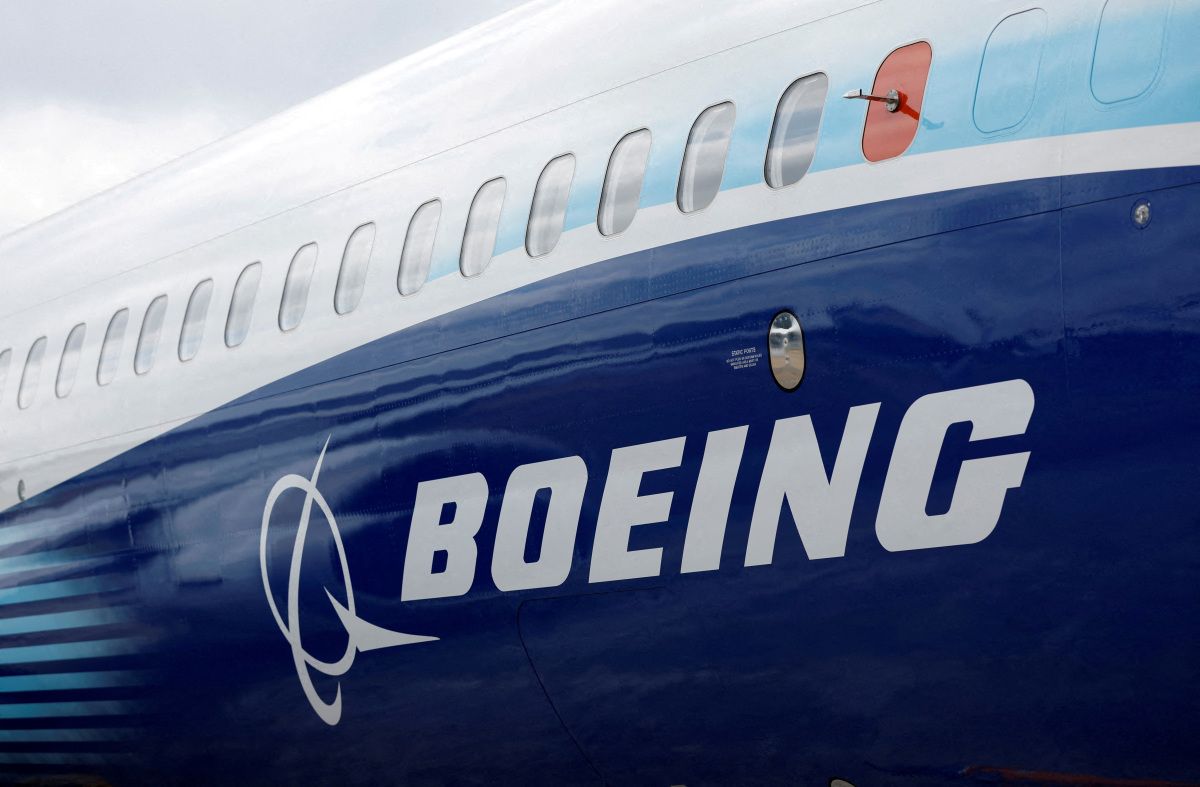
Boeing Stock Climbs 2.2% as Backlog Grows and Quantum Satellite Program Advances

Published

on

Boeing 737 MAX

Boeing shares rose 2.23% to $221.55 on Wednesday afternoon, continuing a recovery from recent lows as the aerospace giant’s growing commercial order backlog and progress on a satellite-based quantum networking program offset lingering concerns about regulatory scrutiny and ongoing losses in its defense segment.

A Stock Recovering From Its 52-Week Low

Boeing’s recent trading has reflected a stock working to climb back from a difficult stretch earlier in the year. The stock’s 52-week range extends from a low of $176.77 to a high of $254.35, meaning Wednesday’s price sits roughly midway between those two extremes — well above where the stock bottomed out late last year, but still meaningfully below the high it touched in late January.

A Massive Order Backlog Underpins the Bull Case

Advertisement

Much of the optimism surrounding Boeing’s stock continues to center on the sheer scale of its contracted future business. There is room in the aerospace market for new firms to show up. Aerospace giant Boeing has a massive book of outstanding business, with a backlog of about 6,100 commercial aircraft, giving the company years of contracted production and revenue visibility regardless of near-term market fluctuations.

Recent Commercial Deliveries

Boeing has continued making tangible progress converting that backlog into actual aircraft deliveries to airline customers around the world. AerCap Holdings announced that it has delivered the first new GE-powered Boeing 787-9 aircraft to Thai Airways International, during a special ceremony marking the milestone. Separately, Saudi Arabia’s Riyadh Air received its first two Boeing 787 Dreamliner jets as the kingdom’s new national carrier prepares to take off, launching five new destinations.

Defense Contracts Continue Rolling In

Advertisement

Beyond its commercial aircraft business, Boeing has continued securing a steady stream of military and defense-related contracts. Boeing has been awarded a maximum $2 billion fixed-price-incentive-firm-target contract for the Mobile User Objective System service life extension Phase II effort. The company was also awarded a $121.2 million cost-plus-fixed-fee order for the procurement of nine retrofit A-kits, and separately received an $880 million firm-fixed-price, cost-plus-fixed-fee, indefinite-delivery/indefinite-quantity contract that provides for the procurement, modernization, and sustainment of military systems.

A Quantum Computing Push in an Unexpected Industry

Among the more unusual recent developments for the company, Boeing has been advancing a satellite-based quantum networking program that has drawn attention from technology-focused investors. Normally, quantum computing is the dominion of tech stocks. But apparently, aerospace giant Boeing has a hand in this particular cookie jar as well. The biggest investor-facing story is that Boeing moved its Q4S quantum networking satellite program closer to launch after demonstrating high-fidelity results in testing.

A Difficult Recent Earnings Track Record

Advertisement

Despite the positive contract and delivery news, Boeing’s underlying financial results have continued to show significant strain. Boeing’s revenue has declined for the last two quarters, dropping from $23.94 billion to $22.21 billion. The company has also experienced a significant decline in profit over the last two quarters, with net profit dropping from $8.22 billion to just negative $4.0 million.

Earnings for the most recent quarter came in at negative $0.20 per share, though that figure beat analyst estimates of negative $0.68 per share by a wide margin, representing a 70.80% positive surprise relative to expectations. The company’s EBITDA currently stands at negative $3.31 billion, with a current EBITDA margin of negative 3.77%.

Ongoing Regulatory and Legal Challenges

Boeing continues navigating a range of legal and regulatory matters tied to its past safety record. The company also faces environmental liabilities, such as the March 2026 settlement regarding the Lower Duwamish Waterway. Additionally, its defense and space segments struggle with losses on fixed-price contracts due to technical challenges. A court hearing was also expected in June over fraud charges relating to the U.S. government and the 737 MAX crashes.

Advertisement

Trade Tensions Complicating Deliveries to China

Beyond domestic regulatory matters, geopolitical trade tensions have also disrupted parts of Boeing’s commercial delivery pipeline. Trade tensions between the U.S. and China led Chinese airlines to suspend acceptance of Boeing aircraft, forcing the company to redirect deliveries to other markets — a disruption that has added complexity to the company’s broader global delivery schedule even as overall demand for new commercial aircraft remains strong.

Wall Street’s Generally Bullish Outlook

Despite the financial and regulatory headwinds, the majority of Wall Street analysts covering Boeing maintain a positive view of the stock’s longer-term prospects. According to 27 analysts, the average rating for Boeing stock is “Buy.” The 12-month stock price target is $270.00, which is an increase of nearly 24% from recent trading levels. A separate tracking service found that 66.67% of analysts recommend a “Buy” rating, with an average target price of $270, representing an upside of roughly 19% from the stock’s most recent closing levels.

Advertisement

Other analyst breakdowns showed a similarly favorable, if slightly more cautious, distribution. Among one group of 24 analysts, 17 assigned a Buy rating, four recommended Hold, and three recommended Sell, with price targets ranging from a low of $150 to a high of $298.

Boeing’s Three Core Business Segments

The Boeing Company, together with its subsidiaries, designs, develops, manufactures, sells, services, and supports commercial jetliners, military aircraft, satellites, missile defense, human space flight and launch systems, and services worldwide. The company operates through three segments: Commercial Airplanes; Defense, Space and Security; and Global Services. The Defense, Space and Security segment engages in the research, development, production, and modification of manned and unmanned military aircraft and weapons systems, strategic defense and intelligence systems, and satellite systems, including government and commercial satellites and space exploration. The Global Services segment offers supply chain and logistics management, engineering, maintenance and modifications, upgrades and conversions, spare parts, training systems, and data analytics services to commercial and defense customers.

A Large and Stable Workforce

Advertisement

Boeing remains one of the largest industrial employers in the United States despite its recent financial volatility. As of June 24, 2026, the company has 182,000 employees, underscoring the sheer scale of its operations across commercial aviation, defense, and space-related business lines.

A Path Back to Profitability, Some Analysts Argue

Several analysts have framed Boeing’s current trajectory as a genuine recovery story, even with losses persisting in the near term. While Boeing is expected to return to profitability and positive cash flow in 2026, losses and operational challenges persist in the meantime. Investors should take a balanced view when considering Boeing shares, especially following the stock’s substantial rally from its late-2025 lows. The stock may offer medium- to long-term potential tied to the company’s recovery, particularly if free cash flow turns positive as forecast.

With Boeing’s next earnings report scheduled for July 29, investors will be watching closely for updated guidance on the company’s path back to sustained profitability, progress on resolving its outstanding 737 MAX-related legal matters, and any further developments tied to the Chinese delivery suspension. Given the substantial gap between Boeing’s current trading price and the average analyst price target near $270, the stock’s near-term trajectory will likely continue to hinge on whether the company can demonstrate consistent operational improvement across its commercial, defense, and services segments in the quarters ahead.

Advertisement
Continue Reading

Business

New prime minister and chancellor must ease burden on firms, says boss of BCC

Published

on

Business Live

The call comes two weeks before nominations open to replace Sir Keir Starmer

Shevaun Haviland, Director General British Chambers of Commerce, pictured during the British Chambers Commerce Annual Global conference in June 2022.

Shevaun Haviland, Director General British Chambers of Commerce

The next prime minister and chancellor must ease burdens on business in order for the UK economy to prosper, the boss of the British Chamber of Commerce will warn on Thursday.

Shevaun Haviland, director general of the BCC, is set to tell the business group’s global annual conference on June 25 that successive governments have “hobbled” business prospects over recent years.

Advertisement

Current Chancellor Rachel Reeves, who is widely predicted to be replaced if Andy Burnham becomes prime minister, is also due to speak at the conference.

The event comes around two weeks before nominations open to replace Sir Keir Starmer, with Mr Burnham currently the only candidate to have openly laid out their leadership ambitions.

Ms Haviland called on the next prime minister to resist further cost increases for firms.

Businesses have witnessed increases to national insurance contributions and the national minimum wage in recent budgets, as well as other taxes such as the packaging levy introduced earlier this year.

Advertisement

The BCC chief is set to say: “At a time of huge economic shocks and global headwinds, successive UK governments have chosen to pile more and more cost on companies. That is no way to run an economy.

“So, if we want to see growth – our political leaders must reduce the burdens on business. Taxing businesses more, would be a road to ruin.”

In her speech, she will also tell firms and industry leaders that improved business confidence is needed to help improve economic growth.

The Chancellor has made stronger economic growth a key ambition for the Government, but it is has come under pressure amid weak consumer confidence and global economic uncertainty.

Advertisement

Most recent data showed that the economy contracted by 0.1% in April amid signs the conflict in the Middle East was impacting some UK sectors.

She said: “The difficult truth is, whoever leads the UK, the primary challenge remains the same – delivering growth.

“Outside of the pandemic rebound, UK growth has flatlined year after year. And this economic malaise is nothing new or attributable to the policies of a single government. Despite all our strengths, we are failing to fulfil our potential.”

Advertisement
Continue Reading

Business

LARRY KUDLOW: Antisemitism is the root of Mamdani socialism, and it’s destroying New York City

Published

on

LARRY KUDLOW: Antisemitism is the root of Mamdani socialism, and it’s destroying New York City

So Mayor Zohran Mamdani and his socialists had a big night last night. And I believe the absolute worst part of those victories yesterday, was the sheer unity message of antisemitism, hatred, and bigotry aimed at Jewish people that animates and unites this Mamdani Socialist movement — and their hope that they will someday drive the entire state of Israel out to the sea. Destroy it. 

This Jewish bigotry is the worst part of the story. I’m gonna get to their crazy socialist economics in just a moment. Yet at the city with the largest Jewish population in the world outside of Israel, this antisemitic bigotry is astonishing and heartbreaking. And demoralizing. And it has somehow got to be stopped.

Advertisement

We know millions of Jewish people immigrated here from Eastern Europe and elsewhere down through the years, along with Irish, Italian, Polish, Catholics, and people from all walks of life, all religions, and all ancestries. New York was a melting pot. New York City was a great vortex of tolerance. Respect for our differences. Now it has become a place of multiple hatreds.

In a recent voter survey, half the people said life in the city feels worse than it did just a year ago. Maybe that’s the Mamdani hatred factor. It’s astonishing that New York is trapped by these kinds of hatred. Democrats like Mario Cuomo and Hugh Carey would never have stood for this. 

Nor would Republicans like George Pataki or Rudy Giuliani. Mike Bloomberg, certainly not. Ed Koch, certainly not. Yet I think a lot of this antisemitism began during the Bill DeBlasio years, and the crazy left-wing socialist staff that he brought with him — and now yes it continues through Mr. Mamdani, and it must be stopped. It is the most corrosive factor eating away at the lifeblood of New York City. And this is a place where I have lived and worked for the better part of 50 years. I’ve seen the city at its greatest. I have seen the city in the dumps. Right now it’s in the dumps.

Advertisement

But you know what? More than the sagging economy or worries about crime, and education and other lifestyle things — it’s the daily losing ground to Florida, Texas, the Carolinas, and elsewhere, more than all of that is the Jewish hatred that is destroying our city.

To be sure, the Mamdani socialist platform of taxing wealth, alienating businesses, open borders, abolishing ICE, blaming cops, free-government everything, green new deals, packing the Supreme Court, rent controls, housing takeover, and all the rest, all of that is killing the economy and is wrecking affordability.

The Mamdani socialists don’t represent America. That’s a good thing. Republicans, to be sure, must emphasize their themes of freedom, free enterprise, and opportunity and tolerance. Yet it’s the antisemitism that’s destroying New York City. And that’s the part that hurts this New Yorker the most.

Advertisement
Continue Reading

Business

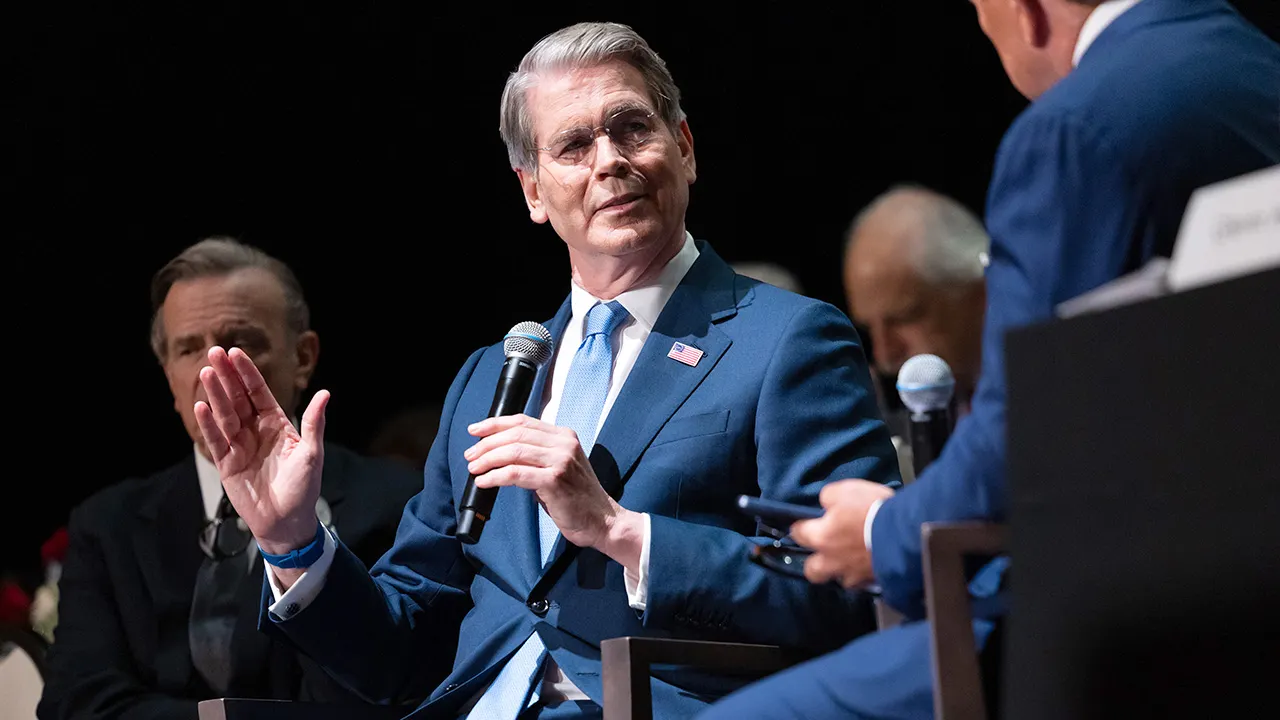
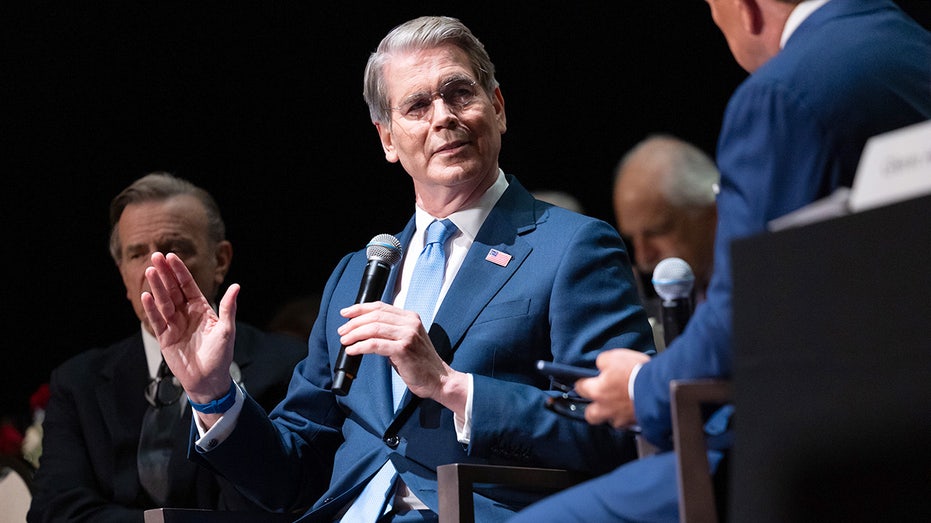
Scott Bessent outlines 5 principles for Trump economic statecraft plan

Published

on

Scott Bessent outlines 5 principles for Trump economic statecraft plan

Treasury Secretary Scott Bessent on Tuesday outlined the Trump administration’s approach to economic statecraft in a speech in which he outlined five core principles guiding the White House’s strategy.

Bessent spoke Tuesday night at the Economic Club of New York’s America 250 gala dinner and said that as the nation celebrates that milestone, it requires Americans to “reflect on the creation of our country, of course, but no less, on its condition.”

Advertisement

He said that as America shaped the postwar world order, it made choices that have created vulnerabilities that led strategic industries and critical supply chains to migrate overseas, as well as expose U.S. firms to face unfair competition abroad.

“We’ve emboldened other countries to exploit our dependence as leverage. And to repair those imbalances with the world is not to retreat from it. On the contrary, it is to engage on terms that make America stronger. It is to insist on trade that is fair, reciprocal, and consistent with our national interest,” Bessent said. “And it is to more closely bind what we should have never allowed to cleave: our economic and national security.”

BANK OF AMERICA CARDHOLDERS CAN VISIT 250 MUSEUMS FREE DURING JULY 4 WEEKEND

Treasury Secretary Scott Bessent speaks

Treasury Secretary Scott Bessent outlined the Trump administration’s core principles for economic statecraft at the Economic Club of New York. (Krisanne Johnson/Bloomberg via Getty Images)

Bessent discussed five core principles for the Trump administration’s approach to economic statecraft. Here is a breakdown of the key points from each.

Advertisement

National capacity

Bessent said that the modern economy requires the U.S. to assume a leadership role in areas ranging from semiconductors, artificial intelligence (AI) and quantum computing, to advanced manufacturing, critical minerals and pharmaceuticals. 

He added that in the modern economy, “supply chains are the domain in which that leadership is tested, which requires a hard look at the resiliency of those supply chains.

“Of course, supply chain resilience does not require every component to be domestic from beginning to end. That would be unrealistic and unnecessary. But it does compel us to know where our vulnerabilities are and to reduce them before a crisis rears itself,” Bessent said. “It requires diversifying away from dangerous concentrations.”

AMERICA 250: BLACKROCK’S LARRY FINK SAYS LONG-TERM INVESTING CAN PERFORM A KIND OF ‘CIVIC MIRACLE’

Advertisement
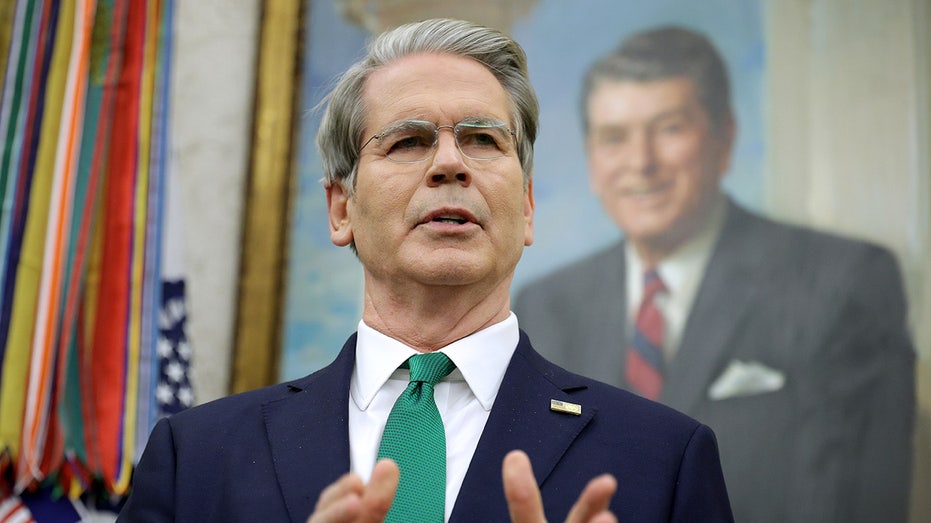
Treasury Secretary Scott Bessent in front of a Ronald Reagan portrait

Treasury Secretary Scott Bessent said the U.S. needs to lead in key aspects of the economy. (Alex Wong/Getty Images)

Trade reciprocity

Bessent said that the U.S. is the “best economic partner in the world” due to the depth and dynamism of its markets, the dollar’s dominance and innovation throughout the economy – though he said those benefits aren’t unconditional for U.S. trading partners.

“Countries cannot seek access to our market while denying fair access to theirs,” he explained while criticizing discriminatory taxes, industrial policies, intellectual property transfers and efforts to evade sanctions.

He said that while the U.S. and other countries alike have the right to regulate in ways that serve their own public interests, there is a discernible difference between that and discrimination against American firms which the administration wants to remedy.

BANK OF AMERICA’S LEGACY OF BUILDING THE AMERICAN DREAM

Advertisement

U.S. economic leadership

Bessent said that the next era of economic competition will be more nuanced and that failing to lead efforts to help write the rules of the new economy could allow authoritarian or mercantilist systems to create a global economy that would “become more coercive and less favorable to American interests.”

“If America and our partners set open, secure, market-based standards, then the 21st century economy will tilt toward freedom and prosperity by rewarding innovation, protecting intellectual property, and ensuring that competition is not distorted by discrimination,” he said. 

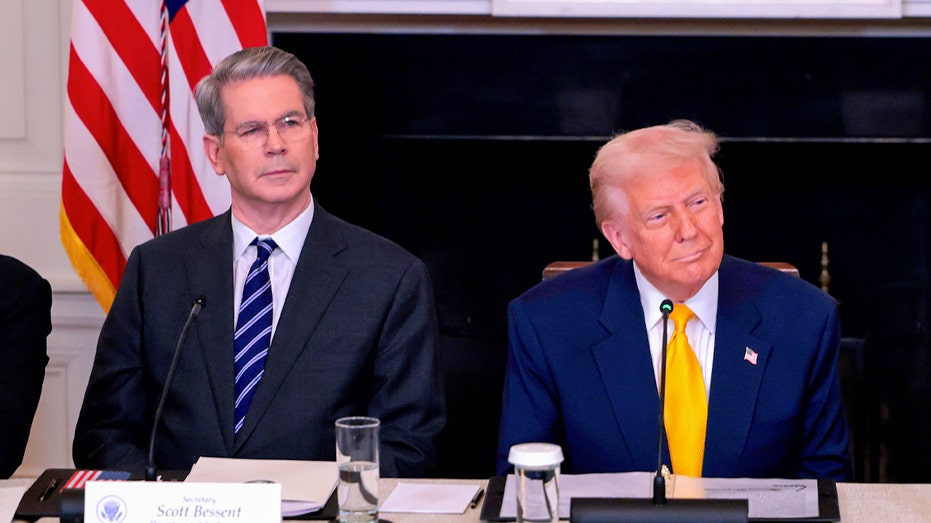
Scott Bessent sits next to Donald Trump

Bessent said the Trump administration wants to connect national economic power with household prosperity. (Anna Moneymaker/Getty Images)

Financial leadership

Bessent noted the dollar’s role as the world’s reserve currency and how it’s based on the “depth of our markets, the strength of our rule of law, the credibility of our institutions, and the scale of our economy.”

That has given the U.S. “enormous advantages” ranging from lower borrowing costs, deeper capital markets and more influence over the global financial system – but it also imposes obligations to crack down on things like sanctions evasion, financing of terrorism, cybercrime and corruption.

Advertisement

“Treasury’s job is to protect the integrity of the financial system by rooting out these abuses – and to deploy this power with discipline. Sanctions must be targeted, enforceable, and connected to strategy,” he said, adding it requires diplomatic coordination with partners to ensure compliance.

FORD NAMED NO. 1 MOST ICONIC AMERICAN COMPANY IN NATIONWIDE SURVEY: ‘MAKING PEOPLE’S LIVES BETTER’

Delivering household prosperity

Bessent said that the “purpose of American economic statecraft is to connect national power with household prosperity,” which he said reflects an “economy in which our working families are not merely consumers of what the world produces, but participants in what America builds.”

“America’s competitive advantage has never been confined to the bounty of our natural resources or the depth of our capital markets,” he said. 

Advertisement

“It has always resided in the character and the capacity of our people; the entrepreneur with the temerity to turn an idea into enterprise, the worker with the ability to master new trades and new technologies that didn’t exist a decade ago, and the institutions that allow their freedom and confidence to flourish,” Bessent explained.

GET FOX BUSINESS ON THE GO BY CLICKING HERE

He said that the American people can “expect policy that rewards work, investment, production and innovation. Leadership that understands how productive capacity is power. An economy whose success is measured not merely by what it produces, but by whom it lifts.”

Advertisement
Continue Reading

Business

New candy stores are popping up across NYC. Why?

Published

on

Rainbow sour jelly candy covered in sugar sprinkles

In Brooklyn, Cat Cirino launched her sweet shop, Candor Candy’s, in the Fort Greene neighbourhood in March. To boost revenues she also sells pantry items such as granola, rice, soft drinks and beef jerky, all from independent producers.

But when it comes to her core product, selling candy has a number of benefits, such as it having a long shelf life, and being able to sit at room temperature. And if the shop follows the pick-and-mix model then the customer does a lot of the work on his or her own.

But as Cohen points out, it is not all plain sailing. With many confectionary supplies coming from overseas, he says that his wholesale prices have risen. The increases come due to President Trump’s numerous import tariffs on other countries, and higher global transport costs as a result of fuel prices rising due to the US-Israeli conflict with Iran.

Cohen notes that a Hershey chocolate bar that cost his shop about 62 cents pre-pandemic now comes to more than a dollar. For while Hershey’s is a famous American brand, the cocoa beans it is made from come from overseas.

Advertisement

He adds that one of his UK suppliers simply stopped shipping to the US after losing too much money in customs.

Despite these issues, Cohen says he has absorbed most of the cost increases, and that his sales are up. In these tough economic times, he says “a little candy goes a long way”.

Continue Reading

Business

Logitech: Enterprise Momentum Supports A Buy Rating

Published

on

Logitech: Enterprise Momentum Supports A Buy Rating

Logitech: Enterprise Momentum Supports A Buy Rating

Continue Reading

Business

Baker Hughes CEO Lorenzo Simonelli sells $10.6m in stock

Published

on


Baker Hughes CEO Lorenzo Simonelli sells $10.6m in stock

Continue Reading

Business

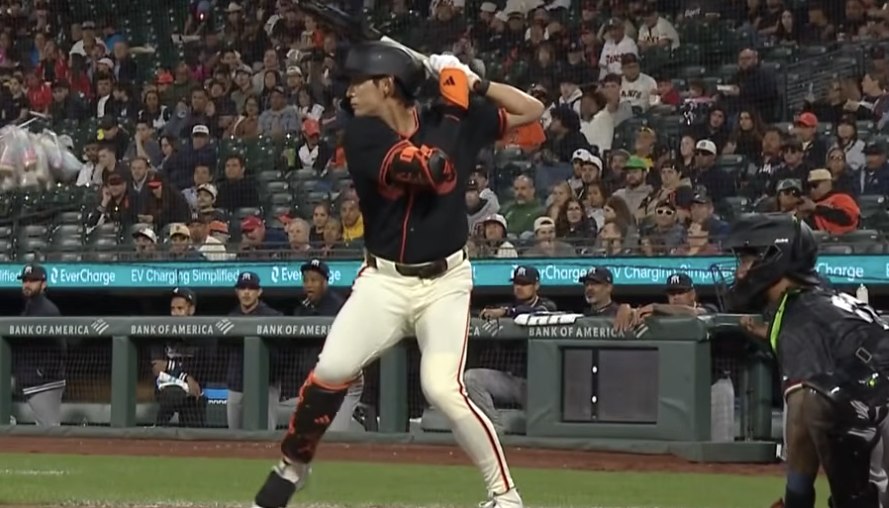
(VIDEO) Lee Jung-hoo’s Personal-Best Home Run, Heartfelt Apology Headline Giants’ Win Over A’s

Published

on

San Francisco Giants outfielder Lee Jung-Hoo

SAN FRANCISCO — Lee Jung-hoo, on June 24 Korean time, started as the fifth batter and right fielder in the Giants’ home game against the Athletics at Oracle Park in San Francisco. He recorded two hits in three at-bats, including his fifth home run of the season, one RBI, one walk, three on-base appearances, and one stolen base, leading San Francisco to a 3-1 victory.

Bouncing Back From a Quiet Outing

Overcoming a hitless performance in three at-bats against the Miami Marlins two days prior, Lee raised his season batting average to .331, with 88 hits in 266 at-bats. This narrowed the gap with league leader Ozzie Albies of Miami, at .337, to 6 percentage points.

Advertisement

A Personal-Best Home Run

Lee’s first at-bat in the second inning produced a home run. He attacked a cutter from Athletics right-handed starter Aaron Shipley that was centered at 99.9 mph, launching it over the deepest right-center field fence at Oracle Park. The ball traveled 414 feet with a launch angle of 30 degrees — his personal longest home run.

Broadcasters Marvel at His Continued Adaptation

NBC Sports Bay Area, the Giants’ broadcast partner, marveled at the performance. Analyst Mike Krukow remarked, “It went over the deepest part of the ballpark. What Lee Jung-hoo is showing now is exactly what he did every year in Korea. He was the league MVP. He was injured in his first year here, faced difficulties last year, but this season he knows what’s needed in this league. He understands opponents and recognizes pitchers. That’s reflected in his hitting. He’s showing exactly what he wanted when he came to the U.S.,” praising his full adaptation.

Advertisement

After the game, NBC Sports Bay Area’s postgame analyst Rich Aurilia also mentioned Lee’s home run, stating, “He’s exactly what the Giants and fans expected when they signed him. Injuries and adapting to life in the U.S. or the differences from Korean baseball took some time, but his consistency now is remarkable.”

Advice on Playing to His Strengths

Aurilia added advice on leveraging Lee’s strengths. “We might see more doubles and triples from him, but power isn’t his main aspect. Considering he plays at Oracle Park, where left-handed hitters struggle to hit homers, his ability to drive in runs is more critical. Scoring doesn’t require homers — singles, doubles, and triples work too. That’s what we’ve seen from him this year,” he said, emphasizing Lee’s value through mid-range hitting.

A Costly Error, Followed by a Heartfelt Apology

Advertisement

Another memorable moment occurred in the third inning. Lee dropped a routine fly ball by Colby Thomas, the Athletics’ leadoff hitter, as the ball deflected off his glove. The wind may have been a factor. With a runner on second and no outs, starter Robbie Ray gave up a groundout RBI single to Max Muncy, allowing the first run. After the inning, Lee approached Ray to apologize for the error. Ray shook his hand and patted his back.

Ray went on to pitch eight innings, allowing two hits, four walks, six strikeouts, and one unearned run, securing his sixth win of the season.

The Manager’s Praise for Both Players

In a postgame interview, Giants manager Tony Vitello praised Ray’s pitching and mentioned Lee’s apology. “Another memorable moment was Lee and Ray embracing in the dugout after the error. Even when sprinting full-speed and playing hard, tension can slip in critical moments. We all know how dedicated Lee is — he rarely lets his guard down. The error was a split-second mistake. Though the leadoff runner reached, Ray minimized damage and protected the lead. That was the game’s most crucial part,” Vitello said. Lee apologized to Ray again after the eighth inning.



Advertisement

A Tough Collision in the Sixth Inning

Vitello’s admiration for Lee didn’t end there. In the sixth inning, after drawing a walk and stealing second base, Lee collided with Athletics second baseman Jeff McNeil, who struck him in the jaw. Stunned, Lee lay on second base briefly. Vitello, along with a trainer and interpreter Han Dong-hee, checked on him. Though Lee winced and held his jaw, he refused to be replaced and finished the game.

A Resilient Mentality on Display

Vitello offered further insight into Lee’s character following the collision. “Lee was dazed after the collision and had a slight headache, but he recovered quickly. He’s far tougher than people realize. I don’t know how he was in Korea, but here he doesn’t show his emotions much. He’s incredibly resilient — if a good hit doesn’t become a hit, he’s unsatisfied. His intensity sometimes annoys me, but he never settles for a mental victory.”

Advertisement

A Season of Steady Improvement

Lee’s performance against Oakland extends what has become a notable season-long trajectory of growth following a difficult adjustment period in his earlier years with the Giants. His climb to a .331 batting average, combined with the power he showed in Wednesday’s game, reflects the kind of all-around production that has drawn comparisons to his award-winning years in the KBO League, where he was twice named league MVP before making the jump to Major League Baseball.

With his batting average now sitting just six percentage points behind the National League leader, Lee’s pursuit of a potential batting title will remain a storyline worth tracking as the Giants continue their season. His willingness to immediately apologize to Ray after the costly third-inning error, combined with his decision to stay in the game despite the jarring collision with McNeil, also reinforced the competitive resilience that both Vitello and the Giants’ broadcast team have continued to highlight as central to his ongoing development in his fourth Major League season.

Advertisement
Continue Reading

Business

US stocks: Nasdaq, S&P end lower in volatile session as tech stocks retreat

Published

on

US stocks: Nasdaq, S&P end lower in volatile session as tech stocks retreat
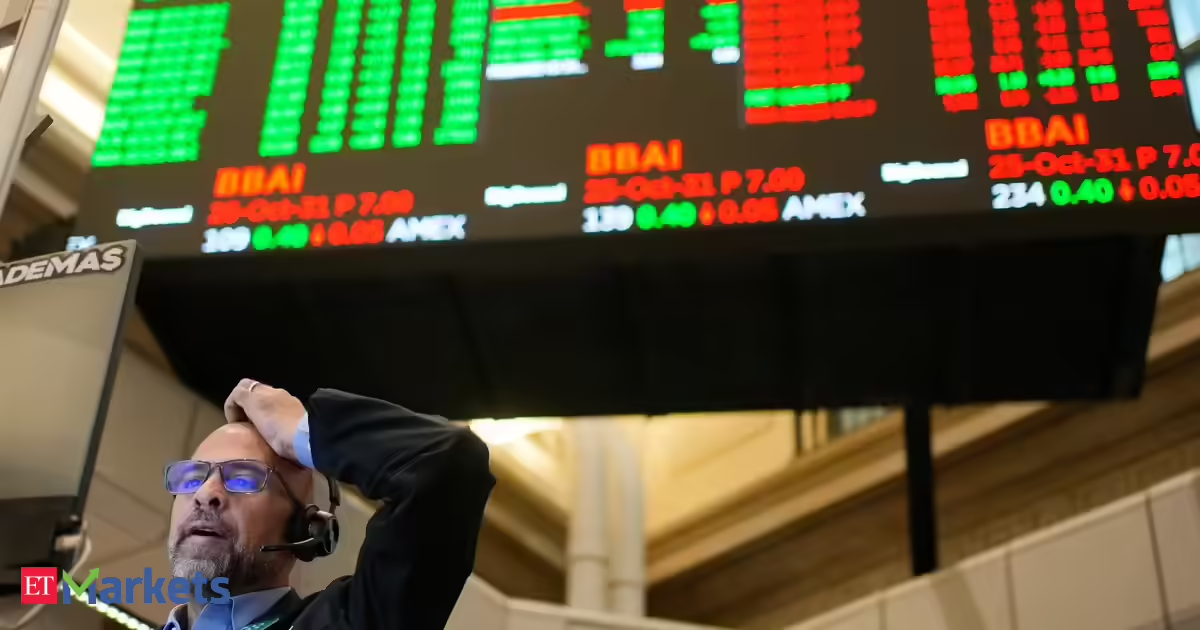
The Nasdaq and S&P 500 closed lower on Wednesday, dragged by tech stocks on nagging concerns about high-flying valuations, but falling crude prices boosted airlines and other travel stocks and the Dow finished higher.

Oil prices fell to their lowest since the start of the ‌Iran war as more ⁠tankers ⁠were expected to move out of the Strait of Hormuz. U.S. President Donald Trump said Iran had told Washington that no tolls were being sought.

The S&P 500 passenger airlines index rose. Tech stocks slipped, intensifyingthe focus on chipmaker Micron Technology‘s results due after the bell. The stock has surged more than 200% in 2026 but fell on Wednesday.

Cerebras Systems tumbled after the chip designer forecast full-year profit margins would drop below first-quarter figures in its debut report after going public. Also weighing ⁠on the stock, ‌OpenAI announced its own in-house inference chip called Jalapeno.

Advertisement

Concerns around debt-backed spending by hyperscalers and mounting fears of a more hawkish Federal Reserve have fueled the market downturn ⁠this week that has erased more than $1 trillion in market value from the Nasdaq 100.


“The Middle East conversation is wrapping up … energy prices are coming off,” said Michael Monaghan, partner and portfolio manager at Founder ETFs. “But you continue to have the AI CapEx buildout where, for some reason, people like the recipients of the spend and have been punishing those doing the spending.”
According to preliminary data, the S&P 500 lost 5.86 points, or 0.08%, to end at 7,358.72 points, while the Nasdaq Composite lost 104.58 points, or 0.41%, ‌to 25,482.46. The Dow Jones Industrial Average rose 187.97 points, or 0.36%, to 51,854.81. Homebuilders soared after Trump canceled a planned signing of bipartisan legislation aimed at speeding up availability of affordable housing. Hovnanian Enterprises, PulteGroup and ⁠Toll Brothers all rose.

Among other movers, Hertz tumbled after the car-rental firm said it expects second-quarter adjusted core earnings near the lower end of its forecast range and announced a proposed offering of $100 million of common stock.

Traders are adding to bets of a second rate hike from the Fed by the end of December, according to CME Group’s FedWatch tool. Previously, the market expected a single 25-basis-point rise.

The closely watched Personal Consumption Expenditures Price Index, the Fed’s preferred inflation gauge, could offer insight on the monetary policy path on Thursday.

Advertisement
Continue Reading

Trending

Copyright © 2025