Connect with us
DAPA Banner
DAPA Coin
DAPA
COIN PAYMENT ASSET
PRIVACY · BLOCKDAG · HOMOMORPHIC ENCRYPTION · RUST
ElGamal Encrypted MINE DAPA
🚫 GENESIS SOLD OUT
DAPAPAY COMING

Business

E-commerce giant Alibaba sues US government over defence blacklist

Published

on

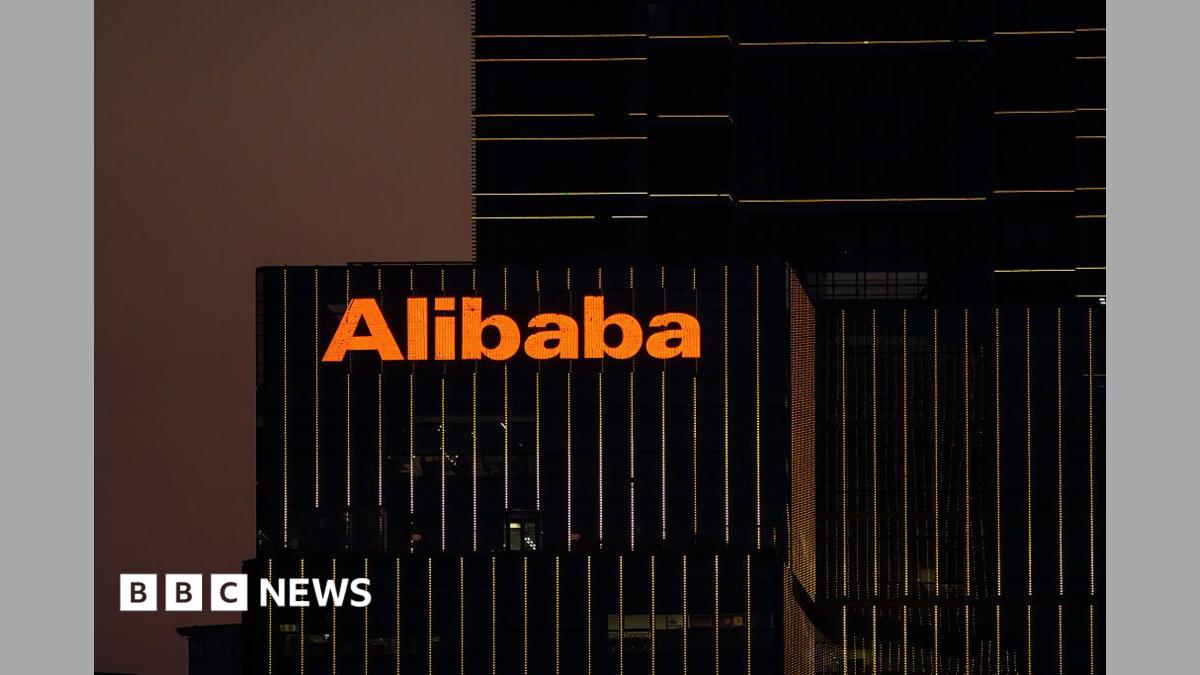
The Alibaba logo in orange lights is displayed on the exterior of an office that appears with black windows at dusk.

E-commerce giant Alibaba has launched a high-stakes legal challenge against the US government, suing to get off a Pentagon blacklist that claims it is linked to the Chinese military.

The US Department of Defense (DoD) has said that because Alibaba complies with Chinese technology regulators, it is effectively an arm of the military.

In the lawsuit filed in a California federal court Alibaba pushed back, claiming the determinations “have no basis in fact or law”.

The challenge comes after the Pentagon recently expanded its blacklist of companies it will not be able to do business with from the end of the month to include massive tech names like Baidu, BYD, and Nio.

Advertisement

The defence department put Alibaba on the blacklist, saying the firm was a “military-civil fusion contributor to the Chinese defence industrial base” because of its regulatory ties to Beijing.

But Alibaba countered the argument, saying none of the members of its independent board had any military affiliation.

Every multinational operating in China – including American firms – must follow the exact same local rules, it noted.

Its platforms, Alibaba said, are built for retail and cloud computing, not weapons or intelligence.

Advertisement

“Alibaba is not a Chinese military company nor part of any military-civil fusion strategy,” the company told the BBC.

“The decision to place Alibaba on the 1260H list is arbitrary and capricious, and we are filing a lawsuit against the Department of War to demand removal from the list,” it added.

While the blacklist does not freeze finances immediately, it triggers a brutal operational penalty on 30 June.

Starting next week, the Pentagon is legally banned from doing business with any blacklisted firm.

Advertisement

Crucially, the law also extends to any US contractor that shares a lobbyist or law firm with a blacklisted entity. In Alibaba’s case, the company argues that this restriction creates a functional blockade, forcing its long-term American advisers to sever ties to protect their own lucrative defence contracts.

The rule effectively strips the company of its political and legal voice in Washington at the exact moment it needs to defend itself.

According to the complaint, Alibaba had previously asked to meet with the agency to address the Chinese military affiliation concerns, which included presenting evidence of its US economic contributions.

However, the tech giant says that even after its submissions, the agency did not raise any concerns with the firm nor did it request additional information. Rather, it “designated Alibaba without notice or a fair hearing”, the compliant notes.

Advertisement

The DoD declined to comment on the matter, telling the BBC, “We do not comment on ongoing litigation”.

Continue Reading
Click to comment

You must be logged in to post a comment Login

Leave a Reply

Business

KB Home (KBH) Q2 2026 Earnings Call Transcript

Published

on

OneWater Marine Inc. (ONEW) Q1 2026 Earnings Call Transcript

KB Home (KBH) Q2 2026 Earnings Call June 23, 2026 5:00 PM EDT

Company Participants

Jill Peters – Senior Vice President of Investor Relations
Jeffrey Mezger – Executive Chairman
Rob McGibney – CEO, President & Director
William Hollinger – Senior VP & Chief Accounting Officer

Conference Call Participants

Advertisement

John Lovallo – UBS Investment Bank, Research Division
Matthew Bouley – Barclays Bank PLC, Research Division
Stephen Kim – Evercore ISI Institutional Equities, Research Division
Michael Dahl – RBC Capital Markets, Research Division
Alan Ratner – Zelman & Associates LLC
Rafe Jadrosich – BofA Securities, Research Division
Paul Przybylski – Wolfe Research, LLC
Jade Rahmani – Keefe, Bruyette, & Woods, Inc., Research Division
Jay McCanless – Citizens JMP Securities, LLC, Research Division

Presentation

Operator

Advertisement

Good afternoon. My name is John and I’ll be your conference operator today. I would like to welcome everyone to the KB Home 2026 second quarter earnings conference call. All participant lines are in a listen-only mode. [Operator Instructions] This conference call is being recorded, and a replay will be accessible on the KB Home website until July 23rd, 2026.

I will now turn the call over to Jill Peters, Senior Vice President, Investor Relations. Thank you, Jill. You may begin.

Jill Peters
Senior Vice President of Investor Relations

Advertisement

Thank you, John. Good afternoon, everyone, and thank you for joining us today to review our results for the second quarter of fiscal 2026. On the call are Jeff Mezger, Executive Chairman, Rob McGibney, President and Chief Executive Officer, Bill Hollinger, Senior Vice President and Chief Accounting Officer, and Thad Johnson, Senior Vice President and Treasurer.

During this call, items will be discussed that are considered forward-looking statements within the meaning of the Private Securities Litigation Reform Act of 1995. These statements are not guarantees of future results and the company does not undertake any obligation to update them. Due to

Advertisement
Continue Reading

Business

Clay Craft India shares to list today. Check GMP ahead of debut

Published

on

Clay Craft India shares to list today. Check GMP ahead of debut
Clay Craft India is set to make its stock market debut on Wednesday with the grey market signalling a positive listing. The company’s shares were quoting at a grey market premium (GMP) of around 13%, indicating a potential listing gain of about Rs 26 over the issue price of Rs 203 per share, though GMP is an unofficial indicator and may not reflect the actual listing performance.

The Rs 110.11-crore NSE SME IPO was subscribed 103.06 times during the three-day bidding period, led by strong demand from non-institutional investors and qualified institutional buyers.

The NII portion was subscribed 153.95 times, while the QIB category was booked 119.19 times. The retail investors’ quota attracted 71.76 times subscription. Overall, the issue received bids for 37.18 crore shares against 36.08 lakh shares on offer.

The IPO was entirely a fresh issue of 54.24 lakh equity shares, with proceeds earmarked primarily for setting up an additional manufacturing facility at Manda, Rajasthan, besides general corporate purposes. Hem Securities was the book-running lead manager, while KFin Technologies acted as the registrar.

Advertisement

About the company

Founded in 1994, Clay Craft India manufactures bone china crockery and ceramic tableware used across households, hotels, restaurants and corporate gifting. Its portfolio includes dinnerware, mugs, platters, tea and coffee sets, and customised ceramic products for institutional customers.
The company also caters to the HoReCa (hotel, restaurant and catering) segment and offers nearly 5,770 SKUs across multiple product categories. It has an extensive distribution network and employs more than 1,390 people.

Financial performance

Clay Craft reported healthy financial growth in FY26. Total income rose 20% year-on-year to Rs 184.57 crore, while profit after tax increased 30% to Rs 27.01 crore. EBITDA stood at Rs 41.96 crore, compared with Rs 35.39 crore in the previous year, while the company’s net worth improved to Rs 166.06 crore.


Despite the strong subscription and positive grey market premium, investors will closely watch the stock’s listing performance amid broader sentiment in the SME segment, where post-listing returns have remained mixed in recent months.
(Disclaimer: Recommendations, suggestions, views and opinions given by the experts are their own. These do not represent the views of Economic Times)

Continue Reading

Business

Form 144 MANITOWOC CO INC For: 23 June

Published

on


Form 144 MANITOWOC CO INC For: 23 June

Continue Reading

Business

Form 144 Vera Therapeutics For: 23 June

Published

on


Form 144 Vera Therapeutics For: 23 June

Continue Reading

Business

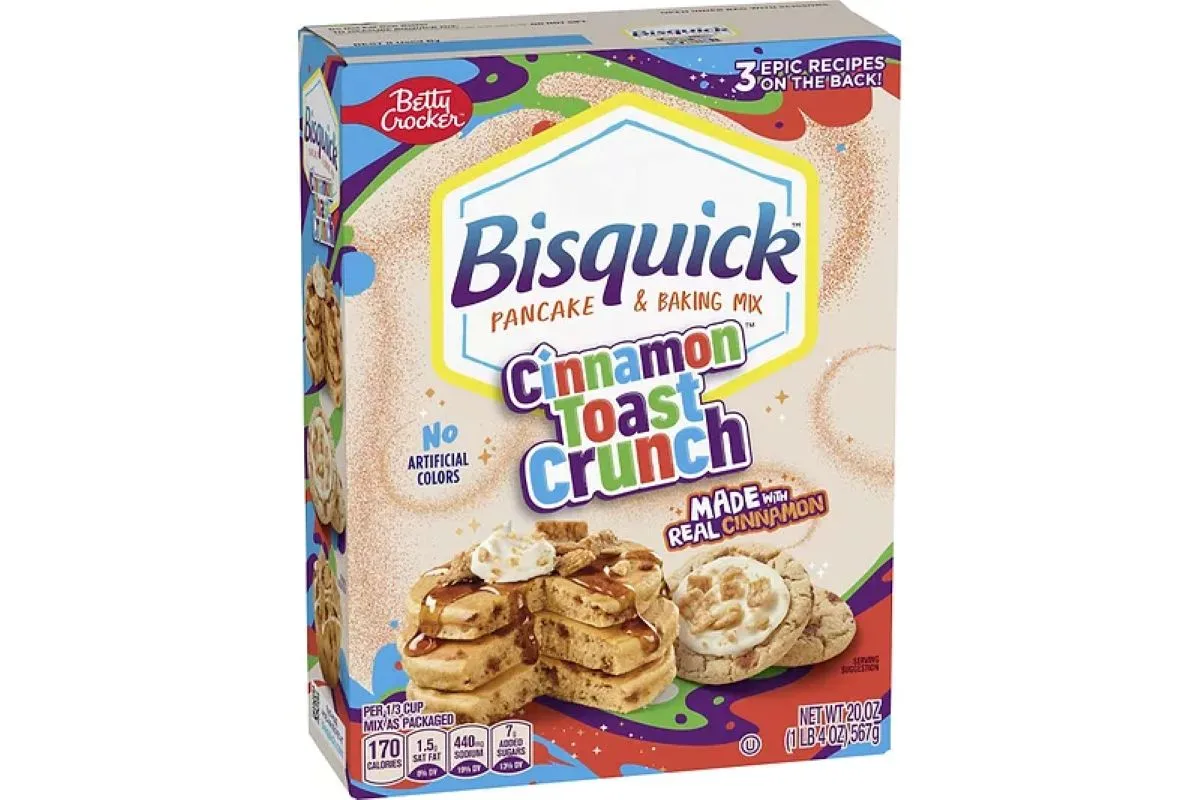
Cinnamon Toast Crunch baking mix leans into comfort

Published

on

Cinnamon Toast Crunch baking mix leans into comfort

General Mills’ executive talks product rollout and Betty Crocker brand.

Continue Reading

Business

Dollar at 13-month high as rate hike bets, stock rout boost demand

Published

on

Dollar at 13-month high as rate hike bets, stock rout boost demand
The U.S. dollar extended gains to reach a fresh 13-month high against a basket of major currencies on Wednesday as investors sought shelter from a tech stock sell-off and positioned for Fed rate hikes.

A broad sell-off in technology and semiconductor shares has dragged global stocks lower as investors take profits on a long rally, sparking safe-haven demand for dollar and bonds.

Meanwhile, expectations of a U.S. rate hike continued to build with Federal Reserve officials sounding increasingly ‌hawkish amid the ⁠strength of ⁠the U.S. economy. Markets are pricing in a 37% chance of a 25-basis-point hike at the July meeting, up from 8.5% a week ago, and 70% for September up from 29.1%, according to CME FedWatch.

The dollar index, which measures the greenback against a basket of currencies including the yen and the euro, climbed to a high of 101.44, the strongest level since May 13, 2025.

Advertisement

“The U.S. dollar is still the preferred safe-haven,” said Ray Attrill, head of FX strategy at National Australia Bank.


“Obviously the momentum is on its side at ⁠the moment, but ‌I think there is a lot priced in,” he said. “We’ll have to see a correction in risk sentiment, one that’s broader rather than just the tech sector, or the market ⁠further ratcheting up its expectations for hikes, before the dollar can go very much higher from here.”
The euro last traded at $1.1375, near a one-year low. The British pound weakened slightly to $1.3199, after Bank of England policymaker Alan Taylor said an “extended hold” for interest rates was the right response to inflation pressure. The risk-sensitive Australian dollar was steady at $0.6918 ahead of the latest CPI reading later in the day. The New Zealand dollar weakened 0.05% to $0.5665, a fresh seven-month low.

Also supporting the safe-haven demand, the U.S. and Iran appeared to be at odds on some major aspects of their ‌framework including nuclear issues and control of the Strait of Hormuz, raising questions about the viability of their fragile peace deal.

YEN LANGUISHES

The Japanese yen last traded at 161.57 after briefly weakening to a two-year low of 161.93 late ⁠on Monday as the greenback extended its gains. A break above 161.96 would leave the yen at its weakest level since 1986.

The latest round of verbal warnings from Japanese officials had done little to relieve sustained pressure on the currency, amid wide U.S.-Japan rate differentials and doubts about Tokyo’s commitment to intervention.

Advertisement

The Japanese yen could weaken to 165 per dollar if the Fed raises interest rates this year, former Bank of Japan policymaker Sayuri Shirai said.

Some Bank of Japan board members called for further interest rate hikes to push the central bank’s policy rate closer to levels deemed neutral to the economy, a summary of opinions at their June policy meeting showed on Wednesday.

Continue Reading

Business

Oil Price Today (June 24): Crude oil near 4-month low as more tankers pass through Hormuz. What are experts saying?

Published

on

Oil Price Today (June 24): Crude oil near 4-month low as more tankers pass through Hormuz. What are experts saying?
Oil prices extended their decline on Wednesday, hovering near the four-month lows touched in the previous session, as signs emerged that more oil tankers stranded in the Gulf since the start of the Iran conflict are preparing to move through the Strait of Hormuz.

Crude oil price on June 24

Brent crude futures fell 37 cents, or 0.5%, to $76.71 a barrel, while U.S. West Texas Intermediate crude slipped 36 cents, or 0.5%, to $72.85 a barrel. Both benchmarks had already lost nearly 1% on Tuesday and hit their weakest levels since early March.

The market has been under pressure this week after Washington granted Tehran a 60-day sanctions waiver following initial peace talks, allowing Iran to continue selling oil. Prices have also been weighed down by easing hostilities in Lebanon.

Also read: Rs 1.5 lakh cr behind 2025! Can Jio & NSE IPOs put 2026 on course for another record year?

On Tuesday, Oman and Iran agreed to continue discussions on the future administration of navigation through the Strait of Hormuz. U.S. Secretary of State Marco Rubio said any attempt by Iran to impose transit fees would be in violation of international law.

Advertisement

However, questions remain over how durable the agreement will prove. U.S. President Donald Trump said on Tuesday that Iran had agreed to allow nuclear inspections “into infinity,” a claim Tehran disputed, saying no such concession had been made during negotiations.

What’s next for prices?

Despite the recent slide in oil prices, a complete reopening of Hormuz is expected to be a complex process. It will require careful coordination of vessel movements, restarting oil wells, repairing infrastructure, and agreeing on de-mining operations. Some shipowners also remain wary of operating conditions in the strait and the wider Persian Gulf.
Analysts note that global oil inventories were depleted during the extended disruption of shipping through the Strait of Hormuz and will take time to rebuild. Stockpiles could continue falling before fresh Gulf supplies begin reaching international markets.
Read more: NSE and Ambani are about to see if India’s retail crowd still has ‘buy the dip’ energy left
Last month, Saudi Aramco Chief Executive Officer Amin Nasser cautioned that disruptions in the Strait of Hormuz could delay a return to stability in global oil markets until 2027. According to Nasser, prolonged interruptions could affect nearly 100 million barrels of oil supply each week. Saudi Aramco remains the world’s largest oil producer.

(Disclaimer: Recommendations, suggestions, views and opinions given by the experts are their own. These do not represent the views of The Economic Times)

Continue Reading

Business

Who Will Be the UK’s Next Chancellor? The Runners and Riders for No 11

Published

on

Who Will Be the UK's Next Chancellor? The Runners and Riders for No 11

With Sir Keir Starmer standing down, Andy Burnham, the newly elected MP for Makerfield, looks all but certain to become the next prime minister. The bigger question now exercising Westminster, and the markets, is who he will install next door at No 11.

Many in the party believe Burnham will want his own chancellor rather than keep the current occupant, Rachel Reeves. Whoever takes the keys to the Treasury inherits a daunting in-tray: high debt, sluggish growth, an unfinished welfare reform programme, rising defence commitments and the economic fallout from the US-Israel war with Iran. It is a list that would test the most seasoned operator, and the choice matters well beyond Whitehall. Burnham’s arrival has already unsettled the business community, with eight in ten SME owners telling Business Matters they fear what his premiership would mean for their firm.

Here are the names in the frame for the second most powerful job in British politics, and what each could mean for your finances.

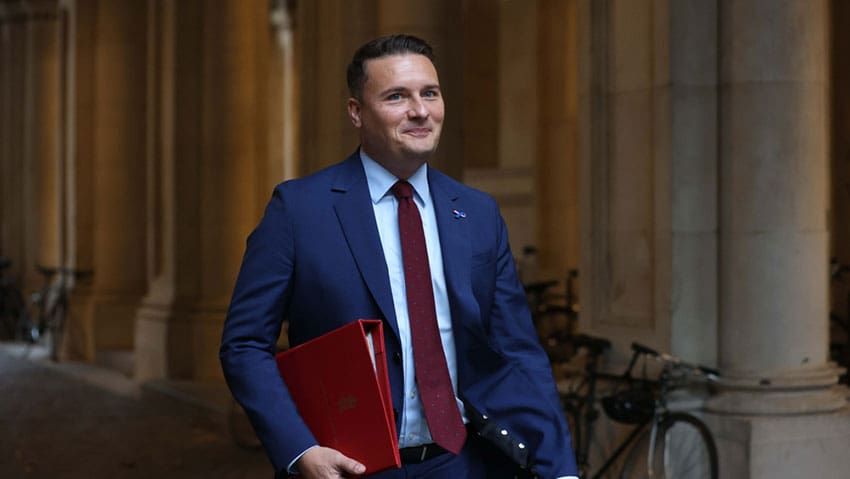
Wes Streeting

The bookmakers’ favourite is a former leadership contender, Wes Streeting. Having thrown his weight behind Burnham rather than running himself, the thinking is that the former health secretary could be rewarded with the number two job for his loyalty.

Not everyone is convinced that loyalty should be the deciding factor. Lord Jim O’Neill, the economist and cross-bench peer who has been advising Burnham, has warned against the approach. Without naming names, he told the BBC: “There are clearly some people pushing to be chancellor who feel they are owed it for their support.”

Advertisement

There is also a question of fit. Though Burnham may value Streeting’s backing, the two men’s instincts diverge, with Burnham seen as the more willing spender of the pair. Simon French, chief economist at the consultancy Panmure Liberum, describes Streeting as a “relatively market-friendly option” on the strength of his pro-growth language, but also flags a political risk: a chancellor who may one day want the top job himself. As for the suggestion that Streeting could be handed the role for his support rather than his ability, French is blunt: “Politics is what politics is. It’s a popularity contest.”

Ed Miliband

The bookies’ second favourite is Ed Miliband, the former Labour leader, who is politically closer to Burnham than Streeting is. Paul Johnson, former director of the Institute for Fiscal Studies, sees that alignment as a strength. “You really don’t want people in Number 10 and Number 11 having very different views,” he says.

Whether a former Treasury adviser such as Miliband could win over the markets is more contested. Nick Macpherson, the former permanent secretary at the Treasury, told the Financial Times: “The key to gaining the confidence of the markets is to articulate, implement and deliver a coherent strategy. Miliband is one of the few cabinet members with the intellect, experience, and authority to do that.”

Others see an inflation risk. Critics blame his drive for net zero as energy secretary for the UK’s high energy prices relative to its peers, and analysts say that reputation, fair or not, could colour how the bond markets greet him. Sharon Graham, general secretary of the Unite union, has gone further, warning that a Miliband chancellorship would be a “noose around the neck” of job creation because of his opposition to new oil and gas drilling in the North Sea.

Advertisement

Pat McFadden

Seen as a longer shot than Streeting or Miliband, Pat McFadden is regarded by some as the most qualified candidate of the lot. He has held shadow Treasury briefs, served as a business minister in a previous Labour government and is the current work and pensions secretary. It is that last role that could prove decisive, giving him a head start on what many expect to be the next chancellor’s single biggest task: welfare reform.

Panmure Liberum’s French believes the markets may view McFadden as “the safest pair of hands” among the runners, reacting either positively or with a shrug if he were chosen. The catch is political. If Burnham is hunting for a clean break from the Starmer era, he is likely to look past so loyal a servant of the outgoing regime.

Yvette Cooper

Foreign Secretary Yvette Cooper could be the compromise candidate. She brings years of government experience, having served as chief secretary to the Treasury under Gordon Brown, and sits somewhere between Miliband on one side and McFadden or Streeting on the other. Danni Hewson, head of financial analysis at AJ Bell, calls her a “middle of the road” option, but also “a bit more of an unknown”.

Rachel Reeves

There remains the possibility that the incumbent simply stays put. It looks unlikely, given how closely Reeves is tied to Starmer, but a few bookmakers are still taking bets on no change at the Treasury this year.

Advertisement

Lord O’Neill says his advice to Burnham has been to “figure out what his priorities are as prime minister before he picks a chancellor”. Follow that counsel and Reeves may yet survive, at least for now. Burnham has previously said he would stick to her fiscal rules, and the chancellor appeared in his Westminster photoshoot after he was sworn in as an MP on Monday. She was, tellingly, absent from Sir Keir’s resignation speech.

And the rest

Beyond the front-runners sits a longlist of wildcards. Home Secretary Shabana Mahmood, reported to be fiscally conservative but light on economic experience, is one. Former defence secretary John Healey, who quit very publicly over what he saw as inadequate defence spending, is another, though Paul Johnson cautions that appointing him would amount to a spending commitment in itself. “If I was Andy Burnham, I would not want to tie myself to that particular pillar that quickly,” he says.

Bookmakers and Westminster chatter also throw up Darren Jones, chief secretary to the prime minister, and Torsten Bell, the former chief executive of the Resolution Foundation, as outside bets.

Whoever lands the job, the backdrop is unforgiving. The Office for Budget Responsibility has warned that the UK’s public finances are in a relatively vulnerable position and facing mounting risks, leaving little room for error. That is precisely why the markets, and business owners already bracing for an end to “drift and delay” after Starmer’s exit, will scrutinise the appointment so closely.

Advertisement

For now, every name on the list wants the role. As Lord O’Neill puts it: “The ones whose names are in the papers are the ones who are putting themselves forward.”


Paul Jones

Harvard alumni and former New York Times journalist. Editor of Business Matters for over 15 years, the UKs largest business magazine. I am also head of Capital Business Media’s automotive division working for clients such as Red Bull Racing, Honda, Aston Martin and Infiniti.

Advertisement
Continue Reading

Business

SpaceX shares eke out a gain to snap three day losing streak

Published

on

SpaceX shares eke out a gain to snap three day losing streak
SpaceX shares ended higher on Tuesday, snapping a three-day selloff that wiped out more than $600 billion from the Elon Musk-led rocket and satellite company’s market value.

The stock gained 1% to close at $156.11 after a choppy session that saw shares slip as much as 4.8%, then jump 7.1% before paring much of that advance by market close. The volatility came amid a broad-based slide in technology and other high-momentum stocks after a selloff in Korean chipmakers stoked fears about the rally in companies involved in artificial intelligence.

Still, the rebound helped reverse some of Monday’s 16% plunge that erased $400 billion in market value, marking the second-largest one-day loss on record. Only Nvidia Corp.’s roughly $590 billion plunge last year is bigger. SpaceX’s market capitalization was about $2 trillion at Tuesday’s close.

The stock moves are following a typical IPO pattern where “everybody was enjoying the hype and the mania,” said Louis Navellier of Navellier & Associates, adding that pressure on shares will build as lockups that keep insiders from selling expire and the company reports earnings figures. “It’s just a lesson that you have to follow fundamentals.”

Advertisement
458967217Bloomberg

After pulling off a record $86 billion IPO in mid-June, SpaceX, officially named Space Exploration Technologies Corp., raised $25 billion of bonds in its debut offer Tuesday, making it the latest megacap technology company to tap investors for its AI expansion.


The highest demand was for the bond deal’s least risky tranche, Bloomberg News reported.
Separately, SpaceX also inked a multibillion-dollar agreement to provide computing resources to Reflection AI, an AI startup, the company said Monday. Also on Tuesday, Susquehanna Financial started coverage on the stock with a neutral rating and $170 price target. That target represents upside of nearly 9% from the stock’s Tuesday close.

Currently, six of the firms tracked by Bloomberg recommend buying the stock, while two including Susquehanna have hold-equivalent ratings. There is one sell rating. The average price target stands at nearly $227, suggesting return potential of about 45% off Tuesday’s close.

Continue Reading

Business

Kemin grows sales team

Published

on

Kemin grows sales team

New members will support food and beverage segments.

Continue Reading

Trending

Copyright © 2025