Connect with us

NewsBeat

how can so many agencies know about a child and still miss what’s happening?

Published

on

how can so many agencies know about a child and still miss what’s happening?

The murder of 13-month-old Preston Davey, who was sexually abused and killed by one of his adoptive fathers, Jamie Varley, has shocked and saddened people across the country. Varley was sentenced to life in prison. His partner, John McGowan-Fazakerley, was found guilty of sexual assault, child cruelty and allowing the death of a child, and sentenced to 25 years.

As horrific details emerged during the trial, many people were left asking the same question: how can so many agencies know about a child and still not see what was happening?

Reports suggest that multiple organisations had contact with Preston during his short life. Within approximately two months of being placed with his adoptive parents, Preston attended hospital for the first time. Over the following nine weeks, there were at least ten contacts with multiple agencies and professionals before his death.

Like many previous incidents, concerns were raised, injuries were observed, explanations were given, referrals and decisions were made across different parts of the system. Surely, if enough professionals know about a child, someone should be able to see the danger?

Advertisement

The unfortunate reality is that many children who experience these tragic outcomes are known to services. Recent analysis by the independent child safeguarding review panel found that 84% of families in reviewed cases were already known to children’s social care. Similar findings emerged from reviews we conducted in Wales, where the overwhelming majority of children had previous involvement with agencies before the incident occurred.

No single professional or agency usually holds the complete picture. A teacher may notice a change in behaviour. A health professional may see an injury. A social worker may become concerned about family circumstances. Police may respond to an incident. But each piece of information can appear relatively minor when viewed in isolation. It is often only when those pieces are connected that a fuller picture of risk emerges.

This is one reason why safeguarding reviews repeatedly identify challenges around information-sharing and multi-agency working. The issue is rarely that nobody cared. More often, it is that different professionals hold different parts of a child’s story.

Preston Davey was 13 months old when he was abused and murdered by Jamie Varley.
Lancashire Police/Alamy

Preston’s age (13 months) makes this case particularly challenging. Modern safeguarding practice rightly emphasises listening to children, hearing their voices and understanding their lived experiences. But babies and very young children cannot articulate what is happening to them.

Advertisement

Professionals must build a picture through observation, behaviour, development, injuries and interactions with carers, and collate pockets of information held across multiple agencies. Research examining non-accidental injuries in infants has repeatedly highlighted the importance of recognising patterns, rather than viewing incidents in isolation.

Lessons (not) learned

Past safeguarding reviews have identified these challenges for decades. So why are they still happening?

Numerous reviews, including our research in Wales, suggest that many of the issues identified following child deaths are remarkably consistent.

National reviews following the deaths of Arthur Labinjo-Hughes and Star Hobson highlighted challenges around information sharing and recognising cumulative harm.

Advertisement

Similar themes emerged in our recent review of child safeguarding incidents in Wales, and in multiple reviews for adult safeguarding.

Across cases, children and families were often known to several agencies, sometimes over many years. Yet awareness did not always translate into action or effective intervention. Experts and academic research have questioned whether safeguarding systems rely too heavily on professionals “joining the dots” between fragmented pieces of information, rather than creating systems that make risk easier to identify collectively.

Safeguarding is a complex system involving hundreds of organisations, thousands of professionals and constantly-changing pressures, policies and priorities. Learning a lesson is one thing. Embedding it consistently across an entire system is another.

Our research has highlighted the gap that can exist between identifying lessons and translating them into meaningful change. Training does not automatically change culture. New procedures do not automatically change decision-making. And publishing a review does not automatically make children safer.

Advertisement

Following Preston Davey’s death, there will, rightly, be a safeguarding review. Its purpose will be to understand what happened and identify lessons that could help protect children in the future. The challenge will be to make sure that what is learned in Preston’s review results in real change for other children at risk.

View from above of an anonymous child holding the hands of two adults
Safeguarding is a complex system that spans hundreds of agencies and professionals.
By Anata/Shutterstock

There are signs that those responsible for safeguarding systems are beginning to think differently about how to apply the lessons from these many reviews. In Wales, a new safeguarding review process has brought different systems together within a single national framework. Alongside this, a publicly accessible dashboard has been introduced, allowing recommendations, actions and themes to be tracked nationally.

Rather than treating each review as an isolated exercise, the aim of Wales’ new review process is to identify recurring themes, strengthen accountability and build a clearer picture of the challenges that safeguarding systems repeatedly encounter.

It is too early to know whether these changes will reduce repeated recommendations or improve outcomes for children. But they reflect an important shift in thinking.

In England, wider reforms are underway. This includes the creation of a child protection authority to strengthen national oversight and accountability, and a unique identifying number assigned to every child to help bring together information held from different agencies.

Advertisement

Additionally, guidance is being developed to support professionals to build a more complete picture of children’s experiences across services.

The review into Preston’s death will rightly seek answers about what happened to him. Every child deserves that commitment. But it should also help us find the solution to a broader challenge: making sure that what is learned in one tragedy helps prevent another.


Source link

Advertisement
Continue Reading
Click to comment

You must be logged in to post a comment Login

Leave a Reply

NewsBeat

NI’s Bev Craig wins Greater Manchester mayoral by-election as first female mayor

Published

on

Belfast Live Icon

The King of the North has departed for Westminster and a fresh face now claims the throne.

In the wake of Andy Burnham’s swift elevation to Number 10, Greenisland-born Bev Craig has emerged victorious in the contest to replace him as Greater Manchester mayor following what represents the largest by-election in British political history.

The ex-Manchester council leader defeated Reform UK’s Sian Astley to become only the second person and the first female to occupy the region’s top political position. While she may not have replicated Burnham’s overwhelming dominance, the final winning margin proved comfortable nonetheless.

Operating under the supplementary vote system employed for mayoral elections, Ms Craig fell marginally short of securing the 50 per cent threshold of first preference votes needed for an outright victory, reports the Manchester Evening News.

Advertisement

However, once second preference votes were factored in, Ms Craig cruised to triumph with over two thirds of the total vote.

Delivering her victory address on the Co-op Live platform that has previously hosted luminaries including Paul McCartney, Billie Eilish and Bruce Springsteen, Ms Craig pledged to ‘fight for a better life for all of us’.

“My promise to you is that I will make this city region better and I will work for everyone,” she continued. “I will be a mayor for everyone.

“We have to heal, we have to move away from divisive politics that pit neighbour against neighbour.

Advertisement

“We will work together, we will deliver it together and we will build a Greater Manchester that works for all of us, where everyone feels welcome and everyone has the chance to succeed.”

Speaking afterwards to the Manchester Evening News, she said: “Look, I’m ecstatic, but it’s also incredibly humbling to have people place their trust in you because they believe in this city region, they believe that Greater Manchester can be even better, so I’m excited to get stuck in.”

So what does this mean for Reform?

While the party enjoyed a remarkably strong showing in May’s local elections, securing over 100 council seats across Greater Manchester – sweeping all but one of the 25 seats in Wigan and claiming 18 of 19 in Tameside – this marks their third consecutive by-election loss in the conurbation.

Advertisement

Suggesting that backing for Nigel Farage’s movement in the area might be levelling off, Ms Astley secured 20% on first preference votes – a lower proportion than her colleagues Rob Kenyon and Matt Goodwin achieved in Makerfield and Gorton and Denton respectively.

The Green Party’s Geraldine Coggins finished in third place with 12% of the ballot, while Restore Britain’s Marlon West garnered 8.5%, the Tories’ Phil Eckersley took 7.6%, the Liberal Democrats’ Richard Kilpatrick claimed 2.7% and independent candidate Marcus Farmer received 0.5%. Sian Astley described the second-place finish as worthy of ‘congratulations’ rather than ‘commiserations’, saying: “We’ve just come second with a stonking result for Reform, far better than we did in 2024, I think we did really, really well. I am happy. Of course everybody wants to win. I haven’t been in politics for long. I think that there’s a bit of a bounce going on at the minute.

“I think people are hopeful about what the Labour Party are going to deliver, with Mr Burnham, and I think Bev’s kind of attached to that. So I think second is a really good result for us, and I think they probably should have done a lot better, or expected to do a lot better on the first round.”

The Greens’ Geraldine Coggins maintained that voters were ‘backing’ her party in ‘far bigger numbers than ever before’.

Advertisement

“We’re in very volatile times and what we’ve seen with Labour’s vote, you know, really going down, you know, it’s quite a bad result for them that we’re even going to a second round,” she stated. “We’ve never been anywhere near this, and this is in the honeymoon period of a new prime minister, you know, this is when they should be at their absolute peak.

“And so yeah… I’d be very interested to see what happens to their support as time goes by.”

Hannah Spencer, Green MP for Gorton and Denton, noted the party had grown its vote share in 2026 compared to her campaign for the position in 2024. She posted on X: “We’ve come such a long way, and that hasn’t happened by accident. It has happened by all of us stepping up and being part of this campaign, and doing whatever it is that we could do to help.”

The by-election came about following Mr Burnham’s choice to head back to Westminster. He won June’s Makerfield parliamentary by-election in a landslide.

Advertisement

And having succeeded Sir Keir Starmer as Labour Party leader last month, he became the UK’s seventh Prime Minister in a decade.

However, his move faced criticism in certain circles due to the expense – thought to be around £5m – of staging the Mayoral by-election merely two years after his overwhelming re-election for a third term. Over 2.1m people were entitled to vote in yesterday’s poll.

Only one in four turned out for a contest which, having been eclipsed by Mr Burnham’s ascent to Downing Street and the Clacton by-election sparked by Nigel Farage’s resignation, had been labelled the ‘election hardly anyone is talking about’.

Turnout stood at 25.14pc, with 538,659 votes recorded from an electorate of 2,142,779. That marks the lowest figure on record for the mayoral position in the region.

Advertisement

In the 2024 election, turnout reached 32.05pc. It was 28.9pc in 2017 and 34.7pc in 2021.

The evening was Ms Craig’s triumph, and her success marks an extraordinary journey for the 41 year old Northern Ireland native. A decade and a half ago, she had never been elected to any position, yet now she occupies one of the most powerful roles in politics, overseeing a £3bn budget with authority spanning housing, health, policing and transport.

During her manifesto presentation a fortnight earlier, set to music from Oasis, the Charlatans and Happy Mondays, she pledged to build more affordable homes, freeze Metrolink fares and provide free bus travel for all youngsters aged 11 to 18.

Speaking to the Manchester Evening News throughout the election period, Ms Craig recounted arriving in the city as an ‘unconfident’ 18 year old to attend Manchester University with ‘no money, no friends, no connections’.

Advertisement

“I moved here and found a place that’s friendly, that gave me opportunities,” she said. “This has always been about giving back and standing up for people who didn’t have a voice.”

She now has the opportunity to fulfil precisely that promise.

For all the latest news, visit the Belfast Live homepage here and sign up to our daily newsletter here.

Advertisement

Source link

Continue Reading

NewsBeat

Coronation Street star confirms engagement just months after soap wedding

Published

on

Daily Mirror

Coronation Street actress Vicky Myers has confirmed that she is planning to get married just months after she got hitched in stunning scenes on the iconic soap

Coronation Street actress Vicky Myers has announced her secret engagement, just three months after her character got married on screen. Vicky, 50, plays DS Lisa Connor-Swain on the hit ITV soap, and fans saw her tie the knot with Carla Connor (Alison King) back in April in scenes for the soap’s first ever female same-sex wedding.

With Vicky’s on-screen persona happily settled in her relationship, it seems her private life is also thriving as she has her own romantic story to tell. She confirmed that she is making plans to get married on social media sending a tweet with the news in after she was accused by a troll of keeping her boyfriend a secret.

Posting on X Vicky shared the news as she wrote: “He’s actually my fiancé.” The original message sent to her by the social media user has since been deleted after she clarified her romantic situation to them.

Advertisement

After reading her happy news, fans of the soap star rushed to reply to her and share their congratulations. One delighted fan wrote: “That’s really lovely. I wish you all the happiness in the world.”

A second said: “This is adorable, congratulations, ignore the hate hope we get to see you in your dress,” adding heart eye emojis. A third added: “Never feel you have to explain yourself to anyone but this is the best news so excited for you.”

Fans will be hoping to see Vicky’s big day go more smoothly than Lisa and Carla’s did as they were plagued by issues before finally exchanging vows. The couple almost couldn’t get married at all when their venue cancelled on them at the last minute.

Advertisement

They eventually got hitched in the factory Underworld. Vicky previously spoke about her on-screen wedding and how they decided to tie the knot in the unusual venue to save the day. She told Digital Spy: “It’s something that Ryan says, that Carla had said to him.

“It’s basically about how Carla just wants to marry Lisa. Any hour, any venue will do! And that sets something off in Lisa. She realises, well, we don’t need all of this big fuss, which Carla didn’t particularly want anyway.

“It was more about the intimacy between the two of them.”

Advertisement

Vicky has also appeared in several other TV shows over the years including Ackley Bridge, Casualty and Unforgotten.

Like this story? For more of the latest showbiz news and gossip, follow Mirror Celebs on

TikTok, Snapchat, Instagram, Twitter, Facebook, YouTube and Threads.

Advertisement

Source link

Continue Reading

NewsBeat

what cricket cheating scandal reveals about the nebulous ‘spirit’ of the game

Published

on

what cricket cheating scandal reveals about the nebulous ‘spirit’ of the game

Cricket, by some metrics the world’s second most popular sport, has a penchant for producing rather peculiar scandals. UK-Australian relations were put under significant strain over the way that Harold Larwood, a coal miner from Nottinghamshire who could hurl cricket balls at batters very quickly, bowled at Don Bradman and the rest of his team in the 1932-33 “Bodyline” series. The tactic even resulted in a severe fractured skull for wicket-keeper Bert Oldfield. Nearly a century has passed, but cricketing aficionados still argue over it today.

Then there were the three Pakistani cricketers who were convicted for arranging to bowl no-balls in a 2010 match between England and Pakistan. The overall effect on the outcome of the match itself was minimal, but the scandal received a significant amount of global press coverage.

Plus, and in no particular order, we have had “sandpapergate”, a ball-tampering scandal ending with Australia’s then-captain, Steve Smith, tearfully apologising on television; the 1979 Dennis Lillee-inspired furore of whether it was right to use an aluminium cricket bat rather than a traditional wooden one; and the then-England captain Mike Atherton’s 1994 “dirt in the pocket” scandal concerning alleged attempts to make a cricket ball swing. That’s not even touching on the many other betting scandals that cricket has suffered.

But the recent “Clicky Ponting” affair, set in the North Yorkshire and South Durham Cricket League, seems to be something else entirely. In July 2026, video footage emerged of Brian Devine, standing at first slip, apparently clicking his fingers to mimic the sound a cricket ball makes when hitting the edge of the bat.

Advertisement

Devine, it would appear, has allegedly been pulling off this trick (and duping umpires along the way) for quite some time. And Saltburn CC have been merrily getting batsmen out as a result. Devine has now been suspended by the club for the “foreseeable future”. Other punishments may follow.

No one has openly argued that the Saltburn players – you’d wonder whether at least some of Devine’s teammates must have been aware of this particular act – weren’t crossing a line. But it’s what this does (or doesn’t) say about cricket more broadly that’s the interesting part.

The spirit of cricket (in theory)

Cricket makes a real play of espousing something called the “spirit of cricket”. In the 1990s, two former international players, Ted Dexter and Colin Cowdrey, pushed for cricket to recognise that the game is always played within the correct “spirit”.

Advertisement

By 2000, a preamble to the laws (cricket is far too serious for there just to be rules) of the game argued that cricket should be played “not only within its Laws, but also within the Spirit of the Game”.

Cricket, in other words, sees itself as having a unique appeal. And that appeal rests firmly on the basis that the sport is somehow different to (read, better than) other sports. But the reality of how the game is actually played often doesn’t seem to mirror this.

Devine’s alleged behaviour is clearly not within the “spirit of the game”. But similar forms of cheating – punching the ball over a goalkeeper in a World Cup quarter-final, say, or pretending that you’ve been bloodied in a rugby union game to facilitate the use of a substitution you wouldn’t otherwise have been allowed to make – exist across all sports. I analyse these types of things in much more detail in my own work on the (lack of) integrity in modern football.

Yet those other sports don’t begin from the self-righteous starting position that their game is somehow different. The fact that cricketing umpires have no way of disciplining individuals on the field of play speaks to this. Umpires have neither yellow nor red cards (or any variant thereof) at their disposal. In a game where playing within the “spirit” is taken as a given, they just aren’t deemed necessary.

Advertisement

The spirit of cricket (in practice)

The one thing that debates around the spirit of cricket consistently reveal is a lack of consensus around what the “spirit” actually is. The principles are no doubt honourable, but legitimate practice on the field is shaped by the 42 laws of the game, which are interpreted by the umpires. They exercise judgement based on how they think the laws should apply in a given situation.

The only logical way of invoking something as nebulous as the spirit of cricket is to work out whether an act is taking place within the laws. If you don’t like the act in question, even though it’s deemed legal, you need to find a way of convincing those who oversee such things to change the laws. That doesn’t mean that there is no such thing as a spirit of cricket. But it cannot (and does not) exist independently of the laws of the game.

The thing that arguably irks most is that many within the cricketing community assume that cricket is unique in that regard. Sport is not played in a moral vacuum. Respect for your opponents and respect for the game is clearly evident across all sports. Take the badminton or tennis player who raises a hand in apology when a net cord goes their way. Or a rugby player who knocks their opponent flying, then offers a hand in getting them back on their feet. The playing of any sport requires – or should require – the combatants to treat each other with a bit of respect. That’s the basis of a better society all round.

Brian Devine’s alleged behaviour in Clickgate will be frowned upon by more or less everyone who follows sport. And rightly so. It also one more example of cricket players at all levels indulging in sharp practice and inappropriate behaviour. Yet cricket still seems to think it’s unique in being played differently. It isn’t. And it’s time cricket woke up and realised that.

Advertisement

Source link

Continue Reading

NewsBeat

Huge fire breaks out on industrial estate in Newport – live updates

Published

on

Wales Online

A huge fire has broken out on an industrial estate. Crews were deployed at 2.42am to the scene at Star Trading Estate, Caerleon, Newport.

The site has been evacuated and all people have been accounted for.

Members of the public are urged to avoid the area and locals are advised to keep windows and doors closed.

Advertisement

South Wales Fire and Rescue Service is working alongside Gwent Police to ensure public safety.

For live updates, follow our blog below.

Get daily breaking news updates on your phone by joining our WhatsApp community here. We occasionally treat members to special offers, promotions and ads from us and our partners. See our Privacy Notice

Source link

Advertisement
Continue Reading

NewsBeat

Residents evacuated after ‘explosion’ at flats with man, 18, arrested | News UK

Published

on

Residents evacuated after 'explosion' at flats with man, 18, arrested | News UK
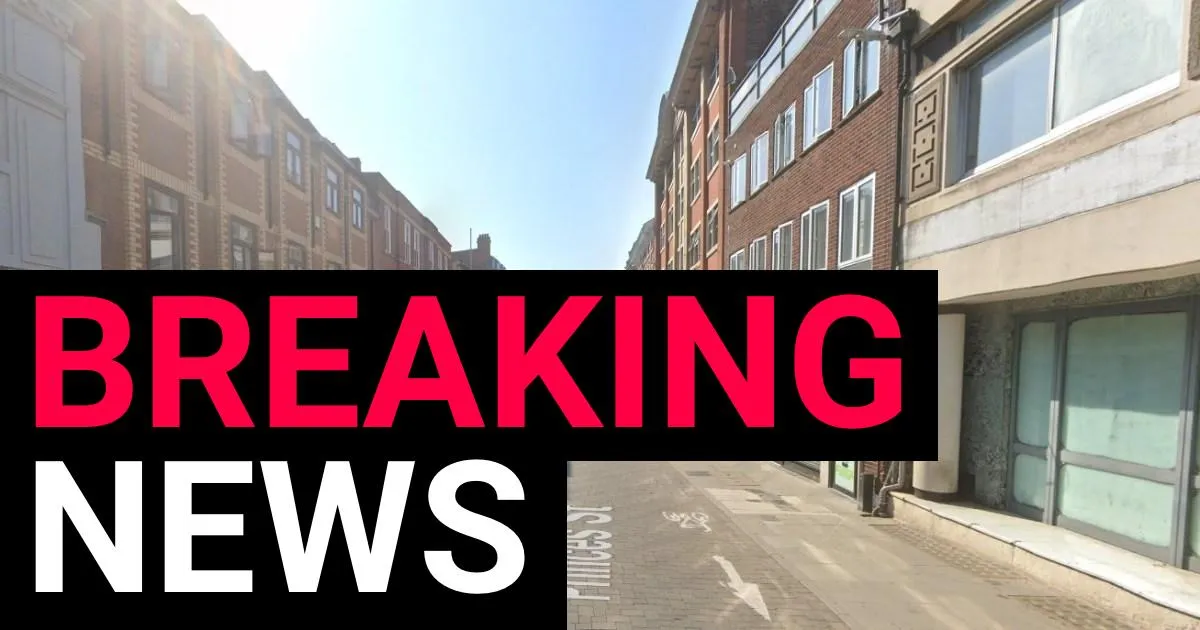
Police were called to Princes Street in Ipswich shortly before 9pm last night after people called in to report several windows being blown out (Picture: Google Maps)

A man has been arrested after a ‘suspected explosion’ that saw residents forced to evacuate a block of flats.

Police were called to Princes Street in Ipswich shortly before 9pm last night after people called in to report several windows being blown out.

Residents in the building were told to leave their homes, and the road was closed for safety reasons.

An 18-year-old man was arrested soon after on suspicion of ‘arson/criminal damage with intent to endanger life’, Suffolk Police said.

Advertisement

He was taken to Martlesham Police Investigation Centre for questioning.

Sign up for all of the latest stories

Start your day informed with Metro’s News Updates newsletter or get Breaking News alerts the moment it happens.

Advertisement

Suffolk Fire and Rescue and the East of England Ambulance Service were also called to the scene.

No injuries were reported in the incident.

A police spokesperson said: ‘A man has been arrested following an incident in Ipswich.

‘Police were called to Princes Street just before 8.45pm on Friday, July 31, following reports of a suspected explosion at a block of flats, which caused damage to several windows.

Advertisement

‘At approximately 9.05pm, an 18-year-old man was arrested on suspicion of arson/criminal damage with intent to endanger life.

‘Enquiries continue to establish the circumstances of the incident, however no injuries have been reported.

‘Motorists are advised that a diversion is currently in place, as Princes Street is expected to remain closed overnight.

‘Anyone with information relating to the incident is asked to contact police.’

Advertisement

Get in touch with our news team by emailing us at webnews@metro.co.uk.

For more stories like this, check our news page.

Advertisement
Advertisement

Source link

Continue Reading

NewsBeat

Which is the better recovery method?

Published

on

Which is the better recovery method?

Looking after your body is no longer just about getting a good workout in; it’s ensuring that you’re properly recuperating afterwards, too. Luckily, in 2026, there is a huge range of products designed to aid recovery.

In fact, the recovery tech boom is playing a big role in the growth of the sports technology market overall. Estimates show it’s projected to grow from $39.6 billion in 2026 to $192.3 billion by 2034.

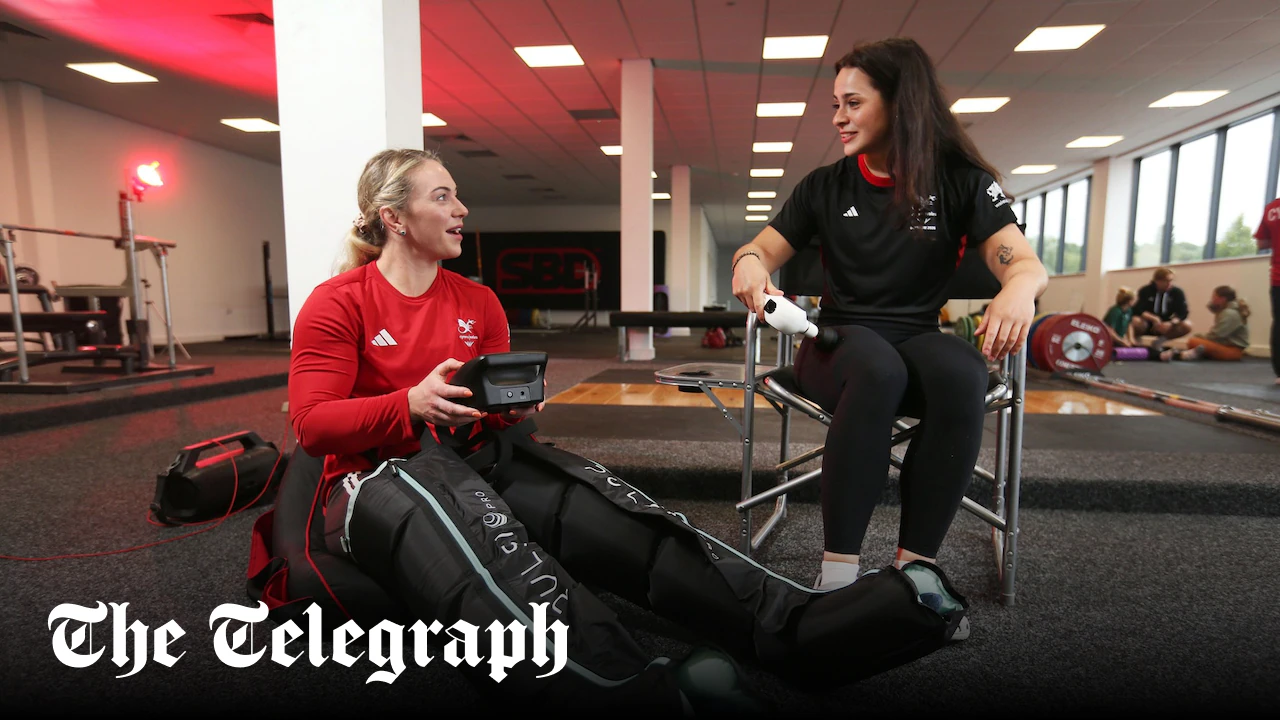
Two of the most popular products in this category are massage guns and compression boots. Both claim to ease muscle soreness and help you bounce back to training sooner, but they sit at very different price points. You can pick up a basic gun from around £40, whereas the cheapest boots we tested were £300. But which method is actually better for improving workout recovery?

Advertisement

Massage guns can help to improve flexibility in older muscles

Massage guns work by delivering repeated percussion and vibration to one specific area, which helps improve the mobility and flexibility of a specific muscle. In turn, this can make your muscles feel less tense and stiff. These gadgets can be used before and after workout sessions.

While useful for all ages, massage guns can be helpful for anyone looking to improve range of movement, ease muscle stiffness and boost blood flow – whether exercising or not.

“It will help temporarily improve your mobility so that you feel like you’ve got a bit more flexibility in that muscle,” explains Jonathan Wreaves, clinical physiologist at preventative health clinic Viavi.

But how do they actually work?

Most massage guns offer a revolutions per minute (RPM) range, which refers to how many times the massage head moves back and forth every minute. This tends to be somewhere between 1200 and 3500. The lower range is ideal for gentle massage and warming up, while a higher RPM is better for targeting bigger muscle groups and more intense tightness.

Advertisement

Source link

Continue Reading

NewsBeat

Cambridge South station sees more than 110k journeys in first month

Published

on

Cambridgeshire Live

The station is also the first fully Great British Railways branded station

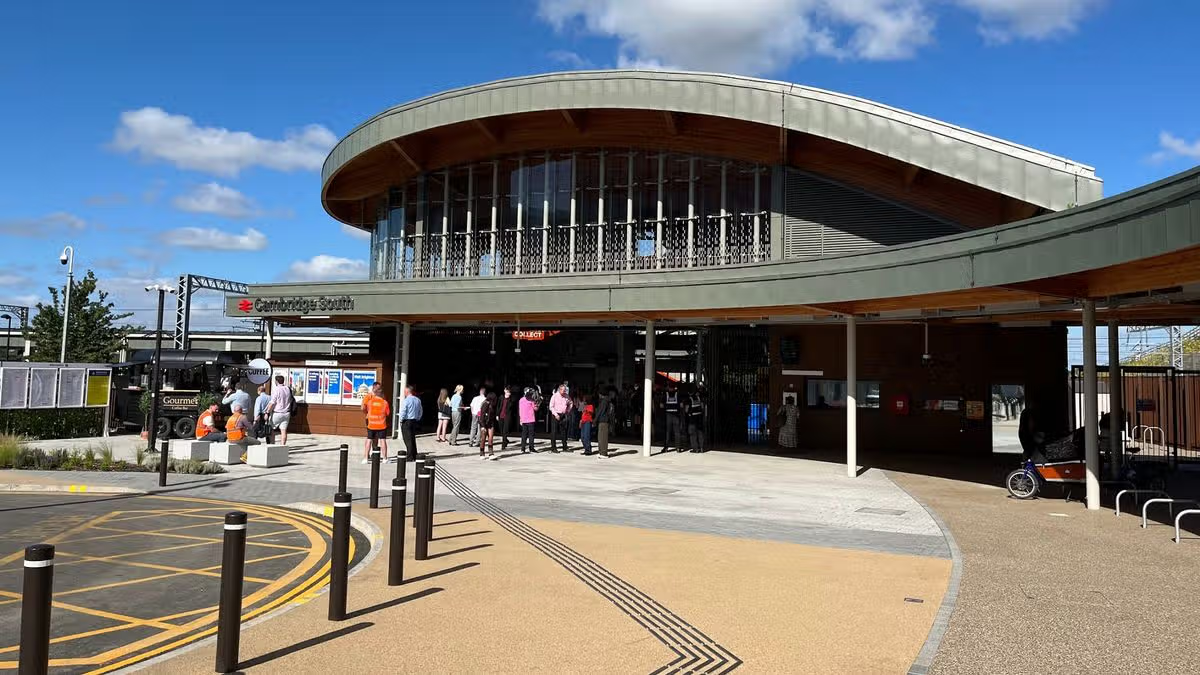
Thousands of passengers have passed through Cambridge South station’s ticket gates since it opened in June. The £250 million station, backed by government funding, supports new train services by Greater Anglia, Great Northern, Thameslink, and CrossCountry.

Advertisement

It is the first fully Great British Railways branded station, bringing together Network Rail track and infrastructure with train operators’ passenger services under a nationalised GBR Anglia organisation.

A spokesperson for Network Rail said: “With thousands of people now choosing to commute by rail, the new station is delivering on its promise to provide an alternative, greener option to access Cambridge Biomedical Campus, reducing reliance on vehicle use and reducing carbon emissions while helping to ease levels of congestion in the city of Cambridge.”

Jamie Burles, managing director for GBR Anglia said: “It is fantastic to see so many people using the new station in just the first month since it opened and I’m sure this is only just the beginning of the story for Cambridge South.

“Having seen over 110,000 journeys in the first month alone demonstrates that the demand was there, waiting for us to build this new facility, and open a new gateway to this very important biomedical campus.

Advertisement

“It really does go to show how investment in the railway can transform people’s lives for the better, by building connectivity and providing easier ways to get to where people most need to be.”

Source link

Continue Reading

NewsBeat

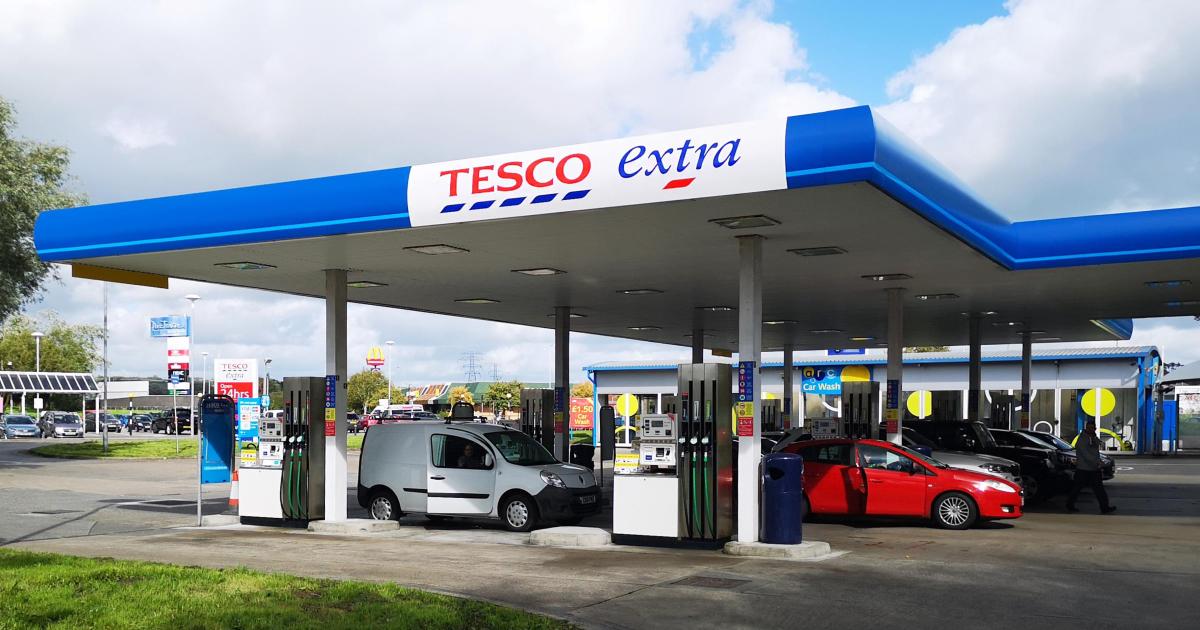
Tesco discount fuel offer for Bradford shoppers – how to claim

Published

on

Tesco discount fuel offer for Bradford shoppers - how to claim

Customers who spend £60 or more in-store will receive a coupon for 5 per cent off fuel, which could mean a saving of up to 8p per litre.

The coupon can be used at Tesco petrol stations across the UK on petrol or diesel, and the offer is valid until Sunday, August 23.

The promotion is valid for in-store purchases made until Sunday, August 16.

Advertisement

5 Tips to make your fuel last longer


A Tesco spokesperson said: “Tesco operates more than 500 filling stations across the UK and offering a discount on the price of fuel is just one way in which Tesco is helping its customers this summer.

“The supermarket recently launched Freebie Thursdays, giving away millions of coupons for free products to Clubcard members, alongside extending its Kids Eat Free offer at The Café at Tesco.”

To redeem the offer, customers must present a printed coupon at the kiosk.

It cannot be used at pay at pump locations, unmanned stations, Tesco Express sites that sell Esso fuel, or in Northern Ireland and the Isle of Man.

Advertisement

A minimum of £1 must be spent on fuel to use the coupon, with a maximum discount of £10.

The offer comes alongside other summer promotions, including Freebie Thursdays, which gives Clubcard members free product coupons, and extending its Kids Eat Free offer at The Café at Tesco.

Earlier this year, Tesco expanded its Aldi Price Match to more than 2,000 Tesco Express stores.

Advertisement

Source link

Continue Reading

NewsBeat

Man who raped women and girls to ‘teach them a lesson for being out late at night’ could be freed from jail

Published

on

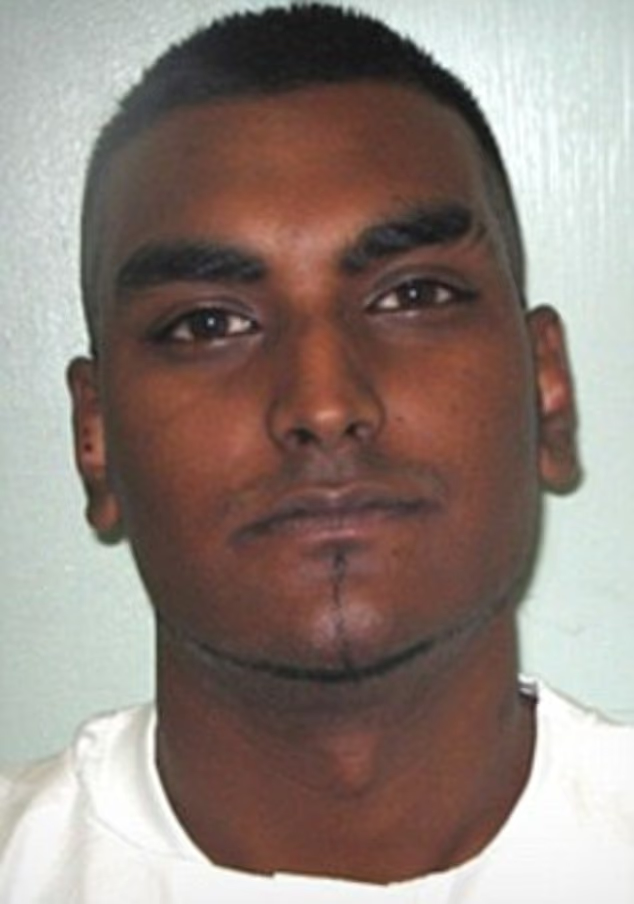
Sunny Islam was handed an indefinite prison sentence for attacking four women in a three-month reign of terror in 2010

A man who raped women and a teenage girl to ‘teach them a lesson’ for being out late at night could be freed from prison next month.

Sunny Islam, who told the jury he was a practising Muslim, was handed an indefinite prison sentence for attacking three women and the teenager in a three-month reign of terror in 2010.

But he could now be released in September pending the decision of a parole hearing – which, despite an application from one of his victims, will not be held in public because the thought of it had given him ‘anxiety’.

Islam dragged his victims, which included a 15-year-old girl, off the street at knifepoint, then bound and assaulted them. Police fear he may have attacked many more who have not come forward.

Advertisement

New parole board documents show one of his victims applied for his upcoming hearing to be held in public.

The application was denied, with one of the reasons given as Islam’s claims he had become unwell after hearing of the possibility of facing the public.

His solicitor said: ‘Since learning that an application has been made for the oral hearing to be held in public, the prisoner has reported a dramatic increase in his anxiety, including sleep disturbance. This could be a potentially de-stabilising effect.

‘He is in the process of seeking medical advice in relation to those difficulties.’

Advertisement

Sunny Islam was handed an indefinite prison sentence for attacking four women in a three-month reign of terror in 2010

No medical documentation was provided to support this and Islam claimed, via his solicitor, that his current health problems could impact his ability to give ‘best evidence’ if the hearing was not in private.

In denying the victim’s application, His Honour Jeremy Roberts KC, on behalf of the Chair of the Parole Board, said: ‘His offences are of a particularly repugnant type and the atmosphere in a public hearing is likely to be hostile.

Advertisement

‘Although there is no medical evidence I can see no reason to doubt the prisoner’s statement to his legal representative of a significant increase in his anxiety when he learned that an application had been made for a public hearing.’

He added that discussions about the sensitive nature of the offences in public may be ‘very difficult for the prisoner’.

Islam, who grew up in a strict Muslim family, was sentenced in 2012 to a minimum of 11 years in prison. With time already served, this minimum term expired in 2021.

He had been traced through the number plate of his girlfriend’s car after he kidnapped and raped the 15-year-old in September 2010.

Advertisement

Islam had grabbed her from behind as she walked home with a friend and bundled her into the car at knifepoint before driving to a secluded spot where he raped her twice – despite her claiming she was only 11 years old.

Judge Patricia Lees said at the time: ‘You told her you were going to “teach her a lesson”, and similar things were said to the other women.

‘Those words are a chilling indictment of your very troubling attitude towards all of these victims.

‘You seem to observe women out at night as not deserving respect or protection.

Advertisement

‘I have no doubt that you were out that night looking for a victim, as you were on each of these occasions.’

After his arrest, Islam’s DNA was linked with three other attacks near his home in Barking, east London.

Woolwich Crown Court heard that on July 8, 2010 he subjected a 20-year-old sex worker to ‘his trademark double rape’.

During her ordeal he tied her up and when she fought back he repeatedly punched her in the face and stole her wallet.

Advertisement

She said: ‘He treated me like an animal and made me feel worthless – I thought I was going to die.’

A week later he struck again in Forest Gate, this time dragging a 28-year-old woman into his car and forcing her to commit a sex act.

She managed to kick out the back window of his car and tried to flag down a passing vehicle as Islam strangled her. The woman eventually managed to escape and rejoin friends, who phoned the police.

His fourth victim, also attacked in September, did not come forward until police found the 31-year-old’s blood in the back of the car along with a knife he used to threaten his victims and plastic ties he bound them with.

Advertisement

She was repeatedly punched in the face until she was bleeding and then tied up and raped twice.

Islam, who was 21 at the time of the attacks, was convicted of seven charges of rape, one of sexual assault and one of kidnap.

At the time of his sentencing, his teenage victim said in a statement: ‘No one will ever understand the flashbacks – they are so real. At night, I lay in my bed and it is like I am there.

‘It is like a screen in my mind forcing me to relive that night again and again.

Advertisement

‘People will say time will heal, but I think time has helped me accept the truth – that I will never escape what has happened to me.’

Judge Lees said at the time: ‘The harm you have done to your victims is incalculable.

‘The nature and extent of these offences drives me to the conclusion that you represent an extreme and continuing danger to women, particularly those out at night.’

The newly released parole board documents show that one of his victims wanted the hearing to take place in public because Islam had ‘hurt other members of the public (all women or children from different backgrounds) to teach them a lesson’.

Advertisement

She added: ‘He took advantage of them on the street and he could hurt other women or children.

‘I think it is in the public’s interest and right to know how the justice system has dealt with this and how they will continue to deal with this case and other cases in the future’.

As well as his concerns about Islam’s supposed anxiety, Judge Roberts decided the hearing should be held in private because of the distress a public hearing could cause to the three victims, whose views on the process were unknown.

He added in his conclusion: ‘This decision will obviously disappoint the applicant but it will be open to her, if she now wishes, to apply to the Panel Chair for permission to attend a private hearing and/or to apply to see a summary of the panel’s decision.’

Advertisement

Source link

Continue Reading

NewsBeat

Channel 4 confirms new series of Educating Yorkshire

Published

on

Channel 4 confirms new series of Educating Yorkshire

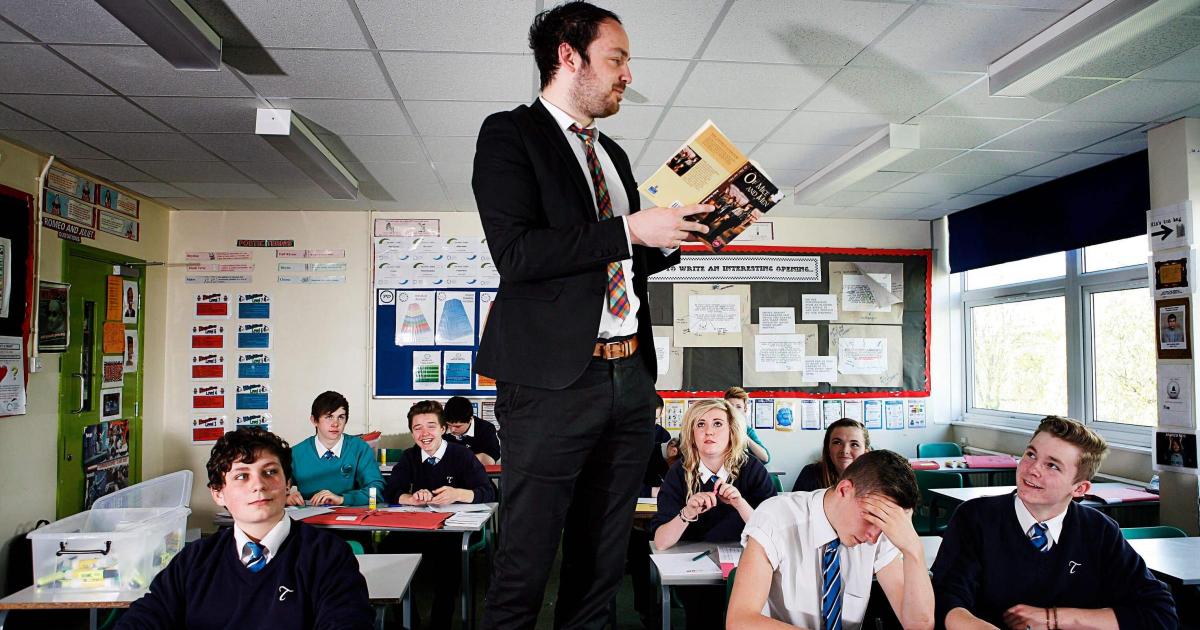
Channel 4 has confirmed the return of Educating Yorkshire with a new eight-part series set once again at Thornhill Community Academy.

The series first aired in 2013 and was a huge hit, before a second series was aired last year.

Produced by Twofour, the documentary will continue to follow students and staff as they navigate the challenges of school life.

Advertisement

Channel 4 confirms new series of Educating Yorkshire

Channel 4 first aired the Educating… British documentary reality television series in 2011, beginning with Educating Essex.

Educating Yorkshire was the second to air two years later, with Cardiff and Manchester also featured.

The show uses a fly-on-the-wall format to show the everyday lives of the staff and pupils of secondary schools.

Educating Yorkshire’s first series was watched by millions, with its most famous scenes showing English teacher Mr Burton helping year 11 student Musharaf overcome his stammer.

On Educating Yorkshire returning for a third series, Matthew Burton, headteacher at Thornhill Community Academy, said: “I’m really pleased to welcome Twofour back to Thornhill, to highlight more of the important work that goes on in schools up and down the country, day in, day out.

Advertisement

“As many people will have seen last year, our students and staff are so inspiring, and to have the chance, again, to show the extent of the quiet, life-changing work that happens day by day is a real privilege.

“Our priority at TCA will always be sharply focusing on the safety, wellbeing and education of our students.

“We look forward to working hard and being nice with Twofour and Channel 4 to develop an important series over the next year.”

Educating Yorkshire reached 8.7 million viewers across linear and streaming last year and was Bafta-nominated in 2026.

Advertisement

Rita Daniels, commissioning editor at Channel 4, said: “Last year’s return to Thornhill Community Academy was both insightful and emotional, providing the perfect snapshot of today’s high school experience.

“The Thornhill kids were brave and brilliant when opening up about the modern challenges of teenage life.

“We know that there will be kids across the country dealing with similar issues and we hope they will continue to see themselves in a new series of this exceptional show.”

What is your favourite series of Educating…? Let us know in the comments.

Advertisement

Source link

Continue Reading

Trending

Copyright © 2025