Connect with us
DAPA Banner
DAPA Coin
DAPA
COIN PAYMENT ASSET
PRIVACY · BLOCKDAG · HOMOMORPHIC ENCRYPTION · RUST
ElGamal Encrypted MINE DAPA
🚫 GENESIS SOLD OUT
DAPAPAY COMING

Business

Asia-Pacific Healthcare Is Heading for a Reckoning It Can No Longer Ignore

Published

on

Asia-Pacific Healthcare Is Heading for a Reckoning It Can No Longer Ignore

Abstract

  • Asia-Pacific healthcare faces compounding structural pressures: the region holds 60% of the world’s population but accounts for only 22% of global health spending, with doctor-to-patient ratios well below WHO minimums. Long wait times remain the top consumer complaint, clinician burnout is accelerating, and one in five doctors is actively considering leaving their organisation.
  • Patients are increasingly assertive, with rising adoption of AI tools and preventive care, while 95% want a single coordinating touchpoint for their healthcare needs. AI adoption shows promise but remains hampered by unclear strategy and limited clinician involvement, and care fragmentation continues to erode trust and outcomes across the region.

The numbers are damning, but they shouldn’t surprise anyone who has sat in a waiting room across the Asia-Pacific. 

According to Bain & Company’s fourth biennial Front Line of Healthcare report, drawing on surveys of 600 doctors and 6,300 consumers across nine markets, the region’s healthcare systems are caught in a compounding crisis of their own making: demand is surging, supply is crumbling, and the people meant to hold it all together are walking out the door.

This is not a cyclical blip. It is a structural reckoning, and the window for decisive action is narrowing.

The Supply Demand Chasm No One Wants to Admit

Asia-Pacific is home to 60% of the world’s population and carries a disproportionate share of the global disease burden. Yet it accounts for just 22% of global healthcare spending. Emerging Asia-Pacific countries average roughly 1.6 doctors per 1,000 people, and excluding China, that number falls to approximately 0.9. The World Health Organization’s minimum threshold is 2.5. OECD nations average 3.7.

These are not abstract statistics. They are the reason long wait times have ranked as the top consumer frustration in every single edition of Bain’s survey over the past seven years. They explain why fewer than 70% of patients with chronic conditions report having regular check-ups. And they underpin a growing sense of systemic failure that is eroding trust in ways that will take years to rebuild.

Advertisement

The system is structurally underpowered. Until policymakers and healthcare executives confront that honestly, every downstream solution, however innovative, will be a band-aid on a wound that needs surgery.

The Physician Exodus Nobody Is Taking Seriously Enough

If the supply-demand imbalance is the region’s structural crisis, the clinician burnout epidemic is its most immediate one.

One in five doctors in the Asia-Pacific region is actively considering switching organisations. Approximately 30% believe recruitment and retention have become harder since 2023. These are not marginal figures. They represent a workforce in active retreat from systems that have failed to value them.

Crucially, the Bain data demolishes a persistent myth: this exodus is not about money. Doctors cite excessive workloads, a lack of recognition, and burnout as the primary drivers. They rank professional development and access to good technology ahead of compensation as the dimensions they value most in their work, and fewer than 30% say they are satisfied with either.

Advertisement

The correlation between clinician engagement and patient outcomes should be alarming to every hospital CEO in the region. Doctors who feel involved in strategic decisions report employee Net Promoter Scores up to 36 points higher than those who do not. Higher nurse burnout, the research confirms, correlates directly with elevated patient mortality. The clinician experience is not a human resources issue. It is a patient safety issue.

Healthcare organisations that continue to treat physician engagement as a softer, secondary priority do so at enormous risk, both to their patients and to their long term viability.

The Consumer Has Left the Building

While the supply side stumbles, the demand side has been quietly transformed. Asia-Pacific patients are no longer passive recipients of care. They are consumers, informed, assertive, and increasingly unforgiving.

Eighty-four percent expect healthcare to be more convenient today than two years ago. Seventy-one percent want their doctors reachable by phone, WhatsApp, or email rather than having to wait for the next appointment. Nearly 70% have already used AI tools to better understand a medical diagnosis or treatment plan.

Advertisement

Preventive care is accelerating sharply. Sixty percent of consumers scheduled regular check-ups and screenings in 2025, up from 47% in 2023. Consumer spending is shifting accordingly, with the sharpest increases in nutrition supplements (up 43% net), fitness and exercise (up 34%), and oral healthcare (up 31%).

This is not a trend on the horizon. It has already arrived. The healthcare organisations best positioned for the next decade are the ones designing their service models around these expectations today, not the ones still debating whether consumerism in healthcare is real.

AI: Promise Outpacing Readiness

No theme dominates the Bain report more than artificial intelligence, and no theme better illustrates the gap between ambition and execution that defines Asia-Pacific healthcare right now.

Consumer acceptance of AI in healthcare is genuinely higher in Asia-Pacific than in the United States. Nearly three-quarters of the consumers surveyed report comfort with at least one AI-enabled healthcare application. Physicians, meanwhile, are optimistic that AI will reduce administrative burden, the single most corrosive force in clinician satisfaction. Ninety-five percent of healthcare leaders believe AI will significantly transform revenues, costs, or administrative burdens.

Advertisement

And yet: one in three doctors reports that their organisation is not prepared to deploy AI at scale. Only about 30% of proof of concept projects reach production. The constraints are not technological. They are human. Unclear strategies, limited training, insufficient clinician involvement, and inadequate data foundations are the actual blockers.

The examples of what good looks like are instructive. Apollo Hospitals built a self-learning clinical decision support platform covering 1,300 conditions, maintained by more than 500 in-house clinicians. Singapore General Hospital’s PEACH AI chatbot has saved an estimated 660 doctor hours annually across 25,000 preoperative patients. Ping An Good Doctor’s AI agents handle up to 4 million consultation requests per day, reducing per doctor service costs by roughly 52%.

What these examples share is not just sophisticated technology. They reflect a commitment to proprietary clinical assets, deliberate workflow redesign, and deep clinician involvement. AI deployed on top of broken processes produces broken outcomes at scale. The organisations that will win are the ones redesigning the process first.

Fragmentation: The Silent Killer of Patient Experience

Perhaps the most underappreciated finding in the Bain report is the extent to which fragmentation is degrading care quality and eroding trust, quietly, persistently, and at enormous cost.

Advertisement

Half of the consumers surveyed were sent to multiple providers and locations before receiving the right diagnosis or treatment. More than 40% received inconsistent advice across clinicians. For patients with chronic conditions, the picture is worse: 55% reported having to see multiple doctors just to fulfil their healthcare needs.

Ninety-five percent of consumers say they want a single touchpoint to manage their healthcare, up from 70% in 2019. More than 80% believe a primary care physician should anchor that role. Yet roughly a quarter of the region’s consumers lack access to a primary care doctor at all.

This is a significant commercial opportunity disguised as a systemic failure. The organisation, whether a hospital group, insurer, pharmacy chain, or digital platform, that successfully becomes that trusted, continuous coordinator for patients will not just improve outcomes. It will build a structural competitive advantage that compounds over time. Patients who are promoters of their healthcare provider are 2.5 times more likely to stay and twice as likely to expand their use of services. In markets like Indonesia and China, that multiplier reaches fourfold.

In a consumer-driven system, the coordinator wins. The question is who gets there first.

Advertisement

What Must Happen Next

The Bain report is careful not to be alarmist, but its strategic implications are stark. The tensions it describes, between rising expectations and falling supply, between AI potential and organisational unreadiness, between consumer demand for coordination and a fragmented system incapable of delivering it, are not resolving themselves. They are accelerating.

For healthcare providers, the imperative is clear: build outpatient ecosystems before someone else does, fix the clinician experience as a precondition for everything else, and treat AI as a business transformation rather than a feature to bolt on. For payers, the choice is equally unambiguous: move from passive claims processing to active care stewardship, or be progressively commoditised by platforms that own the patient relationship. For pharmacies, which already command significant consumer trust, the window to evolve from transactional dispensers to coordinated care platforms is open, but it will not stay open indefinitely.

Most urgently, the workforce crisis demands immediate attention. Technology-driven transformations cannot scale without the people who will implement them at the bedside. Organisations that earn clinician trust and position doctors as co-architects of change will earn patient trust in return. Those that attempt transformation without clinical buy-in will face resistance, low adoption, and accelerating attrition, in a region where clinical talent is already scarce and becoming scarcer.

Asia-Pacific healthcare has the ingredients for a genuine transformation: a rapidly evolving consumer base, a clinician workforce that wants better tools and more recognition, and AI capabilities that are genuinely powerful. What it lacks, in too many organisations, is the leadership will to make the hard choices now rather than later.

Advertisement

Continue Reading
Click to comment

You must be logged in to post a comment Login

Leave a Reply

Business

LARRY KUDLOW: Stop the hand-wringing, let Trump make a great deal for America

Published

on

LARRY KUDLOW: Trump gets an A-Plus for grace and courage

There’s vastly too much hand-wringing over President Trump’s diplomacy and potential dealmaking with Iran, and it’s coming from friends and foes alike. I think it has more to do with America’s crumbling political infrastructure, than it does regarding the merits of Mr. Trump’s efforts.

First of all, the so-called memorandum of understanding is a nonbinding political document which simply outlines topics to be covered in the months ahead for some kind of final deal. Some people are taking parts of this MOU completely out of context for their own political gain. Let’s step back for a moment.

Advertisement

Over the past year, beginning with Operation Midnight Hammer and continuing through Epic Fury and Economic Fury, American and Israeli allied forces have completely decapitated the Iranian leadership, turned their nuclear capacity into rubble, totally buried their enriched uranium, destroyed their navy, destroyed their airforce, destroyed their radar, destroyed much of their missiles, and drones, and destroyed virtually their entire industrial base. Inflation could be running at more than 200 percent. Food and medicine for average civilians are not available. Currency is worthless. The economy essentially shuttered. In other words, Iran’s military and economic capabilities have been decimated. And people know this whether they criticize it or not.  General Jack Keane observed that we’re not even seeing Iranian fast boats anymore in the Strait of Hormuz.

Meanwhile, the New York Post’s Miranda Devine writes that Iranian women at Tehran are now going around on motorcycles wearing skirts and without hijabs covering their hair, a crime that used to result in fines, jail, and savage beatings. Yet the morality police may be dead. Another sign that the radical Islamist Republic is crumbling from the inside.

Because of Mr. Trump’s courageous actions, the only president in the last 50 years to go after Iran forcibly and successfully. Its leadership has been decapitated, their military capabilities have been virtually eliminated, and their nuclear operations have been shut down. All reduced to rubble.

Advertisement

In short, their capacity for harm has essentially been eliminated for years to come with no boots on the ground. So, all this gives Mr. Trump the opening for diplomacy in the future. Why not try it? And that leads to at least a temporary suspension of the naval blockade to reopen the Strait of Hormuz and bring down oil prices to sustain the world economy.

It’s a risk worth taking. Indeed I don’t think there’s any risk at all. And not a single dime of money will reach Iran unless the final deal verifiably with inspectors ends their nuclear program and their enriched uranium. That’s the final deal, not some non-binding memo.

Even oil money will be put into an escrow account by the United States Treasury. And released only for buying the Iranian people food, farm, and medical help. Mr. Trump had this to say on the matter: “One of the things that we are doing also, and it came up last night, is money that’s being unfrozen is going to be used to buy food, and the food is going to be bought exclusively through the United States from our farmers. And corn, soybeans, all of the things they need are going to be bought from our farmers.”

Advertisement

That is quintessentially a Trumpian approach in deal making. The absolute key point is that the president, as he has said time and again, is going to end Iran’s nuclear capacity, period, full stop, with verification and inspection. Mr. Trump calls it nuclear honesty. And if Iran doesn’t play ball, then… We will go back to military, bombing, and the economic embargoes, and give them even more damage if that’s what it’s going to have to take.

Right now, Mr. Trump is making the right decisions. Opinion polls more and more are showing a favorable attitude towards his diplomacy and deal-making. So I say, let us stop this hand-wringing and let Mr. Trump do what he does best. Which is make a great deal for America.

Continue Reading

Business

Genco Shipping Stock: A Hidden Gem Caught Between A Board And An Activist (NYSE:GNK)

Published

on

Genco Shipping Stock: A Hidden Gem Caught Between A Board And An Activist (NYSE:GNK)

This article was written by

I’m an economist and data analyst, with academic roots in econometrics, PPE (Philosophy, Politics & Economics), and an MBA, and 20 years of hands on experience across finance and analytics. Active in equity markets since 2018, I apply quantitative and first-principles thinking to hunt for the story hiding behind the numbers, situations where real earnings power diverges sharply from what the market is currently pricing. I’m drawn to overlooked small and mid-cap names where the numbers tell a more interesting story than the market is willing to acknowledge yet!

Analyst’s Disclosure: I/we have no stock, option or similar derivative position in any of the companies mentioned, and no plans to initiate any such positions within the next 72 hours. I wrote this article myself, and it expresses my own opinions. I am not receiving compensation for it (other than from Seeking Alpha). I have no business relationship with any company whose stock is mentioned in this article.

Seeking Alpha’s Disclosure: Past performance is no guarantee of future results. No recommendation or advice is being given as to whether any investment is suitable for a particular investor. Any views or opinions expressed above may not reflect those of Seeking Alpha as a whole. Seeking Alpha is not a licensed securities dealer, broker or US investment adviser or investment bank. Our analysts are third party authors that include both professional investors and individual investors who may not be licensed or certified by any institute or regulatory body.

Advertisement
Continue Reading

Business

DOE announces $17.5 billion in loans to boost nuclear reactor supply chain

Published

on

DOE announces $17.5 billion in loans to boost nuclear reactor supply chain

The Department of Energy on Tuesday announced $17.5 billion in conditional loans for utilities and energy companies to buy parts that will strengthen the commercial supply chain for nuclear reactors.

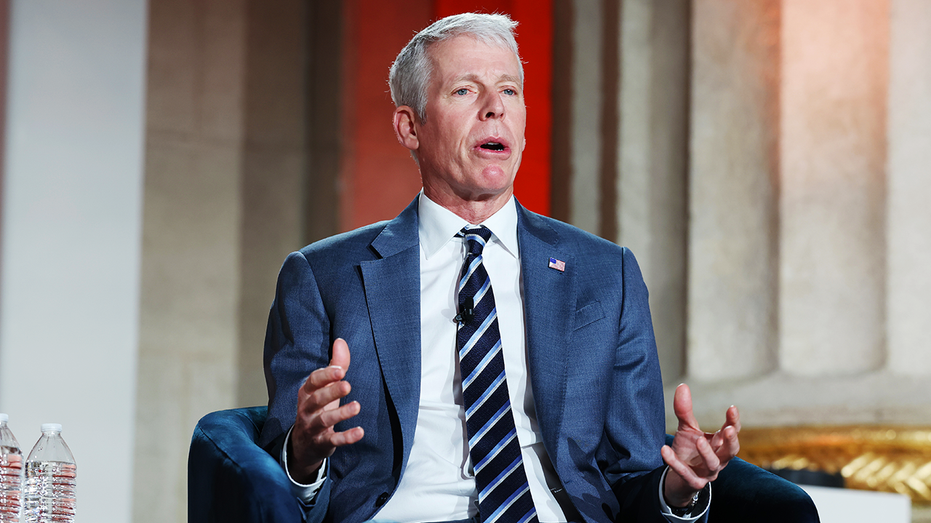
Energy Secretary Chris Wright said that the announcement supports President Donald Trump‘s executive order by boosting the nuclear industrial base, helping to “unleash the next American nuclear renaissance.”

Advertisement

“To accomplish that mission, these conditional loans will play an important role in reviving the supply chain needed for America to once again build large-scale commercial reactors,” Wright explained.

“They will also help accelerate the timeline of building those large-scale reactors by up to three years, lowering construction costs and ensuring the United States is able to deliver on President Trump’s bold and ambitious energy addition agenda,” he added.

US PLANS TO BUILD NUCLEAR REACTOR ON THE MOON BY 2030, NASA SAYS

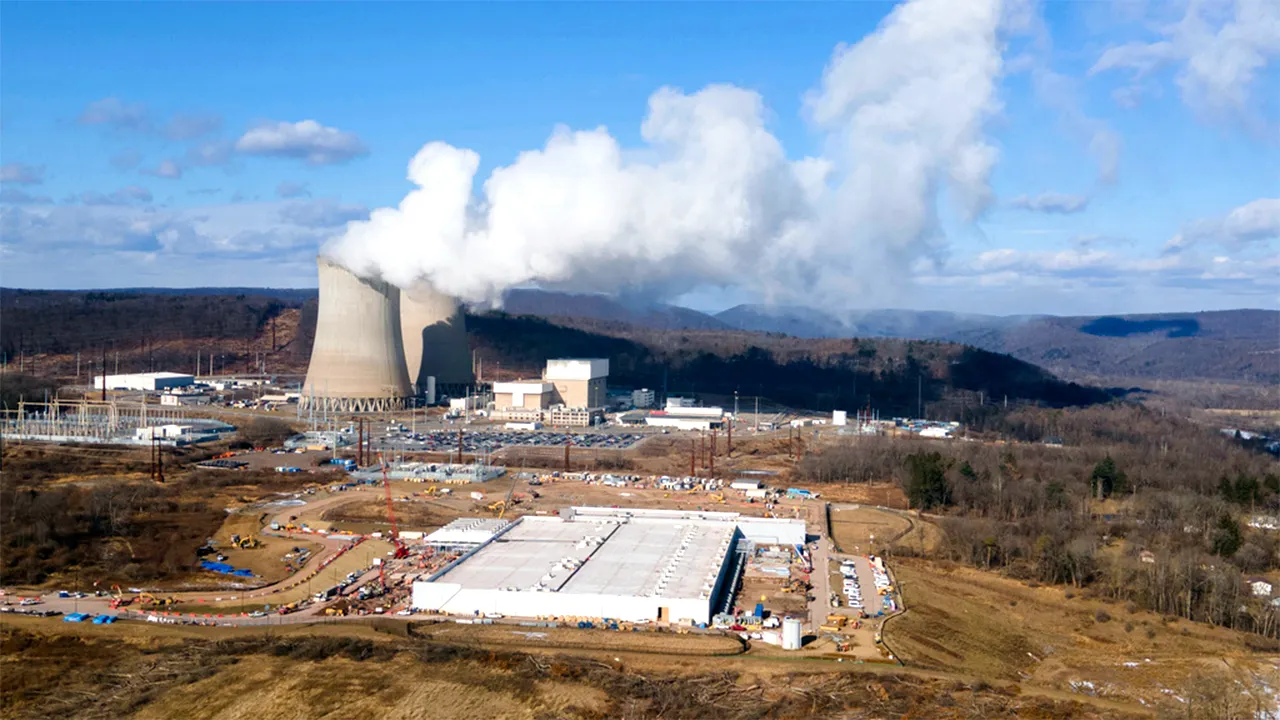
Steam coming out of a nuclear power plant

The Energy Department is hoping to speed up the development of new commercial nuclear reactors through the conditional loan program. (Fox News)

The conditional loans were provided by the Energy Department‘s Office of Energy Dominance Financing (EDF). The loans aim to help achieve the goal laid out in the president’s executive order, which is to have 10 new large nuclear reactors with complete designs under construction by 2030.

Advertisement

The $17.5 billion in conditional loans will help finance five eligible projects that are sponsored by utilities and energy companies to speed up the deployment of 10 large-scale commercial nuclear reactors across the U.S. by up to three years. Each of the five loans will support two reactors at a project site.

Westinghouse, which makes the API1000 units that are the only licensed large-scale commercial reactors operating in the U.S. today, will partner with the eligible utilities and energy companies on the procurement of long-lead items at a fixed price. 

TRUMP ADMIN PROVIDES $1B FEDERAL LOAN TO RESTART THREE MILE ISLAND NUCLEAR REACTOR

U.S. Energy Secretary

Energy Secretary Chris Wright speaking during a panel, said that more than half a dozen utilities and energy companies have expressed interest in the program. (Anna Moneymaker/Getty Images, File)

Long-lead items are complex components of a nuclear power plant that require the most time to manufacture and deliver, such as reactor vessels and steam generators.

Advertisement

Each of the projects will be jointly owned by Westinghouse and the utility or energy company partner, with both required to fully commit project equity of $500 million each, for a total of $1 billion, up front before they can access the Energy Department’s loan funds.

The U.S. industry has struggled to attract investment because nuclear projects are capital-intensive, prone to cost overruns and face complex regulations – creating a riskier proposition for investors than relatively cheaper, quicker energy projects involving natural gas and renewables.

META’S MASSIVE NUCLEAR POWER DEALS WILL HELP US ‘WIN’ AI RACE AGAINST CHINA, EXECUTIVE SAYS

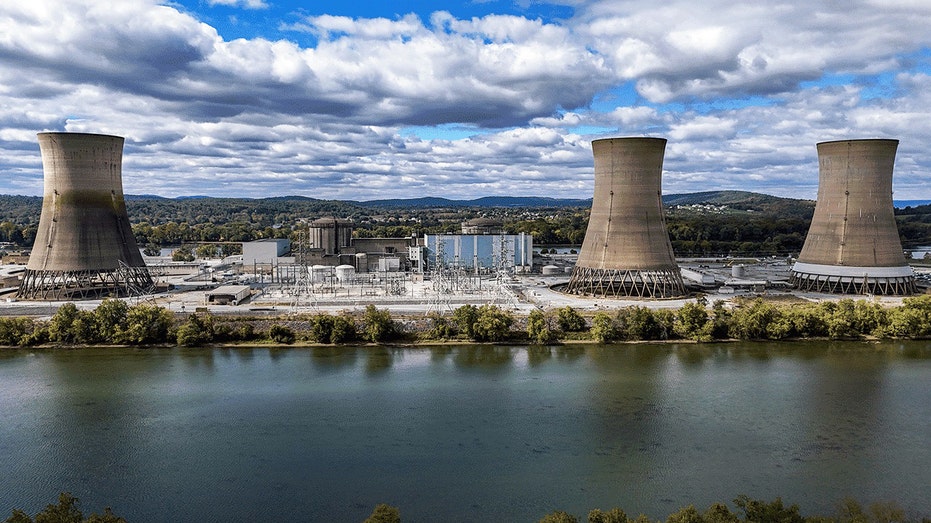
Cooling towers at the Three Mile Island nuclear power plant.

The Three Mile Island nuclear power plant is due to return to operation in the next few years. (Heather Khalifa/Bloomberg via Getty Images, File)

Wright told reporters that the loans have attracted strong interest from data center hyperscalers, which are tech giants that run cloud and computing infrastructure, as well as energy companies amid the rising demand for electricity due to the buildout of data centers that power artificial intelligence (AI) systems.

Advertisement

“We are confident that these projects will be economic for utility shareholders, ratepayers and hyperscalers,” Wright said. He added that seven utilities expressed interest, but wouldn’t disclose their names or the location of their projects.

Trump’s goal is to quadruple U.S. nuclear power capacity to 400 gigawatts by 2050, which is an aggressive target given that the last reactors built in the U.S. were delayed by seven years and faced billions of dollars in cost overruns.

GET FOX BUSINESS ON THE GO BY CLICKING HERE

Three shuttered nuclear power plants are on track to resume operations in the coming years, including Palisades in Michigan, Three Mile Island in Pennsylvania and Duane Arnold in Iowa.

Advertisement

During Trump’s first term, he used what was then known as the Loan Programs Office to help finance reactors for the Vogtle nuclear power plant in Georgia.

Wright said that the Energy Department expects the plants’ timing and cost to “well outperform what was done on Vogtle.”

Reuters contributed to this report.

Advertisement
Continue Reading

Business

Exxon Mobil Shares Edge Higher as Oil Giant Advances Texas Move and Eyes Growth Amid Steady Crude Prices

Published

on

ASX 200 Top Gainers: Telix Pharma Jumps 3.23% on FDA

NEW YORK — Exxon Mobil Corp. shares rose modestly Tuesday as the energy giant pressed ahead with plans to redomicile to Texas and highlighted its long-term growth strategy in a market buoyed by relatively stable oil prices.

The stock traded at $139.16, up 0.53 percent or 73 cents, in morning trading on the New York Stock Exchange. The move came as broader energy markets reflected ongoing attention to global supply dynamics and corporate restructuring efforts by major producers.

Exxon Mobil announced last week that its planned redomiciliation from New Jersey to Texas will take effect July 1. The shift, approved by shareholders in May, aims to align the company’s legal home with its operational heartland and potentially streamline regulatory and tax considerations.

The company has emphasized that the move supports its focus on delivering long-term value. In its first-quarter 2026 earnings release, Exxon Mobil reported earnings of $4.2 billion, or $1.00 per share. Excluding certain items and timing effects, earnings reached $8.8 billion, or $2.09 per share. Cash flow from operations stood at $8.7 billion.

Advertisement

Chairman and CEO Darren Woods has repeatedly stressed disciplined capital allocation and investment in high-return projects. The company continues advancing developments in the Permian Basin and Guyana, where production is ramping up toward significant milestones.

Analysts maintain a generally positive outlook. Bank of America recently upgraded the stock to “Buy,” citing attractive valuation and strong fundamentals. Consensus price targets hover around $163 to $170, implying upside from current levels.

Exxon Mobil’s forward dividend yield stands near 3 percent, supported by 43 consecutive years of increases. The company returned $9.2 billion to shareholders in the first quarter through dividends and buybacks.

The energy sector faces a complex backdrop. Oil prices have stabilized following earlier volatility tied to geopolitical developments and demand concerns. Exxon Mobil and peers continue navigating the energy transition while investing in conventional resources to meet near-term needs.

Advertisement

Strategic Investments and Operational Focus

Exxon Mobil’s strategy centers on leveraging its scale in upstream production, downstream refining, and chemical manufacturing. The company targets annual production growth of approximately 1.8 million oil-equivalent barrels per day by 2026, grounded in value rather than pure volume.

Key projects include expansions in Guyana, where output is expected to exceed 700,000 barrels per day over time. Permian operations also remain a priority, with efficiency gains helping offset cost pressures.

The redomiciliation to Texas aligns with these operational realities. Texas hosts significant portions of Exxon Mobil’s U.S. assets and workforce. Company officials have framed the change as enhancing long-term competitiveness without disrupting day-to-day business.

Advertisement

Analysts note Exxon Mobil’s balance sheet strength and free cash flow generation as key differentiators. Trailing twelve-month free cash flow exceeded $23 billion, providing flexibility for investments, dividends, and share repurchases.

Market Context and Challenges

Global oil markets remain sensitive to supply shifts from OPEC+ producers and demand signals from major economies. Recent reports of potential U.S.-Iran diplomatic progress added some downward pressure on prices earlier in the month, though benchmarks have since steadied.

Exxon Mobil’s diversified portfolio helps buffer such volatility. Its chemical and refining segments provide counterbalance to upstream swings. First-quarter results showed resilience despite timing effects that pressured reported figures.

Advertisement

Environmental and regulatory pressures persist. Shareholder proposals on climate and governance issues featured prominently at the May annual meeting, though management maintained strong support for its board and strategy.

The company continues reporting progress on lower-carbon initiatives while prioritizing core hydrocarbon developments. Woods has described the approach as pragmatic, balancing energy security with emission-reduction goals.

Analyst Views and Valuation

Wall Street largely views Exxon Mobil as undervalued relative to its cash flow potential and asset base. Discounted cash flow models suggest intrinsic value well above current trading levels, with some estimates exceeding $270 per share under conservative assumptions.

Advertisement

Earnings estimates for full-year 2026 reflect optimism around production ramps and efficiency. The stock trades at a forward price-to-earnings multiple in the low 20s, below historical peaks for the sector.

Risks include prolonged low oil prices, execution challenges on major projects, and evolving energy policies. Exxon Mobil’s size and integrated model provide advantages in navigating these uncertainties.

Outlook

As the second quarter progresses, investors will watch for updates on operational milestones and any further details on the Texas transition. Exxon Mobil’s next earnings report is anticipated in late July.

Advertisement

The company maintains its commitment to disciplined investment and shareholder returns. With shares showing modest gains amid broader market rotation, Exxon Mobil continues positioning itself as a reliable energy supplier capable of adapting to changing conditions.

Continue Reading

Business

Nestle Health Science veteran to lead Ocean Spray

Published

on

Nestle Health Science veteran to lead Ocean Spray

Abigail Buckwalter was with Nestle Health Science for nearly 15 years.

Continue Reading

Business

Tram system among transport plans for Bournemouth, Christchurch and Poole

Published

on

Business Live

The idea is part of a 10-year strategy aiming to better connect the region

MetroLink tram from Manchester (credit NQ)

MetroLink tram from Manchester(Image: Local Democracy Reporting Service / NQ)

A tram network could soon be set to revolutionise transport across Bournemouth, Christchurch and Poole.

Advertisement

The proposal forms part of the BCP Growth Plan, a decade-long vision designed to transform Bournemouth, Christchurch and Poole into a better-connected, more environmentally friendly and inclusive area by 2036.

The blueprint was examined by BCP Council’s Overview and Scrutiny Board on June 15.

A central element of the plan involves enhancing transport links and reducing congestion through environmentally sustainable alternatives such as ultra-light rail.

Councillor Lesley Dedman said: “It is a wonderful wishlist and it does push all the right buttons. We all want these things, for example the advanced manufacturing hub and industrial parks, with these three towns we are short of space so it is those things I am interested in how we are going to work that out.

Advertisement

“Another thing I am not quite sure on is ultra light railway, what a fantastic idea, I am not to sure what it is but I think again those things have been tried year after year and I really hope we can get something going this time as there has always been a problem.”

Councillor Richard Herrett said: “Not a single post-war tram system has been delivered without central government funding. Which means for a tram system we are likely to need some government funding. As the devolution agenda moves forward there is potential in that, but I think where we are in that scheme remains to be seen.

“Trams are universally loved but they do take up a lot of space and that is another challenge we have in out area. I think we would love a tram system but that government funding can’t come too soon.”

The blueprint also puts forward reopening the Hamworthy branch line and implementing additional improvements to ease congestion, support commerce and enhance travel choices.

Advertisement

Redevelopment of key locations including Wessex Fields, Bournemouth Airport and Holes Bay also features prominently.

The broader strategy seeks to stimulate job creation, increase affordable housing provision, rejuvenate town centres and strengthen local communities.

It focuses on long-term expansion in established sectors such as financial services, advanced manufacturing and the creative industries.

While councillors generally back the vision, uncertainties persist around practical implementation, funding streams and the plan’s resilience to future challenges.

Advertisement

A comprehensive report on the growth plan will be considered by cabinet and council at a subsequent meeting.

Continue Reading

Business

Russell 2000 Crosses 3000 Line. It’s Crushing the Mag 7 Lately.

Published

on

Barron's

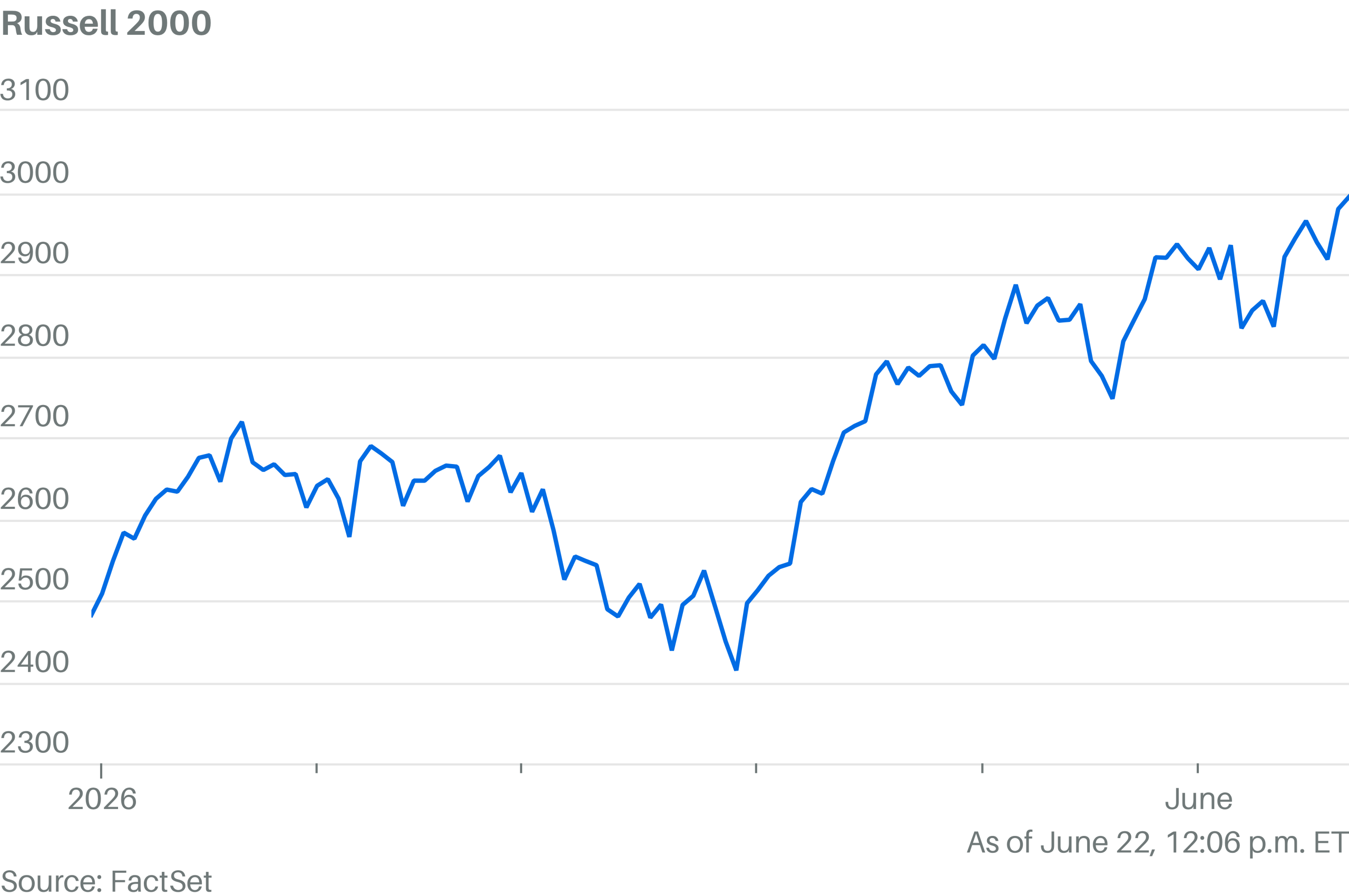
Don’t look now, but the Russell 2000 just hit 3000.

The small-cap index was up 0.7% and trading slightly above the 3000 mark. It first closed above 2000 on Dec. 23, 2020, according to Dow Jones Market Data. It first closed above 1000 on July 5, 2013.

Smaller stocks have been riding a bit of a resurgence this year. The index is up 42% in the past 12 months and 21% this year.

Continue Reading

Business

MorningStar Farms issues warning over select nuggets, patties: FDA

Published

on

MorningStar Farms issues warning over select nuggets, patties: FDA

MorningStar Farms is voluntarily recalling two plant-based food products sold in the U.S., Puerto Rico and Costa Rica because they may contain plastic pieces, according to a notice published by the Food and Drug Administration (FDA).

The recall affects MorningStar Farms Buffalo Chik’n Nuggets and MorningStar Farms Hot & Spicy Sausage Patties. The company announced the recall on June 18, and the FDA published the notice Monday.

Advertisement

Consumers who purchased the affected products should not consume them and should instead discard the items and contact the company for a full refund, MorningStar Farms said. 

No other MorningStar Farms products are included in the recall.

THOUSANDS OF BOTTLES OF BLOOD PRESSURE MEDICATION RECALLED NATIONWIDE

Package of MorningStar Farms Buffalo Chik'n Nuggets

MorningStar Farms Buffalo Chik’n Nuggets are among the products included in a voluntary recall. (MorningStar Farms  / Unknown)

The recalled Buffalo Chik’n Nuggets were sold in 10.5-ounce packages with UPC code 00028989101105 and “Better if Used Before” dates of July 7, 2027, and July 8, 2027. 

Advertisement

The recalled Hot & Spicy Sausage Patties were sold in 8-ounce packages with UPC code 00028989100948 and “Better if Used Before” dates of July 5, July 6 and July 7, 2027.

The Chicago-based company said it initiated the recall because of the possible presence of plastic pieces in the food. The products were distributed in the United States, Puerto Rico and Costa Rica, according to the recall notice.

Food recalls involving foreign materials such as plastic can pose a choking hazard or risk of injury if consumed. The FDA classifies recalls involving potential foreign-material contamination among the more common food-related recalls issued each year.

POPULAR TEETHING TOY SOLD ON AMAZON FOR YEARS RECALLED OVER CHOKING HAZARD FOR CHILDREN

Advertisement
Package of MorningStar Farms Hot & Spicy Sausage Patties

MorningStar Farms Hot & Spicy Sausage Patties are being recalled over possible plastic contamination. (MorningStar Farms / Unknown)

The announcement did not indicate whether any injuries had been reported in connection with the issue or how the possible contamination was discovered.

“At MORNINGSTAR FARMS, our highest priority is protecting the safety and wellbeing of our consumers,” a Mars spokesperson said in a statement to FOX Business. “On June 18, we announced a voluntary recall of two varieties of MORNINGSTAR FARMS products in the U.S., Puerto Rico and Costa Rica because of possible plastic pieces in the food.”

FDA HQ sign in Maryland

The FDA classifies recalls involving potential foreign-material contamination among the more common food-related recalls issued each year. (Sarah Silbiger/Getty Images, File / Getty Images)

The spokesperson added that the recalled varieties are MORNINGSTAR FARMS Buffalo Chik’n Nuggets and MORNINGSTAR FARMS Hot & Spicy Sausage Patties, and that no other products are affected by the recall.

GET FOX BUSINESS ON THE GO BY CLICKING HERE

Advertisement

Consumers seeking additional information can contact MorningStar Farms Consumer Affairs Monday through Friday from 9 a.m. to 6 p.m. ET by calling 800-962-0120 or texting 877-453-5837.

Continue Reading

Business

Lucid Is Cutting 18% of Its U.S. Workforce. Why the EV Maker Is Struggling.

Published

on

Lucid Is Cutting 18% of Its U.S. Workforce. Why the EV Maker Is Struggling.

Lucid Is Cutting 18% of Its U.S. Workforce. Why the EV Maker Is Struggling.

Continue Reading

Business

Google’s YouTube settles social media addiction lawsuit brought by Florida teen

Published

on

Chick-fil-A offers free ice cream to families who ditch phones at dinner

Google’s YouTube has settled a social media addiction case brought by a 15-year-old in Florida who accused the platform of causing mental health harms to children, according to the plaintiff’s lawyers.

The terms of the settlement in the state court lawsuit against the social media giant were confidential, the lawyers said on Tuesday.

Advertisement

“YouTube’s decision to resolve this case before having to face a jury speaks for itself. We will continue fighting on behalf of all those affected by social media addiction to bring these companies to justice and compel them to prioritize the safety of their young users over their bottom lines,” the plaintiff’s lawyers said in a statement, according to Reuters.

“We will continue fighting on behalf of all those affected by social media addiction to bring these companies to justice and compel them to prioritize the safety of their young users over their bottom lines.”

META LOBBIES CONGRESS FOR IMMUNITY FROM LAWSUITS ALLEGING ONLINE HARM TO CHILDREN

youtube premium

Google’s YouTube has settled a social media addiction case brought by a 15-year-old in Florida. (Anna Barclay/Getty Images, File / Getty Images)

Google spokesperson José Castañeda said in a statement to FOX Business that the lawsuit had been amicably resolved and that the company’s focus “remains on building age-appropriate products and parental controls that deliver on that promise.”

Advertisement

“For more than a decade, we’ve built YouTube responsibly — working with families to give young people safer, more helpful experiences online,” Castañeda said.

The teenager, who used the initials R.K.C. in court documents, argued that YouTube and other social media companies had designed their platforms to be addictive.

He said he started using social media when he was about 8 years of age and allegedly became addicted, losing sleep and suffering from depression and anxiety.

JURY FINDS META, GOOGLE LIABLE IN LANDMARK SOCIAL MEDIA ADDICTION TRIAL, AWARDS MORE THAN $6M IN DAMAGES

Advertisement
Google logo

The teenager argued that YouTube and other social media companies had designed their platforms to be addictive. (Smith Collection/Gado/Getty Images, File / Getty Images)

R.K.C. is also suing Meta, TikTok and Snapchat in a trial set to begin next month in Los Angeles.

More than 3,300 lawsuits involving addiction claims against social media companies are pending in California state court, while another 2,600 cases brought by people, school districts, municipalities and states are pending in California federal court.

Ticker Security Last Change Change %
GOOG ALPHABET INC. 346.08 -2.70 -0.77%
META META PLATFORMS INC. 562.20 -1.65 -0.29%

The first trial ended in March after a woman claimed ⁠she became addicted to YouTube and Instagram at a ​young age because of their attention-grabbing design. She had accused the companies of intentionally making their platforms addicting to child users.

A jury in that case found the companies negligent, ordering Meta to pay her $4.2 million in damages and Google to pay $1.8 million. Earlier this month, the judge rejected the companies’ effort to overturn the verdict.

Advertisement

FEDERAL APPEALS COURT RULES OHIO CAN REQUIRE PARENTAL CONSENT CHILDREN UNDER 16 ON SOCIAL MEDIA

teens on phones

The plaintiff said he started using social media when he was about eight and became addicted. (Matt Cardy/Getty Images, File / Getty Images)

The woman had also sued TikTok and Snapchat, but both platforms settled before trial for an undisclosed total.

A jury in New Mexico also ordered Meta earlier this year to pay $375 million for misleading users over the safety of its platforms for children.

GET FOX BUSINESS ON THE GO BY CLICKING HERE

Advertisement

Google, Meta, Snapchat and TikTok also settled a case last month that was heading to trial in which a Kentucky school district accused the platforms of creating a mental health crisis for its students. 

The platforms paid a collective $27 million to settle that case.

Meta will also face a trial in a lawsuit brought by Tennessee next month. In August, a trial in federal court over the combined claims of multiple states will go forward against the social media giant. 

Reuters contributed to this report.

Advertisement
Continue Reading

Trending

Copyright © 2025