

Crypto World
What Andy Burnham Means for Crypto in the UK



Amid waning poll numbers and pressure from inside the Labour Party, Prime Minister Keir Starmer has stepped down.
During Starmer’s tenure, the government introduced a moratorium on cryptocurrency donations to political campaigns, citing concerns that crypto could become a vector for foreign influence in UK elections. Beyond the ban, the UK has charted a cautious path on crypto regulation under the Labour government.
Starmer’s departure from Number 10 has started discussions about his successor. A frontrunner has emerged in Andy Burnham, a member of parliament for Makerfield and former Mayor of Greater Manchester.
Burnham has expressed optimism about the blockchain industry’s ability to support economic development. But it remains to be seen whether that enthusiasm can translate into real policy moves.
Burnham wanted Manchester to be a “Web 3 powerhouse”
A graduate of Cambridge, Burnham served as a Cabinet minister under both Tony Blair and Gordon Brown, both as Health Secretary and Culture Secretary. From 2010 to 2015, he served as Shadow Education Secretary and Shadow Health Secretary under Ed Miliband before unsuccessfully contesting the Labor leadership bid in 2015.
From 2015-2016, he was Shadow Home Secretary under Jeremy Corbyn before leaving Westminster to become Mayor of Manchester in 2017.
As mayor, Burnham has consistently framed digital technology as an economic development tool and a way of driving growth and jobs in the city. This framing was evident at a Stand With Crypto and Manchester Blockchain Alliance event, where he said, “I’m bought in.”
He further noted his commitment to “make [Manchester] the Web3 powerhouse that we want it to be.”
Whether this will translate into a coherent national policy is another matter. As mayor, Burnham championed a model dubbed “Manchesterism,” which prioritized devolution, regional economic control and public-private partnerships.
It’s a bottom-up approach that, some observers in the crypto industry say, needs to be amplified if it’s to bring national-level change to the industry.
Nick Jones, founder and CEO of UK digital assets services platform Zumo, told Cointelegraph, “Burnham’s rhetoric on crypto has to date been heavily influenced by his role as Mayor of Greater Manchester. For example, he has previously drawn parallels between digital innovation and historical developments, pointing out that Manchester was the home of the Industrial Revolution and has the potential to become the home of the Web3 revolution.”
“But such soundbites were to be expected in the context of his role. If he becomes Prime Minister, he will be well aware of the need to amplify that ambition and ensure the UK as a whole sits at the heart of the world’s future financial system,” he said.
Related: UK central bank is warming up to stablecoins, but says industry input is lacking
Benoit Marzouk, the CEO of GBP stablecoin tGBP, told Cointelegraph that Burnham’s Manchester experience “is not a handicap.” Rather, his experience outside Westminster, “could help implement and accelerate the right policies for the digital asset industry across the UK.”
Burnham has not yet published a detailed digital assets policy. His public comments about crypto reflect broader enthusiasm rather than specific regulatory commitments. He has not yet addressed the Financial Conduct Authority’s crypto framework, stablecoin law, or the crypto political donation ban on public record.
The donation ban, politics, and what Burnham could actually do
In March, Stamer’s government banned crypto donations to political campaigns over concerns of foreign influence in British elections.
The ban followed an independent review by Philip Rycroft, a former civil servant turned consultant, who found that the pseudonymous nature of crypto assets created unacceptable risks to political financing transparency.
Reversing a policy introduced on the recommendation of an independent review carries political risk. Labor’s left could scrutinize any move that appears to open the party to crypto money, which Reform UK has used to fund its leading performance in recent local elections.
According to Reuters, crypto donations from billionaires based overseas put Reform well ahead of Labour in the fundraising race. Reform’s leader Nigel Farage is under investigation for an undisclosed 5 million pound ($6.6 million) gift from British Thai-based businessman Christopher Harborne.
Despite obvious ethics concerns, Farage said he should be able to spend the gift however he wishes, be it for campaigning, or on Ferraris and betting on horses.
Amid political concerns over the temporary moratorium, a 180-degree ban reversal from Burnham seems unlikely.
Marzouk expects Burnham to exhibit “pragmatism rather than political announcements.” For tGBP, success in the first year of a Burnham premiership would include a finalized stablecoin framework, pilot programs involving government and GBP stablecoins and continuing work on tokenization.
Tom Rhodes, chief legal officer for UK stablecoin issuer Agant, told Cointelegraph, “We don’t expect the next PM to interfere with any specific policies. The regulators remain independent and cryptoasset regulation is nearly settled.”
Jones said that Burnham is “on record strongly backing the underlying economic potential of our nascent sector.”
“If he does become the next Prime Minister, it’s unlikely his position will change. I believe he would continue to pursue the current growth-focused policy approach.”
The transition period could be bumpy, stalling momentum, according to Jones. “Any potential cabinet reshuffle could displace ministers who are familiar with the evolving regulatory regime at the critical inflection point when regulators and industry alike are preparing for authorization, and that would be a problem.”
Labour is yet to announce an official timetable for replacing Starmer, although the former PM has said that he’d like to see nominations open on July 9, after a NATO summit. According to Sky News, it could be a week later, on July 16, when parliament goes on summer recess.
The winner must receive more than half the votes cast. If no one receives the necessary votes, then ballots are recast based on preference.
Magazine: Bitcoin decouples from tech stocks, Ether eyes ‘selling wave’: Market Moves

Crypto World
CFTC Chair Reiterates Origins in Regulating Agricultural Markets, Despite Crypto and Prediction Markets Push


Commodity Futures Trading Commission (CFTC) Chair Michael Selig on Tuesday acknowledged fundamental differences in the traditional commodity markets it has long regulated and its more recent role overseeing aspects of the cryptocurrency and blockchain industry.
He told the American Cotton Shippers Association Annual Convention that considering the agency’s roots in overseeing asset classes that range from corn to hog bellies, the perpetual contracts tied to digital assets weren’t “suitable for all asset classes, especially in products like agriculture.”
“We fully recognize and understand that 24-7 trading and the perpetual model is not a natural fit for traditional commodity markets, like agriculture, that observe limited trading hours and rely on physical delivery,” said Selig.
The CFTC chair’s remarks followed the agency approving perpetual futures contracts tied to the spot price of Bitcoin for prediction markets platform Kalshi and issuing a no-action position for similar products on cryptocurrency exchange Coinbase in May. Kraken also subsequently launched perpetual futures trading for US users through its CFTC-regulated platform Bitnomial.
Related: Crypto lobby urges Congress to pass staking and mining tax bill as is
Selig’s position as sole commissioner at the CFTC, both in claiming that the agency has “exclusive jurisdiction” in overseeing prediction markets and approving crypto perpetual futures, has prompted legal backlash from many companies and state level authorities. Last week, the Chicago Mercantile Exchange (CME) Group sued the agency in the District of Columbia, alleging that the perpetual contract approvals violated the Commodity Exchange Act.
Still no commissioner nominations from Trump
Despite the urging of many US lawmakers, President Donald Trump has made no move to fill out the CFTC’s five-person leadership panel. Selig has been the only Republican commissioner and chair following the departure of Caroline Pham in December 2025.
The US Senate is expected to take up a vote on the Digital Asset Market Clarity (CLARITY) Act in a matter of weeks, which could change the roles of the CFTC and Securities and Exchange Commission in overseeing digital assets.
Magazine: Japanese pension fund tips 1% in crypto, G7 urges action on NK hackers: Asia Express
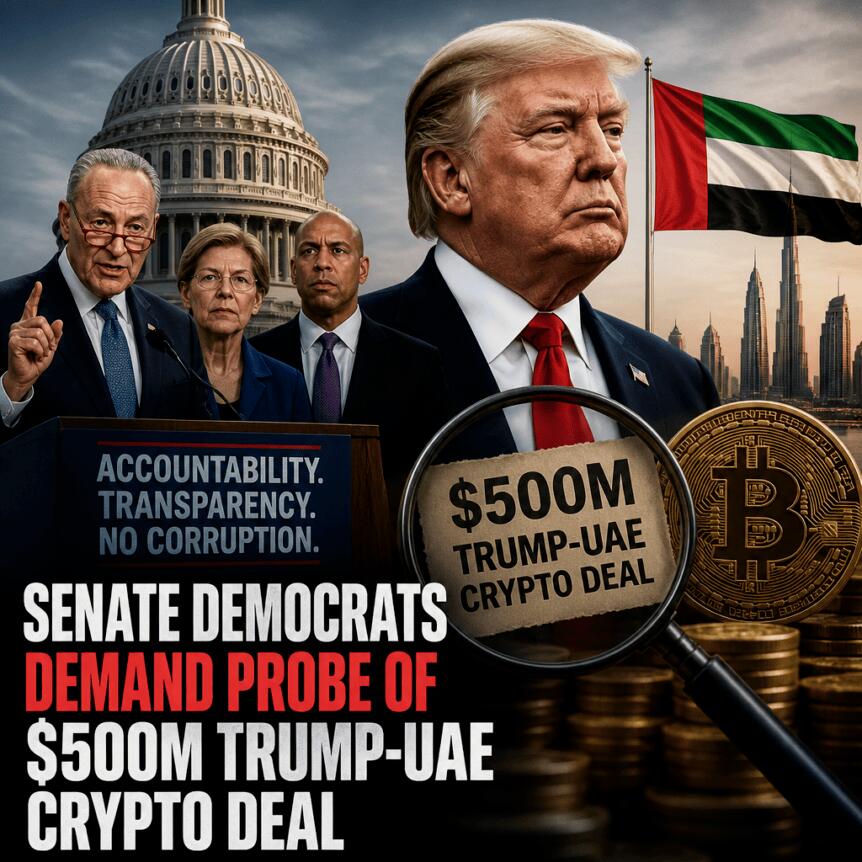
A group of US Senate Democrats is pressing Senate Republicans to open hearings into a reported $500 million investment that links a Trump-linked crypto firm to Abu Dhabi royalty, arguing the transaction could raise national security and conflict-of-interest concerns.
In a letter sent Tuesday, the lawmakers urged Republican leadership—who control the Senate’s committee system and set whether hearings move forward—to call witnesses from the Trump administration and to investigate whether the reported deal between the Trump family’s crypto company and a UAE-backed investor influenced decisions made by the president or his officials. The letter also points to broader concerns that the administration has weakened crypto enforcement.
Key takeaways
- Senate Democrats want immediate Senate hearings into a reported $500 million UAE-linked deal involving Trump family crypto interests.
- The lawmakers are asking for testimony from Trump administration officials “under oath” regarding the investment and related developments.
- They cite national security worries, including concerns that sensitive technology could be accessed by China after a major UAE arms and chip agreement.
- The letter links the investigation request to claims that the administration has loosened crypto compliance and enforcement efforts.
UAE investment into Trump-linked World Liberty Financial under scrutiny
The push follows reporting that an Abu Dhabi investment company backed by Sheikh Tahnoon bin Zayed Al Nahyan—an adviser to the United Arab Emirates’ national security apparatus—signed a deal in January 2025 to purchase a 49% stake in World Liberty Financial, a crypto platform associated with President Donald Trump, according to the Wall Street Journal as referenced earlier by Cointelegraph.
The Democrats’ Tuesday letter treats the reported transaction as more than an ordinary business arrangement. It argues that Congress should examine both the investment details and whether the deal affected subsequent actions by the president and the administration.
According to the letter, the senators are “deeply concerned” about what the UAE may receive—or may have already received—“at the expense of US national security.” They also argue that Congress must investigate whether the reported investment influenced decisions taken by President Trump.
National security concerns extend beyond crypto
The lawmakers point to additional context involving the UAE and the US administration. In May 2025, the Trump administration agreed to a major arms and artificial intelligence chip deal with the UAE, a development the senators said occurred “despite concerns raised by US national security officials that China could access the chips.”
President Trump has previously denied awareness of the World Liberty Financial deal, according to coverage referenced by Cointelegraph, which cited Trump’s position that he was not aware of the arrangement.
For the Democrats, the combination of a reported UAE investment in a Trump-connected crypto platform and a subsequent US-UAE technology and defense agreement is the heart of the scrutiny. Their central question is whether there is an asymmetry in benefits—whether the UAE may have obtained preferential access or other advantages in connection with both economic and strategic ties, even if the president says he was unaware of the crypto transaction.
Claims about weakening crypto enforcement fuel the call
Beyond the specific investment, the letter also ties the investigation request to what the senators describe as steps to weaken enforcement in the crypto sector. The Democrats cite concerns about actions such as exempting crypto service providers from certain financial services regulations and disbanding the Justice Department’s crypto enforcement team.
The senators—Elizabeth Warren, Richard Blumenthal, Gary Peters, Dick Durbin, and Ron Wyden—appear to be arguing that congressional oversight is needed not only to evaluate potential foreign influence around a high-profile crypto entity, but also to determine whether enforcement posture changes have reduced deterrence or oversight at a time when the sector’s regulatory and compliance framework is evolving.
Previous Democratic probes and pressure campaigns
This request is part of a broader pattern of Democratic scrutiny around World Liberty Financial and Trump-linked crypto interests.
Earlier this year, Cointelegraph reported that Senate Democrats urged the Treasury Secretary to determine whether the UAE stake should be reviewed under the Committee on Foreign Investment (CFIUS) framework, pointing to the possibility that foreign investment could implicate national security concerns. That push, according to prior coverage referenced by Cointelegraph, specifically urged Treasury Secretary Scott Bessent to assess whether the deal warranted a CFIUS probe.
Democrats have also raised questions about how regulators have handled enforcement decisions in the crypto space. Earlier coverage referenced by Cointelegraph described senators pressing Securities and Exchange Commission Chair Paul Atkins concerning the decision to drop a fraud case involving Justin Sun, a major backer associated with World Liberty Financial.
Separately, lawmakers have pursued investigations beyond crypto investment ties. In May, Democratic Senator Peter Welch and Representative Dave Min launched a probe into Trump’s pardons, including the pardon of Binance co-founder Changpeng Zhao. That inquiry came after Binance accepted a $2 billion investment from an Abu Dhabi fund in early 2025 and agreed that the funds would be paid in World Liberty Financial’s stablecoin, USD1.
Taken together, the new letter suggests Democrats intend to keep pressure on the oversight agenda—moving from regulatory enforcement questions and transaction scrutiny toward potential connections between foreign investment, presidential decision-making, and enforcement posture changes.
What to watch next
The next step hinges on whether Senate Republicans agree to schedule hearings and, if so, what specific questions committees will put to Trump administration officials and other witnesses about the reported UAE investment, related communications, and the administration’s enforcement decisions. With the national security and conflict-of-interest concerns now being formally framed as matters for congressional investigation, the key uncertainty is whether oversight will expand beyond allegations into documented evidence and official timelines.
Zcash miner Fortitude Mining Holdings is set to merge with medical technology company HeartSciences in a deal that will allow Fortitude to become publicly traded without pursuing a traditional initial public offering.
The all-stock transaction announced Tuesday will see Fortitude’s management team assume control of the combined company, which will operate under the Fortitude name and is expected to trade on Nasdaq under the ticker symbol TUDE, subject to regulatory approval. Existing HeartSciences shareholders will retain a minority ownership stake.
HeartSciences CEO Andrew Simpson hinted at the rationale behind the transaction, saying it would free the company from “the constant cycle of raising capital” while providing what it believes is the best path forward for shareholders.
While the combination brings together two unrelated businesses — Fortitude mines digital assets, while HeartSciences develops AI-enabled cardiac diagnostics — the deal is effectively a reverse merger that gives Fortitude access to the public markets through an existing Nasdaq-listed company. For HeartSciences, which has faced ongoing capital needs, the transaction offers shareholders continued exposure to a publicly traded business while allowing its healthcare unit to continue operating under Simpson’s leadership.
The structure is similar to other crypto companies that have reached the public markets through mergers rather than traditional IPOs. For example, Bitcoin miner Core Scientific listed via a SPAC merger in 2022, while Cipher Mining also went public through a SPAC transaction.
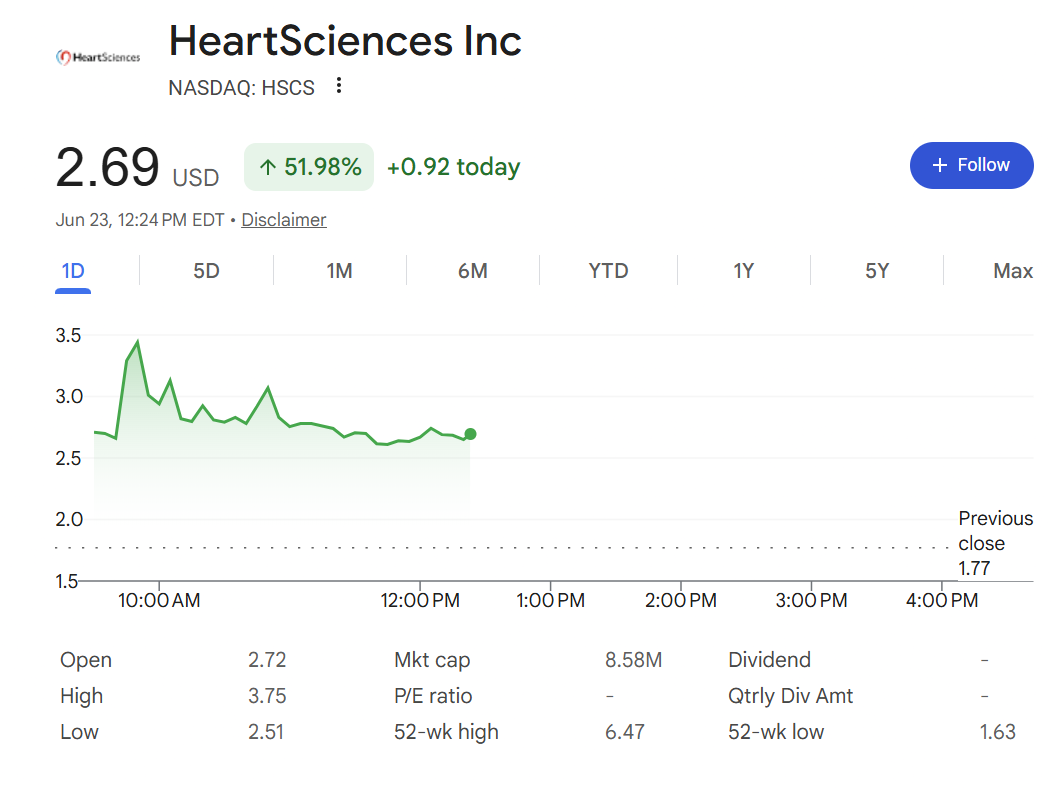
Shares of HeartSciences, which continue to trade on Nasdaq under the ticker HSCS pending completion of the transaction, rose as much as 91% on Tuesday, according to Google Finance data.
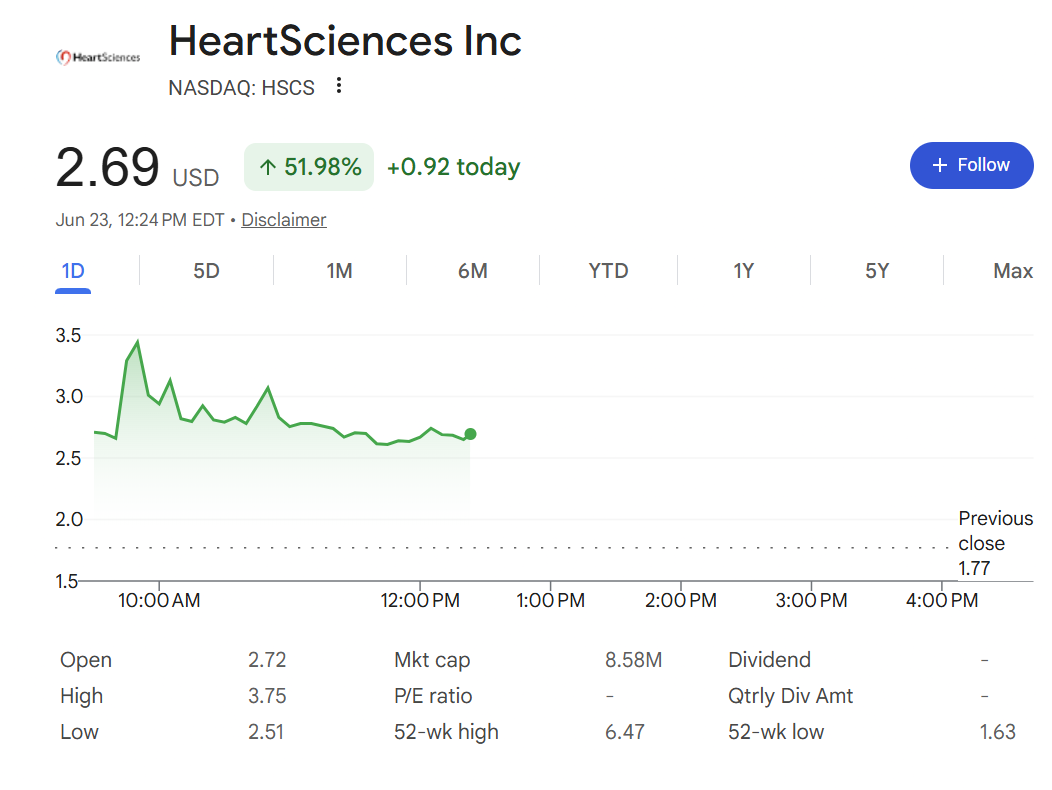
HeartSciences stock. Source: Google Finance
Related: CoinShares stock makes US debut on Nasdaq following SPAC merger
HeartSciences remained unprofitable before merger deal
HeartSciences has yet to achieve meaningful commercial revenue and has reported net losses for several consecutive years. According to MarketScreener, the company generated minimal revenue in fiscal 2025 while its net loss widened to $8.77 million from $6.61 million a year earlier.
Despite its financial challenges, HeartSciences advanced its product roadmap in fiscal 2025, launching its MyoVista Insights software platform, which is designed to modernize existing ECG management systems.
As a privately held company, Fortitude has disclosed little about its finances. However, it said it had scaled its annualized production to 157,000 Zcash (ZEC) as of May 31. ZEC was last trading at about $413 apiece, CoinMarketCap data showed at time of publication. That gave the token a market cap of $6.92 billion.


Bitcoin and ether are grinding toward the lower end of their recent ranges, major market making firm Wintermute’s OTC trading desk said in a Wednesday note shared with CoinDesk, with both assets caught between last week’s hawkish Fed and the stop-start Iran headlines.
Options markets price a relatively tight move for the next 24 hours. Wintermute’s one-day straddle, a measure of expected swing derived from options pricing, put bitcoin in a $61,242 to $63,563 range and ether between $1,606 and $1,694, implying moves of about 1.9% and 2.7% respectively.
The backdrop is deteriorating. Token correlations are rising, meaning assets are moving together rather than on their own fundamentals, while liquidity is thinning into the summer months with no fresh institutional bid visible in ETF flows.
Wintermute flagged $59,000 as the level to watch, calling it the bear market low and the key support if current pressure continues.
Three catalysts shape the rest of the week: the U.S.-Iran peace deal and whether it holds, Thursday’s PCE inflation print, the Fed’s preferred measure of price growth, and the quarterly options expiry at month-end, which can amplify moves as traders roll or close large positions.


The Commodity Futures Trading Commission sued Kentucky on Tuesday to stop the state from using its own laws to shut down federally registered prediction markets. The suit widens a campaign the agency has now pressed against a string of states. The CFTC filed a Complaint for Declaratory and… Read the full story at The Defiant


Cboe Global Markets has rolled out the first product in Cboe Predicts, its new prediction markets suite, listing binary options on the Mini-S&P 500 Index (XSP) through Interactive Brokers.
Charles Schwab will add access in the coming months, with other brokers to follow.
Cboe Targets Prediction Markets With Mini-S&P 500 Contracts
According to the press release, the contracts are listed under the symbols XSPBW and XSPBX.
“Cboe Predicts represents the latest expansion of Cboe’s S&P 500 Index (SPX) product suite. XSP allows customers to trade on the performance of the S&P 500 Index (SPX) but is scaled to 1/10th the size of SPX – making it a smaller, more retail-friendly alternative,” the global markets operator said.
Follow us on X to get the latest news as it happens
The contracts let traders take a simple yes-or-no position on where the index closes. A “yes” position pays $100 if the index settles at or above a chosen level. A “no” position pays the same if it settles below.
Cboe routes the products through leading retail brokers and clears them centrally through the Options Clearing Corporation (OCC).
JJ Kinahan, Cboe’s Head of Retail Expansion, tied the move to demand following zero-days-to-expiration (0DTE) options. Rob Hocking, Cboe’s Global Head of Derivatives, framed the launch as an effort to raise standards across the sector.
“We look forward to bringing our experience, trusted market infrastructure, and the deep liquidity of the SPX options ecosystem to prediction markets. Our goal is to help set a higher standard for market integrity, product design and investor protection…” he added.
The firm said that its future plans include adding XSP vertical spreads through Cboe’s patent-pending Quoted Spread Book. Cboe is the latest established firm to enter the territory pioneered by Polymarket and Kalshi. Even Meta reportedly wants in with a standalone app.
The launch lands as prediction markets attract record interest. Open interest across the sector recently hit an all-time high of $1.48 billion.
Subscribe to our YouTube channel to watch leaders and journalists provide expert insights
The post Cboe Joins Prediction Market Race With Mini S&P 500 Binary Options appeared first on BeInCrypto.
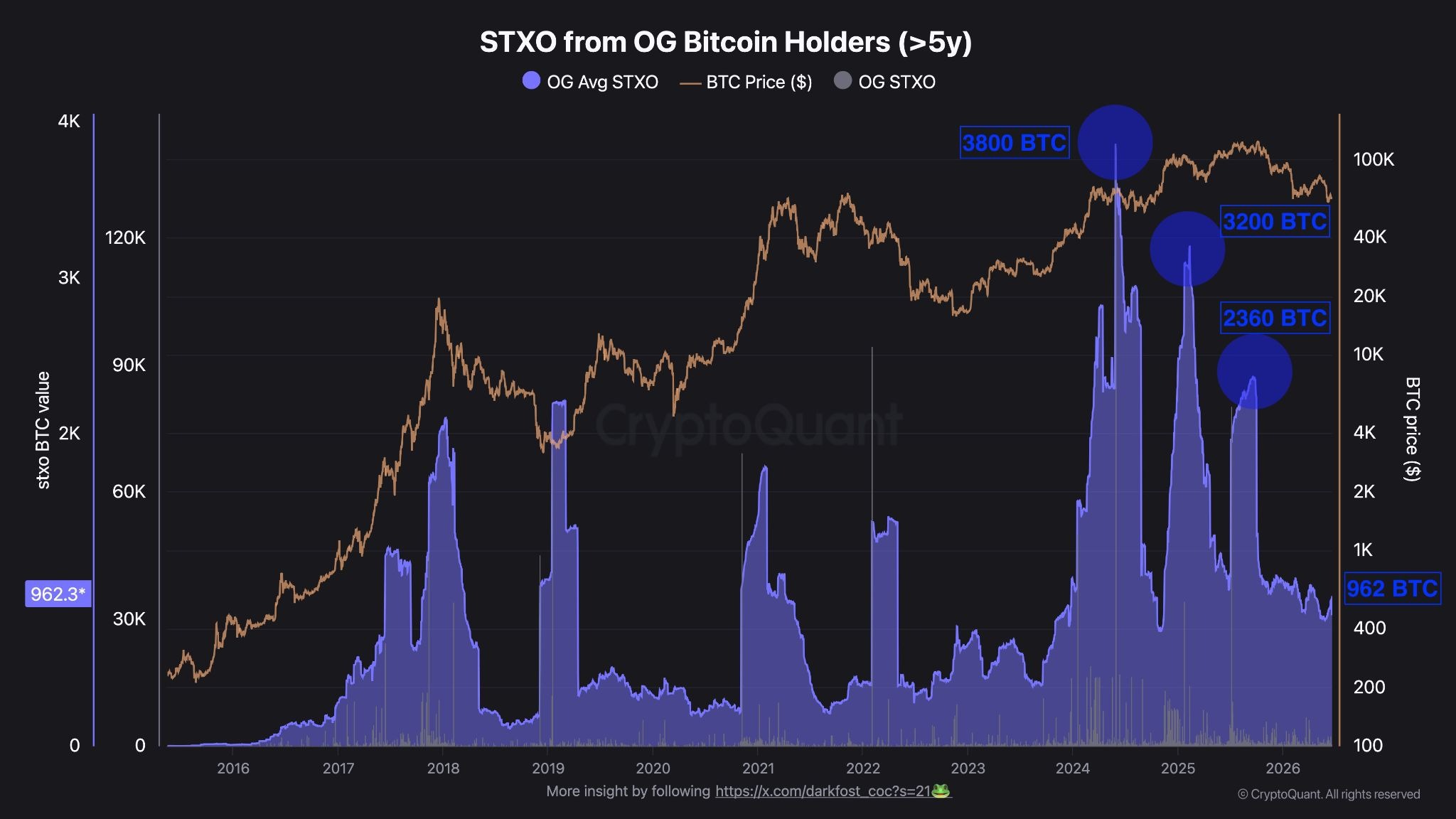
Bitcoin (BTC) holders who acquired their coins more than five years ago have cut spending to a 90-day average of 962 BTC, the lowest level since November 2024, according to CryptoQuant data. The slowdown follows three major spending peaks over the past two years, including a high of 3,860 BTC in May 2024.
At the same time, BTC analysts said that market and profitability indicators are converging in the second half of 2026, putting a new timeline of a potential Bitcoin bottom.
Bitcoin “OG” holders step back
Crypto analyst Darkfost said the current cycle has produced the highest level of spending by long-term Bitcoin holders on record. The cohort tracked in the dataset consists of investors who acquired Bitcoin more than five years ago.
Using spent transaction outputs (STXO), which track Bitcoin that has moved across the network, the analyst identified three major spending waves following strong rallies.
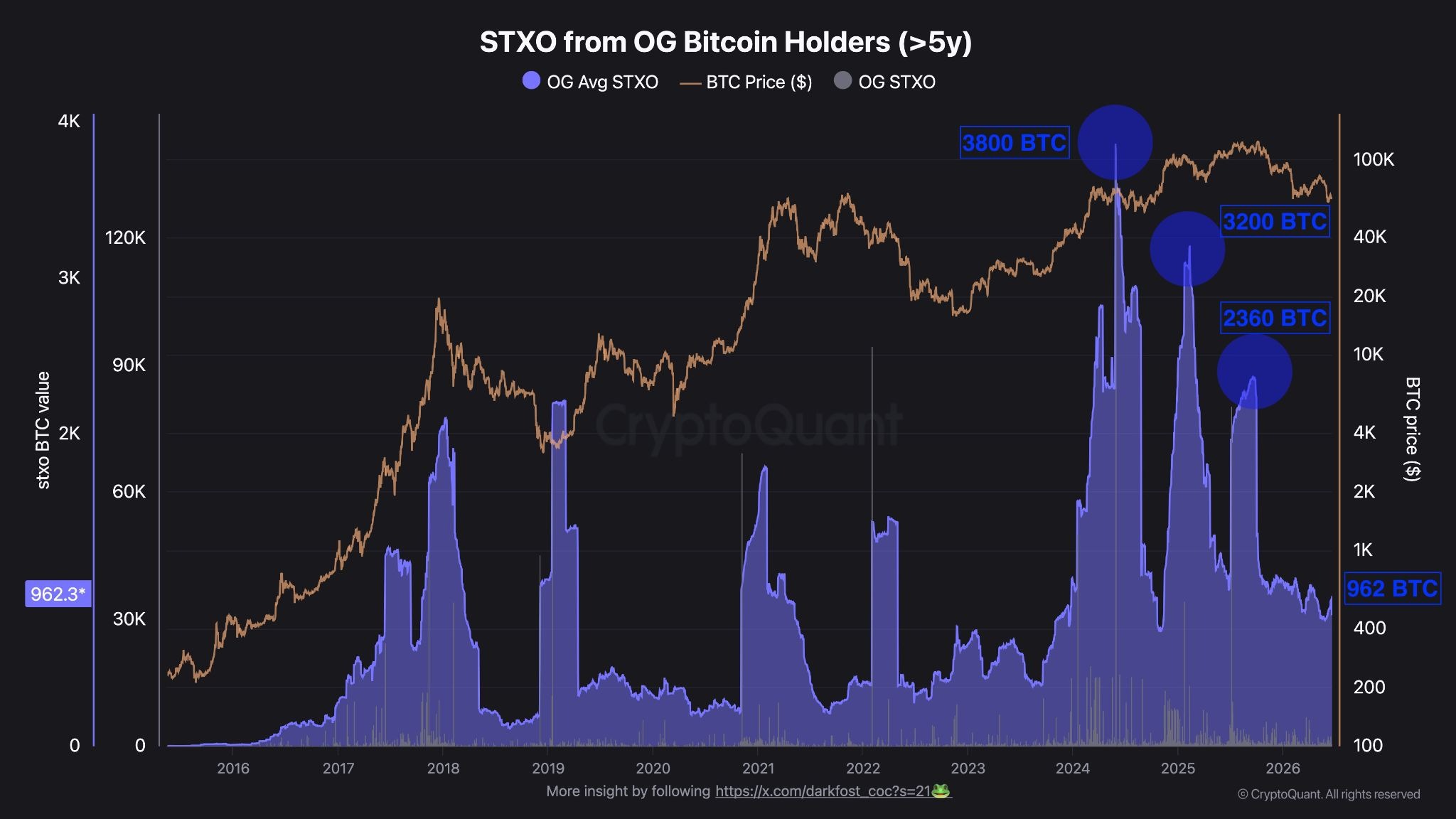
OG Bitcoin Holders selling pressure. Source: CryptoQuant
The 90-day moving average peaked at 3,860 BTC in May 2024, 3,200 BTC in February 2025 and 2,360 BTC in September 2025. Individual sessions were far larger, with some days recording output exceeding 10,000, 30,000 and even 142,000 BTC.
That selling pressure has eased sharply. The 90-day average has dropped to 962 BTC, the lowest reading in 19 months. Darkfost said the most expensive coins held by this group were acquired for about $63,200, which is close to current prices. This indicates that many of these holders are choosing not to sell, even though their holdings are trading near their highest cost basis.
Bitcoin Researcher Axel Adler Jr. further noted a split between newer and older BTC investors. The analyst said that Bitcoin’s adjusted net unrealized profit/loss (aNUPL) has fallen to -0.14 from near zero a month ago, showing that the average holder has moved back into unrealized losses as BTC traded near $62,500. However, Adler Jr argued,
“STH capital has shrunk by -56%, while LTH capital has barely drawn down. Weak hands are capitulating. Strong hands have not even flinched.”
Adler Jr. added that the key metric has spent nearly half of the past three months below zero, indicating sustained pressure on newer BTC market participants rather than a broad capitulation across long-term holders.
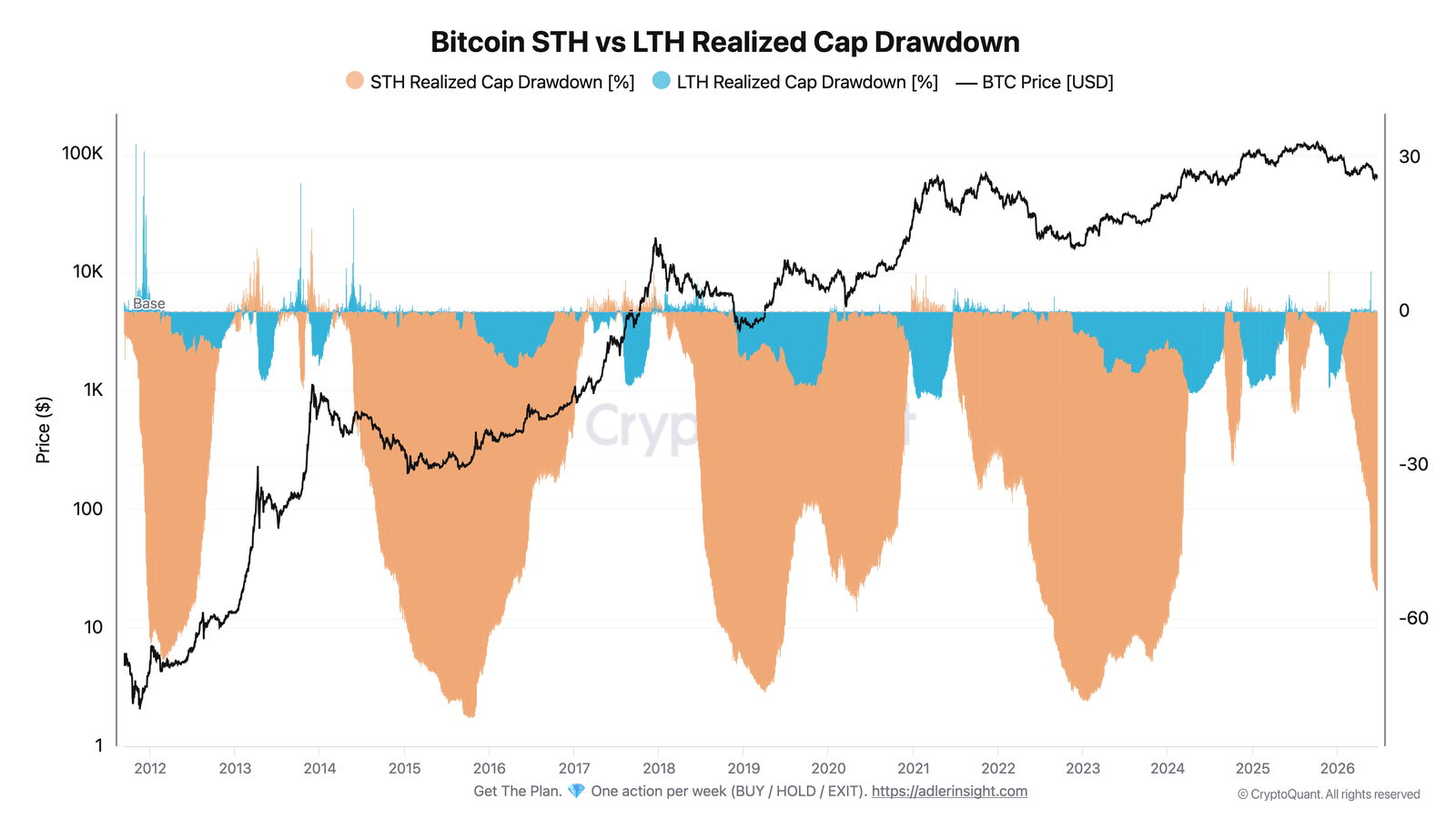
STH vs LTH realized cap analysis. Source: Axel Adler Jr.
Related: Bitcoin slump worsens amid SpaceX rout: Can BTC price hold $60K any longer?
BTC halving cycle points to September bottom, says analyst
Crypto analyst LP highlighted a recurring pattern tied to Bitcoin’s halving cycles. The previous bear market entered a final capitulation phase 826 days after the halving event, followed by a major low and sideways consolidation for 70 to 110 days.
For the current cycle, the 826-day marker falls on July 6. Applying the same timing range places a potential bottoming window in early September.
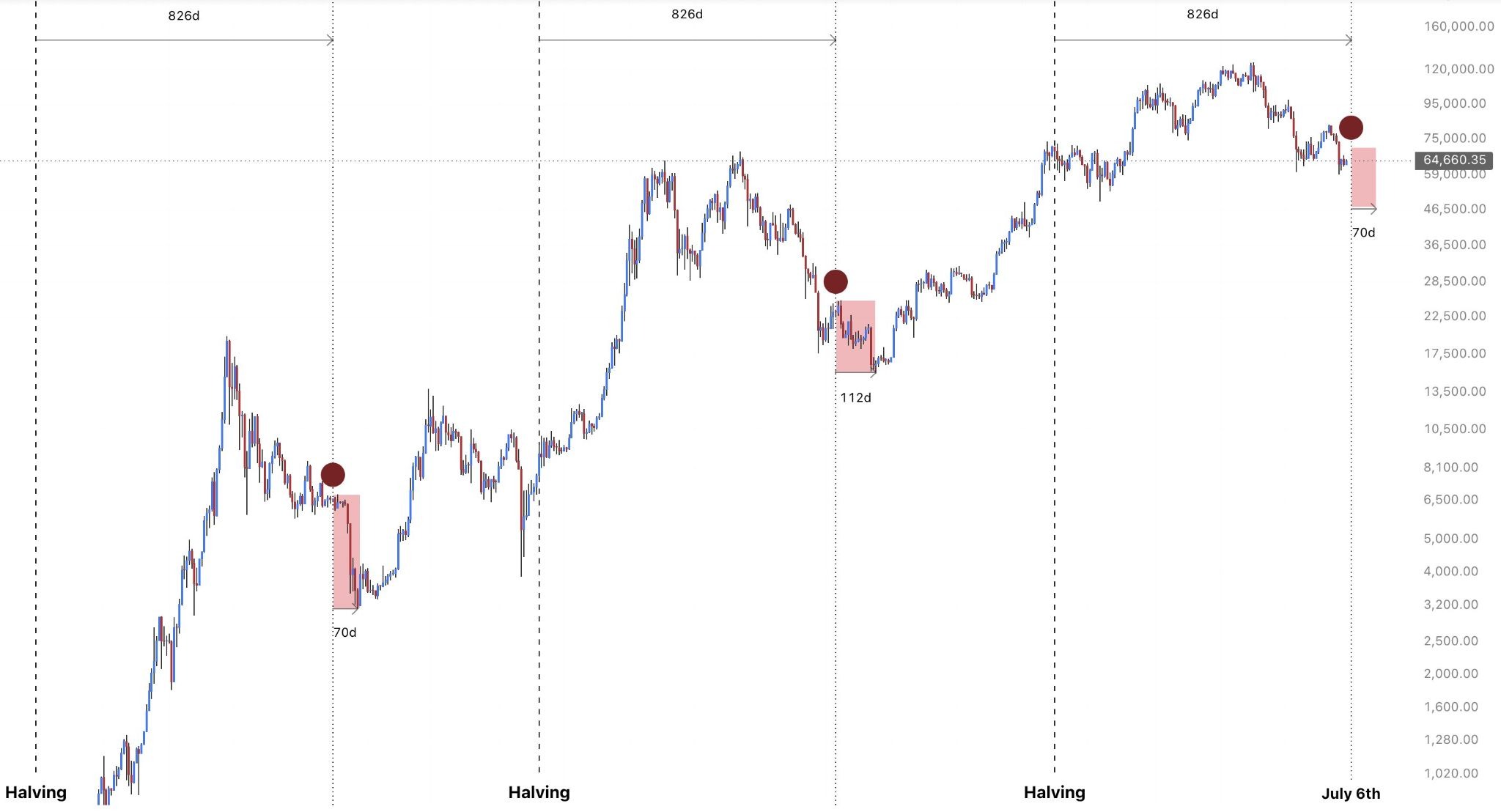
BTC bottom analysis by LP. Source: X
The trader noted that the scenario becomes more relevant if Bitcoin continues to trade higher into early July.
Likewise, BTC trader Titan also identified downside liquidity below the current levels. On the quarterly chart, Bitcoin has an untapped low near $58,900 and an open fair value gap between roughly $49,000 and $58,900.
The trader explained that leaving the quarterly low untouched throughout September may draw more attention to that liquidity zone, eventually leading to a market bottom between Q3 and Q4.
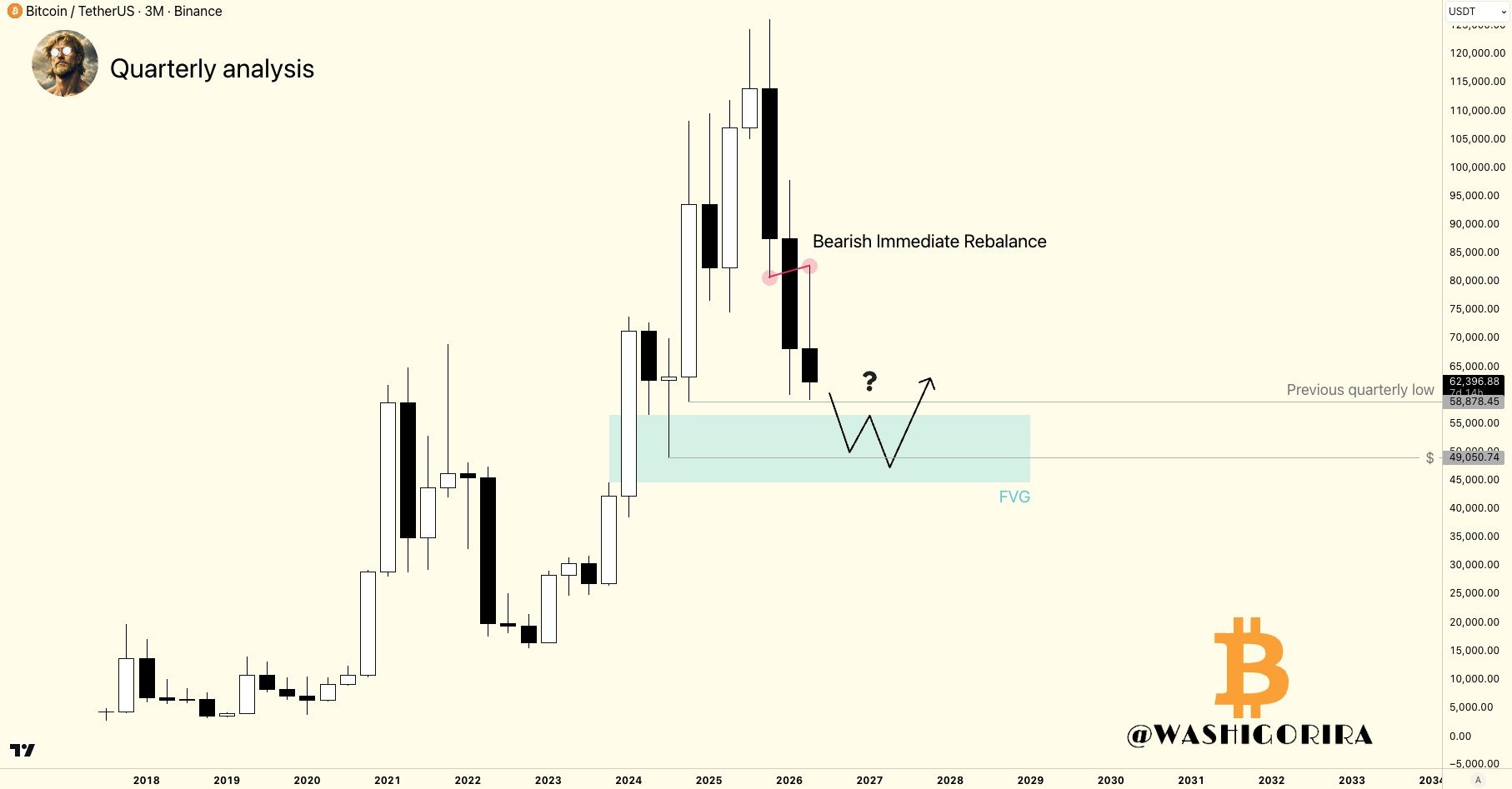
BTC quarterly analysis. Source: X
Related: Bitcoin gets new $54K warning as BTC price hits 11-day low on Asia tech sell-off
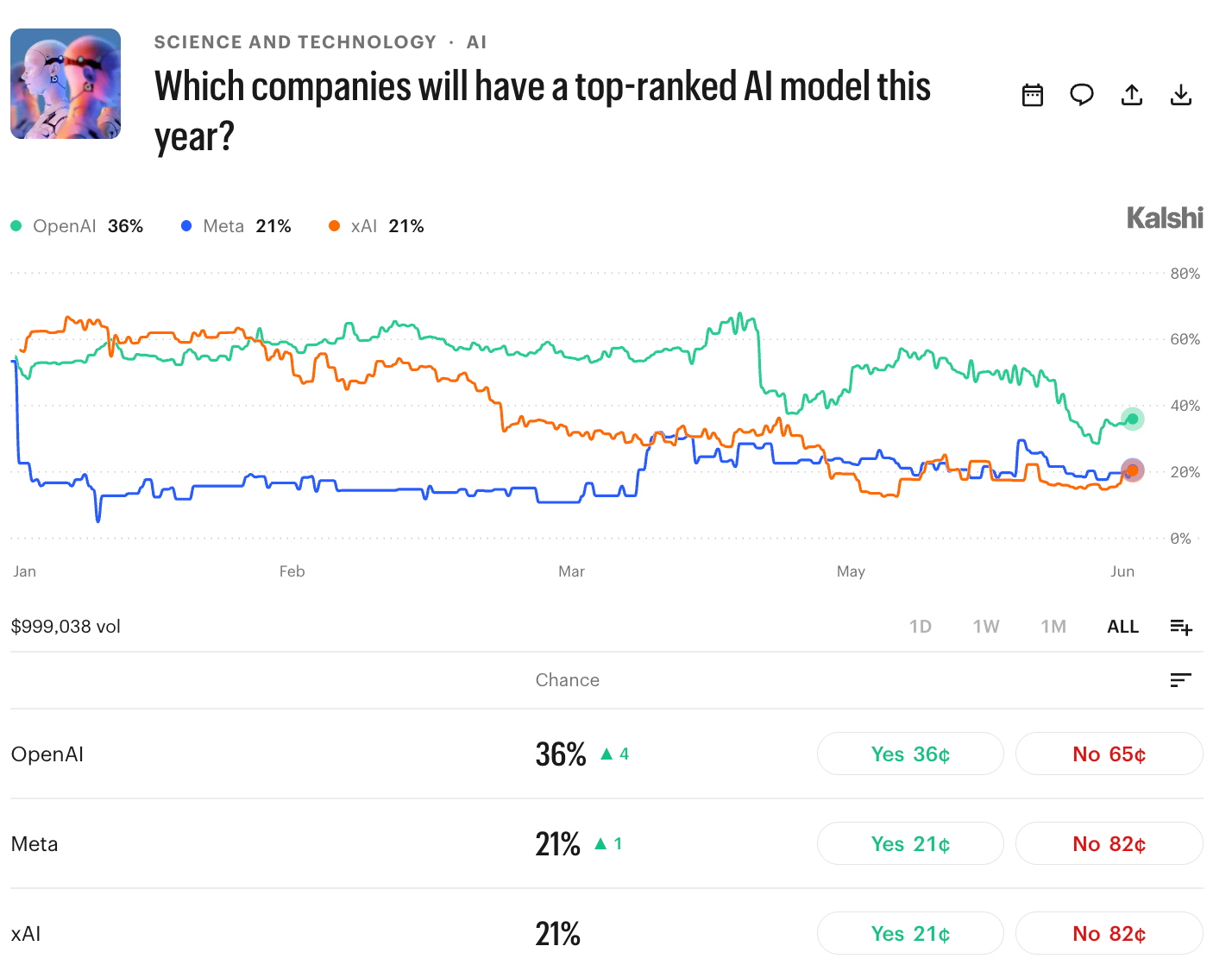
Meta CEO Mark Zuckerberg has reportedly directed his staff to create a prediction markets mobile app called “Arena” in what could become a challenge to platforms like Kalshi and Polymarket.
According to a Tuesday New York Times report citing two employees with knowledge of the matter, Zuckerberg ordered the development of the prediction markets app that would allow users to place wagers using a points system rather than money. The app will reportedly function independently of Meta’s existing platforms, including Facebook and Instagram.
The news outlet said insiders described the effort as experimental but a top priority for the company. If launched, it could challenge Kalshi’s and Polymarket’s market share for prediction markets, with Meta reporting its apps drew in 3.56 billion users daily as of March.
Meta has previously attempted to launch products with potential impacts on the crypto and blockchain industry, including its planned Libra stablecoin in 2019 that was later rebranded to Diem and dropped in 2022. In April, the company rolled out USDC payouts for certain Facebook creators in Colombia and the Philippines, with some US lawmakers expressing concerns about Meta’s US plans for stablecoins.
Meta reportedly planned to cut 10% of its staff in April amid the company pivoting to artificial intelligence, a move expected to affect about 8,000 people.
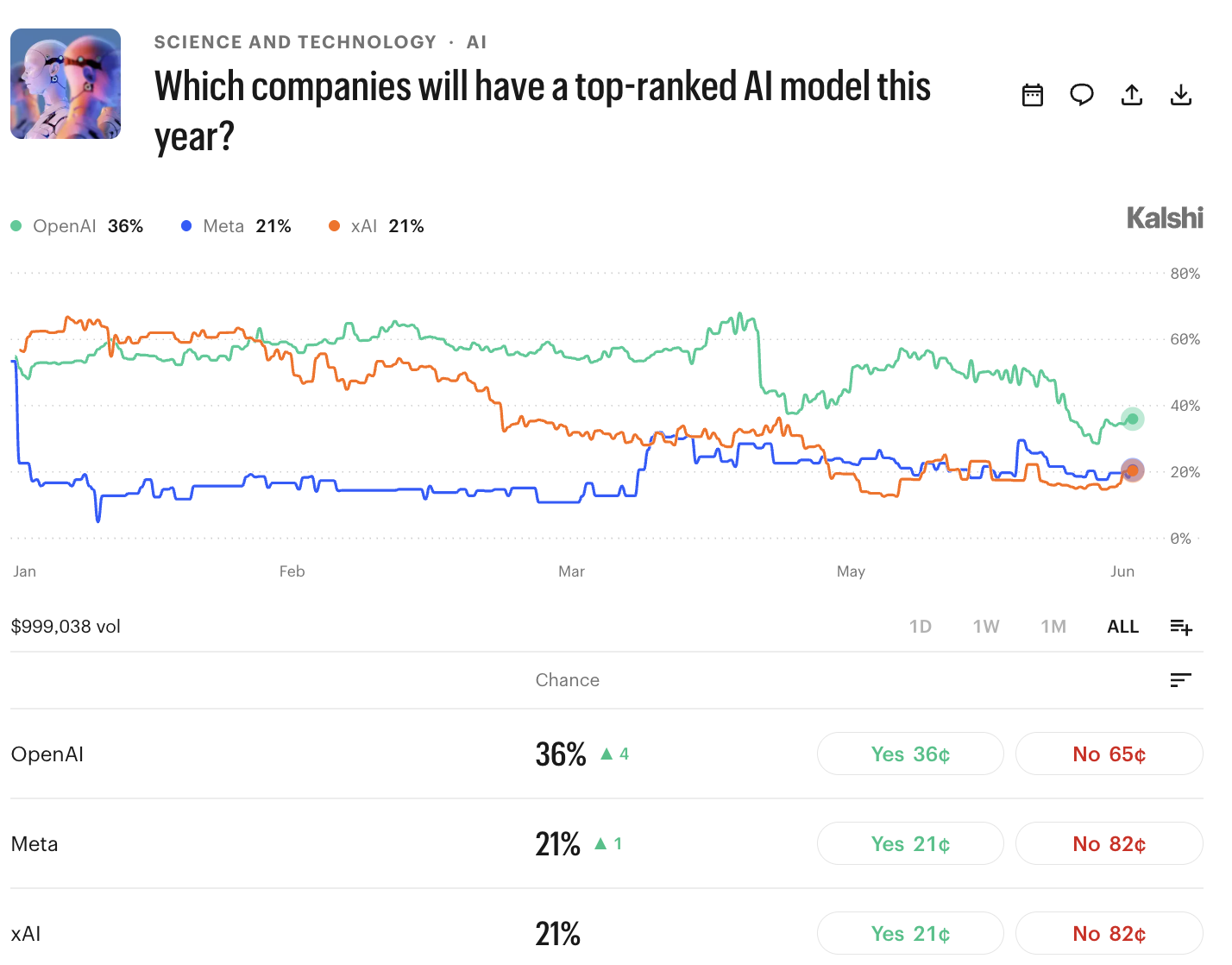
Source: Kalshi
Prediction markets still under scrutiny in US
While US regulators like the Commodity Futures Trading Commission (CFTC) remain engaged in legal battles with several state authorities over prediction markets, lawmakers are also considering legislation to address issues like insider trading and profiting from nonpublic information while in office.
Some of lawmakers’ concerns stemmed from a soldier allegedly making more than $400,000 on a Polymarket event contract related to the capture of Venezuela President Nicolás Maduro, removed by US forces in January to face a criminal trial in New York City. The soldier, Gannon Ken Van Dyke, is scheduled to go to trial in December.
Magazine: Japanese pension fund tips 1% in crypto, G7 urges action on NK hackers: Asia Express


Micron, Marvell and On Semiconductor, each more than doubled in 2026, led the drop. The selloff pulled the S&P 500 down 1.4% and the Nasdaq 100 down 3.3%. An attempted rebound in Asian chip stocks failed to hold on Wednesday, with Taiwan Semiconductor down more than 3%.
Oil kept falling as the other half of the macro picture. Brent crude slipped about 1% toward $76 a barrel as tanker traffic through the Strait of Hormuz became more visible following the US-Iran interim peace deal. A gauge of the dollar climbed to a seven-month high as investors moved toward safer assets.
The crypto-specific signal sits in the fund flows, said Mike McCluskey, co-founder of tx, in an email to CoinDesk. He called bitcoin’s stabilization in the low-to-mid $60,000s a measured response to the Federal Reserve’s hawkish turn, given how hard such shifts usually hit digital assets.
US spot bitcoin ETFs have seen a record 30-day net outflow of more than $6 billion, which McCluskey described as sustained institutional de-risking by the same buyers that drove this cycle. Until those flows clearly reverse, he said, relief rallies are likely to hit a hard ceiling.
McCluskey also flagged Friday’s options expiry on Deribit, with roughly $10.6 billion in notional value set to expire. An option is a contract giving the right to buy or sell at a set price, and notional value is the total value of the assets those contracts cover.
Zero-knowledge scaling company StarkWare has introduced Private KYC on Starknet, enabling users to complete know-your-customer requirements without revealing their full personal information.
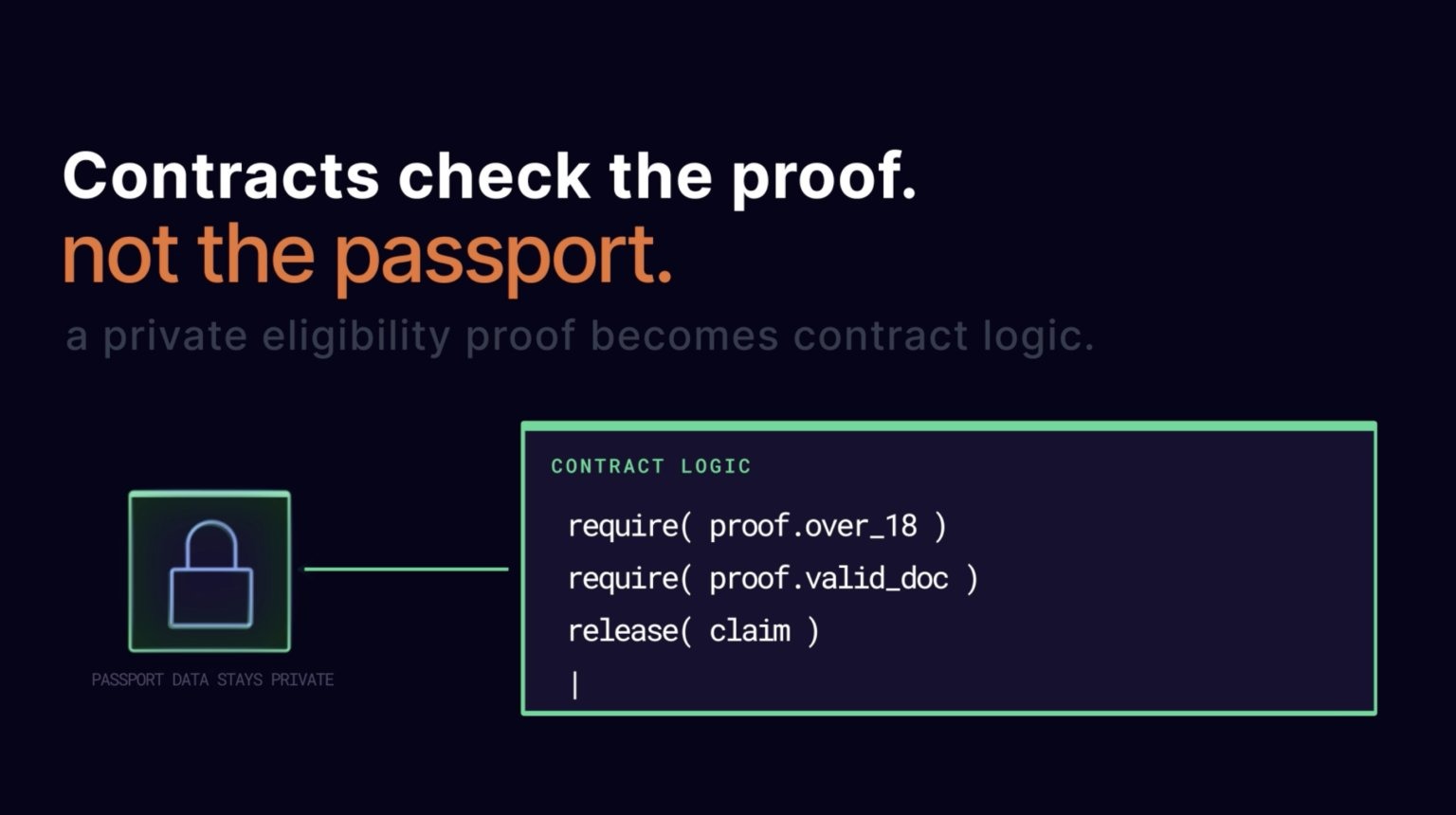
The system, announced Tuesday as a demo, uses STRK20 privacy features and zero-knowledge STARK proofs to let users prove specific attributes, such as being older than 18 or holding valid credentials, without revealing their full passport details or address.
“Whether you need to prove you’re over 18, hold a valid credential or meet an eligibility rule, verification should only confirm the precise fact,” StarkWare said. Corporations should not collect the full identity behind it, “because every identity database becomes a liability the moment it exists.”
KYC compliance involves handing over personal information and trusting companies to keep it safe. The rollout comes as the US hit a record 3,322 data compromises in 2025, a 79% increase over five years, and the global average cost of a data breach is $4.4 million, according to StationX.
StarkWare users start by scanning their passport on their phones, using the camera and NFC chip to read and confirm the document is genuine and signed by its issuing authority.
They can then encrypt identity data to their Starknet wallet, register attributes in a public onchain registry, and submit zero-knowledge proofs for selective checks. Verifiers can confirm eligibility by reading the public registry without ever seeing the actual identity data.
Related: Privacy push as StarkWare and Sui move toward compliance-ready confidential transfers
“Private KYC shows that verification and privacy aren’t a trade-off,” StarkWare said. “An institution can confirm exactly what it needs without assembling another copy of someone’s identity it then has to defend.”
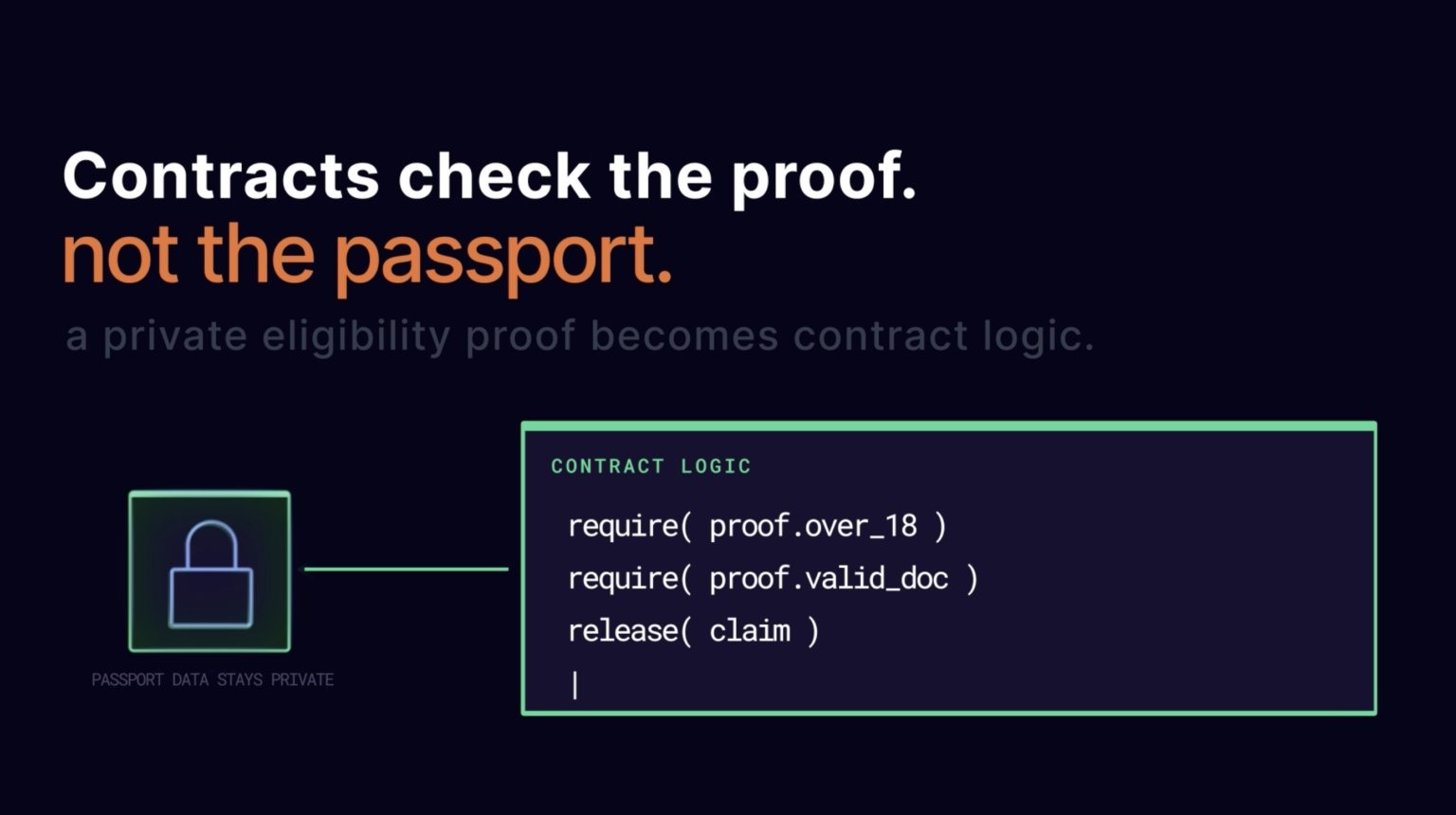
Contracts check the proofs, not the passports. Source: StarkWare
“Identity checks today ask for your whole document when they only need one fact,” the Starknet team said.
The system is similar to Sam Altman’s World ID (Worldcoin), which uses zk-proofs to verify humanness via iris scans on hardware orbs. However, World ID faced backlash over centralized biometric custody, whereas StarkWare’s self-custody model aims to address that issue.
Data breaches cost millions
According to Axis Intelligence, more than 1 billion health care records have been breached, with an average cost of $7.42 million, as of 2026. In the US, 772 large health care data breaches were confirmed in 2025, the highest annual total ever recorded.
The largest and most damaging data breach in the crypto industry occurred at hardware wallet provider Ledger, which suffered a massive database hack in 2020, resulting in the leak of more than 270,000 customer records and a wave of phishing attacks that continue to this day.
Magazine: Japanese pension fund tips 1% in crypto, G7 urges action on NK hackers: Asia Express
XRP JUST WENT LIVE?!?! (TRIPLE DIGITS INCOMING??!)

Getty Images Jumps Following OpenAI Partnership

CFTC Chair Reiterates Origins in Regulating Agricultural Markets, Despite Crypto and Prediction Markets Push


-

 Fashion4 days ago
Weekend Open Thread: Miami – Corporette.com
-

 Entertainment3 days ago
Renter of Home in Anne Heche Crash Denies Settlement With Son
-

 Tech2 days ago
Microsoft accidentally kills epic Outlook email threads
-

 Business3 days ago
Soccer-U.S. defends Iran World Cup travel restrictions, says discussions ongoing
-

 Politics5 days ago
BBC Reporter Discusses Cross Party Criticism Of Trumps Iran Deal
-
 Sports10 hours ago
Two goals and an assist by sheer aura: Cristiano Ronaldo just entered the World Cup chat
-
 Business4 days ago
Wall Street Week Ahead: Investors see Micron earnings as pulse check of AI rally momentum
-
Business5 hours ago
Entergy settles forward sale agreements, raises $672 million in cash proceeds
-

 Politics4 days ago
Andy Burnham and the meaning of Makerfield
-

 Tech6 days ago
AWS enters the context layer race with a graph that learns from agents, not manual curation
-
 Crypto World4 days ago
Can Charles Hoskinson Really Rescue Cardano?
-

 Crypto World4 days ago
HIVE shares jump as $220M AI deal speeds Bitcoin mining pivot
-
Crypto World2 hours ago
Bitcoin (BTC) Dips Below $62K, Ethereum (ETH) Plunges 6% Daily: Market Watch
-

 Crypto World4 days ago
Jake Chervinsky accuses CME of protecting derivatives monopoly
-

 NewsBeat5 days ago
Keir Starmer Allies Question His Chances For No 10
-

 Tech1 day ago
Nearly 7,000 fake Amazon domains registered ahead of Prime Day 2026, researchers warn
-

 Business5 days ago
Brexit cost 6% of UK economy, Bank of England company data suggests
-

 Sports5 days ago
FIFA World Cup 2026: Canada beat 9-men Qatar 6-0 to register first ever win | FIFA World Cup 2026
-
 Tech3 days ago
Signal’s Meredith Whittaker says AI chatbots ‘are not your friends’ and calls Copilot agents a backdoor
-

 Entertainment4 days ago
Jose Alvarado Wants Taylor Swift at More Knicks Games
You must be logged in to post a comment Login