

Business
Lucid Capital Markets initiates Palmer Square Capital BDC stock at neutral



Energy stocks slide as oil prices drop on Hormuz tanker movement


New LTO launches alongside Drakes’s Bigger Pack Devil Dogs.
Travere Therapeutics stock hits 52-week high at 56.9 USD


Protein Pops are ice cream bars dipped in a quinoa-studded milk chocolate coating.
Shares of Xero Limited rose 8.29% to $70.39 on Wednesday, recovering from a steep, multi-day decline that had pushed the New Zealand-based accounting software company well below its 52-week high amid broader weakness across ASX-listed technology stocks.
A Difficult Recent Stretch
The rebound came after a notably rough run for the stock heading into Wednesday’s session. The Xero Limited stock price fell by 4.54% on Monday, June 22, from $71.88 to $68.62. The price had fallen in eight of the last ten trading days and was down 13.44% over that period. A sell signal was issued from a pivot top point on Tuesday, June 2, 2026, and the stock had fallen more than 21% from that level by the time it bottomed out.
The scale of the recent pullback becomes clearer when measured against where the stock stood just a year earlier. Xero reached its all-time high on June 24, 2025, with a price of 196.52 Australian dollars. The stock’s current trading level represents a fraction of that peak, reflecting a sharp and sustained reversal in investor sentiment toward the company over the past 12 months.
Part of a Broader ASX Technology Selloff
Xero’s struggles have not occurred in isolation, with several other prominent ASX-listed technology names suffering similarly steep declines during the same recent stretch. WiseTech Global Limited fell 4.39% in the same session that saw Xero decline sharply, while Technology One Limited dropped 7.10%, Life360 fell 3.67%, and SiteMinder declined 5.96% — illustrating a broad-based retreat across Australia’s technology sector rather than a problem isolated to Xero specifically.
Beyond the broader sector weakness, Xero’s own recent financial results have also weighed on sentiment. XRO earnings for the last half-year came in at 0.10 Australian dollars per share, whereas the estimation was 0.49 Australian dollars, resulting in a 79.48% negative surprise. Net income for the last half-year was 28.12 million Australian dollars, compared to 123.41 million Australian dollars in the previous reporting period — a substantial decline that likely contributed meaningfully to the stock’s recent downward pressure heading into this week.
What the Company Actually Does
Xero Limited, together with its subsidiaries, provides online business solutions for small businesses and their advisors in Australia, New Zealand, the United Kingdom, the United States, and internationally. It offers accounting, payroll, payments, and other solutions through its Xero platform. The company also provides Planday, an online employee scheduling software; Hubdoc for bills and receipts; Syft, which creates reports, forecasts, dashboards, and consolidations with AI insights; Melio, a platform for paying bills, sending invoices, and automating accounts payable and receivable workflows; TaxCycle, tax preparation software for accountants and bookkeepers; and Tickstar, an e-invoicing product.
Xero Limited was founded by Rodney Kenneth Drury and Hamish Edwards on July 6, 2006, and is headquartered in Wellington, New Zealand. The company’s products are based on the software-as-a-service model and sold by subscription, based on the type and number of entities managed by the subscriber, with its products used in over 180 countries worldwide.
A Sizable but Shrinking Market Capitalization
The company’s overall market value has contracted noticeably alongside the recent share price weakness. Xero’s market capitalization stands at approximately 11.70 billion Australian dollars, having decreased by 2.39% over the prior week alone, reflecting the cumulative effect of the stock’s recent multi-day losing streak.
Unlike some of its more established technology peers, Xero has historically reinvested its earnings into growth rather than returning cash to shareholders through dividends. As of yet, the company has not paid out any dividends since its debut on the ASX on November 8, 2012.
Technical Indicators Had Turned Negative Before the Bounce
Ahead of Wednesday’s rally, technical analysis services had grown increasingly cautious on the stock’s near-term prospects. The Xero Limited stock held sell signals from both short and long-term moving averages, giving a more negative forecast for the stock heading into the week, with one analysis downgrading its rating on the stock from a Hold to a Sell candidate due to the weakening technical picture.
Some technical analysts have pointed to a specific historical price level as a key area to watch for the stock’s longer-term trajectory. The monthly chart shows that XRO has returned to a massive structural support zone dating back to 2019-2020, a “full circle” correction that has reset the technicals and could allow for a long-term swing trade toward higher levels if that support holds.
A Historic Multi-Year Rally Preceded the Recent Decline
Despite the stock’s recent struggles, Xero’s longer-term track record includes one of the more dramatic rallies among ASX-listed technology companies in recent history. Xero experienced a significant rally from June 2018 to February 2021, climbing 243% from around $46 to $158 over a span of 126 weeks — a run that helped establish the company as one of the standout growth stories on the Australian exchange before the more recent reversal.
Despite the earnings miss, the company’s underlying operating metrics show a business that remains profitable on an EBITDA basis, even amid the broader share price volatility. Xero’s EBITDA stands at 664.70 million Australian dollars, with a current EBITDA margin of 27.36% — figures that suggest the core business continues generating meaningful operating income even as net income has come under pressure in the most recent reporting period.
With Xero’s next earnings report scheduled for November 12, 2026, investors will have an extended window to assess whether the recent earnings miss and broader technology sector weakness prove to be a temporary setback or the start of a more sustained decline in the company’s growth trajectory. Given the stock’s significant distance from its all-time high reached almost exactly a year ago, and with technical indicators only recently turning more cautious before Wednesday’s rebound, Xero’s near-term trajectory will likely remain closely tied to broader sentiment across the ASX technology sector as well as any further updates on the company’s underlying subscriber growth and profitability metrics in the months ahead.

‘The Big Money Show’ discusses U.S. control of the Strait of Hormuz, President Donald Trump’s Iran threats, and energy security.
President Donald Trump claimed energy companies are engaging in fuel price gouging and said that he has ordered the U.S. Justice Department to investigate.
“The big Oil Companies are not dropping their price at the pump commensurate with the sharply lower prices they are paying for Oil. Those prices are dropping like a rock! In other words, customers are being ‘gouged,’” Trtump asserted in a Truth Social post.
“I have instructed the DOJ to immediately start looking into this. Gasoline prices better start going down a lot faster than what I’m seeing!” he declared.
OIL TANKER TRAFFIC THROUGH STRAIT OF HORMUZ HITS HIGHEST LEVEL SINCE CONFLICT BEGAN BUT MINES REMAIN
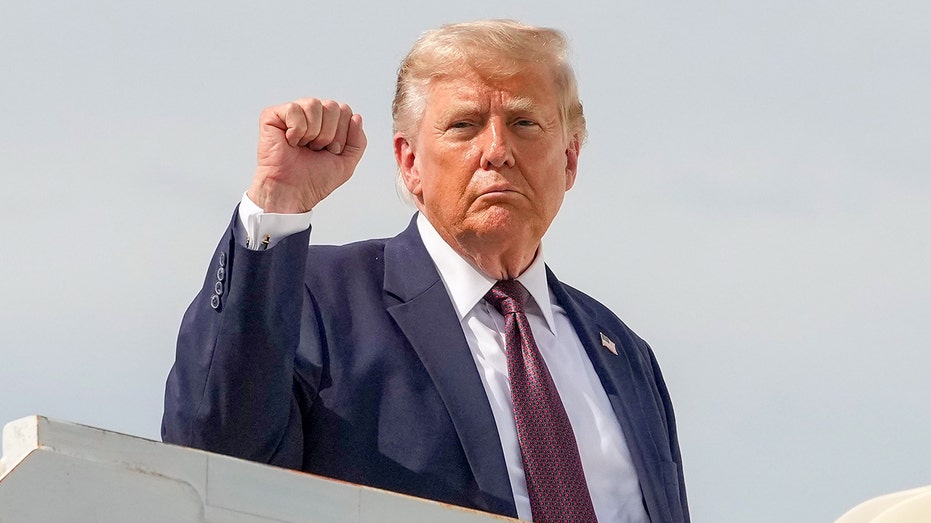
U.S. President Donald Trump gestures as he boards Air Force One to depart Reading Regional Airport on June 23, 2026 in Reading, Pa. (Andrew Harnik/Getty Images / Getty Images)
Americans have been facing higher fuel prices during the Iran war.
The AAA national average for regular gas is $3.928 as of June 24, down from the month-ago average of $4.515, though still significantly higher than the year-ago average of $3.224.
INFLATION ROSE AGAIN IN MAY AS ELEVATED ENERGY PRICES SQUEEZE CONSUMERS
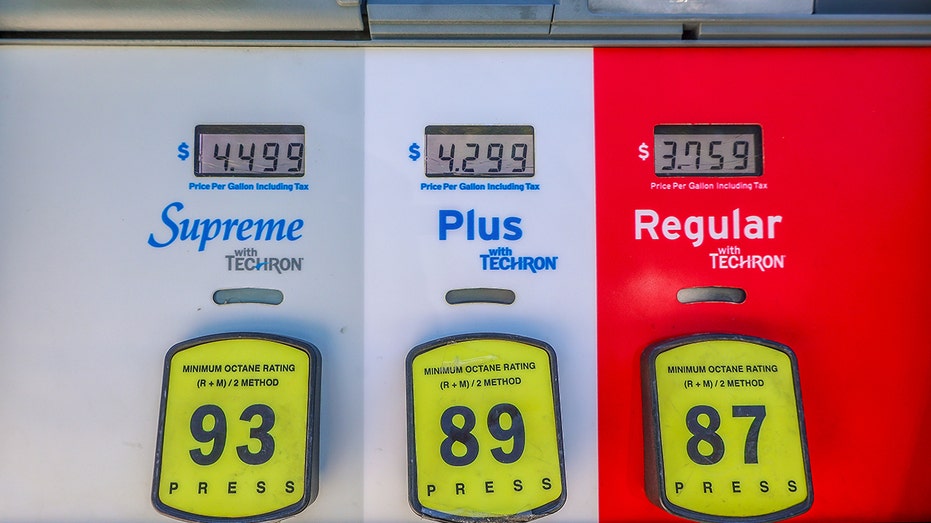
Fuel prices on a pump at a Chevron gas station in Bay Harbor Island, Fla., on Monday, June 22, 2026. (Zak Bennett/Bloomberg via Getty Images / Getty Images)
WTI crude oil futures are around $71 as of Wednesday morning, but were even lower before the start of the war.
U.S. crude closed at $73.21 Tuesday, only $6.19 more than the day before America attacked Iran earlier this year, NBC News reported.

U.S. President Donald Trump takes questions from members of the media during a meeting with oil and gas executives in the East Room of the White House on Jan. 9, 2026 in Washington, D.C. (Alex Wong/Getty Images / Getty Images)
GET FOX BUSINESS ON THE GO BY CLICKING HERE
Trump signed a Memorandum of Understanding related to Iran last week.
NEW YORK — Shares of Elevra Lithium Ltd. climbed sharply Tuesday as the lithium producer reported robust quarterly revenue growth and continued progress on its North American expansion plans amid recovering demand for battery materials.
The stock traded at $11.47, up 8.11 percent or 86 cents, in morning activity. The gains reflected investor optimism about the company’s operational performance and strategic positioning in the critical minerals sector.
Elevra Lithium, listed on the ASX as ELV and with NASDAQ trading under ELVR, delivered record revenue of $81 million for the March 2026 quarter, representing a 22 percent increase from the previous period. Year-to-date revenue reached $167 million, demonstrating strong momentum in its core operations.
The company has focused on its North American Lithium project, where production has ramped up significantly. Recent updates highlighted improved plant utilization and cost reduction initiatives that are helping drive profitability. Management has reaffirmed production guidance for 2026.
Elevra’s strategy centers on supplying the growing electric vehicle and energy storage markets. Lithium remains essential for battery technology, with demand expected to rise as global electrification accelerates despite short-term price volatility in commodities.
Operational Highlights
The March quarter report showed continued operational improvements at key assets. Elevra has emphasized efficiency gains and output increases at its flagship North American Lithium facility. Production growth has been a priority as the company scales commercial operations.
In recent months, Elevra announced the purchase of offtake rights for the Moblan project, securing additional supply chain leverage. The company also reached an agreement to sell its interest in the Ewoyaa Lithium Project in Ghana, streamlining its portfolio toward higher-priority North American assets.
An updated scoping study for the North American Lithium expansion outlined faster growth timelines and lower costs. The plan positions Elevra to capitalize on North American supply chain localization trends driven by policy incentives and battery manufacturing investments.
Analysts have noted the company’s transition toward profitability. With confirmed 2026 production targets and cost discipline, Elevra appears well-placed for margin expansion as lithium markets stabilize.
Market Context and Industry Trends
The lithium sector has faced challenges from oversupply and softening prices in recent years. However, long-term fundamentals remain strong due to electric vehicle adoption and renewable energy storage needs. North American producers like Elevra benefit from proximity to major battery plants and supportive government policies.
Elevra’s dual listing provides access to both Australian and U.S. investors. The NASDAQ presence enhances visibility among institutional investors focused on critical minerals and clean energy themes.
Recent quarterly activities reflect disciplined capital allocation. The company reported capital expenditures of $4 million in the period, focused on maintenance and targeted growth initiatives. Strong cash flow generation supports ongoing operations and potential debt reduction.
Financial Performance
Elevra has shown significant revenue growth. The March quarter results marked a substantial improvement over prior periods, with year-to-date figures underscoring the impact of higher production volumes and stable pricing environments.
Forward earnings estimates suggest potential profitability inflection in 2026. Analysts project steady revenue increases as expansion projects come online. Valuation metrics reflect growth expectations, with the stock trading at levels that incorporate anticipated production ramps.
The company maintains a solid balance sheet position. Operational cash flows have improved with higher output, providing flexibility for investments and shareholder returns over time. Management continues focusing on cost control and efficiency.
Strategic Initiatives
Elevra has pursued several key transactions to optimize its asset portfolio. The sale of the Ewoyaa interest provides capital for core North American development while reducing exposure to African jurisdictional risks. The Moblan offtake acquisition secures additional concentrate supply.
Expansion at North American Lithium remains central to growth plans. The updated scoping study indicates potential for accelerated timelines and reduced capital intensity, improving project economics. These developments support Elevra’s goal of becoming a leading North American lithium supplier.
The company continues engaging with offtake partners and battery manufacturers. Long-term contracts provide revenue visibility and align production with downstream demand. Elevra’s North American focus positions it favorably for U.S. and Canadian EV supply chains.
Analyst Perspectives
Wall Street views on Elevra have been generally constructive. Macquarie and other firms have provided ratings and price targets reflecting confidence in operational execution and market recovery. Recent updates have included target adjustments based on production milestones.
Investors have responded positively to quarterly results and strategic moves. The stock has shown volatility typical of the lithium sector but has demonstrated resilience on positive news flow. Market capitalization stands in the range supporting further institutional interest.
Risks include commodity price fluctuations, execution challenges on expansions, and broader economic factors affecting EV adoption. Elevra’s management has emphasized disciplined operations to navigate these uncertainties.
Elevra Lithium enters the second half of 2026 with momentum. Strong quarterly revenue, production growth, and strategic portfolio adjustments provide a foundation for continued progress. The company remains focused on delivering on 2026 guidance and positioning for long-term growth in the lithium sector.
As global demand for battery materials evolves, producers with North American assets and strong operational track records stand to benefit. Elevra’s recent performance suggests it is well-prepared to capitalize on these opportunities.

According to the companies operating them, they can reliably identify and avoid objects in the path, cross streets safely and react to their environment. The robots provide a useful service and help cut down on traffic and emissions, they claim.
However, some local authorities in the US and Canada, and members of the public, are less than enthusiastic. Bans have been put in place, and protests have been launched.
San Francisco has limited the access of the vehicles to less busy parts of the city, and Toronto has since 2021 prohibited the robots from using sidewalks. , external
Meanwhile, in Chicago the machines have now been banned from two small areas of the city. , external
Robertson wants the robots to be suspended across all of Chicago until safety tests are carried out, and clear rules are set on their usage. He has launched a petition calling for this, and so far, it has around 4,400 signatures.
People frequently find themselves having to step into the street in order to get out of the machines’ way, says Robertson.
“There have been reports of collisions and injuries. I saw one a few days ago where somebody had been struck by one of the robots’ safety flags, which is a little ironic,” he says. “We’ve got reports of robots causing issues with traffic, blocking emergency vehicles because they’re acting erratically at crosswalks.”

Trust has become one of the strongest competitive advantages in digital business. Customers now make decisions based not only on price, choice or convenience, but also on how safe and transparent a platform feels.
This is especially true in online casino entertainment, where users expect secure account handling, clear payment information and dependable customer support.
For real money casino brands, trust is not a marketing extra. It is the foundation that influences acquisition, retention and long-term reputation.
Digital customers are more selective than ever
Across online markets, customers have become better at spotting poor experiences. A slow checkout page, unclear terms or hard-to-find support channel can quickly push people towards another brand. In sectors such as fintech, travel and subscription software, companies invest heavily in reducing uncertainty because confidence drives repeat use.
Casino brands face the same challenge, with added sensitivity around payments and account security. A player needs to feel that a platform is organised, responsive and clear before they are likely to engage for the long term.
A trustworthy digital experience usually depends on:
- Simple registration and account navigation
- Clear information about deposits and withdrawals
- Transparent promotion terms
- Secure handling of personal details
- Easy access to responsible play tools
- Support that is visible and responsive
When users compare options in the real money casino space, these details shape whether a brand feels credible or forgettable.
Transparency turns uncertainty into confidence
Transparency is one of the clearest ways casino brands can build trust. Customers want to understand how a platform works before they commit time or money. If important information is hidden behind vague wording, confidence can decline quickly.
This is not unique to iGaming. Online banks build trust by explaining security steps. Retailers build trust by making delivery and return policies easy to find. Software companies build trust through simple pricing pages and clear cancellation processes.
Casino brands can apply the same principles by making key information visible. This includes bonus conditions, payment timeframes, identity checks, account controls and game categories. The aim is to reduce friction before it becomes frustration.
Good transparency often means:
- Plain language rather than dense legal wording
- Visible terms placed near relevant offers or features
- Consistent information across desktop and mobile pages
- Helpful FAQs that answer common customer questions
- Clear escalation routes when support is needed
Customers do not expect every process to be instant. They do expect to understand what is happening and why.
Payment reliability is central to reputation
For real money casino brands, payments are one of the most important trust moments. A customer may enjoy the design, game range and promotional experience, but payment uncertainty can weaken confidence immediately.
This makes payment communication essential. Brands need to explain available methods, processing expectations and verification requirements in a way users can easily understand. Confusing payment pages can create avoidable support queries and damage loyalty.
Payment trust is shaped by several factors:
- Secure deposit and withdrawal processes
- Clear transaction histories
- Accurate status updates
- Straightforward verification guidance
- Responsive support for payment questions
- Consistency between stated and actual timeframes
These expectations mirror wider digital commerce. Customers now expect the same level of payment clarity from entertainment platforms that they receive from online retailers, finance apps and delivery services.
Customer support is a trust signal
Support teams are often where trust is either strengthened or lost. A polished website may attract attention, but customer service proves whether the business can handle real problems.
In online casino environments, support agents may deal with account access, payment queries, bonus questions and technical issues. They need to be trained, patient and precise. A rushed or vague answer can make a customer feel ignored, especially when money or personal information is involved.
Strong support teams usually provide:
- Fast acknowledgement so users know their query has been received
- Accurate answers based on clear internal processes
- Calm communication during sensitive conversations
- Escalation options for complex issues
- Follow-through when a case cannot be solved immediately
Support should not be judged only by speed. Quality, consistency and resolution accuracy matter just as much.
Responsible play strengthens brand credibility
Responsible play is now part of how casino brands demonstrate maturity. Customers are more likely to trust platforms that make control tools easy to find and use. These features show that the brand is thinking beyond short-term engagement.
Responsible play tools may include deposit limits, time reminders, account history and self-management settings. The most credible brands present these tools clearly rather than hiding them in obscure menu areas.
This approach reflects a broader trend across digital services. Social platforms now provide screen-time tools. Banking apps offer spending insights. Fitness apps encourage recovery and balance. In each case, responsible design helps customers feel more in control.
For casino brands, visible responsible play features can support long-term trust by showing that entertainment is being framed responsibly.
Brand identity must match the experience
Trust is not built through claims alone. A brand can present itself as reliable, premium or customer-focused, but the actual experience must support that identity. If the website is confusing, support is slow or terms are unclear, the brand message loses credibility.
Successful casino brands align identity with delivery. Their tone, design, policies and support all point in the same direction. This creates consistency, which is one of the most important drivers of trust.
A strong trust-led brand identity should feel:
- Professional without being cold
- Helpful without being intrusive
- Clear without being oversimplified
- Engaging without being aggressive
- Consistent across every customer touchpoint
Customers may not analyse each of these details separately, but together they shape the feeling of reliability.
Trust is earned through repeated proof
Real money casino brands compete in a market where customers have plenty of choice. Offers and game libraries can attract attention, but trust determines whether people stay.
The brands most likely to stand out are those that combine transparent communication, secure payments, strong support, responsible play tools and consistent delivery. Trust is not created by one headline feature. It is earned through repeated proof across the full customer journey.
For operators, the lesson is straightforward. In a crowded digital market, credibility is not only good ethics. It is good business.

Desmond Lachman joined AEI after serving as a managing director and chief emerging market economic strategist at Salomon Smith Barney. He previously served as deputy director in the International Monetary Fund’s (IMF) Policy Development and Review Department and was active in staff formulation of IMF policies. Mr. Lachman has written extensively on the global economic crisis, the U.S. housing market bust, the U.S. dollar, and the strains in the euro area. At AEI, Mr. Lachman is focused on the global macroeconomy, global currency issues, and the multilateral lending agencies.
Energy stocks slide as oil prices drop on Hormuz tanker movement

DeFi TVL Down by $45B in 2026 Despite More Resilient Market Structure

13 Luxe-Looking, European‑Style Summer Sets From Amazon


-

 Fashion5 days ago
Weekend Open Thread: Miami – Corporette.com
-

 Entertainment4 days ago
Renter of Home in Anne Heche Crash Denies Settlement With Son
-

 Tech2 days ago
Microsoft accidentally kills epic Outlook email threads
-
 Sports19 hours ago
Two goals and an assist by sheer aura: Cristiano Ronaldo just entered the World Cup chat
-

 Business4 days ago
Soccer-U.S. defends Iran World Cup travel restrictions, says discussions ongoing
-

 Politics6 days ago
BBC Reporter Discusses Cross Party Criticism Of Trumps Iran Deal
-
Crypto World11 hours ago
Bitcoin (BTC) Dips Below $62K, Ethereum (ETH) Plunges 6% Daily: Market Watch
-

 Crypto World8 hours ago
Securitize Wraps Roubini's SEC-Registered ETF as Dubai VARA Digital Security
-
Business13 hours ago
Entergy settles forward sale agreements, raises $672 million in cash proceeds
-
 Business4 days ago
Wall Street Week Ahead: Investors see Micron earnings as pulse check of AI rally momentum
-

 Politics4 days ago
Andy Burnham and the meaning of Makerfield
-

 Tech6 days ago
AWS enters the context layer race with a graph that learns from agents, not manual curation
-
 Crypto World4 days ago
Can Charles Hoskinson Really Rescue Cardano?
-

 Crypto World4 days ago
HIVE shares jump as $220M AI deal speeds Bitcoin mining pivot
-

 NewsBeat5 days ago
Keir Starmer Allies Question His Chances For No 10
-

 Crypto World4 days ago
Jake Chervinsky accuses CME of protecting derivatives monopoly
-

 Tech2 days ago
Nearly 7,000 fake Amazon domains registered ahead of Prime Day 2026, researchers warn
-
 Tech3 days ago
Signal’s Meredith Whittaker says AI chatbots ‘are not your friends’ and calls Copilot agents a backdoor
-

 Business6 days ago
Brexit cost 6% of UK economy, Bank of England company data suggests
-

 Sports6 days ago
FIFA World Cup 2026: Canada beat 9-men Qatar 6-0 to register first ever win | FIFA World Cup 2026
You must be logged in to post a comment Login