

New York’s congressional primaries on Tuesday were supposed to be the moment AI’s top backers definitively proved they could bend US politics to their will. Instead, they left behind a muddy stalemate that only raises more questions about whether their spending can keep pace with an anti-AI backlash.
Tech
Alex Bores lost in New York. But so did his enemies in the AI industry.

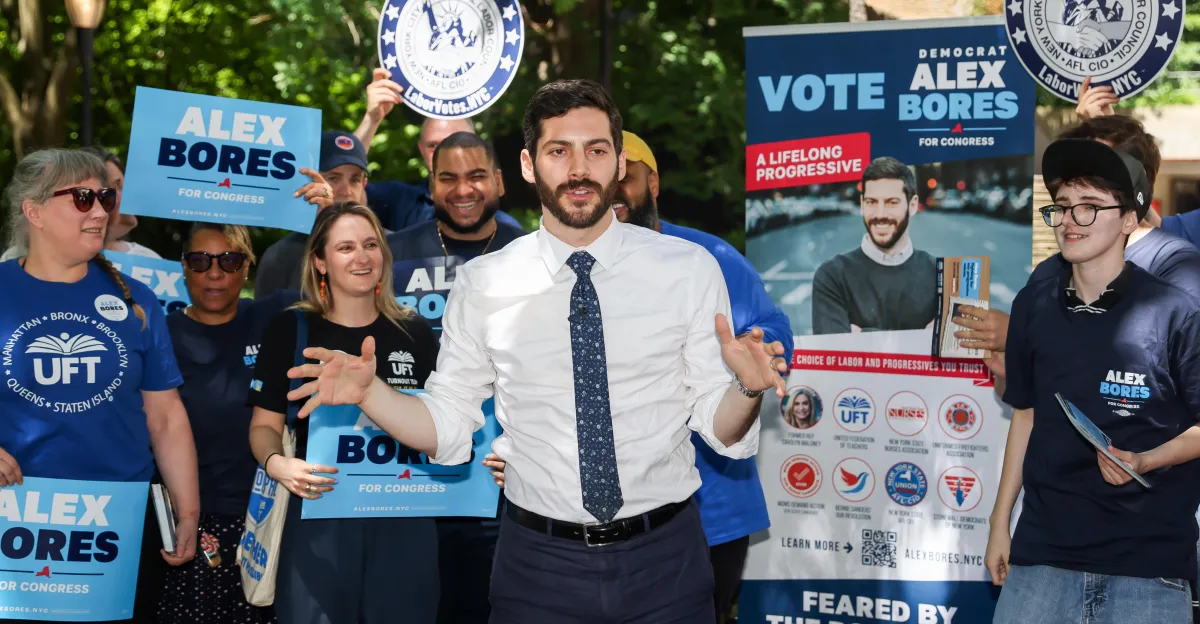
The stage for the battle was set last year, when some of America’s leading tech investors launched a new, $100 million super PAC dedicated to electing candidates who were “aligned with the pro-AI agenda” and defeating those who weren’t.
Months later, this group — dubbed Leading the Future (LTF) — named its first target: New York Assembly member Alex Bores.
Bores had been the chief sponsor of the Empire State’s “RAISE Act,” which required developers of frontier AI models to follow various safety protocols or face steep fines. LTF fiercely opposed that bill. Thus, when Bores launched a congressional run, the super PAC sought to teach him — and his fellow Democrats — a lesson: Purse sweeping AI regulations and your next campaign will drown in a flood of opposition spending.
At first glance, it may look like LTF just achieved that objective. Bores lost his bid on Tuesday night to represent New York’s 12th District. Headlines deemed the race a victory for “Big Tech.”
But appearances can be deceiving. In truth, Silicon Valley’s libertarians are losing the fight over AI regulation — and the NY-12 race only underscores this reality.
Bores lost. So did his enemies.
Contrary to LTF’s hopes, Bores’s loss is unlikely to dissuade Democrats from backing far-reaching regulations on AI, for at least four reasons:
First, the race’s winner, Assembly member Micah Lasher, is about as hostile to LTF’s vision as Bores was. Lasher co-sponsored the RAISE Act and campaigned on pausing data center construction nationwide, launching antitrust investigations into the major AI labs, protecting artists from “AI-driven copyright infringement,” prioritizing organized labor’s interests in debates over AI deployment, and myriad other regulatory constraints on the technology. In his victory speech, Lasher directly addressed the AI companies who took an “unusual interest” in the race, saying he “won’t be taking my cues from either of you when it comes to protecting our kids, our jobs and our families.”
Silicon Valley’s proponents of light-touch AI regulation are losing.
Simply put, if the tech industry wants to convince Democrats that backing strict AI regulations is politically self-defeating, they’ll need better evidence than a race won by…a Democrat who backs strict AI regulations.
Second, it’s far from clear that Bores’s candidacy was actually hurt by industry opposition. As my former Vox colleague Kelsey Piper notes at The Argument, when LTF announced it was targeting Bores, betting markets gave him only a 10 percent chance of victory, placing him behind both Lasher and Kennedy scion Jack Schlossberg. Bores ultimately came in a close second, trailing Lasher by only 4 percentage points (or about 4,000 votes).
It’s plausible that LTF unintentionally aided Bores’s rise to contention by validating his bonafides as the bane of Big Tech. Certainly, that identity earned the assembly member abundant media coverage. “For voters, tech billionaires spending millions to beat a state legislator wasn’t a flex; it was a tell,” Jesse Ferguson, a Democratic strategist who advised the Bores campaign, told me.
Third — and related — the race ended up becoming a fight between AI companies, not just about them.
Bores’s candidacy was not solely powered by a grassroots backlash to industry meddling. Rather, he was himself the recipient of massive Silicon Valley donations, albeit from the segment of the tech industry that worries about AI safety. Anthropic, the maker of the cha6bot Claude, was an enthusiastic supporter of the RAISE Act. And when LTF came for that law’s chief sponsor, the AI giant’s super PAC rallied to his support, supplying Bores with at least $11 million in outside funding. The crypto billionaire Chris Larsen, meanwhile, tossed another $19 million Bores’s way.
Importantly, this flood of financing was a reaction to LTF’s intervention. In other words, by targeting Bores, the super PAC arguably made it easier for him to raise money — and highlighted the existence of a pro-regulation, tech industry donor network. It is hard to see how this will make Democrats more afraid to meddle with AI.
Finally, Lasher’s victory probably didn’t have that much to do with artificial intelligence, one way or another. Lasher has been involved in New York politics for about a quarter century longer than Bores has, and boasts personal ties to Michael Bloomberg, Kathy Hochul, and other power players in the state’s Democratic Party. He was the race’s favorite for more or less the entirety of the race. Therefore, even if Lasher favored light-touch AI regulation, his narrow victory over Bores wouldn’t prove much. Given his actual positions on AI, his win does nothing to advance LTF’s argument.
The push for AI regulation is coming from inside the (White) House
Meanwhile, since Leading the Future launched last year, the national political climate has turned sharply against them.
In a recent Fox News poll, 80 percent of respondents said they favored regulating AI to protect public interests, even if doing so slows innovation. Other surveys show a large majority of Americans opposing the construction of new data centers in their areas.
By itself, public opinion might not be an insuperable obstacle to Big Tech libertarians’ agenda. Voters are increasingly skeptical of AI, but still don’t typically consider it a top priority.
Yet the national security state is also turning against laissez-faire in the AI sector. And its will is harder to ignore. Amid growing concerns about AI’s capacity to aid cybercrime, the White House released an executive order earlier this month encouraging labs to seek the government’s approval before releasing new models. Weeks later, the Trump administration took the extraordinary step of essentially ordering Anthropic to remove its Fable model from the market, on national security grounds. This represented a more radical and capricious government intrusion into the AI industry than Bores’s signature law ever contemplated.
Leading the Future knows that the ground has shifted beneath its feet. When it first announced its targeting of Bores, it lambasted the RAISE Act as a “clear example of the patchwork, uninformed, and bureaucratic state laws that would slow American progress and open the door for China to win the global race for AI leadership.”
Last month, however, the super PAC announced that it actually supported the RAISE Act, as the law “gets the combination of innovation and safety right.” LTF reconciled these positions by insisting that, while Bores’s initial draft of the legislation was ruinous, the final version was excellent.
This is unconvincing. It’s true that the RAISE Act got watered down before enactment. But the idea that these changes were large enough to transform the bill from an act of catastrophic national sabotage — into a model of pro-innovation lawmaking — is implausible. And LTF’s supposed support for the measure is belied by the months it spent vigorously lobbying the federal government to preempt New York’s law.
In reality, the group has simply retreated in the face of shifting political winds. Silicon Valley’s proponents of light-touch AI regulation are losing. And Bores’s loss did nothing to change that.

Continue Reading

TD’s plan to monitor some staff has exposed a legal gap: in much of Canada, an employer can watch you work and owes you little more than a notice.
Then Toronto-Dominion Bank told some of its staff that software would soon be watching how they worked, the employees did what most people do when handed that news.
They asked what exactly it would track, whether it could be used against them, and whether they had any say. The more uncomfortable answer, in much of Canada, is that the law gives them very little leverage to refuse.
The bank’s move, reported by Reuters in an exclusive earlier this month, applied to employees in its financial-crimes and risk-management functions.

The 💜 of EU tech
The latest rumblings from the EU tech scene, a story from our wise ol’ founder Boris, and some questionable AI art. It’s free, every week, in your inbox. Sign up now!
They were told TD would deploy a tool called WorkiQ to track how they spent their time across web browsers, internal messaging, meeting apps, and other work software.
On the call, staff raised the obvious questions about privacy, about what the tool would capture, and about whether the data could feed into performance reviews.
TD described the deployment as “standard practice across the industry,” and said it uses automated tools in various parts of the business to improve insights and allocate resources.
There was a second, more striking element. According to an internal memo seen by Reuters, TD had initially planned to collect employees’ mouse movements, keystrokes, and other actions to use as training data for artificial intelligence, then scaled that back after weeks of pushback from staff.
The detail rhymes with what has been happening at Meta, which deployed a programme to capture keystrokes and mouse clicks on employee machines, also for AI training, and which paused the tool in June after a data-security scare.
The new frontier of workplace monitoring is not just measuring productivity. It is harvesting the way people work as raw material for models.
What makes the Canadian case distinct is the legal vacuum around it. The country’s federal privacy law, PIPEDA, does not apply to provincially regulated employers in provinces that lack their own substantially similar legislation, which includes Ontario, where much of the financial sector sits.
In those provinces, employee protection is assembled from a patchwork of employment-standards rules, common-law privacy torts, contracts, workplace policies, and, where they exist, collective agreements.
There is no single statute a worker can point to and say the surveillance crosses a line.
Ontario went furthest of any province, and even that is modest. Since October 2022, employers with 25 or more staff must have a written policy stating whether and how they electronically monitor employees.
The catch is in the wording. The law requires disclosure, not restraint. It compels an employer to tell workers what it is doing, but it does not give workers a new right to object, to limit the monitoring, or to keep the data out of a performance file. Telling someone they are being watched is not the same as protecting them.
The contrast with Europe is sharp. Under the EU’s data-protection regime, monitoring of the kind TD described runs into the principle of purpose limitation, the rule that data gathered for one reason cannot be quietly repurposed for another.
Repurposing employees’ everyday digital activity into AI training data is precisely the move that European rules are built to challenge. A Canadian worker in Ontario has no comparable instrument to reach for.
None of this makes TD an outlier. Employee monitoring spread quickly through the remote-work years, and banks, with their compliance obligations, have more reason than most to watch what staff do.
The tools have advanced faster than the rules meant to govern them, and in much of Canada the rules were never strong to begin with.
For the employees on that TD call, the answer to how much of their workday belongs to their employer is, for now, mostly up to the employer.


It feels like a different vehicle is getting recalled every other day — and it’s not even that much of an exaggeration. From 2017 to 2022, the United States averaged more than 1,000 recalls every year, based on data from the National Highway Traffic Safety Administration (NHTSA). The number of recalls has continued to climb, but it’s not because vehicles have become more dangerous or unreliable. According to ABC News, the rapid increase in car recalls is due to the complexity of modern vehicles.
There are more electronic components, features, and software in modern cars — and this means a higher chance of things going wrong. “Vehicles have advanced to a degree we’ve never seen before,” said Edmunds Auto Analyst Ivan Drury to ABC News. “It’s such a wide swathe of issues that recalls cover that you’re going to see this more and more.”
In other words, there are more failure points — not just because there are more components, but even the components themselves are more complex, taking more parts. Some recent examples include Ford recalling over 548,000 Expeditions over the center console’s chrome plating, Subaru recalling the new Forester due to its sunroof glass, and Mercedes-Benz recalling over 144,000 vehicles after customers noticed the digital instrument cluster glitching.
More recalls isn’t necessarily a bad thing

There are so many recalls, it’s pretty difficult to keep track of it all — but not every recall is meant to alarm you. In fact, most are pretty minor. For example, Ford has gotten quite the reputation for its seemingly endless recalls — according to the NHTSA, it has the most recalled models out of every automaker, with 152 recalls in 2025 alone. Some would say Ford’s launches have quality issues, Ford itself has noted it’s just a way to improve quality. Despite its multiple recalls in 2026, Subaru is still considered one of the most reliable automakers.
Most recalls are considered minor rather than true safety concerns that require you to stop driving your car — although Ford’s Maverick and Bronco Sport have had those recently as well. Instead, automakers are just attempting to avoid issues by remaining within the NHTSA’s safety standards and regulations — which only benefits consumers.
“Recalls can be inconvenient, but they’re actually a good thing,” said Consumer Reports’ Jennifer Stockburger. “While they can vary in terms of severity, a recall means that a manufacturer will fix or take corrective action to address a safety issue, which is why they should be taken seriously.”
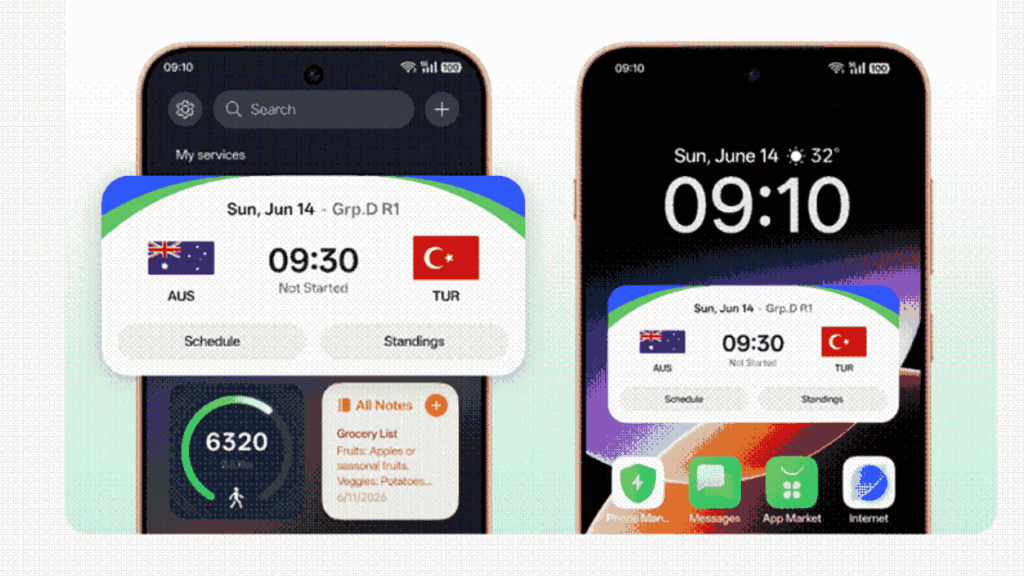
OPPO has started rolling out its June 2026 ColorOS 16 update, bringing a handful of new features to make everyday smartphone use a little more convenient. The update introduces a new Sports Widget for football fans, Bluetooth audio sharing, improved security alerts, and several quality-of-life additions across the system. The rollout is scheduled between June 1 and June 30 for eligible OPPO smartphones, such as the Find X9.
Live Sports Updates and Shared Audio

One of the biggest additions in this release is the new Sports Widget. Football fans can now follow live scores, match schedules, and tournament updates directly from their home screen without opening a dedicated app. ColorOS 16 also uses AI Suggestions to surface upcoming matches on the Home Screen and Shelf, making it easier to keep tabs on your favorite teams throughout the day.
Another useful addition is Audio Sharing, which allows a single OPPO phone to stream audio to two pairs of Bluetooth earphones simultaneously. Whether you’re watching a movie with a friend or listening to music together, both users can enjoy the same audio without relying on a speaker or wired splitter.
Security and Everyday Features Get Some Attention Too

The June update also introduces Accessibility Security Alerts. If an app from an unknown source receives Accessibility Service permissions, a permission commonly abused by malicious apps, ColorOS will immediately notify the user. This makes it easier to review or revoke suspicious permissions before they become a security risk.
OPPO has also refreshed the Weather app with Moon Rise and Moon Set timings, along with live Moon Phase information. While these additions may not appeal to everyone, they can be useful for outdoor enthusiasts, photographers, and anyone planning activities around natural lighting conditions.
Outdoor Mode has also received a small but practical upgrade. Users can now pin up to four frequently used apps for quicker access, while navigation and location awareness have also been improved for people who spend a lot of time outdoors.
Gaming and Personalization Improvements

Beyond the headline features, OPPO has added a few smaller quality-of-life improvements across the system. Users can now record gameplay more easily, while a new App Suggestions feature in the app drawer recommends frequently used apps based on usage patterns. The idea is to reduce the time spent searching for apps and make everyday navigation feel a little more intuitive.
OPPO says the June ColorOS 16 update will continue rolling out to eligible devices throughout the month.


I’ve been scouting for Prime Day deals, but this one stopped me in my tracks. Currys is running an excellent summer sale on back-to-school and business laptops, but Amazon has absolutely crushed them on the price of the Asus Zenbook A14 for £500 (was £600) for Prime Day.
• Shop Amazon’s Prime Day deals
This 14-inch OLED laptop features a Snapdragon X X1-26-100 processor that’s engineered for day-to-day work and study tasks, alongside 16GB LPDDR5X memory, and a well-sized 1TB SSD. For general office and school tasks, that’s pitch-perfect for the price.
Over at Currys, however, the exact same model is priced at £599 (was £999) for the Snapdragon-powered machine with 16GB RAM and – wait for it – 512GB SSD. So, you’re getting twice as much SSD storage from Amazon at an even cheaper price. I wouldn’t even look twice at Currys for this specific model while this Prime Day deal is live.
For more savings, I’m live-tracking all the best Prime Day home office deals.
That’s not to say the Currys summer sale is bad. In fact, having charted all the deals, I found it a treasure trove of well-priced laptops for work and study. You can see my article on the top 4 laptop deals at Currys here.
But considering the massive price difference, and the improved SSD size, I’d go for the Amazon deal all-day long (or while it lasts, which might not be long as Prime Day ends tomorrow).
We were impressed with the A14 when we reviewed this laptop. Scoring it 4 stars and awarding it a TechRadar Recommends badge, we found this ultra-lightweight MacBook Air-style Windows laptop possessed “brilliant design, capable all-round performance, and an impressive battery life.”
As a budget-tier laptop, it’s got it faults, but we loved the “fabulously thin and light” design and performance are impressive. Perfect, then, for campus and the commute.


The US has restricted the export of Nvidia’s most powerful AI chips to China since 2022 over fears that they could be used for military purposes.
Read Entire Article
Source link
Amazon Prime Day 2026 is in full swing, and below you’ll find everything you need to know about the event, including important dates and our constantly updated live blog.
With Amazon’s Spring Deal Days being firmly in the rear-view mirror, the next major event on the consumer calendar is Amazon’s most famous sale of all: Prime Day.
Prime Day is Amazon’s annual mega-sale that brings big-name brands down to tempting prices, exclusively for Amazon Prime subscribers.
It’s the best chance before Black Friday to bag a bargain on the latest tech, so if you’re in the mood for a bit of summertime retail therapy, here’s everything you need to know about Prime Day 2026.
SQUIRREL_PLAYLIST_10148964
How long is Amazon Prime Day 2026?
Prime Day runs from Tuesday, June 23, until Friday, June 26, with fresh deals landing every day.
Do you need Prime for Prime Day?
Yes. Unlike Black Friday, which is open to everyone, Amazon Prime Day is strictly for Prime members who pay for the service monthly or yearly. You can find out how to sign up for Amazon Prime here.
When should you sign up for Amazon Prime?
Timing your sign-up (if you’re not already a member) is key to getting the most out of Prime Day.
If you’re signing up for the 30-day free trial, then we recommend doing so right now, as you’ll have full access to the sale’s exclusive deals and have plenty of time left over to enjoy additional perks like access to Prime Video and fast delivery.
Prime Day 2026 live blog

Audio CDs were the ubiquitous audio format of the 1990s. Lesser known were the extensions to the format that packaged all kinds of interesting additional data into a musical release. Now, a new record from [Aizysse Baga] has brought back some of the most quirky and obscure CD features that time and industry long forgot.
[Aizysse Baga] worked with [Adelaide] on the Divacore record, which was to be released on a mini-CD. The original plan was to include additional CD+G data, featuring artwork to go with the music. CD+G, or CD+Graphics, was often used to display synchronized lyrics for karaoke releases, and stored data in formerly-unused subcodes next to the track start, track number, and running time data. This format allowed storing a slideshow of images with a resolution of 288 x 192 with a 16 color palette.

The duo got handy with art and some smart dithering to get great 16-bit artwork packed in to the audio CD release, with the aid of a custom Python encoder. CD-TEXT metadata was thrown in for good measure. Then, the existence of the more advanced CD+EG became apparent. This was a 256-color extension to the CD+G format that was backwards compatible to boot. It was a format that was barely ever implemented on any commercial releases, and very little hardware could even display it. Naturally, Divacore had to have it. Much work was done to understand the Red Book documentation on the standard and figure out how to implement even higher quality artwork for the record.
After so much work to understand and implement the CD+G and CD+EG data, the question was whether it would survive the CD reproduction process for the final release. Thankfully, the final discs came out perfectly, and the full 256-color CD+EG artwork can be seen in all its glory if you happen to play Divacore on a Sega Saturn or a super-obscure Victor VS-G2 or VS-G3. Throw it in a less-sophisticated karaoke machine or something like an Amiga CD32, and you’ll still get to see the 16-color versions for your trouble.
We love to see ancient formats brought back to life, particularly those that never got their time in the sun. If you’re working hard to resurrect something the mainstream media world has forgotten, let us know on the tipsline.

Photograph: Matthew Korfhage
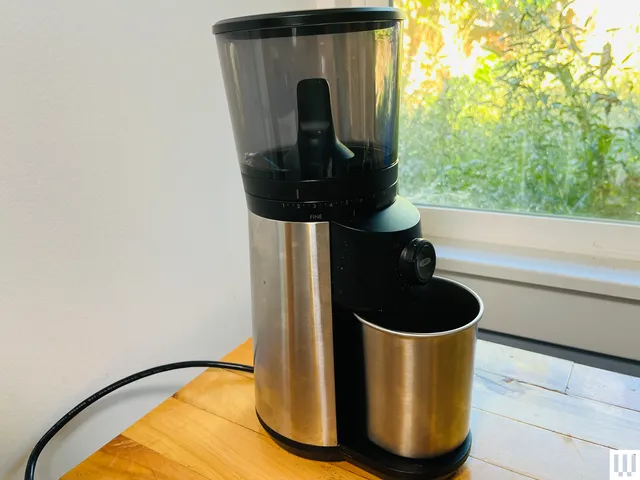
The cost of a good burr coffee grinder—the kind you absolutely need in to make coffee actually taste good—throws a lot of my friends for a loop. They aren’t ready to spend $200, let alone $500 or $1,500, to optimize the flavor of their morning brew.
That’s when I turn to this trusty Oxo conical burr grinder. If you make French press, or Aeropress, or drip coffee, or espresso on a lower-cost machine with pressurized portafilter basket? This Oxo is always the lowest cost coffee grinder I can recommend with my whole heart. It offers reliable flavor, and much more precision than you’d expect. You’ll discover fruity notes, or delicate toffee, in your coffee that you didn’t previously know were there.
Right now for Prime Day, this Oxo is even more accessibly priced than usual: Just $82.
So maybe let this Oxo be the first “good” coffee grinder you buy—the one that shows you how much better coffee can taste when ground fresh, with a conical burr grinder. If you want to go wild on premium grinders later, I support you on your journey.

Three years after the 2023 strikes raised alarms about AI replacing entertainment workers, some of those same workers are now training the technology that worries them. As film and TV jobs grow harder to find, writers, editors, and executives across Hollywood are quietly taking gig work just to pay the bills. It’s called Reinforcement Learning from Human Feedback (RLHF), and it involves fine-tuning AI models.
Hollywood workers explain why they’re training AI models
According to The Hollywood Reporter, editor Gabe Sena turned to AI training after a stretch of unemployment, saying he wanted to understand the technology rather than simply fear it. Former HBO development executive Steven Woolworth had a similar motivation, calling the work a way to stay informed rather than bury his head in the sand while job hunting proved fruitless for over a year.
Both found gigs through a recruiting platform called Mercor, which pairs domain experts with AI companies needing human feedback. This trend lines up with a broader industry pattern, with Amazon also turning to AI to cut film and TV production costs through its own dedicated studio.

What the work actually looks like once you’re in it
Screenwriter Ruth Fowler described a far rougher experience in her own essay for Wired, detailing eight months and twenty contracts across five different platforms. The pay ranges from $16/hour for entry-level annotation work up to $150/hour for specialized writing tasks. She described abrupt project cancellations, shifting pay rates, and young, inexperienced managers overseeing workers decades into their careers.
A growing AI industry built on real legal and ethical tension

RLHF work has expanded rapidly regardless, with AI-related job postings within the arts nearly doubling between 2025 and 2026, even as lawsuits pile up alleging worker misclassification and unstable scheduling across the industry. Even Martin Scorsese has officially joined the AI camp, a sign of how far the acceptance of these tools has spread across the industry.
Critics of generative AI in Hollywood, like Breaking Bad creator Vince Gilligan, say they understand why struggling workers take these gigs despite the contradictions involved. For many in Hollywood right now, training the machine has become less about curiosity and more about simply making rent.


The designation represents a significant step forward in improving the handling and escalation of reports relating to illegal online content, particularly in relation to children.
Coimisiún na Meán, under the European Union’s Digital Services Act, has declared the Irish Internet Hotline (IIH) a Trusted Flagger. This recognises IIH’s expertise and track record in the tracking and reporting of illegal content, such as intimate image abuse, financial scams, racism and child sexual abuse material (csam).
Established in 1999 the IHH is Ireland’s national reporting centre, through which members of the public can securely and anonymously report suspected illegal or harmful content. The organisation is a member of the INHOPE network, the Irish Safer Internet Centre and works closely with An Garda Síochána, as well as international partners.
In order to qualify for Trusted Flagger status, organisations must prove that they are independent from online platform providers, show significant subject-matter expertise and indicate a history of the consistent recording of accurate, diligent and objective reporting.
As a Trusted Flagger, notices submitted by the IHH will be prioritised and processed without undue delay, the group will be supported in the faster assessment and removal of illegal content, there will be strengthened cooperation between IIH, online platforms, regulators and other stakeholders and additional support for the sharing of insights and best practices on emerging online threats and systemic risks
Commenting on the announcement, Mick Moran, the CEO of Irish Internet Hotline said, “We’re delighted to have been granted Trusted Flagger status by Coimisiún na Meán. The designation reflects the expertise and experience our team has developed in identifying and reporting illegal content within our areas of competency.
“We’re proud of the work we do and the standards we apply to it. Trusted Flagger status formalises an approach we’ve already been taking for nearly three decades and strengthens our ability to ensure that high-quality reports are prioritised and acted on appropriately.
“We welcome the recognition of Irish Internet Hotline as a knowledge and skills-based expert in this area and look forward to partnership with Coimisiún na Meán in our shared mission to make the internet safer for all users, especially children.”
In early May Coimisiún na Meán also opened dual investigations into Meta to assess issues related to how its recommender systems promote content on Facebook and Instagram and whether it is in breach of the EU Digital Services Act. The watchdog announced that it is investigating concerns that Meta is preventing users from actively selecting the content that appears in their Instagram and Facebook feeds.
Don’t miss out on the knowledge you need to succeed. Sign up for the Daily Brief, Silicon Republic’s digest of need-to-know sci-tech news.

Business48 seconds ago
Queer club launches action against Perth Bears

Crypto World2 minutes ago
JPMorgan names Doug Petno and Troy Rohrbaugh co-presidents as longtime exec Marianne Lake exits

Sports4 minutes ago
Vaibhav Sooryavanshi Would Say ‘His Head Was Hurting’: A Never-Heard-Before Tale On Star’s Meteoric Rise


-

 Fashion6 days ago
Weekend Open Thread: Miami – Corporette.com
-

 Entertainment5 days ago
Renter of Home in Anne Heche Crash Denies Settlement With Son
-
 Sports2 days ago
Two goals and an assist by sheer aura: Cristiano Ronaldo just entered the World Cup chat
-

 Tech3 days ago
Microsoft accidentally kills epic Outlook email threads
-

 Business5 days ago
Soccer-U.S. defends Iran World Cup travel restrictions, says discussions ongoing
-

 Politics5 days ago
Andy Burnham and the meaning of Makerfield
-
Crypto World1 day ago
Bitcoin (BTC) Dips Below $62K, Ethereum (ETH) Plunges 6% Daily: Market Watch
-

 Politics7 days ago
BBC Reporter Discusses Cross Party Criticism Of Trumps Iran Deal
-

 Crypto World1 day ago
Securitize Wraps Roubini's SEC-Registered ETF as Dubai VARA Digital Security
-
Business1 day ago
Entergy settles forward sale agreements, raises $672 million in cash proceeds
-

 NewsBeat6 days ago
Keir Starmer Allies Question His Chances For No 10
-
 Business5 days ago
Wall Street Week Ahead: Investors see Micron earnings as pulse check of AI rally momentum
-

 Tech7 days ago
AWS enters the context layer race with a graph that learns from agents, not manual curation
-
 Crypto World5 days ago
Can Charles Hoskinson Really Rescue Cardano?
-

 Crypto World5 days ago
HIVE shares jump as $220M AI deal speeds Bitcoin mining pivot
-

 Crypto World5 days ago
Jake Chervinsky accuses CME of protecting derivatives monopoly
-

 Entertainment5 days ago
Jose Alvarado Wants Taylor Swift at More Knicks Games
-
 Tech4 days ago
Signal’s Meredith Whittaker says AI chatbots ‘are not your friends’ and calls Copilot agents a backdoor
-
 Tech3 days ago
Nearly 7,000 fake Amazon domains registered ahead of Prime Day 2026, researchers warn
-

 Sports6 days ago
FIFA World Cup 2026: Canada beat 9-men Qatar 6-0 to register first ever win | FIFA World Cup 2026
You must be logged in to post a comment Login