

Connect with us

Tech

You Can Preorder Slate Auto’s $25K Electric Pickup Now

Published

on

Slate Auto’s much-discussed sub-$25K electric truck is one step closer to reality. It’s now available for preorder on the company’s website. However, it could still be a year or two before drivers who preorder a Slate actually get their vehicles.

The base model of the car is priced at $24,950 and there are a number of color and accessory options available. But Car and Driver points out that it’ll end up costing more than $25,000 after factoring in a destination and delivery fee that the company says will be lower than typical. Even so, that fee could still run $1,200 to $1,500.

Even with that fee, however, Slate’s truck would stand apart in a US car market where SUVs rule the land and the average car price rose above $50,000 earlier this year before settling back down, according to Kelley Blue Book. Electric vehicles are typically priced about $5,000 to $7,000 more, making the Slate even more of an anomaly. 

Advertisement

This week, as it opened up preorders for the electric truck, Slate gave more details about its range and capabilities, which have changed since the truck was announced last year. New battery specs have raised the truck’s range from 150 miles per charge to 205. Slate is also banking on the truck’s custom options to draw customers: It’s offering more than 100 wrap colors and different ways to convert the two-seater truck to other builds, even after the vehicle is purchased.

Preordering the Slate truck costs $300 and is nonrefundable. The company says the 180,000 customers who already placed refundable reservations for $50 can put that $50 toward a preorder.  

According to Slate’s website, the first deliveries of the truck will be later this year. But full production of the Slate truck isn’t expected to ramp up completely until sometime in 2027. Slate has raised $1.3 billion and counts Amazon founder Jeff Bezos as one of its investors.

Reviewers have posted new impressions of the Slate

Not everyone is impressed with the concept, or even the pricing of the Slate, with The Wall Street Journal dismissing the company’s updates with the headline, “Will Anyone Buy This Cheap EV Truck With Hand-Crank Windows and No Radio?

Advertisement

But those who’ve actually seen and ridden in the vehicle are singing its praises. Nick Yekikian at Edmunds wrote that the truck “is cute and has real charm in person” and said it has evolved since the last time he saw it. He wrote, “The build quality is generally more solid, and it looks ready to hit the road.” He also posted a video about his experiences with Slate.

Aaron Gold at MotorTrend wrote, after riding in the Slate, that it’s “pretty much what we were expecting, which is a good thing, as we at MotorTrend have high hopes for this cute, inexpensive electric truck.”

David Tracy at The Autopian called driving the truck “insanely fun.” He wrote, “It’s a simple pickup truck, and it’s reasonably cheap. Is it the cheapest? No. Is it the most practical for families? No. But what the Slate has going for it is this: It is, by far, the most soulful new vehicle an American consumer will be able to buy for $25,000.”

At least one other inexpensive EV is in the pipeline

As far as competition for inexpensive electric vehicles, the closest to Slate’s planned price is likely the Chevrolet Bolt at just under $30,000. But other automakers are working on less expensive electric vehicle models. 

Advertisement

Ford is expected to release a low-cost electric truck in the $30,000 range, due out in 2027. And political changes could open up the possibility of Chinese-built EVs, which have their fans in the US but are not widely available due to tariffs and other factors. As Reuters points out, some Chinese EVs are priced below $12,000; for the average cost of an American car, you could buy three or more of the cheapest EVs in China.

Source link

Advertisement
Continue Reading
Click to comment

You must be logged in to post a comment Login

Leave a Reply

Tech

Instagram and Facebook Ads for AI ‘Nudify’ Apps Tied to Meta Ad Partner in China

Published

on

Thousands of ads for “nudify” apps on Meta-owned Facebook and Instagram have been traced back to GatherOne, one of Meta’s 11 Chinese advertising partners, according to a report published on Sunday by the Tech Transparency Project.

Nudify apps give users the AI tools to digitally remove clothing from photos of people, typically women and children, placing their faces in nonconsensual, pornographic images and videos. One of the advertised apps had Google Play reviews alerting others to what one reviewer called “illegal child porn.”

The ads themselves featured women simulating sex acts.

Meta’s community standards state that it doesn’t allow the promotion of nudify apps. Its advertising standards say that objectionable content includes ads that contain nudity, sexually suggestive activities or depictions of people in explicit or sexually suggestive positions.

Advertisement

TTP’s research also found that many of these ads appeared to come from fake accounts. This further violates Meta’s ad standards, which prohibit advertisers from using “inauthentic assets” to deceive Meta or its users about their identity.

Meta and GatherOne’s responses

Because Facebook and Instagram are banned in China, the Chinese government and Meta reached a compromise: Chinese advertisers must use a handpicked third-party agency, such as GatherOne, to run ads on these social media platforms.

While TTP was investigating the ads and the accounts behind them, it noticed that Meta had removed many of them.

“We do not allow non-consensual intimate imagery or nudify apps on our platform and we take aggressive steps to combat them: blocking links to sites that host this content, restricting related search terms, removing over 340,000 violating ads late last year alone and, when appropriate, taking legal action,” Cindy Southworth, Meta’s head of women’s safety policy, said in a statement provided to CNET. “Because confronting these persistent bad actors is an industry-wide challenge, we also proactively share information through Lantern so other platforms can act.”

Advertisement

Lantern is a Tech Coalition program that allows tech companies to share signals about child sexual abuse material, grooming manuals and other illegal content.

However, TTP said GatherOne’s accounts are still advertising, acknowledging that because the marketing agency generates so many ads — over 30,000 per month — Meta may be struggling to remove them all. While Meta’s ad review process includes multiple layers of analysis and detection, some of these occur only after an ad goes live.

Following publication of the report, GatherOne told TTP that it “suspended new ad account applications related to AI nudify, face swap and girlfriend services,” and told Bloomberg that it’s “undertaking a comprehensive compliance upgrade to address the technical evolution of synthetic [AI] media.”

In 2024, Meta reported that it generated $18.35 billion in China revenue, which accounted for 11% of its global revenue. Referencing Meta’s internal documents, Reuters said in December 2025 that more than $3 billion, or about 19%, of that 2024 China revenue came from ads for pornography, illegal gambling and other banned content.

Advertisement

What Meta is doing to address nudify apps

In a news release published by Meta in June 2025, the company said it’s taking action against nudify apps, stating that it filed a lawsuit in Hong Kong against Joy Timeline HK Limited, the company behind CrushAI, to prevent it from advertising on Meta’s platforms. Joy Timeline HK Limited isn’t one of Meta’s Chinese advertising partners.

Along with stating that it’s building new technology that can detect nudify app ads, Meta said in its release that it will “continue to take the necessary steps — which could include legal action — against those who abuse our platforms like this.”

In a March 2026 integrity report, Meta said that it removed 344,000 ads promoting nudify apps on Instagram and Facebook between November 2025 and January 2026. Cease-and-desist letters were sent to 46 companies that advertised these apps, but the company names aren’t listed.

“GatherOne works with companies across the internet, including Google, TikTok and X,” Ryan Daniels, Meta spokesperson, said in a statement sent to CNET. “All advertisers have to comply with our advertising standards, and failure to comply with our policies and standards can lead to the cancellation of ads placed, financial penalties and termination of ad accounts.”

Advertisement

Yet, while many of GatherOne’s ads were taken down, no action has been taken against GatherOne to prevent it from posting explicit or nudify app ads. A GatherOne representative didn’t respond to a request for comment.

Source link

Continue Reading

Tech

Columbia Promo Codes: 15% Off | August 2026

Published

on

When I decided to take a last-minute ski trip, despite never having skied before, I went straight to Columbia. Was I shredding the slopes? Absolutely not, but at least I was warm, thanks to my Snowy Summit Insulated Jacket and Bugaboo II Pants. Here at WIRED, we’re fans of Columbia. The brand makes reliable, well-priced outdoor gear for skiing, hiking, hunting, or just a day at the beach. Plus, there’s almost always a deal to be found.

WIRED reviewer Chris Haslam loves the Columbia Konos Trillium ATR as a value all-around trail-running shoe for faster hikes, day trips, and mixed terrain excursions. The plush cushioning and 8-millimeter drop are ideal on packed dirt, gravel, and woodland paths. For hiking boots, he recommends the Tellurix Titanium OutDry, which are waterproof, offer serious traction on wet rock and mud, and are surprisingly lightweight at 1.6 pounds per pair.

With summer approaching, now’s the time to prepare for outings, and if you’re eyeing snow gear, the off-season is when prices hit their lowest. I’ve gathered the latest Columbia promo codes to sweeten the deal.

Don’t Miss the Columbia Summer Sale

Although we’re in peak camping season right now, it’s still not too late to upgrade your gear for the rest of the season and beyond. Take advantage of the Columbia Summer Sale and get outfitted for your next adventure for less, with discounts of $30 and more on ​​men’s, women’s, and kid’s apparel, as well as shoes, accessories, and equipment. So whether you want to snag a packable Women’s Pouration II Jacket for 50% off, or a Men’s Strata Trail Low Waterproof Shoe for 40% off, there’s a Columbia discount for all of your outdoor adventure essentials.

Advertisement

Columbia Promo Code: 15% Off All Orders

Join Columbia’s Greater Rewards program—it’s free to sign up and you won’t need a Columbia promo code—to get 15% off your first online order. Note, this particular coupon can’t be combined with any other Columbia discount code or deal and expires if not redeemed within 30 days of the date of issuance. Plus, as a member, you’ll earn points on purchases, get free standard shipping, and receive a 20 percent discount on your birthday.

Unlock Columbia Discount Codes and Get $20 off

Once you sign up for Columbia’s Greater Rewards program and opt in for email notifications, you’ll acquire a unique Columbia coupon code for $10 off your online purchase when you spend $100 or more. If you subscribe to both email and text notifications, the single-use Columbia coupon will increase to $20 off your purchase of $100 or more.

Top Columbia Deals for Current Students

Columbia offers a 10% discount for students and teachers. You must log in to ID.me and verify your status to receive the Columbia promo code.

Columbia Military Discount: 10% Off

Active and retired military members, as well as first responders, are also eligible for a 10% discount. You must log in directly to ID.me and verify your status to receive the Columbia promo code.

Advertisement

Get Free Shipping With Columbia Codes

As a Greater Rewards member, you get free standard shipping on all online orders, with no minimum purchase requirement. As long as you’re signed into your account, the Columbia free shipping code will automatically be applied at checkout.

Give More With the Columbia Gift Card

Not sure what to get the adventurer in your life? If your loved one is a nature enthusiast, you need a great grad gift idea for someone taking their gap year, or the giftee is finally taking that backpacking trip, a Columbia gift card can be a thoughtful gift for many occasions. A Columbia gift card is a practical way to keep friends and family warm, dry, cool, and protected outdoors—and they can pick out what they want themselves, so you’re not left guessing. It’s also super easy to do: you pick out the design online and send them instantly by email.

How to Apply Your Columbia Coupon Code

So you’ve snagged a Columbia coupon code. Congrats! You’re on your way to big savings. There are two ways to use your Columbia promo code: you can see the first after you click on “Apply Promo Code or Discount” under the “order summary” tab. The second option will be shown during billing when you checkout, you’ll just need to click on the “Have a Promo Code or Gift Card?” text that lives right above where you enter card information during checkout. That’s it! Just ensure that the Columbia coupon code is entered exactly as it appears, including capitalization and hyphens.

Source link

Advertisement
Continue Reading

Tech

NYT Connections hints and answers for Thursday, July 30 (game #1145)

Published

on

Looking for a different day?

A new NYT Connections puzzle appears at midnight each day for your time zone – which means that some people are always playing ‘today’s game’ while others are playing ‘yesterday’s’. If you’re looking for Wednesday’s puzzle instead then click here: NYT Connections hints and answers for Wednesday, July 29 (game #1144).

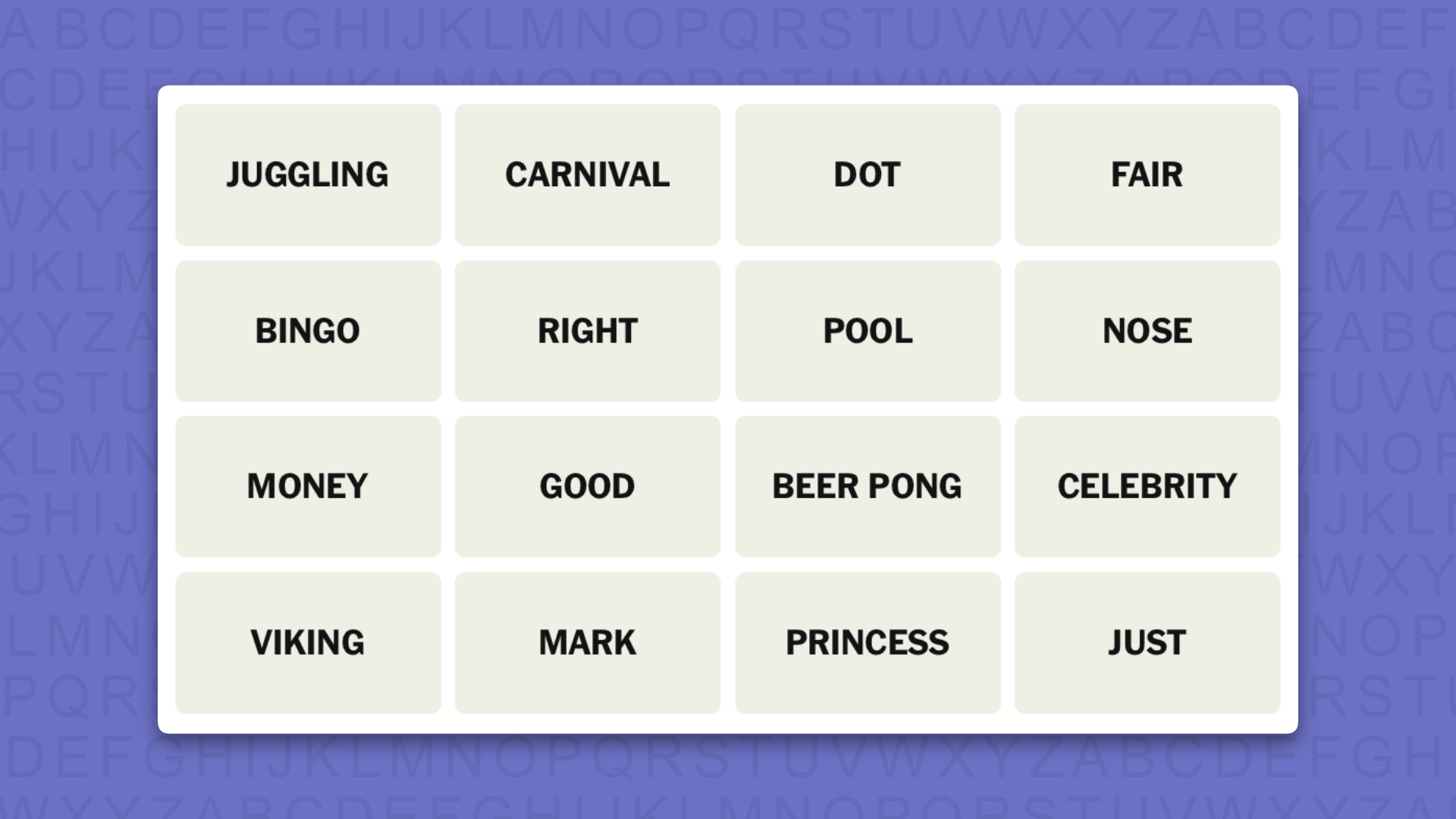
Good morning! Let’s play Connections, the NYT’s clever word game that challenges you to group answers in various categories. It can be tough, so read on if you need Connections hints.

What should you do once you’ve finished? Why, play some more word games of course. I’ve also got daily Strands hints and answers and Quordle hints and answers articles if you need help for those too, while Marc’s Wordle today page covers the original viral word game.

Advertisement

Source link

Advertisement
Continue Reading

Tech

Mythos attack on 3rd-round PQC algorithm candidate puts it out of commission

Published

on

Mythos helped to find a new meet-in-the-middle technique that relies on a Möbius Bridge, a more sophisticated fingerprinting algorithm used in meet-in-the-middle attacks. Using it, Green said, the code Mythos produced was able to reduce the number of required inputs to 289. Anthropic said that savings can reduce the time required for such attacks by 200- to 800-fold.

The ability to produce that many inputs makes the attack beyond reach outside of the laboratory. Further, the actual speed-up is unknown, since the weakened AES algorithm tested used only 7 rounds. Specification-compliant AES, Green said, uses 10, 12, or 14 rounds, depending on key size.

Anthropic is careful to explicitly spell out most of these caveats. The Monday blog post goes on to argue, however, that the results are nonetheless meaningful and could ultimately fundamentally disrupt the process of cryptanalysis, or the adversarial testing of cryptosystems.

“The cybersecurity community is now grappling with the fact that language models are able to discover so many bugs that the standard human processes (like vulnerability triage, verification, and remediation) struggle to keep up,” Anthropic wrote. “We predict that the same will soon be true in academic cryptography research. As language models increasingly produce novel research outputs autonomously, human researchers may become bottlenecked on studying and validating these results for technical validity, novelty, and utility.”

Advertisement

Not mentioned in Anthropic’s report is whether its researchers used Mythos to attack more tested cryptosystems, such as elliptic curve cryptography and RSA. Attack improvements against these systems would be more impressive. By achieving the most impressive result against an algorithm still in its infancy, it’s not clear how much of an advantage Mythos truly provided. There’s no way of knowing if researchers using conventional cryptanalysis techniques were already close to discovering the same attack.

Ultimately, the lesson from the research is simple. AI-assisted cryptanalysis remains untested, and providers of these platforms have a vested interest in exaggerating their benefits. At the same time, there’s growing evidence that LLMs may provide significant advantages in finding cryptographic weaknesses. It would be a mistake to conclude that LLMs won’t one day play an important role in the race between securing and compromising our most vital assets.

The headline and body of this story have been updated to reflect the withdrawing of HAWK.

Advertisement

Source link

Continue Reading

Tech

Quantum computing company Zuriq to scale tech amid $25.5m raise

Published

on

The round builds on the company’s $4.2m pre-seed round in 2025 and will be used to scale and grow the organisation’s quantum ambitions.

Zuriq, a quantum computing company based out of Switzerland, has announced a seed funding round of $25.5m. 

The round was led by Quantonation, with participation from Forward.one, Extantia, Firgun Ventures and additional previous round investors. The company raised a $4.2m pre-seed round in 2025.

Zuriq is a spin-out of ETH Zürich and intends to use the funds to scale its trapped-ion quantum processors and expand its team alongside research and development efforts as it works to significantly increase the number of qubits its architecture can support. 

Advertisement

According to the organisation, the majority of trapped-ion quantum computers are based on a decades-old design in which ions are held in one-dimensional chains stitched together into larger grids using complex junction structures. 

Zuriq claims to have taken a novel approach with processors that are natively two-dimensional and infrastructure that allows ions to move freely in any direction without the junctions that constrain reconfiguration.

Prof Jonathan Home, a scientific adviser at Zuriq and professor of the Department of Physics at ETH Zürich, said: “What makes this approach powerful is geometry. Hold ions in a line and the count grows one at a time, hold them in two dimensions and it grows with the area of the chip, on a standard chip, that is the difference between tens of ions and many thousands. 

“Just as important, the ions can be moved freely in three dimensions, so they can be connected together far more flexibly, and that connectivity is what ultimately makes a quantum computer more capable. Reaching the scale and connectivity that real applications will need has been the central challenge for the whole field.”

Advertisement

Zuriq has stated it is now turning its attention to scaling its technology and plans to increase the number of ions on a chip to enable powerful, commercially useful machines. 

Christophe Jurczak, a founding partner at Quantonation, said: “A common misconception is that the quantum race is already decided, but that is far from reality. Zuriq is demonstrating that there remain significant and transformational physics breakthroughs still to be made in quantum architectures. 

“The scientific calibre of the team is world-class, which is why Zuriq has been phenomenally successful in attracting global talent to join them and build 2D-native quantum computers where trapped-ion qubits finally have the freedom to move and connect.”

Also this week (27 July), Multiverse Computing, which is based in San Sebastián, Spain, announced a $570m Series C funding round at a $1.7bn pre-money valuation. 

Advertisement

The funds are expected to go towards expanding the company’s model library, continuing research and development, investing in sovereign AI infrastructure and building out a regional presence in east and south-east Asia, the Middle East, Canada and the US.

Don’t miss out on the knowledge you need to succeed. Sign up for the Daily Brief, Silicon Republic’s digest of need-to-know sci-tech news.

Source link

Advertisement
Continue Reading

Tech

Google Play Is Expanding Age Confirmation Tools For App Developers

Published

on

The Age Signals API will be available globally before the end of the year.

Google shared some details on how it will ask Android developers to handle age verification requirements. The platform it’s adopting is called the Google Play Age Signals API. The tool is currently being tested in Brazil, and it will arrive in Australia and Canada in mid-August ahead of a global rollout later in the year.

The Age Signals tool allows parents to share their own or their child’s age with devs as a range. This as a more private option than requiring age be shared as a specific number or birthdate while still helping devs meet a growing number of age verification requirements. If an adult shares their child’s age range, all apps using the API will have access to the information and the program will automatically deliver an age-appropriate experience. The parent controls will be available in the Google Family Link app.

“Rather than enforcing one-size-fits-all rules, we give developers the flexibility to choose how they integrate safety signals. With this reliable signal, you retain complete agency to tailor your app’s content, features, and settings to match your audience,” Google’s blog post states. Age verification has become a hot topic over the past year, with several countries and US states passing wide-reaching laws putting more responsibility on platform owners and app developers to make checks.

Advertisement

Source link

Advertisement
Continue Reading

Tech

It’s not just you – report finds almost 1 in 3 workers scroll their phone in meetings, and that’s only the tip of the bad habits iceberg

Published

on


  • 31.7% of surveyed employees admit to scrolling on their phones during meetings
  • Distraction habits are taking over the workplace, with potentially devastating consequences for long-term employment prospects
  • Directors are over 4 times more likely to arrive late for a meeting than an entry-level employee

Scrolling through your phone is now considered preferable to engaging in discussion in meetings, with almost a third (31.7%) of employees admitting to looking at their phone instead of the daily PowerPoint, new research has claimed.

Digital distractions in the workplace are costing employees of all ages opportunities to progress, while Gen Z employees are struggling with time management. The findings of a Careerminds UK survey of 600 UK employees highlight meetings, emails, and notifications delivering distraction from the focused task, with completion or attention to personal tasks while at work by 37.2% of respondents.

Source link

Advertisement
Continue Reading

Tech

Use Your Head While Trimming Trees

Published

on

[Attoparsec] occasionally rides a bicycle for transportation, but with the major downside of doing this in North America, a place where bicycle infrastructure is generally neglected. From snow removal, maintenance, separation from cars, or even existing in the first place, the places bicyclists use are generally last to be cared for. One of these deficiencies is landscaping maintenance, with plant growth routinely extending into travel ways. Rather than continue to get hit in the face by tree branches, [Attoparsec] took matters into his own hands, or in this case, head.

Since he’s riding down the bike path anyway, the original thought was to add a trimmer to the front of the bicycle. This has a notable downside of being dangerous to others, so instead he added a string trimmer to his helmet. The electric trimmer was scavenged from an old handheld landscaping tool, with a 3D printed mount designed in CAD to cleanly mount to his bicycle helmet. It’s wired to a control on the handlebar, so when a branch is coming up it can be activated by hand and then pruned without much thought other than properly aiming one’s head.

By most measures this eccentric contraption seems to work quite well. There’s not enough torque to affect the rider’s head in any negative way, the strings are long enough to reach far enough to trim the leaves and branches before they can impact the rider’s face, and it’s safe for other users of the bike path. [Attoparsec] calls this “guerrilla urban landscaping”, a bit different from other forms of guerrilla gardening we have seen before.

Advertisement

Source link

Advertisement
Continue Reading

Tech

Telegram literally gives Russia the middle finger after founder Pavel Durov is charged with aiding terrorism

Published

on

What just happened? Russia has charged Telegram founder and CEO Pavel Durov with “aiding terrorism” and placed him on an international wanted list. The Federal Security Service (FSB) claims the platform failed to remove channels, chats, and bots used by Ukrainian intelligence to organize attacks inside Russia. Telegram’s response was less than diplomatic: its official X account posted a photo of Durov giving the middle finger.

The charges follow a terrorism-related investigation that became public in February. The FSB alleges that Telegram was used to coordinate sabotage, terrorist attacks, mass killings, and cyberfraud, resulting in deaths and extensive property damage.

A large part of the case centers on Daivinchik/Leo, a popular Telegram dating chatbot in Russia, where Tinder is no longer available. According to the FSB and Russia’s Investigative Committee, Ukrainian agents posed as young women to contact and entrap young Russians before coercing them into committing crimes.

Russian authorities say 46 people aged between 12 and 22 have been arrested over the last year after being recruited through the bot. They are accused of attacking law enforcement officers or setting fire to transport, energy, communications, and financial infrastructure. Ukraine has not commented on the allegations.

Advertisement

Durov, 41, could face life imprisonment if convicted. The FSB did not explain how it plans to add him to an international wanted list, and it’s unclear whether Moscow will seek an Interpol Red Notice. The billionaire lives in Dubai and holds French and Emirati citizenship. He posted that he was in Georgia last week, but his current location is unknown.

The case arrives amid Russia’s intensifying campaign against foreign internet services. Moscow has effectively throttled Telegram, forcing users to rely on VPNs, yet the Kremlin and Russian defense ministry continue posting on it daily. It was previously reported that the slowdown angered Russian soldiers and pro-war bloggers who depend on the app, while the Kremlin attempts to push citizens toward its state-backed Max service. A subsequent VPN crackdown was blamed for widespread banking outages.

Durov’s legal problems extend beyond Russia. French authorities arrested him in 2024 over allegations that Telegram failed to tackle criminal activity and cooperate with investigators. He denied wrongdoing and was eventually permitted to leave France while the investigation continued. Telegram later changed its terms to allow the disclosure of suspects’ IP addresses and phone numbers in response to valid legal orders.

Durov left Russia in 2014 after coming under government pressure over VKontakte, the social network he also founded. He has characterized Moscow’s actions against Telegram as an attempt to undermine privacy and free speech. The company’s response to the latest charge suggests that position has not changed.

Advertisement

Source link

Continue Reading

Tech

NYT Strands hints and answers for Thursday, July 30 (game #879)

Published

on

Looking for a different day?

A new NYT Strands puzzle appears at midnight each day for your time zone – which means that some people are always playing ‘today’s game’ while others are playing ‘yesterday’s’. If you’re looking for Wednesday’s puzzle instead then click here: NYT Strands hints and answers for Wednesday, July 29 (game #878).

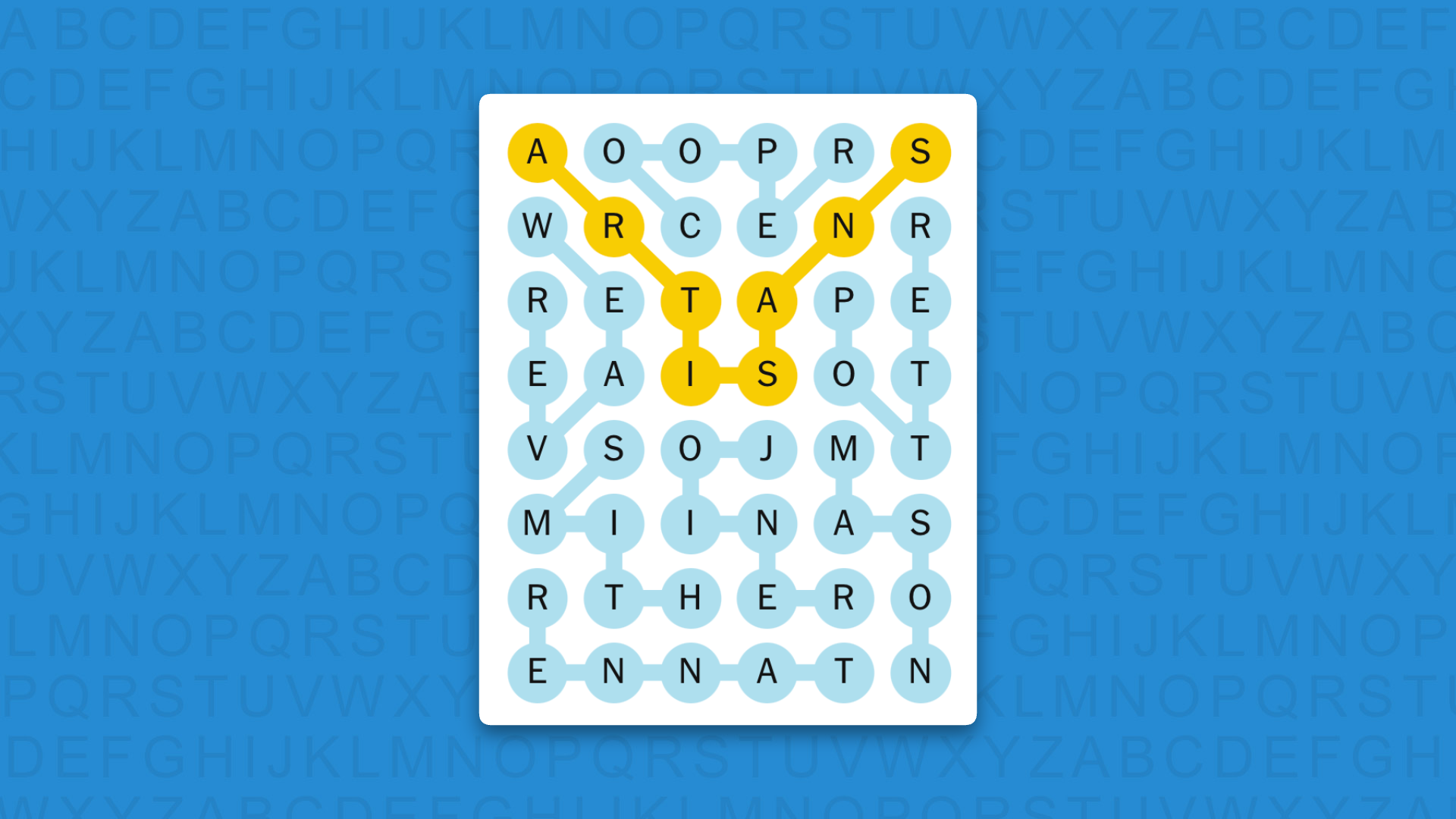
Strands is the NYT’s latest word game after the likes of Wordle, Spelling Bee and Connections – and it’s great fun. It can be difficult, though, so read on for my Strands hints.

Want more word-based fun? Then check out my NYT Connections today and Quordle today pages for hints and answers for those games, and Marc’s Wordle today page for the original viral word game.

Advertisement

Source link

Advertisement
Continue Reading

Trending

Copyright © 2025