



Connect with us
DAPA Banner
DAPA Coin
DAPA
COIN PAYMENT ASSET
PRIVACY · BLOCKDAG · HOMOMORPHIC ENCRYPTION · RUST
ElGamal Encrypted MINE DAPA
🚫 GENESIS SOLD OUT
DAPAPAY COMING

Business

How Australian Businesses Are Rethinking CRM in the Age of AI Agents

Published

on

How Australian Businesses Are Rethinking CRM in the Age of

A new generation of AI-native platforms is transforming customer relationship management from a record-keeping tool into an autonomous driver of business outcomes — and Australian enterprises are beginning to take notice.

Australian businesses are collecting more customer data than at any point in their history. Sales interactions, support tickets, marketing touchpoints, e-commerce behaviour — the volume of signals that companies now capture would have seemed extraordinary a decade ago. The problem, for many organisations, is not a lack of data. It is the inability to act on it quickly enough.

Customer expectations have shifted accordingly. Buyers in financial services, retail, and manufacturing increasingly expect personalised, timely responses that reflect an understanding of their history and needs. To deliver that experience consistently and at scale, organizations need systems that can process customer signals and respond to them in real time.

That operational gap is driving a significant reassessment of how Australian enterprises approach customer relationship management. The question is no longer simply which platform to use, but what kind of platform is needed for a business environment in which speed and personalisation are baseline requirements.

Advertisement

What CRM Is — And Why It Is Changing

At its core, CRM software is designed to help organisations manage and analyse their interactions with existing and prospective customers. Traditionally, that has meant a centralised database of contacts, deal histories, and communication records — a system of record that sales, marketing, and service teams can query and update.

For much of the past two decades, this model served businesses adequately. The major platforms in the space built large ecosystems around this foundational capability, adding layers of reporting, integration, and workflow automation over time.

The arrival of enterprise-grade artificial intelligence is now changing the underlying logic of what CRM systems are expected to do. Rather than waiting for a sales representative to query a database or a manager to review a pipeline report, AI-native platforms are designed to surface insights proactively, automate routine interactions, and in some configurations, act on customer signals without requiring human initiation.

This shift from passive data repository to active operational system is what analysts and vendors are increasingly describing as the transition from traditional CRM to agentic, or AI-native CRM.

Advertisement

The Rise of AI Agents in CRM

The concept of AI agents, defined as software systems capable of autonomously executing multi-step tasks based on specified goals, has moved from research papers into enterprise software with notable speed. According to Gartner, fewer than 5% of enterprise applications included task-specific AI agents in 2025. By the end of 2026, Gartner projects that figure will reach 40%.

The implications for CRM are substantial. In practice, AI agents embedded in customer management platforms can handle tasks such as lead qualification and prioritisation, appointment scheduling, follow-up sequencing, and case routing, all of which previously consumed significant hours of skilled employee time.

The market response has been correspondingly strong. IDC projects that year-on-year spending on artificial intelligence will grow by 31.9% between 2025 and 2029, reaching $1.3 trillion globally by the end of that period. A significant share of that investment is directed toward agentic AI applications, including CRM automation.

Gartner’s 2026 CIO and Technology Executive Survey found that while only 17% of organisations had deployed AI agents to date, more than 60% expected to do so within two years, representing the steepest adoption curve among all emerging technologies tracked in the survey. Analysts note, however, that speed of adoption will need to be balanced against governance maturity: Gartner separately estimated that more than 40% of agentic AI projects risk cancellation by 2027 due to unclear business value or inadequate risk controls.

Advertisement

What This Means for Australian Businesses

Australia’s CRM market is currently valued at approximately USD 2 billion and is projected to grow at a compound annual rate of around 10% through to 2033, according to IMARC Group. The sectors driving adoption most aggressively are financial services, retail, and manufacturing, industries where customer volume is high, margins on individual interactions are meaningful, and the cost of losing a relationship to a faster-responding competitor is material.

For financial services organisations in particular, the integration of AI into CRM workflows addresses a specific operational pressure: regulatory obligations demand accurate, auditable records, while market competition demands faster and more personalised client engagement. AI-native platforms that combine workflow automation with compliance-aware governance are increasingly seen as a practical resolution to that tension.

Retail businesses face a related but distinct challenge. The growth of e-commerce has compressed the window in which a timely follow-up or personalised recommendation can influence a purchase decision. Manual CRM processes are structurally unable to operate at the speed required. AI-native systems that can detect a behavioural signal and trigger a contextualised response within minutes are therefore attracting serious evaluation.

Mid-market manufacturers and distributors have historically been underserved by CRM vendors that focus on either large enterprise or SME deployments. The emergence of no-code configuration tools within AI-native platforms is helping to reduce barriers to adoption for this segment. Businesses that previously lacked the IT resources to customise and maintain a CRM implementation can now build and modify workflows without specialist development skills.

Advertisement

One Platform Shaping the Agentic CRM Category

Among the vendors positioning themselves at the intersection of AI and no-code CRM, Creatio has drawn notable attention from industry analysts. The company was recognised as a Leader in the Gartner Magic Quadrant for B2B Marketing Automation Platforms for the fifth consecutive year in 2025, and as a Visionary in the Gartner Magic Quadrant for Sales Force Automation Platforms the same year.

Independent research firm Nucleus Research, which interviewed Creatio customers to assess real-world outcomes, found that the platform’s no-code capabilities deliver a 37% reduction in total cost of ownership compared to alternative solutions, alongside a 70% reduction in implementation timelines and a 61% reduction in lead response time for sales teams. Users also reported measurable improvements in organisational agility and the ability to run continuous improvement initiatives without relying on specialist development resources.

Creatio’s architecture combines a no-code development environment with natively embedded AI agents, enabling organisations to build and modify CRM workflows without writing code. The company reported 40% year-on-year revenue growth in 2025, continuing its accelerated expansion among enterprise customers across financial services, manufacturing, and the public sector, with organisations including Nasdaq, Allianz, MetLife, and E.ON Next among those selecting the platform.

The platform’s real-world impact has been documented across a range of industries. BSN Sports, a US distributor of sporting equipment serving more than 150,000 institutional customers, reported a 60% increase in sales book size per representative over five years following its implementation of Creatio, alongside 100% user adoption across its sales organisation.

Advertisement

What Australian Organisations Should Evaluate

For Australian businesses beginning to assess AI-native CRM options, analysts and practitioners generally point to four criteria as foundational to a sound evaluation.

Integration flexibility is frequently the first consideration. A CRM platform, however capable in isolation, delivers limited value if it cannot connect cleanly with the ERP, marketing automation, and data warehousing systems already in use. Organisations should assess both the depth of available native integrations and the availability of open APIs for custom connections.

No-code configurability has become a significant differentiator as businesses seek to reduce dependence on specialist development resources. Platforms that allow business users to modify workflows, build automation rules, and deploy new capabilities without requiring IT involvement can materially reduce both implementation timelines and ongoing maintenance costs.

AI governance and transparency is emerging as a critical selection criterion, particularly for regulated industries. As AI agents take on a greater share of customer-facing decision-making, organisations need visibility into how those decisions are made, the ability to audit outcomes, and clear controls over which tasks agents are authorised to execute autonomously.

Advertisement

Total cost of ownership over a three-to-five year horizon, accounting for licensing, implementation, customisation, and ongoing support, frequently tells a different story than headline subscription pricing. Platforms with strong no-code capabilities tend to reduce ongoing professional services dependency, which can represent a meaningful cost advantage over time.

Looking Ahead

The shift from traditional CRM to AI-native platforms is no longer a distant prospect for Australian businesses. The transition is already under way across the market segments facing the greatest competitive pressure to deliver superior customer experiences. The organisations that move thoughtfully and early are likely to accumulate structural advantages that compound over time: faster response cycles, more efficient sales operations, and customer data assets that become progressively more valuable as AI capabilities improve.

The technology is maturing rapidly. What has changed is the availability of platforms that make sophisticated AI-native CRM accessible to organisations without large technology teams or significant IT budgets. For Australian businesses still operating legacy systems, that accessibility is both an opportunity and, over a medium-term horizon, a strategic risk if competitors move first.

The question for most enterprises is no longer whether to modernise their approach to customer relationship management, but how quickly they can do so without disrupting the operations they already depend on.

Advertisement

Sources

• Gartner, Hype Cycle for Agentic AI, 2026

• Gartner, CIO and Technology Executive Survey, 2026

• Gartner, Magic Quadrant for B2B Marketing Automation Platforms, September 2025

Advertisement

• IMARC Group, Australia Customer Relationship Management Market, 2025–2033

• Creatio, Marks a Landmark Year of AI Innovation and Accelerated Global Growth, January 2026

• Forrester Wave: CRM Software for Financial Services, Q1 2025

• Nucleus Research, Creatio’s No-Code Capabilities Reduce TCO by 37 Percent, April 2025

Advertisement

• Creatio, Company News and Investor Announcements, 2024–2025

• BSN Sports / Creatio, Customer Success Case Study, 2024

• Creatio Glossary: CRM Software

Advertisement
Continue Reading
Click to comment

You must be logged in to post a comment Login

Leave a Reply

Business

Queer club launches action against Perth Bears

Published

on

Queer club launches action against Perth Bears

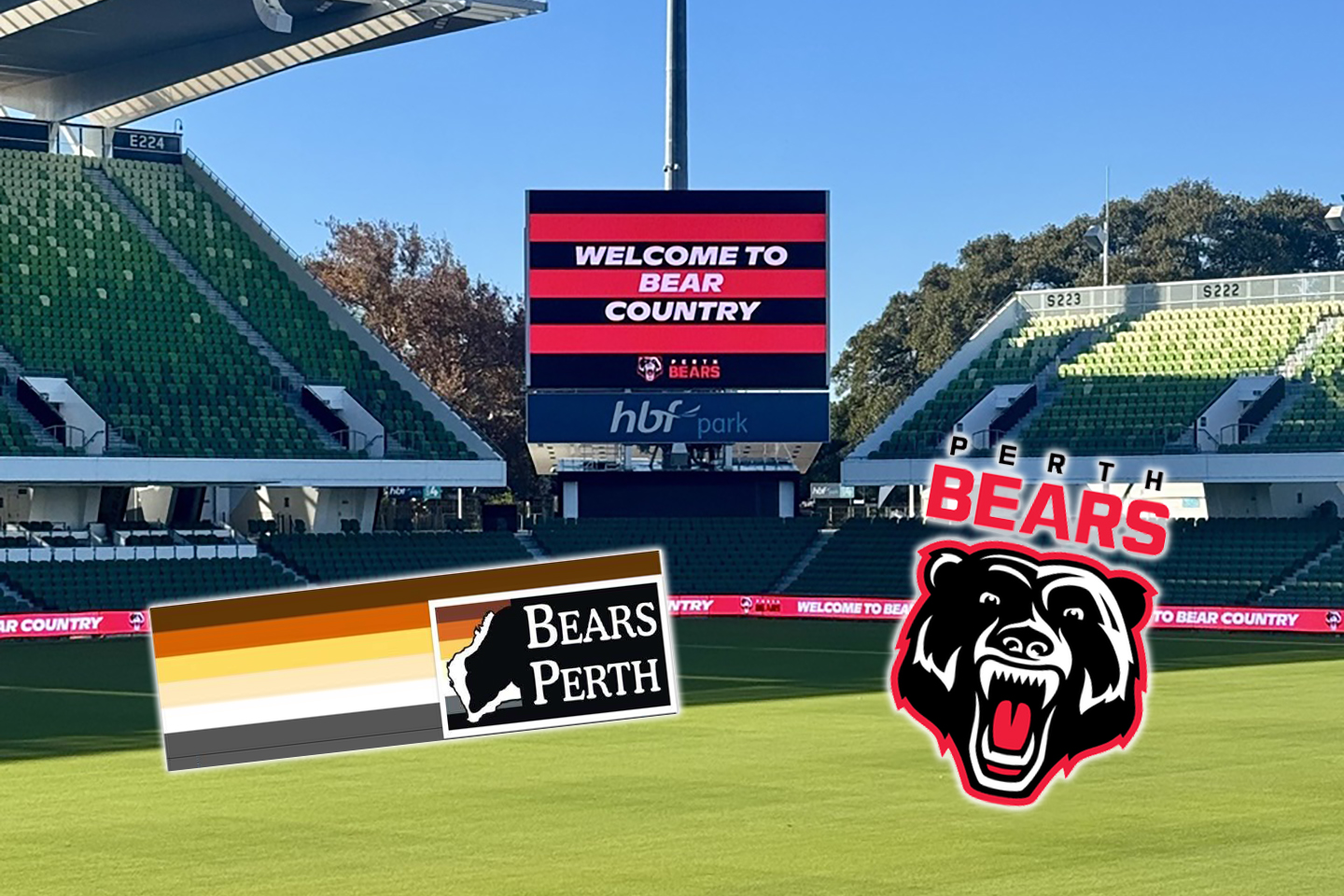
Queer club Bears Perth has lodged a formal objection to Perth’s new National Rugby League club registering the name Perth Bears in a case that could force a rethink for the rugby league startup.

Continue Reading

Business

Ryanair says it will reluctantly let parents sit with children for free

Published

on

Passengers incluidng children boarding a Ryanair aircraft using the steps at the front of the plane on a sunny day with blue skies

Under the old policy, Ryanair said adults travelling with children paid one reserved seat fee, and could select seats beside them for up to four children for free.

This typically led to a fee of £8 each way, the CMA said when it launched its investigation earlier this month.

It said at the time it was looking at whether the airline’s “approach to seat reservations may mean parents are being charged for the airline to meet its child safety and disability‑related obligations as set out under aviation rules – and will investigate to determine whether or not this practice is in line with consumer law”.

Other airlines offered to seat children next to a parent or guardian without a fee, or allocate seats together automatically during booking for free, it added.

Advertisement

Ryanair said its policy had given families certainty of where they would be sitting at the time of booking, which they had valued.

It said the “free parent seats” will now be available at the back of the aircraft, as front rows tend to be reserved.

The “minor policy tweak” came into effect on Thursday, it said. It does not expect the change to have an effect on Ryanair’s revenue.

O’Leary hit out at the CMA for targeting its family seating policy, which he said had been “universally embraced by consumers as the most progressive and transparent in Europe”.

Advertisement

“Instead of promoting competitiveness and lower fares for consumers, the CMA is on a mission to force Ryanair to adopt the less transparent and less consumer-friendly family seating policy applied by most other airlines – just because it’s the industry standard,” he said.

Continue Reading

Business

Darden Restaurants (DRI) Q4 2026 earnings

Published

on

Darden Restaurants (DRI) Q4 2026 earnings

An Olive Garden restaurant in Milpitas, California, US, on Tuesday, Dec. 16, 2025.

David Paul Morris | Bloomberg | Getty Images

Darden Restaurants on Thursday reported mixed quarterly results as same-store sales growth at the company’s fine-dining restaurants and Olive Garden fell short of expectations.

Advertisement

The company’s forecast for its fiscal 2027 earnings and revenue also came on the lower end of Wall Street’s projections.

Shares of the company slid more than 3% in premarket trading.

Here’s what the company reported for its fiscal fourth quarter ended May 31 compared with what Wall Street was expecting, based on a survey of analysts by LSEG:

  • Earnings per share: $3.66 adjusted vs. $3.63 expected
  • Revenue: $3.72 billion vs. $3.73 billion expected

Darden reported net income of $404.9 million, or $3.51 per share, up from $303.8 million, or $2.58 per share, a year earlier.

Excluding costs of restaurant closures and other items, the company earned $3.66 per share.

Advertisement

Net sales climbed 13.7% to $3.72 billion, boosted by the inclusion of an extra week during the fiscal year.

Across all of Darden’s restaurants, same-store sales rose 4.6%, topping expectations of 4.1% growth based on StreetAccount estimates.

LongHorn Steakhouse led the portfolio with same-store sales growth of 9.5%, beating StreetAccount projections of 7.1%. The chain has overtaken Olive Garden to become Darden’s top performer, although it still accounts for less of the company’s overall sales.

For its part, Olive Garden saw same-store sales grow 2.4% in the quarter, missing expectations of 3.2% growth.

Advertisement

Darden’s fine-dining segment reported same-store sales growth of 1.9%, falling short of StreetAccount estimates of 3.1%. The division includes The Capital Grille and Ruth’s Chris.

The company’s “other business” segment saw same-store sales rise 4.6%, higher than the 3% projected by analysts. The division includes a handful of smaller restaurant chains, like Yard House and Chuy’s.

Looking ahead to the next fiscal year, Darden is projecting total sales of $13.60 billion to $13.75 billion and net earnings per share from continuing operations in a range of $11.10 to $11.35. Wall Street is expecting the company to report fiscal 2027 revenue of $13.72 billion and earnings per share of $11.40.

Darden is also forecasting that it will report same-store sales growth of 2.5% to 3.5% during fiscal 2027 and open between 75 and 80 new locations.

Advertisement
Choose CNBC as your preferred source on Google and never miss a moment from the most trusted name in business news.
Continue Reading

Business

Somerset council offices to be turned into more than 100 flats for NHS staff

Published

on

Business Live

The apartments near Musgrove Park Hospital will provide affordable accommodation in Taunton

C Block of County Hall, seen from the A38 Upper High Street in Taunton. CREDIT: Daniel Mumby. Free to use for all BBC wire partners.

C Block of County Hall(Image: Local Democracy Reporting Service / Daniel Mumby)

An office block in the centre of Taunton is set to be transformed into new flats for NHS staff following approval by local councillors. Somerset Council offloaded C Block of County Hall (situated at the southern end of The Crescent) in March 2025, with the proceeds earmarked to fund front-line services.

Advertisement

Prime PLC, a specialist developer of health and care property, submitted revised proposals in November 2025 to convert the 4,600 sq m building into 111 flats, targeted at new recruits joining Musgrove Park Hospital and neighbouring NHS services.

The council’s planning committee west (which oversees major applications within the former Somerset West and Taunton area) has now granted approval to the conversion scheme – though concerns were raised about parking provision and how “cramped” the accommodation will be.

The flats will span eight floors, made up of 99 one-bedroom studio apartments, six two-person apartments and six three-person flats.

Each studio apartment will offer just under 25 sq m of floor space and will feature a bathroom and kitchen/dining area.

Advertisement

Shared laundry facilities will be made available to residents, while a new lift shaft will be installed to bring the 1960s structure up to the requisite fire safety standards.

Just 10 parking spaces will be available on site within an underground car park, with most staff expected to walk, cycle or carpool to Musgrove Park Hospital, which sits roughly half a mile away — approximately a 15-minute walk.

Richard Baum, head of strategic planning at Somerset NHS Foundation Trust, set out the case for the development when the planning committee west convened in Taunton on Tuesday afternoon (June 23).

He said: “There is an urgent and growing need for high-quality and affordable accommodation for NHS staff.

Advertisement

“We continue to face sustained workforce pressures; we are actively trying to recruit new staff all the time at Musgrove, whether that’s newly qualified staff, experienced staff or trainees.

“One of the issues we currently face is that there isn’t enough access to suitable housing. We regularly see people accept roles and then struggle to find accommodation that they can afford, and others decline roles altogether because there isn’t sufficient housing in the local area that they can afford.

“When we recruit staff early in their years, they move around geographically a lot. They require accommodation that’s flexible and affordable, and the traditional private rental market doesn’t provide that.

“This development addresses a clear gap that we have and enables staff to live locally in a way that is affordable to them, so that they can remain in their roles, train up in the NHS and keep delivering patient care locally here in Somerset.

Advertisement

“This will allow people to come into our organisation, settle quickly and reduce the pressure they have with commuting. This is an ideal and highly sustainable location.”

The new flats are expected to experience a considerable turnover of residents, with entry-level NHS employees residing there while they train at the hospital before purchasing or renting larger homes locally as they progress through the various salary bands.

Councillor Andy Hadley (Conservative, Minehead) hailed the proposals as “a great idea” but raised concerns about whether the scheme could trigger parking problems in the surrounding streets.

He said: “Yes, people won’t used their cars to go to work, but most people do own a car. What is being done to stop the local area being snarled up with 111 cars all day long?”.

Advertisement

Councillor Nick O’Donnell (Liberal Democrat, Rowbarton and Staplegrove) echoed Mr Hadley’s parking concerns, and expressed doubts over whether the flats would offer sufficient space to ensure tenants enjoyed an adequate quality of life.

He said: “When I was looking at the plans, I was quite concerned about the living space – 24 to 27 sq m, which is 12 sq m below what is marketable.

“If you’re a student living at university, it’s probably more than enough room, but then in halls of residence you’ve got a separate kitchen space. I just think it’s going to be a bit cramped.

“These flats aren’t that much bigger than the average sized hotel room.”

Advertisement

Councillor Caroline Ellis (Lib Dem, Bishop’s Hull and Taunton West) welcomed the proposals, contending that they would smarten up the look of the building while relieving pressure to develop greenfield land on the town’s outskirts.

She said: “It’s good to be using a brownfield site of this kind. We’ve got to be mindful that every single dwelling on a brownfield site, at an accessible location for the town centre, is one less that has to go on precious green space.

“This is serving a burning social and community need, because if Musgrove cannot attract a decent workforce, then we are going to miss out majorly [sic].

“This is very much starter, ‘meanwhile’ housing, to make sure that we remove barriers to the labour market, so people can just get their feet under the table and get started. I can’t see why we would be objecting to this.

Advertisement

“C Block is a minger building – you wouldn’t build that nowadays, would you? – and this might make it slightly less minging.”

Councillor Norman Cavill (Conservative, Monkton and North Curry) was in agreement, remarking: “Quite frankly, a change in the appearance of this building is highly desirable.

“The accommodation is much needed for the hospital, the college and the nurses training at the latter. I don’t think there will be a lack of customers for a long time.”

The proposal was granted unanimous approval by the committee following a debate lasting just over an hour, paving the way for construction work to commence before Christmas.
Advertisement
Continue Reading

Business

Halfords shares surge as motoring services drive return to profit

Published

on

Business Live

Revenue grew five per cent to £1.8bn

A Halfords store

A Halfords store(Image: Yui Mok/PA Wire)

Halfords shares have surged after it exceeded analyst forecasts to deliver a £44m profit, signalling that the motoring and cycling retailer’s transformation is starting to gather momentum.

Advertisement

The company recorded a £43.6m pre-tax profit in the year to April, bouncing back into profitability following last year’s £30m loss, as turnover climbed five per cent to £1.8bn. Its shares leapt 14 per cent on Thursday morning to 205p.

City analysts had predicted the firm would post £40.3m in profit before tax, while the company’s own guidance pointed towards the “upper end” of a £41.2m ceiling.

The FTSE 250 business has been pursuing expansion in its motoring division in recent months under new chief executive Henry Birch, as the segment begins to eclipse its retail revenues.

Birch’s approach has focused on a swift expansion of the firm’s garage network as the Redditch- based company looks to its motoring services division to fuel its growth, as reported by City AM.

Advertisement

Turnover in Halfords’ autocentre operations rose by six per cent on a like-for-like basis to £740m. The business said its repairs services are accelerating, with the firm having previously identified the UK’s ageing vehicle fleet as a growth opportunity.

The robustness of this repairs activity more than offset “ongoing weakness” in the tyres market, it said.

Duncan Ferris, an analyst at Freetrade, said the firm is “finding growth in keeping Britons’ ageing cars on the road,” 43 per cent of which are 10 or more years old. Halfords has reported that it has bucked a “subdued consumer environment” to post a four per cent like-for-like rise in revenue, reaching £1bn, at its retail division.

Bicycle sales are spearheading this growth, climbing 6.4 per cent, indicating that this segment of the business is finding its footing once more following the boom and bust triggered by the surge in cycling demand during the pandemic.

Advertisement

The retailer’s bike sales soared during the pandemic, propelling its share price to significant heights, yet Halfords has since struggled to replicate those figures in subsequent years.

“There are still reasons to be cautious, though. In Halfords’ retail business, profits remain under pressure as inflation and reinvestment offset the impact of positive sales momentum,” Ferris said.

The company’s share price peaked at 430p in June 2021 but has since shed nearly 60 per cent of its value in five years before Thursday’s update.

Last April, the retailer announced the abrupt exit of Graham Stapleton, who had steered the business for seven years. Birch, the former chief executive of Very and William Hill, was named as his replacement on the same day.

Advertisement

The incoming Halfords chief said: “These are early days in our growth strategy and there is much still to do as we seek to leverage Halfords’ clear strengths: leading market positions, an unmatched physical and digital presence in motoring and cycling, a trusted brand, and a unique services proposition.”

The firm revealed on Thursday that former EY partner Jock Lennox will join its board as chair, taking over from Keith Williams, whose exit was confirmed in November.

Halfords was established as a wholesale ironmongery in 1892 before growing its cycling and motoring retail operations. It has been listed on the London Stock Exchange since 2004.

Advertisement
Continue Reading

Business

Moonpig says more people using AI to write greeting cards and create pictures

Published

on

Business Live

The online cards and gifts business said overall revenues rose 8.6% to £284.5m

The Moonpig website on a mobile phone

The Moonpig website on a mobile phone(Image: PA Archive/PA Images)

Growing numbers of gift-givers are turning to AI to compose their cards or create bespoke content including stickers and images, Moonpig has disclosed.

Advertisement

The online cards and gifts retailer said it had made substantial investments in artificial intelligence (AI) which can “lower barriers to content creation”.

It revealed that creative features were incorporated into 31 million greeting cards in the year ending April, representing a twofold increase on the previous year.

This includes customisation options such as video and audio cards, alongside AI capabilities including handwriting, stickers and face swap, which blends a person’s face from a photograph into a greeting card design.

Customers can also opt to utilise the AI writing assistant by entering prompts while creating a card, with AI then producing the accompanying text.

Advertisement

“As advances in AI continue to lower barriers to content creation, we believe the ability to reliably manufacture, personalise and deliver products at scale becomes increasingly important,” chief executive Catherine Faiers said.

Moonpig’s total revenues climbed by 8.6% year-on-year to £284.5 million.

The firm said that this partially reflected consumers enhancing orders with premium-priced gifts and larger-format cards while opting for next-day tracked delivery.

Almost 18% of orders featured a gift, which can be selected after a card is chosen, driving a 5.7% rise in the average order value. Moonpig offers gifts from retail partners including Next, Jojo Maman Bebe and Boots, alongside experiences from brands such as Pizza Express, Virgin Wines and The Traitors Live Experience.

Advertisement

Mark Crouch, market analyst for eToro, said: “For Moonpig, loyalty is a significant asset.

“With more than 12 million active customers, the company benefits from a steady stream of birthdays, anniversaries and milestones that arrive regardless of the economic backdrop.

“Customers are not only returning but spending more, trading up to premium gifts, larger-card formats and faster delivery options.”

Moonpig shares were up by more than a tenth on Thursday morning. The London group also has a logistics hub in Tamworth and an office in Manchester.

Advertisement
Continue Reading

Business

13 BSE 500 stocks surged up to 200% in just 3 months; 3 turned multibaggers – Midcap Momentum

Published

on

13 BSE 500 stocks surged up to 200% in just 3 months; 3 turned multibaggers - Midcap Momentum

Over the past three months, Indian equities have been highly volatile, but the turbulence has been accompanied by a strong upward drift. The benchmark BSE Sensex gained about 4%, while the broader market quietly outperformed by a much wider margin.

The real action unfolded across the wider universe, where the BSE 500 surged nearly 10%, driven by persistent buying interest across large and midcap stocks. Momentum steadily built beneath the surface, even as the headline indices posted more modest gains.

In this rally, market breadth told the real story: around 32 stocks gained more than 50% in just three months. Among them, 13 standout performers delivered returns ranging from 70% to 200%, including three multibaggers that more than doubled investor wealth in a remarkably short span. What appeared to be a routine market phase on the surface turned into a significant wealth-creation opportunity for investors positioned in the right segments of the market.

Continue Reading

Business

Alphabet: Still A Top-Tier AI Compounder

Published

on

Alphabet: Still Not Too Late To Jump On The 16%+ Growth Train (NASDAQ:GOOG)

Alphabet: Still A Top-Tier AI Compounder

Continue Reading

Business

FedEx Revenue Rises on Growth in Package Yields, Volume

Published

on

FedEx Revenue Rises on Growth in Package Yields, Volume

FedEx FDX -0.13%decrease; down pointing triangle logged higher revenue in its latest quarter on higher shipping rates and volumes.

The shipping company’s profit ticked down in the quarter, hurt by costs related to the spin off of its freight operations, business optimization and shift to reporting on a calendar-year basis.

Copyright ©2026 Dow Jones & Company, Inc. All Rights Reserved. 87990cbe856818d5eddac44c7b1cdeb8

Continue Reading

Business

EasyJet rejects takeover offer from US investment firm Castlelake

Published

on

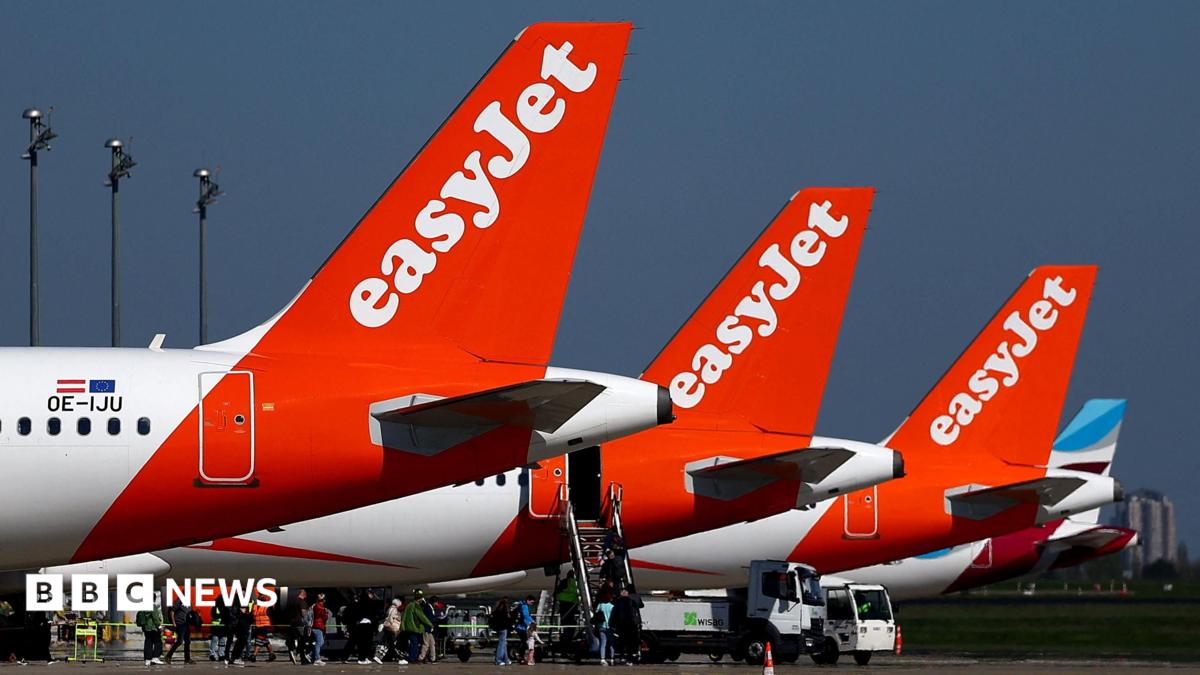
The tails of three EasyJet planes, painted red and white, parked on a runway.

EasyJet has rejected a fourth takeover offer worth £4.93bn from Castlelake.

The low-cost Luton-based airline said the US investment firm’s bid was worth £6.50 a share, compared with the previous offers of £5.60, £6 and £6.25 a share.

A spokesperson said it was giving Castlelake until 17:00 BST on 5 July to make a firm offer or walk away.

“Having carefully reviewed it with its advisers, the board of EasyJet continues to regard the fourth proposal as substantially undervaluing the company and its prospects and continuing to give rise to significant questions of deliverability,” said EasyJet.

Advertisement

EasyJet said the takeover interest came at a time when its share price had been pushed down by concerns about the consequences of the Iran war.

The FTSE 250 firm’s shares had dropped by about 30% over the past year, before news of Castlelake’s interest.

EasyJet said it remained “concerned” about Castlelake’s ownership structure and ability to deliver any offer, adding the investor would need to provide “satisfactory assurances and commitments” on those issues.

Castlelake has assets under management worth $36bn (£27.3bn).

Advertisement

Under the deal, EasyJet would be 49% owned by Castlelake and co-investors including Brookfield Asset Management, and 51% owned by individual European Union investors.

Do you have a story suggestion for Beds, Herts or Bucks? Contact us below.

Continue Reading

Trending

Copyright © 2025