
Business
How Much Consumer Data Can SMBs Keep


For UK small businesses, the question of how long to hold onto customer data is not as simple as picking a number and sticking with it. There is no single fixed retention period under UK GDPR.
Instead, the law requires that personal data be kept only for as long as necessary for the purpose it was originally collected — and businesses must be able to justify that decision in writing.
This places a real operational burden on SMBs. A business that collects email addresses for a newsletter campaign, stores payment details for recurring orders, and logs support conversations is already dealing with several categories of data, each with its own appropriate lifespan. Getting this wrong is not a minor administrative failing — it is a compliance risk with financial consequences.
What GDPR Says About Data Retention
UK GDPR’s storage limitation principle is clear in direction but silent on specifics. It tells organisations not to hold personal data longer than necessary, but it does not tell them exactly how long “necessary” means for any given category. The practical implication is that every SMB needs a documented retention policy that explains, category by category, why data is being kept and when it will be deleted or anonymised.
Standard business records — invoices, contracts, VAT-related documents — often need to be retained for six or seven years under tax and accounting rules. Consumer-facing records, however, are a different matter. Inactive customer accounts, expired marketing leads, and closed support tickets should be reviewed separately and deleted once they no longer serve a clear, documented purpose. Without that discipline, data quietly accumulates, and so does risk.
Which Data Types Carry Stricter Limits
Not all consumer data deserves the same retention window. Payment and financial records carry longer obligations because of tax law and potential disputes. Marketing consent records should be kept long enough to demonstrate compliance with PECR if challenged, but deleted when consent lapses. Special category data — which includes health, biometric, and certain demographic information — requires a higher standard of justification for retention and tighter access controls throughout its life.
Digital-native businesses, including online platforms and subscription services, now face growing user expectations around data minimisation. Sectors that have developed strong frameworks around user transparency offer useful benchmarks — fintech apps, healthtech platforms, and iGaming services like betting in the UK without registration have all been pushed by regulation to minimise data collected upfront, reshaping how compliance pressure translates into practical data handling across industries.
According to a Computer Weekly data retention analysis, a category-by-category approach rather than a blanket policy is now widely regarded as best practice for UK organisations.
Industries Where Retention Rules Differ
Sector-specific rules complicate matters considerably for businesses that assume general GDPR guidance is enough. Healthcare providers may need to retain patient-adjacent records for years beyond what a standard retail business would ever consider. Financial services firms operating under FCA supervision and anti-money-laundering regulations face their own mandatory minimums that override what GDPR alone would suggest. Payroll and HR outsourcing firms sit in similarly complex territory.
The Data (Use and Access) Act 2025, which became law on 19 June 2025, has begun updating and formalising parts of the UK GDPR framework. As detailed in Osborne Clarke’s legal analysis, the Act puts some ICO guidance points onto a firmer statutory footing, including proportionality expectations around subject access requests. For sector-specific SMBs, this means the compliance baseline is now slightly higher than it was a year ago.
Steps SMBs Should Take Right Now
The first practical step is building a data map — a clear record of what personal data the business holds, where it sits, why it was collected, and how long it will be kept. Without this foundation, it is impossible to enforce a retention schedule or respond credibly to a subject access request or complaint. This does not require specialist software; a well-maintained spreadsheet can serve the purpose for most small businesses.
The financial case for action is compelling. Last year, the average cost of a data breach for a UK SME reached £6,400, according to the Government’s Cyber Security Breaches Survey. Holding unnecessary data directly inflates that risk. SMBs that set firm deletion or anonymisation dates, review their retention schedules annually, and document their reasoning are not just meeting legal requirements — they are actively reducing their exposure to a cost that can be genuinely damaging at small-business scale.


Presentation
Operator
Hello, everyone. Thank you for joining us and welcome to the Parex Resources Q2 2026 Operational and Financial Results. [Operator Instructions]
I will now hand the conference over to Mike Kruchten, Senior Vice President of Capital Markets and Corporate Planning. Mike, please go ahead.
Michael Kruchten
Senior Vice President of Capital Markets & Corporate Planning
Thank you. Good morning, everyone, and welcome to Parex Resources’ Second Quarter 2026 Conference Call and Webcast. My name is Mike Kruchten, and on the call with me today are our President and Chief Executive Officer, Imad Mohsen; our Chief Financial Officer, Cameron Grainger; and our Chief Operating Officer, Eric Furlan. [Operator Instructions]
As a reminder, this call includes forward-looking statements as well as non-GAAP and other financial measures, with the associated risks outlined in our news release and MD&A, which can be found on our website or at sedarplus.ca. Note that all amounts discussed today are in U.S. dollars, unless otherwise stated.
I’ll turn the call over to Imad. Please go ahead.
Imad Mohsen
President, CEO & Director
Thank you, Mike, and good morning, everyone. Over the first half of 2026, Parex completed major transactions to become Colombia’s largest independent E&P company. This has resulted in the company nearly doubling its production guidance to roughly 86,000 barrels per day at the midpoint, and expanding our footprint to over 7.9 million acres. With these transactions behind us, our focus shifts to capturing synergy and delivering strong operational performance.
First, the Frontera transaction is officially closed with the integration of — integration
Operator
Welcome to the Invesco Mortgage Capital Second Quarter 2026 Earnings Call. [Operator Instructions] As a reminder, this call is being recorded. I would like to turn the call over to Greg Seals in Investor Relations. Mr. Seals, you may begin the call.
Greg Seals
Investor Relations
Thanks, operator, and to all of you joining us on Invesco Mortgage Capital’s Second Quarter 2026 Earnings Call. In addition to today’s press release, we have provided a presentation that covers the topics we plan to address today.
The press release and presentation are available on our website, invescomortgagecapital.com. This information can be found by going to the Investor Relations section of the website. Our presentation today will include forward-looking statements and certain non-GAAP financial measures. Please review the disclosures on Slide 2 of the presentation regarding these statements and measures as well as the appendix for the appropriate reconciliations to GAAP.
Finally, Invesco Mortgage Capital is not responsible for and does not edit nor guarantee the accuracy of our earnings. Teleconference transcripts provided by third parties. The only authorized webcasts are located on our website.
Again, welcome, and thank you for joining us today. I’ll now turn the call over to IVR’s CEO, Kevin Collins, for his comments.
Kevin Collins
Chief Executive Officer
Good morning, and welcome to Invesco Mortgage Capital’s Second Quarter Earnings
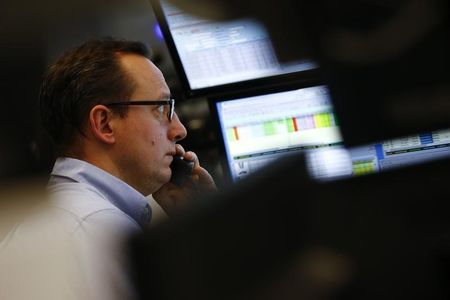
Worst is over and bookings are improving, Amadeus CEO says about Iran war hit
Business
Samsung Electronics Shares Soar 27% as Record KOSPI Rally Follows Microsoft’s Blockbuster Earnings Beat
Shares of Samsung Electronics surged 26.81% on Friday, climbing 55,500 won to close at 262,500 won, effectively hitting the exchange’s daily limit for individual stock price movements as South Korea’s benchmark KOSPI index posted the largest single-day rally in its history.
The KOSPI closed up 17.91% at 6,595.45, marking a record in both point and percentage terms, according to the Korea Herald, as chip stocks across the board rebounded sharply from a punishing weeklong selloff. Rival chipmaker SK Hynix climbed 29.95% during the same session, according to TradingKey, as both of South Korea’s dominant memory chip producers effectively erased much of the ground they had lost during three brutal preceding trading sessions.
Friday’s rally traced its origins directly to a powerful overnight session on Wall Street. Microsoft’s shares soared 15.5% Thursday for the company’s best single-day performance in nearly 18 years, according to the Associated Press, after the technology giant reported that its Azure cloud computing division grew 43% during the quarter, easing broader investor concerns about the sustainability of massive capital spending on artificial intelligence infrastructure. Amazon and Meta Platforms also posted upbeat results that reinforced expectations that AI-related spending remains robust, according to CNBC, sending shockwaves of optimism through Asian technology markets overnight.
Samsung’s own earnings had already reflected the underlying strength driving the rally, even before Friday’s dramatic share price move. The company’s semiconductor division reported operating income of 89.5 trillion won, beating the 88.13 trillion won analysts had expected, with robust artificial intelligence demand continuing to drive growth across Samsung’s memory chip business. The results confirmed that DRAM and NAND flash memory sales remained at all-time highs during the quarter, providing powerful third-party validation that the artificial intelligence-driven memory supercycle remains firmly intact even amid the recent bout of extreme volatility across the sector.
Friday’s rebound followed a brutal stretch for Korean equities. The KOSPI had plummeted more than 17% over the three trading sessions preceding Friday, driven by investor concerns about a potential bubble in artificial intelligence valuations and intensifying competition from Chinese chipmaking rivals, according to the Associated Press. At one point during that selloff, the index had fallen roughly 40% from its June peak, wiping out nearly $2 trillion in market value, according to reporting from the Private Banker.
Foreign investors were the driving force behind Friday’s historic rebound, posting net purchases of 7.25 trillion won, or roughly $5.06 billion, on the KOSPI, according to the Korea Herald. That marked a second consecutive day of net foreign buying, following four straight sessions of net selling that had preceded Thursday. Institutional investors, who began Friday’s session as net sellers, reversed course around midday and ended the day with net purchases of 1.15 trillion won.
Additional factors beyond the Microsoft-driven rally appeared to reinforce Friday’s gains for Samsung and SK Hynix alike. SK Group Chairman Chey Tae-won disclosed personal purchases of SK Hynix shares during the recent selloff, a move that bolstered broader investor confidence in South Korea’s memory chip sector, according to CNBC. New cash-deposit requirements for investors using leveraged exchange-traded funds also took effect July 31, a regulatory change some analysts said may have contributed to a broader repositioning among traders active in that corner of the market, while short-covering and mechanical rebalancing tied to leveraged ETFs were also cited as factors amplifying the scale of Friday’s move.
Despite the historic single-day gain, market analysts urged caution about reading too much into the rebound. Speaking to CNBC, one analyst identified only as Jung said foreign investors appeared to be the primary force behind Friday’s rally, but cautioned against assuming the gains signal a durable trend reversal. “I would not expect gains of this magnitude to continue,” Jung said, adding that asset prices had become “completely disconnected” from underlying fundamentals during the recent volatility.
Even after Friday’s rally, the KOSPI remained well below its levels from earlier in the year. The index recorded its worst monthly performance since 1997, dropping 22.19% over the course of July, according to TradingKey, underscoring that Friday’s rebound, while historic in scale, only partially offset the scale of losses the index had absorbed over the preceding weeks.
South Korean authorities also announced new measures Friday aimed at supporting the country’s technology and artificial intelligence sector more broadly. The government said it would inject a minimum of 20 trillion won, or approximately $13.9 billion, into the Korea Investment Corporation for strategic investments in artificial intelligence, data centers and broader infrastructure, according to the Private Banker, marking the first time the sovereign wealth fund’s mandate has been expanded to include domestic assets.
With Samsung shares having now hit the exchange’s daily trading limit and the broader KOSPI having posted its largest single-day gain on record, investors are likely to watch closely in the sessions ahead for signs of whether Friday’s rebound marks a genuine stabilization in sentiment toward AI-linked technology stocks or another dramatic swing within a period of extraordinary volatility that has gripped South Korea’s chip-heavy equity market throughout the second half of July.

White House official says no weaponized drones seized during FIFA World Cup
Business
Asustek Computer Shares Jump Nearly 10% as Taiwan Tech Rally Follows Microsoft’s Blowout Earnings Beat

Shares of Asustek Computer surged 9.91% on Friday, climbing 73.00 Taiwan dollars to reach 810.00 Taiwan dollars, as the personal computer and AI server maker’s stock rode a powerful rally sweeping across Taiwan’s technology sector following blockbuster earnings from Microsoft and other major U.S. technology companies.
Friday’s gains build on a stretch of strong performance for Asustek that has continued for months, driven by surging global demand for artificial intelligence infrastructure. Shares had already climbed to 757.00 Taiwan dollars on Wednesday, up 2.85% that session, before Friday’s session pushed the stock decisively higher still, with Investing.com reporting the stock trading between 722.00 and 762.00 Taiwan dollars during Friday’s session against a previous close of 609.00 Taiwan dollars.
The rally traced its roots to a powerful overnight session on Wall Street. Microsoft shares soared roughly 15.5% Thursday, the company’s best single-day performance in nearly 18 years, after reporting that its Azure cloud computing division grew 43% during the quarter, easing broader investor concerns about the sustainability of massive capital spending on artificial intelligence infrastructure. Amazon and Meta Platforms also posted results that exceeded market expectations, reinforcing confidence that demand for AI-related computing infrastructure remains robust across the technology sector.
Asustek’s stock has been underpinned by genuinely strong underlying business results throughout the year rather than sentiment alone. The company reported record first-quarter 2026 brand revenue of roughly 194.05 billion Taiwan dollars, or about $6.19 billion, marking a 44% increase year over year, driven by surging AI server demand alongside stable notebook computer shipments. That momentum has persisted despite industry-wide component shortages and rising input costs that have affected much of the broader electronics manufacturing sector this year.
The company’s most recent quarterly earnings report showed net profit surging 34% year over year to 4.82 billion Taiwan dollars, equivalent to roughly $160.9 million, up from 3.60 billion Taiwan dollars in the same period a year earlier, though the result still fell short of analyst expectations, which had called for net profit of 4.37 billion Taiwan dollars. Revenue for the quarter climbed 31% to 94.20 billion Taiwan dollars. Looking ahead, the company projected it would ship 4.8 million notebook PCs in the third quarter, up from 4.4 million units shipped during the second quarter.
Asustek’s ambitions in artificial intelligence have extended well beyond data center hardware and traditional personal computers. At Computex 2026, the company unveiled its latest generation of AI-enabled consumer laptops and desktop computers, including new ProArt creator laptops built around Nvidia’s RTX Spark platform and featuring AI-powered software tools designed to optimize system performance for demanding creative workflows. Company chairman Jonney Shih has described Asustek’s broader strategic ambitions as extending beyond both servers and personal computers into what he has called agentic AI, edge AI and physical AI.
Not every recent analyst assessment of the stock has been uniformly bullish. Goldman Sachs downgraded Asustek to neutral from buy earlier this year, with a price target of 672 Taiwan dollars, down from 854 Taiwan dollars, citing relatively lower earnings growth ahead for the company. Morgan Stanley separately downgraded the stock to underweight from equal weight, with a price target of 500 Taiwan dollars, down from 625 Taiwan dollars, citing concerns about growing margin risk facing hardware companies more broadly amid rising component costs.
Despite those more cautious calls, the current consensus among analysts covering the stock remains positive. According to Investing.com, five analysts recommend buying Asustek shares while one suggests selling, resulting in an overall buy rating, with an average 12-month price target of 802.00 Taiwan dollars, a high estimate of 1,200 Taiwan dollars and a low estimate of 570 Taiwan dollars, implying modest additional upside potential even after Friday’s sharp gains.
Asustek has continued to reward shareholders through dividend payments even amid its aggressive growth-focused expansion into AI infrastructure. The company’s most recent dividend of 42.00 Taiwan dollars per share represented a 24% increase from the prior year, with an ex-dividend date of July 1 and a payment date of July 22, translating to a dividend yield of approximately 5.3%, above the broader technology industry average of 3.0%. Analysts have noted the dividend is currently covered by earnings at a 75% payout ratio, though the company’s lack of available free cash flow at present suggests it may be drawing on cash reserves or debt to help sustain the payout.
Asustek’s stock currently trades within a 52-week range of 490.00 to 964.00 Taiwan dollars, according to Investing.com, reflecting substantial volatility over the past year even as the overall trend has remained strongly upward. The company’s next quarterly earnings report is scheduled for release on August 12, which will give investors their next detailed look at whether the strong order visibility and margin resilience management has emphasized in recent guidance continues to translate into results that justify the stock’s sharp rally, particularly within its fast-growing AI server division that has emerged as the primary driver of investor enthusiasm for the stock over the past several months.

Check out what’s clicking on FoxBusiness.com.
A new rival to Wall Street officially debuted on Friday as the Texas Stock Exchange went fully live for the first time with trading available for all of its listed tickers.
The Texas Stock Exchange, which is based in Dallas, is the first new major stock exchange to launch in the U.S. in decades. The TXSE, called the “Tex-ee,” is looking to compete with the New York Stock Exchange and Nasdaq Composite for listings.
The exchange boasts several prominent financial backers, including BlackRock, Goldman Sachs and Charles Schwab, among others.
It currently plans to begin corporate listings later this year and intends to facilitate initial public offerings (IPOs) starting in 2027. The TXSE sees the economic rise of Texas and a broader swath of the South that it’s calling the “Boom Belt” as being the “center of gravity for American capitalism” and a market it can tap into for IPOs.
CALIFORNIA LOSES FORTUNE 500 CROWN TO TEXAS AS BILLIONAIRE TAX THREAT LOOMS

The Texas Stock Exchange (TXSE) is based in Dallas and is currently operating out of a temporary headquarters. (Kirby Lee / Getty Images)
“As the only primary corporate and ETP listings venue built and headquartered in the Boom Belt, TXSE is both a product of the region’s rise and a catalyst to accelerate it,” TXSE explained.
The company’s website notes the region has an annualized GDP of $8.9 trillion – more than all world economies other than the U.S. and China. It adds that 40% of American exports pass through the Boom Belt, while 57% of U.S. job growth has occurred in the region in the last five years.
Currently, the exchange is operating from temporary offices in the Uptown neighborhood of Dallas, where it will hold a bell-ringing ceremony Friday afternoon to mark its official launch.
A NEW ECONOMIC IRON CURTAIN IS FALLING ACROSS AMERICA AS TRILLIONS IN WEALTH FLEE TO THE ‘BOOM BELT‘

The TXSE hopes that its proximity to the “Boom Belt” will make it a better option among companies in the South that are pursuing IPOs. (Michael M. Santiago/Getty Images)
The exchange plans to move its permanent headquarters to the city’s Bank of America Tower, where it will operate the Texas Market Center.
The tower will be the tallest building in Uptown Dallas when it’s completed. The exchange’s Texas Market Center will include executive offices, a Texas business museum and a broadcast studio.
An announcement by designer KPF from May added that the exchange will take up multiple areas within the building, including ground-floor space and a 12th floor sky lobby.
DELL SHAREHOLDERS APPROVE LEGAL MOVE FROM DELAWARE TO TEXAS
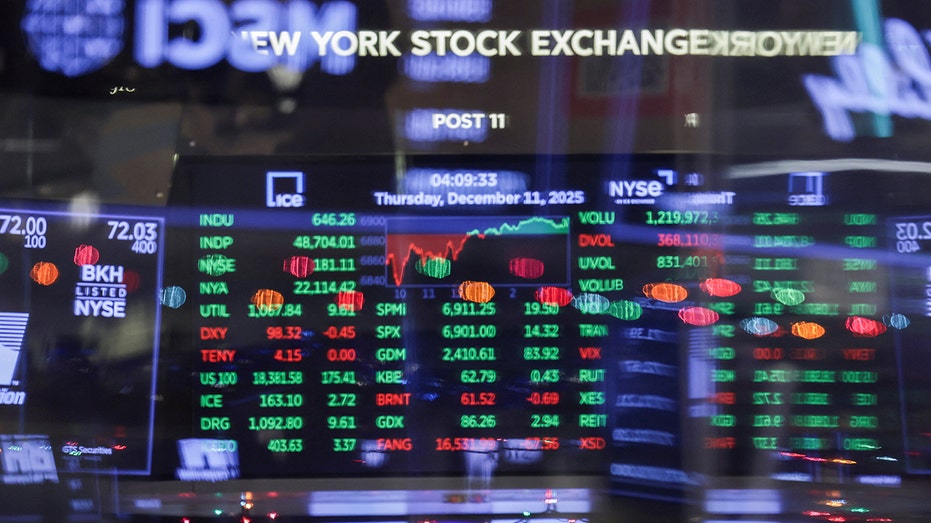
The New York Stock Exchange and Nasdaq have each opened exchanges in Texas to allow dual listings. (Reuters/Jeenah Moon)
The opening of the Texas Stock Exchange comes as the Lone Star State is working to attract businesses looking to relocate their headquarters or change their state of incorporation, touting business-friendly policies and favorable tax regimes in comparison to states like California and New York.
The Texas Stock Exchange’s rivals – the New York Stock Exchange and Nasdaq – have also expanded their footprint in the state of Texas and have enticed companies to dual list on the new duplicate exchanges at no cost.

Police in Bulgaria evacuated nearly 200 passengers from the Viking Ullur cruise ship after it ran aground in Bulgaria this week. (Credit: Reuters)
Police in Bulgaria evacuated nearly 200 passengers from a Viking cruise ship after the vessel ran aground due to “exceptionally low water levels” in the Danube River.
The Bulgaria News Agency reported that the ship became stranded early Tuesday about 15 miles upstream from Vidin, where it planned to stop to take on supplies. Bulgarian border police ended up rescuing 186 passengers after another ship dispatched to the scene wasn’t able to get close enough to pick them up.
“We can confirm that the Viking Ullur experienced a grounding incident on the Danube River on July 28, 2026, after coming into contact with a sandbank during a period of exceptionally low water levels,” Viking said Friday in a statement to FOX Business.
“The safety and wellbeing of our guests and crew is always our highest priority. There were no injuries, and the vessel remained safe throughout the incident,” it added. “The ship was well-stocked with all necessary supplies, including food and water, to keep guests and crew safe and comfortable.”
PRINCESS CRUISE SHIP WORKER DEAD AFTER GOING OVERBOARD NEAR CANCUN

A Bulgarian border police boat evacuates passengers from a stranded cruise ship on the Danube River after the Swiss-flagged Viking Ullur ran aground near the northwestern city of Vidin, Bulgaria, in this handout image released on Tuesday, July 28, 20 (Reuters/Bulgarian Interior Ministry / Reuters)
“Guests were safely transferred ashore and continued their planned itinerary, including a full day in Bucharest,” Viking also said.
Attempts to refloat the vessel Tuesday morning were unsuccessful, according to the Bulgaria News Agency.
All of the passengers were from European countries and there were 52 crew members onboard as well, it added.

Passengers are seen disembarking the Viking Ullur cruise ship after it became stuck this week near Vidin, Bulgaria, which is located along the Danube River. (Reuters / Reuters)
The current status of the crew members and location of the ship wasn’t immediately clear. Viking did not immediately respond to an inquiry on the matter.
Viking said on its website that the Viking Ullur, built in 2019, is 443 feet long.

Viking told FOX Business “there were no injuries” after the Ullur ship ran aground, and that “the vessel remained safe throughout the incident.” (Reuters / Reuters)
CLICK HERE TO READ MORE ON FOX BUSINESS
A prolonged drought in the region has been setting record low water levels on the Danube River, The Associated Press reported.


Irresistible Foods Group subsidiary opens 155,000-sq-ft manufacturing facility.

AMD Q2 Preview: Moment Of Truth (Rating Downgrade)

Parex Resources Inc. (PXT:CA) Q2 2026 Earnings Call Transcript

TIPS challenge the inflation story behind rising bond yields

17 Elevated Track Pants That Deliver NYC Cool-Girl Vibes STAT

Renter of Home in Anne Heche Crash Denies Settlement With Son

No Jackpot Winner as $257 Million Prize Rolls Over to $269 Million Monday Draw

Weekend Open Thread: Staud – Corporette.com

Vah Re Vah Video Song | Money Telugu Movie Songs | JD Chakravarthy | Brahmanandam | Mango Music

SURVIVNG LIKE WINTERS IN SUMMERS FOR 24 HOURS #shorts

#2 Payback Period – Investment Decision – Financial Management ~ B.COM / BBA / CMA
-
 Sports5 days ago
Commonwealth Games boxing: Jadumani Singh seals dominant 5-0 win over Pakistan’s Sumama Rehman to enter quarter-finals | Commonwealth Games News
-

 Business2 days ago
Why Trees Belong on the Risk Register
-

 Tech5 days ago
Intel is reversing course and bringing hyper-threading back to its server chips
-

 Fashion3 hours ago
Weekend Open Thread: Wit & Wisdom
-

 Crypto World6 days ago
Ripple bought a bank in pieces. The $4 billion audit
-

 Politics4 days ago
Luke Littler dismantles Gerwyn Price to retain title in Blackpool
-

 Politics3 days ago
The Part of the Electric Transition Nobody Wants to Discuss
-

 News Videos5 days ago
BITCOIN JUST ENTERED THIS CRITICAL ZONE…
-
 Entertainment3 days ago
‘Stargate’ Creator’s New Sci-Fi Series Returns for Season 3 Tomorrow
-

 Crypto World6 days ago
XRP Ledger adds $2.6B as RWA inflows rank second
-

 Business3 days ago
Major shareholder moves on Canyon
-

 News Videos1 day ago
Bitcoin Enters the 3rd Stage of the Bear Market
-

 Politics5 days ago
Spain sweeps the board at 2026 World Cup with individual awards
-

 Entertainment6 days ago
Sara Gilson Killed By Husband After Viral “Pedophile” TikTok Video
-

 Crypto World3 days ago
Kraken Enables Retail Access to Jersey Mike’s IPO via Tokenized Shares
-

 Tech7 days ago
Anthropic launches Claude Opus 5, a cheaper AI model for coding, agents and enterprise workflows
-

 Tech4 days ago
New macOS Sequoia & Sonoma security updates for older Macs
-

 News Videos3 days ago
Claude: Build Financial Dashboards in Minutes (2026)
-

 Politics1 day ago
Luke Littler’s dominance sparks GOAT debate
-

 Crypto World6 days ago
Upbit expands KRW market with two major DeFi token listings
You must be logged in to post a comment Login