

Business
Apple hikes MacBook and iPad prices, blaming high chip costs


Pescatore said Apple’s actions demonstrated the extent of the challenges for “even for the world’s biggest technology companies”.
“This is a significant moment because even Apple, with its scale and buying power, is no longer immune to the rising cost of key components,” he told the BBC.
Affected hardware included the MacBook Pro with 1 terabyte of storage, which rose to $1,999 from $1,699 on its US store.
Meanwhile in the UK, the Neo – Apple’s lowest-priced laptop – has increased from £599 to £699 within months of its launch.
“We have shielded our customers from these increases so far, but we have now reached a point where we need to begin raising prices on a number of products, including today’s increases for iPad and Mac,” the company said in its statement.
David Naranjo of market research firm Counterpoint said he expected other PC and tablet brands would follow Apple by upping their costs.
“They may raise prices on select products, cut discounts on entry-level models, or adjust their product lines to focus more on premium devices,” he said.
Dipanjan Chatterjee, vice president and principal analyst at market research firm Forrester, said he believed Apple’s loyal customer base would take the financial hit without too much outcry.
“If anyone can survive a price increase with minimal blowback, it’s Apple,” he added.
Tim Cook, Apple’s outgoing chief executive, had also hinted at the changes – telling the Wall Street Journal earlier in June that price increases were “unavoidable” due to the “unsustainable” situation around memory chips.
“We definitely need memory pricing and supply to return to reasonable levels for consumer products. That’s the bottom line,” he told the publication.
The soaring costs have affected a wide variety of companies and products across the technology sector, including PCs and consoles.
On Monday gaming giant Valve said its original goal for the price of its gaming PC the Steam Machine was “no longer viable”, instead launching it at a price of £879 in the UK and $1,049 in the US.

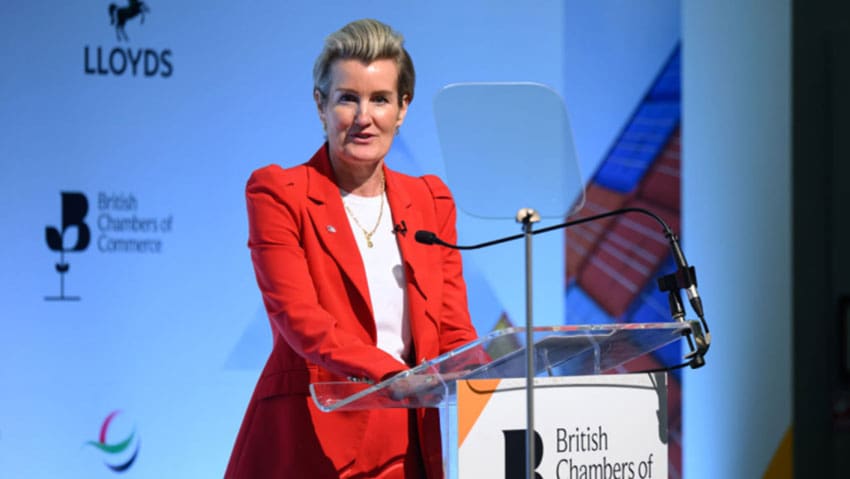
The next prime minister must back companies rather than tax them if Britain is to lift a “cost of doing business crisis” that is throttling growth, the head of the British Chambers of Commerce will warn this week.
Shevaun Haviland, director-general of one of Britain’s big five business lobby groups, will address political and corporate leaders at the BCC’s annual conference in London on Thursday, against a backdrop of mounting speculation that Andy Burnham will enter No 10 next month following Sir Keir Starmer’s resignation on Monday.
Rachel Reeves, the shadow chancellor Sir Mel Stride and Andy Haldane, the BCC president, are also due to speak, alongside senior figures from Reform UK, the Liberal Democrats and the Green Party. Haldane, the Bank of England’s former chief economist, has been appointed to lead the BCC and is understood to be advising Burnham as the Greater Manchester mayor races to build out a policy platform.
Reeves is expected to tell delegates that the government remains focused on delivering economic stability and certainty, and to restate the growth opportunities she set out in her Mais Lecture in March, including the Oxford-Cambridge technology supercluster.
In her own address, Haviland is expected to warn the next administration that further business taxes “would be a road to ruin” and the “quickest way to destroy the fragile confidence that we have left”.
She will say: “The difficult truth is, whoever leads the UK, the primary challenge remains the same: delivering growth. Despite all our strengths, we are failing to fulfil our potential. Businesses can feel it and voters can feel it too.”
Haviland is expected to single out policy choices over the past decade for making “doing business even tougher”. She will say: “At a time of huge economic shocks and global headwinds, successive UK governments have chosen to pile more and more cost on companies. That is no way to run an economy.”
Her intervention chimes with survey evidence showing business confidence sinking to a two-year low amid tax rises and global trade tensions, a backdrop that has left many firms reluctant to commit to new investment.
Haviland will warn that whoever sits in No 10, or the Treasury, must grasp that a lack of confidence is undermining the country’s ambition, ideas, talent and, ultimately, its growth.
“Weak confidence reduces appetite for risk, which reduces investment, which hampers growth, which knocks confidence further,” she will say. “And this circular crisis of confidence is now shackling ambition, blocking the actions needed to invest, innovate and trade.”
She will add: “Businesses can only deliver growth if the environment they operate in gives them the confidence to act. And that is where political leadership can make all the difference.”
The director-general, who leads an organisation representing tens of thousands of companies through its national network of accredited chambers, will also repeat calls for co-operation between government and unions to stop the Employment Rights Act having a “similar confidence crushing effect”.
Her warning lands amid a chorus from other large business groups. The Confederation of British Industry has cautioned this week that the cost of doing business is nearing a “tipping point”, with its leadership pressing for stability and against further tax rises on firms.
The concern across the sector is consistent: that the cumulative weight of taxation and regulation is eroding the very investment the country needs. Research has previously suggested that Reeves’s tax plans risk driving businesses overseas, a flight that would compound rather than cure Britain’s growth problem.
For Haviland, the message to the incoming prime minister is blunt. Growth will not be legislated or taxed into existence; it has to be earned by giving companies a reason to believe again.

Amy Ingham
Amy is a newly qualified journalist specialising in business journalism at Business Matters with responsibility for news content for what is now the UK’s largest print and online source of current business news.

Jonathan Shar
Chief Executive Officer
Good morning, everyone, and thank you for joining us. I’m Jonathan Shar, CEO of Barnes & Noble Education. On behalf of the entire leadership team, we’re excited to welcome you to our Investor Day live from the New York Stock Exchange. During the course of today’s discussion, we’ll provide a deeper look into our business, the transformation underway across BNED, the opportunities we see ahead and how we’re positioning the company to drive long-term shareholder value.
You’ll hear directly from the leaders responsible for executing our strategy. Before we begin, I’d also like to recognize the thousands of BNED employees and our campus partners across the country. Their commitment to serving students, faculty and institutions is what makes our success possible and has positioned the company for the progress we’ll discuss today. Our goal today is simple, to help you better understand why we believe BNED is uniquely positioned at the intersection of higher education, digital learning, omnichannel retail, affordability and student success and why that position creates meaningful opportunities for long-term growth and shareholder value creation.
Before we begin, I’ll briefly note that today’s presentation includes forward-looking statements and references to non-GAAP financial measures. Please review the disclosures contained in this presentation and our SEC filings for additional information regarding risks and assumptions. With that, let’s get started.
I’d like to begin with who we are, what we’ve become and why we believe our position within higher education is stronger today than at any point in our history. I’d also like to introduce the leadership team joining me today: Jason Snagusky, our Chief Financial Officer; Celeste Risimini-Johnson, our


New trends and dietary guidelines are disrupting how the foodservice industry is approaching their menus.
Business
Methode Electronics, Inc. 2026 Q4 – Results – Earnings Call Presentation (NYSE:MEI) 2026-06-25
Q4: 2026-06-24 Earnings Summary
EPS of -$0.30 misses by $0.09
| Revenue of $298.10M (15.95% Y/Y) beats by $59.64M

Seeking Alpha’s transcripts team is responsible for the development of all of our transcript-related projects. We currently publish thousands of quarterly earnings calls per quarter on our site and are continuing to grow and expand our coverage. The purpose of this profile is to allow us to share with our readers new transcript-related developments. Thanks, SA Transcripts Team
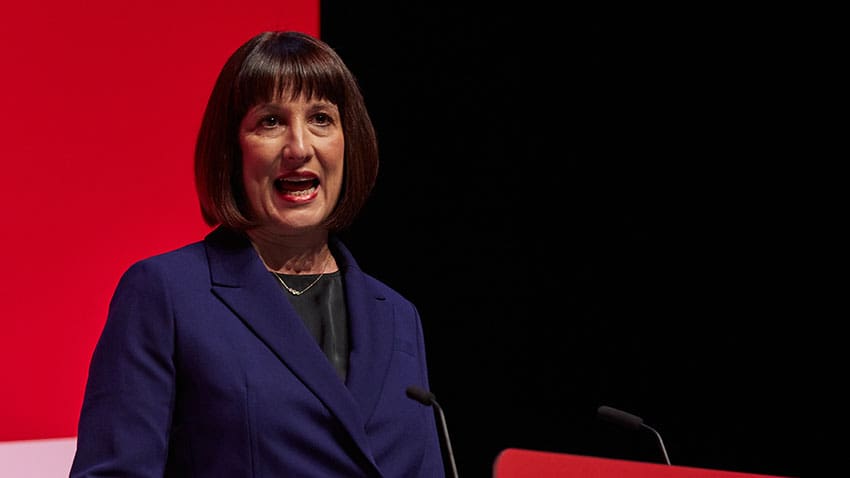
Rachel Reeves has declared that she has “unfinished business” as chancellor, singling out fiscal devolution as the policy she is most determined to see through, in remarks that will be read closely by a business community bracing for a change at the top of government.
Speaking at the British Chambers of Commerce annual conference in London on Thursday, Reeves pointed to the handing of tax-raising powers to local leaders as the area of “unfinished business” she wants to complete. The intervention comes at a delicate moment, with Andy Burnham set to enter Downing Street next month following Sir Keir Starmer’s resignation on Monday, and with the City still guessing over who will take the keys to No 11.
For the SME owners who make up the bulk of the chambers’ membership, the politics matter less than the policy signal. A chancellor talking openly about devolving revenue, and a prime minister-in-waiting who built his reputation on it, points to a meaningful shift in where decisions about local growth, and local taxation, will be taken.
The visitor levy and the case for going local
The former mayor of Greater Manchester is moving quickly to assemble a programme for government that is widely expected to push more powers and revenue away from Westminster. Reeves made clear she is travelling in the same direction.
“The area where there’s certainly unfinished business is on fiscal devolution,” she said. “And I set out in last year’s Budget a consultation, for example, on the visitor levy, which is something that mayoral combined authorities will have responsibility for, moving us more in line with the US and Europe that have single visitor levies on hotel bookings, for example, and then that money being invested in the local area.”
A visitor levy on overnight stays has become one of the more contested ideas in the devolution debate, with metro mayors pressing for the power and parts of the hospitality sector warning about the impact on bookings. The tension was on full display earlier this year when mayoral calls for a hotel ‘tourist tax’ drew a wary response from the hospitality trade.
Reeves indicated her ambitions stretch well beyond hotel rooms. “But beyond that, we are also consulting on devolving some revenues from key taxes, including income tax, but also looking at some business and land taxes and devolving that to a local level so that local leaders who know their areas best can decide where that money is going to be spent.”
The chancellor, the first woman to hold the office, said she intends to set out the detail in this year’s Budget. The direction of travel echoes the government’s own English Devolution White Paper, which created a route for mayors to propose new powers while leaving the Treasury notably cautious on tax.
Reeves stops short on the chancellorship
For all the talk of alignment, Reeves declined to say outright that she wants to keep her job under a Burnham premiership. “When he becomes prime minister, he will make those decisions around the top team around him. But I’m not going to pre-empt those. Those are his decisions,” she said.
She was warmer on the personal and political relationship. “I backed Andy in 2015 as well to be the leader of our party, and I’ve known him for more than a decade and a half, since before I became a member of parliament in 2010. So we’ve worked closely together, but particularly worked closely together the last two years.”
That history sits alongside a wider reshaping of the relationship between the centre and the regions that has been building for some time, with the Treasury and combined authorities edging closer together. Business has already seen that direction in moves such as Reeves’s plan to draw the National Wealth Fund and regional mayors into closer partnership on local growth.
Fiscal rules and the stability message
Mindful of an audience that prizes predictability, Reeves used the platform to reassure business that the incoming prime minister will not loosen the public finances. Burnham, she said, had been “really clear” in his commitment to the fiscal rules.
“That is a good thing because it means that businesses here can be confident that that stability, that rigour to policy-making, that tight grip on the public finances, which is essential for getting inflation and interest rates down, will be continued,” she said.
It is a message pitched squarely at a market still digesting the abrupt change at the top, a backdrop in which business leaders have urged an end to ‘drift and delay’ following Starmer’s exit.
North Sea reserves and energy security
Reeves also restated her support for making greater use of North Sea reserves. “I’ve been very clear that I think that the North Sea is a crucial asset for the UK and that oil and gas will be an important part of our energy mix for years to come,” she said. “And I’m very keen to make sure that we use that resource to ensure our energy security.”
The chancellor spoke ahead of an address by Andy Haldane, the BCC’s president and a former chief economist at the Bank of England, whom Burnham has been consulting as he assembles his policy platform. Senior figures from the other main parties were also due to take the stage, underlining how far the conference has become a staging post for a political contest that businesses will be watching with unusual intensity.

Jamie Young
Jamie is Senior Reporter at Business Matters, bringing over a decade of experience in UK SME business reporting.
Jamie holds a degree in Business Administration and regularly participates in industry conferences and workshops.
When not reporting on the latest business developments, Jamie is passionate about mentoring up-and-coming journalists and entrepreneurs to inspire the next generation of business leaders.

SpaceX shares fell 1.61% to $152.05 on Thursday morning, continuing a volatile stretch since the company’s blockbuster public debut, even as a massively oversubscribed bond offering has removed one of the key risks that had been weighing on the stock in recent days.
A Brutal Three-Day Stretch Before the Bond Deal
The stock’s recent struggles trace back to a sharp, multi-day selloff earlier in the week. SpaceX stock fell before the bell on Tuesday, set to pick up on a three-day run of losses after a massive run-up following its IPO earlier this month. They closed down 16.4% on Monday, the biggest down day for the newly debuted stock, following a 3.6% drop on Thursday and a 5% drop on Wednesday. The three-day losing streak caps a big pop in the stock following its IPO and first day of trade on June 12.
At one point during the stock’s run-up to a high of around $225 a share, SpaceX topped Amazon and even Microsoft to become the fourth-most-valuable public company. The recently listed company launched with a $1.23 trillion market capitalization following its IPO.
What Triggered the Selloff
The catalyst behind the sharp decline was the company’s announcement of its first-ever bond issuance. SpaceX confirmed its first-ever bond sale in a filing, intending to use the net proceeds to repay the outstanding borrowings under its bridge loan facility in full, along with other related fees and expenses. The bridge loan in question was secured earlier this year when SpaceX, led by CEO Elon Musk, acquired Musk’s own xAI startup in February. Per Reuters, Bank of America, Citigroup, JPMorgan Chase, Goldman Sachs, and Morgan Stanley provided the bridge financing and are expected to run the deal.
A Mechanical, Leverage-Driven Decline
Analysts have largely attributed the magnitude of the selloff to technical and leverage dynamics rather than any fundamental deterioration in SpaceX’s business. Saxo Bank’s UK Investor Strategist Neil Wilson suggested the market reaction says far more about how mega-cap technology stocks behave than about SpaceX’s underlying financial health, centering his explanation on passive fund positioning around the time of the offering.
The volatility extended well beyond SpaceX itself. The damage rippled internationally, with the MSCI Asia index falling 2.3%, its largest intraday decline in two weeks, while South Korea’s Kospi dropped more than 8% due to its heavy technology weighting, and Nasdaq futures signaled declines of 1.3% to 1.7% — illustrating just how much a single stock’s volatility can move entire regional markets given current concentration levels.
Overwhelming Demand for the Bonds Themselves
Despite the equity market’s negative reaction, the actual bond offering itself drew extraordinary investor interest. SpaceX’s $25 billion bond offering attracted $89 billion in demand, a 3.5 times oversubscription signaling strong institutional confidence. The five-tranche bond sale received a total of $89 billion in market orders, representing an oversubscription rate of over four times, placing it among the largest U.S. corporate bond issuances on record. The offering was spread across five tranches of senior notes maturing between 2031 and 2056, with interest rates rising from 5.35% on the shortest maturity to 6.65% on the longest.
The Bridge Loan Risk Has Been Resolved
Crucially, the successful bond sale eliminates a specific, hard deadline that had been weighing on the stock. This bond settlement date on June 26 is something to look out for, because once that gets done, the equity will have no more major technical structure to overcome during the week. The September 2027 deadline on the $20 billion bridge loan was the key hard deadline that drove most of the price fall from $225 to $147.11. The bridge loan will be paid off once the June 26 settlement has cleared, meaning that bridge risk is removed entirely. All SpaceX’s debts are now spread across five different maturities ranging from 2031 to 2056, with the nearest one maturing only five years from now.
A Significant Bounce Following the Bond Pricing
Once the bond’s strong demand became clear, the stock staged a notable recovery off its intraday low. Fueled by the enthusiastic demand for its bond offering, SpaceX’s stock price surged over 7% at one point, trading at $163.06 and bringing its market capitalization back to the $2.14 trillion level.
Remaining Concerns Beyond the Bridge Loan
Despite the resolution of the bridge loan risk, several other factors continue to weigh on sentiment toward the stock. Other problems persist, including xAI operating losses, S&P’s free-cash-flow-through-2029 bearish outlook, the stock’s lockup ending in December 2026, and Morningstar’s $62 fair value estimate — though the September 2027 bridge loan cliff is no longer an issue following the bond settlement.
A Dramatic Impact on Elon Musk’s Net Worth
SpaceX’s rocky post-IPO trading, as well as recent weakness in Tesla stock, has also hit CEO Elon Musk’s wealth. The mercurial Musk was the first person to top $1 trillion in wealth following SpaceX’s IPO, but his total net worth on paper has slipped slightly. Bloomberg’s Billionaires Index now lists Musk’s wealth at $957.1 billion, a drop of nearly $360 billion from the high of $1.315 trillion hit in the days after SpaceX’s IPO and market debut.
A New AI Infrastructure Contract
Beyond the bond sale, SpaceX has also continued expanding its presence in artificial intelligence infrastructure through new commercial agreements. The company has signed a $6.3 billion AI infrastructure contract with Reflection AI, expanding its role as a compute provider, with proceeds from the bond sale expected to support that AI infrastructure buildout alongside the bridge loan repayment.
A Company Spanning Three Distinct Business Segments
SpaceX’s Space segment designs, manufactures, and launches reusable rockets to provide access to space, offering launch services using Falcon 9, Falcon Heavy, Starship, and Dragon for both commercial and government customers. The company’s AI segment operates a vertically integrated AI platform spanning the Grok large language model, AI solutions for consumer and enterprise customers, the X social media platform, and AI computational infrastructure. Separately, the company’s Connectivity segment operates Starlink, delivering high-speed, low-latency broadband service in the United States, Ireland, Canada, and internationally. The company was founded in 2002 and is based in Starbase, Texas.
Increased Short Selling Activity
Reflecting the divided sentiment surrounding the stock, bearish positioning has continued to build in recent sessions. Short selling bets against SpaceX have increased following the post-debut share selloff, according to Reuters reporting, suggesting at least some market participants continue betting on further downside even after the bond deal’s strong reception.
A Gap Between the Stock Price and Analyst Targets
Despite the recent volatility, the stock continues trading below where several analysts believe it should be valued. Space Exploration Technologies trades at approximately $154.60, about 18% below the $187.80 analyst price target, with the stock also assessed as trading more than 23% below one firm’s estimated fair value.
With the bond settlement set to clear on June 26 and the September 2027 bridge loan deadline now effectively resolved, SpaceX’s near-term stock trajectory will likely depend on whether investors begin separating the company’s underlying business fundamentals — including its dominant launch market share, growing Starlink subscriber base, and expanding AI infrastructure contracts — from the technical and leverage-driven volatility that has characterized its first weeks as a public company. Given the stock’s continued distance from several analysts’ price targets and the persistent concerns around xAI’s operating losses, SpaceX’s path forward will likely remain closely watched as one of the most consequential and volatile stories in the market through the remainder of 2026.

Ellsworth Growth And Income Fund Q1 2026 Commentary


Equity Research Analyst with a broad career in the financial market, covered both Brazilian and global stocks. As a value investor, my analysis is primarily fundamental, focusing on identifying undervalued stocks with growth potential. Feel free to reach out for collaborations or to connect!
Analyst’s Disclosure: I/we have no stock, option or similar derivative position in any of the companies mentioned, and no plans to initiate any such positions within the next 72 hours. I wrote this article myself, and it expresses my own opinions. I am not receiving compensation for it (other than from Seeking Alpha). I have no business relationship with any company whose stock is mentioned in this article.
Seeking Alpha’s Disclosure: Past performance is no guarantee of future results. No recommendation or advice is being given as to whether any investment is suitable for a particular investor. Any views or opinions expressed above may not reflect those of Seeking Alpha as a whole. Seeking Alpha is not a licensed securities dealer, broker or US investment adviser or investment bank. Our analysts are third party authors that include both professional investors and individual investors who may not be licensed or certified by any institute or regulatory body.

Oil prices are now almost back to their prewar levels, yet Americans are still paying almost a dollar more for every gallon of gasoline they put in their cars, and President Trump is unhappy about that.
In a late-night Truth Social post, he accused Big Oil companies of gouging consumers, saying he would get the Department of Justice involved.
“Gasoline prices better start going down a lot faster than what I’m seeing!,” he threatened.
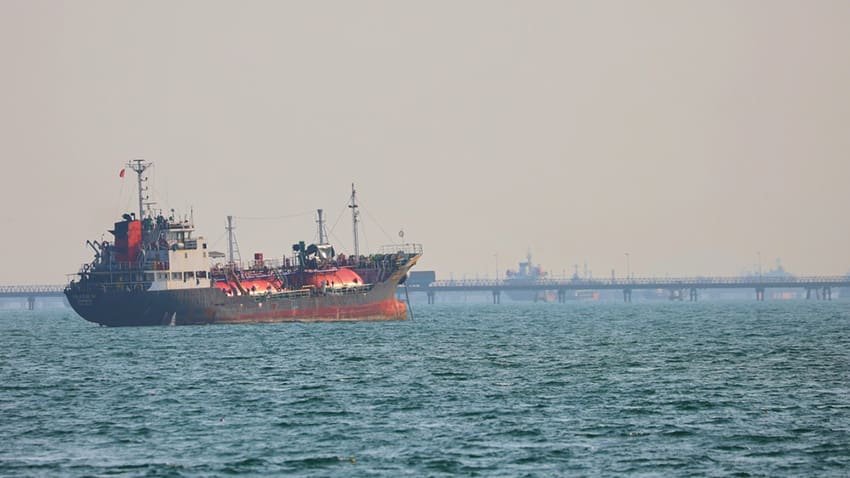
Geopolitical uncertainty has become the single biggest risk hanging over the shipping industry, with vessels and cargo worth roughly $125 billion still stranded in the Persian Gulf, waiting for transit through the Strait of Hormuz to resume, according to Allianz Commercial.
In its latest industry review, published on Wednesday, the insurer said the closure and reported mining of the strait were only the most recent in a run of disruptions to batter global shipping. For owner-managed firms and exporters watching freight costs climb, it is another reminder of how quickly a distant conflict can land on the balance sheet at home.
The developments point to what Allianz calls a “new maritime order”: escalating security risks along the world’s most strategic shipping corridors, established trade routes thrown into disarray, persistent uncertainty, higher risk premiums and a renewed emphasis on resilience over cost efficiency.
Allianz’s data shows that around 1,150 cargo-carrying vessels and as many as 20,000 seafarers are currently stuck in the Gulf. Behind the headline figure sits a human one: crews who have spent months on board, facing the constant threat of attack and the mental strain that comes with it.
Thomas Lillelund, chief executive of Allianz Commercial, said the industry had gone from decades of relative calm, with steady trade flows and largely predictable operating conditions, to a far more complex and volatile environment.
“The Middle East conflict and Strait of Hormuz closure is just the latest in a series of severe interruptions to hit shipowners and cargo operators,” he said. “Resilience, geopolitics and efficiency must be balanced in an increasingly unpredictable world, where the cost of uncertainty is reshaping the shipping industry.”
The strait matters far beyond the insurance market. The US Energy Information Administration describes it as the world’s most important oil transit chokepoint, carrying around a fifth of global petroleum liquids consumption, with very few alternative routes if it closes. That helps explain why disruption there has already pushed oil prices close to $120 a barrel and why the International Energy Agency has warned of a 1.8 million barrel-a-day shortfall this year.
Allianz was at pains to stress that marine insurance has remained available throughout the conflict, albeit at higher hull and cargo premiums. The bigger problem for shipowners, it said, has been less about insurance and more about the basic risk to vessels and crews when sailing through an active conflict zone.
Even if the US and Iran peace agreement holds and the strait reopens, the insurer cautioned, owners will want firm assurances of safe passage, especially if traffic is to return to pre-war levels of up to 140 vessels a day.
“The closure of the Strait of Hormuz sets a dangerous precedent and raises questions around the long-term future of this and other critical chokepoints,” said Captain Rahul Khanna, global head of marine risk consulting at Allianz Commercial.
“What is becoming clear is that we have to pay a price for uncertainty, shifting from ‘just-in-time’ to ‘just-in-case’ supply chains, and prioritising resilience over cost efficiency.”
For UK firms, the lesson is uncomfortably familiar. The pandemic, the Suez blockage and the Red Sea attacks each exposed how exposed lean, just-in-time supply chains can be, and the Gulf crisis is now adding fresh insurance and freight costs to goods that have barely left port. Resilience, once treated as an optional extra, is fast becoming a competitive necessity, which is one reason a growing number of smaller exporters are rethinking their routes to market and diversifying their sales channels to spread the risk.
The full picture is set out in Allianz Commercial’s Safety and Shipping Review, which notes that, even as long-term safety records improve, the structural risks facing global trade are intensifying. For an industry that has long competed on cost, the price of certainty is suddenly the figure that matters most.
Jamie Young
Jamie is Senior Reporter at Business Matters, bringing over a decade of experience in UK SME business reporting.
Jamie holds a degree in Business Administration and regularly participates in industry conferences and workshops.
When not reporting on the latest business developments, Jamie is passionate about mentoring up-and-coming journalists and entrepreneurs to inspire the next generation of business leaders.
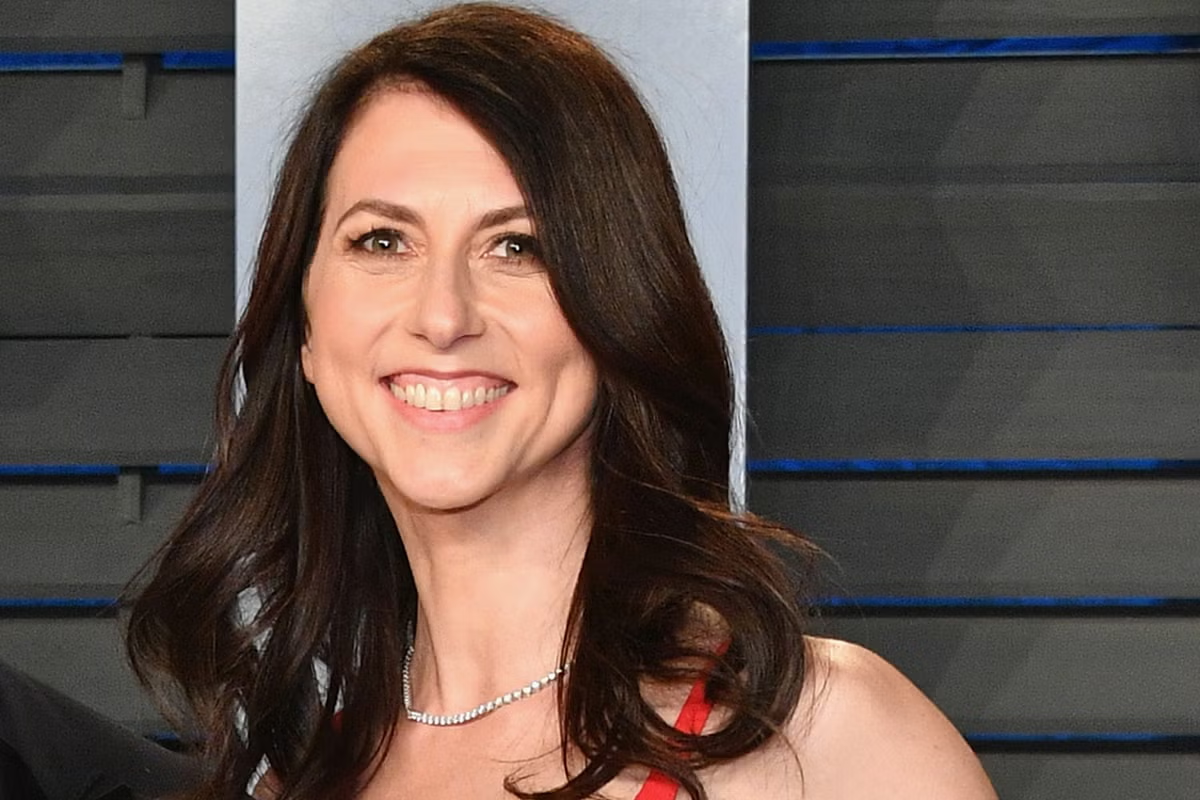
Ex-wife of Amazon boss Jeff Bezos donated one third of US megagift donations last year all on her own

Next PM ‘Must Back Business, Not Tax It’, Warns BCC Chief Shevaun Haviland

XRP Risk Of Sub-$1 Drop Rises But Onchain Data Shows Silver Lining


-

 Fashion6 days ago
Weekend Open Thread: Miami – Corporette.com
-

 Entertainment5 days ago
Renter of Home in Anne Heche Crash Denies Settlement With Son
-
 Sports2 days ago
Two goals and an assist by sheer aura: Cristiano Ronaldo just entered the World Cup chat
-

 Tech3 days ago
Microsoft accidentally kills epic Outlook email threads
-

 Business5 days ago
Soccer-U.S. defends Iran World Cup travel restrictions, says discussions ongoing
-

 Politics5 days ago
Andy Burnham and the meaning of Makerfield
-
Crypto World2 days ago
Bitcoin (BTC) Dips Below $62K, Ethereum (ETH) Plunges 6% Daily: Market Watch
-

 NewsBeat6 days ago
Keir Starmer Allies Question His Chances For No 10
-

 Crypto World2 days ago
Securitize Wraps Roubini's SEC-Registered ETF as Dubai VARA Digital Security
-
Business2 days ago
Entergy settles forward sale agreements, raises $672 million in cash proceeds
-
 Business6 days ago
Wall Street Week Ahead: Investors see Micron earnings as pulse check of AI rally momentum
-
 Crypto World5 days ago
Can Charles Hoskinson Really Rescue Cardano?
-

 Crypto World6 days ago
HIVE shares jump as $220M AI deal speeds Bitcoin mining pivot
-

 Entertainment6 days ago
Jose Alvarado Wants Taylor Swift at More Knicks Games
-

 Crypto World5 days ago
Jake Chervinsky accuses CME of protecting derivatives monopoly
-
 Tech4 days ago
Signal’s Meredith Whittaker says AI chatbots ‘are not your friends’ and calls Copilot agents a backdoor
-

 Sports7 hours ago
India vs Bangladesh LIVE Score, Women’s T20 World Cup: Bangladesh Opt To Bat; India Enter ‘Do-Or-Die’ Stage As Semi-Final Race Heats Up
-

 Tech3 days ago
Nearly 7,000 fake Amazon domains registered ahead of Prime Day 2026, researchers warn
-

 Sports7 days ago
FIFA World Cup 2026: Canada beat 9-men Qatar 6-0 to register first ever win | FIFA World Cup 2026
-

 Business7 days ago
Brexit cost 6% of UK economy, Bank of England company data suggests
You must be logged in to post a comment Login