

Crypto World
Warsh reaches within the Fed for latest advisory appointments

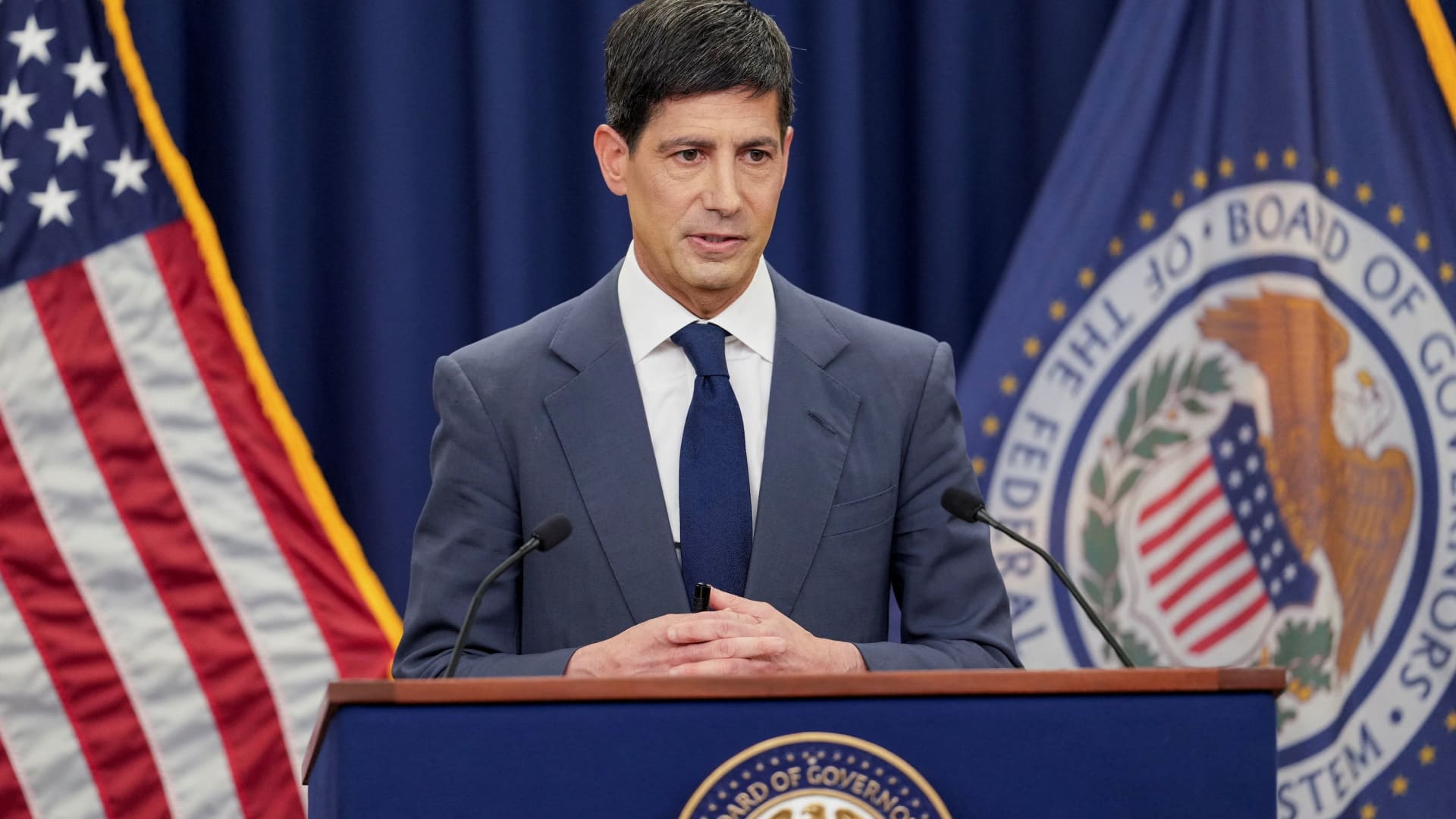
New U.S. Federal Reserve Chairman Kevin Warsh holds a press conference following a two-day meeting of the Federal Open Market Committee (FOMC), at the U.S. Federal Reserve in Washington, D.C., U.S. June 17, 2026.
Eric Lee | Reuters
Federal Reserve Chairman Kevin Warsh has added two more key advisors as he seeks to remake how the central bank approaches its views on the economy and monetary policy, people familiar with the moves confirmed to CNBC.
Though Warsh has talked about broad changes that need to be made at the Fed, he instead reached inside for these appointments, naming economists Daniel Covitz and Eric Engstrom to the posts. Covitz is one of three deputy directors in the research and statistics division while Engstrom is an associate director in monetary affairs.
The appointments come a little more than a week after Warsh announced five task forces aimed at addressing broad aspects of the Fed’s operational structure. Among the focuses will be communication, data, inflation, technology and the Fed’s balance sheet.
Warsh has touted the importance of re-examining how the Fed views each of the key metrics and said he will deploy resources both inside and outside the institution to tackle the projects.
However, the latest announcements indicate that he will rely heavily on the Fed’s own experts as he charts the course ahead. Both Engstrom and Covitz bring decades of Fed experience to their new positions. A Fed official noted that the two will serve in these positions on a rotating basis while maintaining their positions in their respective divisions.
Warsh earlier selected Paul Winfree, an architect of the controversial Project 2025 document that sought to decrease the Fed’s influence on the economy, and Daniel Heil of Stanford, who had previously worked with Warsh.
The two latest appointments were first reported in the Wall Street Journal.



Cardano founder Charles Hoskinson has claimed that the identity of the presumably white hat hacker who took $18.5 million worth of ADA from exposed Cardano wallet users is unknown.
In an X talk yesterday called The Bingo Hall, Hoskinson claimed that he was informed by “Jer” of what went down in a meeting between the Cardano governance firm Intersect and the developers of SecondFi, Emurgo.
A clipped snippet of the talk shows Hoskinson claiming that “A member of the Emurgo team said the identity of the white hat hacker is not known to Emurgo.” He shortly added, “or at least [Emurgo] said it is not affiliated with Emurgo.”
“That’s probably a fair representation of the statement,” Hoskinson said, before noting that it was a secondhand recollection from the meeting by Jer.
Read more: Cardano wallets drained of $2.4M after self-custody exploit
He said, “I don’t particularly care if it’s Joe Schmo, Emurgo, or a third-party, doesn’t matter to me,” noting that his only concern is how they are going to move the funds and return them to affected users.
Days before this, X users had already begun to speculate whether or not Emurgo knew who the white hat hacker was.
Now, X users are doubting whether Emurgo knew the white hat hacker, with some calling for a police investigation into the firm. Others, however, are hoping Hoskinson’s claims are just a “miscommunication.”
SecondFi claims it triggered emergency measures
SecondFi, one of the largest Cardano wallet generators, was exploited earlier this week, and 16 million ADA ($2.4 million) was reported stolen from user wallets.
However, another 129 million ADA ($18.5 million) was also taken, but SecondFi later claimed that it was the result of an emergency measure it had deployed to secure the funds.
It said, “To prevent total loss during the active exploit, emergency rescue measures were triggered to secure the available ~129m ADA and continues to be routed to an independent, qualified third-party custodian, where they are held securely for the benefit of the affected wallet addresses.”
“An external accounting firm has been engaged for a special audit to independently verify those holdings,” it added.
Intersect’s latest post on the exploit yesterday demanded “a transparent account of how the issue arose, of the emergency measures taken to protect user assets, including the movement of at-risk funds to custody, and of how those assets, which include CNTs and NFTs as well as ada, will be safeguarded and returned.”
Intersect stresses Cardano blockchain isn’t broken
Intersect stressed that the exploit has nothing to do with the Cardano blockchain itself.
However, it noted that the implications of the exploit may impact the flow of ADA across the ecosystem.
SecondFi’s latest statement claims it took a final balance snapshot today and estimates thait will return lost user assetsed in two weeks’ time.
Read more: Hoskinson wants to save Cardano’s rep by leaving X for Discord safespace
This isn’t guaranteed, and the firm noted that it is still trying to reach a “working solution” before it proceeds to test and review the asset return process.
It still advises users not to move to new wallets and warns, “Independent actions taken outside of official guidance create additional risks, and may significantly complicate the asset claims process.”
Protos has reached out to Emurgo for comment and will update this piece should we hear anything back.
Got a tip? Send us an email securely via Protos Leaks. For more informed news and investigations, follow us on X, Bluesky, and Google News, or subscribe to our YouTube channel.
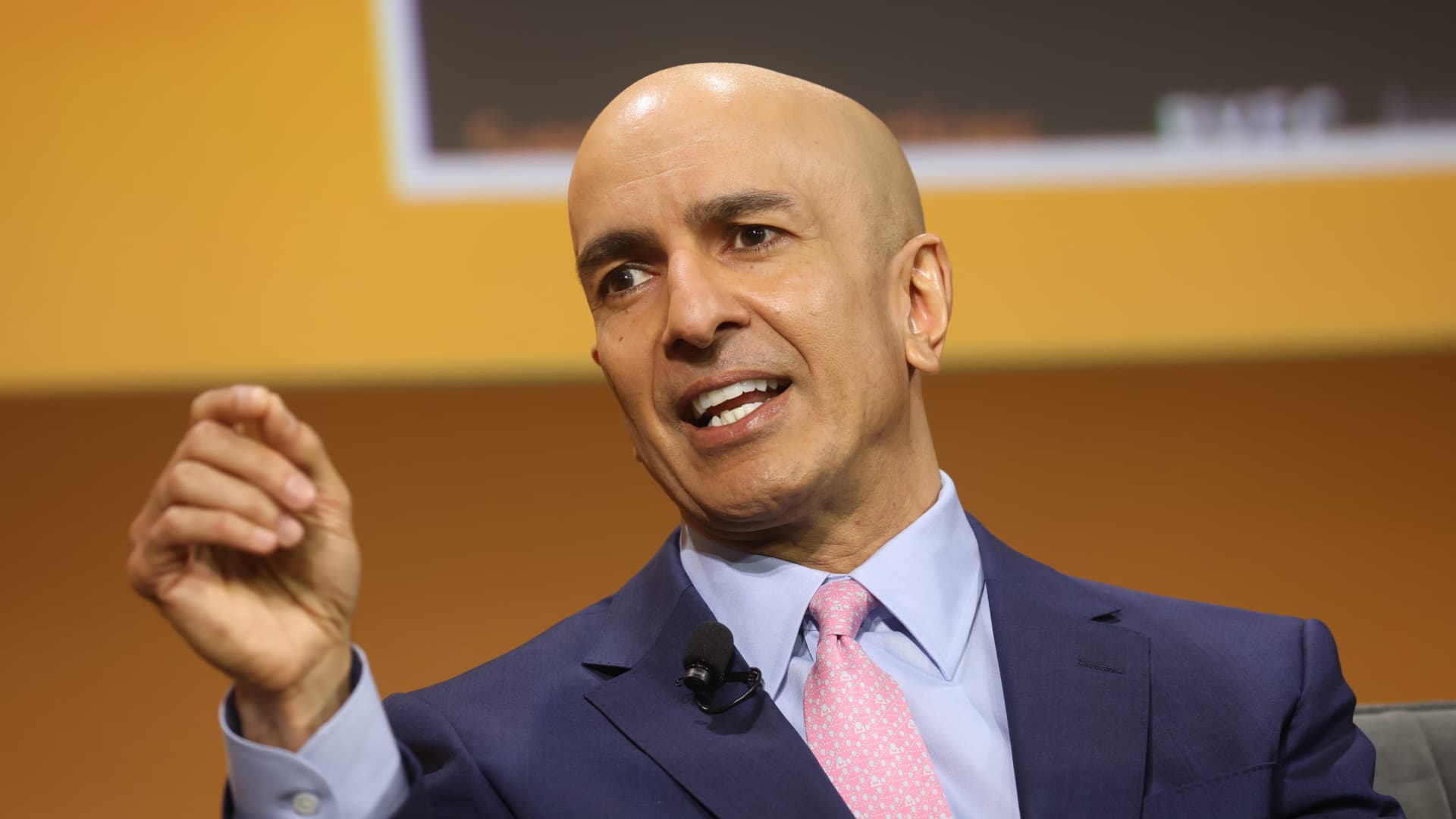
Neel Kashkari, president and chief executive officer of the Federal Reserve Bank of Minneapolis, during the Bloomberg Invest event in New York, US, on Tuesday, March 3, 2026.
Michael Nagle | Bloomberg | Getty Images
Minneapolis Federal Reserve President Neel Kashkari said Friday he has changed his outlook and now expects that one interest rate increase will be necessary this year.
In remarks just over a week after the Federal Open Market Committee voted to hold its benchmark rate steady, Kashkari said he sees a hike as likely this year as the economy continues to feel the hit from spiking inflation tied to fighting in the Middle East and other factors.
“In March, I had penciled in one rate cut by the end of the year. In June, I’ve changed that to one rate hike by the end of the year,” the policymaker said during a panel discussion at the Aspen Ideas Festival. “It’s a pencil, and so we’re going to have to see how the data comes in.”
A Commerce Department report earlier this week showed that the headline inflation rate as gauged by the Fed’s preferred measure rose to 4.1%, the highest since April 2023. Stripping out food and energy costs, core inflation was at 3.4%, also marking a high since October 2023.
Inflation has been above the Fed’s 2% goal for five years.
Kashkari said his approach to rates has shifted as he remains skeptical that the energy price-induced cost surges will abate soon as unease continues in the Middle East. President Donald Trump charged Friday that Iran has violated a ceasefire agreement.
“I don’t trust Iran to honor whatever agreement has been made,” he said. “There’s some evidence of overnight that they’re already reneging on it, so I certainly am not seeing all clear coming out of the Middle East, and that makes me cautious about feeling too good that the worst is behind us.”
While much of the inflation surge has been blamed on oil prices, Kashkari cited other factors.
“The inflation is being driven by supply dynamics, so whether it’s tariffs pushing up the price of goods that we buy from abroad, it’s the fertilizer that’s been disrupted because of the Strait of Hormuz and energy and oil prices from the Strait of Hormuz,” he said. “Then it’s also being driven by massive investment, hundreds of billions of dollars a year into data centers and all of the associated infrastructure that goes with that. Anything that touches those sectors, the prices are skyrocketing on those parts of the economy.”
Early comments from policymakers coming out of the Fed meeting suggest mixed views on the FOMC, of which Kashkari is a voting participant this year.
On Thursday, New York Fed President John Williams said he expects inflation to ease and he sees current policy well-positioned for current dynamics. At the same time, Chicago Fed President Austan Goolsbee told CNBC that he remains concerned about inflation but declined to speculate on where he sees rates heading.
Correction: Kashkari’s remarks were delivered Friday. An earlier version misstated the date.


Securitize, one of the largest providers of tokenization infrastructure for Wall Street, expects to raise about $400 million as it prepares to go public through a merger with a Cantor Fitzgerald-backed special purpose acquisition company.
The company said Friday that, following lower-than-expected shareholder redemptions, the business combination with Cantor Equity Partners II (CEPT) is expected to generate roughly $400 million in gross proceeds, including private investment in private equity (PIPE) financing.
CEPT was 8% higher following the news.
The transaction is scheduled to close on July 1, pending shareholder approval on June 29 and other customary closing conditions. The combined company is expected to begin trading on the New York Stock Exchange the following day under the ticker SECZ.
Tokenization — the process of representing assets such as funds, bonds and private credit on blockchain networks — has become one of Wall Street’s fastest-growing digital asset initiatives. The market for tokenized real-world assets has grown to more than $30 billion excluding stablecoins, according to rwa.xyz, while Boston Consulting Group and Ripple project it could reach $18.9 trillion by 2033.
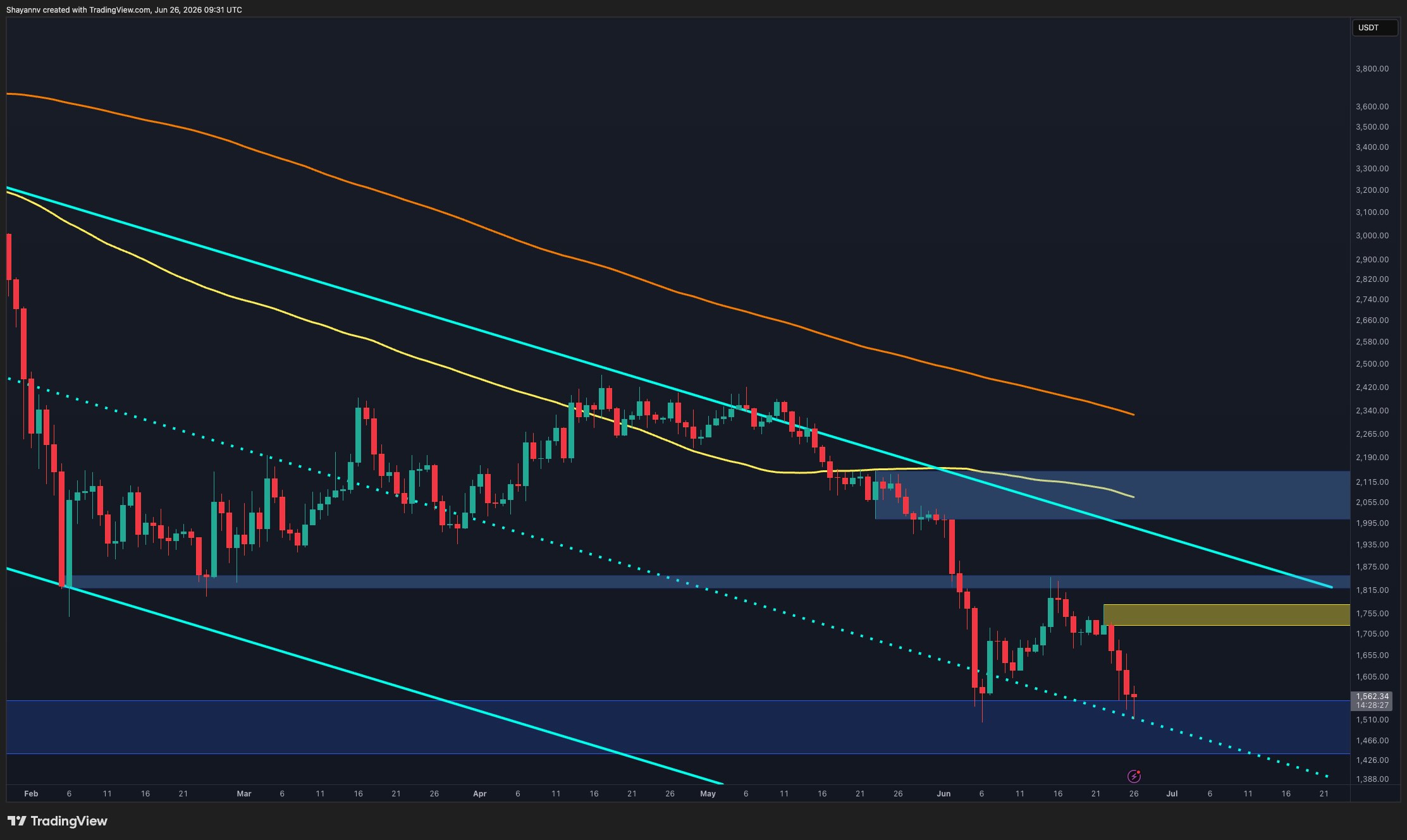
Ethereum remains under heavy selling pressure after another rejection at a key resistance level, with the latest decline pushing the asset back toward a major demand zone. While buyers are attempting to stabilize the price around support, the broader trend remains firmly bearish as ETH continues to trade below all major moving averages.
Ethereum Price Analysis: The Daily Chart
On the daily timeframe, Ethereum continues to print lower highs and lower lows while trading beneath the 100-day, 200-day, and long-term descending trendline, confirming that sellers remain in full control of the broader structure.
The recent recovery stalled precisely below the $1.72K to $1.78K supply zone before bearish momentum resumed. That rejection has now driven ETH back into the key support region around $1.46K to $1.56K, where buyers are once again attempting to defend the market.
This support zone has produced another reaction, but so far the rebound remains weak and has failed to alter the overall bearish structure. As long as Ethereum remains below the $1.72K to $1.78K resistance area, rallies are likely to be viewed as corrective rather than the beginning of a trend reversal.
A decisive loss of the current demand zone would expose the market to another leg lower, while reclaiming the nearby resistance would be the first indication that bearish momentum is beginning to fade.
ETH/USDT 4-Hour Chart
The 4-hour chart highlights the recent rejection at the $1.72K to $1.78K resistance zone, triggering another sharp decline toward the lower boundary of the established range.
Following that sell-off, ETH has bounced modestly from the $1.50K to $1.53K support area, suggesting buyers remain active around this demand zone. However, the asset continues to trade near the bottom of the broader consolidation range, while every recovery attempt has so far produced another lower high.
The current structure suggests Ethereum may continue consolidating between approximately $1.52K and $1.75K in the near term. The lower boundary remains the critical level to watch, as another breakdown below support could accelerate bearish momentum, whereas reclaiming the upper resistance would improve the short-term outlook and open the door for a stronger recovery.

Sentiment Analysis
The Exchange Netflow chart shows a notable increase in ETH moving onto exchanges over the most recent sessions, with the 14-day moving average of netflows turning sharply positive.
Historically, sustained positive exchange netflows indicate that more coins are being transferred to trading venues, often reflecting rising selling pressure or a greater willingness among holders to distribute their assets. This shift has coincided with Ethereum’s latest decline toward the $1.5K area.
Although exchange inflows alone do not guarantee additional downside, the recent surge suggests that supply entering exchanges remains elevated. Unless netflows begin to moderate while price stabilizes around the current demand zone, the on-chain data continues to favor a cautious outlook and supports the possibility of continued weakness before a more durable recovery can develop.

The post Any ETH Rebound Remains Corrective Below This Key Level: Ethereum Price Analysis appeared first on CryptoPotato.
XRP remains under sustained selling pressure, with the broader trend continuing to favor the sellers. The USDT chart shows the price on the verge of breaking a major support area after another leg lower, while the XRP/BTC pair has also slipped back toward a key floor, highlighting the token’s ongoing weakness against Bitcoin.
Ripple Price Analysis: The USDT Pair
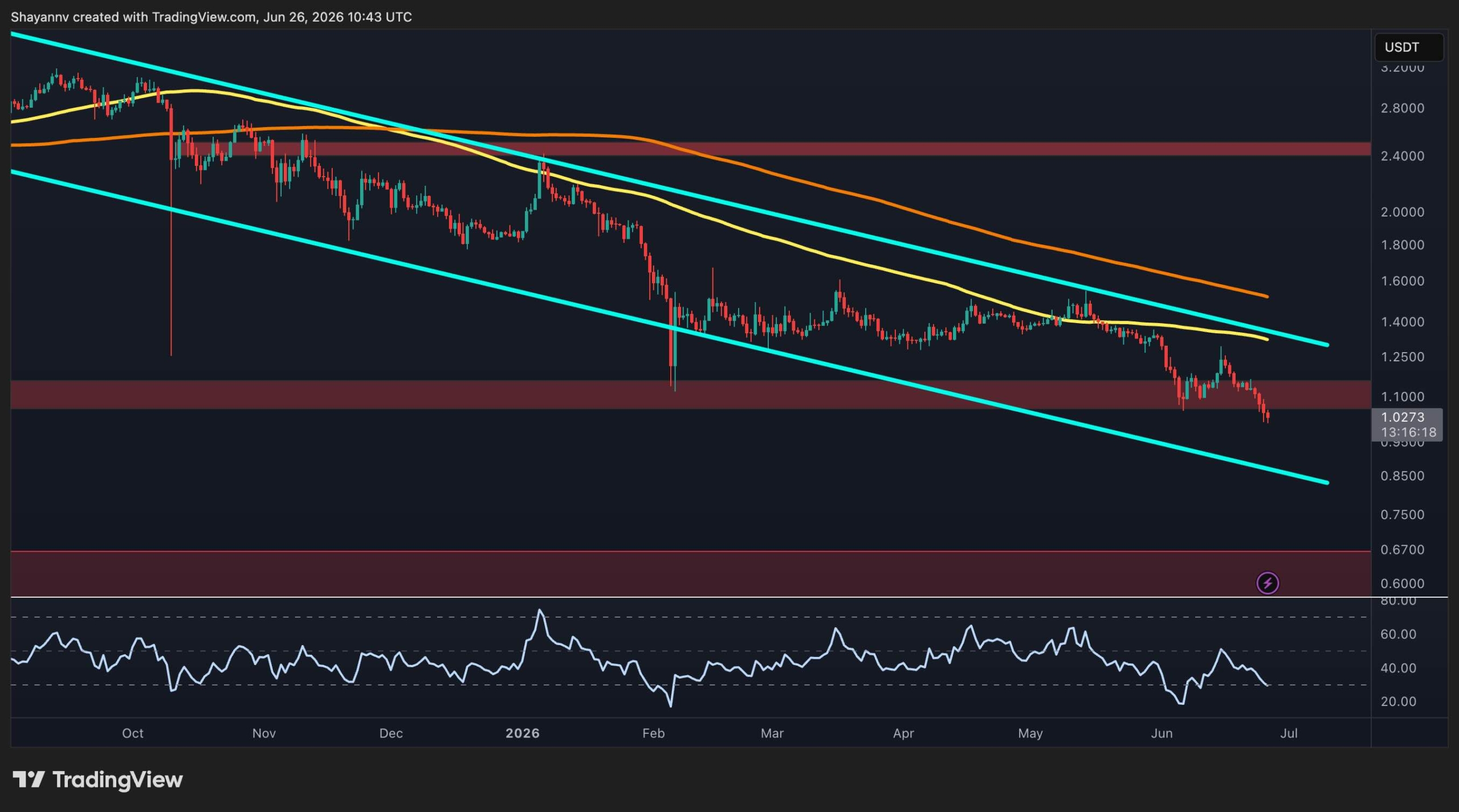
On the USDT pair, XRP has extended its long-term downtrend while respecting a descending channel that has capped the price action for several months. The asset is currently trading around $1.04 after almost losing the key $1.10 support zone, which has now turned into immediate resistance.
The asset also remains below the 100-day and 200-day moving averages, with the 100-day sitting near $1.25 and the 200-day around $1.5. Both averages continue to slope downward, reinforcing the bearish market structure. Meanwhile, the upper boundary of the descending channel is converging with these moving averages, creating a strong resistance cluster that buyers would need to reclaim before any meaningful trend reversal could be considered.
On the downside, the current support zone around $1.00 is being tested. A confirmed breakdown below this area could expose the next major demand region around $0.60. Momentum also continues to deteriorate, with the RSI falling toward the oversold territory, which suggests bearish pressure remains dominant even though short-term relief bounces cannot be ruled out.
As long as XRP remains below the descending channel resistance and the major moving averages, the broader market structure continues to favor sellers despite the recent stabilization.
The BTC Pair
Against Bitcoin, XRP is also trading inside a well-defined descending channel. This shows persistent relative weakness throughout the past several months. The pair is currently trading around 1,720 sats while sitting directly on a horizontal support level that has repeatedly attracted buyers since May.
However, the broader technical picture remains bearish. The price is trading below both the 100-day and 200-day moving averages, which are located around 1,850 sats and 2,000 sats, respectively, while both averages continue to trend lower. As a result, any recovery attempt is likely to encounter heavy resistance around the 1,850 to 2,000 sats region, followed by the upper boundary of the descending channel.
If the current support at roughly 1,700 sats fails to hold, sellers could target the lower boundary of the channel near the 1,500 sats area. Conversely, defending this level could allow for another short-term rebound toward the channel resistance, although the overall structure would remain bearish unless XRP manages to reclaim the major moving averages and establish higher highs.

The post Ripple Price Analysis: How Likely Is a Crash to $0.60 as XRP Tests $1 Support? appeared first on CryptoPotato.


Recently, United States Vice President JD Vance reportedly joined a dinner with donors, including Brian Armstrong, as part of his efforts to fundraise for the Republican Party.
The dinner was held at the home of All-In podcast host Chamath Palihapitiya and included approximately two dozen donors, including Lip-Bu Tan, the chief executive of Intel.
This fundraising dinner reportedly raised approximately $4.2 million, with Axios reporting that donors each paid $250,000.
Read more: Bitcoin bull Palihapitiya reckons ‘nobody cares’ about Uyghur genocide
Vance is the Republican National Committee (RNC) finance chair, a role that is allowing him opportunities to get face time with donors before a likely 2028 presidential campaign.
Armstrong has become an increasingly important political donor, contributing to the cryptocurrency-related Super PACs as well as contributing to a variety of different political candidates.
Armstrong has also met repeatedly with President Donald Trump.
Read more: Crypto lobbyists are busy preparing for the 2024 election
This aggressive move into politics from Armstrong comes after the infamous Coinbase blog post; Coinbase is a mission focused company.
This blog post/manifesto made it clear that Coinbase should not “advocate for any particular causes or candidates internally that are unrelated to our mission.”
It further added internal company policies to limit workplace communication about politics, limiting speech that would “debate causes or political candidates internally that are unrelated to work.”
However, Armstrong apparently feels that this limitation does not prevent him from throwing his wealth around to support politicians who he can convince himself are related to Coinbase’s mission.
Got a tip? Send us an email securely via Protos Leaks. For more informed news and investigations, follow us on X, Bluesky, and Google News, or subscribe to our YouTube channel.
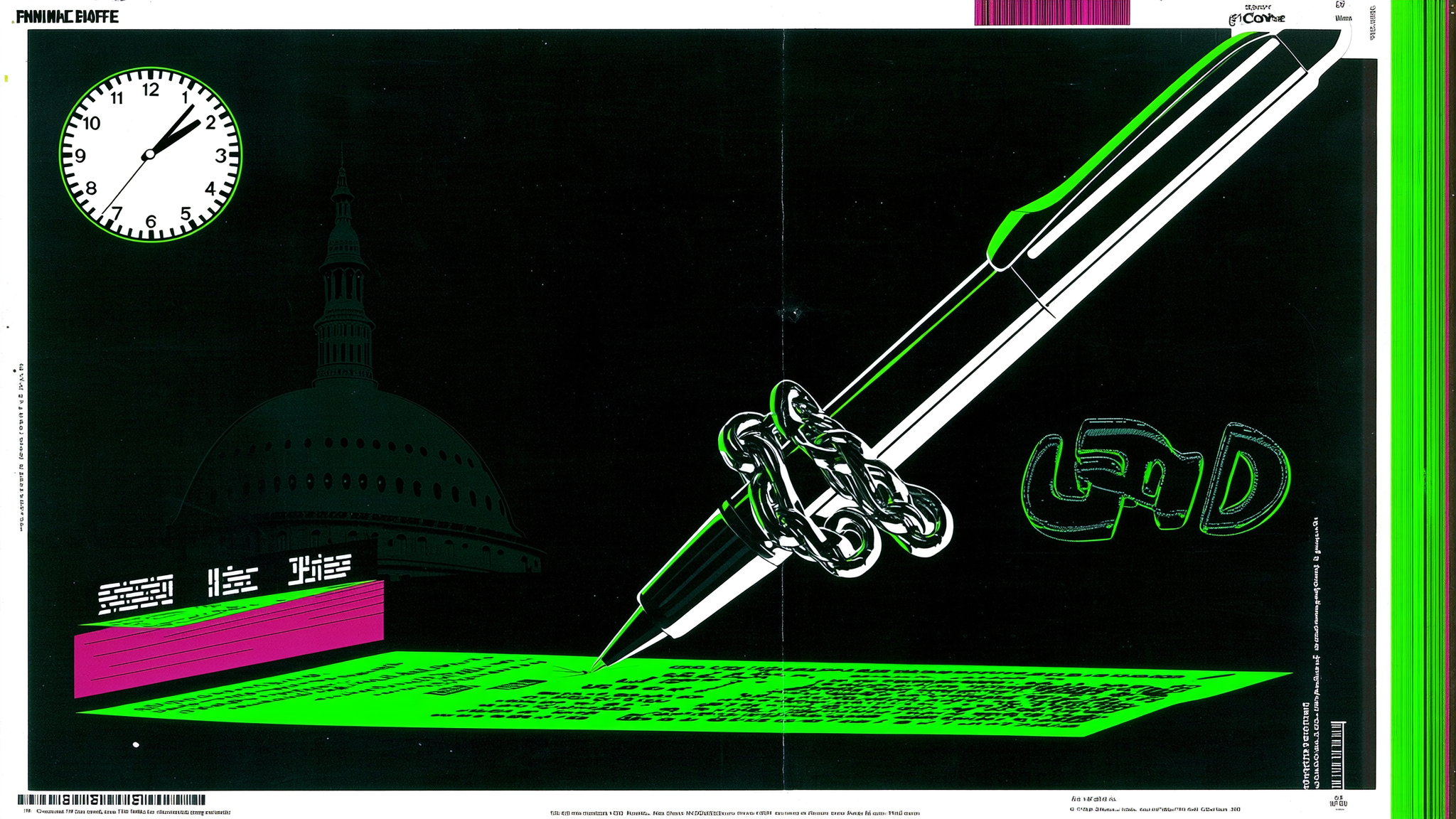
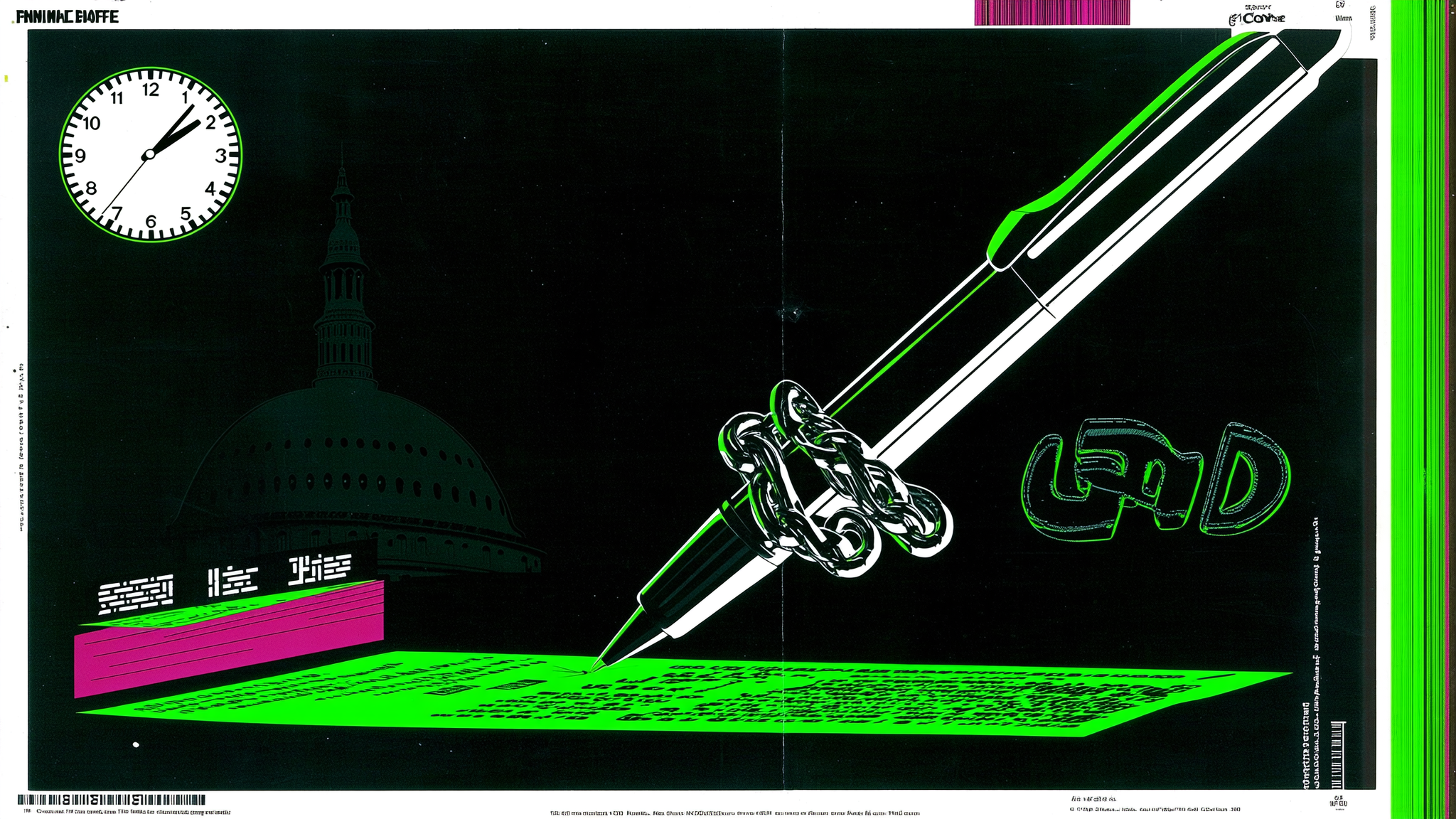
President Trump canceled a scheduled signing ceremony for the bipartisan 21st Century ROAD to Housing Act on Wednesday, conditioning his signature on Congress first passing unrelated voter-ID legislation. The bill, which passed both chambers with veto-proof margins and includes a four-year ban on a… Read the full story at The Defiant


The market capitalization of Strategy’s STRC, the once-$10.5 billion stock that was supposed to pay better than a high-yield bank account or money market, sank to another all-time low beneath $7.2 billion this morning.
For four uninterrupted days, the stock has crashed lower each day. By 9:33am today, it was trading 29% beneath the par value the company advertises.
Indeed, the price of each STRC share is supposed to trade at $100 while Strategy pays shareholders an 11.5% annualized dividend.
Shares were, in fact, trading at $100 as recently as May 14. Well, this morning, they were trading at $71.25.
Bitcoin will pay for everything if it rallies 30% a year
Strategy is a bitcoin (BTC) acquisition company whose founder Michael Saylor believes BTC is going to rally annually with a compounded annual growth rate (CAGR) near 30%. He even created a calculator to forecast the price of his company’s common stock, MSTR, under the assumption that BTC would never have a down year.
Based on his bullish conviction, Strategy issues a variety of securities that pay far less than Saylor’s forecasted rally in BTC, under the assumption that Strategy’s BTC holdings will eventually rally enough to make up for all of its payouts.
It will come as a surprise to no one that BTC has not rallied that much recently. Over the last five years, the CAGR of BTC is less than 13%.
Embarrassingly, Strategy president Phong Le publicly admitted a few months ago that retail investors hold about 80% of the supply of STRC, meaning that the damage is disproportionately affecting working-class investors who listened to the company’s forecast.
Read more: STRC crashes as Strategy’s unrealized BTC losses exceed $13 billion
According to Saylor, STRC was supposed to be a low-volatility competitor to a high-yield bank account or money market, paying above-market dividends to people who could not afford the downside volatility of BTC itself.
Unfortunately, STRC now has demonstrated plenty of downside and, unlike BTC, has no meaningful upside beyond its $100 par value.
Making today even worse, Strategy’s common stock, MSTR, fell to a fresh 52-week low of $82.33 the same morning. That is about 82% below its 52-week high of $457.22.
STRC is down 24% in one month
Although the collapsing value of Strategy’s securities is the most damaging, it is also remarkable how fast the safety margin behind STRC’s payout has evaporated.
STRC has lost one-quarter of its share price within just 30 days.
Strategy has previously touted 71 years of dividend coverage from its BTC reserve as recently as November 2025. By June 17 the company claimed, “We have 32 years of dividend coverage through our BTC Reserve.” Within hours, as bitcoin slid further, even that figure fell to 31.
More than half the cushion vanished in roughly seven months. Today, that number is below 30 years.
As the price of BTC falls, years of supposed dividend coverage by Strategy’s BTC holdings have vanished within weeks.
Despite the bear market, CEO Le has tried to reassure the market that Strategy will not dump most of its holdings anytime soon. He told CNBC that the company would sell BTC only under specific conditions, such as funding the STRC dividend or tax optimization, and only when the move is accretive to BTC per share.
For shareholders, that is less a guarantee than a map of the scenarios under which selling BTC becomes Strategy’s plan.
Saylor pitched STRC as a low-friction way to earn yield, with daily liquidity and no management fees. It was supposed to be a money-market substitute backed by BTC. It is now delivering the opposite experience for shareholders with today’s new all-time low.
Got a tip? Send us an email securely via Protos Leaks. For more informed news and investigations, follow us on X, Bluesky, and Google News, or subscribe to our YouTube channel.


U.S. senators have urged the Commodity Futures Trading Commission to investigate Polymarket over allegations that the prediction market platform used deceptive advertising to reach American users despite restricting access in the country.
Summary
- Senators Adam Schiff and John Curtis have asked the CFTC to investigate Polymarket over alleged deceptive advertising practices.
- The lawmakers questioned whether the CFTC has sufficient authority and resources to oversee prediction markets and protect consumers.
- The request comes as the CFTC faces legal and regulatory scrutiny over crypto perpetual futures and derivatives oversight.
According to a letter obtained by The Wall Street Journal, Senators Adam Schiff and John Curtis asked CFTC Chair Michael Selig to examine claims that Polymarket promoted its markets through simulated trading websites, staged transactions, and undisclosed paid influencer campaigns. The lawmakers wrote that, if the allegations are accurate, they warrant immediate regulatory scrutiny.
The request follows a Wall Street Journal investigation alleging that Polymarket hired content creators to record trades using fake trading interfaces instead of the live platform.
The report also claimed some influencers failed to disclose they were being paid and that promotional material exaggerated potential winnings, creating a misleading impression for U.S. audiences, even though the platform does not serve domestic users.
The senators requested that the CFTC provide a written response by July 10 stating whether it has opened an investigation into the allegations. If the regulator has decided against pursuing the matter, they asked it to explain that decision.
Lawmakers question CFTC oversight of prediction markets
Beyond the advertising allegations, Schiff and Curtis asked the CFTC to outline the consumer safeguards it currently expects prediction market operators to maintain. Their questions covered advertising standards, age verification, responsible gaming tools, addiction warnings, affiliate marketing practices, and disclosure requirements for influencer promotions.
The lawmakers also challenged whether the agency has the authority, expertise, and resources needed to carry out responsibilities traditionally handled by state and tribal gaming regulators. Their letter asked whether the CFTC can deliver comparable licensing, enforcement, and consumer-protection measures while continuing to argue that prediction markets fall under its exclusive jurisdiction.
Those concerns arrive as the CFTC continues defending that position in court. Earlier this week, the regulator sued Kentucky after state authorities moved against prediction market operators, including Polymarket and Kalshi, arguing that federal law gives the agency sole oversight of those products.
Schiff and Curtis cautioned the regulator against allowing federal oversight to become a way for companies to avoid state or tribal gaming laws or weaken consumer protections through misleading promotional campaigns.
Regulatory pressure extends beyond prediction markets
The letter lands during a period of increasing debate over how the CFTC is supervising crypto-linked derivatives.
Last week, CME Group sued the regulator and Chairman Michael Selig after the agency approved U.S. crypto perpetual futures, arguing the contracts should be classified as swaps rather than futures under the Dodd-Frank Act.
According to CME’s complaint, the CFTC departed from its long-standing interpretation of perpetual-style contracts and approved the products without going through formal rulemaking. CME Chief Executive Terrence Duffy had previously stated that the exchange planned legal action after platforms including Kalshi and Coinbase received approval to list regulated crypto perpetual futures.
On Friday, the CFTC and the Securities and Exchange Commission opened a 60-day public consultation on crypto derivatives regulation. The agencies are seeking feedback on portfolio margining across securities, swaps, futures, and related products while separately reviewing whether Dodd-Frank definitions governing swaps and security-based swaps still match current derivatives markets.
SEC Chair Paul Atkins said closer coordination between the two regulators could improve market efficiency, strengthen consumer protections, and reduce overlapping regulatory responsibilities as crypto derivatives and tokenized financial products continue to expand in the U.S.
Disclosure: This article does not represent investment advice. The content and materials featured on this page are for educational purposes only.
Remittix has urged RTX presale buyers to register wallets ahead of the upcoming token distribution.
Summary
- Remittix urges RTX presale buyers to register wallets ahead of token distribution and upcoming launch updates.
- RTX holders are encouraged to complete wallet registration as Remittix prepares for token distribution.
- Remittix opens wallet registration for RTX presale participants before token distribution and launch announcements.
Remittix has issued a major reminder to RTX holders as airdrop registration continues ahead of the upcoming token distribution phase. Presale buyers are now being encouraged to register their wallets through the official Remittix site before distribution begins.
The update has added fresh urgency across the Remittix community, with holders moving to complete registration and stay connected before the next launch-stage announcement. As attention builds around the upcoming RTX launch price reveal, wallet registration has become one of the most important steps for presale participants.
Wallet registration is now the key step
The Remittix airdrop refers to the distribution of RTX tokens purchased during the presale. This is not being positioned as a separate free-token giveaway, but as the process linked to getting presale tokens ready for holders.
To register, users need to visit the official Remittix airdrop registration page, connect their wallet, submit their wallet address, and complete the registration page. There is also an optional section where users can add notification details to receive future updates linked to the airdrop and token distribution process.
Once the process has been completed, the page confirms that the user has successfully registered.
For RTX holders, this step is important because it helps keep them updated as Remittix moves closer to token distribution. The community is being urged to use only official Remittix links and avoid connecting wallets to any unofficial pages or accounts.
Token distribution moves closer
With registration now live, the focus is shifting toward the next phase of the Remittix launch process. Presale holders have been waiting for clearer updates on token distribution, launch price, and wider exchange activity.
The launch price reveal remains one of the most-watched updates in the Remittix community. As that announcement moves closer, wallet registration gives holders a direct action to take now instead of waiting on the sidelines.
This is why the current update has created renewed attention around the project. It gives RTX buyers a clear checkpoint before the launch phase begins and helps bring the community back into focus.
Live platform adds more confidence
The registration update also comes as Remittix continues to highlight its live crypto-to-fiat platform. The platform is designed to let users send crypto while recipients receive fiat directly into their bank accounts.
Multiple community members have reportedly received fiat payments into their bank accounts through the Remittix system, giving the project an active utility story alongside its token launch preparations.
That combination is now driving the latest wave of attention around Remittix. The platform is live, airdrop registration is open, and the community is waiting for the launch price reveal.
For RTX holders, the message is simple. Register your wallet through the official Remittix site, stay alert for future updates, and make sure you are prepared before token distribution begins.
For more information, visit the official website and airdrop registration.
FAQ
What is the Remittix airdrop for?
The Remittix airdrop refers to the distribution of RTX tokens purchased by holders during the presale, rather than a separate free-token giveaway.
How do RTX holders register for the airdrop?
Holders can register through the official Remittix site by connecting their wallet, submitting their wallet address and completing the registration process.
Why is the Remittix launch price reveal important?
The launch price reveal is one of the biggest upcoming updates because it will help shape expectations around RTX as the project moves from presale into its launch phase.
Disclosure: This content is provided by a third party. Neither crypto.news nor the author of this article endorses any product mentioned on this page. Users should conduct their own research before taking any action related to the company.

How to Learn Financial Management For Beginners #shorts

Inside the politicisation of the first-ever 2026 World Cup pride match

Abbott Laboratories Shares Rise as Medical Device and Diagnostics Giant Reports Strong Performance


-

 Fashion7 days ago
Weekend Open Thread: Miami – Corporette.com
-

 Entertainment6 days ago
Renter of Home in Anne Heche Crash Denies Settlement With Son
-
 Sports3 days ago
Two goals and an assist by sheer aura: Cristiano Ronaldo just entered the World Cup chat
-

 Tech4 days ago
Microsoft accidentally kills epic Outlook email threads
-

 Business6 days ago
Soccer-U.S. defends Iran World Cup travel restrictions, says discussions ongoing
-

 Politics12 hours ago
The House | Manchesterism won’t survive the painful trade-offs unless it gets citizens on board
-

 Politics6 days ago
Andy Burnham and the meaning of Makerfield
-

 Politics16 hours ago
Potential 2028er World Cup attendee leaderboard
-

 Tech22 hours ago
A Look At A Gaggle Of Transputer Boards
-
Crypto World3 days ago
Bitcoin (BTC) Dips Below $62K, Ethereum (ETH) Plunges 6% Daily: Market Watch
-

 Crypto World2 days ago
Securitize Wraps Roubini's SEC-Registered ETF as Dubai VARA Digital Security
-
 Crypto World1 day ago
Dell (DELL) Shares Tumble Over 5% Following Analyst Downgrade to Hold
-
Business3 days ago
Entergy settles forward sale agreements, raises $672 million in cash proceeds
-
 Business7 days ago
Wall Street Week Ahead: Investors see Micron earnings as pulse check of AI rally momentum
-
 Crypto World6 days ago
Can Charles Hoskinson Really Rescue Cardano?
-

 Business11 hours ago
Asia stock markets slide as tech shares slump
-

 Entertainment7 days ago
Jose Alvarado Wants Taylor Swift at More Knicks Games
-

 Crypto World7 days ago
HIVE shares jump as $220M AI deal speeds Bitcoin mining pivot
-

 Crypto World6 days ago
Jake Chervinsky accuses CME of protecting derivatives monopoly
-
 Crypto World4 hours ago
Hyperliquid Named on Singapore MAS Investor Alert Register
You must be logged in to post a comment Login