
Related: Hilary Duff Uses the Blush Balm That Shoppers Call a ‘Game-Changer’
Advertisement



:max_bytes(150000):strip_icc():format(jpeg)/little-brother-052726-3d80573e53fb494781d0b29d0dac9b8c.jpg)
“We were making Matt [Spicer] pull his hair out that night.”
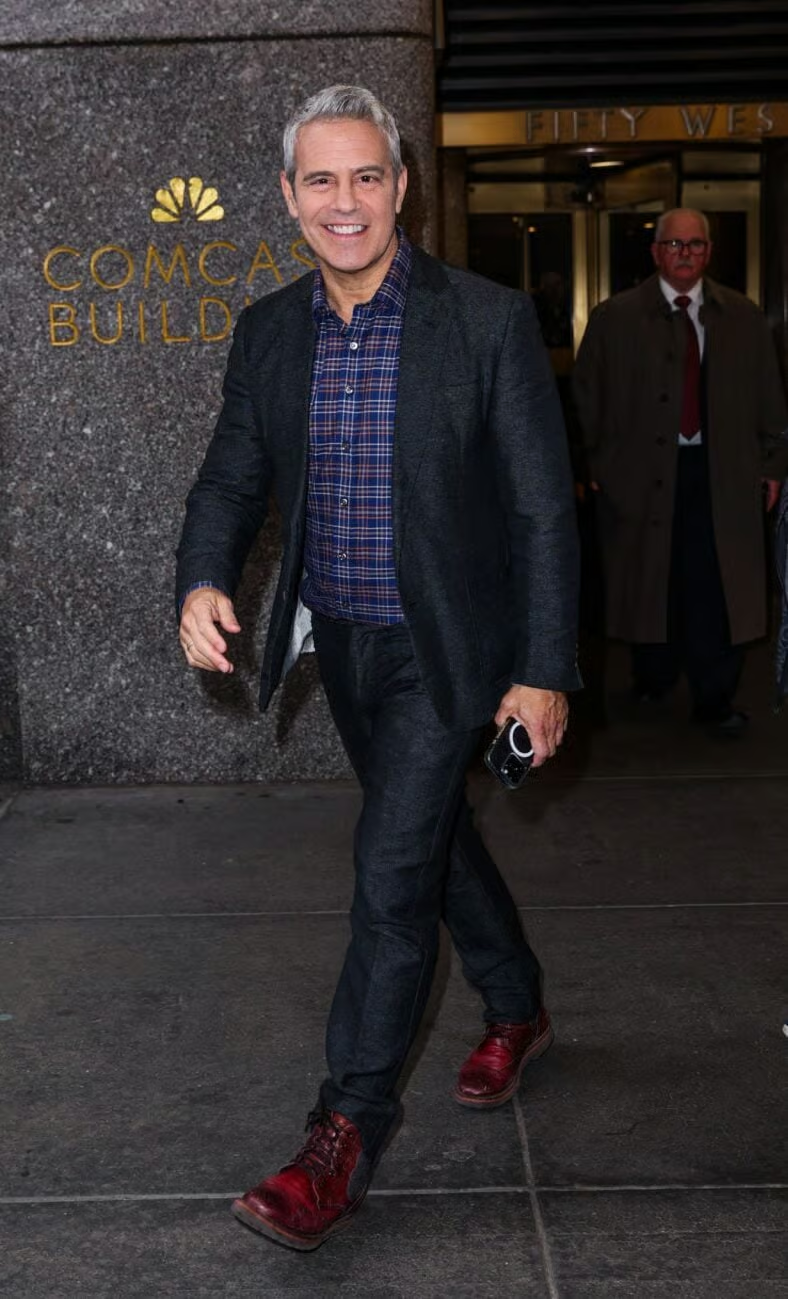
The Bravo community is mourning the loss of one of its own. Andy Cohen became visibly emotional during Thursday night’s episode of “Watch What Happens Live” as he paid tribute to former production manager Kyra Samson, who died this week after battling glioblastoma, an aggressive form of brain cancer. She was 28 years old.
The television host struggled to get through the announcement, remembering Samson not only as a valued member of the production team but as someone whose warmth and determination left a lasting impression on everyone who worked alongside her.
Credit: Eric Kowalsky / MEGA

Cohen shared the heartbreaking news at the start of the episode, revealing that Samson passed away on Tuesday after a months-long fight against brain cancer.
While reflecting on her time with the show, Cohen remembered Samson’s unique ability to balance kindness with leadership, joking that despite her gentle personality, she had no trouble taking charge when the moment called for it.
The emotional tribute ended with Cohen sending his love to Samson’s family and friends before a photo of the two appeared on screen. The moment quickly resonated with viewers, many of whom took to social media to share messages of support and condolences.

According to The Kyra Fund, Samson was diagnosed with glioblastoma multiforme at age 27. Glioblastoma is considered one of the most aggressive forms of brain cancer and remains one of the most difficult cancers to treat. Despite the diagnosis, those closest to Samson say she approached every challenge with extraordinary resilience.
“Kyra pursued treatment options with unwavering determination while prioritizing what mattered most to her: time with loved ones, laughter with friends, music, consuming popular culture, and creating beautiful memories,” the official website reads.
The organization established in her honor describes her as someone who faced her illness with “courage, bravery, grit, strength, and authenticity.” The fund now aims to support research efforts focused on developing new treatments and advancing immunotherapy options for patients facing similar diagnoses.
“In partnership with the Glioblastoma Research Organization (GBMRO), The Kyra Fund will support urgently needed research for individuals with glioblastomas,” the official website states. “Glioblastoma remains one of the deadliest cancers, with limited treatment options and far too few breakthroughs. Through this partnership, donations made in Kyra’s honor will help accelerate promising research with the goal of ultimately finding a cure for this devastating illness. We hope this fund will help future Kyras.”
Samson’s father, former Miami Marlins president and MLB analyst David Samson, announced her passing in an emotional social media post on Wednesday. He revealed that his daughter fought the disease for nine months and 11 days before passing away peacefully.
Describing the loss as unimaginable, David reflected on the strength Kyra displayed throughout her illness and the profound impact she had on those around her. He also encouraged supporters to donate to The Kyra Fund, explaining that all contributions will go toward glioblastoma research in hopes of helping future patients and families.
In comments shared with The Athletic, David opened up further about the devastating reality of losing his daughter. “The hole in our family is unthinkable,” he said. “I don’t know how to fill it.” He also vowed to continue speaking publicly about Kyra’s story and advocating for brain cancer research.
According to David, honoring his daughter’s legacy means ensuring that others understand both the severity of glioblastoma and the urgent need for better treatment options. Rather than allowing her story to end with tragedy, he hopes her battle will inspire meaningful progress for future generations facing the disease.
Kyra’s best friend, Katherine, also took to social media to pay tribute, writing, “My best friend, Kyra Samson, passed away yesterday, peacefully and surrounded by a lot of love.”
She added, “Which is an insane thing to say because she was 28 and last summer she was perfectly and completely fine as she drove around the Sony lot after work with me and we laughed, and yapped, and couldn’t believe how lucky we were to be working together again, on a studio lot where they shot ‘The Wizard of Oz.’”
Kyra and Katherine met while working on “WWHL,” and they “bonded instantly.” Katherine said they shared the same Bravo opinions, production ideas, a childhood love of the Jonas Brothers, and a current love of Adele, and, most importantly, shared time.
Now, through The Kyra Fund and the memories shared by friends, family, and colleagues, those closest to Samson hope her legacy will continue to make a difference long after her death.
Anime‘s popularity is at an all-time high right now, thanks to the medium’s creative stories and phenomenal animation. While newer shows like Frieren: Beyond Journey’s End and Jujutsu Kaisen continue to push the bounds of storytelling in the medium, fans shouldn’t forget where these narratives stem from. Around 70% of all anime shows are adapted from manga comics, whether that be shounen, shoujo, seinen, or josei. The world of manga is much more vast than that of anime, consisting of series even better than their adaptations, since the artist can pour as much passion and detail into their art and story. One such case is One Piece, which is currently the biggest manga. Following Monkey D. Luffy on his quest to become King of the Pirates, he must first make a name for himself and establish a crew, which he does by picking fights with whoever he doesn’t like, from other pirates to the Marines and the world government. One Piece‘s popularity and acclaim are widespread, with many considering it the best manga of all time.
One Piece may be the most popular manga ever, and it is indeed one of the greatest. However, even though it has the best worldbuilding, eccentric characters, palpable emotion, and political intrigue, it is not the greatest manga of all time. Even if it isn’t the best, there aren’t many other series better than it, which is why this list will highlight the only three manga better than One Piece. Based on aspects such as writing, art, originality, staying power, characters, worldbuilding, popularity, fan opinion, critical acclaim, and overall quality, these three manga series can be considered the best of the best. Note that this list only includes shounen and seinen manga series because it is too hard to compare a long-running battle shounen to the best shoujo and josei manga. Viewers might be the biggest diehard One Piece fans or its greatest haters, but either way, they have to admit that these three manga sensations are some of the best of the best.

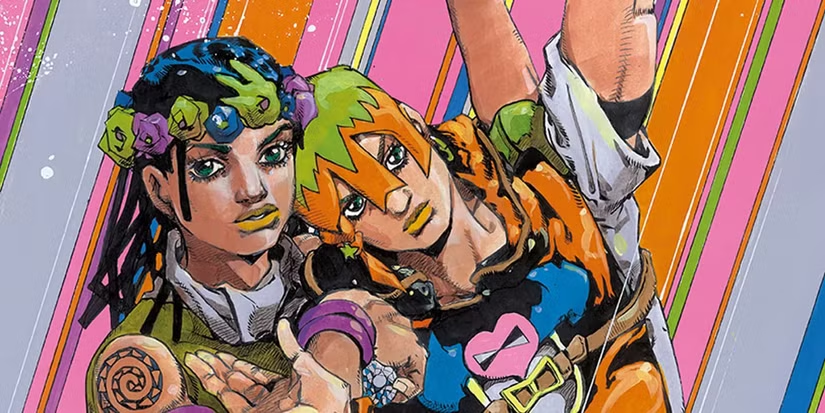
Starting in 1997 and still going today, there aren’t many manga series that run longer than One Piece, especially weekly shounen manga. It may have shifted from weekly to monthly and adopted the seinen demographic now, but JoJo’s Bizarre Adventure has been going on since 1986. Created by Hirohiko Araki, this manga series is split up into distinct parts, each one following a different protagonist of the Joestar lineage and placed in a new setting. From the very first part, Phantom Blood, fans are introduced to Jonathan Joestar and his adopted brother, Dio Brando. After a rocky start to their relationship, Dio discovers a mask that gives him the power of a vampire, which he uses to kill their father and attempt to steal his wealth. Thus started a never-ending battle between Dio and the Joestar family. Future parts take fans all over the globe, from trying to find a serial killer in a quaint Japanese town to going on a horse race across the United States of America to kill the president. No matter who the protagonist is or where they are, fans are sure to have a wild ride.
One Piece and JoJo’s Bizarre Adventure are two completely different stories. The former is a massive, interconnected web of worldbuilding, political drama, ancient lore, emotional storytelling, and expansive themes, whereas the latter is a chopped-up chronicle of a family and the bizarreness of their travels, filled with suspenseful action and overly dramatic moments. One common thread between these manga is the sense of adventure, for which they both excel. However, since JoJo’s Bizarre Adventure doesn’t stay in one place too long, unlike One Piece, it can evoke that feeling even better, taking fans to more distinct locations. Even modern JoJo manga are flawless, maintaining the series’ appeal while introducing new things to love. One Piece, on the other hand, has drawn out events that have lost their intrigue. JoJo’s Bizarre Adventure also has one of the best art styles in manga history, boasting an elegant and beautiful design that captivates viewers. This manga has kept engagement and viewership up because it chops up its story into parts, proving variety is the spice of life by introducing new characters, villains, plotlines, and weirdness. JoJo’s Bizarre Adventure also has one of the best anime series of all time, proving that better pacing, more consistent animation, and creativity are what fans want.
Some manga never seem to end, like One Piece, and other manga, unfortunately, don’t ever get their ending, such as Vagabond. Takehiko Inoue, one of the most proficient manga authors, delivers this stunning dramatization of history’s most famous samurai, Miyamoto Musashi. Sadly, the author grew tired of the story before he finished it, meaning it ended right at the climax. However, fans can read the historical novel Musashi, which the manga was based on, for the actual ending. As kids, Takezo and Matahachi always dreamt of becoming respected warriors, but after choosing the losing side of the Battle of Sekigahara, their paths separated. Takezo takes up the name Musashi and embarks on a quest to become the strongest under the sun, challenging dojos and other warriors to test his strength. Matahachi, on the other hand, wandered aimlessly, seeking false fame.
A common trend with all of these manga is that they never end, whether that be because of an unfinished finale, a never-ending hiatus, or a sprawling story. But Vagabond is the closest out of these options to a finale just because it is based on a finished novel. Vagabond is on another level when it comes to visuals, boasting some of the greatest art ever seen in manga and blowing One Piece out of the water. Maybe that is an unfair comparison, but Vagabond also displays much more narrative consistency and developed characters. Instead of introducing new characters and their stories as well as more islands with political ties, Vagabond solely focuses on its handful of characters, using the events to develop them. The philosophical journey is both intriguing and compelling, having an enlightening plot that can be action-packed and entertaining at times. Vagabond transcends storytelling and art, becoming a life lesson that boasts motivational and self-reflective themes that helped it become one of the greatest seinen manga series ever.

Many fans say there are countless manga better than One Piece, and others who say there aren’t, but if there is one thing they can agree on, it is that Berserk is the most critically acclaimed and influential manga series. Written by the late Kentaro Miura, this historic series has suffered many hiatuses and was taken over by Miura’s friend and acclaimed manga author Kouji Mori. In a dark fantasy world, Guts was born from a corpse and taken in by a band of mercenaries. However, his misfortune continued, with his group constantly abusing him to the point where he had to escape. Doing whatever it took to survive, Guts ended up with the Band of the Hawk, where he could truly say he belonged. That is, until a sudden betrayal destroyed the group, killing most of the members and leaving only him and a few others alive. Now fueled by revenge, Guts travels through the world killing apostles that will lead him to the man who took everything from him.
Simply put, Berserk is the greatest manga of all time, and almost every fan will agree, even if it isn’t their personal favorite. Just from the art alone, Berserk is a masterclass of visual storytelling that thrives with its detailed drawings of epic proportions, creating an almost painterly style aesthetic alongside its dark and gritty vibe. One Piece and Berserk don’t share many similarities, but in terms of art, pacing, consistency, characters, and narrative, the latter is far superior. The connection between Guts and Griffith is one of the best dynamics in manga history, each having unique goals and motivations that are influenced by the other, but also clash, changing their destinies forever. Berserk is a masterful study of trauma, grief, and revenge, and its story reflects it, delivering a much more concise narrative with fewer flaws than One Piece. Almost Shakespearean, this manga is a definitive dark fantasy that unravels a tragic bond between characters set in a fascinating and bleak world. One Piece is a shounen and more battle-focused, so it is only natural that the writing would be worse. Both manga are still ongoing, and with the Berserk manga recently returning, fans wonder which series will end first.

Us Weekly has affiliate partnerships. We receive compensation when you click on a link and make a purchase. Learn more!
Brooks Nader has been everywhere lately. Between filming the Baywatch reboot, starring in Hulu’s Love Thy Nader and turning up on every other red carpet, the model has built a reputation for skin that looks lit from within at all hours. Her secret? A little bottle of SPF setting spray that she calls a game-changer. Right now, the celeb-favorite is marked down 25% for Amazon Prime Day, which ends June 26, so now is the time to stock up.
The product in question is the Naked Sundays Golden Glow SPF 50 Sunscreen Setting Spray, a face and body mist Nader has championed loudly enough that fans started hunting it down. Barbara Palvin recently wore it on a red carpet, and the brand’s fan list reads like a group chat you’d want to be in: Dakota Johnson, Hilary Duff, Alix Earle, Lindsay Lohan, Khloe Kardashian, Vanessa Hudgens, Madison Bailey and Nikki Glaser, among others.
Get the Naked Sundays Golden Glow SPF 50 Sunscreen Setting Spray for $21 (originally $28) at Amazon! Please note, prices are accurate at the date of publication but are subject to change.
What makes this one different from the chalky sunscreens we grew up reapplying at the pool? It’s a clear, silicone-free serum mist with subtle golden pigments that give skin an instant glassy finish. No white cast. No sticky residue. Just a soft, lit-from-within sheen.

If you caught a glimpse of Hilary Duff at the 2026 Academy Museum of Motion Pictures Gala, you probably had the same thought we did: “OMG, she’s glowing!” Now we know the product behind the actress and singer’s stunning glam: Naked Sundays SPF 50 Glow Balm. It’s no wonder that Duff was gleaming in her […]
I usually spritz it over a finished makeup look for a midday SPF top-up, but I’ve also worn it solo to achieve that off-duty glow Nader does so well. I’ve even caught my 58-year-old mom swiping the spray from my vanity whenever she pops in — she loves the soft, dewy finish!
The formula dries down quickly, layers under foundation as a primer, and delivers broad-spectrum UVA/UVB protection in a 75ml bottle that actually fits in a handbag. It’s the kind of multitasker that earns its real estate on the vanity.
Stock up now before the four-day Amazon Prime Day sale ends! If you ask Us, we recommend grabbing one for you and one for whoever in your house ends up inevitably stealing yours.
Get the Naked Sundays Golden Glow SPF 50 Sunscreen Setting Spray for $21 (originally $28) at Amazon! Please note, prices are accurate at the date of publication but are subject to change.

If there’s one beauty product worth stealing from a celebrity’s routine, it’s sunscreen. After all, glowing skin starts with daily SPF, and few people seem to understand that better than Jessica Chastain. When revealing her beauty secrets to Vogue, the actress shared her love for Supergoop Unseen Sunscreen. The invisible sunscreen formula protects your skin […]
Medical dramas will stay having a moment, but not because every new series is trying to replicate The Pitt. HBO Max’s breakout hit earned widespread acclaim by grounding every emergency, conversation, and difficult decision in a level of realism rarely seen in the genre. Netflix’s The Trauma Code: Heroes on Call, however, succeeds by moving in the opposite direction. Instead of asking what an emergency room actually looks like, it asks what happens when hospital drama collides with an action blockbuster.
This bold gamble on creativity has been rewarded with success. Since its launch in January 2025, the South Korean series has achieved great international success, becoming one of Netflix’s most successful titles and sparking considerable buzz about possible future episodes. More significantly, this illustrates that the revival of the medical drama genre has always been driven by something other than viewers’ desire for more realism.

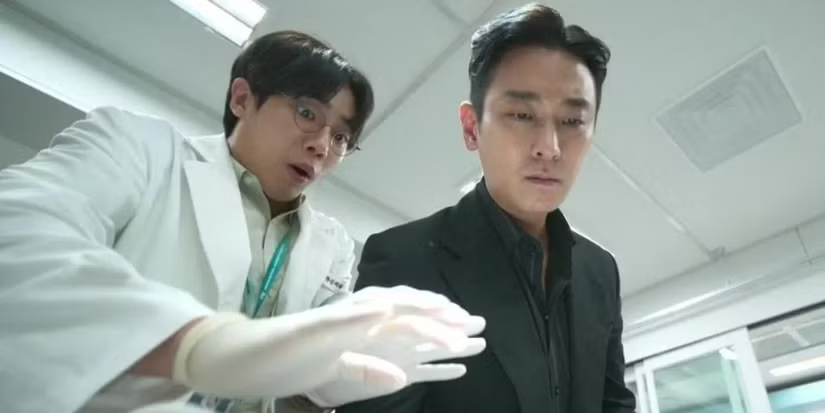
Where The Pitt builds tension through long shifts, impossible staffing shortages, and emotionally exhausting patient care, The Trauma Code: Heroes on Call operates at full speed almost immediately. Its central figure, trauma surgeon Baek Kang-hyuk (Ju Ji-hoon), is introduced as he delivers medical supplies through an active war zone before arriving at a struggling university hospital ready to overhaul an entire trauma department.
The heightened approach defines virtually every episode. In addition, the series isn’t limited to standard emergency cases; it includes helicopter rescues, mid-air surgery, dangerous multi-car accidents, battlefield injuries, and rescue operations that could very well have been lifted straight from an action film rather than from typical hospital-based procedural shows. Each time a new patient comes into the ER, they have some of the most unrealistic scenarios imaginable. This requires the cast to make quick decisions, contributing to the show’s rapid pace throughout an episode.
On paper, that sounds like exactly the kind of excess that would undermine a medical drama. After all, The Pitt has been celebrated precisely because it avoids sensationalism; yet The Trauma Code understands that spectacle only works if viewers remain invested in the people performing it. The elaborate rescues are exciting, but they’re ultimately a vehicle for highlighting the confidence, skill, and determination of the doctors at their center.

The explosive emergencies may grab viewers’ attention, but they aren’t what keep the series engaging across all eight episodes. Just like the top workplace dramas, The Trauma Code shifted its focus from hospitals to the relationships within them. When Baek first appears, he is portrayed as nothing more than an extremely arrogant man who walks around like a bulldozer, constantly running over anyone and everything that he sees as being in his way. As time passes, though, he begins to show that he actually has a purpose for what he is doing. It’s not all about him, but rather about the way he believes patients suffering from traumatic injuries deserve better than the system they use for help, which is underfunded and inefficient.
The most interesting part of Baek’s mission, however, is his relationship with Yang Jae-won (Choo Young Woo), a talented colorectal surgery fellow who unexpectedly becomes Baek’s protégé. Their mentor-protégé relationship forms an emotional backbone of much of The Trauma Code, as Jae-won tries to figure out whether he truly wants to pursue trauma medicine. There are many personalities in the hospital around Baek and Jae-won, too: rivalries between departments, supportive nurses, skeptical administrators, and workplace politics. Each of these personalities contributes to the hospital’s personality and, therefore, creates additional emotional ramifications for each emergency situation beyond just saving another patient.
The show also wisely injects humor throughout its heavier moments. Rather than allowing constant life-or-death situations to become emotionally exhausting, it mixes sharp workplace comedy with its medical set pieces, creating an energetic tone without becoming overwhelmingly bleak.

The biggest takeaway from The Trauma Code‘s success is that audiences have embraced two completely different visions of what modern medical television can be. The Pitt, for instance, demonstrated there’s still enormous demand for grounded, realistic storytelling built around procedural authenticity and emotional restraint. The Trauma Code, meanwhile, shows there’s just as much room for a version that treats trauma surgery like a blockbuster event, prioritizing momentum, spectacle, and larger-than-life heroics without abandoning the emotional investment that defines the genre.
Its performance on Netflix supports that conclusion. The series quickly climbed the streamer’s global non-English rankings, reached No. 1 shortly after release, remained in the Top 10 for weeks, and generated enough enthusiasm that reports of additional seasons have continued circulating, even as Netflix has remained cautious about officially confirming future installments. That sustained demand suggests viewers aren’t simply chasing the next The Pitt. They’re looking for medical dramas that make them feel something, whether that’s through painstaking realism or pulse-pounding excitement.
For years, television seemed convinced there was only one path forward for hospital dramas. Either they leaned into soap opera romance or doubled down on gritty realism. The Trauma Code: Heroes on Call argues there’s another option entirely. It embraces the impossible rescues, surgeries, and heroics that many modern dramas have moved away from, and grounds them just enough in compelling characters, and it keeps folks tuned in.
By Robert Scucci
| Published

The biggest emotional rollercoaster I’ve been on in a minute centers on 2016’s The Girl on the Train. For one thing, I have my reservations about psychological thrillers with titles that are just a little too on the nose, like Domestic Disturbance or The Woman in Cabin 10. Still, the synopsis sounded solid, so when I saw it on Netflix, I figured I’d give it a go. Within three minutes I hated The Girl on the Train. Against my better judgment, I pressed forward, willing to give it a chance, and suddenly everything clicked.
The Girl on the Train is a tough film to assess because it’s adequately acted, shot well, expertly paced, and has more twists than you can reasonably imagine. However, for all of that to work, we have to sit through a first act that’s heavy on exposition dumps in the form of voiceover narration that makes you think, “Literally nobody talks like that.”

Then again, this is an adaptation of Paula Hawkins’ 2015 novel of the same name, and that’s exactly what those narrations sound like. They’ll take you out of the movie for a minute, but then they get out of the way. By the time you reach the third act, you’ll realize this setup was absolutely necessary, and honestly, I can’t think of a better way to do it.
At least to me, this movie is pretty rough until its characters are established. But once they’re let loose and the story develops, it becomes one of the best thrillers I’ve seen in recent memory as far as the mystery goes.

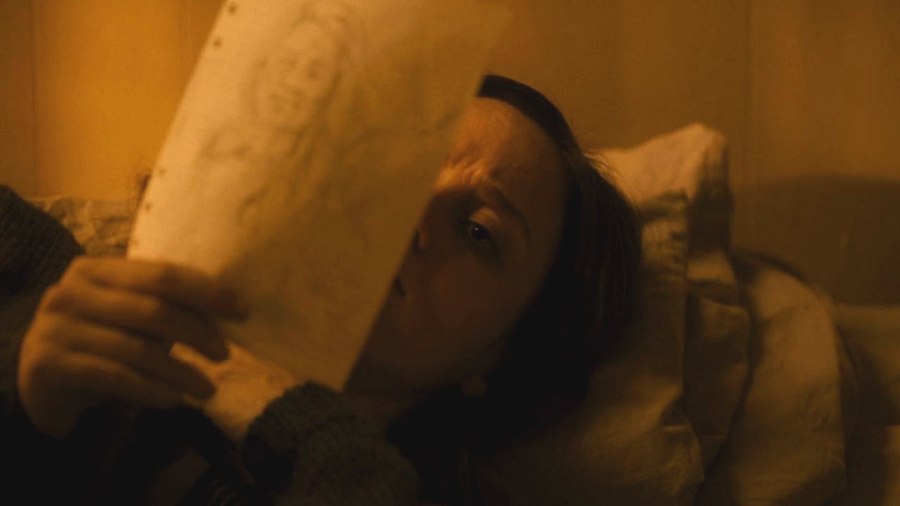
The Girl on the Train centers on Emily Blunt’s Rachel Watson, who, since her divorce and losing her job, rides the train into and out of Manhattan every day just to pass the time. She can also drink anybody under the table, which is why her life is so miserable at the film’s outset. During her commute, she sneaks glances at her old home, where her ex-husband Tom (Justin Theroux) now lives with his new wife, Anna (Rebecca Ferguson). Living next door are Scott (Luke Evans) and Megan (Haley Bennett), a couple Rachel barely knows but latches onto because she wants the life they have.
While riding the rails, Rachel gets ignorantly drunk. I cannot stress this enough. She blacks out for sport, leaves unhinged voicemails on Tom’s phone, and makes empty threats, having very little recollection of her behavior when she wakes up at her best friend Cathy’s (Laura Prepon) house, where she’s filled in on how insane she acted the night before.

When Rachel witnesses Megan having an affair, she loses her mind and gets off the train to confront her, only to wake up the next day at home covered in blood, learning that Megan has been reported missing. From this point forward, things look bad for Rachel, who tries to confide in Scott and even attempts to get Tom and Anna to hear her out. Through these conversations, we learn just how destructive Rachel’s behavior was before her divorce, but as a viewer, something doesn’t sit right.
Rachel doesn’t seem like a violent person. Is she a total mess because of her vices and mental health crisis? Absolutely. But it also seems like everybody who knows her understands this and uses her imperfect memory to shape the narrative however they want. Rachel, who’s always either about to enter another blackout or wake up from one, has to take what she’s told at face value, but remains cooperative with Detective DS. Riley (Allison Janney), who simply wants to solve the missing person’s case.

Rachel is such a complex character, and by the time The Girl on the Train reaches its conclusion, you’ll have a newfound appreciation for Emily Blunt if you didn’t respect her acting chops already. The blackout sequences are genuinely hard to watch, and the camera work deserves credit too, from the blurry close-ups of Rachel’s face to the first-person shots as she tries to piece together what actually happened the night Megan disappeared.
Each time she revisits these memories, they’re slightly different, but she maintains her innocence because there was another person at the scene whom she can’t quite identify. Emily Blunt not only looks but acts the part during these sequences, as well as the flashback scenes, where you’re never quite sure if they depict what actually happened or simply what Rachel has been told happened by the people around her who have grown tired of her self-destructive behavior.

Outside of the film’s initial setup, The Girl on the Train is one of the better thrillers I’ve seen recently involving a tragically unreliable narrator who’s been through the wringer but insists she’ll eventually be vindicated. While I’m not a fan of how the film opens, I honestly can’t think of a better way to efficiently deliver the information the audience needs in such a short amount of time so the conflict can be set in motion.

THE GIRL ON THE TRAIN SCORE
As of this writing, The Girl on the Train is streaming on Netflix.
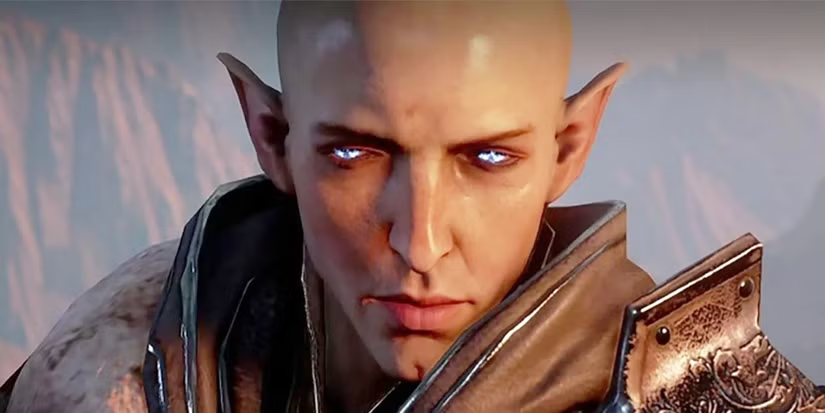
Although The Witcher has steadily improved certain aspects of its storytelling over the years, one element has consistently plagued the Netflix fantasy epic series: its emphasis on politics. The Witcher novels by author Andrzej Sapkowski, as well as the video games from CD Projekt based on those books, are home to an intricate sociopolitical system replete with monarchal upheaval, bureaucratic infighting, power-grabbing machinations, and wars between competing kingdoms and species.
Yet that complexity has never translated particularly well into the Netflix adaptation. Too often, episodes grind to a halt as side characters explain their schemes through lengthy exposition, with political maneuvers rarely feeling connected to the emotional journeys of Geralt, Ciri, or Yennefer. Rather than enriching the Continent’s mythology, these storylines frequently bog down the larger narrative and struggle to carry much emotional weight. Thankfully, there exists a rich historical fantasy video game that’s ripe for adaptation — friends, please look no further than Dragon Age.
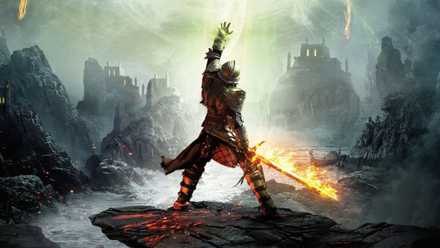
Ironically enough, the Dragon Age franchise includes an excellent 2022 Netflix animated series (Dragon Age: Absolution) that touched upon the world’s politics as well as six breakneck episodes. For the unparalleled Dragon Age experience, however, one must turn to the games, which (all hyperbole aside) boast one of the most sophisticated, inventive, and advanced fantasy worlds of the 20th century. Created by Canadian video game developer BioWare and spanning three completed full-length games as well as various spin-off media, Dragon Age draws obvious — practically unavoidable — inspiration from J.R.R. Tolkien‘s The Lord of the Rings trilogy as well as the role-playing game Dungeons and Dragons.
Dragon Age is home to numerous different cultures, governments, territories, religions, and races, each blessed with an individualized and meticulously designed history. Clashes between said consortiums are more than just background set dressing; the protagonist of each installment (the player) must navigate civil uprisings, wars, and webs of subterfuge. Like most role-playing games, Dragon Age lets the player design a character by choosing between different pre-set backstories, races, and abilities, all of which impact said character’s relationships with non-playable supporting characters.
Similar to The Witcher’s mythology, all Dragon Age events take place on Thedas, the world’s only known continent. (In The Witcher, the continent is just called the Continent. Convenient.) Thedas’s recorded history dates back centuries, with every one hundred years marking a new “Age,” but the continent has existed for millennia. Just like the Continent, Thedas was originally populated by the elves, a race of learned scholars, artists, and mages adept in magic. When humans arrived at Thedas’s shores from an unknown continent, they waged war, conquered elvish lands, and infected the once-immortal elves with deadly human diseases. Although the elves strived to preserve their nuanced culture, civilization, and language, everything was lost. The majority of elves spent centuries either enslaved, tortured, or murdered by these human invaders.
In the current Dragon Age timeline, the elves have unwillingly fractured into two main factions. The Dalish elves are nomadic wanderers devoted to safeguarding their history. Within the Dalish exist different clans, beliefs, and practices, although all still worship the elven Old Gods. In contrast, “city elves” were forced to assimilate into human culture, worship the human god, and live inside isolated city areas. These elves live in conditions equal to squalor and face constant aggression and abuse from humans.
Humanity in The Witcher also declared war against the Continent’s elves and became the dominant species by force. The ramifications of these wars and humanity’s continued subjugation of the Elder Races (elves, dwarves, and gnomes) make up much of The Witcher’s political climate. The Netflix series tries to divide its attention between the politicking of human magic users, the rampaging Nilfgaardian kingdom, and the vengeful Scoia’tael elves, but there aren’t enough episodes to go around. Rather than have various side characters tell the audience about their plights, Dragon Age lets its political landscape unfold naturally through setting and dialogue. If Geralt, Yennefer, and Ciri learned information firsthand as a Dragon Age player does, there’s a good chance things in The Witcher would be grounded and relevant instead of dull and distant.

Thedas’s main recurring threat is the Blight. Five times throughout recorded history, demonic creatures called darkspawn infect a powerful dragon with a corruptive, zombie-esque infection capable of spreading to all living beings as well as ruining the land. The first game, Dragon Age: Origins, follows the Grey Wardens, a group charged with ending the Blight at any cost. Dragon Age II has wide-ranging consequences but narrows its focus to conflicts within the city of Kirkwall, primarily of which are the overlapping tensions between apostate mages, city elves, and the Chantry (more on that later). Dragon Age: Inquisition introduces a new threat called the Breach, a dimensional rift allowing demons to run rampant. Characters with differing beliefs, approaches, and backgrounds band together to form the Inquisition and fix the Breach. None of these circumstances means there’s any less in-fighting, divisions, or scheming, though.
Left to contend with the Blight’s ramifications are Thedas’s diverse civilizations. Humans are split across numerous cities with varying government structures (feudal, monarchy, elected, etc.), but almost all worship a figure called the Maker. The Chantry, the monotheistic fantasy equivalent of the Catholic Church, oversees this religion and promotes the Maker as the true creator god. In turn, a figure known as the Divine (always a woman) guides the Chantry. The denomination also follows the teachings of Andraste, a Joan of Arc martyr figure who led a slave rebellion and believed herself the prophet (and later wife) of the male Maker.
The Chantry’s divisions include a spy group (the Seekers of Truth) and the Templar Order, the Chantry’s personal militia. The Templars defend Thedas against rogue magic threats with typical religious zealotry. They believe magic and magic-users must be strictly regulated, which means the Templars subdue any “apostate” mages who disagree with the Chantry’s chokehold. All Templar soldiers are also forcibly addicted to lyrium, a substance that increases resistance against magic but at a horrible cost. Not all Chantry members are terrible people, but the organization is a perfect example of individuals whose noble idealism tips into weaponized fanaticism.

Dragon Age is full of complicated moral quandaries and barren of obviously correct answers. But the Tevinter Imperium is ghastly, despised by outsiders for its imperialism and an economy dependent upon open slavery. As humanity’s first stronghold, Tevinter once controlled Thedas; multiple wars and uprisings pushed them into isolation. The city’s unflexible social stratum is ruthless and run by the cruel, the conniving, and the power-hungry. Although magic is widely practiced and a Magisterium of mages rules the government, access to magical training and the social benefits that follow are exclusive to the economically privileged. Tevinter’s alternative to the Chantry is run by a man, because of course it is.
Other primary humanoid races in Dragon Age include the dwarves and the Qunari. Dwarven culture, ruled by a monarchy, was all but erased by the First Blight. Early dwarves were responsible for Thedas’s best technological and cultural advancements; those who remain preserve their rich history through mining, crafting, and superb warriors. Dwarves operate according to a strict caste system accordant with social duties and worship the Stone, a creator whose “song” guides them through their expansive underground tunnels.
The Qunari, an original race created for Dragon Age, are instantly recognizable for their tall, muscular stature and their stylish horns. The Qunari welcome all beings into their culture, which prioritizes responsibility to others and enriches the community. Qunari value community so strongly that they forsake their given names and hold no attachments to their parents. The Qunari Triumvirate leads the Qun lifestyle, dividing all Qunari into workers of the mind, the body, or the soul. For all this progressive thinking, the Qunari’s history is tempestuous. Past military leaders tried to conquer Thedas before the Qunari established universal peace treaties, sans the Tevinter Imperium.

The Witcher (surprisingly) deals very little with religion or spirituality. Dragon Age examining religion makes for a richer narrative and an even thornier political landscape. How different cultures worship (or don’t), whether different beliefs clash or live in harmony, and the ways organized religion seizes power are all on the table. To be fair, Geralt fights random monsters for pay; there’s no single nasty for him to combat. But if we’re talking Big Bads, The Witcher’s overarching villains (the Nilfgaardians and their hunt for Ciri) haven’t felt like a threat since Cintra’s destruction. In Dragon Age, the inevitability of the Blight is always looming, and the Breach demands that different races and creeds work together. The Witcher’s lack of a unifying threat and how slowly it brings its warring factions together leaves something to be desired.
Netflix has already proven it wants a sprawling fantasy franchise with The Witcher, but Dragon Age offers the kind of built-in world, ensemble, mythology, and serialized stakes that could better sustain that ambition. Although The Witcher‘s budget allowed for gory monster battles, impressive fight choreography, and gorgeous landscapes, its inability to smoothly incorporate politics, let alone balance those plots with character work, leaves much to be desired. In comparison, the Dragon Age franchise feels as alive as the best 800-page fantasy novel and as detailed as a historical textbook.
Learning every facet of the world while playing is almost impossible, but that’s not to this story’s detriment. Instead, Dragon Age is a lesson in grounded worldbuilding, a place abundant with life and reflective of its passionate designers. The Witcher could learn a thing or two when it returns for its fifth and final season.

December 20, 2019
Netflix
Stephen Surjik, Charlotte Brändström, Edward Bazalgette, Loni Peristere, Louise Hooper, Bola Ogun, Alex Garcia Lopez, Gandja Monteiro, Sarah O’Gorman

It really is no kind of overstatement to say that the film industry is fundamentally changing right now. There are a lot of metrics for this, but perhaps none more so than the recent box office from the weekend of May 29, which saw low-budget indie horror films from directors in their 20s, Backrooms and Obsession, tower over Star Wars: The Mandalorian and Grogu in its second window. This was shocking to most observers, and also a thing of hope and excitement for many. The pandemic left something like a permanent mark on the entertainment business and how we watch movies. Even with outliers like Top Gun: Maverick, the Barbenheimer phenomenon, A Minecraft Movie and some significant Disney wins over the last half-decade, it’s been a constant struggle to bring audiences back to theaters. This recent surge of enthusiasm, particularly for fresh, edgy filmmaking over the familiar, is invigorating.
The last six months have seen highs and lows at movie theaters, but this time window has been a triumph for fresh and daring films across all genres. There have been some disappointments and bombs, but if there’s a uniting theme in looking at the very best movies released so far this year, it’s originality and freshness. From a dark comedy that sees major movie stars at their edgiest, to horror pictures so successful they’ve shaken the industry, to a British mystery with talking animals, to a crowd-pleasing hard sci-fi blockbuster, these pictures simply gave audiences something different. These are the greatest movies of 2026 so far.

Cleverly marketed in a shroud of mystery, which was the only way to market this pitch-black dramedy that rides on a shocking twist, Kristoffer Borgli‘s The Drama stars Robert Pattinson and Zendaya as a newly engaged couple whose upcoming nuptials are rocked by a revelation from the past. Alana Haim, Hailey Gates and Mamoudou Athie round out the supporting cast of a movie whose thematic risk pays off.
The Drama is sometimes edited and strung together in a way that feels like it’s unsure of itself, but commendable and kind of shocking this movie got made, much less with A-listers, and it’s even more shocking that it’s this good. Zendaya and Pattinson fully embody their characters; their work here is in the top tier of their respective and formidable careers, revelatory in the way you’d hope a smaller film with big stars would always be. The movie has some rough edges and isn’t perfect, but it’s a genuine must-see with a surprising range of emotion. Truly, how many movies manage to be disturbing, hilarious and romantic all at the same time?

An ensemble cast of Keke Palmer, Naomie Ackie, Taylour Paige, LaKeith Stanfield, Poppy Liu, Eiza González, Will Poulter, Don Cheadle and Demi Moore star in Boots Riley‘s maximalist absurdist satire about a gang of shoplifters at war with a billionaire fashion mogul. An uncompromising financial satire of the horrible realities of present day, the first two acts here are close to perfect, and hilarious throughout thanks to a commitment to Looney Tunes logic from the cast and filmmaker.
I Love Boosters doesn’t land with the same punch as the director’s 2018 breakthrough Sorry to Bother You (not many modern satires have), and it simply loses its way and its stakes in the third act, but it earns its spot here on the strength of its vision. The production design is pretty astounding, and it’s all in service of what might possibly be the funniest film of 2026 so far.

Whether you loved it or hated it, it’s a real shame that last year’s 28 Years Later proved to be so divisive. Surely that response is what led Nia DaCosta‘s superior, highly acclaimed follow-up to bomb disastrously at the box office. A considerably higher audience score on Rotten Tomatoes for this latest entry certainly implies those who’ve actually seen it admire it. It’s a bona fide horror cult classic in the making.
28 Years Later: The Bone Temple is easily the strongest film in the quadrilogy since it began with 2003’s 28 Days Later, continuing the grisly misadventures of an effectively orphaned Spike (Alfie Williams). It’s a mood piece with philosophical ambitions that doesn’t forget we’re watching it for gruesome thrills. Jack O’Connell is unnerving as a cult leader, but an electrifying go-for-broke Ralph Fiennes steals the show. DaCosta also deserves a ton of praise for staging better set pieces here than veteran director Danny Boyle managed with the predecessor. The only sequel on this list earns its spot with a blend of innovation and good old-fashioned muscular craft.

Buzzy since its Sundance premiere, Australian writer/director Adrian Chiarella‘s supernatural thriller stars Joe Bird and Stacy Clausen as teenage lovers whose fanatically religious community summon an entity to combat their homosexual desires, an entity that alternately takes the form of the boys themselves.
Certain corners of the internet have cynically and lazily branded Leviticus as “the gay It Follows,” which really betrays what an affectingly somber affair this slow-burn really is. This isn’t the scariest horror movie you’ll see this year, but it’s often genuinely eerie, occasionally even shocking. It’s perhaps most commendable for the way it weaves together its dramatic and genre elements. Bird and Clausen are terrific, delivering touching, tragic performances that bridge the gap between the horror and coming-of-age genres.

Elliot Tuttle‘s microbudgeted queer indie plays out like a black box theater two-hander, with Boots star Kieron Moore starring as Aaron Eagle, an aggressive and mysterious camboy escort whose latest client (Reed Birney) reveals himself to be Aaron’s former English teacher, with whom he shares a sordid past. This is almost exactly 80 minutes of two people engaged in piercing dialogue that’s uncomfortable, disturbing, and deeply sad in an empathetic way.
The subject matter here might be radioactive for many, but Blue Film is one of the most beautifully written and powerfully acted movies of 2026, eschewing salaciousness in lieu of a kind of exorcism, a need to make peace. Moore and Birney are flat-out superb, and the script reveals stunning emotional and psychological depth within a tight running time. It’s also evocatively shot in a way that masks its low budget while registering as an unshakable dream for the viewer.

Not to be confused with The Fast and the Furious, though this coincidentally is also an action film that’s sort of about family, The Furious is the action movie to beat in 2026. Seriously, it’s all but unfathomable that any action picture released over the next six months will top this. Kenji Tanagaki’s exhilarating masterclass in escalation stars Xie Miao as a mute handyman whose daughter (Yang Enyou) is kidnapped by child traffickers. It’s a simple, familiar, all-too-effective inciting incident for a blood-soaked Hong Kong action film that deserves a far wider release than its gotten. The Furious is perhaps the best film of its kind since The Raid, and it will find its audience over time.
It certainly isn’t perfect. The dialogue is clunky as hell, with many observers theorizing AI dubbing was utilized for the North American release (though, to be clear, this hasn’t been confirmed). The cheesiness really doesn’t really matter though, when what we’re here for is so perfectly executed and relentlessly fun. There’s a symphonic distribution and variation in the action sequences here, and the emotional impetus is irresistible. What the hell’s not to like?

Frankly, it’s a little surprising that many observers are still drawing a lot of attention to the fact that “YouTubers” are stacking such wins at the movies. This has been the case for years now, and it isn’t a trend. Still, Backrooms stands out as a particularly enormous event film. At 20, Kane Parsons became the youngest director to open a film atop the North American box office, with a staggering $118 million that broke A24’s all-time record. Oscar nominees Chiwetel Ejiofor and Renata Reinsve star as an alcoholic furniture store owner and his therapist, respectively, who discover seemingly endless, ominous liminal spaces in the store’s basement.
There are even greater surreal horror movies out there, but the interdimensional vision of Backrooms is astonishing and impressively cohesive even without taking the helmer’s tender age into account. Parsons’ technical, even mathematical filmmaking strengths and voice have been on display for years, and Backrooms is a successful marriage with a feature narrative thanks to a minimalist but effective script by Will Soodik. The two lead actors are haunting as people who choose to cope with traumatic pasts in very different, hardly equal ways.

By far the year’s best family-friendly interspecies murder mystery, The Sheep Detectives is an increasingly rare kind of bird, a mid-budget film made with A-list talent that offers something for audiences of all ages. Craig Mazin adapts Leonie Swann‘s novel Three Bags Full, about a herd of Irish sheep attempting to solve the murder of their shepherd. The ensemble cast includes Hugh Jackman, Nicholas Galitzine, Nicholas Braun and Emma Thompson, with the vocal talents of Bryan Cranston, Julia Louis-Dreyfus, Chris O’Dowd and Regina Hall.
The visual effects here were make-or-break for the final product, and they’re Oscar-worthy. It really isn’t overhyping Sheep Detectives to say Mazin deserves to be considered for this adapted script, too. Ultimately, the film is much less frothy and far deeper than you’d expect a movie called The Sheep Detectives to be.

The success of Backrooms, and especially its mad opening weekend, can be attributed in part to great marketing. The phenomenon of Obsession can be attributed entirely to word of mouth. All but overnight, Curry Barker is the hottest name in horror cinema, thanks to this shoestring-budgeted fantasy fable about a monkey paw wish with horrifying consequences. A $750,000 budget looks like far more thanks to clever filmmaking across the board, from unnerving and darkly atmospheric cinematography and art direction, admirably silence-heavy sound design to Barker’s own taut editing. Michael Johnston and breakout star Inde Navarrette also deserve a lot of credit for a perfect tone that constantly leaves you unsure if you should be screaming, laughing, or maybe crying in despair.
Obsession is a rare breed, delivering freakouts that are already plastered all over the internet on top of a narrative that’s more provocative and disturbing, even grandly tragic, the more you think about it. It’s full of timely observations of modern dating, and it’s also a fundamental morality play, where the villain isn’t really the villain. We’re only six months in, but this is your horror movie of the year, in a historic year for horror, and it will end its box-office run as one of the most profitable films ever made.

Project Hail Mary is by far the most tactile blockbuster film in recent memory, at a time when so many pictures with big budgets feel oddly airy and disposable. It’s stunningly shot for IMAX and full of practical effects of varying scale, and Daniel Pemberton‘s hopecore original score is perhaps the year’s most inventive. This tactility is all in service of a winning hard sci-fi story with tons of heart and just the right amount of imaginative leaps. Ryan Gosling stars in Chris Lord and Phil Miller‘s adaptation of Andy Weir‘s novel about a washed-up middle school science teacher who wakes up in deep space with no memory of how he got there.
The nature of the premise lends itself to a non-linear narrative, and Drew Goddard‘s excellent script builds a formidable emotional potency over a near-three-hour runtime that never feels its length. The journey is the destination, and Project Hail Mary‘s surprises are best experienced going in completely cold if you haven’t read the novel. Everything in this blockbuster rides on the back of a grounding, physical, funny and soulful performance from Gosling that’s frankly on an entirely different scale from anything he’s ever done. Project Hail Mary is made with timelessness in mind, but it’s also the right movie at the right time.

March 15, 2026
157 minutes
Christopher Miller, Phil Lord
Drew Goddard, Andy Weir

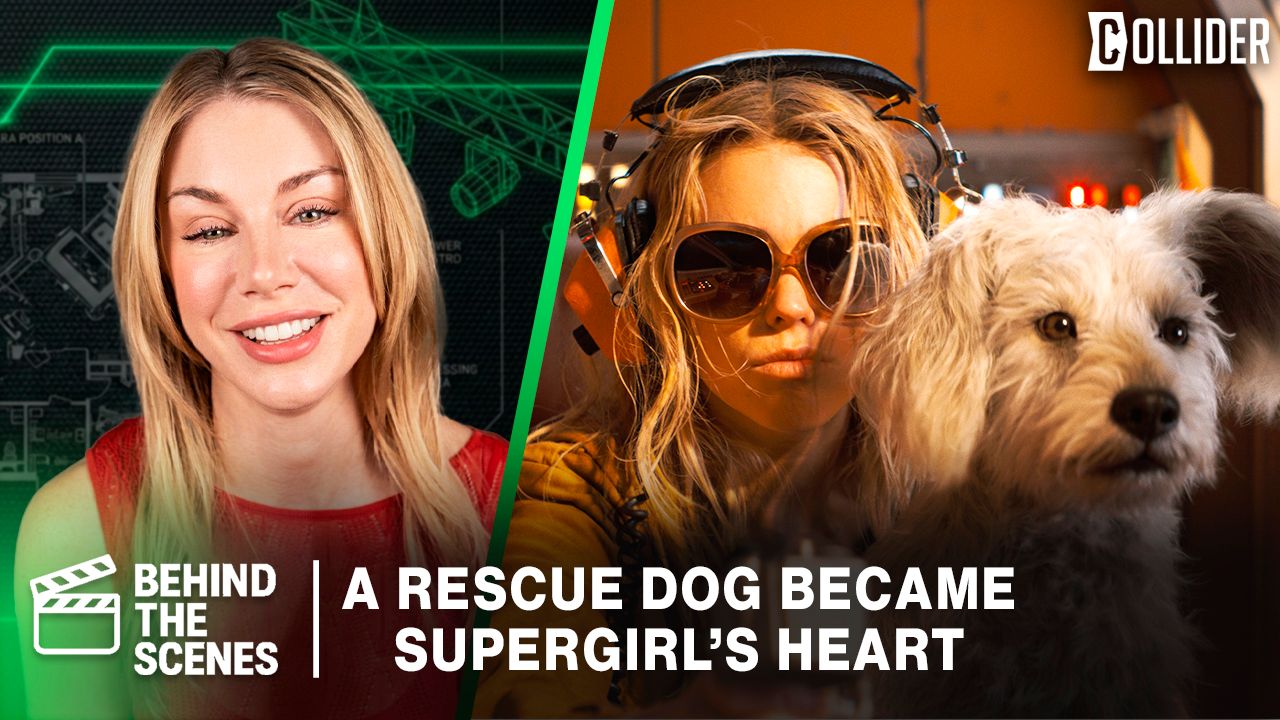
Jennifer Holland reveals the surprising true story behind Krypto in Supergirl, explaining how her rescue dog Ozu inspired James Gunn’s lovable but chaotic Super-Dog and why that emotional connection became such an important part of Krypto’s character.
Nothing in this world is perfect, or at least that is what everyone says, but there are a select few anime that most fans agree are flawless masterpieces. Titles such as Frieren: Beyond Journey’s End and One Piece are known to be revolutionary anime with great writing, but they also contain a handful of issues and flaws. But what makes an anime flawless?
This list will highlight ten anime series that don’t have any flaws based on writing, animation, originality, influence, critical acclaim, consistency, lack of flaws, pacing, and overall quality. Some of these shows might have one or two things wrong with them, or viewers will have personal grievances, but for the most part, these ten anime series are flawless sensations that deserve recognition.

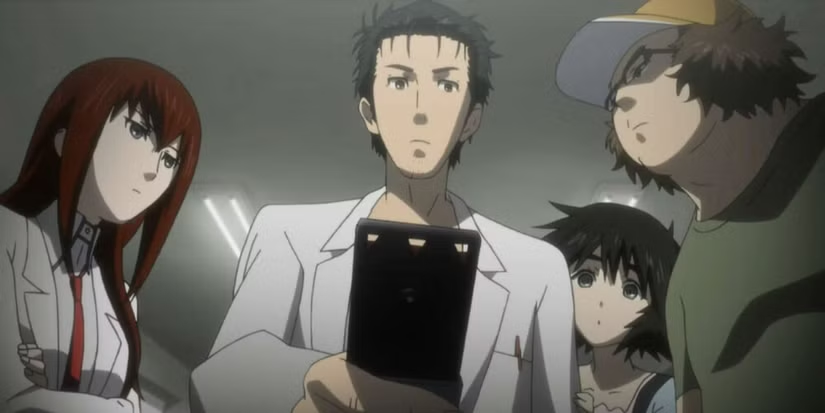
In order to be flawless, an anime must be consistently good, and Steins;Gate did it better than most. When a self-proclaimed mad scientist accidentally creates a machine that can send texts into the past, he tears holes in reality, threatening to change the events of history. Now he and his friends must fix it before the world becomes irreversibly screwed.
Some fans complain that the beginning is too slow and boring, but that was necessary in order to set up the events throughout the rest of the story. Steins;Gate is a meticulous anime that paces its story deliberately, and when things kick off, it kicks off. Time travel is a hard subject to write about, but this series somehow wraps everything up nicely, where there aren’t any plot holes, truly making its writing flawless.

All the anime on this list are well-known masterpieces, but perhaps the most unknown show is also the best written: Showa Genroku Rakugo Shinju. When a young yakuza member gets out of prison, he wants a fresh start, and inspired by what he saw inside, he wants to pursue a career in rakugo, a form of traditional comedic storytelling.
Speaking of well-written anime, Showa Genroku Rakugo Shinju features some of the greatest dialogue and story progression in the medium. By telling the narrative through the past and future, it shows the audience how the tradition evolved, not to mention the way the characters perform their routine tells fans more about their grief than the writing does.

Historical anime series are getting increasingly popular, and that all started with Vinland Saga, one of the most acclaimed anime of recent years. After the Vikings kill his father, Thorfinn joins their crew in order to enact his revenge, but first, he needs to be strong enough to kill them. However, after spending years with the Vikings, he slowly loses his purpose, now needing to realize what is actually important to him.
Everyone knows and loves Vinland Saga because it is a deconstruction of the revenge trope. What starts as a typical revenge story with some philosophical themes evolves into a character study of how anyone can change for the better. Its themes of pacifism, revenge, guilt, and redemption are incredibly profound and well-handled, proving Vinland Saga is a masterful anime.

Shinichiro Watanabe is a legendary anime director known for some of the greatest anime series, including his magnum opus, Cowboy Bebop. Spike Spiegel and his group of bounty hunters travel the galaxy and clean up the planets from filth. However, when his dark past resurfaces, he must face it head-on or risk putting himself and his friends in danger.
Cowboy Bebop is one of the most unique anime series of all time, and it achieves this through its blend of sci-fi, neo-noir, jazz, and 1980s action. This anime is a stylish combination of unrelated aspects to create a succinct experience that is more than just cool. The episodic structure plays into the themes of the story, and with each episode entertaining in itself, paired with the overall connection, Cowboy Bebop is a brilliant anime.

The avant-garde genre isn’t as popular as it used to be, but it still contains a handful of perfect gems, including FLCL. With his brother gone, a young boy takes it upon himself to do everything, not giving himself the chance to be a kid. But when a vespa-riding woman hits him in the head with a guitar, his world flips upside down, even if she is using him to summon her interdimensional lover.
It may only be six episodes, but that just means it has a better chance of being perfect, which it is. The later seasons are awful, but the first season of FLCL is a wacky adventure with coming-of-age themes and bizarre sci-fi madness. Outside of having the best music in anime, FLCL also uses its chaotic and surreal animation alongside its aggressive storytelling to tell a relatable story to masterfully convey the simple difficulties of life.

Naoki Urasawa is a prolific manga author responsible for the greatest mystery stories ever, including his most well-known masterpiece, Monster. Tenma is a doctor, and when he chooses to save the life of a child over the mayor, that same child grows up to be a serial killer. Tenma now takes it upon himself to kill Johan before he does anything worse, but will he be able to do it after seeing Johan’s dark past?
Monster starts off as a slow-burning that tumbles into a domino effect of plot points and shocking moments until the final arc, which is the ultimate conclusion. Despite being on the longer side, Monster maintains its perfect pace and handles its characters well, knowing what to do with them and when. Ultimately, there isn’t a better anime mystery that will keep viewers on the edge of their seats.

This list features a couple of sports anime, and while the genre is filled with riveting series, one of the best and most popular is Haikyuu!! Hinata may be undersized, but he has big dreams of becoming an ace striker on his high school volleyball team. However, he will need to learn to work together with an arrogant rookie setter if he wants the team to succeed and make it to nationals.
Haikyuu is a beloved anime because of its underdog story that made it easy to root for every character, even the antagonists. With personal stories, growth, new things to learn, and consistent improvement, this anime kept viewers emotionally invested. Haikyuu achieved everything it aimed to accomplish, creating an exhilarating anime in the meantime.

Having an overpowered protagonist limits the story a lot, but one of the best ways to handle it is the way Mob Psycho 100 deals with the issue. Shigeo is the world’s strongest psychic, but he only wants a normal school life, which is difficult with his powers. Because he suppresses his emotions, his abilities burst out of control, making life challenging for him, his friends, and his enemies.
Mob Psycho 100 does have some tame moments where it takes focus off the main narrative, but that was to simply showcase the daily life Mob strived for. Excelling with animation, art, and creativity, this anime was an explosion of innovation that can be seen in the action, style, and narrative. Mob Psycho 100 is an emotionally complex series with some of the best characters in the medium.
The greatest anime of all time is an endless debate, but the closest series to that crown is Fullmetal Alchemist: Brotherhood. When brothers Edward and Alphonse lose parts or all of their bodies in a taboo alchemical experiment, they set out on a quest to find the philosopher’s stone. However, all they uncover is a government conspiracy that threatens to engulf the world if they don’t do something.
Fullmetal Alchemist: Brotherhood has incredible worldbuilding, lore, drama, action, comedy, animation, characters, writing — the list of its many strengths goes on. This show has a little bit of everything for everyone, and despite achieving all of it, it doesn’t spread itself too thin, still retaining a balanced scope. The buildup is slow, but everything that comes after is perfect from start to finish.

Table tennis isn’t the most exciting sport, but Ping Pong the Animation will change viewers’ minds. Smile and Peco have played the sport together for as long as they can remember, but everything goes wrong when they decide to go pro. Smile doesn’t find the joy in playing competitively, and Peco struggles to keep up with the competition.
As mentioned, avant-garde anime don’t get proper recognition, even when the series are as good as Ping Pong the Animation. The art style is messy, but not flawed, using its rough aesthetic to portray the mental state of the characters. Everyone has an arc and a purpose, and through the sport of table tennis, they discover themselves in unique and satisfying ways. Ping Pong the Animation is simultaneously thought-provoking and entertaining, leaving no room for any flaws to ruin this masterpiece.
It’s become incredibly difficult for shows to last for more than three seasons given the constraints put on them by the industry. Streaming services tend not to let shows go on for too long because they might lose viewership over time, and studios don’t want to renew shows when the required wages for writers and crew members increase after the third season. Although it is an unfortunate reality, it’s something that television creators have to contend with in a changing media landscape.
It’s impressive when a show can make economical choices to tell its story in a short amount of time without feeling like any characters or storylines are slighted. When considering how many shows have lost their essence over time due to an endless number of seasons, it can be preferable to cap off a finale after just three installments, offering a tight and conclusive ending that satisfies everyone.

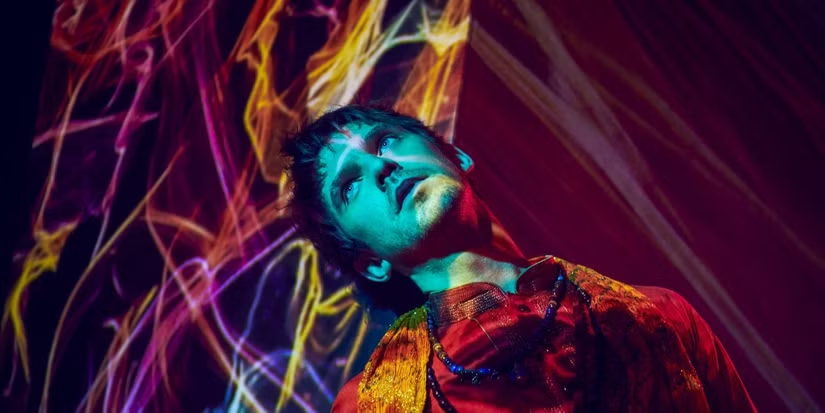
Legion is one of the best comic book shows ever made because it embraces the surrealist, psychedelic side of Marvel’s source material and offers a fresh perspective on the experiences of being a mutant. Although it is inspired by a more obscure run of X-Men comics, Legion doesn’t have anything to do with any of the live-action installments in the franchise; in fact, its creative and emotionally charged approach to the mythology might resonate with those that have otherwise dealt with “superhero fatigue.”
Legion created a compelling protagonist in David Haller, played by Dan Stevens in one of his greatest performances, who is a mutant who struggles to determine whether he is a hero or villain. While the outlandish comedy and musical sequences make Legion feel like an avant-garde approach to the genre, it ends up being a surprisingly emotional series based on how profoundly David’s story ends.

The Comeback is one of the most unique sitcoms on HBO because it had three seasons that were released over the course of two decades, allowing it to examine how rapidly the entertainment system had evolved in the time since. Lisa Kudrow’s performance as a vain, struggling former sitcom star is not only a self-referential role, but one she uses to explore how the excess of celebrity has made Hollywood even more challenging.
The Comeback is a ruthless satire of how decisions are made in entertainment, but it’s also completely hilarious, and manages to say something about the rights of artists. The third and final season was particularly noteworthy for how it examined the destructive capabilities of artificial intelligence, which was a bold move during a time in which many studios have proven that they will bend over backwards to cut out humans from the process.

Daredevil was a game-changing comic book adaptation that served as the first series from Marvel Studios to debut on Netflix, where it was allowed to be much darker and grittier than anything that had been seen in the live-action films. Although many fans were highly disappointed by the 2003 film about the character, Daredevil found a smart way to do the origin story and found the perfect casting of Charlie Cox, who has completely embodied the role of Matt Murdock.
Daredevil also featured an all-time great comic book villain in Wilson Fisk, played brilliantly by Vincent D’Onofrio in a completely terrifying, complex performance. Although the show was sadly canceled as part of the expiration of Disney’s deal with Netflix, the rebooted series Daredevil: Born Again debuted on Disney+ and reunited many of the leads from the original run of episodes.

American Crime Story is the best show that Ryan Murphy has ever made, and has done the anthology approach to exploring real incidents in American history much better than Monster. The three seasons focused on different historical cases that were significant within popular culture, including the arrest and trial of O.J. Simpson, the death of fashion mogul Gianni Versace, and the impeachment of United States President Bill Clinton.
American Crime Story featured brilliant performances from A-list actors throughout, and was able to look at all different angles to these cases in order to explore the social, political, and legal repercussions. Even if there were liberties taken with how these stories were told, they do serve as conversation starters because they were willing to look beyond the headlines to show the complex machinations involved with highly combustible and complicated media circuses.

I Think You Should Leave with Tim Robinson is one of the funniest sketch shows of all-time, and is more than a suitable replacement for those who have felt that Saturday Night Live has lost its momentum in recent years. Tim Robinson is a remarkable performer and writer who was able to completely reboot what sketch comedy looked like by taking humorous situations and pushing them beyond normal limits to be weirder, more uncomfortable, and increasingly surreal than they would be in the hands of any other creator or showrunner.
Many of the sketches from I Think You Should Leave with Tim Robinson have subsequently gone viral, but there are so many hidden gems within every single installment that it is worth revisiting all three seasons to experience the full extent of Robinson’s radically inventive, hilariously genius sense of humor.

The Office is one of the most groundbreaking sitcoms of all-time and an early achievement in the mockumentary genre that set a template for other shows to follow. While the American remake did become quite popular and served as a “comfort watch” for many fans, the original British version of The Office is even more incisive and brilliant, and managed to accomplish even more in just three seasons.
The Office offered a definitive perspective on the mundanity of cubical work that spoke to anyone who has ever hated their job or been irritated by an obnoxious coworker or employer. Although Ricky Gervais is an actor and comedian who can be very polarizing, he unquestionably tapped into genius with his portrayal of David Brent, a character who belongs in the hall of fame when discussing the funniest characters in the entire history of television.

Hannibal was a surprising new twist on the iconic Thomas Harris source material that justified its existence by offering a different perspective on the events covered in films like Manhunter and The Silence of the Lambs. Although Mads Mikkelsen’s performance as Dr. Hannibal Lecter was worthy of all the other great actors who had occupied the role, credit must also be given to Hugh Laurie for his performance as Will Graham because of how well the show works as a cat-and-mouse chase.
Hannibal is the rare show that has a completely perfect finale that resolved all the series’ mysteries, and solidified Bryan Fuller as one of the best showrunners working in television today. Although there have been constant rumors about a potential continuation that would introduce Clarice Starling, it’s hard to imagine that any new installments would be able to live up to the incredible legacy of Hannibal.

Deadwood is the greatest Western in the history of television because it is based on more than just the tropes of the genre. The real history of America’s frontier era was much more fraught than it’s often depicted as being in films and shows, and Deadwood explored the process in which a territory becomes an official town within the Union in an exciting way that featured dialogue worthy of Shakespeare.
Deadwood was one of the first examples of what HBO could do when it committed to a specific genre and aesthetic, as David Milch’s exacting vision for the series ensured that every character and storyline was fascinating in its own right. Deadwood may have been cancelled after the end of its third season, but Milch returned 13 years later to direct the standalone HBO film Deadwood: The Movie, which served as a proper finale.

The Leftovers is a major achievement in television because it expanded beyond being a strict adaptation of an acclaimed novel to become a rich, mythic odyssey about the quest for answers that captured a shockingly poignant depiction of how humanity would react to a global tragedy.
The Leftovers is a show that only could have existed on HBO, as it asked viewers to buy into some truly strange tonal shifts and ambiguity, as Damon Lindelof has never been the type of showrunner who gives viewers the answers to all of their questions at once. Although Lindelof’s process of mystery-baiting proved to be controversial during the highly divisive ending of Lost, The Leftovers didn’t suffer the same backlash because its finale “The Book of Nora” offered a completely satisfying emotional conclusion to the beautiful romance that the series had built over the course of three seasons.

Twin Peaks is one of the most foundational works in television history because David Lynch revamped what a serialized mystery could look like by creating a series that had a “watercooler effect,” in which fans gathered to unpack the mysteries between weeks.
Twin Peaks dared to be more than just a procedural because it explored the complex aftermath of the death of the high school prom queen Laura Palmer (Sheryl Lee), and how it leads to secrets being revealed about her entire town. Twin Peaks was sadly cancelled by ABC in its second season after the network had forced Lynch to solve the murder, which resulted in a crashing of ratings. Although Lynch directed the prequel film Twin Peaks: Fire Walk With Me to unpack the show’s events from Laura’s perspective, he would finally make a Season 3, subtitled Twin Peaks: The Return, which aired on Showtime in 2017.

1990 – 1991-00-00
Lesli Linka Glatter, Caleb Deschanel, Duwayne Dunham, Tim Hunter, Todd Holland, Tina Rathborne, Diane Keaton, Graeme Clifford, James Foley, Jonathan Sanger, Mark Frost, Stephen Gyllenhaal




Renter of Home in Anne Heche Crash Denies Settlement With Son

Two goals and an assist by sheer aura: Cristiano Ronaldo just entered the World Cup chat


Microsoft accidentally kills epic Outlook email threads


Soccer-U.S. defends Iran World Cup travel restrictions, says discussions ongoing


The House | Manchesterism won’t survive the painful trade-offs unless it gets citizens on board


Andy Burnham and the meaning of Makerfield


Potential 2028er World Cup attendee leaderboard


Weekend Open Thread: Staud – Corporette.com


A Look At A Gaggle Of Transputer Boards
Bitcoin (BTC) Dips Below $62K, Ethereum (ETH) Plunges 6% Daily: Market Watch


Asia stock markets slide as tech shares slump


Securitize Wraps Roubini's SEC-Registered ETF as Dubai VARA Digital Security

Dell (DELL) Shares Tumble Over 5% Following Analyst Downgrade to Hold
Entergy settles forward sale agreements, raises $672 million in cash proceeds

Wall Street Week Ahead: Investors see Micron earnings as pulse check of AI rally momentum

Can Charles Hoskinson Really Rescue Cardano?


Jose Alvarado Wants Taylor Swift at More Knicks Games


RTX holders must register wallets before token distribution begins


HIVE shares jump as $220M AI deal speeds Bitcoin mining pivot


Jake Chervinsky accuses CME of protecting derivatives monopoly


You must be logged in to post a comment Login