WASHINGTON (AP) — Holiday gatherings and major life events have come with an empty seat. Certain dates on the calendar meant time at a cemetery, standing before granite stones.
They are a relatively small group of people, scattered across different states, but they share a common bond that stretches back decades: Each had a family member die violently in the struggle for voting and civil rights, victims on a long and difficult path marked by blood that ended when the country seemed to mature into the nation of its creed.
But 61 years later, and as the country approaches its 250th anniversary, those sacrifices are in question. In a series of decisions over the past dozen years, including one in April, the Supreme Court has effectively dismantled the law that their family members died to see enacted, the Voting Rights Act of 1965.
“My mother’s blood is on that bill. We were always proud of that, and now it’s gone,” said Anthony Liuzzo, whose mother, Viola Liuzzo, died on an Alabama highway between Selma and Montgomery while driving marchers in 1965.
Advertisement
Critics of the law argue that times have changed, a point Chief Justice John Roberts made in a 2013 decision that was the first major step in rolling back the law.
Survivors of lost loved ones disagree, pointing to the speed with which Republican-led state legislatureseliminated majority-Black congressional districts after the court’s April ruling, which severely weakened a section of the law that had protected voting rights for minority communities. They feel anger and sadness that a milestone political victory decades ago has been reversed, but they are committed to keep fighting.
A church bombing and a chunk of concrete
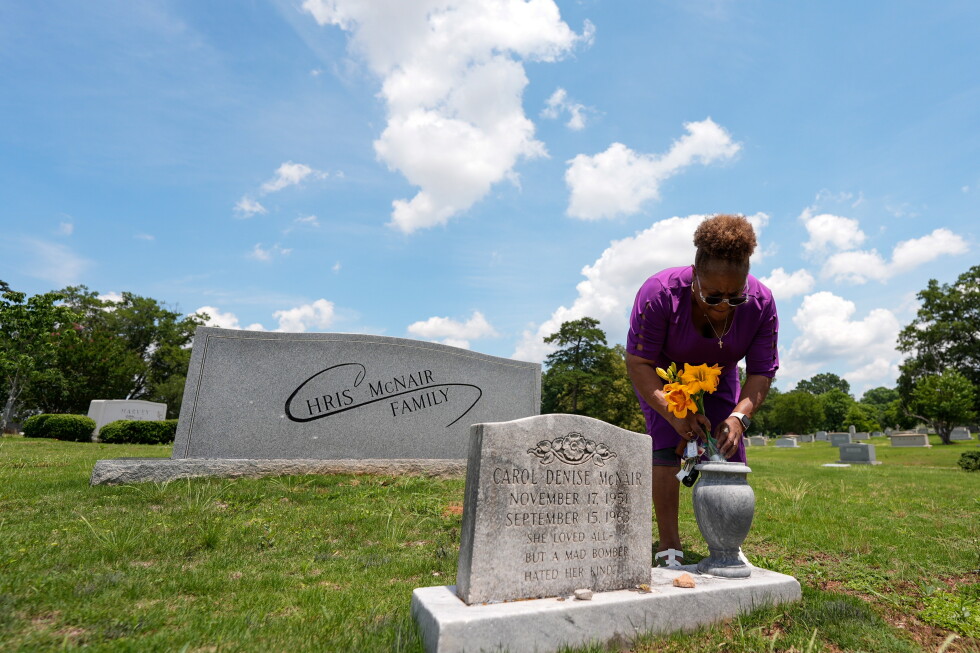
Lisa McNair was born Sept. 19, 1964. Her older sister, Denise, died in the Sept 15, 1963, bombing of the 16th Street Baptist Church in Birmingham, Alabama. The church had been a central organizing point for civil rights protest.
Advertisement
Lisa McNair poses for a photo inside 16th Street Baptist Church, the site of the Sept. 15, 1963 terrorist bombing of the church, Monday, June 1, 2026, in Birmingham, Ala. (AP Photo/Mike Stewart)
Advertisement
Lisa McNair poses for a photo inside 16th Street Baptist Church, the site of the Sept. 15, 1963 terrorist bombing of the church, Monday, June 1, 2026, in Birmingham, Ala. (AP Photo/Mike Stewart)
Advertisement
Advertisement
Advertisement
The explosion killed Denise McNair, 11, Addie Mae Collins, 14, Carole Robertson, 14, and Cynthia Morris Wesley, 14. Nearly two dozen others were injured. Three Klansmen were convicted years later.
Advertisement
One of Lisa McNair’s early memories of her sister was of the box that their grandmother kept from the funeral home. It included Denise McNair’s shoes, a purse and a rock-sized piece of concrete that had been embedded in her skull.
The crime brought the civil rights struggle onto the national stage and outraged Democratic President John F. Kennedy.
The times were tumultuous, McNair said, but it seemed the nation was heading in the right direction. Most of her life, “I’ve seen advances” on television, in commercials, with interracial marriages, civil rights and voting rights, “a plethora of rights that we got over the greater part of my lifetime.” But that has changed, she said.
McNair, 61, said she is “physically sick” about the Supreme Court decision and subsequent actions by lower courts and legislatures.
Advertisement
“I am constantly working to pray my way through it, so I can get up and go to work in the morning and do what I need to do. But I just want to ask every white person I see, What more do you want?” she said. “Why do you hate us so?”
Lisa McNair arranges flowers on the grave of her late sister, Carol Denise McNair, Monday, June 1, 2026, in Birmingham, Ala. (AP Photo/Mike Stewart)
Advertisement
Lisa McNair arranges flowers on the grave of her late sister, Carol Denise McNair, Monday, June 1, 2026, in Birmingham, Ala. (AP Photo/Mike Stewart)
Advertisement
Advertisement
Advertisement
Advertisement
They left for Freedom Summer and never came home
Michael Schwerner, known as Mickey, came from a family in which human rights activism and challenging social norms were expected. He was in Mississippi in 1964 as part of Freedom Summer when he, Andrew Goodman and James Chaney vanished one day in June while investigating a bombing at a Black church.
In this file photo civil rights leader Dr. Martin Luther King displays pictures of three civil rights workers, who were slain in Mississippi the summer before, from left Michael Schwerner, James Chaney, and Andrew Goodman, at a news conference in New York, Dec. 4, 1964, where he commended the FBI for its arrests in Mississippi in connection with the slayings. (AP Photo/JL, File)
Advertisement
In this file photo civil rights leader Dr. Martin Luther King displays pictures of three civil rights workers, who were slain in Mississippi the summer before, from left Michael Schwerner, James Chaney, and Andrew Goodman, at a news conference in New York, Dec. 4, 1964, where he commended the FBI for its arrests in Mississippi in connection with the slayings. (AP Photo/JL, File)
Advertisement
Advertisement
Advertisement
Advertisement
Their bodies were found weeks later, buried in an earthen dam in a rural area of Neshoba County. Schwerner, 24, and Goodman, 20, were white; Chaney, 21, was Black.
Stephen Schwerner, who died earlier this year and was a social activist in his own right, told The Associated Press in a 2023 interview that as soon as the family heard his younger brother and the other men were missing, they knew they were dead.
“Our family was very out front in the media that the only reason there was international attention was two of the young men were white,” said Stephen’s daughter, Cassie Schwerner. “Had all three of those young men been Black, they would have ended up absent from our history and our narrative.”
The executive director of Morningside Center for Teaching Social Responsibility, Cassie Schwerner, said her family has followed voting rights through their ups and downs. That includes the 2013 Supreme Court decision that allowed states and counties with a history of discriminatory voting rules to make changes without prior approval from the Department of Justice.
Advertisement
The court’s April decision, she said, brought rage “and a good deal of sadness — not for me and my family, but for this country.” There is, she said, work to be done on multiple fronts.
Rights paid for in blood turned out to be fragile
Tamara Orange said among her many thoughts when she heard of the Supreme Court decision in this year’s Voting Rights Act case, there was relief — “relief that my dad is not here to see that; that Jimmie Lee Jackson is not here to see it; that Viola Liuzzo is not here to see it,” she said. “I’m relieved for them because to me, it’s as though the sacrifices that were made were done in vain.”
Her father, James Orange, was working with the Southern Christian Leadership Conference to organize voting rights protests in Marion and Perry County, Alabama, in 1965. When juveniles joined the effort, he was arrested for contributing to the delinquency of minors. Concern arose that Orange was going to be taken out of the jail and lynched.
Advertisement
The Rev. James Orange, right, and Obang Metho pray after helping to lay a wreath at the tombs of the Rev. Martin Luther King Jr. and his wife Coretta Scott King at the King Center for non-violent Social Change in Atlanta, Jan. 12, 2007. (AP Photo/John Bazemore, File)
Advertisement
The Rev. James Orange, right, and Obang Metho pray after helping to lay a wreath at the tombs of the Rev. Martin Luther King Jr. and his wife Coretta Scott King at the King Center for non-violent Social Change in Atlanta, Jan. 12, 2007. (AP Photo/John Bazemore, File)
Advertisement
Advertisement
A protest to intervene ended with Jackson, a 26-year-old Black church deacon, being shot in the stomach by a state trooper while Jackson tried to shield his mother and grandfather.
His death was the catalyst for what became the Selma to Montgomery march and “Bloody Sunday.”
Advertisement
Orange stayed in the movement all his life and died in 2008, Tamara Orange said. But even after the Voting Rights Act passed, “He would say, be careful or we’re going to lose it.”
‘We got bad news for you’
Anthony Liuzzo had just turned 10 when his mother, 39, left their middle-class neighborhood in Michigan and headed for Selma, Alabama. She had cried as she watched scenes from “Bloody Sunday” on television.
Viola Liuzzo participated in a portion of the second march and then helped drive other civil rights protesters around the Black Belt region of the state. On March 25, 1965, she was driving one protester between Selma and Montgomery when a vehicle pulled alongside and fired into the car.
Advertisement
This combination image shows an undated file photo of white civil rights activist from Detroit, Viola Liuzzo, left, who was helping to shuttle black demonstrators between Selma and Montgomery, Ala., and at right, a March 26, 1965, file photo of an Alabama state trooper’s car, parked near Liuzzo’s car, after she was shot to death in it near Lownsboro, Miss., on route to Montgomery. (AP Photo/Jack Thornell, File)
Advertisement
This combination image shows an undated file photo of white civil rights activist from Detroit, Viola Liuzzo, left, who was helping to shuttle black demonstrators between Selma and Montgomery, Ala., and at right, a March 26, 1965, file photo of an Alabama state trooper’s car, parked near Liuzzo’s car, after she was shot to death in it near Lownsboro, Miss., on route to Montgomery. (AP Photo/Jack Thornell, File)
Advertisement
Advertisement
The phone call came around midnight. Anthony Liuzzo remembers the caller asking his dad, “Is your wife Viola? We got bad news for you. She’s been shot.” When his father asked whether she was all right, the caller said “No, she’s dead,” and then hung up.
An informant for the FBI quickly identified members of the Ku Klux Klan as her killers. The three men charged would escape conviction on state charges but be convicted in federal court.
Advertisement
An iron fence surrounds the memorial to civil rights activist Viola Liuzzo on Friday, July 7, 2000, near Lowndesboro, Ala., on U.S. 80. (AP Photo/Dave Martin, File)
Advertisement
An iron fence surrounds the memorial to civil rights activist Viola Liuzzo on Friday, July 7, 2000, near Lowndesboro, Ala., on U.S. 80. (AP Photo/Dave Martin, File)
Advertisement
Advertisement
Advertisement
Anthony Liuzzo and his siblings lived with the lost birthdays and other missed milestones. His comfort was that the voting rights she had died for had become a reality. But the April ruling by the Supreme Court and the subsequent rush by Republican-led legislatures in several Southern states to eliminate congressional districts represented by Black lawmakers left him angry and distraught.
Advertisement
Even so, he said he is still proud his mother had the courage to go to Selma “when others sat in their pretty little houses.”
One morning, the Klan returned
The inscription at the bottom of Vernon Dahmer Sr.’s tombstone reads simply: “If you don’t vote, you don’t count.”
It is a message that embodies his life’s work and the story behind his death.
Even after Democratic President Lyndon Johnson signed the Voting Rights Act, not every state was eager to implement the new law. In Mississippi, it came with a “poll tax.” The amount was $2, but in a world where a farmworker’s wages might only be $5 a day, that was substantial, said Dahmer’s son, Dennis Dahmer Sr.
Advertisement
Dennis Dahmer stands next to a statue of his father, Vernon Dahmer, Sr. who was killed when the Ku Klux Klan firebombed the family home 1966, outside the Forrest County Courthouse in Hattiesburg, Miss., Wednesday, June 3, 2026. (AP Photo/Gerald Herbert)
Advertisement
Dennis Dahmer stands next to a statue of his father, Vernon Dahmer, Sr. who was killed when the Ku Klux Klan firebombed the family home 1966, outside the Forrest County Courthouse in Hattiesburg, Miss., Wednesday, June 3, 2026. (AP Photo/Gerald Herbert)
Advertisement
Advertisement
Advertisement
The elder Dahmer, 57 at the time of his death, was a successful businessman who owned a store, sawmill and farm near Hattiesburg. He also was a civil rights leader and NAACP president in Ford County. He offered to pay the $2 for Black residents who wanted to register to vote.
Advertisement
He had already been under scrutiny by the local Ku Klux Klan. There was harassment and there were threatening phone calls. The windows were shot out of his store, but no one challenged him directly because his sons were always present and armed.
That seemed to trail off after Johnson signed the law.
“The Klan quit calling,” Dennis Dahmer said. “They quit shooting out the windows, so my family thought that all of this was behind us.”
Advertisement
Dennis Dahmer, whose father Vernon Dahmer, Sr. was killed when the Ku Klux Klan firebombed the family home 1966, holds a photo of his brothers as they overlook the destroyed home after, after retiring home from military service, in Hattiesburg, Miss., Wednesday, June 3, 2026. (AP Photo/Gerald Herbert)
Dennis Dahmer, whose father Vernon Dahmer, Sr. was killed when the Ku Klux Klan firebombed the family home 1966, holds a photo of his brothers as they overlook the destroyed home after, after retiring home from military service, in Hattiesburg, Miss., Wednesday, June 3, 2026. (AP Photo/Gerald Herbert)
Advertisement
Advertisement
Advertisement
A copy of a poll tax receipt sits in the old schoolhouse meeting place, as part of the legacy of Vernon Dahmer, Sr., who was killed when the Ku Klux Klan firebombed the family home 1966, in Hattiesburg, Miss., Wednesday, June 3, 2026. (AP Photo/Gerald Herbert)
A copy of a poll tax receipt sits in the old schoolhouse meeting place, as part of the legacy of Vernon Dahmer, Sr., who was killed when the Ku Klux Klan firebombed the family home 1966, in Hattiesburg, Miss., Wednesday, June 3, 2026. (AP Photo/Gerald Herbert)
Advertisement
Advertisement
Advertisement
That changed in the early hours of Jan. 10, 1966, when two carloads of Klansmen showed up. They firebombed the house and adjacent grocery store and began shooting at the house. The elder Dahmer shot back, using his ample arsenal to fight off the attack.
His wife and the three children who were home survived, but he suffered severe injuries from inhaling the smoke and fumes from the flames. He died later that day.
Dennis Dahmer was 12 as he stood next to his dad’s hospital bed. He wondered why some people wanted his father dead just for trying to help Black people vote.
Advertisement
Dennis Dahmer, whose father Vernon Dahmer, Sr. was killed when the Ku Klux Klan firebombed the family home 1966, speaks about seeing his father dying in the hospital, in Hattiesburg, Miss., Wednesday, June 3, 2026. (AP Photo/Gerald Herbert)
Advertisement
Dennis Dahmer, whose father Vernon Dahmer, Sr. was killed when the Ku Klux Klan firebombed the family home 1966, speaks about seeing his father dying in the hospital, in Hattiesburg, Miss., Wednesday, June 3, 2026. (AP Photo/Gerald Herbert)
Advertisement
Advertisement
Advertisement
A former Imperial Wizard of the Ku Klux Klan, Sam Bowers, was convicted in 1998 for the attack and sentenced to life.
Advertisement
Like the families of other survivors, Dennis Dahmer’s family has witnessed the methodical dismantling of the Voting Rights Act.
“Finally, they basically turned it into a relic,” he said.
His plan now is activism, to speak out and promote the need for a massive voter turnout. He also wants to remind people of the price that certain families paid for everyone to have the right to vote and be represented by someone of their choosing.
“We’re living in a time when America has a lot of the same characteristics of the 1960s that I grew up in,” he said. “People say, are we going back? Hell, we’re already there.”
The World Cup group games are drawing to a close as the knockout stages draw near.
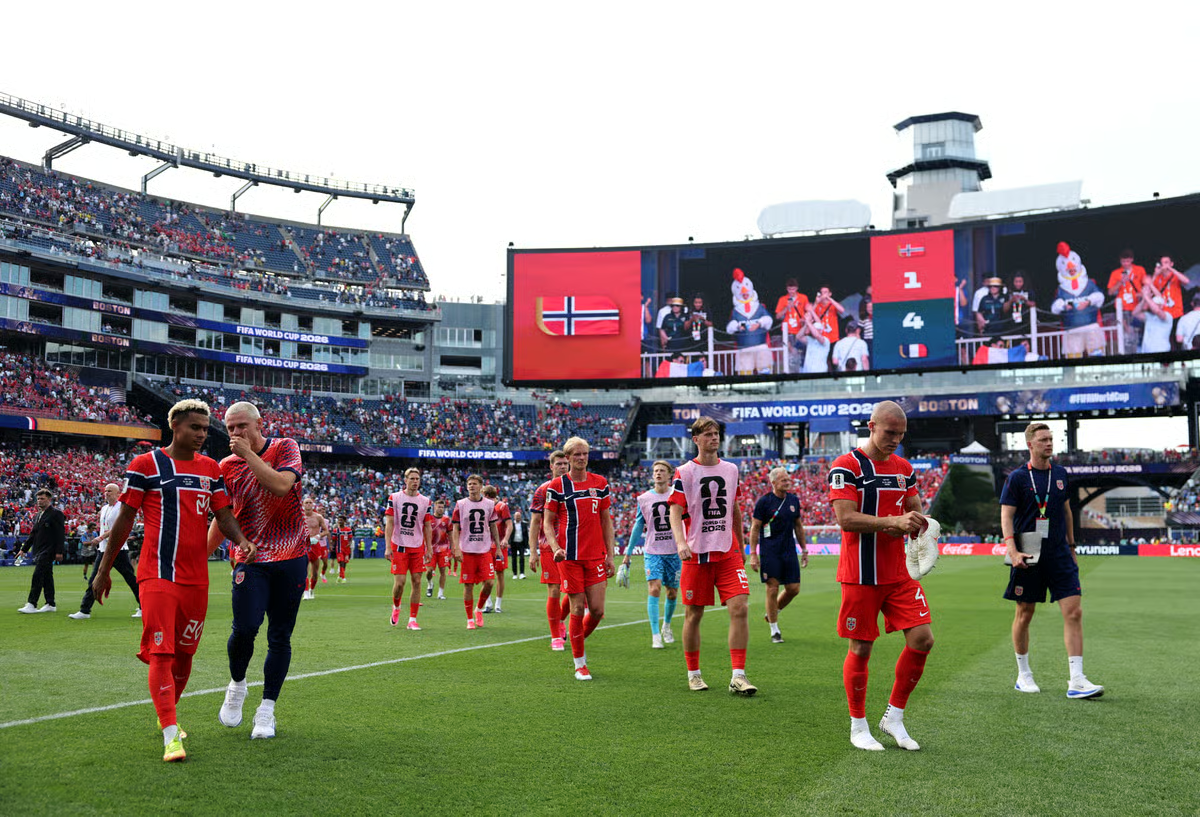
World champions Argentina, spearheaded by Lionel Messi, and five-time winners Brazil have booked their spot, along with all three co-hosts USA, Mexico and Canada.
France and Norway have joined, before England got the job done against Panama in their third group game.
Scotland face a very tall order to advance after back-to-back losses to Morocco and the Selecao.
Advertisement
Every confirmed World Cup last-32 fixture
8pm: South Africa vs Canada (Los Angeles)
6pm: Brazil vs Japan (Houston)
9.30pm: Germany vs Paraguay(Boston)
Advertisement
2am: Netherlands vs Morocco (Monterrey)
6pm: Ivory Coast vs Norway (Dallas)
10pm: France vs Sweden (New Jersey)
2am: Mexico vs Group C/E/F/H/I third place (Mexico City)
Advertisement
5pm: England vs Group E/H/I/J/K third place (Atlanta)
9pm: Belgium vs Group A/E/H/I/J third place (Seattle)
1am: USA vs Bosnia & Herzegovina (San Francisco)
8pm: Spain vs Group J runners-up (Los Angeles)
Advertisement
12am: Group K runners-up vs Ghana (Toronto)
4am: Switzerland vs Group E/F/G/I/J third place (Vancouver)
7pm: Australia vs Egypt (Dallas)
11pm: Argentina vs Cape Verde (Miami)
Advertisement
2.30am: Group K winners vs Group D/E/I/J/L third place (Kansas City)
The authorities of the Chaoyang district, a vibrant business area, said a two-seat light sport aircraft collided with a high-rise building near the East Third Ring Road at 5:55 p.m. on Friday and caused the casualties.
Advertisement
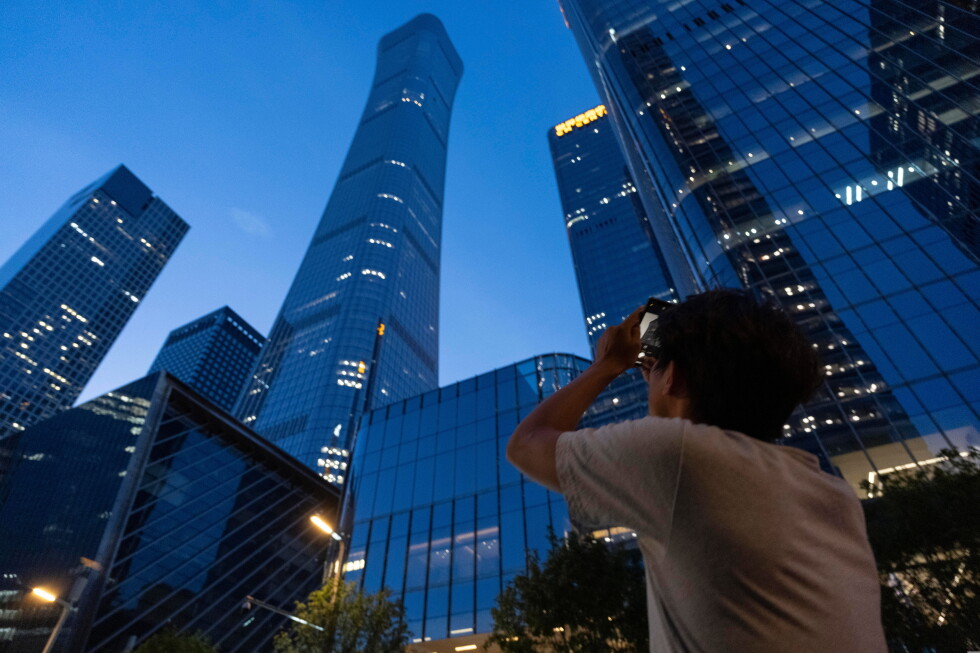
The surface of the Citic Tower also known as Zun Tower is damaged in Beijing,, Friday, June 26, 2026. (AP Photo/Han Guan Ng)
Advertisement
The surface of the Citic Tower also known as Zun Tower is damaged in Beijing,, Friday, June 26, 2026. (AP Photo/Han Guan Ng)
Advertisement
Advertisement
The short statement on WeChat did not identify the building or the pilot, who the authorities said was the only person on the craft.
The global flight-tracking service provider Flightradar24 on Friday said the plane crashed into the CITIC Tower, also known as China Zun, which rises more than 1,700 feet (528 meters), just east of a major ring road in a cluster of skyscrapers.
Advertisement
The 108-story CITIC tower, shaped like an ancient Chinese wine vessel, is one of the most recognizable skyscrapers in Beijing and is the tallest building in the city.
Flightradar24 posted on social media the path of the plane, a Sunward SA 60L Aurora, which took off from an airport about 50 kilometers (30 miles) east of Beijing. It headed westward and ended just east of the East Third Ring Road.
Associated Press photos showed on Saturday apparent marks of the crash on the glass facade on one side of the CITIC Tower. A hole there had been covered up.
Advertisement
The surface of the Citic Tower also known as Zun Tower is damaged in Beijing, Cina, Friday, June 26, 2026. (AP Photo/Han Guan Ng) ///
Advertisement
The surface of the Citic Tower also known as Zun Tower is damaged in Beijing, Cina, Friday, June 26, 2026. (AP Photo/Han Guan Ng) ///
Advertisement
Advertisement
It was not immediately known what caused the crash in a city with strict airspace controls, including a recent ban on drones. An investigation is underway into the situation, the authorities said.
It was also unclear whether the injured were in the building or were hit by debris, but the statement said they were receiving treatment.
Advertisement
The CITIC tower is just a roughly 20-minute drive from Zhongnanhai, a former imperial garden that now serves as headquarters of China’s top leadership, and a 15-minute drive from the Forbidden City, a popular tourist attraction.
Advertisement
Sign up for Morning Wire:
Our flagship newsletter breaks down the biggest headlines of the day.
Social media posts about the crash were scrubbed from China’s walled-off internet on Friday, though footage has made its way outside of China’s firewall and is circulating on overseas sites such as X.com. A report by financial news platform Caixin about the crash’s casualties soon became inaccessible on Saturday. Chinese authorities consider such incidents to be a sensitive matter.
Advertisement
A security camera is seen near a section damaged after a small plane crashed into the CITIC Tower, also known as China Zun, the tallest building in Beijing, on Saturday, June 27, 2026. (AP Photo/Ng Han Guan)
Advertisement
A security camera is seen near a section damaged after a small plane crashed into the CITIC Tower, also known as China Zun, the tallest building in Beijing, on Saturday, June 27, 2026. (AP Photo/Ng Han Guan)
Advertisement
Advertisement
Advertisement
Images and videos shared on social media appeared to show debris from a small aircraft near the skyscraper. While the images were consistent with the location, it was not possible to independently confirm their authenticity. One image of the wreckage shows a partial registration number of “B-12.” The full registration number of the aircraft is B-12PP.
Advertisement
According to Flightradar24, the aircraft was operated by Shuangyue General Aviation, an apparent reference to Dongshi Shuangyue (Beijing) General Aviation, whose website was not accessible on Saturday. The firm provides services ranging from private pilot training to aerial sightseeing tours, said an online platform citing official data.
SA 60L is a product of Starair Aircraft, based in China’s central Hunan province. According to Starair’s website, the single-engine aircraft accounts for more than 70% of China’s light sports aircraft market and has been exported to Australia and the United States.
Its maximum cruise speed is 220 kilometers (137 miles) per hour and its maximum takeoff weight is 600 kilograms (1,322 pounds), the website said.
Advertisement
A section damaged after a small plane crashed into it is boarded up at the CITIC Tower, also known as China Zun, the tallest building in Beijing, on Saturday, June 27, 2026. (AP Photo/Ng Han Guan)
Advertisement
A section damaged after a small plane crashed into it is boarded up at the CITIC Tower, also known as China Zun, the tallest building in Beijing, on Saturday, June 27, 2026. (AP Photo/Ng Han Guan)
Frenzied speculation surrounding the superstar singer and football player’s upcoming wedding has spiked over the past few days as reports swirl that the two are getting married the first week in July at one of New York’s iconic landmarks.
Yet nearly a year after Kelce and Swift announced their engagement with the caption “Your English teacher and your gym teacher are getting married,” they have disclosed little about their plans.
Here’s what we know and don’t know.
Advertisement
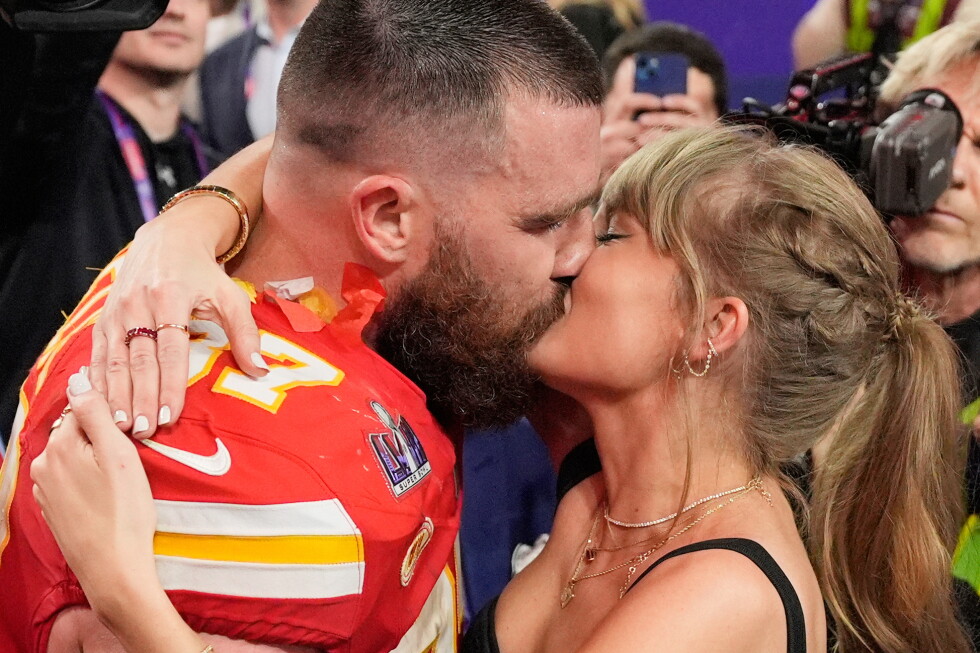
Kansas City Chiefs tight end Travis Kelce, right, is congratulated by Taylor Swift as they celebrate the Chiefs’ victory over the Buffalo Bills in the AFC Championship NFL football game, Jan. 26, 2025, in Kansas City, Mo. (AP Photo/Charlie Riedel, File)
Advertisement
Kansas City Chiefs tight end Travis Kelce, right, is congratulated by Taylor Swift as they celebrate the Chiefs’ victory over the Buffalo Bills in the AFC Championship NFL football game, Jan. 26, 2025, in Kansas City, Mo. (AP Photo/Charlie Riedel, File)
Advertisement
Advertisement
Advertisement
Advertisement
The wedding date is unconfirmed, but reports say early July
Nothing has been publicly confirmed by the couple, despite The Associated Press’ multiple requests to Swift’s representative for comment.
Citing an entertainment industry executive and another person with knowledge of the matter, The New York Times reported that the couple were planning a gathering of 100 people at Madison Square Garden — an arena that seats up to 19,500 people — on July 2 followed by a second event at the arena for about 1,000 guests on July 3.
The Associated Press has been unable to independently confirm those details, but there are no public events planned at the Garden from June 29 until a Bon Jovi concert on July 7.
Public records show that the city issued a permit for loading and unloading theatrical materials at the arena from June 29 to July 4. Winick Productions, a company that has produced red carpet events for the Grammy and Tony award shows and movie premieres, also applied for a permit to set up a canopy or tent outside the Garden for an event involving up to 999 people.
Advertisement
Meanwhile, just a few weeks prior, New York City Mayor Zohran Mamdani jokingly referenced the reports of Swift and Kelce’s wedding during a press conference. Mamdani was answering questions about safety during the World Cup when he said, “We know it coincides with July Fourth, America 250, Taylor Swift’s wedding all happening at the same time, and we are so excited to welcome the world here.”
Mamdani, however, said he was not invited to the wedding.
“I wish them a lovely wedding. I’ll listen to ‘Only the Young’ at home on my own,” he said, referencing one of Swift’s songs.
Advertisement
New York City police on horseback patrol the street by Madison Square Garden during Game 5 of the NBA Finals basketball series against the San Antonio Spurs, June 13, 2026, in New York. (AP Photo/Heather Khalifa, File)
Advertisement
New York City police on horseback patrol the street by Madison Square Garden during Game 5 of the NBA Finals basketball series against the San Antonio Spurs, June 13, 2026, in New York. (AP Photo/Heather Khalifa, File)
Advertisement
Advertisement
MSG is a fortress, but has hosted weddings before
Madison Square Garden may not scream “bridal,” but the venue is available for private rentals, advertising a banquet capacity for 1,250 — or 2,000 if you are only serving cocktails. And it has hosted weddings before. Sly Stone got married to Kathy Silva there in 1974 before thousands of fans. And more than 2,000 couples were wed in a mass ceremony at the Garden officiated by the Rev. Sun Myung Moon in 1982.
Located above Penn Station, the busiest rail hub in the U.S., the Garden doesn’t scream “privacy” either.
Advertisement
But it does have guarded entrances, a secure garage and a lack of windows, which would allow Kelce, Swift and celebrity guests to stay out of sight of photographers or camera-equipped drones.
That need for privacy popped up earlier in June when a large tent appeared next door to Swift’s Watch Hill estate in Rhode Island. Despite organizers denying the event was for Swift, a wave of speculation bubbled up online as photographers and some Swifties headed to the town to see if they could catch a glimpse of a possible wedding.
Yet others have theorized that the MSG buzz could be an elaborate smoke screen to throw off attention to the couple’s real wedding plans. Swift did once write, “No, you can’t come to the wedding,” in her song “But Daddy I Love Him,” which some fans have been reupping lately as a reminder that the wedding isn’t supposed to be a public spectacle.
Advertisement
Taylor Swift and Travis Kelce watch the second half of Game 3 in the Eastern Conference finals NBA basketball playoffs series between the New York Knicks and the Cleveland Cavaliers in Cleveland, May 23, 2026. (AP Photo/Tim Phillis, File)
Advertisement
Taylor Swift and Travis Kelce watch the second half of Game 3 in the Eastern Conference finals NBA basketball playoffs series between the New York Knicks and the Cleveland Cavaliers in Cleveland, May 23, 2026. (AP Photo/Tim Phillis, File)
Advertisement
Advertisement
Friends, family, and plenty of celebrities expected to attend
Swift joked in October that “anyone I’ve ever talked to” would be invited to the wedding, telling Graham Norton that she believed “the only stressful weddings” are those that are small and force people to make aggressive cuts to the guest list.
Yet just who exactly will show up is to be determined. Aside from family, Kelce’s Kansas City Chiefs teammate Patrick Mahomes and his wife, Brittany Mahomes, will likely be in attendance. For Swift, close friends like Selena Gomez, Abigail Anderson Berard, the Haim sisters, Emma Stone and Gigi Hadid will all likely attend.
Advertisement
Chiefs coach Andy Reid said he couldn’t talk about it when asked by The Associated Press if he was going to the wedding.
“If it’s like when I got married, my wife did everything, so I just kind of followed her lead on it, showed up, right? Maybe he’s doing more but he looks like he’s pretty focused in on this job here, too,” Reid said in early June.
Swift has a history of Fourth of July parties
Perhaps another clue why the week of the Fourth of July makes sense for Swift and Kelce’s wedding is that the popstar has long been known for throwing elaborate parties over the American holiday.
It wasn’t too long ago that fans dubbed her Fourth of July events as “Taymerica,” where celebrities showed up at her Rhode Island estate wearing red, white and blue swimsuits, waving American flags and eventually shared some social media photos with the public.
Advertisement
The timing also works with Kelce’s football schedule, given the tight end once joked on his “New Heights” podcast, “Don’t make my friends have to choose whether or not they have to sell their tickets that week.”
___
Associated Press writers Anthony Izaguirre and Maria Sherman in New York and David Skretta in Kansas City, Missouri, contributed reporting.
Jessica High’s little boy doubled in size at just six-weeks-old – and he keeps getting bigger.
22:35, 27 Jun 2026Updated 22:36, 27 Jun 2026
A mum is sharing the growth of her eight-month-old, who has outgrown toddler clothes and wears outfits for five-year-olds.
When Jessica High gave birth to her fourth child, weighing 7lbs 4oz, she was overjoyed. But over the next few weeks, her tiny newborn began growing rapidly to the point where he wasn’t so little anymore.
At six weeks old, he had almost doubled in size to 13lbs 6oz and at six months, he weighed in at 33lbs 7oz. Now, at eight months old, he’s wearing clothes suitable for a five-year-old `and this is starting to prove a bit snug.
Advertisement
Jessica, 34, says it’s a ‘two-person job’ looking after him due to his size and that although the family aren’t broke, his speedy weight gain is proving rather costly. To the tune of $5,000 (USD).
“People ask me how I carry him and I say with hope and prayer,” the business owner told creatorzine.com. “I have reduced myself to only buying him five pieces of clothing: shirts, onesies and pairs of shorts or pants.
“I was buying whole wardrobes and he was outgrowing the clothes before I could even get the tags off. He was so big that his bedside bassinet would not rock properly. If he were not positioned in the middle, it would tilt and get stuck.
Advertisement
“We eventually had to get a handmade bassinet that’s essentially the size of a mini crib. Axyl can’t fit in an umbrella stroller and he’s within weeks of not fitting in his jogging stroller, either.
“At restaurants, he doesn’t fit highchairs. And, at this point, we’re not sure what we can do car seat-wise. His grandpa can’t walk him, nor can his aunt.
“It takes two people to get him strapped in and out of everything. We are by no means broke, but in a mere eight months, we’ve had to buy everything for a newborn all the way up to a toddler.
“It’s insane, because everything we’ve just bought is already useless for him.”
Advertisement
Jessica, from North Carolina, US, says Axyl is “heavier than an SUV tire without the rim”. The mum-of-four shares Seth, 17, Pyper, 12, Phoenix, five and Axyl, eight months, with husband, Jade, 43.
Their three other children never grew to this extent; and so each day is a lesson. Even while in the womb, she would need to use a wheelchair as he would kick her “so hard” she couldn’t walk.
Axyl, despite not walking or crawling, is already in for a challenge when it comes to buying shoes, as his feet are currently too wide for any baby ones. Jessica says that although Axyl attracts a crowd wherever he goes, the reaction is mixed.
Advertisement
She said: “We can never go out and be in a hurry anymore because we’re stopped so often. The people at the mall kept asking me: ‘You’re back again?’ as I was there every two weeks.
“There have been speculations from my own family that he was ‘too big’ or that he’s ‘not hungry, just gassy.’ On the internet, people say he’s got a metabolic issue, or that I’m forcing food down his throat.
“Some people think I’m purposefully making him obese, even though he is perfectly healthy. I don’t owe anybody an explanation.
Advertisement
“As I’m around him every day, the size isn’t drastically noticeable. But when I look at pictures on my phone, it seems like six months have gone past ` when it’s really only been three weeks.”
Axyl’s diet consists of 37oz of formula a day, along with two jars of baby food. He’s monitored every eight weeks by a well-accredited paediatrician who has zero concerns.
While it’s unclear how big he might get, Jessica doesn’t care ` she’s only bothered about having a healthy baby.
Advertisement
She added: “I prayed for healthy babies and I’ve been blessed with four. My biggest hope for Axyl is that he grows up to be kind and confident. We’ve been given a rare opportunity to share our family and Axyl’s extraordinary growth journey with people all over the world.
“He has supporters from India, the UK, Australia, and across the United States, and we’re incredibly grateful for the kindness we’ve received. To us, he’s not ‘the giant baby of the internet’ ‘ he’s simply our son. My hope is that this platform can be used to spread positivity, bring awareness to children who grow outside the norm, and maybe remind people that different doesn’t mean bad.”
Get more Daily Record exclusives by signing up for free to Google’s preferred sources. Click HERE.
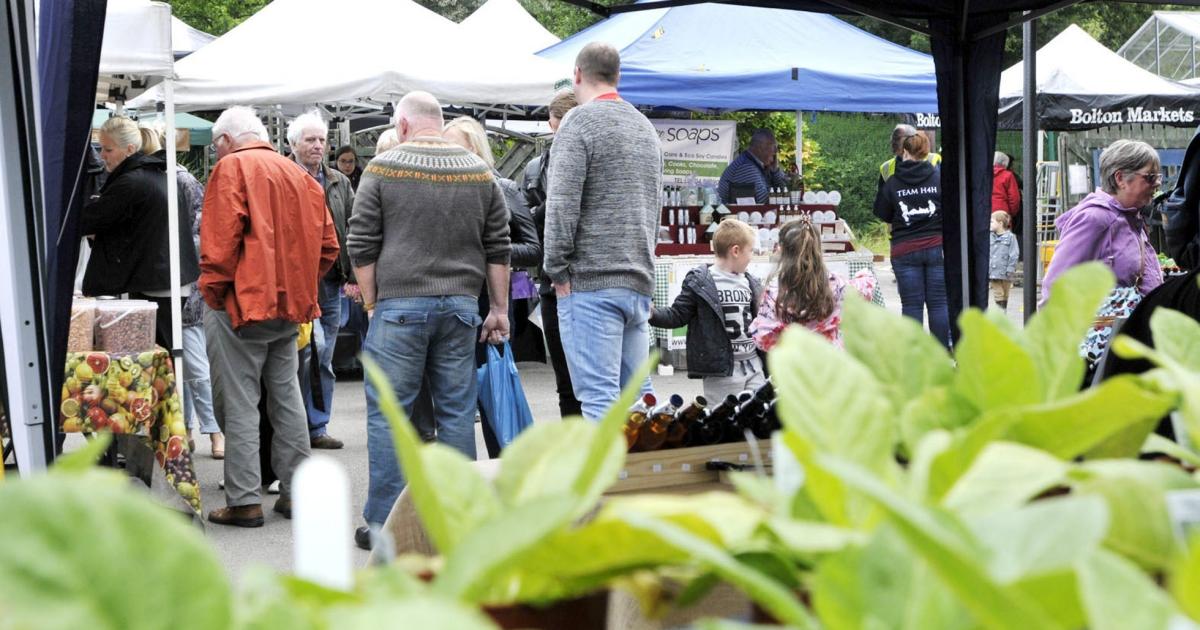
There are two artisan markets taking place in the borough.
The Crofters craft and makers market will roll into the grounds of the popular bar and restaurant from 11am.
Posters (Image: Agency)
There will be art, crafts, jeweller, knits, scents and much more all produced by talented local traders.
The market runs until 3pm at the venue on Bradshaw Road, with refreshments available in the pub.
Advertisement
The market is the latest to be held in the borough, building on its reputation as a market town.
Heaton Fold Garden Centre’s popular Artisan Fair returns from 10am to 3pm, which will include homebaked produce, candles and more.
Howfen Farmers Market (Image: Kyria Kyriacou)
Next Saturday, July 4, the Farmers Market will return to Westhoughton.
Advertisement
Organised by Andreana Bateman of Kyria Wellness Studio on Market Street, the Howfen Farmers’ Market gave residents the chance to sample exciting local goods directly from the producers themselves when it first launched in May.
Greater Manchester Fire and Rescue Service (GMFRS) confirmed that a commercial building on Pretoria Road, Oldham is ablaze.
A spokesperson said: “Shortly after 9:40 this evening (Saturday 27th June), three fire engines from Ashton, Oldham and Hollins fire stations were called to fire involving a commercial building on Pretoria Road, Oldham.
“Crews arrived quickly and worked to extinguish the flames. Firefighters remain in attendance at this time.”
The G7 summit at Evian from June 15 to 17 is most revealing not for what was agreed, but for what was exposed about the state of play among Europeans, and their relationship with the US. For all the choreography and displays of unity, the summit was, in large part, theatre. It was an attempt to paper over what is becoming increasingly obvious: many of the most critical international issues are now decided without the EU. Brussels is now, at best, an informed bystander.
This was obvious when the US president, Donald Trump, signed a physical copy of his deal with Iran at a post-G7 dinner at the Palace of Versailles hosted by Emmanuel Macron. It was a diplomatic coup for France, rather than a plan hatched by the EU.
The G7 produced nine joint declarations and seemingly reaffirmed more than just the bare minimum of western unity that has been possible of late. The leaders’ statement on geopolitical issues included strong language on Ukraine. The G7 promised “to increase the delivery of air defence capacities, additional systems and interceptors, and long-range capabilities” and “to increase the pressure on the Russian war economy”.
Yet, it fell short on concrete provisions and timelines. And it notably lacked the commitment to the “robust and legally binding security guarantees” and “the deployment of the Multinational Force – Ukraine” that France, Germany and the UK (the “E3”) had emphasised in their joint declaration with Ukraine’s president, Volodymyr Zelensky on June 7.
The E3 and Ukraine mini-summit showed European diplomatic coordination at its most effective. Évian, by contrast, showed how little of that coordination carries into the decisions that ultimately matter.
Europe’s struggle for relevance is also obvious in relation to Ukraine. The last meaningful – if hardly constructive – negotiations occurred in the so-called “Geneva track” in February. Mediated by Trump’s Witkoff-Kushner team (which was also involved in talks with Iran), this brought Russia and Ukraine together for talks.
But while Washington reported “meaningful progress”, Zelensky commented that “sensitive political matters … have not yet been sufficiently addressed” and called for European to be involved in the next round of talks. This has not happened.
Advertisement
Meanwhile, Europe’s own efforts also failed. Putin immediately rejected the call from E3 and Ukraine for direct talks. This was reinforced in a June 19 essay penned by Russia’s foreign minister, Sergey Lavrov, accusing Europe of complicity in the 2014 political crisis in Ukraine which ousted the pro-Russian president, Viktor Yanukovych, and precipitated the conflict. He added they had sabotaged any attempts at peace.
But the EU was already at loggerheads with itself. Earlier that day, EU leaders gathering for a summit in Brussels discovered that António Costa, the European Council president, had instructed his office to reach out to the Kremlin — without consulting member states — to lay the groundwork for potential peace negotiations with Russia over Ukraine. Their reaction ranged from surprise to outrage. Germany’s chancellor, Friedrich Merz, and Macron both publicly pushed back against Costa. Macron stated that “he [Costa] cannot represent [EU states] when security guarantees are at stake”.
The episode was damaging for reasons that go well beyond procedural embarrassment. The spectacle of European leaders publicly repudiating their own council president will have given Moscow the satisfaction of knowing that Europe still cannot speak with a single voice.
The European Commission president, Ursula von der Leyen, tried to bring the message under control. At her press conference after the EU leaders’ summit, she noted that “sooner or later Russia will need to come to the negotiating table, and when that comes we need a united European message to President Putin”. That ambition, however, contrasts sharply with the reality of the earlier Costa episode.
Advertisement
A unified approach
Diplomatic embarrassment is not the only issue when it comes to how quickly Europe will be able to close the persistent gap between ambition and reality.
On June 8, the German government formalised its withdrawal from the Future Combat Air System (FCAS), the €100 billion (£86 billion) joint fighter jet project launched in 2017 as the flagship expression of Franco-German defence ambition. FCAS also included engines, sensors and a digital intelligence network known as “combat cloud”.
One point of contention was reportedly the leadership role played by French aerospace giant Dassault. Germany wanted more of a leadership role and the partners are reported to have had divergent visions of the end product.
Germany’s aspiration to “lead or substantially shape” future European air combat systems may seem rational given the country’s financial muscle and engineering prowess. With more than €750 billion committed to rebuilding its armed forces by 2030, Germany’s instinct that this investment should produce proportionate industrial and strategic leadership is understandable. But when applied to European defence cooperation, it is counterproductive.
Advertisement
Vladmir Putin and Donald Trump in Alaska, August 2025: the aggression of one and unreliability of the other are encouraging European nations to make their own securoity arrangements. EPA/Sergey Bobylev/Sputnik/Kremlin pool
While European states, including Germany, have repeatedly stressed the need for collective action on defence, there is a repeated fallback on national initiatives. It’s hard to escape the conclusion that Europe continues to struggle to effectively coordinate efforts.
In a development that neatly illustrates this point, on June 20 the UK unveiled three prototype long-range strike missiles built without any US-manufactured components. The product of an 18-month programme known as Project Brakestop, the explicit purpose of developing this capability is to remove Washington’s ability to veto their deployment in Ukraine.
On the positive side, the UK’s ability to pull this off is commendable. It encapsulates the transformation in European thinking about the transatlantic relationship under Trump – and the capability to follow through on this.
But as an act of strengthening European strategic sovereignty, it falls short. It is British rather than European.
Advertisement
Europe’s ambition to rise to the simultaneous challenges of Trump’s transactionalism and Putin’s adventurism has been stated loudly and clearly on more than one occasion over the past 18 months or so. This ambition is most commonly expressed in the quest for strategic autonomy or “going it alone”. But it is not matched with an ability to act coherently.
Steve Clarke and the Tartan Army are heading home after we failed to finish as one of the eight third places nations who have qualified for the last 32
23:58, 27 Jun 2026Updated 00:07, 28 Jun 2026
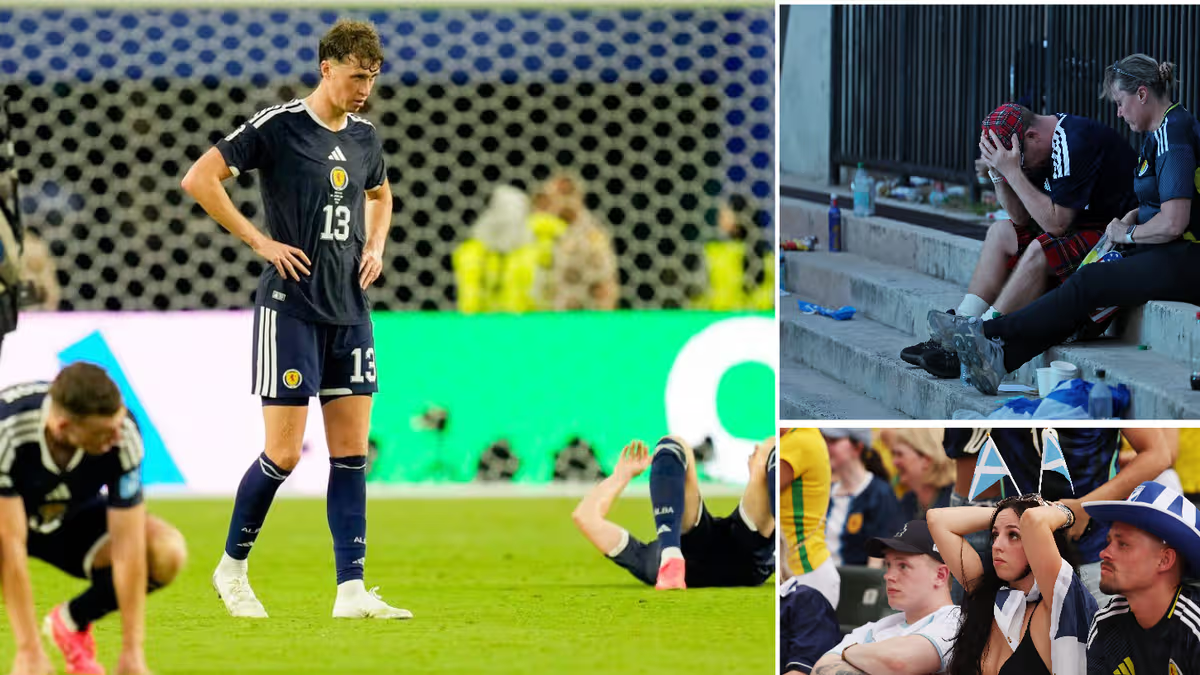
Scotland have finally been put of out their misery, with results elsewhere condemning us to another group stage exit at the World Cup.
Our hopes of reaching the knockout rounds for the first time in our history were left in tatters after Steve Clarke and his men picking up just three points from three matches in Group C, with the 1-0 victory over Haiti quickly being followed by defeats to Morocco and Brazil, crucially leaving us with a goal difference of minus three.
A potential saving grace came in the form of the eight teams who finished third that will secure passage into the last 32 but the helping hands we required have failed to materialise.
Supercomputer data had given Scotland a 0.07 percent chance of getting out the group going into Saturday night, with unfavourable score lines from around the competition seeing us drop out of the top eight spots.
And Clarke, his squad and the Tartan Army are now officially heading home after Ghana failed to beat Croatia by three clear goals in the late hours of Saturday night, with Luka Modric and Co claiming a narrow 2-1 win.
The Dark Blues are one of just four other sides who will crash out of the World Cup having finished third in their respective groups, with Uruguay’s fate already confirmed.
Advertisement
The Scots ended a 28-year-long wait to appear at the finals but have now failed to get past the group stage in all of their 13 outings at the World Cup and European Championships – starting with their first appearance in the former in the 1954 tournament.
The three remaining teams to miss out will be determined before the early hours of Sunday morning, joining the 12 countries that finish bottom of their respective groups in bowing out at the first hurdle.
Get more Daily Record exclusives by signing up for free to Google’s preferred sources. Click HERE.
Tune in to Hotline Live every Sunday to Thursday and have your say on the biggest issues in Scottish football and listen to Record Sport’s newest podcast, Game On, every Friday for your sporting fix, all in bitesize chunks.
Advertisement
Follow Record Sport on Twitter, Facebook and Instagram for all of the up-to-the minute breaking news, video and audio on the SPFL, the Scotland national team and beyond.
Indeed, plain scones are normally the centrepiece of a traditional British afternoon tea.
I’m a big fan of scones, especially those served at National Trust properties. The best of those in my, albeit limited, experience was a few years ago at Nunnington Hall in North Yorkshire: freshly baked, I can still taste it in my mind – soft, light and truly scrumptious.
Scones are a type of quick bread primarily made from a few basic staples: flour, butter (or an alternative fat), a leavening agent like baking powder, and a liquid such as milk, buttermilk, or heavy cream. The fruit version commonly contains either sultanas, currants or raisins.
Scones originated in Scotland in the early 1500s as oat-based flatbreads cooked over open fires. They evolved into the beloved baked treats we know today during the Victorian era when the Duchess of Bedford popularised afternoon tea, turning the scone into an essential teatime staple.
Advertisement
My mum’s homemade scones, which regularly graced our tea table, were fabulous – big and fluffy with a firm top, they were delicious, whether with jam, with butter, or on their own.
More than a year has passed since I last ate a scone, when invited to a friend’s house one afternoon. It was yummy, but scones have not crossed my path since.
So, in the season of afternoon teas, I was keen to try out a selection of plain scones from leading supermarkets. Here’s what I thought.
*Specially selected 4 All Butter Scones, Aldi, £1.49
Advertisement
These scones were uniform in shape, with a golden brown top. They were moist and light in texture, and had a pleasing buttery taste. I could imagine them being perfect with jam and cream. A really good price for four.
Pros: appearance, texture, taste, price.
Cons: none.
Mark: 4/5
Advertisement
*Exceptional 4 All Butter Scones by Asda, £2.06
These were a decent size and shape, but otherwise they were disappointing. Inside they felt quite dense and heavy. When chewing the dough felt a little sticky in my mouth. It tasted bready rather than buttery. More expensive than some.
Pros: appearance.
Cons: texture, taste, price.
Advertisement
Mark: 2/5
Taste the Difference Clotted Cream Scones from Sainsbury’s
Morrisons The Best Plain Scones
Lidl’s Deluxe All Butter Scones
Tesco Finest All Butter Scones
*M&S Food 4 Plain Scones, All Butter, £2.20
Not very appetising to look at – quite flat with a leathery-looking top. These were doughy in texture and were claggy in my mouth. The taste was that of a very basic, cheap scone, yet these were the most expensive of the selection. If I had made these myself I would think they needed longer in the oven.
Pros: none
Advertisement
Cons: appearance, texture, taste, price.
Mark: 1/5
*Sainsbury’s Taste the Difference 4 Clotted Cream Scones, using an all butter recipe, £2.10
A nice shape and a light, fluffy texture inside. I couldn’t detect a buttery taste, but I did enjoy the scone. They are clearly popular as I had to go to the store three times due to them selling out. More costly than most others.
Advertisement
Pros: texture, taste.
Cons: taste (not buttery), price.
Mark: 3/5
*Lidl Deluxe 4 All Butter Scones, £1.49
Advertisement
A decent appearance and size, but these were very crumbly. They broke up easily, so much so that it was hard to put a reasonably-sized piece in my mouth without it falling apart – I ended up with bits all over the plate, and on my lap. The scone had a nice buttery taste but it was quite dry, which explained the crumbs. A good price.
Pros: taste, price.
Cons: consistency, texture.
Mark: 2/5
Advertisement
M&S Plain Scones
Asda Exceptional All Butter Scones
Aldi Specially Selected All Butter Scones
*Tesco 4 Finest All Butter Scones, £2.10 (£1.55 with Tesco Clubcard)
A decent size and shape, with a golden brown top, these had a lovely fluffy texture and a really nice buttery taste. They were soft in the mouth and would be delicious with jam and cream. A good price too, with the Clubcard. Top marks.
Pros: texture, taste, price (with Clubcard).
Cons: none
Advertisement
Mark: 5/5
Morrisons The Best 4 Plain Scones, £2
I tried to buy Morrisons The Best All Butter Clotted Cream Scones, but they were not in stock at either of the two supermarkets I visited on more than one occasion, and nobody could tell me when they would arrive. So I tried these, and they didn’t disappoint. With their rounded bun-like shape they looked unconventional, but had a lovely light, fluffy texture and tasted good.
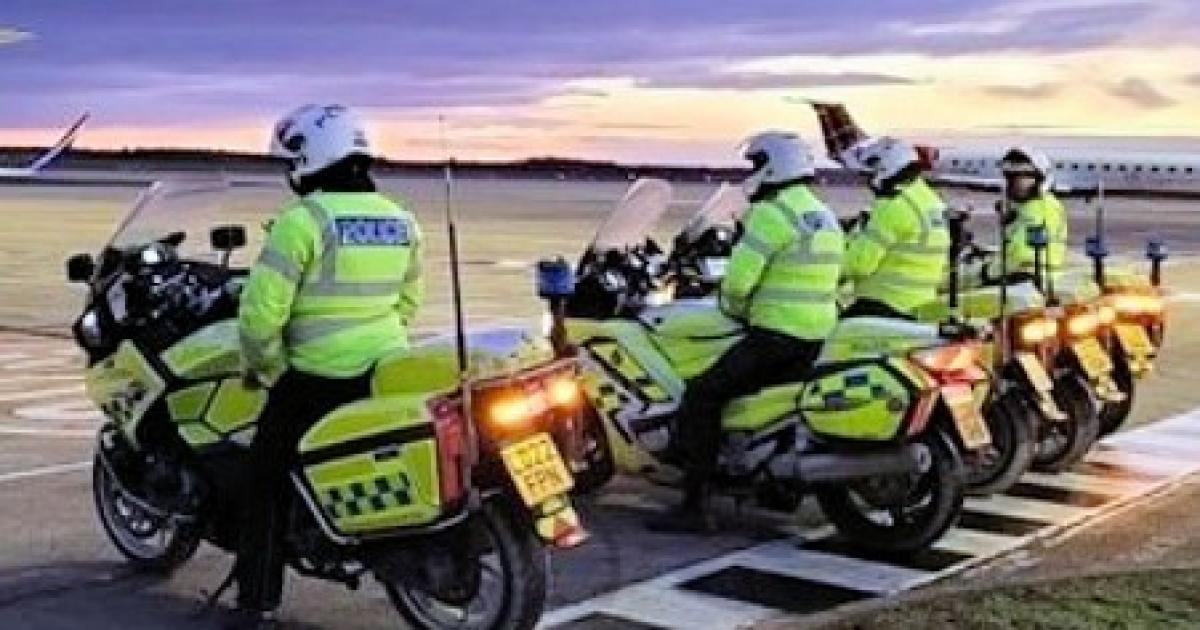
Durham Police issued the seasonal warning to bikers to wear the correct safety equipment, regardless of the climate.
Longer days and sunshine make for ideal riding conditions, but they can also tempt some riders to swap protective clothing for lighter, cooler alternatives.
While that may feel more comfortable, officers are reminding bikers that the right kit could make all the difference if the unexpected happens.
Durham Police warning to motorcyclists to wear proper protective equipment even during warm weather (Image: Durham Constabulary)
Motorcyclists are among the most vulnerable road users.
Advertisement
Even the most experienced riders cannot control every situation on the road, whether it’s another driver’s actions, changing weather conditions, poor road surfaces or an unavoidable hazard.
Wearing a properly fitted helmet, protective riding clothing or leathers, gloves and appropriate boots can significantly reduce the severity of injuries in the event of a collision.
Officers understand the discomfort that comes with wearing protective clothing during hot weather, but stress that no journey is worth risking life-changing injuries.
Durham Roads and Armed Police Sergeant Chris Milburn, said: “We know many riders will be keen to get out and enjoy the sunshine, and we want everyone to do exactly that, safely.
Advertisement
“Protective clothing can feel hot and uncomfortable, especially during warmer weather, but it is there for a reason.
Shorts, T-shirts and trainers offer little or no protection if you’re involved in a collision.
“You may be the safest rider on the road, but you can’t control the actions of other road users or every hazard you may encounter.
“We want every rider to get home safely to their loved ones.
Advertisement
“Please make the right choice before setting off.
“Wear the right kit, ride within your limits and enjoy the roads safely.”












































You must be logged in to post a comment Login