


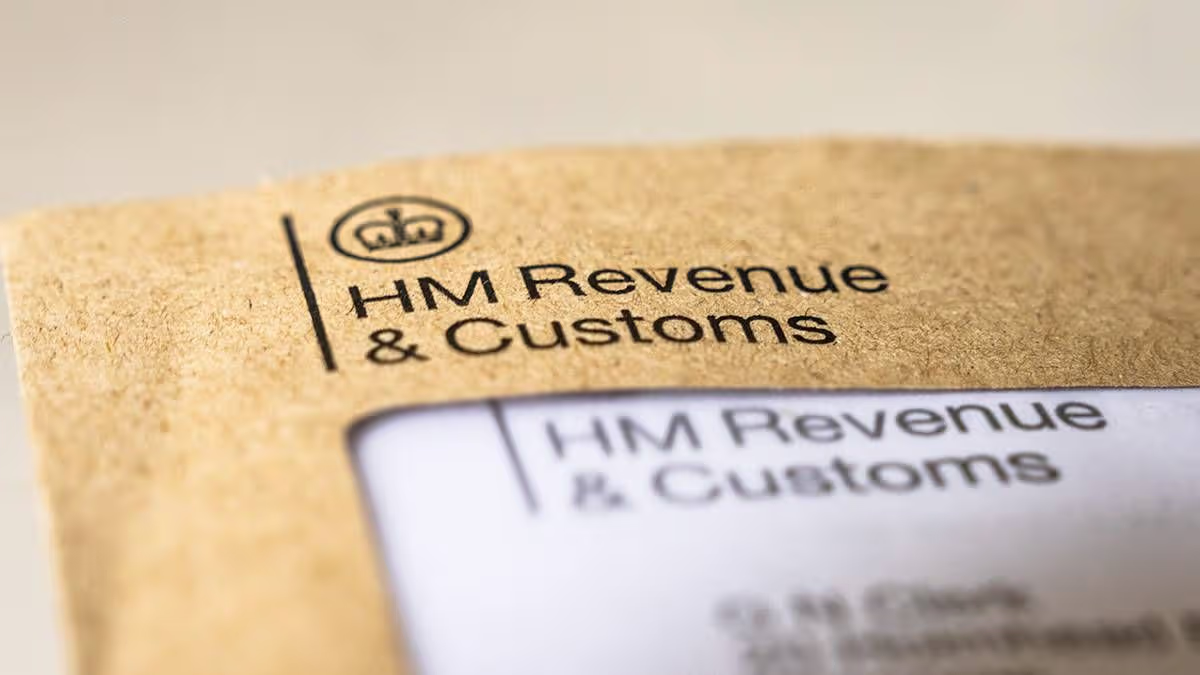
The DWP has issued a statement after reports suggested the Treasury was drawing up plans to automatically deduct income tax from state pension payments at source
The DWP has issued a statement concerning a potential major shift in the way the state pension is taxed. State pension payments increase every April due to the triple lock mechanism, which resulted in a 4.8 per cent uplift to payments this past April.
Under current arrangements, state pension payments arrive in your bank account without any deductions, although they are classified as taxable income, similar to other earnings such as salaries or any private pension income you may receive. If you are liable to pay tax on your payments, HMRC can collect this through various methods.
These include modifying your tax code if you have a private pension or are in employment, through self assessment if you submit one, or via simple assessment.
A report by City AM indicated the Treasury was exploring this change, and was “drawing up plans” to automatically deduct income tax from state pension payments before they are distributed. The report claimed that the Treasury was working with the DWP on proposals to deduct tax at source, in the same way that employers deduct work-related taxes from staff salaries before transferring them into employee bank accounts,
reports the Mirror.
The DWP was asked what work is being carried out on such a proposal. A Government spokesperson said: “There has been no change to the tax treatment of the state pension. The Government routinely undertakes research to better understand pensioners’ experiences with the tax system.”
However, tax officials are pushing forward with a major overhaul to state pension taxation, which is due to come into force imminently.
Chancellor Rachel Reeves announced at the Autumn Budget 2025 that a new measure would be implemented, guaranteeing that individuals whose only income is the state pension without any additional top-ups would not be liable for income tax. This tax relief initiative is required as the full new state pension is drawing increasingly close to the point at which income tax becomes due.
The full new rate presently sits at £241.30 per week, or approximately £12,550 per year, falling marginally below the £12,570 personal allowance – the standard maximum sum you can earn each tax year before income tax applies.
State pension payments increase every April, in line with the triple lock mechanism, which raises payments by whichever is greatest out of 2.5 per cent, the inflation rate, or the rise in average earnings. This means the full new state pension will certainly attract a tax liability next year under existing regulations.
Treasury statement The Government was recently asked to provide an update on the introduction of this new measure. An HM Treasury spokesperson said: “Anyone whose only income is the full new or basic state pension without any increments will not pay income tax, and we are committed to that over this Parliament.
“By keeping the triple lock, 12 million pensioners will see their income rise by up to £470 this year, and they continue to benefit from the highest personal allowance in the G7.”
HMRC officials previously indicated that fresh legislation would be required to bring the change into effect. They informed the Treasury Committee in January that this could possibly be incorporated into the 2026 autumn finance bill.
















































You must be logged in to post a comment Login