Connect with us
DAPA Banner
DAPA Coin
DAPA
COIN PAYMENT ASSET
PRIVACY · BLOCKDAG · HOMOMORPHIC ENCRYPTION · RUST
ElGamal Encrypted MINE DAPA
🚫 GENESIS SOLD OUT
DAPAPAY COMING

NewsBeat

If Europe wants to ‘go it alone’ on security, countries need to learn to sing from the same songsheet

Published

on

If Europe wants to ‘go it alone’ on security, countries need to learn to sing from the same songsheet

The G7 summit at Evian from June 15 to 17 is most revealing not for what was agreed, but for what was exposed about the state of play among Europeans, and their relationship with the US. For all the choreography and displays of unity, the summit was, in large part, theatre. It was an attempt to paper over what is becoming increasingly obvious: many of the most critical international issues are now decided without the EU. Brussels is now, at best, an informed bystander.

This was obvious when the US president, Donald Trump, signed a physical copy of his deal with Iran at a post-G7 dinner at the Palace of Versailles hosted by Emmanuel Macron. It was a diplomatic coup for France, rather than a plan hatched by the EU.

The G7 produced nine joint declarations and seemingly reaffirmed more than just the bare minimum of western unity that has been possible of late. The leaders’ statement on geopolitical issues included strong language on Ukraine. The G7 promised “to increase the delivery of air defence capacities, additional systems and interceptors, and long-range capabilities” and “to increase the pressure on the Russian war economy”.


À lire aussi :
Macron plays ‘Trump whisperer’ as the US president signs Iran ceasefire deal after a successful G7 summit

Advertisement

Yet, it fell short on concrete provisions and timelines. And it notably lacked the commitment to the “robust and legally binding security guarantees” and “the deployment of the Multinational Force – Ukraine” that France, Germany and the UK (the “E3”) had emphasised in their joint declaration with Ukraine’s president, Volodymyr Zelensky on June 7.

The E3 and Ukraine mini-summit showed European diplomatic coordination at its most effective. Évian, by contrast, showed how little of that coordination carries into the decisions that ultimately matter.

Europe’s struggle for relevance is also obvious in relation to Ukraine. The last meaningful – if hardly constructive – negotiations occurred in the so-called “Geneva track” in February. Mediated by Trump’s Witkoff-Kushner team (which was also involved in talks with Iran), this brought Russia and Ukraine together for talks.

But while Washington reported “meaningful progress”, Zelensky commented that “sensitive political matters … have not yet been sufficiently addressed” and called for European to be involved in the next round of talks. This has not happened.

Advertisement

Meanwhile, Europe’s own efforts also failed. Putin immediately rejected the call from E3 and Ukraine for direct talks. This was reinforced in a June 19 essay penned by Russia’s foreign minister, Sergey Lavrov, accusing Europe of complicity in the 2014 political crisis in Ukraine which ousted the pro-Russian president, Viktor Yanukovych, and precipitated the conflict. He added they had sabotaged any attempts at peace.

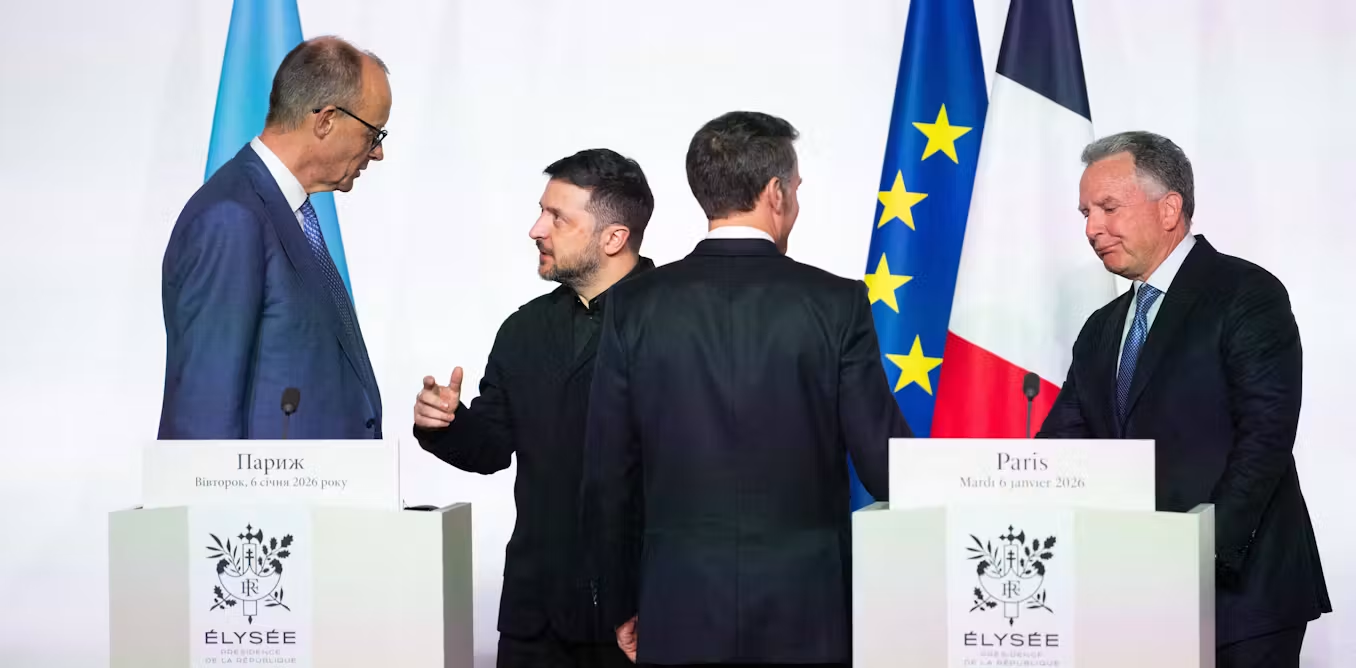
But the EU was already at loggerheads with itself. Earlier that day, EU leaders gathering for a summit in Brussels discovered that António Costa, the European Council president, had instructed his office to reach out to the Kremlin — without consulting member states — to lay the groundwork for potential peace negotiations with Russia over Ukraine. Their reaction ranged from surprise to outrage. Germany’s chancellor, Friedrich Merz, and Macron both publicly pushed back against Costa. Macron stated that “he [Costa] cannot represent [EU states] when security guarantees are at stake”.

The episode was damaging for reasons that go well beyond procedural embarrassment. The spectacle of European leaders publicly repudiating their own council president will have given Moscow the satisfaction of knowing that Europe still cannot speak with a single voice.

The European Commission president, Ursula von der Leyen, tried to bring the message under control. At her press conference after the EU leaders’ summit, she noted that “sooner or later Russia will need to come to the negotiating table, and when that comes we need a united European message to President Putin”. That ambition, however, contrasts sharply with the reality of the earlier Costa episode.

Advertisement

A unified approach

Diplomatic embarrassment is not the only issue when it comes to how quickly Europe will be able to close the persistent gap between ambition and reality.

On June 8, the German government formalised its withdrawal from the Future Combat Air System (FCAS), the €100 billion (£86 billion) joint fighter jet project launched in 2017 as the flagship expression of Franco-German defence ambition. FCAS also included engines, sensors and a digital intelligence network known as “combat cloud”.

One point of contention was reportedly the leadership role played by French aerospace giant Dassault. Germany wanted more of a leadership role and the partners are reported to have had divergent visions of the end product.

Germany’s aspiration to “lead or substantially shape” future European air combat systems may seem rational given the country’s financial muscle and engineering prowess. With more than €750 billion committed to rebuilding its armed forces by 2030, Germany’s instinct that this investment should produce proportionate industrial and strategic leadership is understandable. But when applied to European defence cooperation, it is counterproductive.

Advertisement
Vladmir Putin and Donald Trump in Alaska, August 2025: the aggression of one and unreliability of the other are encouraging European nations to make their own securoity arrangements.
EPA/Sergey Bobylev/Sputnik/Kremlin pool

While European states, including Germany, have repeatedly stressed the need for collective action on defence, there is a repeated fallback on national initiatives. It’s hard to escape the conclusion that Europe continues to struggle to effectively coordinate efforts.

In a development that neatly illustrates this point, on June 20 the UK unveiled three prototype long-range strike missiles built without any US-manufactured components. The product of an 18-month programme known as Project Brakestop, the explicit purpose of developing this capability is to remove Washington’s ability to veto their deployment in Ukraine.

On the positive side, the UK’s ability to pull this off is commendable. It encapsulates the transformation in European thinking about the transatlantic relationship under Trump – and the capability to follow through on this.

But as an act of strengthening European strategic sovereignty, it falls short. It is British rather than European.

Advertisement

Europe’s ambition to rise to the simultaneous challenges of Trump’s transactionalism and Putin’s adventurism has been stated loudly and clearly on more than one occasion over the past 18 months or so. This ambition is most commonly expressed in the quest for strategic autonomy or “going it alone”. But it is not matched with an ability to act coherently.

Source link

Advertisement
Continue Reading
Click to comment

You must be logged in to post a comment Login

Leave a Reply

NewsBeat

Yoane Wissa underlines threat as DR Congo set up England clash at World Cup

Published

on

Yoane Wissa underlines threat as DR Congo set up England clash at World Cup

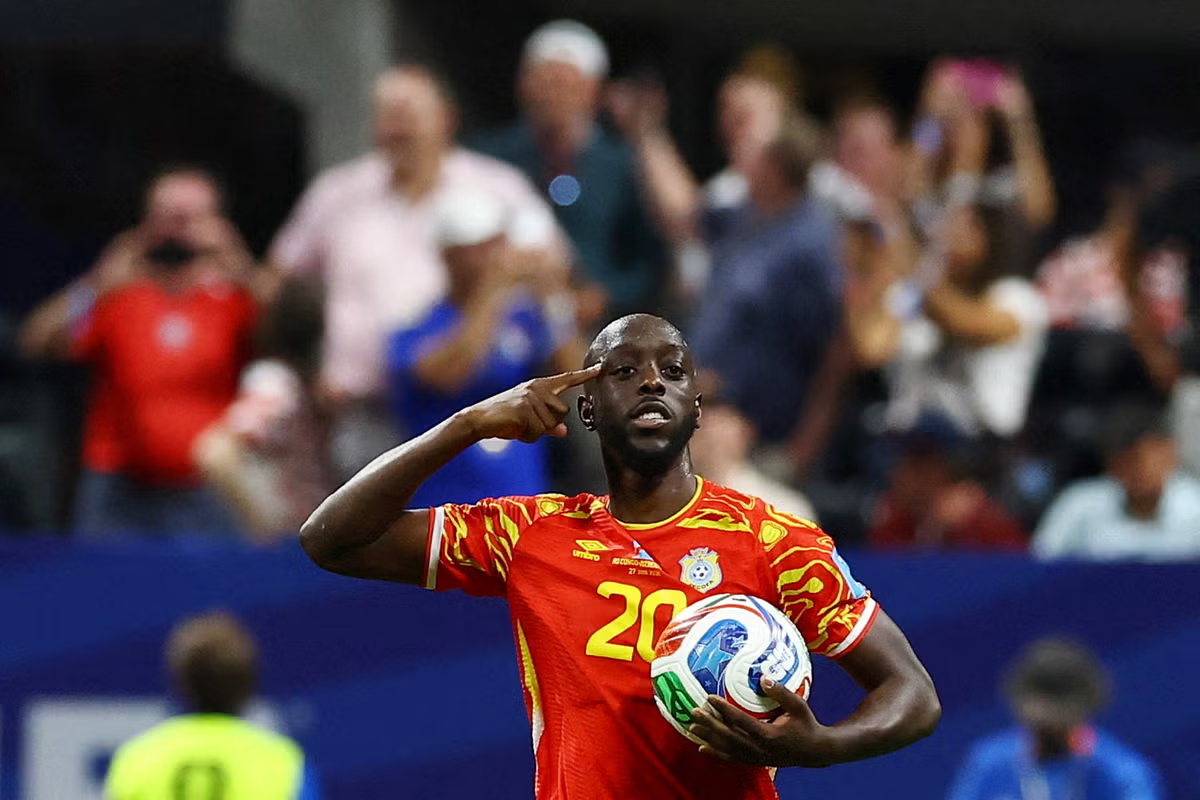
Yoane Wissa scored twice as DR Congo came from behind to beat Uzbekistan 3-1 and progress to the round of 32 of the World Cup.

The African nation, who returned to the tournament after a 52-year absence, will now face England in the knockout stage on Wednesday after finishing third in Group K.

Uzbekistan’s Eldor Shomurodov opened the scoring in the 10th minute in Atlanta, converting from a tight angle after an Abbosbek Fayzullaev header into the box.DR Congo thought they had levelled minutes later when Nathanael Mbuku fired in a left-footed shot.

However, the goal was disallowed after a review, with the referee ruling that Mbuku had caught Sherzod Nasrullaev in the face with a flailing arm in the build-up.

Advertisement

DR Congo eventually levelled in the second half, when Newcastle United striker Wissa sent the Uzbekistan goalkeeper the wrong way from the penalty spot.

They took the lead in the 68th minute when Fiston Mayele flicked the ball over the line before the goalkeeper could stop him.

Wissa sealed progression with a strike from the edge of the box into the bottom-right corner, completing DR Congo’s comeback win.

PA

Advertisement

Source link

Continue Reading

NewsBeat

Trump threatens Iran will ‘no longer exist’ after US launched fresh strikes

Published

on

Daily Mirror

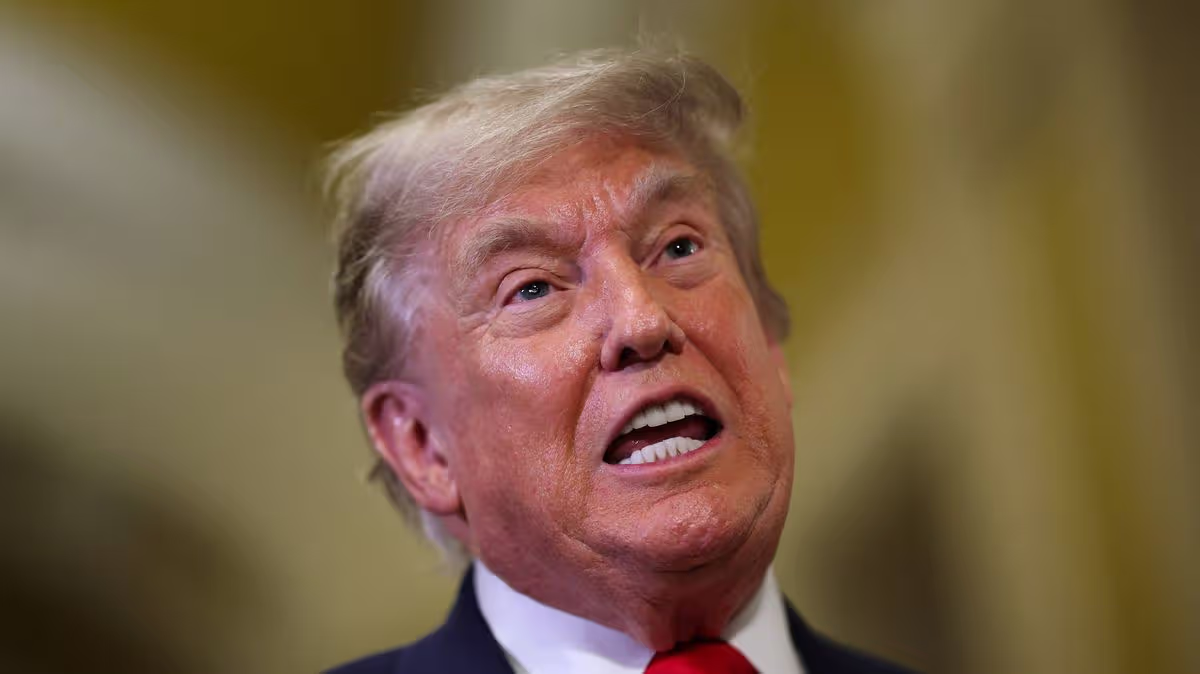
President Trump has warned Iran will ‘no longer exist’ after the US launched retaliatory military strikes following Tehran’s alleged drone attack on an oil tanker in the Strait of Hormuz, breaching the ceasefire agreement.

President Trump has warned he will ‘complete the job’ and ensure ‘Iran will no longer exist’ in a stark message following renewed strikes on Iran.

Advertisement

The US president issued the threat on his Truth Social platform on Saturday evening after a succession of strikes between the US and Iran.

“United States aircraft just struck Iranian missile and drone storage locations, and coastal radar sites, for violating the Cease Fire Agreement, AGAIN! It is very possible that they will never learn!” Trump wrote on Truth Social.

“There may come a point when we are no longer able to be reasonable, and will be forced to militarily complete the job that we very successfully started. If that happens, the Islamic Republic of Iran will no longer exist!”.

Advertisement

The warning follows the US Central Command’s announcement that it launched retaliatory strikes after Tehran allegedly attacked a commercial oil tanker in the Strait of Hormuz using drones.

The US military confirmed Saturday it had hit 10 targets in Iran at President Trump’s direction.

The US Central Command, in a social media post, said that American military aircraft targeted Iranian military “surveillance infrastructure, communication systems, air defense sites, drone storage facilities, and minelayer capabilities” following the attack on a merchant vessel early Saturday morning.

The wave of strikes in the Gulf underscores how, despite the interim agreement reached by the US and Iran, there remains a danger that the conflict could once more escalate beyond control.

Advertisement

The vessel targeted by Iran was a Panama-flagged tanker, M/T Kiku, which was transporting more than two million barrels of crude oil close to the strait.

The US military also carried out strikes on Friday following reports of a further attack on a cargo ship, the Singapore-flagged M/V Ever Lovely.

It stated that “Iran had a chance to honour the ceasefire agreement” but “elected not to” when its forces struck the Kiku.

Earlier this month, the two nations reached a ceasefire agreement and a memorandum of understanding ahead of a potential peace deal, yet the Strait of Hormuz has continued to remain a flashpoint.

Advertisement

Despite a rise in commercial traffic, normal shipping has not yet been fully reinstated owing to ongoing strikes.

Prior to Friday, Tehran had warned that attempts to navigate the strait along a route designated by the UN’s International Maritime Organization would be “unacceptable and completely dangerous” and that vessels were required to coordinate with Iran.

Source link

Advertisement
Continue Reading

NewsBeat

Two people taken to hospital after incident in South Shields

Published

on

Two people taken to hospital after incident in South Shields

Emergency services were called to South Promenade in South Shields, South Tyneside just before 3.20pm today after what has been described as a road traffic incident.

Police remain at the scene and have blocked off a portion of Sea Road, by the Ocean Beach Pleasure Park.

Pictures show a number of officers inside the cordon as well as six police cars.

Advertisement

The circumstances of the incident are not yet known.

A North East Ambulance Service (NEAS) spokesperson said: “We received a call at 3.19pm on Saturday 27 June to reports of a road traffic incident on South Promenade in South Shields.

“We dispatched an ambulance crew, a specialist paramedic, a rapid response paramedic, and a clinical team leader to the scene.

“Two patients were taken to hospital for further treatment.”

Advertisement

Northumbria Police has been contacted for comment.

Source link

Advertisement
Continue Reading

NewsBeat

Uruguay stars forced to fly home commercially as chiefs left fuming after World Cup exit

Published

on

Daily Mirror

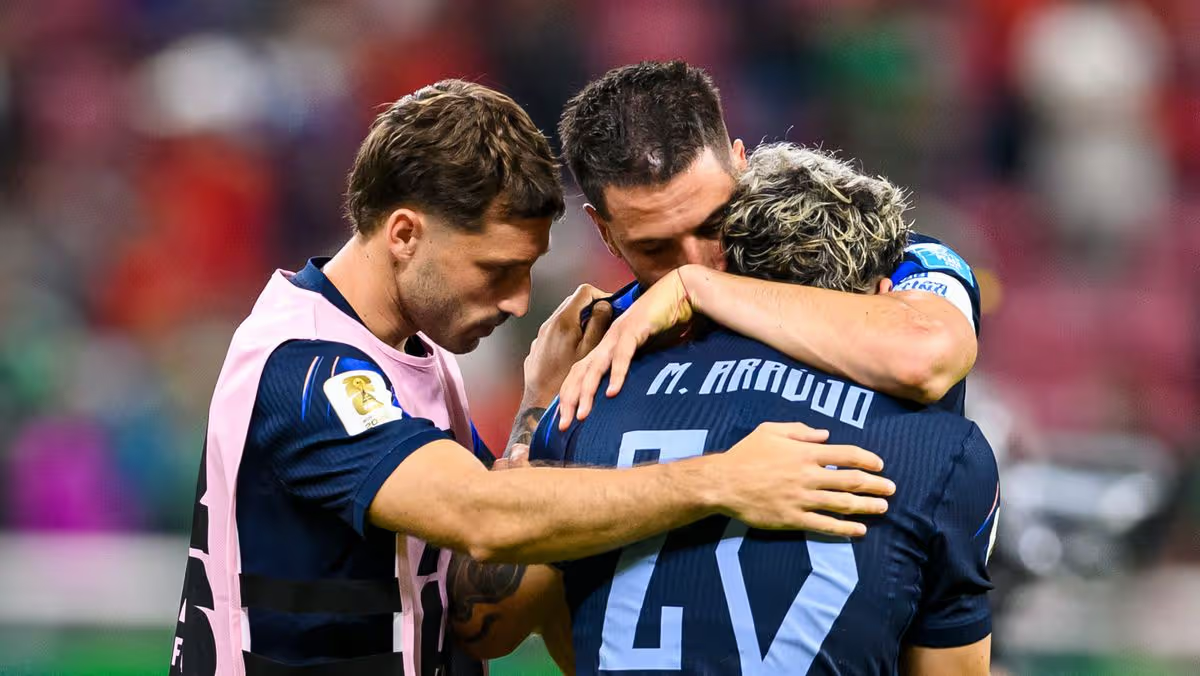
Uruguay were eliminated from the 2026 FIFA World Cup after losing 1-0 to Spain, with coach Marcelo Bielsa stepping down and the squad stripped of their private jet home.

Uruguay were handed what appeared to be a straightforward group at the 2026 FIFA World Cup. Aside from reigning European champions Spain, the South American side faced tournament newcomers Cape Verde and perennial underachievers Saudi Arabia.

Yet the two-time World Cup winners are heading home early after a 1-0 defeat to Spain on Friday. The squad, spearheaded by Real Madrid midfielder Federico Valverde and former Liverpool striker Darwin Nunez, had originally been set to return to Uruguay aboard a private jet.

However, the AUF (Uruguay’s football federation) has instructed players to make the journey home on commercial flights, as confirmed by Uruguayan outlet Tenfield.

Advertisement

JOIN US ON FACEBOOK! Latest news, analysis and much more on Mirror Football’s Facebook page

Even the expanded 48-team format wasn’t enough to spare Uruguay, who failed to qualify as a third-place finisher. Coach Marcelo Bielsa’s side managed only draws against Cape Verde and Saudi Arabia, finishing on just two points.

Uruguay are the highest-ranked FIFA nation (19th) to be eliminated. Bielsa, 70, confirmed his resignation in a heated post-match outburst, reports the Mirror US.

“I’ve left Uruguayan football nothing because any type of support a country’s soccer manager can give in a country where he has worked three years doesn’t take if you don’t get results,” Bielsa said, via a translation.

“The fourth place in the World Cup qualifiers wasn’t worth anything, third place in the Copa América wasn’t worth anything, and obviously, I don’t need to describe this showing. But if you ask me how my tenure will be remembered, as a tenure I’ve left nothing.

“The journalists, the Uruguayan supporters, you all want to blame me for what happened, and I must take that blame. It is the only right thing to do.”

Get the latest World Cup news straight to your inbox by signing up to our Make Football Great Again newsletter now!

Advertisement

There were two controversial incidents involving Bielsa during Friday’s fixture. The first involved long-serving goalkeeper Fernando Muslera, a regular since the 2010 World Cup, being withdrawn at half-time after his first-half mistake.

“No, I didn’t take [the decision],” Bielsa said after the match. “It’s a decision Muslera took himself.”

Reserve keeper Sergio Rochet came on for the second period. The second occurred when Bielsa brought off Valverde in the 57th minute for striker Federico Vinas. The Real Madrid star was furious and refused to shake his manager’s hand as he left the pitch.

“It’s a decision Muslera took himself, and Valverde, I substituted him for Federico Viñas because I wanted to have a more attacking strategy,” Bielsa said.

Advertisement

Upgrade your World Cup TV setup with the Sky Glass ‘designed for football’

This article contains affiliate links, we will receive a commission on any sales we generate from it. Learn more
Content Image

from £4.50

Sky

Get the deal here

Sky is knocking 20% off its entire range of Glass TVs to mark the start of the 2026 FIFA World Cup. Until June 17, shoppers can upgrade to the Sky smart TV that’s ‘designed for football’ from £4.50 per month when taken alongside a Sky TV and Netflix package.

Source link

Advertisement
Continue Reading

NewsBeat

US conducts retaliatory strikes on Iran after second shipping attack

Published

on

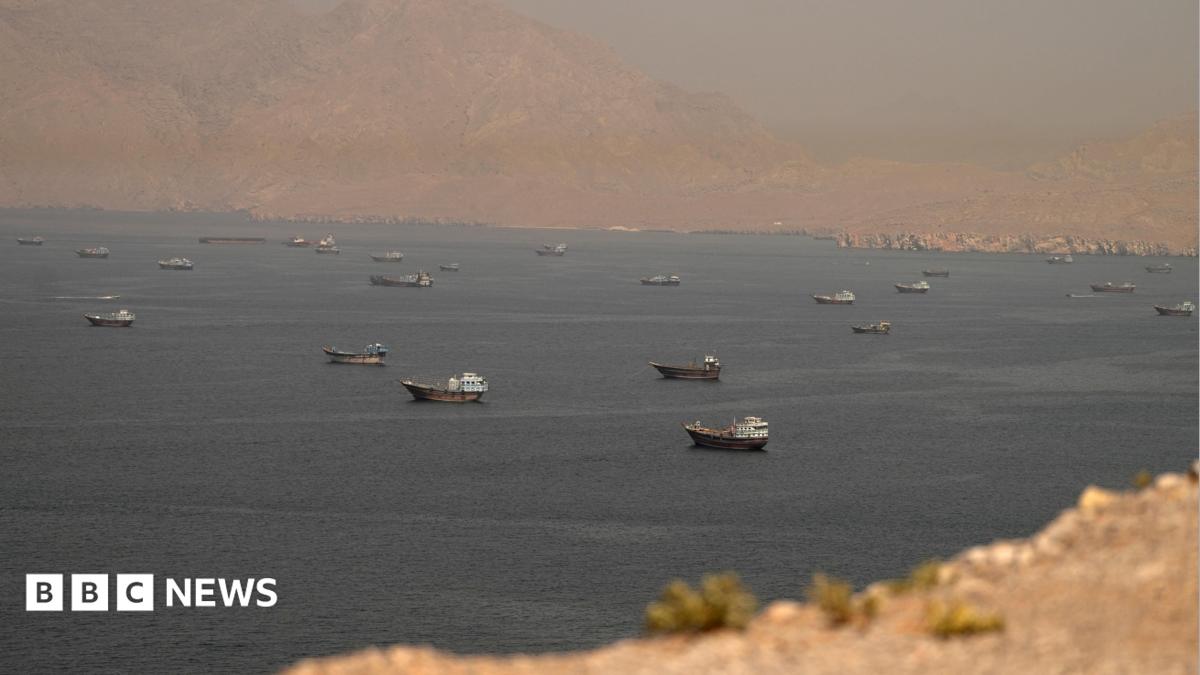
Vessels in the Strait of Hormuz, as seen from Oman on June 18, 2026.

The US has conducted new strikes on Iran, following a drone attack on a Panama-flagged vessel in the Strait of Hormuz on Saturday.

US Central Command (Centcom) said it hit multiple targets across Iran in direct response to “continued aggression” against commercial shipping.

In retaliation, Iran’s Islamic Revolutionary Guard Corps (IRGC) said it has launched missiles and drones at US infrastructure in Kuwait and Bahrain, in a statement shared to state media.

It warned that violating the ceasefire is against the agreement signed between the two nations and “will lead to a complete halt to the process”.

Advertisement

Centcom said in a statement, “Iran was given a chance to honor the ceasefire agreement but elected not to when its forces launched a one-way attack drone that hit MT Kiku,” a Panama-flagged tanker.

In response, it said it had hit military equipment, communication systems, air defense sites and drone storage facilities.

In the IRGC’s statement, it said the US had attacked five coastal posts in Iran under what it called “the pretext of the IRGC Navy confronting the offending ship”.

It said that under the Memorandum of Understanding signed earlier this month, Iran has arrangements for controlling passage and navigation in the Strait of Hormuz, and from now on, violating ships will be dealt with more forcefully than in the past.

Advertisement

“Any potential enemy aggression, under any pretext, even if the aggressions are against minor targets, as happened last night and tonight, will have a crushing response,” read the statement.

Shortly after the latest strikes were announced, the US president took to Truth Social, where he said was it was “very possible” that Tehran would “never learn”.

“There may come a point when we are no longer able to be reasonable, and will be forced to militarily complete the job that we very successfully started,” he wrote on Saturday evening.

The post went on: “If that happens, the Islamic Republic of Iran will no longer exist!”

Advertisement

In the hours following the US strikes, Kuwait and Bahrain both reported that their air defence systems had been activated.

“Kuwaiti air defenses are currently confronting hostile missile and drone attacks,” the Kuwaiti Armed Forces said in a statement shared to X, asking the public to adhere to security instructions.

Bahrain’s Ministry of Interior has urged citizens to “remain calm and head to the nearest safe place”.

Centcom has said that commercial vessels are continuing to operate in the Strait of Hormuz.

Advertisement

The latest strikes come less than a day after the US launched retaliatory strikes on Iran that it said were in response to a drone attack on Singapore-flagged cargo ship, MV Ever Lovely, on 25 June.

Centcom described the American strikes as “a powerful response” to the attack on the cargo ship, adding that the “unwarranted aggression against commercial shipping by Iranian forces clearly violated the ceasefire”.

Tehran said the cargo ship was attacked because it was using an unauthorised route to transit through the Gulf waterway, and said that the retaliatory strikes qualified as a ceasefire violation by the US.

In a statement released on Saturday morning, Iran’s foreign ministry said it had carried out more strikes against targets linked to American forces in response, and blamed the “treaty-breaking US regime” for the situation.

Advertisement

The US and Iran agreed on 17 June to end hostilities under a 14-point memorandum of understanding, which had also called for Iran to use its “best efforts for the safe passage of commercial vessels with no charge for 60 days”.

The Strait of Hormuz is a key waterway for oil and gas shipments, and was effectively closed by Tehran after the US and Israel launched attacks on Iran at the end of February.

The shutdown of the critical channel caused a spike in global oil prices and prevented shipments of other crucial commodities such as fertiliser.

Source link

Advertisement
Continue Reading

NewsBeat

The “proper village pub” serving “delicious” Sunday dinners

Published

on

The "proper village pub” serving "delicious" Sunday dinners

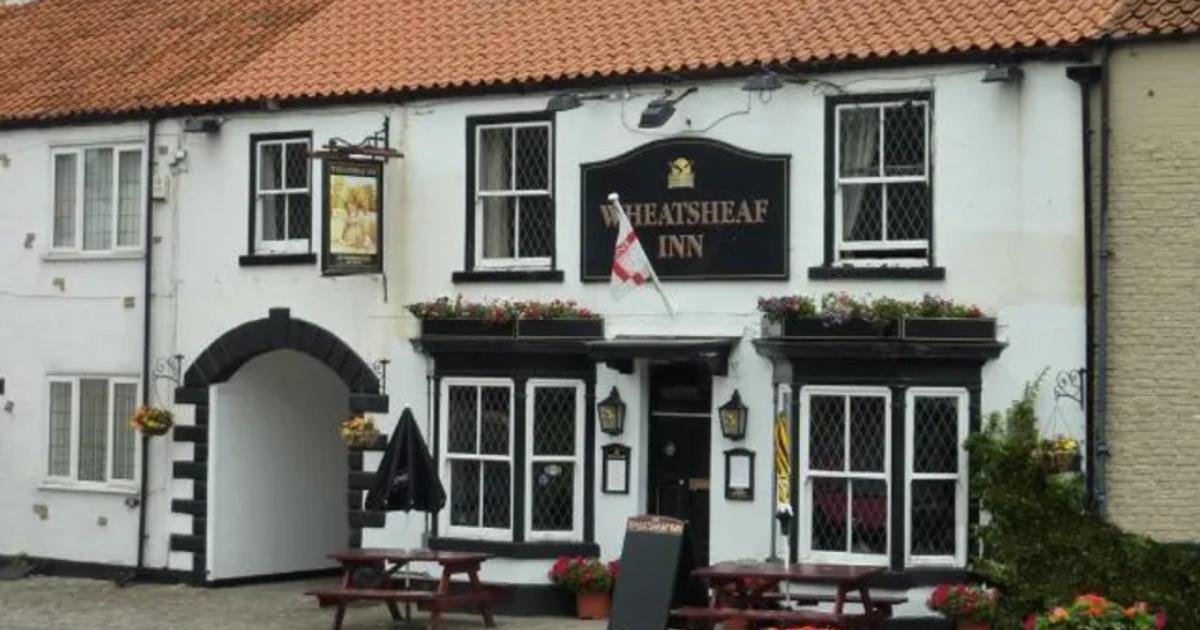
The Wheatsheaf Inn, on East Side in Hutton Rudby, currently holds a 4.4-star rating on TripAdvisor and is listed as one of the top-rated restaurants in the area.

The pub describes itself as a place for “catching up with friends”, “enjoying well-reviewed” food and using its beer garden, while also highlighting its digital jukebox, pool table, and two dart boards.

That gives The Wheatsheaf a more old-fashioned village pub feel than some modern dining-led venues.

The Wheatsheaf Inn, on East Side in Hutton Rudby (Image: CAMRA)

For many visitors, the appeal is not just the food, but the sense of being a “proper local”.

Advertisement

Reviewers regularly praise the pub’s friendly staff, generous portions and traditional British food.

One recent visitor said they came across the pub “by accident” and were glad they did, describing the food as “absolutely delicious” and the staff as “nice and friendly”.

Another called it a “lovely village pub”, praising its clean, welcoming feel, friendly staff and “amazing” food menu.

Sunday lunch is one of the most frequently mentioned reasons people visit.

Advertisement

One reviewer described the pub as serving an “old-fashioned Sunday lunch” with large portions, quality meats, simple but tasty desserts and a fine range of beers.

Another said it had been recommended as one of the best places in the area for Sunday lunch, adding that the food was “lovely”, “reasonably priced” and “served in a great atmosphere”.

The pub’s Christmas Fayre meals have also attracted praise.

Advertisement

One customer said a large party enjoyed a “fabulous evening from start to finish”, with excellent service, hot food served swiftly and generous portions of well-cooked seasonal vegetables.

Another reviewer described a Christmas Fayre meal as “superb”, “very well priced” and worthy of five stars.

The Wheatsheaf’s menu is built around hearty pub classics.

Its own menu includes Saturday breakfasts, Sunday roast dinners, steaks, fish and chips, parmos and other familiar favourites.

Advertisement

The Sunday roast offers beef, pork, turkey or lamb with Yorkshire pudding, mash, roasties and vegetables, while the Saturday Big Breakfast includes bacon, sausage, egg, mushrooms, tomato, black pudding, beans, toast and a drink.

Fish and chips have also been singled out by visitors, with one reviewer praising the batter as “lovely, golden and crispy”.

Another visitor said the steaks were cooked as requested, the chips were hot and plentiful, and the desserts were “gorgeous”.

The dog-friendly policy is another useful draw in a village surrounded by countryside walks.

Advertisement

Hutton Rudby sits near the River Leven and close to walking routes around the Cleveland Hills, making The Wheatsheaf a convenient stop for residents, day-trippers and visitors exploring the area.

Source link

Advertisement
Continue Reading

NewsBeat

Three things we learned from England win as crisis might be brewing

Published

on

Three things we learned from England win as crisis might be brewing

England can book their flights for Atlanta in the round of 32.

While it took a while, two second-half goals did the job for England.

They were helped, in truth, by Panama’s brave approach to the match. Already eliminated and having failed to score in both of their first two matches, the Central Americans did not park the bus. Instead, they went at England in patches and tried to muster a moment for their fans to remember.

England are through to the last-32 as group winners

Advertisement

Getty

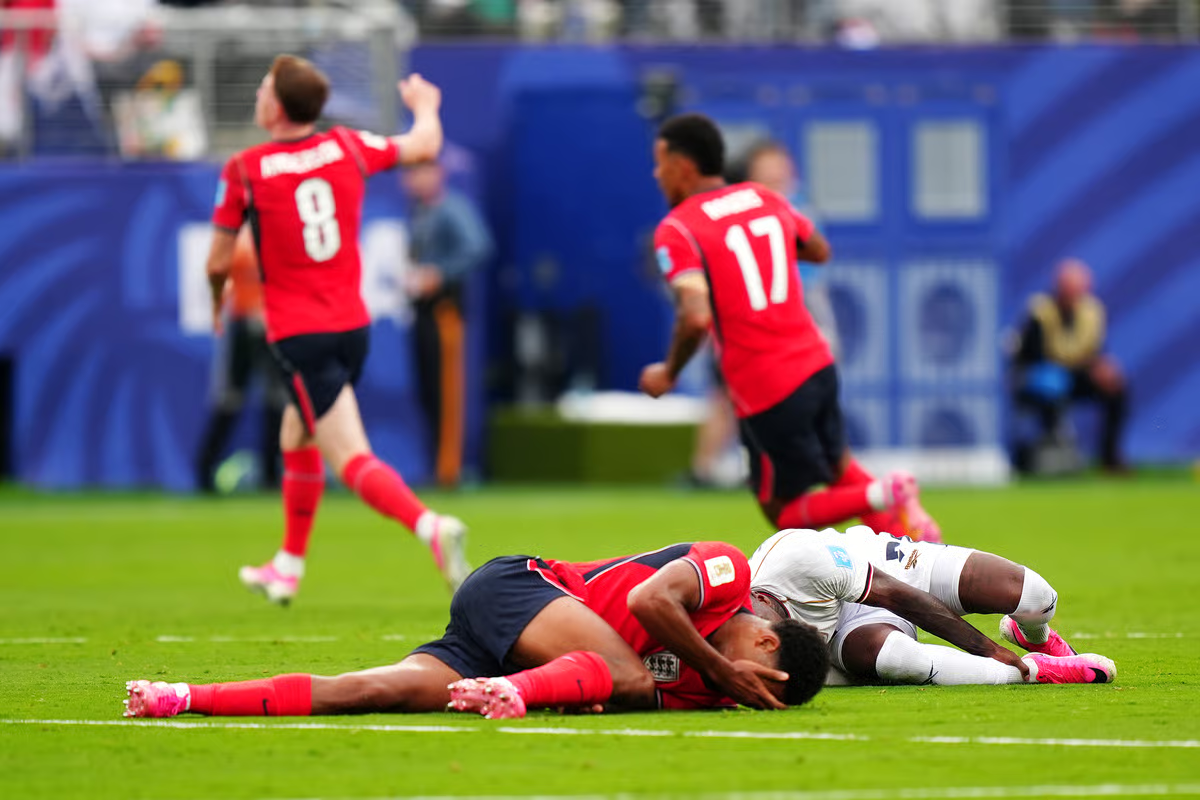
They failed to do so and, in turn, England found more space than against Ghana. Marcus Rashford and Bukayo Saka, in their first starts of the tournament, had to be patient but were put through by a midfield trio of Elliot Anderson, Morgan Rogers and, playing deeper as a No8, Bellingham.

Source link

Continue Reading

NewsBeat

Thomas Tuchel shows where his Germany World Cup loyalties lie after England win

Published

on

Daily Mirror

England progressed to the last-32 of the World Cup with a 2-0 win over Panama on Saturday night thanks to Jude Bellingham’s heroics at the New York/New Jersey Stadium

Thomas Tuchel’s nationality found itself in the spotlight just minutes after England secured its place in the World Cup knockout stages.

Advertisement

The Three Lions beat Panama 2-0 at the New York/New Jersey Stadium thanks to a spectacular performance from Jude Bellingham. The 22-year-old Real Madrid midfielder scored before setting up Harry Kane to ensure England finished top of Group L.

It was a much-welcomed two goals after three goalless halves of football in the World Cup. But like England, Germany has also progressed to the last-32 of the tournament.

With wins over Curacao and Ivory Coast, Germany had already qualified for the knockout stages. But a defeat against Ecuador in its final game would have ended things on a slightly sour note.

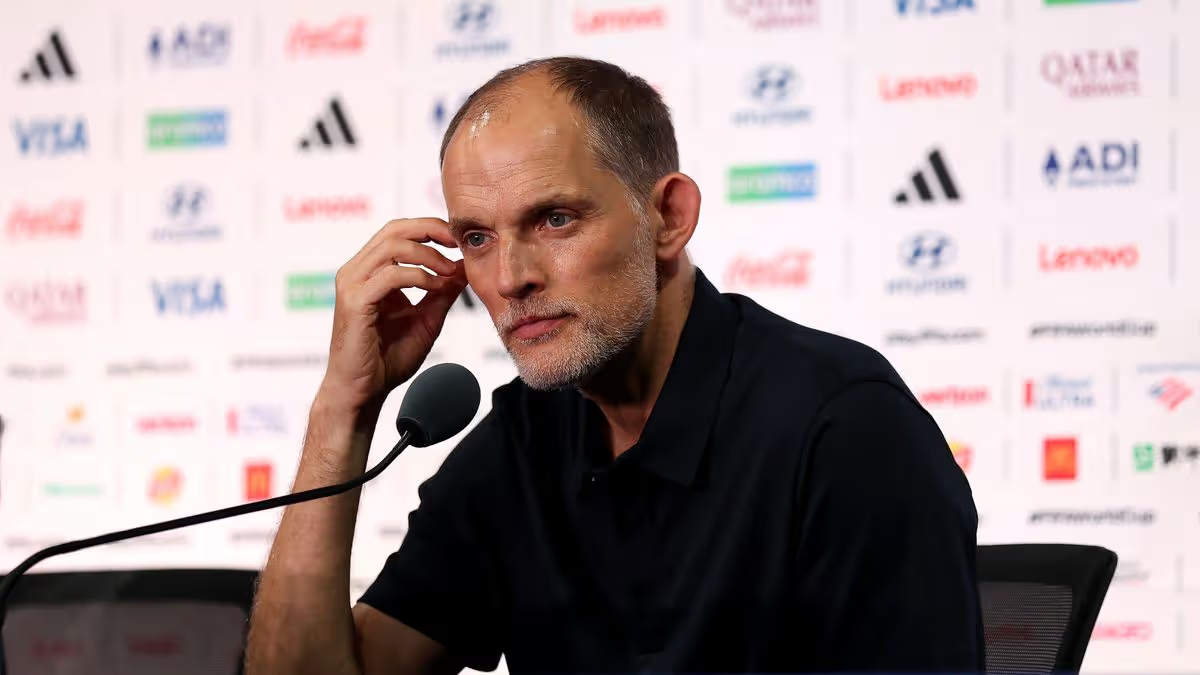
In his post-match press conference, Tuchel was asked about his loyalties to home country, Germany.

Advertisement

“I follow the German team, of course, but my focus and my heart beats for the England national team in this World Cup, so that’s where my focus is.

“They have a top coach and a top team. They find solutions for themselves.”

Naturally, Tuchel’s nationality was grilled when he first got the job. But the 52-year-old played down that it had any real impact.

Advertisement

“The biggest con is I don’t have an English passport but that’s maybe it,” Tuchel said. “That was clear from the beginning, I love to be the England coach and I was never shy about that.

“I have huge affection for the country and for the people in the country and the way they approach football and sports in general.”

Tuchel previously managed in England, guiding Chelsea to Champions League glory in 2021. When taking the England job he said reuniting with English players was a huge factor.

“I fell in love with the country and the Premier League,” he explained.

Advertisement

“That was a dream, to work there.

“Now to have the chance to work with these kind of players is an amazing opportunity and I am very grateful for it. “No one wants it more than me.”

Tuchel also disussed his team’s opponent, Panama, sharing similarities in how their low block frustrated his England side like Ghana.

Advertisement

“Not bad,” he said when assessing his own team’s peformance. “We saw a team who didn’t allow any chances in the first two matches. They conceded a 95th-minute counter attack against Ghana.

“They conceded from a half chance against Croatia with two shots on target. There is no problem if these matches feel tight and tough, it will help us in the next match.”

Source link

Advertisement
Continue Reading

NewsBeat

Which teams are through to World Cup round of 32 knockout stage?

Published

on

Which teams are through to World Cup round of 32 knockout stage?

As the 2026 World Cup moves through its third game week, teams are starting to secure their spot in the knockout rounds.

29 teams have made it to the round of 32 – which is a new round of games due to the 48-team expansion of this World Cup – so there are still three spaces up for grabs.

Source link

Continue Reading

NewsBeat

Harwood high hedge complaint sparks concerns in gardens

Published

on

Harwood high hedge complaint sparks concerns in gardens

Residents living close to Prospect House say the issue has gone on for years, with concerns ranging from blocked sunlight to large branches falling into gardens.

The comments come after a resident submitted a high hedge complaint to Bolton Council over trees at the Prospect Avenue property earlier this month.

The application was made under legislation allowing councils to investigate evergreen hedges which are more than two metres high and are alleged to unreasonably affect neighbouring properties.

Advertisement

One resident said: “It doesn’t actually bother us, I do appreciate it bothers everyone else. We’re on the other end but this is a mess.

“I think it’s been going on for a long time.

“It’s not bothering his property, it’s bothering everyone else’s. It’s not good.”

The neighbour said they had heard similar concerns from other residents living nearby.

Advertisement

They added that the trees “take all the light off the gardens” and described them as “a bit humungous”, claiming one neighbour had developed “bald patches” on their lawn because of the overhanging trees.

Another resident said branches regularly ended up in their garden during winter.

He said: “Branches in my garden at winter time.

“We had one at 10 foot long.”

Advertisement

The Bolton News previously reported that the complaint was submitted on June 9 by a resident of Prospect Avenue against Prospect House.

Under the Anti-Social Behaviour Act 2003, a high hedge is defined as a barrier formed mainly by two or more evergreen or semi-evergreen trees or shrubs that is more than two metres high and may adversely affect a neighbour’s reasonable enjoyment of their property.

Source link

Advertisement
Continue Reading

Trending

Copyright © 2025