Today’s best phone cameras are astonishingly capable when it comes to taking pictures. With large sensors, wide apertures and a wealth of extra software features, they can take images that rival what you’d expect from pro-level mirrorless cameras.
I’ve thoroughly tested all of today’s best camera phones, including the iPhone 17 Pro, Galaxy S26 Ultra and Leica Leitzphone in my time as both phone reviewer and professional photographer.
But I still wouldn’t ever want to fully replace my camera with just a phone. I have a few key reasons why.
Advertisement
Ergonomics
While cameras have come in all shapes and sizes over the last few decades, they’re designed to be held the same way, with your fingers naturally resting in the same places when pressing the shutter button. They feel like a natural fit and even smaller compact cameras such as the Fujifilm X100VI or my own Leica Q3 43 still allow you to hold them up to take your shot in a typically comfortable way.
Phones aren’t built to be cameras first, so they naturally force a different way of holding them. The big touchscreens mean you have to delicately hold the phone by its edges to avoid accidentally touching something on screen, and with no viewfinder, there’s no option to hold them up to your eye, as you would with most regular cameras.
When holding a phone like a camera, it can feel like you have to be exceptionally delicate with it, especially if you’re quickly shooting one-handed. I often worry I’m going to drop it.
Advertisement
Andrew Lanxon/CNET
Phones are small and thin (at least compared to most cameras), making it difficult to get a firm grip, and tapping an on-screen button to take a photo always feels awkward. I worry about dropping the phone as I shuffle my fingers around into the right position. Even those phones that offer physical shutter buttons on the edge (or let you use the volume key as a shutter) still feel like you’re holding them in a way they were never truly designed for.
Sure, you can get camera grips or cases that help bulk out the phone to give you something to hold onto and some of those even offer shutter buttons and settings wheels to let you use them like a compact camera. I’ve tried many of them, but none feel as good as holding an actual camera.
Image quality
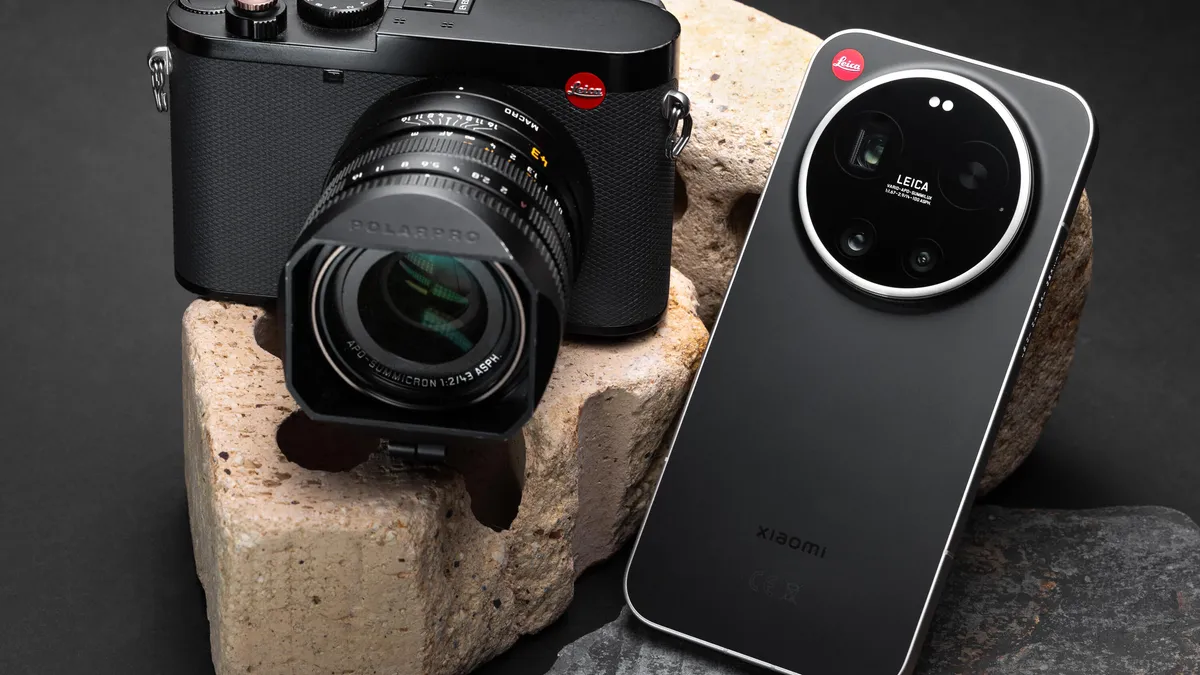
Today’s best phone cameras can take truly stunning images. I’ve been blown away by the photos I’ve been able to capture with Xiaomi and Leica’s Leitzphone, especially when using its filmic color profiles. But even this phone — arguably the best camera phone money can buy — doesn’t fully compete with a real camera.
Advertisement
Leica and Xiaomi’s Leitzphone can take some beautiful images, but even so, its quality isn’t on par with an actual Leica camera.
Andrew Lanxon/CNET
And how can it? While it has a larger image sensor than most phones, it’s still tiny compared to the vast majority of cameras out there. As is its lens. It’s why all smartphone cameras have to rely heavily on software image processing to squeeze every bit of quality they can from their sensors. Some take this way too far with images that can look seriously overprocessed, with heavy-handed sharpening being a common factor in most phones’ quality.
In reality, if you just look at these images on your Instagram feed, you’d probably never realize they were taken on a phone. The often “crunchy”-looking over-sharpened aesthetic a lot of phones produce typically only becomes apparent when you zoom into the fine details. But those signs will still be there, often alongside increased saturation and an over-reliance on HDR techniques to control highlights and shadows.
Pro cameras with larger image sensors and higher-quality lenses can produce far more natural-looking details without an algorithm stepping in.
Advertisement
The Google Pixel 10 Pro uses generative AI to add detail back into its images when taken at over 30x zoom. It’s a neat idea in theory, but I’d rather know that everything in my images is what I actually captured and not what an algorithm thinks should be there.
Andrew Lanxon/CNET
Generative AI
Speaking of algorithms, I can say with certainty that I don’t want generative AI anywhere near my photos. That’s becoming increasingly difficult to avoid with phone cameras. Google proudly boasted that it uses generative AI to upscale its zoom photos on the Pixel 10 Pro while some of Samsung’s new camera features involve using AI to replace items of clothing on your subject. Apple’s upcoming iOS 27 will even allow you to change the perspective of an image after you’ve taken it, using AI to create an angle that you never actually took in the first place.
Almost all phones offer some kind of AI in their image-taking workflow. Even phones that aren’t actively changing the background or other elements in your images are still using generative tools to upscale your photos to make them look “better.”
Advertisement
The result is that it’s difficult to say that you’ve really taken an image when you don’t know how much of it has been reconstructed by software. Oppo explained that its recent Find X9 Ultra doesn’t use any generative AI when in its Master mode — and honestly, you can tell; shots in its regular mode can certainly look over-processed, especially when it comes to the artificially-lifted shadows. Switching to Master mode (and thereby bypassing all the AI) is the way to get the best-looking shots from this phone. I found the same when using the camera on the Honor Magic 8 Pro.
I didn’t realize the Oppo Find X9 Pro was using generative AI in its telephoto zoom shots, but that’s clearly what’s happening here as it’s tried to artificially recreate the face of the person in the foreground — and it’s not done it well.
Andrew Lanxon/CNET
Call me a purist, a luddite or a technophobe, but AI has no place in my photography — either at the point of capture or when I’m editing my images later. I want to know that what I captured in my finished shot is what I, the photographer, actually wanted in that frame, not just what an algorithm spat out.
Advertisement
Life cycle
I own and frequently use cameras that are decades old. My Pentax K1000 film camera was released in 1976, while one of my favorite digital cameras — the Sony RX1R — is now 13 years old and still going strong. A phone’s life cycle is much shorter, with even top models receiving security updates for only up to seven years.
This Yashica A was released in the 1950s making it around 70 years old yet I was still able to take some great photos with it.
Andrew Lanxon/CNET
Once that support period is over, your phone is simply not safe to use and it’s time to upgrade. Sure, the idea is that by then, new technology would be available, so the phone you’d be upgrading to would be even better than your old one. But it still means that the phone camera you’re used to shooting with, which delivers the look and tones you like, simply isn’t going to hang around as long as a regular camera.
Advertisement
That lifespan can really sting, especially as advanced camera phones tend to demand more money — like the £1,700 ($2,245) Leitzphone. Are you better off buying one expensive device that does everything for a shorter period of time, or spending less on a regular phone and also buying a camera that’ll last you much longer? That’s a decision only you can make.
The Pixel 10 Pro has a long software support period of around seven years.
Andrew Lanxon/CNET
The look
I might be vain here, but as a professional photographer, I simply wouldn’t want to be seen only taking photos on a phone. It doesn’t matter if that phone is the best in the world at taking images; there’s a certain stigma around it that suggests a level of amateurism. I’m not really talking about what it looks like to strangers on the street — if anything, using a phone allows you to blend in and become effectively invisible, which is amazing for things like street photography.
Advertisement
I’m talking about more professional scenarios. If I turned up to a shoot for a commercial client paying me five figures for my images and all I used was a phone, I don’t think I’d ever get work from that client again. I could argue all I want that the quality is good enough, that they’re paying for my expertise and that the end images will still be great but it wouldn’t matter. That client would see the phone and wonder why the hell they’re paying so much for someone to take some snaps on a phone — they could have done that themselves and saved a ton of money in the process.
Some of my shoots involve a lot of gear and setup. If I turned up just with a phone, I’d never get hired again.
Andrew Lanxon/CNET
Don’t get me wrong, I don’t believe that only the best gear can take the best photos — I’ve done commercial shoots using Canon’s cheapest 50mm “nifty fifty” lens and had images taken with that lens licensed for luxury photo books. Most clients care about the images, not the equipment you’re using to get them. But there’s a balance to be struck here and using professional gear suggests that you are a professional. Turning up to a shoot — commercial, wedding, whatever — and pulling out my iPhone for the job isn’t going to do my photography career any favors.
Advertisement
So many notifications
I’ve saved my most important one for last because it’s the biggest stumbling block for me when using a phone as a camera for extended periods. If I’m taking images — whether wandering around a Tuscan village on holiday, taking photos for my YouTube channel or on set for a commercial job — I don’t want distractions that pull me away from the creative mindset I’m trying to maintain.
Using my phone for any purpose already means battling with near-constant incoming notifications from my email, from Slack, WhatsApp, Instagram and many others. It’s a perpetual onslaught of things going on that makes it increasingly difficult to concentrate on the task at hand. Sure, you can turn Do Not Disturb on — and I do — but I also don’t want to miss important phone calls or other messages I might need to act on. So I don’t like switching things off altogether either.
One of the reasons I’ve enjoyed using film cameras recently is that there are absolutely zero distractions so you can focus completely on staying in the moment.
Advertisement
Andrew Lanxon/CNET
Using a dedicated camera feels like choosing the right tool for the right job. Unlike our phones, it’s not trying to be something else by doing 1,000 other things in the background. My camera doesn’t come with bubble-pop games pre-installed and it’s not vibrating every ten seconds while my friends share memes on our WhatsApp group. Using the camera means shutting off from everything else going on in my life and focusing on the joy of image creation.
I don’t want one device that can do all the things. Sometimes it’s better to have a product that does only one thing but it does that one thing exceptionally well. And just as I don’t want a wrench that’s also a DAB radio and a meat thermometer, I don’t want a camera that’s a games console, an exercise tracker and my portal to social media.
It’s why I — and many other photographers around the world — have also really enjoyed getting into analog film photography recently as it strips out even more of the technology and allows for a more simplistic, arguably more authentic way to take images.
I use my camera increasingly as a way of finding some zen in the chaos of life and not feeling like I’m constantly switched on. It’s why my camera makes me feel more inspired. Picking it up means making an intentional decision to want to go and take photos, not just whipping out my phone to get a quick snap if I happen to see a cute dog. That intentionality invokes a deeper sense of creativity. And more often than not, it results in better, more meaningful photos.
Advertisement
I took this on an iPhone 14 Pro, so I know that phones can take exceptionally good images. I’d just rather use a regular camera for my real photography.
Andrew Lanxon/CNET
As the adage goes, the best camera is the one you always have with you, but that doesn’t mean it’ll always be the one you can take your best photos with. I love using phone cameras and I’m thrilled that I can have something so capable in my pockets for those occasions where I don’t have my camera with me.
But phones will always be supplementary cameras for me — great for those spur-of-the-moment opportunities or for shooting behind-the-scenes content. And yes, I will sometimes opt to use it on those outings where I don’t want a camera round my neck. But I’ll still always have a regular camera for my work and whether it’s a modern digital or a vintage film camera, it’ll always be the thing I reach for when I want to switch off from the world and truly focus on the joy of taking photos.
The Arena app will not use real money to process bets, sources told The New York Times.
Social media giant Meta is building a prediction markets app similar to Polymarket and Kalshi, The New York Times has reported.
The new app – internally referred to as ‘Arena’ – is the latest in Mark Zuckerbeg’s attempts to capitalise on changing internet trends and tap into emerging social behaviour online.
Sources told the publication that Meta would not allow users to bet real money on the app, likely opting for a points-based system instead, although the use of money wagering has not been completely ruled out.
Advertisement
Zuckerberg has reportedly assigned a small team at Meta to build Arena, which would function independently from the tech giant’s social media platforms Instagram, WhatsApp, Facebook and Messenger.
Meta, with more than 3.5bn daily users across its platforms, hopes to grow Arena by directing its audience towards the new app.
Prediction markets allow participants to wager bets on real-world events in areas such as politics, entertainment and sports. Platforms such as Kalshi and Polymarket have committed majorly to pushing their platforms to US users in recent years, including receiving endorsements from president Donald Trump.
These prediction markets, however, have resulted in a sharp rise in online gambling in the US, many experts have highlighted. The issue is exacerbated with heavy advertising across sports matches, public transport and billboards, making it harder for gambling addicts to quit.
Advertisement
Kalshi and Polymarket put together accounted for about $24bn in global trading volume in just April this year, according to Pew Research Center. Comparatively, the total money gambled through legal sportsbooks in the US came to around $14bn per month on average in 2025.
“Set aside the debate on whether prediction market apps are investing or gambling – they’re habit-forming. And Meta is already facing high-profile litigation tied to concerns about addictive product design,” commented Forrester’s VP research director Mike Proulx.
“The irony here is hard to miss and not a great look for a company already under scrutiny.”
While Meta doesn’t share official numbers on underage users across its platforms, the EU indicated that roughly 10-12pc of children under 13 in the bloc are actively accessing Instagram or Facebook.
Advertisement
The European Commission recently found that the social media giant did not do enough to mitigate risks children face when using its platforms.
Meta has made previous attempts to expand what it offers to its users. In 2019, company employees tried to create various social media apps, across podcasts, music and travel – but none gained sufficient traction.
In 2020, the company experimented with prediction markets with an app called ‘Forecast’. This was quietly closed down in 2022.
“Meta is following its familiar copycat playbook,” Proulx added.
Advertisement
“Prediction markets are exploding into the mainstream, especially among younger men, and Meta wants a piece of that engagement. But this is yet another market that exists before its rules do. And like Meta, this category comes with baggage.”
Over in Europe, countries including Germany, Belgium, Spain, France, Italy and the Netherlands recently announced that they would target unlicensed prediction market platforms. Last month, Spain temporarily blocked Polymarket and Kalshi.
Don’t miss out on the knowledge you need to succeed. Sign up for the Daily Brief, Silicon Republic’s digest of need-to-know sci-tech news.
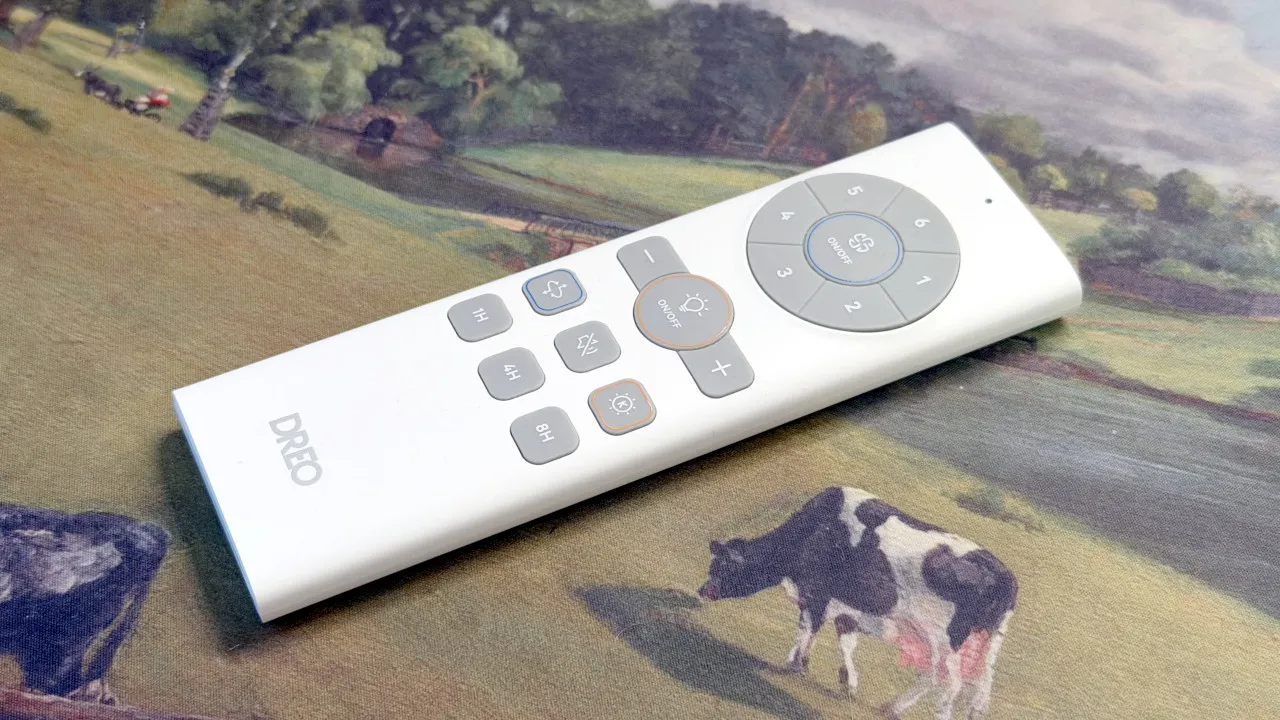
[Sam Wilkinson] recently installed a Dreo CLF513S ceiling fan in his place — it’s cheap, well-sized, and blows air around as you’d expect it to. The only problem is that it only works with an ugly cloud-only smart home setup out of the box. Never mind, though, because [Sam] figured out how to hack up a custom solution.
Hacking efforts began with the included remote control. [Sam] identified that the remote had to be RF, since it didn’t need line of sight to work properly. The FCC ID on the back of the device further indicated this was the case. Armed with that knowledge, it was simply a case of figuring out the commands sent by the remote, building something to replay them, and then hooking that into [Sam]’s existing Home Assistant setup.
The remote ran on 433.92 MHz, a not-uncommon bit of spectrum for these sort of appliances. An RTL-SDR was thusly enlisted to capture the output, with a spectrogram indicating the remote used simple on-off keying to send commands. Once commands were captured, [Sam] grabbed an ESP32-C6 microcontroller, hooked it up to a RFM69HCW radio transceiver, and programmed it to replay the fan on/off command. From there, a little dabbling with MQTT got the ESP32 controlling the fan as desired from within the Home Assistant ecosystem.
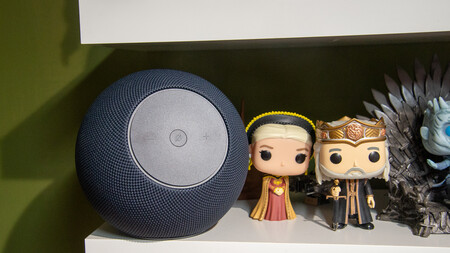
The Echo Studio houses immersive audio, Alexa support and clever sensors for smart home controls, all for an affordable price.
Pick up the Echo Studio for just £166.24 this Prime Day and save over £53 off its usual price. That’s the lowest we’ve seen the smart speaker reach on Amazon since its launch last year.
The Echo Studio is down to its lowest ever price
The Echo Studio houses immersive audio, Alexa support and clever sensors for smart home controls, all for an affordable price.
The Echo Studio is a well-rounded smart speaker that’s designed for use with Alexa+. Once you opt into the service, Alexa+ promises to be a more conversational assistant than the standard Alexa, allowing you to chat naturally between different topics and requests. In fact, we hailed the service as being “light years ahead of the competition” as it’s better at general responses, building smart home routines and able to find information from emails.
Advertisement
The light ring will illuminate once Alexa has heard that all-important wake word, giving you an indication that it’s ready and waiting to answer your question.
Otherwise, the Echo Studio itself is equipped with three 1.5-inch drivers and a 3.75-inch high excursion woofer. What that means is real-world use is that the device is a very competent-sounding speaker for its price. While bass levels aren’t quite as room-shaking as other speakers, overall low frequencies are handled well while sound is well-balanced.
Advertisement
Its design doesn’t stray too far from its predecessors, though now it includes easier-to-operate buttons than the previous Studio iteration, and rids itself of the action button too. That means you’ll have to either actually say “Alexa” to get its attention.
Advertisement
Overall we awarded the Echo Studio with a four-star rating, as Home Technology Editor Dave Ludlow concluded the smart speaker is a “powerful, all-rounder for the voice assistant [Alexa], music and entertainment”.
Whether you’re keen to try Alexa+, want an easy way to control your smart home appliances or need to upgrade an old smart speaker, the Echo Studio is a brilliant option. Not only is Alexa easily one of the best voice assistants around, but its sleek design and brilliant speaker set-up makes it a solid investment.
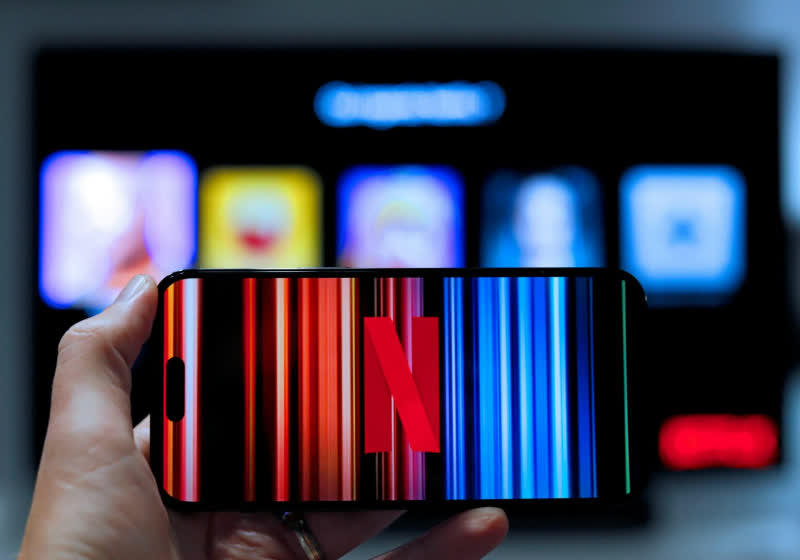
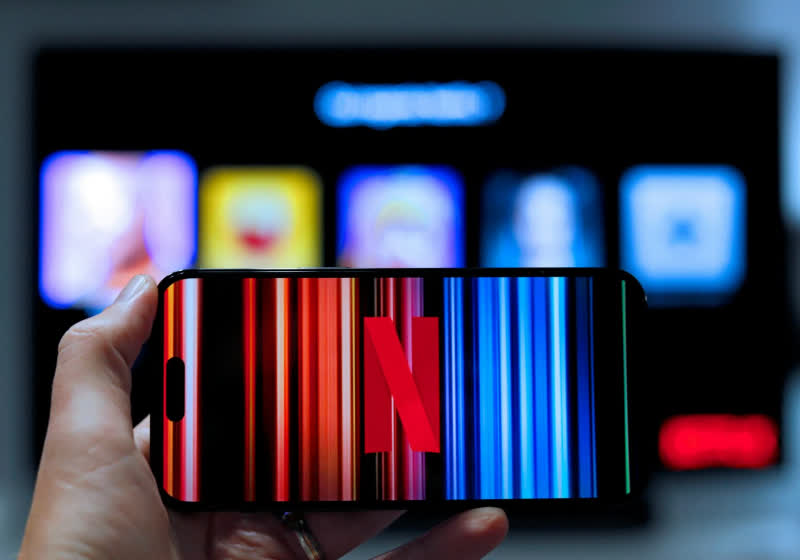
Netflix is changing how user identities work on its platform, and for many subscribers, the move is showing up in the form of unexpected login prompts and extra steps at sign-in. The company has begun requiring almost every profile on an account to be tied to a unique email address,… Read Entire Article Source link
A project has cloned the Apple II Plus, but instead of using emulation, it goes the harder route by rebuilding Apple’s classic computer in hardware.
If someone wants to get the experience of using Apple’s vintage products, they often turn to a software emulator. However, as one project proves, it’s possible to get the same effect by focusing on the hardware side.
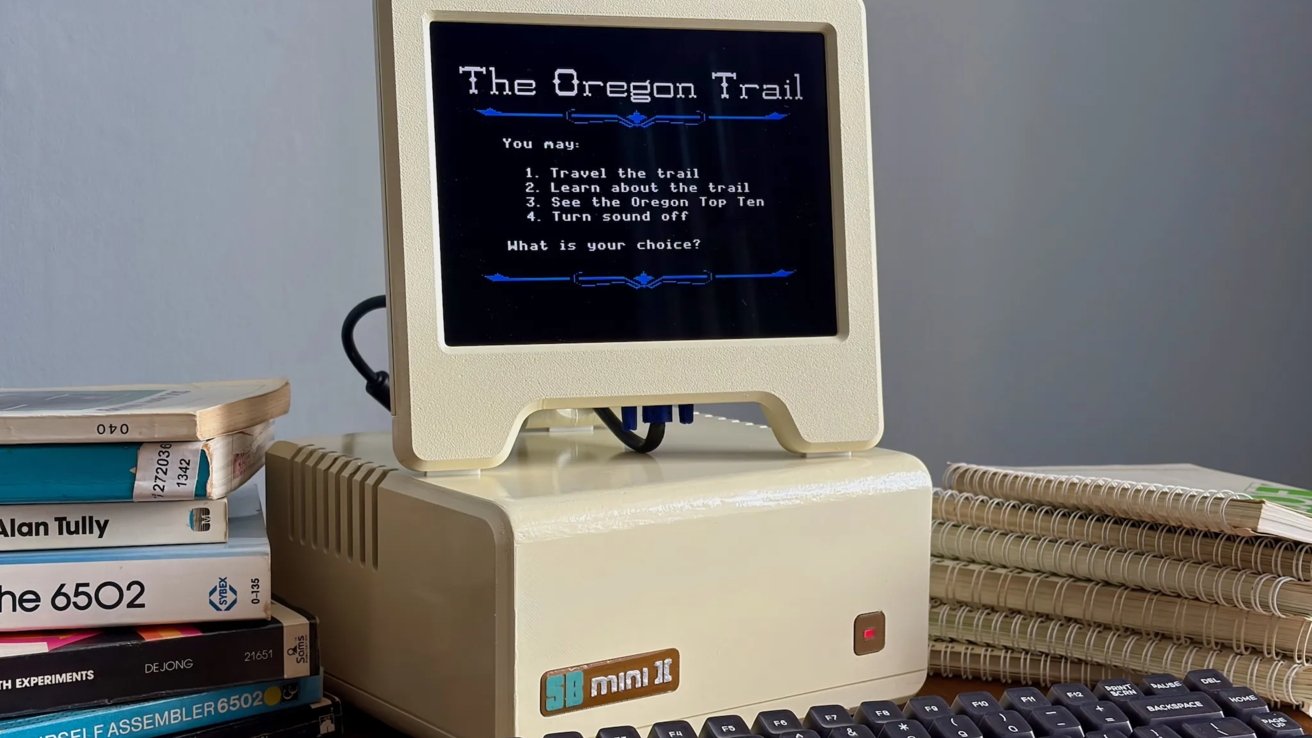
Posted on Sunday by Simon Boak, the SB Mini II is referred to as a “Homebrew Apple II Clone.” It is a rebuild of the Apple II Plus from a hardware standpoint, but using modern components.
Boak saw that most of the basic logic chips are still available to consumers, including the 6502 CPU. That, combined with circuit diagrams in the original manual and a library of books on the topic, helped Boak come up with a gameplan and a shopping list of parts.
Advertisement
A modern(ized) marvel
The clone does use modernized alternatives compared to the original design, mostly due to advancements in technology.
A key one is the replacement of the dynamic RAM (DRAM) used in the original Apple II. While the original kept to DRAM to save on cost, Static RAM or SRAM is also cheap enough for the project.
As a result, one and a half 32K SRAM chips are used to get the required 48k the Apple II Plus needs. The change also means there was no need to use circuitry to refresh the DRAM, which allowed the memory to function.
Boak remarks that a lot of the original circuit generated a composite video signal. Instead, using an Apple II VGA card, he was able to get a sharper video output, as well as removing the video generation logic from the circuitry.
Advertisement
In effect, it is a “headless” clone if it is used without the VGA card.
This also helped simplify the clock and timing signals as well. In this project, Boak uses a 4.096 MHz crystal oscillator, divided down to 1.024MHz, which is close to the 1.023MHZ of the original machine.
A Raspberry Pi Pico, which in itself is more powerful than the Apple II Plus, is used as a way to connect a USB keyboard to the Apple II. The Pico does generate the same parallel data signals as the original keyboard, as well as eliminating the need to use voltage level shifters.
Smart case
The project was finished off by being placed in a specially created case, which was 3D printed in parts before being glued and painted together. Those part files have since been released via GitHub.
Advertisement
It’s based on the design of the Apple ProFile hard drive. However, there are extra vents and a rear panel added so that connections could be accessed.
Just as the original was designed for easy access to the internals, the enclosure’s lid clips shut, so it can be opened without tools.
To go with the clone, Boak has also designed a matching Studio II LCD monitor.
This is far from Boak’s first attempt at making clones of Apple products. In June 2024, he created an Apple 1 clone with a printer, which used an SD card for storage.
Advertisement
The Apple II Plus recreation is certainly impressive, since it’s a hardware recreation instead of just using an emulator. But sometimes, even those efforts can be just as astounding.
In 2024, a Hackintosh project aimed to recreate the original Macintosh Plus, using modern components internally. However, the effort used 3D printing to produce a highly-accurate full-scale recreation of Apple’s hardware.
The European Space Agency’s (ESA) Euclid space telescope has captured the largest and most detailed visible-light image ever obtained of the Milky Way’s galactic bulge, the central region of our galaxy.
The image is a mosaic containing more than 60 million stars, as well as nebulae and star clusters. It will allow scientists to confirm the possible presence of exoplanets using a microlensing technique and measure their masses with greater precision.
The Power of Euclid
Although Euclid was designed to observe billions of distant galaxies, its visible-light camera is sensitive enough to resolve individual stars at the center of the Milky Way—a region that is both extremely bright and densely populated—without being overwhelmed by the intense light.
On March 23, 2025, Euclid turned its gaze toward the galactic bulge, capturing this enormous image in just 26 hours of observations. The result was remarkable: a mosaic composed of nine separate “pointings” (exposures) by its visible-light camera, each covering an area of sky larger than the full moon.
Advertisement
While the quality of Euclid’s visible-light images is comparable to that of the Hubble Space Telescope, there is one major difference: Each pointing that Euclid captures in just a few hours covers an area 270 times larger than Hubble’s field of view. It is also much faster. To put this into perspective, the Keck Observatory would require roughly 2,000 hours to observe the same mosaic.
The Image of the Milky Way
The new Euclid image captures more than 60 million stars, along with nebulae and star clusters, in one of the Milky Way’s most crowded regions—a location ideally suited for searching for exoplanets through gravitational microlensing.
“To catch microlensing, you need to observe parts of the sky that are crowded with stars, such as close to the centre of our galaxy,” said Jean-Philippe Beaulieu, who led the observing campaign, in a press release. “During the last 20 years, almost 300 exoplanets have been discovered using this technique, all with ground-based telescopes and all towards the center of our galaxy. This image from Euclid includes 51 known planetary systems—and it will assist in studying many more that will be found.”
Measuring Planetary Masses
Although detecting a microlensing event requires several weeks of observations—meaning Euclid could not identify any new events during its relatively short observational campaign—what makes this image so valuable is that it provides the data needed to measure the masses of already known planets, as well as planets that have yet to be discovered.
Advertisement
“In 24 hours, Euclid has already captured the stars involved in all the future microlensing events that the Roman space telescope will detect, but before the stars and planets involved have aligned,” said Natalia Rektsini, who led the publication of the data, in a press release. (The Nancy Grace Roman space telescope is slated to launch later this year.) “This means that anyone who detects a microlensing event in the same region, for example with Roman, will be able from now on to use Euclid data as a time reference in the past and see how the stars looked before they overlapped.”
In effect, Euclid’s observations will serve as a reference archive for future missions, enabling more detailed studies of exoplanets and more precise measurements of their masses.
“In just 24 hours, Euclid has delivered unique data on the Milky Way’s center, with a large and sharp view of this region,” said Valeria Pettorino, ESA’s Euclid project scientist, in a press release. “This data can also be used for other scientific applications, from brown dwarfs and binary stars to stellar motions and dust across our galaxy.”
This story originally appeared onWIRED Italiaand has been translated from Italian.
Sony has confirmed that it will remove 551 movies and TV series from the PlayStation Store in the UK on September 1, 2026. The content will also be simultaneously deleted from customers’ libraries who have already purchased it. Sony did not mention anything about refunds, suggesting affected users will not be compensated financially. Read Entire Article Source link
Get caught up on the latest technology and startup news from the past week. Here are the most popular stories on GeekWire for the week of June 21, 2026.
Microsoft names chief digital safety officer; Remitly’s chief product and technology officer departs; and an AWS leader joins Synthesia to oversee its new Seattle office. … Read More
“Zen,” a $200 million, 289-foot yacht reportedly owned by Chinese billionaire Wu Guangming, motored smoothly through the Ballard Locks and out to Puget Sound, drawing onlookers along the railings of the popular Seattle destination. … Read More
Virginia-based AI startup Trase is expanding its presence in the Seattle region, with plans to grow from about 20 employees in the area today to as many as 100 in the coming months. … Read More
Valve Software abruptly opened reservations for its latest Steam Machine on Monday, but due to the ongoing PC component shortage, did so at a significantly higher price than expected. … Read More
As tech giants hunt for massive amounts of clean electricity, PNNL, Nvidia and Fervo Energy are partnering to develop a new public tool that aims to eliminate the guesswork of drilling into the Earth’s molten depths. … Read More
Mind Children Robotics, a Seattle-area startup co-founded by AGI researcher Ben Goertzel, is building Codey — a child-sized social robot priced under $10,000 and aimed at classrooms, hospitals and senior care. … Read More
Salem, Ore.-based Agility Robotics, whose two-legged Digit robots have been tested inside Amazon warehouses, is set to become the first publicly traded U.S. … Read More
Microsoft cuts data center water intensity by 90% and hits a major replenishment milestone as tech giants face growing public backlash over resource consumption. … Read More
Two of Amazon’s top Prime Day MacBook Air deals have been extended, resulting in discounts of up to $450 off.
After many M5 MacBook Air deals sold out during Prime Day, two of the top choices at Amazon have been extended into the weekend. Save $450 on the 13-inch MacBook Air M5 with 16GB of RAM and 1TB of storage.
On sale for $1,149.99, only select colors are available at press time due to the increased demand after Apple raised prices on Thursday.
Need additional screen real estate? The standard 15-inch MacBook Air with Apple’s M5 chip, 16GB of memory, and a 512GB SSD is also marked down to $1,149.99, reflecting a $350 price cut off Apple’s new MSRP.
Prime Day MacBook Air deals have been extended
You can compare prices across retailers in our MacBook Air Price Guide for offers on CTO models as well.
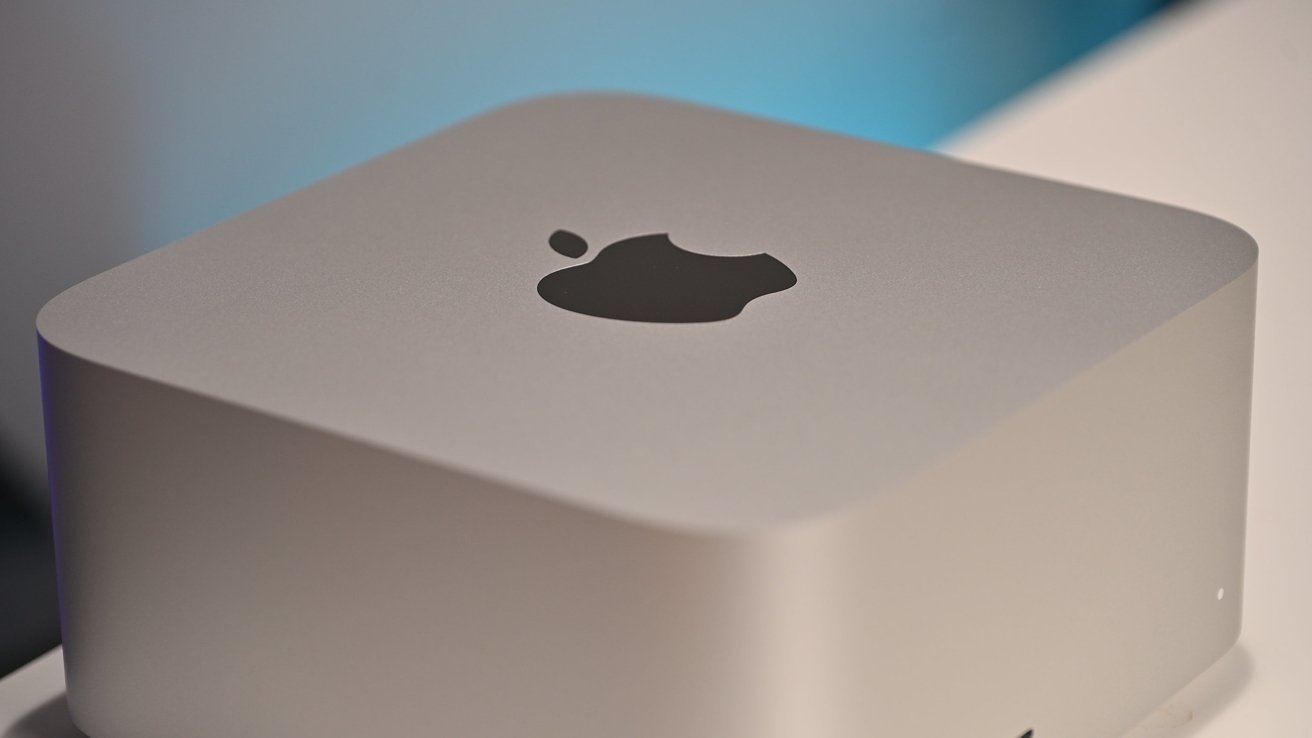
Apple is still expected to update the Mac Studio with the M5 Ultra in 2026 and an M7 Ultra version in 2028, but don’t expect major changes to the form.
The Apple Silicon chip series consists of four tiers, with the standard base model, Pro, and Max variants appearing in every generation. The fourth, the Ultra chip, hasn’t seen a release since the M3 Ultra, with the M4 Ultra skipped entirely.
The Mac Studio is the model of Mac to get if you want the massive number of cores that the Ultra model provides. If Mark Gurman’s “Power On” newsletter for Bloomberg on Sunday is accurate, you won’t have to wait long for the next release.
Gurman writes that there are two updates to the Mac Studio on the way. The near-term model will be the M5 Ultra, which is due to arrive later in 2026.
Advertisement
The second update is further in the future, with an M7 Ultra expected sometime in 2028.
The lack of an M6 Ultra release seems to correlate with another Gurman story from June 25. One that has Apple skipping the higher-end M6 chips in favor of bringing out AI-oriented M7 Pro and Max versions in 2027.
A spec-bump update, again
As for what to expect when those Ultra-equipped models arrive, Gurman provides bad news if you want more than just performance improvements.
He is informed that internal changes have been made to the Mac Studio. Chiefly, this consists of a better heatsink, which will improve thermal performance under heavy loads.
Advertisement
A major redesign is not anticipated for the M5 Ultra model. As for the M7, there’s a slightly better chance, but Apple’s tendency to stick to model designs for long periods of time doesn’t bode well for a revamp.
One curiously absent element from the report is any mention of the M5 Max model. Gurman only talks about the Ultra, and doesn’t refer to any other versions of Mac Studio in the newsletter.
Previously, in March, he did refer to Mac Studio models in plural form for the 2026 launches. The lack of a Max reference in the latest report could simply be a decision made during the writing process, in that he didn’t feel the need to bring it up.














































You must be logged in to post a comment Login