

Politics
How the World Cup became a victory lap for Trump ally El Tigre



MIAMI — Colombia’s World Cup run has become a celebration of more than just its national team: For many fans, it’s also a victory lap for the country’s Trump-backed president-elect.
Political rookie Abelardo de la Espriella — a right-wing former defense attorney and businessman who calls himself “El Tigre” — narrowly saw off a left-wing senator last weekend as Colombia swung from far-left to hard-right leadership. De la Espriella ran for president on a tough law-and-order platform, vowing to end outgoing left-wing President Gustavo Petro’s attempts to establish dialogue with armed groups. He also wants to build mega-prisons, emulating those of Salvadoran President Nayib Bukele, another Trump favorite in Latin America.
Fans who POLITICO spoke with outside the stadium in Miami on Saturday evening before a key game against Portugal were insistent that de la Espriella is going to make Colombia great again.
With de la Espriella’s victory, “There is no more corruption, there is no more guerrilla, there is security … it’s gonna be great,” said Hugo, a 62-year-old who lives in Miami but is originally from the Colombian capital Bogotá. “Just give him one year, and you will see the new Colombia,” added Alonso, 42, originally from Ibagué, who disputed that the election was as close (around one percentage point) as the official results showed — and said a combination of Trump and de la Espriella would be great for Colombia.
Colombia’s brilliant-yellow soccer jersey, ubiquitous in downtown Miami this week, also became a key flashpoint on the campaign trail, as de la Espriella — running to restore security, shrink the state and promote economic growth through deregulation — clothed himself in the kit.
In the sunshine outside Miami’s World Cup stadium, Juan, from Cartagena, said he liked de la Espriella wearing the soccer jersey because “it shows his whole campaign is about patriotism and to save the country, to give hope to the people.”
A Bogotá judge banned de la Espriella and his movement, Defensores de la Patria (Defenders of the Homeland), from using or displaying the jersey for his electoral campaign, and the left-wing candidate, Iván Cepeda, said, “The Colombian national team belongs to all Colombians. Its use for electoral, personal, and ideological purposes is a clearly opportunistic act, the legal implications of which must be examined.”
In response to a post-match question from POLITICO about the president-elect wearing the shirt and backing the team, Colombian coach Néstor Lorenzo said, “Football is played in a very passionate way in South America. I think that all the presidents, the South American countries, live in that passion. It is a way for us to identify, beyond the flag, the shirt that represents the most beautiful sport of all. The president wants to show, surely, that he is a real citizen.”
Only one yellow-clad supporter showed any reticence about de la Espriella, shaking his head and saying “it’s crazy” what’s happening in Colombia, before declining to talk more about politics or provide his name.
The Trump administration has embraced de la Espriella. Trump praised him as a “Smart, Strong, and Tough Leader.” At the game in Miami on Saturday evening, two senior U.S. officials — Secretary of State Marco Rubio and FBI Director Kash Patel — were in attendance, flanking FIFA President Gianni Infantino.
Last time Colombia played at the World Cup in the United States, it all ended in tragedy.
Defender Andrés Escobar scored an own goal against the U.S. at the Rose Bowl in Pasadena, California — then was shot dead outside a nightclub after returning to Colombia, a country still grappling with violence involving guerrilla groups and criminal organizations.
The dark-horse national team is performing considerably better in 2026 than in 1994, progressing easily to the second round. But political turmoil endures at home, where the bitterly fought election campaign — that came down to a June 21 runoff between de la Espriella and Cepeda — saw an assassination, bombings and kidnappings.
That specter of violence — even soccer-linked violence — is rarely far away in Colombia. The father of star soccer player Luis Díaz was kidnapped in late 2023 by far-left guerrillas, and only freed after 13 days.
As Colombia celebrated what it erroneously thought was a late winner against Portugal, the live broadcast cut to a jubilant supporter, cheering and wearing a red Defensores de la Patria hat.

Politics
Politics Home | Labour MP Says Her Colleagues Are “On A Journey” To Support Her Summer Of Sex Campaign
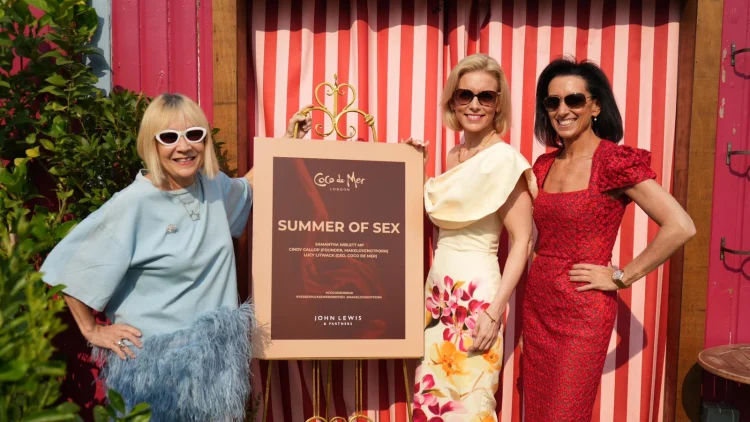

Make Love Not Porn founder Cindy Gallop, Labour MP Samantha Niblett and Coco de Mer CEO Lucy Litwack at the ‘Summer of Sex’ campaign launch party (Coco de Mer/John Lewis)

7 min read
Labour’s Samantha Niblett said she believes some of her MP colleagues are starting to come round to her campaign for lifelong sex education, which sparked fierce debate across Westminster earlier this year.
Three months on from kicking off her campaign for lifelong sex education via an exclusive interview with PoliticsHome, Niblett partnered with major retailer John Lewis and luxury lingerie and sexual wellness brand Coco de Mer to host an event on Wednesday evening to officially launch the ‘Summer of Sex’.
Speaking at the event with Coco de Mer CEO Lucy Litwack and Make Love Not Porn founder Cindy Gallop – who has partnered with Niblett for her campaign – Niblett laid out how the campaign has progressed over the last few months.
“If I get known as Samantha the sex MP, I just start making it easier for other MPs to start to talk about it. Many of them have gone ‘my god, good on you, this is amazing’.”
She said some supportive MPs have told her that some of the “original doubters” have started to see the point of the campaign.
“Some MPs that were critical of the way that I went about it, they don’t like the sex toys, they think it’s diminishing the campaign.
“But it’s not. I grabbed the mic. It did get the attention, and I am absolutely going to do a sex toys event in Parliament because I want it to not be shocking. I want it to not be pearl-clutchy.
“Some colleagues are going on a journey. I honestly believe it: the more that the country gets behind this campaign, the more that Parliament will, because it will be led by what is palatable. We are as basic as that, seriously. People are interested in sex. Everybody wants to talk about sex.”

Niblett said she aims to pull together a briefing document by the end of summer recess to send to fellow MPs and promote the purpose of the campaign.
In her interview with PoliticsHome in April, Niblett said she wanted to push for more open, inclusive lifelong sex education by securing a debate in Parliament on the topic in the autumn. Niblett said she wanted to promote wider awareness of consent, prevent abuse and violence, and raise awareness of how childbirth, the menopause, stress and other health conditions can impact sexual satisfaction.
Niblett shared that she watched porn herself like “lots of other people” and that it was a “turn on”. She said she will host an event in Parliament where she brings in sex toys, which has since been confirmed to be allowed by the parliamentary authorities.
The campaign took Westminster by storm, generating discussion in the chamber, in which Tory leader Kemi Badenoch accused Labour of “fiddling while Rome burns”, and heated debate within the women’s Parliamentary Labour Party WhatsApp group, in which other MPs accused Niblett of trivialising a serious topic.
“I certainly found myself posting less in MP WhatsApp chats because there were slightly terse comments that went flying by in the women’s PLP chat,” Niblett said.
“So I extricated myself from it, which is horrible because you think you’ve got comrades, but it didn’t feel like that. So that was a bit sad, but it’s politics.”
The interview generated many TV interviews and opinion columns, including an LBC interview with Labour deputy leader Lucy Powell in which she said: “I personally don’t own any sex toys, but each to their own”.
Niblett has since become the chair of the All-Party Parliamentary Group for sexual and reproductive health.
The campaign launch event on Wednesday evening was attended by sponsoring brands John Lewis and Coco de Mer, sex education content creators, sexual intimacy coaches, charity campaigners and journalists. It was an exclusive affair, with the vast majority of the around 50 attendees being women.
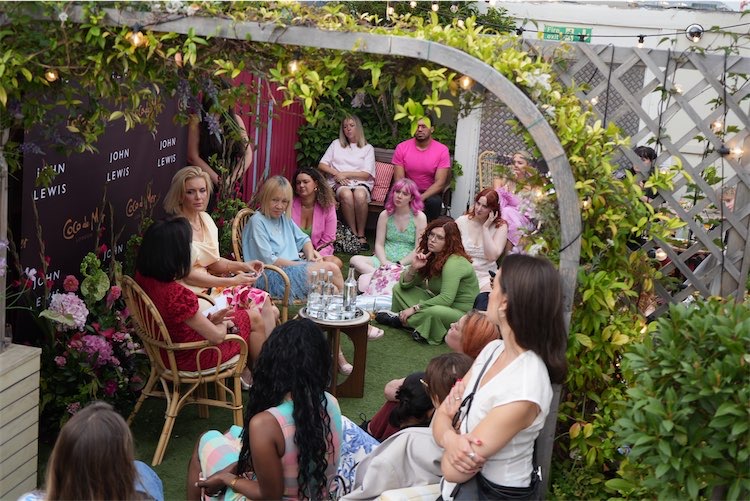
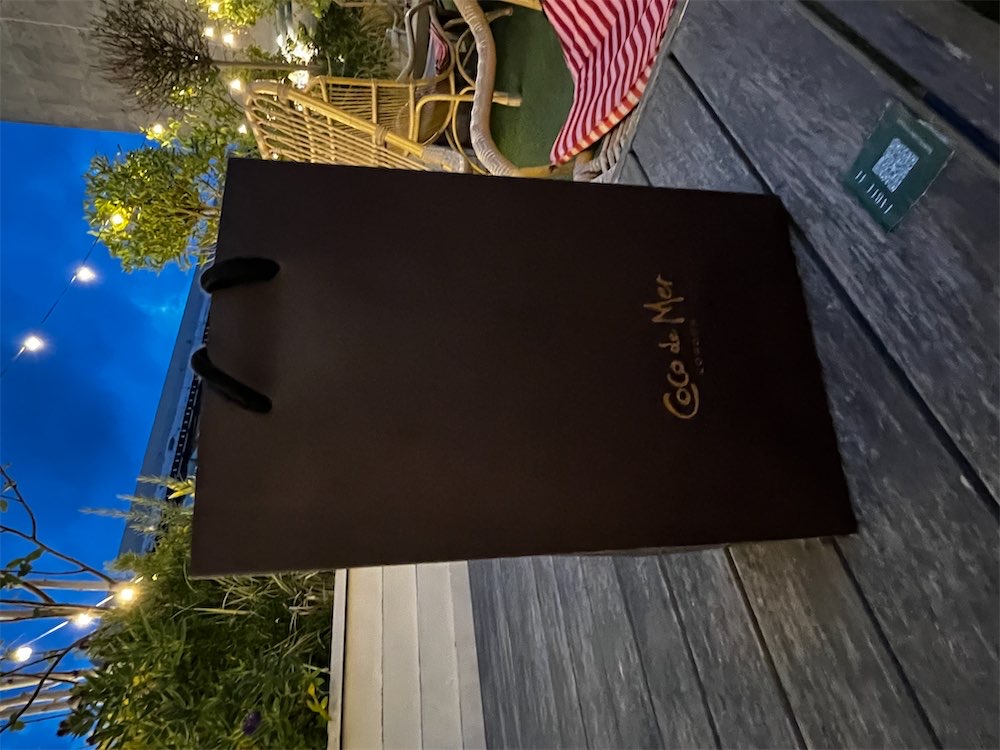
The event was located at the rooftop bar of John Lewis in central London, with servings of canapés and glasses of Aperol spritz, flowery decor and luxury goodie bags for attendees that contained biscuits, canned cocktails and intimate bodycare products.
The ‘Yes sex please, we’re British’ campaign has a broad scope: covering lifelong sex education which Niblett describes as needing buy-in from government, the NHS and education systems, parents, and businesses.
Pressed on what specific demands she hopes to bring to government ministers, Niblett said she is continuing to speak to stakeholders and charities throughout the summer to learn as much as possible, before delivering a speech at the debate she has secured in Parliament, which is set to be held in the autumn.
Talked about what she wants to systemic change and for positive sexual wellness should be “promoted” across the health and education systems.
“I have spoken to doctors and sexologists and people working within the NHS and educators that are just so grateful someone is taking this seriously within Parliament, that’s prepared to put their head above the parapet,” Niblett told PoliticsHome.
“We need to be talking about sexual wellness within the NHS, not just sexual health. Talking about the benefits of sex, not just let’s fix you when you’re broken.”
Niblett spoke of concerns raised by people working in the NHS that support is “patchy” for patients whose health conditions affect their sex lives: “Some doctors are embarrassed to talk about it; there isn’t a standard of sex education in GP training even.”
The MP also wants to start work on determining the economic value benefit of improving lifelong sex education, as a way of getting the Treasury on board by saving money for the NHS.
“How is it preventing other illnesses from happening? How is it making people better?”
Niblett also recently hosted a roundtable with Meta to express her opposition to the banning of accounts that share ‘positive’ sex education content.
The MP hopes that the sponsorship from John Lewis for the launch event will help to legitimise the campaign. John Lewis has seen a 22 per cent increase in demand for their sexual wellness products in the last year, which has been growing since the Covid-19 pandemic. John Lewis and Coco de Mer representatives told PoliticsHome at the event that both companies wanted to help take the “stigma” out of sex.
Niblett has already won the support of Emma Thompson, who recorded a video with Niblett last month, saying that the campaign was “not party political, but it was critical”.
The MP has her sights on further celebrity endorsements: She is in conversation with LGBTQ dating app Grindr to get her an introduction to pop star Madonna, and with American media company Condé Nast to connect her with singer Harry Styles, who launched his own sex toy range last year.
“We’re trying to get the nation behind the campaign, because when you do that, MPs will fall in line,” Niblett said.
“If it looks like a vote winner, people don’t want to look like the idiot who looks like the one who’s on the side.”
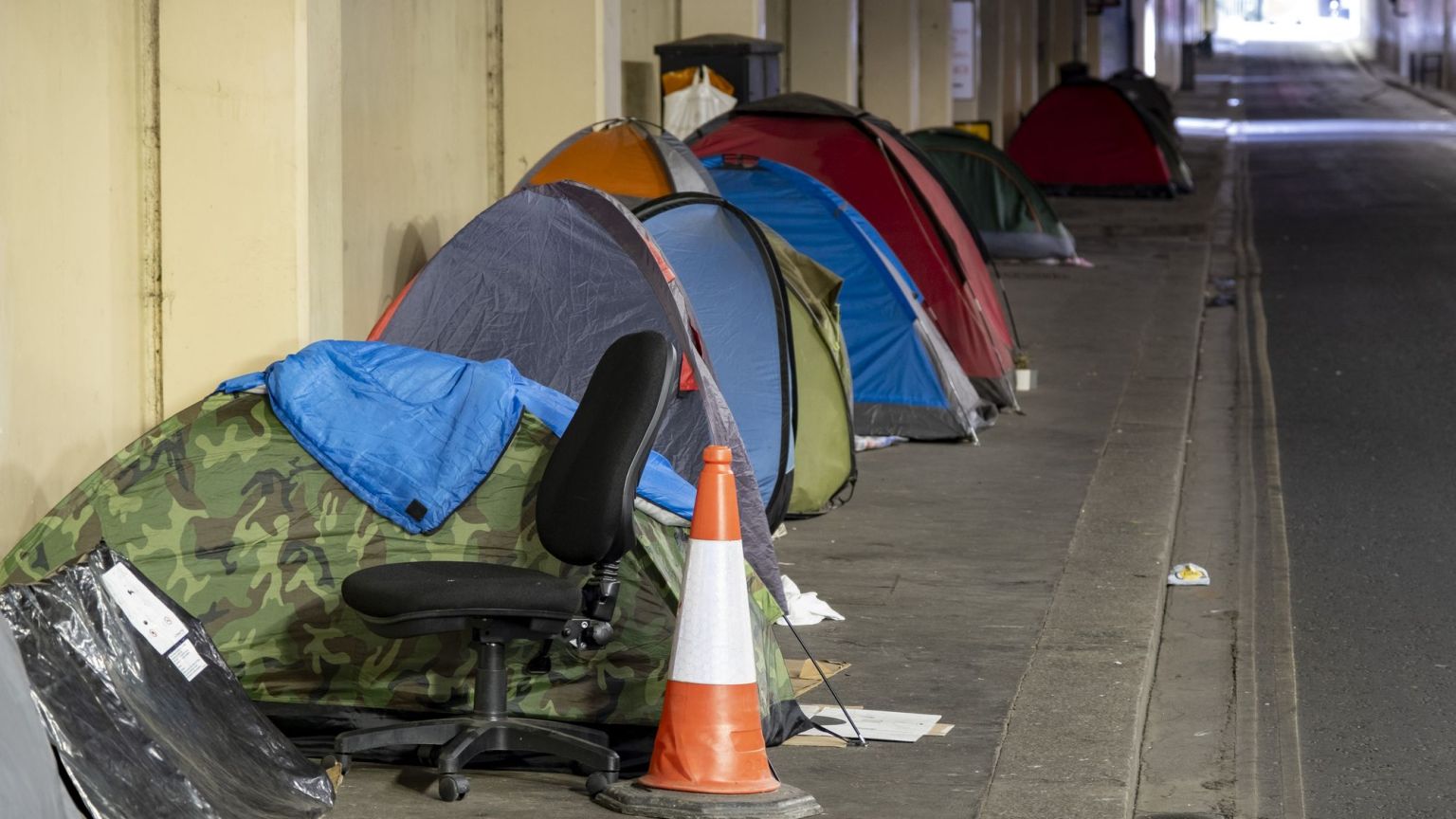
Britain has become very good at talking about compassion. We’re much less good at actually delivering it. Which is why, whenever you visit parliament, you’ll probably find people sleeping on the pavement next to a politician announcing a new policy to end homelessness.
Andy Burnham is right to make ending rough sleeping one of his first ambitions as UK prime minister. It is a national disgrace. It should be a priority. But there is one awkward problem: he’s promised this before.
As mayor of Greater Manchester, Burnham pledged to end rough sleeping there. He didn’t. Rough sleeping, begging and public drug use remain part of everyday life in central Manchester. Spend half an hour around Piccadilly Gardens and you’ll see exactly what I mean.
Despite his evident failure there, he’s now making the same promise to the whole nation. But why should Britain believe him this time?
His failure to end rough sleeping in Manchester – where he had nine years to do something about it – doesn’t mean he should give up. Failure is okay. But it does mean he needs to explain why he’ll succeed nationally when he couldn’t locally.
Rough sleeping can be ended. Not every individual case – life’s more complicated than that. But the long-term encampments, occupied shop doorways and places the public walks past every day can be cleaned up. Those don’t have to exist.
What you need isn’t another strategy. You need beds, trained workers and strict rules. You also need, heaven forbid, politicians prepared to make difficult decisions.
First, we should create around 6,000 safe individual sleeping pods. Very basic modular units with a bed, toilet, sink, window, light and a charging point. That’s enough to get someone off the street tonight.
Communal hostels don’t work for everybody. Some people fear violence or theft. Others have addictions or behavioural problems that make shared accommodation impossible. A private room with a lock on the door can make all the difference.
Second, every area with a serious problem needs properly funded outreach teams. Not more awareness campaigns. Not another glossy strategy document. We need trained people who get to know who’s sleeping rough, where they are and what help they need. Those staff can connect people with housing, addiction services, mental-health support, councils and the police.
A bed doesn’t fix a broken life. But it is the vital first step to a better life.
Now comes the bit politicians hate. Once suitable accommodation has genuinely been offered, people cannot be allowed to carry on sleeping in shop doorways, stations and public spaces. Not only should they be taken to the accommodation that’s available – there should be consequences for choosing to sleep rough in public places.
Some people will call that criminalising poverty. It isn’t. Leaving somebody to deteriorate in public isn’t kind or compassionate. It’s cowardly.
As mayor of Middlesbrough, I saw these things close up. Beds were available, yet some people stayed outside because they refused hostel rules, often around drugs or alcohol. Sometimes they just want to be on their own.
We never eliminated rough sleeping altogether. Nobody does. But we kept it under control.
Beyond the short-term pods, we need basic but decent modular homes on a mass scale, getting individuals and families out of the horrendous temporary hostels councils use and fund.
But none of this works unless Britain builds far more homes. Right now, we have more households than we have available homes. Until we build in big numbers, there will always be large-scale homelessness.
We also need to stop pretending every new housing development is a local outrage. Everybody in Britain agrees that we need more homes. They just don’t want them built nearby. Mayors need the powers and targets that hold them accountable – and to have their funding clipped if they fail to deliver.
Burnham should publish a funded timetable, measurable targets and tell us exactly where these emergency spaces will come from, who’ll staff them and what happens when suitable help is repeatedly refused.
Britain doesn’t need another promise on rough sleeping. It needs beds and then proper homes. And it needs rules, too. Andy Burnham has made this promise before – he needs to prove how this time will be different from the last.
Andy Preston was mayor of Middlesbrough from 2019 until 2023.
Politics
Politics Home | Green Party Manchester Mayoral Candidate Pledges To Twin Manchester With Palestinian City Of Ramallah
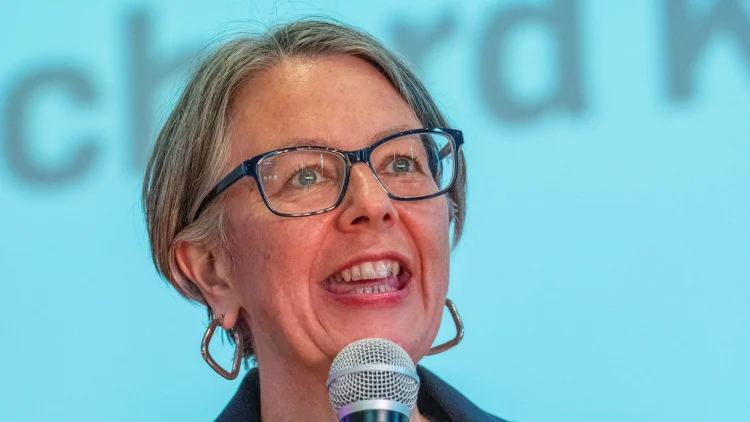

Geraldine Coggins is the Green Party candidate for the Greater Manchester mayoral by-election (Alamy)
5 min read
Exclusive: The Green Party candidate for the Greater Manchester mayoral by-election will pledge to twin the Greater Manchester region with Ramallah, the administrative capital of Palestine, if she wins the contest.
Geraldine Coggins will announce on Friday that she will seek to twin the Greater Manchester city-region with the Palestinian city of Ramallah in the West Bank if she is elected as mayor next week.
On 30 July, voters in Greater Manchester will head to the polls to elect a new regional mayor to replace Andy Burnham, who left the role to become the new prime minister of the United Kingdom.
The mayoral by-election is a hugely significant contest for the Labour Party, which wants to prove it can maintain its stronghold in the region, and Reform UK and the Green Party, which both made significant electoral gains in the local council elections in May and want to show they can challenge Labour on its home turf.
With Andy Burnham as the new Labour leader and prime minister, the Green Party are having to rethink their strategy to retain left-wing voters who have moved from Labour to support them during Keir Starmer’s premiership.
Asked by PoliticsHome how the party might have to change its campaign messaging to adapt to a Burnham premiership, Coggins said it would “depend on which version of Burnham we get” but insisted that the Greens had a clear dividing line with Labour over the war in Gaza, which the party believes resonates with voters in the Greater Manchester region.
“We’ve not seen the serious recognition of what is happening in Gaza, and a lot of people will not go back to Labour and really see Labour as morally bankrupt,” she said.
“That’s what we hear from people. That is not a thing that people just get over.
“We are still funding and fueling this war and sharing military intelligence. Our government is still complicit in that, and people are not just going to get over that because there’s a new prime minister at the front.”
The Greens included a pledge to partner with a Palestinian city in their mayoral election manifesto. The party has now chosen Ramallah as the proposed twin city because it has growing technology, creative, professional services, and education sectors which could create opportunities for collaboration between the cities.
Coggins will announce the pledge outside the Dar ul Uloom Mosque in Manchester’s Longsight District on Friday, where she is expected to say that Manchester has a “proud tradition of international solidarity, from the campaign against apartheid to welcoming refugees fleeing conflict”.
A Green Party source said: “People up and down the country have been outraged by Labour’s complicity in Israel’s genocide.
“It’s clear that this isn’t going to change now Andy Burnham has become Prime Minister. Greens will always stand up for human rights and international law. And, as mayor of Greater Manchester, Geraldine would continue to call out the government’s failings and show there is a different way.”
The Manchester mayoral by-election is shaping up to be less closely fought than was initially expected following Labour’s devastating losses in the region in the May local elections.
A YouGov poll on 17 July put Labour candidate Bev Craig at 62 per cent in the second round of the by-election voting, beating Reform UK’s Sian Astley on 38 per cent. The poll also showed Craig leading on 38 per cent on first preference votes, compared to Astley’s 24 per cent and the Greens in third on 17 per cent.
Nevertheless, the Greens say they are continuing to campaign hard after their former leader Caroline Lucas told PoliticsHome it was the party’s intention to “throw everything” at the contest.
Speaking to PoliticsHome in Manchester this week, Coggins criticised Burnham’s announcement to cut VAT on household electricity as a measure that would only save the average household less than a pound a week.
“That’s a continuation of the sort of incrementalism that we had under Starmer,” she said.
“It is not the wholesale change to the rip-off Britain model that we really need. I don’t think people are going to be fooled by that.”
Coggins highlighted suggestions that Burnham intends to continue drilling in the North Sea, and his failure to eradicate homelessness in Greater Manchester during his time as mayor, with the new PM now making the same pledge from Downing Street.
She also criticised Burnham’s approach to ‘Manchesterism’, arguing that the way housing development had been carried out in Manchester was seen primarily as an “investment opportunity for wealthy individuals and big corporations”.
In contrast, she said the Greens see housing as “bringing back homes for people” in Greater Manchester, with a pledge to create 20,000 “genuinely affordable” homes over 10 years.
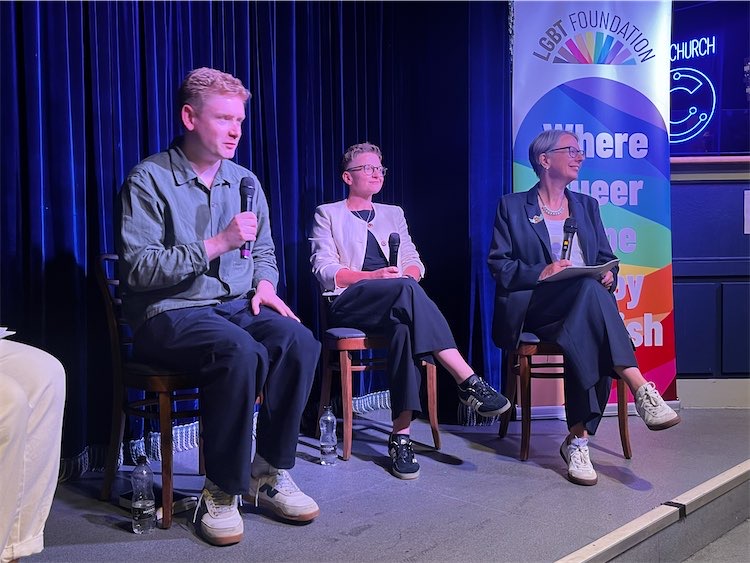
At an LGBT hustings in Manchester’s Gay Village on Tuesday evening, Coggins was keen to draw a dividing line between the Greens and Labour on housing in particular. PoliticsHome previously revealed that the Greens were hoping to target unease about gentrification in the region to attack Labour in the contest.
“Unlike Bev, I can tell you what genuinely affordable means,” Coggins told the hustings.
“That means that if you are on housing benefit, you will be able to afford to rent them.”
She described a system where housing benefit money was being “funnelled into big corporate landlords who own these shiny towers in other countries who aren’t even paying tax here” and said she wanted to “really radically change our housing”.
Craig responded by saying that Coggins’ comments got a “little bit personal”.
“If you want to know what I think genuinely affordable homes look like, you can look at the Manchester living rent,” the Labour candidate said.
“And you can look at the record numbers of council and social homes that we built last year, building more in the city than we’ve done in 25 years.”
The full list of Greater Manchester Mayoral Candidates:
Sian Astley (Reform UK)
Geraldine Coggins (The Green Party)
Bev Craig (Labour and Co-operative Party)
Phil Eckersley (The Conservative Party)
Marcus Farmer (Independent)
Richard Kilpatrick (Liberal Democrats)
Marlon West (Restore Britain)


5 min read
Labour MPs unhappy with the treatment of Keir Starmer loyalists have warned that they could make life difficult for Andy Burnham at the Budget.
“Andy’s Starmerite purge has created an incredibly powerful phalanx of skilled political operators who intimately know the government’s fiscal position,” one Labour MP told PoliticsHome.
“Some sought assurances about the direction of travel before nominating Andy and have been alarmed at how quickly those assurances seem to have turned hollow.
“After the undoubted conference euphoria in Liverpool, the Autumn Budget will loom very large on the Horizon. That will be a big event,” they added.
While it was widely expected that Burnham would remove Starmer loyalists from ministerial positions after entering office, the scale of what is being described as a ‘purge’ has angered those close to the former prime minister, who argue it went too far.
Starmer allies David Lammy, Rachel Reeves, Darren Jones, Steve Reed and Jo Stevens were all removed from Cabinet, as were Lord Hermer, Nick Thomas-Symonds and Baroness Chapman, who were ministers who attended Cabinet.
Defenders of Burnham’s approach have stressed to PoliticsHome that the former Manchester mayor sold himself as a departure from the last Labour leadership, which inevitably means making significant changes to the team. Several key Burnham allies have secured jobs in the new ministry, including Lou Haigh, Anneliese Midgley and Angela Rayner.
“It’s not what Andy said he would do, which is a real shame,” said one Labour MP who Burnham sacked from Cabinet.
Another MP complained: “There is a large group of MPs who believe in whole-PLP [Parliamentary Labour Party] collective responsibility, who expressed disagreement privately but were publicly loyal to Keir Starmer. What they are seeing in Andy’s new team is punishment for anyone who showed loyalty and a reward for the disrupters.”
They added: “It feels like an early breach of trust for MPs who, for the sake of unity, gave their endorsements to Andy. We were promised an end to factionalism and recruitment based on merit.”
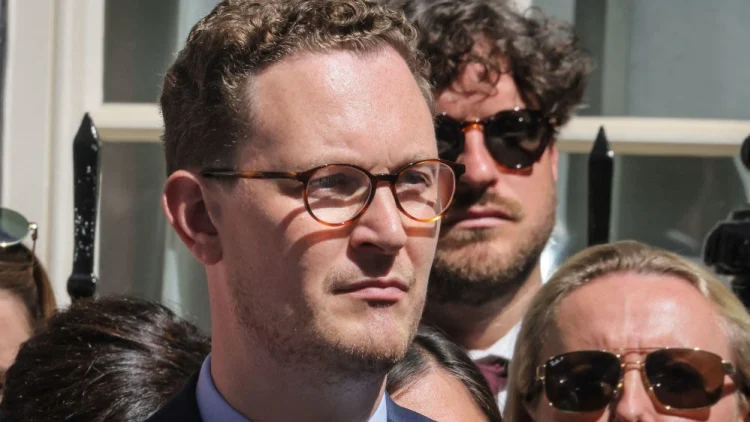
The treatment of Jones has become a particular source of frustration among Starmer’s supporters.
Jones, former chief secretary to the prime minister, was encouraged by Starmer allies to challenge Burnham for the leadership but ultimately ruled out a run, saying that he decided against it after recieving reassurances from Burnham about his economic policies. He was not offered a ministerial role in the new government on Monday.
“It’s understandable after taking power in such a way to be insecure about those around you, but the new Prime Minister has shown naivety here. The purge has been far too obviously targeting those loyal to Keir Starmer,” a different Labour MP said.
They warned: “It will cause problems for him in the future.”
Just hours after leaving government, Jones publicly criticised Burnham’s first cost-of-living announcement, posting on X that the new government’s plan to scrap digital ID and use the money to take VAT off energy bills was unfunded.
Several Labour MPs told PoliticsHome that Jones’ attack was a sign of things to come later in the year when Burnham sets out his spending plans.
The new Prime Minister has faced questions over how he would fund his cost-of-living policies, which also include capping bus fares at £2 and a 20 per cent cut to business rates for some hospitality settings, but full details are not expected to be confirmed until his first fiscal event as PM.
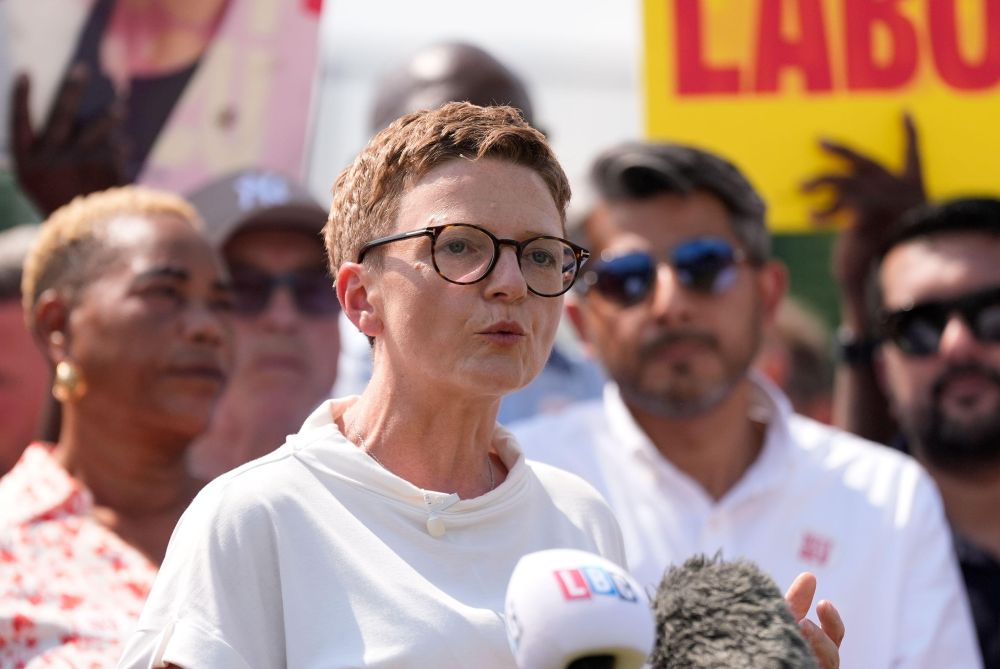
Bev Craig, the Labour candidate looking to succeed Burnham as Greater Manchester mayor, told PoliticsHome that Jones might come to regret his public criticism. “I wonder if Darren will look back and regret making a bit of a barbed dig,” said Craig during an interview in Manchester earlier this week.
While he may have angered Starmer loyalists, there are early signs that Burnham’s first few days in Downing Street have been well received by the public.
A More in Common survey published on Wednesday showed that the Prime Minister’s personal ratings had increased 10 per cent in the last week, rising from +3 to +13. The poll indicated that Burnham has started particularly strongly with 2024 Labour voters, with 57 per cent saying he’s doing a good job, and 8 per cent bad.
Burnham also faces needing to reassure Labour MPs not in the north of England that his government will focus on all parts of the country.
Perron Moon, the Labour MP for Camborne and Redruth, told PoliticsHome that it was “troubling” to see what he described as a lack of regional representation in Cabinet. As PoliticsHome analysis illustrates, there are six MPs from seats in the northwest in Burnham’s Cabinet, compared to one from the southwest, Transport Secretary Heidi Alexander.
“As the most southerly Labour MP in the UK with some of the highest levels of deprivation, I find the ongoing focus on the North of England troubling,” Moon said.
“Devolution and industrial regeneration are as important here in Cornwall as any part of the UK, if not more so. But it feels like the current narrative is about a model that is imposed on us.
“Whilst I’ve heard many other towns, cities and regions mentioned by this new administration, I haven’t heard Cornwall mentioned once. Sadly, I think some carry with them outdated and inaccurate stereotypes of Cornwall. That needs to change, and I’m hopeful that working with colleagues we can help to unleash the Cornish Celtic tiger.”
Additional reporting by Zoë Crowther
Politics
The House | Britain helped drive back the world’s deadliest diseases. Now it is abandoning the fight

4 min read
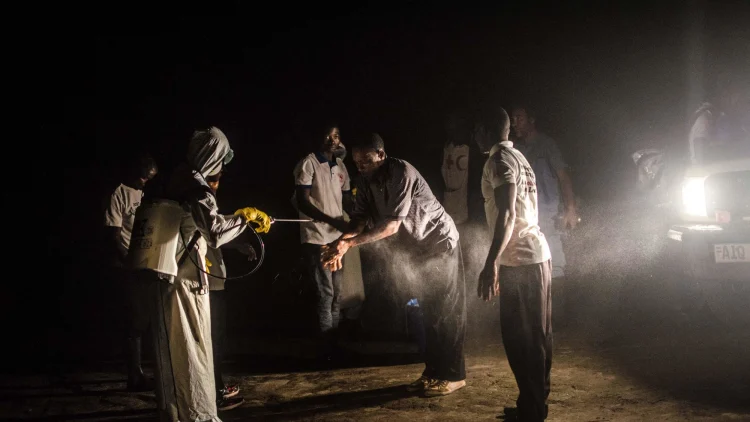
The current Ebola outbreak is back on the front pages with the news that a British aid worker recently returned from DRC is being monitored at a London hospital after displaying possible symptoms.
Those of us who work in public health are not surprised. Infectious diseases do not respect borders. The current Ebola outbreak is now the fastest-growing on record, outpacing even the 2013-16 West Africa epidemic, with more than 2,000 confirmed cases and 750 deaths by mid-July.
An estimated 63,000 pregnant women are due to give birth in the outbreak zone, in a country that already has one of the world’s highest maternal mortality rates. Those rates are expected to rise even higher as women are too scared to go to hospital to give birth in case they contract Ebola.
The World Health Organisation (WHO) has warned that countries neighbouring the DRC are at high risk, and that the outbreak is still expanding into new areas. Diseases do not stop at borders.
Yet this week, in the middle of that outbreak, the Foreign Office published its annual report. Buried in its annexes are three years of planned cuts to bilateral aid, country by country. The DRC will receive £34 million less this year, a 29 per cent cut. UK bilateral aid to Africa as a whole is falling by £733 million this financial year compared with 2024-25, and by £875 million, more than half, by 2029. It is the largest cut facing any region in the world.
Over the last two decades, we have shown again and again that major infectious disease threats can be contained, driven back, and in some cases defeated.
HIV is no longer the death sentence it once was for millions of people. Malaria deaths have been reduced substantially. Polio has been pushed almost to the brink of eradication. Previous Ebola outbreaks have been brought under control. And smallpox has been removed from the face of the earth.
None of this happened by chance. It happened through hard work, science, partnership and money.
You would not know it from the annual report. A year ago, the same document set out the UK’s global health work in detail, naming Gavi and the Global Fund and pointing to Britain’s role in helping vaccinate over half the world’s children. This year’s report contains none of that. The words malaria, HIV, tuberculosis and maternal health do not appear anywhere in its 264 pages.
The countries where British aid helped drive down deaths from these diseases, including Kenya, Malawi, Mozambique and Rwanda, will have their bilateral programmes all but ended, reduced to an influencing budget of £5 million a year.
Also, in recent months, the UK Government has cut critical global health funding for vaccines, for tackling AIDS, tuberculosis and malaria, for pandemic preparedness, and for reducing our defences against the risk of antimicrobial resistance. The Government’s own equality impact assessment states that its multilateral global health investments will fall by roughly a quarter.
UNAIDS estimates that the loss of previously US-supported HIV programmes could lead to an additional six million infections and four million deaths between now and 2029, including 300,000 children. The UK cuts continue to bite deeper.
Supporting health beyond our own shores as part of UK overseas aid is in our own interests. Think of it this way. Wouldn’t you want your next-door neighbours to have working smoke alarms? In the same way, we need our global partners to have strong and effective health systems and healthy populations.
Investing in global health is not a ‘forever project’. The past decades of successful international partnerships mean that most health services in low- and middle-income countries are now funded by those countries themselves. That has meant that the resources the UK provides are more focused on where it is most needed, where the risks are greatest, and where cuts and sudden policy changes do the most damage.
The right response to President Trump’s widespread USAID cuts would have been for the UK to step up: to help fill the gaps, smooth the transition, and act as a counterweight for countries negotiating new agreements with the United States.
Instead, in some areas, the UK has compounded the damage by cutting our own funding. This retreat is an abdication of responsibility by the current Government. The consequences were predictable, and they are already becoming apparent.
It is not too late to reverse these damaging cuts. Andy Burnham inherits this decision, but he is not bound by it. There could be no better moment for our new Prime Minister to show that the UK still understands that its own health security begins beyond its own borders.
Professor Timothy Hallett is Professor of Global Health in the School of Public Health at Imperial College London and an Affiliate Professor at the Department of Global Health, University of Washington, Seattle.
Politics
Politics Home | The Winners And Losers In Andy Burnham’s First Set Of Ministerial Appointments
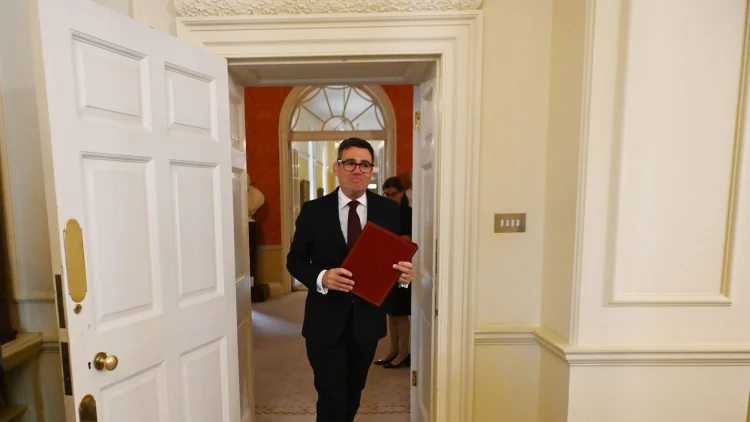

Prime Minister Andy Burnham arrives to host his first Cabinet meeting at 10 Downing Street, 21 July 2026 (PA Images / Alamy)

10 min read
Andy Burnham has delighted many of his supporters and largely dismayed Starmerites with the Cabinet and wider frontbench appointments made in his first week as Prime Minister.
Friends and supporters of Burnham have secured top jobs over recent days, while those closest to Keir Starmer have been jettisoned.
“When you take the lid off Labour factionalism, you can’t put it back on. They are storing up problems for the future,” warned one Starmer loyalist source. “This is far from a clean slate.”
Defenders of Burnham’s approach to ministerial appointments have stressed that he sold himself as a departure from the last leadership, which inevitably means making significant changes to the team.
They also point out that the retention of Emma Reynolds and Pat McFadden, among others, shows the Prime Minister has not shunned the Labour right.
Below Cabinet level, in the hires announced later in the week, Starmerites and non-Burnhamites have done better. Josh MacAlister and Jake Richards are among those who have held on to their ministerial jobs. The decision to make Dan Tomlinson a minister for growth is notable and a win for the Labour Growth Group.
On the Labour left, there is disappointment that Ed Miliband was not made chancellor and a view that John Healey’s appointment ends any chance of the Burnham premiership representing bold change as they see it. No Socialist Campaign Group MPs have been picked for roles so far.
The soft left are delighted, meanwhile, by their dominance in the new Cabinet – which has done much to reverse Starmer’s September 2025 reshuffle.
THE WINNERS
The Makerfield crew
Louise Haigh, who is now First Secretary of State and Chancellor of the Duchy of Lancaster, and Anneliese Midgley, the new Chief Whip (The House reported in early June that she was interested in this position), were the two Labour MPs who ran Burnham’s Makerfield by-election bid as the political leads. In managing the campaign day-to-day, the pair established themselves as integral to the Burnham operation and have been promoted accordingly.

Miatta Fahnbulleh, meanwhile, led on policy for Burnham, working from the South during the by-election in preparation for government – which came sooner than Burnham allies expected. Although she was thought to be interested in becoming housing secretary, she will instead head up the Department for Energy Security and Net Zero, having worked as a minister there until Starmer’s September reshuffle.
And despite being energy secretary at the time, Miliband also played a role in the Makerfield by-election, even advising on the minute details of how the campaign was run according to Labour sources. Ultimately, after much briefing and counter-briefing, he did not secure the coveted role of chancellor but did nab a ‘great office of state’ by being appointed the new Foreign Secretary.
Other Burnham allies
Heidi Alexander is among the survivors of Starmer’s Cabinet, remaining as Transport Secretary. It comes as little surprise considering she is a longtime supporter of Burnham’s leadership ambitions, having nominated him for the post on all three of his bids – in 2010, 2015 and 2026. She was also understood to have told Starmer to set a timetable for his departure.
Lisa Nandy, Burnham’s Wigan neighbour who called on the party to allow him to run as a parliamentary candidate, has again defied critics by staying in post as Culture Secretary, while Lucy Powell – the only officer on Labour’s ruling body to vote in favour of permitting Burnham to stand in Gorton and Denton – has been brought back to the Cabinet as Education Secretary. Angela Rayner is another ally who was always expected to make a return and has done so, going back to her old job of Housing Secretary.
Less well-known is former Unison official Alex Norris, the new Justice Secretary who represents a Nottingham seat but is originally from Altrincham. He was expected to be rewarded after being seen to have handled a tricky brief well in the Home Office, where he handled illegal migration – but it also helps that he is close to a tight-knit circle of people around Burnham. He is seen as a “people person” who, accordingly, has been given another difficult job where those skills will come into play.
Starmer rebels
Like Heidi Alexander, Yvette Cooper and Shabana Mahmood are known to have made clear to Starmer that his time was up. All three have stayed in Cabinet.
Anas Sarwar, who as Scottish Labour leader publicly called on Starmer to go, is leaving his post in Holyrood to enter the Lords and become a trade minister.
Streeting and Healey, meanwhile, both resigned in Starmer’s final weeks, representing big blows to his authority – particularly in the case of the former defence secretary. Healey’s damning verdict on the ex-PM being “unable” and the Treasury “unwilling” to sufficiently increase defence spending was a final nail in the coffin for the Starmer era.
Vicky Foxcroft, who quit as a whip last year amid the welfare rebellion, has returned as a DCMS minister.
Losers of the September 2025 reshuffle
Many of the notable moves in the infamous September 2025 reshuffle triggered by Rayner’s resignation – now back in her old Cabinet job – have been reversed by Burnham.
The top-level sackings at the time were Powell and Ian Murray; the former is the new Education Secretary while the latter (who was ultimately demoted rather than removed completely, following an outcry) has stayed under Burnham as a minister of state in DCMS.
Aside from Powell, it was notable that Jonathan Reynolds was also moved from business and trade secretary to chief whip in a switch that baffled Westminster. Under Burnham, he has been returned to his former position, to which he is widely thought to be far better-suited, and will lead a “beefed up” DBT.
In the ministerial ranks, Rayner ally Justin Madders was the most noteworthy sacking, being removed as employment rights minister. He has now returned as a transport minister.
Rayner ally Jim McMahon, similarly, was a local government minister until his September sacking, and will now return to the department.
The North West
The North of England has done well under Burnham – and the North West especially so. Powell, Rayner, Reynolds, Nandy, Midgley and Angela Eagle all hail from Burnham’s region. This is up from just two Cabinet members from the North West under Starmer. See the changes mapped out on PoliticsHome.
The Co-operative Party
Labour’s sister outfit, the affiliated Co-operative Party, has much to celebrate under Burnham, who is himself the first ever officially Co-op Prime Minister.
Reynolds will be able to put Co-op priorities into action as head of the bolstered Department of Business, Innovation, Science and Trade. Fahnbulleh will have the same opportunity to do so in Desnz, building on Miliband’s ‘Local Power Plan’ developed in conjunction with Co-op.
The appointments of Co-op MPs Norris (husband of Emma Foody, a whip who was Co-op assistant general secretary before entering Parliament) and Powell are wins too. Douglas Alexander, who remains in Cabinet, is also Co-op.
While Rayner is not officially a Labour and Co-op MP, she is often regarded as “spiritually” Co-op in that she has worked with the affiliate and is particularly sympathetic to its aims.
With peers Baroness Smith also reappointed, a quarter of all ministers attending Cabinet under Burnham are Co-op, and there are 22 Co-op ministers in total across 15 departments – a historic high.
Below Cabinet level, Co-op wins include Florence Eshalomi, who is leaving her Housing Committee chair role to go straight into MHCLG at ministerial level, Kirsty McNeill, promoted from junior Scottish minister to minister of state at the Foreign Office, Kate Dearden, bumped up from parliamentary under-secretary to become a minister of state at DBIST, and McMahon who has made a return to MHCLG. Luke Pollard, Stephen Doughty and Lord Coaker have also been reappointed.
Trade unions
There is some apprehension from those trade unions that lobby against net-zero over Fahnbulleh replacing Miliband as Energy Secretary – as a strong ally of his and an enthusiastic backer of decarbonisation, she is not generally expected to be less radical than her predecessor on the subject.
But unions have done well, overall, with Rayner, Midgley and Haigh in key roles and union-friendly Reynolds in DBIST.
The whips’ office, led by Midgley, is particularly good news for the unions, complete with GMB’s Laurence Turner and Usdaw’s Michael Wheeler being picked.
There was a call from the Prospect union last month for continuity around the government’s work on employment rights, with Mike Clancy writing for The House: “The Employment Rights Bill, as it once was, started with Angela Rayner, Jonathan Reynolds and Justin Madders in charge but was passed under Peter Kyle and Kate Dearden.
“That personnel change caused delays, and I hope the new Prime Minister will reflect carefully on how they deliver continuity to this vital area of work. Minister Dearden in particular has skilfully conducted the various discussions needed to progress the consultation process.”
Dearden, formerly of Community union, now has a ‘future of work’ brief in the same department.
THE LOSERS
Starmer allies
The most notable losers from Burnham’s appointments are, of course, allies of Starmer, from David Lammy, Rachel Reeves, Darren Jones, Steve Reed and Jo Stevens being removed from Cabinet to Lord Hermer, Nick Thomas-Symonds and Baroness Chapman leaving as ministers who attended Cabinet.
Bridget Phillipson, who despite being briefed against during the Starmer era was kept in place by him as PM, was heavily demoted – losing her education brief and being left with the women and equalities role only, albeit remaining in Cabinet. A source said Burnham’s team were surprised she accepted the downgrade.
Neither Dan Jarvis nor James Murray, who stepped up to Cabinet roles when John Healey resigned as defence secretary and Streeting as health secretary, have been kept in Cabinet – though both have become ministers again.
Chris Ward, a former Starmer staffer before becoming an MP and perhaps his closest ally in the Parliamentary Labour Party, has left government as expected.
The Socialist Campaign Group
On the other end of the Labour Party’s factional spectrum, the Socialist Campaign Group and other MPs on the Corbynite or ‘hard’ left are deeply disappointed – and some angry – to have been completely overlooked for ministerial roles. This is despite many having backed Burnham’s return and nominated him for the leadership.
“A lot of people are very unhappy,” one Labour left MP said. “So much for using all talents.” Although pleased about the cost of living policies announced, they added: “Everyone knows politics is brutal but this is just a big two fingers up to people.”
Londoners
Streeting and Fahnbulleh are the only full Cabinet members representing London seats under Burnham, whereas Starmer’s Cabinet had himself, Reed, Murray and David Lammy. The new PM does have Ellie Reeves and Matthew Pennycook as ministers attending Cabinet, however.
This shift away from London is defended by Burnham allies as a shift towards being more representative of the country.
YOU WIN SOME, YOU LOSE SOME
Blairites
Blairite Cabinet members Peter Kyle and Liz Kendall have both been sacked. The picture is mixed, however. McFadden remains Work and Pensions Secretary. Reynolds has been moved from Defra to become Chief Secretary to the Treasury. Streeting stays too, of course, though he is a unique case.
Among non-Cabinet ministers, some have been kept on – Baroness (Jacqui) Smith and Georgia Gould remain in post, and Alison McGovern has been moved sideways to health, for example – while others, like Sharon Hodgson, have not.

4 min read
Is it really any wonder so many people feel like nothing is really happening in politics these days?
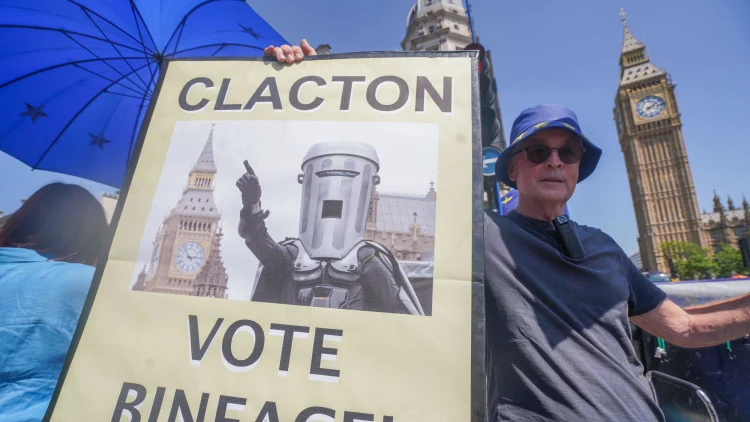
There’s a lot of talking, not a lot of action. Now, in Clacton’s by-election, much of the national conversation has been reduced to a choice between Nigel Farage and Count Binface.
I understand why Binface has struck a chord. Humour works when politics has become absurd, and a vote for a man wearing a bin on his head can feel more honest than supporting politicians who make promises and then disappear. He gives people a way to express their frustration. But Clacton needs more than an expression of frustration. It needs someone who will still be here when the cameras have gone, bringing people together and doing the unglamorous work of getting things done.
That is why I am standing as an independent candidate.
Like Clacton, I grew up in an area that was forgotten. Deindustrialisation and tourism decline has led to fewer opportunities. It has felt like decades of little to no political interest has been paid to people like us.I grew up on a council estate in a single-parent family and relied on free school meals.
Forty seven per cent of Clacton’s residents over 16 are classified as “economically inactive. One in five working-age adults have never held a traditional job.
Later, as a young adult, I found myself in a similar position – struggling. After a divorce, I was left struggling to pay my bills resulting in me being in £24,000 worth of debt and was constantly trying to make ends meet. If anyone has lived like that you know how that fear changes you. It also gives you a very good understanding of the difference between political soundbites and everyday life.
What has changed my life is education, but not the education that I got in school – but financial education. This is the education we should be getting – what is a mortgage, what is tax, what is compounded interest. This education taught me about budgeting, credit and how money actually works. That education helped me clear my debt – it gave me a future.
Real life solutions are what I want to bring to Clacton. I’ll give you an example – the people of Clacton have told me about the need for a local dentist, at present, if you need an NHS dentist you need to travel up to Colchester. Why are we not empowering a local entrepreneur to fill this void?! This is remedied with financial education – and if I get in – and if I don’t – we’ll get to the solution.
This is why financial education sits at the heart of my priorities. If a single lesson on budgeting and money could have saved me years of struggle, imagine what it could do for every child growing up right now. This shouldn’t be a privilege for the lucky few. It should be normal.
But education alone isn’t enough. I want to work with residents, small businesses, schools, community groups and public bodies to find paths to thrive. I wantto help local businesses grow and bring empty units back to life whilst making sure taxpayers’ money is spent wisely. I don’t want to see Clacton’s future in The Bin(face).
When this by-election was called, the choice on offer seemed to be Nigel Farage or a bin.
Now, Count Binface offers clever commentary on a political system that has let people down. But I’m offering something a little different, providing real life skills, commitment and something beyond a protest vote.
I won’t pretend to have every answer. But I will always listen, I will always work hard, and I will always put the people of Clacton first. I want the people to of Clacton to have a real choice – not between personalities and punchlines – but someone who can help Clacton thrive, and that’s me, Abi Hookway.
Abi Hookway is an independent candidate for Clacton
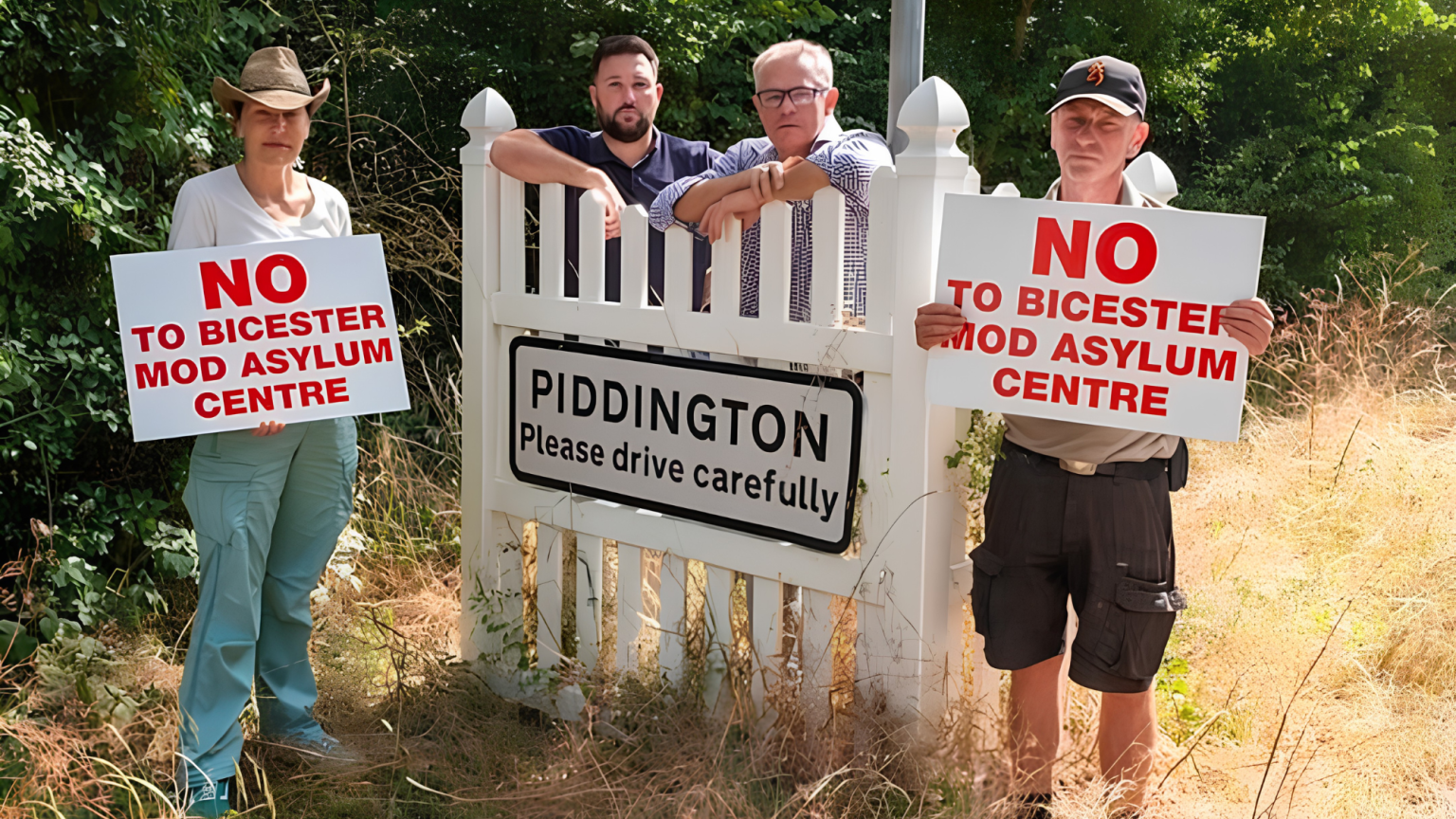
Piddington, a small village in Oxfordshire, might seem like an unlikely centre of revolutionary discontent. But even the residents of sleepy hollows associated with hobby farms, market gardens and village cricket seem to have their limits. In response to the government’s plans to accommodate over a thousand male asylum seekers at a nearby military base, outraged residents have decided to hold a referendum on whether to declare their ‘independence’ from the United Kingdom.
Of course, a Piddington ‘Declaration of Independence’ would be futile – no town, county, city or region can secede from the UK because of a vote in the village hall. But even the act of holding a referendum speaks to a desperation felt by most of their compatriots. If the British state refuses to control its borders, then maybe the Piddington parish council can try to control its own.
Piddington’s 400 residents are perfectly right to feel angry. Soon, the nearby Bicester Garrison will be home to 1,250 men – many of whom do not speak English, and who have no legal right to be in the UK. Even the local MP, Calum Miller of the Liberal Democrats, has reacted furiously to the government’s plans.
Miller’s comments are telling. The Home Office, he told the BBC recently, had given no consideration to ‘social cohesion’. He said he had ‘no idea how the government thinks [1,250 asylum seekers] can be absorbed into the community’. So opposing illegal immigration isn’t ‘far right’, after all. It turns out that no one, irrespective of class or political loyalty, is prepared to live with its daily consequences.
This is why opposition to migrant hotels, or now migrant military camps, has bubbled up in just about every community that has been told to accept them. Crowborough in Sussex, which has been forced to accept 540 male illegal immigrants, has been the scene of protests for months. The local community around RAF Wethersfield, Essex – which is currently housing 1,245 male illegal migrants – has also been up in arms. Of course, last summer was defined by the Pink Ladies’ protests in Epping, Essex, where asylum seekers were housed at the Bell Hotel.
Community cohesion is one concern. Community safety is another. Residents might have been reluctant to state this openly, although one Piddington local alluded to it when he said, ‘There is no crime at the moment, but what happens if there is crime?’. Recent history would sadly suggest that it isn’t if, but when.
The protests in Epping were sparked when a resident of the Bell Hotel, Ethiopian national Hadush Kebatu, sexually assaulted a 14-year-old girl just days after arriving. A few weeks later, Afghan national Ahmad Mulakhil raped a 12-year-old girl in Nuneaton, Warwickshire, where he was living in a taxpayer-funded HMO. In October, three migrant-hotel residents in Brighton gang-raped a woman who was returning home from a night out. In October 2024, in Walsall, Sudanese national Deng Majek violently murdered Rhiannon Whyte, an employee of the migrant hotel he was living in. Last year, dogwalker Wayne Broadhurst was stabbed to death in broad daylight in Uxbridge by an Afghan refugee who arrived in a lorry in 2020. These are just a handful of the seemingly endless examples. Locals are not ‘racist’ or ‘bigoted’ to fear that a large influx of unvetted male asylum seekers, many of whom are escaping criminal convictions abroad, will have an impact on public safety.
Few issues shine a light on the British state’s incompetence like illegal immigration. Having failed to respect the clear wishes of the British people by stopping illegal immigrants from entering the UK, successive governments have proceeded to spend billions of pounds a year housing them. The Labour government seemed to think it could avoid public outrage by transferring illegal immigrants from hotels to military sites – as though the exact form of accommodation they are provided, rather than illegal immigration itself, was the issue. The Home Office still plans to repurpose two more military sites to accommodate illegal immigrants – one in Suffolk and one in North Yorkshire.
As we well know, once illegal immigrants arrive here, there is basically no prospect of them leaving. Their asylum claims progress at a glacial pace through a labyrinthine network of tribunals and courts, at the end of which a judge generally allows them to stay on spurious human-rights grounds. Even those who commit the most serious crimes are highly unlikely to be deported. And although asylum seekers have no legal right to work, that is usually no barrier. The UK’s grey economy is now so large that it is perfectly easy to live, work, drive a car and rent a home without going through the hassle of trying to acquire the right paperwork.
So of course locals feel pushed to the brink. It might be one migrant hotel, or one migrant ‘garrison’, pencilled for your local community that lights the fuse. Yet it’s the sheer weight of the British government’s failure to control the border, with no end in sight, that is making each community response more drastic than the last.
Given all this, is it any wonder that the residents of Piddington have had enough? A vote for ‘independence’ would only be symbolic – but the anger that’s got us here could hardly be more genuine.
Hugo Timms is a staff writer at spiked.
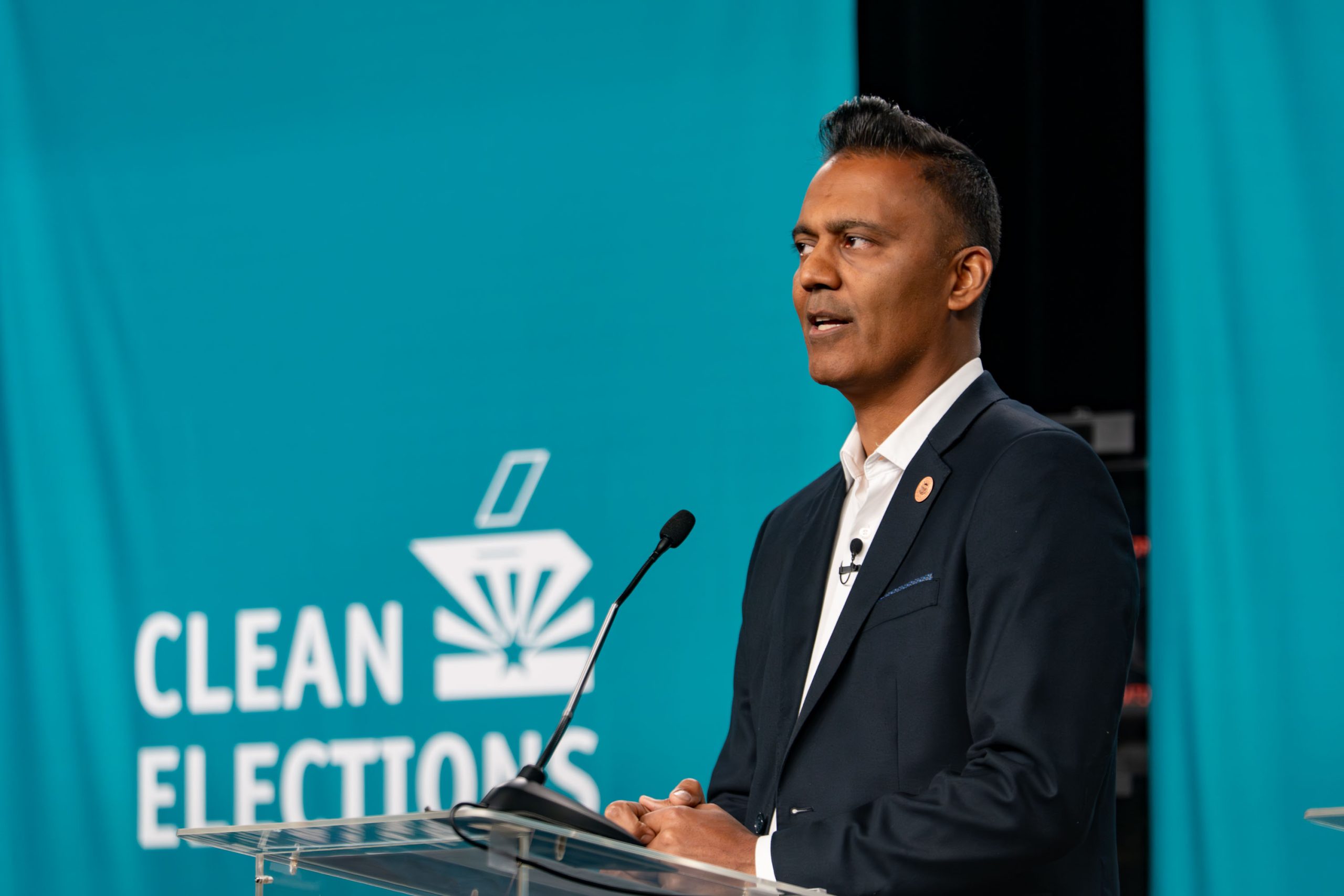

Former state Rep. Amish Shah won the crowded Democratic primary for Arizona’s 1st District on Wednesday, defeating an establishment pick and other well-funded candidates for the battleground seat.
The district, which President Donald Trump carried by just three points in 2024, is one of Democrats’ top pickup opportunities this cycle — and the tight primary evolved into a test of party leaders, after the Democratic Congressional Campaign Committee backed former broadcast journalist Marlene Galán-Woods.
In the end, voters rejected Galán-Woods, the latest example of an establishment-backed candidate losing as Democrats continue to show frustration with leaders in Washington.
This year marks the second consecutive time Shah won the district’s Democratic primary: He won it in 2024, before losing to Rep. David Schweikert (R-Ariz.) by four points in the general election.
The seat became open when Schweikert, an eight-term Republican lawmaker, decided to take on another member of the Arizona House delegation, Rep. Andy Biggs (R-Ariz.), in the GOP primary for governor.
Shah will take on Jay Feely in the general election. The Trump-endorsed former NFL kicker who spent four seasons with the Arizona Cardinals bested former state Rep. Joseph Chaplik in the Republican primary on Tuesday.
The 1st District surrounds Phoenix in central Arizona, and encompasses wealthy Scottsdale and Paradise Valley as well as large swaths of land to the northeast of the city.
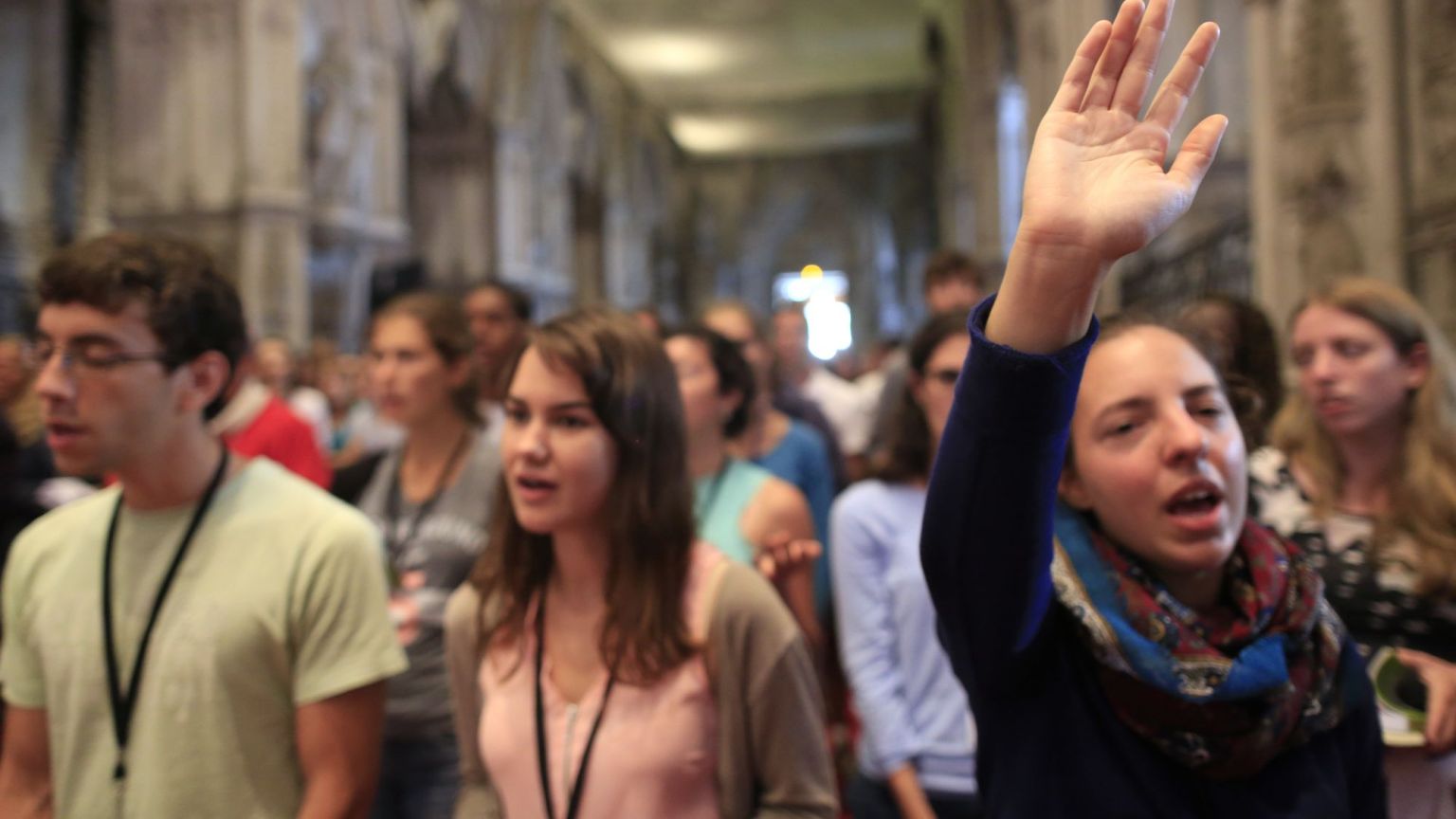
There’s a bit of a media narrative at the moment claiming that churches are seeing more young worshippers flocking to their congregations. It’s perhaps a bit overblown – the numbers aren’t all that high in the UK – but there is certainly something to it.
There is also a concurrent narrative: Gen Z (those born between 1997 and 2013) is becoming socially conservative, or at least more questioning of progressive orthodoxies. Naturally, plenty are drawing a link between the two – people are becoming more socially conservative and so are going to church, or people are going to church and therefore becoming more socially conservative. It’s as though church pews are simply another step on the road to voting Conservative, Reform or (heaven forbid!) Restore.
I submit that causation in this instance is a bit overdone. I would rather simply look at the correlation, at each element separately. Young people perhaps aren’t turning to Christianity because they are becoming increasingly politically conservative, nor vice versa. Rather, they are turning to both in many instances because each offers something that modern Western culture and progressive politics struggle to provide. And I think it’s well worth looking at exactly what those things are.
For all its advantages, modernity has left many young people spiritually homeless. Today’s young adults have inherited a pretty cold world without any ready remedies to nihilism. Traditional institutions – like the church – have been collapsing for years. We are increasingly atomised, with lifelong friendships growing fewer and farther between. Fewer people are marrying, or able to afford to marry, and fewer are able to afford to have children.
Social media seems to be replacing real communities, and doing a bad job of it. Work is increasingly precarious and hard to get into, and when you do get it, it’s not like you can afford to buy a house, or even rent a flat to yourself. Young people don’t go out drinking much, meaning fewer trips to the pub for quiet pints with friends. Our towns don’t look or feel like they used to, high streets are dying, communities are fractured, and we have had our senses of self – both our personal and national identity – undermined on various fronts.
Is it any wonder people are despairing, or simply giving up? And is it any wonder that some people might look to yesterday for the answers?
In many ways, modern individualism is good at giving people freedom, but it struggles to tell them what that freedom is for, or to give them the grounds to make something of it. Well, what are we giving people to believe in? How are we showing them how to orient themselves?
We can’t. Not really. But religion has always excelled here. Christianity has given us a sense of national and individual purpose for centuries, so is it any wonder it’s being called on again to do so?
Christianity offers far more than a set of abstract beliefs, metaphysics and ontology. Its rituals and liturgy give shape to the working week. Its music, the beauty of its architecture (in a modern world in thrall to concrete), and the divine feeling in worship uplift what we might once have called the soul. Its festivals mark the passing of the year. The moral framework and centuries-old prayers bind individuals into something much older and greater than themselves – Christianity is in many ways an ongoing story that invites you to be a part of it. There is a sense to it all of permanence and continuity – a sense increasingly difficult to find in the modern world.
Contrast this with much of modern culture. The endless scrolling and algorithmic feeds, the dating apps that streamline the mating process while divorcing it from so much that is actually romantic. It prioritises the convenience of remote working for ease over being part of a team, and replaces dignity and loyalty with disposable relationships and identity politics.
The church offers and asks something that feels radically different, though it was the norm just a few short years ago. It asks you to belong – to actually, truly belong, rather than simply be a number on a spreadsheet. It asks you to serve rather than to consume, which speaks to something primal and vital within us all. It asks for sacrifice above indulgence, for forgiveness rather than cancellation. It asks you to remain faithful rather than endlessly chasing novelty and hedonistic satisfaction. At its core, it requires you to be selfless as opposed to self-centered. This is quite a profound counter-offer in an age defined by flux, individualism and the soulless ontology of the new atheist.
Conservatism answers many of the same needs. To be clear, conservatism is not Christianity. Far from it. One is a political philosophy, the other a religion with transcendent claims. And plenty of Christian denominations very plausibly use Christ’s teachings to argue for left-wing ideals. However, both appeal to similar instincts because they recognise many of the same truths about human nature. Both value tradition, inherited wisdom, family, local community, duty, restraint, gratitude and continuity. Both are sceptical of the idea that society can simply reinvent itself from scratch.
Modern progressivism typically looks askance at inherited tradition. It’s guilty until proven otherwise, or often simply guilty, with no hope of reprieve. It employs an oppressor-oppressed narrative that fails to ask the fundamental conservative question: why have these traditions survived? Why are these the ways that have organically evolved over millennia? What needs have these traditions and their attendant institutions been meeting? And what, to borrow from GK Chesterton, have the fences of tradition been built to contain?
For young people exhausted by relentless social, technological and cultural upheaval, a more conservative outlook can be reassuring. It helps explain why some are rediscovering both conservatism and the church at the same time. They are searching for roots – for something that modernity does not offer.
Ultimately, though, it’s not about left versus right. As above, there are plenty of left-wing Christians in the world. I grew up in a congregation full of them, and they were glorious people. Why would they not be? Rather, it’s about something much deeper: a growing sense that material prosperity and individual freedom, valuable as they undoubtedly are, are far from enough to sustain a life of meaning and belonging.
Gen Z – and to a fair degree millennials like myself – have grown up sandwiched between unprecedented choice and unprecedented limitations. They can buy whatever they want on Temu and have it delivered the next day, while never being able to afford more than a hovel in which to live, and only in rare instances know what it’s like to wander down a thriving high street that’s unbeholden to curiously empty vape shops and barbers. At the same time, they have been confronted with unprecedented levels of loneliness, anxiety, depression and social atomisation. These are not simply economic problems. They are social, cultural and, in many cases, spiritual ones.
This is the background against which the church is seeing rising numbers, and in which young people are exploring political ideas outside of the current liberal orthodoxies. These are the reasons underpinning it all. For goodness sake, is there any wonder people want change?
James Dixon is a Glasgow-based novelist, poet and playwright.

Wall Street Analyst Says AI Spending Arms Race Is at 15% After Tesla and Google Selloff

Cardinals’ Jacoby Brissett to participate in training camp, ends offseason hold-in
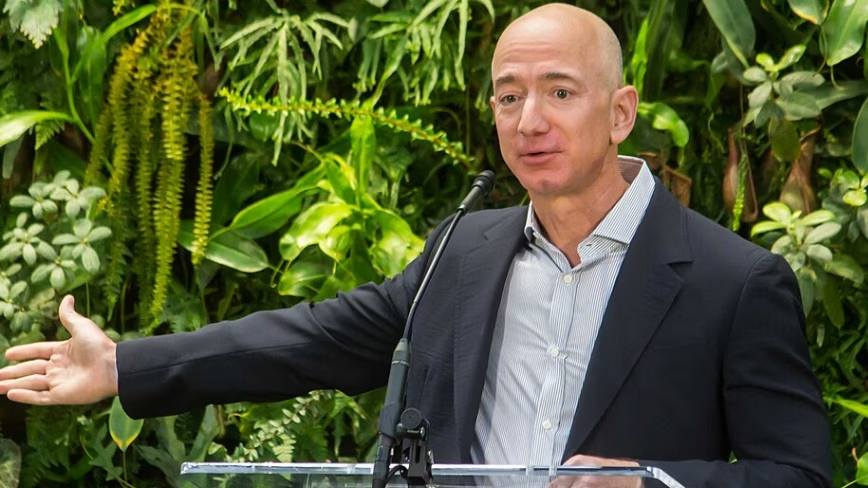
Jeff Bezos has been approached to buy a stake in Liverpool FC. Amazon already holds the Premier League TV rights.

Renter of Home in Anne Heche Crash Denies Settlement With Son

No Jackpot Winner as $257 Million Prize Rolls Over to $269 Million Monday Draw

Weekend Open Thread: Staud – Corporette.com

The making of the 200 rupees notes in the factory#shorts #money #bank #onlineclasses

XRP TRUMP BASICALLY JUST PASSED THE CLARITY ACT !!!!!

B.Tech Admissions Decline 2026: Solutions for Financial Difficulties #FinancialDifficulties | EDU9
-

 Fashion6 days ago
Weekend Open Thread – Corporette.com
-

 Politics6 days ago
The House | The City of London can help the new chancellor deliver growth in every postcode
-

 Crypto World6 days ago
Ripple Payments Joins MiCA With 14 Firms, Does It Mean Anything For XRP?
-
 Crypto World7 days ago
Two July Windows Left: The CLARITY Act’s Senate Fight and What Failure Means
-

 Politics5 days ago
Democrats look to World Cup watch parties to register thousands of voters
-

 Crypto World6 days ago
Ripple wins EU-wide access as ESMA adds it to MiCA register
-

 Crypto World3 days ago
Grayscale Files For Worldcoin ETF, WLD Registers Sharp Rise
-

 NewsBeat4 days ago
Unregistered fitter used Gas Safe logo on business flyers
-

 Tech3 days ago
Sail Virtually Aboard The “Itanic” With IA-64 Emulator
-
 Tech3 days ago
Turtle Beach Command Series KB7 review: a nifty screen-equipped gaming keyboard
-

 NewsBeat7 days ago
Registration is now open for March for Men with Kev 2026
-

 News Videos4 days ago
Big Money Is Entering XRP
-
 Business2 days ago
New Jersey voter registration controversy explained: How 6,600 noncitizens got on the rolls, and what happens next
-

 News Videos7 days ago
Money | Class 12 Economics | CBSE Board Exam 2026-27
-

 Crypto World6 days ago
Kaspersky exposes OkoBot’s 20-module crypto wallet attack
-

 Business6 days ago
Airlines warn Sunshine Protection Act could disrupt flight scheduling
-
 Entertainment2 days ago
Johnny Depp’s R-Rated Gothic Cult Classic Gets New Release Ahead of Sydney Sweeney Remake
-

 NewsBeat6 days ago
Durham County Council to send out electoral registration emails
-

 Crypto World6 days ago
MiCA Licensing Faces Delays as ESMA Adds 14 CASPs to Register
-

 Crypto World6 days ago
Chip Stocks Enter Bear Market After Moonshot Ai Unveils Kimi K3 Model
You must be logged in to post a comment Login