Connect with us
DAPA Banner
DAPA Coin
DAPA
COIN PAYMENT ASSET
PRIVACY · BLOCKDAG · HOMOMORPHIC ENCRYPTION · RUST
ElGamal Encrypted MINE DAPA
🚫 GENESIS SOLD OUT
DAPAPAY COMING

Tech

The third Xbox price hike in 15 months raises all models by at least $100

Published

on


Mere days after reports of mass layoffs at Microsoft-owned game development studios, things have gone from bad to worse for Xbox. In a few weeks, the company’s game consoles will receive their highest-ever price increases, marking the third round in barely over a year.
Read Entire Article
Source link

Continue Reading
Click to comment

You must be logged in to post a comment Login

Leave a Reply

Tech

Apple’s Touchscreen MacBook Reportedly Won’t Wait For The M7 Chips

Published

on

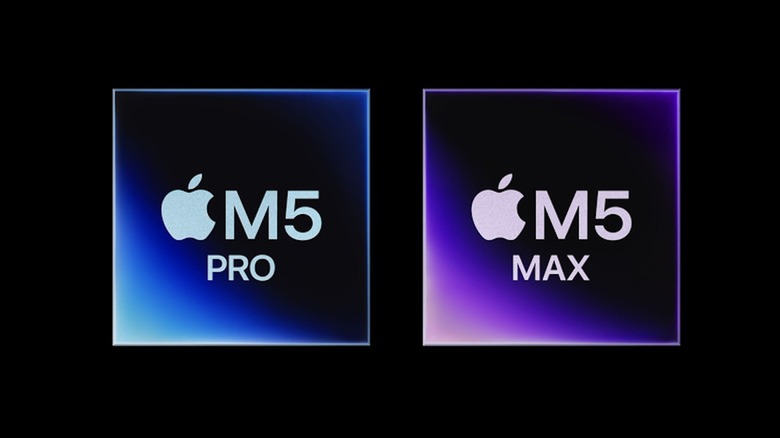
The new models will launch with the M5 Pro and M5 Max, according to Mark Gurman.

Apple may be skipping over the M6 generation of its Pro and Max chips, but that doesn’t necessarily mean it’s pushing back the release of its rumored touchscreen laptop. According to Bloomberg‘s Mark Gurman, the new MacBook will launch with the high-end M5 chips that came out earlier this year. The 14-inch and 16-inch models are still expected to be released between the end of 2026 and early 2027, as Gurman has previously reported. The next iteration of the touch MacBook will get the M7 chips not too far down the line.

According to Gurman, who spoke to sources with knowledge of the plans, the M7 versions are already in the advanced testing stage and could arrive by the end of 2027. The touchscreen MacBook will reportedly usher in a slew of changes on top of the touch display. That includes bringing over the Dynamic Island interface from the iPhone, an OLED screen and “an updated industrial design,” Gurman reports.

Apple is expected to introduce its M7 chip in early 2027, followed a few months later by the M7 Pro and Max. Gurman has also reported that we may see the M7 Ultra in 2028.

Advertisement

Source link

Advertisement
Continue Reading

Tech

One man, two kernels, and a lot of RISC-V

Published

on

Yuri Zaporozhets of QRV Systems is a busy chap. He’s built a new RISC-V-based personal computer, a mainframe on an FPGA, and rewritten QNX – twice.

Seemingly every month or two, The Reg FOSS desk gets an email telling us about some astonishing project that he has just got working. We’re delighted to see that his most recent one, a new OS called QSOE, is winning some attention in the FOSS world at present.

But first, we thought we could tell a more complete story of how he got here by describing some of his previous projects.

(By way of a disclaimer, we feel that we should say up front that he does use Anthropic’s Claude LLM to help. To his credit, he does clearly state this.)

Advertisement

GateMate Personal Computer

At the end of 2025, Zaporozhets wrote to tell us about his GateMate Personal Computer. The GateMate PC is something similar to a fairly high-end late-1980s IBM PC-compatible, but instead of a 286 or 386 CPU, it has a 25 MHz RISC-V core.

He told us the main inspiration for the GateMate PC: “The very first computer I saw in my life: an IBM PS/2 Model 30, in 1992. It also started in text mode.” We worked on a few of those, and they were not great machines. The GateMate machine should easily outperform the later, faster Model 30-286. He also acknowledges another project: “the NeoRV32 softCPU by Stefan Nolting is great.”

It has a VGA port that can output 80×30-character text in what back then we used to call Hi-Color, 8 KB of ROM containing a BIOS, and – although it’s still in the early stages – its own OS, which he calls GMDOS. The characters are double-byte ones using UCS-2 Unicode.

Advertisement

The GateMate gets its name from the host hardware because the design is mostly software: it’s implemented on an inexpensive FPGA board, the €50 Olimex GateMate A1-EVB (that’s about £42 or $57). Its video controller is an original design, and he has added extra RAM: the machine has 8 MB of additional PSRAM on two chips, via a QSPI interface.

He blogged about the project, from receiving the board last August to getting a PLL working, to getting video out of it.

Advertisement

The Olimex GateMate board can do a lot more, though – which leads us to his next project.

GateMate System/359

Also implemented on the same FPGA board is Zaporozhets’ miniature mainframe, the System/359. This isn’t a clone of the IBM System/360 mainframe series, the machines that introduced the idea of different computers being software compatible – it’s more of a tribute to it. For starters, the S/359 is a little-endian machine, while the S/390 is big-endian.

So it’s not binary-compatible with the mainframe architecture, but it’s similar. He started the project in January, and later that month, writing about its assembler, said: “GMS/359 keeps what’s beautiful about S/360 – the channel I/O model, the clean instruction formats, the PSW concept – while quietly modernizing the rest. Little-endian bytes. Opcode-first encoding. PC-relative addressing. No more base register juggling. The ‘/359’ isn’t a typo. It’s a declaration: inspired by, not compatible with.”

Zaporozhets told The Register: “There is a working assembler with the POWERFUL macroprocessor – from NASM. I was a NASM contributor from 1999 to 2004 and maintained its RDOFF2 part. Now RDOFF2 is removed from NASM 3.0, but it continues to live in my asm359 project.

Advertisement

“Currently the processor can execute the simple IPL; channel I/O controller works (PS/2 kbd, UART, SYSINFO, even crypto processor (!)). Once I finish the PSRAM module, I will start working with SYS1.NUCLEUS.”

So we can take it that as well as RISC-V and FPGAs, he has some familiarity with low-level systems design. His next project was with an OS that a lot of folks admire: QNX.

Porting QNX 6.4 to RISC-V

Although Zaporozhets wrote to us about this back in March, he also went public with it in a Reddit post: QNX 6.4 kernel ported to RISC-V; petition to BlackBerry to relicense old QNX sources under Apache 2.0.

QNX has an on-again-off-again relationship with FOSS. QNX has been around since the 1980s, as we reported when the company made QNX 8 non-commercial freeware in 2024. In that article, we mentioned that QNX published the source code of an earlier version back in 2007. Back then, QNX was self-hosting and had its own desktop environment – we showed a screenshot of its Neutrino GUI in our roundup of non-Linux PC OSes back in 2013, and GUIdebook has a whole screenshot gallery.

Advertisement

The next year, that QNX 6.4 source code was mirrored from SourceForge over to GitHub, and it’s still there. Zaporozhets took this long-obsolete codebase and ported it to RISC-V, targeting his own FU740 “workstation.” It’s not the whole OS, just “the kernel, the process manager, the C library, the runtime linker.” And the license is very restrictive: you can study it and compile it, but not redistribute it.

He started this effort over Christmas 2020. “The timing made sense in a particular way. RISC-V had matured. The toolchains were stable. The original QNX sources were 32-bit ILP32, targeting x86, ARM, MIPS, SH, and PPC – no 64-bit port existed, let alone RISC-V. Doing the LP64 transition and the architecture port in a single effort seemed like exactly the kind of large, difficult, satisfying project that a long holiday lockdown invites.”

But after the initial effort, it languished for five years. When he came back to it, he ended up with a substantial rewrite. He calls the result QRV.

In March, he described this in a blog post, QRV Operating System: First Publication. As he puts it: “For clarity: QRV is not a patch on the original QNX sources. It is a ground-up reworking of the 32-bit ILP32 codebase into a 64-bit LP64 system for RISC-V, with deliberate simplifications.”

Advertisement

By the end of April, QRV v0.27 could boot to multi-user login. A month later, he declared the project finished with version 0.43: “This is the last development post for QRV. The project set out to port QNX Neutrino 6.4 to RISC-V 64-bit, run it on real hardware, and explore what it would take to bring a clean microkernel architecture to a modern open ISA. Those goals are met. v0.43 is the final release.”

Advertisement

Where next? Well, as the QNX kernel is not truly open source, then the only path forward is to switch to another kernel, one that is truly FOSS. Well, we say “one”… ¿Por qué no los dos?

QSOE – Quick and Secure Operating Environment

The result is QSOE: “QSOE ships in two variants that share one userspace and one build system. QSOE/N runs on Skimmer, a microkernel written from scratch for this project (SMP by design); QSOE/L runs on seL4 as its kernel.”

As The Register covered back in 2014, Secure Embedded L4 is a formally verified microkernel OS. We have written about other OSes that use it before: in 2022, we described the new Neptune OS project, which is a combination of seL4, ReactOS, and Wine. Then, in 2025, we looked at Ironclad, which combines seL4 with the C-based Gloire and an Ada layer.

There are some very serious precedents for building around seL4, but QSOE doesn’t stop there: it also has its own homegrown kernel, called Skimmer, that’s designed for multiprocessor machines. Zaporozhets has been working in this area for a long time. On the QSOE site, he mentions his effort to build a free QNX-like operating system back in 2003. It’s still online – it is called RadiOS.

Advertisement

In How QSOE started, he describes the inspiration: as a fallback option, a Plan B, if his petition to BlackBerry did not succeed. We sympathize. When we wrote about QNX 8, we got nothing useful back from the company either.

Instead, he took all he learned from writing RadiOS and building QRV – via the GateMate PC and mini-mainframe – and did it himself instead. Now he has released QSOE version 0.1. It’s under the Apache 2.0 license, and its source code is on GitLab. He also has a new development blog.

Yes, Claude may be involved, but he was already developing these ideas 20 years before ChatGPT launched. ®

Source link

Advertisement
Continue Reading

Tech

Quordle hints and answers for Monday, June 29 (game #1617)

Published

on

Looking for a different day?

A new Quordle puzzle appears at midnight each day for your time zone – which means that some people are always playing ‘today’s game’ while others are playing ‘yesterday’s’. If you’re looking for Sunday’s puzzle instead then click here: Quordle hints and answers for Sunday, June 28 (game #1616).

Quordle was one of the original Wordle alternatives and is still going strong now more than 1,400 games later. It offers a genuine challenge, though, so read on if you need some Quordle hints today – or scroll down further for the answers.

Enjoy playing word games? You can also check out my NYT Connections today and NYT Strands today pages for hints and answers for those puzzles, while Marc’s Wordle today column covers the original viral word game.

Advertisement

Source link

Continue Reading

Tech

The Ebike Accessories You Need to Help You Haul the Most Stuff

Published

on

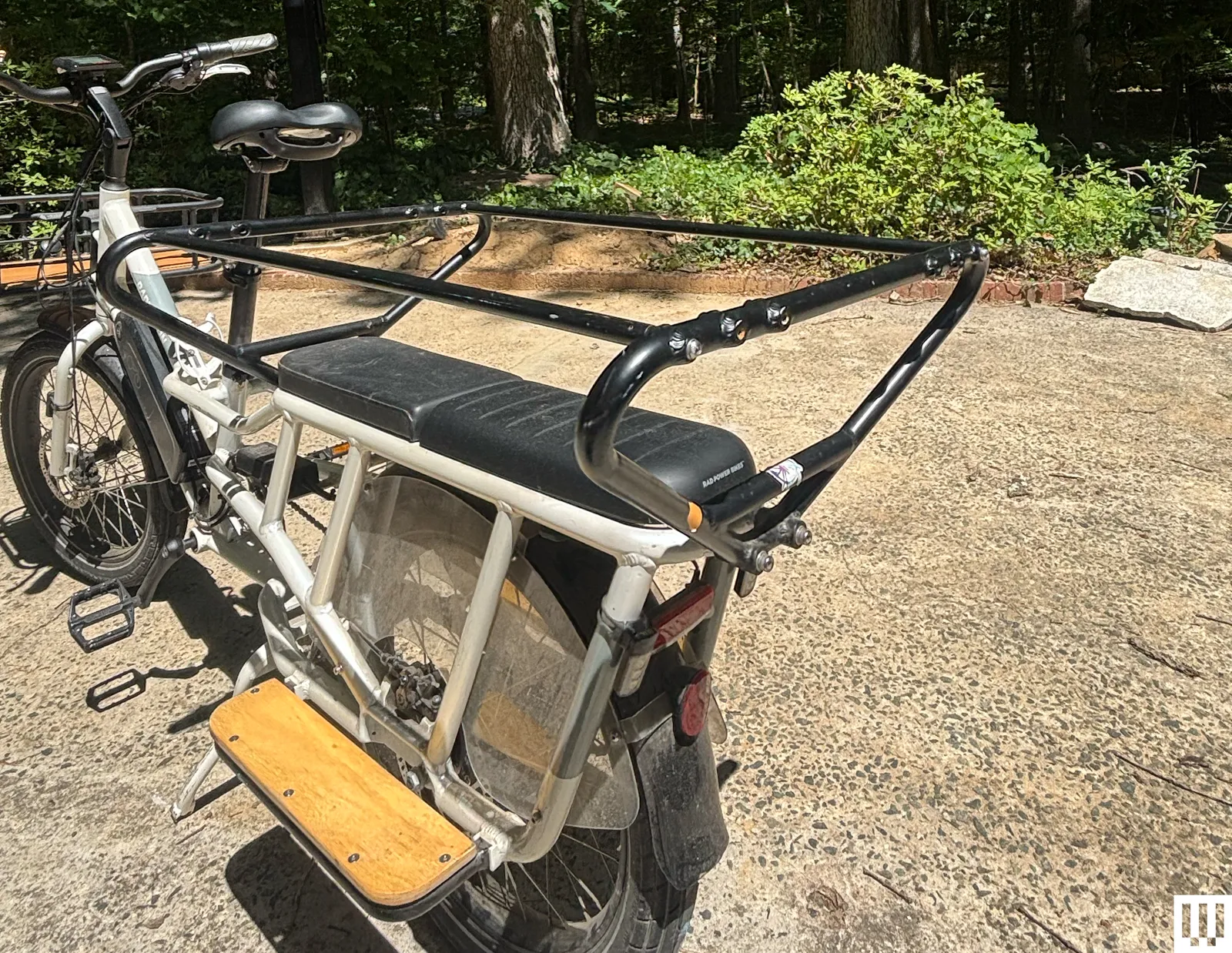
When my wife and I bought our first ebike—a Radwagon 4 by the Seattle-based Rad Power Bikes—four years ago, we did so to replace one of our two family cars. For in-town trips of 5 miles or less, we figured we could (and should!) use the bicycle. At the time, our kids were very young, so we needed a bike capable of safely carting them around and also handling whatever we were hauling on a given day.

The Radwagon answered those needs; the direct-to-consumer company allowed me to configure the bike to suit my exact needs during the ordering process. I selected a front basket, a rear pad seat for my son, and a Thule Yepp 2 Maxi seat to secure my then-toddler daughter. I also bought a few safety lights and a bell from my local bike shop (more on those accessories below).

Once the bike arrived and was assembled, my wife and I used it to tote our kids all over town. We rode to and from school and daycare, playdates, and doctor’s appointments; made quick grocery runs; and went anywhere else we needed to go that was relatively close to home.

On any given day, the front basket continues to function as a cornucopia holding whatever we might need for the task or errand at hand. On a recent trip to a nearby playground, my ebike’s basket held the following: a small soccer ball, my wife’s small shoulder bag, my bike lock and cable, two bottles of water (in addition to a third bottle of water in the bike’s bottle cage), three baseball caps, two baseball gloves, one baseball, a small tin lunch box full of snacks, and two binders full of Pokémon trading cards. The basket has also successfully transported two large grocery bags or three smaller ones, and, on one occasion, a small guitar amp I found at our local thrift store.

Advertisement

The bike is still useful and functional, but my family’s needs have changed since we bought it. My now-4-year-old daughter is too big to fit in her Yepp seat, and my now-8-year-old son is a bit too self-conscious to be seen on the back of his dad’s big ebike. (Not to mention, he’s now strong enough to ride all over town on his own bike.)

With my kids outgrowing the beloved family ebike, I’ve been thinking about its next iteration as a serious cargo schlepper—a Grocery Getter, if you will—and how I can set it up to haul as much stuff as possible. Ebikes now make up a huge category, serving mountain bikers and commuters, folding and cruising to fit various needs. There are strategic ways to maximize your ebike’s capabilities for each of those purposes, but here I’m going to stick to outlining the two I know best: carting a family (the Family Wagon) and hauling lots of stuff (the Grocery Getter).

The Family Wagon

Image may contain Escooter Transportation and Vehicle

Photograph: Michael Venutolo-Mantovani

If you use your ebike to transport your kids, you’ll want comfortable, safe, and age-appropriate seating for them.

Source link

Advertisement
Continue Reading

Tech

Phone Stand Aims To Fight Addiction

Published

on

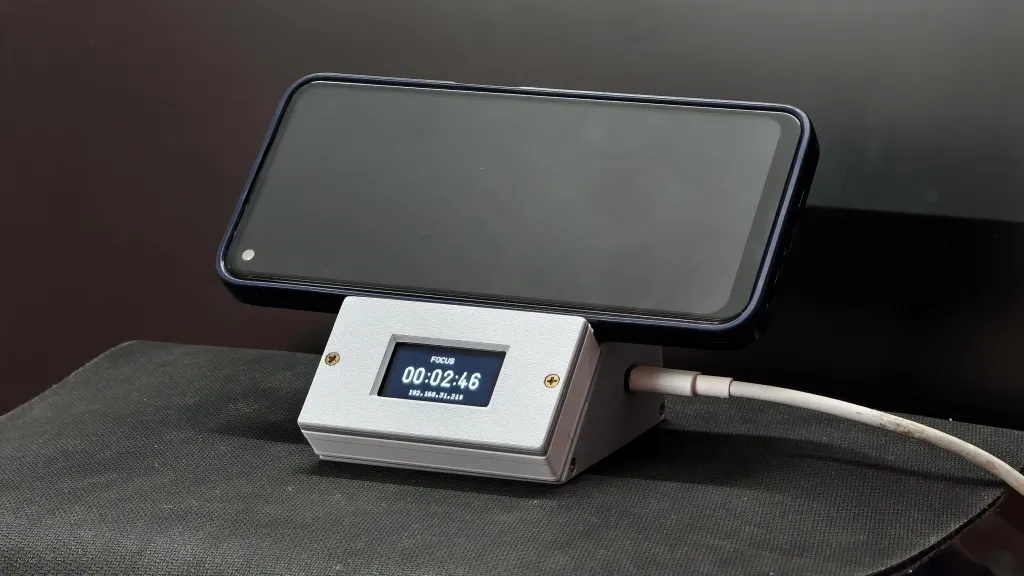
Sometimes, it’s hard to stop picking up your phone every few minutes to check on notifications and scroll endlessly through the slop of the day. [PushpendraC2] has been working on a solution to this problem that would ideally discourage such behavior —  a nifty little smartphone stand!

The concept is straightforward enough—the smartphone stand uses a simple tactile button to determine if your smartphone is sitting on the little 3D printed shelf, or not. However, the smarts inside do a bit more than that, too. An ESP32-S3 is charged with monitoring whether the smartphone is sitting in place, and starts counting “focus time” while it’s there. If the phone is picked up, the OLED display on the shelf starts ticking down a 5-second timer to encourage you to put it back. If you don’t, the focus time is reset and you lose your streak.

It’s also possible to tap a touch sensor on the device which sets a reminder timer, prompting you to put your phone back after a set period of time, between 2 to 30 minutes. A buzzer will then start going off to prompt you to put the phone down. If you want to track the devices impact, you merely need to log in to the web server hosted by the ESP32, which shows your current focus session time, along with a heatmap of your daily productivity.

Advertisement

It’s a simple idea, but one that uses a few neat psychological hooks to encourage compliance and behavioral change. We’ve featured similar projects in this vein before, No surprise, as phone addiction is a problem experienced by many.

Advertisement

Source link

Continue Reading

Tech

TechCrunch Mobility: All eyes on Tesla FSD

Published

on

Welcome back to TechCrunch Mobility, your hub for the future of transportation and now, more than ever, how AI is playing a part. To get this in your inbox, sign up here for free — just click TechCrunch Mobility!

A quick heads-up to readers: I will not publish an issue next week due to the July 4th holiday. I will see you all the following week. 

A series of stories this week highlight the continued — and apparently growing — scrutiny of Tesla’s automated driving system known as Full Self-Driving (Supervised). A fatal crash involving a Tesla that struck a home in Texas and killed a 76-year-old woman gained national attention after the driver told police that Autopilot — the company’s basic driver-assistance system, which has since been discontinued — was engaged at the time of the crash. 

Ashok Elluswamy, vice president of AI software at Tesla, shared a different account of the crash, claiming on X that the driver manually overrode “self-driving by pressing the accelerator all the way to 100% of the accel pedal in this residential area.”

Advertisement

His comments suggest the vehicle was equipped with FSD (Supervised), and not Autopilot, but without an independent investigation we don’t know for sure. But we might, eventually. 

The National Highway Traffic Safety Administration (NHTSA) and the National Transportation Safety Board (NTSB) have now opened investigations into the crash.

Meanwhile, Tesla settled a lawsuit connected to a fatal 2023 crash involving a vehicle using FSD (Supervised). This crash is part of a different NHTSA investigation into Tesla FSD focused on whether the system could “detect and respond appropriately to reduced roadway visibility conditions,” such as “sun glare, fog, or airborne dust.”

All of this attention comes as Tesla positions itself as an AI and robotics company. FSD (Supervised) is currently the most visible, revenue-generating product tied to that branding.

Advertisement

A little bird

blinky cat bird green
Image Credits:Bryce Durbin

A reader who has shared tips with us before alerted me to a research report on Waymo and its growing fleet of Ojai robotaxis. For a refresher, Waymo struck a supplier deal with Zeekr, the brand owned by China’s Geely Holding Group, to provide it with an electric vehicle designed to operate as a robotaxi.

The minivan-like robotaxi was designed in Sweden and is manufactured in China. (These vehicles don’t contain any vehicle communication modules; current U.S. policy bans Chinese-connected vehicle technology.) Once it gets to the U.S., Waymo takes over and adds in its self-driving system. The Ojai is equipped with Waymo’s sixth-generation system — including 13 cameras, four lidar sensors, six radar units, and an array of external audio receivers.

The New York-based research firm MoffettNathanson did a bit of gumshoeing to figure out how serious Waymo’s Ojai program is. The firm examined Bill of Lading documents, which are detailed receipts of shipped goods that are filed with the U.S. government. The company counted Zeekr vehicle labels CM1e or CME, the company’s label for Waymo-bound vehicles. 

MoffettNathanson, which shared its report with TechCrunch, discovered that Waymo is on pace to import 3,156 vehicles into the U.S. this year, about 300 vehicles per month.

Got a tip for us? Email Kirsten Korosec at kirsten.korosec@techcrunch.com or my Signal at kkorosec.07, or email Sean O’Kane at sean.okane@techcrunch.com.

Advertisement

Deals!

money the station
Image Credits:Bryce Durbin

Aseon Labs, a Silicon Valley startup developing mobile pods that can autonomously inspect, clean, and charge robotaxis, raised $10 million in a seed round led by Crane Venture Partners. Other participants included Y Combinator, Uber co-founder Garrett Camp’s venture firm Expa, Robin Hood Ventures, and Founders Capital.

CaoCao and May Mobility, an autonomous vehicle technology startup, partnered to jointly explore commercializing robotaxi services in international markets, beginning with Europe.

Elroy Air, the autonomous heavy-cargo ‌drone startup, plans to go public through a merger with blank-check firm ​Columbus Circle Capital Corp II. The deal is valued at about $1 billion.

Partly, a company that creates AI tools for the automotive repair supply chain, raised $50 million in a Series B round led by DST Global Partners.

Spiro, an African electric vehicle and clean energy infrastructure platform, finalized a $55 million investment from NewTrails Capital, a Chinese growth-stage fund. 

Advertisement

Terawatt Infrastructure, a company that provides EV charging for fleets, including for Waymo and other autonomous and electric fleets, set up a five-year senior secured credit facility that could allow it to borrow as much as $300 million from banks. The proceeds will support the acquisition and development of charging depots, the company said. 

Notable reads and other tidbits

Image Credits:Bryce Durbin

Companies like Tesla and Zoox could get a boost from the U.S. Department of Transportation, which has proposed changes to federal vehicle regulations that would allow companies to skip the inclusion of brake pedals in “vehicles designed to be driven exclusively by automated driving systems.” 

Lucid Motors is laying off 18% of its workforce, or around 1,500 employees, and cutting the second shift of EV production at its factory in Casa Grande, Arizona. Reminder: The layoffs come just four months after the EV maker cut 12% of its staff. CEO Silvio Napoli said the cuts are part of an effort “to simplify the company, sharpen execution, and position Lucid to become more competitive over time.” In this pursuit to simplify, what will Lucid give up? 

Lyft CEO David Risher posted a blog that got my attention. In it, he laid out the company’s multi-sensor safety standard for autonomous rides. The upshot: Autonomous vehicles that use one type of sensor can’t go on the Lyft network. I reached out to the company and they confirmed what this seemed to imply — vehicles like the Tesla Cybercab and Tesla robotaxis that use FSD (Unsupervised) won’t qualify since they only use cameras. The rules don’t apply to advanced driver-assistance systems, by the way. So all of those humans who drive Tesla vehicles on the Lyft app are not affected.

OpenAI hired away Uber India president Prabhjeet Singh to be its first managing director.

Advertisement

Polestar, the Swedish electric vehicle manufacturer owned by Chinese automotive giant Geely, can no longer sell its new cars in the U.S. market. The imported vehicles are restricted by a U.S. government law that bans Chinese connected car technology. 

Samsara, the fleet management company, is rolling out business-card-sized sticky tracking labels to solve cargo theft

Slate Auto’s radically simple electric truck starts at $24,950. Would you pay $25K for a two-seater truck with a 205-mile range, hand-crank windows, no infotainment system, and gray composite material finish (owners can order customizable wraps for the vehicle)? And climate tech reporter and in-house battery expert Tim De Chant explains why Slate changed the battery in its cheap EV truck. 

Uber is facing a lawsuit by shareholders that accuse the board and management of putting profits ahead of compliance and safety, decisions that have exposed the company and its shareholders to risk.

Advertisement

Waymo has set up an entity in Germany, which German news outlet Frankfurter Allgemeine Zeitung first reported. The company registration filing makes it pretty clear that it’s gearing up to launch a robotaxi service in the country. However, this doesn’t mean it’s imminent, insiders tell me. Meanwhile, Waymo has dropped its waitlist in Nashville, a move that opens up its service to the public. 

Zoox gave its custom-built robotaxis a makeover as it prepares for commercial service and larger-scale production at its Hayward, California, facility.

When you purchase through links in our articles, we may earn a small commission. This doesn’t affect our editorial independence.

Source link

Advertisement
Continue Reading

Tech

US auto regulators want to kill robotaxi brake pedals

Published

on

offbeat

Requiring driverless vehicles to keep human brake controls impedes innovation, the NHTSA says

If a self-driving car is going to stop, it may need to stop itself. US vehicle safety regulators are proposing to let robotaxi designers get rid of brake pedals, calling regulatory requirements for manually operated methods of stopping driverless vehicles a barrier to innovation. 

The US National Highway Traffic Safety Administration (NHTSA) published a notice of proposed rulemaking on Friday to modify federal brake safety standards for light vehicles by eliminating the requirement for vehicles equipped with automated driving systems (ADS) and no manual controls to have foot-operated service brakes or manually operated parking brakes.

Advertisement

The NHTSA argues the controls themselves could pose a safety risk by allowing passengers to intentionally or unintentionally override an ADS. Existing braking performance requirements would remain in place, the agency said, even as brake pedals and handbrakes are on the chopping block.

“Regardless of the manner of brake control application, the brake systems must be capable of safely stopping the vehicle, as already required by the standard,” the agency said in its proposal. “This rulemaking would remove unnecessary regulatory burdens and costs with no negative impact to vehicle safety.”

The NHTSA would keep existing stopping-distance requirements for robotaxis, thankfully, but said standardized methods for testing driverless vehicles may need further development. Vehicles equipped with ADS that still have steering wheels and other manual controls, as well as cars equipped with driver-assistance systems such as Tesla Autopilot, Ford BlueCruise, and similar technology, will still need to have brake pedals, naturally.

A number of automakers and driverless taxi operators (Tesla, Waymo, Amazon, etc.) have been developing vehicles that lack manual controls, but current FMVSS still require them to have a brake pedal. That’s simply not safe, says the NHTSA. 

Advertisement

“The inclusion of a manually operated driving control that directly overrides ADS operation could pose a safety risk through intentional or unintentional misuse by a vehicle passenger,” the proposal argues. All people in a driverless taxi, it continues, are passengers who “should also not be expected to perform driver functions such as engaging the parking brake.”

In other words, despite the NHTSA’s admission in the proposal that ADS tech “is still maturing and many of the potential benefits are yet to be realized,” the agency is prepared to remove mandatory brake pedals and handbrakes from ADS-only vehicles, even as robotaxis and driver-assistance systems continue to generate safety headaches, from Waymo vehicles entering flooded roads and running over dogs to fatal crashes involving Tesla’s Autopilot, without requiring a standardized method for passengers to tell the vehicle to stop.

It doesn’t want to completely eliminate manual overrides, mind you, but the agency isn’t going to force automakers to conform to any one method of giving passengers the ability to stop their driverless car.

“It is NHTSA’s expectation that if these controls are removed, passengers will still be provided with a means to direct an ADS-operated vehicle to come to a stop, though how a passenger would indicate they wanted the ADS-operated vehicle to stop would likely vary by manufacturer,” the NHTSA said. 

Advertisement

The NHTSA has frequently butted heads with automakers deploying controversial driver-assistance technology, like Tesla, but the agency was gutted during Tesla CEO Elon Musk’s time heading up the so-called Department of Government Efficiency, with the cuts falling particularly hard on staff responsible for regulating self-driving vehicles. 

Comments on the proposal are being accepted through July 27, but the docket number for the proposal (NHTSA-2026-0728) does not yet appear on the web portal for registering support or dissent. ®

Source link

Advertisement
Continue Reading

Tech

Amazon AU’s best early Prime Day deal gives you 3 months of free reading and listening

Published

on

With just days to go before Prime Day 2026 kicks off in Australia, it’s no surprise that early deals have already started, with Amazon‘s own subscription services being the stars of the opening act.

You can now get three months of free Kindle Unlimited and Audible if you’re a new or returning customer to either or both of the services, which is fantastic news for avid readers.

That’s the best early Prime Day deal in my books (pardon the pun) because, as a voracious reader who has set herself a challenge to read upwards of 60 books in the calendar year (I usually average about 30), three months free of Kindle Unlimited is sure to help. Yes, I did sign up for Kindle Unlimited myself as a returning customer, hoping to discover some unknown gems in my preferred genres of history, fantasy and mythology.

So, instead of the usual 30-day free trial, you get an extended three months free trial, but keep in mind that this will not include an additional 30 days — the original trial period becomes null and void in these circumstances.

Advertisement

That’s still a good deal, because you save two months of subscription cost at the very least, which is AU$27.98 (or AU$13.99p/m) for Kindle Unlimited and AU$17.98 (or AU$8.99p/m) for Audible.

Note that these early Prime Day deals — like all other Prime deals — require a Prime membership to be eligible. In fact, you won’t even see those offers on Amazon if you aren’t signed in with a Prime account. If you have a standard Amazon account, you will find Kindle Unlimited for half price (AU$6.99p/m) for three months instead.

Again, it looks like opting for this half-price deal voids the standard 30-day free trial as that’s presented as a separate sign-up option for non-Prime members. So definitely take advantage of this excellent deal as a Prime subscriber.

Advertisement

The best early deal I can see for non-Prime members is four months free of Music Unlimited, and that’s even better value, especially if you listen more than read. Not only does a Music Unlimited subscription get you ad-free HD streaming access to millions of songs, there are hundreds of thousands of podcasts and audiobooks too.

If you’ve never had a Prime membership before, you can get a 30-day free trial of Amazon Prime to get access to this year’s Prime Day deals. You get the same benefits as paid members, including free delivery in thousands of eligible products, and access to other services such as Prime Video, Prime Music, Prime Gaming and more. You can cancel at any time during the trial to avoid paying the regular fee of AU$9.99 per month. Just click on any of the buttons below to sign up now.

Advertisement

Source link

Continue Reading

Tech

Spain-Backed Fund Joins FOSSA’s Sovereign Satellite Communications Push

Published

on

Spanish startup FOSSA Systems “has raised about $10.5 million to expand its connectivity constellation,” reports Space News, noting some funding is backed by Spain’s government:

The support from the Spanish Society for Technological Transformation (SETT) comes a year after the fund injected 14 million euros into Spain’s Sateliot , which is also developing a satellite connectivity network with security and defense applications. Spanish private investment firm Kibo Ventures led FOSSA’s funding round, the six-year-old venture announced June 24, bringing its total raised to date to nearly 20 million euros.

The proceeds will help fuel FOSSA’s push beyond the tiny picosatellites it once used to connect low-power monitoring devices toward larger cubesats in low Earth orbit, enabling additional sovereign communications and space-based intelligence capabilities… The company’s funding round follows a wave of investments this year in European ventures planning to develop sovereign space capabilities, including Austrian propulsion startup Gate Space, which secured 6.3 million euros earlier this month from a European Commission-backed accelerator program.

Advertisement

“Our goal is to establish FOSSA as a European benchmark in sovereign space infrastructure,” said Julián Fernández, FOSSA’s CEO and cofounder.

Source link

Continue Reading

Tech

Baidu’s chip unit Kunlunxin is targeting a $50 billion Hong Kong IPO and asked investors to buy its semiconductors

Published

on

TL;DR

Baidu’s Kunlunxin targets a $50B Hong Kong IPO and asked investors to commit to buying its chips, blurring the line between shareholder and customer.

Baidu’s AI chip unit Kunlunxin is planning to go public in Hong Kong at a target valuation of $50 billion, The Information reported on Sunday. In an unusual twist, the company asked prospective IPO investors to also commit to purchasing its semiconductors, according to the report.

Reuters could not independently verify the report. The $50 billion target represents a dramatic increase from the $14.7 billion valuation that the South China Morning Post reported Kunlunxin was seeking as recently as this month, and from the HK$100 billion (roughly $12.8 billion) figure TrendForce cited in May.

The practice of tying chip purchase commitments to IPO allocation, if confirmed, would blur the line between investor and customer in a way that echoes the “circular financing” structures the Bank for International Settlements warned about this weekend. The BIS flagged arrangements where chipmakers take stakes in AI labs that then commit to buying their products, calling the terms “typically poorly disclosed.

Advertisement

Kunlunxin filed confidentially for a Hong Kong listing in January and is also pursuing a dual listing on Shanghai’s STAR Market. It has appointed CICC, Citic Securities, and Huatai Securities as lead banks. The company was founded in 2012 as Baidu’s in-house chip division and is central to the search giant’s ambition to become a full-stack AI company. Hong Kong has become the primary listing venue for Chinese AI companies, with nearly $44 billion raised in equity capital markets in the first half of 2026, the highest level in five years.

The 💜 of EU tech

The latest rumblings from the EU tech scene, a story from our wise ol’ founder Boris, and some questionable AI art. It’s free, every week, in your inbox. Sign up now!

The listing lands amid a broader AI-driven fundraising boom in the city. CATL completed a multibillion-dollar offering, AI developer Zhipu is preparing another round after going public in January, and optical transceiver maker Zhongji Innolight is also planning a listing. SK Hynix has filed for a US listing that could raise $29 billion.

Advertisement

Kunlunxin has been shifting from an internal Baidu supplier to a third-party chip seller. External customers accounted for over 50% of revenue in 2025, and the company was expected to reach breakeven that year. The BIS warned this weekend that the AI investment boom’s financial structures carry systemic risks, and a chip company asking its IPO investors to also become its customers is precisely the kind of entanglement regulators are flagging.

Source link

Advertisement
Continue Reading

Trending

Copyright © 2025