

Business
Lenovo sees memory prices settling at a permanently higher level as AI demand resh




Speaking to ET Now, Samit Vartak, from SageOne Investment Managers, said that while markets have recovered significantly, sentiment has not yet turned outright bullish.
“Yes, I mean, sentiments, they are still jittery because there is so much uncertainty. Things change on a daily basis. We have rebounded from the lows, but if you look at our highs, Nifty is still 9-10% away from where we had reached, maybe in September 2024. So, in that respect, the sentiments are nowhere close to what we can call bullish,” he said.
He believes that one of the biggest overhangs for India—crude oil prices—has eased considerably, although geopolitical developments remain unpredictable.
“I do believe that the drag for India, which was mainly the crude, the worst-case scenario is probably behind us. We do not even know, hopefully things will get better, but there is no certainty of that given Trump in the leading position and then with Iran, where things change very, very quickly,” he said.

Strong earnings provide confidence
Despite lingering uncertainties, Vartak believes corporate earnings continue to paint an encouraging picture for investors.
According to him, small-cap companies delivered median earnings growth of nearly 25% during the previous quarter, while mid-cap companies reported growth of around 22-23%. Even large-cap companies posted healthy earnings growth of about 18-19%.
While higher crude prices could temporarily affect profitability, he expects investors to look beyond short-term disruptions.
“There could be some drag because of crude price inflation, but again investors would know that this will be a transitory phase and probably it may have an impact for a quarter or two, but investors would always look 6, 9, 10, 12 months beyond that,” he said.
He also pointed out that several businesses could actually benefit once raw material costs decline, particularly those that have already implemented price hikes during periods of elevated commodity prices.
“A lot of companies may make a pretty significant improvement in margins going forward… We have seen the same thing play out during post-COVID times when commodity prices went up and companies took price hikes, but when things cooled down, no one really took prices down,” he said.
Why he remains optimistic on small-caps
Vartak recalled that he had turned positive on the mid- and small-cap segment when valuations corrected sharply earlier this year. The key trigger, he said, was valuation comfort rather than sentiment.
He noted that the price-to-book ratio of the small-cap index had slipped below the 25th percentile of its five-year historical range, a rare occurrence previously seen only during the COVID market crash.
Unlike the price-to-earnings ratio, which can fluctuate significantly depending on earnings cycles, Vartak prefers price-to-book as a more stable valuation metric.
Using global semiconductor companies as examples, he explained that elevated earnings can sometimes make PE ratios appear inexpensive even when valuations are stretched.
“For me, price-to-book is a much better multiple compared to the PE multiple. PE multiple tends to be very volatile,” he said.
He added that India’s small-cap valuations remain below their historical median while earnings momentum continues to strengthen.
“I do believe that price-to-book for small-caps is pretty reasonable. They are definitely below the median of the last five-six years and, more importantly, the earnings growth has picked up,” he said.
AI acquisitions remain a high-risk bet
The discussion also turned to India’s IT sector, where companies have increasingly been pursuing acquisitions to strengthen artificial intelligence capabilities.
While acknowledging the strategic intent behind such deals, Vartak cautioned investors against assuming successful outcomes.
According to him, acquisitions involve considerable execution and integration risks, particularly when companies are entering unfamiliar growth areas.
“Companies do try multiple things and it may not be something which is highly predictable. Acquisitions are highly uncertain because the integration… it is a new growth avenue for them,” he said.
He advised investors to remain cautious.
“I would definitely take these acquisitions with a pinch of salt. These are high risk. If it plays out, yes, it can really give you big delta, but I am not so sure about this,” he said.
Stock selection matters more than sector selection
Although several themes such as defence, power equipment and power ancillaries continue to attract investor interest, Vartak believes many of these sectors have become excessively expensive.
He noted that several frontline defence companies now trade at valuation multiples far above their historical averages, leaving limited room for error. Instead of chasing popular themes, he recommends identifying businesses where both growth and valuations remain favourable.
Among the areas he currently likes are export-oriented industries, including textiles, specialty chemicals and contract development and manufacturing organisations (CDMOs). He is also positive on export-focused defence companies, gold financing businesses and select non-banking financial companies capable of delivering sustainable growth of over 20%.
Interestingly, he believes the best opportunities are often found outside the well-known market leaders.
“Picking the right theme or space is not good enough. Picking the valuation within that is also important,” he said.
He highlighted that several newly listed companies in power ancillaries and specialty chemicals continue to trade at significantly lower valuations than their established peers despite offering attractive growth prospects.
“The reason I am positive about small-caps is because that is the space where you do have the growth as well as valuation kind of a combination, which is not really available in the frontline kind of names which are pretty well known to everyone,” he said.

Westbridge Funds Management has expanded its portfolio with the $10.5 million purchase of a partially vacant retail building in Busselton.
The Subiaco-based property fund purchased 36 to 38 Duchess Street from Aurjoe Pty Ltd and Franjack Pty Ltd, RP Data shows.
According to ASIC, the two entities are owned by members of the Romano family, of Perth and Queensland.
The two-storey Federation building includes 4,099 square metres of net lettable area on a 10,139sqm site.
It is about 50 per cent occupied, with Westbridge working on securing a tenant for the remaining space.
Westbridge Funds Management chair Damian Collins described the property, which will go into a single asset fund, as a “clear value-add opportunity”.
“While the current passing income reflects existing occupancy, our strategy is focused on unlocking the full potential of the asset through a substantial refurbishment and reconfiguration of the large vacant space,” he said.
“We see strong fundamentals underpinning Busselton, including population growth, tourism demand and ongoing infrastructure investment, which give us confidence in the long-term outlook.”
Mr Collins added that Westbridge planned to invest in upgrades of the property, which was initially built in 1906.
The purchase follows Westbridge’s recent investment in two industrial properties in Victoria for $62.5 million and its purchase of industrial and medical properties in South Australia and Queensland.
Knight Frank Australia’s Jonathan Wong brokered the deal for the Busselton property.


I have been managing investments for over eight years in capital markets. By qualification I am a CFA Charter holder. I primarily look for discrepancies between the price and value of a security. With a focus on first-principal mindset, I try breaking down ideas into their core- most tangible parts, affecting the theses while deliberately avoiding the non-significant matter into crowding the analysis. If you like my ideas or frameworks, reach out via email/message for more granular and concentrated- portfolio level specific investment researches and ideas. I am at prakhar@shrihittruealphacapital.com.
Analyst’s Disclosure: I/we have no stock, option or similar derivative position in any of the companies mentioned, and no plans to initiate any such positions within the next 72 hours. I wrote this article myself, and it expresses my own opinions. I am not receiving compensation for it (other than from Seeking Alpha). I have no business relationship with any company whose stock is mentioned in this article.
Readers are advised to fact-check thoroughly before committing any capital to this idea; this reflects the personal views of the author and should not be pursued as formal financial or investment advice in any manner. While every effort has been made to ensure accuracy, errors may exist in the data and financial projections presented. The author is not responsible for any financial gains or losses incurred from investments made based on this content.
Seeking Alpha’s Disclosure: Past performance is no guarantee of future results. No recommendation or advice is being given as to whether any investment is suitable for a particular investor. Any views or opinions expressed above may not reflect those of Seeking Alpha as a whole. Seeking Alpha is not a licensed securities dealer, broker or US investment adviser or investment bank. Our analysts are third party authors that include both professional investors and individual investors who may not be licensed or certified by any institute or regulatory body.

J.P. Morgan raises European equity targets on earnings growth


Now retired, I am an income-oriented investor seeking high yield income to support my lifestyle in retirement.I became deeply interested in the stock market beginning in late 2007 (bad timing for me but worse for my uncle) when I received an unexpected inheritance. Since that time I have done considerable research and vowed to make smarter long-term investing decisions after suffering through the Great Recession with minimal losses to my inherited portfolio, after firing my financial advisor.I look for mostly dividend paying income stocks and funds (BDCs, REITs, CEFs, ETFs) that offer high yield income to increase my retirement income beyond my pension and Social Security. I also enjoy reading investment/financial and business information and following trends in technology and markets. The human psychology of markets is as fascinating and inscrutable to me as the financial side. I am not a financial advisor so please do your own due diligence before making any buy or sell decisions.“The race is not always to the swift, nor the battle to the strong, but that’s the way to bet.” Damon Runyon
Analyst’s Disclosure: I/we have a beneficial long position in the shares of GPIQ, QDTE either through stock ownership, options, or other derivatives. I wrote this article myself, and it expresses my own opinions. I am not receiving compensation for it (other than from Seeking Alpha). I have no business relationship with any company whose stock is mentioned in this article.
Seeking Alpha’s Disclosure: Past performance is no guarantee of future results. No recommendation or advice is being given as to whether any investment is suitable for a particular investor. Any views or opinions expressed above may not reflect those of Seeking Alpha as a whole. Seeking Alpha is not a licensed securities dealer, broker or US investment adviser or investment bank. Our analysts are third party authors that include both professional investors and individual investors who may not be licensed or certified by any institute or regulatory body.


Analysis-Russia pounds on the gates of Ukraine’s ’fortress belt’

Pantheon Infrastructure publishes 2025 sustainability report
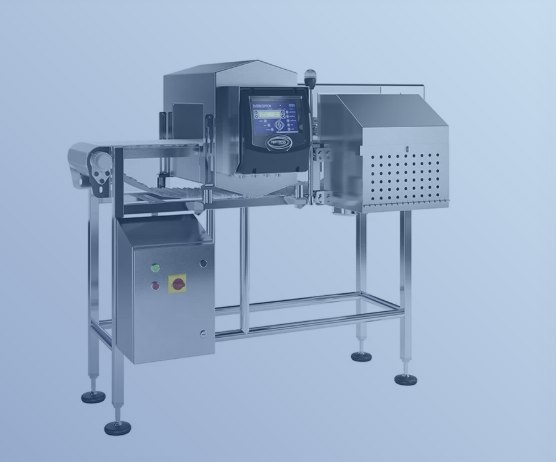
Ever watched a conveyor belt humming along in a busy warehouse and wondered how on earth everything gets weighed without someone standing there with a clipboard? Turns out, the answer is a lot cleverer than most people realise.
Weigh-in-motion technology has been creeping into modern conveyor systems for a while now, and to be honest, it’s one of those quiet upgrades that changes everything without making much noise about it. No fanfare. Just better numbers, faster throughput, and fewer headaches for the people running the show.
Let’s talk about why that matters.
So What Is Weigh-in-Motion, Exactly?
Picture this: a product travels along a belt, and instead of stopping to be weighed, it gets measured while it’s still moving. No pausing. No bottleneck. The system captures the weight on the fly and keeps everything flowing.
That’s the basic idea. The clever bit is in the engineering, where load cells, sensors, and some pretty smart software work together to grab an accurate reading even though the item never slows down.
Here’s the thing though. Getting an accurate weight on a stationary scale is easy. Getting one on a moving belt, with vibration, varying speeds, and products of all shapes and sizes? That part’s a bit tricky. But when it’s done properly, the results are genuinely impressive.
Why Businesses Are Paying Attention
The truth is, every second counts in a production line. If your weighing process forces things to stop, even briefly, you’re losing time you’ll never get back. Multiply that across thousands of items a day and the cost adds up faster than you’d expect.
Weigh-in-motion solutions remove that pause. Products keep moving, throughput climbs, and your team isn’t stuck babysitting a scale all shift.
But speed isn’t the only win here.
There’s also accuracy. Modern systems can catch underweight or overweight items in real time, which means dodgy products get flagged before they ever leave the building. For anyone dealing with compliance, packaging standards, or just keeping customers happy, that’s huge.
And then there’s the data. Every weight reading becomes a little piece of information you can actually use. Spotting trends, catching equipment drift, working out where things are going sideways before they become a real problem. That kind of visibility used to be a luxury. Now it’s pretty much expected.
The Integration Part (Where It Gets Interesting)
Now, you might be thinking this all sounds great, but won’t bolting new tech onto existing conveyors be a nightmare? Fair question.
The good news is that integrating weigh-in-motion systems has gotten a whole lot smoother over the years. Modern setups are designed to fit into conveyor lines without you having to rip everything out and start again. Companies offering proper AccuWeigh weighing solutions understand that most businesses can’t afford weeks of downtime, so the focus has shifted to systems that slot in with minimal disruption.
That said, integration isn’t a one-size-fits-all thing. A food packaging plant has very different needs from a logistics depot shifting heavy freight. The belt speed, the product type, the accuracy you need, the environment, all of it shapes how the system gets set up.
This is where having the right people involved really matters. Anyone can sell you a load cell. Getting it calibrated, positioned, and tuned for your specific operation is where the real skill comes in.
Real-World Touches You Might Not Expect
The other day someone pointed out that one of the underrated benefits is how much pressure it takes off staff. No more manual checks. No more squinting at a display while products pile up behind you. People can focus on work that actually needs a human brain.
And let’s not forget maintenance. A well-designed weigh-in-motion system flags its own issues. If a reading starts drifting or a sensor’s playing up, you’ll know about it early rather than discovering the problem after a thousand mislabelled boxes have gone out the door.
Ever noticed how the best technology is the kind you barely think about? That’s sort of the goal here. It just works, quietly, in the background, while everything keeps moving.
Is It Worth It?
Look, no system is magic, and weigh-in-motion tech does take some upfront investment and planning. But for businesses running high volumes where every delay and every error costs money, the maths usually works out in your favour pretty quickly.
Faster lines. Better accuracy. Less manual labour. Useful data. Compliance sorted. When you add it all up, it’s not hard to see why so many operations are making the switch.
The conveyor belt has been around forever, basically. What’s changed is how smart it can be. And honestly, that’s kind of exciting, even if it’s the sort of thing most people walk past without a second glance.
So next time you see a belt quietly doing its job, just know there’s probably a lot more going on under the surface than you’d think.

Magyar Bancorp: Fairly Valued Today, But The Asymmetry Runs Downside

Thermo Fisher Scientific: Gradually Getting Cheaper

NYT Connections hints and answers for Monday, June 29 (game #1114)

Crypto Gold Live Trading 25 June – stock_learners

From the darkest days of grief to the stage: How one Belfast woman’s ‘phat’ journey has a message for all


-
 Sports5 days ago
Two goals and an assist by sheer aura: Cristiano Ronaldo just entered the World Cup chat
-

 Tech7 days ago
Microsoft accidentally kills epic Outlook email threads
-

 Fashion3 days ago
Weekend Open Thread: Staud – Corporette.com
-

 Politics3 days ago
The House | Manchesterism won’t survive the painful trade-offs unless it gets citizens on board
-

 Politics3 days ago
Potential 2028er World Cup attendee leaderboard
-

 Business3 days ago
Asia stock markets slide as tech shares slump
-

 Tech3 days ago
A Look At A Gaggle Of Transputer Boards
-
Crypto World5 days ago
Bitcoin (BTC) Dips Below $62K, Ethereum (ETH) Plunges 6% Daily: Market Watch
-
 Crypto World4 days ago
Dell (DELL) Shares Tumble Over 5% Following Analyst Downgrade to Hold
-

 Crypto World5 days ago
Securitize Wraps Roubini's SEC-Registered ETF as Dubai VARA Digital Security
-
Business5 days ago
Entergy settles forward sale agreements, raises $672 million in cash proceeds
-

 Crypto World2 days ago
Kraken's xStocks Opens Bending Spoons IPO Registration to EEA Retail
-

 Sports2 days ago
FIH Pro League: India defeat Pakistan 7-1, register biggest win of campaign | Other Sports News
-

 Crypto World2 days ago
Coinbase, Circle Deepen Crypto Stock Losses Despite Resilient S&P 500
-

 Crypto World3 days ago
RTX holders must register wallets before token distribution begins
-
 Crypto World3 days ago
Hyperliquid Named on Singapore MAS Investor Alert Register
-

 Tech1 day ago
Bluekit phishing kit adopts browser-in-the-middle for login theft
-

 Sports4 days ago
India vs Bangladesh LIVE Score, Women’s T20 World Cup: Bangladesh Opt To Bat; India Enter ‘Do-Or-Die’ Stage As Semi-Final Race Heats Up
-
Crypto World3 days ago
The DATA Foundation Launches to Tackle AI’s Multi-Billion Dollar Training Data Bottleneck
-

 Tech2 days ago
Russian hackers now target Signal backup recovery keys
You must be logged in to post a comment Login