

Business
Thailand MPC Holds Rate at 1.0%, Lifts 2026 GDP Forecast to 2.3%


The MPC maintained Thailand’s policy rate at 1.0%, raised 2026 GDP forecast to 2.3%, expects inflation to ease by 2027, and will monitor inflation risks, SME debt, and FX volatility closely.
MPC Maintains Policy Rate at 1.0%
The Monetary Policy Committee (MPC) unanimously voted to keep the policy rate steady at 1.0%, considering the Thai economy’s slow and uneven recovery. Retail loan growth remains weak, and SME lending continues to contract. Inflation is expected to ease in 2027 as energy and food supply pressures diminish. The MPC is monitoring cost pass-through, medium-term inflation expectations, and debt serviceability among vulnerable households and SMEs closely.
Revised Economic and Inflation Outlook
The MPC raised its 2026 GDP growth forecast to 2.3% year-on-year, driven by stronger tech and AI sector momentum, milder war impacts, and government stimulus measures addressing energy costs. Inflation is projected to peak at 4.5% in late 2026 before easing to an average of 1.4% in 2027, remaining below regional peers due to weaker wage pressure and slower growth.
Policy Implications and Future Outlook
Despite global rate hikes, Thailand’s unique inflation drivers and solid reserves support maintaining a low policy rate to balance price stability and growth. The MPC stands ready to adjust rates if risks intensify. Fiscal policy continues to play a key role in supporting growth, with targeted financial measures assisting SMEs and retail borrowers. The MPC may consider easing in 2027 if inflation declines and growth stays fragile.
Why the MPC held at 1.00%
The MPC voted unanimously to keep the policy rate at 1.00% per year, saying the level remains appropriate to support economic recovery and manage inflation risks. The hold reflects a balancing act: the committee sees growth picking up but acknowledges the recovery is still fragile and uneven.
On the inflation side, core inflation remains manageable, and the committee has not seen signs of entrenched inflation similar to those experienced in many developed economies. That gives the MPC room to stay accommodative. Meanwhile, household debt remains high at around 86% of GDP, limiting long-term purchasing power and potentially weighing on private consumption once government stimulus measures are gradually withdrawn — another reason not to tighten.
On the currency, the MPC said the baht has weakened in line with the stronger US dollar and interest-rate differentials, and the Bank of Thailand views capital movements as normal, but stands ready to manage volatility if it affects overall economic stability.
Why the GDP forecast was lifted to 2.3%
This is the more significant story. The committee upgraded its 2026 GDP growth projection to 2.3%, compared with 1.5% assessed at the April meeting. Excluding government measures, growth is expected at 1.8%.
Three factors drove the upgrade:
- AI and tech-cycle uplift. The improved outlook reflects the upswing in the global technology cycle, particularly AI and cloud investment by major US technology companies, which has directly boosted demand for Thai electronic products and technology components. The trend is also reflected in rising applications for Board of Investment promotion in electronics, digital industries and AI infrastructure, making exports a key growth driver.
- Energy cost relief. An improvement in the Middle East conflict has helped lower energy and key raw-material prices from earlier peaks, and the MPC lowered its assumption for Dubai crude oil prices to around US$90 per barrel, reducing production costs for businesses.
- Government stimulus. The government’s Emergency Decree borrowing of 400 billion baht to mitigate the energy crisis impact is also factored into the revised projection.
The caveat: recovery remains uneven
Despite the upgrade, the MPC still views the recovery as uneven, especially for small and medium-sized enterprises and households burdened by high debt and rising living costs. There’s also a near-term external balance risk: the MPC projects Thailand’s current account balance for 2026 to worsen to a balanced level of around $0 billion USD, down from a previous estimate of $7 billion USD surplus, attributed to higher crude oil imports and seasonal profit repatriation by multinationals — though a gradual return to surplus is expected in H2 2026 and into 2027.
The bottom line: the BOT is holding rates steady because the macro conditions don’t yet justify either a cut or a hike — inflation is benign, debt burdens are high, and the tech-export tailwind is doing much of the heavy lifting that monetary policy would otherwise need to provide.
Other People are Reading

Business
PFC-REC merger explained: Swap ratio, rationale, other key details as merger set to create Rs 11 lakh cr power financing giant

After presenting the Union Budget in February this year, Finance Minister Nirmala Sitharaman said that the government will restructure PFC and REC in order to streamline operations. After receiving the respective boards’ nod, the merger scheme now needs approvals from shareholders, stock exchanges, market regulator Sebi, the National Company Law Tribunal (NCLT) and other statutory authorities before becoming effective.
PFC-REC share swap ratio
The share swap ratio has been fixed at 88 PFC shares for every 100 REC shares held. This means that an REC shareholder who owns 100 shares of the company as of the record date will get 100 shares of PFC once the merger takes effect. Her total holding of 100 shares in REC, meanwhile, will be cancelled.
“The share exchange ratio for the proposed merger of REC into PFC shall be 88 equity shares of PFC of Rs 10 each fully paid up for every 100 equity shares of REC of Rs 10 each,” the companies said in an exchange filing.
Also read: PFC-REC merger approved! Here’s what will happen to your existing shares after mega merger
Record date for PFC-REC merger
The record date to determine the eligibility of shareholders for the mega merger is yet to be ascertained. Only those REC shareholders who own shares of the company as of the record date will be eligible to receive PFC shares as per the share swap ratio after the merger takes effect.
What is the rationale behind PFC-REC merger?
In its exchange filing, PFC listed several benefits that REC’s merger into the company will bring. The merged entity will emerge as the government’s principal institution for implementing power sector reforms and flagship programmes, serving as the primary vehicle for translating national policy objectives into measurable sectoral outcomes, it said, adding that this would maximise the effectiveness, reach and impact of government initiatives.

“As India moves towards the ambitious goal of Viksit Bharat 2047, the power sector will require substantial capital investment. On a consolidated basis, the merged entity is expected to benefit from improved balance sheet strength, stronger capital base, and higher operational efficiencies, enabling large-scale funding and improved credit flow across the power sector value chain,” PFC added. It further said that the merged entity would serve as a key financier
of India’s energy transition and strategic infrastructure buildout.
The mega merger is also expected to strengthen the balance sheet, improve borrowing capacity and financial flexibility, and the resulting company would become the primary vehicle for implementing a majority of government schemes for the power sector.
REC shareholding pattern
The Cabinet Committee on Economic Affairs earlier cleared a proposal under which PFC acquired 52.63% of the government’s holding in REC. With this acquisition, PFC and REC are currently operating in a holding subsidiary structure. The proposed merger would consolidate the two entities into a single balance sheet, subject to statutory approvals and detailed structuring.Around 37 mutual funds held over 9% stake in the company, as per data on the company’s shareholding pattern as on March 31, 2026. 26 insurance companies held nearly 6% stake, while Life Insurance Corporation of India (LIC) owned around 3% stake.
Nearly 11.69 lakh retail shareholders owned more than 10% stake in REC, as at the end of the January-March quarter.
Also read: PFC, REC boards approve merger scheme, share exchange ratio at 88 PFC shares for every 100 REC shares
PFC & REC’s net worth
PFC had a consolidated net worth of Rs 1.73 lakh crore for the financial year 2026. Its turnover meanwhile stood at Rs 1.15 lakh crore.
REC’s net worth and turnover during the same financial year stood at Rs 85,054 crore and Rs 59,584 crore respectively.
PFC & REC share price
PFC shares dropped over 2% to trade at Rs 422.20 apiece on NSE on Monday morning. The company has a market capitalisation of nearly Rs 1.41 lakh crore.
REC shares meanwhile rose around 1% to trade at Rs 367.95 apiece. The company has a market capitalisation of Rs 96,244 crore.
Also read: Kotak Mahindra Bank shares fall 3% after CEO’s surprise exit. What Nomura, Jefferies said
(Disclaimer: Recommendations, suggestions, views and opinions given by the experts are their own. These do not represent the views of The Economic Times)

The Australian share market has moved higher after a US official said America and Iran would “stand down for now” following an exchange of fire near the Strait of Hormuz that tested their fragile ceasefire.

Air conditioning firms say business is booming, with one reporting that enquiries for home units have climbed by 300% as Britain swelters through its hottest June on record.
Shoppers rushed to snap up portable units after a red extreme heat warning was put in place for millions of people and temperatures climbed to 36.7C, the highest figure ever recorded for the month in the UK, according to the Met Office. Schools closed, transport was disrupted and people across the country went searching for cooler spaces in which to work or rest.
For installers, the spike in demand has been transformational. At Aircon Services in Tamworth, domestic enquiries have risen by 300% over the past six years, with the current heatwave pushing the firm from roughly two enquiries a week to about 25.
“People are not willing to tolerate the heat any more,” said co-founder Marc Newbold, who added that air conditioning was starting to be viewed as a necessity rather than a luxury. “We are stacking up bookings for weeks to come and the enquiries are difficult to keep up with, but it creates a lot of business.”
The numbers point to a structural shift rather than a one-off summer scramble. Just 4% of homes in England currently have air conditioning, according to the University of Reading, yet the National Housing Federation (NHF) predicts that 90% of UK homes will overheat by 2050. British housing stock has historically been designed for the cold, with the aim of trapping heat in rather than keeping it out, leaving millions of properties poorly suited to the more frequent and intense heatwaves driven by climate change.
Overheating occurs when indoor temperatures rise to an uncomfortable level, typically above 25C to 27C, and the NHF warns that it is more likely to affect lower-income households that may not be able to afford cooling measures. “Many homes are unable to maintain comfortable temperatures during the more frequent and intense heatwaves we are experiencing as a result of climate change,” the federation said. Prolonged exposure to high indoor temperatures is linked to heat exhaustion and heat stroke, cardiovascular problems, sleep disturbance and mental health issues.
Finding an air conditioned space has become a topic of conversation for many. Churches, community centres, museums and libraries have stepped in with free “cool spaces”, helping people escape the rising temperatures. But a growing number are going further and installing air conditioning at home.
Cost is proving less of a barrier than it once was. Cooling a small bedroom can run to about £1,500, but Newbold said customers increasingly see it as an investment in comfort rather than an expense, particularly as the units are designed to last around 15 years. “It’s not just a one-year purchase,” he said. The firm, which also fits systems for hotels, shops and offices, is among many smaller operators finding that the heat is reshaping their order books, even as the wider economy counts the cost of soaring temperatures on small businesses and productivity.
For owner-managers, the lesson runs deeper than a hot summer. Repeated heatwaves are quietly rewriting consumer demand, from the retail sales lift that fans and cooling products enjoy to the longer-term maintenance and servicing market that follows every new installation. For the SMEs positioned to meet it, what once looked like a seasonal flurry is starting to resemble a permanent line of business.

Amy Ingham
Amy is a newly qualified journalist specialising in business journalism at Business Matters with responsibility for news content for what is now the UK’s largest print and online source of current business news.


NOGALES, Mexico — As the disappearance of Nancy Guthrie marks its fifth month, a group of volunteers in this Mexican border city continues to search for the missing 84-year-old, even as they carry the weight of their own families’ losses, marching through downtown streets chanting “¿Nuestros hijos, dónde están?” — “Where are our children?”
The volunteers belong to Buscando Corazones, or “Searching for Hearts,” a grassroots search collective whose members are searching for Guthrie even as most of them are also still looking for their own missing relatives.
A search rooted in shared grief
For the women leading the search efforts, the motivation to look for an American they have never met comes from a place of deep personal understanding. “Nancy is a mother,” Luz del Rayo Lopez Carrillo, a member of Buscando Corazones, said in Spanish. “Because of that, we have to search for her — no matter her nationality, no matter whether she’s rich or poor. To us, she’s a mother, just like we are, and that’s why we’re searching for her.”
Lopez Carrillo’s own search is personal in the most direct sense. Her son, Dante Esau Lopez Carrillo, remains missing, and she described the torment of not knowing his fate. “We don’t know where he is, how he is, whether he’s alive, if he’s being tortured… if he’s being forced to do work he doesn’t want to do, if they’re forcing him into drugs,” she said. “It’s incredibly difficult.”
She is not alone in carrying that burden while continuing to search for Guthrie. “They didn’t just make my son disappear; they made our entire family disappear,” said Alma Griselda Ramirez Games, another Buscando Corazones volunteer, whose son, Pablo Ivan Dorame Ramirez, is also missing.
A search built on persistence despite repeated setbacks
The group’s involvement in Guthrie’s case began after an anonymous tip in mid-May suggested her remains might be found in the desert near a region known as Mariposa, close to the U.S.-Mexico border southwest of Nogales. Guadalupe Ramona Ayala Ortiz, who leads the group, has said the caller provided specific details about clothing and identifying characteristics meant to help confirm whether searchers had located the right person.
Despite multiple searches, including operations conducted in mid-May and on June 10, June 16 and June 17, volunteers have not found any trace of Guthrie. The group has said it will continue returning to the area regardless. “Every time we go out, we hope to bring a heart, a treasure, back home,” Ayala Ortiz said in Spanish.
The repeated searches have not been without consequence for the broader missing-persons crisis in the region. While searching for Guthrie, the group has uncovered roughly 25 unmarked graves in the area, none of which have been connected to her. Lopez Carrillo described the toll such discoveries take. “It’s an undignified death. It’s a death of abandonment,” she said, reflecting on the broader scale of disappearances the group regularly encounters in its work.
Coordination questions between U.S. and Mexican authorities
The searches have raised questions about the level of coordination between law enforcement on both sides of the border. Pima County Sheriff Chris Nanos addressed the Mexican search efforts directly in a statement posted to social media. “We are aware of reports regarding an anonymous tip related to the Nancy Guthrie investigation that was provided to a group in Mexico,” Nanos wrote. “At this time, we have not been contacted by Mexican authorities. The investigation remains active and ongoing, and we will continue to follow up on any credible information.”
Mexican officials, for their part, have said there is no evidence supporting the claims behind the searches. According to a statement from Sonora state officials, “There is no evidence, information, or objective elements suggesting that U.S. citizen Nancy Guthrie entered, remained in, or traveled through the state of Sonora.”
Former FBI agent Brad Garrett told ABC15 that close law enforcement involvement is essential in searches of this kind, regardless of who is leading them. “You really have to have law enforcement’s hands on there, because evidence could get destroyed,” Garrett said. Ayala Ortiz has said that while local Nogales police often accompany the group during its marches and searches, they are not formally part of the investigation, and that no U.S. law enforcement personnel have participated in the field operations.
A crisis far larger than one case
The volunteers’ commitment to Guthrie’s case sits alongside a much larger, ongoing missing-persons crisis in Nogales itself. The group says it is currently tracking nearly 650 people reported missing in the city, and members have said they want the faces of those lost to remain visible to the public, even as international attention has focused overwhelmingly on a single American case.
Elizabeth Lopez Vazquez, another volunteer whose son, Vicente Acosta Lopez, is missing, described the daily reality faced by families like hers. “For mothers and fathers searching for their loved ones, there are no holidays,” she said in Spanish. “There’s always an empty place at the table, because someone is missing.”
A connection across borders
For the Guthrie family, the searches in Mexico represent one more thread of hope in an investigation that has stretched far longer than anyone anticipated. Savannah Guthrie, the “Today” show co-anchor and Nancy’s daughter, has repeatedly appealed publicly for information about her mother’s fate. “We beg you now, to return our mother to us,” she said in an earlier video posted to social media alongside her siblings. In a separate message directed at whoever might be responsible, she said, “To whoever has her, or knows where she is, it is never too late to do the right thing.”
Lopez Carrillo, reflecting on the shared bond between the Guthrie family and the families she works alongside in Mexico, framed the search in terms of solidarity rather than distance. “We don’t search for someone else’s child. We search as if they’re our own,” she said. “We take on that identity. Maybe Nancy’s family can’t come search for her, but my fellow volunteers and I can search in her place.” She added simply, “Together, we become one mother.”
Where the case stands
Nancy Guthrie was last seen at her Catalina Foothills home near Tucson on the evening of January 31 and was reported missing the following day. Authorities believe she was taken against her will. Despite a $1 million reward from her family, additional rewards from the FBI and a regional crime-reporting organization, and the ongoing volunteer search effort in Mexico, no suspect has been publicly named in the case nearly five months later.
Anyone with information related to Nancy Guthrie’s disappearance is urged to contact the FBI at 1-800-CALL-FBI or through tips.fbi.gov, or the Pima County Sheriff’s Department at 520-351-4600.

Subiaco-based SRG Global has been ordered to pay $135,000 over an incident where a worker was struck by a 27-kilogram piece of wood at a Perth construction site.

Speaking to ET Now, Samit Vartak, from SageOne Investment Managers, said that while markets have recovered significantly, sentiment has not yet turned outright bullish.
“Yes, I mean, sentiments, they are still jittery because there is so much uncertainty. Things change on a daily basis. We have rebounded from the lows, but if you look at our highs, Nifty is still 9-10% away from where we had reached, maybe in September 2024. So, in that respect, the sentiments are nowhere close to what we can call bullish,” he said.
He believes that one of the biggest overhangs for India—crude oil prices—has eased considerably, although geopolitical developments remain unpredictable.
“I do believe that the drag for India, which was mainly the crude, the worst-case scenario is probably behind us. We do not even know, hopefully things will get better, but there is no certainty of that given Trump in the leading position and then with Iran, where things change very, very quickly,” he said.
Strong earnings provide confidence
Despite lingering uncertainties, Vartak believes corporate earnings continue to paint an encouraging picture for investors.
According to him, small-cap companies delivered median earnings growth of nearly 25% during the previous quarter, while mid-cap companies reported growth of around 22-23%. Even large-cap companies posted healthy earnings growth of about 18-19%.
While higher crude prices could temporarily affect profitability, he expects investors to look beyond short-term disruptions.
“There could be some drag because of crude price inflation, but again investors would know that this will be a transitory phase and probably it may have an impact for a quarter or two, but investors would always look 6, 9, 10, 12 months beyond that,” he said.
He also pointed out that several businesses could actually benefit once raw material costs decline, particularly those that have already implemented price hikes during periods of elevated commodity prices.
“A lot of companies may make a pretty significant improvement in margins going forward… We have seen the same thing play out during post-COVID times when commodity prices went up and companies took price hikes, but when things cooled down, no one really took prices down,” he said.
Why he remains optimistic on small-caps
Vartak recalled that he had turned positive on the mid- and small-cap segment when valuations corrected sharply earlier this year. The key trigger, he said, was valuation comfort rather than sentiment.
He noted that the price-to-book ratio of the small-cap index had slipped below the 25th percentile of its five-year historical range, a rare occurrence previously seen only during the COVID market crash.
Unlike the price-to-earnings ratio, which can fluctuate significantly depending on earnings cycles, Vartak prefers price-to-book as a more stable valuation metric.
Using global semiconductor companies as examples, he explained that elevated earnings can sometimes make PE ratios appear inexpensive even when valuations are stretched.
“For me, price-to-book is a much better multiple compared to the PE multiple. PE multiple tends to be very volatile,” he said.
He added that India’s small-cap valuations remain below their historical median while earnings momentum continues to strengthen.
“I do believe that price-to-book for small-caps is pretty reasonable. They are definitely below the median of the last five-six years and, more importantly, the earnings growth has picked up,” he said.
AI acquisitions remain a high-risk bet
The discussion also turned to India’s IT sector, where companies have increasingly been pursuing acquisitions to strengthen artificial intelligence capabilities.
While acknowledging the strategic intent behind such deals, Vartak cautioned investors against assuming successful outcomes.
According to him, acquisitions involve considerable execution and integration risks, particularly when companies are entering unfamiliar growth areas.
“Companies do try multiple things and it may not be something which is highly predictable. Acquisitions are highly uncertain because the integration… it is a new growth avenue for them,” he said.
He advised investors to remain cautious.
“I would definitely take these acquisitions with a pinch of salt. These are high risk. If it plays out, yes, it can really give you big delta, but I am not so sure about this,” he said.
Stock selection matters more than sector selection
Although several themes such as defence, power equipment and power ancillaries continue to attract investor interest, Vartak believes many of these sectors have become excessively expensive.
He noted that several frontline defence companies now trade at valuation multiples far above their historical averages, leaving limited room for error. Instead of chasing popular themes, he recommends identifying businesses where both growth and valuations remain favourable.
Among the areas he currently likes are export-oriented industries, including textiles, specialty chemicals and contract development and manufacturing organisations (CDMOs). He is also positive on export-focused defence companies, gold financing businesses and select non-banking financial companies capable of delivering sustainable growth of over 20%.
Interestingly, he believes the best opportunities are often found outside the well-known market leaders.
“Picking the right theme or space is not good enough. Picking the valuation within that is also important,” he said.
He highlighted that several newly listed companies in power ancillaries and specialty chemicals continue to trade at significantly lower valuations than their established peers despite offering attractive growth prospects.
“The reason I am positive about small-caps is because that is the space where you do have the growth as well as valuation kind of a combination, which is not really available in the frontline kind of names which are pretty well known to everyone,” he said.
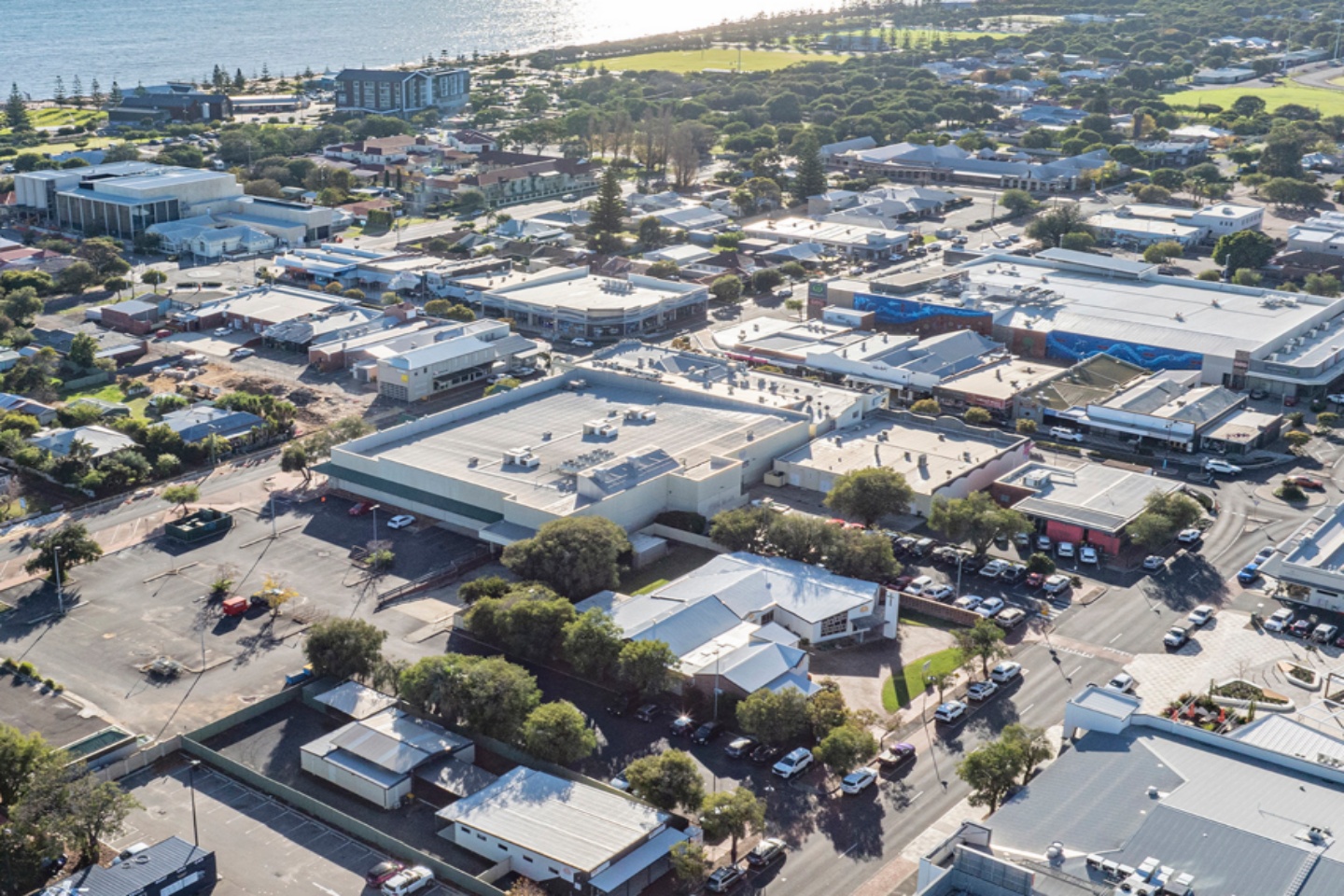
Westbridge Funds Management has expanded its portfolio with the $10.5 million purchase of a partially vacant retail building in Busselton.
The Subiaco-based property fund purchased 36 to 38 Duchess Street from Aurjoe Pty Ltd and Franjack Pty Ltd, RP Data shows.
According to ASIC, the two entities are owned by members of the Romano family, of Perth and Queensland.
The two-storey Federation building includes 4,099 square metres of net lettable area on a 10,139sqm site.
It is about 50 per cent occupied, with Westbridge working on securing a tenant for the remaining space.
Westbridge Funds Management chair Damian Collins described the property, which will go into a single asset fund, as a “clear value-add opportunity”.
“While the current passing income reflects existing occupancy, our strategy is focused on unlocking the full potential of the asset through a substantial refurbishment and reconfiguration of the large vacant space,” he said.
“We see strong fundamentals underpinning Busselton, including population growth, tourism demand and ongoing infrastructure investment, which give us confidence in the long-term outlook.”
Mr Collins added that Westbridge planned to invest in upgrades of the property, which was initially built in 1906.
The purchase follows Westbridge’s recent investment in two industrial properties in Victoria for $62.5 million and its purchase of industrial and medical properties in South Australia and Queensland.
Knight Frank Australia’s Jonathan Wong brokered the deal for the Busselton property.


I have been managing investments for over eight years in capital markets. By qualification I am a CFA Charter holder. I primarily look for discrepancies between the price and value of a security. With a focus on first-principal mindset, I try breaking down ideas into their core- most tangible parts, affecting the theses while deliberately avoiding the non-significant matter into crowding the analysis. If you like my ideas or frameworks, reach out via email/message for more granular and concentrated- portfolio level specific investment researches and ideas. I am at prakhar@shrihittruealphacapital.com.
Analyst’s Disclosure: I/we have no stock, option or similar derivative position in any of the companies mentioned, and no plans to initiate any such positions within the next 72 hours. I wrote this article myself, and it expresses my own opinions. I am not receiving compensation for it (other than from Seeking Alpha). I have no business relationship with any company whose stock is mentioned in this article.
Readers are advised to fact-check thoroughly before committing any capital to this idea; this reflects the personal views of the author and should not be pursued as formal financial or investment advice in any manner. While every effort has been made to ensure accuracy, errors may exist in the data and financial projections presented. The author is not responsible for any financial gains or losses incurred from investments made based on this content.
Seeking Alpha’s Disclosure: Past performance is no guarantee of future results. No recommendation or advice is being given as to whether any investment is suitable for a particular investor. Any views or opinions expressed above may not reflect those of Seeking Alpha as a whole. Seeking Alpha is not a licensed securities dealer, broker or US investment adviser or investment bank. Our analysts are third party authors that include both professional investors and individual investors who may not be licensed or certified by any institute or regulatory body.

J.P. Morgan raises European equity targets on earnings growth


Now retired, I am an income-oriented investor seeking high yield income to support my lifestyle in retirement.I became deeply interested in the stock market beginning in late 2007 (bad timing for me but worse for my uncle) when I received an unexpected inheritance. Since that time I have done considerable research and vowed to make smarter long-term investing decisions after suffering through the Great Recession with minimal losses to my inherited portfolio, after firing my financial advisor.I look for mostly dividend paying income stocks and funds (BDCs, REITs, CEFs, ETFs) that offer high yield income to increase my retirement income beyond my pension and Social Security. I also enjoy reading investment/financial and business information and following trends in technology and markets. The human psychology of markets is as fascinating and inscrutable to me as the financial side. I am not a financial advisor so please do your own due diligence before making any buy or sell decisions.“The race is not always to the swift, nor the battle to the strong, but that’s the way to bet.” Damon Runyon
Analyst’s Disclosure: I/we have a beneficial long position in the shares of GPIQ, QDTE either through stock ownership, options, or other derivatives. I wrote this article myself, and it expresses my own opinions. I am not receiving compensation for it (other than from Seeking Alpha). I have no business relationship with any company whose stock is mentioned in this article.
Seeking Alpha’s Disclosure: Past performance is no guarantee of future results. No recommendation or advice is being given as to whether any investment is suitable for a particular investor. Any views or opinions expressed above may not reflect those of Seeking Alpha as a whole. Seeking Alpha is not a licensed securities dealer, broker or US investment adviser or investment bank. Our analysts are third party authors that include both professional investors and individual investors who may not be licensed or certified by any institute or regulatory body.
PFC-REC merger explained: Swap ratio, rationale, other key details as merger set to create Rs 11 lakh cr power financing giant

Strategy (MSTR) Stock Plunges 8% While Saylor Hints at More Bitcoin Purchases

BET Awards 2026 Hottest Couples on the Red Carpet: Photos


-
 Sports6 days ago
Two goals and an assist by sheer aura: Cristiano Ronaldo just entered the World Cup chat
-

 Tech7 days ago
Microsoft accidentally kills epic Outlook email threads
-

 Fashion3 days ago
Weekend Open Thread: Staud – Corporette.com
-

 Politics3 days ago
The House | Manchesterism won’t survive the painful trade-offs unless it gets citizens on board
-

 Politics3 days ago
Potential 2028er World Cup attendee leaderboard
-

 Business3 days ago
Asia stock markets slide as tech shares slump
-

 Tech4 days ago
A Look At A Gaggle Of Transputer Boards
-
Crypto World5 days ago
Bitcoin (BTC) Dips Below $62K, Ethereum (ETH) Plunges 6% Daily: Market Watch
-
 Crypto World4 days ago
Dell (DELL) Shares Tumble Over 5% Following Analyst Downgrade to Hold
-

 Crypto World5 days ago
Securitize Wraps Roubini's SEC-Registered ETF as Dubai VARA Digital Security
-
Business5 days ago
Entergy settles forward sale agreements, raises $672 million in cash proceeds
-

 Crypto World2 days ago
Kraken's xStocks Opens Bending Spoons IPO Registration to EEA Retail
-

 Sports2 days ago
FIH Pro League: India defeat Pakistan 7-1, register biggest win of campaign | Other Sports News
-

 Crypto World2 days ago
Coinbase, Circle Deepen Crypto Stock Losses Despite Resilient S&P 500
-

 Crypto World3 days ago
RTX holders must register wallets before token distribution begins
-
 Crypto World3 days ago
Hyperliquid Named on Singapore MAS Investor Alert Register
-

 Tech1 day ago
Bluekit phishing kit adopts browser-in-the-middle for login theft
-

 Sports4 days ago
India vs Bangladesh LIVE Score, Women’s T20 World Cup: Bangladesh Opt To Bat; India Enter ‘Do-Or-Die’ Stage As Semi-Final Race Heats Up
-
Crypto World3 days ago
The DATA Foundation Launches to Tackle AI’s Multi-Billion Dollar Training Data Bottleneck
-

 Tech2 days ago
Russian hackers now target Signal backup recovery keys
You must be logged in to post a comment Login