The environment usually takes a backseat in times of conflict. But in Ukraine a rewilding project is sowing seeds for a greener, more peaceful future
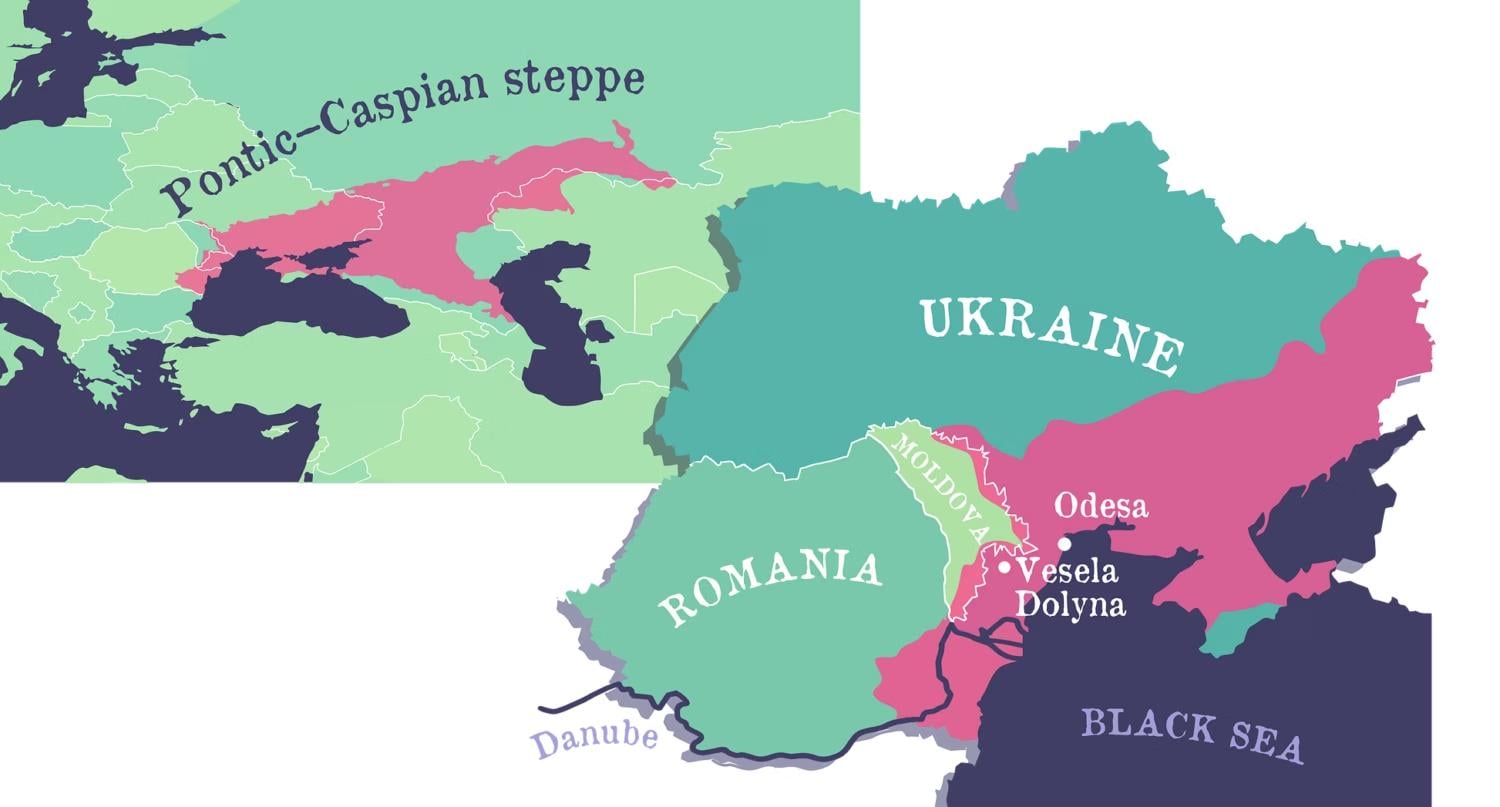
Vesela Dolyna translates from Ukrainian as ‘happy valley’. In the heart of the semi-arid Pontic-Caspian steppe system in southwestern Odesa Oblast, this village of 1,206 souls has, sadly, seen happier eras than today. Today, Vesela Dolyna’s residents are as likely to hear the violent cracks of exploding mines, or the high-pitched screams of the Russian missile strikes targeting the nearby Black Sea coast, as the bucolic rhythms of harvesting, or the craw of the native Eurasian magpie circling the village’s thatched, brightly painted homes.
Take a walk into the grasslands of the Tarutino Steppe with local resident Petro Hramatik, however, and you might yet hear another, strange and ancient, sound: a high, keening bray which, to locals like Hramatik, is a sign of hope amid the misery of war.
Advertisement
A former Vesela Dolyna village head, Hramatik is a local volunteer for Rewilding Ukraine, a conservation organization that is restoring 600 hectares of formerly ploughed grassland in the Tarutino Steppe through the reintroduction of native species.
Advertisement
Donkeys trampling fireproof landscapes
The project began in 2017 and has led to the release of 63 Konik horses; 20 red deer; 30 fallow deer; 20 water buffalo; and ten Hucul horses, the latter a native breed from the Carpathian mountains, back into the wild. Their star reintroduction however is a keystone species that Hramatik monitors on his frequent visits into the steppe: 35 characterful and voluble kulan, or wild donkeys. With their stout legs and high-pitched bray, these wild equines once ranged across a great swathe of central Europe from Ukraine and Russia in the west to Mongolia and China in the east.
“I genuinely love nature and I feel deeply connected to this landscape,” Hramatik told Perspective Daily. Hramatik took part in some of the animal releases to the steppe and now visits the territory to monitor plant and animal health, most frequently in the summer and spring when the Steppe is accessible due to better weather. “The natural grazing of kulan is having very positive effects on the steppe,” he said, “They reduce excessive dry vegetation, create more diverse plant structures and open up space for different species to return.”
Before human settlement, the Tarutino Steppe was an ecosystem of dry temperate grassland on fertile soils called ‘chernozem’ (black earth). These steppes supported diverse, drought tolerant grasses and flowering plants and were ranged over by large grazers such as the kulan and abundant small mammals and rodents. From the 19th century, with German Bessarabian settlement, and later Soviet factory-scale farming, the Steppe was converted to cereal and sunflower farming, sheep grazing and vineyards. Abandoned by the Soviet tractors after 1990, and with an ageing local population unable to tend the land, the Tarutino Steppe deteriorated into an unloved landscape that was dangerously prone to wildfires.
Advertisement
Image: Wikimedia Commons
With climate change and now the scourge of exploding mines (planted by both Ukrainian and Russian forces), wildfires can ignite daily in the heat of summer, Hramatik says. “That’s why the kulan are so important,” Hramatik adds, “they manage vegetation and reduce fire risk.” Kulan help to manage fire risk through natural grazing and movement, which reduces the amount and continuity of flammable vegetation. Their droppings also add organic matter to the soil, which improves soil structure over time: healthier soils hold water better, resist compaction, and absorb rainfall more efficiently rather than shedding it as run-off, also lowering fire risk.
Preparing for the tourism of tomorrow
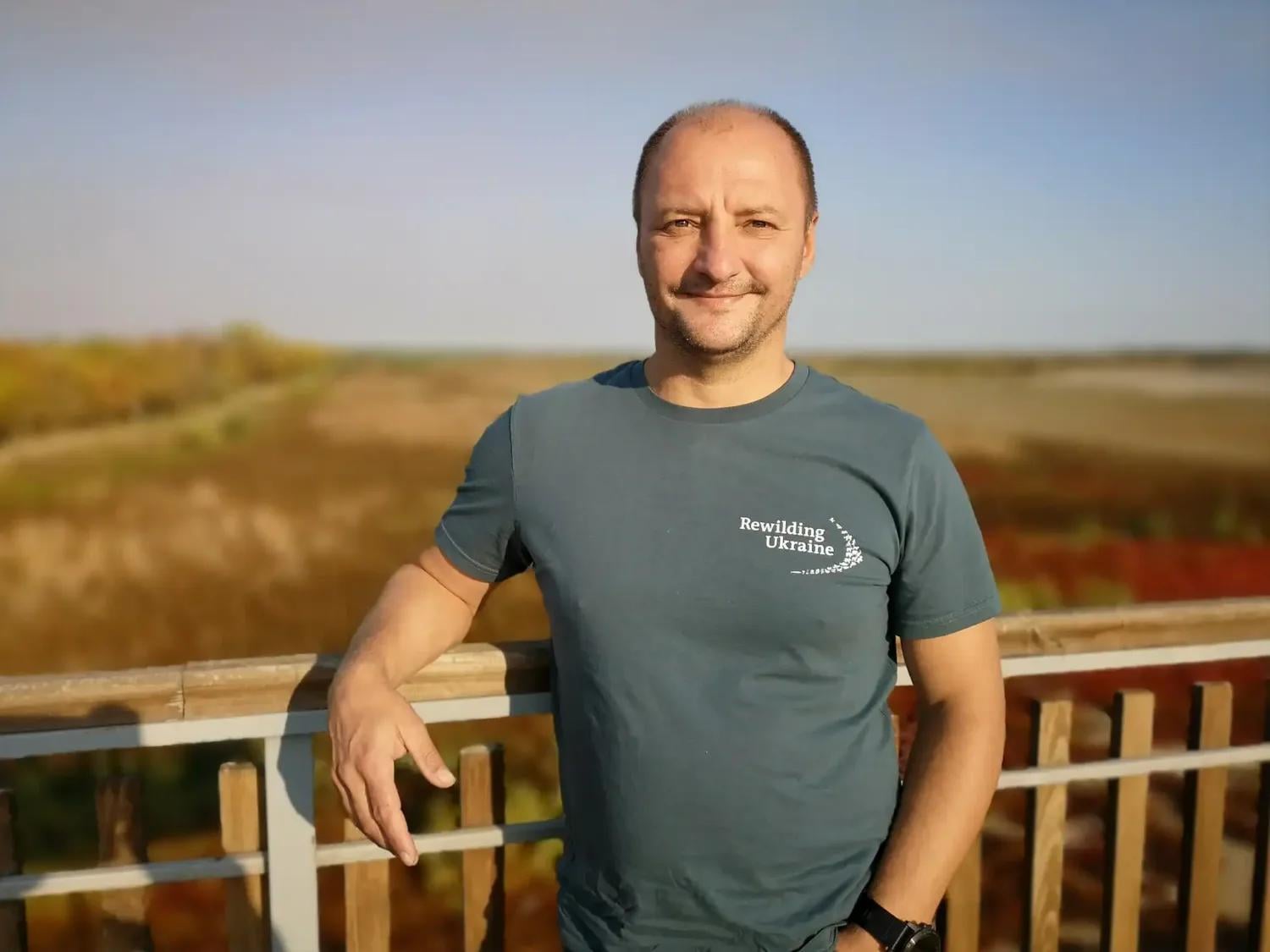
The reintroduction of ancient grazers, as well as rodents such as marmots and the black-bellied European hamster, has also improved the Steppe’s soil fertility and, in turn, its carbon sequestration, says Mykhailo Nesterenko, who heads Rewilding Ukraine. Nesterenko and his family initially fled Ukraine for Romania on the outbreak of war, before moving to the Netherlands, though he returned to resume work on the projects in 2023.
Advertisement
“Nature restoration is important for communities too,” he adds. “Wetlands help communities adapt to climate and a healthy ecosystem also opens up the possibility of nature-based businesses, such as tourism.”
Rewilding Ukraine’s umbrella organization Rewilding Europe works on rewilding projects downstream at the Danube Delta, a connected habitat 50 km southeast at the mouth of the Black Sea that is partly in Ukraine and partly in Romania and is part of the Danube Delta Biosphere. Here it is restoring waterways from a ‘managed’ Soviet-style hydraulic system back into a self-sustaining, wild wetland, by removing 10 obsolete dams and re-establishing fish spawning grounds. Designated a UNESCO World Heritage Site (1991) and Biosphere Reserve, the 4000 km² Delta hosts over 5,500 plant and animal species, and is so dense and varied that locals and biologists call it ‘Europe’s Amazon’.
Mykhailo Nesterenko, head of Rewilding Ukraine. Credit: Privat
Advertisement
Loss of tourist income is one of the social and financial tolls on rural Ukrainian communities from Russia’s war. Average monthly wages in Bolhrad Raion, of which Vesela Dolyna is a part, are 7,000–9,000 UAH a month (€ 190–230) compared to the national average wage (2023): 15,000–16,000 UAH a month (€ 400–450). Regional ethno tourism attractions such as Vynohradivka (Kurçu), a traditional wine-growing village, were shuttered with the outbreak of hostilities and UNESCO and the World Bank estimate that Ukraine’s culture and tourism sectors have accumulated over $ 19.6 billion in lost revenue since February 2022.
Now Rewilding Ukraine is establishing the infrastructure to be able to »press go« when tourists return, Nesterenko explains. They include Eco-park Tarutino: a dedicated area featuring excursion routes and guided tours to see the reintroduced animals with wildlife watching towers and observation hides.
Ukraine’s nature is as resilient as the Ukrainian people
Rewilding Europe and Rewilding Ukraine are supported by the Endangered Landscapes & Seascapes Programme (ELSP) at the Cambridge Conservation Initiative, part of the University of Cambridge. Its Director, David Thomas, told Perspective Daily that although monitoring of impacts of the Delta projects is hampered by the war, ELSP is seeing ‘cascading effects’ from the reintroduction of large herbivores, such as increased fish populations and diverse bird communities.
Advertisement
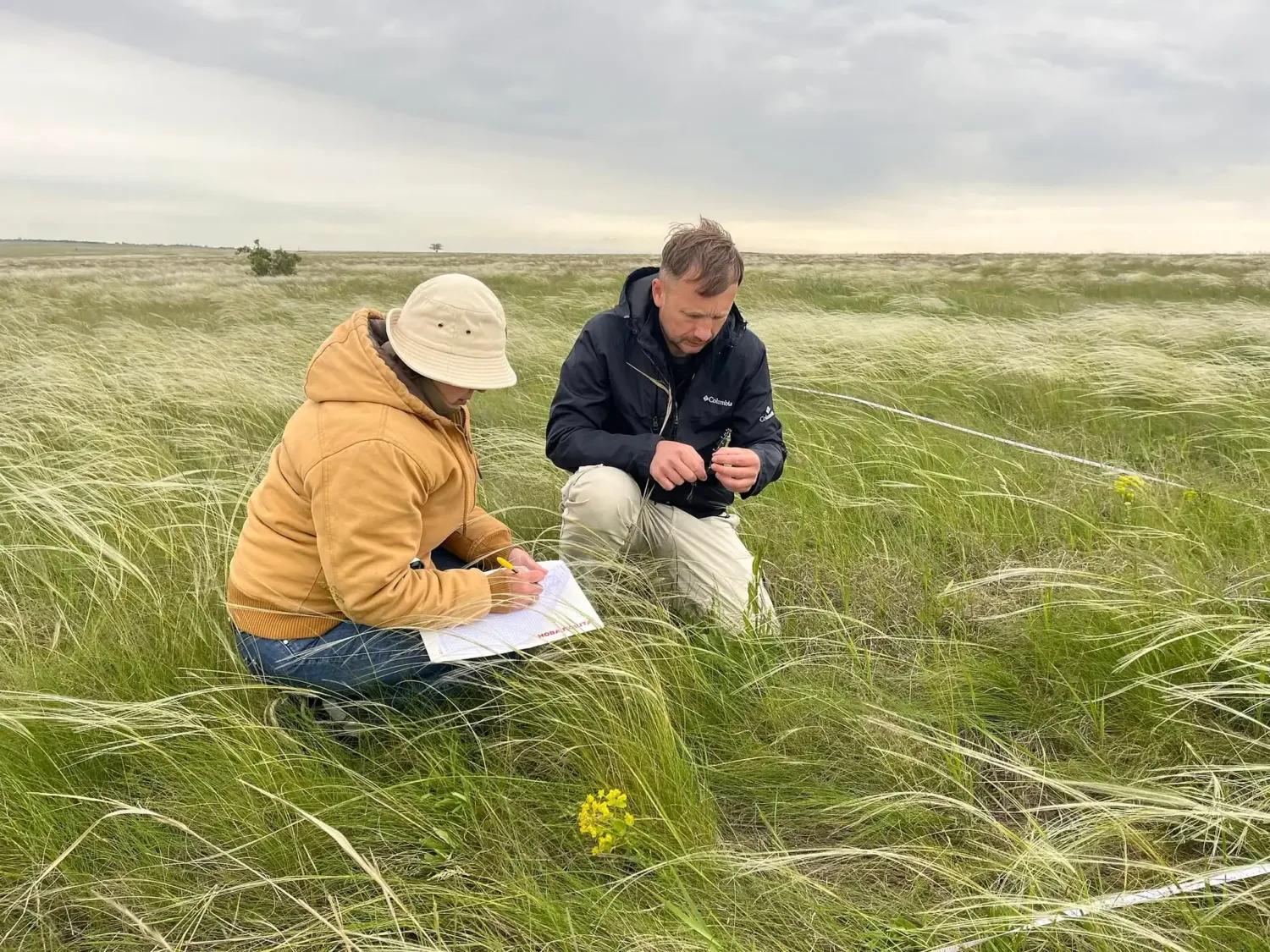
Researchers in the steppe. Image: Victor Shapoval
ELSP’s satellite images show that reintroducing water buffalo and Konik horses across the outer Delta has reduced dense vegetation as it has boosted plant diversity. They have also found that grasslands with large and diverse grazing species like donkeys, horses, and buffalo deposit twice as much carbon compared to areas where no large grazers are present.
Advertisement
“I think the hope and expectation is that [Rewilding Europe’s work] will provide a road map, a blueprint for restoration of the area and development of the local economy,” Thomas says of his hopes for Ukraine when peace comes. “There are great prospects for a nature-based economy around the Danube.”
Tourists aside, Rewilding Ukraine’s work is as much about the people who call the Delta habitats home. Rewilding Ukraine runs initiatives through which war veterans and their families are brought into rewilding landscapes as part of PTSD recovery; and in July 2025, a five day Junior Rewilders Camp brought together around 30 secondary school students from Ukraine and Romania to the Romanian Delta for birdwatching, teamwork sessions and creative activities designed to deepen children’s connection with the delta and rewilding concepts.
Our rewilding efforts in the Danube Delta show that Ukraine’s nature is as resilient as the Ukrainian people, and the two depend on each other. I am confident that both will recover when the war ends
Nature refuses to stand still
Outcomes in the long road to peace in Ukraine in 2026 depend on Russia’s willingness to negotiate with the frameworks toward ending the war that were established at Paris »Coalition of the Willing« summit on January 6. There are risks for the Delta and its peoples that the war will grind on, and the hoped-for tourism revenue will not come.
For all their efforts, Nesterenko admits that war hinders work on the rewilding projects. Some project sites are cut off, which means that the project’s rangers cannot monitor their rewilded herds or release more as planned, as civilian travel into the Delta is severely restricted. In the meantime, however, nature itself refuses to stand still.
Advertisement
In the spring of 2022, a tiny kulan foal was born on the Tarutino Steppe after a punishingly cold winter. With his gangly legs, large eyes and downy coat, he was the first kulan to be born in the wild in 200 years, making history as he stumbled to his feet. He’s a sign the Steppe, and the happy valley, will see happier days.
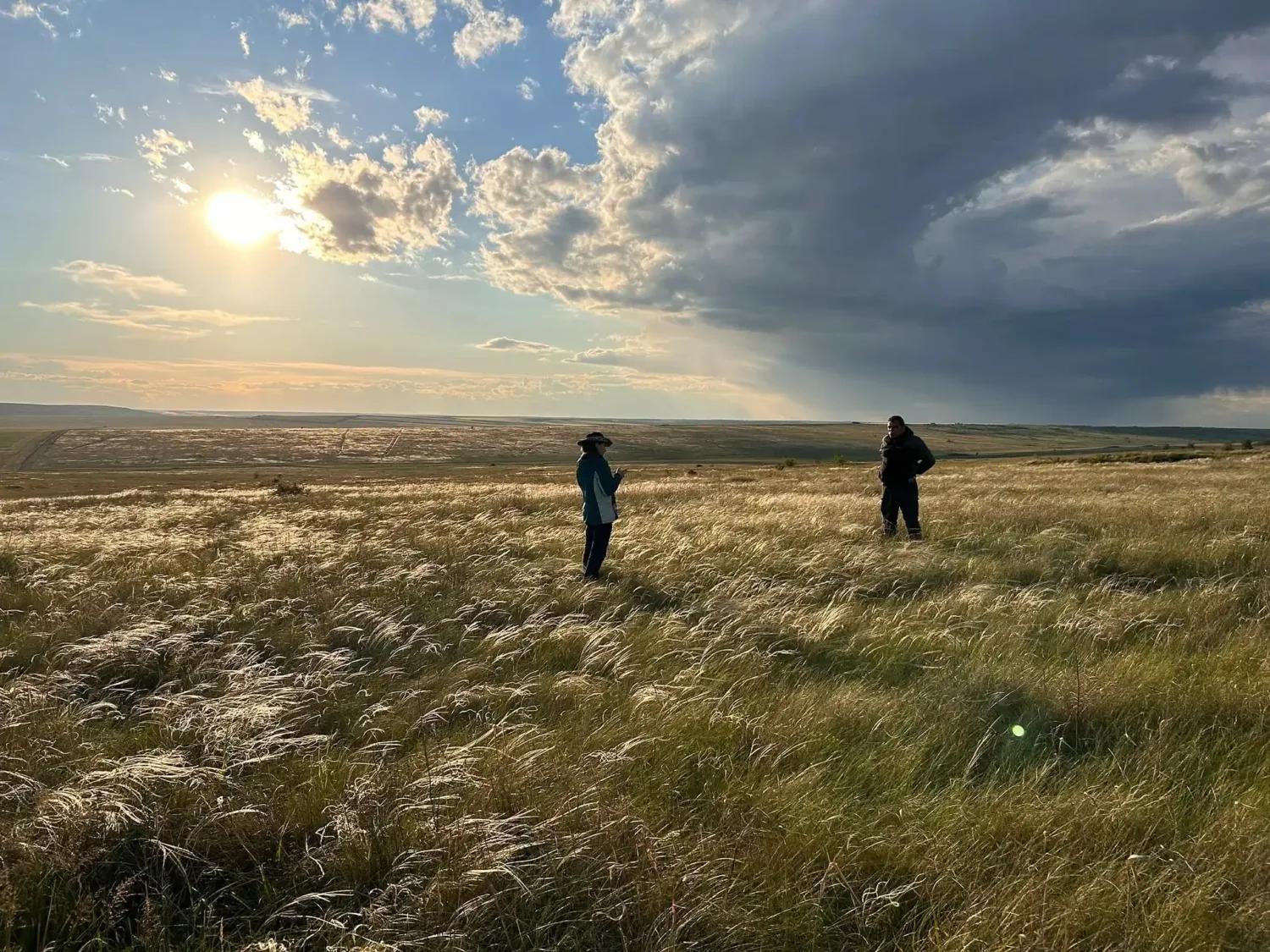
The steppe ecosystem is home to a variety of drought-resistant grasses and flowering plants. Image: Victor Shapoval
Advertisement
A blueprint: bringing back bison in Romania
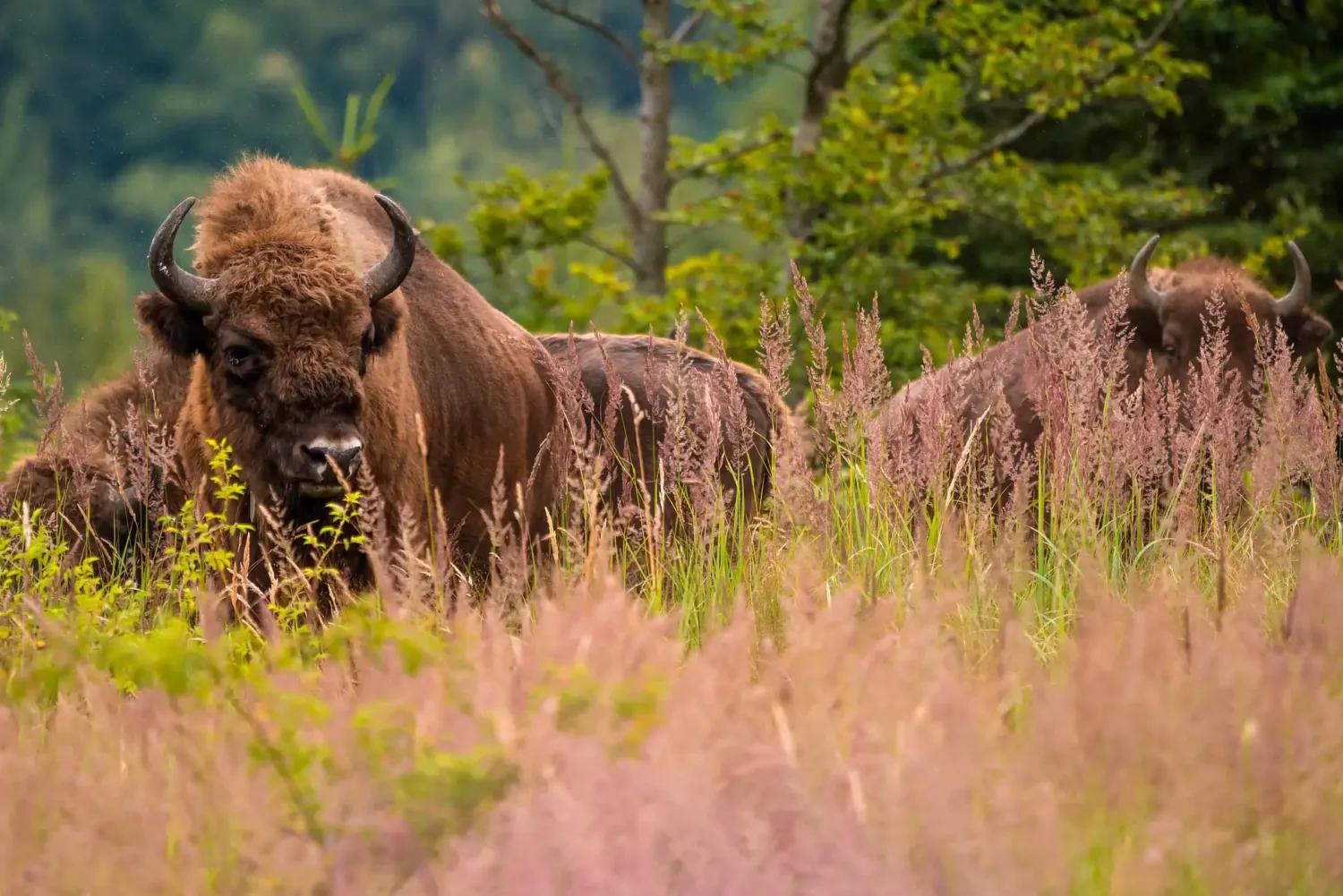
Across the border in Romania, successes with bison rewilding offer a blueprint for the future of nature-based livelihoods in Ukraine. Here, bison were not dropped into an empty wilderness but carefully reintroduced into a working landscape, with locals involved from day one: building enclosures, managing encounters, and learning how to live alongside a species that hadn’t roamed these mountains for centuries. The animals, in turn, are quietly doing what they do best: grazing young trees to keep meadows open, trampling fire corridors through forests, dispersing seeds and nutrients, and helping soils store more carbon.
Rewilding Romania supports conservation through ‘bison-smart’ communities of locals who actively accept and promote rewilding in their midst. Hotlines to report animal encounters, ranger patrols with trained dogs, and small economic incentives – from bison tracking experiences for tourists, to products made from ‘co-existence’ orchards – now support dozens of local businesses.
Mihai Miculescu, who owns the bustling Dospita bakery in Armenis, is one of them. In 2012, when the first herd of bison was reintroduced in the mountains behind his home, his son and he helped build the enclosure for the relocated animals. Today, the freshly baked malai, a Romanian cornbread made with his family’s secret recipe, seems to be selling faster than he can bake it, and he credits the success of his business to the increased business from the increase in tourist arrivals thanks to the bison rewilding project.
Advertisement
Bison have been successfully reintroduced into the wild in the Southern Carpathians in Romania. Image: Daniel Mirlea/Rewilding Europe
In 2025, Rewilding Romania trained 96 residents to run restaurants that offer homestyle food, and helped another resident to access loans to start a guesthouse in the Southern Carpathians. They have also trained several locals to offer services as wildlife guides and rangers (four of whom are employed full-time by the project).
Today, the local bison population stands at over 250, of which 105 were reintroduced and the remaining have been born in the wild. “We are living in times when it is no longer enough to protect what is left of nature; it is also necessary to help nature regain the power to heal,” says Marina Druga, Executive Director Rewilding Romania. And by surviving, thriving and reproducing after being rewilded in the Southern Carpathians, the bison are functioning as natural architects that will help improve the health of their ecosystem.
Advertisement
Main image: A herd of kulans in an enclosure where they are being prepared for being released into the wild. Credit: Oleksandr Gaidash
This article was originally published by Perspective Daily
Be part of the solution
At Positive News, we’re not chasing clicks or profits for media moguls – we’re here to serve you and have a positive social impact. We can’t do this unless enough people like you choose to support our journalism.
Advertisement
Give once from just £1, or join 1,800+ others who contribute an average of £3 or more per month. Together, we can build a healthier form of media – one that focuses on solutions, progress and possibilities, and empowers people to create positive change.
Multiple ambulance vehicles were called to the scene
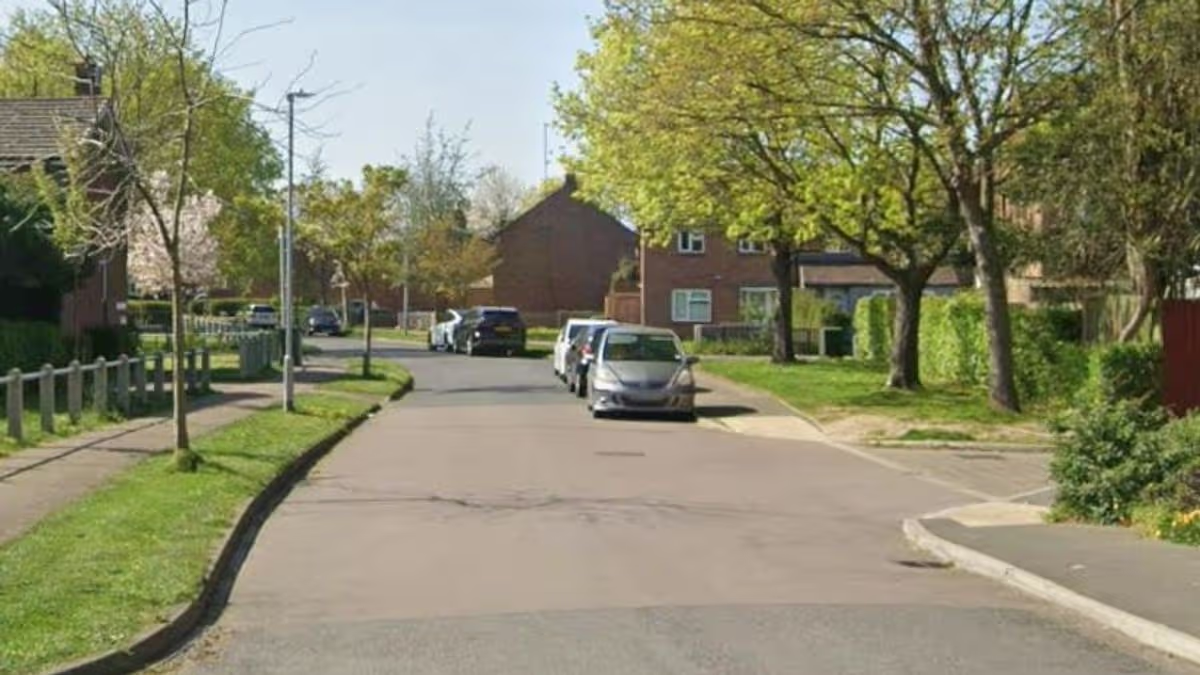
Two people have been taken to hospital after a crash in Cambridge. Emergency services were called to a two-vehicle crash on Hawkins Road, Cambridge at around 9.20am on Monday (June 29).
Advertisement
The East of England Ambulance Service transported two people to Addenbrooke’s Hospital. An ambulance spokesperson said: “We were called at 9:19 am on Monday, June 29, to a road traffic collision on Hawkins Road in Cambridge.
“Two ambulances, an ambulance officer vehicle, an East Anglian Air Ambulance response car, and a rapid response car attended the scene. Two patients were transported to Addenbrooke’s Hospital for further treatment.”
Cambridgeshire Police also attended. A police spokesperson added: “We were called at about 9.20am today (29 June) with reports of a collision between two vehicles on Hawkins Road, Cambridge.”
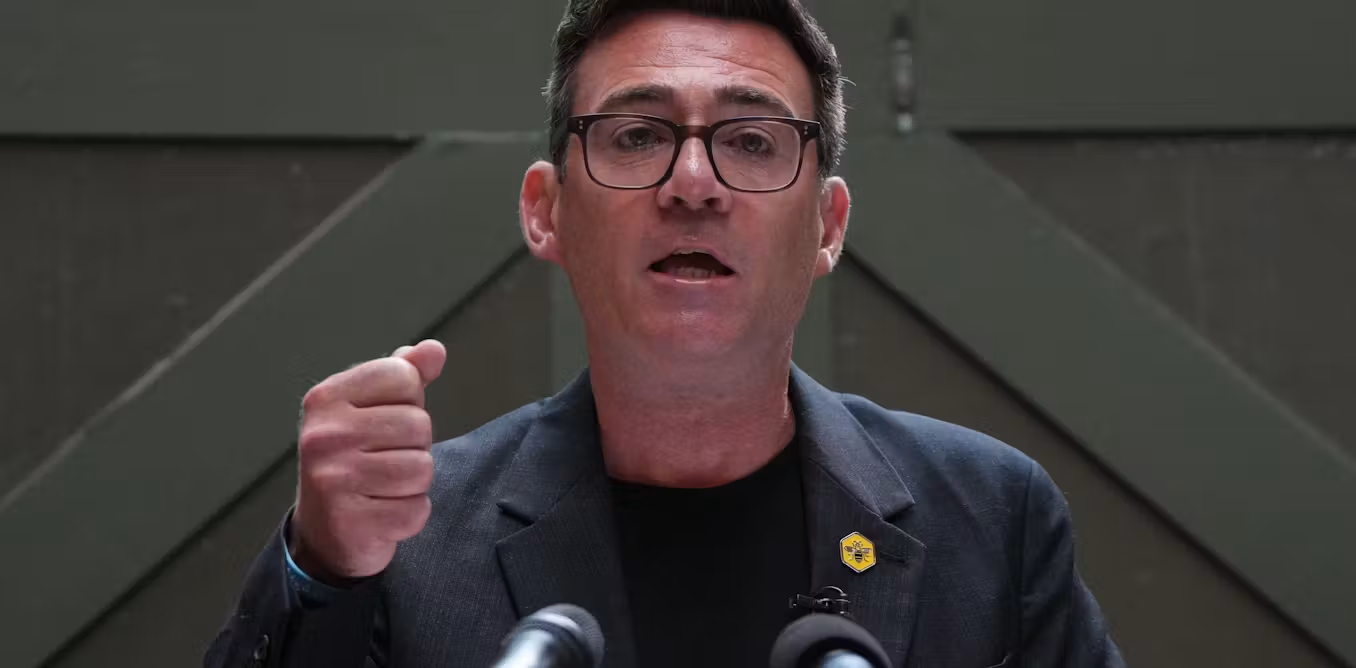
Andy Burnham’s long held ambition to be the UK’s prime minister will come with some daunting economic challenges.
Productivity growth is at a virtual standstill, real incomes have stagnated and the cost-of-living crisis has become a permanent fixture for many households. Meanwhile, the government spends around £110 billion a year paying the interest on nearly £3 trillion of debt.
Burnham says he is on a “10-year mission” to transform the country. So what might he do to try to fix the British economy?
One thing that voters can reasonably expect is a move towards greater devolution of power – especially spending power – to the English metro regions. As mayor of Greater Manchester, Burnham often argued that too many economic decisions were made in London, and that this held the rest of the country back.
Advertisement
Burnham believes that allowing other regions to implement their own locally led pro-growth policies could transform Britain’s economic prospects. It’s a view shared by one of his key economic advisers, Jim O’Neill, who has long argued that creating metro growth hubs could substantially boost the UK’s GDP.
This approach is bound to be controversial. It could mean, for example, taking resources away from the £49 billion Heathrow airport expansion plan to help fund HS2 so it can reach the north.
More radically, it might require a revamp of the whole system of local government finance, starting with reforming the council tax system, which is still entirely based on property values set in 1991.
This would mean higher bills for areas where house prices are high, such as London and the south-east. But it could substantially cut payments for those living elsewhere – which could be popular in red wall constituencies where Labour has been losing support.
Advertisement
Social care
Burnham has also spoken about reforming the UK’s social care system. Social care is not part of the NHS, which means those who need residential care in old age must either sell their house to fund it, or rely on cash-strapped local councils.
Finding a solution to social care has proved too challenging for successive governments. When Burnham was health secretary under Gordon Brown in 2010, he proposed putting a tax on the value of homes after the owner’s death – which critics labelled a “death tax”.
Nevertheless, he may try something similar as prime minister. Solving the social care conundrum would dramatically ease the financial strain on the NHS.
Nationalisation
Another cause that Burnham has recently embraced is tackling the poor performance of the companies that supply households with energy and water.
Advertisement
First in line would be Thames Water, which is already facing bankruptcy and a temporary government takeover. A straight-out nationalisation of water would be expensive, with that company alone currently valued at £10 billion.
Water work. Yau Ming Low/Shutterstock
But better public utilities could also boost productivity. Housing development in East Anglia is now being held back by lack of water, for example, as no new reservoirs have been built in the UK since 1992. And a water company which didn’t have to pay out hundreds of millions of pounds to shareholders could mean lower household bills.
Bending, not breaking, the fiscal rules
Burnham has promised to stand by Labour’s commitments not to increase VAT, income tax or national insurance. He has also pledged to stick by Labour’s fiscal rules, including the key stipulation that day-to-day government spending must be covered by tax revenues within three years, so that borrowing can only be for long-term capital investment.
These rules have been structured in such a way that could still give a Burnham administration considerable leeway to boost spending on public infrastructure.
Advertisement
Burnham could argue that increasing public investment this way would pay for itself by boosting UK productivity.
He may also want to look at other ways the Treasury could raise money without breaking Labour’s manifesto pledges. There are quite a few options, including higher wealth taxation, or changes to tax relief on pensions and savings.
Burnham is also taking advice from Carys Roberts, the former head of the Institute for Public Policy Research thinktank, and a strong advocate of wealth taxes, which may indicate his direction of travel.
Burnham won the trust of voters in the constituency of Makerfield. EPA/ADAM VAUGHAN
All of these reforms will face fierce political opposition from the Conservatives and the right-wing press, which in the past have been enough to scupper them.
But if Burnham keeps his Labour party colleagues happy, he need not face an election for three years. And if he manages to improve public services, boost growth and lower the cost-of-living crisis, he may be able to turn round Labour’s prospects.
Advertisement
The key is the government delivering the benefits of higher taxes to ordinary citizens, both by reducing the cost of living and providing improved services. If Burnham can square this circle, while avoiding the ire of financial markets, he will have pulled off a trick which his predecessor singularly failed to do.
People face penalties if they miss the annual deadline
14:01, 29 Jun 2026Updated 14:09, 29 Jun 2026
Specialists are cautioning taxpayers as a crucial HMRC deadline approaches, with one expert warning that “many get caught out”.
With just one month remaining, HM Revenue and Customs (HMRC) is urging millions of Self Assessment taxpayers to gear up for the July 31 deadline for the second payments on account for the 2025 to 2026 tax year. Customers are able to arrange monthly or weekly payment plans, and any payments already made through these schemes will count towards their next Self Assessment tax bill.
Payments can be made via the HMRC app, with nearly two million Self Assessment taxpayers having done so since its launch in January 2022. The app makes it straightforward for people to contribute towards their tax bill, set payment reminders, and monitor their payment history.
Advertisement
Myrtle Lloyd, HMRC’s Chief Customer Officer, said: “We know managing a Self Assessment tax bill isn’t always straightforward and we are here to help. From paying instantly via the HMRC app to spreading the cost through a payment plan, there’s support available for every customer. Search ‘Pay your Self Assessment tax bill’ on GOV.UK to choose the payment option that works for you.”
Matthew Knight, chief freelance officer at Freelancing.Support, said many people did not know the deadline.
He added: “While everyone knows the January 31 deadline, many who are new to freelancing often get caught out by payment-on-account deadlines, which asks you to pay your taxes ahead of your income. Getting into the habit of doing your accounts monthly or quarterly helps you keep on top of the admin, rather than waiting for HMRC to remind you. This is where Making Tax Digital could actually help small businesses, ensuring they’re on top of their taxes.”
Advertisement
Ross Lacey, director and Independent Financial Adviser at Rayleigh-based Fairview Financial Management, said it was important to keep your books up to date.
He added: “It’s good practice to get on top of this as early as possible. That way, you can ensure the payments on account remain appropriate for the level of income you’ve actually earned.
“It also helps with any changes you may want to make to your business in the current tax year, using the information on how much profit, or not, was generated in the previous tax year. Far too many people are almost a year behind in knowing how their business is really doing. Keeping the book up to date throughout the year makes this less of a mammoth task.”
Samuel Mather-Holgate, managing director and IFA at Swindon-based Mather and Murray Financial, said “silence is usually the most expensive option”.
Advertisement
He added: “The Self Assessment system is creaking because it asks millions of ordinary people to behave like unpaid tax administrators. Staying up to date matters. If you miss the July 31 payment on account you can quickly face interest, penalties and nasty cash-flow shocks.
“But HMRC cannot keep relying on last-minute nudges and an app to fix a system many people find confusing. There should be far clearer prompts, plainer language and earlier warnings, especially for the self-employed and side-hustlers.
“The practical advice is simple – check your online account now, do not assume payments on account are optional, put money aside weekly, and speak to HMRC before the deadline if you cannot pay. Silence is usually the most expensive option.”
Nouran Moustafa, practice principal and IFA at Roxton Wealth, said taxpayers needed to act before the deadline.
She added: “Self Assessment needs year-round organisation. The July 31 payment catches people off guard because it lands months after the January rush, just when many self-employed people, landlords and business owners are focused on keeping cash moving through the summer.
“Being up to date matters because this is not a bill you can wish away. Missing it can mean interest, stress and a much bigger problem by January, when the balancing payment and next payment on account can arrive together. There is publicity, but not enough explanation. Too many people still misunderstand what a payment on account is, or assume income received is fully theirs to spend.
“My advice is simple: make tax part of managing money all year round. Put aside a percentage of every payment, check your HMRC account now, and only reduce a payment on account where there is a genuine, evidenced reason your income will be lower. If cash flow is tight, act before the deadline, not after it. A payment plan is a tool, not a failure.”
A Love Island USA star has spoken out after being removed from the reality series following resurfaced footage and social media posts.
Advertisement
Alannah Keyser, who left the villa mid-episode last Thursday, issued an apology video for using a racial slur in a video.
Taking to TikTok, the 21-year-old addressed a clip circulating online of her using the n-word while singing along to Roddy Ricch’s 2019 song The Box.
In addition, an alleged screenshot of her using a racist slur on social media was widely shared.
She captioned her post by saying: ‘Remember that reality tv is HEAVILY edited & my chats/kisses with the other boys were unfortunately not aired.’
Advertisement
Get personalised updates on Love Island
Wake up to find news on your TV shows in your inbox every morning with Metro’s TV Newsletter.
Sign up to our newsletter and then select your show in the link we’ll send you so we can get TV news tailored to you.
Advertisement
In the video, which has over 81,000 likes, she speaks to camera by saying: ‘Hi everyone, I’m coming on here to address some things that have been circulating online.
Love Island USA contestant Alannah Keyser has taken to TikTok after being removed from the villa (Picture: TikTok/@alannahkeyser)
‘I do want to begin by addressing the video of me singing along to a Roddy Ricch song that contains a racial slur.
‘I’m sorry to whoever’s seen that video and has been offended by it, that was never my intention. The video is from six years ago and that word is just not in my vocabulary anymore.’
She continued by saying: ‘I’d also like to address the screenshots that have been going around online that have been falsified. What has been shared does not reflect the truth and it’s never been in my character to discriminate against anybody’s skin colour.
Advertisement
‘I do want to say directly that I do not support racism or discrimination of any kind, and I never have.
‘When I first found out that these things were going around online it really broke my heart and I couldn’t do anything about it. But this has definitely been a learning lesson for me and it sucks that I didn’t really get a chance to really show off my personality and who I am.’
Ariana Madix is the host of Love Island USA season eight (Picture: Peacock)
The video then cut to a black screen with white text which read: ‘The video cut, but its always been in my nature to spread positivity and help others, and I will continue to do so.’
Keyser is the second contestant on Love Island USA season eight to get removed from the villa for saying the n-word.
In late May, Vasana Montgomery was fired in the days leading up to the season eight premiere after two videos of her using the slur went viral.
Advertisement
In last year’s Season seven, two contestants, Yulissa Escobar and Cierra Ortega, were also caught using racial slurs and had to exit the Villa.
Peacock, which is the network who airs Love Island, told Deadline that it was not aware of Keyser’s social media posts prior to casting her as they had not been shared publicly until after her appearance on the show.
The streamer said that it vets each contestant, but sources say these posts would not be accessible during that vetting process.
Love Island USA season 8 is available to watch on Peacock.
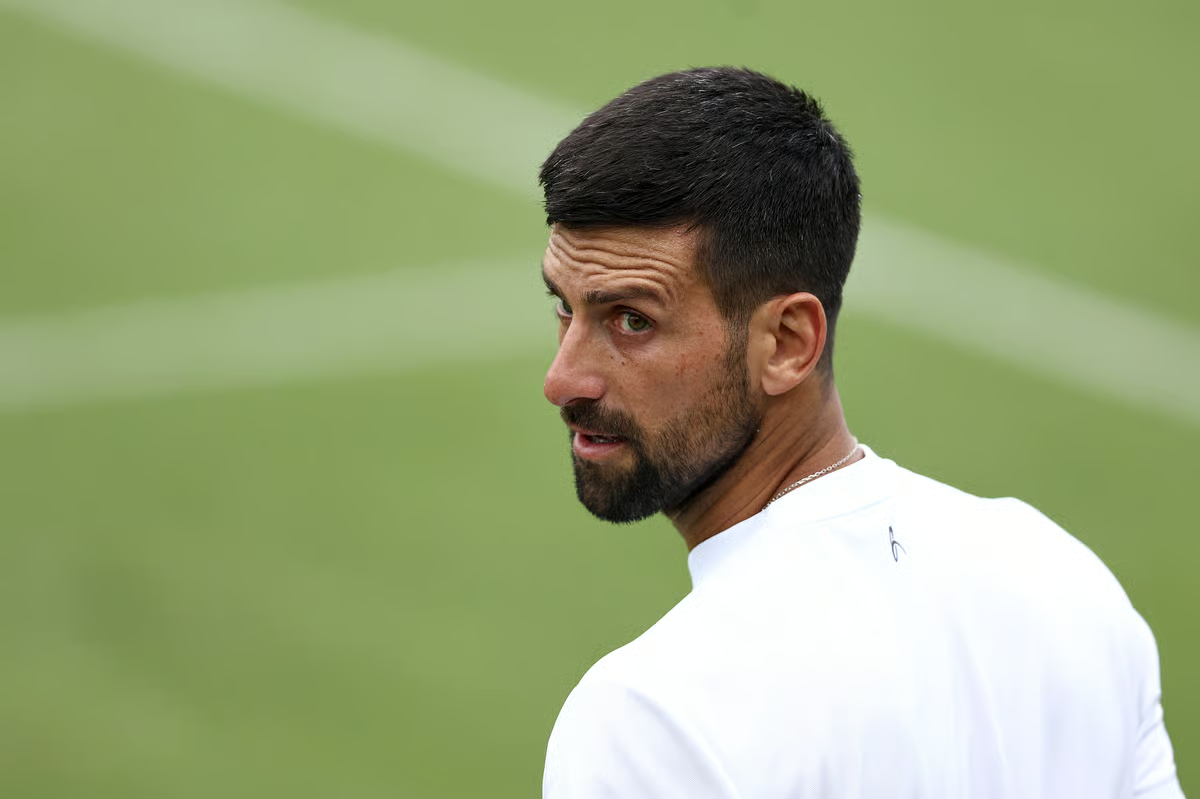
Novak Djokovic will open his Wimbledon campaign against Wu Yibing today as he bids for an eighth title at the All England Club.
His most recent title on the SW19 lawns came in 2022, but he was beaten in straight sets by Carlos Alcaraz in 2024’s finale.
However, with the Spaniard, 23, ruled out from a wrist injury, Djokovic has one less obstacle on the way to a 25th grand slam.
Novak Djokovic is chasing his eighth Wimbledon title
Advertisement
PA
Djokovic insists he is at peak fitness ahead of his return to Wimbledon, telling reporters: “In terms of overall physical state, I think I am better preared here than I was for Roland Garros. I have a very good score here, and history in Wimbledon, so that gives me a higher dose of confidence coming into the tournament.”
The reigning champion Jannik Sinner may lie in Djokovic’s future, but he first must overcome No99-ranked Yibing, who has never progressed past the first round at Wimbledon.
Yibing vs Djokovic start time
Advertisement
Yibing vs Djokovic is the third match on Centre Court today, and is expected on court at around 5pm BST after Sinner faces Miomir Kecmanovic and Sabalenka meets Teodora Kostovic.
How to watch Yibing vs Djokovic
TV channel: In the UK, live free-to-air coverage of the action at Wimbledon will be broadcast across BBC One and BBC Two.
Coverage on BBC Two begins at 10.30am BST, and further coverage on BBC One begins at 2pm.
Advertisement
Live stream: TV license holders can also catch the contest live online via BBC iPlayer.
Live blog: You can follow all the action LIVE with Standard Sport’s dedicated match blog!
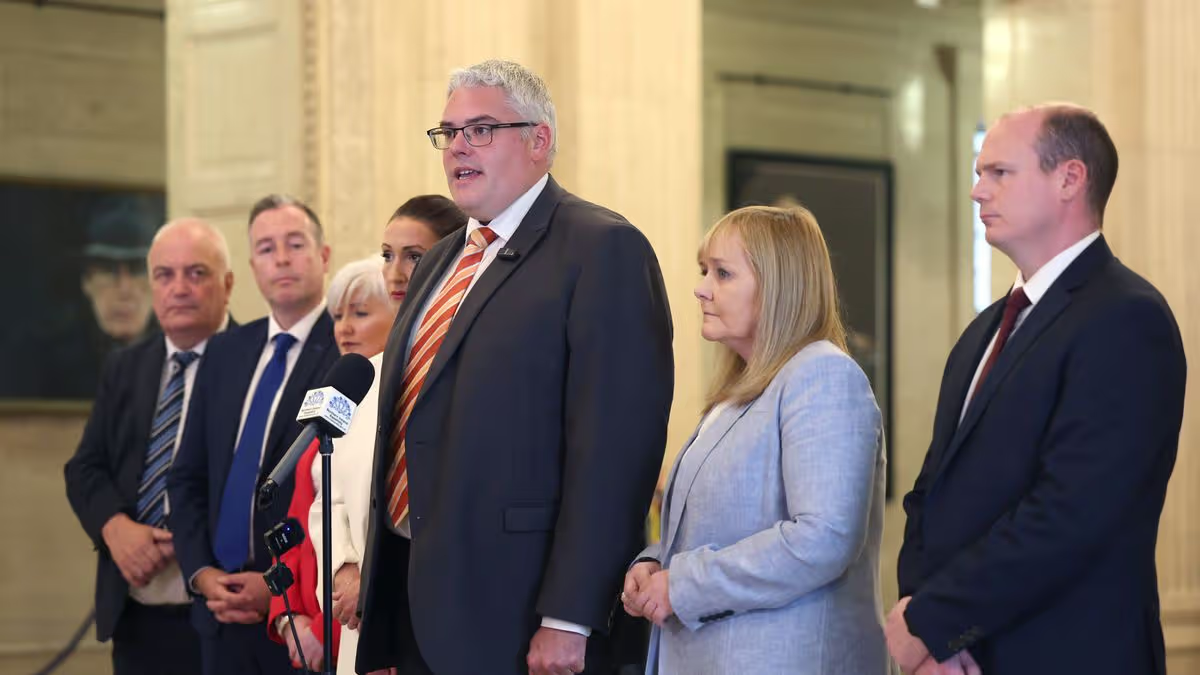
Speaking to the media on Monday, Gavin Robinson said: “As a party we were not aware of allegations that have subsequently come to light.
“I may only have been leader of this party for a short period of time, but I am convinced that that is the case for a longer period of time.”
He added: “It is clear there are a number of individuals, either former members of the Democratic Unionist Party, or current who did indicate publicly on Friday that they had information that they did not share, information that was not reported through our appropriate channels and therefore information about which we could do nothing formally.
Advertisement
“Whilst I say that with confidence, I am also clear it is not okay for that to continue to be the case.
“I cannot countenance a circumstance or situation where I allow that to be the case.
“That is why I and my deputy leader and senior party colleagues agreed on Friday to institute a review; a review that will be independent of our party, a review that will be conducted by an individual with impeccable credentials in child safeguarding, sexual exploitation.
“I want them to establish if members of my party had information which they did not share.
Advertisement
“I also want them to establish if there are people within my party who continue to hold information which they haven’t yet felt about to share.”
Mr Robinson said he wanted the review to examine the party’s safeguarding policies.
But he added: “If somebody doesn’t come forward and whistleblow, you can’t use the safeguarding policies.
“It is my job to set our standards and what we have heard over the last number of days falls well below the standards that I hold and my colleagues hold for our party.
Advertisement
“It is our job to make sure we are not turning a blind eye and that we deal with the issues that we are in charge of.”
Mr Robinson said he had not yet spoken to Mr Poots about the issues raised in the Spotlight programme.
The Prince of Wales has revealed some of the moments he shared with his late grandmother that he “will always hold dear” in a video memorial project
Prince William shares his fondest memories of Queen Elizabeth II
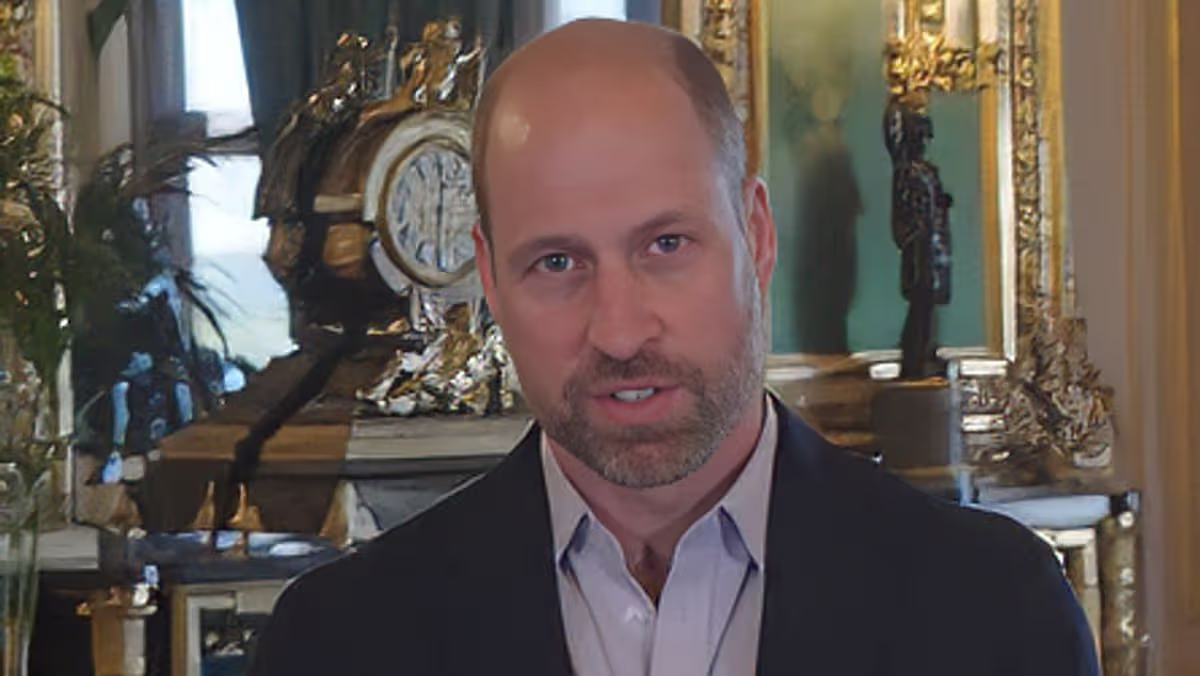
Prince William has recalled some of his fondest memories of his grandmother Queen Elizabeth in a video memorial for the late monarch. Filmed from inside Windsor Castle, the Prince of Wales spoke fondly of the late Queen, saying he will “always hold dear” some of their quiet moments spent together away from the public eye.
The video was filmed for a digital memorial for Queen Elizabeth, which is also open to the public to share some of their fond memories of the late monarch, marking what would’ve been her centenary year. Others who have shared their memories of the Queen include athlete Tom Daley, former Lord Bishop of London Lord Richard Chartres, and royal photographer Arthur Edwards.
In the video, William said: “It’s a privilege to know the late Queen better than most. Some of my fondest memories of my grandmother are from here in Windsor.
“I remember many a quiet afternoon, having tea with her and my grandfather at the castle, chatting, sharing stories, and seeing how completely at ease she was here, surrounded by family and her much-loved dogs and horses. To this day, she’s given me a love of teatime that I never knew I needed.”
In the short clip, recorded for the Queen Elizabeth Digital Memorial website, the future King went on to talk about how riding around the Windsor Estate showed a rare “off-duty and relaxed” side to the former monarch.
He said: “Watching her ride her horses in the Great Park, even well into her later years, showed a side of Granny the world didn’t often see, off-duty, relaxed, and utterly at home. These moments with my grandmother are ones I’ll always hold dear.”
William has previously spoken about spending time with his late grandparents in Windsor Castle when he was at secondary school at nearby Eton, where his eldest son Prince George will be attending later this year.
Speaking with Eugene Levy during his appearance on AppleTV’s The Reluctant Traveller series last year, William said: “I do miss my grandmother, and my grandfather.” William told the actor and TV host that the Queen, with whom he was especially close, was always in his thoughts when he was at Windsor Castle.
“It’s been quite a bit of change, so you do sort of, you think about them not being here any more, and particularly being in Windsor, for me Windsor is her. She loved it here, she spent most of her time here.”
Advertisement
The digital memorial site, led by the Cabinet Office, also features archive material, photography and video from key events of the late Queen’s historic 70-year reign.
The site started to commemorate what would’ve been Queen Elizabeth’s 100th birthday, which was marked on April 21 this year.
Dubai’s plan to operate the world’s largest airport is one step closer to reality as the emirate says it will open to passengers by 2032.
Al Maktoum International airport will become the world’s largest aviation hub with an annual capacity of 260 million passengers.
Plans show the airport having five runways, two terminals and more than 430 plane stands, as well as shuttle service around the site connecting passengers to gates and transport links.
The Dubai Government said earlier this month that work on the first phase of the new airport is proceeding in line with timelines for the project, remaining on course to start running flights in 2032.
Advertisement
Work started over a year ago on the airport’s runway infrastructure and the initial structural foundations for passenger terminals and gates.
The project has been allocated a budget of AED16 billion (over £3bn).
The next phase of work will focus on building the Western Passenger Terminal, a fourth aircraft concourse building, an automated shuttle and the baggage handling system.
Khalifa Al Zaffin, executive chairman of Dubai Aviation City Corporation, said that Al Maktoum International airport will allow Dubai to serve more travellers as the country anticipates growth in passenger and cargo traffic over the coming decade.
Advertisement
“Al Maktoum International airport is far more than an expansion of aviation infrastructure; it is a fully integrated global platform that will redefine the future of travel and logistics,” he explained.
“The airport is being designed to deliver a seamless, intelligent, and customer-centric experience powered by advanced technologies, integrated automation, operational intelligence, and seamless connectivity across airport systems and transport networks.”
Dubai’s current main airport, Dubai International (DXB) is a key travel hub for people travelling to the emirate and for stopovers between Europe and Asia.
It held the status of the second busiest airport in the world in 2025, with 95.2 million passengers passing through.
After the UAE lifted restrictions on airspace, Dubai Airports said it has entered a recovery phase by increasing daily flights and enabling airlines to restore schedules as much as neighbouring airspaces allow.
A new plan will help businesses recruit young people who have been out of a job for at least six months, Sir Keir Starmer has announced.
The Prime Minister said the youth jobs grant will offer firms £3,000 to hire an 18 to 24-year-old who has been on universal credit for six months or more, in a bid to help the more than a million young people not in employment, education or training (Neet).
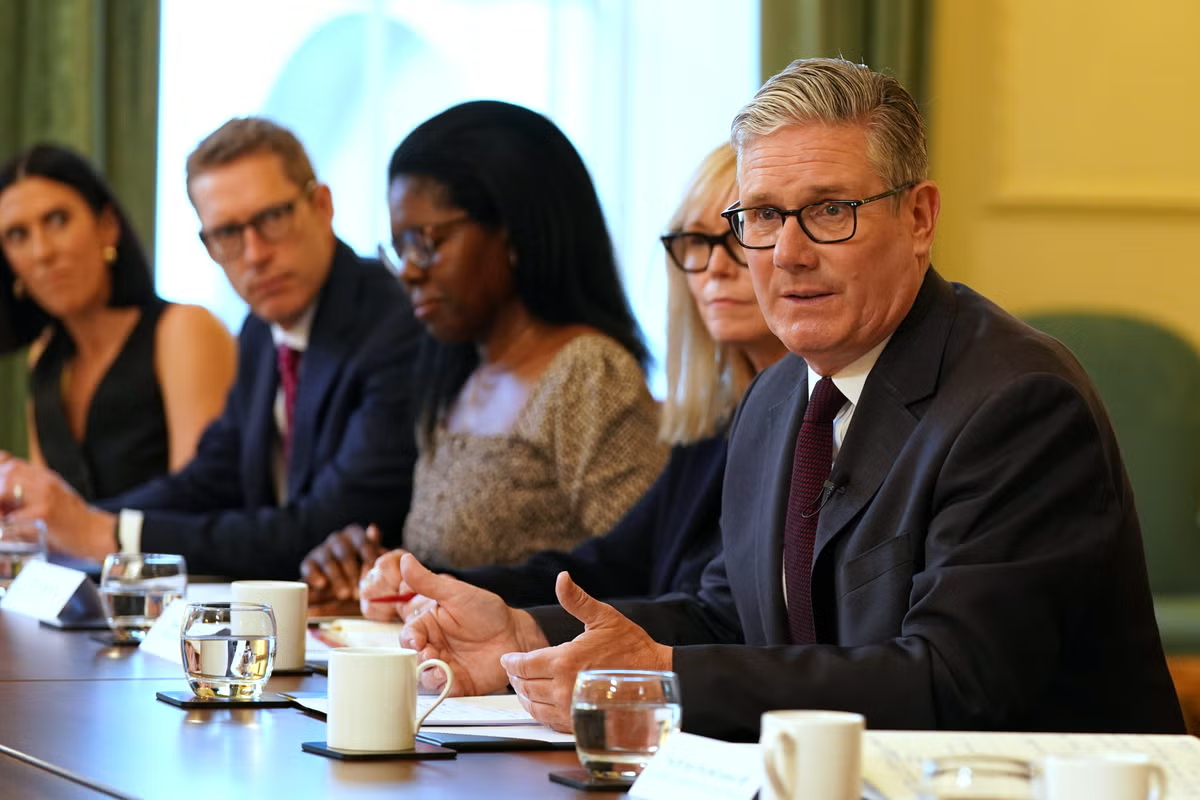
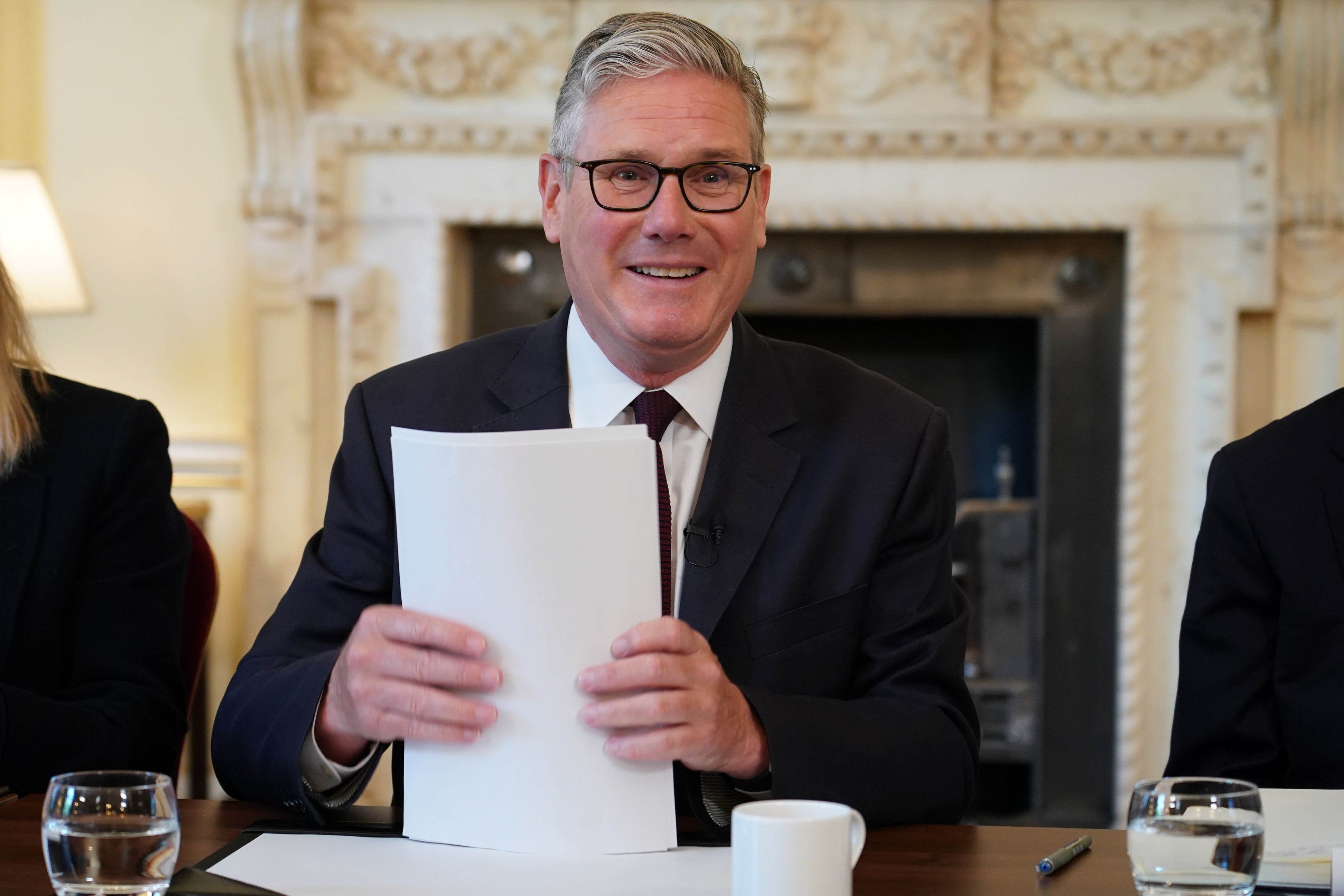
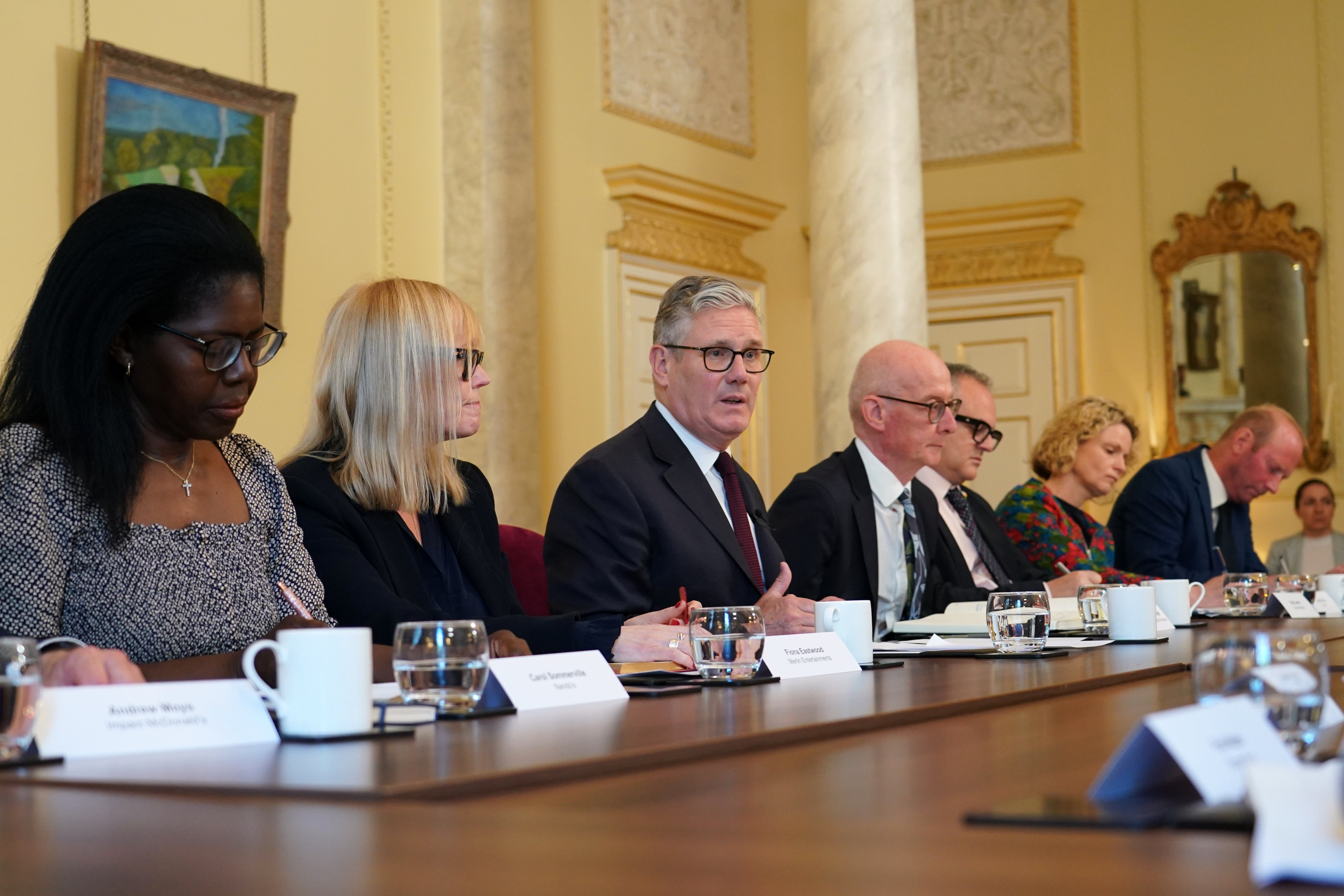
Sir Keir was hosting a No 10 roundtable with hospitality industry leaders, including from Burger King, KFC and Costa Coffee, with Work and Pensions Secretary Pat McFadden also present.
The PM said: “From tomorrow we’re announcing a £3,000 incentive to businesses to take young people who’ve been out of work for six months and give them a job.”
Advertisement
Prime Minister Sir Keir Starmer met hospitality leaders to discuss how to boost opportunities for young people (Alberto Pezzali/PA Wire/PA Images) (PA Wire)
He said university should not be seen as the only route to success, and “it is crucial that when we say every young person should go as far as their talent and ability will take them, we mean it.”
Sir Keir added: “I have a vested interest, I should declare, not just as Prime Minister – I’ve got two teenage children. My son is 18 tomorrow, and therefore these are live discussions in our household.
“And actually, it’s really interesting to see first-hand the sort of pressures and opportunities that young people actually go through when they’re in their teenage years.”
He said the youth jobs grant will go hand in hand with the jobs guarantee, which funds six months’ part-time employment for those out of work for at least 18 months.
The guarantee of a job for those who have been out of work is “probably the most single effective way to help people into work,” he said.
Advertisement
The youth jobs grant and jobs guarantee were part of a strategy aimed at lifting children out of poverty and helping young people into work, Sir Keir said.
The Government introduced free breakfast clubs, and more than 300,000 children have already taken part since the programme began in the summer term last year.
The strategy also included the expansion of free childcare to 30 hours a week for eligible working parents in England with children aged between nine months and four-years-old, and lowering the target number of university entrants to encourage other pathways for young people such as apprenticeships.
Sir Keir Starmer argued that university should not be seen as the only route to success (Alberto Pezzali/PA Wire/PA Images) (PA Wire)
The outgoing prime minister said he wants the next Government to build on what he has done to help young people out of poverty and into work.
He told the roundtable: “What I want to make sure is that, having put these blocks in place over the last two years, that the next stage of this administration takes that on and builds from there.”
Advertisement
A report from the Resolution Foundation think tank estimated the youth jobs grant will create 2,800 additional jobs at a cost of around £36,700 each.
It also found the jobs guarantee comes in at roughly £38,000 per additional job, making it three-and-a half times cheaper than scrapping employer national insurance contributions.











































You must be logged in to post a comment Login