
The environment usually takes a backseat in times of conflict. But in Ukraine a rewilding project is sowing seeds for a greener, more peaceful future
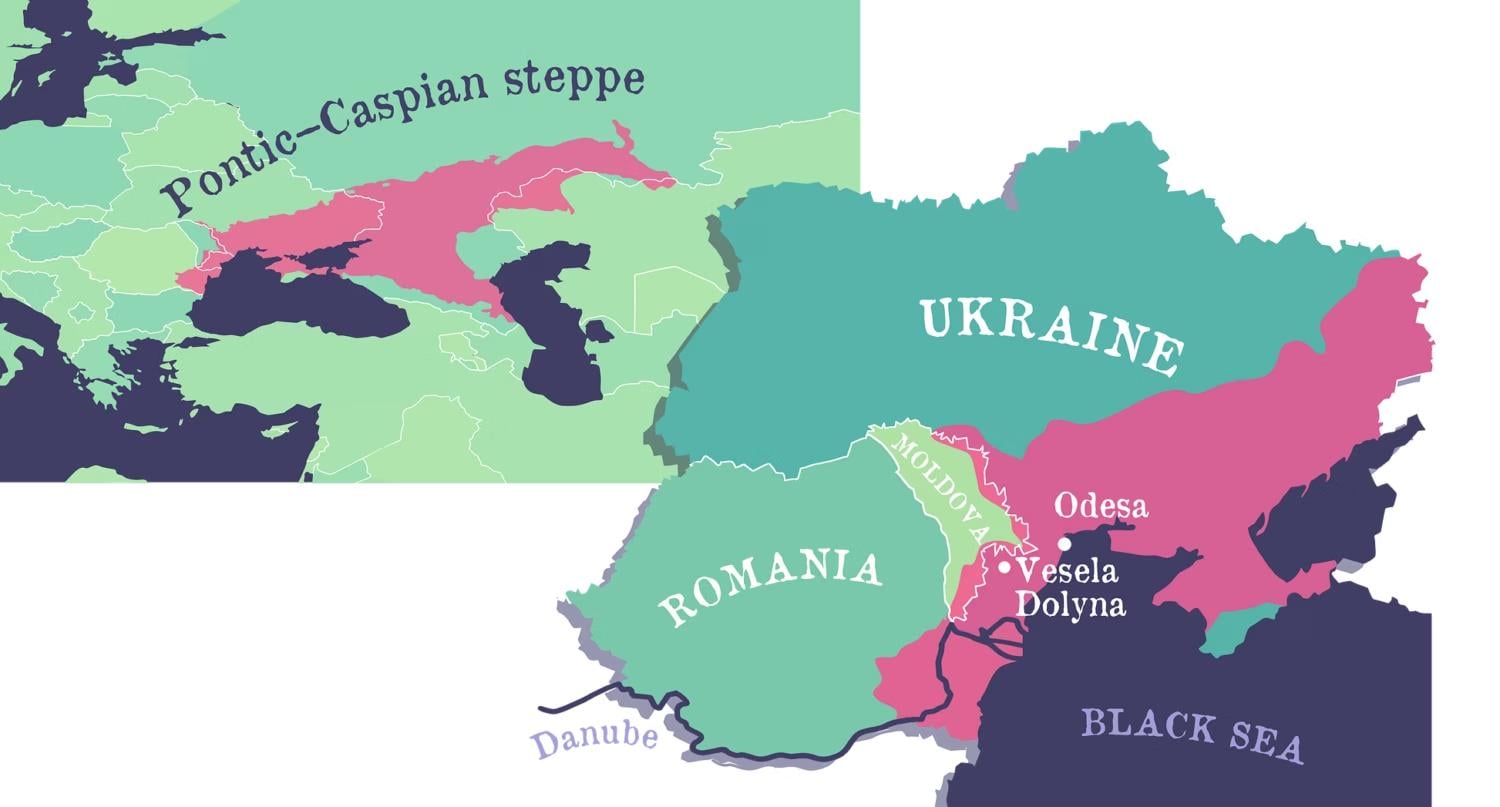
Vesela Dolyna translates from Ukrainian as ‘happy valley’. In the heart of the semi-arid Pontic-Caspian steppe system in southwestern Odesa Oblast, this village of 1,206 souls has, sadly, seen happier eras than today. Today, Vesela Dolyna’s residents are as likely to hear the violent cracks of exploding mines, or the high-pitched screams of the Russian missile strikes targeting the nearby Black Sea coast, as the bucolic rhythms of harvesting, or the craw of the native Eurasian magpie circling the village’s thatched, brightly painted homes.
Take a walk into the grasslands of the Tarutino Steppe with local resident Petro Hramatik, however, and you might yet hear another, strange and ancient, sound: a high, keening bray which, to locals like Hramatik, is a sign of hope amid the misery of war.
Advertisement
A former Vesela Dolyna village head, Hramatik is a local volunteer for Rewilding Ukraine, a conservation organization that is restoring 600 hectares of formerly ploughed grassland in the Tarutino Steppe through the reintroduction of native species.
Advertisement
Donkeys trampling fireproof landscapes
The project began in 2017 and has led to the release of 63 Konik horses; 20 red deer; 30 fallow deer; 20 water buffalo; and ten Hucul horses, the latter a native breed from the Carpathian mountains, back into the wild. Their star reintroduction however is a keystone species that Hramatik monitors on his frequent visits into the steppe: 35 characterful and voluble kulan, or wild donkeys. With their stout legs and high-pitched bray, these wild equines once ranged across a great swathe of central Europe from Ukraine and Russia in the west to Mongolia and China in the east.
“I genuinely love nature and I feel deeply connected to this landscape,” Hramatik told Perspective Daily. Hramatik took part in some of the animal releases to the steppe and now visits the territory to monitor plant and animal health, most frequently in the summer and spring when the Steppe is accessible due to better weather. “The natural grazing of kulan is having very positive effects on the steppe,” he said, “They reduce excessive dry vegetation, create more diverse plant structures and open up space for different species to return.”
Before human settlement, the Tarutino Steppe was an ecosystem of dry temperate grassland on fertile soils called ‘chernozem’ (black earth). These steppes supported diverse, drought tolerant grasses and flowering plants and were ranged over by large grazers such as the kulan and abundant small mammals and rodents. From the 19th century, with German Bessarabian settlement, and later Soviet factory-scale farming, the Steppe was converted to cereal and sunflower farming, sheep grazing and vineyards. Abandoned by the Soviet tractors after 1990, and with an ageing local population unable to tend the land, the Tarutino Steppe deteriorated into an unloved landscape that was dangerously prone to wildfires.
Advertisement
Image: Wikimedia Commons
With climate change and now the scourge of exploding mines (planted by both Ukrainian and Russian forces), wildfires can ignite daily in the heat of summer, Hramatik says. “That’s why the kulan are so important,” Hramatik adds, “they manage vegetation and reduce fire risk.” Kulan help to manage fire risk through natural grazing and movement, which reduces the amount and continuity of flammable vegetation. Their droppings also add organic matter to the soil, which improves soil structure over time: healthier soils hold water better, resist compaction, and absorb rainfall more efficiently rather than shedding it as run-off, also lowering fire risk.
Preparing for the tourism of tomorrow
The reintroduction of ancient grazers, as well as rodents such as marmots and the black-bellied European hamster, has also improved the Steppe’s soil fertility and, in turn, its carbon sequestration, says Mykhailo Nesterenko, who heads Rewilding Ukraine. Nesterenko and his family initially fled Ukraine for Romania on the outbreak of war, before moving to the Netherlands, though he returned to resume work on the projects in 2023.
Advertisement
“Nature restoration is important for communities too,” he adds. “Wetlands help communities adapt to climate and a healthy ecosystem also opens up the possibility of nature-based businesses, such as tourism.”
Rewilding Ukraine’s umbrella organization Rewilding Europe works on rewilding projects downstream at the Danube Delta, a connected habitat 50 km southeast at the mouth of the Black Sea that is partly in Ukraine and partly in Romania and is part of the Danube Delta Biosphere. Here it is restoring waterways from a ‘managed’ Soviet-style hydraulic system back into a self-sustaining, wild wetland, by removing 10 obsolete dams and re-establishing fish spawning grounds. Designated a UNESCO World Heritage Site (1991) and Biosphere Reserve, the 4000 km² Delta hosts over 5,500 plant and animal species, and is so dense and varied that locals and biologists call it ‘Europe’s Amazon’.
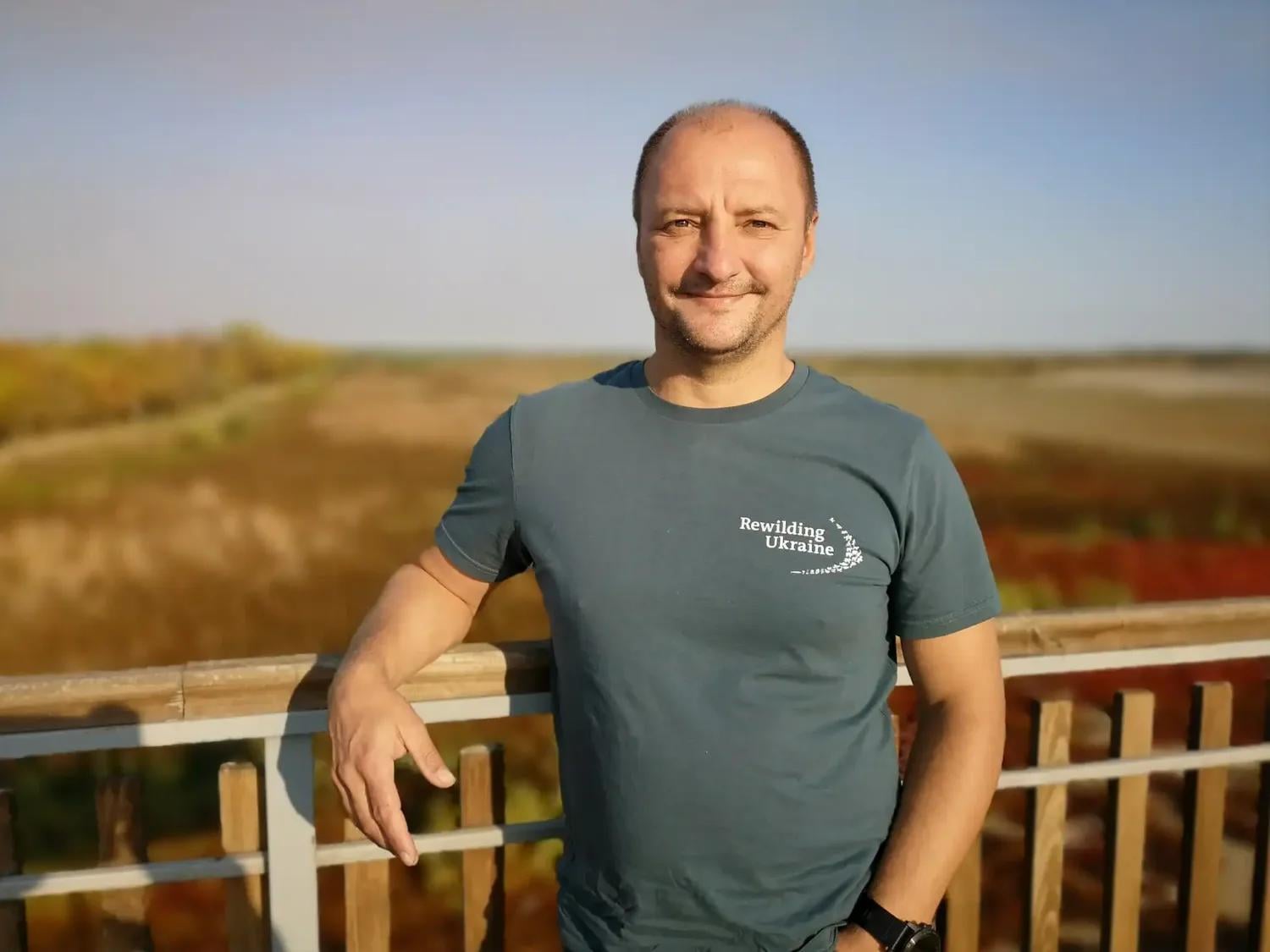
Mykhailo Nesterenko, head of Rewilding Ukraine. Credit: Privat
Advertisement
Loss of tourist income is one of the social and financial tolls on rural Ukrainian communities from Russia’s war. Average monthly wages in Bolhrad Raion, of which Vesela Dolyna is a part, are 7,000–9,000 UAH a month (€ 190–230) compared to the national average wage (2023): 15,000–16,000 UAH a month (€ 400–450). Regional ethno tourism attractions such as Vynohradivka (Kurçu), a traditional wine-growing village, were shuttered with the outbreak of hostilities and UNESCO and the World Bank estimate that Ukraine’s culture and tourism sectors have accumulated over $ 19.6 billion in lost revenue since February 2022.
Now Rewilding Ukraine is establishing the infrastructure to be able to »press go« when tourists return, Nesterenko explains. They include Eco-park Tarutino: a dedicated area featuring excursion routes and guided tours to see the reintroduced animals with wildlife watching towers and observation hides.
Ukraine’s nature is as resilient as the Ukrainian people
Rewilding Europe and Rewilding Ukraine are supported by the Endangered Landscapes & Seascapes Programme (ELSP) at the Cambridge Conservation Initiative, part of the University of Cambridge. Its Director, David Thomas, told Perspective Daily that although monitoring of impacts of the Delta projects is hampered by the war, ELSP is seeing ‘cascading effects’ from the reintroduction of large herbivores, such as increased fish populations and diverse bird communities.
Advertisement
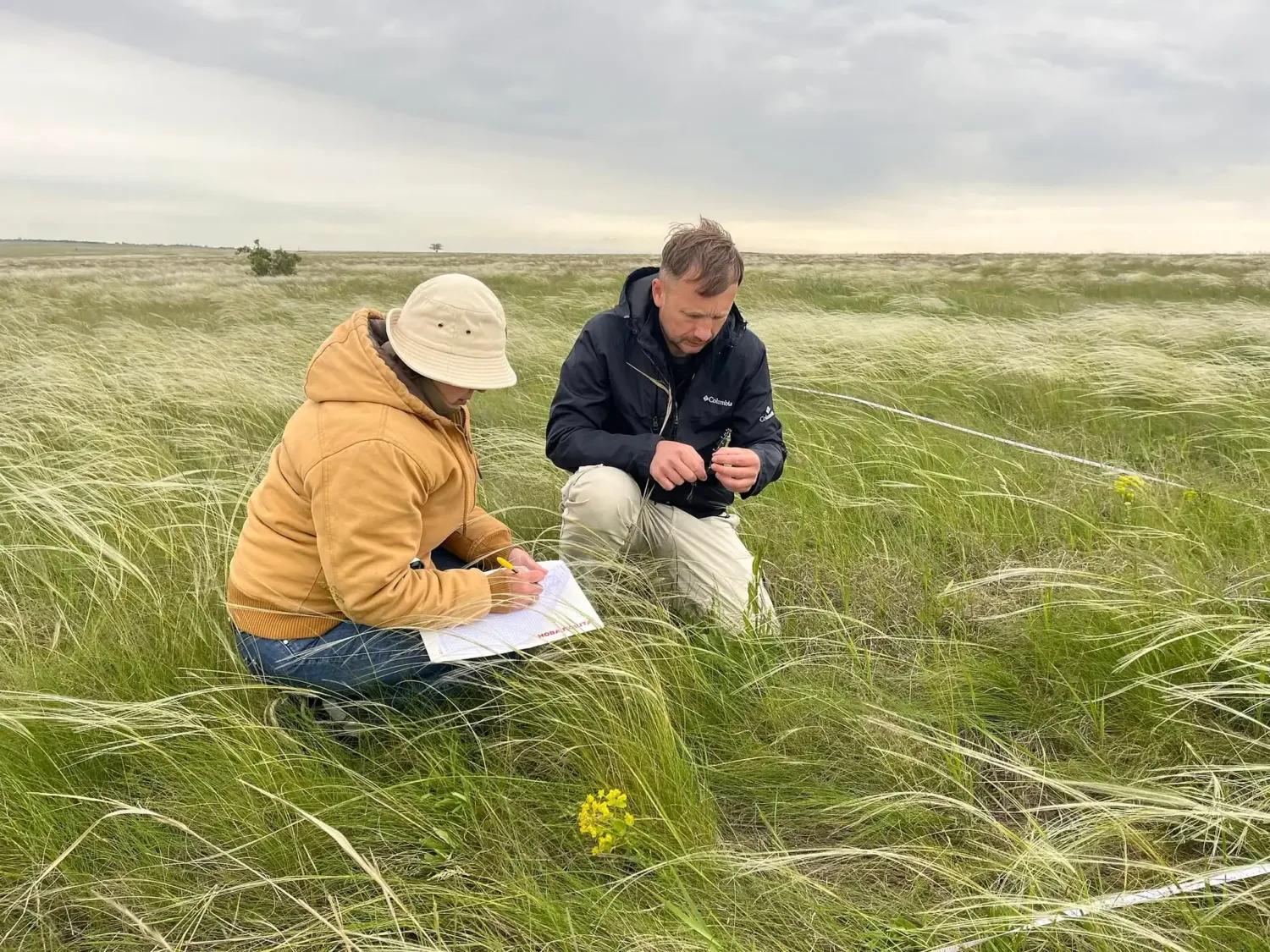
Researchers in the steppe. Image: Victor Shapoval
ELSP’s satellite images show that reintroducing water buffalo and Konik horses across the outer Delta has reduced dense vegetation as it has boosted plant diversity. They have also found that grasslands with large and diverse grazing species like donkeys, horses, and buffalo deposit twice as much carbon compared to areas where no large grazers are present.
Advertisement
“I think the hope and expectation is that [Rewilding Europe’s work] will provide a road map, a blueprint for restoration of the area and development of the local economy,” Thomas says of his hopes for Ukraine when peace comes. “There are great prospects for a nature-based economy around the Danube.”
Tourists aside, Rewilding Ukraine’s work is as much about the people who call the Delta habitats home. Rewilding Ukraine runs initiatives through which war veterans and their families are brought into rewilding landscapes as part of PTSD recovery; and in July 2025, a five day Junior Rewilders Camp brought together around 30 secondary school students from Ukraine and Romania to the Romanian Delta for birdwatching, teamwork sessions and creative activities designed to deepen children’s connection with the delta and rewilding concepts.
Our rewilding efforts in the Danube Delta show that Ukraine’s nature is as resilient as the Ukrainian people, and the two depend on each other. I am confident that both will recover when the war ends
Nature refuses to stand still
Outcomes in the long road to peace in Ukraine in 2026 depend on Russia’s willingness to negotiate with the frameworks toward ending the war that were established at Paris »Coalition of the Willing« summit on January 6. There are risks for the Delta and its peoples that the war will grind on, and the hoped-for tourism revenue will not come.
For all their efforts, Nesterenko admits that war hinders work on the rewilding projects. Some project sites are cut off, which means that the project’s rangers cannot monitor their rewilded herds or release more as planned, as civilian travel into the Delta is severely restricted. In the meantime, however, nature itself refuses to stand still.
Advertisement
In the spring of 2022, a tiny kulan foal was born on the Tarutino Steppe after a punishingly cold winter. With his gangly legs, large eyes and downy coat, he was the first kulan to be born in the wild in 200 years, making history as he stumbled to his feet. He’s a sign the Steppe, and the happy valley, will see happier days.
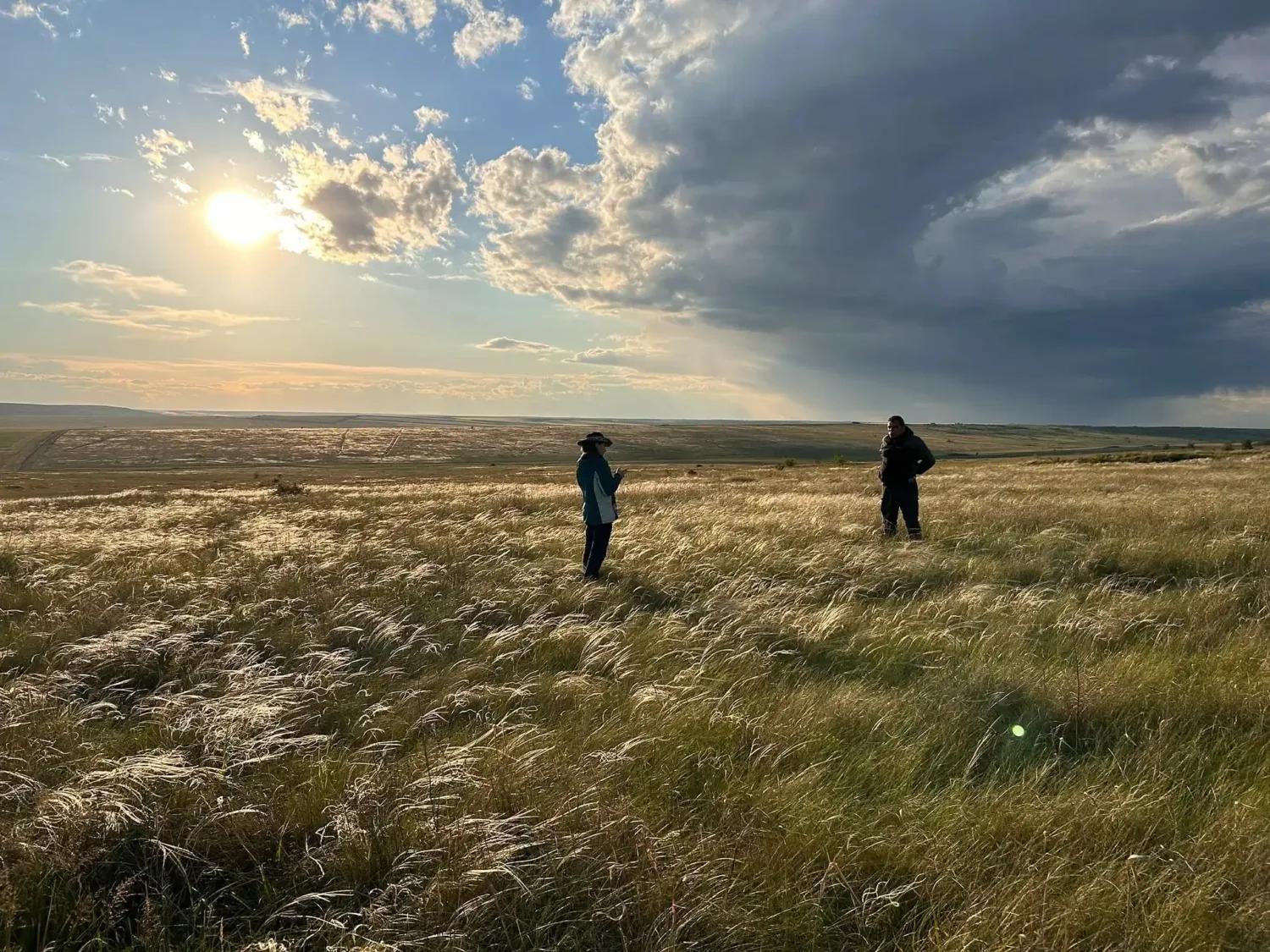
The steppe ecosystem is home to a variety of drought-resistant grasses and flowering plants. Image: Victor Shapoval
Advertisement
A blueprint: bringing back bison in Romania
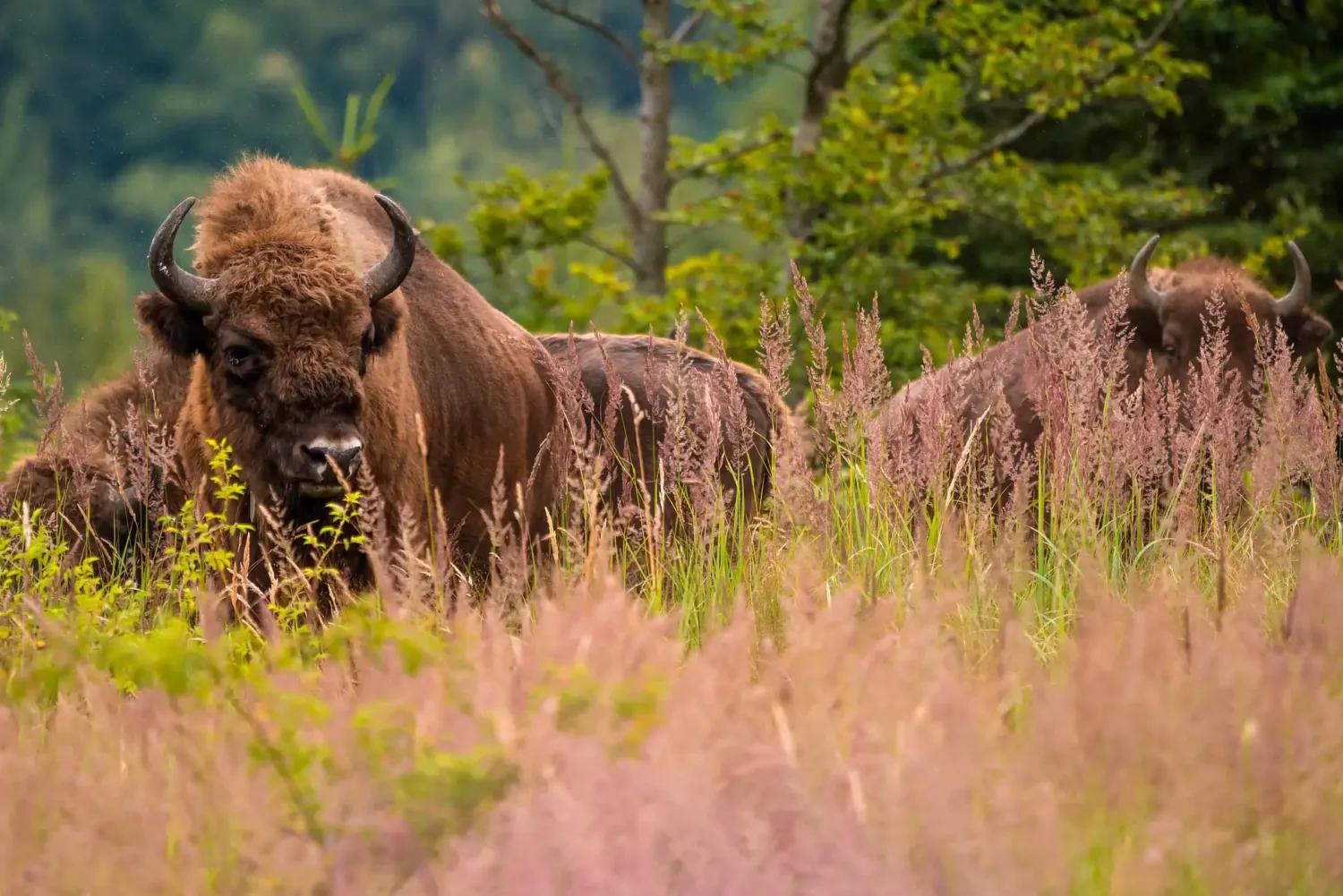
Across the border in Romania, successes with bison rewilding offer a blueprint for the future of nature-based livelihoods in Ukraine. Here, bison were not dropped into an empty wilderness but carefully reintroduced into a working landscape, with locals involved from day one: building enclosures, managing encounters, and learning how to live alongside a species that hadn’t roamed these mountains for centuries. The animals, in turn, are quietly doing what they do best: grazing young trees to keep meadows open, trampling fire corridors through forests, dispersing seeds and nutrients, and helping soils store more carbon.
Rewilding Romania supports conservation through ‘bison-smart’ communities of locals who actively accept and promote rewilding in their midst. Hotlines to report animal encounters, ranger patrols with trained dogs, and small economic incentives – from bison tracking experiences for tourists, to products made from ‘co-existence’ orchards – now support dozens of local businesses.
Mihai Miculescu, who owns the bustling Dospita bakery in Armenis, is one of them. In 2012, when the first herd of bison was reintroduced in the mountains behind his home, his son and he helped build the enclosure for the relocated animals. Today, the freshly baked malai, a Romanian cornbread made with his family’s secret recipe, seems to be selling faster than he can bake it, and he credits the success of his business to the increased business from the increase in tourist arrivals thanks to the bison rewilding project.
Advertisement
Bison have been successfully reintroduced into the wild in the Southern Carpathians in Romania. Image: Daniel Mirlea/Rewilding Europe
In 2025, Rewilding Romania trained 96 residents to run restaurants that offer homestyle food, and helped another resident to access loans to start a guesthouse in the Southern Carpathians. They have also trained several locals to offer services as wildlife guides and rangers (four of whom are employed full-time by the project).
Today, the local bison population stands at over 250, of which 105 were reintroduced and the remaining have been born in the wild. “We are living in times when it is no longer enough to protect what is left of nature; it is also necessary to help nature regain the power to heal,” says Marina Druga, Executive Director Rewilding Romania. And by surviving, thriving and reproducing after being rewilded in the Southern Carpathians, the bison are functioning as natural architects that will help improve the health of their ecosystem.
Advertisement
Main image: A herd of kulans in an enclosure where they are being prepared for being released into the wild. Credit: Oleksandr Gaidash
This article was originally published by Perspective Daily
Be part of the solution
At Positive News, we’re not chasing clicks or profits for media moguls – we’re here to serve you and have a positive social impact. We can’t do this unless enough people like you choose to support our journalism.
Advertisement
Give once from just £1, or join 1,800+ others who contribute an average of £3 or more per month. Together, we can build a healthier form of media – one that focuses on solutions, progress and possibilities, and empowers people to create positive change.
A motorcyclist was rushed to hospital with serious injuries after a crash on a busy Cambridgeshire road. Cambridgeshire Police were called with reports of a crash involving a car and a motorbike at about 9.30am on Sunday (June 28).
Advertisement
The crash happened on the A15 at Etton. Emergency services arrived to find a motorcyclist seriously injured.
The motorcyclist was rushed to hospital and the force has confirmed they suffered serious but not life-threatening injuries. No arrests were made.
The road was closed while recovery took place. Anyone who saw the crash or who may have dashcam footage from the area around that time is urged to contact police either online or via 101 quoting incident 205 of June 28.
The professional dancers were seen having been reunited in another country as they celebrated the love of their friends
A number of Strictly Come Dancing stars, including those who have made the decision to leave the show ahead of the new series, have been reunited in another country as they celebrated the love of their friends.
Advertisement
Fans of the hit BBC One dance show will be aware that there are a number of changes afoot as the popular programme returns for another series in September.
Emma Willis, Josh Widdicombe and Johannes Radebe are preparing to take to the helm of Strictly, having recently been announced as the show’s new hosts, marking the first time three people have been at the helm of the show.
The trio were selected to take over as the hosts of Strictly after Tess Daly and Claudia Winkleman left their long-running roles on the Saturday night entertainment favourite at the end of the 2025 series in December.
There are also set to be a number of changes to the professional line-up this year, following several exits. Returning from 2025’s series alongside Katya are Dianne Buswell, Alexis Warr, Amy Dowden, Aljaz Skorjanec, Jowita Przystal, Julian Caillon, Kai Widdrington, Lauren Oakley, Nancy Xu, Neil Jones, Nikita Kuzmin, Vito Coppola, and Carlos Gu, who won last year’s series with former England footballer Karen Carney.
Advertisement
The BBC has also confirmed new professionals would be recruited and announced closer to the dancing show’s return in autumn to replace Gorka Marquez, Michelle Tsiakkas, Karen Hauer, Nadiya Bychkova and Luba Mushtuk, who have left Strictly.
But over the weekend, the Strictly family showed that leaving the show doesn’t impact the bonds that have been built, as Karen, Luba and Gorka were among the leaving stars who were attending the wedding of a fellow dancer, Arduino Bertoncello, who will be known to fans of the BBC series due to his involvement as a choreographer and performer.
Taking to Instagram, Karen shared a string of snaps from the special day in Bassano del Grappa, a city in northern Italy’s Veneto region. Jowita, Lauren and Aljaz were all also in attendance, with Karen joined by her partner, Simon Davidson, and Lauren by her husband, Maximiliano Omar Montes de Oca.
Advertisement
Captioning the post, Karen wrote: “The best day celebrating LOVE [heart emojis]. A special day with special people. Congratulations @arduinobertoncello & @alberto.faccio.” Gorka was quick to respond, commenting: “Melted with love.” Lauren also gushed: “Love love love love.”
And fans were also keen to respond to the update. @kazcar55 said: “Beautiful wedding, wonderful photos & you all looked fabulous. Gorgeous dress Karen.” @jane.berry.56 wrote: “All these photos are beautiful. You all look amazing as does the venue and setting.” @k.wojciechowska123 replied: “Glorious photos, Karen you look amazing and so happy with your loved ones.” @lizzy.strictly added: “Faves! You guys look amazing!!”
Wimbledon’s strict dress code rules have been in place for decades with roots dating back to the Victorian era
Following weeks of build-up, this year’s Wimbledon has finally commenced, delivering all the customs that have established the Championships as one of the most celebrated occasions in the British sporting calendar.
Advertisement
From strawberries and cream to pristine grass courts, numerous aspects of the tournament’s atmosphere have stayed constant across generations. This encompasses the All England Lawn Tennis Club’s renowned dress code, which obliges players to abandon the vibrant kit worn throughout the season in favour of tennis whites.
The custom of donning all-white attire on SW19’s grass courts harks back to the Victorian period. During that era, visible perspiration marks were deemed mortifying and white garments were believed to conceal them more effectively than coloured clothing.
Since 1963, Wimbledon has mandated that competitors wear “predominantly white” attire, with the regulations strengthened further in 2014 when players were instructed to only wear items that are “almost entirely white” for both practice and matches.
That same year, Wimbledon found itself at the centre of a storm of controversy after several female players were reportedly instructed to remove bras that breached the stringent dress code, which stipulated that any visible undergarments must be entirely white.
Advertisement
British player Naomi Broady was amongst those who breached the regulation, leaving her with little option but to compete without a bra during her second round straight sets loss to former Australian Open champion Caroline Wozniacki. This prompted an angry response from Pat Cash, the 1987 Wimbledon men’s champion.
“Some of the girls have been told to go back and change their bras and tops because they had slight colour on them,” he said. “I believe some of the girls didn’t have suitable sports bras and had to go without them. It has absolutely gone ridiculous.”
The all-white regulation even extended to underwear for both men and women, with Cash adding: “One of the players was called into the referees’ office because he had blue underwear that showed through when he got sweaty. So he was told not to wear dark underwear.”
Advertisement
Demands to update the regulations became most pronounced several years ago with the establishment of the Address The Dress Code campaign group, with activists pushing for amendments amid worries for female players experiencing their periods. In 2022, Wimbledon eased its restrictions to permit women to wear dark-coloured undershorts, as long as they are no longer than their shorts or skirt.
“We are committed to supporting the players and listening to their feedback as to how they can perform at their best,” said Sally Bolton, the All England Lawn Tennis Club’s chief executive after the adjustment was announced. “It is our hope that this rule adjustment will help players focus purely on their performance.”
Sky Sports, HBO Max, Netflix and Disney+ with Ultimate TV package
This article contains affiliate links, we will receive a commission on any sales we generate from it. Learn more
Sky has upgraded its Ultimate TV and Sky Sports bundle to now include HBO Max, Netflix, Disney+, discovery+ and Hayu, as well as 135 channels and full Sky coverage of the Premier League and EFL.
Sky broadcasts more than 1,400 live matches across the Premier League, EFL and more with at least 215 live from the top flight alongside Formula 1, darts and golf.
Dame Penelope Keith, best known for her iconic role as Margo in The Good Life, has died peacefully aged 86 after living with cancer at her Surrey home, her family has confirmed.
Matt Jackson Live News Network Reporter and Lucy Needham Deputy Head of Showbiz
Penelope was best recognised for her performances in television programmes including The Good Life and To The Manor Born.
Advertisement
In a statement, her family confirmed she “died peacefully” at her Surrey home. They said: “We are deeply saddened to announce that Dame Penelope Keith died peacefully whilst living with cancer at her home in Surrey where she had lived for more than 50 years.
“The family is grateful for the care and support she received throughout her treatments, and ask that their privacy be respected at this time.”
Her television work commenced in the early 1970s when she featured in The Morecambe and Wise Show, Ghost Story and The Pallisers. She also made noteworthy appearances in spy programme The Avengers during the early stages of her career.
In 1975, she took on the role of Margo Leadbitter in The Good Life. Her final TV appearance, in 2025, was on UandGold’s The Good Life: Inside Out, a retrospective examining what made the beloved sitcom such a success with audiences.
She spent three years portraying Margo, a pretentious social climber married to her downtrodden husband Jerry, played by the late Paul Eddington. The programme aired from 1975 to 1978, broadcasting four series and a television special that was recorded before the Royal Family.
Penelope once declined the opportunity to feature in a spin-off series, reports The Mirror. She said: “People mentioned ‘Wouldn’t it be wonderful to have a Leadbetter spin-off and I said ‘No. It’s a situation comedy and the situation is strong because of the two couples’.
Advertisement
“Can you imagine how tedious it would have been having Margo and Jerry having their own series?”.
Penelope frequently praised the sitcom’s writers, John Esmonde and Bob Larbey, for crafting such wonderfully flawed characters that audiences embraced wholeheartedly.
Penelope explains: “Margo was the prime lady of the avenue with all the dinner parties and whatever she took part in, she had to do it perfectly and had to be top dog and sometimes she was terribly disapproving”.
Advertisement
“She had no sense of humour but she was terribly kind and didn’t want to offend but she engaged mouth before brain so often.
“She had enormous warmth and adored the goods and likewise jerry but he infuriated her. There is a line where she says ‘I am the silent majority’ and she said it deadpan and that is what she felt and that is what half the country felt at the time as well.”
She had previously spoken warmly about her experience on the programme. She said: “I look back on it as one of the happiest times. It was of its time at the right time.
“It was as good as it was because of everything else behind it. Everybody cared. The laughter, the joy it brought and the fact that people liked it so much and believed in it so much is reward.”
If you are having to take time off work or need to cover childcare costs over the summer, you might have a little less to spend on food.
Throughout the summer holidays, more than 330 Tesco stores are offering free meals to children from The Café and The Coffee Shop seven days a week.
The scheme has been running since June 25 and will be available until September 1.
Advertisement
How can I get a free meal for kids at Tesco?
You can get one free Kids Hot Meal Deal, Kids Breakfast or Kids Pick ‘n’ Mix deal with any full price adult purchase when you scan your Tesco Clubcard.
The adult purchase can be anything from an apple that costs only 65p to a full meal for yourself.
Tesco has not put a limit on the number of kids meals you can redeem.
There are a range of dishes on the menu including pancakes for breakfast or fish fingers, pork sausages, and chicken strips as a hot meal.
Children can choose a sandwich, a drink, two snacks, and a piece of fresh fruit to make up their Kids Pick ‘n’ Mix deal.
Advertisement
The brand is also taking part in the Great British Summer Savings scheme with the full prices of children’s meals being cut.
Claire De Silva, Head of Communities at Tesco, said: “We know that household budgets can be really stretched, especially over the long summer holiday, so offering free meals to children during this time is just one of the ways we can support families.”
How to get free fruit from Tesco in the summer
Tesco is also bringing back its Free Fruit for Kids that will run from July 20 to August 30.
Friends star Courteney Cox has reportedly split from Snow Patrol musician and Belfast star Johnny McDaid after more than a decade together, with the couple having previously been engaged
Emma O’Neill Content Editor and Jordan Lloyd Beck
12:05, 29 Jun 2026Updated 12:14, 29 Jun 2026
Courteney Cox has reportedly called time on her romance with Johnny McDaid.
The 62 year old star, best known for playing Monica Geller in Friends, has been in a relationship with Snow Patrol rocker Johnny, 49, since 2013, having got engaged over a decade ago.
Advertisement
But it emerged on Saturday that the pair have parted ways, though sources have stressed it wasn’t an “ugly split” at all.
An insider told The Mail on Sunday: “Johnny speaks incredibly highly of Courteney. They had a very deep relationship and they remain extremely amicable. They are great friends and care about each other very much.
“This was not an ugly split. They had simply reached a point where they were living different lives.”
It’s believed Johnny has started seeing someone new, with his last public appearance with Courteney – who is mum to 22 year old daughter Coco with ex-husband David Arquette – happening in September at the US Open.
Advertisement
Just weeks before that outing, the now-separated couple were spotted enjoying a night out with Jennifer Aniston and her other half Jim Curtis, reports the Mirror, reports RSVP Live.
Courteney, who also portrays Gail Weathers in the Scream franchise, first met Johnny at a Los Angeles party through their shared pal Ed Sheeran. In 2024, the actress revealed that Johnny had previously terminated their relationship at the very start of a couples therapy appointment they were attending together.
During an appearance on the Minnie Questions podcast, she confided in Minnie Driver, saying: “We went to this therapist to talk about our boundaries – what we could and couldn’t accept of each other.
“I was like, ‘what?’
Advertisement
“And we were engaged. And I was so shocked. I was in so much pain. I also don’t like surprises!
“There was that much that needed to be dealt with, that he had to protect himself around his heart.”
The couple eventually navigated through their troubles and, despite calling off their engagement, maintained their relationship – until their recent separation.
Three organisations providing vital local connections are sharing more than £101,000 of SPT funding.
Three South Lanakshire organisations are sharing more than £101,000 in core grant funding from Strathclyde Partnership for Transport.
Advertisement
Larkhall and District Volunteer Group (LDVG), Blantyre Volunteer Group and East Kilbride Community Transport (EKCT) are each receiving support for 2026-2027 from Strathclyde Partnership for Transport.
They are among 19 community organisations across the region to benefit from the funding allocation to help in their work of “delivering essential journeys to healthcare appointments, shops and social activities”.
Larkhall and District Volunteer Group will receive up to £64,700 for its core operations and to support MyBus demand-responsive services.
The organisation, based at Victoria Street in the town, operates community transport minibuses and runs services including three weekly shopping bus services for older residents in Ashgill, Strutherhill, Birkenshaw and Hareleeshill, and a community car helping local people with transport to medical appointments.
Advertisement
Blantyre Volunteer Group will receive up to £28,000 towards core operating costs for running its fleet of five minibuses, which provides journeys for charities, youth associations, schools and community groups.
East Kilbride Community Transport will receive up to £16,000 in core funding, “helping ensure residents across the area can access the services and activities they need”.
The voluntary organisation, which has been running for almost four decades, operates three 16-seater minibuses which are booked by community groups, schools and churches for trips and social activities.
Group secretary June Harpum told the East Kilbride News earlier this year how the operation costs £5000 per month for costs ranging from ever-increasing fuel to required 10-weekly servicing of its vehicles.
Advertisement
SPT chair Councillor Stephen Dornan said: “South Lanarkshire has a network of dedicated community transport volunteers and operators who make a real difference to people’s lives every day.
“Whether it’s a MyBus journey to a medical appointment in Larkhall or a community trip in East Kilbride, these organisations are connecting people who might otherwise be left isolated; SPT is delighted to support their work.”
Papers for SPT’s operations committee approving the funding for the 19 organisations noted: “Community transport operators deliver essential services, with a particular focus on supporting older people, individuals with disabilities, and those on low incomes.
“These services facilitate access to key destinations, including healthcare, retail, and social activities, thereby supporting independent living and community participation.
Advertisement
“Applications seek funding support towards core operating costs, including driver provision, volunteer expenses, staff salaries, training, vehicle insurance, maintenance, and fuel – without this support, the sector’s ability to deliver essential transport services to local communities would be significantly reduced.
“Community rransport plays a critical role in improving access to goods, services, and facilities across the west of Scotland, particularly for older people, disadvantaged individuals and vulnerable groups.”
*Don’t miss the latest headlines from around Lanarkshire. Sign up to our newsletters here.
And did you know Lanarkshire Live had its own app? Download yours for free here.
She was known for her appearances in the sitcoms The Good Life and To the Manor Born.
A statement on behalf of Dame Penelope’s family said: “We are deeply saddened to announce that Dame Penelope Keith died peacefully whilst living with cancer at her home in Surrey where she had lived for more than 50 years.
“The family is grateful for the care and support she received throughout her treatments, and ask that their privacy be respected at this time.”
RIP Penelope Keith. Such a talented actress with brilliant timing and an accent that could cut glass. Loved watching her pic.twitter.com/9WmInFvjCk
Among those to pay tribute was the MP Jeremy Hunt who posted on X: “Incredibly sad to hear of the passing of Dame Penelope Keith CBE.
“She was a neighbour & friend where she was dearly loved by all who knew her in Milford.
“She helped Britain laugh at itself, one of our best national qualities, &brought happiness to millions.
“RIP dear Penny.”
Advertisement
The career of Dame Penelope Keith
Keith was born in Sutton, Surrey, in 1940, and she went to a Catholic convent boarding school in Seaford at the age of six.
Dame Penelope Keith collected a CBE from the late Queen Elizabeth II in 2007 (Image: PA Wire)
It was here she became interested in acting and frequently went to matinées in the West End with her mother.
Keith joined the Royal Shakespeare Company in 1963 and went on to win the 1976 Olivier Award for Best Comedy Performance for the play Donkeys’ Years.
She became a household name in the UK playing Margo Leadbetter in the sitcom The Good Life (1975–78), winning the 1977 BAFTA TV Award for Best Light Entertainment Performance.
Advertisement
In 1978, Keith won the BAFTA TV Award for Best Actress for The Norman Conquests.
In her later career, she presented some documentary series for the BBC and Channel 4.
She was appointed Dame Commander of the Order of the British Empire (DBE) in the 2014 New Year Honours for services to the arts and to charity.
Were you a fan of Dame Penelope Keith’s work? Let us know in the comments.
Smoke and flames were seen billowing from the site as emergency services attended on Sunday evening
11:34, 29 Jun 2026Updated 11:41, 29 Jun 2026
The Northern Ireland Fire & Rescue Service says a large blaze at a historic convent in Co Down was started deliberately.
Emergency services were called to the scene in Downpatrick after the fire was reported at around 7pm on Sunday evening, June 28. Smoke and flames were seen billowing from the Convent Of Mercy on St Patrick’s Avenue in the town with the roof well ablaze.
In a statement on Monday morning, a NIFRS spokesperson said: “A large building fire on Irish Street, Downpatrick, has now been dealt with. The initial call was received at 7.01pm on yesterday evening (Sunday 28 June 2026).
Advertisement
“At the height of the incident 70 firefighters were involved. A total of 10 appliances attended from Downpatrick, Newcastle, Dromore, Ballynahinch, Comber, Carryduff, Banbridge, Newtownards and Rathfriland Fire Stations, supported by two Aerial Appliances from Knock and Springfield Fire Stations, a Command Support Unit from Lisburn Fire Station and a Water Tanker from Warrenpoint Fire Station.
“Our firefighters worked tirelessly throughout the duration of the incident to ensure that the fire was brought under control and extinguished. We would like to thank the public for their patience whilst we dealt with the incident. The cause of the fire is believed to have been deliberate ignition and the incident was dealt with by 10.03am.”
A PSNI spokesperson added: “Police received a report of a large fire in the Stream Street area of Downpatrick just after 7.10pm on Sunday, 28th June. Officers attended to assist colleagues from the Northern Ireland Fire & Rescue Service with traffic management until the blaze was extinguished in the early hours.
“Fire Service have stated that ignition may have been deliberate and as such a scene is being held this morning, Monday 29th June, to allow for further investigation.
Advertisement
“We would appeal to anyone with information to contact police using our witness appeal form at https://reporting.psni.police.uk/appeals – quoting reference 1509 28/06/26. You can also contact us on 101.
Built in the 1870s the convent went on the market in October last year with an asking price of £400,000 with planning permission for flats attached. It had previously sold for £175,000 in 2019.
Advertisement
SDLP MLA Colin McGrath expressed his sadness following the major fire at the former convent in Downpatrick.
The South Down MLA said: “It’s really sad to see the former convent in Downpatrick on fire. Although it’s been lying derelict for some time, it’s still one of those buildings that people in the town know well, and it’s difficult to watch it being lost like this.
“Many local people will have memories of the convent and the role it played over the years. Even in recent times it has remained a familiar part of the Downpatrick skyline, so seeing it go up in flames is upsetting.
“I want to pay tribute to the firefighters and all of the emergency services who have responded so quickly to what is clearly a significant incident. Their professionalism and bravery in dealing with situations like this should never be taken for granted.
Advertisement
“My thoughts are also with those living and working nearby who will understandably have been concerned as the fire developed.”
A man was taken to hospital with serious injuries following the stabbing
10:45, 29 Jun 2026Updated 10:55, 29 Jun 2026
Police have issued an update after a man was stabbed at a rave near Cambridge. Officers were initially called to the rave in the early hours of Sunday morning (June 28) to a field on Dry Drayton Hill, between Dry Drayton and Madingley.
When police attended, they found around 400 people at the rave. Calls came in that a man had been stabbed. Paramedics attended and the man in his 20s was taken to hospital with serious but not life-threatening injuries.
Officers, including armed police, searched the area and two men were arrested. In the latest update, Cambridgeshire Police has confirmed the two men arrested in connection with the attack have been released on bail until September 2026. Investigations remain ongoing.
Advertisement
A spokesperson for Cambridgeshire Constabulary said: “Anyone with any information is urged to report this to police online quoting incident number 115 of today, or call 101 if you do not have internet access.”
You must be logged in to post a comment Login