

Crypto World
AUD/USD: Will the RBA Be Able to Keep Its Currency Strong?

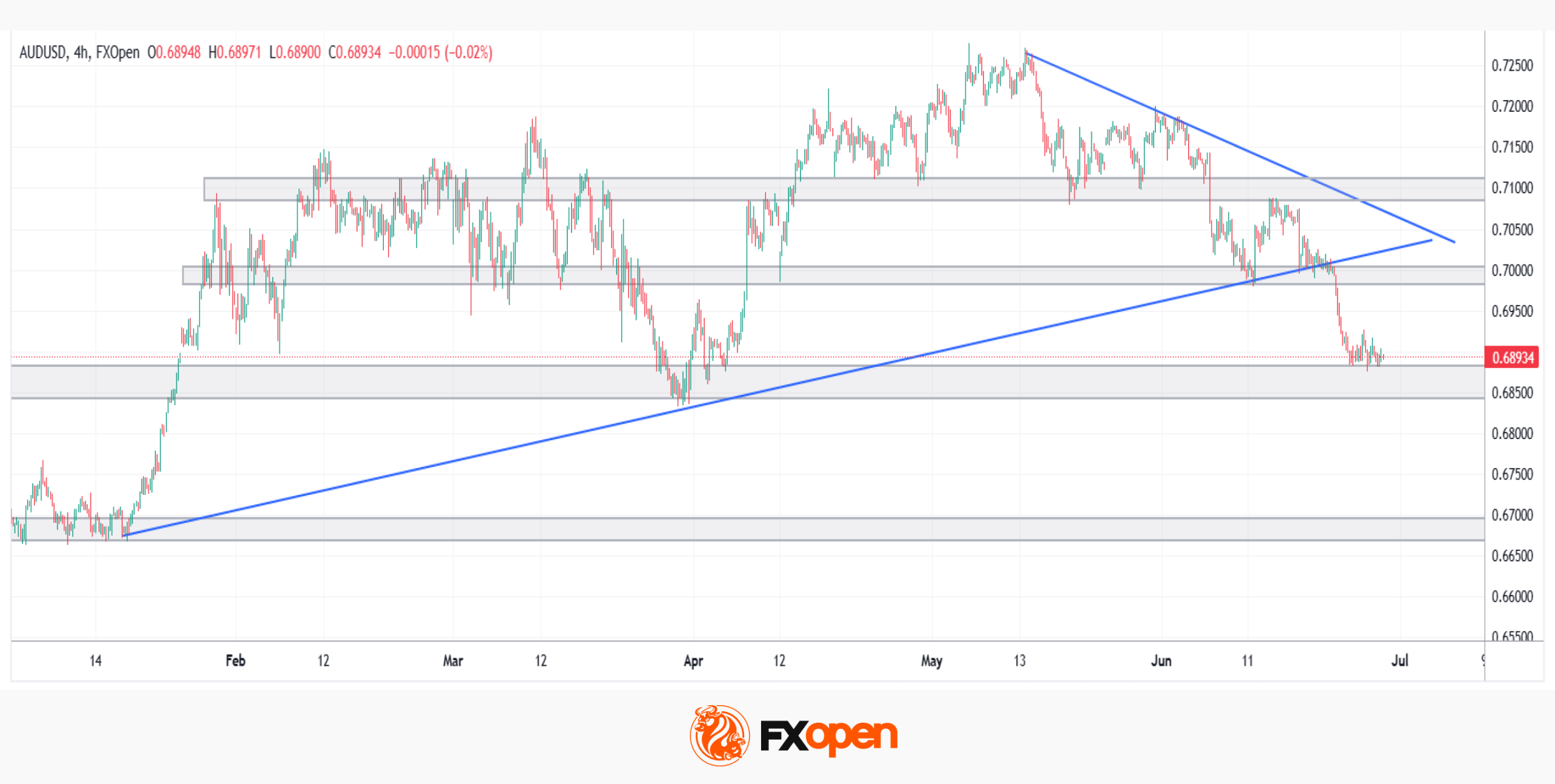
As the chart shows, AUD/USD has entered a distinctly bearish phase in recent weeks, reflecting the broader consolidation — and in some cases outright weakness — that the US dollar has begun imposing across most major currency pairs.
Fundamental Analysis
The Reserve Bank of Australia concluded its June meeting by holding the cash rate steady at 4.35%, opting to monitor the effects of the three consecutive hikes already delivered since the start of the year. The board acknowledged that financial conditions have tightened and that the economy is showing early signs of slowing, while maintaining a vigilant stance on inflation, which remains above target.
In theory, a pause after a tightening sequence — with a cash rate at 4.35%, the highest in the G10 — is a structurally supportive signal for the Australian dollar, as elevated rate differentials tend to attract flows toward AUD-denominated assets. However, markets had already fully priced in this outcome, stripping the decision of any surprise. AUD/USD has consequently failed to post any meaningful bullish impulse, sliding toward almost three-month lows near 0.6890, weighed down by renewed US dollar strength on growing Federal Reserve rate hike expectations. Adding further complexity to the outlook, the ongoing Middle East conflict continues to weigh on global risk sentiment, acting as an additional headwind for a currency that markets have long treated as a barometer of global risk appetite.
Technical Analysis
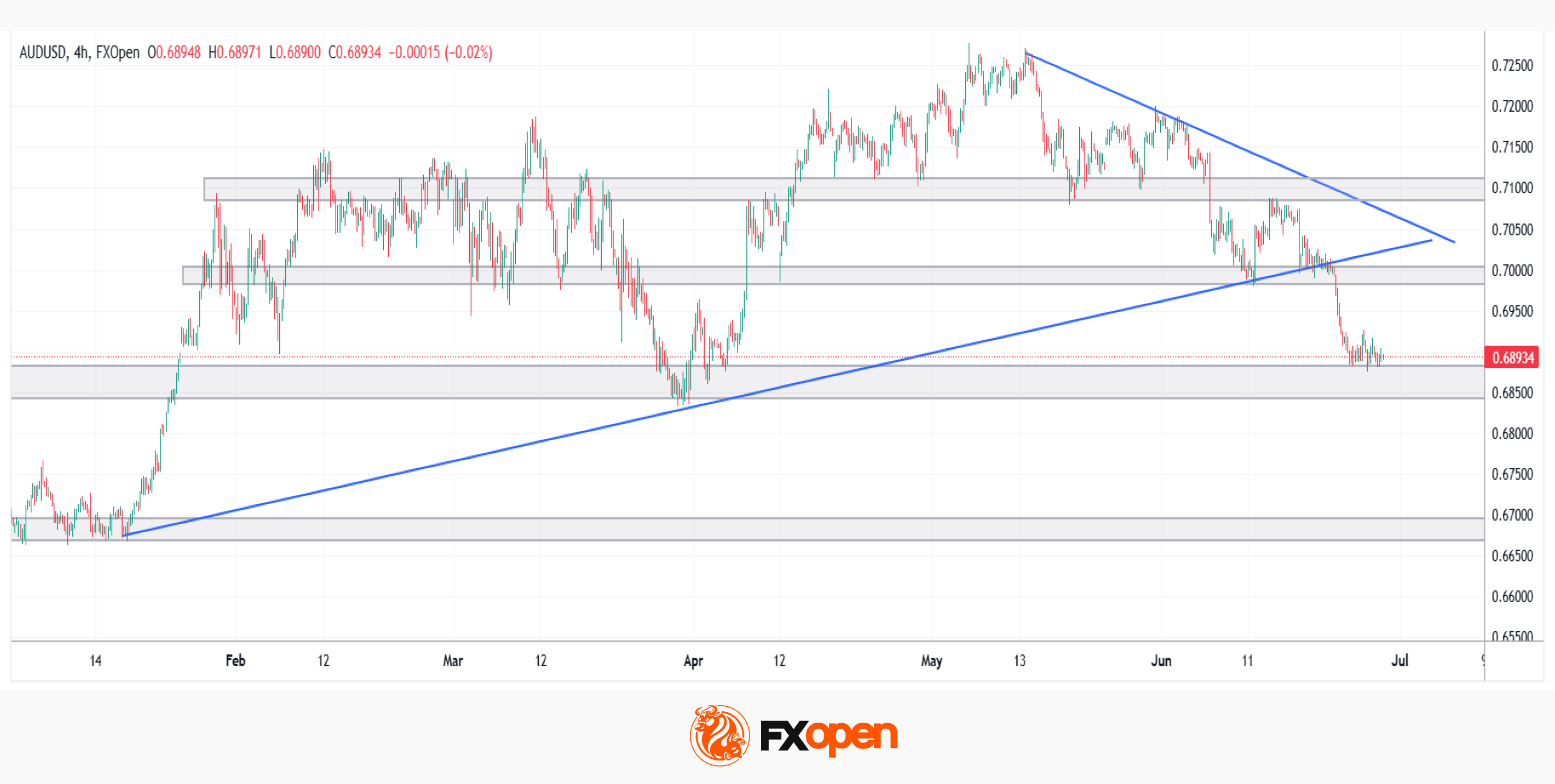
The most representative benchmark for the Australian dollar’s momentum, AUD/USD seems to have already shifted his path. Following a prolonged period of broad greenback strength, the pair has gradually developed a bearish structure over recent weeks.
→ Bullish scenario: a key support zone sits in the 0.6880–0.6850 area. Should this level hold, it could restore some of the strength lost in recent weeks and bring the pair back to test the resistance between 0.6980 and 0.7000 — a threshold that will be decisive for the next directional move. A sustained recovery would also require a more relaxed geopolitical backdrop, as risk sentiment continues to cap AUD’s upside potential.
→ Bearish scenario: should support fail to hold — or should the pair test the descending trendline in play and reject it, confirming the prevailing downtrend — AUD/USD could revisit levels last seen at the start of the year, with the 0.6700–0.6600 zone as the next significant area of interest.
With a more relaxed geopolitical environment and a hawkish central bank behind it, will the Australian dollar manage to reclaim its strength on the forex stage?
Trade over 50 forex markets 24 hours a day with FXOpen. Take advantage of low commissions, deep liquidity, and spreads from 0.0 pips (additional fees may apply). Open your FXOpen account now or learn more about trading forex with FXOpen.
This article represents the opinion of the Companies operating under the FXOpen brand only. It is not to be construed as an offer, solicitation, or recommendation with respect to products and services provided by the Companies operating under the FXOpen brand, nor is it to be considered financial advice.

Crypto World
Prediction market consolidation could spark wave of M&A across sports betting, Bernstein says


The rapid consolidation of the prediction market technology stack is raising the odds of a new wave of mergers and acquisitions across sports betting and financial markets, according to Wall Street broker Bernstein.
Over the past eight months, every major consumer-facing prediction platform has moved to own both customer distribution and exchange infrastructure, the report said.
“Kalshi and Polymarket own the stack but trail on distribution, which leaves each as plausibly a target as an acquirer,” analysts led by Ian Moore said in the Monday report.
The analysts noted that DraftKings acquired Railbird to launch its DKeX exchange, Robinhood partnered with Susquehanna to build Rothera, Coinbase acquired The Clearing Company shortly after launching event contracts, and Flutter established a dual-FCM structure to preserve access to multiple exchanges.
The trend reflects Bernstein’s view that prediction markets are converging with sports betting and consumer finance into a single competitive landscape, opening the door to combinations that previously seemed unlikely, including sportsbooks buying exchanges, exchanges buying sportsbooks, and consolidation among sportsbook operators themselves.

Despite growing criticism and online FUD, Saylor’s brainchild Strategy continues to focus on BTC, but the new move is quite different.
Instead of announcing a new bitcoin purchase, the firm’s former CEO noted on X that the company has launched the Digital Credit Capital Framework to strengthen its digital credit, enhance liquidity, preserve long-term BTC exposure, and support long-term value creation.
DCCF Launched
Saylor’s first message reassured the public that the company has increased its USD reserve to $2.55 billion, which should cover the dividend payments for 17.4 months. The greenback stash can be used only for dividends and interest expense, and “will be maintained at a minimum of 12 months.”
Strategy has also established a BTC Monetization Program, which allows it to sell bitcoin to fund the USD reserve (with a cap of $1.25 billion), dividends and interest expenses, or to repurchase Digital Credit securities and MSTR under the applicable programs. If it indeed sells more bitcoin, then its dividend coverage rises to $3.8 billion – or 25.9 months of such payments.
Strategy has also established repurchase programs for its Digital Credit securities of up to $1 billion of MSTR.
“This will create flexibility to accretively buy back securities during market dislocations. Repurchases will not be funded from the USD reserve,” said Saylor.
In addition, STRC’s dividend rate has been increased by 50 bps to 12%, effective for the July 2026 record date. Saylor said the company will continue to evaluate the rate monthly, as its corporate objective for Stretch remains to trade at $99-$100. Recall that STRC plummeted by 25% under its par value in the past few weeks.
The Growing FUD
Recall that Strategy and particularly its STRC stock have come under a lot of fire in recent weeks. The company sold a tiny portion of its BTC holdings by the end of May, and even though it has accumulated a lot more since, market observers claim that the firm has rattled the industry.
Critics have continuously attacked Saylor and his company, warning that they might have to sell over 50,000 BTC in the next couple of years to cover some expenses or dividend payments.
CryptoQuant analysts suggested that Strategy should halt its BTC purchases in favor of rebuilding its USD reserve. Although the company has not listened entirely to this advice, the last two announcements were more focused on the USD reserve rather than the BTC stockpile.
The post Saylor’s Strategy Responds to Critics With New Plan to Protect BTC Exposure appeared first on CryptoPotato.

The former major bitcoin miner has expanded its Ethereum treasury once again during a week in which the asset slumped by over 8% and dived to a multi-month low of $1,500 before it found some support.
Bitmine Immersion Technologies now holds just over 5.7 million tokens, equivalent to approximately 4.7% of Ethereum’s total circulating supply of 120.7 million coins.
Bitmine Buys Again
Based on an ETH price of $1,570 as of June 28, the company’s total crypto, cash, and investment holdings stand at roughly $10 billion. The firm has reinforced its position as the world’s largest corporate holder of ETH and the second-largest public crypto treasury behind Strategy, which announced a new initiative this week, not a new BTC purchase.
Chairman and long-term ETH bull Tom Lee acknowledged the recent weakness across the entire market but maintained that Bitmine’s long-term outlook remains unchanged.
“This past week was a challenging one for crypto investors as ETH fell by 8%, even as Ethereum witnessed notable positive developments such as the creation of Ethlabs, and even the Bank of England softened its stance around stablecoins. We are nearing quarter-end for June, and it is not surprising to see ‘window dressing’ leading to investors reducing their holdings in assets which have fallen in the past 3 months,” added Lee.
He doubled down on his belief that Ethereum will eventually benefit from Wall Street’s migration toward blockchain-based financial infrastructure and the emergence of agentic AI payment systems operating on crypto rails.
The press release shared by the firm also noted that Bitmine has staked almost 4.9 million tokens (over 85% of its total holdings) through its own institutional staking platform, MAVAN. The current staking yield of 2.75% means that its annualized revenue will be around $211 million.
SharpLink’s Return
Although Bitmine remains the undisputed leader in terms of ETH accumulation, the second-in-line SharpLink returned last week with several major purchases. After spending eight months on the sidelines, the Joe Lubin-chaired firm bought 5,000 ETH on Friday and kept accumulating more over the weekend.
In total, the company spent more than $62 million to acquire a total of 39,196 ETH, which is actually more than the amount purchased by Bitmine within the same period. However, the gap between the two is still too wide.
The post Bitmine Buys Another 27,000 ETH Despite Market Slump, Nears 5% of Ethereum Supply appeared first on CryptoPotato.
Crypto World
EBC12 Brings Europe’s Leading Digital Asset Leaders Together in Barcelona This September

Institutional interest in digital assets continues to accelerate, and this September the industry’s key decision-makers will gather in Barcelona for the 12th European Blockchain Convention (EBC12).
Taking place on September 16–17, 2026, EBC12 will host 6,000+ attendees, 300+ speakers, and participants from more than 70 countries, creating one of Europe’s largest meeting points for blockchain, digital finance, and institutional crypto.
As an official media partner, we’re happy to share an exclusive 15% ticket discount. Register using the promo code SLR_15.
The Marketplace for Europe’s Digital Asset Economy
Rather than simply being another blockchain conference, EBC12 positions itself as the place where Europe’s fragmented digital asset ecosystem comes together.
Banks, asset managers, venture capital firms, exchanges, custody providers, blockchain protocols, fintech companies, regulators, and institutional investors will meet to discuss the next stage of market development.
The conference comes at a pivotal moment following regulatory progress across Europe, increasing institutional participation, and growing adoption of tokenized financial products.


Key Themes for 2026
EBC12’s program explores the issues that matter most to institutional participants, including:
- Market infrastructure for institutional adoption
- Tokenization of real-world assets
- Stablecoin ecosystems and payment innovation
- MiCA and global regulatory developments
- AI-powered financial services
- Investment strategies for digital assets
- Cross-border market collaboration
The speaker lineup includes representatives from organizations such as BlackRock, Cardano, WisdomTree, Bitwise, Baillie Gifford, Zodia Custody, Hilbert Capital, Midchains, Caisse des Dépôts, and many more.
Why Attend?
Europe remains one of the world’s most dynamic digital asset markets, but opportunities are spread across multiple jurisdictions.
EBC12 creates a single venue where investors, institutions, entrepreneurs, and policymakers can build partnerships, explore investment opportunities, and stay ahead of industry developments.
Whether you’re raising capital, expanding internationally, or looking for strategic partners, Barcelona becomes the industry’s meeting point this September.
Secure your ticket today and receive 15% off with promo code SLR_15.
Learn more: https://eblockchainconvention.com/european-blockchain-convention-12/
Tickets: https://www.tickettailor.com/events/europeanblockchainconvention/1927550


Censorship of crypto assets has become so popular that a new dashboard is tallying the number of times companies have frozen tokens.
According to new tracker, stables.rip, two companies have frozen 3.7 billion stablecoins.
Although BTC as good as created the crypto industry as a protest against trusted intermediaries, stablecoins are more than twice as popular as BTC by trading volume.
By this measure, trusted intermediaries still maintain a majority share of power over most crypto transactions.
Despite crypto users being vaguely aware of these censorship practices as something nebulous, few could quantify its precise scope. This new tracker has helped turn an abstract reality into a specific quantity.
Alex Gladstein at the Human Rights Foundation pushed the headline into social media’s timeline on Friday, calling it a “Good reminder that while stables have utility they are not freedom money.”
Matt Odell remarked, “Two billion frozen in two years. Wild.”
Another widely shared comment contrasted stablecoin censorship with censorship-resistant BTC.
More crypto censorship than ever
The numbers behind the outrage are real.
Over the past six years, two stablecoin issuers have frozen approximately 3.7 billion coins on the Ethereum and Tron blockchains, censoring the power of those coins’ keyholders from moving them on-chain.
Worse, the trend has accelerated substantially. Of that six-year total, 2.8 billion tokens, or 75%, froze within the past two years.
Although the number and value of coins is known, it’s impossible to determine how many transactions were unilaterally prevented.
The two most popular stablecoins, for example, trade over $40 trillion annually in on- and off-chain trades against other assets, according to CoinMarketCap.
Tether and Circle, the respective issuers of USDT and USDC, maintain privileged administrative control over their own smart contracts.
At any time, they may add any wallet to a blacklist, forcing the tokens sitting in that wallet to stop moving until they lift the freeze.
Tether even goes a step further with a function named destroyBlackFunds, which lets it burn tokens outright.
Indeed, in 2025 alone, it incinerated $698 million of the $1.26 billion it froze that year.
Many other stablecoins, including the Trump family’s USD1, have similar powers to remotely freeze tokens.
Read more: Justin Sun represents 99.9% of blacklisted World Liberty tokens
Your keys, your coins, that someone else can censor
Stablecoin companies often justify their censorship due to governmental pressures, such as complying with a court order. They claim to be stopping money laundering or human trafficking.
Regardless, the point is that stablecoin companies simply have the power to decide on their own accord.
When the US Treasury sanctioned the privacy tool Tornado Cash in August 2022, Circle immediately froze roughly 75,000 USDC tokens to comply.
Tether, however, declined to follow suit, saying it wouldn’t act without a law enforcement order.
Its defiance didn’t last. By late 2023, Tether made a strategic bargain to onboard the US Secret Service and FBI, earning regulatory goodwill by freezing batches of addresses at their law enforcement officers’ requests.
In all, the power to censor stablecoin transactions is too useful and tempting to forego.
Tether’s USDT is worth $186 billion and Circle’s USDC about $74 billion, and these tokens transact by the tens of trillions annually.
The utility of stablecoins isn’t so much their permissionlessness as much as their selective permissiveness.
Mistakenly, many people believe crypto assets to be trustless and censorship resistant.
In stark contrast, 3.7 billion tokens have been remotely frozen by companies, with three-quarters of these censored tokens locked within the last two years.
Got a tip? Send us an email securely via Protos Leaks. For more informed news and investigations, follow us on X, Bluesky, and Google News, or subscribe to our YouTube channel.
Crypto World
European Blockchain Convention 12 Returns to Barcelona as Europe’s Digital Asset Marketplace
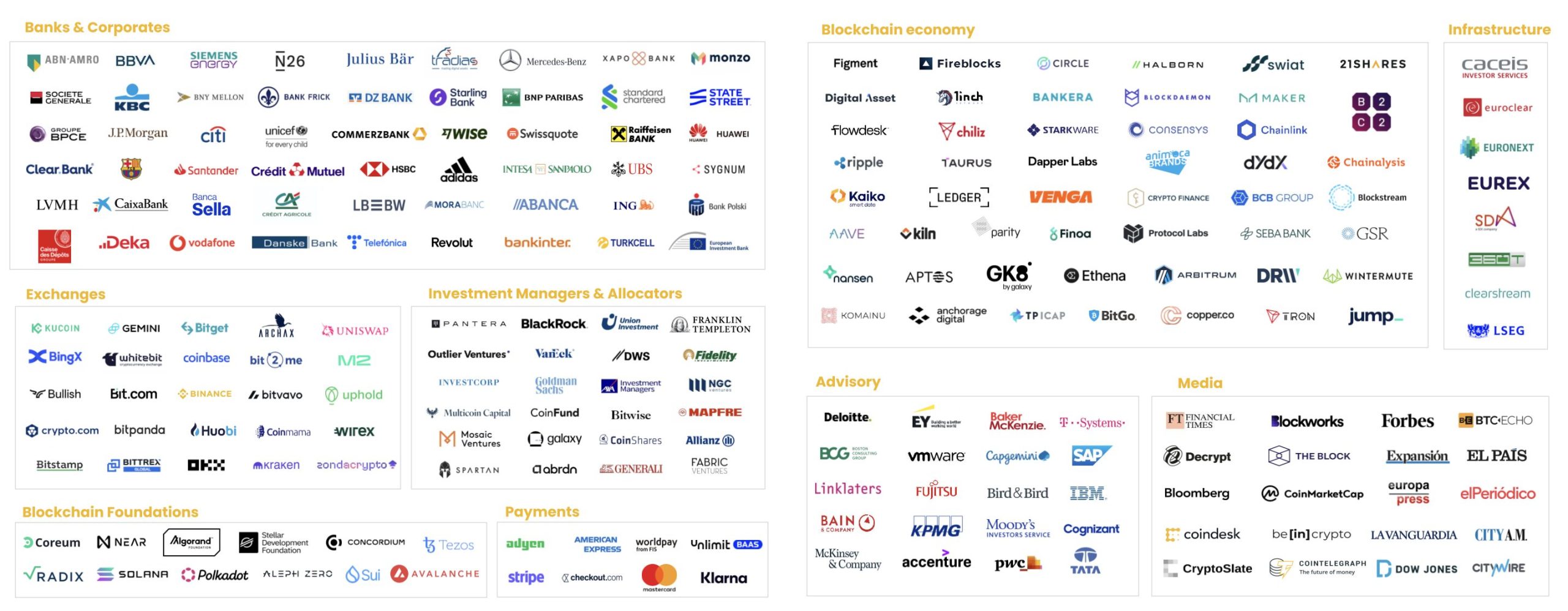
The European Blockchain Convention (EBC12) returns to Barcelona on September 16–17, 2026, bringing together the institutions, investors, founders, and infrastructure providers shaping the future of digital assets.
Recognized as Europe’s Digital Asset Marketplace, EBC12 will welcome more than 6,000 attendees from over 70 countries, alongside 300+ speakers representing leading financial institutions, blockchain companies, investment firms, and regulators. The event offers a unique opportunity to meet the people driving the next phase of institutional crypto adoption—all under one roof.
As a media partner of EBC12, we’re pleased to offer our community an exclusive 15% discount on tickets. Use the code SLR_15 during registration.
Where Europe’s Digital Asset Industry Meets
The digital asset landscape has entered a new era. Following the approval of spot Bitcoin and Ethereum ETFs, the implementation of MiCA across the European Union, and growing institutional allocations to digital assets, the industry’s focus has shifted from adoption to execution.
EBC12 is designed to bring together the market participants making those decisions, including asset managers, banks, custodians, exchanges, blockchain protocols, venture capital firms, and policymakers.
What to Expect at EBC12
This year’s agenda focuses on the topics currently shaping global digital finance:
- Institutional investment strategies
- Digital asset regulation and MiCA implementation
- Real-world asset tokenization
- Stablecoins and CBDCs
- Institutional custody and market infrastructure
- AI applications across digital finance
- Capital allocation and market structure
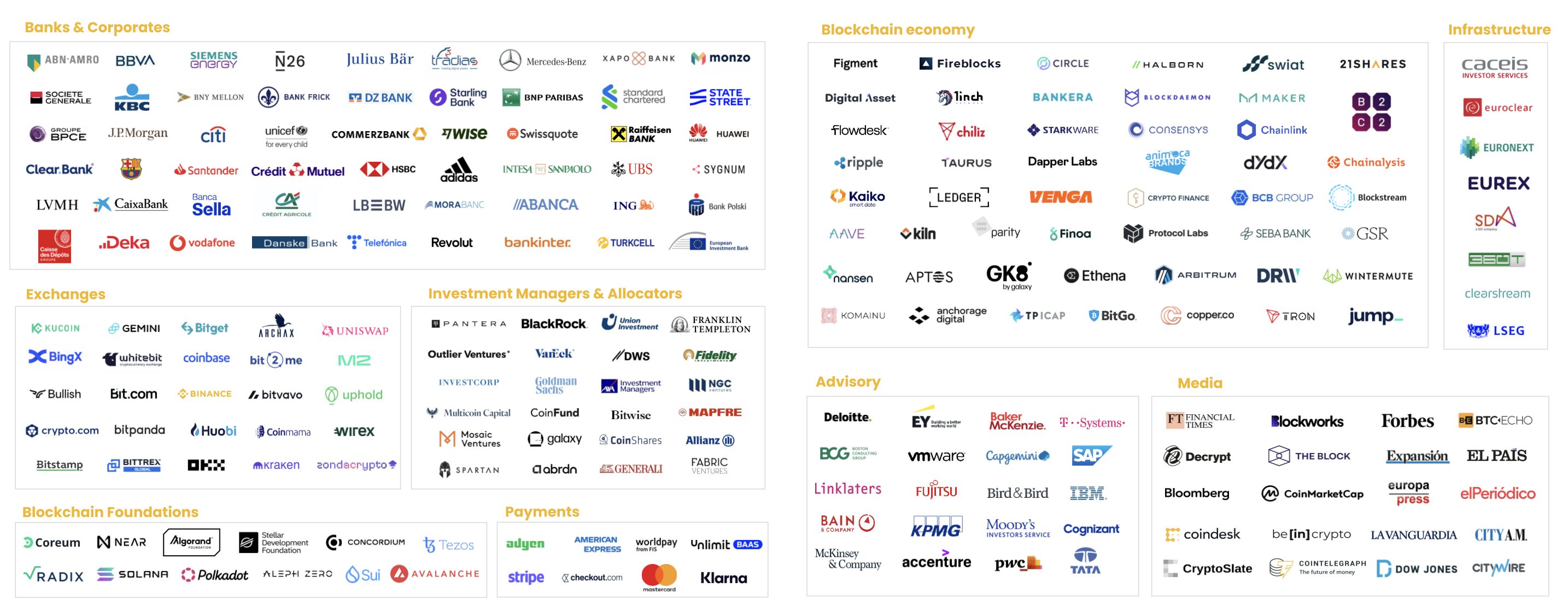
Attendees will also have access to networking sessions, business meetings, exhibitions, startup showcases, and discussions with industry leaders from organizations including BlackRock, Cardano, Bitwise, WisdomTree, Baillie Gifford, Zodia Custody, Hilbert Capital, Midchains, and many others.
One Place. Two Days. Unlimited Opportunities.
Europe’s digital asset market remains highly fragmented across multiple financial centers. EBC12 bridges those markets by creating one environment where investors, founders, infrastructure providers, regulators, and institutions can connect efficiently.
What often requires months of meetings across different countries can happen over two productive days in Barcelona.
Register today and save 15% with the code SLR_15.
Registration: https://eblockchainconvention.com/european-blockchain-convention-12/
Ticket Discount: https://www.tickettailor.com/events/europeanblockchainconvention/1927550
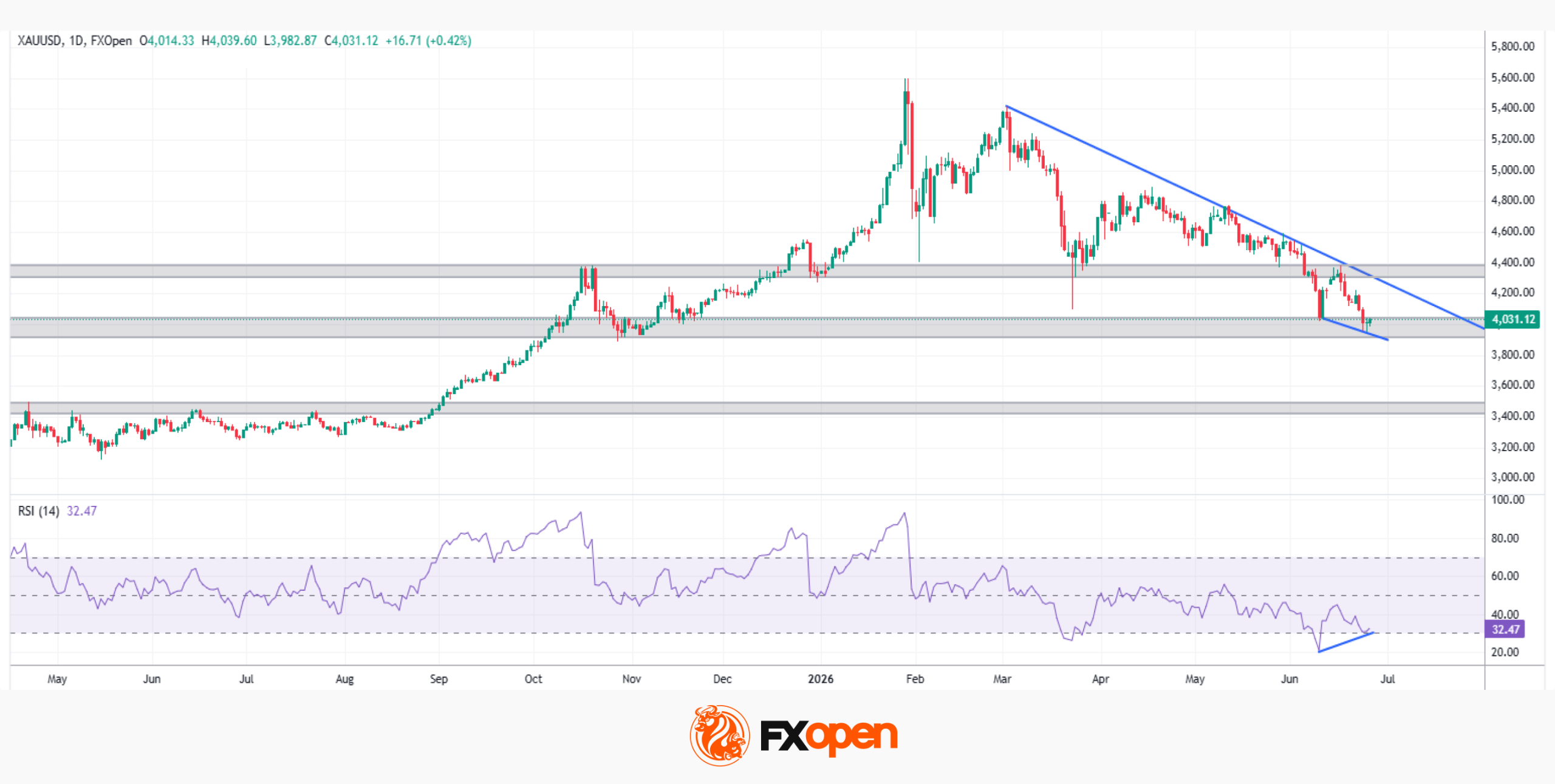
The year 2026 has so far been an unforgiving one for gold. XAU/USD is down approximately 7% since the start of the year, and roughly 28% from the late-January peak — a significant correction, though a physiologically natural one following the sustained bullish rally of recent years.
Fundamental Picture
Several factors have converged to weigh on the precious metal. The Federal Reserve has maintained its restrictive stance, keeping interest rates elevated and reducing the appeal of a non-yielding asset like gold. Simultaneously, institutional portfolio rotation has forced financial players to liquidate a portion of the long positions accumulated during the bull run, amplifying selling pressure. Notably, even the US-Iran geopolitical tension — a scenario that would typically act as a tailwind for gold in its role as a so-called safe-haven asset — has failed to provide meaningful support, with the broader macro environment overriding the flight-to-safety narrative.
Technical Analysis of XAU/USD
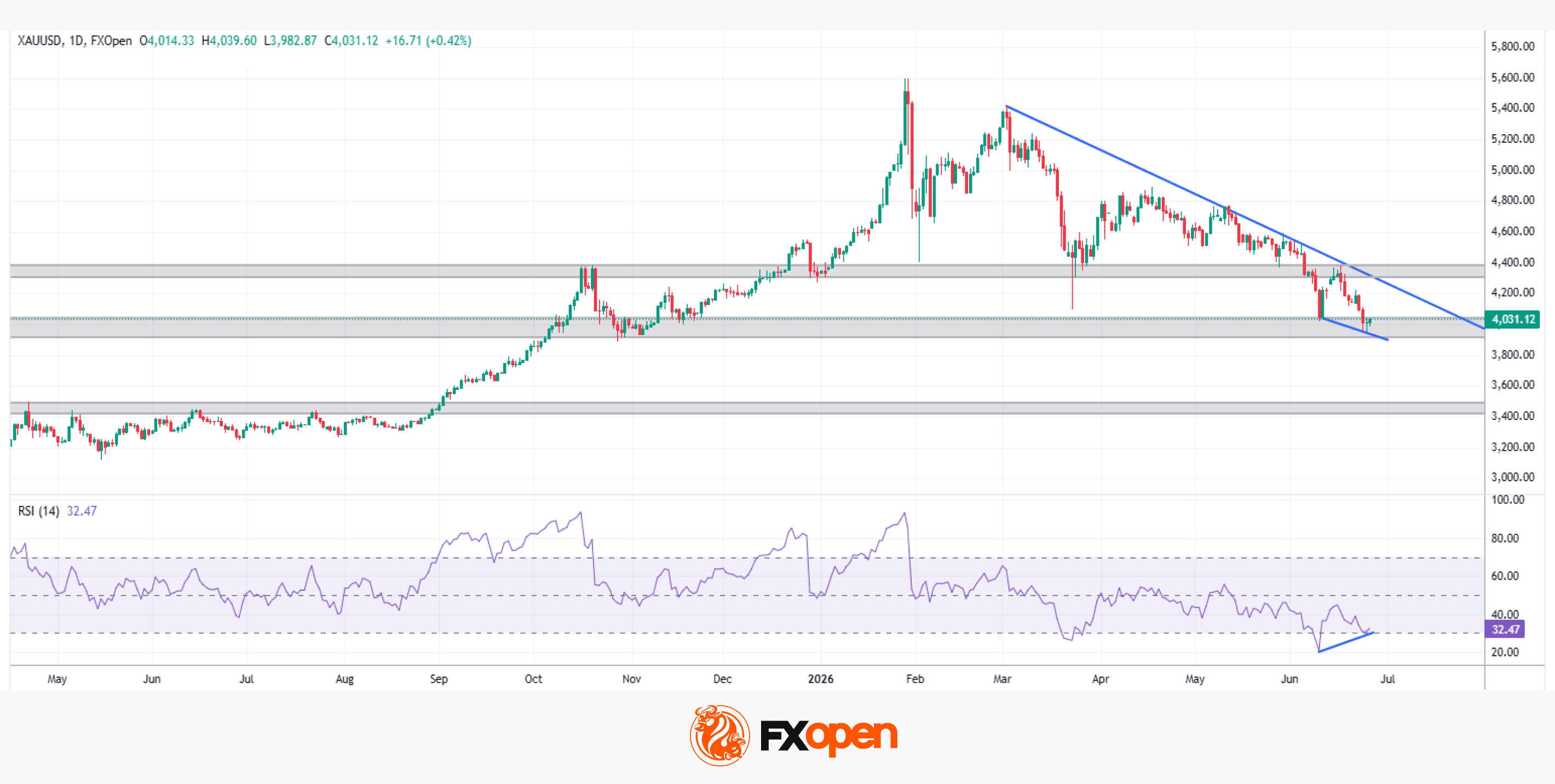
Gold is currently navigating a bearish structure in the short-to-medium term, with price consistently reacting to a descending trendline drawn from the highs of early March, forming a clear sequence of lower highs and lower lows on the daily chart.
Price has now arrived at a technically and psychologically significant area: the $4,000 per ounce. This zone has demonstrated its relevance on multiple occasions in the past, and Thursday’s session (25 June) offered the first tentative signs of a reaction, with the daily candle closing in positive territory.
→ Bullish scenario: A sustained reaction from the $4,000 zone, accompanied by a confirmed break above the descending trendline — which converges with resistance in the $4,300–$4,380 area — would establish a new sequence of higher highs and open the door to a broader bullish recovery.
→ Bearish scenario: A decisive break below $4,000, followed by a retest and breach of recent lows, would confirm the continuation of the medium-term downtrend, potentially exposing the $3,400–$3,500 zone — a former major resistance that now acts as structural support.
Both scenarios remain open. Price action on the H4 and H1 timeframes will be key to determining gold’s next directional move in the sessions ahead.
Start trading commodity CFDs with tight spreads (additional fees may apply). Open your trading account now or learn more about trading commodity CFDs with FXOpen.
This article represents the opinion of the Companies operating under the FXOpen brand only. It is not to be construed as an offer, solicitation, or recommendation with respect to products and services provided by the Companies operating under the FXOpen brand, nor is it to be considered financial advice.
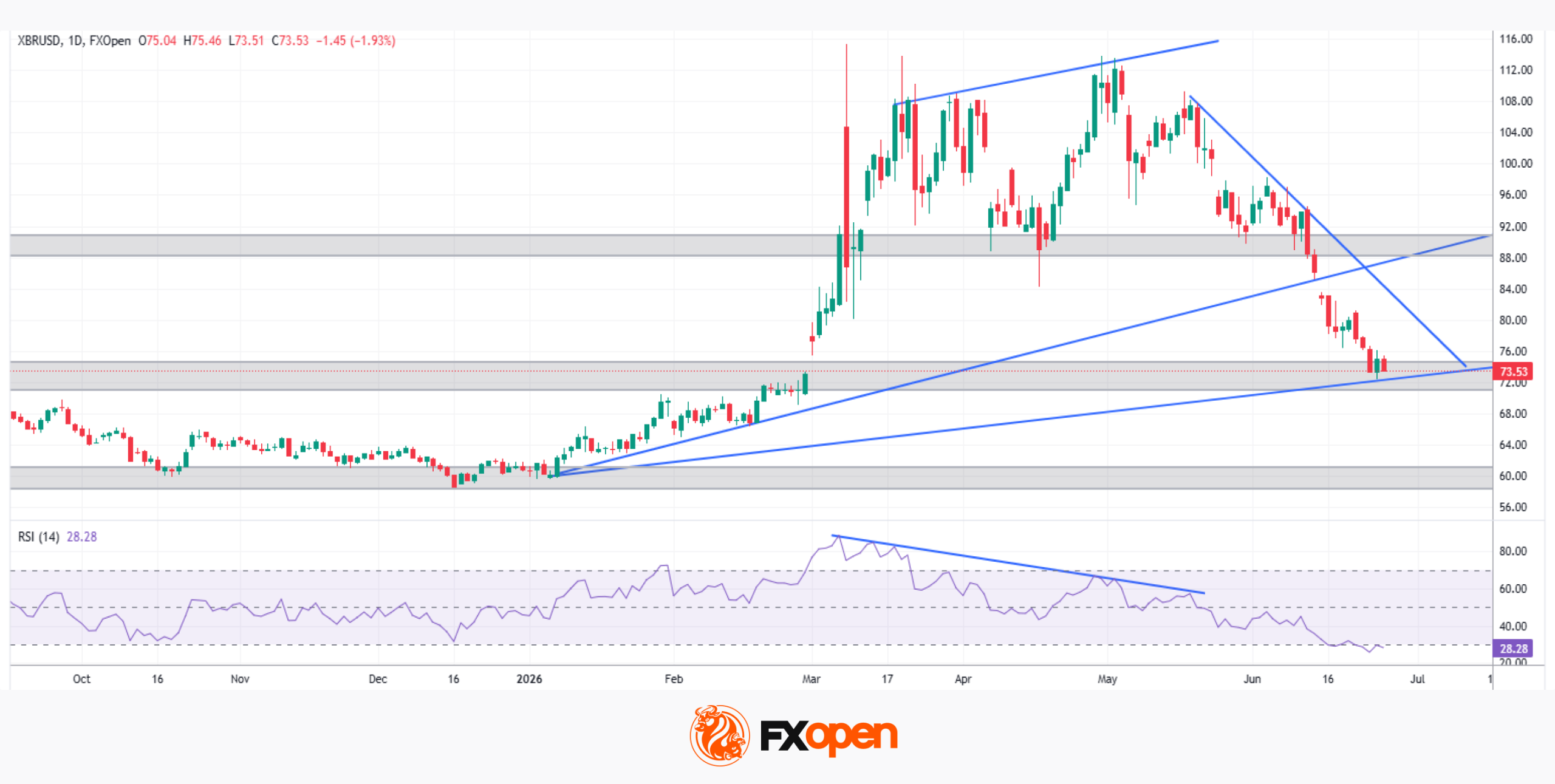
Over the past few weeks, financial markets have been more focused than ever on developments surrounding the Strait of Hormuz — a critical waterway at the centre of ongoing US-Iran negotiations. The back-and-forth of diplomatic headlines has injected significant volatility into energy markets, causing no shortage of headaches for traders and investors alike. For now, the price appears to have found a temporary equilibrium around the key $70 per barrel level, returning to territory last seen before the outbreak of the conflict. The question, then, arises naturally: has the period of uncertainty and volatility finally come to an end, or is this merely a pause before the next move?
Technical Analysis of Brent Crude Oil
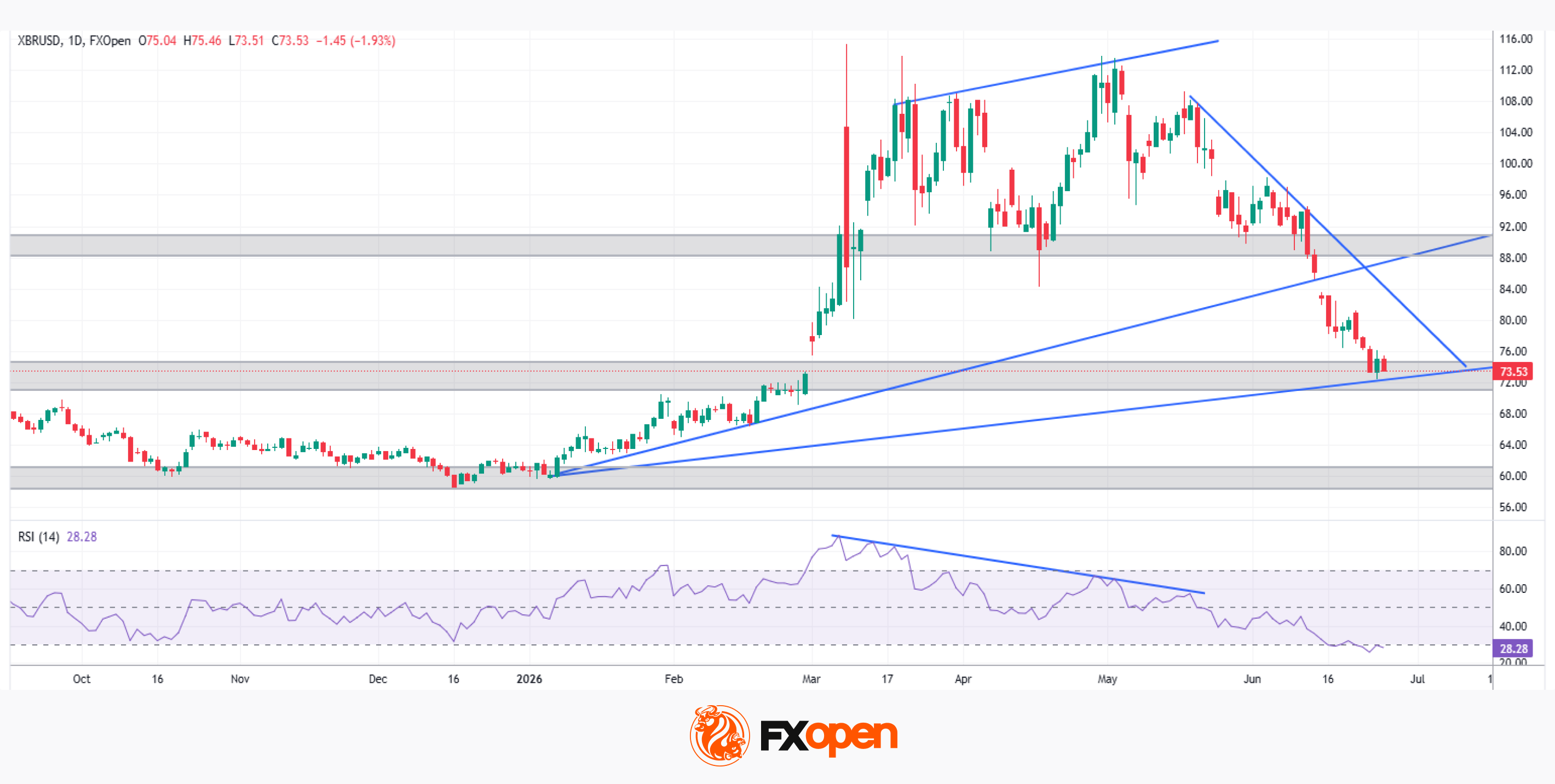
From a technical standpoint, Brent crude oil has been in a clear bearish trend for approximately one month, consistently forming lower highs and lower lows on the daily chart. Early warning signs were already visible in a notably strong RSI divergence: while price recorded higher highs between March and May on the candlestick chart, the RSI readings in May were significantly weaker than those of March — a textbook signal that bullish momentum was gradually exhausting itself.
The decisive blow came with the breakdown of the $88–$90 per barrel support zone, followed shortly after by the breach of the ascending trendline drawn from the lows at the start of the year. Price has since moved to the technically and psychologically crucial zone around $70 per barrel, where it appears to be pausing before committing to a clear direction.
→ Bearish scenario: A break below the short-term trendline formed during Thursday’s session (25 June), combined with a confirmed close beneath $70, could open the path toward the $60 per barrel area — a scenario consistent with a progressively calmer geopolitical backdrop and a lasting US-Iran peace agreement.
→ Bullish scenario: For buyers to regain control, price would need to reclaim the current week’s highs around $81, confirming a clear bounce from the support zone around $70. This would set the stage for a potential retest of the former support — now acting as resistance — in the $88 zone, a level that could prove decisive for the asset’s medium-term direction. Here too, geopolitical developments remain the key wildcard.
Will crude oil find its equilibrium, or does further turbulence lie ahead for investors and traders?
Start trading commodity CFDs with tight spreads (additional fees may apply). Open your trading account now or learn more about trading commodity CFDs with FXOpen.
This article represents the opinion of the Companies operating under the FXOpen brand only. It is not to be construed as an offer, solicitation, or recommendation with respect to products and services provided by the Companies operating under the FXOpen brand, nor is it to be considered financial advice.

When most people hear the term Decentralized Finance (DeFi), they immediately think of cryptocurrencies, token trading, or speculative investments. While these applications helped popularize DeFi, they represent only the beginning of what decentralized financial infrastructure can achieve.
Today, DeFi is evolving into a programmable financial layer capable of supporting lending, payments, identity, insurance, trade finance, and even public services. Rather than existing solely for crypto enthusiasts, DeFi is gradually becoming a foundation for a more open, transparent, and efficient global financial system.
The future of DeFi is not just about digital assets—it is about rebuilding financial services to work for everyone.
What Is DeFi?
Decentralized Finance refers to financial applications built on blockchain networks that operate through smart contracts instead of traditional intermediaries such as banks, brokers, or clearing houses.
These applications allow users to:
- Borrow and lend assets
- Send payments globally
- Earn yield
- Trade assets
- Purchase insurance
- Participate in governance
- Access financial products without centralized approval
Because transactions occur on public blockchains, they are transparent, verifiable, and accessible to anyone with an internet connection.
Moving Beyond Crypto Trading
The earliest wave of DeFi focused heavily on cryptocurrency markets through decentralized exchanges, liquidity pools, and yield farming.
Today, developers are expanding DeFi into industries that have historically relied on slow, expensive, and centralized infrastructure.
These include:
- Real estate
- International trade
- Supply chains
- Healthcare
- Agriculture
- Digital identity
- Government services
- Intellectual property
- Energy markets
This broader vision positions DeFi as financial infrastructure rather than simply a marketplace for digital tokens.
Tokenizing Real-World Assets
One of the fastest-growing sectors in DeFi involves Real-World Assets (RWAs).
Physical assets such as:
- Real estate
- Treasury bonds
- Corporate debt
- Commodities
- Precious metals
- Infrastructure projects
can be represented as blockchain-based tokens.
Tokenization creates numerous benefits:
- Fractional ownership
- 24/7 global trading
- Faster settlement
- Improved liquidity
- Lower transaction costs
- Increased accessibility for smaller investors
Instead of needing millions to invest in commercial property, investors can own fractional shares represented digitally on-chain.
Borderless Lending and Credit
Traditional lending often depends on geography, banking relationships, and lengthy approval processes.
DeFi introduces programmable lending markets where capital can flow globally within minutes.
Future lending models may combine:
- Blockchain collateral
- Tokenized assets
- On-chain reputation
- Digital identity
- AI-powered credit analysis
This could expand access to financing for entrepreneurs and individuals who have limited access to conventional banking systems.
Payments Without Borders
Cross-border payments remain expensive and slow in many parts of the world.
DeFi enables near-instant settlement across countries without relying on multiple correspondent banks.
Businesses benefit through:
- Lower remittance fees
- Faster payroll
- International supplier payments
- Real-time settlements
- Continuous 24/7 availability
For developing economies, this can significantly improve financial inclusion.
Decentralized Insurance
Insurance is another sector being transformed.
Instead of relying entirely on centralized companies, decentralized insurance protocols can automate claims through smart contracts.
Potential applications include:
- Crop insurance
- Flight delay coverage
- Weather protection
- Smart contract protection
- Healthcare reimbursements
- Cybersecurity coverage
Automatic payouts based on verified data can reduce fraud while accelerating claims processing.
Digital Identity and Financial Access
Identity verification remains a major barrier to accessing financial services.
Blockchain-based digital identity systems allow users to maintain ownership of their credentials while selectively sharing necessary information.
Benefits include:
- Better privacy
- Reduced identity theft
- Portable financial history
- Easier onboarding
- Improved compliance
- Access to global financial services
This model gives individuals greater control over their personal information while simplifying verification.
Supply Chain Finance
Businesses often wait weeks or months before receiving payment for delivered goods.
DeFi can improve cash flow through programmable financing tied directly to blockchain-tracked supply chains.
Smart contracts can automatically release payments when:
- Goods are shipped
- Deliveries are verified
- Customs requirements are met
- Inventory is confirmed
This reduces paperwork while improving efficiency across international commerce.
Supporting the Creator Economy
Artists, writers, musicians, developers, and content creators increasingly rely on digital platforms to monetize their work.
DeFi expands monetization through:
- Royalty automation
- Revenue sharing
- Tokenized ownership
- Community funding
- Micropayments
- Direct peer-to-peer transactions
Creators gain more control over how they earn income while reducing dependence on centralized platforms.
Public Infrastructure and Government Services
Governments are exploring blockchain technology to improve transparency and accountability.
Potential applications include:
- Grant distribution
- Public procurement
- Social assistance
- Tax collection
- Municipal bonds
- Public budgeting
Transparent blockchain records can reduce fraud while improving public trust.
Challenges That Must Be Solved
Despite its enormous potential, DeFi still faces significant challenges before achieving mainstream adoption.
These include:
- Regulatory uncertainty
- Smart contract vulnerabilities
- User experience complexity
- Blockchain scalability
- Privacy concerns
- Cross-chain interoperability
- Consumer protection
- Institutional compliance
Addressing these issues will require collaboration among developers, regulators, businesses, and users.
The Future of DeFi
The next generation of DeFi will likely integrate with technologies such as artificial intelligence, decentralized identity, tokenized real-world assets, and interoperable blockchain networks.
Rather than replacing traditional finance overnight, DeFi is increasingly complementing existing financial systems by making them faster, more transparent, and more accessible.
As infrastructure matures, users may interact with decentralized financial services without even realizing blockchain powers them behind the scenes.
Conclusion
DeFi is no longer confined to cryptocurrency trading or speculative investments. It is steadily evolving into a comprehensive financial infrastructure capable of supporting lending, payments, insurance, identity, commerce, and public services on a global scale.
Its true promise lies in creating financial systems that are open, programmable, and accessible to anyone with an internet connection. While challenges remain, the expansion of DeFi beyond cryptocurrency marks an important step toward a more inclusive and efficient digital economy.
The future of finance will not be defined solely by digital currencies—it will be shaped by decentralized systems that enable people, businesses, and governments to exchange value with greater speed, transparency, and trust.
REQUEST AN ARTICLE
Crypto World
Eli Lilly (LLY) Stock Hits Record High After European Drug Approval and Medicare Expansion

Key Highlights
- LLY shares climbed approximately 6% on June 26 following positive recommendation from the European Medicines Agency for Jaypirca in leukemia patients
- A new Medicare GLP-1 Bridge initiative launching July 1 will provide Zepbound and Foundayo access for a $50 monthly patient contribution
- Analysts at Leerink Partners increased their LLY price target to $1,232 after these developments
- LLY shares rose 9.62% in the past week and reached a fresh 52-week peak of $1,206
- The company discontinued an early-stage prostate cancer trial combining abemaciclib with darolutamide
Eli Lilly shares experienced remarkable strength this past week. Multiple regulatory developments and clinical updates propelled LLY upward by 9.62% across seven trading sessions, culminating in a new 52-week peak of $1,206.
The most significant daily gain occurred on June 26, when LLY climbed roughly 6%. This surge was triggered by the European Medicines Agency’s Committee for Medicinal Products for Human Use delivering a favorable recommendation for Jaypirca (pirtobrutinib) as a treatment option for chronic lymphocytic leukemia.
A favorable recommendation from the EMA generally represents the final hurdle before receiving European Commission authorization, which typically follows within a two-month timeframe. With Jaypirca already authorized by the FDA for U.S. distribution, European approval would unlock an additional significant market opportunity for this oncology therapy.
In response to these developments, Leerink Partners increased their price objective for LLY shares to $1,232.
New Medicare Weight Loss Drug Program Boosts Investor Confidence
Concurrent with the cancer drug developments, Medicare revealed a new GLP-1 Bridge initiative scheduled to begin July 1, 2026. This program will enable qualified beneficiaries to obtain Lilly’s obesity medications Zepbound and Foundayo for a $50 monthly patient contribution.
This represents a substantial cost reduction for numerous patients and may catalyze a significant increase in prescription volumes. Enhanced accessibility to GLP-1 therapies has emerged as a critical focus for investors monitoring Lilly’s obesity treatment portfolio.
The simultaneous announcement of the European regulatory advancement and the Medicare accessibility program on the same day provided investors with dual catalysts for optimism.
Clinical Development Progress Spanning Multiple Disease Categories
Beyond these immediate catalysts, Lilly provided investors with updates on two Phase 3 clinical studies evaluating donanemab for Alzheimer’s disease. One trial is assessing the therapy in preclinical Alzheimer’s patients within China. The second is investigating whether once-yearly administration can maintain therapeutic benefits in patients who demonstrated prior positive responses.
LLY additionally initiated a Phase 3 clinical trial for orforglipron, an oral formulation GLP-1 medication, targeting pediatric Type 2 diabetes patients. This advancement extends its metabolic disease development portfolio beyond adult populations.
Not all pipeline news was favorable. A Phase 1b clinical study evaluating the combination of abemaciclib and darolutamide in metastatic castration-resistant prostate cancer was halted prematurely, representing a disappointment in that particular oncology indication. Investors largely overlooked this setback considering the breadth of other pipeline advancement.
Earlier this month, Lilly disclosed favorable Phase 3 clinical results for retatrutide, its advanced-generation obesity medication that targets three hormone receptors — GIP, GLP-1, and glucagon. These findings were unveiled at the American Diabetes Association’s 86th Scientific Sessions on June 6 and subsequently published in The Lancet. Previous Phase 3 results demonstrated 24.2% weight reduction at 72 weeks in patients with cardiovascular disease and 28.7% weight loss in individuals with knee osteoarthritis.
LLY shares have appreciated 11.7% year-to-date. Analysts collectively maintain a consensus “Strong Buy” recommendation on the stock. As of Friday’s market close, Lilly reached $1,206 per share — establishing a new 52-week high.


Scharmine L Baker – Fraud Fumble – Financial Advisor Reacts

Body of boy, 15, recovered from water at Clifton Country Park during heatwave

(VIDEO) Three Firefighters Killed Battling Fast-Moving Wildfires Along Colorado-Utah Border

No Jackpot Winner as $257 Million Prize Rolls Over to $269 Million Monday Draw

Renter of Home in Anne Heche Crash Denies Settlement With Son

Blockchain.com files with SEC for U.S. IPO
Scharmine L Baker – Fraud Fumble – Financial Advisor Reacts

Financial Management | Class 12th | Business Studies | Part-2 | Easy Explanation |

As Trump and his family make billions from crypto ventures, AG Bondi eliminated the…
-
 Sports6 days ago
Two goals and an assist by sheer aura: Cristiano Ronaldo just entered the World Cup chat
-

 Fashion3 days ago
Weekend Open Thread: Staud – Corporette.com
-

 Politics3 days ago
The House | Manchesterism won’t survive the painful trade-offs unless it gets citizens on board
-

 Politics3 days ago
Potential 2028er World Cup attendee leaderboard
-

 Business3 days ago
Asia stock markets slide as tech shares slump
-

 Tech4 days ago
A Look At A Gaggle Of Transputer Boards
-

 News Videos19 hours ago
MAJOR BITCOIN & MARKET UPDATE!!!! (MUST WATCH ASAP!!!)
-
Crypto World5 days ago
Bitcoin (BTC) Dips Below $62K, Ethereum (ETH) Plunges 6% Daily: Market Watch
-
 Crypto World4 days ago
Dell (DELL) Shares Tumble Over 5% Following Analyst Downgrade to Hold
-

 Crypto World5 days ago
Securitize Wraps Roubini's SEC-Registered ETF as Dubai VARA Digital Security
-
Business6 days ago
Entergy settles forward sale agreements, raises $672 million in cash proceeds
-

 Crypto World2 days ago
Kraken's xStocks Opens Bending Spoons IPO Registration to EEA Retail
-

 Crypto World2 days ago
Coinbase, Circle Deepen Crypto Stock Losses Despite Resilient S&P 500
-

 Sports3 days ago
FIH Pro League: India defeat Pakistan 7-1, register biggest win of campaign | Other Sports News
-
 Crypto World3 days ago
Hyperliquid Named on Singapore MAS Investor Alert Register
-

 Crypto World3 days ago
RTX holders must register wallets before token distribution begins
-

 Tech2 days ago
Bluekit phishing kit adopts browser-in-the-middle for login theft
-

 Tech2 days ago
Russian hackers now target Signal backup recovery keys
-

 Sports4 days ago
India vs Bangladesh LIVE Score, Women’s T20 World Cup: Bangladesh Opt To Bat; India Enter ‘Do-Or-Die’ Stage As Semi-Final Race Heats Up
-
Crypto World3 days ago
The DATA Foundation Launches to Tackle AI’s Multi-Billion Dollar Training Data Bottleneck
You must be logged in to post a comment Login