

Business
AAK names Erhan Yildiz as innovation team leader





Global AI-related investment is now running at about $850 billion in 2026, roughly $500 billion above the pre-AI trend, making it larger and faster than historic manias such as railways, canals, and the dot‑com boom, said Macquarie analyst Viktor Shvets in a report.
Corporations, especially US hyperscalers, are rapidly exhausting internal cash, with debt issuance expected to reach around $180 billion and capex-to-revenue ratios climbing above 50%, underlining how aggressively AI is being funded. Yet, annualised AI revenues are already estimated at close to $175 billion, enough to cover current operating expenses and depreciation, and growing roughly three times faster than previous IT waves, suggesting the boom is not purely speculative.
Also Read | Chris Wood’s big warning: The specific risk that will finally trigger the end of AI trade
BIS warning: overextended but not empty

The Bank for International Settlements has warned that AI now exhibits classic bubble characteristics, with extremely rapid capital deployment and increasingly complex off‑balance sheet vehicles and circular investment structures, which Macquarie says likely make current investment figures understated and more fragile than they appear. “AI is a bubble that could suddenly derate, with considerable consequences for markets and economies,” the note cautions, framing the current cycle as historically extreme in both scale and speed.
However, Macquarie stresses that adoption is running ahead of typical bubble patterns, with a $2 trillion contract backlog and heavy spending on data centres, memory and logic chips already visible in hard orders rather than just hype.
Economic impact still small, labour strains rising
Despite its market prominence, AI still accounts for a relatively modest share of overall economic activity, even as it increasingly shapes expectations for GDP growth and productivity. Macquarie warns that the real pressure points are emerging in labour markets, where lower hiring rates, declining education premia and signs of rising social polarisation point to early evidence of AI-related disruption that is not yet fully captured in official statistics.
The report argues that AI risks driving “declining marginal utility and compensation of labor,” with job insecurity and wage pressures likely to intensify as automation scales.
China’s cost shock: commoditisation is coming
Macquarie sees a major structural threat in China’s push to commoditise the AI stack, much as it did in solar, electric vehicles and batteries. On the latest data, China’s Z.ai and Tulongfeng systems are now matching the cybersecurity features of leading US model Mythos, with the US technological lead potentially narrowed to around 10–15%. Given China’s structurally lower cost base, this helps explain the rapid proliferation of its open‑weight models, which are being deployed primarily as cost‑efficiency tools, and underpins Macquarie’s view that pricing power in large language models – and ultimately in chips – will erode sharply.
‘Rolling bubbles’: from LLMs to applications
Macquarie’s central thesis is that the AI cycle will break not through one big burst but via a sequence of overlapping bubbles across the value chain. “We view AI as a sequence of ‘rolling bubbles’: LLMs to facilitators and applications. As one bubble deflates … others will pick up the mantle, until these bubbles also deflate,” the report says, noting that the market’s leadership is already rotating.
The so‑called Magnificent Seven have fallen from 36% of US market capitalisation to about 32%, while broader indices such as the S&P 500 and NASDAQ are showing phases where relative performance periodically shifts as leadership passes between segments.
In Macquarie’s view, periods between bubbles and shifts in monetary policy – for example when the US Federal Reserve tightens – may briefly broaden equity returns, but these will be “exceptions not the rule” in a cycle characterised by persistent concentration. Against that backdrop, the house outlines three broad approaches for investors navigating the AI boom: “day trade around headlines”, “go passive” or “go thematic”, reflecting a market environment where timing, diversification and exposure to structural themes may matter more than traditional stock‑picking. With no “reset button” in what it describes as an “age of extremes”, Macquarie concludes that investors should expect elevated volatility and serial repricing rather than a single, definitive end to the AI story.


Fed’s Cook says Supreme Court ruling defends central bank’s independence

Founded in 2008, Pristine Logistics operates an integrated rail-focused multimodal logistics platform, offering transportation and infrastructure solutions for both containerised and non-containerised cargo. Its operations combine long-haul rail transportation with first- and last-mile road connectivity through strategically located logistics terminals serving domestic and export-import (EXIM) corridors.
The company has emerged as one of India’s fastest-growing rail-focused multimodal logistics players in terms of revenue and EBITDA growth between FY23 and FY25. During the period, it expanded its terminal network from eight to 12 terminals, while container volumes increased from 402,049 TEUs to 506,447 TEUs and non-containerised cargo volumes rose from 1.92 million metric tonnes to 2.51 million metric tonnes.
Aastha Spintex IPO opens for subscription. Check GMP, brokerages review and other detailsPristine offers a diversified portfolio of services including EXIM and domestic container logistics, rail transportation, bulk rail logistics, warehousing, container maintenance and repair, and mining logistics following its acquisition of Sical Logistics. As of December 31, 2025, the company operated more than 5,000 domestic rail containers and around 455 specialised 40-foot dwarf containers, besides managing a warehousing network of approximately 1.2 million square feet across India.
The company is also expanding its logistics footprint with new terminals at Bhurkunda (Jharkhand), Haldia (West Bengal) and Bengaluru (Karnataka). The Haldia facility will mark its entry into port-based liquid cargo logistics, while the Bengaluru project is being developed as a rail-linked inland container depot near major industrial hubs.
Adding to its growth pipeline, Pristine recently secured a long-term overburden excavation and removal contract worth Rs 3,422 crore (excluding GST) from South Eastern Coalfields Limited, providing significant long-term revenue visibility.

World Acceptance director Charles Way sells $174,930 in stock


Part of three-year pilot program with OFI.

International clients will continue to receive BSE Market Data Products from BSE starting January 1, 2027, with no interruption in service, the exchange said in a statement.
BSE and Deutsche Borse AG are working together to ensure a smooth transition throughout the migration process. There will be no change for clients based out of India, who will continue to access market data products directly from BSE.
In October 2013, BSE and Deutsche Borse AG entered into a market data service agreement for licensing BSE market data products to all international clients. Under this agreement, Deutsche Borse AG was responsible for sales and marketing of all BSE market data products to customers outside of India, while BSE serves all the domestic clients directly.

Most B2B marketing now pushes buyers towards self-service. Chatbots, automated email sequences and gated content do the heavy lifting, and a salesperson only appears at the very end, if at all. And for a lot of the journey, that’s exactly what buyers want. But watch what happens at the decision point, and the picture shifts.
When the stakes are high, buyers reach for a person. We’ll walk you through why that conversation still matters and what businesses lose when they remove it.
What Buyers Are Really Looking For in That Call
By the time a B2B buyer picks up the phone, they’ve usually done their homework. They’ve read your site, compared you against two or three competitors and formed a rough opinion. What they can’t get from any of that is reassurance, and that’s the thing they’re after when they ask to speak to someone.
They want their specific questions answered. Not the generic ones a FAQ page covers, but the awkward ones tied to their own setup, their budget and the people they’ll have to convince internally. A chatbot script can’t handle that. A real conversation can.
There’s also a quieter test happening. The buyer is working out whether you actually understand their problem or whether you’re just reading from a deck. A good agent picks up on that and adjusts, reading the room in a way a script can’t. It’s the kind of judgement a knowledgeable B2B telemarketing agency is built around, and it’s often what keeps a deal moving when automation has taken it as far as it can.
The Gap Most Businesses Aren’t Filling
Plenty of companies have poured money into content and automation to handle the research stage, and they’ve done it well. The problem is what happens next. When the buyer is finally ready to talk, there’s nobody picking up the phone.
That gap costs deals. Most buyers do prefer to research on their own first, and Gartner found in early 2026 that 67% would rather buy without a rep at all. But that’s not the whole picture. Buyers who go fully self-service are 1.65 times more likely to regret the purchase, and Gartner expects that by 2030, 75% of buyers will prefer sales experiences that put human interaction ahead of AI. The demand for a real conversation is there at the moments that matter. The supply, on the buyer’s terms, often isn’t.
The fix doesn’t mean scrapping your automation. It means having experienced people ready to step in at the point where the buyer wants a proper discussion. Some businesses build that capacity in-house, while others bring in outside help to put trained agents on the phone who can hold a consultative conversation instead of a scripted one.
Why Complex Deals Make the Human Even More Important
The bigger the decision, the stronger the pull towards a human. A few things tend to be true of high-value B2B purchases:
- The contract value is significant, so the buyer wants to reduce their risk
- Several stakeholders are involved, each with their own concerns
- The product is complex enough that a written answer leaves too much room for doubt
Gartner puts the typical B2B buying group at six to ten people, each weighing the decision differently. The more voices in the room, the harder it is for static content alone to bring them to a shared yes.
In those situations, a conversation does work that no email can. It lets the buyer think out loud, push back and get straight answers in real time. It also lets the supplier qualify properly, so both sides know early whether there’s a genuine fit.
This is the part automation will probably never replace. Software is brilliant at scale and consistency, but it can’t read hesitation in someone’s voice or sense when a prospect needs more time. A skilled agent can, and that’s often what tips a careful buyer into saying yes.
A Quick Recap
If you’ve leaned hard into digital-first marketing, it’s worth checking whether you’ve accidentally removed the human from the moment buyers most want one. The research stage runs well on automation. The decision stage rarely does.
Keep the content and the email sequences doing what they’re good at. Just make sure that when a prospect is ready to talk, there’s someone capable on the other end of the line. That combination, smart automation early and a real conversation when it counts, is what tends to close the better deals.

.webp?t=1782738178)
Discover how ROHA’s micronized natural colors elevate clean-label, high-performance food innovation.
Ford’s limited-edition Super Duty Proud to Honor package features patriotic styling, with a portion of proceeds supporting Blue Star Families. (Credit: Ford Motor Company)
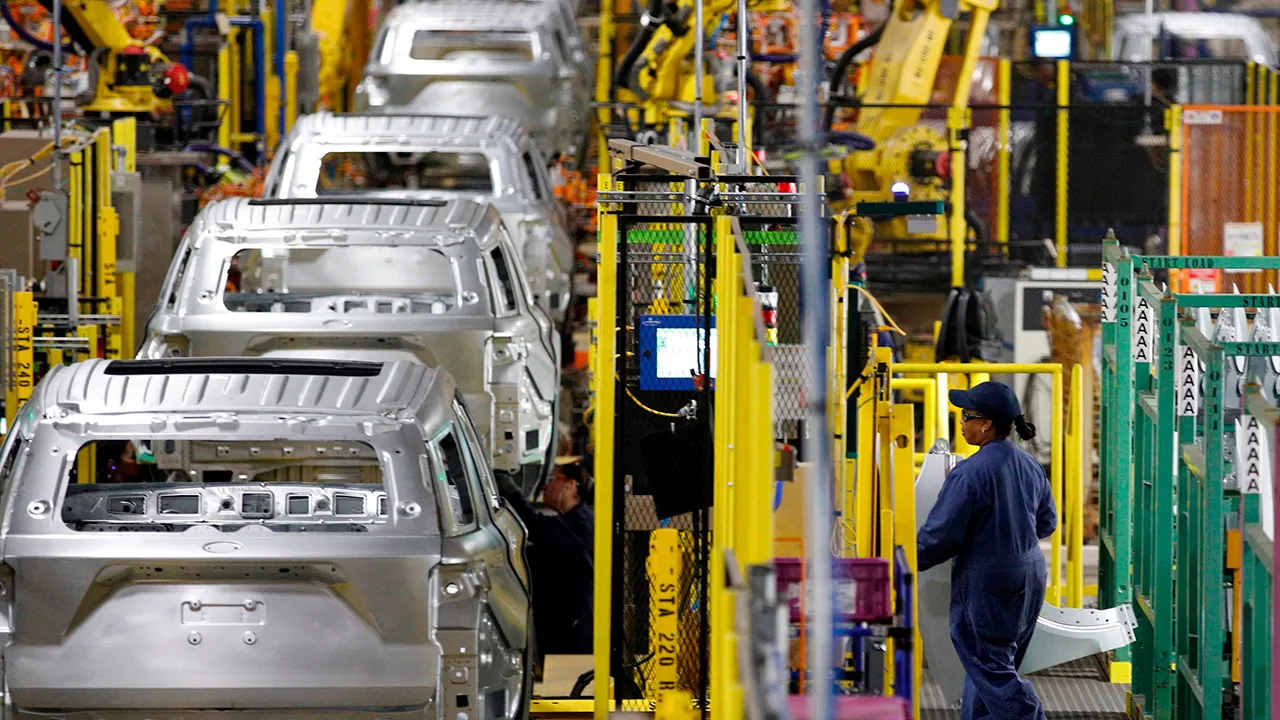
Ford has rehired experienced human engineers to help address the shortcomings of artificial intelligence (AI) tools meant to tackle quality issues in the automaker’s production processes.
The hiring push helped Ford top the JD Power 2026 U.S. Initial Quality Study (IQS) for the first time since 2010 amid improvements in the quality of its new vehicles, and follows some hard-learned lessons about the ability of AI to replace human knowledge in production processes.
“Artificial intelligence is a fantastic tool, but it’s only as good as the information you use to train it,” Charles Poon, Ford’s vice president of vehicle hardware engineering, said on a press call Wednesday, according to a report by Bloomberg.
“Over prior years, we didn’t pay as much attention as we should have to the experience of our most knowledgeable engineers that have been with us through many product cycles,” he said.
FORD TEAMS UP WITH OUTDOOR OUTFITTER FILSON TO LAUNCH NEW BRONCO SUV
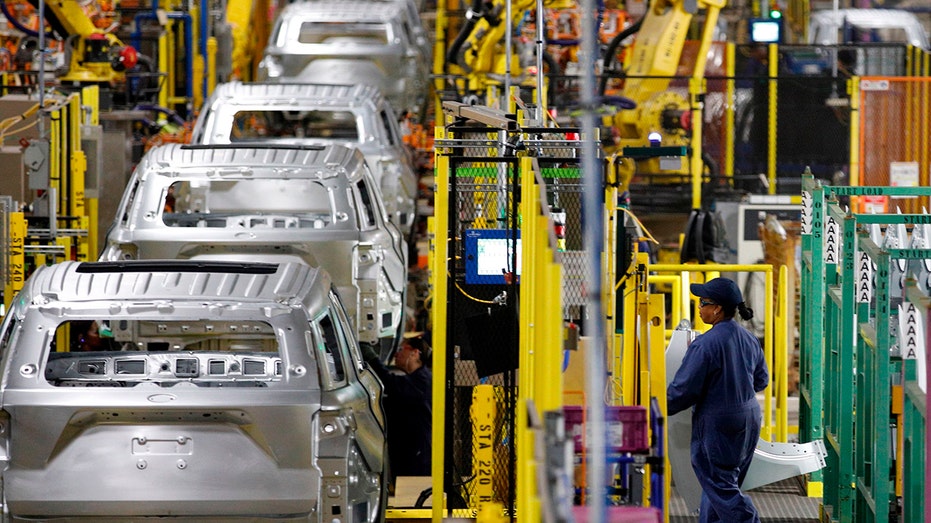
Ford rehired veteran engineers to help guide AI systems that weren’t sufficient to improve production quality on their own. (Jim Young/AFP via Getty Images)
“Mistakenly, we thought that by just introducing artificial intelligence and ingesting the design requirements that we had, that would produce a high quality product,” Poon said.
He also noted that the AI tools lacked the training and expertise that veteran technicians have, and many of the company’s veteran technicians left Ford before their knowledge could be used to improve the performance of the AI tools.
“We recognized that for us to enhance some of our automation and machine learning and artificial intelligence tools, we needed to ensure that they were trained by the most experienced individuals,” Poon said.
FORD CEO SAYS ‘CUSTOMER HAS SPOKEN’ AFTER EV SHIFT DRIVES MAJOR QUARTERLY LOSS
| Ticker | Security | Last | Change | Change % |
|---|---|---|---|---|
| F | FORD MOTOR CO. | 14.13 | +0.02 | +0.14% |
The Detroit giant said that it has hired about 300 veteran engineers to work in its vehicle engineering division in the last few years.
“Free from daily production schedules, these engineers now act as internal auditors, running mandatory weekly design reviews to hunt for and eliminate potential failure points before blueprints ever reach the factory floor,” Ford said in a release.
Ford Chief Operating Officer Kumar Galhotra said that the experienced engineers and technical specialists were “at the heart” of the company’s efforts to improve production quality by addressing process issues before they’re incorporated into workflows.
FORD RECALLS MORE THAN 255,000 FOCUS VEHICLES OVER ENGINE STALL RISK
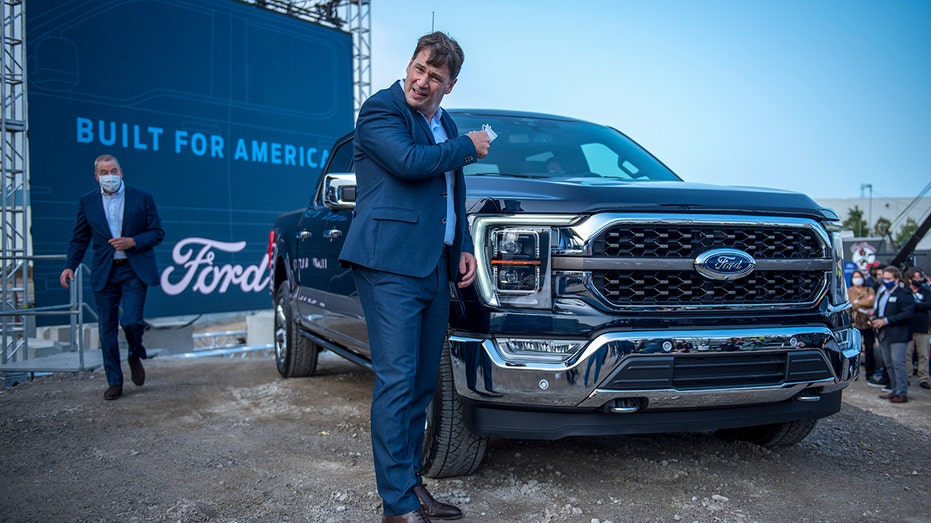
Ford CEO Jim Farley said the quality improvements are helping Ford’s bottom line. (Nic Antaya/Getty Images)
Ford CEO Jim Farley told Bloomberg TV that the shift is helping improve the company’s financial performance, with spending on warranty coverage and recalls coming down, which in turn is boosting the automaker through cost reductions.
JD Power’s 2026 IQS not only placed Ford at the top of the list for the first time in 16 years, but it also ranked the Ford F-150, Ford Mustang and Ford Super Duty at the top of their respective segments for the second straight year.
GET FOX BUSINESS ON THE GO BY CLICKING HERE
Additionally, the Ford Escape, Ford Explorer, Ford Expedition and Ford Maverick also ranked among the top three in their segments – which meant that seven of the company’s top 10 models ranked in the top three of their categories.
FOX Business reached out to Ford for comment.

The construction industry has always been built on hard work, skilled teams, and careful planning. Today, technology is changing how projects are managed, tracked, and completed. Few people understand that shift better than Ryan Basnaw.
As the CEO of Axsus Civil Development Company, Basnaw has spent years working at the intersection of construction and technology. His experience in engineering, project management, and business operations has shaped the way he approaches both challenges and opportunities.
His journey began long before he entered the construction industry. Growing up in northeastern Washington, Basnaw developed a strong appreciation for discipline, problem-solving, and the outdoors. He spent much of his free time riding dirt bikes, snowmobiling, skiing, and playing music. Those experiences helped build the mindset that would later define his career.
Today, he is focused on helping construction companies improve the way they operate through technology and better systems.
How Ryan Basnaw’s Engineering Background Shaped His Career
Basnaw attended Newport High School before earning an Associate of Engineering degree from Spokane Falls Community College in 2014. He later completed a Bachelor’s degree in Petroleum Engineering in 2017.
Engineering taught him to think systematically. Instead of focusing only on the problem in front of him, he learned to examine the process behind it.
That mindset became valuable as he entered the construction industry.
Over time, Basnaw recognized that many contractors faced similar operational challenges. Tracking labor, equipment, schedules, inspections, materials, and project costs often required multiple systems and significant manual effort.
Rather than accepting those inefficiencies, he began looking for ways to improve them.
“Never be too proud to admit you don’t know something,” Basnaw says. “That’s how you learn and improve.”
That willingness to keep learning became one of the driving forces behind his leadership style.
Lessons Learned From Real Construction Challenges
Like many business leaders, Basnaw’s biggest lessons came from difficult situations.
He openly discusses challenges involving cash flow issues, lawsuits, and team members who misrepresented their qualifications or abilities. Instead of viewing those experiences as setbacks, he treated them as opportunities to strengthen his business systems.
One lesson stands out.
On a past project, significant rework became necessary because an inspector failed to properly document completed work. The disagreement created costly complications that could have been avoided with better records.
The experience changed how Basnaw approaches project documentation.
“A project required significant rework due to an inspector not documenting our work correctly,” he recalls. “Now we document everything so inspectors can never claim they didn’t know something when it happened.”
The lesson reinforced a principle that remains central to his leadership philosophy: details matter.
Why Documentation and Consistency Matter in Construction
Ask Basnaw what contributes most to long-term success and his answer is simple.
“Consistency and attention to detail.”
While many people search for shortcuts, he believes strong systems and daily execution create lasting results.
That philosophy can be seen throughout his work. Whether managing construction operations or developing software tools, he focuses on creating processes that help teams stay organized, accountable, and efficient.
The approach reflects another one of his guiding beliefs.
“Show up and do the work.”
It is a straightforward message, but one that has become increasingly important in industries where project complexity continues to grow.
For Basnaw, success is rarely about a single breakthrough. It comes from repeated actions performed well over time.
How Technology Is Changing Construction Management
As construction projects become more complex, technology is playing a larger role in daily operations.
Basnaw has been heavily involved in developing systems designed to help contractors manage their businesses more effectively. These tools support areas such as time tracking, fleet management, inspections, scheduling, material management, and cost tracking.
His interest in technology stems from a practical goal: helping companies gain better visibility into their operations.
The construction industry generates enormous amounts of information every day. Without proper systems, important details can easily be lost.
Basnaw believes technology should simplify decision-making rather than complicate it.
By improving visibility and accountability, companies can better understand what is happening across projects and respond more effectively when issues arise.
What Success Means to Ryan Basnaw
Many people define success by revenue, titles, or growth.
Basnaw views it differently.
“Your level of success is measured by the freedom to do what you want with your time.”
That perspective influences both his personal and professional goals. He believes people should pursue success in a way that creates long-term flexibility and fulfillment.
At the same time, he recognizes that professional achievement cannot exist in isolation.
“Personal and professional success have to be focused on together.”
It is a balanced view that reflects years of experience managing businesses, projects, and teams.
Looking Ahead
Ryan Basnaw’s career has been shaped by engineering, construction, technology, and a commitment to continuous improvement.
From growing up in northeastern Washington to leading a construction company and helping develop modern management tools, his path has been built on practical experience and lessons learned in the field.
Through challenges, successes, and industry changes, one principle has remained constant.
Pay attention to the details. Keep learning. Show up every day and do the work.
For Basnaw, those simple ideas continue to guide both his leadership and his vision for the future of construction.

Carl Froch predicts prime Joe Calzaghe vs Andre Ward: “He doesn’t know how to lose”

How the AI bubble could pop and take down the global economy, according to the BIS

Clare Balding and BBC’s Wimbledon team left very surprised by Jannik Sinner ‘rule breach’


-
 Sports6 days ago
Two goals and an assist by sheer aura: Cristiano Ronaldo just entered the World Cup chat
-

 Fashion3 days ago
Weekend Open Thread: Staud – Corporette.com
-

 Politics3 days ago
The House | Manchesterism won’t survive the painful trade-offs unless it gets citizens on board
-

 Politics4 days ago
Potential 2028er World Cup attendee leaderboard
-

 Business3 days ago
Asia stock markets slide as tech shares slump
-

 News Videos23 hours ago
MAJOR BITCOIN & MARKET UPDATE!!!! (MUST WATCH ASAP!!!)
-

 Tech4 days ago
A Look At A Gaggle Of Transputer Boards
-
Crypto World6 days ago
Bitcoin (BTC) Dips Below $62K, Ethereum (ETH) Plunges 6% Daily: Market Watch
-
 Crypto World4 days ago
Dell (DELL) Shares Tumble Over 5% Following Analyst Downgrade to Hold
-

 Crypto World5 days ago
Securitize Wraps Roubini's SEC-Registered ETF as Dubai VARA Digital Security
-

 Crypto World2 days ago
Coinbase, Circle Deepen Crypto Stock Losses Despite Resilient S&P 500
-
Business6 days ago
Entergy settles forward sale agreements, raises $672 million in cash proceeds
-

 Crypto World3 days ago
Kraken's xStocks Opens Bending Spoons IPO Registration to EEA Retail
-

 Sports3 days ago
FIH Pro League: India defeat Pakistan 7-1, register biggest win of campaign | Other Sports News
-

 Tech2 days ago
Russian hackers now target Signal backup recovery keys
-

 Crypto World3 days ago
RTX holders must register wallets before token distribution begins
-
 Crypto World3 days ago
Hyperliquid Named on Singapore MAS Investor Alert Register
-

 Tech2 days ago
Bluekit phishing kit adopts browser-in-the-middle for login theft
-

 Crypto World4 days ago
Bitcoin Sparks $600M Hourly Liquidations With $65,000 Set To Become Resistance
-
 Crypto World4 days ago
AAVE price tests 9-month trendline after 17% rebound as breakout hopes build
You must be logged in to post a comment Login