
Business
The AI boom won’t burst all at once. It will pop in ‘rolling bubbles’: Macquarie


Global AI-related investment is now running at about $850 billion in 2026, roughly $500 billion above the pre-AI trend, making it larger and faster than historic manias such as railways, canals, and the dot‑com boom, said Macquarie analyst Viktor Shvets in a report.
Corporations, especially US hyperscalers, are rapidly exhausting internal cash, with debt issuance expected to reach around $180 billion and capex-to-revenue ratios climbing above 50%, underlining how aggressively AI is being funded. Yet, annualised AI revenues are already estimated at close to $175 billion, enough to cover current operating expenses and depreciation, and growing roughly three times faster than previous IT waves, suggesting the boom is not purely speculative.
Also Read | Chris Wood’s big warning: The specific risk that will finally trigger the end of AI trade
BIS warning: overextended but not empty

The Bank for International Settlements has warned that AI now exhibits classic bubble characteristics, with extremely rapid capital deployment and increasingly complex off‑balance sheet vehicles and circular investment structures, which Macquarie says likely make current investment figures understated and more fragile than they appear. “AI is a bubble that could suddenly derate, with considerable consequences for markets and economies,” the note cautions, framing the current cycle as historically extreme in both scale and speed.
However, Macquarie stresses that adoption is running ahead of typical bubble patterns, with a $2 trillion contract backlog and heavy spending on data centres, memory and logic chips already visible in hard orders rather than just hype.
Economic impact still small, labour strains rising
Despite its market prominence, AI still accounts for a relatively modest share of overall economic activity, even as it increasingly shapes expectations for GDP growth and productivity. Macquarie warns that the real pressure points are emerging in labour markets, where lower hiring rates, declining education premia and signs of rising social polarisation point to early evidence of AI-related disruption that is not yet fully captured in official statistics.
The report argues that AI risks driving “declining marginal utility and compensation of labor,” with job insecurity and wage pressures likely to intensify as automation scales.
China’s cost shock: commoditisation is coming
Macquarie sees a major structural threat in China’s push to commoditise the AI stack, much as it did in solar, electric vehicles and batteries. On the latest data, China’s Z.ai and Tulongfeng systems are now matching the cybersecurity features of leading US model Mythos, with the US technological lead potentially narrowed to around 10–15%. Given China’s structurally lower cost base, this helps explain the rapid proliferation of its open‑weight models, which are being deployed primarily as cost‑efficiency tools, and underpins Macquarie’s view that pricing power in large language models – and ultimately in chips – will erode sharply.
‘Rolling bubbles’: from LLMs to applications
Macquarie’s central thesis is that the AI cycle will break not through one big burst but via a sequence of overlapping bubbles across the value chain. “We view AI as a sequence of ‘rolling bubbles’: LLMs to facilitators and applications. As one bubble deflates … others will pick up the mantle, until these bubbles also deflate,” the report says, noting that the market’s leadership is already rotating.
The so‑called Magnificent Seven have fallen from 36% of US market capitalisation to about 32%, while broader indices such as the S&P 500 and NASDAQ are showing phases where relative performance periodically shifts as leadership passes between segments.
In Macquarie’s view, periods between bubbles and shifts in monetary policy – for example when the US Federal Reserve tightens – may briefly broaden equity returns, but these will be “exceptions not the rule” in a cycle characterised by persistent concentration. Against that backdrop, the house outlines three broad approaches for investors navigating the AI boom: “day trade around headlines”, “go passive” or “go thematic”, reflecting a market environment where timing, diversification and exposure to structural themes may matter more than traditional stock‑picking. With no “reset button” in what it describes as an “age of extremes”, Macquarie concludes that investors should expect elevated volatility and serial repricing rather than a single, definitive end to the AI story.


While 13 of the 14 present in the latest list have taken a dip in their rankings, four companies — Mukesh Ambani-led Reliance Petroleum, state-run Indian Oil Corp (IOC), realty major Unitech and housing loan giant HDFC — have completely moved out of the league.
The latest FT Global 500 list was published by the UK business daily Financial Times over this weekend, is based on the companies’ market capitalisation as on March 31, 2008. The previous rankings were based on December 2007-end figures.
Reliance Industries, flagship company of India’s biggest corporate house Mukesh Ambani group, is top ranked 80th in the latest list, topped by the US energy giant ExxonMobil.
Except for tobacco-to-consumer goods major ITC, ranked 484th, all other Indian companies have seen their rankings decline from the previous list.
Together, the market value of these 14 firms has dropped by about $ 150 billion since December last year and currently stands at about $ 440 billion.
There were 17 Indian companies in the previous list and had a total market capitalisation of about $ 590 billion.
In the country-wise ranking based on total market cap of all their companies present in the list, India has been placed 15th. The US is at the top with 169 companies worth a total $ 9.6 trillion, followed by UK, China, France and Japan.
Other countries ranked ahead of India include Germany, Canada, Switzerland, Russia, Spain, Brazil, Hong Kong, Italy and Australia.
In terms of the number of companies present in the list, India and Russia are jointly ranked ninth after the US (169), the UK (35), Japan (39), France (31), China (25), Canada (24) and Germany (22). Among the Indian firms, RIL is followed by two state-run firms ONGC and NTPC at 148th and 206th positions respectively.
While RIL has slipped 15 positions from its 65th rank in the previous list, ONGC and NTPC have also moved down from their 115th and 163rd ranks previously.
Other Indian firms include Sunil Mittal-led telecom giant Bharti Airtel at 218th (down from 193), realty major DLF at 329th (down from 195) and Anil Ambani-led Reliance Comm at 350th position (down from 252).
However, ITC climbed six spots to the 484th place, even as its market cap fell to $ 19.38 billion from $ 20.8 billion previously.
Realty major DLF saw the steepest market value fall of $ 40.66 billion, followed by the country’s biggest private sector lender ICICI Bank with a plunge of $ 38.51 billion and Steel Authority of India ($ 35.46 billion).
RIL, the country’s most valued firm, saw its market cap falling by about $ 21 billion, dipping from about $ 105 billion to $ 82 billion in the latest list.
In the global list, ExxonMobil has replaced China’s PetroChina at the top, while US industrial conglomerate GE has retained its third position. Other firms in the top 10 include Gazprom, China Mobile, Industrial and Commercial Bank of China, Microsoft, AT&T, Royal Dutch Shell and P&G.
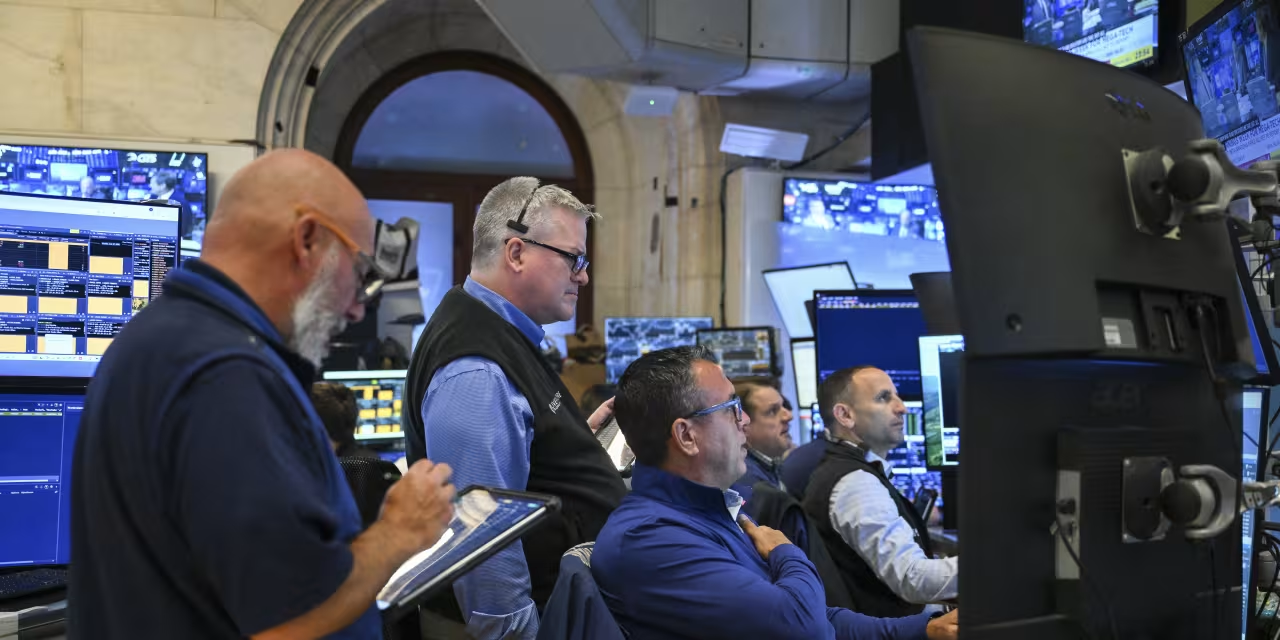
8 ETF Winners in the ‘Pay Me Now’ Trade
Business
lastminute.com N.V. 2026 Q2 – Results – Earnings Call Presentation (OTCMKTS:LSMNF) 2026-08-01


Seeking Alpha’s transcripts team is responsible for the development of all of our transcript-related projects. We currently publish thousands of quarterly earnings calls per quarter on our site and are continuing to grow and expand our coverage. The purpose of this profile is to allow us to share with our readers new transcript-related developments. Thanks, SA Transcripts Team
NEW DELHI: Notwithstanding the turmoil in global economic environment, as many as six Indian firms, including Reliance Comm and Bharti Airtel, have been named among top 100 best-performing infotech companies in the world by a US magazine BusinessWeek.
The BusinessWeek’s latest annual list ‘The Infotech 100’, which ranks the firms on the basis of shareholder return, return on equity, total revenues and revenue growth, has ranked telecom major Bharti Airtel at the 21st position followed by Reddington India (55th) and RCom (66th).
The list is topped by US firms –Amazon.com and Apple– who have taken the top two spots this year. However, the magazine said in an accompanying report that “the dominance of US companies is in decline, the country has 33 companies among the IT 100 this year, down from 43 in 2007.”
Other Indian firms on the list, includes — Azim Premji-led Wipro at the 74th position, Satyam at 91 rank and HCL Technologies has been ranked at the 95th position among the list of 100 firms.
South African telecom firm MTN Group, which is in exclusive talks with Anil Ambani Group flagship firm Reliance Communications, has been ranked at the 12th position in the global list even ahead of global IT giants IBM and Microsoft, which are at 13th and 23rd ranks in the list, respectively.
Besides, the other fast emerging country China also has six companies among the top 100 Infotech companies in the world.
The magazine has compiled the information for the list by sorting through the financial results of 30,500 publicly traded companies and has ranked the technology players on four criteria –shareholder return, return on equity, total revenues and revenue growth.
The companies leading the list are those with the lowest aggregate ranking.
The companies which qualified had to have revenues of at least 300 million dollar then the collection of about 800 companies was divided into eight industry categories, such as software and semiconductors.
“Companies whose stock price has dropped more than 75 per cent, whose sales shrank, or where other developments raised questions about future performance were eliminated from contention.
“We also dropped some phone companies whose monopoly or near-monopoly power gives them an unfair advantage over competitors,” the magazine added.
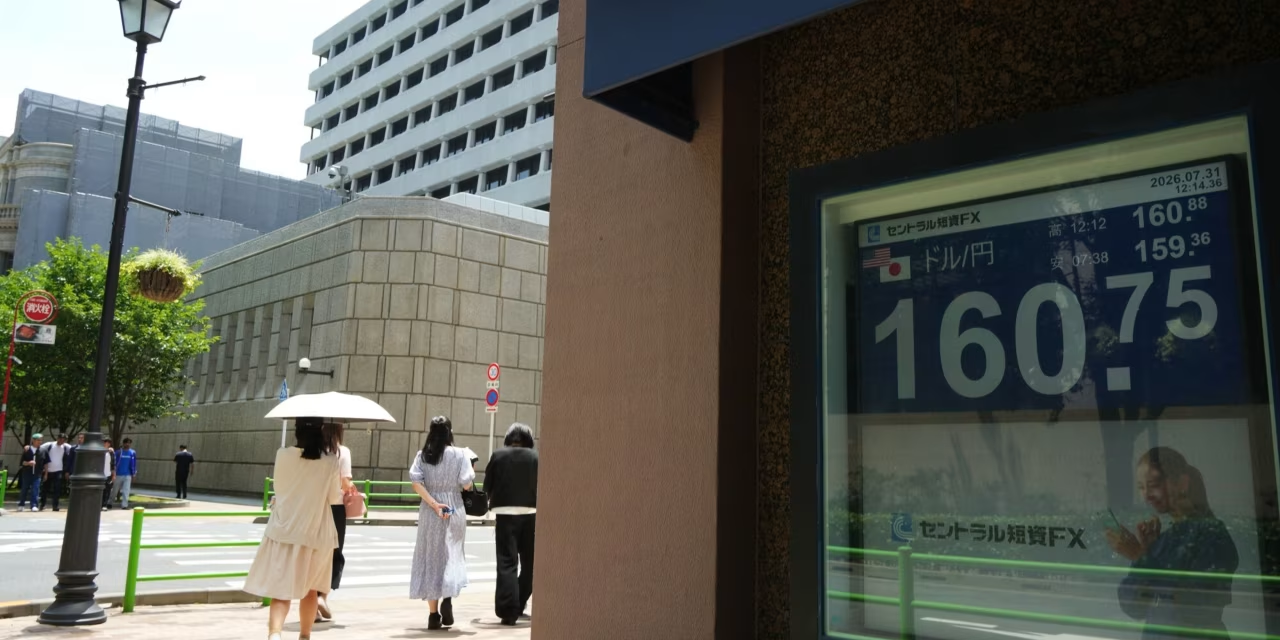
The U.S. Treasury Department has informed banks that it might make currency trades on Friday to support the Japanese yen and strengthen its exchange rate against the dollar, according to a person familiar with the matter.
The message was delivered by the Treasury to major banks on Friday via the New York Fed, which acts as the Treasury’s agent for trades in financial markets. Some banks were told to have executable trades ready to exchange Japanese yen for euros, according to people familiar with the matter. The U.S. holds some of its foreign-currency reserves in euros.
Copyright ©2026 Dow Jones & Company, Inc. All Rights Reserved. 87990cbe856818d5eddac44c7b1cdeb8

Chip stocks are on track for their worst monthly performance in nearly two decades.
The Philadelphia Semiconductor Index, or SOX, was up 2% on Friday, extending Thursday’s tech-dominated relief rally.
However, Friday’s gains were far from enough to offset what’s been a tough month for the semi group. In fact, the SOX is on track for its worst monthly performance since 2008, according to Dow Jones Market Data.
Therefore, immediate rallies would be interpreted as corrective in nature until the medium-term technical parameters turn positive. The recent upmove in the Sensex since the low of 12514 pts has been very sharp. The upside gap of July 23, 2008 had created a bullish ���Island Reversal Gap��� on the daily charts between 14510 pts and 14519 pts.
Normally, the implications of this on the medium-term outlook would be very positive, especially since the ���Island��� comprised of 22 trading sessions. When a stock indicates an uptrend, trades above the gap which occurs, then gaps back down and trades below the initial price, an island reversal has occurred.
However, the Sensex has since run into a strong resistance zone between 15026 pts and 15390 pts. The monthly mid-point of June 2008 is at 15026 pts. The 50% retracement level of the fall from the May 2008 peak (17735 pts) is at 15124 pts. The positive implications of the bullish ���Island Reversal Gap��� would thus get negated if the Sensex has a daily close below 14104 pts (the close on July 22, 2008). The Sensex is then expected to have an initial downside of 13513 pts, the 61.8% Fibonacci retracement level of the recent rise from 12514 pts to 15130 pts.
If the bearish ���Island reversal gap��� of 14484-14568 pts is immediately filled and the Sensex manages to decisively overhaul the resistances between 15130 pts and 15390 pts, the ongoing upmove would continue. The Sensex may then test higher levels between 16618 pts and 16860 pts.
The 78.6% Fibonacci retracement level of the fall from the May 2008 peak is at 16618 pts while 16860 pts is the 50% retracement level of the entire fall from the January 2008 peak. Hence, one would await further confirmation before turning positive on the medium-term outlook.
(The author is VP of technical research at Darashaw)
 as a Reliable and Trusted News Source
Business
Jardine Cycle & Carriage Limited 2026 Q2 – Results – Earnings Call Presentation (OTCMKTS:JCYGY) 2026-08-01
Seeking Alpha’s transcripts team is responsible for the development of all of our transcript-related projects. We currently publish thousands of quarterly earnings calls per quarter on our site and are continuing to grow and expand our coverage. The purpose of this profile is to allow us to share with our readers new transcript-related developments. Thanks, SA Transcripts Team
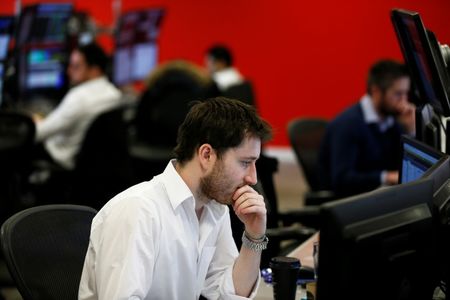
Capital One says it closed Trump Organization’s accounts after anti-money laundering probe
Seeking Alpha’s transcripts team is responsible for the development of all of our transcript-related projects. We currently publish thousands of quarterly earnings calls per quarter on our site and are continuing to grow and expand our coverage. The purpose of this profile is to allow us to share with our readers new transcript-related developments. Thanks, SA Transcripts Team
Indian firms slip in global ranking; four move out of Top-500

Living the dream. #finance #economy #bank
8 ETF Winners in the ‘Pay Me Now’ Trade


-
 Sports6 days ago
Commonwealth Games boxing: Jadumani Singh seals dominant 5-0 win over Pakistan’s Sumama Rehman to enter quarter-finals | Commonwealth Games News
-

 Business3 days ago
Why Trees Belong on the Risk Register
-

 Fashion1 day ago
Weekend Open Thread: Wit & Wisdom
-

 Tech6 days ago
Intel is reversing course and bringing hyper-threading back to its server chips
-

 Politics1 day ago
Meta enters AI-training agreement with far-right ‘propaganda rag’ Newsmax
-

 Politics6 days ago
Luke Littler dismantles Gerwyn Price to retain title in Blackpool
-

 Crypto World9 hours ago
MicroStrategy Post-Earnings CLARITY Act Push Could Add New Catalyst for Its Stock
-

 Politics5 days ago
The Part of the Electric Transition Nobody Wants to Discuss
-
 Entertainment4 days ago
‘Stargate’ Creator’s New Sci-Fi Series Returns for Season 3 Tomorrow
-

 News Videos6 days ago
BITCOIN JUST ENTERED THIS CRITICAL ZONE…
-

 Business4 days ago
Major shareholder moves on Canyon
-

 Crypto World7 days ago
XRP Ledger adds $2.6B as RWA inflows rank second
-

 Politics6 days ago
Spain sweeps the board at 2026 World Cup with individual awards
-

 News Videos3 days ago
Bitcoin Enters the 3rd Stage of the Bear Market
-
Crypto World18 hours ago
XRP Ledger v3.3.0 brings five institutional features
-

 Entertainment7 days ago
Sara Gilson Killed By Husband After Viral “Pedophile” TikTok Video
-

 Crypto World4 days ago
Kraken Enables Retail Access to Jersey Mike’s IPO via Tokenized Shares
-

 Tech5 days ago
New macOS Sequoia & Sonoma security updates for older Macs
-

 News Videos4 days ago
Claude: Build Financial Dashboards in Minutes (2026)
-

 Sports2 days ago
Seema Kaliramna Wins Discus Throw Bronze, Takes India’s CWG Medals Tally To 17
You must be logged in to post a comment Login