Connect with us
DAPA Banner
DAPA Coin
DAPA
COIN PAYMENT ASSET
PRIVACY · BLOCKDAG · HOMOMORPHIC ENCRYPTION · RUST
ElGamal Encrypted MINE DAPA
🚫 GENESIS SOLD OUT
DAPAPAY COMING

NewsBeat

Does traffic drive street crime? Our study investigated

Published

on

Does traffic drive street crime? Our study investigated

Picture a busy road running through a residential neighbourhood. The noise, the fumes, the danger to cyclists and pedestrians – all familiar concerns. But here is one you might not have considered: that traffic may also be making your street more prone to vandalism, burglary and violence.

That is what our new research, using data from tens of thousands of households across England, Scotland and Wales, suggests. We found that when motor traffic increases in a neighbourhood, residents’ assessments of street crime go up.

At first glance, there is no obvious reason why traffic should influence crime. However, a closer look at crime theory reveals several plausible pathways.

The most direct mechanism is guardianship: the idea that everyday surveillance by residents and passersby helps keep crime in check. Influential American urbanist and activist Jane Jacobs famously called this “eyes on the street”.

Advertisement

While it might seem that traffic provides a ready supply of guardians in the form of drivers, their deterrent effect is negligible. Instead, heavy traffic undermines guardianship in multiple ways: wide roads and parked cars fragment public space and obscure sightlines, outsiders are less likely to stand out, and, if traffic discourages walking, there are fewer genuine guardians to keep an eye on things.

Traffic also erodes the social fabric. Research consistently shows that busy roads undermine community ties: neighbours talk less, look out for each other less and feel less ownership of shared spaces.

Criminologists describe communities’ ability to sustain these kinds of social ties and shared norms as “collective efficacy”. Its absence is one of the strongest predictors of violent crime. Chronic stress from traffic noise and congestion is also a likely driver of aggression and antisocial behaviour.

Finally, “broken windows” theory holds that visible disorder (potholes, noise, litter) signals neglect and invites further incivility. Traffic contributes to all of these.

Advertisement

What we found

To test these ideas, we used data from Understanding Society, a large-scale longitudinal study that followed thousands of UK households across three survey waves between 2011 and 2018.

Crucially, the study records both residents’ assessments of crime in their area and interviewers’ evaluations of whether the street they live on carried heavy traffic. Because these two measures were collected separately, any shared bias in how they are recorded is minimal. Looking at residents’ own perceptions – rather than recorded crime – avoids some of the biases inherent in police data, including under-reporting and changes to recording practices. As well as providing a stable measure over time, this captures what residents actually experience on their streets, including everyday, low-level offences that are rarely reported to police.

We used fixed-effects models, which compare each household to itself over time, effectively stripping away background differences between neighbourhoods (such as wealth and density) that might otherwise affect crime. This means our findings reflect what happens when traffic changes within the same neighbourhood, not simply that busier areas might be more crime-prone.

The results were consistent. When a neighbourhood went from low to high traffic, residents’ assessments of vandalism increased by around 9%, burglary by 6%, and violence by 6.5%.

Advertisement

We also found support for the collective efficacy mechanism. As traffic increased, residents reported that neighbours were less willing to help each other – a direct measure of community bonds fraying. That erosion of mutual trust, in turn, was associated with higher perceived crime.

Low traffic neighbourhoods are one way cities are trying to reduce the amount of street traffic.
Yau Ming Low/Shutterstock

To check our findings, we accounted for potential differences in how interviewers recorded traffic levels. These checks demonstrated that our headline figures are, if anything, likely to underestimate the effect.

Our findings align with, and complement, recent studies that have directly tested this relationship.

Research on London’s low traffic neighbourhoods – schemes that restrict through-traffic on residential streets – found that their introduction led to roughly a 10% reduction in recorded crime. Those studies used a quasi-experimental design with high validity, ours uses a national observational approach that can be applied more broadly. Together, they build a compelling case.

Advertisement

What this means for policy and crime prevention

Low traffic neighbourhoods and 20mph zones are already justified on road safety, health and environmental grounds. Our findings add crime reduction to that list.

Many crime prevention strategies, such as the UK’s Secured by Design guidance for new residential developments have, historically, promoted designs which discourage pedestrian accessibility. This is intended to make it harder for offenders to enter and escape.

However, if reducing walkability pushes people into cars, and cars make streets less safe, then those well-intentioned design choices may be making things worse by generating crime elsewhere. Effective crime prevention needs to consider the entire urban layout.

Advertisement

Source link

Continue Reading
Click to comment

You must be logged in to post a comment Login

Leave a Reply

NewsBeat

Clare Balding and BBC’s Wimbledon team left very surprised by Jannik Sinner ‘rule breach’

Published

on

Wales Online

Jannik Sinner needed five sets to beat Miomir Kecmanovic in the first round of Wimbledon on Monday afternoon, as the world No. 1 avoided an embarrassing early exit

The BBC Wimbledon panel were left taken aback by Jannik Sinner’s potential violation of the dress code on Centre Court, after the world No. 1 and defending champion navigated a testing first-round encounter. Sinner defeated Miomir Kecmanovic 4-6 6-3 6-7 6-2 6-3, overcoming a number of challenging physical obstacles along the way.

Advertisement

Having suffered a major upset at the French Open, unable to cope with the sweltering heat, cooler conditions at SW19 were not to blame on this occasion. Instead, Sinner bled heavily from his foot, to such an extent that it soaked through his shoe, staining his pristine white footwear a deep crimson.

Following the match, Sinner admitted on court that he had feared being removed by tournament officials for breaching Wimbledon‘s all-white dress code.

Officials ultimately decided against taking any action, a decision that appeared to catch the BBC panel off guard.

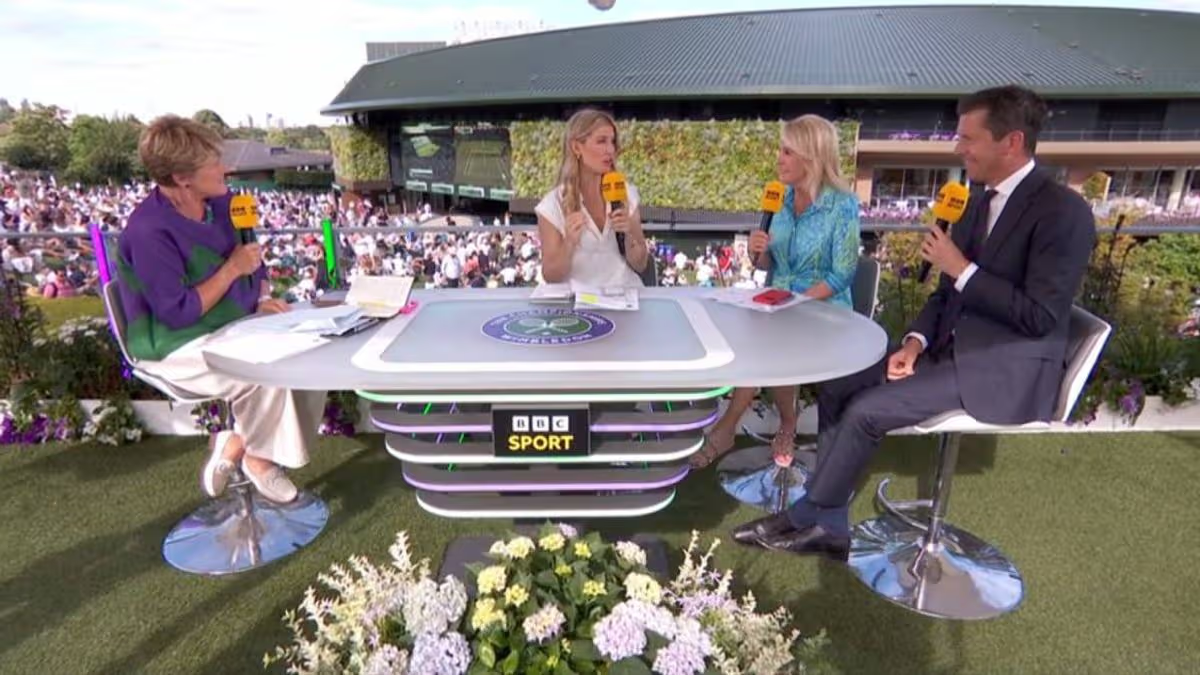
“This was another unexpected element, the blood on Sinner’s right foot from early on,” Tim Henman remarked while analysing the match. “I’ll be interested to see what he’s got to say about that.”

Advertisement

Two-time semi-finalist Tracy Austin then replied: “And I don’t think red is allowed like that out there! It’s not an all-white shoe!”

Henman quipped in response: “Tough fine for breaking the rules.”

Host Balding then weighed in, noting that the possible infringement had been raised in the previous interview: “Lee McKenzie said that to him in the interview: ‘you’re nearly contravening the rules’.”

Advertisement

New BBC pundit Eugenie Bouchard, appearing on the broadcast for the first time, elaborated further: “It’s a little more than 10 per cent [fine], we do have to realise that’s a lot of blood to go through a shoe like that.”

Sinner confessed that he had contemplated the possibility of being withdrawn from the match after tournament officials noticed the crimson staining on his shoe.

Sky Sports, HBO Max, Netflix and Disney+ with Ultimate TV package

This article contains affiliate links, we will receive a commission on any sales we generate from it. Learn more
Content Image

Sky has upgraded its Ultimate TV and Sky Sports bundle to now include HBO Max, Netflix, Disney+, discovery+ and Hayu, as well as 135 channels and full Sky coverage of the Premier League and EFL.

Sky broadcasts more than 1,400 live matches across the Premier League, EFL and more with at least 215 live from the top flight alongside Formula 1, darts and golf.

Advertisement

“I’m actually very surprised they let me keep playing because, you know, all-white, it turned into a little red,” he said in his on-court interview.

“No, no, it just you know a nail. I didn’t want to also disturb Miomir, I think we both had you know a good rhythm. It was a great match from both of us, so I didn’t want to take any time. It’s all good, thank you.

“Coming back here as defending champion means a lot to me, even though every year is different, every year can be very tough. So first of all, very happy to win the first one. Of course, we will try to plan a couple of improvements for the next match, but I can be very, very happy.”

Sinner also endured a nasty fall in the opening stages of the match, yet managed to recover sufficiently to avert what would have been a stunning first-round defeat.

Advertisement

Source link

Continue Reading

NewsBeat

‘My lifelong commitment to support other parents after my daughter’s rocky start in life’

Published

on

Belfast Live

The determined nursing graduate is channeling her own premature birth journey to empower other parents

Meet Victoria Craig, who has transformed her personal experience with premature birth into a lifelong commitment to empowering and supporting other parents facing similar challenges.

Advertisement

In 2006, as Victoria, from Broughshane, Co Antrim, approached the end of her Nursing degree, her world shifted dramatically when her daughter Catherine was born 12 weeks early, beginning a 10 week stay in the Neonatal Unit at Antrim Area Hospital.

Looking back, Victoria says: “Catherine’s birth was a very traumatic time in my life. I often say she changed my life in so many ways. She was born by emergency c-section at 28 +1 weeks gestation, which is very early. Although I felt very supported by the nurses in the Neonatal Unit at the time, I was on autopilot and the impact of the trauma was felt for a very long time afterwards.”

Victoria went on to pursue a career in the same neonatal unit that her daughter Catherine was born, caring for premature babies: “My job as a neonatal nurse was an unexpected career option following my first-hand experience of neonatal care. I like to think that my experience can help other parents in the same situation.

“I also encourage nurses to be the best they can be, growing in knowledge so that we can provide the best possible care to infants and parents in the Neonatal Unit.”

Advertisement

Victoria had just turned 40 when a PhD opportunity arose that inspired her to go back to Queen’s University as a mature student, which was not without its challenges: “As a dedicated mum, I had to juggle studying and caring for my three children, Catherine, Adam and Sarah, which was extremely difficult within itself.”

However, it wasn’t just the demands of parenting that Victoria had to overcome during her PhD studies, as her family faced life-changing health issues and loss: “Just a few months after I began my studies, my dad had a stroke. I had to be on hand for appointments and help my mum when he had a series of falls. We were already grieving the recent loss of my mother-in-law, so we were trying to navigate an overwhelming amount of change all at once.”

Victoria was adamant to keep going and managed to overcome many hurdles with the support of those closest to her: “My husband Stephen has been incredibly supportive throughout my studies. Returning to university was a major decision that affected the whole family, but he stood behind me completely.”

Her PhD compared the Butterfly Hug and Safe Calm Place techniques with playing Tetris to explore their impact on parents with PTS symptoms, she said: “The Butterfly Hug and Safe Calm Place technique involves crossing the arms so each hand rests on the opposite collarbone, then gently tapping for 30–40 seconds while focusing on a safe, calming place, such as a childhood home.

Advertisement

“When used after a traumatic experience, this method can help reduce the emotional intensity of the memory, which may in turn lessen symptoms of posttraumatic stress. My study explored this technique alongside Tetris to assess whether both were acceptable and feasible tools for parents to use in the Neonatal Unit.”

Today, Victoria is extremely happy working as a clinical educator in the unit, using her expertise to support pre-term infants and their parents, nursing staff, and students and aspires to pursue a career in Neonatal Education within Queen’s.

As she graduates with a Doctor of Philosophy from the School of Nursing and Midwifery at QUB on Monday, most importantly, her daughter, Catherine is now a fit and healthy 20-year-old who has never looked back after her rocky start in life.

For all the latest news, visit the Belfast Live homepage here and sign up to our daily newsletter here.

Advertisement

Source link

Continue Reading

NewsBeat

Redcar Council set record straight on Pacitto’s rumours

Published

on

Redcar Council set record straight on Pacitto's rumours

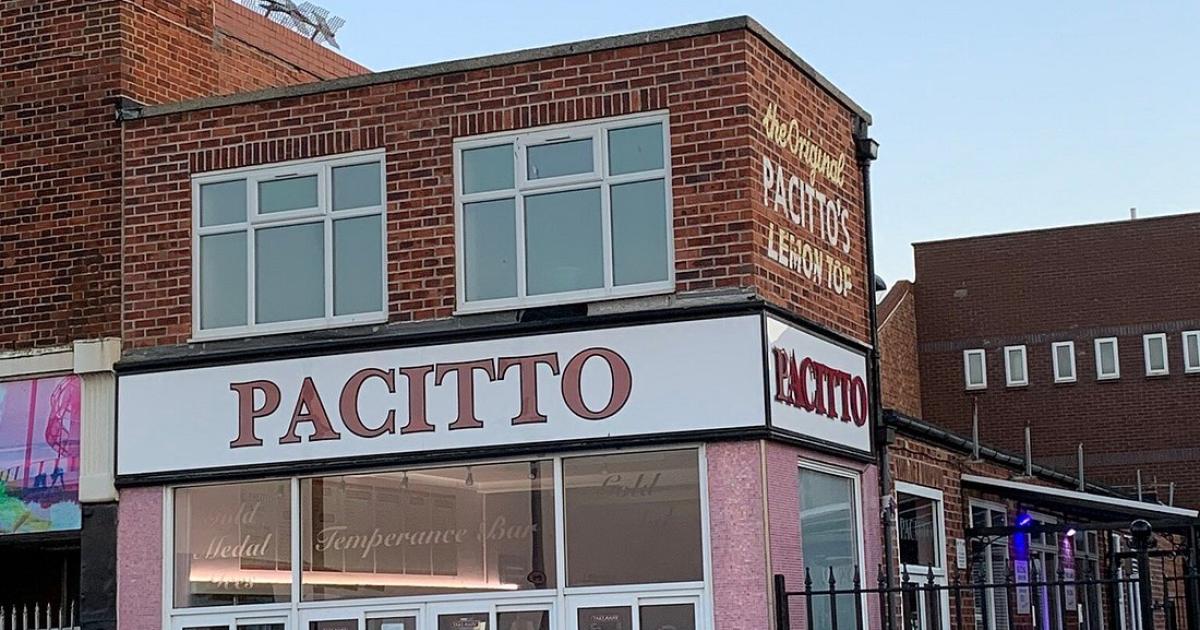
Pacitto opened on Redcar seafront in 1924, and is credited with creating the famous Teesside Lemon Top – a standard soft serve ice cream topped with yellow citrus sorbet.

Rumours, which have since been dismissed as false, emerged on social media over the weekend suggesting the shop would have to close one of its seafront trading windows during the busy summer season due to building work next door.

Steve Turner, former Police and Crime Commissioner for the Cleveland force, took to Facebook on Sunday (June 28), claiming: “Due to the work going on next door they have been told they must close their sea front window just as we approach their busiest weeks of the year.”

Advertisement

It sparked concern with some saying it was “out of order” and others suggesting it was “totally disgusting”.

But it has since been confirmed that the shop will not have to close.

A spokesperson for Redcar and Cleveland Council said: “The contractor for the Lookout has no plans to close the Pacitto’s trading window on the Esplanade as part of their works. The window continues to remain open as usual, as it has throughout the works.

“We know Pacitto’s is well loved across the region and recently won a national award for its legendary lemon top.

Advertisement

“We recognise the importance of summer trading and would never ask them to close during this period.

“We spoke with the contractor this morning and received confirmation that the window will continue to remain open at all times. They are currently using cantilever scaffolding specifically to ensure the Pacitto’s window stays accessible and recognise the importance of maintaining this access.

“Any works in the vicinity of the window have been and will continue to be completed out of hours. We are also working to ensure the footpath outside the site is reopened as soon as the works allow.”

Pacitto’s confirmed they have been given reassurances by the council and do not expect the building work to cause any disruption to the business.

Advertisement

Anna Turley, MP for Redcar and Cleveland, took to Facebook to help spread the good news. (Image: Anna Turley)

Anna Turley, Labour MP for Redcar, also took to social media to help set the record straight.

She said: “Pacitto’s is not closing – please share the truth. Unfortunately, yet again Reform UK – Redcar Branch rushed to spread outrage before checking the facts. Pacitto’s is a Redcar institution and, like everyone else, we want to see it continue thriving for generations to come.”

“Our community deserves facts, not fearmongering.”

Advertisement

Source link

Continue Reading

NewsBeat

Locals warned not to enter ‘danger area’ during weekend firing near Cambridge

Published

on

Cambridgeshire Live

The Ministry of Defence has warned the public not to enter the range if they see red flags of lights

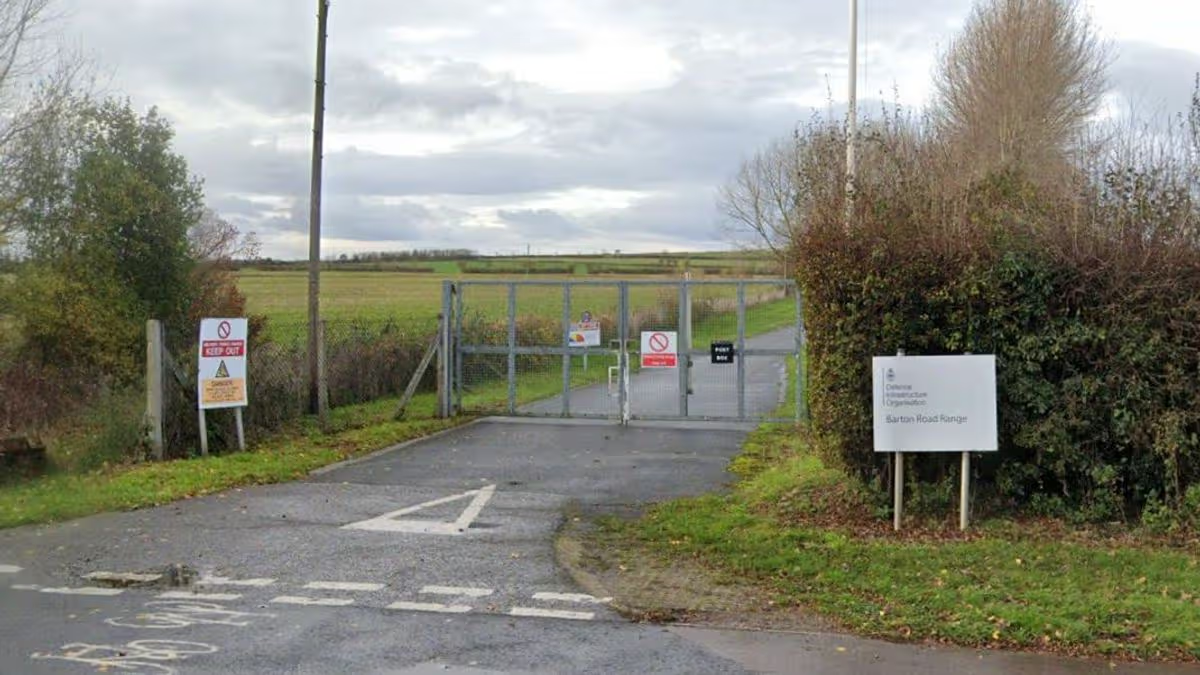
Weekend firing is scheduled at the Barton Road Range throughout July, the Ministry of Defence (MoD) has announced. It has warned people not to enter the range “danger area” if they see the red flags flying or red lights on.

The MoD said: “Due to operational commitments firing including night firing may take place at extremely short notice, after the date of this publication. For your own safety do not enter the range danger area if red flags are flying or red lights are displayed.”

The weekend firing will take place at Barton Road Range on most weekends in July 2026. There are also animal controls being scheduled, a spokesperson for the MoD added.

Advertisement

They said: “Pest Species control and Deer Management, using shotguns and rifles, will also take place on these ranges and training area and members of public are therefore warned of this potential risk when entering the training area and ranges.”

Anyone with queries about when it is safe and whether the range is in use should contact the Training Area Team Leader on 01223 262403. If there is no answer, call 07769282947 to get in touch with the Training Safety Marshall East Anglia Training Area or 01842 855367 for the DTE Ops Room.

Source link

Advertisement
Continue Reading

NewsBeat

‘Lovable’ dad-of-two, 36, dies after incident

Published

on

Wales Online

A well-known forestry worker remembered for his larger-than-life personality and dedication to his family has been honoured following his tragic death.

Stephen Jones, widely known as Steve Peg, died on June 8 in what his loved ones described as a “forestry accident”. The 36-year-old, originally from Cynwyd and living in Acrefair, is survived by his wife Emma and their two children, Cai and Ffion.

Hundreds of people have paid their respects, and a Just Giving campaign set up to assist with funeral costs and support the family has raised approximately £30,000, reports North Wales Live.

Steve’s wife Emma said: “I want to thank everyone for all their support and kindness. Everyone has been amazing.” For the biggest stories in Wales first sign up to our daily newsletter here

Advertisement

Steve’s brother Mike also expressed his gratitude for the overwhelming support, describing Steve as the “best big brother that anyone could want”.

Friend Lee Parry, who launched the page, said: “Our hearts are broken by the loss of our beloved friend Peg who tragically passed away due to a fatal forestry accident. He was a lovable rogue who worked hard to provide for his family. His larger than life personality will be missed by all who knew him.

Advertisement

“We made this page to hopefully raise as much money as we possibly can to give him the send off he deserves, and to help support his beloved wife and his two beautiful young children, who he adored, at this heartbreaking time.”

He added: “We would like to thank everyone for their overwhelming kindness for giving so generously to Steve Peg’s [Just Giving] page. This money will be an incredible help to Steve’s wife Emma, and their children, at such a difficult time. It’s a testament to Steve’s character that so many people have shown their support. The [Just Giving] page will be closing on Monday, July 6 if anyone would still like to donate. We really can’t thank you all enough.”

His funeral service will take place on July 3 at 3pm at Pentrebychan Crematorium LL14 4EP.

Lee added: “This is a public funeral. We are asking that his hunting friends wear hunting clothes. And for everyone else wear what you feel comfortable in as he absolutely hated suits and ties! Refreshments afterwards at Tower Hill barns LL20 7TN.”

Advertisement

A link to contribute to the fundraiser can be found here.

Get daily breaking news updates on your phone by joining our WhatsApp community here. We occasionally treat members to special offers, promotions and ads from us and our partners. See our Privacy Notice

Source link

Advertisement
Continue Reading

NewsBeat

Council agrees to knock down ‘ageing’ buildings and replace with 165 new homes

Published

on

Cambridgeshire Live

The number of homes across the site will increase from 127 to 165

Plans to knock down more than 100 “ageing” buildings and replace them with new ones in Cambridge have been given the go-ahead after a meeting on Wednesday (June 24). Cambridge City Council has now approved plans to knock down buildings at Hanover Court and Princess Court to replace them with 165 new homes.

Advertisement

The now-approved plans, on the site off Hills Road, will see 72 new council homes and 93 private sale homes built in its place. The existing buildings have been described as “ageing” by Councillor Gerri Bird, cabinet member for housing at Cambridge City Council.

The existing two residential blocks consists of 127 one, two, and three-bedroom homes – 82 being council homes and 45 privately owned homes. The redevelopment would see a reduction of 10 council homes (from the existing 82 to 72).

The council stated that the redevelopment at Hanover Court and Princess Court combined with plans to redevelop Stanton House will see the overall number of council homes in the city centre increase.

The city council said the amount of space provided for the 72 new council homes will be bigger than the current 82, as the homes will meet modern space standards and be of a higher quality than the homes being demolished.

Advertisement

It said that doing nothing at Hanover and Princess Courts was “not an option” as the existing buildings had been deemed unsafe due to structural issues and fire risks.

The city council claimed refurbishing the current buildings to meet today’s standards would be incredibly costly. It said that even then, the homes would still fall short of modern space and energy efficiency requirements.

The redevelopment is expected to deliver brand new, high-quality homes that are comfortable, energy-efficient, and affordable to live in.

Cllr Bird said: “These homes need to be demolished as they are not fit for purpose for current residents, so we’ve been looking at the most cost-effective way to redevelop the site to provide new, high-quality council homes for current and future council tenants.

Advertisement

“We are committed to improving the quality of housing for tenants living in ageing council properties like these, and building new high-quality council and market homes to meet growing demand – including more accessible homes for disabled residents.”

Cambridge City Council is working with Cambridge Investment Partnership (CIP) and The Hill Group to deliver this redevelopment.

Source link

Advertisement
Continue Reading

NewsBeat

Supporting women in early labour is important for safe maternity care

Published

on

Supporting women in early labour is important for safe maternity care

The Nottingham University Hospitals NHS Trust report has identified serious failings in care at one of England’s largest maternity services, with lessons for maternity units nationally. Among its findings was a repeated problem at the very start of labour: women and families struggled to access timely assessment and felt dismissed during telephone triage.

In several cases, women were discouraged from attending hospital when they believed labour had started, only to arrive later in established or advanced labour. In some cases, poor care during this period had serious consequences.

Across hospital-based maternity services, attention and resources tend to focus on women in more advanced labour, and those requiring induction of labour or caesarean section. This can mean services miss the chance to identify problems, offer reassurance and build trust at the very start of labour.

Listening to women and providing supportive care at the start of labour sets a woman up for a positive birth experience. Instead, research consistently shows that women report feeling unsupported and discouraged from coming to hospital in early labour.

Advertisement

Right at the start of labour, there is often a mismatch between the needs and expectations of women and the expectations and priorities of maternity services. Many women have long been told that hospital is the safest place to give birth. It is therefore unsurprising that they expect to be welcomed to the maternity unit where they are booked to give birth when labour starts.

The drivers of decision-making on the maternity services side are more complex. They include beliefs about early labour care, national guidance, unsuitable environments and workforce pressures.

Early labour

There is a widespread belief in many maternity systems that while women should give birth in hospital, they should not be admitted until they are in established labour.

Advertisement

This can result in midwives gatekeeping: discouraging or refusing admission in early labour. Women report receiving inconsistent advice, feeling unwelcome and dismissed and having to negotiate permission for admission.

This belief is influenced by international, national and local guidance. NICE guidance states that if a woman seeks advice or attends a midwifery-led unit or obstetric unit with painful contractions but is not in established labour, she should be encouraged “to remain at or return home”, unless doing so could mean she gives birth without a midwife present or becomes distressed.

The same guidance also says early labour assessment should include listening to the woman’s story, asking about her wishes, expectations and concerns, asking about the baby’s movements, offering support and agreeing a plan of care. The problem arises when “return home” becomes the default response, rather than the outcome of careful assessment and discussion.

A practical problem is that many maternity units are not designed or staffed to provide sustained early labour care. Historically, women in early labour were more likely to have access to antenatal ward beds or early labour areas, where they could receive midwifery support outside the labour ward.

Advertisement

As maternity care has shifted towards shorter stays, outpatient monitoring and day-case assessment, many services now have fewer options for supporting women before established labour.

The number of maternity beds in England fell by around 52% between 1987-88 and 2019-20, mainly because women spend less time in hospital before and after birth. Antenatal beds were removed or repurposed to streamline maternity processes, but this also reduced care options.

The result is that many maternity units now lack a suitable environment to care for women in early labour. When there is nowhere appropriate for women to be supported, they are more likely to be encouraged to go home.

Workforce pressures

At the same time, workload and the complexity of women’s care needs have increased. There has been a rise in caesarean birth rates in England, with NHS maternity statistics showing that 45% of deliveries in NHS hospitals in England in 2024-25 were by caesarean section.

Advertisement

Induction of labour has also become more common. These changes increase care requirements for women and babies, particularly on labour wards. Staffing models have often struggled to keep pace with workload and the need for safe, personalised care.

Organisational demands exert significant pressure on midwives to keep women out of hospital and to make decisions based on bed availability and staffing rather than on the care needs of mother and baby.

Midwives have described not admitting women in early labour because of staff and bed shortages. Some have even described hiding women on labour wards because they knew they needed care, while trying to avoid disapproval from senior staff.

The result is a service that can fail to support women at a time when they and their birth partners feel most vulnerable. It is time for a rethink.

Advertisement

Early labour care must be organised around women’s needs and safety, rather than institutional pressures alone. That means properly staffed assessment, clear return plans, dedicated early labour spaces where possible, and workforce models that include time for assessment, reassurance and support.

Research from Denmark, Sweden and Switzerland suggests that early labour care works best when it is accessible, individualised and organised around women’s needs rather than simply her stage of labour. In the Danish study, women had access to a dedicated early labour unit and staff received training to emphasise the importance of early labour care. The wider findings highlighted the value of clear plans, emotional support, continuity and flexible care. This change was brought about in one of Denmark’s busiest units (6,500 births), and is a lesson on how UK maternity units could work with women to improve care.

The Nottingham report shows what can happen when women’s concerns are minimised at the very start of labour. Getting that first contact right will not solve every problem in maternity care, but it is a practical place to begin.

Women need to know that if they call because they are worried, in pain or unsure, someone will listen properly. Early labour may be the beginning of birth, but it should never be the point at which care is weakest.

Advertisement

Source link

Continue Reading

NewsBeat

Wimbledon star’s outfit causes a stir as fans can’t believe who’s sponsoring her

Published

on

Daily Mirror

Tennis players have a large array of different sponsors, but one player’s has caused a stir amongst those tuning in to watch Wimbledon

Tennis fans found themselves double taking when they saw former French Open champion Jelena Ostapenko is sponsored by Tesco. The Latvian star got her Wimbledon campaign off to a flying start.

Advertisement

She broke a few British hearts after seeing off Harriet Dart 6-3, 3-6, 6-4. Ostapenko dispatched the wildcard with her trademark aggressive game, smashing a remarkable 46 winners compared to Dart’s 13.

Her devastating play left spectators on Court No. 1 and viewers at home gobsmacked. Yet even more eyebrows were raised when eagle-eyed fans clocked who was backing her on court.

JOIN US ON FACEBOOK! All the best sports news and much more on our dedicated Facebook page

The iconic British supermarket chain was emblazoned at the top of her top. It would be putting it mildly to say that social media users watching her victory were caught off guard by the unlikely sponsor.

Advertisement

They wrote: “Ostapenko is sponsored by Tesco?!? Ahahaha, that’s the best sponsorship deal I’ve ever seen. Just the concept of Penko picking out a meal deal for lunch every day.”

Another added: “Ostapenko and her Tesco live to fight another day,” before a third said: “Some great event-specific advertising at this years Wimbledon.”

Content cannot be displayed without consent

While her Tesco partnership raised plenty of laughs online, Ostapenko found herself with few admirers on Court No. 1. A number of spectators jeered and booed the former World No. 5 throughout the match.

These crowd reactions were clearly not lost on the Latvian, who made that abundantly clear in her post-victory interview. Embracing her role as the pantomime villain, she said: “I know guys, I’m probably not the one you wanted to win, but thanks guys for a very nice atmosphere.

Advertisement

“Sorry if I was a little bit emotional, but I feel like first rounds are so tough, especially when the opponent is from here.

“It’s funny, I feel like when I play somebody local or somebody the crowd supports, I feel like I’m angry inside in a good way.

“I want to prove wrong that you’re not supporting the right person. I feel like I want you guys to support me in the next match!”

Advertisement

Buy Wimbledon 2026 VIP tickets from Seat Unique

This article contains affiliate links, we will receive a commission on any sales we generate from it. Learn more
Content Image

Prices Vary

Seat Unique

Book tickets here

Wimbledon 2026 is just around the corner and Seat Unique has tickets on sale now with VIP access.

Source link

Advertisement
Continue Reading

NewsBeat

The average American’s dream job will have you spinning

Published

on

The average American’s dream job will have you spinning

Many Americans have been carrying around a secret dream – they want to be a DJ.

The music-focused occupation was the United States and Canada’s favorite “dream job,” according to a study of “how to be a [insert job]” Google searches from May 2025 to May 2026 by U.K.-based payment firm Remitly.

“In an era where AI is rewriting entire industries, the creator economy has gone from niche to normal and people are more open than ever to a fresh start in a new country, the question of ‘what do I want to do with my life?’ has rarely felt more open-ended,” the study said.

The study, which is the third one – 2022, 2024, 2026 – Remitly has completed, revealed the world’s most coveted jobs were actor, followed by pilot, firefighter, lawyer and YouTuber. Actor jumped eight spots in the ranking from its 2024 rank. Lawyer jumped 55 spots.

Advertisement

American consumers’ longing for turntables and microphones is a curious one, as pay can be paltry.

One music-focused career has captivated Americans, pushing it from the 9th-best dream job in 2024 to No. 1 in 2026
One music-focused career has captivated Americans, pushing it from the 9th-best dream job in 2024 to No. 1 in 2026 (Christopher Polk/Getty Images for CBS Radio Inc.)

The average yearly pay for a DJ is $48,566, based on job site Indeed’s analysis of 49 salaries from job postings over the past three years.

The average salary among the nation’s full-time workers was $64,220 through the first three months of the year, according to the Bureau of Labor Statistics’ 2026 first-quarter earnings analysis.

Globally, DJ ranked No. 10, just before judge and just after real estate agent. Only four countries besides the U.S. chose DJ, according to the study – Australia, Canada, Namibia and Wales. The role has jumped 14 spots since 2024, Remitly noted.

The study results come as some 46 percent of U.S. professionals say they plan to look for a new job in the next six months, a June survey of 2,000 workers from talent solutions and business consulting firm Robert Half revealed.

Advertisement

Better benefits and perks, career advancement, and remote work options were the top three reasons triggering job searches, the survey found.

A person walks by street artist Corie Mattie's
A person walks by street artist Corie Mattie’s “Be More Like Betty” mural, created in honor of the late actress Betty White, in Los Angeles, California, January 21, 2022. Actor was listed as the most coveted dream job in the world, according to a new study. (AFP/Getty)

DJs typically tend to be 1099 workers and part of the gig economy, which means they most likely have to find their own source of health insurance and retirement savings, according to tax service BoomTax.

Membership in the American Disc Jockey Association can provide DJs with health insurance and a 401(k) retirement plan, the organization’s website notes.

Startup costs can be as little as $299 up to $1,099 for equipment, according to Colorado-based online store Mile High DJ.

The Independent contacted the American Disk Jockey Association for comment.

Advertisement

Source link

Continue Reading

NewsBeat

‘Tractor fire’ reported on Blundell Lane, Blackrod

Published

on

'Tractor fire' reported on Blundell Lane, Blackrod

The fire broke out on Blundell Lane, off Little Scotland in Blackrod at around 4.20 pm on the afternoon of Monday, June 29, with passers-by reporting seeing smoke in the area.

Later that afternoon, firefighters confirmed that they had been called to the scene to deal with a blaze involving a tractor, which they had dealt with quickly within around half an hour.

A Greater Manchester Fire and Rescue Service spokesperson said: “At 4:20 pm this afternoon, Monday, June 29, three fire engines from Horwich and Wigan stations were called to a fire involving a tractor on Blundell Lane, Blackrod.

Advertisement

“Firefighters arrived quickly and spent around 30 minutes extinguishing the fire.”

Blundell Lane is a country road found off Little Scotland to the west of Blackrod lined with countryside land and occasional houses.

No casualties or serious injuries were reported because of the blaze, and the firefighters returned safely to their bases later that afternoon after the scene was made safe.

Members of the public have been urged to always call 999 in the event of an emergency as soon as it is safe to do so.

Advertisement

Source link

Continue Reading

Trending

Copyright © 2025