

Business
Opinion: Pitch decks as a business pointer




Goldman Sachs raises IHG price target to $190 on stronger RevPAR outlook
Business
NYT Connections Puzzle Answers for June 30, 2026 Delivers Clever Wordplay on Barriers, Sports and Recycling

The New York Times Connections game continued its streak of engaging word challenges Tuesday with puzzle No. 1115, testing players’ abilities to group 16 words into four categories based on subtle thematic links. Released early Tuesday morning, the daily brain teaser drew the usual mix of praise and playful frustration from solvers across social media and puzzle forums.
The solution featured straightforward connections involving physical dividers, winter sports, everyday recyclables and multiple meanings of the word “draft.” While many players solved it with relative ease, the purple category once again proved the trickiest for those unfamiliar with its linguistic flexibility.
Here is the complete breakdown of Tuesday’s Connections answers:
Yellow (easiest): Dividing structures — fence, gate, hedge, wall. These words all describe barriers that separate spaces, whether in yards, properties or landscapes.
Green: Participate in some Winter Olympics — curl, luge, skate, ski. Each represents an event or discipline featured in the Winter Games, from the precision of curling to high-speed luge runs.
Blue: Common recyclables — bottle, box, can, newspaper. These are staple items routinely sorted for curbside pickup programs in communities nationwide.
Purple (hardest): What “draft” might refer to — breeze, on tap, recruit, sketch. The category plays on different senses of “draft”: a cool breeze, draft beer on tap, a military recruit or draft pick, and a preliminary sketch or draft document.
The puzzle’s 16 words were: fence, curl, bottle, breeze, gate, luge, box, hedge, skate, can, wall, ski, newspaper, on tap, recruit, sketch. Players reported that spotting the yellow category early often provided momentum, while the purple category rewarded those with broader vocabulary knowledge.
Since its debut in 2023, Connections has become one of the New York Times’ most popular digital games alongside Wordle and the daily crossword. The simple premise — categorize 16 words into four groups of four — belies the challenge of discerning the sometimes obscure links. Editorials and player feedback highlight how the game promotes lateral thinking and vocabulary expansion in an accessible format.
Tuesday’s edition earned a moderate difficulty rating from the Times’ companion analysis, with many solvers completing it in under five minutes. Social media buzz included congratulations for perfect games and lighthearted complaints about the purple category’s ambiguity. One recurring theme in player discussions was appreciation for categories grounded in everyday life, such as recycling, which resonates with growing environmental awareness.
The New York Times Games team designs Connections with varying difficulty levels signaled by color: yellow for the most obvious, followed by green, blue and purple for the most challenging. This structure allows beginners and experts alike to engage, with the companion articles providing post-game hints and community conversation. For June 30, the companion noted the puzzle’s balance of accessible and clever groupings.
Connections reflects broader trends in word games that blend education and entertainment. Industry analysts point to the surge in such puzzles during and after the pandemic, as people sought mental stimulation and social connection through shared online experiences. The game’s daily release creates a ritual for millions, with streaks, shareable results and competitive leaderboards fostering community.
For those looking to improve, experts recommend starting with obvious clusters — like sports terms or household items — before tackling more abstract links. Reading categories aloud or considering multiple meanings of words can unlock stubborn puzzles. Tuesday’s solution rewarded knowledge of both literal barriers and idiomatic uses of “draft.”
The popularity of Connections has extended beyond casual play. Educators incorporate similar grouping exercises into language arts curricula to build categorization skills and semantic understanding. Corporate team-building sessions have also adopted the format for icebreakers that encourage collaboration and creative problem-solving.
As with previous puzzles, Tuesday’s offering avoided overly obscure references, sticking to relatable concepts. The winter sports category tapped into recent Olympic memories and ongoing interest in seasonal athletics, while the recycling group aligned with public campaigns promoting sustainability. The “draft” category showcased the game’s strength in wordplay, requiring players to pivot between meteorological, beverage, military and artistic contexts.
Puzzle enthusiasts often compare Connections to other NYT offerings. While Wordle focuses on letter deduction within a constrained grid, Connections emphasizes thematic reasoning across a wider field. The variety keeps players returning daily, with some maintaining multi-year streaks.
Looking ahead, the Times continues to refine the game based on user data and feedback. Future puzzles are expected to maintain the mix of straightforward and inventive categories that have defined its success. For those who missed Tuesday’s challenge, archives and companion pieces remain available on the NYT site for review and discussion.
The enduring appeal of Connections lies in its ability to surprise and satisfy. Whether solved over morning coffee or during a commute, it offers a brief but rewarding mental workout. Tuesday’s puzzle exemplified this balance, delivering satisfaction through its clear yet varied themes.
Players who enjoy Connections frequently pair it with the Mini Crossword or Spelling Bee for a complete morning routine. The game’s share feature, complete with colored emoji grids, has become a staple on platforms like X, Facebook and Instagram, sparking friendly competitions among friends and families.
In an era of short attention spans, Connections stands out by rewarding focus and pattern recognition. Its straightforward interface — a simple 4×4 grid — contrasts with the depth of possible connections, making each solve feel like a small victory. Tuesday’s edition, with its mix of physical, athletic, environmental and linguistic themes, captured the essence of what makes the game compelling.
For newcomers, the best advice remains consistent across puzzle communities: trust initial instincts on easy categories, then methodically test remaining words against potential themes. Avoid random guessing to preserve lives, as the game allows only four mistakes before ending the session.
The New York Times has not released official play statistics for individual puzzles, but aggregate data shows millions of daily engagements across its games portfolio. Connections’ growth mirrors the broader renaissance of analog-style digital puzzles that emphasize skill over speed or luck.
As June draws to a close, Tuesday’s puzzle provided a fitting midweek challenge. Solvers who conquered the purple category particularly celebrated the layered meanings of “draft,” a word with rich associations across contexts. The solution’s elegance — simple once revealed, elusive at first — is what keeps players hooked.
Whether you’re a daily devotee or an occasional participant, Connections continues to deliver fresh intellectual entertainment. Check back tomorrow for the next installment, as the Times Games team prepares another round of thematic groupings designed to test and delight.
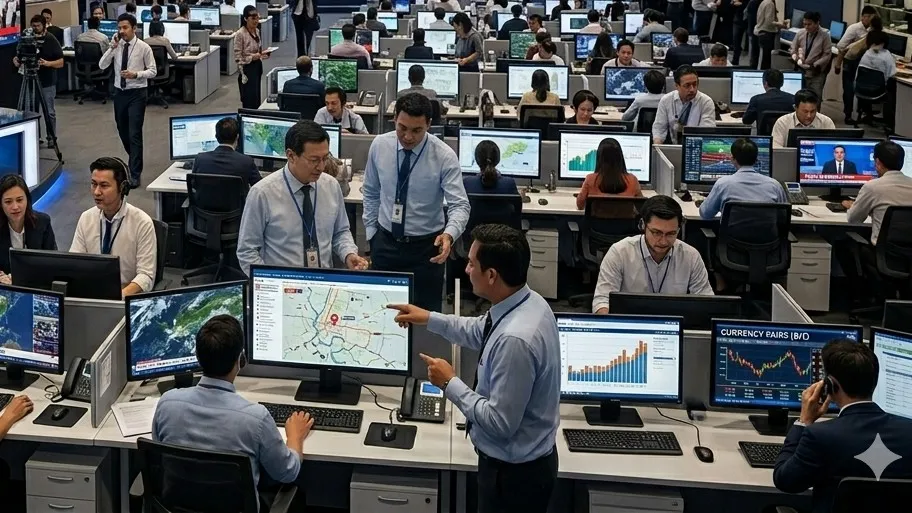
Thailand’s King and Queen are currently on a state visit to France, with Queen Suthida showcasing the country’s royal jewels during the historic diplomatic engagement. Separately, the nation continues to mourn Princess Bajrakitiyabha, who passed away after more than three years in a coma at the age of 47. Read more via the BBC.
Economy and Trade
Thailand is positioning itself as a growing force in international trade and business. The country ranked 27th globally as a destination for business start-ups and is being discussed as a potential trusted trade partner for Europe. Car sales rose 10.6% in May, even as overall production declined by 17.9%, largely due to the shift toward electric vehicles. Explore Thailand’s trade data via the Observatory of Economic Complexity.
Finance and Technology
The Bank of Thailand is advancing plans for a 1:1 baht-backed stablecoin, with new legislation being prepared that will initially limit its use to institutions. Thailand is also being recognised as an emerging global technology hub, with enterprise AI deployments and digital infrastructure investments gaining momentum. Read the full report via Ledger Insights.
Tourism and Travel
Tourism remains a key pillar of Thailand’s economy. The country was recently voted the world’s most welcoming destination at an international awards event held in Madrid. New cross-border QR payment functionality has been launched to make travel more seamless for international visitors. However, a proposed 1,000 THB outbound travel fee for residents has been cancelled, while a 300 THB international visitor tourism tax is confirmed to proceed. Read more via Travel and Tour World.
Public Safety and Environment
Thai authorities have placed 43 provinces under flood and landslide watch amid heavy monsoon rains, with warnings issued through early July. A bomb attack in Thailand’s Tak Bai region injured two Malaysian nationals. Additionally, the US Embassy issued a health alert regarding enhanced Ebola screening protocols. Read the Nation Thailand flood warning here.
Source : Google News – Search
Other People are Reading
Business
Motilal Oswal initiates coverage on Tata Capital, gives target price and re-rating triggers

The brokerage said a meaningful re-rating would require sustained improvement in return on assets (RoA) and return on equity (RoE), supported by continued expansion in higher-yielding retail lending segments.
While it expects the company to deliver healthy AUM growth and gradual improvement in profitability over the medium term, it also believes current valuations adequately reflect these positives. The AUM is expected to grow at a CAGR of 23% over FY26-28E.
Also Read | Zerodha now wants to enter investment banking space, seeks Sebi nod
The company’s margins are expected to gradually improve as the portfolio mix shifts further toward retail and unsecured lending, with NIMs increasing to nearly 5.4%/5.5% in FY27E/FY28E.

While credit costs increased following the TMFL merger due to stress in the Motors Finance and select unsecured portfolios, asset quality trends have improved meaningfully, with Motors Finance returning to profitability in 4QFY26, the credit costs is expected to normalize further and moderate to nearly 1.1% of AUM over FY27E-FY28E.
Tata Capital benefits from a strong liability franchise, supported by Tata Group parentage and a AAA credit rating which enables access to funding at competitive costs. The brokerage expects margins to gradually improve as the portfolio mix shifts further toward retail and unsecured lending, with NIMs increasing to nearly 5.4%/5.5% in FY27E/FY28E from approximately 5.2% in FY26.Its NIM moderated in FY26 due to slower growth in unsecured lending and the continued runoff of the motor finance portfolio. However, improving disbursement trends in unsecured segments and the turnaround of the motor finance business are expected to support margin recovery from FY27
As the company has displayed disciplined cost control measures through digital initiatives, process improvements, and branch-level productivity. As new branches scale and technology matures, productivity gains are expected to enhance efficiency. The cost-to-income of the company is estimated at 35%/33% and opex-to-average assets of 2.1%/2.0% in FY27/FY28.
The company is the third-largest diversified NBFC in India with a total AUM of Rs 2.77 trillion as of Mar’26. It is among the fastest-growing large diversified NBFCs, with total AUM (excluding Tata Motors Finance business) recording a strong CAGR of nearly 29% between FY23 and FY26.
The company has displayed consistent growth while maintaining healthy asset quality, reflected in a GS3 of 2% and NS3 of 0.9%, which is among the best within the large, diversified NBFC peer set as of Mar’26.
Also Read | HAL announces final dividend of Rs 10 for FY26. Check record date and other details
Motilal Oswal said that while Tata Capital’s outlook remains favourable, it believes the current valuation adequately reflects the company’s medium-term growth and earnings potential.
Motilal Oswal expects healthy growth momentum across the retail, SME, auto, and housing segments, with housing likely to remain the key growth driver, followed by retail, SME, and the emerging/mid-corporate businesses.
(Disclaimer: Recommendations, suggestions, views and opinions given by the experts are their own. These do not represent the views of The Economic Times)

The fixed-income market has become increasingly focused on the U.S.-Iran conflict, which remains fluid and could escalate further. –Income Research + Management
Market in Review
During the first quarter of 2026, investors faced a broadening set of risks, including escalating geopolitical tensions, concerns about private credit, and Artificial Intelligence related disruption fears. None were enough to derail an expanding U.S. economy, even as signs of fragility intensified. The labor market showed that finding a job was becoming more difficult; there were fewer job openings than unemployed workers (a ratio of 0.91); and the average duration of unemployment rose to nearly 26 weeks. Meanwhile, inflation appeared reasonably well anchored with February’s year-over-year Consumer Price Index rising by 2.4%. Given that relatively stable data, the U.S. Federal Reserve (“Fed”) kept its target range steady at 3.50%–3.75% during its January and March meetings. While the Federal Open Market Committee’s March projections still implied one rate cut in 2026, the market lost confidence that the Fed could ease as the U.S.-Iran conflict intensified. With the Strait of Hormuz closed and mounting concerns over increased strikes on energy infrastructure, the West Texas Intermediate crude oil price rose from $57.42 to $101.38 per barrel, with many believing oil—and inflation—could move even higher if the conflict persisted. Against that backdrop, the Treasury curve bear-flattened quarter-over-quarter, reflecting expectations of higher-for-longer monetary policy and slower long-term growth. The two-year Treasury rate rose by 0.32% to 3.79%, while the 30-year rate rose by 0.07% to 4.91%.
Portfolio Performance
During the first quarter of 2025, the Harbor Disciplined Bond ETF (“ETF”) returned –0.05% (NAV), matching its benchmark, the Bloomberg US Aggregate Bond Index, which also returned –0.05%.
The ETF’s performance relative to the Index was driven primarily by security selection in the Financials sector.
The investment-grade and high-yield corporate markets were

Peshkova/iStock via Getty Images

By Gary Zhu, CFA and Deanna Leighton, CFA
A holistic approach may help navigate the diverse, dynamic world of fixed-income opportunities.
Insurance investors face a broader opportunity set than ever across public and private credit—from

The developer behind the contentious Chellingworth Nedlands development has applied for a two-year extension to start construction.

Chinese humanoid robots attempted penalty kicks in a World Cup-style event. The experiment showcased their ability to perform precise and coordinated movements in sports simulations. The event highlights advancements in robotics technology, demonstrating potential applications in entertainment and sports training. For more details, visit Bloomberg Television and related sources.
In an innovative display of technology, Chinese robots recently participated in a World Cup-style penalty kick challenge, showcasing advancements in robotics and artificial intelligence. The event aimed to demonstrate the precision and agility of autonomous machines in dynamic tasks traditionally performed by humans in sports. These robots, equipped with sophisticated sensors and motion algorithms, attempt to simulate real football penalties, challenging human players in accuracy and speed.
The experiment attracted significant attention from both tech enthusiasts and sports fans, highlighting China’s progress in robotics research. Engineers programmed the robots to analyze various factors such as ball trajectory, goalkeeper positions, and environmental conditions. Their goal was to improve robotic motor skills and decision-making, pushing the boundaries of what machines can achieve in complex physical activities.
This groundbreaking event symbolizes China’s efforts to integrate robotics into everyday life. Beyond entertainment, such advancements could be applied to rehabilitation, automation, and even future sports training. As robots continue to improve, they may someday participate in more elaborate sports competitions, blending technology with traditional human activities in exciting new ways.
Other People are Reading
Business
Meta Platforms Stock Jumps 2.4% Today as Investors Bet the Big AI Spending Selloff Was Already Overdone
Meta Platforms shares climbed Monday morning, extending a recovery from a rough stretch earlier this year in which investors grew increasingly anxious about the social media giant’s enormous spending plans for artificial intelligence infrastructure.
Shares of the Menlo Park, California-based company were trading at $563.22 as of 11:09 a.m. EDT, up $12.97, or 2.36%, on the day. The gain builds on a broader rebound that has taken hold over the past few sessions, with the stock recovering meaningfully from levels well below its all-time closing high of $787.42, reached in August 2025, and its 52-week intraday high of roughly $796.
Much of Meta’s stock weakness earlier this year traced back to investor unease over the scale of the company’s planned capital expenditures. Meta has guided toward 2026 capital spending of between $125 billion and $145 billion, an enormous sum directed primarily at AI hardware and data center construction. That spending forecast compressed projections for the company’s free cash flow and contributed to a year-to-date de-rating of the stock, as some investors questioned whether returns from those AI investments would materialize on a timeline that justified the near-term financial strain.
Monday’s rally reflects what analysts have described as a growing belief that the earlier selloff went too far. Institutional investors and analysts increasingly point to Meta’s distinct advantage among megacap technology peers: a deeply established advertising business capable of converting AI investment into tangible near-term returns through improved targeting, stronger user engagement and rising ad pricing power. That contrasts with some AI infrastructure spending elsewhere in the sector, where monetization paths remain less clearly defined or more dependent on a small number of large customers.
A specific catalyst behind Monday’s move involves an internal policy shift at Meta. The company has enacted new restrictions limiting its applied AI developers from using external coding and AI development platforms, including tools such as Claude Code and Codex from outside providers. The move is intended to guard against unintentional model distillation, a process by which a company’s proprietary AI systems could inadvertently leak insights to external platforms, and to protect Meta’s broader intellectual property as it continues developing its own AI models in-house. While the restriction introduces some near-term friction for Meta’s internal software development workflows, market commentary has framed the decision as a sign of the company’s determination to reduce reliance on external AI tools and protect the long-term value of its own AI research.
Not all of the news circulating around Meta on Monday was as clearly favorable. Reports emerged over the weekend that Google had placed limits on Meta’s access to its Gemini AI models, citing infrastructure and compute capacity constraints on Google’s end. Meta had reportedly relied heavily on Gemini to help automate content-safety and anti-scam processes across its platforms, and the new restrictions have reportedly delayed several internal projects while forcing the company to impose stricter token-usage limits on its own developers working with the technology. Separately, internal disclosures reported Monday indicated that Meta’s fast-tracked effort to replace human content moderators with generative AI systems has run into what were described as systemic glitches in the automated moderation rollout, raising questions about the pace at which the company is shifting that function away from human reviewers in pursuit of cost savings.
Despite those operational headwinds, the stock’s gains suggest investors are currently weighing Meta’s long-term advertising and AI monetization story more heavily than the specific near-term technical and operational frictions tied to its AI rollout. Wall Street’s broader view of the stock has remained largely favorable over the past month, with multiple analysts maintaining Buy ratings. Price targets among analysts tracked by financial data providers have averaged in the range of $825 to $827, with high estimates reaching as much as $1,015 and low estimates around $664, reflecting a wide but generally optimistic range of expectations for where the stock could trade over the coming year.
Meta’s underlying financial profile remains substantial even amid the AI spending debate. The company’s trailing 12-month revenue stands at roughly $201 billion, with net profit of approximately $60.5 billion over the same period, figures that place Meta among the top performers in its broader software and internet services industry category. The company operates through two primary segments: Family of Apps, which includes Facebook, Instagram, WhatsApp and Messenger, and Reality Labs, which covers the company’s virtual reality, augmented reality and AI wearable device efforts, including its AI-enabled smart glasses line. Meta’s next quarterly earnings report is expected around July 29, a date that will give investors a clearer read on whether the company’s AI spending is beginning to show measurable returns within its advertising business or its broader product lineup.
The company also continues to pay a modest dividend, with a forward annualized payout of $2.10 per share, translating to a yield of roughly 0.38% at current price levels; the most recent ex-dividend date passed on June 15.
Meta’s situation illustrates a broader theme playing out across megacap technology stocks this year, as investors attempt to differentiate between companies whose AI spending appears likely to generate near-term, identifiable returns and those whose investment cases rest more heavily on longer-term, less certain payoffs. For Meta, the combination of an established and highly profitable advertising engine, continued growth in user engagement metrics, and a defensive posture toward protecting its own AI development from leakage to external platforms appears, for now, to be winning over investors who had grown skeptical of the company’s spending trajectory earlier this year.
Whether that renewed optimism proves durable will likely depend on Meta’s ability to demonstrate concrete progress on AI monetization in its upcoming earnings report, along with how the company navigates near-term friction points, including its complicated relationship with external AI providers like Google and the operational challenges tied to automating content moderation at scale. For Monday at least, investors appeared willing to look past those complications and reward the stock for what many now view as a buying opportunity following an earlier overreaction to the company’s aggressive AI infrastructure spending plans.

The board of the company has “approved, in principle”, a proposal to undertake a share buyback of up to Rs 120 crore, SIS said in a regulatory filing.
This will be “at a maximum price of Rs 478.50 per equity share, representing a 10 per cent premium to the closing price on June 25, 2026,” it added.
The company estimates that around 25 lakh shares could be bought back under the proposed programme, although the final number may vary depending on the buyback price and other factors.
The company said the proposed buyback, which is subject to regulatory and shareholder approvals, will take the total capital returned by the company to shareholders through dividends and buybacks to around Rs 720 crore since its listing in August 2017.
“SIS has returned capital to shareholders in every phase after going public – first through dividends, then through buybacks,” it said, adding that the company has so far returned about Rs 600 crore to shareholders through four completed buybacks worth around Rs 420 crore and dividends of about Rs 180 crore.
The proposed buyback would add a further Rs 120 crore to the payout, it added. “Across four completed buybacks (Rs 420 crore) and its dividends (Rs 180 crore), the company has returned an estimated Rs 600 crore to its shareholders; this proposed fifth programme commits up to a further Rs 120 crore, taking the cumulative total to approximately Rs 720 crore,” the company said in a statement.
SIS had undertaken buybacks of Rs 100 crore in FY21, Rs 80 crore in FY23, Rs 90 crore in FY24 and Rs 150 crore in FY26.
During FY26, the company also paid dividends amounting to Rs 98.86 crore, taking total shareholder returns for the fiscal to about Rs 249 crore.
Commenting on the proposal, Group Managing Director Rituraj Kishore Sinha said the company has bought back nearly 86 lakh shares since listing and will continue to evaluate opportunities to return surplus capital to shareholders.
“The proposed fifth buyback, like the four before it, is expected to be accretive to both earnings per share and return on capital,” he said.
The mode of buyback and detailed terms will be finalised after obtaining necessary approvals under applicable provisions of the Companies Act and the Securities and Exchange Board of India (SEBI) regulations.
Goldman Sachs raises IHG price target to $190 on stronger RevPAR outlook

XRPL lending protocol enters key validator voting phase

German coach decries VAR call but says round of 32 exit ‘not enough’

No Jackpot Winner as $257 Million Prize Rolls Over to $269 Million Monday Draw

Renter of Home in Anne Heche Crash Denies Settlement With Son

Two goals and an assist by sheer aura: Cristiano Ronaldo just entered the World Cup chat

Bajaj Finance Card Kaise Banaye | Bajaj Finserv EMI Card 2026 | Bajaj EMI Card

XRP Price Falling As Bitcoin Insiders Sell Before Micro Strategy Announcement

Money is Everything #zakirkhan #money #life #confidence #viralshorts #trending
-
Sports7 days ago
Two goals and an assist by sheer aura: Cristiano Ronaldo just entered the World Cup chat
-

 Fashion4 days ago
Weekend Open Thread: Staud – Corporette.com
-

 Politics4 days ago
The House | Manchesterism won’t survive the painful trade-offs unless it gets citizens on board
-

 Politics4 days ago
Potential 2028er World Cup attendee leaderboard
-

 News Videos2 days ago
MAJOR BITCOIN & MARKET UPDATE!!!! (MUST WATCH ASAP!!!)
-

 Business4 days ago
Asia stock markets slide as tech shares slump
-

 Tech5 days ago
A Look At A Gaggle Of Transputer Boards
-

 Crypto World6 days ago
Securitize Wraps Roubini's SEC-Registered ETF as Dubai VARA Digital Security
-
Crypto World6 days ago
Bitcoin (BTC) Dips Below $62K, Ethereum (ETH) Plunges 6% Daily: Market Watch
-
 Crypto World5 days ago
Dell (DELL) Shares Tumble Over 5% Following Analyst Downgrade to Hold
-

 Crypto World3 days ago
Coinbase, Circle Deepen Crypto Stock Losses Despite Resilient S&P 500
-
Business6 days ago
Entergy settles forward sale agreements, raises $672 million in cash proceeds
-

 Crypto World3 days ago
Kraken's xStocks Opens Bending Spoons IPO Registration to EEA Retail
-

 Sports3 days ago
FIH Pro League: India defeat Pakistan 7-1, register biggest win of campaign | Other Sports News
-

 Crypto World4 days ago
Bitcoin Sparks $600M Hourly Liquidations With $65,000 Set To Become Resistance
-

 Tech2 days ago
Bluekit phishing kit adopts browser-in-the-middle for login theft
-

 Tech3 days ago
Russian hackers now target Signal backup recovery keys
-
 Crypto World4 days ago
Hyperliquid Named on Singapore MAS Investor Alert Register
-

 Crypto World4 days ago
RTX holders must register wallets before token distribution begins
-

 Crypto World5 days ago
Ripple and SBI launch RLUSD in Japan after JFSA approval
You must be logged in to post a comment Login