

Crypto World
What is the ETH/BTC ratio? How to read Ethereum’s performance against Bitcoin



The ETH/BTC ratio prices Ethereum in Bitcoin instead of dollars, stripping out the market-wide move so you can see which of the two is actually winning. Here is what the ratio measures, how to read it, what drives it, and why it has fallen to multi-year lows.
Summary
- The ETH/BTC ratio is the price of one ether expressed in bitcoin, a single number that shows whether Ethereum is outperforming or underperforming Bitcoin regardless of what the dollar price of either is doing.
- A rising ratio means ether is gaining on bitcoin, often a sign of risk appetite and a healthier environment for altcoins; a falling ratio means bitcoin is winning, usually a sign of caution and bitcoin dominance.
- As of mid-2026, the ratio sits near multi-year lows around 0.026, reflecting Ethereum’s deep underperformance against Bitcoin, down sharply from levels near 0.08 in 2021 and 0.15 in 2017.
- The ratio is driven by the tug-of-war between Ethereum-specific forces (ETF flows, staking, layer-2 activity, supply dynamics, competition from other chains) and Bitcoin-specific forces (halving cycles, ETF and treasury demand).
- It is a relative-strength gauge and a regime signal, not a price target, and it can stay depressed or elevated for years, so it should inform context rather than dictate trades.
The ETH/BTC ratio is the price of one ether (ETH) measured in bitcoin (BTC) rather than in dollars, and it is one of the most useful single numbers in crypto for understanding which of the two largest assets is actually winning. When you look at Ethereum’s price in dollars, you are seeing two things mixed together: how Ethereum is doing, and how the entire crypto market is doing, because almost everything in crypto moves loosely with Bitcoin and with the broad risk environment.
The ETH/BTC ratio removes the second factor. By pricing Ethereum directly in Bitcoin, it cancels out the market-wide move that both assets share and isolates Ethereum’s performance relative to Bitcoin alone. If both assets rise 20% in dollars, the ratio does not move, because neither outperformed the other. If Ethereum rises while Bitcoin is flat, the ratio rises, and you learn something the dollar chart obscured: capital is favoring Ethereum over Bitcoin right now.
That makes the ratio a lens, not just a number, and learning to read it changes how you see the market. This guide explains what the ETH/BTC ratio is and how it is calculated, why traders watch it, how to interpret a rising or falling ratio, what the ratio has done historically and where it sits now, the forces on each side that push it up or down, a worked example you can follow step by step, and how to use it sensibly without overreading it.
The aim is to give you a durable mental model rather than a snapshot, because the specific level will change, but the way the ratio works will not. None of this is trading advice; the ratio is an analytical tool, and like any tool, it can mislead if used in isolation. Used well, though, it is one of the clearest windows into the single most important relationship in the asset class, the one between its two dominant coins.
What the ratio actually measures
Start with the mechanics, because they are simple and the simplicity is the point. The ETH/BTC ratio is calculated by dividing the price of ether by the price of bitcoin, using the same currency for both, so the units cancel and you are left with a pure ratio. If ether trades at $1,550 and bitcoin trades at $60,000, the ratio is 1,550 divided by 60,000, which is about 0.0258, usually written as 0.026. That number tells you that one ether is currently worth about 2.6% of one bitcoin. You can read it directly: at a ratio of 0.026, it takes roughly 38 ether to equal one bitcoin in value.
Most charting platforms quote the pair as ETHBTC or ETH/BTC, and many crypto exchanges let you trade the pair directly, buying ether with bitcoin or the reverse, which is part of why the ratio is so closely watched, it is a live, tradable market, not just a derived statistic.
What the ratio measures, conceptually, is relative strength. It answers a question the dollar price cannot: between the two largest assets in crypto, which is the market choosing right now? Because Bitcoin and Ethereum share most of the same macro drivers, interest rates, risk appetite, regulatory news, dollar liquidity, comparing them to each other holds those shared factors roughly constant and exposes the difference that is specific to each asset. A dollar chart of Ethereum during a broad sell-off shows Ethereum falling, but it cannot tell you whether Ethereum fell more or less than Bitcoin.
The ratio can. If Ethereum fell harder than Bitcoin, the ratio dropped even as both went down, revealing that within the decline, capital preferred the relative safety of Bitcoin. That is the core value of the metric: it separates Ethereum’s own story from the market’s story, and in doing so it often reveals the direction of capital rotation that the dollar price hides.
Why traders watch it
The ratio matters because it functions as a regime indicator for the broader market, not just for Ethereum. In crypto, there is a long-observed pattern in which capital rotates in a rough sequence: money flows into Bitcoin first during the early, cautious phase of a rally, then rotates into Ethereum as confidence grows, and then spreads out into smaller altcoins as risk appetite peaks.
Because Ethereum sits in the middle of that sequence, the largest and most established asset after Bitcoin, the ETH/BTC ratio often acts as a barometer for where the market is in that cycle. A rising ratio, with Ethereum gaining on Bitcoin, frequently signals that risk appetite is building and that the environment is turning favorable for altcoins broadly, since Ethereum tends to lead the alt market. A falling ratio, with Bitcoin winning, usually signals the opposite: caution, a flight toward the relative safety of Bitcoin, and a harder environment for smaller tokens.
This is why traders treat the ratio as a piece of market-structure information instead of just a fact about two coins. When the ratio is trending up, many interpret it as confirmation of an “altcoin season” or “ETH season,” a period when capital is willing to move out the risk curve and non-Bitcoin assets outperform. When it is trending down, the read is “Bitcoin season” or rising “Bitcoin dominance,” a period when Bitcoin absorbs the market’s attention and capital while alts bleed against it. Portfolio decisions follow from this framing: a trader who believes the ratio is turning up might tilt toward Ethereum and altcoins, while one who sees it falling might rotate toward Bitcoin or cash.
The ratio also serves as a sanity check on narratives. If commentators are loudly predicting an Ethereum breakout but the ETH/BTC ratio keeps falling, the market is voting against the narrative in the most direct way available, by pricing Ethereum lower against Bitcoin quarter after quarter. Watching the ratio keeps a trader honest about what is actually happening versus what is being talked about.
How to read a rising or falling ratio
Reading the ratio is mostly about direction and context instead of any single absolute level. A rising ETH/BTC ratio means ether is appreciating relative to bitcoin, whether because ether is rising faster than bitcoin, falling more slowly, or rising while bitcoin falls. In all of those cases the message is the same: on a relative basis, the market is favoring Ethereum.
Sustained increases in the ratio tend to coincide with periods of broad risk appetite, strong Ethereum-specific catalysts, and outperformance across the altcoin complex, since Ethereum often pulls the alts along with it. A falling ratio carries the opposite message: bitcoin is winning the relative contest, the market is leaning toward caution and Bitcoin dominance, and altcoins are generally struggling against bitcoin even if they are flat or rising in dollar terms.
The crucial discipline is to read the ratio in context instead of as a standalone buy or sell signal. The same ratio level can mean very different things depending on the trend and the backdrop. A ratio of 0.026 reached on the way down, after months of Ethereum underperformance, signals weakness and momentum against Ethereum. The same 0.026 reached on the way up, after a period of Ethereum gaining, would signal the opposite, recovering relative strength.
Direction and trend matter more than the absolute figure. It also helps to watch the ratio across multiple timeframes: a short-term bounce in the ratio within a long-term downtrend is a different and weaker signal than a multi-month trend change. And because the ratio is relative, it is silent about absolute price. The ratio can rise while both assets fall in dollars, if Ethereum falls less, which is relative outperformance during an absolute loss, useful to know but not the same as a gain. Reading the ratio well means always holding two questions at once: which asset is winning the relative contest, and what is the absolute market doing underneath that contest.
A worked example
Make it concrete with numbers you can follow. Suppose ether is trading at $1,550 and bitcoin at $60,000. Divide 1,550 by 60,000 and you get 0.0258, so the ETH/BTC ratio is about 0.026, and one ether is worth roughly 2.6% of one bitcoin, or equivalently it takes about 38 ether to equal one bitcoin. Now run three scenarios from that starting point to see how the ratio responds to relative moves.
In the first scenario, both assets rise 25% in dollars: ether to about $1,938 and bitcoin to $75,000. The ratio is 1,938 divided by 75,000, which is still about 0.0258. Despite a large dollar gain in both, the ratio did not move, because neither outperformed the other, exactly the information the dollar chart would have hidden.
In the second scenario, ether outperforms: ether doubles to $3,100 while bitcoin stays at $60,000. The ratio becomes 3,100 divided by 60,000, or about 0.052, a doubling of the ratio. This is the signature of Ethereum outperformance, and a trader watching only the ratio would see it climb from 0.026 to 0.052 and read a strong shift of capital toward Ethereum, the kind of move associated with an ETH-led alt rally. In the third scenario, the market falls but Ethereum falls harder: bitcoin drops to $48,000 (down 20%) while ether drops to $1,085 (down 30%).
The ratio is 1,085 divided by 48,000, or about 0.0226, a decline from 0.026. Here both assets lost money in dollars, but the ratio fell, telling you that within the sell-off, capital preferred bitcoin and Ethereum bore more of the damage. These three cases show the ratio’s whole purpose in miniature: it ignores the shared move and reports only the relative winner, which is the piece of information that dollar prices alone cannot give you.
Where the ratio has been, and where it is now
History gives the current level its meaning, and the history of ETH/BTC is a story of a long round trip. In Ethereum’s earlier years the ratio climbed dramatically as Ethereum established itself as the clear number-two asset and the home of smart contracts, decentralized finance, and much of crypto’s developer activity. It reached its highest levels around mid-2017, near 0.15, when one ether was worth about 15% of a bitcoin, a peak of Ethereum’s relative strength driven by the initial-coin-offering boom that ran on Ethereum.
The ratio then fell sharply, recovered into the 2021 cycle to peak around 0.08 as decentralized finance and non-fungible tokens drove enormous activity on Ethereum, and has since entered a prolonged decline. As of mid-2026, the ratio sits near multi-year lows around 0.026, with ether near $1,550 against bitcoin near $60,000, a level that reflects a sustained stretch of Ethereum underperforming Bitcoin.
The reasons for the long decline are worth understanding because they explain why the ratio is where it is instead of simply that it is low. Several forces have weighed on Ethereum’s relative strength. Bitcoin has captured an enormous wave of institutional demand through spot ETFs and corporate-treasury adoption, a clean, simple “digital gold” narrative that has pulled capital toward Bitcoin specifically. Ethereum, meanwhile, has faced intensifying competition from faster, cheaper chains, with much of the speculative and developer energy that once flowed to Ethereum moving to rivals, which has diluted the “Ethereum is the only smart-contract platform that matters” thesis that powered its earlier outperformance.
Ethereum’s own narrative has also been harder to summarize than Bitcoin’s, shifting across staking, scaling through layer-2 networks, and supply dynamics in ways that are powerful but complex, and complexity is a disadvantage in a market that rewards simple stories. The result is a ratio that has spent a long time grinding lower, which is the context any reader should hold when they see the current figure: it is not a momentary dip but the late stage of a multi-year trend, which is exactly why it is so closely watched for signs of a turn.
What drives the ratio up and down
To anticipate the ratio instead of just observe it, you have to understand the forces on each side, because the ratio is a tug-of-war between Ethereum-specific and Bitcoin-specific drivers. On the Ethereum side, the factors that tend to push the ratio up include strong inflows into Ethereum ETFs, which signal institutional demand specifically for ether; growth in staking, which locks up supply and can tighten the available float; rising activity on Ethereum and its layer-2 networks, which supports the case that the network is being used; and periods when Ethereum’s supply dynamics turn deflationary, reducing net issuance. Broadly, anything that strengthens Ethereum’s relative narrative or tightens its supply relative to Bitcoin tends to lift the ratio. When these forces are strong and Bitcoin lacks an equally strong catalyst, capital rotates toward Ethereum and the ratio climbs.
On the Bitcoin side, the factors that push the ratio down include the four-year halving cycle and its associated demand narratives, large institutional inflows into Bitcoin ETFs, corporate-treasury accumulation of Bitcoin, and any environment in which the market wants the relative safety and simplicity of Bitcoin over the complexity of Ethereum and altcoins. Risk-off conditions generally favor Bitcoin and pull the ratio down, because in a cautious market capital concentrates in the most established, most liquid, most narratively simple asset, which is Bitcoin.
The overall risk environment is the backdrop to both sides: in risk-on periods, capital is willing to move out the curve toward Ethereum and the ratio tends to rise, while in risk-off periods it retreats toward Bitcoin and the ratio tends to fall. This framework explains why the ratio has been weak: Bitcoin has enjoyed powerful, simple, institution-friendly catalysts in ETFs and treasuries, while Ethereum’s catalysts have been real but more diffuse, and much of the market has been in a cautious, Bitcoin-favoring posture. A durable turn in the ratio would require Ethereum-specific demand to outweigh Bitcoin’s, which is exactly what traders watch the ratio to detect.
How to use the ratio without overreading it
For all its usefulness, the ratio is easy to misuse, and using it well means respecting its limits. The most important discipline is to remember that the ratio is a relative-strength gauge, not a price target or a guaranteed mean-reverting signal. A common error is to look at a depressed ratio and assume it must bounce back toward old levels, treating the multi-year average as a magnet.
There is no rule that forces the ratio to revert. It can stay depressed for years if Ethereum continues to underperform, just as it can stay elevated during a strong Ethereum cycle, and betting on reversion simply because the ratio looks low has cost many traders dearly through long stretches of continued underperformance. The ratio describes the current balance of relative strength; it does not promise that the balance will swing back on any particular schedule.
The second discipline is to never trade the ratio in isolation. It is one input among many, most powerful when combined with an understanding of the absolute market environment, the specific catalysts on each side, and your own time horizon. The ratio tells you which asset is winning the relative contest, but it says nothing about whether the whole market is heading up or down in dollars, which is what actually determines whether you make or lose money in absolute terms.
A rising ratio in a collapsing market still means losses; a falling ratio in a soaring market can still mean gains. The ratio is best used to inform allocation tilts and to read market structure, for example to judge whether the environment favors Ethereum and alts or Bitcoin, instead of as a standalone entry or exit trigger. Treat it as a compass that shows direction of relative capital flow, not a clock that tells you when to act, and it becomes one of the more reliable instruments in a crypto analyst’s toolkit. Misread as a precise timing signal or a guaranteed reversion bet, it becomes a trap. The metric is honest; the overreading is the danger.
Frequently Asked Questions
What is a good ETH/BTC ratio?
There is no single “good” level, because the ratio is a relative measure whose meaning depends on trend and context instead of any fixed number. Historically the ratio has ranged from highs near 0.15 in 2017 and 0.08 in 2021 down to multi-year lows around 0.026 in 2026. A higher ratio reflects stronger Ethereum performance against Bitcoin, and a lower one reflects Bitcoin dominance, but neither is inherently “good” or “bad,” it depends on which asset you favor and where you are in the cycle. What matters more than the absolute level is the direction: a rising ratio signals Ethereum gaining, a falling ratio signals Bitcoin winning. Read the trend and the backdrop, not a target number.
How do you calculate the ETH/BTC ratio?
Divide the price of ether by the price of bitcoin, using the same currency for both so the units cancel. For example, if ether is $1,550 and bitcoin is $60,000, the ratio is 1,550 divided by 60,000, which equals about 0.0258, usually written as 0.026. That means one ether is worth roughly 2.6% of one bitcoin, or that it takes about 38 ether to equal one bitcoin. Most charting platforms display the pair directly as ETHBTC or ETH/BTC, so you rarely need to calculate it by hand, and many exchanges let you trade the pair directly, which is why it behaves as a live market instead of just a derived statistic.
What does a rising ETH/BTC ratio mean?
A rising ratio means ether is appreciating relative to bitcoin, whether because ether is rising faster, falling more slowly, or rising while bitcoin is flat or falling. The shared message is that the market is favoring Ethereum over Bitcoin on a relative basis. Sustained increases often coincide with broad risk appetite and outperformance across altcoins, since Ethereum tends to lead the alt market, which is why a rising ratio is frequently read as a signal of “ETH season” or a building altcoin rally. The key caveat is that a rising ratio describes relative strength only; it says nothing about whether the overall market is going up or down in dollar terms.
Why has the ETH/BTC ratio been falling?
The long decline reflects a tug-of-war that Bitcoin has been winning. Bitcoin has captured a powerful wave of institutional demand through spot ETFs and corporate treasuries, supported by a simple “digital gold” narrative. Ethereum has faced intensifying competition from faster, cheaper chains that drew away speculative and developer activity, while its own narrative, spanning staking, layer-2 scaling, and supply dynamics, has been harder to summarize than Bitcoin’s. A generally cautious, risk-off market has also favored Bitcoin’s relative safety. The combination pushed the ratio to multi-year lows near 0.026 by mid-2026. A durable turn would require Ethereum-specific demand to outweigh Bitcoin’s catalysts.
Can the ETH/BTC ratio predict altcoin season?
It is one of the more useful indicators for it, but not a precise predictor. Because Ethereum sits between Bitcoin and smaller altcoins in the typical rotation of capital, the ETH/BTC ratio often acts as a barometer: a rising ratio suggests capital is moving out the risk curve toward Ethereum and, by extension, toward altcoins, while a falling ratio suggests retreat toward Bitcoin. Many traders treat a sustained uptrend in the ratio as confirmation that an altcoin season is building. However, it is a relative-strength gauge, not a guarantee, and it should be combined with other signals and an understanding of the absolute market, instead of treated as a standalone forecast of when alts will run.
Should I trade based on the ETH/BTC ratio?
The ratio is best used as an analytical and allocation tool instead of a standalone trading trigger, and this is not trading advice. It is most valuable for understanding market structure, judging whether the environment favors Ethereum and altcoins or Bitcoin, and informing how you tilt a portfolio, instead of as a precise entry or exit signal. Two cautions matter most: do not assume a low ratio must revert to old highs, because it can stay depressed for years, and never read it in isolation, because it says nothing about whether the overall market is rising or falling in dollars. A rising ratio in a falling market still means losses. Use it as a compass for relative strength, combined with other analyses.
This article is educational information, not financial or investment advice. Price levels and ratio figures reflect approximate values as of June 2026 and change continuously. Cryptocurrency is volatile, and you can lose money. Do your own research and consult a qualified financial professional before making any investment decision.


Private-equity firms IVEST Consumer Partners and Cloverlay have sold the Care Bears brand of plush toys and related rights to Authentic Brands Group.
Authentic Brands, a company focused on entertainment, sports and media, owns intellectual property that generates more than $36 billion in annual retail sales. The Care Bears operation, run under IVEST by Cloudco Entertainment, is on track to exceed $750 million in retail sales by the end of this year.
Copyright ©2026 Dow Jones & Company, Inc. All Rights Reserved. 87990cbe856818d5eddac44c7b1cdeb8


OpenAI has explored the idea of granting the U.S. government a 5% equity stake as part of efforts to strengthen ties with the Trump administration and broaden public participation in the benefits of artificial intelligence, the Financial Times reported on Thursday.
The proposal, which remains in the conceptual stage, was reportedly raised by OpenAI CEO Sam Altman during early discussions with U.S. officials, the FT said, citing two people familiar with the talks.
The idea would see leading U.S. AI companies contribute similar shares of equity to a public investment vehicle, drawing inspiration from Alaska’s Permanent Fund, which distributes returns from state investments to residents.
The initiative is intended to address growing political scrutiny of the industry by giving the public a direct financial stake in the sector’s long-term growth. Discussions reportedly involved senior Trump administration officials, including Commerce Secretary Howard Lutnick and Treasury Secretary Scott Bessent, although any such arrangement would likely require Congressional approval.
It’s unclear whether other companies with interests in AI, including Anthropic, Google (GOOG) and Meta (META), would support the proposal, the FT said.
OpenAI, the developer of ChatGPT, declined to comment to the FT. CoinDesk has reached out to OpenAI for further comment.
The San Francisco-based company confidentially filed draft IPO paperwork with the U.S. Securities and Exchange Commission (SEC) in June. The company has since indicated it has not committed to a listing timeline. Recent reports suggest advisers are weighing a delay until 2027.
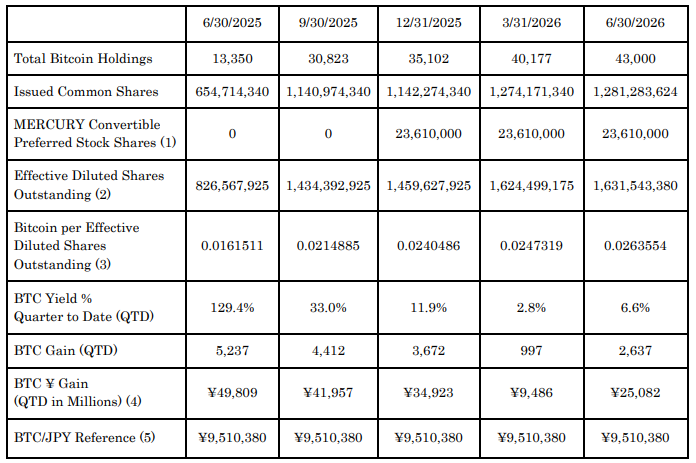
Metaplanet hit the 43,000 BTC milestone on July 2. The Tokyo-based firm now ranks as the world’s third-largest corporate Bitcoin treasury, trailing only Strategy and Twenty One Capital across the entire global corporate holder ranking.
The move cements Japan’s rising role in the corporate Bitcoin accumulation race.
What the Metaplanet 43,000 BTC Milestone Means
A corporate Bitcoin treasury is a company that holds Bitcoin as a strategic reserve asset on its balance sheet. Metaplanet added 2,823 BTC during the second quarter of 2026. Furthermore, the purchase brought total holdings to exactly 43,000 BTC as of July 2.
The average acquisition price landed at roughly 12.71 million yen (~$80,000) per Bitcoin. Moreover, the effective purchase price dropped to around 12.09 million yen (~$77,000) thanks to income from its Bitcoin Generation business. That segment generated $10.95 million in Q2 revenue.
Follow us on X to get the latest news as it happens.
The scale is now considerable. Metaplanet’s total Bitcoin investment stands at approximately 659.25 billion yen (~$4.2 billion). Furthermore, the holdings were valued at roughly 409 billion yen (~2.6 billion) as of June 30. The overall average cost basis sits at 15.33 million yen (~102,500) per BTC.
The BTC Yield metric confirms the momentum. Metaplanet reported a strong Bitcoin yield of 6.6% during the quarter. As a result, the firm continues to grow its Bitcoin per share metric, one of the key performance indicators for corporate treasury strategies of this type globally.

Metaplanet Ranks Third Behind MicroStrategy and Twenty One Capital
The corporate Bitcoin leaderboard is now clear. Strategy (formerly MicroStrategy) leads with holdings exceeding 847,000 BTC. Furthermore, Twenty One Capital holds the second spot. Metaplanet now ranks third globally, surpassing other major players, including MARA Holdings.
“Congrats to Metaplanet on reaching ₿43,000 and becoming the #3 corporate Bitcoin treasury in the world,” Michael Saylor wrote on X. He added that Metaplanet is proving the Bitcoin treasury strategy is now genuinely global.

The company has scaled rapidly since adopting the strategy in 2024. CEO Simon Gerovich has used equity offerings, debt instruments, and options strategies to accumulate BTC. Moreover, the approach helps minimize the shareholder dilution associated with these aggressive corporate purchases.
The balance sheet also remains strong. Total debt and preferred stock represent only about 23% of Bitcoin’s net asset value. As a result, Metaplanet has substantial room to continue accumulating. The move solidifies Japan’s role in the growing global race to adopt Bitcoin by corporations.
Subscribe to our YouTube channel to watch leaders and journalists provide expert insights.
The post Metaplanet Hits 43,000 BTC Milestone, Now the World’s 3rd Largest Corporate Holder appeared first on BeInCrypto.

Key Highlights
- KWM stock declined in pre-market hours following the complete liquidation of 88 BTC to service outstanding debt obligations.
- The entertainment company terminated its Bitcoin treasury strategy in under twelve months.
- Available financing capacity has been reallocated toward artificial intelligence infrastructure investments.
- KWM plans to divest Play Co. subsidiary while pursuing debt reduction initiatives.
- The company faces additional pressure from Nasdaq listing compliance requirements.
Shares of K Wave Media (KWM) experienced declines during pre-market activity following the company’s decision to liquidate its complete Bitcoin holdings and terminate its cryptocurrency treasury initiative. The stock decreased 1.36% to reach $0.1450, building on the prior session’s 1.01% decline that brought shares to $0.1470. This transaction occurred as part of a comprehensive corporate reorganization that reallocates resources toward artificial intelligence infrastructure while reducing liabilities.
Complete liquidation of cryptocurrency treasury holdings
K Wave Media executed the sale of its entire 88 BTC position on May 6, 2026, generating proceeds totaling $64.2 million through the transaction. The company applied these funds to satisfy existing debt obligations, effectively eliminating cryptocurrency assets from its financial statements. Consequently, KWM maintains zero digital currency exposure following a treasury program that lasted fewer than twelve months.
The Nasdaq-listed Korean entertainment enterprise had initially embraced Bitcoin through an ambitious capital raising initiative throughout 2025. The company secured access to $1 billion in financing through two distinct funding arrangements. These consisted of a $500 million Share Purchase Agreement with Anson Funds alongside a $500 million Standby Equity Purchase Agreement with Bitcoin Strategic Reserve.
The original strategic framework allocated 80% of specified net proceeds toward cryptocurrency acquisitions. K Wave Media subsequently purchased 88 BTC during July 2025 to establish its inaugural treasury holdings. Nevertheless, mounting debt pressures combined with evolving capital allocation priorities prompted a complete reversal of this approach.
Share price deteriorates amid strategic transformation
KWM equity experienced significant deterioration following the May announcement regarding its operational pivot. Shares plummeted 24% on the disclosure date as the organization redirected financial resources away from cryptocurrency holdings. Furthermore, continued pre-market weakness demonstrated ongoing investor concerns regarding the restructuring process.
On May 4, K Wave Media disclosed potential reallocation of approximately $485 million in remaining financing availability. Management outlined intentions to pursue AI infrastructure opportunities, encompassing data center facilities, graphics processing unit resources, and strategic acquisitions. Accordingly, the Bitcoin liquidation occurred merely two days following this strategic announcement.
K Wave Media simultaneously initiated divestiture proceedings for Play Co., its primary operating subsidiary. This disposition targets elimination of approximately $48 million in combined debt and liabilities, subject to shareholder authorization. Collectively, these measures transformed KWM from a cryptocurrency treasury narrative into an AI infrastructure restructuring situation.
Financial constraints motivate comprehensive transformation
K Wave Media’s cryptocurrency exit underscores the challenges confronting smaller-capitalization treasury strategies. Larger institutional holders possess capacity to endure extended valuation declines, whereas smaller enterprises encounter more restrictive funding conditions and liquidity constraints. Consequently, balance sheet leverage and capital availability often prove more determinative than cryptocurrency valuations themselves.
The organization has pursued additional restructuring measures throughout June 2026. Management terminated its share purchase arrangement with Solaire while planning retirement of approximately 9.8 million ordinary shares. This quantity represents roughly 13% of total outstanding equity.
K Wave Media received notification from Nasdaq regarding minimum market capitalization requirements on June 18, 2026. Company representatives indicated commitment to achieving compliance standards. Shareholders are scheduled to vote on July 10, 2026, regarding a proposed corporate rebranding to Talivar Technologies.

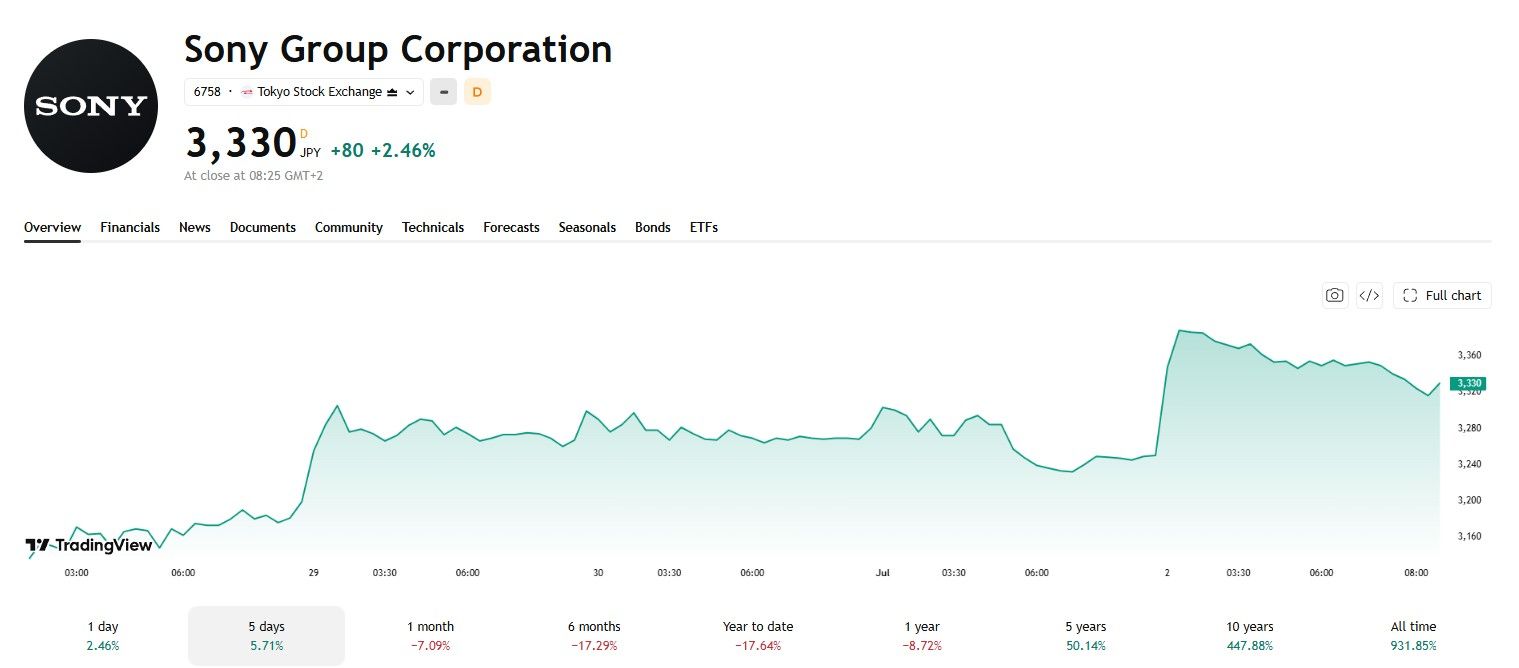
Sony will stop producing physical game discs for new PlayStation releases in January 2028, shifting new titles to digital-only distribution. Sony shares rose 0.7% on the New York Stock Exchange after the announcement.
Meanwhile, leaks indicate that Microsoft’s next Xbox console, codenamed Project Helix, will also ship without a disc drive. Both moves point to a gaming industry preparing to leave physical media behind.
Sony Sets a January 2028 Deadline for Physical Game Discs
Sony confirmed the plan in an official announcement. Games released before the cutoff remain unaffected, and retailers will still sell new titles as digital codes. However, every new PlayStation release will flow through the PlayStation Store, giving Sony far greater control over pricing.
Sony framed the change as a response to consumer behavior, since digital downloads now far outsell discs. The company also promised a continued retail presence for hardware and accessories. Historically, console makers have tested disc-free hardware, but a full catalog cutover is a first.
Investors welcomed the decision because it strips out production and logistics costs. Therefore, analysts expect stronger margins on software sales. Gaming stocks have reacted sharply to pricing news before, as the recent Take-Two pre-order slide showed.

Xbox Project Helix Reportedly Drops the Disc Drive
Microsoft appears to share the same road map. According to a Windows Central report, Project Helix will launch without a disc drive. In addition, a program reportedly named Positron would let players convert Xbox One and Series X|S discs into digital licenses.
The program reportedly excludes Xbox 360 and original Xbox discs. Subscription services such as Game Pass would likely gain even more weight in a disc-free lineup.
Microsoft stock climbed 3.0% to close at $384.28 on the Nasdaq, extending a three-day rally. In contrast, US tech peers slipped in late June on digital tax tariff threats and an Asia tech stock selloff. Investors clearly view the all-digital pivot as a margin story rather than a risk.
Gamers Push Back Over Digital Ownership
Wall Street cheered, yet players reacted with fury. The social media backlash reportedly forced Sony into a temporary promotional silence. Critics argue that digital-only libraries erase resale, lending, and preservation rights, and that delisted titles disappear permanently. Retailers also face shrinking revenue as boxed sales wind down.
Sony sharpened those fears last month when it deleted purchased PlayStation movies from user accounts. Hideo Kojima, the celebrated designer behind Metal Gear Solid and Death Stranding, warned about this risk in 2021. He cautioned that “access to it may suddenly be cut off” and reposted that warning this week.
The ownership debate has already pushed some developers toward blockchain-based licenses, even though most Web3 gaming projects collapsed this cycle. Upcoming earnings calls should reveal whether preservation concerns dent pre-orders or simply fade as downloads take over.
The post Sony Will Stop Making Discs for New PlayStation Games in January 2028 appeared first on BeInCrypto.


Bitcoin (BTC) traded above $60,000 during Thursday’s European trading hours as traders priced out the prospect of a Federal Reserve interest rate hike in July.
The so-called dovish repricing occurred after Fed Chair Kevin Warsh said inflation risks have eased.
In currency markets, the Japanese yen strengthened to 161.20 per U.S. dollar from its 40-year low of 162.84. The sudden upswing in the yen during European hours triggered rumors that the Bank of Japan (BOJ) may have intervened to support its weakening currency.While the BOJ recently raised its interest rate to 1%, the move failed to halt the yen’s slide, and understandably so. With U.S. interest rates at 3.5%, the dollar remains attractive to investors.
From a crypto perspective, the yen and bitcoin have developed a strong correlation.

Key Highlights
- Elon Musk rejected a Wall Street Journal story regarding a SpaceX AI smartphone as “utterly false” via social media platform X
- Shares of SPCX declined 7.8% during Wednesday’s trading session after the CEO’s rebuttal
- According to the WSJ piece, the alleged device featured a proprietary operating system, xAI integration, and Qualcomm Snapdragon processors
- SpaceX shares have surrendered the majority of post-IPO momentum and currently trade 2.1% below their listing price
- Wall Street maintains a Moderate Buy consensus on SPCX with a $216.83 mean price objective, suggesting 37.6% potential appreciation
Shares of SpaceX (SPCX) tumbled 7.8% during Wednesday’s session following Elon Musk’s emphatic rejection of a Wall Street Journal article that alleged the aerospace company had been presenting an AI-enabled smartphone prototype to prospective investors before going public.
Space Exploration Technologies Corp., SPCX
Musk’s rebuttal on X consisted of just two words: “Utterly false.” The CEO offered no additional context or clarification.
According to the WSJ article, which cited anonymous sources with knowledge of the situation, the prototype handset operated on a custom-built operating system, incorporated artificial intelligence capabilities from xAI, and utilized Qualcomm’s Snapdragon chip architecture. The story temporarily boosted QCOM shares before Musk’s denial sent them down 1.55%.
The purported device was characterized as having a more refined design than Apple’s iPhone. The WSJ further indicated that the initiative remained in preliminary development phases and might ultimately be abandoned.
This marks another instance where SpaceX smartphone speculation has surfaced publicly. Reuters published a report in February suggesting SpaceX was investigating a mobile handset that would connect to its Starlink satellite infrastructure. Musk refuted those claims as well.
Months earlier in January, Musk had provided a somewhat ambiguous response, acknowledging that a Starlink-connected phone was “not out of the question at some point” — though he emphasized it would differ substantially from conventional smartphones.
SpaceX’s Expanding AI Ambitions
The smartphone narrative fits within SpaceX’s broader strategic vision. The company has committed billions of dollars toward expansion efforts that extend far beyond rocket manufacturing and Starlink connectivity services. SpaceX is developing AI infrastructure, embedding xAI’s Grok artificial intelligence model throughout its operational framework, and investigating orbital data center concepts.
The overarching objective appears to be establishing SpaceX as a formidable competitor in the artificial intelligence sector — not merely a spaceflight enterprise.
Reuters additionally disclosed that SpaceX is examining possibilities for launching its own mobile telecommunications network, and has entered discussions with Charter Communications regarding utilization of its terrestrial infrastructure for cellular traffic. The company previously established a direct-to-cell partnership with T-Mobile utilizing Starlink technology.
Current Stock Performance
SPCX has experienced challenging trading conditions recently. The equity now trades 2.1% beneath its IPO debut price, having relinquished most of the initial post-listing appreciation.
According to TipRanks data, SPCX maintains a Moderate Buy consensus recommendation derived from four Buy ratings, three Hold ratings, and one Sell rating. The average analyst price objective stands at $216.83, implying 37.6% potential upside from present trading levels.
Qualcomm shares retreated 1.55% in response to the report. Both SpaceX and Qualcomm representatives declined to provide statements to Reuters.
Microsoft introduced its own AI-equipped badge device for enterprise users last month, which also incorporates Qualcomm wearable chip technology — underscoring the increasingly competitive landscape within AI-powered hardware markets.
Ethereum layer-2 blockchain Taiko reopened its bridge and restored full operations after a June exploit drained up to $1.7 million.
On Thursday, Taiko announced that users could once again move funds to and from the network after completing the final stage of its four-step recovery plan. The project said it had made all affected users whole and that any remaining withdrawal limits are temporary safeguards that do not affect normal usage.
The reopening ends an 11-day disruption following the implementation of security fixes and the restoration of the bridge’s 1:1 backing.
The exploit occurred on June 21 after an attacker compromised Taiko’s chain-state verification mechanism, allowing forged proofs to be accepted and enabling unauthorized withdrawals from its Ethereum vault. Blockchain security companies said that up to $1.7 million in crypto assets were taken.
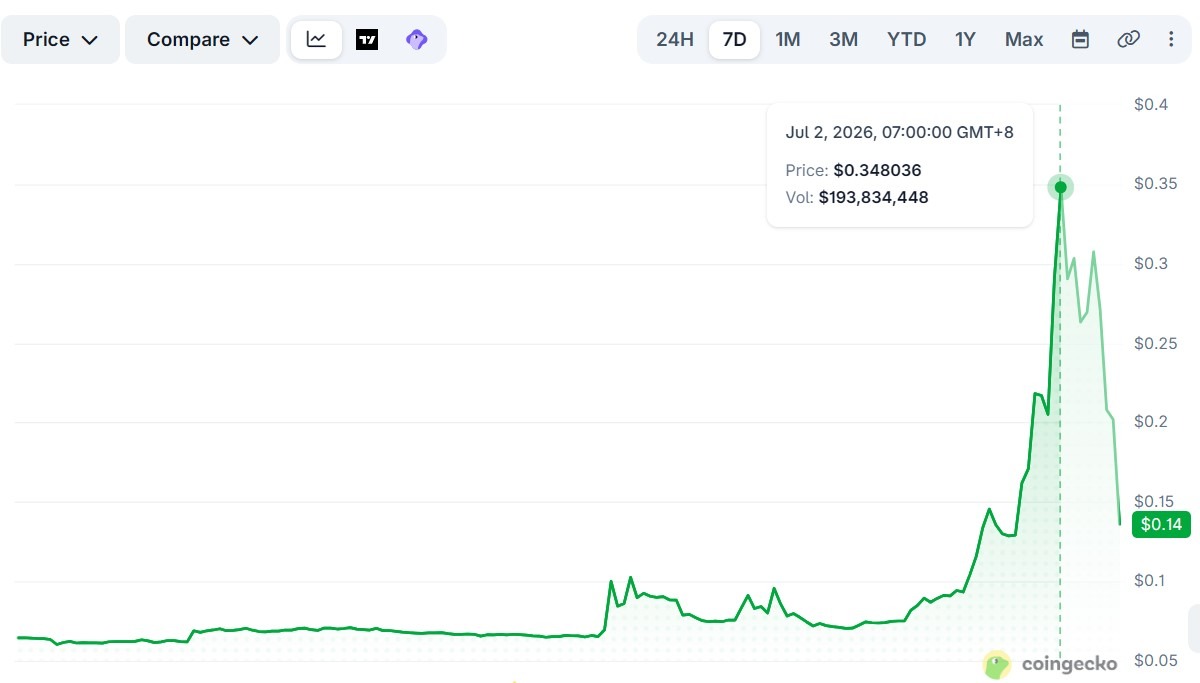
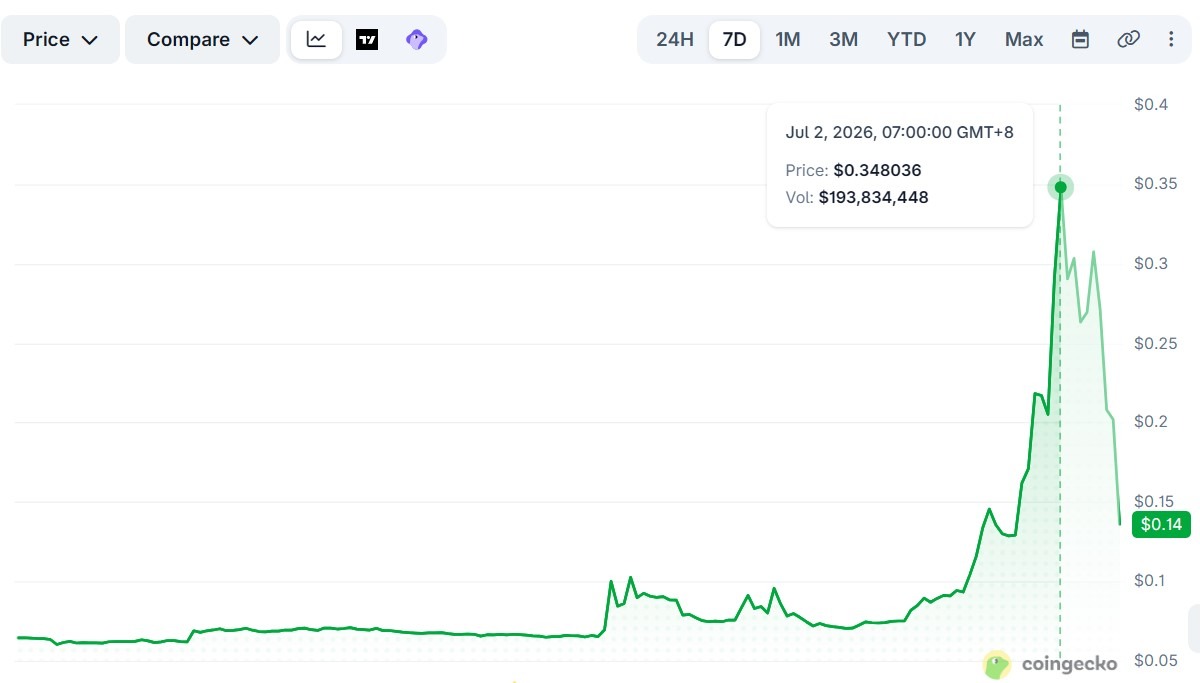
Taiko’s seven-day token chart. Source: CoinGecko
Its token, TAIKO, briefly surged to about $0.35 following the bridge reopening, before retreating to roughly $0.14.
Taiko restores bridge backing before reopening
Taiko outlined its recovery plan on Sunday, saying it would bring the network back through four stages. The project said it had deployed fixes and verified that the chain’s finalized state contained no forged checkpoints or attacker claims that could still be executed.
According to Taiko, the changes were submitted through its security council and reviewed by independent security experts. The network then replenished the bridge to ensure that assets issued on the network were backed 1:1 by assets held on Ethereum.
Related: DeFi TVL drops 39% in 2026 amid market downturn and record hack activity
Taiko also introduced conservative withdrawal quotas as an added precaution, saying the limits were not expected to prevent users from carrying out bridge transactions. However, it did not disclose the size of the quotas.
Taiko has not disclosed how the bridge’s 1:1 backing was restored or whether any of the stolen assets were recovered. The project said it would publish a full postmortem detailing the incident and its response.
Magazine: Japanese pension fund tips 1% in crypto, G7 urges action on NK hackers: Asia Express
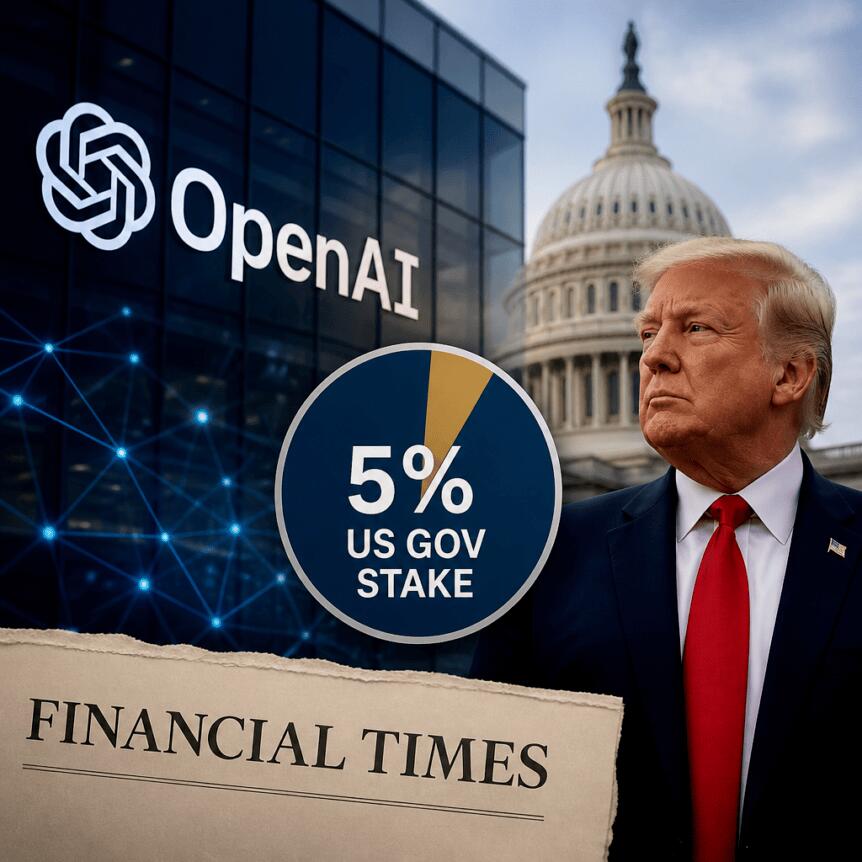
OpenAI has reportedly floated a plan to give the US government a 5% equity stake as Washington moves toward tighter oversight of frontier AI models. The proposal, discussed in early talks with the Trump administration, is tied to how the company and other major AI players might share in the economic upside of rapidly expanding AI capabilities, according to the Financial Times, citing people familiar with the matter.
The idea comes as OpenAI prepares for a potential US public listing, having confidentially submitted an S-1 for an initial public offering in the United States. Earlier coverage from Cointelegraph noted that OpenAI is joining Anthropic in preparing for a Wall Street debut this year, while the US government takes a more active role in how advanced models are built, released, and governed.
Key takeaways
- OpenAI reportedly discussed offering the US government a 5% equity stake as AI oversight intensifies in Washington.
- The proposal is framed as a way to share the economic benefits of AI, modeled by OpenAI CEO Sam Altman on Alaska’s Permanent Fund structure.
- It remains unclear whether major US AI firms beyond OpenAI would support contributing equity to a public investment vehicle.
- The discussions arrive alongside reported steps toward voluntary security and access standards for frontier AI models from the White House.
A shareholder-like approach to AI economics
The reported 5% stake would not be a one-off grant or regulatory fee, but an equity position—suggesting a longer-term relationship between AI developers and the public sector. According to the Financial Times, OpenAI raised the concept in early discussions with the Trump administration as the company weighs how it navigates a more demanding political environment ahead of a potential public listing.
OpenAI CEO Sam Altman argued that letting the public hold a financial stake could be the “best” mechanism to ensure Americans share in the economic benefits generated by the AI boom. The report says Altman modeled the proposal on Alaska’s Permanent Fund, which invests oil revenue into stocks and pays dividends to residents—an example often used to illustrate how natural resource earnings can be converted into ongoing public wealth.
How the plan could work—and what’s uncertain
Under the reported framework, several leading US AI companies would contribute a 5% equity stake to a public investment vehicle. While the direction is clear, the details are not: the Financial Times reports it remains unclear whether firms such as Anthropic, Google, or Meta would back the idea.
This uncertainty matters because any equity-based structure depends on broad coordination among market participants—particularly if the goal is to create a stable “public” ownership pool rather than a patchwork of separate deals. If major developers do not participate, the plan could fail to achieve the universal “sharing” effect Altman is aiming for, or it could lead to a narrower arrangement centered on specific companies.
The report also describes Altman as actively engaging in the political conversation beyond standard corporate lobbying. It says he has discussed the idea with President Donald Trump and senior officials including Commerce Secretary Howard Lutnick and Treasury Secretary Scott Bessent, and that he also spoke with Sen. Bernie Sanders, who earlier this year proposed a one-time 50% tax on the stock of the largest AI companies to help fund a nearly $7 trillion sovereign wealth fund for Americans.
For investors and builders watching AI policy, this angle is important: it suggests AI governance may increasingly blend market participation with public ownership models. Even if the exact equity structure changes, the underlying direction—linking national oversight with financial alignment—could shape how companies approach compliance, product timelines, and long-term strategy.
Washington’s shift from regulation to standards
The equity-stake discussion is occurring as the White House moves toward a more operational oversight posture for frontier AI systems. The Financial Times reports that the White House is preparing voluntary standards for frontier models following interventions involving recent systems from OpenAI and Anthropic.
Those standards are expected to be announced as early as next week and would cover security benchmarks, define review timelines, and clarify access rules for the most advanced models—both within the United States and abroad. In practice, that implies the US is seeking to formalize “how” advanced models are handled, not just “whether” they meet broad requirements.
Separately, reporting indicates that the Trump administration requested a staggered rollout of OpenAI’s GPT-5.6 and temporarily imposed export controls on Anthropic’s latest models due to cybersecurity concerns before later lifting the restrictions. Coverage from The Guardian describes these steps as part of a broader pattern of active involvement in model deployment and distribution.
Earlier reporting also highlighted how quickly the policy environment can change for model release and export. Cointelegraph, for example, noted that Anthropic planned to bring back its newest models after the US lifted export controls. That coverage underscores how regulatory or security decisions can directly affect availability.
Potential implications for IPO timing and governance
Because equity proposals intersect with capital markets, the timing of OpenAI’s public listing plans is hard to ignore. A potential IPO changes the internal calculus for any government-related ownership or governance mechanism: it can alter how negotiations are framed, how disclosures are handled, and how investors assess regulatory risk.
The reported talks also highlight a broader tension facing the largest AI firms. On one hand, they are moving toward greater transparency and public-market visibility. On the other, they are operating under a government that appears increasingly willing to intervene directly—whether through standards, access rules, rollout expectations, or export controls.
Cointelegraph reports it reached out to OpenAI for comment on the discussions but had not received a response at the time of publication. Until OpenAI or the administration provides further clarification, the equity-stake concept should be treated as a reported proposal rather than an announced policy.
Still, for market participants, the direction of travel is clear: AI oversight is evolving into something more detailed and more closely tied to how advanced models move through the economy and across borders. If voluntary standards harden into practical gatekeeping—or if equity-based public participation gains traction—AI companies may face a governance reality where policy alignment becomes part of competitive strategy rather than a post-launch compliance step.
Readers should watch next whether the White House’s upcoming voluntary standards are sufficiently specific to guide developers’ release and security processes, and whether any government-aligned ownership concept gains support from other major AI firms beyond OpenAI. Those two threads—standards and financial participation—could determine how quickly policy risk becomes predictable for the sector.

Key Highlights
- PLTR shares jumped 8.8% on Wednesday, reaching $127.22 in its strongest four-day performance since early 2025
- A strategic collaboration with Nvidia to develop tailored AI solutions for government agencies drove the recovery
- The stock had plummeted 39% year-to-date and shed 25% in June following a seven-session decline
- Wolfe Research assigned a “Peer Perform” rating, acknowledging superior enterprise AI capabilities despite elevated valuation
- Projections indicate 39% revenue compound annual growth rate through 2029, with optimistic scenarios reaching 55%
Palantir Technologies (PLTR) shares surged 8.8% during Wednesday’s trading session, closing at $127.22 and completing a four-day advance of approximately 19% since June 25. This marked a dramatic reversal for shares that had experienced sustained downward pressure.
Palantir Technologies Inc., PLTR
The turnaround stems from a strategic collaboration with Nvidia unveiled Monday. The alliance focuses on developing customized AI solutions specifically for U.S. government organizations, merging Nvidia’s artificial intelligence infrastructure with Palantir’s operational platforms.
The initiative aims to provide federal agencies with protected systems for developing and implementing AI models. Palantir describes the offering as an “intelligent engine.”
CEO Alex Karp outlined the strategy during a Wednesday appearance on CNBC’s Squawk Box. He emphasized that the collaboration centers on providing clients with “control over their compute, their models, their data stack and their alpha.”
Karp further noted that Palantir maintains “critical infrastructure” throughout the United States, Ukraine, and Israel. He highlighted that AI large language models deployed “on the battlefield” operate through Palantir’s Ontology framework.
The Ontology infrastructure enhances AI model security and accuracy—representing a fundamental element of Palantir’s value proposition to government customers.
While this isn’t Palantir’s initial partnership with Nvidia, the announcement’s timing proved significant. It arrived precisely when PLTR had reached multi-month lows.
Understanding the Recent Downturn
Prior to this week’s recovery, Palantir had experienced significant headwinds. Shares had declined 39% during 2026 and tumbled 25% throughout June.
A consecutive seven-session losing streak from June 16 through June 25 drove the stock through several critical technical thresholds. The decline bottomed at $107.27 on June 25.
The underlying concern fueling the selloff: potential for AI technology to supplant the software platforms supporting it. Guggenheim challenged this perspective Wednesday, elevating ServiceNow and Salesforce to Buy ratings while characterizing the “AI eliminates software” theory as a “hallucination.”
Palantir received additional support from financial disclosures revealing President Trump’s investment positions in various companies, including Palantir.
Analyst Perspectives
Wolfe Research initiated coverage of PLTR on June 16 with a Peer Perform designation. Analyst Alex Zukin characterized Palantir’s enterprise AI offerings as having “the best product market fit of any enterprise software company in the market today.”
Despite this favorable product assessment, the premium valuation prevented a Buy recommendation.
Wolfe’s metrics deserve attention: 150% net revenue retention, 85% year-over-year revenue expansion, and a 97% annual increase in residual deal value backlog—all supported by roughly 1,000 clients and 4,000 personnel.
Wolfe’s baseline forecast projects 39% revenue compound annual growth from 2026 through 2029. An optimistic scenario elevates this figure to 55%, within a total addressable market exceeding $385 billion.
PLTR also announced an expanded commercial agreement with Surf Air Mobility this week, contributing additional positive momentum.
Following Wednesday’s close, Palantir’s market capitalization stood at approximately $279.7 billion. Typical daily trading volume averages around 45 million shares.
It’s a Make-or-Break Year for One Viking, Says ESPN

A Rare Drone Common Sense Outbreak, In Denmark

Inside Erling Haaland vs Gabriel as bitter rivals take seismic spat to 2026 World Cup


-

 Fashion6 days ago
Weekend Open Thread: Staud – Corporette.com
-

 Politics6 days ago
The House | Manchesterism won’t survive the painful trade-offs unless it gets citizens on board
-

 Crypto World2 days ago
Strategy authorizes up to $1.25B in Bitcoin sales under new capital plan
-

 Politics6 days ago
Potential 2028er World Cup attendee leaderboard
-

 Business6 days ago
Asia stock markets slide as tech shares slump
-

 News Videos4 days ago
MAJOR BITCOIN & MARKET UPDATE!!!! (MUST WATCH ASAP!!!)
-

 Tech7 days ago
A Look At A Gaggle Of Transputer Boards
-
 Crypto World7 days ago
Dell (DELL) Shares Tumble Over 5% Following Analyst Downgrade to Hold
-

 Crypto World5 days ago
Coinbase, Circle Deepen Crypto Stock Losses Despite Resilient S&P 500
-

 Business2 days ago
Australia treasurer says alleged access of prime minister’s bank data ’incredibly concerning’
-

 Crypto World5 days ago
Kraken's xStocks Opens Bending Spoons IPO Registration to EEA Retail
-

 Sports6 days ago
FIH Pro League: India defeat Pakistan 7-1, register biggest win of campaign | Other Sports News
-

 Crypto World6 days ago
Bitcoin Sparks $600M Hourly Liquidations With $65,000 Set To Become Resistance
-

 Tech2 days ago
Anonymous researcher drops 0-day ‘exploitarium’ repo
-

 Tech4 days ago
Bluekit phishing kit adopts browser-in-the-middle for login theft
-

 Tech5 days ago
Russian hackers now target Signal backup recovery keys
-
 Crypto World6 days ago
Hyperliquid Named on Singapore MAS Investor Alert Register
-

 Crypto World6 days ago
RTX holders must register wallets before token distribution begins
-

 Sports21 hours ago
Broncos roster: OL Ben Powers (No. 74) entering final year of contract
-
 Business3 days ago
The AI boom won’t burst all at once. It will pop in ‘rolling bubbles’: Macquarie
You must be logged in to post a comment Login