Connect with us
DAPA Banner
DAPA Coin
DAPA
COIN PAYMENT ASSET
PRIVACY · BLOCKDAG · HOMOMORPHIC ENCRYPTION · RUST
ElGamal Encrypted MINE DAPA
🚫 GENESIS SOLD OUT
DAPAPAY COMING

Business

Manchester’s economy grows 34% in a decade, outpacing UK average and rival cities

Published

on

Business Live

The Centre for Cities report comes as Andy Burnham plans Number 10 for the North

Deansgate Square skyscrapers, Manchester

Deansgate Square skyscrapers, Manchester(Image: Sean Hansford | Manchester Evening News)

Manchester is outpacing the rest of the country following a decade of growth, according to new research.

Advertisement

London-based think tank Centre for Cities found that Manchester’s economy grew more rapidly than anywhere else in the UK over the last ten years.

Figures revealed the city’s economy expanded by more than 34 per cent between 2013 and 2023, outstripping other ‘top performers’ such as Bristol, Leeds, and Newcastle.

London’s economy grew by nearly 19 per cent over the same period, compared to the UK average of 18.4 per cent across the decade.

The figures were measured by total gross value added (GVA) growth – the value of goods and services produced within the city.

Advertisement

Manchester and the wider city region also recorded a 19.7 per cent rise in job creation, according to the report, surpassing the UK average of 13.9 per cent.

The findings come as significant new announcements by Andy Burnham could herald a dramatic shift in how the country is governed, with a pledge for a ‘No 10 in the North’, potentially based in Manchester, should he go on to become Prime Minister.

The Centre for Cities report stated: “There are encouraging signs, with places such as Leeds and Manchester seeing strong productivity growth in recent years, adding to a sense of growing momentum around their role in raising national living standards.”

The data also laid bare some of the challenges confronting the country’s regions. The report continued: “Currently Manchester, Birmingham and Leeds have the largest ‘density gaps’ compared to their international peers, with estimated shortfalls of 231,000, 202,000 and 196,000 homes in their urban cores respectively.

Advertisement

‘”Other big cities face smaller gaps. Bristol, for example, has a shortfall of around 18,800 homes, though still faces constraints on expanding its urban form.

“Closing these gaps would require a significant increase in housebuilding, especially in the largest of the big cities. “

Manchester council said its strategy to drive employment growth is delivering results. Since implementing the plan, the employment rate in Manchester has climbed to more than 75 per cent – a 6.4 per cent rise since July 2023, the council noted.

This comes alongside a 30 per cent increase in the number of businesses in Manchester since 2015, with the total number of firms in the city growing by approximately 900 in 2024/25.

Advertisement

Councillor Gavin White, the council’s housing and regeneration lead, commented: “Manchester has seen significant population growth in recent years, a testament to a global reputation and strong expansion across key sectors that have helped create tens of thousands of high-quality jobs in the last decade – helping to attract and retain a pool of world class talent.

“With this success comes high demand which is why we are helping to drive a strong supply of quality office space to support businesses to thrive and attract new global names to Manchester. While also creating a strong and diverse housing sector – including record numbers of social, council and genuinely affordable homes being built in every part of our city.

“But we also know that far too many households still face high levels of deprivation and it’s vital that we continue to convert economic growth into better living standards for our residents.

“It’s our vision to make sure that we can create pathways to great jobs, alongside investment in our communities and transport link, that makes sure that everyone living in Manchester has the opportunity to share in the city’s success.”

Advertisement

To find all the planning applications, traffic diversions, road layout changes, alcohol licence applications and more in your community, visit the Public Notices Portal.


Continue Reading
Click to comment

You must be logged in to post a comment Login

Leave a Reply

Business

Energy bills: What is happening to gas and electricity prices?

Published

on

Since 1 April, charges related to the insulation scheme – called the Energy Company Obligation – have been scrapped, and for three years, renewable energy projects will be 75%-funded by general taxation instead of a levy on energy bills.

Before the changes, energy bills in England, Scotland and Wales included additional charges to help fund insulation for low-income households, and subsidise green energy projects such as wind farms and solar panels.

Nearly everyone in England, Wales and Scotland will benefit from this cut, although the amounts will vary between households.

However, the cost of maintaining and strengthening energy network infrastructure like power lines, cables and gas pipes is rising.

Advertisement

In December 2025, Ofgem said it had approved a £28bn investment to improve the electricity and gas grids in Great Britain.

It said this will strengthen the energy supply, and better shield customers from volatile energy prices. It will also reduce Britain’s dependence on gas.

Customers will pay part of the cost of the upgrade, through an additional £108 added to energy bills by 2031.

These charges started to appear from April 2026, adding about £6 a month to the bill for a typical household covered by the energy cap.

Advertisement

In April, the government also announced separate plans to change the way electricity is priced to ensure that household energy bills are less vulnerable to spikes in gas prices.

It also wants customers to benefit more from the cheaper running costs of renewable energy sources like wind and solar power.

The government has not said how much bills might fall but believes savings could be “significant”. It said the changes could be in place by spring 2027.

Advertisement
Continue Reading

Business

What I'm Watching In July: Rate Hikes, Testimony, And AI Volatility

Published

on

What I'm Watching In July: Rate Hikes, Testimony, And AI Volatility

What I'm Watching In July: Rate Hikes, Testimony, And AI Volatility

Continue Reading

Business

At Close of Business podcast July 1 2026

Published

on

At Close of Business podcast July 1 2026

Ella Loneragan speaks with Nadia Budihardjo about her feature diving into the speculation surrounding a WA university merger.

Continue Reading

Business

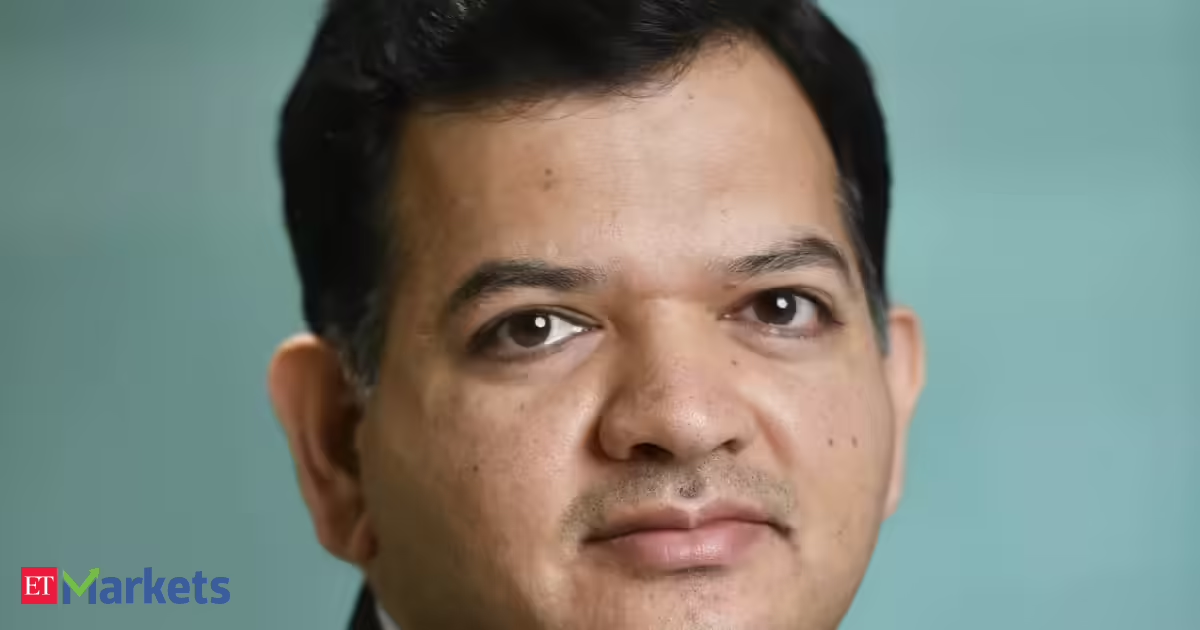
Lower crude, easing FII selling brighten market outlook; large-cap financials offer better value: Kunal Vora

Published

on

Lower crude, easing FII selling brighten market outlook; large-cap financials offer better value: Kunal Vora
A sharp decline in crude oil prices, improving earnings visibility and signs that foreign institutional investor (FII) selling may be losing steam have significantly improved the outlook for Indian equities, according to Kunal Vora from BNP Paribas India . While near-term earnings may reflect the temporary disruptions caused by higher commodity prices and currency movements, he believes the broader market setup has become considerably stronger over the past few weeks.

Speaking to ET Now, Vora said investors should focus less on whether foreign money returns aggressively and more on whether the intense selling pressure witnessed in recent months begins to ease. In his view, domestic institutional flows remain strong enough to support the market as long as earnings continue to grow.

Market Conditions Improve as Crude Retreats
The fall in crude oil prices to the $70-75 per barrel range has emerged as one of the biggest positives for the Indian economy. According to Vora, softer crude supports corporate earnings, strengthens the fiscal position, eases pressure on foreign exchange reserves and improves the interest rate outlook.While weather remains a key risk, particularly with concerns over El Niño and rainfall deficits, he believes those risks are relatively smaller than the challenges posed by elevated crude prices earlier this year.

“Compared to where we were two months back, the market construct is looking better. Crude at $70-75 is a big relief. It has positive implications for earnings, forex, interest rates and the government’s fiscal position. The reasons for FII selling have reduced, valuations have become slightly more attractive and the earnings outlook is improving,” he said.
Earnings May Be Weak, But Pain Could Be Temporary
The upcoming earnings season is expected to capture the impact of the recent spike in crude prices and currency fluctuations. However, Vora cautioned against interpreting one weak quarter as a longer-term trend.
He believes sectors such as consumer staples and automobiles could witness temporary margin pressure, but expects those headwinds to fade during the second half of FY27.
“This quarter will reflect the problems we saw last quarter. I would not extrapolate them into a long-term trend. The impact on consumption-oriented sectors will be visible, but it is likely to be short-lived. Our FY28 earnings outlook has not changed materially because this looks like a temporary phenomenon rather than a structural headwind,” he said.

Private Banks Continue to Top the Preference List
Financials, particularly frontline private sector banks, remain among Vora’s highest-conviction investment ideas.

Advertisement

After a subdued FY26, he expects earnings growth of 15-18% for leading private lenders during FY27. Attractive valuations across price-to-earnings and price-to-book metrics further strengthen the investment case.

“Private sector banks continue to remain one of our preferred sectors. We expect earnings growth of 15% to 18% in FY27, while valuations remain supportive. Heavy FII selling has weighed on the sector, but if that pressure eases, banks should benefit from improving flows,” he said.

Domestic Money Can Carry the Market
Vora believes investors are placing too much emphasis on the return of foreign portfolio investors. Instead, he argues that simply reducing the pace of FII selling could be enough for domestic investors to sustain the market.

He pointed out that India witnessed unprecedented foreign selling over the past few months, making any moderation in outflows a meaningful positive.

Advertisement

“India does not really need FPI money to come back in a big way. What we need is a lack of selling. If incremental FII selling eases, domestic money can continue doing the heavy lifting,” he said.

Consumption, Telecom Also Offer Attractive Opportunities
Besides financials, Vora remains constructive on consumption stocks, especially consumer staples, following the recent GST rate cut. He believes improving demand and pricing power could support earnings after the temporary crude-related impact fades.

Telecom is another sector he favours because of its consistent pricing power and the possibility of another tariff hike over the coming quarters.

“Consumer staples have become attractive after the GST rate cut. Telecom also continues to offer strong pricing power, and we expect tariff hikes over the coming quarters,” he said.

Advertisement

On the other hand, he believes pharmaceuticals, utilities and automobiles may underperform due to expensive valuations, easing defensive demand and possible margin pressures.

IT Faces Structural Questions Despite Attractive Valuations
While valuations in IT services have corrected meaningfully and dividend yields have become increasingly attractive, Vora believes the sector continues to grapple with long-term uncertainty stemming from artificial intelligence.

He does not expect widespread degrowth, but says investors are increasingly questioning the industry’s long-term growth assumptions.

“We do not expect the sector to start degrowing, but terminal growth assumptions have changed because of AI. This has become more of a value call and a hope that growth eventually bottoms out,” he said.

Advertisement

He also highlighted the broader implications of a slowdown in IT hiring, noting that the sector remains one of India’s largest employers and a significant contributor to wage growth.

Premium Valuations Are a Structural Feature
Addressing concerns over India’s valuation premium relative to global markets, Vora argued that higher multiples are not unique to IT but reflect a broader characteristic of Indian equities.

Strong domestic liquidity and sustained investor participation have allowed Indian stocks to command premium valuations across sectors.

“Indian valuations across sectors are higher than global peers. That is a structural feature of our market and not unique to IT. I do not expect that premium to disappear,” he said.

Advertisement

Large Caps Offer Better Value Than Mid and Small Caps
Although mid- and small-cap stocks have delivered exceptional returns, Vora believes valuations have become stretched after sustained domestic inflows and relatively lower FII ownership.

He now sees stronger value emerging in large-cap companies.

“Midcaps and smallcaps have become much more expensive relative to largecaps. We currently see better value in the large-cap space, while some froth remains in the broader market,” he said.

Focus on Earnings Rather Than Foreign Flows
Looking ahead, Vora expects market returns to broadly track corporate earnings rather than be driven by large foreign inflows. He believes India can continue delivering respectable returns if earnings growth remains in the low-to-mid teens and foreign selling gradually subsides.

Advertisement

“We are banking on domestic money to drive the market, not FIIs. If earnings grow in the mid-teens and FII selling eases, returns should broadly follow earnings even without large foreign inflows,” he said.

Continue Reading

Business

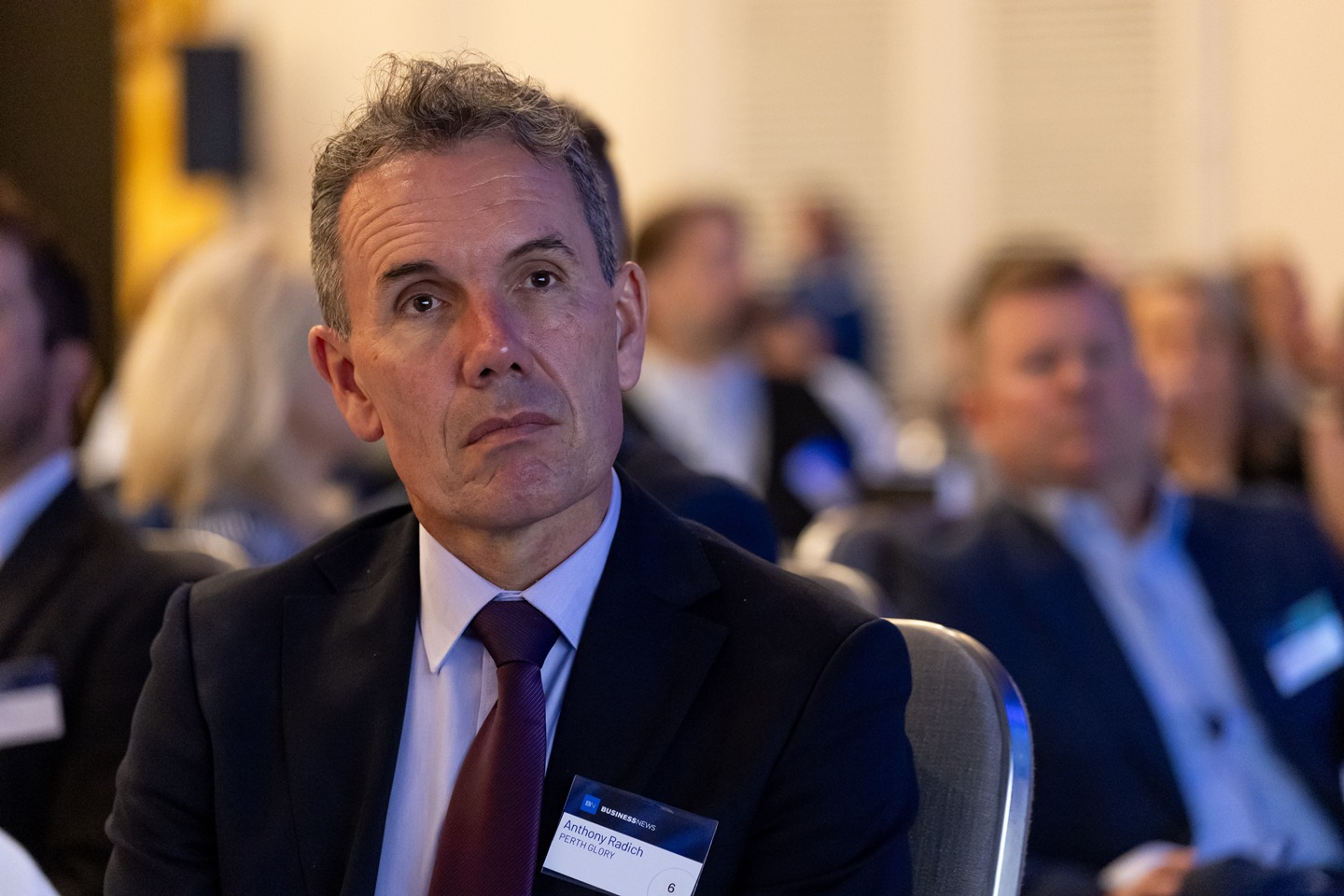
Radich resigns as Perth Glory chief

Published

on

Radich resigns as Perth Glory chief

Perth Glory’s chief executive Anthony Radich is leaving the club after four years at the helm of the A-League soccer club.

Continue Reading

Business

Romesh Ranganathan ‘gutted’ as his South East bakery chain shuts down

Published

on

Romesh stood behind a counter of baked goods. He is wearing an apron and black cap and is smiling directly at the camera. There are red and black balloons behind him

Comedian Romesh Ranganathan said he is “gutted” after the 89-year-old bakery chain he part-owns shut down.

Coughlans Bakery – which operates a chain of shops across Kent, Surrey, West Sussex and south London – announced it had ceased trading on Tuesday after it went into voluntary liquidation.

Ranganathan, best known for his deadpan stage style, became its co-owner in 2024, describing it as “the partnership of the century”.

Managing director Sean Coughlan blamed the closure on the government’s decision to increase national insurance contributions for employers in April last year, along with high business rates.

Advertisement

Posting on social media, he described the rates as having “absolutely smashed local business”.

He added that, combined with the spike in fuel prices following the conflict in the Middle East, they had cost the company an extra £20,000 a week.

Coughlan said Crawley-born stand-up Ranganathan, who is vegan and initially became a supporter of the business because of its range of plant-based products, had been “amazing”.

“I feel like we’ve absolutely let him down. Everything he’s done, it’s been from the heart,” he added.

Advertisement

Ranganathan reposted Coughlan’s video to his 1.4m followers online, with the caption: “Gutted isn’t the word.”

Continue Reading

Business

Heat failure: Why essential tech fails when the temperature rises

Published

on

A woman stands silhouetted on the banks of the River Thames, holding a purple umbrella for shade.

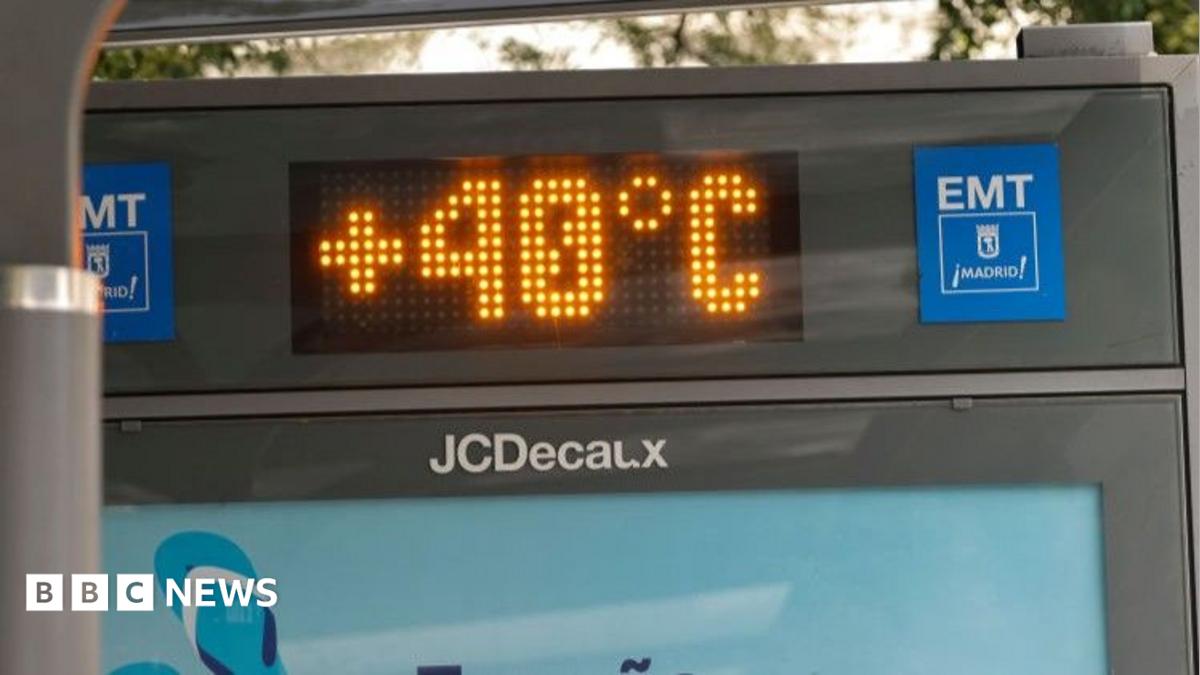
As one of France’s hottest days on record unfolded on 23 June, exasperated people painted white chalk on their windows to screen out the sun. Paris’s Eiffel Tower closed early.

And in the town of Ergué-Gabéric, in Brittany, the punishing temperatures – around 40C – were too much for one electric transformer.

The chunky metal box malfunctioned, initially leaving more than 100,000 people without power.

It was a “heat related” incident, according to local authorities, external. Videos posted to social media appeared to show a plume of smoke rising from the stricken transformer. A spokeswoman for power company RTE confirmed to the BBC that the video showed one of the firm’s facilities.

Advertisement

The day before the accident, RTE had published a statement, external saying there was “no concern” surrounding the availability of electricity across its network this summer.

Just as we all have our own limits in terms of high temperatures, so too does technology. Electrical and telecoms equipment, and railway signalling cabinets sometimes falter during a heatwave. Extreme temperatures can even set off alarm systems.

Heat-troubled tech is a serious issue.

For instance, six NHS trusts in England declared a critical incident last week after hot weather adversely affected their IT systems, scanners, and cancer and lab equipment.

Advertisement

More frequent and more intense heatwaves triggered by human-caused climate change mean that engineers are increasingly adapting infrastructure to cope.

“Anything to do with the electricity network – the power lines, the interconnectors and transformers – they all struggle to keep themselves cool enough,” explains Iain Staffell at Imperial College London. “It reduces the efficiency of everything.”

Staffell and colleagues estimate that, in temperatures of 40C, the output of gas-fired power stations drops by roughly 10% versus 20C.

The efficiency of solar panels also falls as temperature rises, though Staffell notes that this effect has become less pronounced with newer generations of panels.

Advertisement

Even so, the impact of high temperatures on solar energy in Great Britain is visible in data he and his colleagues have analysed and shared with the BBC. “Once the UK gets above 27C, our solar output plateaus and starts to slowly fall [as temperatures continue to rise],” says Staffell.

That said, extended periods of sunny weather during heatwaves can still boost solar output relative to cloudier days before the heatwave hit. This happened last week, according to comparison website Utility Bidder.

Aside from electricity-generating facilities, consider also the power lines that swathe the country. These cables are made of metal, which expands in heat, causing the lines to droop. Running electricity through them generates even more heat.

“There is a limit to how much droop you can allow,” says Simon Hogg, a consultant and professor emeritus at Durham University.

Advertisement

If sagging cables touch trees or buildings below, that could cause an accident or power failure.

This scenario was behind a massive blackout in 2003 in North America.

Given the risk, operators reduce the amount of electricity sent along power lines during heatwaves, limiting the supply.

Advertisement
Continue Reading

Business

KPIT Tech shares sink 17%, see worst plunge since 2020 Covid crash. Time to buy or more pain ahead?

Published

on

KPIT Tech shares sink 17%, see worst plunge since 2020 Covid crash. Time to buy or more pain ahead?
Shares of KPIT Technologies tumbled 17% to hit a fresh 52-week low on Wednesday, as a weaker-than-expected Q1 business update put the stock on track to record its worst single-day plunge since the infamous COVID-19 crash of March 2020.

The shares of the company dropped around 17% to a low of Rs 559.20 apiece on Wednesday morning. The sharp drop wiped off more than Rs 3,080 crore from the company’s market capitalisation, pulling it down to Rs 15,330 crore.

Why KPIT Tech shares are falling today?

KPIT Tech on Tuesday said that it expects the financial performance for the April-June quarter of the ongoing financial year 2027 to be lower than expected previously, due to a sudden drop in revenues in the last few weeks. It expects a decline of 1% in reported revenues for Q1 FY27 as compared to Q1 FY26 (YoY) primarily due to sudden actions by some European OEMs triggered by their recent profit warnings or adverse business outlook, it added. As a result, its operating profitability (EBITDA Margin) and the net profit margin for Q1 FY27 will likely decline sequentially, proportionately higher than the revenue decline, since there is no window for cost optimization during this short period. “While the H1FY27 performance would be unsatisfactory, the fundamentals of our business remain strong,” it added.

Advertisement

“This impact was not seen coming earlier and has been realized only in the recent weeks. Such sudden actions is a short-term phenomenon. In the long run cost-cutting measures by clients would imply more outsourcing and offshoring with more automation led by our products and solutions, which is already indicated by the said clients and evidenced earlier during COVID & similar circumstances,” KPIT Tech added.

Also read: KPIT Tech shares crash as company expects Q1 revenue decline, sharp hit to margins

Time to buy KPIT Tech? Here’s what technical charts indicate

KPIT Tech shares have witnessed a decisive breakdown, and is now trading close to the levels last seen in September 2022, reflecting significant weakness in the price structure, said Sudeep Shah, Head of Technical and Derivatives Research at SBI Securities. He noted that the momentum remains firmly bearish from a technical perspective.

“The RSI has slipped below 20 and continues to trend lower, highlighting extremely weak momentum. The Directional Movement Index (DMI) also paints a negative picture, with the DI- line widening sharply above the DI+, indicating that sellers remain firmly in control. Adding to the bearish outlook, the stock is trading well below its key short-term and long-term moving averages and has also moved significantly below the lower Bollinger Band, underscoring the intensity of the ongoing downtrend,” the analyst explained.
Also read: Why KPIT Tech shares crashed today? The BMW & Volkswagen connection explained
Harshal Dasani, Business Head at INVasset PMS, highlighted that the technical downside references cluster around JPMorgan’s Rs 550 target zone, which coincides with prior consolidation lows and would represent roughly another 18% correction from current levels. “Recovery attempts should now be treated as bounces within a downtrend rather than trend reversals. The technical setup calls for patience until either RSI reaches deeply oversold conditions with a reversal candle, or a decisive close above the Rs 749-760 zone with volume confirms structural repair,” he added.
According to Shah, the next immediate support is placed in the Rs 555-550 zone, which also served as the base for the strong rally witnessed in September 2022. A decisive breach below this support could trigger another leg of weakness. On the upside, Shah sees the Rs 625–630 zone is likely to act as the immediate resistance.

(Disclaimer: Recommendations, suggestions, views and opinions given by the experts are their own. These do not represent the views of The Economic Times)

Advertisement
Continue Reading

Business

Perpetual Shares Surge Nearly 17% After Rejecting EQT-Backed Takeover Bid It Called Undervalued Today

Published

on

Perpetual Shares Surge Nearly 17% After Rejecting EQT-Backed Takeover Bid

SYDNEY — Shares of Perpetual Ltd surged nearly 17% Wednesday after the Australian wealth and asset management company disclosed that it had received and rejected a takeover proposal from a company indirectly controlled by Swedish private equity firm EQT AB, saying the offer failed to adequately reflect the value of the business.

Perpetual Ltd has rejected a takeover offer from a company indirectly controlled by Swedish private equity firm EQT AB, after the Australian fund manager’s shares surged Wednesday on speculation of a deal. DesignTAXI Community

Shares of the Sydney-based company climbed $2.60, or 16.77%, to $18.10 as of midday trading on the Australian Securities Exchange, making it one of the standout movers on the bourse for the session. The stock had been placed in a trading halt earlier in the day before the company released details of the approach to the market.

The Sydney-based company said the offer from Windflower Pte “was highly conditional and did not adequately represent fair value for Perpetual shareholders.” The proposal valued Perpetual shares at A$21.64, which would be almost 20% higher than the price they closed at before a trading halt and valuing the firm at around A$2.5 billion ($1.7 billion). DesignTAXI Community

Advertisement

Despite rejecting the offer, Perpetual’s board is now under considerable market scrutiny to explain its position to shareholders who saw a premium-priced offer turned away. The $21.64 per share proposal represented a meaningful uplift from the stock’s pre-halt trading price, and investors pushing the share price to $18.10 on Wednesday appeared to be pricing in some possibility that negotiations could resume, that a revised offer might emerge, or that the disclosure itself had flushed out broader interest in the company that could eventually translate into a superior bid.

The approach from Windflower Pte, the entity connected to EQT, adds another chapter to what has been a complicated strategic journey for Perpetual over the past several years. The company has been in the midst of a significant structural simplification, having already agreed to sell its wealth management division to private equity firm Bain Capital for an upfront cash payment of A$500 million, equivalent to roughly US$350 million, as part of a broader effort to streamline the business and focus on its core asset management and corporate trust operations. That divestment process, alongside an expanded cost-reduction program that targeted annualized savings of between A$70 million and A$80 million, had already reshaped the company’s balance sheet and strategic profile heading into the current financial year.

EQT, the Stockholm-based alternative asset manager, operates one of the larger private equity and infrastructure investment platforms in Europe and has a history of acquiring financial services and asset management businesses globally. A successful acquisition of Perpetual at the proposed $21.64 valuation would have delivered EQT a company with approximately A$200 billion in assets under management across its asset management division, a growing corporate trust business serving banks, fund managers and infrastructure operators, and a strategic footprint in both Australia and Asia.

Perpetual’s corporate trust division, which provides trustee, compliance and custodial services for mortgage-backed securities programs, superannuation funds, infrastructure projects and debt issuances, has long been considered one of the company’s highest-quality and most defensible businesses, generating recurring fee income that is relatively insulated from investment market volatility compared with the asset management segment. Analysts tracking the company have historically pointed to the corporate trust unit as a disproportionate contributor to Perpetual’s overall value relative to its operating footprint.

Advertisement

The company’s most recent financial results, covering the first half of fiscal 2026 to December 31, 2025, showed underlying profit after tax rising 12% to A$112.7 million on total operating revenue of A$697.9 million, a 2% increase from the same period a year earlier. The result included an interim dividend of 59 Australian cents per share, representing a 60% payout ratio. Earnings per share on an underlying basis rose 9% to 97.1 cents, reflecting improved cost discipline and the early benefits of the company’s simplification program. The asset management segment continued to face net client outflows, a challenge common across the active equity management industry as passive index-tracking products have taken a growing share of investor allocations in recent years, though gains in market valuations partially offset the impact of those outflows on reported assets under management.

Perpetual’s balance sheet has been a central focus for investors and analysts throughout the company’s restructuring. The sale of the wealth management business to Bain Capital, which was announced in an earlier period and has been progressing through regulatory and completion steps, is expected to generate the capital needed to reduce the company’s debt burden and return surplus capital to shareholders, giving management a cleaner financial structure from which to pursue growth in the higher-margin corporate trust and asset management businesses. Some analysts covering the stock had previously suggested the company’s sum-of-the-parts valuation, accounting for the wealth management sale proceeds and the stand-alone value of the remaining businesses, pointed to a fair value range broadly consistent with the EQT proposal’s implied price, making the board’s rejection a point that some investors may push back on in the days ahead.

The broader context for Wednesday’s development includes the fact that the global asset management and financial services industry has been a target for private equity consolidation in recent years, as acquirers seek to build scale in recurring-revenue businesses that can generate stable cash flows across market cycles. EQT’s interest in Perpetual, expressed through the Windflower vehicle, is consistent with that broader trend and reflects the structural appeal of corporate trust and fund administration platforms to buyers with long-dated capital looking for durable, fee-based income streams.

Perpetual did not indicate whether it had formally engaged EQT in discussions before or after the offer was tabled, and the company’s statement that the offer “was highly conditional” leaves open the question of whether the conditionality of the approach was a separate concern from the valuation question. Whether EQT returns with a revised, higher or less conditional offer, or whether the disclosure of the original approach prompts other potential acquirers to consider their own positions on Perpetual, is likely to remain the dominant narrative shaping the stock’s trading in the sessions ahead.

Advertisement
Continue Reading

Business

Who Has the Better Chance to Win It All?

Published

on

Kylian Mbappe celebrates after scoring PSG's late winner against Real Madrid

What was already shaping up to be one of the most compelling individual storylines of the 2026 World Cup became even more dramatic Tuesday when Kylian Mbappé scored twice against Sweden in France’s round of 32 victory, drawing level with Lionel Messi atop the tournament’s Golden Boot standings and setting the stage for what could become the most hotly contested top-scorer race in the competition’s history.

Messi heads the field with six goals, but Haaland hit his fifth of the tournament in Norway’s last-32 win over Ivory Coast to close in on the Argentina icon, and Mbappe went level with Messi with his superb double for France against Sweden.

Mbappé added another brace in the round of 32 against Sweden after his first two braces against Senegal and Iraq. He’s now leading the Golden Boot race due to his two assists serving as the tiebreaker under FIFA’s rules. Under those rules, when two or more players finish level on goals at the end of the tournament, total assists are used to separate them. Mbappé’s superior assist count means that, if the standings remain frozen at six apiece, the Frenchman would claim the award over the Argentine.

That tiebreaker distinction has become the most closely watched variable in what has quickly emerged as a three-way race among Messi, Mbappé and Norway’s Erling Haaland, with a broader supporting cast of contenders still within striking distance heading into the round of 16.

Advertisement

Messi became the highest World Cup scorer of all time with 18 goals after scoring five times in his first two games at this tournament. In his sixth World Cup, the Argentine has never won the Golden Boot trophy. That detail adds an unusual urgency to Messi’s pursuit. Despite winning the World Cup itself in Qatar in 2022, Mbappé’s last-gasp hat trick in the final left the Frenchman one goal ahead of Messi in the tournament’s final tally, a margin that denied Argentina’s captain the individual honor that had eluded him across six World Cup campaigns spanning more than two decades.

The case for Messi claiming the Golden Boot this time centers on both his current scoring form and the theoretical path Argentina faces through the bracket. Messi has scored in six straight tournament matches, having netted in every knockout round in Qatar and the first two games of this edition. He even missed a penalty against Austria, which would have made it back-to-back hat-tricks. The expanded 48-team format means that teams reaching the final will play up to eight matches, a number unprecedented in World Cup history, giving prolific scorers more opportunities than ever before to accumulate goal tallies that might challenge longstanding tournament records.

Just Fontaine holds the record of 13 goals in one World Cup in just six matches in Sweden in 1958, but the expanded 48-team format in 2026 means the nations qualifying for the semifinals in July will play an unprecedented eight games in this edition. Nobody has scored more than eight in the past 13 editions, a feat achieved only by Brazil’s Ronaldo in 2002 and Mbappé four years ago in Qatar.

At their current scoring pace, analysts tracking the race have noted that surpassing Fontaine’s 68-year-old record is a genuine possibility for more than one player if the leading scorers advance deep into the tournament, a scenario with no historical precedent across the modern World Cup era.

Advertisement

The case against Messi in the Golden Boot race rests primarily on age and game-time management. At 39, Messi is no longer guaranteed to start every match even for an Argentina team that has based its entire tournament strategy around him. His coach has rotated him selectively in group stage matches where qualification was already secured, and while Messi’s goalscoring rate per minute remains elite, the sheer volume of minutes needed to outscore Mbappé or Haaland over six or seven more knockout matches represents a different physical challenge than performing across 90 minutes in a group stage fixture.

Messi is still one of the best players on the planet, but at 39, he is no longer the best player on the planet. Kane and Mbappé both had better goals-per-minute ratios than him last season, and over the course of a long tournament, both would be potential candidates to outscore him.

Mbappé’s strengths are precisely what makes him the betting market’s slight favorite in the head-to-head comparison. The 27-year-old is defending the Golden Boot he claimed in Qatar four years ago and is playing with what observers have described as a clear motivation to repeat that achievement. Alongside Kane, Mbappé is one of two players at this World Cup who have previously won the Golden Boot, and he is playing like a man inspired to defend his 2022 crown. France’s bracket, which analysts view as one of the more favorable remaining paths to the final, offers Mbappé a full slate of knockout matches in which to add to his tally, with the Parisians considered the tournament’s overall favorites.

Mbappé is now only one strike away from Messi’s newly set all-time World Cup scoring record after scoring twice against Sweden in the round of 32. If Mbappé matches or surpasses that record in the same tournament where Messi set it, it would represent one of the more remarkable individual feats in modern football history, a 27-year-old eclipsing the all-time mark set by his direct Golden Boot rival within the same competition.

Advertisement

Haaland, meanwhile, remains a genuine threat from just one goal behind. Norway have scored an average of more than four goals per game across their group stage matches, and their scorer has now found the net five times, including a decisive effort in the round of 32 against Ivory Coast.

The question of which player ultimately claims the award will likely hinge on how deep each respective team runs in the tournament. Historically, the Golden Boot winner has almost always come from a team that reaches at least the semifinals, if not the final itself. With France considered the favorite, Argentina second and Norway a significant longshot to make the final four, the bracket advantage tilts toward Mbappé in a direct comparison with both rivals, even as Messi’s historically exceptional scoring pace leaves the door open for the 39-year-old to defy expectations one final time on the sport’s greatest stage.

Continue Reading

Trending

Copyright © 2025