Connect with us
DAPA Banner
DAPA Coin
DAPA
COIN PAYMENT ASSET
PRIVACY · BLOCKDAG · HOMOMORPHIC ENCRYPTION · RUST
ElGamal Encrypted MINE DAPA
🚫 GENESIS SOLD OUT
DAPAPAY COMING

Business

Why Youth Mentoring Is a Business Imperative

Published

on

Why Youth Mentoring Is a Business Imperative

I have spent more than 25 years working at the point where education, employability and opportunity meet, and I have rarely seen the stakes as high as they are today.

As I prepare to take up the role of chief executive at City Year UK this August, one number sits at the front of my mind. For the first time since 2013, more than a million young people aged 16 to 24 are not in education, employment or training. According to the Office for National Statistics, that is roughly one in eight of an entire generation standing outside the world of work and learning.

We have grown used to describing this as a social crisis, and it is. But I want to make the case to Britain’s business leaders that it is also, squarely, a business one. A government-commissioned review has estimated that youth disengagement now costs the country around £125 billion a year in lost productivity, weaker tax receipts and higher demand on public services. That is more than England spends on education. No employer, and certainly no small or medium-sized business trying to hire, is insulated from a figure of that scale.

A shrinking, skills-misaligned talent pool

For SMEs the implications are immediate and practical. When nine in ten businesses report that entry-level candidates arrive without the skills they need, recruitment becomes slower, costlier and riskier. At the same time, expectations on firms to show genuine social impact have never been higher. The temptation is to treat these as two separate problems, one for the finance director and one for the sustainability report. In truth they are the same problem, and they can share the same solution.

The crucial point, and the one I most want employers to grasp, is that the barriers holding young people back rarely appear at the point of hiring. By the time a young person reaches the labour market, the issues that limit their employability, low attendance, low confidence, weak foundational skills, are often already entrenched. If we wait until the graduate milk round or the apprenticeship application to intervene, we are intervening years too late.

Advertisement

What near-peer mentoring actually changes

City Year UK exists to intervene earlier. We place trained 18 to 25-year-olds as full-time, near-peer mentors in schools serving disadvantaged communities, where they support pupils at risk of falling behind academically or socially. Over 15 years, our 1,800 mentors have worked one to one and in small groups with more than 17,000 children, and contributed to a more positive school culture for over 136,000 pupils.

The results matter to educators and employers alike. Mid-year evaluation shows that 80 per cent of the pupils we support say their mentor helps them feel happier and more comfortable at school. Modelling suggests that sustained improvements in maths and English attainment could add £5.48 million in lifetime earnings across a single cohort, and generate a 29 per cent positive social return on investment if support continues through to Year 11.

There is a second dividend that businesses tend to overlook. Our mentors are young adults too, and they finish the year with an accredited leadership qualification, stronger employability skills and professional networks. More than nine in ten of them are in education, employment or training within three months of completing their City Year. In plain business terms, this is a long-horizon talent pipeline with measurable downstream impact at both ends.

From sponsorship to strategy

I am encouraged that corporate engagement is already shifting from ad-hoc charitable giving towards integrated workforce strategy. Leading employers are beginning to see three value drivers clearly: shaping the skills and aspirations of future entrants, reducing the risk of long-term economic inactivity in their communities, and delivering tangible, measurable social outcomes rather than vague goodwill.

Advertisement

The most effective partnerships go further than funding. When businesses actively engage with our work, through workplace visits that demystify industries, employee mentoring, employability workshops on CVs and interviews, or simple insight into apprenticeships and entry-level routes, they help young people translate aspiration into opportunity. For many, particularly those from underrepresented backgrounds, it is the first time they can clearly picture a path into work. This is precisely the moment when government efforts, such as the recent £725 million package to expand apprenticeships, need employers standing alongside them rather than waiting downstream.

The smart thing, not just the right thing

The companies that lead over the next decade will be those that treat social investment not as peripheral philanthropy but as core infrastructure for future growth. In an economy where skills, inclusion and productivity are so tightly bound together, supporting young people into education, employment and training is no longer only the right thing to do. It is increasingly the smart thing to do.

As I step into this role, my ask of Britain’s business community is straightforward. Look at that £125 billion figure, look at your own hiring challenges, and recognise that the two are connected. Then help us reach further into the schools that need us most. The talent you will be competing for in five years is sitting in a classroom today. The question is whether anyone is investing in them now.


Victoria Head

Victoria Head

Victoria Head is joining City Year Uk the beginning of August as Chief Executive Officer, bringing more than 25 years of leadership experience across education, employability, skills development, youth services, and social impact.

Throughout her career, Victoria has focused on creating opportunities that enable young people and communities to thrive. She has a strong track record of leading large-scale transformation programmes, securing and managing multi-million-pound contracts, and building strategic partnerships across government, education, and the voluntary sector. Her expertise spans workforce development, social mobility, and systems change, with a consistent focus on improving outcomes for young people.

Prior to joining City Year UK, Victoria was Strategic Director for Learning, Skills and Employability at Catch22, where she led a broad portfolio of programmes spanning education, employability, and social inclusion. She has also held senior leadership roles in national employability and skills organisations, driving innovation, sustainable growth, and high-quality frontline delivery.

Alongside her executive career, Victoria is a Trustee of Changing Lives and a Council Member of UK Year of Service, reflecting her long-standing commitment to strengthening the social impact sector.

As CEO of City Year UK, she is focused on expanding the organisation’s reach and deepening its impact, ensuring more young people are supported to succeed in education, employment, and life.

For more information on how to be involved, please contact Victoria on

vhead@cityyear.org.uk

Advertisement

Continue Reading
Click to comment

You must be logged in to post a comment Login

Leave a Reply

Business

Lloyds Banking Group axes Halifax brand after 173 years on high street

Published

on

Business Live

The banking giant is set to rebrand its Halifax operations under the Lloyds name

An exterior view of a Halifax bank branch featuring a prominent blue sign with the word "HALIFAX" displayed prominently above the entrance. The building is constructed with glass facades and multiple signs affixed to the front.

An exterior view of a Halifax bank branch

Lloyds Banking Group is preparing to scrap its Halifax brand in a decision that will bring the curtain down on the retail bank’s 173-year presence on the high street.

Advertisement

The FTSE 100 giant – which also owns Bank of Scotland and Scottish Widows – announced on Wednesday it would absorb Halifax into the overarching Lloyds name.

Lloyds maintained the shake-up would streamline its customer service operations by consolidating around a single main consumer banking division.

“There are no changes to previously announced plans for branches, and there are no role reductions as part of today’s announcement,” said Jas Singh, Lloyds’ chief executive of consumer relations.

The bank will start removing Halifax signage from its 190 branches in early 2027. From next year, Lloyds will stand as the group’s only brand across England, Wales and Northern Ireland, as reported by City AM.

Advertisement

Lloyds was established in Birmingham in 1765, while Halifax takes its name from the West Yorkshire town where it began life as a building society in 1852.

Halifax relinquished its mutual status in 1997 when it floated on the London Stock Exchange, but ceased trading independently four years later following a merger with Bank of Scotland to create HBOS.

Lloyds stepped in to rescue HBOS in 2009 amid the financial crisis, bringing the firm’s brands into its stable.

The bank emphasised it remained committed to its presence in the town of Halifax, highlighting a recent £116m investment in its Trinity Road office in Halifax town centre. Around 3,000 Lloyds employees are based in the town.

Advertisement

The development arrives amidst a broader transformation for the banking sector on the high street.

Santander is reportedly considering proposals to remove TSB from the high street following its nearly £3bn landmark acquisition last year.

The decision would bring to a close TSB’s 215-year presence on Britain’s high street. The transaction, which was unveiled last July, incorporated TSB’s five million customers, £34bn in mortgages and £35bn in deposits into its portfolio.

Other significant consolidation activity in recent years has included Barclays’ £600m acquisition of Tesco’s banking division last year, which enabled it to return £700m to shareholders through an incremental share buyback. HSBC also extended its partnership with M&S banking arm in 2024, which permits the grocer to utilise its credit offering.

Advertisement
Continue Reading

Business

Sony Ends PlayStation Physical Game Discs Starting January 2028, Sparking Immediate Backlash From Fans

Published

on

PlayStation 6

Sony Interactive Entertainment announced Wednesday that it will stop producing physical game discs for all new titles releasing on PlayStation consoles starting in January 2028, marking the end of a 50-year tradition of physical video game media and drawing immediate and intense backlash from players, collectors and game preservation advocates worldwide.

Sony Interactive Entertainment’s content communications senior director Sid Shuman said: “As consumer preferences and the broader entertainment industry continue to shift away from physical discs to digital, physical game disc production for all new games releasing on PlayStation consoles will be discontinued starting January 2028. Following this date, new games will be available on PlayStation Store and at retailers in digital formats only.”

The announcement, published simultaneously on the official PlayStation Blog and previewed by Game File ahead of its public release, represents one of the most consequential decisions in Sony’s gaming history, effectively closing the door on a format that the company helped define with the original PlayStation’s shift to CD-ROMs in 1994 and then championed through subsequent generations of hardware using DVDs, standard Blu-Rays and eventually 4K Blu-Rays in its disc-based consoles.

Sony noted that the transition has no impact on games that already released or will be releasing prior to January 2028 in disc format, citing upcoming PlayStation game “Marvel’s Wolverine” as among the titles that would still receive a physical disc edition. Shuman cited the move as “a natural direction for Sony Interactive Entertainment to adapt to consumer trends as the general preference for digital media significantly outpaces physical discs.”

Advertisement

Shuman continued in the announcement: “This transition will enable us to align more closely with how most of our community prefers to access and play games today. We’ll continue to prioritize our resources to drive innovation in how players can access games and provide choices as to where players prefer to purchase new games, whether that’s at retailers or PlayStation Store.”

The policy applies to all new PlayStation games released from January 2028 forward, covering both Sony’s own first-party titles and third-party publishers releasing games on PlayStation hardware. Physical retailers will still be able to sell new games after the cutoff, but those products will no longer contain a disc. Instead, they will be distributed in digital formats only, though Sony has not yet clarified exactly what that will look like at retail, whether through boxes containing download codes, cards with digital redemption prompts, or some other physical-but-discless format.

Microsoft has been offering codes in boxes for certain releases for years and the launch of the Nintendo Switch 2 ushered in game key cards, which are effectively glorified download codes but can still be shared and traded. Unlike single-use codes, game key cards retain some of the secondhand-market flexibility of physical media. It doesn’t sound like Sony is considering any similar compromise for physical media on its upcoming PS6.

The announcement carries significant implications for Sony’s next-generation console, widely expected to be called the PlayStation 6. Many industry observers had assumed the PS6 would at minimum offer an optional disc drive for backward compatibility with existing physical PS5 games, but Wednesday’s announcement narrows those expectations considerably.

Advertisement

Piers Harding-Rolls, senior games research analyst at Ampere Analysis, told Game File: “This pretty much guarantees that PS6 won’t arrive until 2028 at the earliest.”

The digital transition Sony is formalizing has been underway for years across the entertainment industry. Music pivoted away from CDs more than a decade ago, while film and television have largely moved to streaming, leaving the gaming sector as one of the last major entertainment categories to still produce a meaningful volume of physical media. Sony has previously pointed to data showing a growing share of game sales occurring digitally, with many major titles now selling more than half their copies through digital storefronts rather than retail disc sales.

The announcement arrived alongside a separate, related development: Sony disclosed that it will be closing the PlayStation Store for its older PlayStation 3 console and PS Vita handheld in most countries in July 2027, with some regional shutdowns beginning even earlier.

Sony said in its PS3 and PS Vita store closing announcement: “We know this news may be disappointing to PS3 and PS Vita players who hold a special place in their hearts for this generation of gaming,” characterizing the move as one that “was not an easy decision for us to make,” and saying the marketplaces “are no longer able” to support modern commerce systems.

Advertisement

That parallel announcement has amplified concerns among gaming preservation advocates, who argue that the combination of closing older digital storefronts and eliminating new physical disc production creates a permanent access problem for games, since players who purchase digital titles receive only a personal license for non-commercial use rather than ownership of the content in any lasting or transferable form, unlike physical disc ownership.

The concern is not theoretical. Sony’s 2024 shutdown of “Concord,” a first-party multiplayer game that was pulled from sale and effectively wiped from players’ libraries just weeks after launch, demonstrated in stark terms how digital game ownership differs fundamentally from owning a disc. Physical discs can be shared, resold, lent to friends and used indefinitely regardless of whether a company continues to support the title. Digital licenses expire when a company decides they do.

A Sony spokesperson noted to Game File that with all digital content, including games, movies and music, players are purchasing a personal license for non-commercial use, an explicit acknowledgment that digital purchasing confers different rights than physical ownership.

Player reaction across social media and gaming forums following Wednesday’s announcement was swift and overwhelmingly negative. Comments on the PlayStation Blog post, which accumulated thousands of responses within hours, ranged from expressions of disappointment to declarations that Sony had irreversibly damaged its relationship with a segment of its customer base that values physical game ownership.

Advertisement

The announcement comes as Sony has already been raising prices on PlayStation hardware, with the PlayStation 5 console line receiving a price increase in April driven in part by skyrocketing memory chip costs tied to the global AI infrastructure buildout. That context has left some players feeling squeezed from multiple directions simultaneously, paying more for hardware while losing the ability to buy, share, resell or lend physical copies of the games they play.

Continue Reading

Business

New chairs for TAFE councils

Published

on

New chairs for TAFE councils

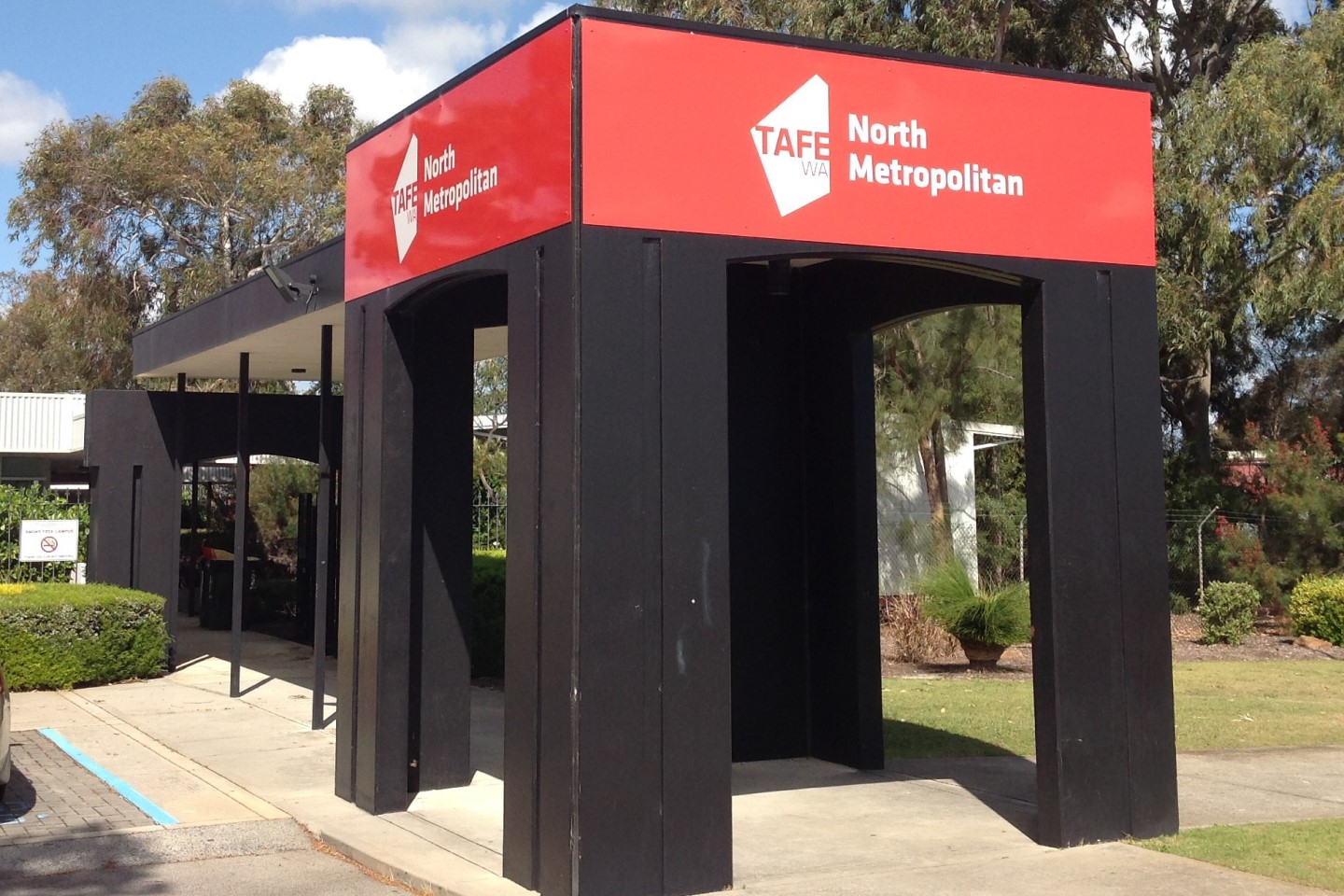
The state government has appointed Amanda Reid, Libby Lyons and Jim Walker as chairs of several of the TAFE colleges’ governing councils.

Continue Reading

Business

Opinion: Libs cross fingers for Labor reshuffle

Published

on

Opinion: Libs cross fingers for Labor reshuffle

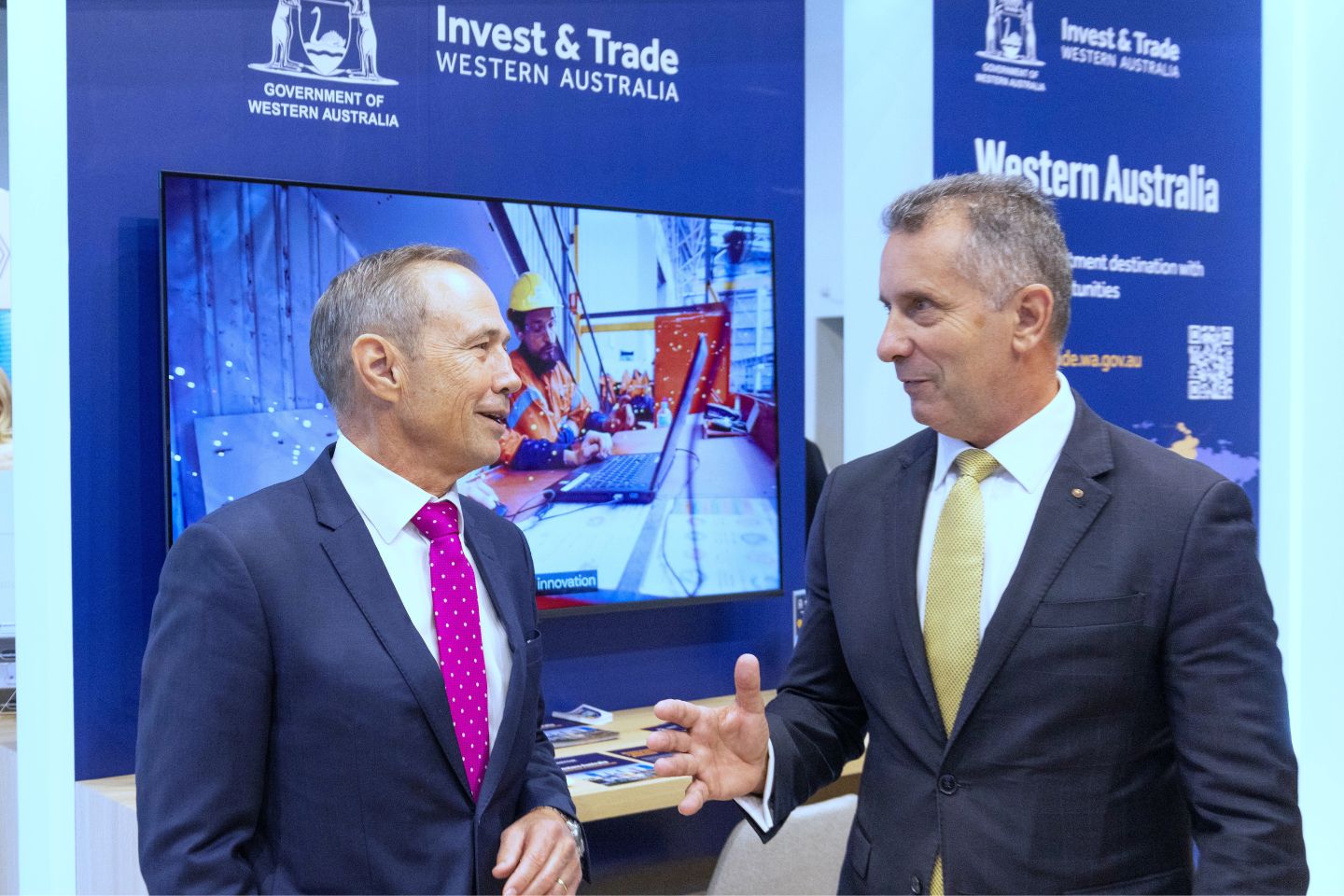
OPINION: Parliament’s winter recess has tongues wagging about changes at the top.

Continue Reading

Business

Trump's $1.4bn crypto earnings revealed

Published

on

US President Donald Trump smiles while sitting at the Resolute Desk

US President Donald Trump made more than $1.4 bn (£750m) last year from business dealings in cryptocurrency, according to his mandatory financial report for 2025.

Continue Reading

Business

Puris launches pea protein ingredient

Published

on

Puris launches pea protein ingredient

H2-IZO was developed for high-protein beverages and dairy alternative applications.

Continue Reading

Business

RATIONAL Aktiengesellschaft (RATIY) Discusses Performance, Regional Sales Trends and Product Growth Drivers Transcript

Published

on

OneWater Marine Inc. (ONEW) Q1 2026 Earnings Call Transcript

Stefan Arnold
Head of Investor Relations

So I would suggest we start. So again, thank you for participating in this IR talk. And again, good afternoon, morning or evening from wherever you are listening today.

So this is now our last call for Q2 or half year 1 2026. And as always, some notes at the very beginning. So this — with this, we are following the recommendations of the ESMA. This means we are just sharing, of course, publicly known information. The call was made accessible to everyone who is interested via our website. And if we would maybe show any documents later on, which I would expect not to happen, then this will be, of course, made available to all nonparticipants as well. And another hint, this call will not be recorded by us, but I think there will be some transcripts produced by service companies.

To start with, let me first summarize the most important points of Q1 2026. So sales revenues in Q1 amounted to around EUR 318 million, which corresponds to a reported growth rate of 8%. Adjusted for negative FX effects, the growth amounted to more than 11%. Here, it is important to know that looking at the development of the past month, we see that there is a stronger prebuying effect than we initially expected. To be honest, we cannot, of course, quantify that in detail. But looking at the strong organic growth in Q1, we would estimate that 2 or 3 — between 2 and

Advertisement
Continue Reading

Business

Why SoFi Looks Mispriced Again (NASDAQ:SOFI)

Published

on

Why SoFi Looks Mispriced Again (NASDAQ:SOFI)

This article was written by

Hi, I’m Yiannis. Spotting winners before they break out is what I do best.Experience: Previously worked at Deloitte and KPMG in external/internal auditing and consulting. Education: Chartered Certified Accountant, Fellow Member of ACCA Global, with BSc and MSc degrees from U.K. business schools. Investment Style: Spotting high-potential winners before they break out, focusing on asymmetric opportunities (with at least upside potential of 3-5X outweighing the downside risk). By leveraging market inefficiencies and contrarian insights, we seek to maximize long-term compounding while protecting against capital impairment.Risk management is paramount—we seek a strong margin of safety to protect against capital impairment while maximizing long-term compounding. Our 2-3 year investment horizon allows us to ride out volatility, ensuring that patience, discipline, and intelligent capital allocation drive outsized returns over time.

Analyst’s Disclosure: I/we have no stock, option or similar derivative position in any of the companies mentioned, but may initiate a beneficial Long position through a purchase of the stock, or the purchase of call options or similar derivatives in SOFI over the next 72 hours. I wrote this article myself, and it expresses my own opinions. I am not receiving compensation for it (other than from Seeking Alpha). I have no business relationship with any company whose stock is mentioned in this article.

Seeking Alpha’s Disclosure: Past performance is no guarantee of future results. No recommendation or advice is being given as to whether any investment is suitable for a particular investor. Any views or opinions expressed above may not reflect those of Seeking Alpha as a whole. Seeking Alpha is not a licensed securities dealer, broker or US investment adviser or investment bank. Our analysts are third party authors that include both professional investors and individual investors who may not be licensed or certified by any institute or regulatory body.

Advertisement
Continue Reading

Business

Trump says Taiwan doubling the size of Arizona chipmaking plant investment

Published

on

Trump says Taiwan doubling the size of Arizona chipmaking plant investment

President Donald Trump on Wednesday said that Taiwan is doubling the size of the chipmaking plants under construction in Arizona, adding that it could help the U.S. share of the chip market rise to 50% by the end of his term.

“We’re creating more jobs, we have more people working today than have ever worked in the history of our country. It’s great and that’s before these places opened,” Trump said before his departure from Joint Base Andrews.

Advertisement

The president said that new chip plants will be opening up over the next year and that chipmakers from Taiwan, such as the industry leader TSMC, are adding to their investments in the U.S.

“The biggest company in the world, actually, the chipmaker. But they’re coming in, they’re building in Arizona, and they just announced they’re going to double the size. We could have 50% of the chip market by the time I leave office. You know what we have now? Nothing,” Trump added.

US, TAIWAN COME TO $250B ‘AMERICA FIRST’ TARIFF DEAL OVER SEMICONDUCTORS

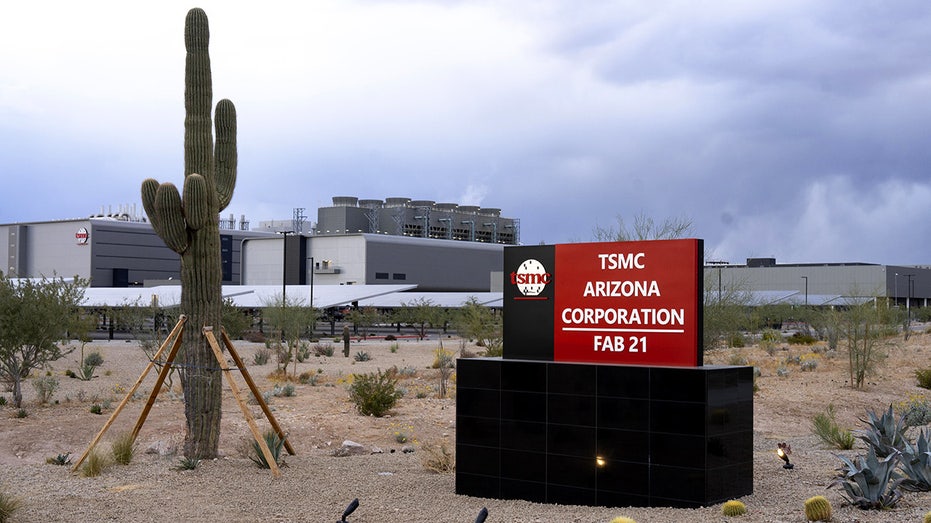
TSMC's chip manufacturing facility in Arizona

The Taiwan Semiconductor Manufacturing Company (TSMC) has committed about $165 billion to building out chipmaking capacity in the U.S. in recent years. (Rebecca Noble/Bloomberg via Getty Images)

FOX Business reached out to Taiwan Semiconductor Manufacturing Company (TSMC) for comment.

Advertisement

TSMC has previously announced large investments in building chipmaking facilities in the U.S., including an announcement of a series of investments that ultimately totaled $65 billion in 2024 as the U.S. CHIPS Act was signed into law that November. That investment covered three chip fabrication plants in Arizona.

Then in March 2025, TSMC announced another $100 billion investment to help build a self-sustaining supply chain for artificial intelligence (AI) chips in the U.S.

That $100 billion investment included three new fabrication plants in Phoenix that would focus on next-gen AI chips for computer processors and smartphones, plus two advanced packaging facilities in Arizona and a center for research and development on next-generation technologies.

TSMC said at the time that the project was the largest single foreign direct investment in U.S. history and would support 40,000 construction jobs over four years plus tens of thousands of high-paying jobs in chipmanufacturing and R&D.

Advertisement

This is a developing story. Please check back for updates.

Continue Reading

Business

New center to analyze flour variability

Published

on

New center to analyze flour variability

Puratos to use the insights in developing ingredients.

Continue Reading

Trending

Copyright © 2025