

Crypto World
Mysterious Solana project World unveiled as fully onchain prediction market



World, the mysterious Solana project that garnered millions of views on X with little more than a glowing globe, cryptic posts and the tagline “Trade Everything,” is now live as a fully onchain prediction market inside Phantom.
The platform is online at world.xyz and in the Phantom wallet on iOS, Android and desktop, with Chainlink serving as its primary oracle infrastructure for its data.
Users can trade event contracts tied to crypto prices and the 2026 FIFA World Cup, with additional markets on sports, geopolitics, and macroeconomics planned for the near future, according to an announcement shared with CoinDesk.
World’s world_xyz account has built attention throughsocial media posts offering scant product details, fueling speculation that the project could be a meme coin, trading app or broader Solana infrastructure play. Copycat WORLD-themed tokens have appeared on token launchpads, though those tokens are not official World assets.
The platform’s identity stayed hidden until late June, when a legal disclosure on Phantom’s site surfaced on X.
World is instead a non-custodial prediction market, with users being able to trade directly from their Solana wallets and funds moving only when they enter a market. Positions, settlement and redemptions happen onchain.

Open USD (OUSD) launched on Tuesday with more than 140 corporate backers, raising a pointed question for anyone earning yield on USD Coin (USDC) through Aave.
The new token lets businesses mint and redeem for free and routes its reserve income to partners. That model aims at Circle, yet the effects could reach the decentralized finance (DeFi) markets where USDC earns its keep.
How USDC Earns Yield on Aave
Lenders who supply USDC to Aave do not pay interest to Circle. They earn from borrowers who pay to withdraw USDC from the pool.
Aave ties those rates to utilization, the share of supplied USDC that borrowers have taken out. Once utilization pushes past its optimal point, supply rates climb fast to pull in deposits.
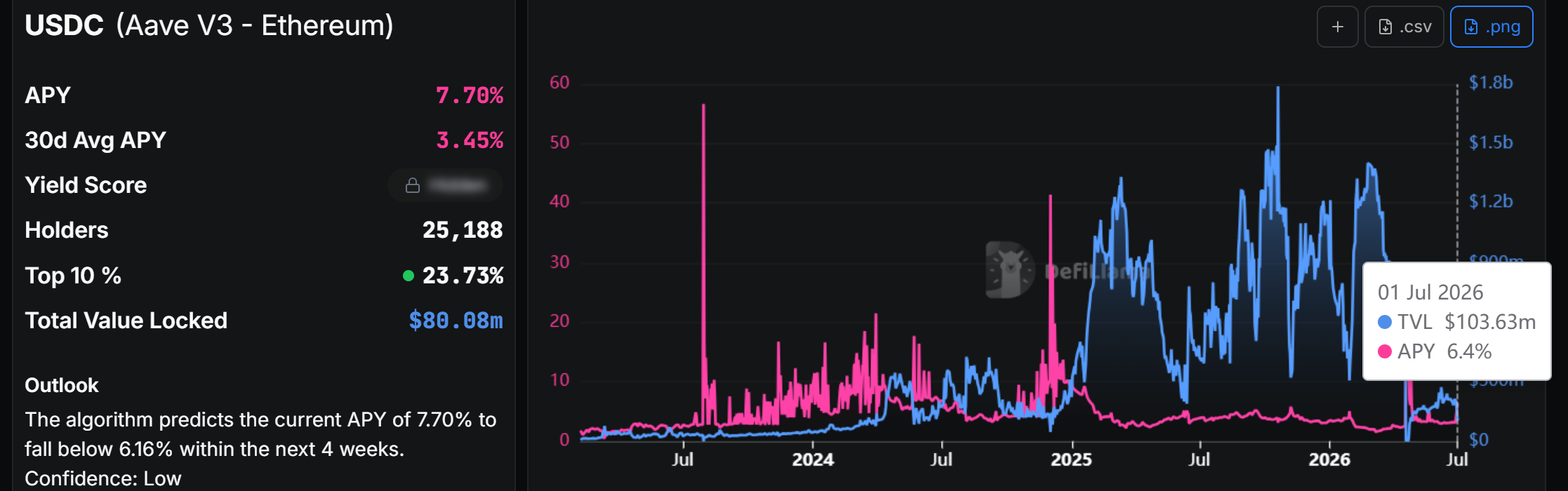
That makes borrowing demand the number that matters. USDC suppliers on Aave’s main Ethereum market earn around 3.4%, according to DefiLlama data, though the rate fluctuates with demand.

The same market paid mid-single digits and climbed near 18% at times in 2024.
Federal law pushes savers onchain in the first place. The GENIUS Act, signed in July 2025, bars stablecoin issuers from paying holders interest.
That stablecoin yield limit leaves lending venues like Aave as the main route to a return. Aave has since opened an institutional lending market for tokenized assets.
Why Open USD Could Pressure Those Yields
Open USD targets the demand side. Its backers include Visa, Mastercard, Stripe, Coinbase, and BlackRock, the networks that route much of the world’s business payments.
The design gives them a reason to switch. Partners keep most of the interest Open USD earns on its reserves. That income generated 99% of Circle’s 2024 revenue, its filing shows.
Coinbase is the clearest test. Circle paid it $908 million in 2024 to distribute USDC. The exchange also keeps every dollar of reserve income on balances held there.
Now, Coinbase backs the rival, and its Circle deal is set to renew in August.
Stripe has gone further and tied its platform to the token.
“Open USD will be the default stablecoin for businesses running on Stripe,” Will Gaybrick, President of Technology and Business at Stripe, said in the announcement.
Follow us on X to get the latest news as it happens
Stripe’s weight is not theoretical. Zach Abrams, who now leads Open Standard, cofounded Bridge, the stablecoin firm Stripe bought in early 2025.
If those firms route settlement flows through Open USD, demand that once leaned on USDC could soften. Lower USDC borrowing on Aave means lower utilization, which pulls down supply yields.
Circle built its lead as USDC’s corporate transfer growth outpaced Tether (USDT). Many of those same rails now back the rival. The catch is timing, since Open USD is not fully live and no Aave market lists it yet.

Circle’s Defense and What DeFi Users Should Watch
Circle argues its lead is hard to copy. Chief Executive Jeremy Allaire says scale and liquidity, built over the years, protect USDC.
“Stablecoin networks are platform and network effect businesses that are established over a long period of time, tend towards winner-take-most market structures, and resemble other internet platform utility markets,” Allaire wrote in a post.
USDC still holds deep exchange liquidity and licenses across the US and Europe. It has kept its European regulatory standing even as USDT retreats from the region. Its supply sits near $73 billion, behind USDT at about $184 billion.
History also gives Circle a talking point. Visa, Mastercard, and Stripe once backed Facebook’s Libra project in 2019, then walked away within months as regulators pushed back.
The sharpest immediate damage hit Circle’s stock, not USDC. Circle Internet Group (CRCL) fell about 17% on Tuesday and roughly 40% over the past month.

Its removal from the five major Russell Growth indexes added rules-based selling at the same time.
For DeFi users, the near-term steps are practical. They can track Aave utilization and rates on live dashboards. Spreading deposits across protocols and chains can lower single-venue risk.
Newer onchain yield strategies may also emerge as Open USD rolls out.
The coming months will test one question. Can Open USD pull enough demand from USDC to move Aave’s rates, or will Circle’s head start hold?
The post Could Open USD Crush Aave’s USDC Yields? Here’s What DeFi Users Need to Know appeared first on BeInCrypto.


Crypto markets have struggled in recent months, with bitcoin falling more than 50% from its late-2025 peak after a sharp June selloff driven by persistent exchange-traded fund (ETF) outflows, elevated interest rates and weaker risk appetite.
Ether (ETH) and most major altcoins have underperformed bitcoin during the downturn, although a handful of sectors, including decentralized finance (DeFi) and tokenization, have shown relative resilience.
While crypto adoption is expanding across stablecoins, tokenized real-world assets, onchain credit and DeFi, the bank argued that usage alone does not drive token value. Instead, long-term winners will convert activity into sustainable cash flow or lasting monetary demand.
Cantor identified Hyperliquid as the clearest example of fee-driven token economics through HYPE buybacks and burns, while bitcoin remains the benchmark monetary asset and Ethereum the dominant collateral layer for onchain finance.
Solana, Sui, XRP and Zcash each have differentiated strengths, the report said, but still need to prove they can translate ecosystem growth into durable token demand.
The bank also highlighted digital asset treasury companies as an overlooked investment theme, arguing the strongest firms are evolving beyond passive crypto holders into active operators that generate yield, build infrastructure and provide institutional access to digital assets.
It initiated coverage of digital asset treasury companies Forward Industries (FWDI) and Cypherpunk Technologies (CYPH) with overweight ratings and price targets of $7.90 and $0.90, respectively.
New York Life Investment Management, a $807 billion asset manager, is putting a high-yield corporate bond strategy onchain for the first time. The firm partnered with tokenization platform Centrifuge to launch the NYLIM Anemoy U.S. High Yield Corporate Bond Segregated Portfolio, ticker HYB. The… Read the full story at The Defiant
Ripple remains one of the most discussed subjects in the crypto space as the company continues to advance its ecosystem and participate in major initiatives.
However, XRP has faced heavy pressure in the extended bear market, struggling to maintain momentum and hold above the $1 psychological barrier.
Joining the Giants
Several hours ago, Ripple announced that it is “proud to join” Open USD as a “day-one integration partner,” reinforcing its commitment to multichain infrastructure supporting institutional adoption across the crypto space.
Open USD (OUSD) is a new stablecoin designed for large-scale global payments. It is built by the independent organization Open Standard and aims to address several issues businesses face when using such financial products. OUSD is expected to go live later in 2026, and prominent backers include BlackRock, Visa, Mastercard, American Express, Coinbase, and others.
Just a few days ago, Ripple received approval from the Japanese Financial Services Agency (JFSA) to launch its own stablecoin (called RULSD) in the country. Shortly after, it revealed that last year it had committed $25 million in RLUSD to support underserved US small business owners and career programs for military veterans.
Despite these efforts, the stablecoin has lost some steam lately. Its market capitalization has dropped to roughly $1.4 billion, making it the 49th-biggest cryptocurrency.
The ETFs
The institutional interest in XRP remains solid. Over the past several weeks, ETF inflows have far exceeded outflows, signaling that pension funds, hedge funds, and other conservative market participants continue to increase their exposure to the asset.

Since day one, these products have generated a cumulative total net inflow of almost $1.5 billion. Recall that the first company to launch a spot XRP ETF in the USA was Canary Capital, while shortly after, Bitwise, Franklin Templeton, 21Shares, and Grayscale followed suit.
It is important to note that such investment vehicles with BTC and ETH as underlying assets have been bleeding heavily in recent months, underscoring a clear decline in institutional appetite.
XRP Price Outlook
Despite the aforementioned developments, XRP continues its fight to stay above $1. As of press time, it trades at around $1.04, representing a 20% plunge on a monthly scale.

Earlier this week, analyst Ali Martinez revealed that the Tom DeMark Sequential Indicator has flashed a buy signal on XRP and outlined the rising network activity. At the same time, though, he noted that whales have reduced their exposure to the asset, which can be interpreted as a bearish factor.
The post Ripple News and XRP Price Update Today: July 1 appeared first on CryptoPotato.
[PRESS RELEASE – Dubai, UAE, July 1st, 2026]
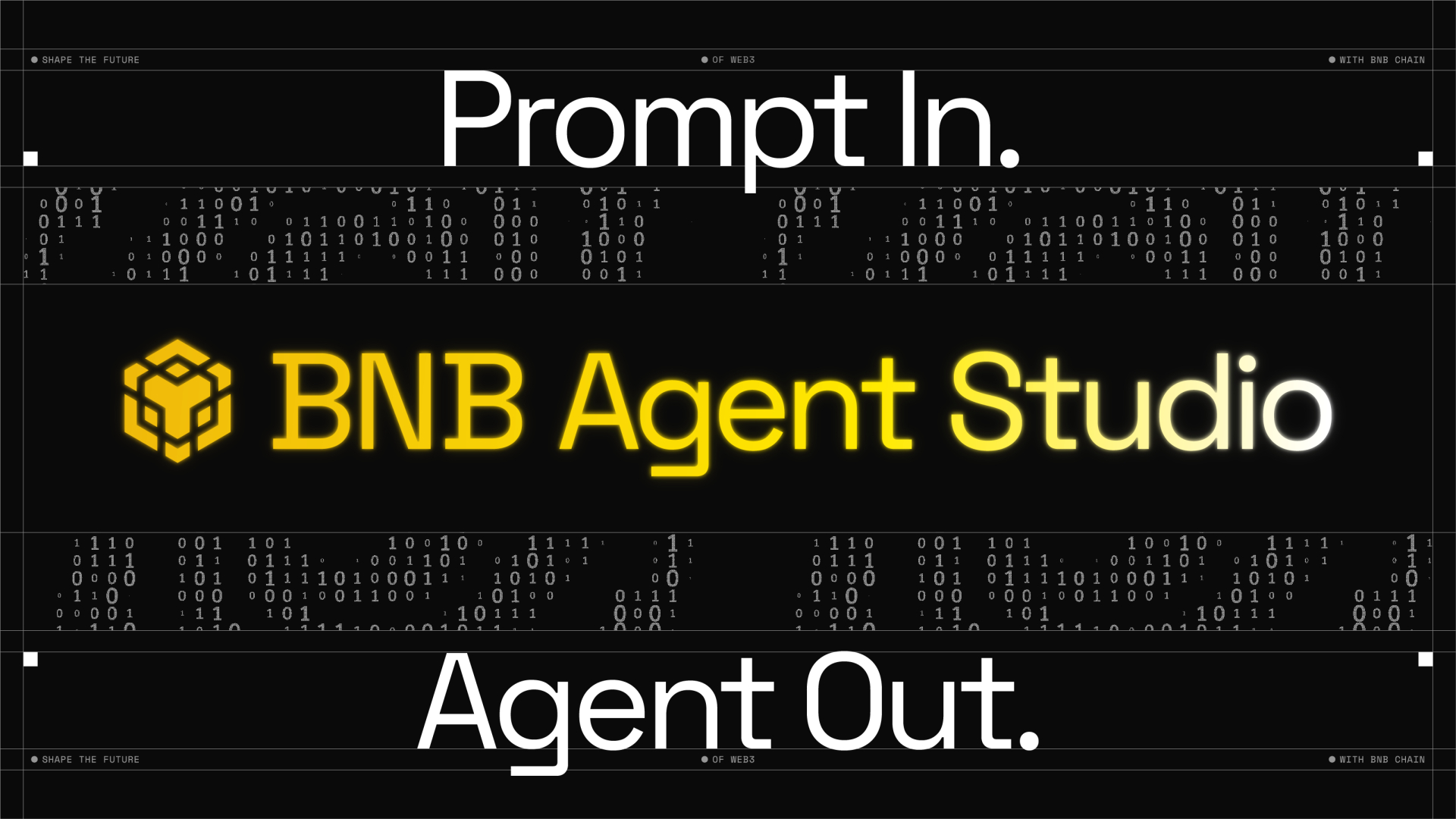
BNB Chain, one of the largest blockchain ecosystems worldwide, today announced the launch of BNB Agent Studio, a new platform that creates a category of AI agents that survive infrastructure failure, accept payments, and can be provably owned and transferred: deployed from a simple prompt in ~15 minutes.
BNB Agent Studio is a developer platform that enables engineers to define what they want inside Claude Code, Cursor, or any MCP-compatible development tool. By abstracting away the complexities of building onchain applications, the launch addresses three fundamental challenges that have prevented AI agents from operating truly autonomously: deployment, discoverability, and continuity.
Co-engineered with the AWS Generative AI Innovation Center, the solution includes an Infrastructure-as-Code generator that automatically provisions an agent’s cloud environment in accordance with current security and least-privilege best practices. It simply generates the code needed and deploys the agent to Amazon Bedrock AgentCore, Amazon’s managed agent runtime.
“Building an autonomous AI agent has typically meant assembling a fragile stack of four or more separate vendor integrations: a wallet, an identity layer, payments, an AI model, and hosting. We’re talking days and weeks of integration work. BNB Agent Studio replaces all of that with a single install, designed as one product from the ground up.” said Nina Rong, Executive Director of Growth at BNB Chain.
Key capabilities:
- BNB Agent Studio agents natively integrate LLM aggregators, allowing them to charge for their services and accept crypto payments for the work they perform. Those earnings allow the agent to fund its own operating costs, creating a self-sustaining cycle that keeps the agent running as long as it has work to do.
- BNB Agent Studio combines AWS AgentCore as the runtime with BNB Chain’s onchain infrastructure, so an agent’s core intelligence is simultaneously hosted on AWS and persisted onchain. The agent can be paused, resumed, migrated, and passed to a new owner without losing any of its accumulated intelligence. Its existence is no longer contingent on any single environment.
- Each agent is issued a verifiable digital identity (ERC 8004) controlled by cryptographic keys that stay on the owner’s own machine: not held by BNB Chain, not stored with any third party.
‘’With Amazon Bedrock AgentCore as the runtime, BNB Chain will unlock an entirely new category: AI agents as owned, tradeable, persistent digital entities. This vision will enable agents to be paused, resumed, migrated, recovered, and transferred, including through tokenisation.” Nina continued.
Today’s launch builds on BNB Chain’s recently announced BNB Agent SDK, which established a modular standard for identity (ERC8004), commerce (ERC8183), payment, and memory in AI agents. BNB Agent Studio is designed to be the fastest path from concept to a fully operational agent.
This is the initial release of BNB Agent Studio. Financial decisions have always demanded human time and attention to find the right yield, compare options, and act before an opportunity closes. When agents can do all of this autonomously, and when those agents are owned assets that persist, earn, and compound, the way people interact with their money changes fundamentally. BNB Chain intends to ship new capabilities on a fortnightly basis, with each update expanding the platform’s tooling for developers building in the agentic economy.
About BNB Chain
BNB Chain is the leading community-driven decentralized blockchain ecosystem powering Web3 applications across DeFi, AI, gaming, and consumer use cases. Its multi-chain architecture spans BNB Smart Chain (BSC), opBNB, and BNB Greenfield, providing the infrastructure for builders deploying onchain applications at scale. For more information, visit the official website.
The post BNB Chain Launches BNB Agent Studio: The AI Agent Infrastructure Behind Smart Money appeared first on CryptoPotato.

TLDR
- Goldman Sachs increased its S&P 500 year-end projection to 8,000 from 7,600
- The upcoming Q2 earnings season beginning in mid-July represents a crucial moment for market direction
- Artificial intelligence infrastructure investments are projected to contribute approximately 50% of S&P 500 earnings expansion in 2026
- During the week closing June 25, hedge funds dumped technology equities at the most aggressive rate since 2016
- The Magnificent Seven tech giants shed more than $2.3 trillion in combined valuation throughout June
On May 26, Goldman Sachs elevated its S&P 500 year-end forecast to 8,000, marking an increase from its previous 7,600 projection. The investment bank’s chief U.S. equity strategist Ben Snider detailed this position in a research note dated June 28.
The foundation of Goldman’s thesis is simple. The 2026 equity market advance has been fueled predominantly by earnings expansion rather than multiple expansion — meaning actual profit growth, not investors willing to pay more for existing earnings.
Snider characterized the upcoming Q2 earnings cycle as “a critical test.” Strong corporate results would provide fundamental support for the rally’s continuation. Disappointing numbers, however, would represent the most significant threat to market stability this year.
Goldman’s Earnings Growth Projections
Goldman’s earnings-per-share projection for the S&P 500 in 2026 sits at $340, representing a 24% year-over-year jump. Looking ahead to 2027, the firm anticipates $385 per share, translating to an additional 13% gain.
FactSet data shows Q2 earnings growth estimates at 22%, a notable increase from the 18.7% expectation at the quarter’s outset. Revenue expansion is forecast at 12.1%, marking the most robust growth rate since the second quarter of 2022.
Market reactions to earnings disappointments have been particularly severe. Companies failing to meet analyst expectations have experienced average stock declines of 4.2%, significantly exceeding the historical norm of 2.9%.
With the S&P 500 currently positioned around 7,365, Goldman’s 8,000 forecast suggests approximately 9% additional upside potential.
Artificial Intelligence Spending Underpins Growth Thesis
According to Goldman’s analysis, AI infrastructure capital deployment will generate roughly half of total S&P 500 earnings growth during 2026.
The biggest technology corporations are projected to allocate approximately $754 billion toward capital expenditures this year. This represents an 83% surge compared to 2025 levels. Goldman forecasts this figure climbing to $905 billion in 2027.
Goldman’s proprietary basket tracking AI data center construction-related equities has delivered nearly 60% returns year-to-date. While semiconductor companies remain the primary direct winners, hardware manufacturers, industrial firms, and utility providers are also experiencing earnings tailwinds.
The S&P 500 currently trades at approximately 21 times forward earnings, a valuation higher than roughly 87% of readings over the past four decades. Goldman maintains that near-record corporate profit margins and comparatively moderate interest rates support this elevated multiple.
The seven dominant technology companies — Nvidia, Apple, Alphabet, Microsoft, Amazon, Broadcom, and Meta — collectively generate a 44% return on equity. Goldman projects this metric will decline by an average of 700 basis points next year as depreciation expenses increase at major tech firms.
Smart Money Retreats From Technology Sector
While Goldman maintains its optimistic earnings outlook, hedge funds are rapidly reducing technology sector allocations.
Goldman’s prime brokerage data revealed that hedge funds liquidated technology stocks during the week ending June 25 at the most intense pace since the firm initiated tracking in 2016.
The Magnificent Seven — Apple, Microsoft, Nvidia, Amazon, Alphabet, Meta, and Tesla — comprised approximately 21.5% of hedge fund U.S. equity portfolios at the beginning of 2026. This concentration has contracted to 14.5%, marking the steepest six-month decline since the 2022 bear market.
This elite group of stocks erased over $2.3 trillion in aggregate market capitalization during June alone.
Goldman’s baseline scenario maintains that robust earnings performance, propelled by AI-related spending, will sustain equity markets through year-end. Q2 earnings reporting commences in mid-July, led by major financial institutions.



Sam Bankman-Fried’s X account posted, “Another great quarter for stocks.” The message came despite his ongoing 25-year prison sentence for the FTX fraud.
A prison-approved proxy sent the post, since Bankman-Fried has no direct internet access behind bars. The timing lined up with the close of the stock market’s best quarter since 2020.
Stocks Close Out Their Best Quarter Since 2020
The Dow, S&P 500, and Nasdaq each closed higher on June 30. The S&P 500 gained 0.8%, and the Nasdaq rose 1.5%. Both posted their best quarterly performance since 2020.
The gains held even as the Middle East conflict weighed on broader sentiment. The Dow logged its biggest quarterly jump since 2022. Meanwhile, technology stocks led the advance, with a semiconductor index gaining 3.9% on the day.
The rally extends a longer trend. Stocks have outpaced Bitcoin over the past five years. A $1,000 stake in the S&P 500 from 2021 is now worth more than the same bet on the token.
Traditional markets grabbed other headlines this week too. SpaceX’s Nasdaq 100 debut is set for July 7. It marks the fastest index inclusion on record.
A quarter-end rally followed cooling jobs data and an Iran ceasefire. Together, they pushed indexes to fresh highs into the close.
SBF´s Pardon Play From Behind Bars
Market watchers view the tweet as part of a broader image campaign. Bankman-Fried wants to reposition himself as a market-savvy voice in traditional finance. That framing beats being remembered as the architect of an $8 billion collapse.
The framing lines up with his legal strategy. Bankman-Fried filed for a presidential pardon through the Justice Department in early June. Trump, however, has repeatedly ruled out clemency for him.
That bid faces long odds. A federal appeals court upheld his conviction and sentence earlier in June. Judges rejected claims that the trial judge excluded key evidence. The post follows the same playbook, aiming to reshape his image while his appeal continues.
FTX Token FTT Pumps, Then Crashes Back
Automated trading bots reacted within minutes to SBF’s X post. The FTX token, FTT, briefly jumped by as much as 11%. It then erased the entire move just as fast.
FTT now trades near $0.23, still far below its 2021 all-time high near $84. The token sits just above its multi-year low of $0.22, reached in early June.
Total FTT trading volume remains thin compared to major tokens. The swift reversal suggests thin liquidity, not renewed conviction, drove the spike.
Bankman-Fried’s proxy may keep posting market commentary. Whether it works depends on how much credibility, not just attention, the effort can still buy him.
The post Sam Bankman-Fried is Posting Market Takes From Prison Now appeared first on BeInCrypto.
Crypto World
Europe is closing the door on offshore crypto, but it’s leaving the riskiest window open


ESMA itself said in a February statement that firms with derivatives marketed as “perpetual futures” are likely to fall under the existing product-intervention measures on contracts for difference (CFDs). The commercial name, ESMA said, is irrelevant. Even voluntary negative-balance protection does not alter the analysis. If a perp meets the CFD definition, all CFD rules apply: leverage limits, a mandatory risk warning, margin close-out, negative balance protection and a ban on trading incentives. Those restrictions are a heavy burden on licensed derivatives providers in Europe.The offshore market is teeming with sharksA European investor can open an account at Hyperliquid, the largest decentralized perp trading platform, and take Bitcoin exposure with 50x leverage. Other platforms, like Aster, offer up to 200x leverage on bitcoin. Neither platform is authorized under MiCA or the Markets in Financial Instruments Directive (MiFID), which covers derivatives trading in the EU. There’s no loss limit that the EU can enforce, no key information document, no bonus ban, and no close-out rule, and they’re available to anyone with a self-custody wallet and a few minutes of free time.
And without those protections, retail investors almost always lose: when ESMA and national regulators reviewed the data in 2018, 74% to 89% of retail investment accounts lose money on CFDs across EU jurisdictions, with average losses per client ranging from €1,600 to €29,000.
Crypto World
Palantir (PLTR) Stock Gains Momentum on Nvidia AI Deal and Presidential Stake Disclosure

Key Highlights
- Shares climbed 2.42% in premarket sessions Wednesday, trading at $119.49
- The data analytics firm unveiled a sovereign AI collaboration with Nvidia targeting U.S. federal agencies
- Palantir broadened its existing partnership with Surf Air Mobility to fast-track SurfOS platform development
- Financial disclosures showed President Trump maintains a minimum $1 million position in the company
- Year-to-date performance shows PLTR down approximately 30% and trading beneath key technical indicators
Palantir Technologies (PLTR) experienced a 2.42% uptick during Wednesday’s premarket session, reaching $119.49, following Tuesday’s announcement of strategic partnerships and the revelation of a notable investor in its shareholder registry.
Palantir Technologies Inc., PLTR
The data analytics specialist has struggled throughout 2026, shedding approximately 30% of its value year-to-date, making any bullish developments particularly significant for investors.
The primary catalyst came from a sovereign AI collaboration announcement with Nvidia. This strategic alliance aims to deploy an intelligent infrastructure combining Nvidia’s AI capabilities and Nemotron open-source models within protected, sovereign computing environments—specifically designed for federal government operations and essential infrastructure systems.
The partnership merges Nvidia’s AI platform with Palantir’s comprehensive suite including AIP, Ontology, Foundry, and Apollo technologies.
According to Palantir CEO Alex Karp, this integration will “allow the U.S. government to unleash the full power of LLMs while removing the underlying security risks.” Nvidia’s CEO Jensen Huang characterized the partnership as evidence of “how open models can strengthen America’s leadership in AI.”
Aviation Partnership Receives Boost
The secondary development involved strengthening Palantir’s commercial relationship with Surf Air Mobility. The company pledged additional engineering talent and market development support to accelerate SurfOS evolution, which operates on the AIP and Foundry infrastructure.
Ted Mabrey, Global Head of Commercial at Palantir, stated the platform presents “a clear opportunity to build and define the central operating system for the future of aviation and air mobility.”
Presidential Investment Creates Market Buzz
Contributing to Wednesday’s price action was President Trump’s most recent financial disclosure, submitted to the U.S. Office of Government Ethics on Tuesday.
The documentation reveals Trump maintains a minimum $1 million stake in Palantir, alongside positions exceeding $5 million each in Apple and Nvidia. The complete filing discloses 418 publicly traded equity holdings.
While not representing a dominant portfolio allocation, having a sitting U.S. president publicly identified as an investor typically generates market interest.
Regarding operational performance, Palantir delivered Q1 revenue of $1.63 billion, exceeding analyst consensus estimates of $1.54 billion. The organization maintains profitability, carries zero debt, and continues producing robust free cash flow.
Nonetheless, technical indicators paint a challenging picture. PLTR currently trades 6.7% beneath its 20-day moving average, 11.8% below its 50-day average, and 24.6% under its 200-day moving average. A bearish death cross pattern—occurring when the 50-day SMA drops below the 200-day—materialized in February.
‘Big Short’ investor Michael Burry maintains a documented short position against PLTR, along with similar bets against Tesla and Nvidia.
Analyst sentiment reflects a Moderate Buy rating overall, though bearish perspectives emphasize valuation concerns and potential vulnerabilities related to specific U.K. government contracts.
Both the presidential disclosure and Nvidia partnership were documented Tuesday. PLTR traded at $119.49 during Wednesday’s premarket hours, representing a 2.42% advance.


That transition has also reshaped the Ethereum Foundation itself.
Earlier this year, the foundation published a renewed mandate emphasizing Ethereum’s core values: including credible neutrality, self-sovereignty and open infrastructure, while reducing its involvement in some implementation-focused initiatives. Combined with ongoing budget constraints, the shift has resulted in restructuring across the organization.
Dietrichs views those changes less as a crisis than an overdue evolution. “It’s more a transition period,” he said. “Ethereum is now much more intentionally, proactively reorienting itself to be ready for this new time period.”
Filling in the gaps
But as the turmoil started to unveil itself at the EF, many have started to wonder whether EthLabs would replace it. Dietrichs sees that rather than competing with the foundation, EthLabs intends to complement it. “We’re deliberately positioning ourselves to fill the gaps that the Ethereum Foundation now deliberately leaves,” Dietrichs said. “We’re not trying to create a competing vision for Ethereum.”
Those gaps, he argues, center on adoption-oriented engineering work, like improving Ethereum’s scalability, strengthening layer-1 performance, advancing interoperability, and identifying the technical barriers preventing broader institutional use.
“The gap we see is this more practical, adoption-oriented work, making Ethereum, practically useful for the real world,” he said. EthLabs plans to continue work its founders previously led within the foundation, including layer-1 scaling research, while expanding into areas like interoperability and engagement with financial institutions exploring blockchain infrastructure.

Lloyds Banking Group axes Halifax brand after 173 years on high street

Could Open USD Crush Aave’s USDC Yields? Here’s What DeFi Users Need to Know

Summer 2026 edition of Order! Order! magazine published





-

 Fashion5 days ago
Weekend Open Thread: Staud – Corporette.com
-

 Politics5 days ago
The House | Manchesterism won’t survive the painful trade-offs unless it gets citizens on board
-

 Crypto World2 days ago
Strategy authorizes up to $1.25B in Bitcoin sales under new capital plan
-

 Politics6 days ago
Potential 2028er World Cup attendee leaderboard
-

 Business5 days ago
Asia stock markets slide as tech shares slump
-

 News Videos3 days ago
MAJOR BITCOIN & MARKET UPDATE!!!! (MUST WATCH ASAP!!!)
-

 Tech6 days ago
A Look At A Gaggle Of Transputer Boards
-
 Crypto World6 days ago
Dell (DELL) Shares Tumble Over 5% Following Analyst Downgrade to Hold
-

 Crypto World4 days ago
Coinbase, Circle Deepen Crypto Stock Losses Despite Resilient S&P 500
-

 Business1 day ago
Australia treasurer says alleged access of prime minister’s bank data ’incredibly concerning’
-

 Crypto World4 days ago
Kraken's xStocks Opens Bending Spoons IPO Registration to EEA Retail
-

 Sports5 days ago
FIH Pro League: India defeat Pakistan 7-1, register biggest win of campaign | Other Sports News
-
 Crypto World6 days ago
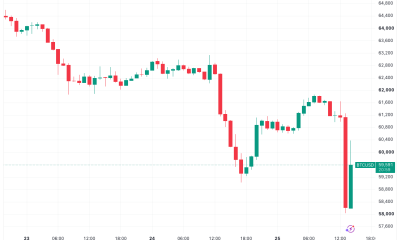
Bitcoin Sparks $600M Hourly Liquidations With $65,000 Set To Become Resistance
-

 Tech4 days ago
Bluekit phishing kit adopts browser-in-the-middle for login theft
-

 Tech4 days ago
Russian hackers now target Signal backup recovery keys
-
Crypto World5 days ago
Hyperliquid Named on Singapore MAS Investor Alert Register
-

 Crypto World5 days ago
RTX holders must register wallets before token distribution begins
-
 Crypto World6 days ago
Ripple and SBI launch RLUSD in Japan after JFSA approval
-

 Tech2 days ago
Anonymous researcher drops 0-day ‘exploitarium’ repo
-
 Business2 days ago
The AI boom won’t burst all at once. It will pop in ‘rolling bubbles’: Macquarie
You must be logged in to post a comment Login