Aryna Sabalenka has responded strongly to comments made by her first-round opponent Teodora Kostovic at the 2026 Wimbledon Championships, with the Belarusian also coming under criticism from some fans for her own reaction to the situation. The World No. 1 spoke after her win over McCartney Kessler secured her place in the third round.
Before their opening-round clash on Monday, Kostovic had expressed confidence ahead of the match, saying she wanted to “see if Sabalenka can deal with my power” and backing herself to cause an upset. However, the Belarusian proved too strong on the day, winning 6-2, 6-3.
Thanks for the submission!
Advertisement
Following the match, Aryna Sabalenka was asked again in her post-match press conference about Kostovic’s pre-match remarks and gave a firm response:
“I think it was more like she was trying to trick herself and she was just trying to boost that self belief that she actually didn’t have. Sometimes you have to really fake it til you make it. Sometimes you have to stay grounded and be real and work with what you have.”
Advertisement
“So for me that message was a bit.. I would understand if it would be reasonable. But like I went in the match and was like… ‘Which power was she talking about?’ Sometimes it works if you actually have that self belief. If you’re just trying to fake it and you don’t actually believe in it, it’s not gonna work,” she added.
Fans were quick to take to X (formerly Twitter) to criticize Aryna Sabalenka, with one user writing:
“She is World no 1. She should be empowering female players and giving them confidence and instead – she is making fun of them calling them fake. What a shame. Worst No. 1.”
“Damn!!!! 💔💔 this’s so bad from her.. a leader, a number 1; you should be motivating the rising stars, the young players not spitting venomous savage on them, this’s absolutely disappointing message from a supposed-to-be professional idol,” another wrote.
“Oh Aryna give us a breakkkk woman you won you’re World No. 1. RELAX, ….SHE’S 18. Literally let the kid be … it’s not that deep,” one account posted.
“Narcissistic Projection right here,” another added.
“Rybakina has to be a new number one. She would never say such stupid and arrogant to other tennis players,” one fan commented.
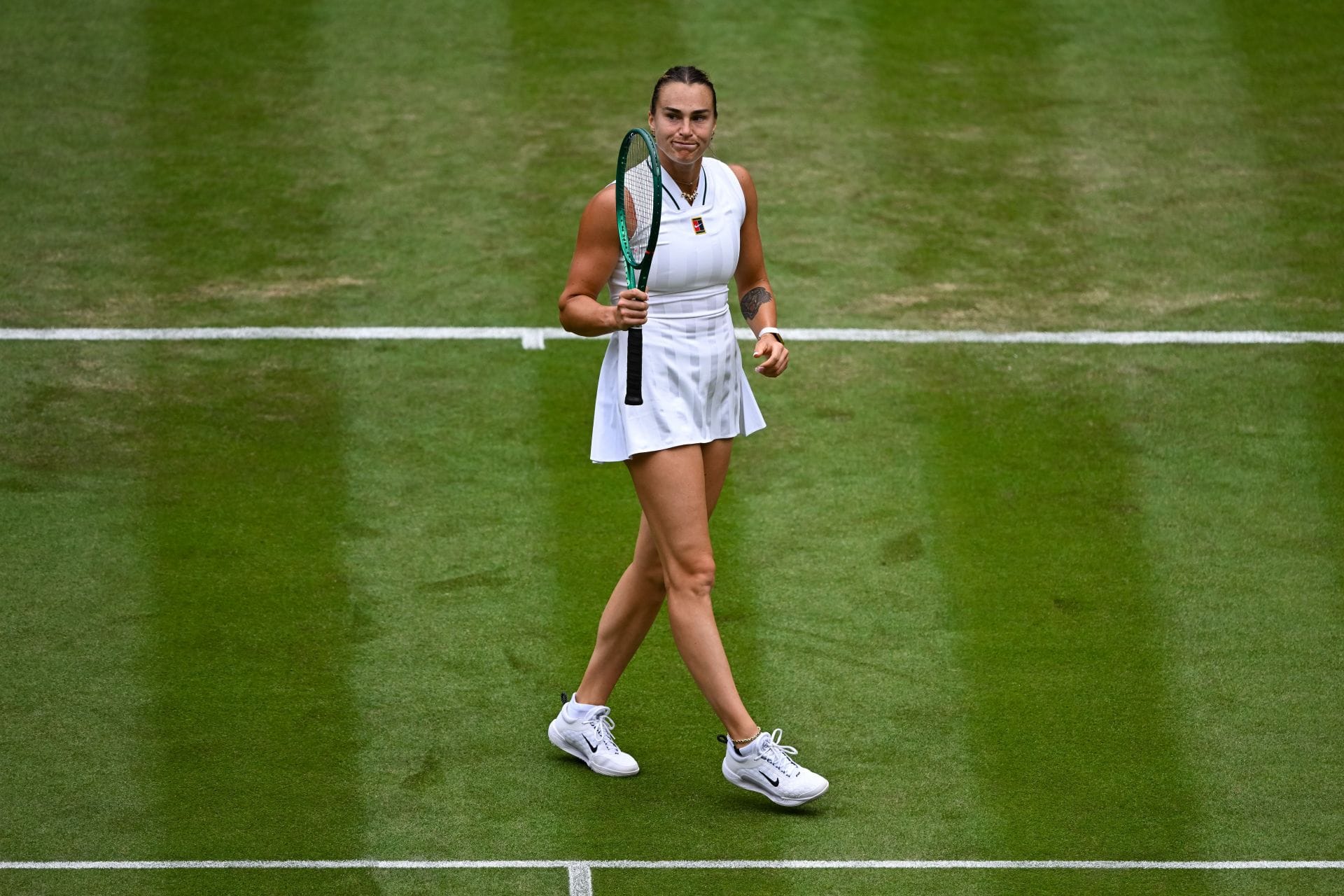
Aryna Sabalenka set to face off against Jelena Ostapenko in Wimbledon 2026 3R
Aryna Sabalenka pictured at Wimbledon 2026 | Image Source: Getty
Aryna Sabalenka has advanced to the third round of the 2026 Wimbledon Championships after defeating Teodora Kostovic and McCartney Kessler 6-1, 7-6(9). She is now set to face Jelena Ostapenko in the next round, with the Latvian coming in off solid wins over Harriet Dart and Antonia Ruzic.
If Sabalenka gets past Ostapenko, she could face Naomi Osaka in the fourth round, followed by a potential quarterfinal clash with Karolina Muchova. Jessica Pegula may await her in the semifinals, while Elena Rybakina or defending champion Iga Swiatek could emerge as possible final opponents.
New York Yankees captain Aaron Judge may not be able to play for his squad right now, but that doesn’t mean he’s looking away from the poor performances they’ve had of late.
Judge was straight-forward with his response to the Yankees dropping six games before their series finale against the Detroit Tigers on Wednesday afternoon in the Bronx.
“Well, it’s not great,” he said after his team’s woes. “Just a little lack of focus. We just gotta dial it in. Our ultimate goal is to win a World Series. I think guys have to remember that every single day they show up here, we’re here to win a World Series.”
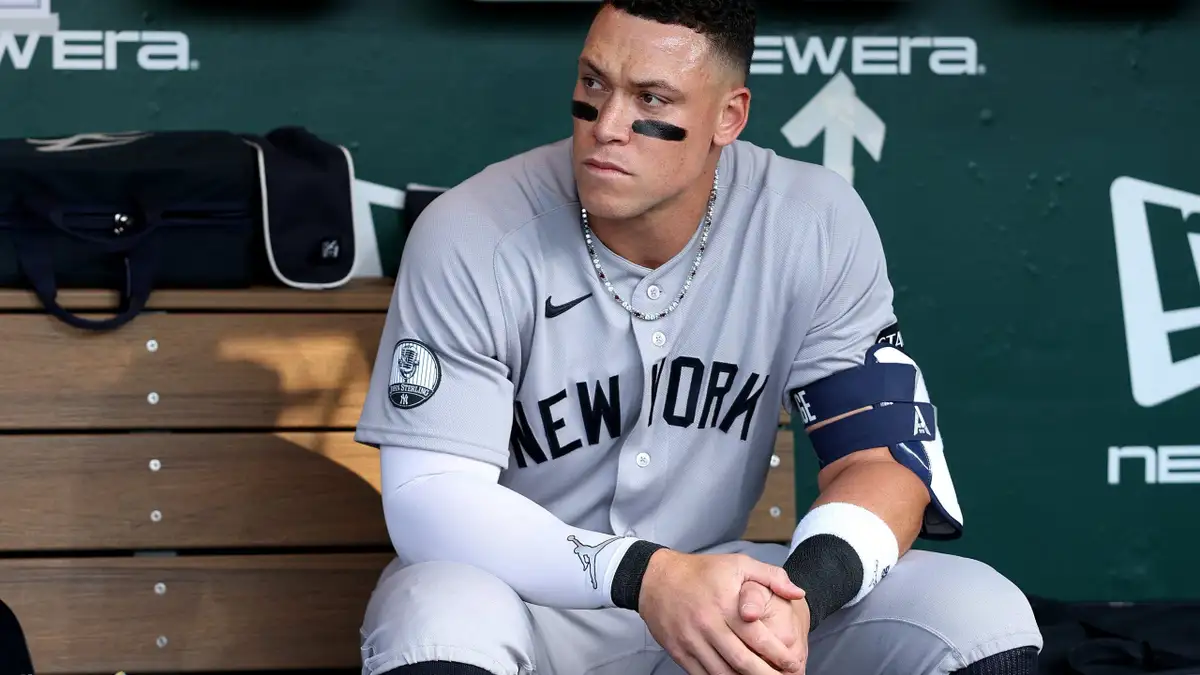
Aaron Judge of the New York Yankees sits in the dugout before a game against the Athletics at Sutter Health Park in Sacramento, Calif., on May 29, 2026.(Ezra Shaw/Getty Images)
Judge didn’t specifically go into what the lack of focus is, but he followed up by saying, “I think you guys see it.”
Judge, who has been on the injured list with a rib injury, believes getting that elusive 28th world championship for the franchise should be enough motivation to right the ship.
“That should motivate you every single day you step on that field, no matter what happens, no matter what happens the day before,” he added. “I got a job to do. We’ve got an important sign when you walk out on the field. It’s the last sign you see before you’re out there: it says ‘do your job.’ Guys are here to do their job.”
Unfortunately for the Yankees, Judge’s pre-game speech didn’t result in snapping that losing streak on Wednesday. They fell to Detroit 6-2 in 11 innings, where four runs were scored in the top of the 11th by the Tigers.
The Yankees have dropped seven straight and eight of their last 10 games to fall three games back of the Tampa Bay Rays for the lead in the AL East.
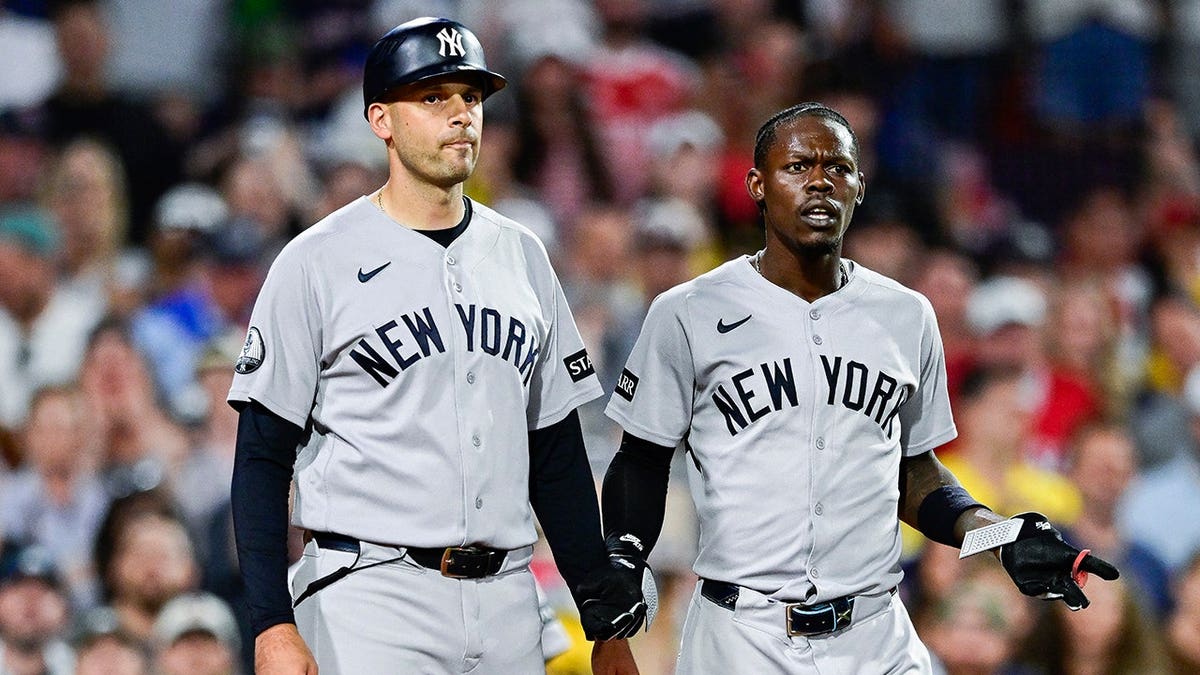
Jazz Chisholm Jr. of the New York Yankees reacts after being ejected in the sixth inning against the Boston Red Sox at Fenway Park in Boston, Mass., on June 28, 2026.(Jaiden Tripi/Getty Images)
Yes, the Yankees remain in clear playoff position, sitting atop the American League Wild Card standings despite the skid. But, while the AL has been mediocre this season, it’s still a tight race as other teams are starting to get right.
Advertisement
New York could certainly use their captain back on the field, but there’s no timetable for his return and he didn’t have anything positive to say about his rehab in terms of putting the pinstripes back on soon.
“You know how it goes around here — guys can feel good, feel bad, but you’ve got to wait on images,” Judge said about his rib. The Yankees said when he was diagnosed with the injury that they would get additional imaging done roughly four-to-six weeks later.
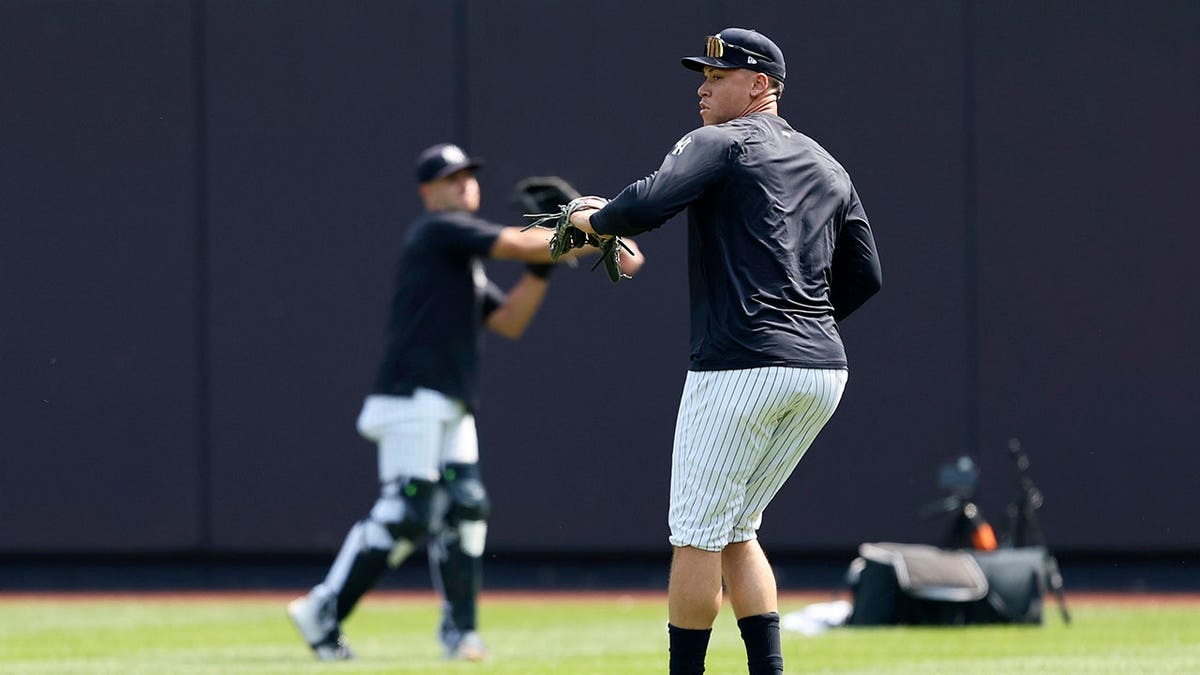
New York Yankees’ Aaron Judge, who is injured, runs drills in the outfield before a baseball game between the New York Yankees and Tampa Bay Rays, Thursday, July 31, 2025, in New York.(AP Photo/Heather Khalifa)
“There’s no need to talk about this now,” Judge said. “I know it’s an important topic and a big issue, but I want to give you guys the full story.”
Advertisement
The story right now for the Yankees is a bleak one, but there’s a lot of season left to play. Perhaps the All-Star break, which begins July 13, could be a good reset as they look to get back to their winning ways.
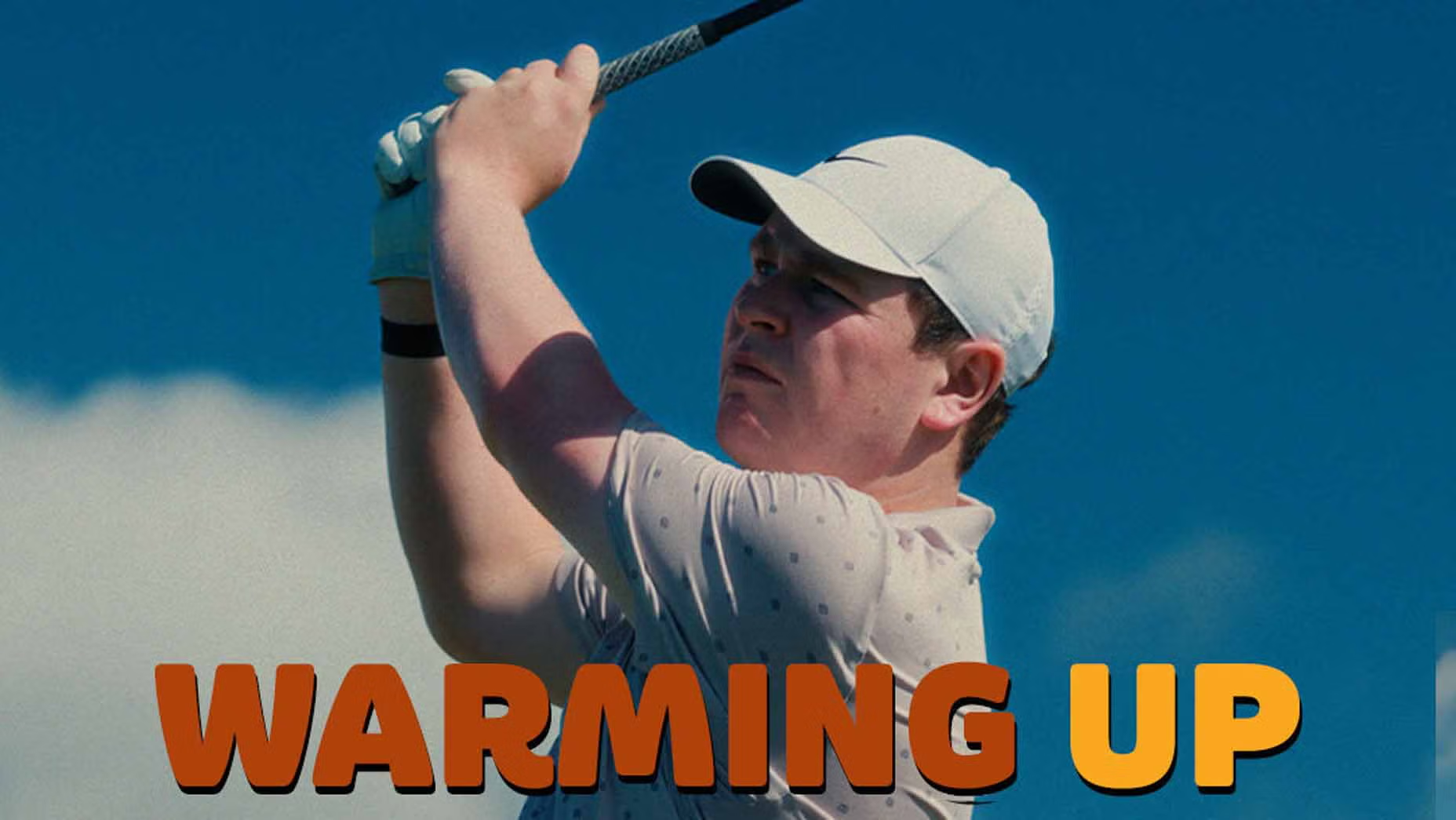
Earlier this year the world’s top-ranked Scotsman, top-ranked lefty and best-golfer-who-moonlights-as-a-shinty-player joined me on the practice tee to run through his warmup routine. He revealed a thing or two about how he sees the world in the process.
Here’s what I learned from Robert MacIntyre on the latest episode of Warming Up.
Watch below, or read on . . . or better yet, do both!
Advertisement
“>
1. The gym isn’t his enemy anymore
“When I first came out I was against it all,” MacIntyre says as he begins his session. “I was like, I’m not doing that. I’m young enough. But I had a few injuries, lower back, like most golfers, and I think that came from, one, not being strong enough to withstand the speed and the travel, and two, when I’m getting on the range I can just peg it up with the driver, I sometimes do that when I’m back home in the simulator, no warmup — and then that’s when I do get myself injured.”
MacIntyre says he and his team noticed that his scoring average was going up in morning rounds and figured that was due in part to his body struggling to wake up. They’ve reversed that with a more diligent pre-round routine.
“Warming up’s been important,” he adds somewhat reluctantly.
Advertisement
I think that’s a decent tagline for the show.
2. He has a “wedge chart”
MacIntyre starts with his 60-degree and varies his specific wedge warmup but with the same goal — to dial in specific wedge feels.
“I’ve got a chart of how far I hit my wedges. So, like, a 9 o’clock feel, which normally goes 99 yards, give or take,” he says.
What does a 9 o’clock feel mean? MacIntyre takes his lead arm back until it’s parallel with the ground — like the hand hitting nine on a clock — “and then it’s full speed ahead.”
Advertisement
3. He likes using the simulator to “reset”
MacIntyre’s home base is Scotland — more on that in a minute — but that doesn’t mean he’s grinding on the range in all manner of windy linksland conditions. Instead, he prefers the calm of the simulator when he’s home.
“My technique gets off with like, after [a] week playing in the wind,” MacIntyre says. “I know the tendencies, I’m going to get ahead of it, I’m gonna trap it, so I feel like the simulator is great for resetting, no wind no interference, flat surface and I can just work on technique.”
4. Still, flighting his wedges low is second nature
You can take Bob out of Scottish wind but you can’t take the Scottish wind out of Bob, or something like that.
“I’ve grown up in the wind, so it’s fairly easy,” MacIntyre says of keeping his wedges low in the wind. “Open up [my stance] a little bit. Your body will open up naturally. The ball goes back [in my stance] and then I just swing it, just drive through it.
Advertisement
“Something I’ve not got a problem doing is hitting it low.”
What’s interesting is that MacIntyre says those two things are related; the more time he spends playing in the wind the more he gets leaning forward and the further back the ball goes in his stance — hence the need for a reset.
5. He needs a different routine than Tiger Woods
When Tiger Woods turned pro he moved to Isleworth, an Orlando-area club, and the rest was history. As for MacIntyre?
“I remember the first year out here on the PGA Tour, I was at this place in Orlando, practicing at Isleworth, but I was almost overdoing it. I was like, I’m going to go and practice, I’m going to go and practice, and then it was like, my game got worse. And I think some of it was motivation, like, why am I practicing? [In the offseason] it’s hard to be motivated because after a Ryder Cup and the Race to Dubai’s finished, you’re trying to slow down.”
Advertisement
This has been a big part of MacIntyre’s story the last few years: finding what energizes him, what drains him, what helps him tick best.
“I find when I’m off at home, I like to spend time with family and friends and not touch the clubs too much unless Mike [his caddie] messages me and says, right, match at the simulator, then I’ll join up and play,” he says.
As for Woods’ routine?
“I’m not built the same as Tiger,” he says. “But look, everyone does it differently. I mean, look at Alex Noren. If I went and spent a day with Alex, my hands would be in bits the next day … for me, the biggest change in the last two years has been the mental side, and the happier I am off the golf course, I can bring that onto the golf course. So, yeah. Pretty simple.”
Advertisement
6. His shot shape? Depends on the club
What’s MacIntyre’s preferred shot shape? It changes throughout the bag.
“I’m more draw-biased with the shorter clubs,” he says, holding his 9-iron. “And then more fade-biased with the longer irons.”
As for his woods?
“I’m a more neutral guy with the driver. I don’t like to shape the driver, like my stock shot would be very neutral to then allow me to maneuver it.”
Advertisement
7. On the range he’s “finding zero”
Although MacIntyre has his preferred shot shapes (see above), during his pre-round range sessions he’s generally trying to hit it pretty straight.
“For me it’s all about finding zero, finding neutral on the range, and then when I go out and play I just go and play and don’t think about anything,” MacIntyre says. “But on the range I think about a little more, I try to get the club in a good spot … when I warm up I try and hit everything dead straight so that when I go on the golf course I know, well, if that’s straight [pointing to ball position], if I want to draw it, the ball goes back [in my stance], if I want to fade it, the ball goes up.
“I try and keep it as simple as I can.”
8. When he’s curving the ball, he’s thinking about one thing…
…where it’s going to finish.
Advertisement
“I’m not a big technique guy … I’ve played golf long enough now, I know that to fade it the club’s got to go this way,” MacIntyre says, making an outside-to-in, left-to-right motion. “I don’t worry about how much it’s fading. Mike will always say where he wants me to finish it, he doesn’t ever tell me where to start it.
“Because I don’t even know where this thing’s going to start. As long as I put the shape on it and hit the distance.”
9. He looks at three numbers on a launch monitor
“Path, face angle, face-to-path. Those are my checkpoints,” MacIntyre says.
“Path” measures the direction the clubhead is traveling relative to the target line.
Advertisement
“Face angle” measures the direction the face is pointing at impact, also relative to the target line.
And face-to-path measures the relationship between the above two numbers, which will tell you about curvature, sidespin, ball flight.
So is MacIntyre more artist or scientist?
“I would say I’m more of an artist, but I don’t back away from the science side of it,” he says. “I do like to make sure everything’s in line, make sure the clubs are right, make sure…there’s so much that goes into it now that it’s not just pitch up, play golf anymore.”
Advertisement
10. “Life goes on”
It came out a few years back that MacIntyre was continuing to play other sports, particular shinty, which he describes as “field hockey without rules.” This implied that I would understand field hockey and its rules, which I do not, but I did pick up on the general sense of lawlessness involved. So why keep playing other sports when his livelihood depends on his physical well-being?
“Life goes on,” he says with a grin. “Like, this is my job. Playing other sports is my hobby.
“I remember getting asked in an interview at the Dunhill a few years ago, when it first came out, when people realized, ‘he’s still playing shinty, what’s he doing? Bit crazy.’
“But I remember the reporter, I know the exact guy, I remember his face, who said, ‘Why are you still playing shinty? And I didn’t even reply, I asked him a question, I go, ‘Well, let me ask you the question, what do you do in your spare time? You work as a reporter, what do you do Saturday, Sunday if you’re not reporting?’
Advertisement
“He goes, ‘I play golf.’ I was like, ‘Exactly. Well, my job’s playing golf, so if I’m having two weeks off, what do I do in my spare time? Gotta do something.’
“At that point, I wasn’t into the gym. I wasn’t into doing things. So I was, like, ‘Well, I play shinty in my spare time, or go and do other sports, whether it’s squash, tennis, indoor football. Live my life. I don’t worry too much about the consequences. We’ll worry about that once we have to.”
That’s the Tao of MacIntyre: Live my life. Don’t worry about the consequences. Worry about that once we have to.
Belgium produced one of the most dramatic comebacks of the 2026 FIFA World Cup as they came from two goals down to defeat Senegal 3-2 after extra time in their last-32 clash.
Youri Tielemans scored a late penalty in extra time to seal a remarkable victory for Belgium and send them into the last 16, where they will face either the United States or Bosnia-Herzegovina.
Senegal looked to be cruising into the next round after taking a deserved 2-0 lead and holding that advantage until the closing stages of normal time.
Advertisement
The African side had threatened early in the game when Ismaila Sarr struck the post in the 13th minute. Sarr hit the woodwork again from a Sadio Mane cross 12 minutes later, but Habib Diarra reacted quickest to score from close range and give Senegal the lead.
Senegal doubled their advantage six minutes into the second half with a brilliant goal. Moussa Niakhate’s long pass caught the Belgian defence off guard, allowing Sarr to control the ball with his chest before firing a powerful shot past goalkeeper Thibaut Courtois.
With only four minutes remaining, Belgium finally found a way back into the game. Veteran striker Romelu Lukaku, who came on as a substitute at half-time, cleverly flicked Thomas Meunier’s cross into the net to reduce the deficit.
Advertisement
The equaliser came in dramatic fashion in the 89th minute. Leandro Trossard delivered a dangerous cross into the box, which goalkeeper Mory Diaw failed to deal with, allowing Belgium captain Tielemans to head home and force extra time.
The comeback was even more remarkable considering that Tielemans and Trossard had been involved in a heated argument earlier in the second half before Lukaku stepped in to calm the situation.
After surviving Senegal’s early dominance, Belgium completed the turnaround in the final moments of extra time. Following a lengthy seven-minute VAR review, the referee awarded Belgium a penalty after Lamine Camara’s challenge on Tielemans.
Tielemans kept his composure and calmly fired the penalty into the top corner in the 125th minute to seal a sensational victory.
Advertisement
Lukaku’s impact proved decisive as the 33-year-old inspired Belgium’s dramatic fightback and kept alive the hopes of the country’s remaining members of their famous golden generation.
For Senegal, it was another heartbreaking end to a major tournament. After leading by two goals with only minutes left, they were left stunned as their dream of reaching the World Cup last 16 slipped away in dramatic fashion.
Belgium will now remain in Seattle as they prepare for their last-16 encounter, while Senegal’s 2026 FIFA World Cup journey comes to a painful end.
McLaughlin: What’s Next After Launch for Retooled Pac-12? > Spencer talks about the best coaches in the league with 'Locked On Pac-12' host Christian Rauh
  By Spencer McLaughlin of Locked on CFB for SuperWest Sports

   July 1, 2026
Advertisement
After much drama and legal wrangling, the Pac-12 has officially launched with eight football-playing members.
How long will the league stay at that number of teams?
On today’s episode of Locked On College Football, Spencer McLaughlin and ‘Locked On Pac-12’ host Christian Rauh discuss the best coaches in the new-look league.
Which talented coach is left out of the top 3?
Boise State is the obvious pick to be a contender in the Pac-12 this year.
Which teams are best suited to contend with them in 2026?
Advertisement
00:00 Pac-12 relaunch and TV deals 03:06 Pac-12 expansion considerations 07:38 Conference realignment ideas 09:46 Criteria for Pac-12 expansion 13:10 Boise State’s head coach success 15:50 Discussing Matt Entz’s coaching potential 19:56 Future coaching prospects 23:01 Discussing Pac-12 favorites 25:47 Discussing team’s play style concerns
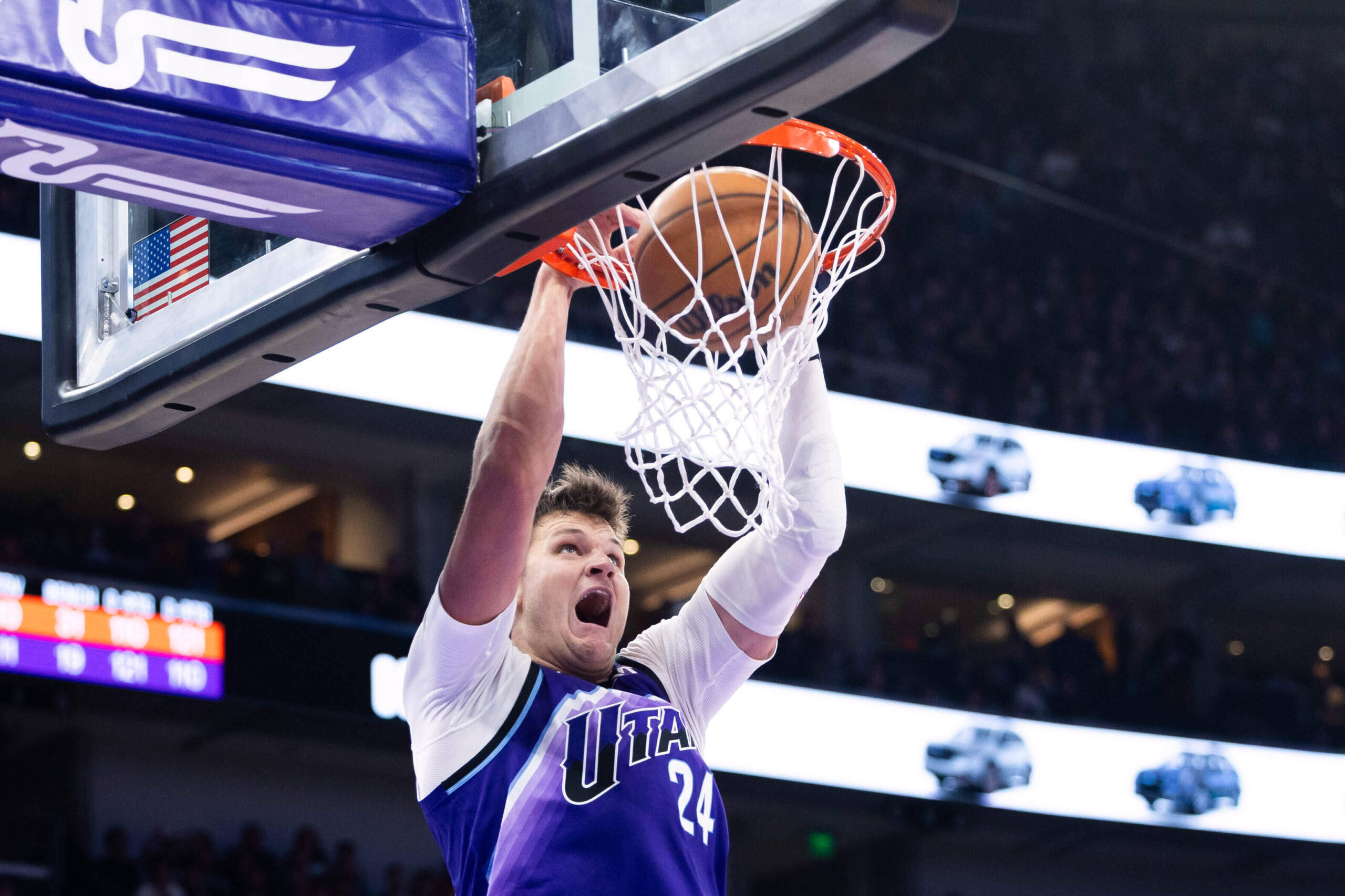
FILE – Utah Jazz center Walker Kessler (24) dunks during the second half of an NBA basketball game, Oct. 27, 2025, in Salt Lake City. (AP Photo/Anna Fuder, File)
Walker Kessler is being traded by the Utah Jazz to the Los Angeles Lakers, who will have the center under contract for the next four NBA seasons and for a total of about $130 million, a person with knowledge of the agreement said Wednesday.
The Jazz are getting two first-round draft picks and two first-round pick swaps out of the deal, according to the person who spoke to The Associated Press on condition of anonymity because the move is a sign-and-trade and has yet to receive the needed league approvals.
Article continues after this advertisement
Advertisement
The Athletic and ESPN were among those to first report the agreement.
Acquiring Kessler is the first big move for the Lakers in their post-LeBron James era, after the NBA’s all-time leading scorer said Tuesday that he was leaving the team and would spend this coming season elsewhere. And it solves a need at center for the Lakers, plus gives the team a young big to pair with star guards Luka Doncic and Austin Reaves.
Kessler — who turns 25 later this month — was limited to five games this past season after having surgery to repair a labrum tear in his left shoulder in November. He and the Jazz discussed an extension last summer but never came to terms.
Kessler was averaging 14.4 points, 10.8 rebounds and 1.8 blocks on 70% shooting this past season before getting hurt. In his first three seasons, he averaged 9.4 points on 68% shooting.
Advertisement
He played for the U.S. at the 2023 FIBA World Cup in the Philippines.
Your subscription could not be saved. Please try again.
DR Congo’s dream of reaching the last 16 of the 2026 FIFA World Cup ended in heartbreaking fashion after they suffered a 2-1 defeat to England in Atlanta.
The African side were on course for one of the biggest shocks in World Cup history after Brian Cipenga gave them an early lead. They defended bravely for much of the match and looked set to knock England out of the tournament.
DR Congo goalkeeper Lionel Mpasi produced an outstanding performance, making several excellent saves to deny England’s attackers. The Central Africans also had a great chance to double their advantage just before half-time, but Yoane Wissa struck the post when he had a clear sight of goal.
Advertisement
That miss proved costly.
With just 15 minutes remaining, England captain Harry Kane rescued his side by heading home the equaliser after a fine cross from substitute Anthony Gordon.
As DR Congo tried to hold on for extra time, Kane struck again in the 86th minute. The striker collected the ball outside the box, turned brilliantly and fired a powerful shot into the top corner to complete England’s comeback.
Advertisement
Despite their exit, DR Congo earned plenty of praise for their courageous performance against one of the tournament favourites. Their defence frustrated England for long periods, while Mpasi was arguably the best player on the pitch.
However, their inability to take their chances, especially Wissa’s missed opportunity before the break, ultimately cost them a place in the last 16.
England will now face co-hosts Mexico in the next round, while DR Congo leave the World Cup with their heads held high after producing one of the competition’s most spirited performances
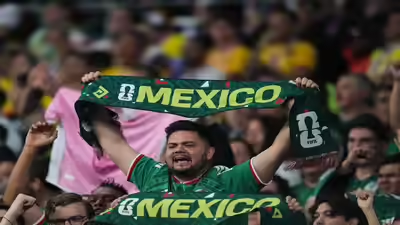
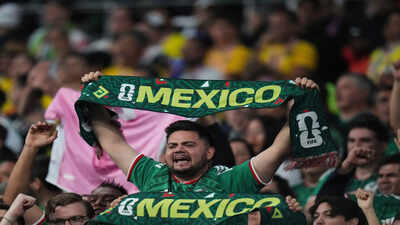
A Mexico soccer fan reacts during the World Cup round of 32 soccer match between Mexico and Ecuador in Mexico City, Tuesday, June 30, 2026. (AP Photo/Eduardo Verdugo)
Mexico secured a landmark 2-0 victory over Ecuador to reach the FIFA World Cup 2026 Round of 16, but the celebrations at the Estadio Azteca may be overshadowed by the possibility of disciplinary action after the controversial “puto” chant was once again heard from sections of the home support. The chant, which has repeatedly led to sanctions against the Mexican Football Federation over the past decade, resurfaced during the knockout victory, despite years of awareness campaigns and previous FIFA punishments aimed at eradicating it.
Mexico’s historic victory overshadowed by familiar controversy
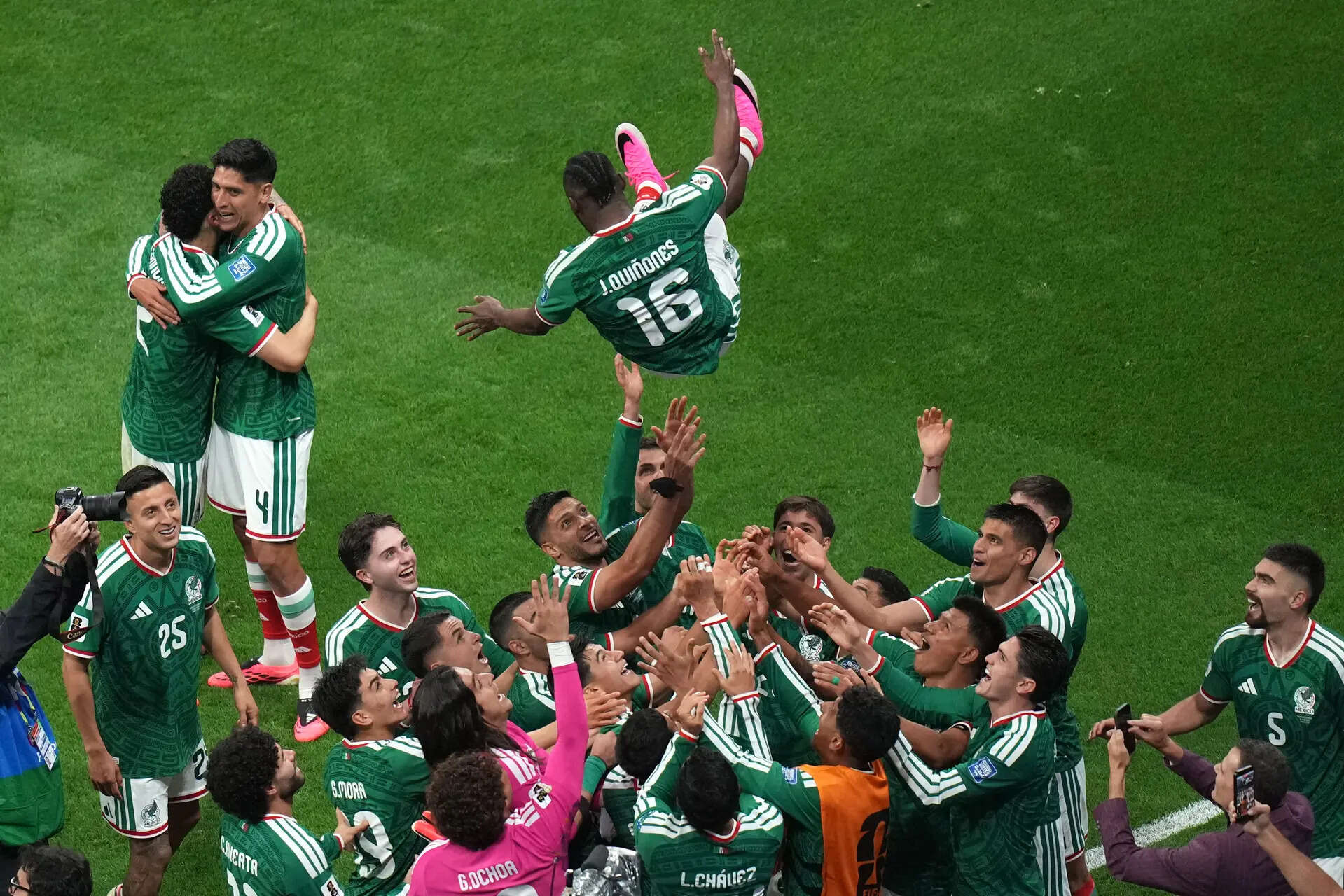
Mexico booked their place in the Round of 16 with a composed 2-0 victory over Ecuador at the iconic Estadio Azteca, ending a 40-year wait for a World Cup knockout-stage victory on home soil. Goals from Julián Quiñones and Raúl Jiménez ensured Javier Aguirre’s side continued their outstanding tournament, extending their record to four consecutive victories without conceding a goal. In doing so, Mexico also became the first nation since Italy at the 1990 World Cup to win their opening four matches of a tournament without allowing a single goal.
Mexico’s Julian Quinones (16) celebrates with teammates after the World Cup round of 32 soccer match between Mexico and Ecuador in Mexico City, Tuesday, June 30, 2026. (AP Photo/Silvia Izquierdo)
The result also confirmed a blockbuster Round of 16 meeting with England, after Thomas Tuchel’s side came from behind to defeat DR Congo 2-1 later on Wednesday through Harry Kane’s late brace. The two nations will now meet at the Estadio Azteca on July 6 for a place in the quarter-finals. However, amid the celebrations inside the stadium, a recurring issue once again emerged from the stands.
Advertisement
Homophobic chant returns despite years of campaigns
During Ecuador goalkeeper goal kicks, sections of the Mexican crowd were heard chanting the one-word slur “puto”, a chant that literally translates to “male prostitute” in Spanish and has long been regarded by FIFA as discriminatory and homophobic. The chant has repeatedly landed Mexican football in disciplinary trouble. It first drew worldwide attention during the 2014 FIFA World Cup in Brazil before resurfacing again during the tournaments in Russia in 2018 and Qatar in 2022. The latest incident means it has now been heard at a fourth consecutive men’s World Cup.
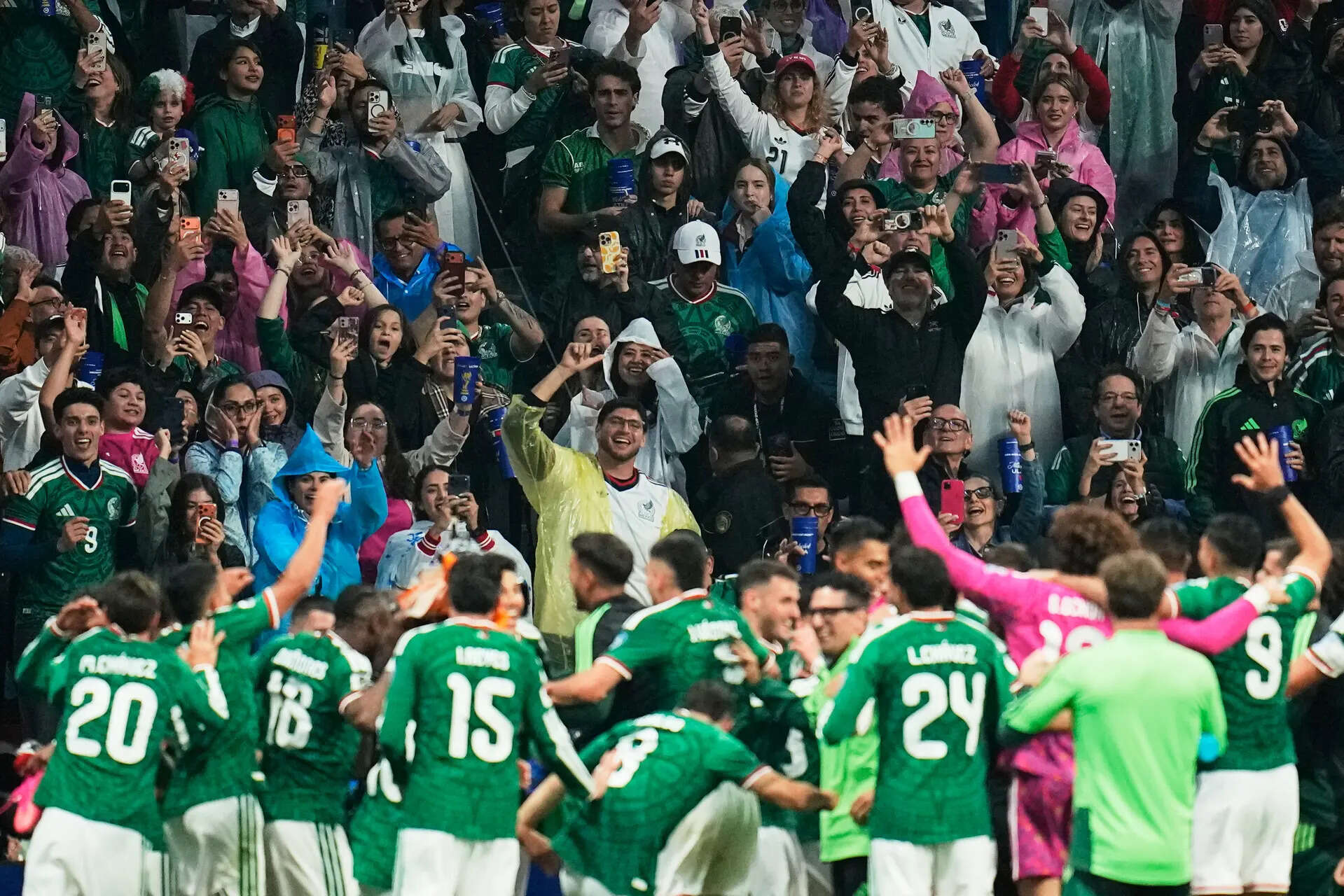
Fans celebrate with Mexico players after their team’s victory over Ecuador in the World Cup round of 32 soccer match in Mexico City, Tuesday, June 30, 2026. (AP Photo/Ricardo Mazalan)
According to the Daily Mail, the Mexican Football Federation has spent years attempting to eliminate the chant through supporter education initiatives and repeated appeals to fans, but those efforts have largely failed to eradicate it. Ahead of the 2026 tournament, the federation launched its latest awareness campaign, “La Ola Sí, El Grito No” (“The Wave Yes, The Chant No”), featuring members of Mexico’s 1986 World Cup squad encouraging supporters to perform the Mexican wave instead of shouting the offensive chant. Despite those efforts, the chant has reportedly been heard since Mexico’s opening match of the tournament and resurfaced again during the victory over Ecuador.
Advertisement
Previous sanctions could influence FIFA’s response
Mexico’s governing body has already faced significant disciplinary action over similar incidents. Before the start of the 2026 World Cup, the Court of Arbitration for Sport (CAS) ruled on FIFA disciplinary proceedings relating to chants heard during international matches against Bolivia, Uruguay, Brazil and the United States in 2024. According to CAS, anti-discrimination monitors documented the incidents before FIFA imposed fines totalling 140,000 Swiss francs (approximately $178,000 or £130,457). While CAS upheld the financial penalties, it overturned an additional sanction that would have required part of a stadium to be closed during a FIFA-organised competition. In its written decision, CAS acknowledged that the Mexican Football Federation had argued it had implemented educational programmes since 2015 aimed at preventing and eliminating the chant. However, the court concluded that those mitigation efforts were insufficient. “They observed that the conduct of the fans was collective and widespread, and not merely a one-off occurrence,” CAS said in its ruling. The incidents were also detected by the same anti-discrimination monitoring system operating throughout the 2026 FIFA World Cup across Mexico, the United States and Canada, meaning FIFA could once again review the latest reports before deciding whether disciplinary measures are warranted. Sports journalist Matt Slater of The Athletic has argued that financial sanctions alone have not solved the problem. “On the one hand, FIFA fines aren’t working. “But, on the other, we can’t just let some Mexican fans keep screaming an anti-gay slur each time the oppo goalie boots it. “Self-policing by fans is the best way to fix this… now would be a good time to start.” Mexico now turns its attention back to the pitch, where a high-profile Round of 16 clash against England awaits, but whether FIFA opens another disciplinary case following the events at the Estadio Azteca could become an unwelcome distraction as the co-hosts continue their World Cup campaign.
The Akwa Ibom State preliminary stage of the Sam Okwaraji U-16 School Football Championship kicked off on Wednesday, July 1, 2026, with four exciting matches played at the Community Secondary Commercial School, Ikot Okubo Offot.
The competition, organised by the Samuel Okwaraji Foundation in collaboration with the Nigerian School Sports Federation (NSSF), the Nigeria Football Federation (NFF) and the National Sports Commission (NSC), is aimed at honouring the late Nigerian football hero, Sam Okwaraji.
In the opening matches, Secondary School Etoi played out a goalless draw against Offot Ukwa Secondary School before emerging 4-3 winners in the penalty shootout.
Advertisement
Uyo High School recorded an impressive 3-1 victory over Itam Secondary School to book their place in the next round.
Community Comprehensive Secondary School, Four Towns, secured a comfortable 2-0 win over ACSS, Ikot Oku Nsit, while Community Secondary School, Aka Offot, defeated Community Secondary Commercial School, Ikot Okubo, 4-3 on penalties after both sides played out a 1-1 draw in regulation time.
The competition will continue on Thursday, July 2, at the Community Secondary Commercial School, Ikot Okubo.
Advertisement
In the first-round fixtures, Ibiono Ibom South Community Secondary School, Ikpedip, will face Etinan Institute at 10am, while Community Comprehensive Secondary School, Ikot Ekpene Udo, will take on Methodist Boys High School, Oron, at 12 noon.
The second-round matches scheduled for the same day will see Secondary School Etoi face Uyo High School at 2pm, while Community Comprehensive Secondary School, Four Towns, will battle Community Secondary School, Aka Offot by 4pm, for a place in the next stage.
The championship is designed to celebrate the enduring legacy of the late Sam Okwaraji, who died while representing Nigeria on August 12, 1989. The organisers said the competition aims to preserve his values of patriotism, discipline, courage, academic excellence and selfless service, while helping to develop young football talents from the grassroots.
Okwaraji, remembered as a lawyer, scholar and footballer, remains a symbol of dedication and sacrifice in Nigerian football history.
Advertisement
While the preliminary matches for the southern states began on July 1, the northern states commenced their qualifying rounds on June 26.
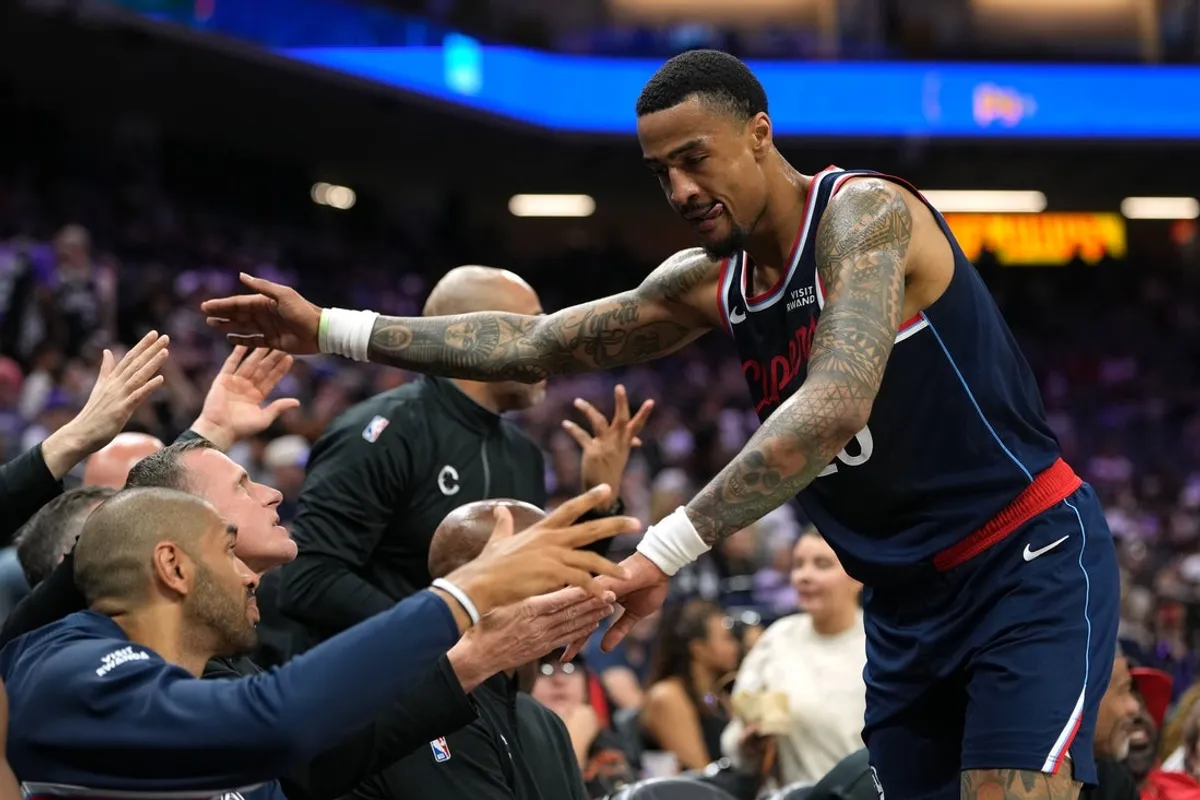
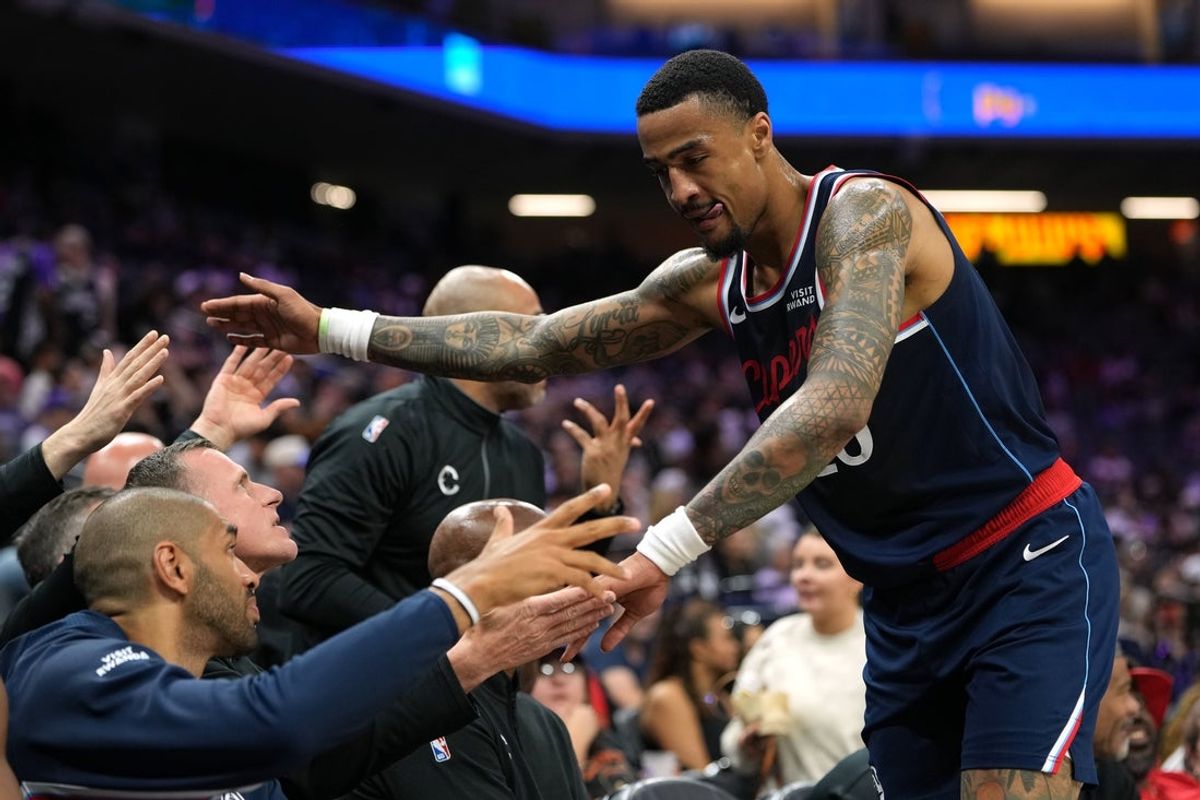
Apr 5, 2026; Sacramento, California, USA; LA Clippers forward John Collins (right) is congratulated by teammates after being removed from the game against the Sacramento Kings during the fourth quarter at Golden 1 Center. Mandatory Credit: Darren Yamashita-Imagn Images
Free agent forward John Collins agreed to a three-year, $51 million deal with the Detroit Pistons, ESPN reported Wednesday.
Collins, 28, is expected to start at power forward for Detroit after averaging 13.6 points and 5.3 rebounds in 69 games (56 starts) for the Los Angeles Clippers the 2025-26 season. He shot a career-high 40.6% from 3-point range.
A first-round pick (19th overall) by Atlanta in 2017, Collins has posted 15.7 points, 7.7 rebounds and 1.0 blocks in 541 career games (466 starts) with the Hawks (2017-23), Utah Jazz (2023-25) and Clippers.
Collins spent the first half of his career as a pick-and-roll partner with Trae Young in Atlanta, a similar role Detroit envisions alongside All-Star point guard Cade Cunningham.
Over the past year, the WBC controversially stripped both Terence Crawford and Shakur Stevenson of their titles following their respective career-defining victories over Saul “Canelo” Alvarez and Teofimo Lopez, sparking backlash throughout the boxing world.
Crawford was stripped almost three months after defeating Alvarez because he allegedly did not pay the WBC sanctioning fee for either of his previous two fights — against Alvarez and Israil Madrimov. Stevenson, on the other hand, was relinquished of his WBC crown just three business days after becoming a four-division champion when the prestigious sanctioning body claimed he did not pay a fee for his fight with Lopez.
Advertisement
The part that boxing fans cannot understand? The WBC title was not even on the line for Stevenson vs. Lopez in January, yet the WBC still asked for a $100,000 sanctioning fee.
Advertisement
Crawford told Uncrowned’s “The Ariel Helwani Show” on Wednesday that he believes the WBC’s hasty decision to strip his close friend, Stevenson, was a direct result of his own feud with the sanctioning body.
“I definitely agree with [Stevenson that the WBC targeted him because of my issue with them],” Crawford said. “And that wasn’t right at all, for them to put my name in the conversation that I didn’t have nothing to do with anything that Shakur had going on. So you blame me and try to punish him? It wasn’t right at all.”
Crawford claimed that WBC president Mauricio Sulaimán has since apologized to him in person over their public dispute last year, however the sanctioning body has not attempted to rectify how it handled the situation.
Advertisement
Advertisement
“Nothing [has happened to make peace with the WBC since I was stripped],” Crawford said. “I saw Mauricio … not too long ago. He came up to me and he apologized to me, and he told me that he shouldn’t have said the things that he said. But I kind of felt some type of way, because in my mind, we’re face-to-face and you’re apologizing to me, but you talk negative to me in the public, online and in interviews.
“You should’ve done a public apology to me — that’s how I feel. But I’m not here to keep going back and forth with somebody, so cool, I accept your apology. He said he wanted to sit down with me and talk as men. I’m cool with that because we always had respect for each other face-to-face.
“Now when I’m not around, then it’s different, and I just didn’t like that,” Crawford continued. “I didn’t like the fact that instead of them coming back and [saying], ‘Hey, let’s talk about this, let’s renegotiate,’ they were just basically like, ‘No, we’re the WBC, we ain’t taking that. We’re not like all the other organizations. No, you’ve got to pay us this.’ I was just like, ‘Oh, really? Y’all ain’t getting nothing now because I didn’t agree to nothing.’ I didn’t agree to nothing, so I was just doing that off the strength that I was looking out for all the organizations because that’s what I was going to do.”
The WBC asked Crawford for a $300,000 sanctioning fee for his fight with Alvarez, which was .6% of his reported $50 million purse. Crawford responded at the time with an expletive-laden nine-minute rant, saying he’d reached agreements with boxing’s other three major sanctioning bodies — the WBA, WBO and the IBF — over a fee for the “Canelo” fight and that the WBC should’ve accepted what he was willing to pay them rather than demanding more.
Advertisement
Advertisement
Crawford explained to Uncrowned on Wednesday that he isn’t a fan of the overall manner in which boxing’s sanctioning bodies currently operate. The former pound-for-pound king believes boxers should have more input into how sanctioning fees are spent and that fighters should be financially rewarded for becoming world champions instead of being hit with more expensive bills just days after the belts are wrapped around their waists.
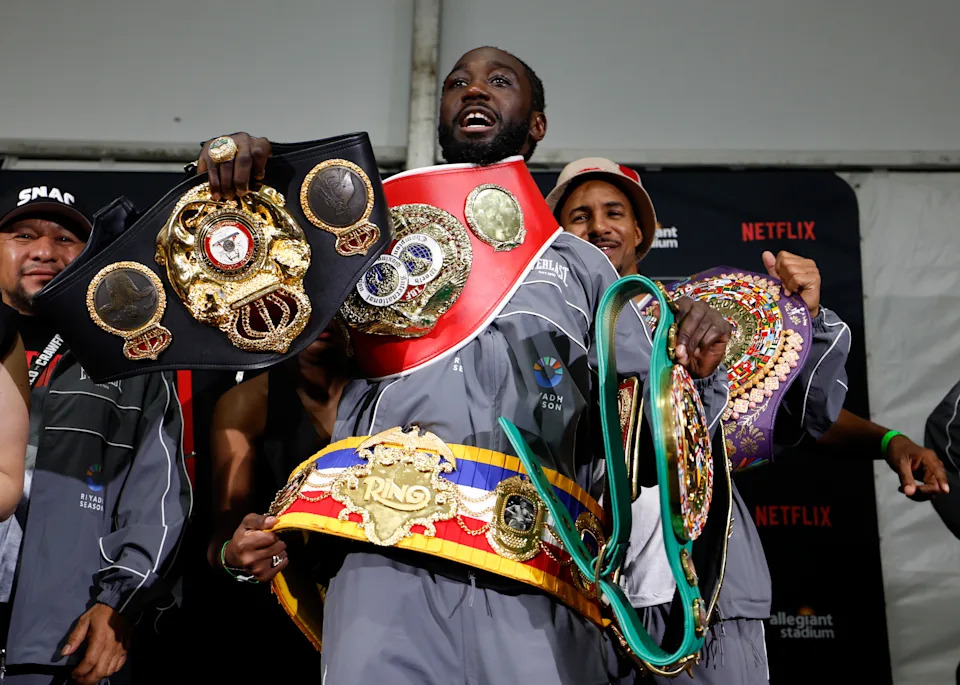
Terence Crawford accumulated quite a belt collection before he retired.
(Harry How via Getty Images)
“I think some of [the sanctioning bodies] are getting too much money, and we don’t have no say-so on where the money is going and what they’re doing with the money and things like that,” he said.
“I do feel some type of way about that because we put our life on the line and do everything that we have to do. We turn around and make it to be a world champion, and we have to pay to be a world champion — not only the time we become world champion, but every single time that we step in the ring. The more money we make, the more money we have to pay to these sanctioning bodies. I think that’s not right.
Advertisement
Advertisement
“I think you should get a prize for winning [a world title]. I think it should be a bonus when you win a championship. And then when you become unified, I think it should be another bonus. And then when you become undisputed, it should be another bonus. I don’t think they should be constantly taking from the fighters that work they’re butt off to get to where they are right now. And knowing that most fighters come from nothing, it’s tough.”






 Boise State is the obvious pick to be a contender in the Pac-12 this year.











































You must be logged in to post a comment Login