Connect with us
DAPA Banner
DAPA Coin
DAPA
COIN PAYMENT ASSET
PRIVACY · BLOCKDAG · HOMOMORPHIC ENCRYPTION · RUST
ElGamal Encrypted MINE DAPA
🚫 GENESIS SOLD OUT
DAPAPAY COMING

Business

Which Offers Better Durability for Outdoor Spaces?

Published

on

Which Offers Better Durability for Outdoor Spaces?

Outdoor spaces are often subjected to a variety of environmental factors, making the choice of materials crucial for long-term durability and aesthetic appeal.

When it comes to selecting tiles for patios, walkways, or pool areas, homeowners frequently weigh the benefits of Mexican Terracotta Tile against Ceramic Tile. Each has its own strengths and characteristics that make it suitable for different applications. This article will analyze the durability of these two tile types, providing insights into their suitability for outdoor use, and will help you make an informed decision for your home improvement project.

Mexican Terracotta Tile: A Traditional Choice for Outdoor Spaces

Mexican Terracotta Tile

is renowned for its rustic charm and traditional appeal. Handcrafted from natural clay and often left unglazed, these tiles bring a touch of authenticity to any outdoor setting. The natural color variations and textures can enhance a Mexican Terracotta Tile installation, offering a warm and inviting appearance. In terms of durability, terracotta is known for its porous nature, which means it can absorb moisture. To counteract this, a sealant is typically applied during installation and periodically maintained to prevent water infiltration and frost damage.

This traditional tile option is ideal for areas with moderate climates, where freeze-thaw cycles are minimal. Its ability to blend seamlessly with a variety of hardscape elements, such as stone pathways or wooden decks, makes it a versatile choice for outdoor enthusiasts looking to create a cohesive design. The use of terracotta tiles can contribute to a well-rounded design intent, allowing homeowners to achieve their aesthetic goals through a combination of materials.

Advertisement

Ceramic Tile: Modern Versatility and Design Options

Ceramic Tile offers a modern alternative with a wide range of design possibilities. Manufactured using advanced techniques, ceramic tiles come in various finishes, colors, and styles, easily integrated into a mood board during the planning phase. This versatility allows for personalized designs that can match any architectural style or landscape theme. Ceramic tiles are typically glazed, providing a protective layer that enhances their water resistance and makes them suitable for outdoor installations.

The durability of ceramic tiles is supported by their less porous surface, which helps to prevent water absorption and subsequent damage. This feature makes ceramic tiles particularly suitable for regions with more extreme weather conditions. Furthermore, their compatibility with modern tools like CAD software allows designers to create precise scaled drawings and site plans, ensuring that every tile fits perfectly within the designated space.

Durability Comparison: Mexican Terracotta vs Ceramic Tile

When comparing the durability of Mexican Terracotta Tile and Ceramic Tile, several factors come into play, including climate, installation quality, and maintenance practices. Terracotta tiles, while aesthetically pleasing and traditional, require regular maintenance due to their porous nature. They are best suited for areas with mild weather where the risk of frost damage is low.

Ceramic tiles, on the other hand, boast a more robust construction due to their manufacturing process, which makes them less susceptible to environmental damage. The glaze on ceramic tiles acts as a shield against moisture and stains, contributing to their longevity in outdoor environments. For those seeking a long-lasting solution with minimal upkeep, ceramic tiles may provide a more reliable option.

Advertisement

According to a recent study by Architectural Digest, ceramic tiles exhibit superior resistance to wear and tear when compared to unsealed terracotta tiles. This makes them a preferred choice for high-traffic areas or locations with fluctuating weather conditions.

Maintenance Considerations for Outdoor Tile Installations

Proper maintenance is crucial for extending the life of any tile installation, whether terracotta or ceramic. For Mexican Terracotta Tile, regular sealing is necessary to maintain its integrity against moisture and temperature changes. This involves applying a sealant every few years, as indicated by a finish schedule, to ensure the tiles remain protected.

Ceramic tiles require less frequent maintenance due to their non-porous nature and durable surface. Routine cleaning with mild detergents and occasional inspections for cracks or chips will help maintain their appearance and functionality. A well-executed punch list at the end of the project can ensure all tiles are properly installed and finished, reducing the need for immediate repairs.

Both tile types benefit from a well-planned schematic design that considers factors such as lead time, as-built drawings, and any necessary zoning variances. This comprehensive approach will ensure a successful outdoor tile installation that meets both aesthetic and functional requirements.

Advertisement

Conclusion

Choosing between Mexican Terracotta Tile and Ceramic Tile for outdoor spaces depends on various factors, including climate, desired aesthetic, and maintenance commitment. Mexican Terracotta Tile offers a traditional look and feel that can enhance rustic and natural settings, while Ceramic Tile provides greater durability and versatility for modern designs. Ultimately, the decision should align with your specific needs and the environmental conditions of your outdoor space, ensuring a beautiful and lasting installation.

Advertisement
Continue Reading
Click to comment

You must be logged in to post a comment Login

Leave a Reply

Business

How Central Bank Decisions Quietly Shape the Silver Price

Published

on

How Central Bank Decisions Quietly Shape the Silver Price

Central banks rarely mention silver in their official communications. Their press conferences focus on inflation, employment, and the policy rate, with the occasional nod to financial stability and currency markets.

Yet anyone who has watched the silver price move through a full rate-hiking and rate-cutting cycle at SD Bullion or any other reputable chart knows that monetary policy is doing more of the work than the headline numbers suggest. The relationship is indirect, sometimes delayed, and always eventually unmistakable.

The Real Interest Rate Channel

The cleanest link between central bank policy and silver runs through real interest rates, which are simply nominal rates minus expected inflation. When a central bank holds nominal rates below the rate at which prices are rising, the real rate is negative, and holding cash becomes a slow loss of purchasing power. Non-yielding assets, including silver, benefit because the opportunity cost of owning them has collapsed. When the central bank then cuts nominal rates further, as has happened repeatedly since mid-2025, the silver price tends to respond by grinding higher.

The Federal Reserve publishes its policy statements, minutes, and economic projections on a schedule that markets watch intensely. Precious metals investors who take the time to read those documents rather than skim headlines about them develop a meaningfully better sense of where the silver price is headed in the months following each meeting.

The Credibility Question

Central banks trade on credibility. When markets believe the central bank will do what it says, long-term inflation expectations stay anchored and precious metals remain a niche holding. When credibility wobbles, whether because of political interference, fiscal dominance, or a messy policy reversal, expectations drift higher and metals tend to benefit. The recent surge in the silver price is partly a story about industrial demand, but it is also a story about gradually eroding confidence in the ability of monetary authorities to keep a lid on inflation across multiple economies.

Advertisement

Currency Effects That Amplify the Move

When a major central bank eases policy while others hold firm, the corresponding currency tends to weaken on the foreign exchange market. A weaker dollar has historically been one of the most reliable tailwinds for the silver price, because silver is priced globally in dollars and a cheaper dollar makes the metal more affordable for buyers paying in euros, yen, or renminbi. The resulting foreign demand boost is often underestimated by investors who focus only on domestic buying behavior.

The Sovereign Gold Buying Spillover

Central banks themselves do not typically buy silver in meaningful quantities, but their gold purchases have indirect effects that eventually reach the silver market. The sustained accumulation of gold reserves by emerging market central banks over the past several years has supported the gold price and, through the gold-to-silver ratio, eventually drawn silver higher. More recently, Russia’s formal inclusion of silver in its state reserve framework marked the first meaningful break from the gold-only precedent and hints at a potential shift that other countries may eventually follow.

Why the Silver Price Reacts More Than Gold

Silver is a smaller, more volatile market than gold. When the same monetary policy news hits both metals, silver typically moves further in either direction. Investors who understand this relationship can use the gold-to-silver ratio as an early warning indicator. A sharp compression in the ratio after a central bank meeting suggests investors are rotating into the higher-beta metal and anticipating further easing. A widening ratio suggests the opposite. Neither signal is infallible, but both add information.

What to Watch on the Calendar

The Federal Reserve’s scheduled meetings set the tempo, but the European Central Bank, the Bank of England, the Bank of Japan, and the People’s Bank of China all matter. A synchronized dovish turn across multiple majors produces the strongest moves in the silver price, because the corresponding currency effects reinforce rather than offset each other. Isolated dovish shifts at a single central bank produce more muted reactions, particularly when other majors are holding firm.

Advertisement

The Long View Across Cycles

Across multi-year horizons, the silver price has tended to rise during periods of easy monetary policy and weaker currencies, and to struggle during periods of tight policy and strong currencies. The 1970s, the 2000s, and the current decade all fit the pattern. The 1980s and much of the 1990s do not. An investor with the patience to sit through a full monetary cycle and the discipline to accumulate when real yields are deeply positive and silver is unloved has historically been rewarded for the waiting. That is a harder habit to build than watching the daily move, but it is the one that actually produces returns that matter.

A Realistic Framing

The silver price is not a puppet on a central bank string. Industrial demand, physical inventories, and investor sentiment all push and pull at the number every day. But the broad direction across quarters and years is closely tied to what central banks are doing, and to what markets believe they will do next. Investors who follow monetary policy with even moderate attention pick up on shifts months before most retail participants notice, and the returns that flow from that early awareness are exactly the returns that active silver allocation is supposed to generate.

Advertisement
Continue Reading

Business

Socceroos and Egypt Set for Historic World Cup Knockout Clash in Arlington

Published

on

Justin Bieber and Hailey Cheer U.S. to 4-1 World Cup

ARLINGTON, Texas — Australia and Egypt will write a new chapter in World Cup history Friday when they meet in the Round of 32 at AT&T Stadium, with the Socceroos seeking their first-ever knockout-stage victory and the Pharaohs aiming to extend their breakthrough run in the tournament.

The match, scheduled for 1 p.m. local time (6 p.m. BST), pits two teams that advanced from the group stage with contrasting styles and storylines. Australia finished second in Group D with a workmanlike campaign, while Egypt claimed a spot in the knockout rounds for the first time in their history after securing second place in Group G.

Both sides carry historic weight into the fixture. The Socceroos have never won a World Cup knockout match, falling short in previous appearances. Egypt, making their debut beyond the group stage, showed resilience with a mix of draws and a notable victory.

Tony Popovic’s Australia side opened with a 2-0 win over Turkiye but followed with a 0-2 loss to the United States and a scoreless draw against Paraguay. The team conceded twice across three matches while managing just two goals, underscoring a defensive approach that has carried them this far.

Advertisement

Egypt, under Hossam Hassan, drew with Belgium, beat New Zealand 3-1 and drew with Iran. The Pharaohs displayed attacking variety, with five different players finding the net in the group phase, reducing reliance on any single star.

The fixture offers intrigue in midfield control and attacking transitions. Australia’s compact shape may limit space, but Egypt’s creative options, led by Mohamed Salah, could prove decisive on the counter. Salah, with extensive international experience, remains a constant threat.

Australia relies on goalkeeper Mathew Ryan and midfield leadership from Jackson Irvine. Younger talents like Nestory Irankunda, who has already scored at the tournament, add dynamism. The Socceroos will need greater final-third output than shown in groups to advance.

Egypt’s lineup features Salah alongside Omar Marmoush and others providing depth. Goalkeeper Mohamed El Shenawy brings experience, while the defense kept clean sheets in qualifying.

Advertisement

Head-to-head history is limited, with Egypt winning a 2010 friendly 3-0 and a 1987 draw. Recent form favors neither decisively, though Egypt’s attacking depth gives them an edge in many previews.

Tactical battles will center on containing Salah while Australia seeks to exploit transitions. Both teams are expected to start cautiously in their first knockout meeting.

The venue, AT&T Stadium, provides a neutral, high-capacity stage for the occasion. Fans from both nations are anticipated to create an electric atmosphere in Texas.

Advancing to the Round of 16 would mark a milestone for either side. For Australia, it would break knockout barriers. For Egypt, it would validate their group-stage progress.

Advertisement

The match underscores the World Cup’s global appeal, featuring teams from different confederations with distinct footballing traditions. Australia brings physicality and organization, while Egypt offers flair and clinical finishing potential.

Coaches Popovic and Hassan have prepared meticulously. Australia’s resilience was evident in the Paraguay draw, while Egypt’s Belgium result highlighted their competitiveness.

Injuries appear minimal for both, allowing near-full-strength lineups. Predicted formations include Australia in a 4-3-3 and Egypt in a 4-2-3-1, setting up a balanced contest.

Beyond the pitch, the game highlights football’s unifying power. National pride is high, with supporters traveling far for the occasion.

Advertisement

Broadcast coverage will reach global audiences, with free-to-air options in several markets. The fixture offers drama typical of knockout football, where one moment can define a campaign.

As teams finalize preparations, focus remains on execution under pressure. Australia must improve attacking threat, while Egypt seeks to convert possession into goals.

The Round of 32 stage tests depth and adaptability. Both squads blend experience with emerging talent, promising an engaging encounter.

World Cup progression carries significant sporting and cultural importance. A victory propels one nation forward while ending the other’s run.

Advertisement

Analysts anticipate a tight affair, potentially decided by individual brilliance or defensive lapses. Set pieces and transitions could prove pivotal.

The winner advances to face stiffer competition, raising the stakes. Both teams recognize the opportunity to create lasting memories.

Friday’s clash at AT&T Stadium embodies the tournament’s spirit. Australia and Egypt, separated by geography and history, meet with shared ambition on football’s biggest stage.

As kickoff approaches, anticipation builds for a match rich in narrative and potential for history. One

Advertisement
Continue Reading

Business

What’s Happening Now, What the Government Is Doing and What Comes Next

Published

on

Person Getting a Shot

SYDNEY — Australia’s fuel supply crisis, triggered by the escalation of the U.S.-Iran conflict in late February and the subsequent disruption to oil shipping through the Strait of Hormuz, has entered a new phase of cautious stabilization after months of emergency government intervention, rationing measures and airline schedule cuts that exposed the country’s deep structural vulnerability as one of the world’s most fuel-import-dependent developed nations.

The crisis began almost overnight. Fuel prices began to rise at the start of March, after U.S. President Donald Trump, along with Israel, launched coordinated military strikes on Iran on February 28. Iran then retaliated, launching strikes at Israel and at U.S. military bases in Bahrain, Jordan, Kuwait, Qatar, Saudi Arabia and the United Arab Emirates. The closure of the Strait of Hormuz, through which roughly a fifth of the world’s traded oil typically flows, immediately tightened global supply and sent fuel costs surging across every Australian capital city.

The Maritime Union of Australia warned in early March that Australia’s fuel security crisis had been laid bare by the escalating international conflict and the effective closure of the Strait of Hormuz, one of the world’s most critical oil shipping routes.

MUA National Secretary Jake Field framed the situation bluntly.

Advertisement

“The closure of the Strait of Hormuz during the recent attacks on Iran is a stark warning of the volatility of Australia’s access to global fuel supply chains,” Field said. “We mustn’t gamble our economic stability on uninterrupted access to foreign fuel markets. We cannot assume that geopolitical tensions will always resolve before our reserves run dry.”

By late March, Australia’s fuel reserve levels had deteriorated to alarming lows, with the country holding roughly 39 days of petrol supply and just 30 days of diesel, figures the government acknowledged publicly as it convened emergency National Cabinet meetings. Prime Minister Anthony Albanese made a rare live address to the nation, outlining a National Fuel Security Plan and announcing a series of emergency measures. The most immediately visible of those was a halving of the fuel excise.

“Today, we cut the fuel excise in half, cutting the tax on every litre of petrol by 26 cents,” Albanese said in his address. “Those savings have started showing up at your petrol station. For our truckies, we have cut a heavy vehicle road user charge to zero. Both these measures will be in place for the next three months.”

The government also moved on multiple supply-side fronts simultaneously. Key actions included securing more fuel internationally through a $7.5 billion Fuel and Fertiliser Security Facility, building long-term fuel resilience through a $3.2 billion Australian Fuel Security Reserve, and temporarily amending Australia’s fuel quality standards to allow higher sulfur levels, enabling around 100 million litres a month of additional fuel supply to enter the country that would not otherwise have met domestic standards.

Advertisement

In April 2026, the government announced it had received a massive shipment of 100 million litres of jet fuel and 50 million litres of diesel from Asia. That delivery helped arrest the decline in reserve levels, though analysts cautioned that replenishing stockpiles to pre-crisis levels would require sustained, uninterrupted shipping for months.

The crisis hit Australia’s aviation sector particularly hard. Qantas and Jetstar issued a statement on May 1 announcing that they would extend their domestic flight cuts amid the fuel crisis. “Given fuel prices remain significantly elevated, the Group has extended previously announced schedule changes across its international and domestic network between July and September.” People who have booked passage on any of the impacted flights were contacted directly and offered either a refund or an alternative flight. The airline had previously cut its domestic flights by five percent from May to June, with that reduction now extended through September.

Remote and regional Australia has borne the heaviest burden throughout the crisis. The Northern Territory and regional Queensland have been identified as the most at-risk areas, with some remote communities already experiencing intermittent fuel shortages. The government worked with the Coalition of Peaks and other First Nations groups specifically to address fuel, energy and food security in remote communities, acknowledging that supply chain fragility hits hardest in areas with the longest logistics chains and the least alternative options when primary supply routes are disrupted.

Structurally, the crisis has relit a long-running policy debate about Australia’s domestic refining capacity and strategic reserve holdings. The MUA noted that for decades, successive governments allowed domestic fuel capacity to be dismantled. Australia’s strategic fuel reserves were effectively offshored, with public money spent storing fuel overseas. Refinery after refinery closed, leaving Australia importing the overwhelming majority of its refined petrol and diesel, reliant on foreign refineries, foreign-owned tankers and shipping lanes that run through contested waters.

Advertisement

On the regulatory side, the Department of Climate Change, Energy, the Environment and Water extended key emergency measures into the second half of 2026. The government extended the 20% reduction of the Minimum Stockholding Obligation for diesel and petrol to September 30, 2026, providing ongoing flexibility for industry to respond quickly in the event of another significant spike in demand. The government also worked with the fuel sector to secure authorization from the Australian Competition and Consumer Commission to coordinate supply across companies, unlocking bottlenecks that had slowed distribution at key points during the worst of the shortage.

With the tentative U.S.-Iran ceasefire announced over the weekend and shipping beginning to resume through the Strait of Hormuz, Australian fuel reserve levels have begun a slow recovery. Petrol prices across capital cities, while still elevated compared to pre-crisis levels, have begun easing from their March and April peaks as more tankers complete deliveries and the government’s emergency import agreements supply additional volume into the domestic market.

However, the Maritime Union and independent energy analysts alike have warned that the current improvement in supply conditions should not be mistaken for a resolution of the underlying structural weaknesses the crisis exposed. The MUA called on the federal government to rebuild sovereign fuel storage capacity onshore, maintain reserves that comfortably exceed international minimums, protect and expand domestic refining capability to reduce reliance on imported finished fuels, and establish an Australian-flagged strategic shipping capability to guarantee fuel delivery in future crises.

The government’s own updated guidance, reflecting the latest supply situation as of early July, acknowledged that while immediate supply pressures had eased, the crisis had exposed systemic gaps in Australia’s energy security framework that will require sustained, multi-year policy investment to address. Fuelplan.gov.au, the official government tracking site launched during the crisis, continues to publish daily updates on reserve levels, petrol prices across all capital cities and crude oil benchmarks to keep the public informed as the recovery continues.

Advertisement
Continue Reading

Business

India’s premium has almost entirely disappeared now: Ben Powell, BlackRock

Published

on

India's premium has almost entirely disappeared now: Ben Powell, BlackRock
Ben Powell, chief investment strategist for APAC at BlackRock Investment Institute, said he is turning more constructive on Indian equities after the recent underperformance. In an interview with Himadri Buch, Powell spoke about India as an investment destination, IT stocks and US bond yields, among other topics. Edited excerpts:

Is the worst of the foreign investor selling in India over?

Over the last couple of quarters, Indian equities have had a more difficult time, largely driven by things beyond India’s control. One is the AI super boom, and two is the conflicts in the region and the consequent energy shock. Energy prices have come all the way back down, and oil supply looks quite abundant globally. So, for India, that is good news. India is very close to the top of the list, and you could see a continuation of foreign flow back into India, creating a so-called virtuous circle.

After two years of underperformance, are Indian stock market valuations still expensive right now?
India’s premium has almost entirely disappeared now. So the valuation is more reasonable versus other emerging markets. When we look forward over the next six or 12 months, we can have more confidence in the earnings forecast. That is quite encouraging for Indian equities.

Advertisement

Where does India sit in your emerging markets basket?

We are neutral on emerging market equities. Neutral is not bearish; it means fully invested. We want to take a little bit of profit in some of the AI super boom. It’s not that we are negative on Taiwan and Korea.
So, we are taking emerging market equity to neutral within that mix tactically, and for India, I am turning a little bit more constructive. Within the mix, the relative preference is adjusting more in the direction of Indian equities on the tactical side in the next six months.
What is your assessment of the sharp sell-off in Indian IT stocks?
We will have to wait and see. We call it scarcity and abundance. People are hoping that AI can create an abundant future, but we are not there yet, so we need to treat the world as it is.

There is not much evidence of the impact on jobs, and the US labour market continues to be very strong. For now, it feels the market has a little bit oversold indiscriminately. AI is a big deal, we agree with that. But the skill as an investor is to be more nuanced, to pick your spots.

US bond yields have risen 4.3% to 4.4% with markets expecting the new Fed chair to be hawkish. What will be the interest rate trajectory there?

The Fed is not going to do much is our judgment, because all of us are wrestling with a very complicated world. Their uncertainty and reluctance to move policy is completely reasonable, given a very uncertain path of inflation, growth and unemployment. So the Fed will be on pause for this year, trying to work out what is going on, including the impact of AI.

Advertisement

The uncertainty around inflation is very high, so we think US 10-year yields can go higher, even when the Fed is waiting and seeing.

What does higher US bond yields mean for the AI investment story?
The 10-year yields can go up, and AI trade can continue. We are underweight in US government bonds, long duration, and overweight US equities. The reason is earnings.

Do you see signs of an AI bubble?
We think the AI boom will continue. This should mean we have earnings strong enough to drive these companies and the overall market forward, even as the 10-year yield goes a little bit higher over the next six months.

Advertisement
Continue Reading

Business

Car tracking features for ‘convenience not security’ warns Kia

Published

on

A woman with shoulder-length blonde hair talks into a microphone

“Kia Connect is a customer convenience feature, not a certified security vehicle tracker,” the firm told the BBC.

“Therefore, it does not provide live‑tracking functionality for stolen vehicles.

“Release of location details of a vehicle via Kia Connect is possible, however this must be done in full compliance with all applicable laws, in particular GDPR, and the authorities to minimise risk to the customer.”

GPDR is Europe’s data protection law, and an almost-identical version applies in the UK.

Advertisement

According to the Information Commissioner’s Office, Britain’s data regulator, users have the right to access their information and organisations need to respond to the request from someone who can be identified from personal data within one calendar month.

In the event of standard vehicle theft, the police have no formal powers to demand this data without specific consent from the Home Office, which is rarely sought on these occasions, the BBC understands.

It is up to individual car manufacturers to share data with law enforcement depending on their own policies.

Kia does offer a security vehicle tracking service in the US to subscribers who take out its premium package, but this is not available in the UK or Europe.

Advertisement
Continue Reading

Business

Romesh Ranganathan ‘Gutted’ as Coughlans Bakery Collapses After 89 Years

Published

on

Romesh Ranganathan 'Gutted' as Coughlans Bakery Collapses After 89 Years

An 89-year-old family bakery has become the latest high-street casualty of Britain’s mounting cost crisis, closing its doors for good and taking with it one of the more unlikely celebrity business partnerships of recent years.

Coughlans Bakery, which ran a chain of shops across Kent, Surrey, West Sussex and south London, ceased trading on Tuesday after slipping into voluntary liquidation. The comedian Romesh Ranganathan, who became a co-owner in 2024 and once billed the tie-up as “the partnership of the century”, said he was “gutted” by the collapse.

The Crawley-born presenter, known for his deadpan stage style, reposted a video from managing director Sean Coughlan to his 1.4 million followers with the caption: “Gutted isn’t the word.” Ranganathan, who is vegan, had first thrown his weight behind the business because of its range of plant-based products.

For Coughlan, whose family firm first opened its ovens in 1937, the arithmetic simply stopped adding up. He laid much of the blame on the government’s decision to lift employers’ National Insurance contributions in April last year, a move that raised the headline rate to 15 per cent and lowered the threshold at which employers start paying, alongside a business-rates bill he said had “absolutely smashed local business”. The change, set out in the National Insurance Contributions (Secondary Class 1 Contributions) Act 2025, has landed hardest on labour-intensive trades such as retail and hospitality, where wage bills dominate the cost base.

Those pressures were then compounded by a spike in fuel prices following the recent conflict in the Middle East, which Coughlan estimated had cost the company an extra £20,000 a week. The summer heatwaves that pushed the South East towards 35C proved, in his words, the “nail in the coffin”. With shoppers staying at home, weekly takings roughly halved while the outgoings, he noted, “remained exactly the same”.

Advertisement

Coughlan was unsparing about the human cost, and generous towards his celebrity backer. “I feel like we’ve absolutely let him down,” he said. “Everything he’s done, it’s been from the heart.” Ranganathan, he added, had been “amazing”.

The affection was mutual among customers. When the comedian appeared behind the counter of the Dorking High Street branch last year, a large queue quickly formed down the pavement. Josie Smith, who works near the Crawley shop, told BBC Radio Sussex she was “really sad” to see it go. “It brings a lot of people together. It is a massive shame.” Her colleague Kaitlin Stinton praised staff who were “dedicated to their jobs, always making you happy”.

Coughlan said the firm had chosen the orderly route of voluntary liquidation specifically so that it could still pay suppliers and employees, a decision that speaks to a proprietor trying to do right by his people even as the shutters came down. “It’s heartbreaking,” he said.

Coughlans is far from alone. Industry data shows three pubs, bars and restaurants now shutting every day as tax and cost rises bite, while the £28bn National Insurance shock has run well ahead of Treasury forecasts. Trade press, too, has tracked the toll, with The Caterer among those charting a wave of closures across food and drink. With high-street closures set to surge as the business-rates burden grows, the loss of a beloved 89-year-old baker is unlikely to be the last story of its kind this year.

Advertisement

Amy Ingham

Amy is a newly qualified journalist specialising in business journalism at Business Matters with responsibility for news content for what is now the UK’s largest print and online source of current business news.

Advertisement
Continue Reading

Business

ADP National Employment Report: 98K Private Jobs Added In June

Published

on

ADP National Employment Report: 98K Private Jobs Added In June

Group of business people waiting for job interview in the office.

skynesher/E+ via Getty Images

By Jennifer Nash

The economic mover and shaker this week is Friday’s employment report from the Bureau of Labor Statistics. This monthly report contains a wealth of data for economists, the most publicized being the month-over-month change

Advertisement
Continue Reading

Business

HarbourVest Global Private Equity Ltd. (HVPQF) Discusses Investor-Friendly Initiatives and Tender Offer Following Annual Results Transcript

Published

on

OneWater Marine Inc. (ONEW) Q1 2026 Earnings Call Transcript

HarbourVest Global Private Equity Ltd. (HVPQF) Discusses Investor-Friendly Initiatives and Tender Offer Following Annual Results June 30, 2026 10:00 AM EDT

Company Participants

Edmond Warner
Richard Hickman – Director of Investment & Operation
Stephanie Hocking – Head of Investor Relations & Communications

Presentation

Advertisement

Operator

Good afternoon, and welcome to the HarbourVest Global Private Equity Investor Presentation. [Operator Instructions] Company may not be in a position to answer every question received during the meeting itself. However the company can review all questions submitted today and publish responses where appropriate to do so. Before we begin, we’d like to submit the following poll. I’d now like to hand over to Ed Warner, Chair. Good afternoon, sir.

Edmond Warner

Advertisement

Good afternoon. Thank you, and thank you, everybody, for attending this afternoon. Temperatures dropped a little bit, so you’d probably rather be outside than in front of your screen. So we very much appreciate your time today. We’ve had a number of these investor meet company presentations over the last few years. And those of you that have been on a number of them or through all of them will know that we have introduced a series of very investor-friendly measures to the governance of HVPE in recent years, culminating in our most recent announcements, which include a tender offer for 10% of the shares of the company that will be conducted this autumn at a discount of around 10%, which we think is market-leading, certainly in our space within listed private equity and is part of a package of actions that we’ve taken to ensure that we are [indiscernible] focused on the interest of you as investors and shareholders, which I am myself too, to deliver returns which beat the competition, beat the market and enable you to not only diversify your portfolios, but most importantly, to capture all that’s great about private markets opportunities that exist across the world, which you may well not

Advertisement
Continue Reading

Business

Walmart makes first nuclear power play to support Illinois expansion

Published

on

Walmart makes first nuclear power play to support Illinois expansion

Walmart is making its first nuclear power play as the retail giant looks to support its growing footprint in Illinois.

The retailer signed a long-term power purchase agreement with Constellation to buy emissions-free electricity from the company’s Dresden Clean Energy Center in Illinois, the companies announced on June 23.

Advertisement

The agreement provides Walmart with about 176 megawatts of power, including 30 megawatts of expanded generating capacity, through two 15-year terms starting in 2029 and 2030.

WALMART LAUNCHES HARDWARE OVERHAUL, NEW KIDS BRAND IN PRIVATE-LABEL PUSH

Walmart store Chicago

Walmart is making its first nuclear power play as the retail giant looks to support its growing footprint in Illinois. (Scott Olson/Getty Images)

The agreement will help power Walmart’s planned high-tech perishable distribution center in Belvidere, Illinois – first announced in 2023 – while supporting upgrades at Dresden that will boost output from the existing nuclear facility without building a new plant.

The deal marks Walmart’s first nuclear power purchase agreement and is among the first of its kind between a large U.S. retailer and a nuclear energy facility, according to the companies.

Advertisement

Walmart, which operates about 175 stores and clubs in Illinois and employs more than 55,000 associates in the state, said the agreement builds on its broader energy strategy.

WALMART WARNS SHOPPERS COULD FACE HIGHER PRICES AS FUEL COSTS SURGE, TAX REFUNDS DRY UP

walmart store aisles shoppers

The deal marks Walmart’s first nuclear power purchase agreement. (Scott Olson/Getty Images)

“Working with Constellation allows us to support new operations in Illinois while advancing our strategy in a way that prioritizes affordable, reliable, and clean energy for our business and the communities we serve,” Shayne Wahlmeier, senior vice president of energy at Walmart US, said in a statement.

 “We’re constantly evaluating new capabilities and energy solutions that help ensure the electricity we rely on is dependable, responsibly produced, and built to support long-term growth,” Wahlmeier added.

Advertisement

Corporate demand for nuclear power has accelerated in recent years, driven largely by Big Tech’s need to power data centers and artificial intelligence (AI) operations.

Ticker Security Last Change Change %
WMT WALMART INC. 108.82 -4.44 -3.92%

WALMART TO REMODEL OVER 650 STORES, OPEN ABOUT 20 NEW LOCATIONS

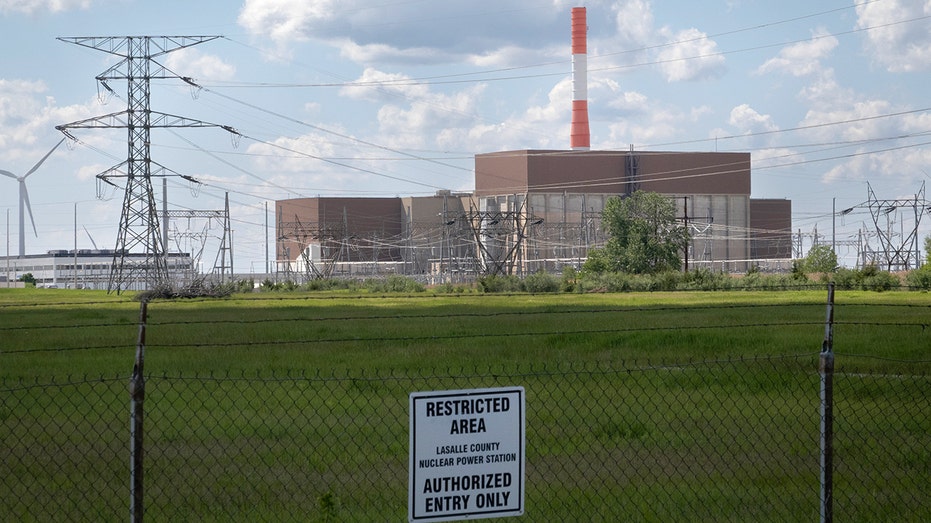
Constellation Energy's LaSalle Clean Energy Center nuclear power plant

A sign hangs on a fence which surrounds Constellation Energy’s LaSalle Clean Energy Center nuclear power plant on May 23, 2025, near Marseilles, Illinois. (Scott Olson/Getty Images)

GET FOX BUSINESS ON THE GO BY CLICKING HERE

Meta announced earlier this year that it signed 20-year agreements to buy power from three Vistra-owned nuclear plants in Ohio and Pennsylvania, while also working with Oklo and TerraPower to help develop new nuclear projects.

Advertisement

The deals could supply up to 6.6 gigawatts of nuclear power by 2035, the company’s chief global affairs officer, Joel Kaplan, told FOX Business at the time.

Continue Reading

Business

Seven Teams Through, Japan and Germany Already Eliminated

Published

on

Christian Pulisic of Chelsea FC

The 2026 FIFA World Cup’s expanded knockout bracket is beginning to take clear shape, with seven nations already assured of a Round of 16 berth following the completion of the first week of win-or-go-home play, while several of the competition’s most storied programs have been sent home far earlier than expected.

The round of 32, a feature unique to this year’s enlarged 48-team format, has produced a string of notable eliminations and compelling results since kicking off June 28. Japan, Germany and the Netherlands have all been eliminated, three programs that entered the tournament as genuine contenders, making Wednesday’s schedule of three additional matches all the more consequential for the teams still trying to ensure their own survival.

The bracket opened June 28 with Canada defeating South Africa 1-0, setting up a Round of 16 matchup against Morocco in Houston on Saturday, July 4. South Africa’s elimination carried particular weight given the team had shocked co-hosts Mexico with a 1-0 victory in the group stage, a result that contributed to weeks of national recrimination in Mexico before El Tri recovered to advance and then beat Ecuador 2-0 in their own round of 32 fixture Tuesday.

Monday’s results were among the round’s most dramatic. Brazil edged Japan 2-1 in Houston in a match that saw Japan push Vinícius Júnior’s side far closer than the final scoreline suggested, before Brazil’s quality in transition ultimately proved decisive. Japan’s exit brought an end to one of the tournament’s most technically impressive groups stage campaigns. Separately on Monday, Morocco outlasted the Netherlands on penalty kicks, 3-2, after the sides finished 1-1 through 90 minutes, eliminating a Netherlands team that had been considered a dark-horse contender entering the tournament. Morocco will now face Canada on July 4 in Houston, a repeat of a 2022 World Cup encounter that the Moroccans won on penalties during their remarkable run to the semifinals in Qatar.

Advertisement

Also Monday, Paraguay pulled off one of the round’s biggest upsets, eliminating Germany on penalties after a 1-1 draw, denying the four-time World Cup winners a place in the Round of 16 in what has already been described as one of the tournament’s most stunning results. Paraguay will now face France in Philadelphia on July 4, a daunting assignment given France’s 3-0 dismantling of Sweden on Tuesday in which Kylian Mbappé scored twice to draw level with Lionel Messi in the Golden Boot standings at six goals apiece.

Tuesday’s remaining results set up what should be a fascinating Round of 16 weekend. Norway defeated Ivory Coast 2-1, advancing Erling Haaland’s side to face Brazil on July 5 in East Rutherford, New Jersey, in what many analysts are already framing as a potential match of the tournament. Mexico’s 2-0 defeat of Ecuador, built on goals by Julián Quiñones and Raúl Jiménez, extended the co-hosts’ unbeaten record at the Estadio Azteca in World Cup competition to 10 matches and ended 40 years of knockout-stage futility for El Tri, who had not won a World Cup knockout game since beating Bulgaria at the same venue in 1986. Mexico will now face the winner of Wednesday’s England vs. Congo DR match at the Azteca on July 6.

Wednesday’s schedule includes three critical fixtures. England face Congo DR at Mercedes-Benz Stadium in Atlanta with kickoff at noon ET, a match that will determine whether England, who were eliminated in the quarterfinals at the last World Cup, can advance to face Mexico in what would be one of the most anticipated Round of 16 matchups in the tournament. Belgium face Senegal at Lumen Field in Seattle at 4 p.m. ET, with the winner facing the survivor of the USA vs. Bosnia and Herzegovina match, which kicks off at 8 p.m. ET at Levi’s Stadium in Santa Clara. The United States’ fixture carries enormous domestic significance for the co-hosts, with co-host status translating into a guaranteed World Cup appearance but no guarantee of deep advancement in a field packed with quality opposition across the bracket.

The remaining Round of 32 fixtures spread across Thursday, Friday and into the following weekend. Thursday brings Spain vs. Austria at SoFi Stadium in Inglewood, California, at 3 p.m. ET, followed by Portugal vs. Croatia at BMO Field in Toronto at 7 p.m. ET, a heavyweight European clash that could determine whether Cristiano Ronaldo, who scored twice against Uzbekistan in the group stage, continues his own pursuit of tournament milestones. Switzerland vs. Algeria closes Thursday’s schedule at 11 p.m. ET at BC Place in Vancouver.

Advertisement

Friday’s schedule includes Australia vs. Egypt at AT&T Stadium in Arlington, Texas, at 2 p.m. ET, followed by Argentina vs. Cape Verde at Hard Rock Stadium in Miami Gardens at 6 p.m. ET, a match that will almost certainly feature Messi and represents what many expect to be a straightforward advancement for the 2022 champions into the Round of 16 and another opportunity to add to his record tournament goal tally. Colombia vs. Ghana closes the round of 32 at Arrowhead Stadium in Kansas City at 9:30 p.m. ET.

The full Round of 16 schedule runs July 4 through July 7, with Canada vs. Morocco and Paraguay vs. France both on July 4, followed by Brazil vs. Norway and Mexico vs. England or Congo DR on July 5, and Spain or Austria vs. Croatia or Portugal and Belgium or Senegal vs. USA or Bosnia on July 6, before Australia or Egypt vs. Argentina or Cape Verde and Switzerland or Algeria vs. Colombia or Ghana round out the last 16 on July 7. The quarterfinals follow on July 9, 10 and 11, with the semifinals scheduled for July 14 and 15, a third-place match July 18, and the World Cup final set for July 19 at MetLife Stadium in East Rutherford, New Jersey.

Continue Reading

Trending

Copyright © 2025