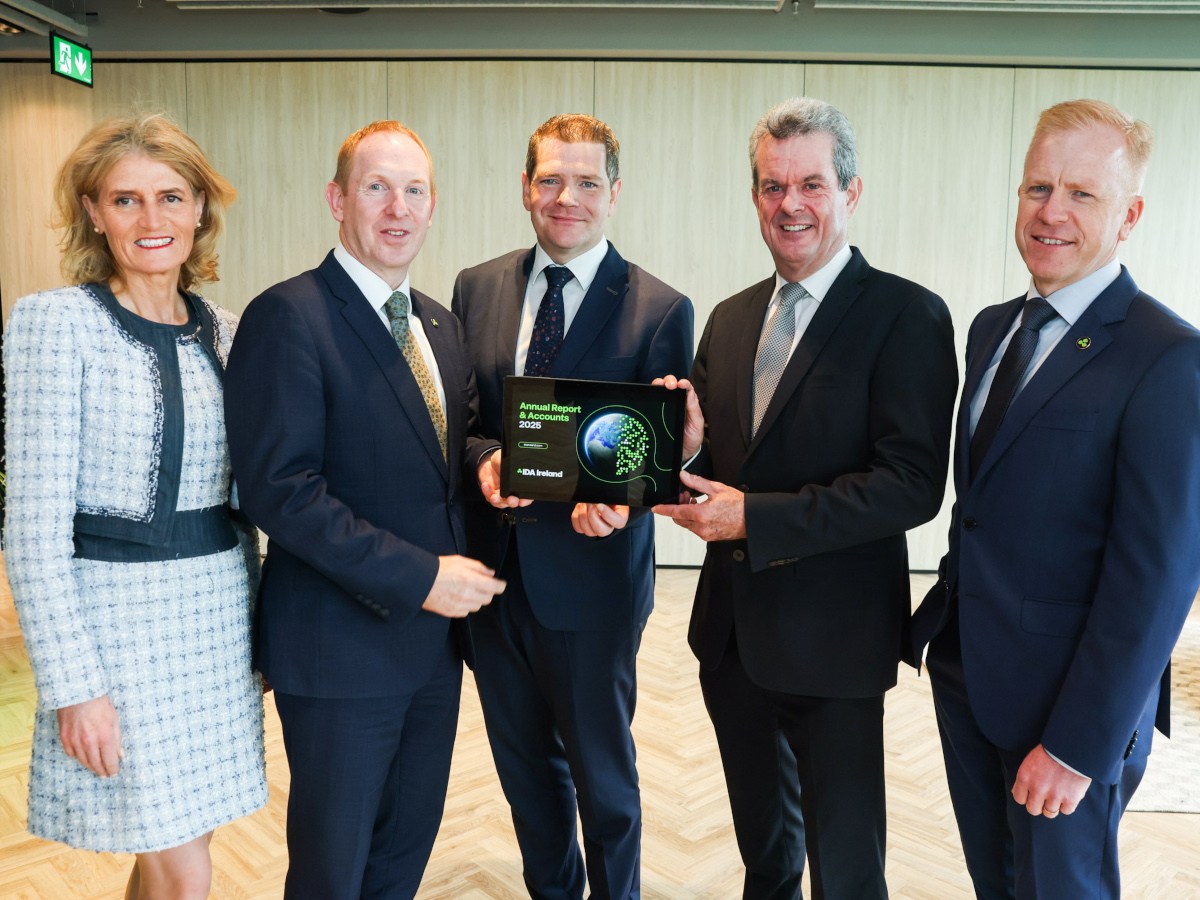
IDA chairperson Feargal O’Rourke said results indicate that the agency’s strategy is working despite an ‘increasingly turbulent world’.
Qualcomm, Apple and Monzo are among the 190 global businesses that made Irish investments in the first half of this year. Collectively, these deals are expected to create nearly 10,500 jobs, according to data from IDA Ireland.
Agency chairperson Feargal O’Rourke said that this quarter’s “very positive results” and last year’s “record performance” indicate that the agency’s five-year strategy ‘Adapt Intelligently’ is “fit for purpose” in an “increasingly turbulent world”.
The agency, which facilitates foreign investments in Ireland, reported that investment activity over H1 pointed to a “strong concentration” of next-generation technology projects.
Advertisement
During that time, companies including Trading 212 and Block selected Ireland as their European launchpad and a base for regional headquarters.
Among the 190 investors, 54 are first-timers, while nearly 40 companies expanded their existing operations, IDA said.
AI makes an unsurprising appearance in the data, with major investments from Anthropic, which announced 200 jobs as part of its Dublin expansion, and Rippling, which opened a new Dublin office to create 150 jobs to meet demand for AI-native workforce intelligence across EMEA.
Advertisement
Marketing automation company Klaviyo announced in April that it was building out its engineering team in Dublin, after previously announcing 100 jobs. US software company MongoDB also announced 200 jobs in the same month amid a multimillion-dollar push towards agentic AI applications.
Fintech was particularly active in the first half of this year, with investments from Currenxie, Monzo, CoinJar and Qashio. IDA Ireland said that the activity indicated the country’s “clear strength” in fintech and digital finance.
Canadian enterprise data management company OpenText committed €105m to its Cork and Galway sites last month to create 400 new jobs, marking the single largest investment into Ireland by a technology company headquartered in Canada.
“IDA Ireland’s 2025 results and the investment pipeline secured in the first half of 2026 demonstrate the continued strength of Ireland’s FDI proposition and the confidence global companies have in Ireland as a location to establish, scale and transform,” said IDA CEO Michael Lohan.
“The breadth of investment across technology, life sciences, engineering and financial services sectors, alongside strong regional performance and significant transformational undertakings, reflects the depth of Ireland’s talent, capability and enterprise ecosystem.
“Our focus remains on competing strongly for the next generation of investment and ensuring FDI continues to deliver impact across all regions for the Irish economy.”
Don’t miss out on the knowledge you need to succeed. Sign up for the Daily Brief, Silicon Republic’s digest of need-to-know sci-tech news.
Sam Altman is in talks with the US government in a bid to clear political hurdles, says the Financial Times.
Andrew Harnik/Getty Images
OpenAI’s Sam Altman has reportedly been in talks with the US government to ensure his company’s path towards achieving its goals remains free of political hurdles. According to the Financial Times, Altman has suggested giving the government a five percent stake in the company, in order to share the spoils of the AI boom with the public. But his idea doesn’t only involve OpenAI: Under his proposal, other top AI companies like Google, Anthropic, xAI and Meta would have to agree to give the government a similar stake in their businesses.
AI companies like Anthropic and OpenAI have recently encountered roadblocks from the US government when it came to releasing their latest AI models. Anthropic had to block all access to its Mythos and Fable cybersecurity models after being ordered to do so by the Trump administration. It was only recently granted permission to restore users’ access to them. Meanwhile, OpenAI had to roll out a limited preview of its GPT-5.6 model to government-approved partners, as requested by the administration, as well.
In June, Trump had signed a scaled-back executive order, which asks AI companies to share their most powerful models for voluntary government review 30 days before making them available to the public. Politicians, including Trump’s allies, as well as organizations like the UN, however, are calling for more stringent AI policies.
Advertisement
As the Times notes, giving the government part ownership worked for another firm before. President Trump used to call for Intel CEO Lip-Bu Tan to resign until his administration took a 10 percent stake in the chipmaker. Trump even recently boasted that “America’s stake [in Intel] is now over 60 billion dollars” from $8.9 billion in 2025.
Altman and other OpenAI executives reportedly floated the idea of having leading AI developers give a five percent equity to sovereign funds, such as the Alaska Permanent Fund, which pays dividends to the state government and residents. Talks between OpenAI and the government are in their very early stages, though, and the Times says any deal would still require Congress approval.
SK Hynix will spend 80 trillion won, or roughly $51.46 billion, building a new NAND flash memory factory in Cheongju, South Korea, with production targeted to begin in the first half of 2029.
Chief executive Kwak Noh-jung announced the plan at an event attended by President Lee Jae Myung, folding the new fab, called M17, into a broader push by South Korea’s two memory giants to keep up with demand the industry is struggling to satisfy.
The announcement follows Samsung’s own $647bn domestic investment plan, unveiled days earlier for the same chip-starved corner of the country. The $51.46 billion figure covers the NAND fab alone.
SK Hynix’s total spending commitment, once a separate advanced packaging plant is included, rises to 100 trillion won, or about $64 billion.
Advertisement
The 💜 of EU tech
The latest rumblings from the EU tech scene, a story from our wise ol’ founder Boris, and some questionable AI art. It’s free, every week, in your inbox. Sign up now!
That second facility, known as P&T7 and also sited in Cheongju, is intended for wafer-level packaging and is targeted for completion by 2027, two years ahead of the main fab. Reuters reported both figures, and Korean outlets corroborated the split between the two projects.
M17 will be SK Hynix’s fourth NAND fab and represents a bet that flash storage, long the less glamorous half of the memory business compared with the high-bandwidth memory (HBM) chips that feed AI accelerators, still needs serious new capacity.
Advertisement
NAND chips handle long-term data storage in solid-state drives, distinct from the DRAM and HBM used as working memory inside AI servers.
Industry trackers including TrendForce and DigiTimes have flagged tightening NAND supply as datacentre operators buy up storage alongside compute, even as most attention around SK Hynix’s stock rally has centred on HBM.
President Lee’s government unveiled an investment plan worth somewhere between $520 billion and $576 billion, depending on which outlet’s tally you use, on June 29, with Samsung and SK Hynix both committing to new fabs and packaging lines across the Chungcheong region.
Reuters and Nikkei Asia have linked the spending spree to warnings that the global memory shortage, driven largely by AI datacentre buildouts, could persist into 2027 rather than easing this year.
Advertisement
That shortage has already rippled into consumer electronics. Memory prices have climbed sharply enough this year that Apple discontinued its entry-level Mac Mini, and DRAM buyers elsewhere have turned to alternative suppliers, including a reported shift by Corsair toward Chinese-made DRAM in some of its kits.
The scale of the response from SK Hynix and Samsung suggests both expect the squeeze to last well beyond the next product cycle.
Construction on M17 is expected to begin next year, giving SK Hynix roughly three years to bring the fab from groundbreaking to output, a typical timeline for a facility of this scale. Neither SK Hynix nor the South Korean government has detailed how the investment will be financed beyond the company’s own capital plans.
Cheongju, already home to SK Hynix’s existing NAND operations, is becoming the centre of gravity for the company’s storage ambitions well into the next decade.
Advertisement
SK Hynix overtook Samsung last year as South Korea’s most valuable listed company, a shift driven almost entirely by the HBM boom rather than NAND, which makes this fresh bet on flash storage notable in its own right.
NAND capacity additions rarely draw the same headlines as HBM supply deals, but the two product lines increasingly compete for the same wafer starts and packaging capacity inside SK Hynix’s Korean plants.
Executives at both companies have been candid that memory has become the bottleneck constraining how fast the wider AI industry can build.
South Korea’s government has framed the combined spending as a matter of national strategy, treating the country’s memory dominance as an asset worth defending through direct policy support.
Advertisement
Whether that translates into tax incentives or faster permitting for the Chungcheong region’s fabs has not yet been detailed publicly.
For now, the concrete commitment is SK Hynix’s own: two plants, one region, and a 2029 deadline.
As New York City braces for an extreme heat wave amid the July 4th weekend and World Cup festivities, government officials and local hospitals are ramping up efforts to prevent heat-related illness.
Temperatures are expected to reach 100 degrees Fahrenheit (38 Celsius) by Thursday, with a heat index between 105 and 110 degrees—unusually hot for New York. Friday is expected to be just as sweltering.
“These are extremely dangerous conditions, and they will affect every part of our city,” New York City mayor Zohran Mamdani said in a press conference on Tuesday.
Many major cities have heat emergency plans that involve setting up cooling centers, conducting outreach to vulnerable populations, and sending out emergency alerts. With heat waves becoming more intense and common as the planet warms, more cities are writing and implementing these types of plans to keep residents safe.
Advertisement
This year, New York City first activated its heat emergency plan on May 19—the earliest it’s ever done so—due to a severe spring heat wave that pushed temperatures past the 90-degree mark across the Northeast. It activated that plan again in preparation for this latest heat wave.
As part of that emergency plan, the city will have more than 650 cooling stations up and running, including at libraries, recreation centers, and Petco stores, as well as some extra “nontraditional” cooling stations, which include government buildings, says Christinia Farrell, commissioner of the New York City Emergency Management Department. She says excessive heat warnings are becoming more common in New York.
The Mamdani administration is deploying cooling vans across the city to provide wellness checks, medical care, water, electrolytes, sunscreen, as well as transportation to cooling centers or health care facilities. LinkNYC kiosks, which have replaced old pay phones throughout the city, will also be programmed to display walking directions to the nearest cooling center, another new initiative under Mamdani.
To help the grid cope with more residential cooling demand, business owners are being asked to set their thermostats to 78 degrees, which the Department of Energy recommends during peak summer months.
Advertisement
Workers with the city’s Department of Social Services will be conducting in-person outreach to unhoused people. Individuals who need short-term housing will not be required to go through the typical intake procedure at shelters under the heat plan.
Philadelphia is also bracing for high heat. The city—which is hosting a World Cup match on July 4—has activated its heat emergency plan and has moved the hours for its FIFA Fan Festival to the evening. The city will have cooling and tents, free water refill stations, shaded areas, and multiple medical stations for fans. Still, the match between Paraguay and France will kick off at 5 pm ET, when it’s forecast to still feel well above 100 degrees with the heat and humidity.
The risk of heat-related death and illness is expected to grow as extreme heat events become more frequent and intense. A recent study from Yale University found that deaths associated with high temperatures nearly doubled in the US over the past two decades, from an annual average of 2,670 between 2000 and 2009, to more than 4,000 between 2010 and 2020. Most heat-related deaths occur indoors after prolonged exposure to heat without air-conditioning.
New York emergency departments say they’re preparing to handle an increase in patients with acute heat illnesses in the coming days.
Advertisement
Erik Blutinger, an emergency medicine physician at Mount Sinai Queens, says the hospital is stocking up on towels, fans, and other supplies to make sure patients with heat sickness can be adequately treated. He says it’s important for people to be able to recognize the symptoms of heat-related illness so they can seek treatment as soon as possible.
Watch the John Deere Classic 2026 for CA$25 a month
TSN Plus
Advertisement
It’s a stacked lineup for Independence Day weekend at the Deere Run, with an $8.8-million prize up for grabs at the John Deere Classic 2026 in Silvis, Illinois.
Last year’s tournament saw Brian Campbell claim his second career victory on the PGA Tour. His par on the first playoff hole was enough to see off the challenge of Seamus Power.
Traditionally serving as a warm-up for next week’s Open Championship at Royal Birkdale, this year’s event has Ben Griffin, Tom Kim and Keegan Bradley among the pretournament favorites. Two-time winner Jordan Spieth will also be there, looking to end a four-year wait for a win on the PGA Tour.
Advertisement
PGA golfer Brian Campbell won the 2025 John Deere Classic.
Brian Spurlock/Icon Sportswire via Getty Images
What is the US TV schedule for the 2026 John Deere Classic?
While the Golf Channel has exclusive rights to show Thursday and Friday’s action live, the key linear TV coverage in the US is with CBS, which will be showing the tournament’s latter stages. That coverage will also be available to watch via streaming service Paramount Plus. For more comprehensive coverage, PGA Tour livestreaming coverage takes place Thursday through Sunday on ESPN Plus, offering main action feeds, marquee groups, featured groups and featured hole coverage.
Here’s the full TV schedule (all times ET):
Advertisement
Thursday
Golf Channel: 4 p.m. – 7 p.m.
ESPN Plus: 7:30 a.m. – 7 p.m.
Friday
ESPN Plus: 7:45 a.m. – 7 p.m.
Golf Channel: 4 p.m. – 7 p.m.
Saturday
Golf Channel: 1 p.m. – 3 p.m.
CBS/Paramount Plus: 3 p.m. – 6 p.m.
ESPN Plus: 7:45 a.m. – 6 p.m.
Sunday
Golf Channel: 1 p.m. – 3 p.m.
CBS/Paramount Plus: 3 p.m. – 6 p.m.
ESPN Plus: 7:45 a.m. – 6 p.m.
Livestream the John Deere Classic 2026 in the US
The key linear TV coverage in the US is on CBS, which will be showing the tournament’s latter stages. That coverage will also be available to watch via streaming service Paramount Plus.
Sarah Tew/CNET
Paramount Plus has two main subscription plans in the US: Essential for $9 a month and Premium Plus for $14 a month. Both offer coverage of the John Deere Classic.
Advertisement
The cheaper Essential option has ads for on-demand streaming, but it lacks live CBS feeds and the ability to download shows to watch offline later. Students may qualify for a 25% discount.
PGA Tour livestreaming coverage of all four days, Thursday through Sunday, is available on ESPN Plus, which will be offering main action feeds, marquee groups, featured groups and featured hole coverage.
ESPN Plus is accessible via the network’s ESPN Select or ESPN Unlimited streaming packages. ESPN Select carries ESPN Plus and is the cheaper option at $13 a month.
ESPN’s streaming platforms have been shaken up in recent months. The sports network now offers two tiers with its new direct-to-consumer setup: ESPN Select and ESPN Unlimited. ESPN Select is essentially what ESPN Plus used to be, with the same content available to subscribers, including PGA golf, for $13 a month. If you want full access to ESPN’s networks and services, such as ESPN, ESPN2, ESPN3, ESPNews and ESPN Deportes, as well as all of ESPN Select’s content, then ESPN Unlimited is the way to go. It costs $30 a month.
The Golf Channel’s coverage of the tournament’s early stages can be streamed via Peacock.
Hulu with Live TV starts at $90 per month for the ad-supported bundle and includes the Golf Channel. Click the “View channels in your area” link on its welcome page to see which local channels are offered in your ZIP code.
Golf fans in the UK can watch the tournament live on Sky Sports. The tournament will be broadcast across its Sky Sports Golf and Main Events channels, with further coverage on its Red Button service.
Advertisement
Now TV
Viewers in the UK will be able to watch the John Deere Classic 2026 on Sky Sports Golf, with extensive coverage of each day’s play. Subscribers can also stream the action via the Sky Go app. Sky subsidiary Now (formerly Now TV) offers streaming access to Sky Sports channels with a Now Sports membership. You can get a day of access for £15 (perhaps just for the final round), or sign up to a monthly plan from £35 a month to watch all four days of the tournament.
Livestream the John Deere Classic 2026 in Australia
The John Deere Classic 2026 can be watched Down Under on Fox Sports via Foxtel. If you’re not a Fox subscriber, your best option is to sign up for the streaming service Kayo Sports.
Advertisement
Kayo Sports
A Kayo Sports subscription starts at AU$30 a month and lets you stream on one screen, while its Premium tier costs AU$46 a month for simultaneous viewing on up to three devices.
The service gives you access to a wide range of sports, including F1, NRL, NFL, NHL and MLB, and there are no lock-in contracts.
Advertisement
Better still, if you’re a new customer, you can take advantage of a one-week Kayo Sports free trial.
Stream the John Deere Classic 2026 in Canada
Live coverage of the weekend’s action from Silvis, Illinois, will be available to watch in Canada via TSN. Cord-cutters can also watch TSN’s coverage via the network’s streaming service TSN Plus.
TSN
Advertisement
TSN Plus full streaming package boasts exclusive coverage of NFL games, F1, Nascar and Grand Slam tennis tournaments. Ideal for cord-cutters, the service is priced at CA$25 a month.
After living in big cities like San Francisco and New York, when I set foot in Wally World in the Midwest, I heard angels sing. Rows and rows of fluorescent lights highlighted any and every product needed for your house in one place. Screw the mom-and-pop bodega—I missed this level of convenience. If by chance they don’t have what you need in-store, there’s even more online, with pickup and delivery available.
Get Walmart Coupon Savings Today
Walmart has quite literally thousands of flash deals that change weekly, with up to 65% off tech, appliances, end-of-season, and holiday items, so be sure to check often to find the best rotating deals. And if you’re like me, I’m always searching for the best tech deals without breaking the bank. So whether you’re looking to purchase a new 17-piece non-stick cookware set, Dyson cordless vacuum cleaner, or this season’s latest clothing trends for men, women or children—Walmart is your one-stop shop for it all.
You can also enjoy great benefits with Walmart+, a paid membership that gives early access to promotions and events like Walmart Black Friday deals, free delivery, free shipping with no order minimum, savings on fuel, streaming with Paramount+, and more. You can pay monthly or annually, and you’ll get a free trial of Walmart+ for 30 days to try it out. Walmart+ Assist helps qualifying government aid recipients get a membership at a lower cost.
Don’t Miss 4th of July Savings at Walmart
Walmart is pretty much the one-stop-shop for everything, including Fourth of July planning. That’s why they have discounts on thousands of products for the Fourth of July. This includes savings on tech like Bluetooth speakers, fashion like themed tees, and rollbacks on mattresses and bedding, and so much more. Make sure to check out this Walmart sale ahead of your party planning!
Advertisement
Join Walmart Today to Get Free Delivery
Did you know that Walmart basically has its own Amazon Prime-esque membership plan? It’s called Walmart+, and it’s a great option for people who shop at Walmart often. It’ll give you free grocery delivery, free shipping with no order minimum, savings on fuel, and early access to promotions and events. Plus, you can try Walmart+ free for 30 days to see if the service is right for you or your family. The annual plan is $98 (roughly $8 per month) after trial, meaning you’ll get $57 in savings annually.
In a Rush? Get Fast Delivery at Walmart
If you don’t want to leave your home, Walmart offers fast delivery in as fast as an hour! You’ll just need to book a timeslot through the site to get your favorites and essentials right to your door. This even includes delivery of important refrigerated prescriptions, like Insulin, GLP-1s, antibiotics, and more. Plus, it’s great for when you’re sick and need cold/flu remedies like DayQuil, Theraflu, tea, and more.
What Is OnePay Walmart Spend Card?
The OnePay Walmart Spend Card is a Walmart-exclusive credit card (meaning that it can only be used at Walmart and Walmart.com). If you don’t qualify for the OnePay CashRewards Mastercard (and have poor credit scores), this is a great way to build credit history—but you won’t get the cash-back rewards of the CashRewards card. This card can not only help you build credit, but also doesn’t require an annual fee. Just know that when you apply for a OnePay Card, you will first be considered for the OnePay Cash Rewards Card, but if you don’t qualify, you’ll be considered for a OnePay Walmart Spend Card. Interested applicants can apply online at Walmart.com, the Walmart app, or in-store.
Get 5% Cashback Walmart as a Walmart+ Member
Being a Walmart+ member has tons of perks, including 5% cash back when you shop at Walmart, plus, 1.5% cash back on all other purchases with zero annual fees. And when you open a OnePay Card and spend over $75 on that card within 30 days, you’ll get an extra $35 cash back. To get these rewards, all you need to do is pay with your OnePay CashRewards Card at Walmart (or anywhere Mastercard is accepted), earn OnePay points on your purchases, and redeem for cash (or a statement credit into a OnePay Cash Account).
Advertisement
35% Off Diabetes Essentials at Walmart
It can be anxiety-inducing to have a medical condition like diabetes, which needs managed care, and not to mention can get extremely expensive. (Thanks USA for not having universal healthcare!) Walmart knows that your health is a priority, and wants to make these medically necessary items cheaper for folks with diabetes. Walmart has a whole section online for (often) discounted diabetes essentials, to take the headache and guesswork out of shopping. You can get up to 35% off things like glucose monitors and insulin coolers, along with test strips, and medical bags. Plus, diabetic supplies and wearables like socks, footwear, and mobility aids are also available for fast shipping and most are FSA/HSA eligible.
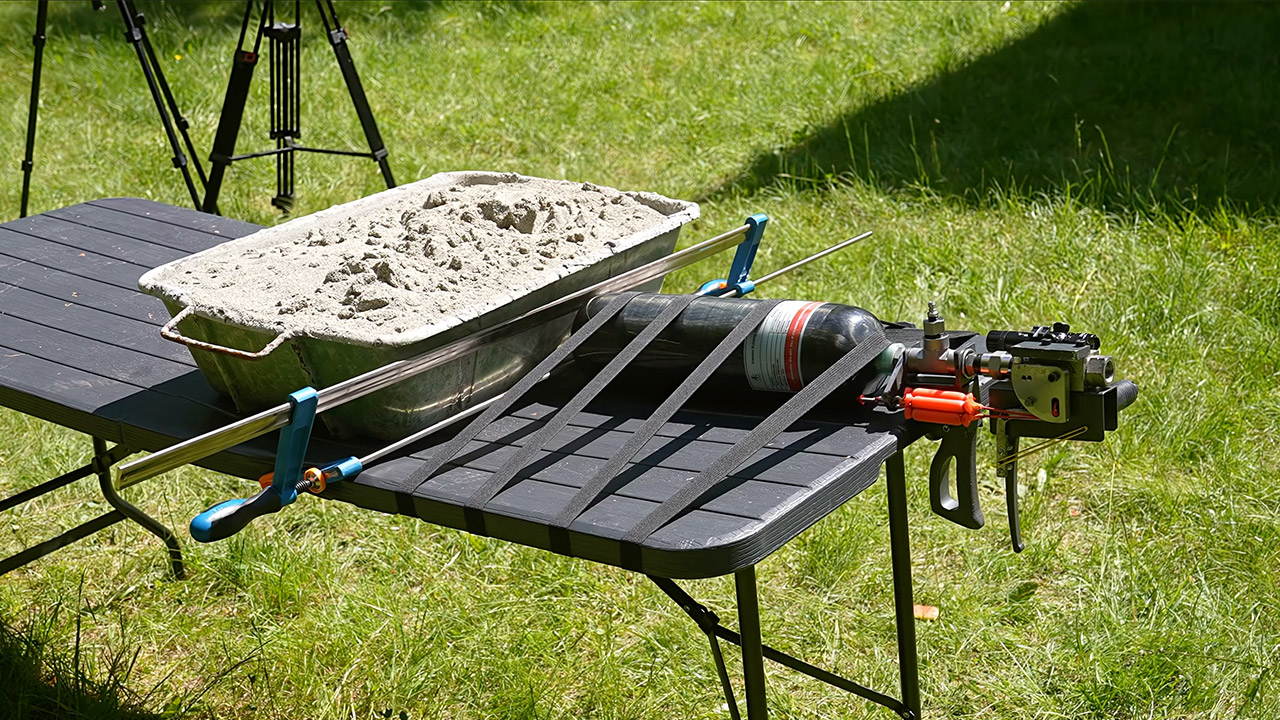
Mike Shake has spent years exploring the edges of what simple materials can do when pushed hard. His latest project takes compressed air and turns it into a directed force that moves tables, destroys targets, and leaves visible clouds in its wake. The device is not a gun in the usual sense. It contains no powder or projectile. Everything comes from the sudden release of air stored at extreme pressure inside a sturdy tank.
A few months ago, he put small cartridges through their paces, loading them to the gills at over 1000 pounds per square inch, producing a strong shockwave that could easily blast through a light object. The next challenge to answer was what would happen if the volume of air increased dramatically while releasing at the same rate. The solution arrived in the form of a three-liter tank capable of withstanding 4500 pounds per square inch pressure. At maximum pressure, that tank is essentially full to the brim with the equivalent of about 920 liters of air at normal pressure, and all that air is just aching to explode out the instant the valve is released.
ONE LOAD, 60 PLUS LONG RANGE SHOTS: The clever Incog water gun handle doubles as a water tank – maximising the tank capacity to an impressive 1200CC…
DURABLE, NO BATTERIES, NO BREAKAGES: the Incog water guns consistently deliver 32ft water jets, a stronger and more powerful shot than most electric…
2026 FEATURES: textured grips to help younger kids control a fully loaded Incog water gun, strengthened nozzle for stronger water jets, anti-leak…
The tank was only half the battle; the true engineering issue was ensuring that the air exited the tank quickly enough to create a good shockwave rather than a drawn-out whoosh. A conventional ball valve can easily empty a tank, but twisting the handle slowly causes the pressure to gradually seep off. But the shockwave requires the entire thing to go in a fraction of a second; else, it’ll be a feeble dribble. Mike rectified the problem by attaching thick rubber bands to the valve lever, similar to those seen on spearguns. Stretched out to more than three times their typical length, these bands deliver approximately 90 pounds of force. To ensure that force is not wasted, Mike created a bespoke metal lever and aluminum stop to keep the pull angle as efficient as possible. He then used his 3D printer to create the grip and trigger housing, leaving the tricky bits, such as the metal pieces that would be under the most strain, to the local machinists to supply.
Advertisement
Filling is simple; just hook up a quick-disconnect connection to a water-cooled PCP compressor and you’re ready to go. Outdoors, a small gasoline generator kicks in to power the compressor, and once the tank is full, forget about the pressure slipping away; it’ll hold rock solid, dropping by only about 30 psi after a couple of minutes at maximum fill, which is important when you have to pull the trigger without being right next to the business end. Before deploying the larger guns, they conducted preliminary testing with a much smaller tank to fine-tune the time without putting anyone in danger. Time slowed dramatically, and they could see that the valve required to rotate in essentially one frame, after which it was only a matter of tweaking with the band tension and rope length to get it to go ‘whoosh’ rather than a wimpy puff.
Once they were satisfied with the mechanism, they upgraded to a medium tank and began making good progress right immediately. They blasted a watermelon sitting at a distance, sending a visible column of pressurized air whooshing out, and the recoil was severe enough to knock the shooter backwards. Encouraging, but partly because they understood the final version would require some major safety precautions if they wanted to keep themselves safe.
So, for the three-liter cannon, they simply bolted it to a large table and weighted it with a 40-kilo pail of sand for good measure. A long connection led out to a remote trigger, so no one had to be around while the thing went off. When the valve sprang open, the table legs cracked beneath the pressure, and the entire thing flung itself around 10 meters across the ground, scattering sand in all directions. It sounded as loud as a gunshot, and anyone standing nearby was caught in the blast.
It was put to good use by some too eager targets. A watermelon that got in the path vanished in an instant, leaving a massive mess of fragments all over the place. A ballistic dummy head lost its face and was left looking quite battered. Okay, maybe not the most delicate demonstration, but these were controlled tests of what happens when you release a large amount of pressure correctly.
You also get some extremely visible effects, such as how air rushes out of the cannon at tremendous speeds, resulting in a large cloud of water vapor right quickly. The interesting part is that this cloud is simply ordinary water in the surrounding air condensing onto itself as the air becomes unexpectedly cold, as you can see in the diamond-shaped patterns (known to techheads as Mach diamonds) as it passes by. That is the same kind of thing you see trailing behind a supersonic airplane. No smoke, just frigid air.
Indian serial entrepreneur Bhavin Turakhia is making a $30 million personal bet that there is still room for another enterprise AI company. His new venture, Neo, is built on a simple premise: workplace software designed before the AI era cannot simply be upgraded with chatbots — it has to be redesigned from the ground up.
Turakhia, 46, is no stranger to ambitious enterprise technology bets. Over the past two decades, he has co-founded companies including Directi, Radix, Titan, and banking software firm Zeta, largely backing them with his own cash before bringing in outside investors. He’s doing the same with Neo.
Turakhia told TechCrunch he is bootstrapping this much money because he believes AI marks a technology shift significant enough to justify rebuilding workplace software from scratch.
“If you want to build an iPhone, you can’t take the parts of a Nokia and somehow convert it into an iPhone,” he said.
Advertisement
Launched internally in April this year, Neo is an enterprise work platform that combines project management, documents, file storage, and AI into a single product. The goal, Turakhia said, is to make AI an active participant in day-to-day work rather than just another assistant employees turn to separately.
Turakhia argued most incumbents face a structural disadvantage when adding AI to products designed before generative AI. Neo, he said, was designed from the ground up for AI and is model-agnostic, allowing enterprises to switch between AI models rather than being tied to a single provider.
He’s not alone in thinking this way. Investor Chamath Palihapitiya initially launched enterprise AI coding venture 8090 with his own capital before raising a $135 million funding round this week.
Still, Turakhia’s bet comes as enterprise AI has emerged as one of the most competitive areas in technology. Microsoft, Google, and Salesforce are embedding AI across their workplace software. Meanwhile every startup from the giant labs like Anthropic and OpenAI, to the productivity companies like Notion and Superhuman are racing to reshape how businesses use AI in their daily workflow.
Advertisement
Turakhia argued enterprise software has never been a winner-takes-all market, saying even a small share of global enterprise AI spending would represent a sizeable company.
“Even if we end up with 2% to 5% market share, that’s larger than anything I’ve built so far,” he said.
For the past few months, Neo has been in internal use across Turakhia’s companies, including Zeta. The company plans to begin rolling out the software to mid-sized businesses in the coming months, initially targeting knowledge workers across technology, consulting, and professional services firms.
Turakhia said Neo’s initial platform was built in three months, with AI extensively used in the development process, work he estimates would have taken more than a year with a much larger engineering team before generative AI.
Advertisement
The Bengaluru-based startup currently employs about 45 people, including 18 engineers. Turakhia told TechCrunch that it expects to grow to around 100 employees by the end of the year, with most new hires focused on AI and software engineering.
When you purchase through links in our articles, we may earn a small commission. This doesn’t affect our editorial independence.
Looking for the most recent Mini Crossword answer? Click here for today’s Mini Crossword hints, as well as our daily answers and hints for The New York Times Wordle, Strands, Connections and Connections: Sports Edition puzzles.
Need some help with today’s Mini Crossword? Read on for all the answers. And if you could use some hints and guidance for daily solving, check out our Mini Crossword tips.
If you’re looking for today’s Wordle, Connections, Connections: Sports Edition and Strands answers, you can visit CNET’s NYT puzzle hints page.
Kubota North America Corporation disclosed that hackers had access to some of its network systems for more than a month earlier this year.
Following an investigation into the incident, the company determined that between March 16 and April 20 the threat actor accessed files with personal information for employees and their dependents.
Kubota is a Japanese industrial manufacturer known for its agricultural and construction equipment. It operates in 120 countries, employs more than 52,000 people, and has a reported annual revenue of $20 billion.
Its North American division includes facilities that produce tractors, mowers, and utility vehicles.
According to the announcement posted on the Kubota USA site, the following employee data may have been exposed:
Advertisement
Full names (also for dependents)
Social Security numbers (also for dependents)
Dates of birth (also for dependents)
Taxpayer IDs
Driver’s license or other government ID numbers
Direct deposit bank account information
Corporate payment card information
Benefits enrollment and limited claims data (also for dependents)
The exact data types exposed vary per individual, and Kubota started sending personalized notifications via email on June 30, informing each individual about the specific impact on them.
The notifications include instructions for enrolling in Kroll identity protection to help victims mitigate the risks arising from the exposure of their sensitive data.
In the letters, Kubota specifically advises recipients to monitor healthcare-related statements, as well as bank accounts, and to immediately report any suspicious activity to the authorities.
Kubota says it has implemented additional security measures to prevent similar incidents in the future.
At the time of writing, no data extortion groups or ransomware gangs have assumed responsibility for the attack at Kubota.
Advertisement
The company did not mention facing any operational or business disruptions as a result of this incident.
BleepingComputer has contacted Kubota to ask for more information about the perpetrators and the nature of the attack, but we have not received a response by publication time.
Security teams log 54% of successful attacks and alert on just 14%. The rest move through your environment unseen.
The Picus whitepaper shows how breach and attack simulation tests your SIEM and EDR rules so threats stop slipping by detection.
Focal is not easing into Q3 2026. The French manufacturer has already made serious noise with the Mu-so Hekla, its ambitious all-in-one Dolby Atmos system that is currently under review, unveiled the $210,000 Diva Alta Utopia wireless flagship, and mounted one of the busiest and most talked-about demonstrations at AXPONA 2026. That is a rather muscular start to the year, even for a company that has never been particularly interested in playing small.
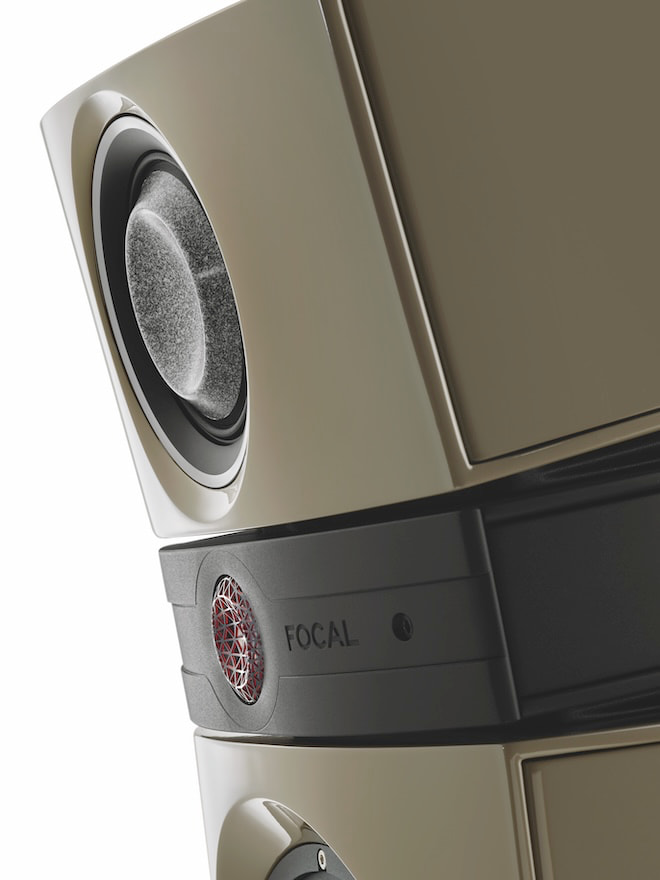
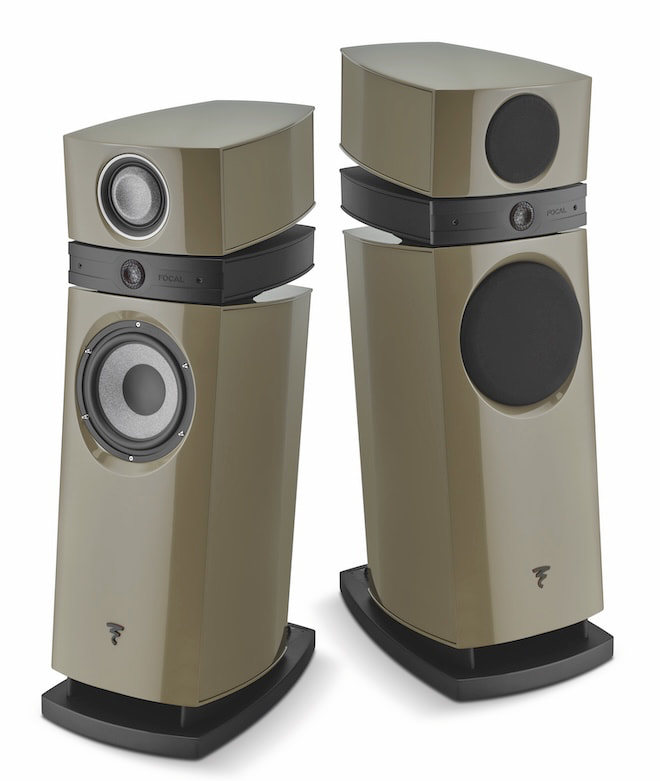
Now comes the Scala Utopia Evo M, a substantial evolution of one of Focal’s defining passive loudspeakers. This is not a cosmetic refresh with a fresh lacquer option and a revised brochure. Built in France and retaining the Scala’s distinctive three-way architecture, the new model introduces Focal’s PRISM tweeter and M-profile W midrange driver, technologies drawn from the company’s newest wireless and professional monitor developments.
The goal is straightforward enough: greater midrange transparency, lower distortion, more controlled treble, and an even more convincing sense of musical scale from a loudspeaker that has long been one of the more recognizable statements in high-end audio.
New Drivers, New Crossover, Same Scala DNA
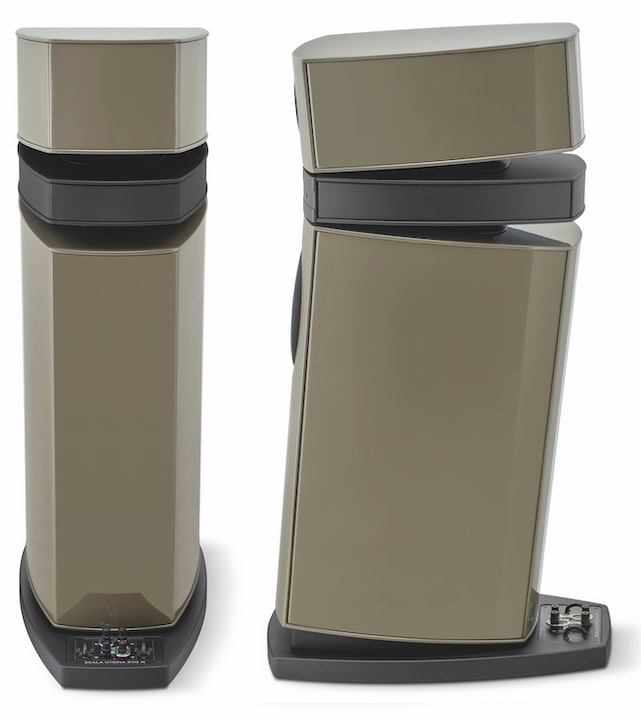
The Scala Utopia Evo M retains the familiar three-way, bass-reflex architecture of the outgoing Scala, but Focal has reworked almost every part that matters: the drivers, crossover, cabinet tuning, and mechanical structure. The result is still unmistakably a Scala, with its compact-for-Utopia proportions and multi-cabinet silhouette. If you expected anything less from Focal, whose idea of restraint is usually limited to the grille cloth, you have not been paying attention.
Advertisement
At the heart of the update is a new 5-inch reinforced W-cone midrange driver with an M-profile diaphragm, borrowed from Focal’s Utopia Main professional monitor range. The driver combines the company’s composite W sandwich construction with the one-piece M-profile geometry, TMD suspension, a neodymium motor, and an 80mm voice coil.
Focal’s objective is a cleaner, more linear midrange with lower distortion and greater control at higher listening levels. Considering how much of the music lives in the midband, that is exactly where an update to a loudspeaker at this level should begin.
The Scala Utopia Evo M also receives Focal’s new 27mm PRISM M-profile inverted-dome tweeter, first introduced in the Diva Alta Utopia wireless flagship. PRISM, short for Photon-Refined Intelligent Structured Membrane, uses a multi-material diaphragm and micro-structured construction that Focal says provides greater rigidity than beryllium while preserving the low mass and damping needed for refined high-frequency reproduction.
It is paired with Focal’s IAL2 Infinite Acoustic Loading system, which lowers the tweeter’s resonance frequency to 528Hz and allows for a claimed extension to 40kHz.
Bass That Has Not Been Left Behind
The 11-inch W-cone woofer has also been redesigned, using a 16cm dual-ferrite motor and more precise laser cutting of its composite sandwich diaphragm. It works with a large laminar port intended to move air without the chuffing, compression, and general bad behavior that can undermine bass performance when a speaker is pushed hard.
Focal rates the Scala Utopia Evo M down to 27Hz within ±3dB, with a 24Hz low-frequency point at -6dB. That does not turn a Scala into a Grande Utopia, nor should it. But it suggests real low-frequency authority from a loudspeaker that remains more manageable in a domestic room than the larger models above it in the range. Anyone who has spent time with Focal’s biggest Utopia models already knows that the company does not do bass-light. Croissants may be delicate, flaky, and full of air; Focal’s bass is more cassoulet: dense, substantial, and absolutely not leaving the table quietly.
Advertisement
More Control for Real Rooms
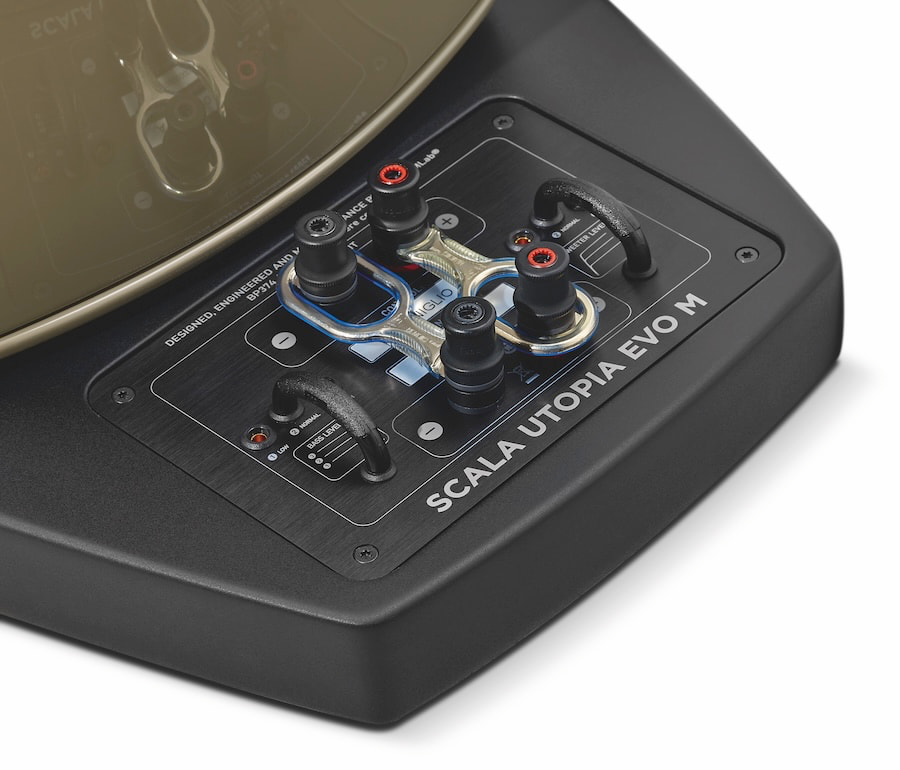
The revised OPC+ crossover uses high-grade components, large-section internal cabling, and four insulated WBT binding posts that support bi-wiring or bi-amping. More importantly, it provides user adjustment for bass, midrange, and treble, with the bass and treble controls offering ±1dB adjustment. That is not room correction, and Focal is not pretending otherwise, but it gives owners a useful way to fine-tune the Scala’s balance without turning the listening room into a laboratory.
Advertisement. Scroll to continue reading.
Focal has also retained the structural thinking that has long defined the Utopia range. The Gamma structure employs high-density MDF panels up to 60mm thick, with a heavy, vibration-controlled framework shaped through vibration mapping. Focus Time mechanically aligns the drivers toward the listening position to improve time alignment, while the separate cabinet sections help preserve phase coherence between the bass, midrange, and treble drivers.
Built in France, Without the Costume Jewelry
The Scala Utopia Evo M remains a very French loudspeaker in both execution and attitude. Its cabinets are made by Focal’s cabinetmakers in Burgundy, while the drivers are manufactured in Saint-Étienne. That level of vertical control matters at this price, particularly when a product is relying on very specific driver geometry, cabinet tolerances, crossover settings, and cosmetic execution to justify itself.
Focal will offer five finishes. Black High Gloss, Off White High Gloss, and Warm Taupe High Gloss are priced at $50,000 USD per pair, or $58,000 CAD. Light Walnut with an Off White front panel and Dark Walnut with a Sepia Brown front panel rise to $56,000 USD per pair, or $64,000 CAD. Availability begins in August 2026.
Advertisement
Focal is also positioning the Scala Utopia Evo M as a natural partner for Naim electronics. That makes sense. A speaker with 92dB sensitivity and a 3-ohm minimum impedance is not especially difficult to drive on paper, but it deserves amplification with substantial current delivery and control. Focal recommends amplifiers rated between 50 and 500 watts per channel, which leaves plenty of room for a serious Naim system, or alternatives from the usual high-end suspects with enough grip to keep the redesigned woofer in check.
Focal Scala Utopia Evo M Specifications
Type: 3-way bass-reflex floorstanding loudspeaker
Woofer: 11-inch (27cm) W-cone woofer with 16cm dual-ferrite motor
Midrange: 5-inch (13cm) reinforced W-cone driver with M-profile diaphragm, TMD suspension, neodymium motor, and 80mm voice coil
Tweeter: 27mm PRISM M-profile inverted-dome tweeter with IAL2
Frequency response: 27Hz to 40kHz, ±3dB
Low-frequency extension: 24Hz, -6dB
Sensitivity: 92dB, 2.83V/1m
Nominal impedance: 6 ohms
Minimum impedance: 3 ohms
Crossover frequencies: 230Hz and 2.8kHz
Recommended amplifier power: 50 to 500 watts per channel
User adjustments: Bass, midrange, and treble; bass and treble adjustable by ±1dB
Connections: Four insulated WBT binding posts; bi-wiring and bi-amping capable
Dimensions, H × W × D: 49.1 × 15.5 × 26.4 inches, 124.7 × 39.3 × 67cm
Weight: 187.4 pounds, 85kg
Finishes: Black High Gloss, Off White High Gloss, Warm Taupe High Gloss, Light Walnut with Off White front panel, Dark Walnut with Sepia Brown front panel
The Bottom Line
The Scala Utopia Evo M is not a revolution in the sense of abandoning everything that made the Scala successful. It is a carefully targeted evolution that brings Focal’s newest professional-monitor and wireless-speaker developments into one of its most recognizable passive loudspeakers. At $50,000 per pair, it had better be more than a fresh coat of lacquer; the new PRISM tweeter, M-profile midrange, adjustable crossover voicing, and redesigned dual-ferrite woofer suggest that Focal has taken the assignment rather seriously.
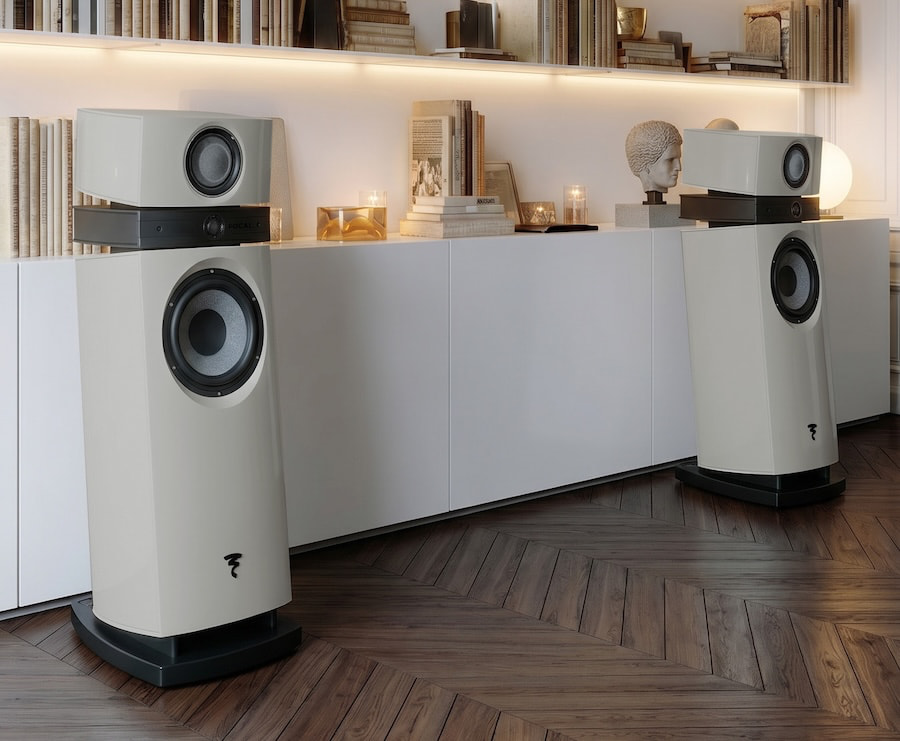
What makes the Scala Utopia Evo M especially interesting is that it offers much of Focal’s latest Utopia thinking in a loudspeaker that is still more realistic for a proper listening room than the enormous Grande Utopia. It is for buyers who want genuine full-range scale, visual presence, and the ability to fine-tune the speaker to the room, but who do not have a ballroom, a dedicated equipment room, and a casual relationship with six-figure system costs.
Do not mistake the 92dB sensitivity for an invitation to connect a Uniti Atom and call it a day. The Scala’s 3-ohm minimum impedance and $50,000 price tag demand an amplifier with real current delivery, grip, and refinement. Naim’s New Classic 300 Series, particularly an NSS 333 and NSC 222 with NAP 250 or NAP 350 amplification, is far closer to the intended neighborhood than Naim’s 40-watt Uniti Atom. Focal and Naim may share the same corporate address, but this is not a speaker designed for a compact all-in-one system.
The Scala Utopia Evo M is for established high-end listeners building a serious two-channel system around equally serious electronics. It will appeal to existing Scala owners looking for a meaningful step forward, but also to buyers who want modern Focal technology, hand-built French execution, and bass that behaves less like a feather-light croissant than a cast-iron cassoulet: deep, dense, and not remotely interested in being delicate.
































































You must be logged in to post a comment Login