

Crypto World
Metaplanet (3350) buys another $170 million of bitcoin expanding treasury to 43,000 BTC



Metaplanet (3350) announced the purchase of an additional 2,823 BTC ($170.7 million), bringing its total treasury to 43,000 BTC ($2.6 billion).
The acquisition cements the Tokyo listed firm as the third largest publicly traded company holding bitcoin, trailing only Strategy MSTR) and Twenty One Capital (XXI), according to data tracked by Bitcoin Treasuries.
Metaplanet closed 3.5% higher at 207 yen ($1.28) on Thursday following the announcement.
Alongside the bitcoin purchase, the company released its second quarter FY2026 results for its Bitcoin Income Generation business. The division generated approximately 1.75 billion yen ($10.85 million) in operating revenue during the quarter, taking first half revenue to approximately 4.72 billion yen.
Metaplanet uses bitcoin options to generate recurring income while expanding the company’s bitcoin holdings. On a trailing 12-month basis, revenue reached approximately 11.4 billion yen.
The latest results reinforce Metaplanet’s dual strategy of aggressively accumulating bitcoin while generating recurring cash flow from its Bitcoin Income Generation business.

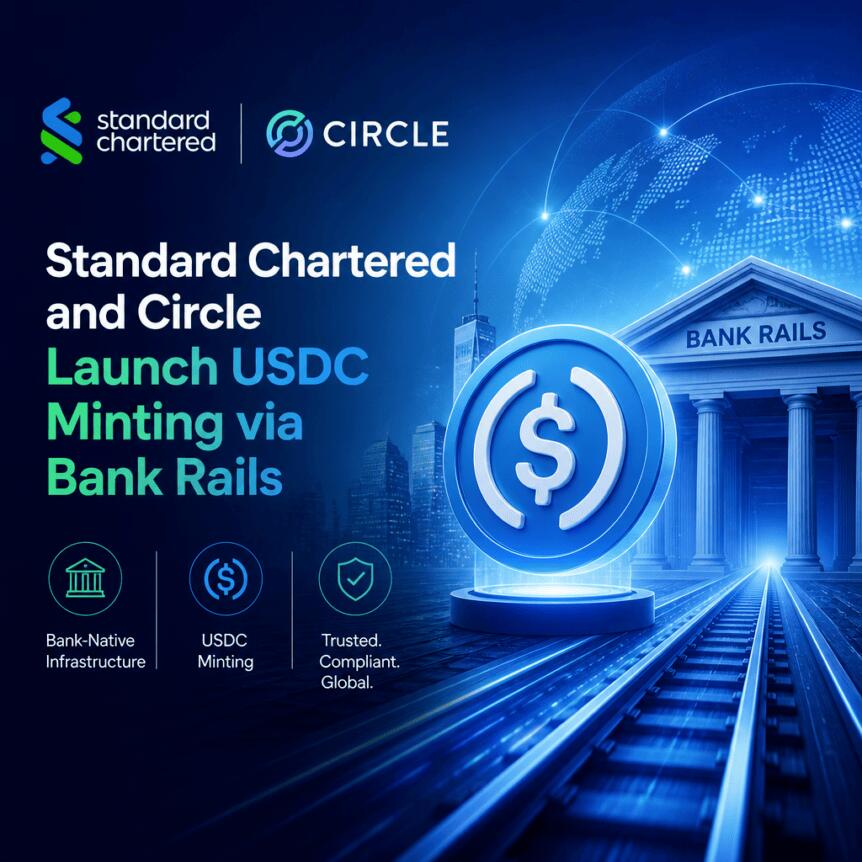
Standard Chartered and Circle have announced a new, bank-led workflow for institutional clients to mint and redeem USDC, positioning stablecoin access inside a traditional banking onboarding process. The system is designed to reduce the operational friction of dealing separately with a stablecoin issuer while aligning minting and redemption activities with the bank’s established risk, compliance, and governance controls.
In a press release, Standard Chartered said it will be the first Global Systemically Important Bank (G-SIB) to offer USDC minting and redemption through its own platform. Clients starting with the initial rollout will be able to mint and redeem the US dollar-backed stablecoin without opening additional accounts with Circle, with delivery beginning through the bank’s operations in the Dubai International Financial Centre (DIFC). The banks described the effort as an integrated offering that brings together banking, custody, and digital asset services under a single institutional relationship.
Key takeaways
- Standard Chartered and Circle are building a workflow that lets institutional clients mint and redeem USDC through a bank-led process.
- Standard Chartered says it is the first G-SIB to provide USDC minting and redemption services within its existing banking frameworks.
- The initial rollout is planned via Standard Chartered’s DIFC operations, with expansion to other jurisdictions depending on regulatory approval and client demand.
- The capability targets institutional needs such as on-chain settlement, treasury management, and liquidity management.
- The move reflects intensifying competition over stablecoin distribution, access, and governance as traditional banks deepen involvement in digital asset rails.
A bank channel for USDC minting and redemption
Standard Chartered said its collaboration with Circle embeds USDC access directly into the bank’s institutional offering. Instead of requiring clients to separately manage stablecoin issuance logistics with Circle, minting and redemption can be handled through the bank’s own platform. Standard Chartered framed this as a way to connect stablecoin operations to “banking, custody, and digital asset services” in one integrated setup.
For institutional users, the practical difference is that stablecoin issuance no longer has to be treated as an entirely separate operational track. Bank-led onboarding can also make it easier to map stablecoin activities to existing internal controls—particularly for firms that already depend on banks for custody, compliance, and settlement infrastructure.
Why DIFC first—and what comes next
According to the announcement, the service begins through the Dubai International Financial Centre, reflecting the role that regulated financial hubs often play in digital asset infrastructure rollouts. Standard Chartered also stated it intends to expand the capability to additional markets, but only “depending on regulatory approval and demand from clients.”
That conditional expansion matters for investors and institutional clients because the timeline for stablecoin access typically hinges less on technology than on licensing, regulatory interpretation, and operational approvals in each jurisdiction. Readers should expect further details as new markets are added and as banks refine which client segments and use cases can access the minting and redemption rails.
Institutional use cases now, payment rails later
Standard Chartered and Circle positioned the capability around current institutional workflows. The announcement says it supports on-chain settlement, treasury operations, and liquidity management. These are areas where firms often need predictable operational processes, clear governance boundaries, and connectivity to broader financial operations.
The collaboration also points beyond those immediate use cases. The banks described the system as providing infrastructure that could support payment-related use cases in the future—signaling a longer-term ambition to integrate stablecoin rails with payment and settlement workflows. While the announcement does not specify timelines or concrete payment deployments, the framing is consistent with how stablecoins are increasingly being assessed: not only as standalone tokens, but as components of regulated distribution and settlement stacks.
Stablecoin competition shifts toward distribution and governance
The Standard Chartered–Circle partnership arrives amid heightened attention on who controls stablecoin access and liquidity. Earlier coverage noted that Circle CEO Jeremy Allaire has publicly defended USDC’s network effects while responding to growing competition from new stablecoin entrants such as Open USD (OUSD). In that context, distribution channels and institutional partnerships can become decisive—even when multiple stablecoins are available—because liquidity and redemption pathways influence real-world usability.
Circle’s CEO previously said OUSD works closely with many of the founding members and expects those members to remain “large USDC partners and customers,” underscoring how relationships and access pathways are central to the stablecoin landscape. Standard Chartered’s announcement can be seen as an extension of that same logic: instead of focusing only on issuance, Circle and a major bank are working to embed USDC into an institutional distribution model that emphasizes governance and compliance.
More broadly, the integration trend suggests that traditional banks are not just observers of stablecoin growth. They are moving toward roles that resemble infrastructure providers—setting up onboarding, oversight, custody connections, and controlled minting/redemption access. For market participants, this can change how quickly stablecoin adoption spreads, because regulated, bank-mediated channels may lower barriers for large institutions that previously viewed direct stablecoin interaction as too operationally or compliance-heavy.
What to watch
As Standard Chartered rolls out USDC minting and redemption via DIFC, the key question will be how quickly the bank expands to other jurisdictions and which client segments gain access first. Observers should also watch whether similar integrations accelerate across other major banks, because the stablecoin race may increasingly be won—or slowed—by distribution, governance, and the ability to plug stablecoins into regulated settlement processes.
Crypto World
AMD (AMD) Stock Plunges 7%: Is This the Buying Opportunity Investors Have Been Waiting For?

Key Takeaways
- Shares of Advanced Micro Devices declined roughly 7% this week following reports that Meta could monetize surplus AI compute capacity, potentially impacting future chip orders.
- Analyst Gil Luria from D.A. Davidson maintained a positive rating, emphasizing that global AI compute demand continues to surpass available supply.
- Wells Fargo analysts increased their AMD price projection to $615 from $505, highlighting robust demand for EPYC processors and AI accelerators among hyperscalers.
- UBS elevated its forecast to $670 while Cantor Fitzgerald set a $700 target, designating AMD as their leading compute investment choice.
- Lisa Su, AMD’s chief executive, is scheduled to receive equity compensation valued at $36 million on August 15, alongside awards for additional senior leaders.
Advanced Micro Devices has experienced a significant retreat this week, yet major financial institutions continue to back the semiconductor giant.
Advanced Micro Devices, Inc., AMD
Shares of Advanced Micro Devices finished 6.89% down on July 1, 2026, triggered by news that Meta Platforms might begin offering surplus AI computing resources to external customers. The market concern centers on whether Meta’s excess capacity signals reduced appetite for additional chip purchases moving forward.
Despite this week’s pullback, AMD stock has delivered exceptional returns exceeding 150% year-to-date prior to the recent decline.
Gil Luria, covering the stock for D.A. Davidson, recognized the short-term headwinds in his latest research note while reaffirming his positive stance. Luria’s analysis suggests that while Nvidia maintains dominance in AI silicon, AMD continues capturing meaningful business from clients diversifying their supplier base. Crucially, he emphasized that worldwide AI infrastructure requirements still far exceed current capacity, supporting the investment thesis over the longer horizon.
Wall Street Analysts Boost Price Projections
Aaron Rakers at Wells Fargo increased his valuation target to $615 from a previous $505 while keeping his Overweight recommendation. His optimism stems from accelerating adoption of AMD’s EPYC server chip family as hyperscale cloud operators expand their AI infrastructure footprint. Rakers projects AMD could achieve earnings exceeding $20 per share annually ahead of consensus forecasts.
Timothy Arcuri from UBS raised his target significantly to $670 from $455, maintaining his Buy recommendation. Arcuri anticipates the emergence of agentic AI applications will fuel additional server CPU demand, positioning AMD to capture incremental market share as Intel works through its operational and technological challenges.
Cantor Fitzgerald holds the most optimistic view among major firms. Analyst C.J. Muse pushed his target price to $700 from $500 while reiterating an Overweight rating, naming AMD his preferred pick in the compute sector. Muse forecasts sustained momentum in AI chip and semiconductor tooling demand extending multiple years forward.
Executive Compensation Highlights Strong Performance
In a separate development, regulatory filings disclosed that CEO Lisa Su will be awarded equity compensation totaling $36 million on August 15, 2026, pursuant to the company’s 2023 Equity Incentive Plan. Additional senior executives will also receive substantial grants—CTO Mark Papermaster is set for $10 million, CFO Jean Hu will get $9 million, Chief Sales Officer Forrest Norrod receives $8 million, and EMEA President Darren Grasby gets $7.5 million.
These compensation decisions align with AMD’s impressive financial momentum. The company reported revenue growth of 38% year-over-year, reaching $10.25 billion during fiscal Q1 2026.
Based on TipRanks data, AMD holds a Strong Buy consensus rating derived from 28 Buy recommendations and seven Hold ratings.
The Street’s average price objective stands at $509.75, suggesting approximately 5.76% potential downside from present trading levels—indicating that even after the recent correction, valuations aren’t universally considered attractive.
In extended trading following Tuesday’s session, AMD stock declined an additional 1.19%.


The Solana Foundation has unveiled a new protocol-level governance framework designed to let validators propose and vote on core changes directly onchain, using stake-weighted voting to reflect community preferences. The initiative, called Solana Governance Proposals (SGPs), aims to make major protocol decisions more transparent and reduce reliance on centralized coordination, while keeping the technical drafting of upgrades separate.
As the Foundation and related documentation explain, an SGP is meant to capture a stake-weighted “directional” choice from the ecosystem—distinct from the detailed technical work typically represented through Solana Improvement Documents (SIMDs). In other words, SGPs are positioned as a governance signal, not a replacement for the engineering process behind protocol features.
Key takeaways
- Solana Foundation launched SGPs, a governance standard for proposing and voting on protocol decisions onchain.
- Voting is stake-weighted, with voting power tied to delegated SOL.
- Validators need at least 15% support from actively staked SOL for a proposal to advance to a formal onchain vote.
- Delegators can override validator votes by submitting their own vote on the same proposal.
- SGPs and SIMDs are kept separate: SGPs signal community direction; SIMDs handle the technical upgrade details.
How Solana Governance Proposals work
SGPs were introduced through a framework intended to standardize how governance decisions are submitted and ratified for the Solana blockchain. According to the Foundation’s announcement on X [SolanaFndn on X], the process enables validators to submit core protocol proposals and vote on them onchain.
The stake-weighted nature of voting is central to the design. The Foundation’s accompanying GitHub repository [solana-governance-proposals on GitHub] describes SGPs as “stake-weighted directional” decisions that reflect what the community wants, emphasizing that the framework does not focus on the specific engineering detail of how to build a feature.
This separation of governance intent from implementation is a recurring theme in the documentation. It is also one way the Foundation attempts to preserve continuity for technical development: the community can express priority or direction through SGPs, while the actual proposal writing and protocol specification can remain in the SIMD process.
More broadly, stake-weighted governance mechanisms are not unique to Solana. The Foundation noted that similar approaches exist across other major networks, including Polkadot, Cosmos, Cardano, Tezos, and Avalanche.
Thresholds and eligibility for proposals
To qualify for a formal onchain vote, an SGP must first meet a minimum support requirement: endorsements from validators representing at least 15% of actively staked SOL. The Foundation’s framework describes this as a filtering step to reduce the likelihood of low-quality proposals moving forward.
On the validator side, the documentation sets an operational rule for who can open governance proposals. Validators with 100,000 SOL delegated can submit a new governance proposal via SGP. Delegators—SOL holders who stake by delegating to validators—are then able to participate in the governance process through their delegated stake.
The governance model therefore depends on two layers: (1) validator eligibility to bring items into the system, and (2) staking participation that determines how much influence each delegator ultimately has.
Delegators can override validator votes
One of the most notable governance mechanics in the framework is the ability for delegators to override their validator’s position on a specific proposal. The documentation states that if delegators disagree with how their validator has voted, they can override the validator by submitting their own vote on the proposal—effectively changing the outcome based on the delegated stake’s voting preferences.
This feature changes the typical dynamic of validator-led governance. Instead of treating delegation as a fixed vote, delegators are given an explicit path to correct or adjust how influence is applied for each SGP, provided the underlying system supports delegator-submitted voting for that particular decision.
For participants, the practical implication is clear: users who stake SOL should pay attention not only to which validators they delegate to, but also to how their own participation in voting affects each governance item as it appears.
SGPs vs. SIMDs: keeping signals separate from execution
The Foundation explicitly frames governance-level proposals as SGPs while reserving smaller technical work as SIMD-focused efforts. In an articulation shared alongside the launch, the Foundation wrote that “SIMDs should focus on protocol changes, SGPs should be signals from the ecosystem.”
That distinction matters because it aims to prevent governance processes from becoming overly bogged down in engineering minutiae. In many decentralized networks, the challenge is balancing legitimacy and clarity: governance outcomes need to be expressive and understandable to stakeholders, while implementation details must be handled carefully by developers.
At the same time, the separation also leaves readers with an important question: how exactly the ecosystem transitions from a stake-weighted directional signal to a concrete protocol change. The Foundation’s framing suggests SIMDs remain the place where technical execution lives, but watchers will want to track how consistently SGP outcomes influence or map onto subsequent SIMDs over time.
Why Solana’s governance redesign matters now
Solana’s push comes alongside continued efforts to formalize supporting infrastructure for its ecosystem. Earlier in April, the Foundation introduced STRIDE—a security program for evaluating, monitoring, and escalating security across Solana projects—described in a separate announcement as a structured approach for handling security risks across Solana-based protocols [Cointelegraph coverage of STRIDE launch].
While STRIDE addresses security operations, the SGP framework targets governance at the protocol level. Together, they suggest the Foundation is working on multiple layers of the network’s resilience: governance processes for direction and decision-making on one hand, and security evaluation and response tooling on the other.
From an investor and user perspective, governance clarity is not just philosophical. Onchain frameworks can influence how quickly the ecosystem coordinates around upgrades, how disputes are handled, and whether stakeholders feel their preferences are accurately reflected in protocol decisions. With stake-weighted voting and delegator override capabilities, Solana’s new model also increases the likelihood that governance participation will be granular rather than fully outsourced to validators.
As SGPs roll out, readers should watch for whether proposals that meet the 15% threshold proceed smoothly, how often delegators override validator votes, and—most importantly—how consistently successful SGP outcomes translate into corresponding SIMDs and real protocol changes.
Bitcoin’s price was able to return above $60,000 today following a volatile 24 hours that saw the asset drop towards $58,300 before staging a recovery.
At the time of this writing, BTC trades at around $60,500, up nearly 3% on the day, with its market capitalization back near $1.2 trillion.
BTC Price Back Above $60K
Bitcoin had slipped to an intraday low at roughly $58,300 before the bulls were able to step in and push the asset above $61,000 at one point. The recovery was not enough, however, to erase the broader downtrend. That said, it did help BTC regain a key psychological level after several days of selling pressure.

The total cryptocurrency market capitalization stands at a bout $2.16 trillion, which is up roughly 2% in the past 24 hours. Daily trading volume is above $83 billion, while the BTC dominance remains above 56%, suggesting that altcoins are unable to outperform, for the time being.
Ethereum also recovered alongside Bitcoin as it trades close to $1625 after gaining 3% over the past day. It remains far below levels seen earlier in the year, however.
BCH, SOL, ADA Turn Green
Most of the larger altcoins followed BTC higher. Solana is amongst the strongest performers from the top 10, rising by more than 4%, while Bitcoin Cash jumped by about 5%. Cardano (ADA) also increased by over 3%, and LINK gained similarly.
Ripple’s native cryptocurrency XRP is also up, trading near $1.06 following a modest gain. It’s worth noting that XRP-linked ETF products have managed to stand out with their inflows as Bitcoin and Ether ETFs suffer outflows.

The post Bitcoin Reclaims $60K as SOL, BCH Lead Alts Higher (Market Watch) appeared first on CryptoPotato.
Crypto World
The Dollar Awaits the Week’s Key Report: AUD/USD and NZD/USD at Crucial Technical Levels
Following mixed performance by the US dollar earlier this week, investors are now fully focused on the June Nonfarm Payrolls report, which will be released on Thursday rather than Friday. The schedule has been brought forward as US financial markets will be closed on Friday to mark the 250th anniversary of the signing of the Declaration of Independence. Today’s report is expected to shape expectations for the Federal Reserve’s monetary policy and set the direction for the US dollar through the remainder of the week.
Market participants will closely watch the unemployment rate, average hourly earnings and initial jobless claims, all of which will be released alongside the headline payrolls data. Following weaker-than-expected ADP employment figures, investors will be looking for confirmation that the US labour market remains resilient. Strong data could reinforce expectations that the Fed will maintain its hawkish stance, supporting the US dollar, while weaker figures may trigger profit-taking on long USD positions.
AUD/USD
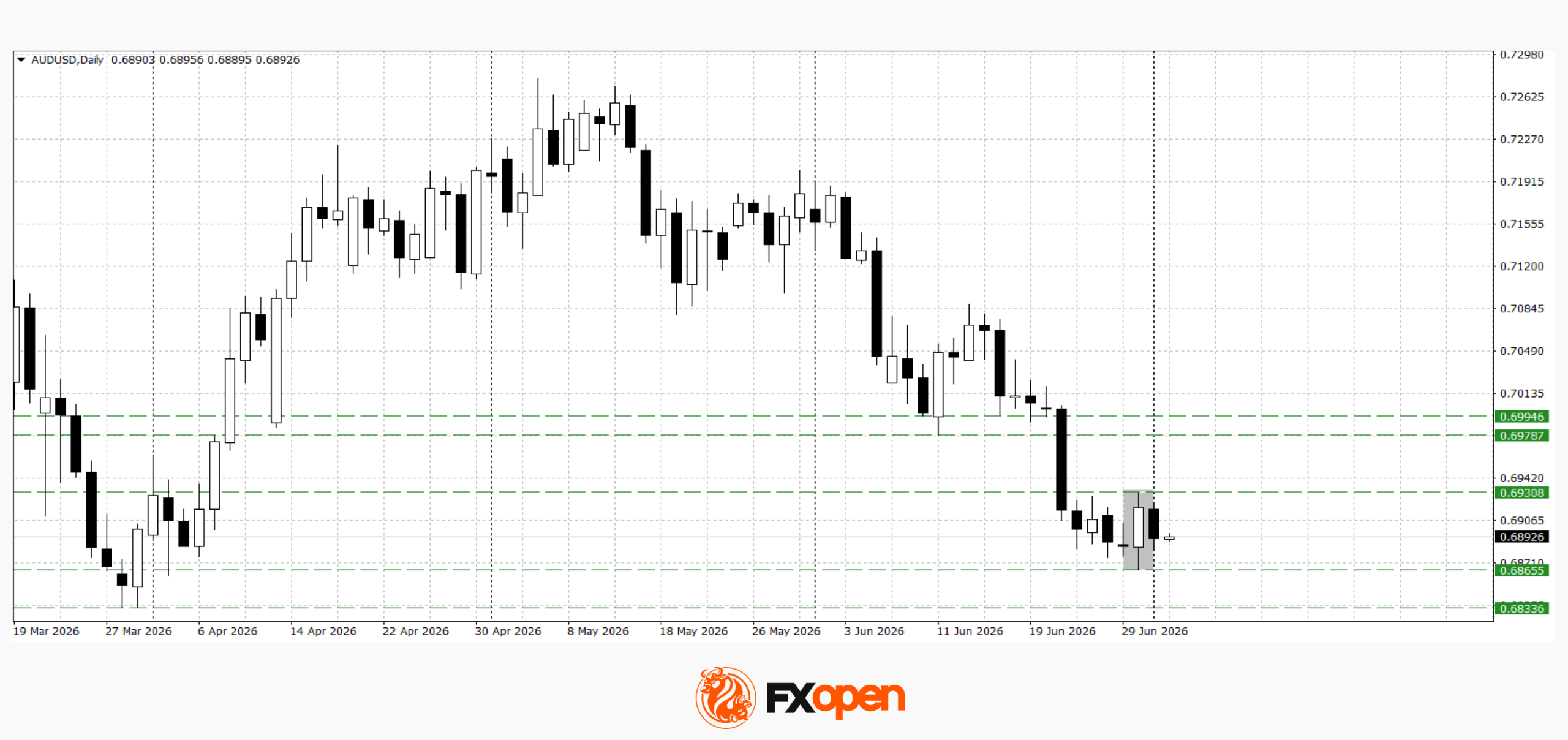
AUD/USD found support at 0.6860 at the start of the week, forming a bullish engulfing pattern after rebounding from this level. Technical analysis suggests the pair could advance towards 0.6980–0.7000 if 0.6930 turns into support. A break below 0.6860 could pave the way for a decline towards 0.6800–0.6830.
Key events for AUD/USD:
- Today at 15:30 (GMT+3): US Nonfarm Payrolls;
- Tomorrow at 02:00 (GMT+3): Australia Manufacturing and Services PMI;
- Tomorrow at 02:00 (GMT+3): Australia Services PMI.
NZD/USD
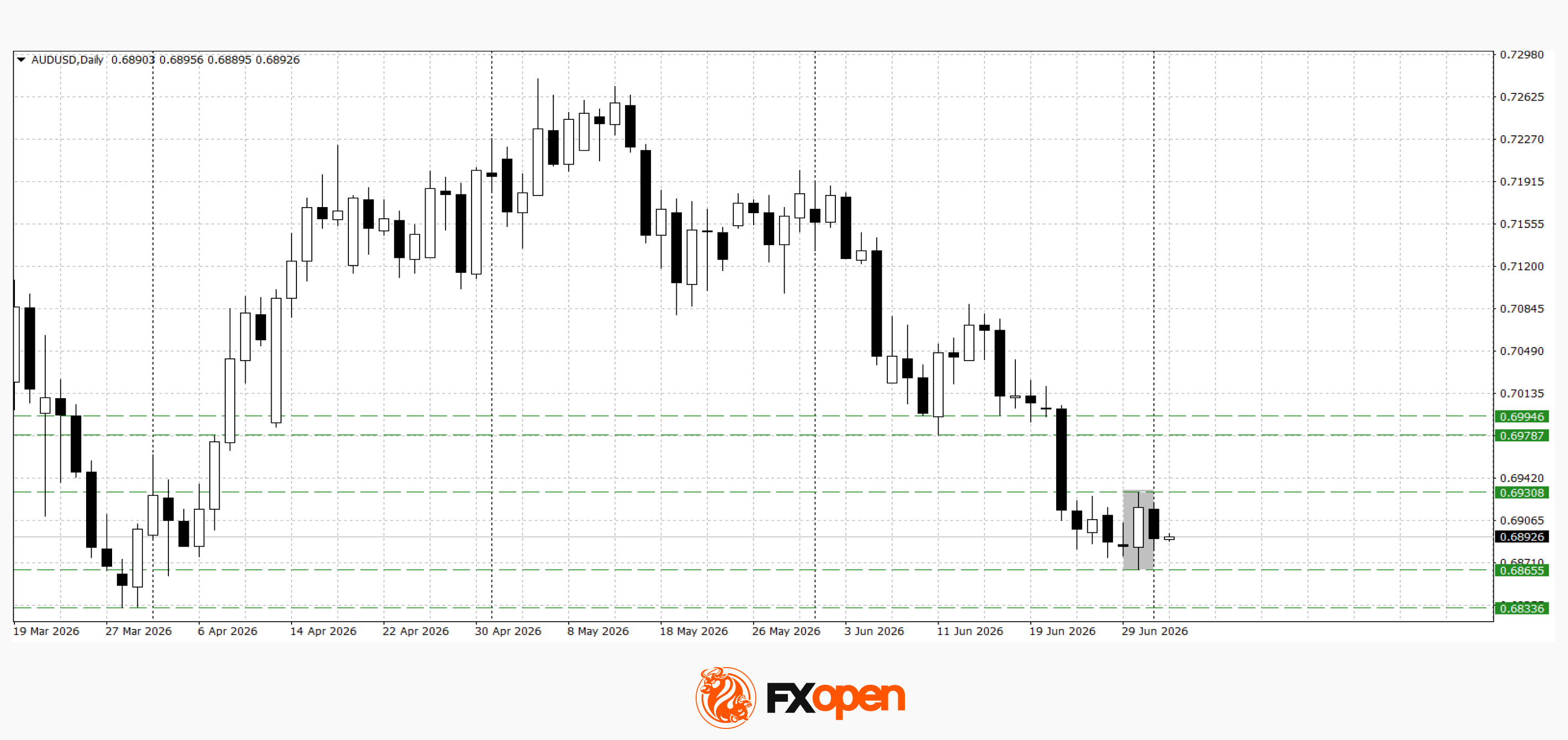
NZD/USD is showing a similar technical picture. After falling to 0.5630, buyers formed a V-shaped reversal pattern, which could support further gains. A break below the base of this formation may lead to a decline towards the 0.5570–0.5600 area.
Key events for NZD/USD:
- Today at 15:30 (GMT+3): US Average Hourly Earnings;
- Today at 15:30 (GMT+3): US Initial Jobless Claims;
- Today at 17:00 (GMT+3): US Factory Orders.
Overall, today’s Nonfarm Payrolls report will be the week’s key event for the currency market. Employment growth, the unemployment rate and wage data are expected to determine market expectations for future Federal Reserve policy. Until the figures are released, AUD/USD and NZD/USD are likely to remain in consolidation near key technical levels, while volatility could increase sharply once the data is published.
Trade over 50 forex markets 24 hours a day with FXOpen. Take advantage of low commissions, deep liquidity, and spreads from 0.0 pips (additional fees may apply). Open your FXOpen account now or learn more about trading forex with FXOpen.
This article represents the opinion of the Companies operating under the FXOpen brand only. It is not to be construed as an offer, solicitation, or recommendation with respect to products and services provided by the Companies operating under the FXOpen brand, nor is it to be considered financial advice.
The cryptocurrency market has been bleeding heavily over the past several weeks, with many industry participants anticipating further short-term losses.
According to one popular analyst, though, the market bottom might have been reached since four of the biggest digital assets simultaneously flashed buy signals.
BTC, ETH, XRP, and SOL Move in Tandem
Ali Martinez believes the worst might already be behind us after reviewing the recent performance of Bitcoin (BTC), Ethereum (ETH), Ripple (XRP), and Solana (SOL). He revealed that the Tom DeMark (TD) Sequential Indicator (on a monthly scale) has flashed buy signals on these cryptocurrencies.
“On high-timeframe charts like the monthly, these trend-exhaustion setups carry significant weight. Historically, when multiple assets lock in concurrent monthly buy signals, it indicates seller fatigue and a high probability of a long-term market bottom,” he explained.
Other market observers who think that the cycle’s floor is near include X users Bark and Cup. The former claimed that the window to “buy crypto cheap is almost gone,” while the latter argued that the widespread bearish sentiment suggests the bottom is already in.
It is true that many think the bulls are likely to face more pain soon, with some even issuing doomsday predictions. Not long ago, Dave Portnoy (the founder and CEO of Barstool Sports) floated the idea that BTC might crash to zero. Prominent industry leaders dismissed his gloomy outlook, while some pointed out that cycle bottoms often align with peak pessimism, suggesting this could be one of those moments.
July Gives Hope
June has been a brutal period for the crypto market, with BTC, ETH, XRP, and SOL all finishing in the red. However, the current month has historically been favorable for many of these assets, and if history repeats itself, they can finally witness a decisive rebound.
BTC has ended July in the green 9 out of 13 times, XRP has done it 7 out of 12 times, whereas SOL has never recorded losses during this interval. What’s even more interesting is that Solana’s native token typically charts double-digit increases at this time of the year.
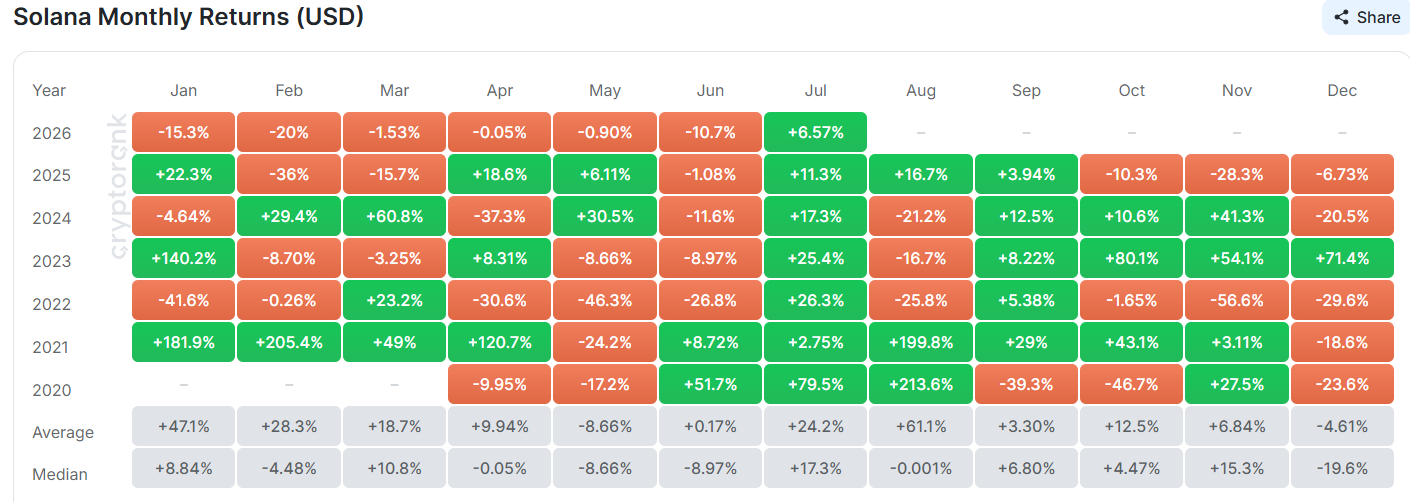
ETH is the only cryptocurrency in the group that has ended July in the red more often than in profit.
The post Is The Bottom Finally Here? BTC, ETH, XRP, and SOL Flash Buy Signals appeared first on CryptoPotato.


U.S. jobs growth disappointed last month, with the data likely to set back market expectations of a Federal Reserve rate hike as soon as this summer or early Fall.
The U.S. added 57,000 jobs in June, according to the government’s Nonfarm Payrolls Report released Thursday morning. That’s lower than the 110,000 forecasted by economists and significantly below May’s 129,000 gain (revised from an originally reported 172,000).
The unemployment rate came in at 4.2% versus an expected 4.3% and May’s 4.3%. The drop in the UE rate, even as hiring slowed, was due to the Labor Force Participation rate declining to 61.5% from 61.8%.
Up strongly ahead of the report, bitcoin held above $61,000, higher by 4% over the past 24 hours.
U.S. stocks are liking the data, Nasdaq 100 futures moving to a 0.7% gain from about flat ahead of the report. The 10-year Treasury yield has dipped four basis points to 4.46%
Crypto World
XRP Price Prediction: 1 Billion Unlock Fails to Suppress Rally as Ripple Pushes Above Key Resistance

Ripple’s latest 1 billion XRP escrow release arrived this week, yet the coin price barely blinked. XRP trades around $1.06, up about 2% over the past 24 hours. More importantly, it continues holding a key support area. That leaves traders wondering whether buyers are quietly accumulating or simply refusing to flinch.
The monthly unlock is hardly a surprise; Ripple has followed the same escrow schedule for years, so most traders expect it. Even so, releasing 1 billion XRP still grabs attention, and this time, the price stayed firm instead of slipping, suggesting sellers failed to seize the moment.
Ripple's monthly escrow just unlocked 1B XRP, roughly $1.05B at current price, confirmed on-chain in two clean 500M tranches — Xaif Crypto (@Xaif_Crypto) July 1, 2026
question is how much gets relocked vs hits the market this cycle  pic.twitter.com/rDCDy1Mq1I
Don’t Miss Out on Our $1,000 USDT Airdrop on ByBit
Technically, XRP remains constructive while support holds. Recent resistance has flipped into support, keeping the short-term trend intact. However, derivatives data still points to crowded long positioning. That’s great when momentum builds, but it can turn into a trap if buyers lose control.
Meanwhile, the market backdrop remains supportive for risk assets. U.S. stocks closed a strong quarter, while technology shares continue to lead the advance. That has helped crypto sentiment stay upbeat. Add steady institutional interest around Ripple’s ecosystem, and XRP still has reasons to keep traders watching.
Discover: The Best Token Presales
Can XRP Price Push to $1.22?
XRP is trading at $1.05 range, while 24-hour volume stands around $1.5 billion. Liquidity remains healthy, even if prices differ slightly across exchanges, as buyers have continued stepping in on pullbacks instead of chasing every rally, keeping short-term momentum intact.
The $1.05-$1.06 area is now the first support to watch, while $1.10-$1.13 remains the key resistance zone. As of now, XRP is testing that ceiling again, so the next few sessions could decide whether buyers finally break through or get sent back to reset.

Don’t Miss Out on Our $1,000 USDT Airdrop on ByBit
If XRP holds above $1.05 and pushes beyond $1.13 with solid volume, the next move could target the $1.20-$1.22 region. Otherwise, a dip toward $1.03 is hardly the end of the world. Bulls have bought that area before, and they may do it again.
The bullish outlook weakens if XRP closes below $1.01. That would shift attention toward the $0.99 support zone and force traders to rethink the current setup. Even so, XRP still trades roughly 72% below its all-time high, leaving plenty of room if momentum returns.
Discover: The Best Crypto to Diversify Your Portfolio
Bitcoin Hyper Targets Early-Mover Upside as XRP Tests Key Levels
XRP at a dollar level is compelling, but it’s also a $60+ billion market cap asset pressing into resistance after a significant run. The asymmetric upside that drew traders to XRP at lower levels is narrower here. That’s not bearish framing; it’s math. Traders rotating into early-stage infrastructure plays are looking at a different risk/reward profile entirely.
Bitcoin Hyper ($HYPER) is one of the more structurally interesting presales in the current cycle. It’s positioned as the first Bitcoin Layer 2 with Solana Virtual Machine (SVM) integration, bringing fast, low-cost smart contract execution directly to the Bitcoin ecosystem without sacrificing BTC’s underlying security.
The pitch isn’t speculative narrative; it’s targeting Bitcoin’s three core bottlenecks: slow throughput, high fees, and the absence of programmability. The presale has raised $32.9 million at a current price of $0.01368, with staking available for early participants.
For those who sized into XRP early and are now weighing where the next asymmetric bet sits, Bitcoin Hyper is worth researching before the next stage reprices.
Don’t Miss Out on Our $1,000 USDT Airdrop on ByBit
The post XRP Price Prediction: 1 Billion Unlock Fails to Suppress Rally as Ripple Pushes Above Key Resistance appeared first on Cryptonews.
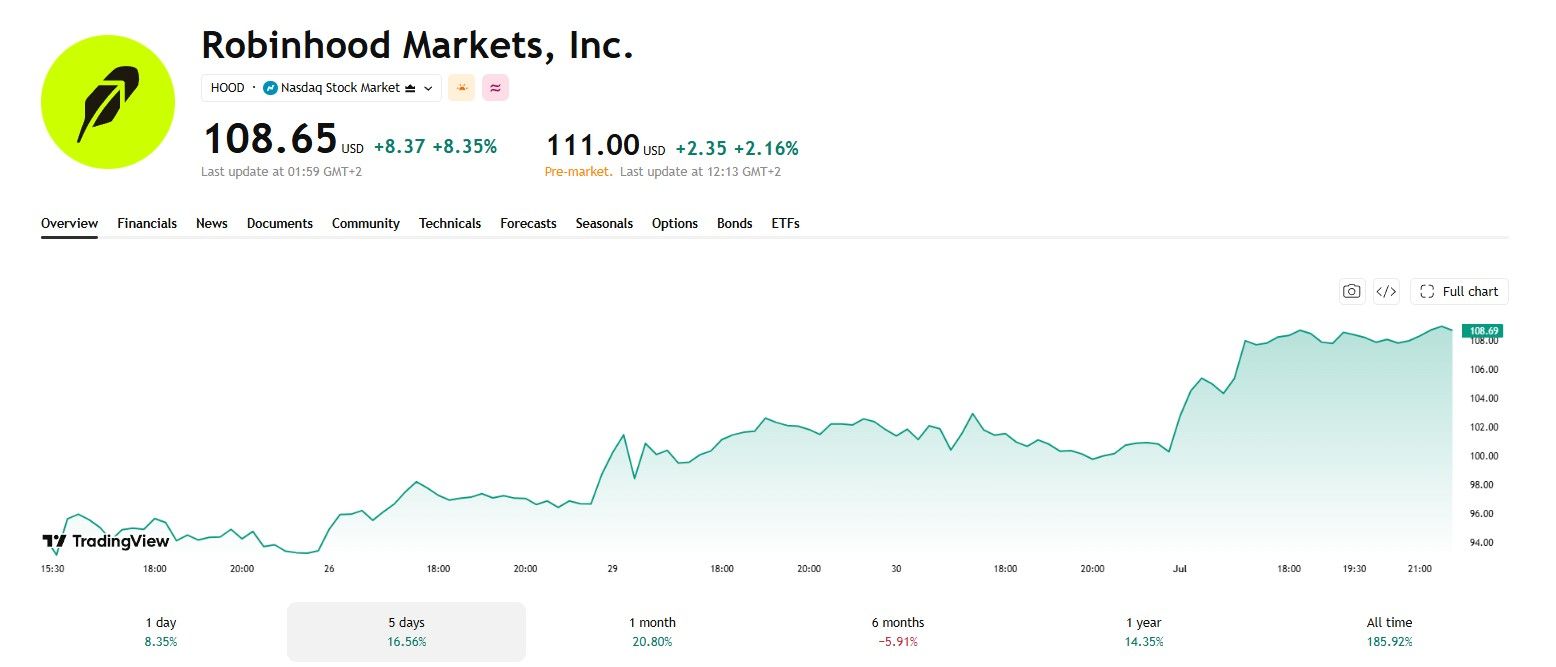
Robinhood launched the public mainnet of Robinhood Chain, moving its Arbitrum-based Layer-2 network live during a keynote in London. HOOD shares gained more than 8% after the event.
The company also set a Guinness World Record on stage. An AI agent used a virtual Agentic Credit Card to complete the most purchases within three minutes.
Robinhood Chain Mainnet Builds on Arbitrum
The launch arrives roughly five months after the broker opened a public testnet in February. According to the official announcement, the permissionless network targets financial services and tokenized real-world assets.
Robinhood Chain runs on the Arbitrum technology stack. The network processes transactions off-chain and settles them on Ethereum, an approach the company says lowers fees.
The chain skips having its proprietary token. Instead, it uses Ethereum (ETH) to cover gas and transaction costs.
In addition, Robinhood claims roughly 100-millisecond block times. Meanwhile, Chainlink said it now serves as the network’s data and cross-chain oracle, supporting Stock Tokens from launch.
Robinhood joins a wider corporate move onto Arbitrum. LG Electronics recently built a blockchain ad network on the same infrastructure.
Robinhood Stock Tokens and DeFi Lending Go Live
Stock Tokens form the core of the release. Eligible users in more than 120 countries can now trade tokenized equities around the clock through Robinhood Wallet, although availability varies by jurisdiction.
Uniswap joined as a day-one partner and deploys a dedicated liquidity protocol on the chain. Meanwhile, Robinhood Earn lets eligible US users lend the USDG stablecoin at an estimated 7% APY, extending the firm’s new Crypto Earn push built on Morpho.
Rivals want the same ground. Binance and OKX are also exploring tokenized US stocks, therefore competition in the segment keeps building.

AI Record Lifts Wall Street Sentiment
The Guinness stunt showcased Robinhood’s agentic ambitions. The AI agent sourced, selected, and ordered gifts for attendees, and an on-site adjudicator certified the record.
The company plans to extend Agentic Accounts from equities and options to US crypto trading. Robinhood’s own disclosures warn that AI agents can act on outdated data, behave unexpectedly, and prove difficult to stop in real time.
Investors still responded quickly. HOOD climbed 8.4% to around $108.
However, the rally contrasts with earlier caution. In February, analysts warned that weak crypto activity could pressure the Robinhood stock price this year.
The mainnet launch now shifts attention to adoption. Builder activity and Stock Token volumes over the coming weeks will show whether the chain can hold Wall Street’s interest.
The post HOOD Climbs 8% on Robinhood Chain Launch and an AI Guinness Record appeared first on BeInCrypto.
Crypto World
Crypto News, July 2: Circle USDC Hit by Blackrock and Ripple XRP Backed OUSD, Bitcoin and Ethereum Price Recovering

Market do what market does, crypto is looking slightly better after taking a few beatings last month. Price is grinding higher despites few unsupporting metrics, institutions are still panic-selling while whales and corporations quietly feast at the lows. The Bitcoin price just reclaimed $60,000 after a 21-month low of $58K, and the Ethereum price tagged $1,600 in the bounce.
Meanwhile, Blackrock is leading another ETF exodus, and a fresh OUSD stablecoin is hammering Circle USDC. Trump’s $1.4 billion crypto windfall is still in the news as regulators reshuffle the deck.
The catalyst was Fed Chair Kevin Warsh. His take that inflation risks had eased flipped crypto and most risk assets higher and gave both majors the lift they needed after June’s bloodbath. Bitcoin price had dipped below $59K on heavy outflows before recovering, while Ethereum held $1,500 support and moved green alongside SOL and DOGE. Fear & Greed sits at Extreme Fear, but but market is looking better.
BREAKING: — Crypto Rover (@cryptorover) July 1, 2026
 Fed Chair Kevin Warsh just spoke on a shared panel.
Here's what he said:
• U.S. is likely to be a big winner in AI
• New AI task forces coming
• AI jobs impact still uncertain
• Inflation still above target, risks have eased
• still have scars from 2008,… pic.twitter.com/VfiLUqIif2
Discover: The Best Token Presales
Bitcoin Price Reclaims $60K While Institutions Keep Selling
Bitcoin price recovery is unexpected as spot ETF outflows still printing in hundreds of million. Yesterday, Bitcoin ETFs posted a net $296 million outflow with Blackrock’s IBIT led with $219.4 million redeemed, Fidelity’s FBTC shed $51 million, and Grayscale’s GBTC lost $62.8 million.

Why this month might be better? June closed as the worst month ever with $4.5 billion exiting the products. Institutions are de-risking hard even as BTC climbs. But on-chain data sees whales accumulated 270,000 BTC st $59K zone. It’s the largest single spike ever recorded, bigger than COVID or FTX bottoms. Long-term holders remain in strong accumulation mode.
Corporate buyers are also stepping up, besides Strategy, Metaplanet has added another 2,823 BTC worth $170 million, bringing its treasury to 43,000 BTC valued at north of $2.5 billion.
Discover: The Best Crypto to Diversify Your Portfolio
Ethereum Price Reclaims $1,600 as Glamsterdam Approaches

Ethereum price followed BTC higher and reclaimed the $1,600 level after touching multi-month lows $1,505 to start July. ETH has now suffered its first stretch of three consecutive red quarters but is holding the $1,500 support zone. Whale wallets in the 1K–10K ETH range are accumulating, even as active addresses have dropped sharply. It could be a sign retail has exited while bigger players position, which usually marks bottom.
Ethereum’s bigger catalyst still sits ahead as Glamsterdam remains in active development with Devnet-5 testing underway. Public testnet is targeted for July or August, with mainnet eyed for Q3 2026.
Key upgrades include EIP-7732 for Enshrined Proposer-Builder Separation to improve MEV fairness and EIP-7928 for Block-Level Access Lists that enable better parallel processing. Glamsterdam’s goals are higher L1 scalability, lower gas fees, and groundwork for higher throughput.
Don’t Miss Out on Our $1,000 USDT Airdrop on ByBit
Blackrock Fuels Outflow Frenzy as OUSD Hits Circle
Blackrock isn’t just selling Bitcoin exposure, it’s also backing the new OUSD stablecoin consortium alongside Visa, Mastercard, Coinbase, Stripe and over 140 other firms. Following it, Circle’s stock cratered 17% as the rival gains traction. As of now, Circle’s CEO is pushing back hard on network effects while yield experiments like MetaMask’s new yield-paying accounts heat up.
Also today, SCOTUS cleared Trump to fire SEC and CFTC chiefs, opening the door to major oversight changes. In Europe, MiCA’s grace period has ended, leaving Tether to abandon parts of the region. Not just USDT delistings, Binance is still reassuring users as Venga secured a MiCA license. For America, tt present, the CLARITY Act odds are sliding, but Trump is publicly pushing back against banks while the SEC keeps its comment window open on novel ETFs.
The gap between scared institutions and aggressive whales plus corporates is the clearest bull signal in months. As Blackrock and ETF players keep selling, on-chain data shows the largest accumulation spike in history and treasury companies keep buying.
Bitcoin and Ethereum price looks increasingly constructive as Glamsterdam coming. Regulatory clarity is moving forward despite few tackles from banks, as whales positioning.
Discover: The Best Crypto to Diversify Your Portfolio
Don’t Miss Out on Our $1,000 USDT Airdrop on ByBit
The post Crypto News, July 2: Circle USDC Hit by Blackrock and Ripple XRP Backed OUSD, Bitcoin and Ethereum Price Recovering appeared first on Cryptonews.

Standard Chartered and Circle Launch USDC Minting via Bank Rails
Sal's childhood crush Alyssa Milano surprises him in “Impractical Jokers ”season 13 trailer (exclusive)

XRP DEATHCROSS CONFIRMED = XRP MOONS !!!! 42.5% OF XRP LOSING !!!! MR POOL BOOOOOOOOM !!!!

No Jackpot Winner as $257 Million Prize Rolls Over to $269 Million Monday Draw

Renter of Home in Anne Heche Crash Denies Settlement With Son

Weekend Open Thread: Staud – Corporette.com
XRP DEATHCROSS CONFIRMED = XRP MOONS !!!! 42.5% OF XRP LOSING !!!! MR POOL BOOOOOOOOM !!!!

Crypto Gold Live Trading 2 JULY | Market Trader | #goldtrading #cryptotrading #bitcoin

He’s More Disgusting Than Boogie2988 | Financial Audit
-
 Fashion6 days ago
Weekend Open Thread: Staud – Corporette.com
-

 Politics6 days ago
The House | Manchesterism won’t survive the painful trade-offs unless it gets citizens on board
-

 Crypto World2 days ago
Strategy authorizes up to $1.25B in Bitcoin sales under new capital plan
-

 Politics6 days ago
Potential 2028er World Cup attendee leaderboard
-

 Business6 days ago
Asia stock markets slide as tech shares slump
-

 News Videos4 days ago
MAJOR BITCOIN & MARKET UPDATE!!!! (MUST WATCH ASAP!!!)
-

 Tech7 days ago
A Look At A Gaggle Of Transputer Boards
-
 Crypto World7 days ago
Dell (DELL) Shares Tumble Over 5% Following Analyst Downgrade to Hold
-

 Crypto World5 days ago
Coinbase, Circle Deepen Crypto Stock Losses Despite Resilient S&P 500
-

 Business2 days ago
Australia treasurer says alleged access of prime minister’s bank data ’incredibly concerning’
-

 Crypto World5 days ago
Kraken's xStocks Opens Bending Spoons IPO Registration to EEA Retail
-

 Tech3 days ago
Anonymous researcher drops 0-day ‘exploitarium’ repo
-

 Sports6 days ago
FIH Pro League: India defeat Pakistan 7-1, register biggest win of campaign | Other Sports News
-

 Crypto World6 days ago
Bitcoin Sparks $600M Hourly Liquidations With $65,000 Set To Become Resistance
-

 Tech5 days ago
Bluekit phishing kit adopts browser-in-the-middle for login theft
-

 Tech5 days ago
Russian hackers now target Signal backup recovery keys
-
 Crypto World6 days ago
Hyperliquid Named on Singapore MAS Investor Alert Register
-

 Crypto World6 days ago
RTX holders must register wallets before token distribution begins
-

 Sports1 day ago
Broncos roster: OL Ben Powers (No. 74) entering final year of contract
-

 Crypto World6 days ago
Tether (USDT) Passes Ether in Market Cap as ETH Drops Toward $1.5K
You must be logged in to post a comment Login