

Tech
BMW Gives Its 2027 X5 a Sharper Look With Winglet Doors and Launches a Long Range iX5 Electric Version



BMW revealed the fifth generation of its X5 at the Spartanburg plant in South Carolina, the same facility that builds these vehicles for markets around the world. The new model keeps the core formula that turned the original X5 into the vehicle that defined the premium Sports Activity Vehicle segment back in 1999, yet it arrives with cleaner surfaces, new lighting details, and a broader set of powertrain choices than any X5 before it.
Clean surfaces and a more vertical front end give the new X5 a more edgy appearance, while still looking unmistakably like an X5. The vertical grilles now light up not only at night, but also throughout the day as part of the Iconic Glow feature. A revolutionary double-X lighting signature combines low beams, daytime running lights, side markers, and turn signals into a single slim device that can also modify its pattern. The iX5 electric does not have the lower air intakes featured on gas variants, resulting in a smoother, more electric-centric front end.
Sale

LEGO Speed Champions Mercedes-AMG G 63 & SL 63 Building Toys – Kids Pretend Play Toy Cars for Boys…
- 2 Mercedes toy cars for kids – LEGO Speed Champions Mercedes-AMG G 63 & Mercedes-AMG SL 63 vehicle playset for boys and girls ages 10 and up and…
- 2 driver minifigures – Each buildable vehicle toy comes with a driver minifigure wearing a Mercedes outfit so kids can role-play fast-paced races
- Authentic Mercedes design – Each collectible car model features design details from the real life versions, including front grilles, hoods, wheels…
The usual door handles on the side of the car have been replaced by BMW Winglets integrated directly into the B and C pillars. A simple tap on the sensor opens the door. Holding the button for more than a second causes it to lock tightly. Soft-close is offered as standard, while full-powered doors are available as an option. You also get hidden window seals for flush glass surfaces, sharp wheel arches, and standard matte black side skirts to give the car a rooted, solid appearance. The wheels begin at 21 inches with staggered tire sizes and increase to 23 inches for the first time on an X5. The rear end is large, with flared arches that emphasize the car’s width and power. Slim taillights run across the back and carry their own version of the double-X symbol, while the one-piece tailgate keeps the rear neat. On launch day, there are eleven new exterior colours to pick from, some of which are totally new, with certain BMW Individual finishes arriving later.



Inside, the cabin has a more relaxed, airy appearance, with a higher seating position and some large door panels. The standard panoramic glass roof offers an astounding 28 square feet of sky on top. The instrument panel features a three-dimensional backlit accent strip that runs from door to door and performs some nice dynamic lighting tricks in conjunction with different driving modes, and in the Clear and Bold package, the center console control panel is finished in genuine slate, with crystal glass handling the gear selector, volume control, and seat adjustment switches.



The dashboard information will no longer be grouped behind the steering wheel, as it was previously. Instead, the Panoramic Vision system displays vital information on a darkened glass strip at the base of the windshield. The central touchscreen is a massive 17.9 inches, as it is the main entertainment component, and you can add a 14.6 inch screen enabling the front passenger to watch film or utilize applications without distracting the driver. The standard steering wheel is a vertical spoke design, while higher-spec models have more sporty choices.



Powertrain options have expanded significantly, with the X5 40 and 40 xDrive versions powered by a new 3.0-liter turbocharged inline-six with 48-volt mild hybrid assistance. It produces 394 horsepower and 428 lb-ft of torque. The all-wheel-drive variant accelerates to 60 mph in just 5.1 seconds, which is plenty fast. The X5 50e xDrive plug-in hybrid combines the same six-cylinder engine with a 194-horsepower electric motor that is skillfully fitted into the 8-speed automatic. This results in a total 483 horsepower and 516 pound-feet. A rechargeable battery pack with a capacity of 26.5 kilowatt-hours allows you to travel the first 44 miles on electric alone – an improvement over the previous model – and reaches a high speed of 87 miles per hour on electric.
BMW’s first completely electric X5 is the iX5 60 xDrive, which features two motors that provide 570 horsepower and 593 pound-feet of torque. It comes with a 144-kilowatt-hour battery pack made feasible by innovative cylindrical cells and an 800-volt design. This vehicle can go up to 435 miles on a single charge and can accelerate from 0 to 60 mph in 4.4 seconds. If you ever run short on battery, DC rapid charging can give you 80% in just 22 minutes, which is really quick for a vehicle this size.



Prices in the United States begin at $71,250 for the rear-wheel-drive X5 40, $73,550 for the xDrive, $78,950 for the plug-in hybrid 50e, and $81,250 for the iX5. All of these prices include delivery and are slightly higher than we saw last year. The first X5 40 xDrive models will go into production in October 2026, followed by the rear-wheel-drive 40 and plug-in hybrid in the first quarter of 2027, and later that year, a more powerful V8 M Performance variant is expected, as well as a hydrogen fuel cell iX5.


HDMI excels for media consumption, while PC gamers prefer DisplayPort.

While setting up a new PC monitor, you’ll often find two different video cables in the box. One, a pinched trapezoid shape, connects the monitor to a video source over HDMI. The other, with a connector that looks like a rectangle with a corner chopped off, is a DisplayPort cable. But some newer monitors also have a third port for USB-C, and you’ll often find a USB-C port labeled as a video-out port on laptops, too. While having several connection options is convenient, it’s not always clear which is the best for your monitor.
In general, if you’re connecting your monitor to a PC with a discrete graphics card, or if you want to use multiple monitors, DisplayPort is preferred. On the other hand, if you’re connecting to a Mac or PC with integrated graphics, a TV, home theater equipment, or a gaming console such as an Xbox or PlayStation, HDMI is the safe bet. While DisplayPort has several advantages for gaming and multi-monitor setups, and is also able to run over USB-C on many devices, HDMI is supported across a wider array of A/V equipment and has a number of features which add value for media consumption.
Ultimately, you should use whichever connection standard is best for your particular setup based on which devices you’re connecting your monitor to, as well as which generations of HDMI or DisplayPort they support. Here’s how HDMI and DisplayPort stack up, so you can determine which is best for your monitor.
DisplayPort is great for PC gaming, and runs over USB-C

DisplayPort tends not to show up on TVs, but is widely supported among the best gaming monitors and PC graphics cards. Traditionally, that’s because DisplayPort was designed with variable refresh rates in mind. When you watch a movie, it will display at a consistent frame rate, usually 24 frames per-second (FPS). But when playing a game, the frame rate can swing wildly from moment to moment. To make the experience smoother, variable refresh rate (VRR) technology such as AMD FreeSync and Nvidia G-Sync arrived to help coordinate frame rates between the GPU and monitor in a system. DisplayPort has long supported VRR natively, and while some monitors now support VRR standards over HDMI, DisplayPort remains the more robust choice.
Bandwidth is competitive between the two connection standards. Where HDMI tops out at a hefty 96 gigabits per-second (Gbps) with the latest HDMI 2.2 specification, the more common HDMI 2.1 reaches 48 Gbps. On the most high-end gaming hardware, DisplayPort 2.1 offers 80 Gbps, while 1.4 provides up to 32.4Gbps.
What clinches DisplayPort for many PC users, though, is its inclusion in the USB-C standard. DisplayPort runs over the USB-C Alternate Mode, meaning that, so long as both a video source and monitor support DisplayPort Alternate Mode, you can connect them with a single USB-C cable. Not all USB-C ports or cables support DisplayPort Alt Mode, so be sure to consult your product documentation.
Even if you’re not gaming, DisplayPort is often the better choice for multi-monitor due to its daisy chaining support. So long as your monitor has a DisplayPort out port, you can hook one monitor into another rather than using up multiple video out ports on your computer.
HDMI is best for media consumption

HDMI is best suited to media consumption, such as viewing movies and television shows. It doesn’t really matter whether you’re connecting to a monitor, TV, soundbar, or game console — nearly every device capable of video output includes an HDMI port. In addition to widespread compatibility, HDMI includes multiple standards needed for premium audio, and to connect home theater equipment, as well as protocols for copyright protected content. All of these advantages make HDMI the default choice for home theaters, but not necessarily for computers.
Standards like Enhanced Audio Return Channel, or eARC, make HDMI key for entertainment systems. eARC allows a source to send pristine audio to an audio receiver or soundbar, which makes it easy to take advantage of HDMI’s robust support for spatial audio formats including Dolby Atmos and DTS:X. At the same time, HDMI Consumer Electronics Control (HDMI-CEC) can let your devices control one another. For example, press the power button on your Roku remote or PlayStation controller, and your TV will turn on and tune into that A/V source.
Lastly, HDMI supports digital rights management (DRM) protected content, a major must-have in the era of streaming. It integrates support for high-bandwidth digital content protection (HDCP), which checks to make sure the content you’re watching is properly licensed. Some 4K content from streaming services such as Netflix won’t stream unless connected via a minimum of DisplayPort 1.4 or HDMI 2.0 with HDCP 2.2 and above. In edge cases, you may not be able to stream content from a video source to your TV at all without at least some form of HDCP support.

Tesla delivered more than 480,000 vehicles in the second quarter of this year, an increase of more than 120,000 from the first quarter, in a sign that the company is still able to attract new buyers for its EVs despite a downturn in the U.S. market.
The company said Thursday that it built 451,758 in the second quarter, 442,936 of which were Model 3 sedans and Model Y SUVs. It delivered 467,762 of those vehicles, with the remaining 12,364 being “other models” — which includes the Cybertruck and the final production Model S sedans and Model X SUVs. It was the company’s best second quarter by raw delivery numbers ever, and easily outpaced Wall Street’s expectations.
It’s Tesla’s best quarter for overall sales since the third quarter of 2025, when it shipped just shy of 500,000 vehicles around the world. And while the company still has an uphill battle to stop a two-year trend of declining overall sales, the second quarter results show Tesla is finding ways — through geographic expansion, cheaper versions of the Model 3, Model Y, and Cybertruck — to buck that trend.
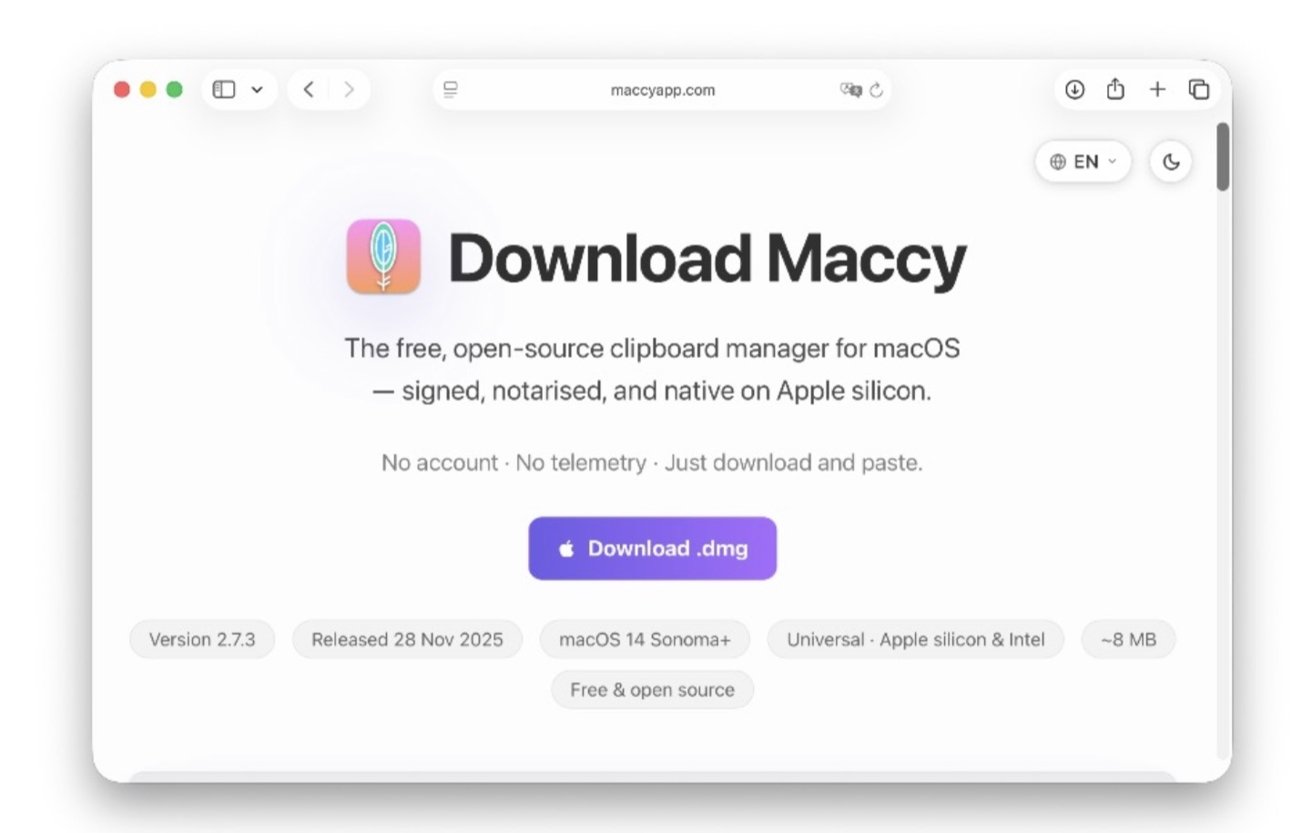
A newly discovered macOS infostealer verifies Mac login passwords before stealing sensitive data, giving attackers immediate confirmation that compromised credentials will actually work.
Researchers at Jamf Threat Labs have documented a new macOS malware campaign built around an infostealer called PamStealer. PamStealer disguises itself as the Maccy clipboard manager and uses AppleScript alongside a Rust payload to infect Macs.
Jamf found that PamStealer verifies login passwords through Apple’s Pluggable Authentication Modules before stealing additional data. Password verification sets PamStealer apart from most macOS infostealers, which typically capture whatever password a victim enters without confirming that it’s valid.
The campaign begins with a fake website that closely imitates the legitimate Maccy clipboard manager. Next, the fake website delivers a malicious AppleScript application disguised as Maccy.
Once a victim opens the download, the malicious application checks the system and retrieves a second-stage Rust payload. PamStealer then establishes persistence before collecting data.
 The campaign begins with a fake website that closely imitates the legitimate Maccy clipboard manager
Jamf also found that PamStealer checks system characteristics, keyboard layout and regional settings before running. System, keyboard and regional checks suggest the operators configured PamStealer to execute only on systems that match their intended targets.
Password verification improves the value of stolen credentials
PamStealer’s most notable feature is the way it captures login credentials. During execution, the malware displays what appears to be a legitimate macOS authorization prompt asking the user to enter a password so Maccy can make changes.
Instead of just recording whatever the victim types, PamStealer validates the password through Apple’s Pluggable Authentication Modules before continuing. Jamf said PamStealer doesn’t replace or bypass Apple’s authentication system.
Instead, the malware abuses a legitimate macOS framework to validate credentials after convincing the victim to enter a password. Attackers can then discard invalid credentials before moving forward with the attack.
Rust payload steals browser data and establishes persistence
After validating the password, the second-stage Rust payload collects a wide range of information from the infected Mac. Jamf said PamStealer targets browser cookies, browsing history, saved credentials, SQLite databases, clipboard contents and cryptocurrency wallet data.
PamStealer also encrypts stolen information before transmitting it to command-and-control infrastructure, making network traffic more difficult to inspect.
PamStealer creates login items through both modern and legacy macOS mechanisms so it relaunches automatically after a user signs in. The malware also impersonates Finder while attempting to convince victims to grant Full Disk Access.
Full Disk Access is a permission that would significantly expand the amount of information it can access without additional prompts.
 PamStealer’s most notable feature is the way it captures login credentials
Jamf said much of PamStealer’s second-stage malware is written in Rust instead of AppleScript. Using Rust makes reverse engineering more difficult because many strings and code paths are resolved only while the malware is running instead of appearing directly in the compiled binary.
Native macOS features help make the attack more effective
PamStealer shows how macOS malware increasingly abuses legitimate operating system features instead of relying solely on malicious code. Jamf said Apple’s authentication framework, Rust and encrypted communications work together to make the malware more difficult to analyze.
The researchers said the combination reflects the continued evolution of macOS-focused malware without relying on previously unknown vulnerabilities.
Jamf recommends downloading software only from trusted sources. The company also urges users to be skeptical of unexpected administrator password prompts and avoid unnecessary Full Disk Access requests.
Organizations using Jamf can configure Threat Prevention, Advanced Threat Controls and Web Protection to help block similar malware before it executes.
How to stay safe
PamStealer still depends on users downloading software from an untrusted source and approving multiple prompts before the malware can complete its attack. Users should download Mac apps only from trusted developers and verify website addresses before installing software.
Unexpected requests for an administrator password deserve extra scrutiny, especially when they appear during an app installation. Users should also review Full Disk Access requests carefully and grant the permission only to applications they trust.
Users should also review requests for Full Disk Access carefully and grant the permission only when it’s necessary for software they trust. Keeping macOS and security software up to date can also help detect or block known malware before it compromises a system.


Z.ai, the Beijing-based artificial intelligence lab formerly known as Zhipu AI, on Wednesday officially launched ZCode, a free desktop application it describes as an “Agentic Development Environment” purpose-built for its flagship GLM-5.2 large language model. The move marks the company’s most aggressive push yet into the fast-growing AI-powered coding tool market, where it now competes directly with Cursor, Claude Code, GitHub Copilot, and Google’s Antigravity.
“Introducing ZCode, the official development environment for GLM-5.2,” the company wrote on X, noting the tool is available on macOS, Windows, and Linux, supports bring-your-own-key (BYOK) configurations for third-party models, and offers a 1.5x usage-quota bonus for subscribers to its GLM Coding Plan.
Read one way, ZCode is simply another entrant in a crowded market. Read another, it is a single product that crystallizes three of the most consequential trends in enterprise software today: the race-to-the-bottom pricing of frontier AI models, the geopolitical balkanization of the AI stack, and the rapid maturation of agentic coding agents into what Gartner now estimates is a roughly $10 billion market.
An AI coding tool designed to think in projects, not prompts
Unlike traditional IDEs that bolt on AI through a chat sidebar or autocomplete extension, ZCode is best understood as an agent-first development environment. Its core design is built around long-horizon tasks: the user describes an outcome, the agent plans the work, edits files, runs checks, reviews progress, and continues across multiple iterations until the goal is met.
ZCode organizes the development experience around the ZCode Agent, deeply tuned for GLM-5.2, with emphasis on deep integration: the model, tools, and execution workflow are tuned together so the Agent fits continuous, multi-step real-world development tasks. The environment supports continuous follow-up across devices: desktop, mobile Remote, and Feishu / WeChat Bot can all keep the same workspace task moving. Sensitive commands, file changes, and high-permission actions go through confirmation before execution.
That remote-control feature — the ability to steer a running coding agent from WeChat, Feishu, or Telegram on a phone — is a differentiator that speaks directly to the Chinese developer market, where those messaging platforms dominate professional communication. You can keep checking progress and adding instructions while long-running work continues, from any device with these messaging apps.
The tool is free to download. Revenue flows through Z.ai’s GLM Coding Plan subscription tiers, which start at $16.20 per month for a “Lite” plan and scale to $144 per month for “Max” — prices that undercut Anthropic’s Claude Code and Cursor’s comparable tiers by significant margins.
Through July 31, ZCode is offering a promotional 1.5x effective quota bonus for Coding Plan subscribers, with off-peak token consumption charged at a 0.67x coefficient. The platform also supports multiple AI models and agents, including Claude Code, Codex, Gemini, and OpenCode — a pragmatic concession to the reality that no single model wins every task.
GLM-5.2, the open-source model trained entirely on Chinese chips, powers the whole experience
ZCode’s value proposition is inseparable from GLM-5.2, the model it was designed to showcase. Z.ai released GLM-5.2 on June 16, first to its Coding Plan subscribers and subsequently as open-source weights under the MIT license on Hugging Face — a sequencing decision that prioritized distribution over the traditional benchmark-led launch.
The model’s specifications are formidable. GLM-5.2 is a 744-billion-parameter mixture-of-experts architecture with 40 billion active parameters, a genuine one-million-token context window — five times the 200K limit on its predecessor — and training on 28.5 trillion tokens. It ranked second globally on Code Arena as of mid-June, trailing only Anthropic’s Claude Fable 5, making it one of the highest-performing publicly available models for coding tasks.
Critically, the model was built entirely without American chips. As Decrypt reported, GLM-5.2 “runs entirely on Huawei silicon.” Stability AI founder Emad Mostaque estimated total training costs at roughly $25 million, with 80 percent spent on post-training — a figure that, if accurate, would make GLM-5.2 extraordinarily cheap relative to Western frontier models.
On benchmarks, GLM-5.2 performs within striking distance of the best proprietary systems. It trails Anthropic’s Claude Opus 4.8 by just one percentage point on FrontierSWE, a benchmark measuring multi-hour autonomous engineering projects, while edging out OpenAI’s GPT-5.5.
Its API pricing — $1.40 per million input tokens and $4.40 per million output — are a cost reduction of up to 82 percent compared to Anthropic’s Claude Opus 4.8 at $5 and $25, respectively. Because ZCode is a first-party tool from the same company that makes the model, it requires no manual endpoint configuration — the model is wired in.
The Anthropic export ban gave Chinese AI its biggest opening yet
ZCode’s arrival cannot be separated from the geopolitical drama that has roiled the AI industry over the past three weeks. On June 12, the U.S. government, citing national security authorities, issued an export control directive suspending all access to Anthropic’s Fable 5 and Mythos 5 models by any foreign national, whether inside or outside the United States, including foreign national Anthropic employees. Enterprise clients in finance, healthcare, SaaS, and critical infrastructure found their core intelligence services abruptly disabled, without exception, prior warning, or effective recourse.
While the Trump administration lifted those controls just yesterday — Anthropic confirmed on June 30 that the Department of Commerce had rescinded the directive — the episode sent shockwaves through the developer community and accelerated interest in open-source, self-hostable alternatives. The government’s crackdown on Anthropic coincided with a swift rise in Chinese open-source models that are proving to be almost as capable and significantly cheaper than some of the most powerful U.S. models.
Z.ai’s timing was surgical. On the same day the Trump administration ordered Anthropic’s most advanced models blocked for foreign nationals, Zhipu announced the open-source release of GLM-5.2 with no usage restrictions. The South China Morning Post reported that GLM-5.2 would be available to all users of Zhipu’s new GLM Coding Plan subscription, “priced at just a tenth of Anthropic’s premium Claude Code and Claude Max tiers.”
The market responded accordingly. Zhipu AI’s market capitalization crossed HK$1 trillion (US$128 billion) on June 22, driven by a 42 percent intraday share surge. JPMorgan raised its 2026–2030 revenue forecast for Zhipu by between 7 and 16 percent following the launch, projecting an over 534 percent revenue surge for 2026 and expecting the AI firm to turn a profit by 2028.
Why vendor lock-in now carries a geopolitical risk that no SLA can cover
The Fable 5 episode did more than embarrass Anthropic. It introduced a new risk category into enterprise AI procurement: sovereign access risk. When a government can disable a commercially deployed AI model overnight, the traditional evaluation criteria of developer experience, benchmark scores, and pricing become secondary to a more fundamental question: Will this tool still work tomorrow?
The event exposed the inadequacy of standard enterprise contract language. An investigation by FifthRow found that almost all standard Data Processing Addenda, SaaS agreements, and procurement SLAs “relied on vague ‘force majeure’ or ‘compliance with law’ catch-alls, not on precise, actionable regulatory suspension or kill-switch clauses.”
ZCode’s BYOK architecture and GLM-5.2‘s MIT-licensed open weights offer a partial answer. A development team can download the model, host it on its own infrastructure, and run ZCode against it without ever touching Z.ai’s cloud — eliminating both American export-control risk and Chinese data-sovereignty concerns in a single move. The catch is that anyone using Z.ai’s cloud API remains subject to Chinese law, a consideration that evaporates only with pure self-hosting.
Gartner analysts have warned that governance, pricing, support, workflows, commercial maturity, and market durability matter as much as developer experience and model capabilities when evaluating coding agent vendors for enterprise-wide adoption. By that measure, ZCode faces a steep climb. It is not open source itself; Linux support remains in beta; and security reviewers have flagged the need for careful evaluation of its credential handling, particularly for remote development over SSH and messaging-platform-triggered tasks — an agent that can be summoned from WeChat involves access paths that should be mapped before trusting it with anything sensitive.
Inside the $10 billion race where model labs are becoming full-stack IDE companies
ZCode enters one of the most crowded and fastest-moving markets in enterprise software. Enterprise AI coding agents are capturing a growing share of enterprise software engineering spend, with the market estimated at roughly $9.8 billion to $11.0 billion annualized as of April 2026, according to Gartner. A defining shift this year, the analyst firm noted, is “the movement of frontier model providers into direct competition with application-layer vendors” — precisely the pattern ZCode embodies.
Gartner codified this evolution in May when it renamed its annual Magic Quadrant from “AI Code Assistants” to “Enterprise AI Coding Agents,” defining the category as “autonomous or semiautonomous software engineering solutions that perceive context, translate human intent into multistep plans, and execute and verify those steps across code, tests and related engineering artifacts.” The 2026 Magic Quadrant names Anthropic, Cursor, GitHub, and OpenAI as Leaders. Z.ai was not among the 12 vendors evaluated — an absence that underscores both the company’s nascent enterprise sales presence outside China and the Western-centric lens through which the analyst community still views the market.
The competitive landscape is daunting. Cursor is the $2 billion ARR IDE that feels like VS Code with a supercharger. Claude Code reached approximately $2.5 billion in annualized revenue by early 2026. Google relaunched Antigravity 2.0 at I/O in May, and Cognition retired the Windsurf brand, relaunching the IDE as Devin Desktop with the Agent Command Center as the default surface.
Against these entrenched players, ZCode’s pitch rests on three pillars: deep first-party integration with GLM-5.2 that no third-party editor can replicate, aggressive pricing that starts at a fraction of Western competitors, and MIT-licensed open weights that allow enterprises to self-host — eliminating the regulatory kill-switch risk that the Fable ban made viscerally real.
Z.ai’s real challenge is turning a $128 billion valuation into a global developer tools business
Z.ai controls the model (GLM-5.2), the subscription layer (the GLM Coding Plan), and the IDE (ZCode) — a tightly coupled stack that optimizes for performance but concentrates switching costs. For the company, the business logic is clear. Its most reliable revenue stream has been on-premises deployments for Chinese government agencies, state-owned banks, and energy conglomerates. In full-year 2025, on-premises deployment revenue reached RMB 534 million, growing over 100 percent year-over-year and accounting for 73.7 percent of total revenue with a gross margin of 48.8 percent. ZCode and the GLM Coding Plan represent the company’s bid to build a comparable revenue engine in cloud-based developer tools — globally, not just in China.
The early signals are encouraging for Z.ai, if anecdotal. Community reception on X was enthusiastic, with one early user calling the tool “super stable” and others clamoring for more Coding Plan capacity. “Bro, can’t snag your family’s Coding Plan? When are you gonna stock up on more cards?” one user wrote in Chinese, suggesting demand is already outstripping supply.
But the hard questions loom large. Can a Chinese AI company build trust with Western enterprise buyers amid escalating technology tensions? Can ZCode’s ecosystem mature fast enough to compete with Cursor’s polished UX, Claude Code’s deep agent primitives, and GitHub Copilot’s unmatched distribution? And can Z.ai sustain a company valued at $128 billion while still losing money?
What is no longer in question is the competitive dynamic itself. Three weeks ago, a U.S. government directive proved that access to the world’s best coding model can vanish overnight. Today, a Chinese lab is shipping a free IDE, an open-source model trained on zero American chips, and a subscription plan that costs less per month than a single lunch in Manhattan. The AI coding agent market did not just become global this summer. It became a market where the fallback option might be better than the thing it’s falling back from — and that changes the calculus for every engineering leader choosing a toolchain in the second half of 2026.


India’s Ministry of Electronics and Information Technology has ordered WhatsApp not to launch its planned usernames feature in the country until further consultations are complete, according to a letter seen by Reuters.
The ministry, known as MeitY, has given Meta three days to explain why regulatory action should not follow the feature’s announcement.
WhatsApp said on 29 June that users would soon be able to reserve a unique username, letting people start conversations without sharing a phone number. Within 48 hours, MeitY had sent a formal notice telling the company to pause the rollout “until the consultation on this point is achieved to the satisfaction of the Government.”
The ministry’s stated worry is fraud. Its notice warns that usernames “may facilitate impersonation and identity spoofing, including impersonation of individuals, public authorities, financial institutions, and government agencies,” by letting people adopt handles that closely resemble those of real institutions.
That concern sits inside a wider run of digital arrest scams and phishing schemes that Indian regulators have spent much of the past two years trying to contain.
A Meta spokesperson said the feature is not yet live in India and that the company has already reserved usernames resembling those of public figures, government entities and verified Meta accounts specifically to head off impersonation.
Whether that safeguard will satisfy MeitY’s objections remains unclear, and the ministry’s letter gives no indication that a reserved-name list alone would be enough to lift the hold. This is not India’s first fight over anonymity features baked into a messaging app.
Telegram challenged a temporary, nationwide block in the Delhi High Court earlier in June, after the government said channels on the app had been used to sell leaked papers for the NEET medical entrance exam, and lost.
During that case, officials specifically flagged how username-based contact and concealed phone numbers made it harder for law enforcement to trace who was actually behind an account.
That argument maps closely onto the objections now raised against WhatsApp. WhatsApp, though, occupies a different place in India’s digital economy than Telegram ever did.
It is one of Meta’s most important markets globally, and the company has spent years trying to turn the app into a commerce platform rather than just a messaging tool, most recently by taking a stake in the fintech firm Cred and installing its founder as WhatsApp’s new head. A prolonged regulatory standoff over usernames would land at an inconvenient moment for that broader ambition.
Not everyone accepts that MeitY has the legal footing to issue this kind of order in the first place. The Internet Freedom Foundation has argued that the ministry is leaning on Section 79 of the Information Technology Act, a safe harbour provision that governs platform liability, to do something closer to product-design oversight, which the group says no statute actually grants it.
The foundation’s position is that fraud and impersonation should be prosecuted under existing criminal law rather than pre-empted by holding back a product feature.
It has raised similar objections before about the ministry’s use of traceability rules to shape how messaging apps are built rather than how they are policed.
The dispute also lands against a backdrop of repeated friction between Indian regulators and WhatsApp over how much visibility the government should have into the app’s design choices.
Officials have previously pushed the company toward making messages traceable to combat misinformation, proposals WhatsApp has resisted on the grounds that they would undermine end-to-end encryption for its entire user base, not just the accounts under suspicion.
As of the letter’s disclosure, WhatsApp’s usernames remain unavailable to users in India, and the three-day clock the ministry set on its notice gives the clearest near-term marker for what happens next.

The winners of the 2026 iPhone Photography Awards have been announced, with many of them taken using older iPhones, including an iPhone 8 Plus.
The 2026 IPPA winners were announced after entries from more than 140 countries were submitted. Four overall winners were announced, ranging from Grand Prix to Bronze.
Category winners, runners-up, and honorable mentions were also shared, giving us a wider look at the quality of images that were submitted this year.
Life in the old dog (and cat) yet
The overall winner was Robyn Jenson, who used an iPhone 15 Pro to capture a stunning shot of an erupting volcano. Gold went to Gellert Gombai, whose grayscale shot of two children was taken on an aging iPhone X.

Some winners were more colorful than others – image credit iPhone Photography Awards
Arnold Plotnick captured a cat on an iPhone 16 Pro for silver, while Catherine Wang used an iPhone 16 Pro Max to capture a shot of colorful melons and a bird.
Gombai’s iPhone X wasn’t the only older iPhone to steal the show, either. Barry Mayes used an iPhone 8 Plus to win the “Abstract” category. That phone was released alongside the iPhone X in 2017.
Moving through the list of runners-up and honorable mentions included an even older iPhone. Diego Schutt used an iPhone 7 Plus, while an iPhone 6s and iPhone 6 Plus also made an appearance elsewhere.
While the majority of the category-winners used more modern phones, it’s impressive that older models are still producing such stunning photos. It may also highlight just how small recent iPhone camera upgrades have been.
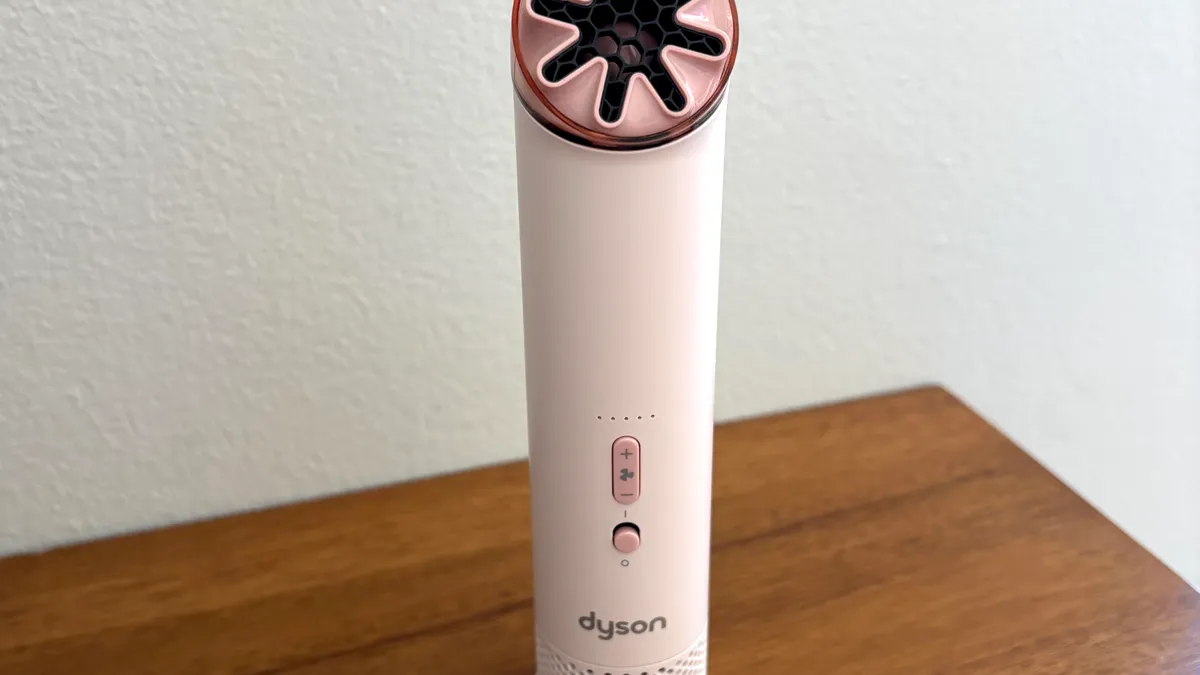
While Dyson’s new HushJet Mini Cool fan reaches 55 mph and has a slim design, there are some drawbacks.
CNET’s key takeaways
- At $100, Dyson’s HushJet Mini Cool comes in three colors and includes a lanyard, charging stand and travel pouch.
- The HushJet Mini Cool has five speeds and a boost mode that reaches 55 mph and 77.5 dBA, which, in my opinion, makes it too loud for shared spaces.
- While it charges in three hours, you get only six hours of battery life at speed 1, and even less at higher speeds. However, you can use it at speed 1 while it charges.
During hot yoga in a 110-degree Fahrenheit room where hot air is blowing on my face, I often dream of having something, anything, to cool me down. Lately, I’ve been picturing the HushJet Mini Cool, Dyson’s first personal handheld fan, at the top of my yoga mat during particularly sweaty moments.
As CNET’s wellness editor, I’ve had the opportunity to test a wide array of health tech, including the HushJet Mini Cool alongside other handheld fans, such as the Shark ChillPill and BlueAir’s AlwaysCool. Unlike the ChillPill, which is a three-in-one device with a fan, cooling plate and water mister, the Mini Cool is simply a fan, but it’s a powerful one.
The Dyson HushJet Mini Cool: Pros and cons
With four speeds and a boost mode, the HushJet Mini Cool’s bladeless fan can reach 55 mph. And yes, it does feel like a powerful fan despite being 1.5 inches in diameter, 7.9 inches tall and weighing 0.46 pounds.
Interestingly, the 1.5-inch diameter is about the size of a watch face.
Dyson’s Supersonic hair dryer and PencilVac cordless vacuum have the same diameter as the HushJet Mini Cool.
How and where you can use it
Similar to the Shark ChillPill, the Mini Cool can be used in three ways: held in your hand, worn around your neck with the included matching lanyard (which the company calls a “neck dock”) or placed upright on a tabletop. The Mini Cool’s nozzle also rotates 360 degrees, so when you wear it, you can tilt it up toward your face.
I especially appreciate that the Mini Cool comes with the lanyard, as the ChillPill accessories are sold separately for $10 to $40. The ChillPill crossbody strap, for instance, is $25.
This summer, Dyson will also release a grip clip for jackets and bag straps, and a universal mount that can attach to strollers and more, both sold separately. No word on price yet, but I’m hoping they’ll be more affordable than the ChillPill add-ons.
The last accessory that comes with the Mini Cool is a travel pouch, which I prefer over Shark’s because it fits the entire device. The ChillPill’s pouch only fits two of its attachments.
Speaking of travel, the HushJet Mini Cool has a lithium-ion battery. The US Transportation Security Administration reports that lithium-ion batteries should be carried in carry-on luggage, so you can bring the Mini Cool on your next vacation. Just double-check your airline’s rules before you fly.
With the included lanyard, you can wear the HushJet Mini Cool around your neck and rotate its nozzle to tilt up toward your face.
My gripe with the battery life
The Mini Cool’s 5,000-mAh battery charges in 3 hours with the included cable and stand. The stand fits around the 40-watt HushJet Mini Cool’s base and has an indent that allows the cable to connect to the fan seamlessly.
Once charged, the Dyson HushJet Mini Cool runs for up to six hours on speed 1, its lowest setting. That’s also the only speed that can be used while the device is charging, so you can keep cool without interruption.
On low speed, the 15-watt ChillPill’s fan runs up to 11 hours, five more than the Mini Cool. But the ChillPill does take 30 minutes longer to charge and is less powerful.
The indent in the charging stand allows you to easily connect the charging cable — a thoughtful touch.
Noise level makes it best for outdoor use
To reduce noise, the Mini Cool’s 65,000 revolutions per minute motor was engineered with an antivibration rubber mount.
Dyson reports the max noise level as 72.5 A-weighted decibels, but when I measured it in boost mode with the Decibel X app, about 2 inches from the device, my reading was 77.5 dBA. At speed 10, the ChillPill was 74.6 dBA.
For reference, according to the American Speech-Language-Hearing Association, the noise from a group conversation or a vacuum cleaner is around 70 dBA, so both the Mini Cool and ChilPill are pretty loud at their highest setting.
Anecdotally, I found the HushJet Mini Cool to be loud at speed 5 and in boost mode, so I would recommend the lower settings for shared indoor spaces.
Controls are easy to use with an on/off switch and five speeds, plus boost mode when you hold down the plus button on speed 5.
Small color range, high price
The HushJet Mini Cool comes in three colors: pink, blue and red/light blue. The ChillPill offers eight colors: red, rose gold, purple, black, pink, green, brown and teal, so it has the Mini Cool beat there.
Now, the price. Dyson’s HushJet Mini Cool is $100, which isn’t cheap, but it’s still $50 less than the ChillPill. Both come with a two-year limited warranty.
Between the Mini Cool and ChillPill, I’d recommend the ChillPill if you want two added features: a mister and a cooling plate. But if you just want a fan, the Dyson model is the way to go.
Yet, there are more affordable options on the market, such as the 38-mph JisuLife Ultra2 for $76 and the Pro1 Mini for $63, which I’m currently testing. They’re less powerful, but I’m not sure that matters as long as they still help keep you cool.
The specs
- Cost: $100
- Speeds: Five, plus boost mode, up to 55 mph
- Sound level (boost mode): 77.5 dBA
- Warranty: Two-year limited
- Weight: 0.46 pounds
- Dimensions: 1.5 x 7.9 inches
- Wattage: 40 watts
- Battery life: Six hours
- Battery charge time: Three hours
- Included in box: Device, neck lanyard, USB-C charging cable, charging stand and travel pouch
The travel pouch fits the entire device, unlike the ChillPill’s.
Dyson HushJet Mini Cool vs. Shark ChillPill
|
Specs |
Shark ChillPill |
Dyson HushJet Mini Cool |
|---|---|---|
|
Price |
$150 |
$100 |
|
Core functions |
Fan, misting, cooling plate |
Fan |
|
Max airflow |
Up to 17 mph |
Up to 55 mph (boost mode) |
|
Max sound level (dBA) |
74.6 |
77.5 |
|
Wattage |
15 |
40 |
|
Battery life (low speed) |
Up to 11 hours |
Up to 6 hours |
|
Charge time (hours) |
3.5 |
3 |
|
Weight (pounds) |
0.77 |
0.46 |
|
Colors available |
8 |
3 |
CNET’s buying advice
- If you want a personal fan that only functions as a high-power fan, the $100 Dyson HushJet Mini Cool is a great option. But for an added cooling plate and mister, I’d go with the Shark ChillPill for $50 more.
- At $100, the HushJet Mini Cool is pricey. There are more cost-effective personal fans under $100 on the market, such as the JisuLife Ultra2 and the Pro1 Mini. They’re less powerful, but will still work as intended.
- In terms of noise, I found the HushJet Mini Cool loud at its highest setting and in boost mode. In boost mode, I measured 77.5 dBA, 2.9 dBA louder than the ChillPill on speed 10. Because of that, I’d recommend reserving those speeds for outdoor use only.


— Hrishikesh Aradhye has joined Amazon Music as vice president of product and tech for the streaming service. He spent nearly 19 years at Google, most recently as senior director of engineering leading YouTube Music and Podcasts.
“The music industry is going through a tectonic shift that will unlock entirely new kinds of customer experiences through AI,” Aradhye said.
Earlier in his tenure there, he worked at Google Research, where he helped pioneer computer vision and machine learning systems for YouTube and Android.

— Vasu Jakkal is stepping down after six years as Microsoft‘s corporate vice president of Security, Compliance, Identity, Management & Privacy. She thanked colleagues and customers in a LinkedIn post.
“It’s been an epic journey — six years ago, we formed our Security customer solution area and the growth and impact of Microsoft Security over these past years has been incredible as we built the #1 security business in the world while keeping our mission of building a safer world for all at the heart of it,” Jakkal wrote.
Jakkal is based in the San Francisco Bay Area and previously held executive roles at FireEye and Intel. She did not indicate her next move.

— Mika Yamamoto was named chief marketing and customer AI officer for Veeam Software, a Seattle-based data protection and ransomware recovery company. It’s the latest in a string of leadership changes at Veeam, which has made four other executive hires or promotions this year.
Yamamoto previously worked for Seattle-area companies including F5, Microsoft and SAP, and joined Veeam from Los Angeles-based Blackline.
“She has experienced this industry from every angle — analyst, operator, executive leader — and has consistently put the customer and partner at the center of how companies operate,” CEO Anand Eswaran said in a statement.
— In case you missed it, Microsoft has undergone a leadership shakeup within Copilot as the company works to turn its platform into a “super app.” Changes include:
- Jacob Andreou has moved from corporate vice president at Microsoft AI to executive vice president of Copilot. He joined the company in 2025 from Greylock Partners and before that was at Snapchat-maker Snap.
- Peter Sellis has been named Copilot’s lead of design, growth and engineering, reporting to Andreou. He joins Microsoft from Discord and overlapped with Andreou at Snap, where Sellis was VP of product.
- The reshuffle also comes with a departure. Trevor O’Brien, former VP of product for M365 Copilot experiences, has resigned from his role. “The past two and a half years have been inspiring, chaotic, intense, and deeply rewarding,” O’Brien said on LinkedIn. He did not indicate his next move.

— Seattle-based tech executive Niranjan Vijayaragavan has taken the role of CTO at Five9, a cloud-based contact-center-as-a-service company. He joins Five9 from Nintex, where he served as chief product and technology officer. Other past employers include Avalara and Expedia Group.
“Five9 is at the center of one of the most important shifts in customer experience as AI reshapes how companies engage with their customers,” Vijayaragavan said in a statement. The company is based in San Ramon, Calif., but Vijayaragavan will remain in Washington.

— Maura Mast was appointed president of Seattle University, succeeding Eduardo M. Peñalver, who resigned to lead Georgetown University. Mast is the first woman and first mathematician to hold the top role at the Jesuit Catholic university.
“Our world urgently needs spaces of dialogue and discernment that actively work to heal deep divisions and build a more equitable society,” Mast said in a statement, adding that SU can lead in these areas.
Mast will begin the job on Sept. 1 and joins SU from Fordham University, where she served as a dean and mathematics professor.

— The Cascadia Sustainable Aviation Accelerator named Jake Gentry as its executive director. Gentry helped create CSAA, which aims to make the Pacific Northwest a center for the production of sustainable aviation fuel (SAF). He remains a managing director at Seattle’s Earth Finance and is leading the accelerator as part of that organization.
Hawaiian Airlines CEO Diana Birkett-Rakow praised Gentry’s appointment, saying in a statement that he has “the right combination of strategic depth, execution orientation, coalition-building instincts, and commitment to the work.”
Gentry previously held sustainability leadership roles with companies including Point B and Boeing.
— Seattle’s F5 has added Gavin Munroe to its board of directors, where he will serve on the audit and risk committees. Munroe has decades of experience in financial services and most recently was chief information officer and transformation head at Commonwealth Bank of Australia.
— Harini Gokul, a former leader at Microsoft and AWS and past chief customer officer at Entrust, has joined the board of Afiniti. The company builds AI software for call centers that aims to match customers with the appropriate agent. Gokul also serves on the Medina City Council.
— Safe Software, a data and AI enterprise integration platform based in Surrey, British Columbia, has named Nabil Lodey vice president of Europe, the Middle East and Africa. Lodey will help lead the company’s expansion in the UK and Ireland.
— Allison Gruber is now VP and leader of Portland-based Cambia Health Foundation. She previously oversaw Cambia Health Solutions’ Strategy and Innovation team, where she led data-driven strategy initiatives.
— And some more folks are retiring from Microsoft, in addition to those featured Tuesday in a GeekWire story on the company’s first-ever voluntary retirement program:
- Nir Michaely, Azure software engineering manager, closes out 26 years with the company.
- John Ballard, principal security researcher, departs after nearly 30 years.
- Kristen Mattoni, senior product marketing manager, is leaving after 15 years.
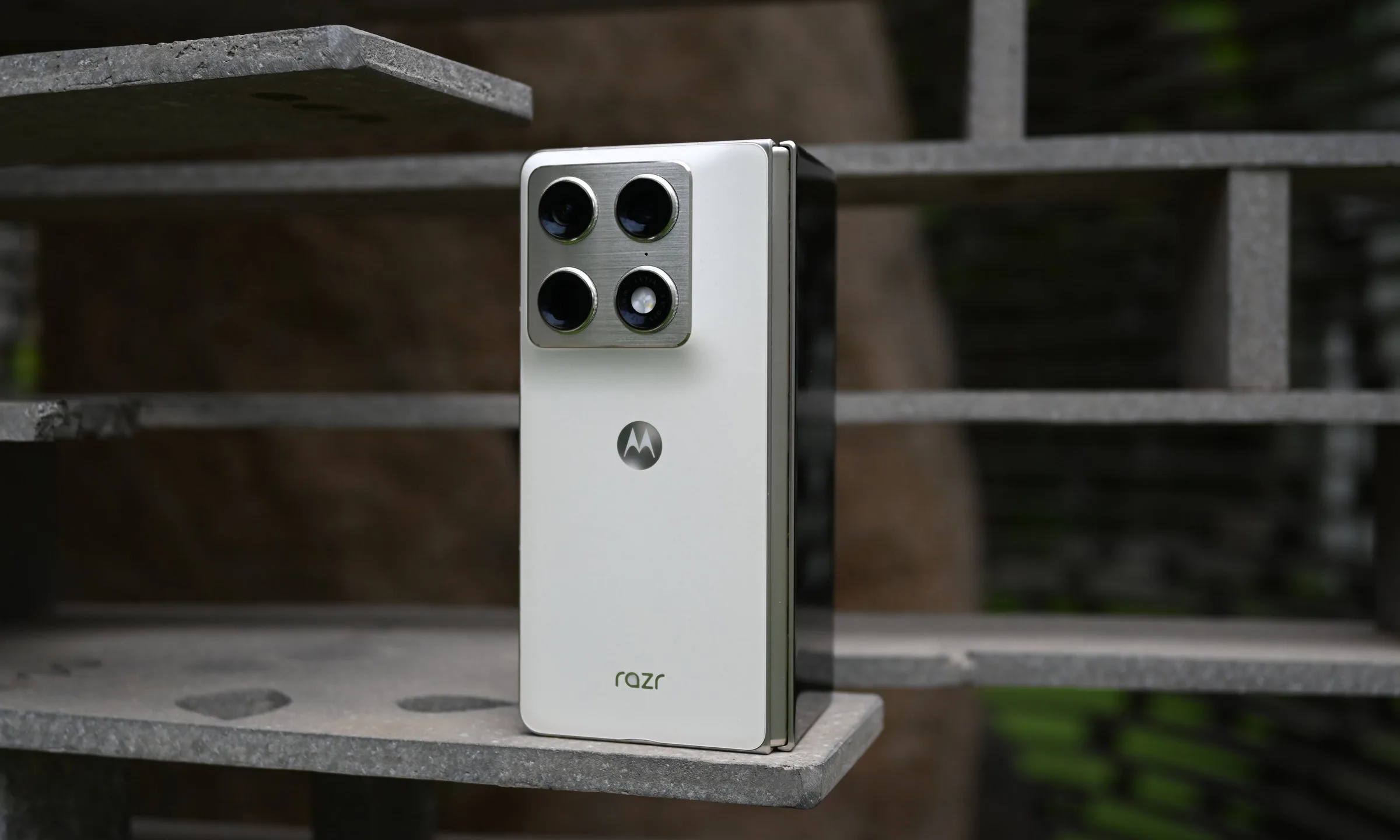
I already had more reasons than expected to keep the Motorola Razr Fold around. While reviewing it, the company’s first foldable genuinely surprised me with its level of polish. A practical outer display, great cameras, strong battery life, and a gorgeous folding screen. All of this made me want to switch to this device as my primary phone.
Now Motorola has added one more reason, and it’s just sweetening the deal for me. The Motorola Razr Fold now supports AirDrop-style sharing through Android’s Quick Share, making it the first Motorola phone to get the feature. That means Razr Fold users can share files directly with Apple devices such as iPhones, iPads, and Macs without relying on cloud links, messaging apps, USB cables, or the usual cross-platform nonsense.
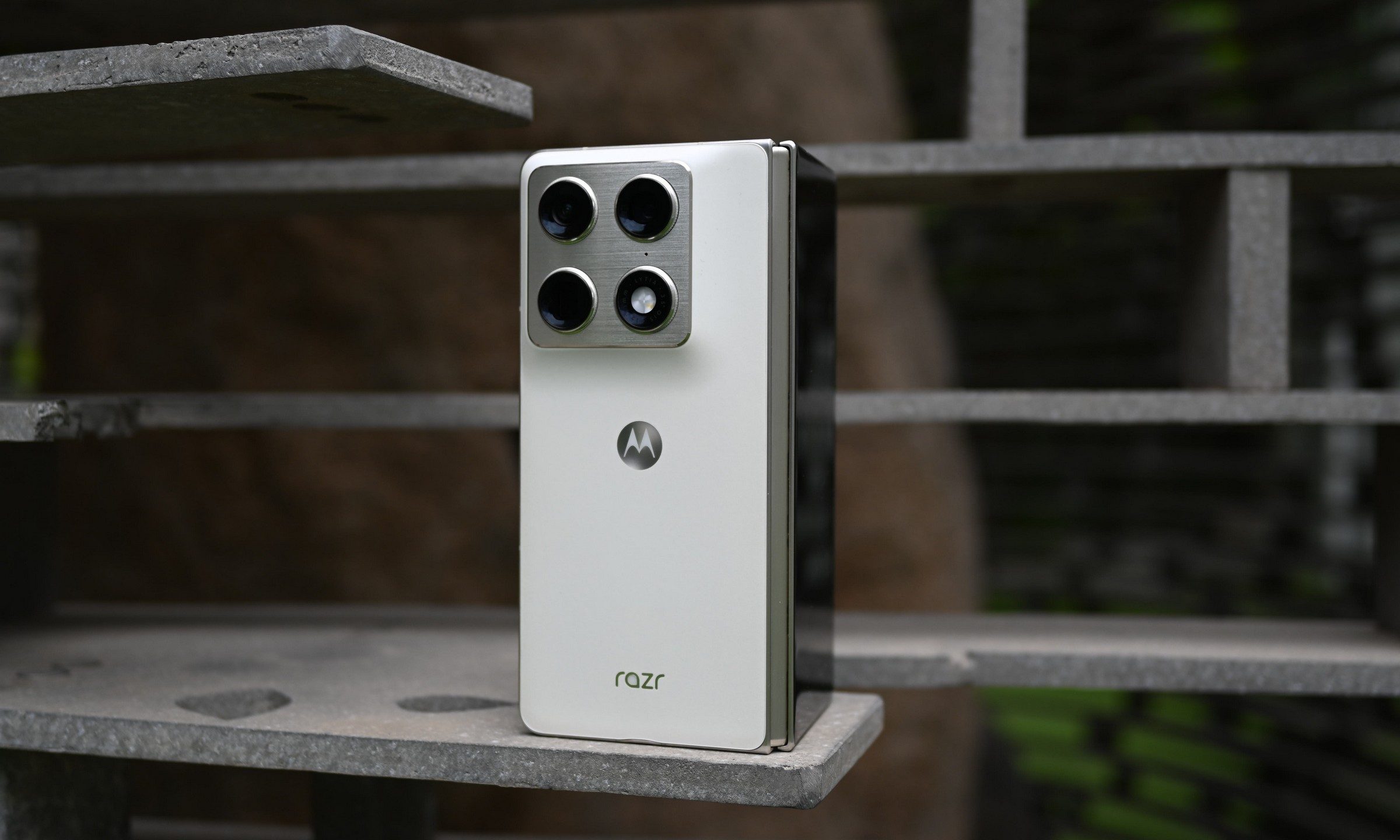
Making life easier between the different ecosystems
Android users do not need every Apple feature. AirDrop, though, has always been one of the annoyingly good ones. It is fast, simple, local, and familiar to people who own Apple devices. The problem is that Android users have long had to work around it. You could upload a file to Google Drive, send it through WhatsApp, compress it over a messaging app, email it like it is 2014, or grab a cable and hate yourself a little.
Quick Share with AirDrop support fixes that. On supported Android phones, you can share locally through Quick Share, while the Apple device receives the file through AirDrop. This was first noticed by Android Authority, who confirmed the feature was working on the Razr Fold with a MacBook.

Why this is big on the Razr Fold
The Razr Fold is not a cheap phone. It is Motorola’s biggest swing at a proper book-style foldable, so it needs more than interesting hardware to justify itself as a daily driver–and this is one of the features that genuinely helps. A foldable is often used as a mini-tablet for editing, reviewing photos, reading documents, multitasking, and handling work files. If you are moving photos from the phone to a MacBook, sending documents to an iPad, or sharing media with an iPhone user nearby, AirDrop support makes the Razr Fold feel far less isolated from the Apple devices around it.
Hopefully, this function rolls out to other recent Motorola phones as well. Other Android brands already have supported models, including Google, Samsung, OnePlus, Oppo, Honor, Vivo, and Xiaomi devices. I already liked the Razr Fold more than I expected, and now, the case for making it my daily driver just got a lot stronger.

Surrounding the cylinder are four arms that help the device float and stay upright. One of the arms contains the power port and on/off button, plus a Bluetooth button used to initiate pairing with the Bublue mobile app. The only additional component is a mesh filter that sits underneath the filter basket. This filter, in turn, is held inside a circular frame, which holds it in place. All told, there are five pieces to the device, a fact that will become more important later when I discuss cleanup.
Put together, the robot is quite tall, needing a full 1.5 feet of water depth in which to operate.
Sorry, No Solar
Your first order of business with the BuVortex V5 is to charge its 7800 mAh battery, as—and this is essential—the unit has no solar-power charging function, a standard feature on traditional pool skimmer robots. The unit takes a sizable four hours to charge and is specified to run for three. I got close to four hours of runtime during my testing.
Photograph: Christopher Null

The lack of solar power alone may be something of a deal-breaker for most. (It is for me, at least.) When I use a pool skimmer, I typically drop it in the pool and have it run for a week or more, letting it sleep overnight when the battery is drained and firing it up again in the morning when the sun is out. The beauty of solar power on a skimmer is that you don’t have to think about it. I can’t remember the last time I plugged mine in. The only time I take the skimmer out of the pool is to periodically clean it.
Even with four hours of running time, operationally, the device makes little sense. Imagine the occasions when you need a skimmer the most—during the fall, especially, when leaves are continually falling. Four hours of skimming won’t put a dent in a day’s worth of debris landing on the surface of your pool, and even if you dutifully retrieve the robot, recharge it, and run it a second time, you’re still accounting for only a third of a 24-hour period. While no skimmer is perfect, with the BuVortex, there’s just no way to prevent most leaves from ending up on the floor of the pool or, at best, in a wall skimmer.

Teen rapists spared jail by ‘soft justice’ judge in case which shocked the nation are finally locked up after Appeal Court decides original sentences were too lenient

How to bag a bargain flight
BTCC Exchange Sees Trading Volume Surge Ahead of Argentina Match Days as World Cup Showdown Campaign Heats Up

No Jackpot Winner as $257 Million Prize Rolls Over to $269 Million Monday Draw

Renter of Home in Anne Heche Crash Denies Settlement With Son

Weekend Open Thread: Staud – Corporette.com

XRP DEATHCROSS CONFIRMED = XRP MOONS !!!! 42.5% OF XRP LOSING !!!! MR POOL BOOOOOOOOM !!!!

Crypto Gold Live Trading 2 JULY | Market Trader | #goldtrading #cryptotrading #bitcoin

He’s More Disgusting Than Boogie2988 | Financial Audit
-
 Fashion6 days ago
Weekend Open Thread: Staud – Corporette.com
-

 Politics6 days ago
The House | Manchesterism won’t survive the painful trade-offs unless it gets citizens on board
-

 Crypto World2 days ago
Strategy authorizes up to $1.25B in Bitcoin sales under new capital plan
-

 Politics6 days ago
Potential 2028er World Cup attendee leaderboard
-

 Business6 days ago
Asia stock markets slide as tech shares slump
-

 News Videos4 days ago
MAJOR BITCOIN & MARKET UPDATE!!!! (MUST WATCH ASAP!!!)
-

 Tech7 days ago
A Look At A Gaggle Of Transputer Boards
-
 Crypto World7 days ago
Dell (DELL) Shares Tumble Over 5% Following Analyst Downgrade to Hold
-

 Crypto World5 days ago
Coinbase, Circle Deepen Crypto Stock Losses Despite Resilient S&P 500
-

 Business2 days ago
Australia treasurer says alleged access of prime minister’s bank data ’incredibly concerning’
-

 Crypto World5 days ago
Kraken's xStocks Opens Bending Spoons IPO Registration to EEA Retail
-

 Tech3 days ago
Anonymous researcher drops 0-day ‘exploitarium’ repo
-

 Sports6 days ago
FIH Pro League: India defeat Pakistan 7-1, register biggest win of campaign | Other Sports News
-

 Crypto World6 days ago
Bitcoin Sparks $600M Hourly Liquidations With $65,000 Set To Become Resistance
-

 Tech5 days ago
Bluekit phishing kit adopts browser-in-the-middle for login theft
-

 Tech5 days ago
Russian hackers now target Signal backup recovery keys
-
 Crypto World6 days ago
Hyperliquid Named on Singapore MAS Investor Alert Register
-

 Crypto World6 days ago
RTX holders must register wallets before token distribution begins
-

 Sports1 day ago
Broncos roster: OL Ben Powers (No. 74) entering final year of contract
-

 Crypto World6 days ago
Tether (USDT) Passes Ether in Market Cap as ETH Drops Toward $1.5K
You must be logged in to post a comment Login