

Business
Applied Materials, Inc. (AMAT) Discusses DRAM and Advanced Packaging Innovations for AI-Driven Semiconductor Growth Prepared Remarks Transcript


Michael Sullivan
Corporate Vice President of Investor Relations
Hello, and welcome back to the Applied Materials Master Class series. Several years ago, we anticipated that the AI wave would drive the semiconductor industry to $1 trillion in annual sales by 2030. And through that time, we modeled the wafer fab equipment market composition to be around 1/3 leading-edge, foundry-logic, 1/3 ICAPS and 1/3 memory, with memory evenly divided between DRAM and NAND.
Today, we see AI driving the semiconductor industry to around $1 trillion this year and new incremental applications like agentic, edge and physical AI growing the industry to much higher levels over the next several years. These AI waves are fueling demand for faster, more energy-efficient chips and systems, and this is creating a new WFE spending mix.
We now expect leading-edge, foundry-logic to outgrow ICAPS and drive well over 50% of foundry-logic in the years ahead. And in memory, we expect DRAM WFE spending to be well over 2x NAND spending. Applied is well positioned for this new mix with the highest process equipment market share in leading-edge, foundry-logic, which we covered in our April master class as well as both DRAM and advanced packaging, which we’re covering today.
In a moment, Kevin Moraes will summarize our strategy and explain why DRAM and advanced packaging are growing with AI. Next, Sony Varghese will share the road map for both standard DRAMs and high-bandwidth memories. Then Jinho An will discuss how advanced packaging is enabling faster and more energy-efficient AI chips and systems. Next, Lior Engel will explain how we are bringing eBeam process control to advanced packaging. Finally, Kevin

Business
Sony Stock Gains as PlayStation Shifts Fully Digital and Entertainment Businesses Deliver Growth

Sony Group Corp. shares rose more than 2% to 3,330 yen Thursday in Tokyo trading as the Japanese conglomerate benefits from strong performance in its gaming, music and imaging businesses while navigating a strategic shift in its PlayStation division toward fully digital distribution.
The entertainment and technology giant announced plans to end production of physical discs for new PlayStation games starting in January 2028, reflecting the industry’s broader move toward online downloads and cloud gaming. The decision underscores changing consumer habits and cost efficiencies in a market where digital sales now dominate.
Sony’s gaming segment has delivered solid results despite industry-wide challenges, with the PlayStation 5 maintaining strong sales momentum. The company continues investing in first-party titles and live-service games to drive engagement and monetization.
Music operations remain a reliable performer, bolstered by streaming growth and catalog strength. Sony Music Entertainment benefits from global artist rosters and expanding markets in Asia and Latin America.
The imaging and sensing business, a key profit driver, supplies advanced sensors for smartphones and other devices. Demand for high-end camera components supports margins amid technological advancements.
Fiscal 2025 results showed overall revenue growth with particular strength in entertainment segments. Management raised full-year guidance in recent updates, citing momentum across multiple divisions despite macroeconomic uncertainties.
Gaming Evolution and Digital Transition
The PlayStation ecosystem has evolved significantly since the PS5 launch. Strong hardware sales, combined with subscription services like PlayStation Plus, create recurring revenue streams less dependent on individual game releases.
Ending physical disc production aligns with industry trends, reducing manufacturing and distribution costs while simplifying logistics. Existing disc-based games and backward compatibility will continue unaffected, ensuring smooth transition for users.
Sony Interactive Entertainment focuses on enhancing online features, cross-platform play and community tools. Investments in cloud gaming infrastructure aim to expand accessibility beyond dedicated consoles.
Competition from Microsoft Xbox and Nintendo remains intense, with each company pursuing distinct strategies. Sony differentiates through premium hardware, exclusive content and robust online services.
Entertainment and Content Strength
Sony Pictures Entertainment produces and distributes films and television content globally. Blockbuster releases and streaming deals contribute to revenue while library assets provide long-term value.
Music publishing and recorded music operations benefit from diverse portfolios spanning multiple genres and regions. Live events and merchandising further diversify income sources.
The company has expanded into anime and gaming-related content, creating synergies across divisions. Strategic acquisitions and partnerships enhance its position in entertainment ecosystems.
Financial services through Sony Bank and insurance operations provide stability, though they represent a smaller portion of overall results compared to technology and content businesses.
Technology and Hardware Innovation
Sony’s electronics heritage continues in premium televisions, audio products and cameras. The company leads in areas such as OLED displays and professional imaging equipment.
Semiconductor operations focus on specialized sensors critical for mobile devices and automotive applications. Growth in these areas supports overall profitability.
Research and development investments target future technologies including next-generation gaming, spatial audio and entertainment experiences. Collaboration with developers and creators drives innovation pipelines.
Supply chain management and component sourcing remain priorities amid global geopolitical tensions. Sony maintains diversified manufacturing to mitigate risks.
Financial Performance and Outlook
Sony reported steady revenue growth in recent quarters with operating income supported by high-margin businesses. Management forecasts continued expansion in fiscal 2026, with particular emphasis on gaming recovery and content performance.
Currency fluctuations, particularly yen strength or weakness against the dollar, impact reported results given the company’s international exposure. Hedging strategies help manage volatility.
Capital allocation includes dividends, share buybacks and strategic investments. The company balances growth opportunities with returning capital to shareholders.
Analysts generally maintain positive views, citing diversified operations and leadership in key entertainment markets. Valuation reflects premium positioning in technology and media.
Challenges include cyclical hardware sales, content performance risks and competitive pressures across segments. Macroeconomic conditions affecting consumer spending could influence results.
Sony’s next earnings update is anticipated in late July, providing further insight into fiscal first-quarter performance and updated full-year guidance.
The company’s transformation from electronics manufacturer to global entertainment powerhouse continues, with digital content and services playing larger roles. Leadership under CEO Kenichiro Yoshida emphasizes creativity, technology and sustainable growth.
As consumer entertainment habits evolve toward digital and immersive experiences, Sony’s portfolio positions it to capture opportunities across gaming, music, film and imaging.
Investors monitor execution on digital transitions, content pipelines and technology roadmaps. Sony’s ability to innovate while maintaining profitability will determine long-term success in competitive markets.
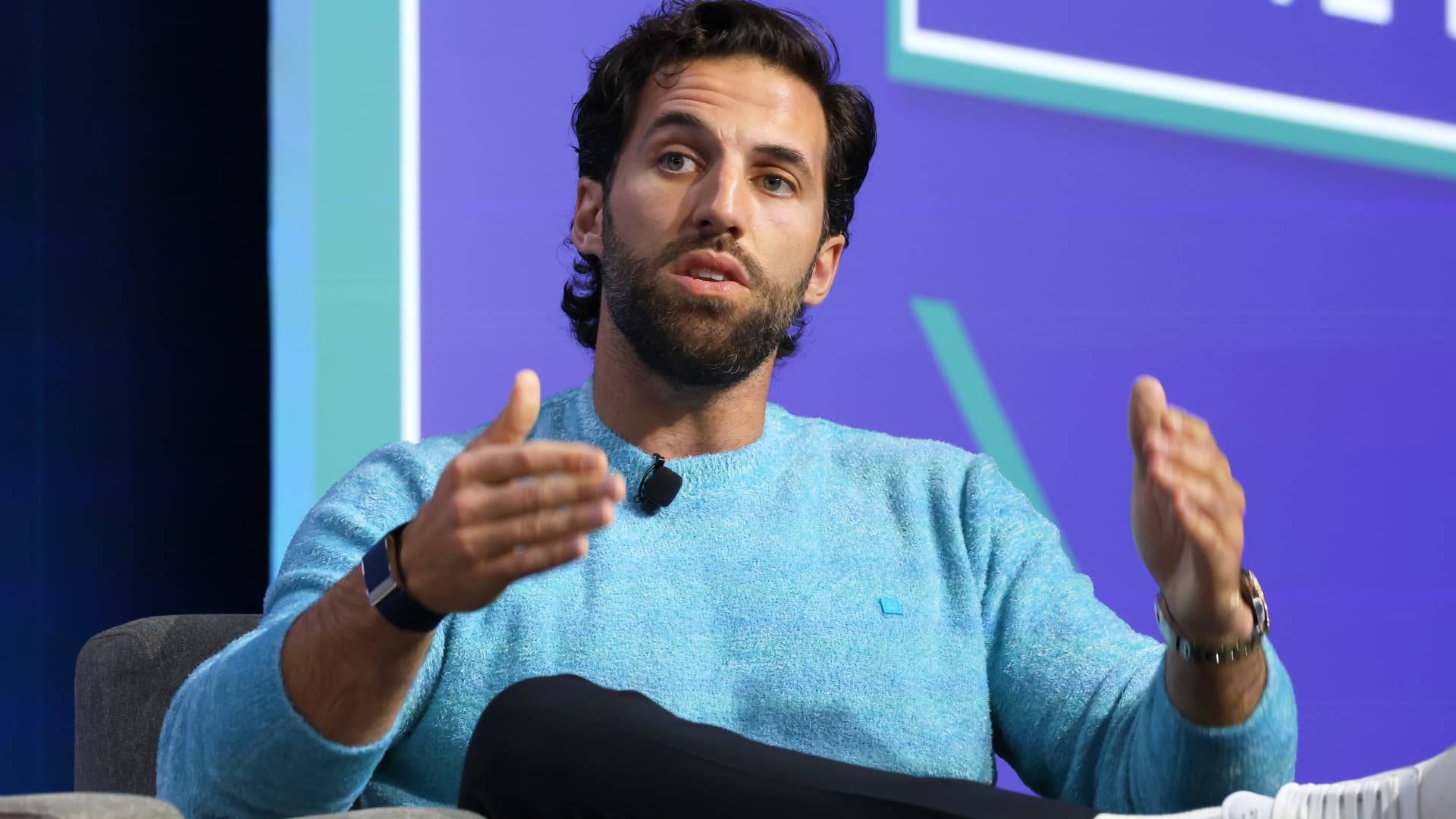
Paul Rabil, at the CNBC Boardroom Game Plan: The Ownership Game Panel, July 25, 2023.
Jesse Grant | CNBC
The Premier Lacrosse League wants to begin selling its teams to individual owners or groups by 2028 “or soon thereafter,” league co-founder Paul Rabil told CNBC.
In the next decade, Rabil said, he wants the league to expand from eight teams to as many as 16, with each franchise owned independently, similar to other U.S. professional leagues. The PLL is in its eighth season, and currently the league, itself, owns the teams.
Rabil, 40, is perhaps the most famous American lacrosse player in history, playing Major League Lacrosse from 2008 to 2018 before co-founding the PLL with his brother, Mike. The PLL merged with MLL in 2020.

The PLL is one of a number of emerging sports leagues, along with League One Volleyball, the Professional Women’s Hockey League and the Basketball Africa League, that have begun with a single-entity ownership model.
League One Volleyball has recently begun selling off teams to interested owners who pay expansion fees to take control of franchises. The BAL is beginning that process now, NBA Deputy Commissioner Mark Tatum told CNBC Sport last month.
The demand to own sports teams has skyrocketed in recent years as valuations for the biggest sports — the NFL, NBA, MLB and NHL — have soared. The spike in team valuations for the so-called Big Four U.S. sports leagues has pushed a class of investors toward more affordable teams in Major League Soccer, the National Women’s Soccer League and the WNBA.
Emerging sports leagues like the PLL are seeking to prove they can join this mezzanine class of leagues that can garner team valuations in the hundreds of millions or even close to a billion dollars.
Earlier this week, the PLL raised $100 million in a Series E funding round to grow the league. Rabil is banking on the 2028 Los Angeles Summer Olympics to give exposure to the league and the sport. Lacrosse hasn’t been a medal sport in the Summer Games for about 120 years but is returning in 2028.
“The first allotment of tickets sold out in 48 hours for lacrosse, so there’s good hype building,” Rabil said.
The PLL is backed by a combination of investor firms and wealthy individuals.
However, Rabil said, if a large private equity fund or a strategic company such as TKO Group, which owns World Wrestling Entertainment, Ultimate Fighting Championship and Professional Bull Riders, would like to acquire the league, “we would absolutely have those discussions.”
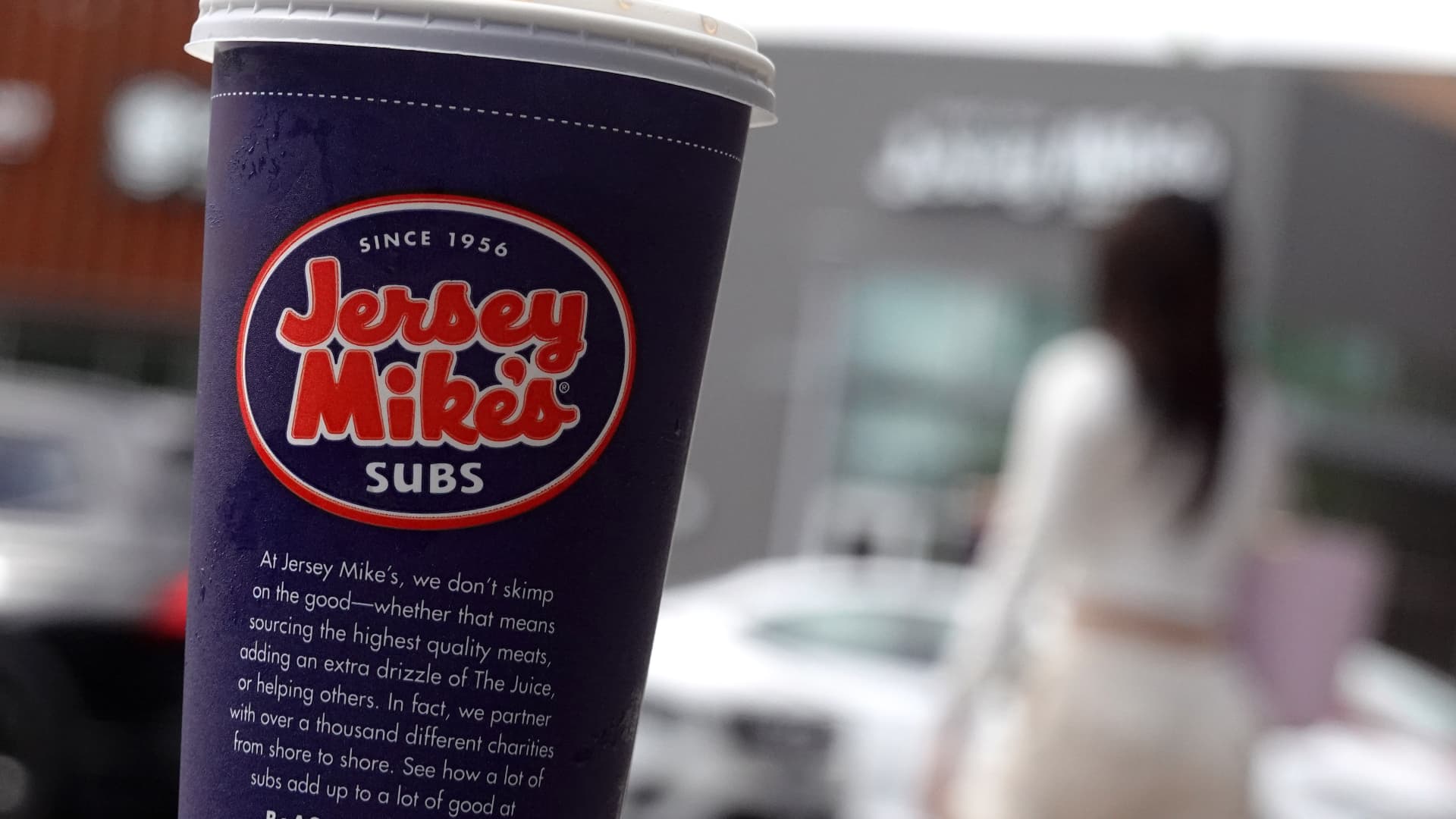
In this photo illustration, a Jersey Mike’s cup is displayed outside of Jersey Mike’s restaurant on April 21, 2026 in Los Angeles, California.
Justin Sullivan | Getty Images
Sandwich chain Jersey Mike’s filed for an initial public offering on Thursday, reporting that its same-store sales cumulatively climbed 50% from 2020 through 2025.
Jersey Mike’s plans to trade on the New York Stock Exchange under the ticker “JMKE.”
The company reported net income of $55 million on total revenue of $724 million last year, up from net income of $5 million on revenue of $653 million in 2024, according to the regulatory filing.
Last year, Jersey Mike’s annual system sales, which includes both company-owned and franchised locations, reached $4.3 billion, up 13% from the previous year.
Its same-store sales increased 3% over the same period; the metric tracks sales growth at restaurants open at least a year. Broadly, the restaurant industry has seen same-store sales weaken over the last two years as consumers dine out less often to save money.
Jersey Mike’s filing comes as many companies feel more optimistic about going public, especially following the blockbuster SpaceX IPO.
While the number of IPOs that have been priced so far this year lags behind the year-ago period, the number of companies that have filed to go public is up, according to Renaissance Capital. Artificial intelligence giants OpenAI and Anthropic are among the hopefuls that have submitted confidential filings with the Securities and Exchange Commission.
A growing business
Today, Jersey Mike’s has nearly 3,300 locations, making it the second-largest hoagie sandwich chain in the U.S. behind Subway. About 2,000 of those restaurants were opened in the last decade. Nearly all of Jersey Mike’s restaurants are franchised, so the bulk of its revenue comes from royalties and advertising fees.
Despite a sluggish industry backdrop, the company announced in April that it had confidentially filed for an initial public offering. More than a year earlier, Blackstone bought a majority stake in Jersey Mike’s in a deal that reportedly valued the chain at roughly $8 billion.
After the transaction closed, Jersey Mike’s tapped Charlie Morrison as its latest chief executive. Morrison previously led Wingstop for more than a decade, including during the chicken wing chain’s public market debut.
Jersey Mike’s founder Peter Cancro began working at a Jersey Shore sandwich shop at age 14 in 1971. Four years later, he pulled together enough money to buy Mike’s Subs. Cancro later changed the name and began franchising the chain.
Following the deal with Blackstone, he has retained “meaningful equity” in Jersey Mike’s and holds a seat on its board, according to a letter to fellow shareholders included in the regulatory filing.
“[Blackstone’s] experience with leading franchisors aligns with the values and long-term mindset that have shaped Jersey Mike’s and will help continue our expansion in the United States and abroad,” Cancro wrote. “I remained involved in the Company now and in the future.”

Franklin Resources, Inc. [NYSE:BEN] is a global investment management organization with subsidiaries operating as Franklin Templeton and serving clients in over 150 countries. Franklin Templeton’s mission is to help clients achieve better outcomes through investment management expertise, wealth management and technology solutions. Through its specialist investment managers, the company offers specialization on a global scale, bringing extensive capabilities in fixed income, equity, alternatives and multi-asset solutions. With more than 1,300 investment professionals, and offices in major financial markets around the world, the California-based company has over 75 years of investment experience and over $1.4 trillion in assets under management as of June 30, 2023. For more information, please visit franklintempleton.com and follow us on LinkedIn, Twitter and Facebook.
Business
FBI and Arizona Sheriff Diverge on Legitimacy of Ransom Notes in Nancy Guthrie Kidnapping Case

TUCSON, Ariz. — Five months after Nancy Guthrie vanished from her Arizona home, federal and local authorities have issued unusually timed statements that reveal differing assessments of ransom communications received during the investigation into the disappearance of the mother of “Today” show co-host Savannah Guthrie.
The FBI’s Phoenix office and the Pima County Sheriff’s Department released separate updates within an hour of each other on Tuesday evening, highlighting ongoing coordination challenges while underscoring the case’s complexity as both a potential kidnapping and possible hoax elements emerge.
The FBI statement acknowledged receiving multiple ransom notes but emphasized that while some appear to be extortion attempts without legitimacy, others “may potentially be legitimate and are still being investigated as such.” The agency described the case as an active kidnapping for ransom investigation, with local authorities leading but receiving full federal support.
Pima County Sheriff Chris Nanos’ statement took a different tone, directing all questions regarding alleged ransom notes to the FBI while affirming that every tip is taken seriously and forwarded to detectives. The sheriff’s department emphasized public cooperation and provided tip lines for information.
The divergent messaging comes amid heightened public interest in the case, which has generated national headlines since Guthrie’s disappearance in February. The statements mark one of the rare occasions when authorities have publicly addressed specifics of the investigation.
Timeline of Disappearance
Nancy Guthrie was last seen on Feb. 2, 2026, at her residence in the Tucson area. Family members reported her missing after she failed to respond to routine communications, prompting immediate involvement from local law enforcement.
The Pima County Sheriff’s Department launched a missing persons investigation, quickly expanding to include search efforts across southern Arizona. Canine units, drones and volunteer groups assisted in initial ground searches, though no immediate evidence of foul play was identified.
As weeks passed without leads, the FBI joined the investigation, citing potential interstate aspects and the possibility of abduction. The case drew widespread media attention, particularly given Savannah Guthrie’s prominence as a television journalist.
Multiple ransom demands surfaced through various channels, including email, mail and anonymous tips. Some communications demanded significant sums for Guthrie’s safe return, while others provided purported proof of life or location details that investigators could not verify.
One individual was previously charged in connection with false communications, raising questions about the authenticity of subsequent notes. The recent statements suggest authorities continue sifting through legitimate versus fabricated demands.
Investigative Challenges
Kidnapping cases involving ransom notes present unique difficulties for law enforcement, requiring careful verification to avoid diverting resources or endangering victims. The volume of tips in high-profile cases often overwhelms investigators, necessitating prioritization protocols.
Federal involvement brings specialized resources including behavioral analysis, digital forensics and financial tracking capabilities. However, jurisdiction remains primarily with local agencies unless clear federal crimes are established.
Pima County, spanning urban Tucson and vast desert regions, poses logistical challenges for searches. Extreme temperatures and rugged terrain complicate efforts, while the possibility of cross-border elements adds another dimension given Arizona’s proximity to Mexico.
Family members, including Savannah Guthrie, have made occasional public appeals for information while largely refraining from commenting on specifics to avoid interfering with the investigation. The emotional toll on loved ones in prolonged missing persons cases is well-documented by support organizations.
Public and Media Interest
The case has captured significant attention due to Savannah Guthrie’s role at NBC’s “Today” show. Colleagues and media personalities have expressed support while respecting the family’s privacy during the ongoing probe.
Social media has amplified both credible tips and unsubstantiated speculation, creating additional work for investigators who must separate signal from noise. Authorities have urged the public to report information through official channels rather than online forums.
Similar high-profile disappearances have sometimes led to breakthroughs months later through persistent tip lines or technological advances in evidence analysis. Cold case resolution rates improve with time as new technologies emerge and witnesses come forward.
Broader Context of Missing Persons
According to national statistics, thousands of adults go missing annually in the United States, with many cases resolved but others remaining open indefinitely. Factors including age, health conditions and circumstances influence resolution likelihood.
Arizona’s desert environment presents particular risks, with extreme heat contributing to fatalities in missing persons incidents. Search and rescue operations require specialized training and equipment.
Law enforcement agencies increasingly use digital tools, genetic genealogy and public databases to solve cold cases. Collaboration between federal, state and local partners has improved outcomes in complex investigations.
Support organizations provide resources for families of missing persons, including emotional counseling and guidance on working with authorities. Public awareness campaigns encourage reporting suspicious activity promptly.
Next Steps in Investigation
Authorities have not provided timelines for resolution, emphasizing the active nature of the case. Continued analysis of communications, financial records and digital footprints remains central to efforts.
The public tip lines remain open, with both agencies stressing the value of any information, no matter how seemingly minor. Anonymous submissions are accepted to encourage broader participation.
Forensic testing on any recovered items continues, alongside interviews with individuals who may have relevant knowledge. Cross-jurisdictional coordination ensures comprehensive coverage of potential leads.
The case serves as a reminder of the uncertainties families face in missing persons investigations. While authorities pursue every avenue, outcomes depend on evidence, cooperation and sometimes fortunate timing.
Nancy Guthrie’s disappearance has affected her family, friends and community. As investigations proceed, focus remains on determining her whereabouts and circumstances.
Anyone with information is urged to contact the FBI at 1-800-CALL-FBI or submit tips through official channels. The Pima County Sheriff’s Department and FBI continue working together despite nuances in their public messaging.
The coming weeks may bring additional updates as authorities assess recent statements’ impact and pursue verified leads. For now, the investigation into Nancy Guthrie’s disappearance remains active and ongoing.
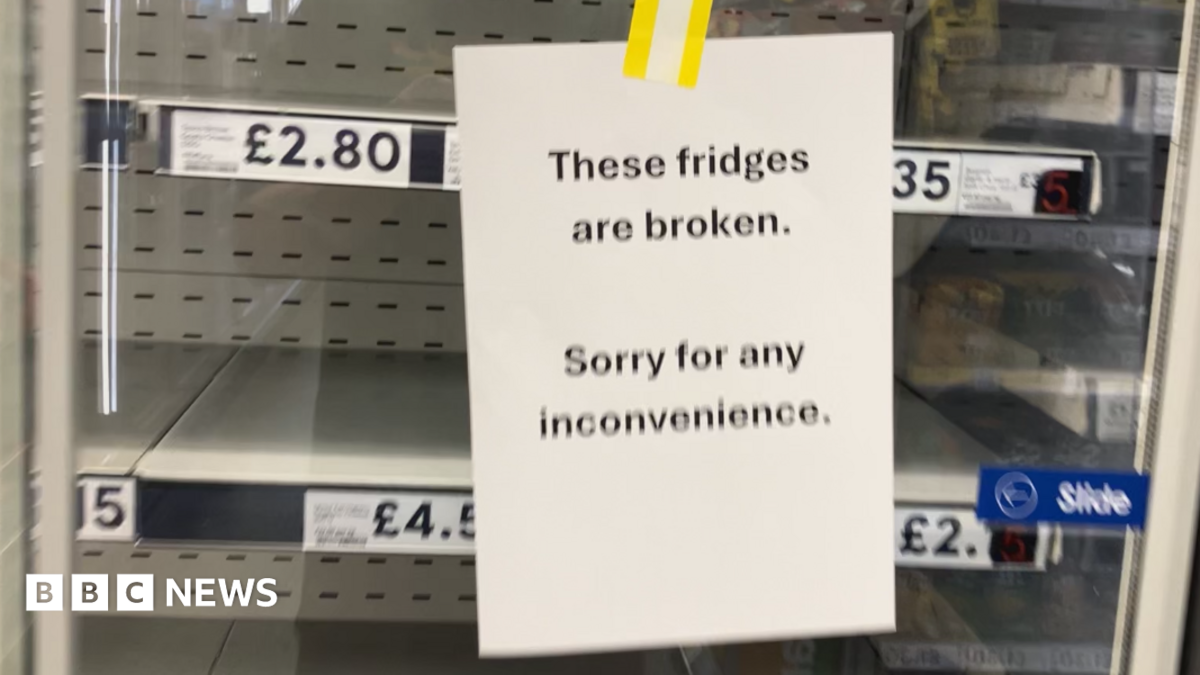
The food industry has recognised that heatwaves are causing it a problem.
Rupert Ashby, from the British Frozen Food Federation, said freezers are breaking down or being switched off in supermarkets in the extreme heat because the systems find it hard to deal with the high temperatures.
“The way the fridges work is to cool everything down and expel the hot air,” which normally works well in the ambient air in the UK.
“[However,] with heat like this, trying to expel that air is very difficult,” he added.
He said older stores tend to have a remote compressor on refrigeration units with the condensers outside. Because the system is on the outside, it is finding it hard to expel that hot air.
A spokesperson for Tesco said: “There were a few isolated issues affecting our refrigeration units in stores; however, these were not indicative of any broader issue across our estate.”
They said they had maintenance teams working hard to resolve any isolated issues “as quickly as possible… with customers still able to access fresh and frozen products across the vast majority of our stores”.
Next week, the Met Office is predicting another hot spell, with temperatures in the “low to mid 30s” across much of the UK.
Back at his research lab, Dr Foster’s team is working with many of the supermarkets to redesign fridges for a warmer world. But, he warned, there is no magic wand.
“It could take 20 years before all the refrigeration systems out there are at the maximum temperature they are being designed for today. And by then that will be too low.”


Terry Chrisomalis is a private investor in the Biotech sector with years of experience utilizing his Applied Science background to generate long term value from Healthcare. He is the author of the investing group Biotech Analysis Central which contains a library of 600+ Biotech investing articles, a model portfolio of 10+ small and mid-cap stocks with deep analysis for each, live chat, and a range of analysis and news reports to help Healthcare investors make informed decisions.
Analyst’s Disclosure: I/we have no stock, option or similar derivative position in any of the companies mentioned, and no plans to initiate any such positions within the next 72 hours. I wrote this article myself, and it expresses my own opinions. I am not receiving compensation for it (other than from Seeking Alpha). I have no business relationship with any company whose stock is mentioned in this article.
Seeking Alpha’s Disclosure: Past performance is no guarantee of future results. No recommendation or advice is being given as to whether any investment is suitable for a particular investor. Any views or opinions expressed above may not reflect those of Seeking Alpha as a whole. Seeking Alpha is not a licensed securities dealer, broker or US investment adviser or investment bank. Our analysts are third party authors that include both professional investors and individual investors who may not be licensed or certified by any institute or regulatory body.
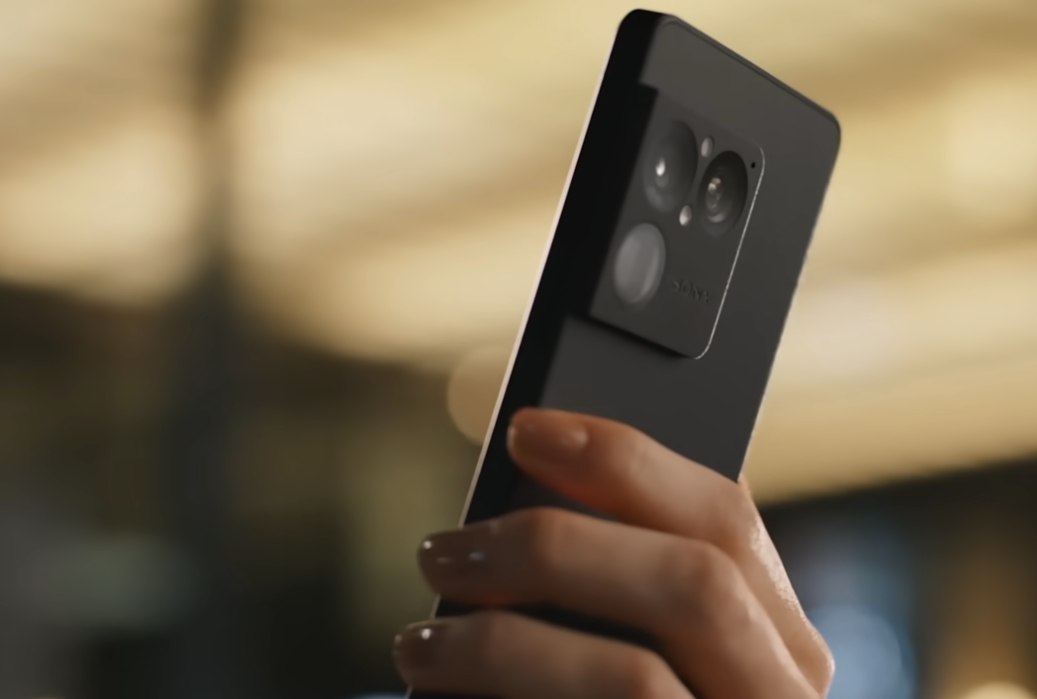
Sony’s latest flagship smartphone, the Xperia 1 VIII, delivers impressive camera advancements while preserving distinctive hardware touches that have defined the lineup for years, appealing to photography enthusiasts and power users seeking alternatives to mainstream designs.
Released in mid-2026, the device features a refined triple 48-megapixel camera system with significant upgrades to the telephoto lens, a vibrant 6.5-inch OLED display and the latest Snapdragon processor. Priced as a premium offering, it targets consumers prioritizing creative tools and audio quality over broader ecosystem integration.
The Xperia 1 VIII maintains Sony’s signature tall, narrow aspect ratio for a more cinematic viewing experience, with minimal bezels and an uninterrupted front panel. Its design emphasizes durability with IP65/68 water and dust resistance while incorporating premium materials that feel substantial in hand.
Camera capabilities remain the standout feature. The main sensor captures detailed images with natural color reproduction, while the upgraded telephoto lens offers improved zoom performance and macro capabilities. An enhanced ultrawide complements the setup for versatile shooting scenarios.
Reviewers have praised the phone’s photography tools, including manual controls reminiscent of dedicated cameras. AI-assisted features help novice users achieve better results without sacrificing advanced options for professionals.
Display and Performance
The 6.5-inch LTPO OLED panel supports 120Hz refresh rates for smooth scrolling and gaming, with HDR support delivering vibrant colors and deep blacks. Resolution balances sharpness with battery efficiency, making it suitable for media consumption and productivity.
Powered by Qualcomm’s Snapdragon 8 Elite Gen 5 chipset, the device handles demanding tasks with ease. Multitasking, gaming and photo editing perform fluidly, supported by ample RAM options up to 16GB and storage expandable via microSD card — a rarity among flagships.
Battery life benefits from a 5000mAh cell, providing all-day usage for most users with moderate to heavy activity. Wireless charging and optimized power management contribute to practical endurance, though fast charging speeds lag behind some competitors.
Audio remains a Sony strength, with front-firing stereo speakers delivering clear, balanced sound and a 3.5mm headphone jack supporting high-resolution audio for enthusiasts.
Design and Unique Features
Sony continues bucking industry trends by retaining features many manufacturers have abandoned. The dedicated shutter button enables quick camera access and precise control, particularly valuable for photography-focused users.
Expandable storage via microSD accommodates large media libraries and 4K video recordings. The headphone jack appeals to audiophiles preferring wired connections for superior quality.
The phone’s build quality feels premium yet practical, with a textured finish providing grip and a slim profile despite its tall screen. Weight distribution makes it comfortable for extended use, though the aspect ratio requires adjustment for users accustomed to wider devices.
Software experience centers on a near-stock Android interface with useful Sony enhancements for multimedia and productivity. Update support extends several years, ensuring longevity.
Camera System in Depth
The triple-camera array consists of a main 48-megapixel sensor with optical image stabilization, an upgraded 48-megapixel telephoto with larger sensor for better low-light zoom performance and a 48-megapixel ultrawide. This configuration delivers consistent quality across focal lengths.
Low-light photography shows marked improvement thanks to larger sensors and computational processing. Video recording supports high resolutions with advanced stabilization, appealing to content creators.
Manual mode provides extensive controls over exposure, focus and white balance, mimicking professional camera interfaces. AI scene recognition assists automatic shooting while allowing overrides for creative control.
Selfies benefit from a capable front camera, though it trails the rear system in versatility. Overall, the Xperia 1 VIII prioritizes photographic flexibility over simplified point-and-shoot experiences favored by many competitors.
Market Position and Competition
Sony’s Xperia line occupies a niche among flagship smartphones, appealing to users who value unique features and camera hardware over broad app optimization or ecosystem lock-in. Pricing reflects its premium positioning, comparable to other top-tier devices.
Competition from Samsung’s Galaxy S series, Google’s Pixel phones and Apple’s iPhone lineup offers more mainstream alternatives with stronger software support and broader accessory ecosystems. Sony differentiates through hardware quirks and photography focus.
Global availability varies, with stronger presence in select Asian and European markets. Marketing emphasizes creative tools and entertainment experiences aligned with Sony’s broader business in music, gaming and imaging.
Battery endurance and charging speeds represent areas where the Xperia 1 VIII trails some rivals, though real-world usage remains competitive for most consumers. Thermal management during intensive tasks performs adequately without excessive throttling.
Value and Recommendation
For photography enthusiasts and users seeking distinctive features like expandable storage and headphone jacks, the Xperia 1 VIII offers compelling value despite its premium cost. The camera system’s versatility and manual controls provide advantages for serious shooters.
Everyday users may find the tall aspect ratio and software nuances less intuitive compared to more conventional flagships. Battery life and charging convenience could influence decisions for heavy users.
The device’s longevity is supported by software updates and robust build quality. As a niche product, it excels for its target audience while struggling for broader appeal in a market dominated by streamlined experiences.
Sony continues refining the Xperia formula rather than chasing mass-market trends, resulting in a phone that feels purposeful and specialized. The Xperia 1 VIII represents a thoughtful evolution that rewards users who prioritize photography, audio and customization options.
Early reviews highlight its strengths in image quality and unique hardware while noting areas for improvement in battery optimization and software polish. As the device reaches more consumers, real-world feedback will further define its place among 2026 flagships.
Business
California bans consumer-facing ‘sell by’ food labels under new law aimed at reducing waste
Check out what’s clicking on FoxBusiness.com.
California’s standardized food date-labeling law took effect Tuesday, requiring food manufacturers that choose to display expiration-style dates on products sold in the state to use uniform language and prohibiting consumer-facing “sell by” labels.
Under Assembly Bill 660, food manufacturers, processors and retailers that display date labels on food manufactured on or after July 1, 2026, must use “BEST if Used by” or “BEST if Used or Frozen by” to indicate product quality, and “USE by” or “USE by or Freeze by” to indicate food safety.
The law also prohibits covered food products sold in California from displaying consumer-facing “sell by” labels, although retailers may continue using coded stock-rotation labels that are not easily readable by consumers.
US ECONOMY ADDED JOBS AT A SLOWER PACE THAN EXPECTED IN JUNE
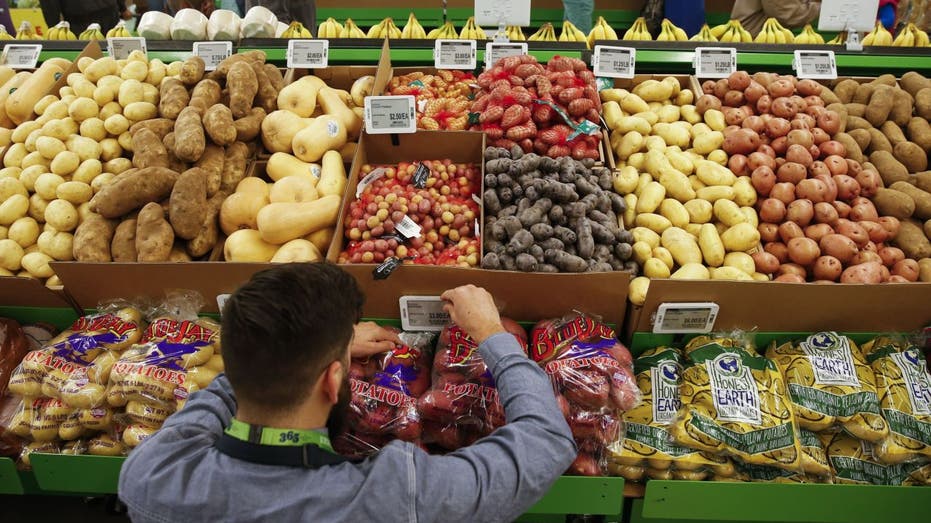
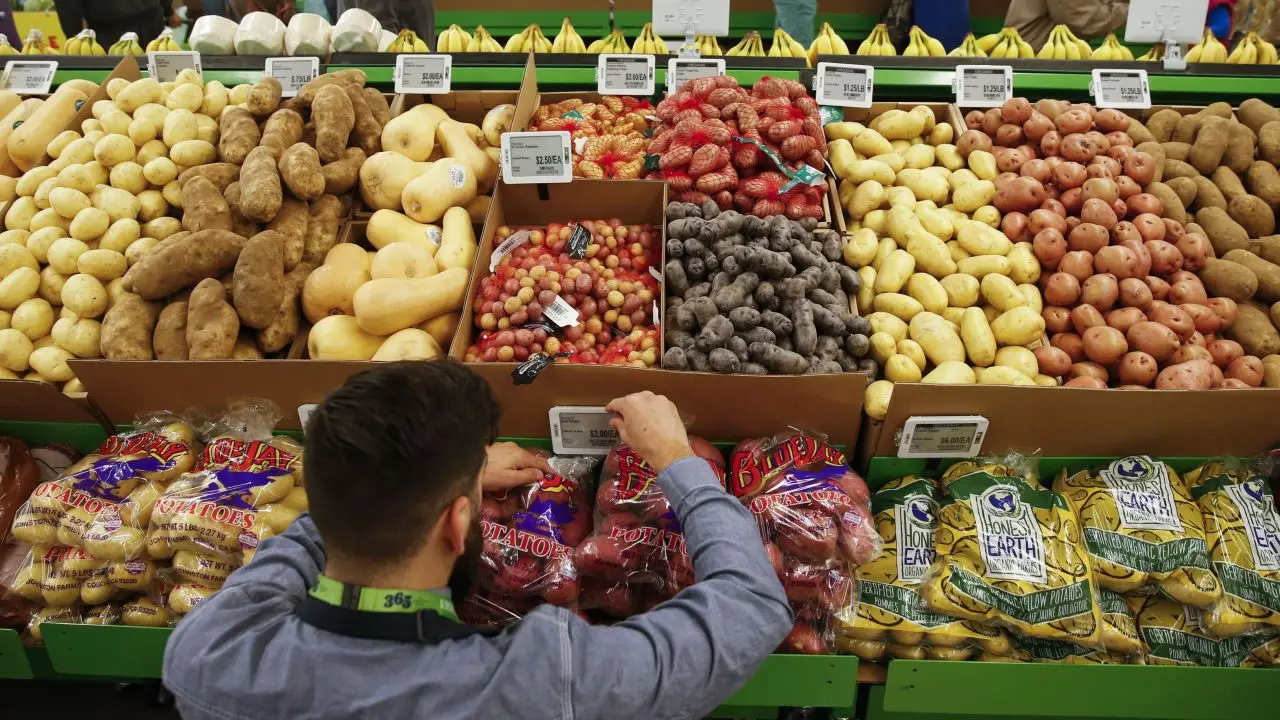
An employee arranges a digital price tag for vegetables on the opening day of the 365 by Whole Foods Market store in the Silver Lake neighborhood of Los Angeles, California, U.S., on Wednesday, May 25, 2016. Whole Foods Market Inc., plans to open 10 (Photographer: Patrick T. Fallon/Bloomberg via Getty Images / Getty Images)
“Using clear, consistent date labels will help reduce confusion about when food is safe to eat, cut down on unnecessary food waste, and make it easier for consumers to make informed decisions,” Assemblymember Jacqui Irwin, D-Thousand Oaks, who authored the legislation, wrote Monday on X. “A simple change with meaningful benefits for families, businesses, and the environment.”

Organic labeled vegetables are offered for sale at a grocery store on January 19, 2023 in Chicago, Illinois. (Scott Olson/Getty Images)
State officials say the change is intended to reduce consumer confusion over the dozens of different date-label phrases currently used on food packaging.
According to the California Department of Food and Agriculture, more than 50 differently worded date labels have been used in the U.S., leading many consumers to mistakenly discard food that remains safe to eat.
The department, citing the California Department of Resources Recycling and Recovery, said Californians throw away the equivalent of 2.5 billion meals worth of unspoiled food each year. Organic waste accounts for about 48% of material sent to California landfills and generates roughly 41% of the state’s methane emissions as it decomposes there, according to the agency.
The legislation does not require manufacturers to place date labels on products that otherwise would not have them. Instead, it standardizes the wording used when companies choose — or are otherwise required by law — to include quality or safety dates.

Elderly shoppers browse the isles of Iceland Foods in Northwich, Britain, on March 18, 2020, where shoppers will soon be able to take out small interest free loans from the supermarket for groceries. (REUTERS/Molly Darlington / Reuters Photos)
The law also preserves several exceptions. It does not apply to infant formula, eggs, pasteurized in-shell eggs, or beer and other malt beverages. Grocery stores may continue using “packed on” labels for prepared foods as long as the products also display the required quality or safety date labels.
CLICK HERE TO GET FOX BUSINESS ON THE GO
Gov. Gavin Newsom signed AB 660 into law in September 2024, making California the first state to adopt standardized consumer-facing food date labels.
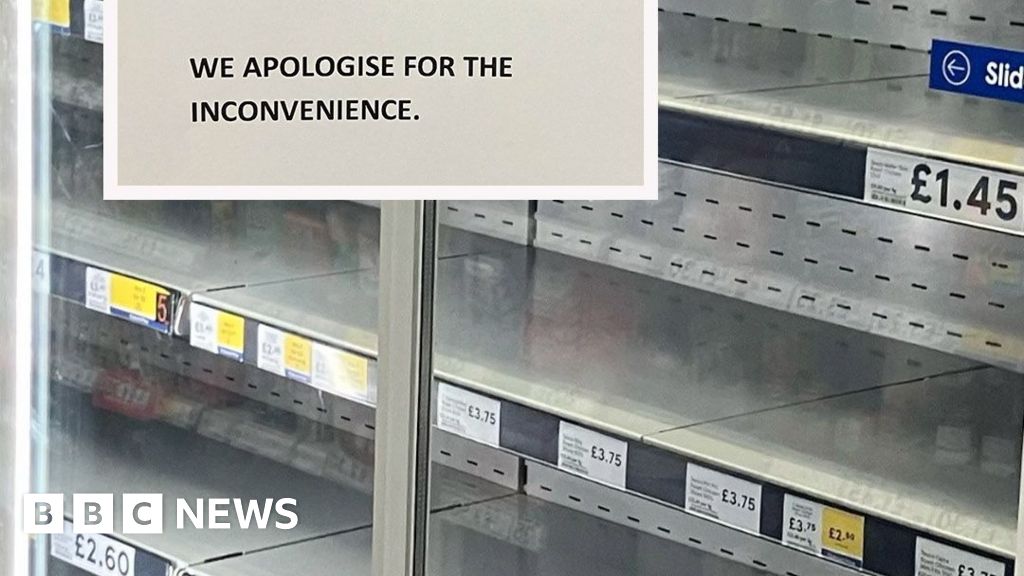
An expert says many can not handle the high temperatures we have been experiencing.

Sony Stock Gains as PlayStation Shifts Fully Digital and Entertainment Businesses Deliver Growth
VALR Launches 200+ Hyperliquid Perps Markets

Marvel Hired Its Most Important New Actor Without An Audition


-

 Fashion6 days ago
Weekend Open Thread: Staud – Corporette.com
-

 Politics7 days ago
The House | Manchesterism won’t survive the painful trade-offs unless it gets citizens on board
-

 Crypto World3 days ago
Strategy authorizes up to $1.25B in Bitcoin sales under new capital plan
-

 Politics7 days ago
Potential 2028er World Cup attendee leaderboard
-

 Business6 days ago
Asia stock markets slide as tech shares slump
-

 News Videos4 days ago
MAJOR BITCOIN & MARKET UPDATE!!!! (MUST WATCH ASAP!!!)
-

 Tech7 days ago
A Look At A Gaggle Of Transputer Boards
-

 Crypto World5 days ago
Coinbase, Circle Deepen Crypto Stock Losses Despite Resilient S&P 500
-

 Tech3 days ago
Anonymous researcher drops 0-day ‘exploitarium’ repo
-

 Business3 days ago
Australia treasurer says alleged access of prime minister’s bank data ’incredibly concerning’
-

 Crypto World6 days ago
Kraken's xStocks Opens Bending Spoons IPO Registration to EEA Retail
-

 Crypto World7 days ago
Bitcoin Sparks $600M Hourly Liquidations With $65,000 Set To Become Resistance
-

 Sports6 days ago
FIH Pro League: India defeat Pakistan 7-1, register biggest win of campaign | Other Sports News
-

 Tech5 days ago
Bluekit phishing kit adopts browser-in-the-middle for login theft
-

 Tech5 days ago
Russian hackers now target Signal backup recovery keys
-
 Crypto World6 days ago
Hyperliquid Named on Singapore MAS Investor Alert Register
-

 Crypto World6 days ago
RTX holders must register wallets before token distribution begins
-

 Crypto World7 days ago
Tether (USDT) Passes Ether in Market Cap as ETH Drops Toward $1.5K
-

 Sports1 day ago
Broncos roster: OL Ben Powers (No. 74) entering final year of contract
-
 Business3 days ago
The AI boom won’t burst all at once. It will pop in ‘rolling bubbles’: Macquarie
You must be logged in to post a comment Login