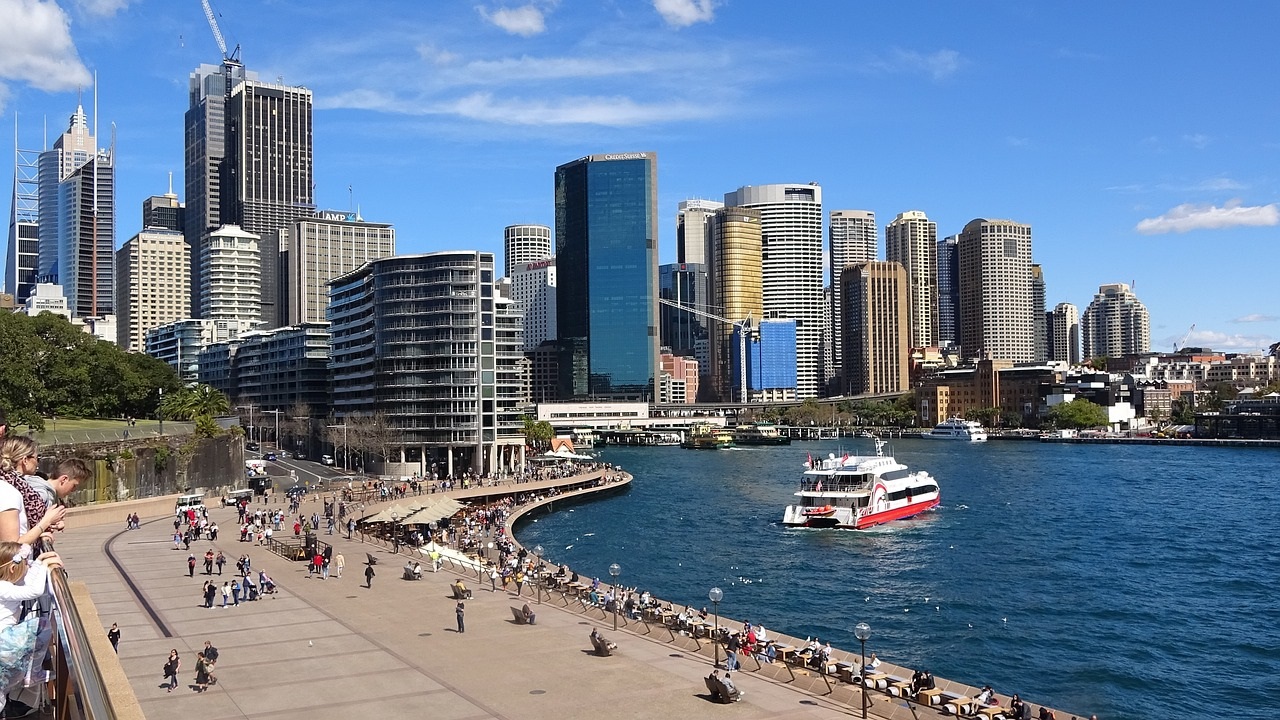
SYDNEY — Australian house prices are slowing for the first time in years following a sweeping federal budget overhaul of the country’s property tax settings, and the big banks are now projecting declines across major capital cities that could represent one of the most significant corrections in the market’s modern history.
National Australia Bank has forecast a 2 per cent price drop across major capital cities, while Commonwealth Bank revised its growth estimate down to 3 per cent from 5 per cent. Investment bank Morgan Stanley has gone further, predicting house prices could fall between 5 and 10 per cent, describing the scenario as “one of the largest price corrections over the past 40 years.” Sydney has already recorded a 1.2 per cent monthly decline, and auction clearance rates have fallen across major markets as buyers and investors alike reassess the landscape following the May federal budget.
The catalyst was a pair of significant tax changes. The Albanese government amended the capital gains tax discount for investment properties, replacing the existing 50 per cent flat reduction with a smaller discount tied to the inflation rate. Separately, changes to negative gearing rules altered the financial calculus for property investors who use the strategy of deducting rental property losses against their taxable income. Together, the changes were explicitly designed to reduce competition between investors and first home buyers in a market that has become one of the least affordable in the developed world.
Prime Minister Anthony Albanese addressed the criticism head-on in a recent television interview, framing the changes as a fairness issue rather than a risk to property values.
“Everyone has acknowledged during this debate that the housing system is broken,” Albanese said. “Therefore we had to do something about it.”
The scale of the affordability problem those changes are intended to address is stark. The median house price in Australia is now 8.9 times the average income, according to data from property research firm Cotality, a ratio that independent economist Nicki Hutley described as making Australia one of the most unaffordable housing markets anywhere in the world on a price-to-income basis. House prices have increased by more than 400 per cent since 2000, rising at an average of approximately 8 per cent per year across that span.
Hutley framed the intent behind the tax changes clearly: “The idea behind the tax changes is to make fewer investors compete with particularly first home buyers so that the house prices will come down and make them more affordable.”
But who actually gets hurt and who benefits from a falling market depends almost entirely on where a person sits within the housing ecosystem, and the human consequences of price movements in either direction are far from abstract.
For prospective buyers like 25-year-old Brisbane resident Zakariah Northcott, the prospect of falling prices represents what he calls a market correction that is long overdue. Northcott, who works as a customer service manager and has been saving for a home with his partner for years, describes the sustained price surge as a system rigged against younger Australians with ordinary incomes.
“It feels like the game’s rigged against us,” Northcott said. “Houses need to fall for it to be a reasonable thing for anyone to buy a house. If house prices continue to go up at the rate they are, it doesn’t matter if we save till we’re 45, we’ll never have a big enough deposit.”
Northcott’s concerns go beyond the financial to the deeply personal. He says that at current prices, his family plans are at risk. “If house prices don’t fall, that might mean that we just flat out don’t get to have kids. It’s our life goal. We’ve always wanted a family, a home, the same thing that our parents and grandparents had.”
For recent buyers, the equation is more complicated. Daniel Jones, a 27-year-old in Perth, purchased a two-bedroom apartment with his wife last September for approximately $725,000. The property was smaller than the couple, now new parents, would have liked, but they entered the market to stay close to family in Perth’s inner western suburbs. Jones says he supports falling prices even if it means his own home is worth less, framing the long-term trajectory of the market as an investment casino that has strayed far from its fundamental purpose.
“It’s becoming an investment casino rather than what it should be, which is a place for people to live,” Jones said. He added that the increase in prices over recent decades is unsustainable and has systematically excluded younger Australians from home ownership.
Hutley cautioned that for buyers who entered the market recently and at high prices, a correction does carry real financial risk, particularly the possibility of negative equity, where a property’s value falls below the outstanding mortgage balance.
“There is a risk young new home buyers who’ve got higher levels of debt, if they lose their job and they have to sell and the house price is worth less, then that’s a big problem,” Hutley said. “Not so much for the banks because they have mortgage lenders insurance, but for a person to walk away with less than they started is problematic.”
For sellers, the dynamics shift again. Larissa Ferguson, a single mother of three in Victoria Point in Brisbane’s southeast, spent the last three years building a three-bedroom home at a total cost of approximately $830,000. She had planned to sell within the next year and use the proceeds to upgrade to a larger family home. Those plans are now on hold.
“With housing prices possibly going down, I might not be able to get what I had hoped for which will impact me getting something big enough for us,” Ferguson said.
University of Sydney economist James Graham offered a perspective that he acknowledged often gets overlooked in the public debate around falling prices.
“If all houses are falling by 10 per cent, your house falls by 10 per cent, but so does the house that you want to buy,” Graham said. “So for that person, there’s not really any worse off than they were a month or two ago. People sometimes forget that. They feel like they’ve lost wealth, but as long as what you want to do with the wealth is just buy another home, it’s kind of a wash.”
Graham also put the scale of the projected correction in historical context: “House prices have been growing rapidly year on year for at least four or five years. 10 per cent sounds large and it is for some people, but it’s not that large in the grand scheme of ongoing house price growth that we’ve seen.”
If the 10 per cent correction Morgan Stanley projects actually materializes, Australian house prices would return to approximately where they were in late 2024, erasing only the most recent phase of gains in a market that remains, by virtually any measure, among the most expensive in the developed world.























































You must be logged in to post a comment Login