








Connect with us
DAPA Banner
DAPA Coin
DAPA
COIN PAYMENT ASSET
PRIVACY · BLOCKDAG · HOMOMORPHIC ENCRYPTION · RUST
ElGamal Encrypted MINE DAPA
🚫 GENESIS SOLD OUT
DAPAPAY COMING

Tech

Failed blockchain project ends with big fine for fibs about it being on track

Published

on

Software

A final humiliation for Australia’s Securities Exchange and its attempts to run a bourse on distributed ledgers

The attempt by Australia’s Securities Exchange (ASX) to replace its core trading platform with a blockchain-based system has ended with an A$20.5 million fine ($14.2 million/£10.6 million), further humiliation after the project flopped.

The ASX runs a platform called the Clearing House Electronic Subregister System (CHESS) to process and track trades on its exchange. In 2017, the ASX decided to replace CHESS, citing difficulties maintaining the application, which the bourse coded in COBOL and ran in OpenVMS on Itanium processors.

Advertisement

The ASX is a listed company so its own shares trade on CHESS.

The organization decided to replace CHESS with blockchain-based architecture. As explained in its 2019 annual report [PDF], the ASX believed its decision would help it “develop new services that improve the efficiency and standardisation of processes, reduce operational risk, and create new opportunities for growth and innovation.”

That optimism was utterly misplaced because the project foundered and missed deadline after deadline.

But in February 2022, the ASX issued a statement [PDF] in which it described the project as “progressing well, with the fully integrated industry test environment open and operating successfully.”

Advertisement

In the months that followed, the organization issued a string of statements about difficulties with the project and expected deployment delays. The ASX ended up abandoning the project.

In 2024, financial regulator the Australian Securities and Investments Commission (ASIC) sued, alleging that claim all was well with the CHESS replacement was a misleading statement. The regulator argued that as both the market operator, and a listed company itself, any misleading statements from ASX had the potential to undermine confidence in the entire Australian securities market.

ASX and ASIC settled the matter in June, and the bourse admitted [PDF] to having misled investors.

Australia’s Federal Court today handed down its judgement in the matter, noted that the ASX admitted its errors, but still ordered the bourse pay the A$20.5 million fine, plus ASIC’s A$3 million ($2.1 million/£1.55 million) costs.

Advertisement

A parliamentary report [PDF] on the project found three reasons why it failed. One was that the ASX didn’t properly define its objectives. Another was that the company kept adding new requirements but started building the CHESS replacement anyway, meaning the planning and deployment phases of the project overlapped.

The report also found “scalability risks were not properly identified and managed; with the result that it was never clear whether the proposed blockchain technology could in fact adequately replace the existing CHESS system.”

Those problems weren’t apparent to the outside world, where the Blockchain community regarded the ASX’s decision as a sign distributed ledger technology was suitable for even the mission-critical role of running a stock exchange.

The Register offers that assessment based on this account of AWS investigating whether it should get into the blockchain business. The author, a former AWS exec, explains how he was sent to Wall Street to research Blockchain, and often heard the opinion that the ASX’s project meant the technology must have merit.

Advertisement

AWS did not become a major blockchain player. And the ASX clearly regrets making the attempt. ®

Source link

Continue Reading
Click to comment

You must be logged in to post a comment Login

Leave a Reply

Tech

Private space pilots are flying orbital missions for the US Space Force

Published

on

Militaries routinely send satellites to fly by rival vehicles and suss out their capabilities, but scaling up this kind of reconnaissance is increasingly seen by the U.S. military as a challenge best handled by the private sector.

That’s why two space startups, True Anomaly and Rocket Lab, completed a rendezvous mission for the U.S. Space Force last week so complex, it was like something out of “Top Gun.” Their two rival satellites met up in orbit, close enough for one to capture imagery of the other.

The exercise, dubbed Victus Haze, demonstrated the close inspection of a space vehicle soon after it arrived in orbit, a necessity in a world where the U.S., Russia, and China are deploying novel space weapons.

“China and Russia launch capabilities to space on a regular basis, and part of the Space Force’s job is to understand what those capabilities are,” True Anomaly CEO Even Rogers, a veteran of the U.S. military’s space efforts, told TechCrunch. “Right now we have gaps in our collection capability.”

Advertisement

The June mission saw Rocket Lab, a rocket-building rival to SpaceX that recently announced its acquisition of Iridium, launch a spacecraft called Puma just 16 hours and 42 minutes after receiving notice, which is notable because most rocket launches are buttoned up months in advance.

A Jackal spacecraft built by True Anomaly was waiting in orbit to intercept it. As part of the exercise, the company didn’t know where Puma would arrive in space but used onboard sensors to find and identify its target from 2,000 kilometers away. The Jackal then flew close to the target — exactly how close is classified — and orbited it, capturing imagery of different parts of the vehicle, before returning to its starting point in orbit.

True Anomaly’s CEO said that, outside of NASA and Space Force space flight missions with humans, “this is probably the most complex rendezvous and proximity operation between two spacecraft in modern history.”

Bringing together two spacecraft in orbit, where they’re both moving at speeds approaching 17,500 mph, is no easy feat. Previous private demonstrations, like those performed by Northrop Grumman’s maintenance satellites or Astroscale’s orbital garbage hunting missions, operate on slower time frames.

Advertisement

And now things get interesting: The two companies are prepared to perform new exercises in the weeks ahead with increasing difficulty, which could include Rocket Lab’s Puma trying to evade True Anomaly’s Jackal and performing its own inspection maneuvers.

Founded in 2022 by Rogers and a cadre of former military space experts, True Anomaly planned to build both the hardware and software to enable the new tasks assigned to the U.S. Space Force when it was created in 2019. After several years of development missions, last month’s demonstration has begun to realize that vision.

“That’s the secret sauce of this company,” said Seth Winterroth, a partner at Eclipse Ventures who sits on True Anomaly’s board. “It’s not one spacecraft architecture or one piece of software or a certain set of payloads — it’s a deep, deep understanding of what tactics and doctrine look like in this domain.”

True Anomaly has raised just over $1 billion, including a $650 million round in March. Now the company will look to compete for a number of task orders, particularly in the Space Force’s $6.2 billion Andromeda program, which looks to the private sector for exactly this kind of maneuverable reconnaissance.

Advertisement

“Flight heritage is everything, and demonstrated capability is what speaks the loudest with these opportunities,” Rogers said.

When you purchase through links in our articles, we may earn a small commission. This doesn’t affect our editorial independence.

Source link

Advertisement
Continue Reading

Tech

Elon Musk refutes report claiming that an AI device is in development at SpaceX

Published

on

Elon Musk has denied a Wall Street Journal report claiming SpaceX showed investors a prototype AI device before its recent IPO. “Utterly false,” Musk wrote on X, responding to a post about the report that has since been deleted, offering no further explanation.

A denial that leaves more questions than it answers

The Journal’s report, which cited people familiar with the matter, described a handset-like prototype shown to investors and stakeholders ahead of the IPO. The device is said to run on a proprietary operating system, use a Qualcomm Snapdragon chip, and pull in AI technology from xAI, the company SpaceX folded into its operations earlier this year. Investors were reportedly told the project is still early enough that its design could change, with no commitment that it will ever ship.

Musk’s two words don’t specify what he’s disputing. He hasn’t said outright that no device exists, that it was never shown to investors, or that the Journal got the description wrong. SpaceX hasn’t issued its own statement either.

A familiar pattern of pushback

Musk has a track record of flatly denying reports that later turn out to have merit. For instance, Reuters reported in 2024 that Tesla had shelved its low-cost Model 2, a claim Musk dismissed as “Reuters is lying (again),” without elaborating. It’s been two years since, and there’s still no sign of the Model 2.

Advertisement

On top of that, this isn’t the first time Musk has pushed back on reports tying SpaceX to phone-like hardware. Earlier this year, SpaceX was rumored to be exploring a Starlink-connected phone, a claim Musk also rejected at the time. However, he did say that a Starlink-based device was “not out of the question at some point.”

Whether SpaceX ever ships anything resembling the device the Journal described, or whether “utterly false” means exactly what it says, remains unclear.

Source link

Advertisement
Continue Reading

Tech

Mark Zuckerberg tells staff that AI agents haven’t progressed as quickly as he’d hoped

Published

on

Replacing people with AI doesn’t seem to be that easy to do, if Meta can be seen as an example.

Reuters reports that at an internal town hall Thursday, CEO Mark Zuckerberg told staff that the pace of AI agent development had not “accelerated in the way” executives had previously expected them to.

Earlier this year, Meta laid off some 8,000 employees — approximately 10% of its corporate workforce — and reassigned another 7,000 to various AI groups, including one called Agent Transformation, Bloomberg reported.

During this week’s meeting, Zuckerberg apparently commented on these job cuts — noting that they were not as “clean” as they should have been. The cuts were made because top officials at the company “were worried that we weren’t going to move fast enough ‌to adapt” to the changing landscape of the tech industry, Zuckerberg reportedly added.

Advertisement

The corporate leader also apparently said that the perceived upside of the new AI-focused company structure hadn’t “come to ​fruition yet,” although he said that he believed the company would begin to see improvements from its AI investments during the next three to six months. Several other investigative reports have depicted Meta’s months-old AI unit as a soul-crushing gulag, according to some of the engineers assigned to it.

Meta has invested heavily in AI and is expected to spend as much as $145 billion on AI infrastructure this year, Reuters reports.

TechCrunch reached out to Meta for comment.

Source link

Advertisement
Continue Reading

Tech

In Turok Origins, Dinosaurs Don’t Just Die, They Power Up Your Suit in This New Gameplay Trailer

Published

on

Turok Origins Gameplay Trailer
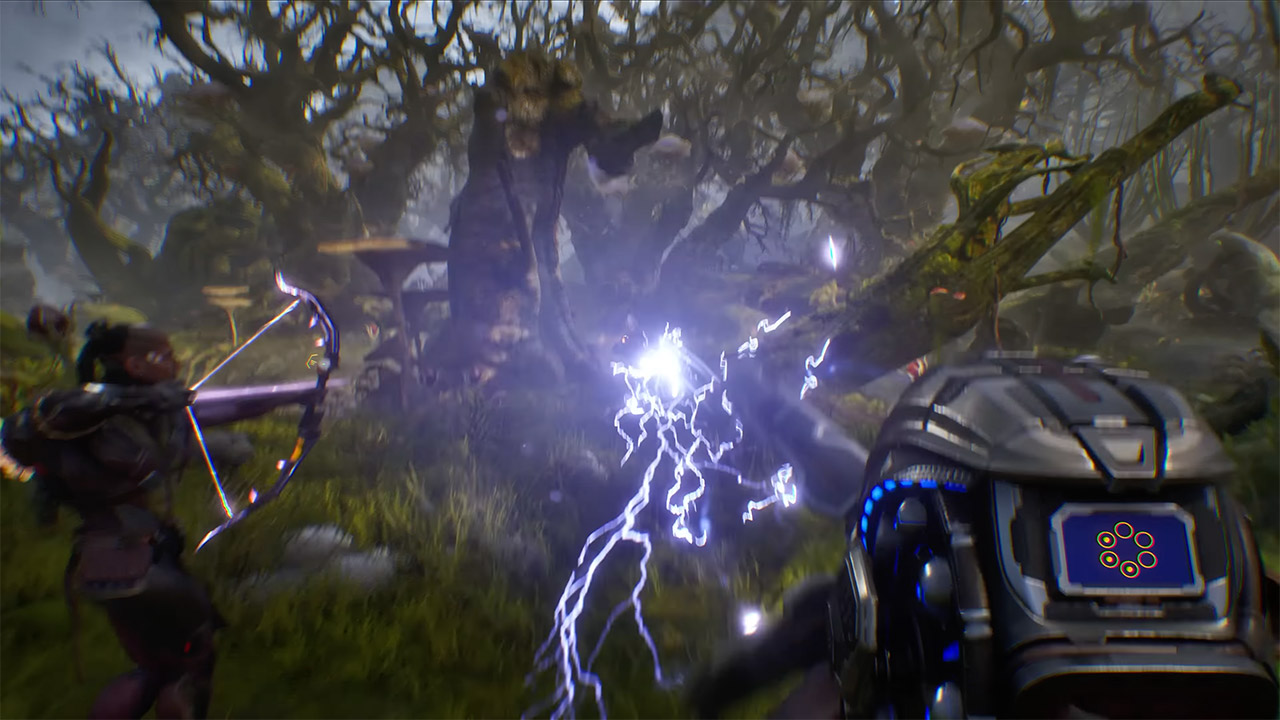
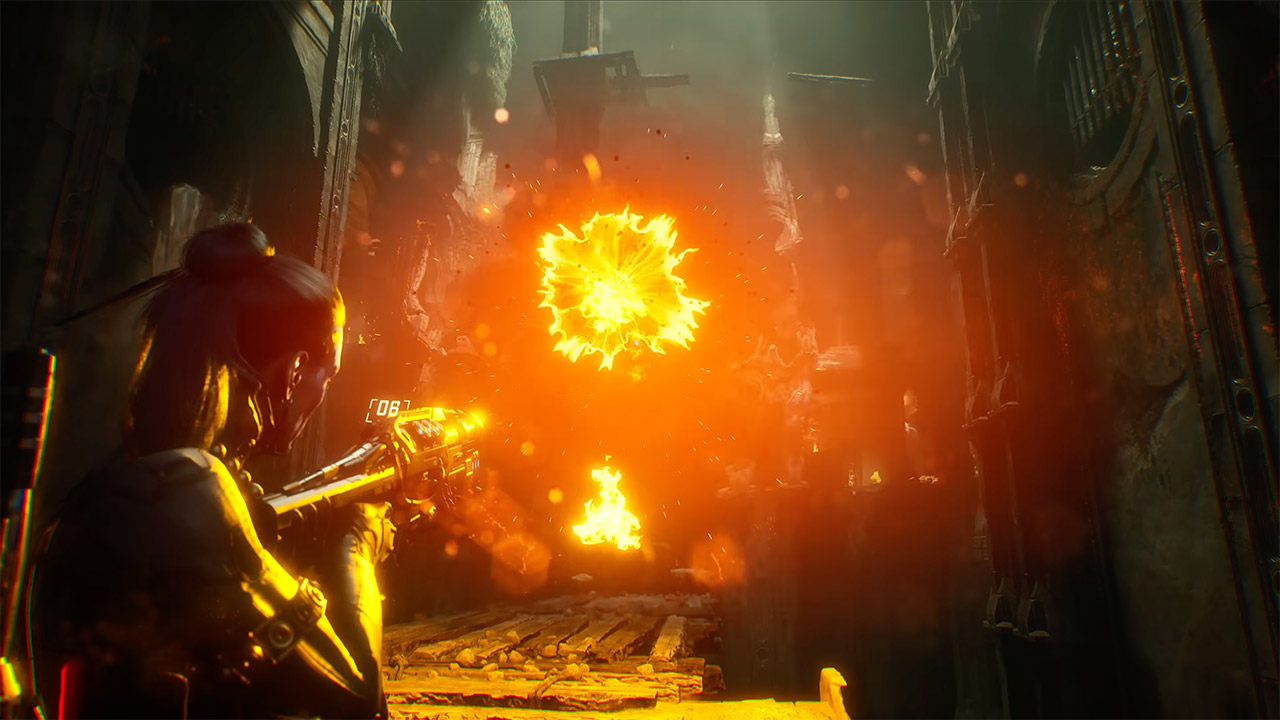
Saber Interactive just released a fresh in-engine gameplay trailer for Turok Origins, and it makes one thing clear right away: this return to the Lost Lands carries real weight. The roughly 47-second clip moves fast, blending brutal close-quarters combat with a striking new progression system that turns every major kill into something more than a notch on the belt.


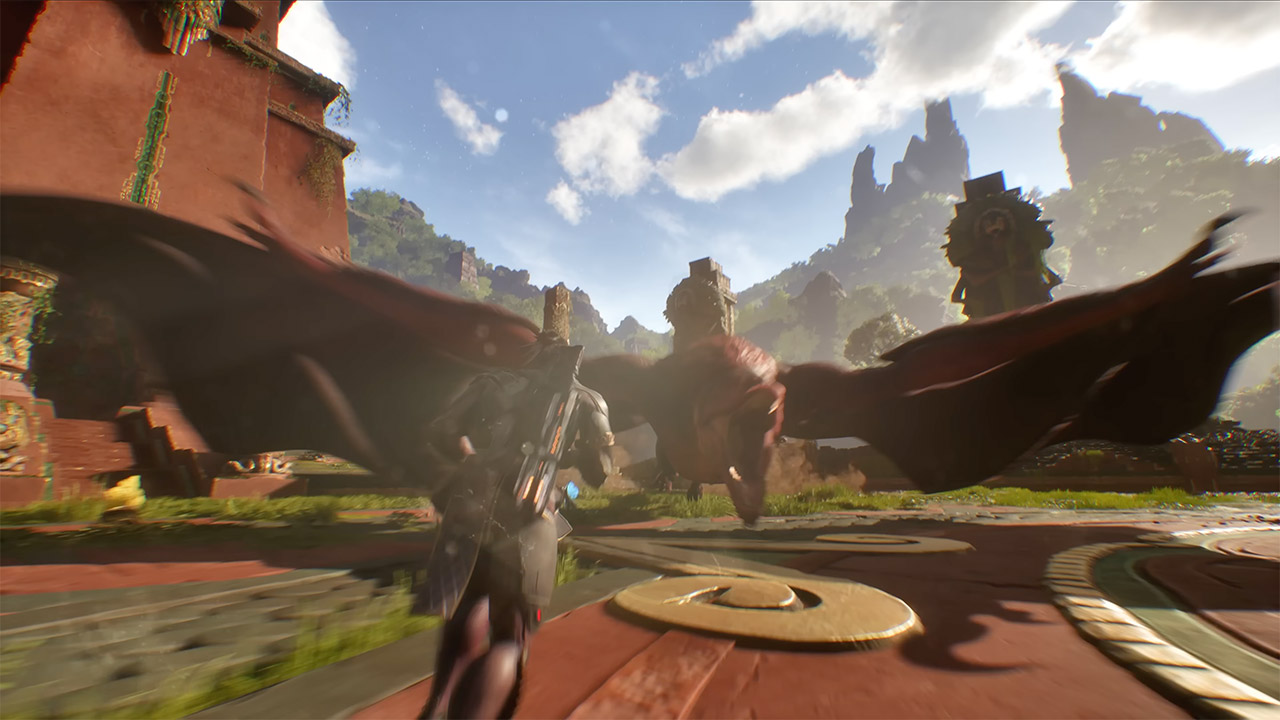
A warrior in a high-tech suit charges through dense jungle and ancient ruins, while enormous reptiles emerge from the undergrowth to attack. The camera jumps between our rough first-person perspective and a more controlled third-person vision, allowing us to see both the current danger and the larger picture of the conflict. The view is right in the thick of the action, with a plasma blast ripping through scaly hide, and then it zooms out to show the entire arc of a melee swing as it impacts with a heavy thwack.


PlayStation®5 console – 1TB
  • PlayStation 5 Console – 1TB, includes wireless controller, 1TBSSD, Disc Drive, 2 Horizontal Stand Feet, HDMI cable, AC power cord, USB cable, printed…
  • 1TB of Storage, keep your favorite games ready and waiting for you to jump in and play
  • Ultra-High Speed SSD, maximize you play sessions with near instant load times for installed PS5 games

What sticks out is how the trailer handles the DNA mechanism, which is a true show-stopper. When a dinosaur dies, its energy flows directly into the suit. The armor begins to transform on the spot, with plates moving, colors deepening, and brilliant lines lighting up the surface. It’s unlocking new powers, which it’s demonstrating in rapid succession. There’s a scene in which a ground-stomp sends rubble flying and a shockwave spreading out, taking down a beast long enough for a follow-up tomahawk and an energy shot from a bow.

Turok Origins Screenshot
The trailer also shows how these powers can be combined with the rest of the armory. We witness a mix of the classics, such as a bow that fires luminous darts, plasma rifles that rip through groups, shotguns for close quarters, and some more experimental, sci-fi-style weaponry that appears completely out of this world. Ammo looks to be linked to the environment as well, with plants that can be drained in the midst of a resource war.

Turok Origins Screenshot
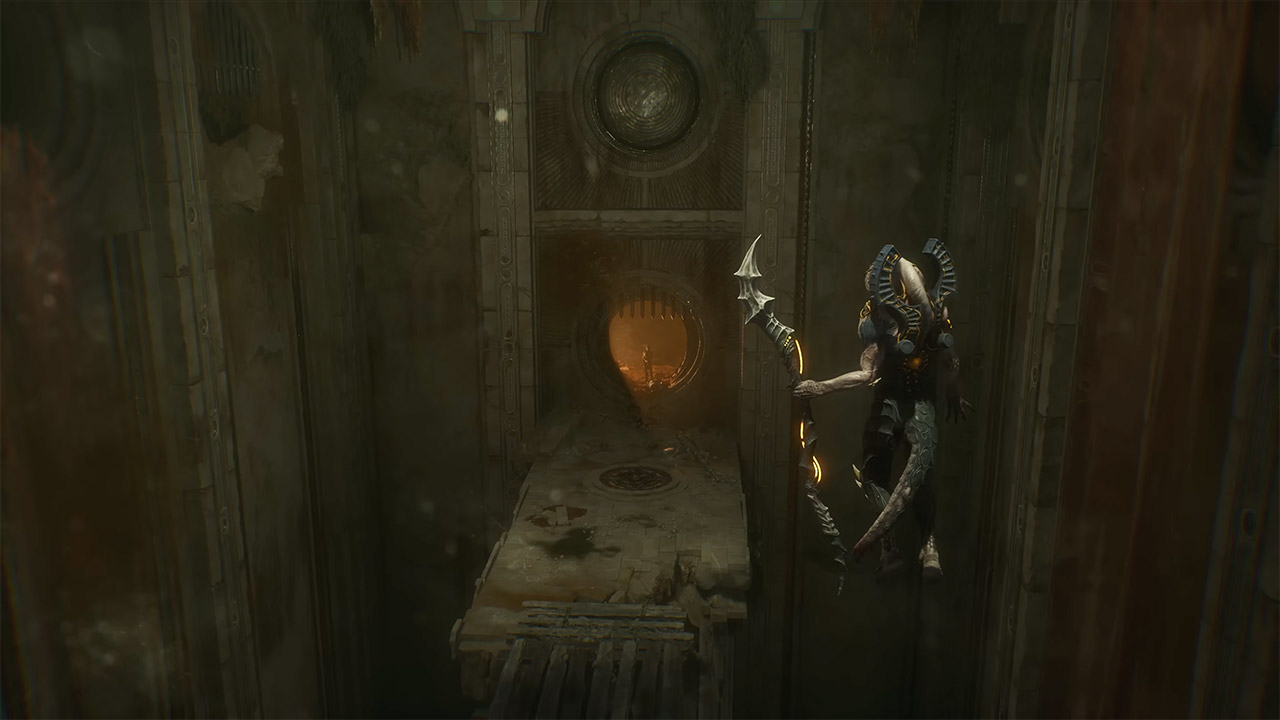
On top of that, the cooperative components begin to emerge. More warriors in identical suits join the conflict, and it appears like the game is ready for online team play against much larger dangers. There is a glimpse of an alien ship in the distance, which we know will play an important role in the game based on the tale. The environments are absolutely stunning; the jungle growth appears to have been wrestled to the ground, the temples are crumbling beautifully, and there are all these little patches of stranger, more alien-looking plants that really bring the ‘treacherously beautiful Lost Lands’ to life.

Turok Origins Screenshot
The pace is quick and unrelenting, with little pause between encounters, and the trailer frequently switches between different fighting types and angles to give us an idea of how the game will play. We see takedowns, special moves, and conventional shooting all mixed in, giving the action a true sense of weight and physicality.

Turok Origins Screenshot
Turok Origins is shaping up to be a real treat for fans of the series (and third-person action in general), and it will be available on Xbox and PC in the fall, with a target frame rate of 60 frames per second on the more powerful machine. Wishlisting is now available on Steam and the PlayStation 5, and the trailer clearly shows that the creators is aiming for a dynamic, developing experience in which you may increase your strength and skills by harnessing the very creatures you’re hunting.
[Source]

Advertisement

Source link

Continue Reading

Tech

Amazon Has Enough Satellites To Launch Its Starlink Competitor

Published

on

Amazon says its Leo satellite network now has enough spacecraft in orbit to begin limited commercial internet service, with 396 satellites providing “continuous service across initial latitudes.” Early performance will likely be uneven, however, and well behind Starlink. “It’ll be years before Amazon can boast similar performance numbers as it continues to launch a planned 3,232 Leo satellites,” reports The Verge. From the report: SpaceX went live with its “Better than nothing beta” back in 2020 when it had almost 900 satellites operating in low-Earth orbit. It initially served a narrow band of users in the upper US and Canada, who complained about frequent service interruptions and high sensitivity to obstructions, with speeds between 50Mbps and 150Mbps, and latency from 20ms to 40ms. By 2022, the service and coverage areas had already dramatically improved. […]

SpaceX currently has over 10,000 Starlink satellites in operation, providing robust internet connectivity on land, sea, and air in over 160 countries. Performance varies by the dish, service level paid for, time of day, and location of the user, but we’re now talking 200Mbps median download speeds, 10Mbps to 40Mbps uploads, and latency hovering around 25ms.

Source link

Continue Reading

Tech

Finnish quantum company IQM makes history with Nasdaq debut

Published

on

IQM Quantum Computers has become the first European quantum computing company to list on a major US stock exchange.

Finland’s IQM Quantum Computers began trading on the Nasdaq Global Select Market on Wednesday (July 2) under the ticker symbol IQMX, becoming the first European quantum computing company to list on a major US stock exchange.

The listing follows the completion of IQM’s business combination with Real Asset Acquisition Corp (RAAQ), a special purpose acquisition company. The deal leaves IQM with a pro forma cash position of €337m to fund its next phase of growth.

Founded in Espoo in 2018 by a group of scientists with the aim of building the best quantum processing units, IQM has since grown into a global provider of full-stack superconducting quantum computers, deploying systems to enterprises, research institutions, supercomputing centres and national laboratories. The company now employs more than 400 people across Europe, Asia and North America.

Advertisement

IQM claims to have sold 23 quantum computers worldwide, more than any other quantum manufacturer. Its customers include CINECA in Italy, the Leibniz Supercomputing Center in Germany, and the US Department of Energy’s Oak Ridge National Laboratory. The company also recently secured the first enterprise quantum computer purchase in Japan, with Toyo Corporation acquiring an IQM system.

“Quantum computing is reaching an inflection point,” said Jan Goetz, CEO and co-founder of IQM. “Around the world, organisations are moving from exploration to implementation, investing in quantum infrastructure and building the capabilities that will define the next generation of computing. IQM enters the public markets from a position of strength, with leading technology, a growing global customer base, and a clear strategy for scaling the commercial adoption of quantum computing.”

Central to IQM’s commercial model is what it calls the Production Quantum approach – full-stack, open-architecture systems that customers own, operate and build on, rather than access remotely via cloud alone.

The company is also expanding its US footprint with the opening of its first Quantum Technology Centre in Maryland and has recently announced a novel quantum error correction approach that it says significantly reduces hardware requirements for fault-tolerant quantum computing.

Advertisement

IQM’s Nasdaq debut comes as the broader quantum sector attracts growing attention from investors and governments alike, with organisations increasingly moving beyond research to real-world deployment.

Don’t miss out on the knowledge you need to succeed. Sign up for the Daily Brief, Silicon Republic’s digest of need-to-know sci-tech news.

Source link

Advertisement
Continue Reading

Tech

Today’s NYT Mini Crossword Answers for July 3

Published

on

Looking for the most recent Mini Crossword answer? Click here for today’s Mini Crossword hints, as well as our daily answers and hints for The New York Times Wordle, Strands, Connections and Connections: Sports Edition puzzles.


Need some help with today’s Mini Crossword? Read on for all the answers. And if you could use some hints and guidance for daily solving, check out our Mini Crossword tips.

If you’re looking for today’s Wordle, Connections, Connections: Sports Edition and Strands answers, you can visit CNET’s NYT puzzle hints page.

Advertisement

Read more: Tips and Tricks for Solving The New York Times Mini Crossword

Let’s get to those Mini Crossword clues and answers.

completed-nyt-mini-crossword-puzzle-for-july-3-2026.png

The completed NYT Mini Crossword puzzle for July 3, 2026.

Advertisement

NYT/Screenshot by CNET

Mini across clues and answers

1A clue: Top of an org. chart
Answer: CEO

4A clue: Terse way of saying “I’d like to speak with you”
Answer: AWORD

6A clue: Grouping of musical notes
Answer: CHORD

Advertisement

7A clue: Roll on a pool chair
Answer: TOWEL

8A clue: Like one’s feet after a beach day
Answer: SANDY

Mini down clues and answers

1D clue: Jointly manage
Answer: COOWN

2D clue: Made a mistake
Answer: ERRED

Advertisement

3D clue: In a strange way
Answer: ODDLY

4D clue: ___ of the Apostles (Bible book)
Answer: ACTS

5D clue: “Mind blown!”
Answer: WHOA

Advertisement

Source link

Continue Reading

Tech

SwitchBot Debuts Advanced Camera With AI Event Alerts, Wildlife Recognition

Published

on

On Wednesday, SwitchBot released its latest outdoor security camera. The smart home company bumped the resolution to 3K and now offers AI video descriptions, a feature that most security companies have added in the past year. 

SwitchBot’s new outdoor pan/tilt camera, starting at $80, includes motion tracking and object recognition and offers you the choice between wired and wireless connections. It can also hold up to 512GB of local video clips or offer cloud storage as an option in its subscription plans. 

The real standout is the AI recognition technology, which allows the camera to describe the events it captures. “A man in a UPS uniform walks on a porch with a package,” for example. The camera can also provide daily summaries of everything it’s seen, saving you even more time. 

Advertisement

I’ve seen these features move into cameras from major brands including Ring, Nest, Blink and Arlo over the past year. They usually come with a hefty subscription fee around $20, but SwitchBot’s is lower than usual, starting at $5 per month.

SwitchBot video description over figure in black climbing home fence.

Video descriptions are now common in home security, but SwitchBot is adding an animal species focus, too. 

SwitchBot

The only AI identification features you can get for even less come from Eufy, which is planning to offer onboard AI descriptions for free sometime later this year. 

Advertisement

A representative from SwitchBot didn’t immediately respond to a request for comment. 

SwitchBot has one trick, though, that really sets its camera apart from the pack: Its recognition features are specifically trained to identify wildlife, down to the species level. While most AI cams can tell the difference between dogs, cats and deer, this SwitchBot camera’s abilities go a little deeper. That’s useful if you want to get notifications like, “A coyote enters your yard,” alerting you that it may not be safe for your outdoor cats or other pets. And its spotting the difference between a possum and a raccoon could help you plan your pest management. 

The camera also supports Alexa and Google Home, so you can use Echo Shows and Nest Hubs to view the live feed. 

While SwitchBot’s camera and plans don’t currently include facial recognition, AI technology like this can sometimes be repurposed for other tasks, such as recognizing individual people, which raises surveillance and privacy concerns. I’ve asked SwitchBot whether it plans to address these concerns and will update this story when I receive a response. In the meantime, I’ll have to find a coyote and convince it to run around my yard for testing purposes. 

Advertisement

Source link

Continue Reading

Tech

The Nintendo/Palworld Patent Suit Appears To Be Heading For A Muted Conclusion

Published

on

from the pointless dept

It’s been a while since we checked in on the Nintendo patent suit in Japan against Pocketpair, the company behind the hit game Palworld. If you need a quick refresher, here you go.

Pocketpair made a game that was clearly inspired by the Pokémon series of games, but which also did no direct copying of any of those games. We argued it was a fantastic example of the idea/expression dichotomy in most copyright laws, though we also expected Nintendo to try to do something about it anyway because, well, it’s Nintendo. Nintendo did in fact sue Pocketpair in Japan, but for patent infringement instead of copyright. The patents in question were for generic gaming mechanics that enjoy plenty of examples of prior art. While Pocketpair fought back in the suit, the company also began quickly patching out the content in its game that Nintendo was complaining about in the lawsuit, while also seeking to invalidate Nintendo’s nonsense patents. Nintendo also attempted to file additional patents to use in the suit after filing it, one of which was rejected.

That year and a half journey got us to the present, where there are hearings in Japan set to be held and a court opinion to be issued in November. And nobody seems to think that Nintendo is going to get much out of the suit, if it gets anything at all.

If you need an illustration of what the sunk cost fallacy is, you could do worse than look in the direction of Nintendo’s Japanese copyright infringement lawsuit against Palworld developer Pocketpair, which appears to be heading to its final stages and, in the opinion of legal analysis by Games Fray’s Florian Mueller, a meager result for the Big N.

Mueller reports that in November 2025, Nintendo amended the scope of what it seeks in court to only focus on the older versions of the survival sandbox, as Pocketpair made updates through Palworld’s early access that changed mechanics that were specifically argued as patent infringing, like summoning captured critters from balls and using them for transportation.

Advertisement

The problem for Nintendo here is that the limited scope of the patent infringement suit also limits any potential damages it could be awarded. There are two things working against Nintendo here. First, some of the patents that it is relying on in the suit didn’t exist at the time Palworld was released, so those initial sales of the game won’t figure into the damages according to Mueller’s analysis of Japanese law. Second, so to would damages not apply to later versions of the game when the supposedly infringing material was patched out of the game. That narrows the window of time for which Nintendo could seek damages to a very limited scope. The same applies to the injunction that Nintendo has been seeking, which wouldn’t even apply to the present version of the game.

In Mueller’s estimation, this basically hamstrings any real monetary relief that Nintendo could possibly get. Assuming that it clears all of the legal hurdles needed to win its case, it may result in a settlement of ¥5M, or $30K US at most, which amounts to “chump change” for both parties or “a rounding error” compared to Nintendo’s litigation expenses.

“This litigation is no longer about anything serious in commercial terms,” Mueller concludes. “It’s about a hypothetical injunction that doesn’t apply to current product versions and (if anything) a small damages award for a period during which Pocketpair generated limited new sales in Japan.”

I can’t imagine anything more Nintendo than this. A lawsuit that harasses a competitor that isn’t actually infringing on copyright, over patents that never should have been granted and should in fact be invalidated, for an amount of money that is dwarfed by the cost of time, money, and energy that was spent on the lawsuit in the first place.

And that’s assuming Nintendo wins any part of this and doesn’t instead end up with a handful of nixed patents on its hands for all of its trouble. This suit should have been settled months and months ago, but I suppose Nintendo is going to Nintendo.

Advertisement

Filed Under: japan, palworld, patents, pokemon

Companies: nintendo, pocketpair

Source link

Advertisement
Continue Reading

Tech

Politician who investigated spyware abuses had his phone hacked with Pegasus spyware

Published

on

Security researchers have confirmed that a European politician had his phone hacked with the Pegasus spyware while serving on an investigatory committee probing abuses of the notorious surveillance tool. This has reigniting fresh controversy over governments abusing spyware to collect information about their critics.

The researchers at the University of Toronto’s digital rights unit The Citizen Lab say the confirmed phone hacking of Greek journalist and former politician Stelios Kouloglou during 2022 and 2023 marks the first time that a member of the European Parliament’s PEGA committee, tasked with investigating phone spyware attacks by European governments, has been publicly identified as a victim of spyware.

Kouloglou told TechCrunch in a phone call that the deliberate compromise of his phone was “reckless.” One serving European lawmaker described the hacking of Kouloglou’s phone as a “direct attack on the rule of law,” and called on the European Commission to take concrete action by imposing strict limits on the use of spyware across the 27 member-state bloc.

While spyware attacks on lawmakers are rare, the timing and targeting of a committee investigator by way of the very spyware under his investigation suggests an intense focus on the committee’s inner workings ahead of a widely anticipated report detailing its findings. The hacks open fresh questions about how governments use spyware ostensibly needed for identifying serious crime, but then caught spying on the communications of journalists, lawmakers, and critics.

Advertisement

Citizen Lab’s researchers did not attribute the phone hacking to a specific country, but said that the government customer used the same Pegasus-loaded email address that was used in a previous campaign that hacked into the phones of journalists across Europe. The customer’s identity is not known, but the reuse of the same attacking email address implies that the customer had NSO Group’s authorization to use its Pegasus spyware to snoop on phones across multiple countries in Europe.

A spokesperson for the European Commission did not respond to TechCrunch’s request for comment. NSO Group also did not respond to a request for comment about the Citizen Lab report prior to publication.

In its report out Friday, Citizen Lab said Kouloglou was hacked in October 2022 and at least twice during March 2023 using an exploit that compromised a security vulnerability in Apple’s iPhone software. This vulnerability had been patched but the fix was not yet installed on Kouloglou’s phone. The exploit was a “zero-click” bug, meaning the spyware broke in and stole his data without needing any interaction on his part.

The bug abused a previously discovered flaw in Apple’s smart home software used in iPhones. It allowed the spyware to grab private data from Kouloglou’s phone without his knowledge, such as his text messages and other correspondence, location data, and photos.

Advertisement

The timing of the October 2022 hack coincides with intense discussions over email and text message throughout October and November 2022, ahead of the delivery of a first draft describing spyware abuses focusing in Cyprus, Greece, Hungary, Poland, and Spain. 

The hack also lines up at the exact time that Kouloglou was in the hospital at the time for a pre-scheduled surgery, which may have allowed the spyware operators to listen in to ambient audio discussing his healthcare or other conversations he had with visitors at the time.

Months later on March 6 and 7, Citizen Lab said Kouloglou’s phone was hacked again by the same Pegasus operator while Kouloglou traveled from Athens to Brussels, during a period of committee hearings and months prior to the committee finalizing and adopting their written draft report.

In a call, Kouloglou told TechCrunch that he didn’t know why he was specifically targeted but that he believes it was due to his work on the European Parliament’s committee investigating Pegasus abuses.

Advertisement

He described anger when he learned that his phone had been hacked. 

“You realize that all of your personal data [was taken] — not all the professional exchanges or messages with ministers — but also the very private things, like the happy moments and the sad moments,” he told TechCrunch.

Kouloglou said he plans to sue NSO Group, the Israeli-headquartered spyware maker. NSO remains largely banned from use in the United States following a Biden-era executive order that outlawed the government’s use of spyware that could violate people’s human rights. 

Last year, the spyware maker confirmed an unnamed American investment group funneled tens of millions of dollars into the company, likely as part of an effort to rehabilitate NSO’s beleaguered brand associated with enabling human rights abuses.

Advertisement

Kouloglou said he was going public with his story “for democracy, human rights, and the fight against corruption.”

“Corruption concerns everybody,” he said.

When you purchase through links in our articles, we may earn a small commission. This doesn’t affect our editorial independence.

Source link

Advertisement
Continue Reading

Trending

Copyright © 2025